Archives

The Grassroots of Safer Birth: Get Karen There

Midwives speak the same lan­guage, regardless of politics: women come first.

–Palestinian Midwife (quoted by COHI)

I have found that it is easy to get so caught up in local or national birth activism that I forget to even consider the birth climate and concerns of other regions of the planet.

Why should we care?

Most simply, because lack of access to good maternity care is a huge issue around the world, with a profound impact on women, mothers, babies, families, and communities. Some selected facts (via COHI):

  • Nearly 400,000 women will die each year from pregnancy-related causes and 99% of these deaths will occur in de­veloping countries, according to the World Health Organization (WHO).
  • For each woman who dies, 20 others will suffer from serious complications.
  • The five leading causes of pregnancy-related deaths are bleeding, infec­tion, high blood pressure, prolonged labor and abortion complications. In poor countries, a mother’s death leaves her new­born at risk of dying as well.
  • The majority of pregnant women die because of the three major delays that have been identified as:
  1. Delay in the woman, her family or community members’ recognition of a life-threatening problem and the decision to seek care.
  2. Delay in a woman’s access to trans­portation to a health facility, espe­cially at night.
  3. Delay in the woman’s access to quali­fied health workers with access to es­sential equipment and supplies.
  • Women and children constitute as 80% of the world’s refugees and displaced people.
  • In areas where conflict and turmoil is rampant, nurses and midwives are the primary reproductive health care providers. They provide up to 80% of direct patient care around the world every day.

Recently, I was asked to participate in a fundraising effort to get midwife Karen Feltham to Haiti. Spearheaded by BirthSwell in connection with the amazing organization Circle of Health International, the fundraiser already reached its goal before my post was scheduled to run! That’s what I call some effective grassroots organizing! The fundraiser is still open for contributions however, and now any additional funds raised will be used to sponsor other midwifery volunteers to disaster areas in need of support. COHI knows that the majority of pregnant and birthing women worldwide are cared for and by midwives and believes that, “midwives should be involved in the effort to foster change by bringing about increased access to services, support and care for women everywhere.”

What can you do?

  • Make a contribution!
  • Get connected! Visit the fundraiser’s indiegogo site and be sure to share it on Twitter, Facebook, and your listserves.  (The indiegogo site has great tools and widgets for sharing – try them out!)
  • Tweet about the fundraiser using hashtag #getkarenthere
  • Make sure to follow COHI on Facebook!

I have a personal tradition of getting a new We’Moon datebook every year and I was pleased to notice that part of the proceeds from the 2012 edition goes to support Circle of Health International also. COHI focuses on: “Working with women and their communities in times of crisis and disaster to ensure access to quality reproductive, maternal, and newborn care.”
COHI lists the following as their core values:

  • Grassroots social change by creating local, community driven collaborations in order to foster social change from the top down, as well as from the bottom up.
  • Nonviolence in terms of active resistance requiring one to act when faced with injustice. Leadership at COHI is supporting women to lead, to be forces for change in communities healing from conflict and disaster, and in organizational movements to support women in leadership roles.
  • Volunteerism through the giving of time, money, knowledge, and general support with the goal of easing the suffering of others.
  • Activism in individual responses to inequity and injustice.
  • Supporting women and their families in their right to make their own decisions in all aspects of birth spacing and family size, while protecting access to the resources required to honor their choices.

I value all of the above as well, which is why I’m pleased to be involved with the effort to Get Karen There!

http://www.indiegogo.com/project/badge/45681?a=

Giveaway: Arms Wide Open: A Midwife’s Journey

Cover imageGiveaway is now closed! Jen Chendea is the winner!
I’m happy to host a holiday giveaway of Patsy Harman’s book, Arms Wide Open. To enter, just leave a comment sharing what giving birth taught you about yourself! I will draw the winner randomly on January 1.

An excerpt from my review of the book:

Harman’s writing style is lyrical and engaging as well as candid. The book is based on personal journals and reading it feels like eavesdropping on someone’s very private thoughts and feelings. The book is much more of a look at a woman’s feelings about her life, than it is a “manifesto” about birth or about the practice of midwifery. In this manner, I feel like you receive a much more complete picture of a midwife’s life and journey, rather than reading a sequence of birth stories. Patsy has a lot of life in addition to birth. While definitely not a “feel good” book, Arms Wide Open is a deeply touching and very honest exploration of one woman’s personal journey in life, love, motherhood, and midwifery.

via Book Review: Arms Wide Open: A Midwife’s Journey « Talk Birth.

Midwife’s Invocation

Seated mountain pose

I’m currently taking a class based on Karen Armstrong’s book Twelve Steps to a Compassionate Life. One assignment was to find a reading articulating a spiritual perspective/teaching on compassion. I turned to one of my new books, Sisters Singing, in which I had immediately marked a prayer called A Midwife’s Invocation. As a birth educator and activist, I have been devoted to birthwork as a cause for many years, something that for me is rooted in social justice as well as women’s empowerment.

Midwife’s Invocation, by Cathy Moore

I call on Artemis, huntress, protector of animals and birthing.
Help me to trust birth.
I call upon Diana, keeper of the moon, and the cycles of women’s lives.
Help me to listen to women.
I call on Hecate, wise crone who stands at the crossroads.
Make me a guardian of the passage.

Great goddesses, fill this vessel with your wisdom.
Guide my hands. May they be gentle and strong.
Guide my heart. May I be open to giving and receiving love.
Guide my words. May they be kind and true.
Guide my thoughts. May they be compassionate and free of judgment.
Guide my spirit. May I be connected with the higher beings.

I put my roots deep into Mother Earth.
I draw her energy into my belly for gestation and creation.
I draw her energy into my solar plexus to fire my will.
I draw her energy into my heart for opening to love.
I draw her energy into my throat to awaken my authentic voice.
I draw her energy into my third eye to enliven my inner knowing.
I draw her energy into my crown for connection with spirit

I call on all the women ancestors who have given birth before us.
Come gather round. Support this woman.
Guide her to access her power, confront her fear, and find strength.

I call upon my sister and brother midwives from past, present and future.
Encircle and embrace me with your loving intentions
For the sacred work we do.

As we ready ourselves to accept new life into our hands,
Let us be reminded of our place in the dance of creation.
Let us be protectors of courage.
Let us be observers of beauty.
Let us be guardians of the passage.
Let us be witnesses to the unfolding.

While originally written by a midwife for birthworkers, I really find this prayer to be inspirational for daily living regardless of my tasks. I wish to have a head, heart, and hands that are open in the spirit of compassion as I move through my daily round. And, I strive to cultivate the “witness,” both in relation to myself and my own life, but also to those around me—most people want to be seen, they want to be heard, to be witnessed. I’ve quoted the following poem snippet about that before:

Instructions for living a life:
Pay attention.
Be astonished.
Tell about it.

-Mary Oliver

And, as previously noted, this is exactly why I write and blog–to tell about it.

Midwife’s Invocation is gratefully reprinted with permission from Cathy Moore.

Birth Quotes of the Month

As always, while these quotes are obviously not my own words, I do appreciate a link back to my site if you re-post them because I have a significant amount of legwork invested in finding and typing the quotes. Most are not recycled from other pages (I give credit if they are), but are typed up when they catch my eye in the books/magazines/journals I’m reading.

“The first few months after a baby comes can be a lot like floating in a jar of honey—very sweet and golden, but very sticky too.” –American College of Nurse-Midwives

“Your children love you. Be the trampoline for their rocketing and the cupped palms for their returning.” –Shae Savoy (in We’Moon 2011 datebook)

“There is nobody, out the other side of that sort of strong birth, who is not better prepared to meet the absolutely remarkable challenges of parenthood. When the power and trust is transferred to the mother, when she delivers her child, rather than ‘is delivered’ when she chooses, rather than ‘is allowed’, no matter what sort of technical birth she has, she is stronger, fiercer, and better. After a trip like that, you would kill for that child, and you know you can.” —The Yarn Harlot

Why do birth work? “I do it, because nothing else… nothing else, compares to watching a woman move mountains with her own self, to watching her rise to a challenge and meet the moment with all she has, and that experience is only enhanced when she is supported by those who care for her, respect her, and want her to be empowered by the journey.” –The Yarn Harlot

“We must act to keep the knowledge and the powers of women alive.” – Lynn Andrews

“Birth Freedom is inevitable. The natural progression is for people to move from tyranny to liberty. The agents of the status quo, however, rarely yield power without a fight.” –Senator John Loudon (ret.) in Midwifery Today e-news

“If I didn’t define myself for myself, I would be crunched into other people’s fantasies for me and eaten alive.” – Audre Lorde

“We have barely tapped the power that is ours. We are more than we know.” –Charlene Spretnak

“Woman is a glorious possibility; the future of the world is hers.” – Matilda Gage

“In everyone’s life, at some time, our inner fire goes out. It is then burst into flame by an encounter with another human being. We should all be thankful for those people who rekindle the inner spirit.” ~Albert Schweitzer

“There is a sacredness in tears. They are messengers of overwhelming grief…and unspeakable love.” –Washington Irving

“Don’t you dare, for one more second, surround yourself with people who are not aware of the greatness that you are.” (Roots of She by Amanda Oaks, via @ROAR! Empowering Women to Give Voice to Their Truth)

“We all start out knowing magic. We are born with whirlwinds, forest fires, and comets inside us. We are born able to sing to birds and read the clouds and see our destiny in grains of sand. But then we get the magic educated right out of our souls.” -Robert R. McGammon

“It’s hard to describe if you’ve never been there, but to watch a woman access her full power as a woman to give birth is awe-inspiring, and I never get tired of being witness to it. It’s an honor to watch that transformation take place.” ~ Julie Bates, CNM

“The emerging woman..will be strong-minded, strong-hearted, strong-souled, and strong-bodied…strength and beauty must go together.” ~Louisa May Alcott

“We must relearn to trust the feminine, to trust women and their bodies as authoritative regarding the children they carry and the way they must birth them.” –Elizabeth Davis, CPM

“The women in labor must have NO STRESS placed upon her. She must be free to move about, walk, rock, go to the bathroom by herself, lie on her side or back, squat or kneel, or anything she finds comfortable, without fear of being scolded or embarrassed. Nor is there any need for her to be either ‘quiet’ or ‘good.’ What is a ‘good’ patient? One who does whatever she is told—who masks all the stresses she is feeling? Why can she not cry, or laugh, or complain?” –Grantly Dick Read, Childbirth without Fear

“The purpose of life is not to maintain personal comfort; it’s to grow the soul.” –Christina Baldwin

“Everyone who interacts with a pregnant woman is, in some way, her ‘teacher.’ Telling birth stories, sharing resources, imparting obstetrical information, giving advice or warnings—these are all direct or indirect ways of teaching about birth and parenting. Whether you currently identify yourself as a ‘childbirth teacher,’ or you are a midwife, doctor, doula, yoga teacher, nurse, therapist, breastfeeding counselor, or you are simply a woman or man who cares about the power of the childbearing year, you already hold the power of mentoring within you.” –Pam England

“The purpose of our lives is to give birth to the best which is within us.” –Marianne Williamson

“There is no single formula for motherhood and writing that suits us all. Instead, there are many paths on this literary journey, all leading to the same destination, each equally valuable.” – Elif Shafak

“Remember our heritage is our power; we can know ourselves and our capacities by seeing that other women have been strong.” – Judy Chicago

“Scientific medicine has never been shy to dismiss if not denigrate any perceived threat to its values or power.” –from the book Breakthrough: How the 10 Greatest Discoveries in Medicine Saved Millions and Saved the World

“Midwives often forget that our beliefs in [mom’s] abilities can alter her accomplishments. It is important to check our hearts and push through any lack of belief that may inhibit her strengths. This may sound silly or ethereal, but I guarantee it can make a difference for a laboring mom and family.” ~ Carol Gautschi (Midwifery Today)

“Hormones have a kind of crazy rhythm that you can trust. Behind them is internal intelligence; try listening instead of controlling. When hormones are ‘raging,’ they exaggerate what’s already going on internally as a signal for us to pay attention and learn from it.” –Camille Maurine (Meditation Secrets for Women)

“Since the release of adrenaline is highly contagious, the main preoccupation of an authentic midwife, after the paradigm shift, will be to maintain her own level of adrenaline as low as possible when she is close to a labouring woman. Midwives of the future will also need to train themselves to remain silent, since language is the most powerful stimulant of the neocortex. The silent knitting session will be a necessary step towards an understanding of what authentic midwifery is. We present it as the symbol of a vital new phase in the history of childbirth and midwifery.” –Michel Odent (in Midwifery Today)

“Sons branch out, but one woman leads to another.” –Margaret Atwood (quoted in Sacred Circles)

“We can no longer sit back and debate whether maternity care is evidence-based. We have seen that over and over again, in most cases, it is not…” –Connie Livingston

“If the first woman God ever made was strong enough to turn the world upside down all alone, together women ought to be able to turn it rightside up again.” –Sojourner Truth

“The intrinsic intelligence of women’s bodies can be sabotaged when they’re put into clinical settings, surrounded by strangers, and attached to machines that limit their freedom to move. They then risk falling victim to the powerful forces of fear, loneliness, doubt , and distrust, all of which increase pain. Their hopes for a normal birth disappear as quickly as the fluid in an IV bottle.” ~Peggy Vincent

“The problem is not that obstetricians are surgeons. They are. The problem is that society has invested surgeons with control over normal childbirth.” –Michael Klein, MD (in The Journal of Perinatal Education)

“Perhaps the greatest gift that women can give their daughters is to take precious care of their own lives—to develop their natural talents and to honor the opportunities that come their way. By so doing, they become vital models for their children as well as full women in their own right.” ~ Evelyn Bassoff

“When one woman puts her experiences into words, another woman who has kept silent, afraid of what others will think, can find validation. And when the second woman says aloud, ‘yes, that was my experience too,’ the first woman loses some of her fear.” –Carol Christ

“Befriend fear, embrace struggle, trust nature, the process, and a baby’s wisdom.” –WYSH (Wear Your Spirit for Humanity see also https://talkbirth.wordpress.com/2011/05/25/birth-altar-wisdom/)

“Thousands of women today have had their babies born under modern humanitarian conditions–they are the first to disclaim any knowledge of the beauties of childbirth…” –Grantly Dick Read, Childbirth without Fear

“I am not free while any woman is unfree, even when her shackles are very different from my own.” –Audre Lorde

“Not only do I trust my body, I am in awe of all it can do. I don’t know if I will ever be able to accomplish anything as marvelous as birthing and nursing two babies. That is more amazing to me than running a marathon or climbing a mountain. I have created and nurtured life; nothing tops that. ” ~ Corbin Lewars (via Midwifery Today)

“Humanizing birth means understanding that the woman giving birth is a human being, not a machine and not just a container for making babies. Showing women—half of all people—that they are inferior and inadequate by taking away their power to give birth is a tragedy for all society.” –Marsden Wagner

“I am sure that if the mothers of various nations could meet, there would be no more wars.” – E. M. Forster

“The strength that is displayed in labor and birth is something that no one can EVER take from you in your life. Elixir of courage.” –Desirre Andrews

Health Care or Medical Care?

For quite some time, breastfeeding advocates have been working to change the language of infant feeding to reflect that breastfeeding is the biological norm (and formula feeding is the replacement/substitute). This includes sharing about the “risks of formula feeding” rather than the “benefits of breastfeeding” as well as encouraging research that no longer uses formula-fed babies as the control group or considers formula to be a benign variable (i.e. the babies in the breastfed group of many research projects also received some formula, but since our culture views formula as the “norm,” this was not seen as a conflict). I love Diane Wiessinger‘s example—would we ever see a research project titled “Clear air and the incidence of lung cancer.” No! Problem behavior is linked to problem outcomes in other areas of research, so it would be “Smoking and the incidence of lung cancer.” However, we routinely see research titles like “Breastfeeding and the rate of diabetes” rather than linking problem to outcome–“Infant formula and the rate of diabetes.”

Similarly, “intactivists” (people who oppose circumcision) have pointed out that there should be no need to refer to some boys as “uncircumcised”—being uncircumcised is the biological norm, it is “circumcised” boys that should received the special word/label. (On a related side note, I have written about “pleonasms”–words that contain unnecessary repetition–and birth and breastfeeding in a previous post.)

So, this brings me to another need for a change in the common language–correctly identifying whether we are really talking about “Health Care” or “Medical Care.” This was originally brought to my attention by Jody McLaughlin the publisher of Compleat Mother magazine. We have a tendency to refer to “health care” and to “health care reform” and “health insurance” and and “health care providers” and “health care centers,” when it reality what we are truly referring to is “medical care”—medical care reform, medical insurance, medical care providers, and medical care centers. As Jody says (paraphrasing), “we do not have a HEALTH care system in this country, we have a MEDICAL care system.” She also makes an interesting point about a trend to re-name medical care systems with names that use the word “health” instead:

This is what I have observed: Our local facility was called Trinity HOSPITAL, later re-named Trinity MEDICAL CENTER, and now it is Trinity HEALTH.

In the late 70’s and early 80’s the discussions centered around the MEDICAL crisis, MEDICAL reform, MEDICAL insurance and MEDICAL care cost containment.

MEDICAL insurance morphed into HEALTH CARE insurance. MEDICAL reform morphed into HEALTHCARE reform.

This is a difference with a distinction.

Health care includes clean air and safe water, enough good food to eat, exercise, rest, shelter and a safe environment as well as healing arts and the availability of and appropriate utilization of medical care services.

Medical care is surgery, pharmaceuticals, invasive tests and procedures. Malpractice tort reform is on the agenda too but no one is talking about reducing the incidence of malpractice, or alleviating the malpractice crisis by improving outcomes.

Why does this discussion belong here? First, I wanted to address it because I have a special interest in our use of language surrounding birth and how that language can impact our birth experiences. Secondly, if we emphasize that birth is a normal bodily process, a normal life function, and not an illness, we need to make sure that we are focused on health care services for birth, rather than medical care services. Personally, I think the midwives model of care can truly be described as health care, whereas standard maternity care in the U.S. can much more aptly be described as medical care.

Book Review: Arms Wide Open: A Midwife’s Journey

Book Review: Arms Wide Open: A Midwife’s Journey
By Patricia Harman
Beacon Press, 2011
ISBN: 978-0807001387
324 pages, paperback, $16.47 (Amazon)
http://www.beacon.org

Reviewed by Molly Remer, MSW, ICCE, CCCE
https://talkbirth.wordpress.com

I very much enjoyed Patricia Harman’s first book, The Blue Cotton Gown, and was delighted to learn about her new memoir, Arms Wide Open which is, in a sense, both a prequel and sequel to her first memoir.  The first half of Arms Wide Open chronicles Patsy’s experiences with homesteading and communal living as a young hippie mother in the 1970’s. It also explores her thoughts and experiences with peace activism and her passion for an eco-friendly life. During this time, she attends her first birth and dives into her midwifery journey and eventually becomes a CNM practicing with her hippie-farmer-turned-OB/GYN husband in West Virginia. Her experiences with their years in a joint women’s health practice are described in The Blue Cotton Gown. Readers who, like me, wondered what happened where The Blue Cotton Gown left off, can find out in the second half of Arms Wide Open, which is a narrative of Patsy’s ongoing work with women through 2009 and includes her emotional painful moments in her marriage, as her husband struggles with fears of another lawsuit as well as with chronic pelvic pain patients who abuse his trust (chronic pelvic pain is a specialty of their practice).

I did feel as if there was a large chunk of story missing as the book somewhat abruptly skips from 1978 to 2008. We miss learning about any of Patsy’s experiences in nurse-midwifery school, nor do we learn much about her practice when she was a CNM attending births. The book transitions from her years as a self-taught midwife considering going to school to become a CNM, straight to her present-day years as a CNM in a private women’s health practice.

Harman’s writing style is lyrical and engaging as well as candid. The book is based on personal journals and reading it feels like eavesdropping on someone’s very private thoughts and feelings. The book is much more of a look at a woman’s feelings about her life, than it is a “manifesto” about birth or about the practice of midwifery. In this manner, I feel like you receive a much more complete picture of a midwife’s life and journey, rather than reading a sequence of birth stories. Patsy has a lot of life in addition to birth. While definitely not a “feel good” book, Arms Wide Open is a deeply touching and very honest exploration of one woman’s personal journey in life, love, motherhood, and midwifery.

Disclosure: I received a complimentary copy of this book for review purposes.

Review: A Book for Midwives

Review: A Book for Midwives
Hesperian Foundation
CD-Rom, 2011
544 page pdf book in English and Spanish
by Susan Klein, Suellen Miller, and Fiona Thomson
ISBN13: 978-0942364-24-8, $16.00
www.hesperian.org

Reviewed by Molly Remer, MSW, ICCE
https://talkbirth.wordpress.com

As a child, I was fascinated by my father’s copy of the book, Where There is No Doctor. Fast forward twenty or so years and imagine my glee when as a birth activist adult, I then discovered A Book for Midwives, also published by the Hesperian Foundation. Hesperian’s goal “is to promote health and self-determination in poor communities throughout the world by making health information accessible. [They] work toward that goal by producing books and other educational resources for community-based health.” In keeping with this goal, A Book for Midwives is available for FREE download on the Hesperian site. (Personally, I appreciate the professionally printed version of the book I purchased, because I think it would cost more same in ink to print it myself, but without the nice cover!).

A Book for Midwives is excellent; a true community resource. It is also a very sobering look at the reality of women’s health and health care in other countries. It contains reminders such as “do not hit or slap a woman in labor,” and other things that can make you cringe. A Book for Midwives is basically a textbook for midwives, health care workers, or educators working in developing countries and/or with very limited resources. I appreciate how it makes information available that is sometimes “hidden” in other books–i.e. explicitly technical content and “how to’s” that are normally reserved only for “professional” people. It is simply written and extremely blunt. There is no fluff and nothing romanticized about pregnancy, labor, and birth. In a way, it was hard to read a book that makes it so very clear how very, very difficult things are for midwives and women in impoverished areas (living in the US, I am used to the “normal, healthy pregnant women” approach to midwifery care). The book covers a wide range of information from preventing infection, treating obstetrical emergencies, doing pelvic exams, and breastfeeding to HIV/AIDS, testing for STDs and cervical cancer, and IUD insertion. There is also a section in the back of the book about medications, medication administration, giving injections, and other topics. It is an extremely comprehensive resource. (Just a side note, in the section on contraceptives, the book is heavily in favor of hormonal methods such as pills as well as very positive about IUDs and sterilization.)

Recently, Hesperian made A Book for Midwives available for purchase on CD. The CD includes the 544 page book as a pdf file in both English and Spanish. Both high resolution and low resolution versions of the book (in both languages) are included on the disk. This format makes it easy for the book to travel with you via laptop for trainings or presentations. I was particularly excited to convert it for my Kindle, making it readily available for travel and reference.


Disclosure: I received a complimentary copy of the CD for review purposes.

Updating My Birth Quotes!

(c) K Orozco

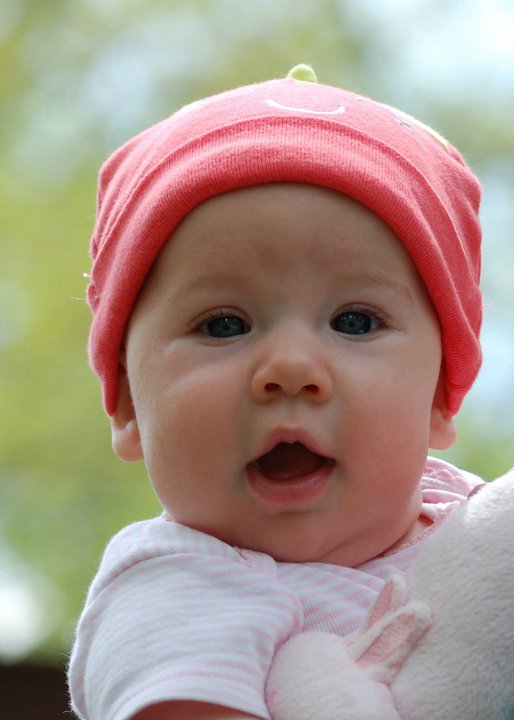
Baby Alaina, 3.5 months, taken at the park by my friend Karen 🙂

“Blessed be all the mothers of mothers.
Blessed be all the daughters of daughters.
Blessed be all the daughters of mothers.
Blessed be all the mothers of daughters.
Now and forever, wherever we are.” –Diann L. Neu

“I have almost given up on the government and the country but I have not given up on birth. I believe rabidly. It is not enough to hold the space for one woman at a time. Peace on earth begins with birth.” –Arielle Greenberg/Rachel Zucker (in Home/Birth: A Poemic)

“In giving birth my attention was pulled inside forcibly by something naturally wild, hot, raw and primitive—something so powerful that my only choice was to surrender.” –Kristin Luce

“Now I see the secret of making the best person: it is to grow in the open air and to eat and sleep with the earth.” ~ Walt Whitman

“A new baby is like the beginning of all things–wonder, hope, a dream of possibilities.” ~ Eda J. Le Shan

“Birth isn’t something we suffer, but something we actively do and exult in.” –Sheila Kitzinger (from promo for new One World Birth film)

“Many women have described their experiences of childbirth as being associated with a spiritual uplifting, the power of which they have never previously been aware … To such a woman childbirth is a monument of joy within her memory. She turns to it in thought to seek again an ecstasy which passed too soon.” ~ Grantly Dick-Read (Childbirth Without Fear)

“Childbirth isn’t something that is done to you, or for you; it is something you do yourself. Women give birth. Doctors, hospitals and nurses don’t.” ~ Lester Dessez Hazell

“Whether she chooses to birth at home, a hospital or a birth center, it is the right–in fact, the responsibility–of every woman to plan her own baby’s birth with the information, honor and freedom to which she is entitled.” –Cynthia Overgard (in Pathways to Family Wellness Magazine)

Life, love, and laughter – what priceless gifts to give our children. — Phylis Campbell Dryden

“A mother’s joy begins when new life is stirring inside… when a tiny heartbeat is heard for the very first time, and a playful kick reminds her that she is never alone.” ~Author Unknown

“Growing, bearing, mothering, or fathering, supporting, and at last letting go…are powerful and mundane creative acts that rapturously suck up whole chunks of life.” –Louise Erdrich

“Perhaps we owe some of our most moving literature to men who didn’t understand that they wanted to be women nursing babies.” –Louise Erdrich

“Labor is about finding your threshold and learning you can go beyond it.” –Rose St. John

“…the labor with which we give birth is simply a rehearsal for something we mothers must do over and over: turn ourselves inside out, and then let go.” –Susan Piver (Joyful Birth)

“The minute my child was born, I was reborn as a feminist. It’s so incredible what women can do…Birthing naturally, as most women do around the globe, is a superhuman act. You leave behind the comforts of being human and plunge back into being an animal…” –Ani DiFranco

“The health of mothers, infants, and children is of critical importance, both as a reflection of the current health status of a large segment of the U.S. population and as a predictor of the health of the next generation.” –Healthy People, 2010

“The miraculous nature inherent in the unfolding of a flower is the very same that moves through a woman as she gives life to the world. We can neither control nor improve upon it, only trust it.” -Robin Sale

“Loving, knowing, and respecting our bodies is a powerful and invincible act of rebellion in this society.” –Inga Muscio

“A new baby’s fresh milk smell causes the mother’s heart to spill over.” -Melanie Lofland Gendron

“…childbirth is much like a marathon…marathon runners know how to breathe, to run, and to complete their race according to their own body signals. Similarly, women know how to breathe, to birth, and to complete the [birth] according to their own body signals. Marathon runners who are true champions are free to stop the fast pace, and even quit the race without loss of integrity.” –Claudia Panuthos

“Birth, like love, is an energy and a process, happening within a relationship. Both unfold with their own timing, with a uniqueness that can never be anticipated, with a power that can never be controlled, but with an exquisite mystery to be appreciated.” –Elizabeth Noble

“…all those tasks and interactions of motherhood, a day full of which might make you feel you’ve ‘gotten nothing done’ because you’ve been in the cycle of care, are the heart and soul of the best brain building possible.” –Lauren Lindsey Porter (Attachment Theory in Everyday Life, in Mothering magazine, 2009)

“The lure of the distant and the difficult is deceptive. The great opportunity is where you are. Do not despise your own place and hour. Every place is under the stars, every place is the center of the world.” –John Burroughs

“Motherhood has a very humanizing effect. Everything gets reduced to essentials.” ~ Meryl Streep (via Midwifery Today)

“It is not ‘ladylike’ to give birth. The strength and power of labor is not demure.” –Rhonda (midwife quoted in Gayle Peterson’s An Easier Childbirth Book)

What we have once enjoyed we can never lose. All that we love deeply becomes a part of us.” —Helen Keller

“The greatest teachers we have are the women we serve.” –Jan Tritten

“…undisturbed (not neglected or abandoned) birth is a powerful initiation into motherhood, not only in a physical and physiological sense, but also in an emotional and spiritual sense.” –Christina Hurst-Prager (in (ICEA) International Childbirth Education Association‘s journal)

“Never hire a midwife who is afraid your birth will go wrong.” –Arielle Greenberg/Rachel Zucker, Home/Birth: A Poemic

“It is dangerous to be right on a subject on which the established authorities are wrong.” –Bumper sticker quoted in the book Home/Birth: A Poemic

“Women today not only possess genetic memory of birth from a thousand generations of women, but they are also assailed from every direction by information and misinformation about birth.” ~ Valerie El Halta

“I see generations of women bearing a flame. It has been hidden, buried deep within, yet they hand it down from generation to generation still burning. It is a gift of fire, transported from a remote and distant world, yet never extinguished.” –Kim Chernin

“Birth is as vast and voluminous, as unfathomable and inevitable as the rising and setting of the sun. And true to the inexorable power and rhythm of their life-giving bodies, women will continue to birth with dignity, grace and courage.” –Mandala Mom

“I pity the folks at ACOG who think they can make protocols, rules and guidelines that will cover all births in all situations. A better goal would be to have clinicians who can think for themselves, distinguish complications from normal birth, relax when things are taking a while, and marvel over the consistently fascinating process of human birth” -Gloria Lemay in Pathways to Family Wellness Magazine

“A pair of substantial mammary glands have the advantage over the two hemispheres of the most learned professor’s brain in the art of compounding a nutritive fluid for infants.” ~Chief Justice Oliver Wendell Holmes (1809-1894)

“The energy that can rise in real connection is the stuff of revolution.” –Carol Lee Flinders

“A woman meets herself in childbirth” –Cynthia Caillagh

“I believe that these circles of women around us weave invisible nets of love that carry us when we’re weak and sing with us when we’re strong.” –SARK, Succulent Wild Woman

“Don’t ask what the world needs. Ask what makes you come alive, and go do it. Because what the world needs is people who have come alive.” –Howard Thurman

“If ever the world sees a time when women shall come together purely and simply for the benefit of humanity it will be a power such as the world has never known.” –Matthew Arnold

“Authority without wisdom is like a heavy ax without an edge: fitter to bruise than polish.” ~ Anne Bradstreet (Feeling frustrated with anti-midwifery legislators in Missouri and then this quote came along from Midwifery Today’s e-news and I thought it was quite fitting)

The midwife teacher’s first concern is to preserve the students fragile unborn thoughts, to see that they are born with their truths intact, that these truths do not turn into acceptable lies” — from the book Women’s Ways of Knowing (shared by a participant in the Birth Workers and Beyond group)

“…we do not have humanized birth in many places today…Why? Because fish can’t see the water they swim in. Birth attendants, be they doctors, midwives or nurses, who have experienced only hospital based…medicalised birth cannot see the profound effect their interventions are having on the birth. [They] have no idea what a birth looks like without all the interventions, a birth which is not dehumanized.” –Marsden Wagner

Childbirth is a rite of passage so intense physically, psychologically, emotionally, spiritually, that most other events in a woman’s life pale next to it. In our modern lives, there are few remaining rituals of initiation, few events that challenge a person’s mettle down to the very core. Childbirth remains a primary initiatory rite for a woman.” –from the book MotherMysteries

“The holistic model holds that birth is a normal, woman-centered process in which mind and body are one and that, in the vast majority of cases, nature is sufficient to create a healthy pregnancy and birth. The midwife is seen as a nurturer.” –Penfield Chester (midwife)

“Birth, like love, is an energy and a process, happening within a relationship. Both unfold with their own timing, with a uniqueness that can never be anticipated, with a power that can never be controlled, but with an exquisite mystery to be appreciated.” –Elizabeth Noble

“If there is ever a part of human anatomy that resembles the image of God it is the uterus.” –Reverend Darren Cushman-Wood

(I hesitated to share this quote because I thought it could be viewed as disrespectful [or even sacrilegious!] by some. But, it caught my eye in an article called Pharaohs and Kentuckians in a 1997 issue of Mothering magazine. Written by a pastor of a Methodist church about homebirth and spirituality 🙂

Modern culture often teaches us to be ‘tight’…trim, taut, & terrific…We understand the need to stay ‘fit’…but we would also like to encourage you to soften yourself, in preparation for mothering & nurturing your baby. Soften your viewpoint, soften your body, surrender to this awe-inspiring event…in this way, you will be preparing yourself not only for labour, but for the days & years afterward…” -The Pink Kit Method For Birthing Better®

“Love is such a powerful force. It’s there for everyone to embrace—that kind of unconditional love for all of humankind. That is the kind of love that impels people to go into the community and try to change conditions for others, to take risks for what they believe in.” —Coretta Scott King

Nurturing is not a genetically feminine attribute. Tears and laughter are not the province of women only. The last time I looked, men had tear ducts. They had arms for holding babies. They cared about their children. And they cried at births…let the shared experience of childbirth reclaim the human soul.” –Ariska Razak (midwife and healer)

“When my kids become wild and unruly, I use a nice, safe playpen. When they’re finished, I climb out.” ~Erma Bombeck (via Moby® Wrap)

OBs and Normal

I’ve been looking through posts on my old book blog, because I shared lots of birth-related thoughts/quotes there that are now lost in the shuffle and would be more relevant transferred over to this blog. From the book The Mother Knot by Jane Lazarre, written in the 70’s she shares an anecdote about her OB that I think carries a huge ring of truth still today:

My obstetrician had whispered a secret to me on a sunny afternoon. I had come to the office prepared with my written list of questions. Why was I feeling nauseated, I asked, and what was all this pain in my thighs? And he had answered wearily, ‘If you want answers to questions, have a miscarriage, or toxemia, or let something else go wrong with your pregnancy. We don’t know anything about normal births.’ So much for technological know-how. [emphasis mine]

This is a perfect example of the differences in approach to caring for women present in the midwives model of care and the modern obstetrics model of care. Another good example of some differences is in the Snow Baby story I put on the CfM blog on Friday.

Birth Quotes of the Week!

Fabulous crocheted goddess from my mom as a blessingway gift 🙂

“One thing you can depend upon is that your birthing with be powerful! Powerful pressure, powerful stretching, powerful pushing sensations and intense joy. Expect these powerful sensations and emotions, appreciate them for what they are; they bring your baby to you.” —Hypnobabies (Official)

‎”Birth is one of the most profound teaching experiences life offers. It touches us in the depths of our souls, the most private recesses of who we are. It requires that we respond with more creative energy, more conviction, more trust, than almost anything else we do. Birth requires an intensity that is rarely demanded by other experiences…And through it, we can learn more about ourselves, our strengths, our weaknesses, our relationship patterns, and our needs than through almost any other experience we will face in our life.” ~Nancy Wainer Cohen (Via: Peaceful Birth Project)

“We need to take care with every message we deliver to women about birth, and ensure that each message honors the fact that every woman at every moment is making the best decisions she can for herself and her child, with the information she has. And the truth is…that can take a mountain of strength.” – Melissa Bruijn and Debby Gould (in Pathways to Family Wellness Magazine via Birth True Childbirth Education)

“…if every midwife was able to work in the way that midwifery was originally intended, the modern doula’s role might be very different–with an increased focus on practical and physical measures perhaps, and much less requirement for advocacy and counseling.” –Adela Stockton (New – Gentle Birth Companions: doulas serving humanity )

“…I have noticed that the subgroup of women who tend to choose [homebirth] often exhibit certain characteristics, such as comfort within their own bodies, a desire to have a birth experience that is more poetic than clinical, as well as a desire to return what we all feel is some seriously missing humanity to the experience of having a baby…” –Cara Muhlhahn

‎”It seems as if the birth is a story waiting to be played out, and the midwife is but one character in the play…There are many lessons that we all learn from birth…Not only do the woman and her family learn from the experience, but the midwife learns and understands, with more depth and clarity, the mysteries of life from each birth.” –Janice Marsh-Prelesnik (The Roots of Natural Mothering)

“Birth is a mystery, and you never know what’s really going to happen – but if you don’t reach for the stars and plan to have the very best, you’re unlikely to get it. It’s important to have a vision for your birth and to work toward that vision.” ~ Suzanne Arms (via ICAN of Nashville)