Archives

Talk Books: Sweetening the Pill

I haven’t actually read this book yet, or even obtained a copy, but I am intrigued enough by the promo spot that I’m doing a short blog post about it anyway! I’ve struggled with the question of birth control for some time. I took the pill for about six years and then after having my first baby in 2003 and going on the minipill, I had the sudden “epiphany” that if I was so committed to natural birth and breastfeeding and natural living and trusting my body, why the heck was I okay with filling said body full of hormones?! (The same epiphany, but including cloth diapers, led me to start using cloth moon pads rather than disposable as well. Never looked back!) We started using natural family planning instead (really, the Billings method) and it has been excellent for nine years—no “accidents” and more babies exactly when we decided we wanted them. And, no side effects, no money, and no hormones. Now that our family size feels complete, I find myself struggling with whether or not NFP will continue be “enough” until natural infertility takes over. NFP was fine when an accidental pregnancy was an acceptable option. At this point, an unexpected pregnancy would still be an acceptable option, however fast-forwarding the clock, I really, really, really, do not want to be someone who ends up having her first unexpected pregnancy at age 45 or something! I also do not want to engage in any permanent body-modification efforts (for either myself or my husband) when my own fertility will be up in the next 15 years or so (but body modification is forever!). So, I feel very optionless at this point…Anyway, on to the book I haven’t read. Here’s the promo copy I got that piqued my interest!

SWEETENING THE PILL OR HOW WE GOT HOOKED ON HORMONAL BIRTH CONTROL by Holly Grigg-Spall
Book Description: Millions of healthy women take a powerful medication every day from their mid-teens to menopause – the Pill – but few know how this drug works or the potential side effects. Contrary to cultural myth, the birth control pill impacts on every organ and function of the body, and yet most women do not even think of it as a drug. Depression, anxiety, paranoia, rage, panic attacks – just a few of the effects of the Pill on half of the over 80% of women who pop these tablets during their lifetimes.When the Pill was released, it was thought that women would not submit to taking a medication each day when they were not sick. Now the Pill is making women sick.However, there are a growing number of women looking for non-hormonal alternatives for preventing pregnancy. In a bid to spark a backlash against hormonal contraceptives, this book asks: Why can’t we criticize the Pill?

Carol Downer of Women’s Health in Women’s Hands makes a really important that our feminist health commitment to birth control access may blind us to the actual poor health impacts of the Pill:

“We discovered in the ’70s that the personal is political. Holly Grigg-Spall starts with her and other women’s personal experiences with the Pill, then thoughtfully and thoroughly considers it scientifically, medically and philosophically to discover the political truth of the Pill. She shares strategies for finding new ways to control our fertility while regaining control of our destiny. Grigg-Spall’s careful study on the Pill’s effect on women’s health is long, long overdue. We are so busy fighting to keep hormonal birth control available that we don’t want to question what it is doing to our health and our lives. After reading this book, we can never see the Pill in the same way again.”

Comments and resources welcome! 🙂

Talk Books: One Recumbent Mommy

Some time ago I received a unique memoir to review along with a companion book for children. The topic of One Recumbent Mommy is bedrest and the book is written in a friendly, conversational, and personal style that has potential to bring an air of sisterhood to women experiencing the same challenge and make them feel less alone. The book is based on the author’s blog and a casual, breezy, lighthearted style comes through strongly. The author writes:

I was on hospital bedrest with incompetent cervix for about 16 weeks and while there, I kept a blog chronicling the ups and down of day to day life in the hospital.  That blog was published and is entitled, One Recumbent Mommy: A Humorous Encounter With Bedrest.  I wrote a children’s companion book as well, entitled Wherever I Am, I Will Love You Still: A Book About An Extended Hospital Stay.  This book was written from my 2 year old son’s point of view.  I was trying to get at a way of explaining the situation in terms that a young child could understand.

The companion children’s book: Where I Am, I Will Love You Still, is friendly and sweet and the illustrations are engaging. This book would be a very useful addition to a family whose mother is experiencing a hospital stay. While the book’s conclusion includes the new baby sister coming home, it definitely has the potential to be applied to non-maternity-related hospital stays as well. Do note that bottle feeding is portrayed in the book.

While I was somewhat disappointed by the very conventional medical model of care in One Recumbent Mommy and the seemingly unquestioning acceptance of it by the author (especially considering that bedrest has come under serious scrutiny as to its actual effectiveness at preventing pregnancy loss), as well as the apparently overlooked irony of the baby’s birth then being induced, I appreciated the reminder that for many women pregnancy is anything but a joyful, flower-strewn walk through a miraculous meadow of belly casts and earth-goddesses. My writing and my posts often trend to a Happy Birth Dance! mode of writing about birth and was beneficial to me to remember that this model can feel very isolating, discouraging, and depressing to women whose experiences of pregnancy and birth are different from my own.

Along this same line of thought, I was reminded of recent writings from beautiful blogger Leonie Dawson about her experiences with severe hyperemesis gravidarum (requiring multiple hospitalizations):

And despite everything – despite it all –

Love is calling me forward.

As ancient as the beginning of time, love calls upon us to do what we could not do without.

Love asks of us great things…

via The Love That Calls Us Forward | Leonie Dawson – Amazing Biz, Amazing Life.

As I read One Recumbent Mommy and my priestess/ceremonialist self came to fore however, I also found myself wishing this mama had had some kind of beautiful hospital blessing ceremony to honor her commitment to her baby or that someone had offered her a nurturing prayer, poem, or blessing for her as a Bedrest Warrior doing what had to be done to protect her baby. Could there be a place for a Happy Bedrest Birth Dance mode of writing and experiencing as well? I gratefully welcome additions to this post of ideas for rituals, poems, prayers, or resources that can be offered to bedrest mamas who are doing their best to welcome a healthy, full-term baby into their lives! 🙂

Tuesday Tidbits: Postpartum Mamas

As Americans, we are under the impression that new moms are ‘Superwomen’ & can return to life as it was before baby. We must remember to celebrate this new mother and emulate the other cultures that honor new mothers by caring for them, supporting them, & placing value on the magnificent transformation she is going through. This is the greatest gift we can give to new mothers & newborns
–Darla Burns (via Tuesday Tidbits: Postpartum Mothering)

“The first few months after a baby comes can be a lot like floating in a jar of honey—very sweet and golden, but very sticky too.” –American College of Nurse-Midwives

The United States are not known for their postpartum care practices. Many women are left caught completely off guard by the postpartum recovery experience and dogged by the nagging self-expectation to do and be it all and that to be a “good mother” means bouncing back, not needing help, and loving every minute of it.

This country is one of the only utterly lacking in a culture of postpartum care. Some version of the lie-in is still prevalent all over Asia, Africa, the Middle East, and particular parts of Europe; in these places, where women have found the postpartum regimens of their own mothers and grandmothers slightly outdated, they’ve revised them. The U.S. seems only to understand pregnancy as a distinct and fragile state. For the expectant, we issue reams of proscriptions—more than can reasonably be followed. We tell them what to eat and what not to eat. We ask that they visit the doctor regularly and that they not do any strenuous activity. We give them our seats on the bus. Finally, once they’ve actually undergone the physical trauma of it, their bodies thoroughly depleted, we beckon them most immediately to rejoin the rest of us. One New York mother summed up her recent postpartum experience this way: “You’re not hemorrhaging? OK, peace, see you later…”

…“A culturally accepted postpartum period sends a powerful message that’s not being sent in this country,” said Dr. Margaret Howard, the director of the Day Hospital for Postpartum Depression in Providence, Rhode Island. “American mothers internalize the prevailing attitude—‘I should be able to handle this myself; women have babies every day’—and if they’re not up and functioning, they feel like there’s something wrong with them.”

via Why Are America’s Postpartum Practices So Rough On New Mothers? – The Daily Beast.

Via First the Egg, I then read this powerful reflection prompted by the article above:

In the piece, one woman mentions that women are literally still bleeding, long after they’re expected to “bounce back” and reclaim their old lives and be totally self-sufficient. Our bodies haven’t finished healing, and we’re supposed to look and act as though nothing even happened here, it’s all good. It’s all just the same as it was.

Secretly, I’ve been the slightest bit ashamed of all the help I’ve needed.

via Eat the Damn Cake » bleeding time.

I also read this raw, honest, and touching look at the “betrayal” experienced by women who enter into the mystery of birth expecting a blissed out, earth mother, orgasmic birth experience:

…But inside my head, I could not believe what was happening. How painful it was. How terrifying. I felt helpless. And degraded and humiliated by there being witnesses. And at the same time, I felt so, so alone. I remember at one point saying, completely out of my mind, “I don’t understand why no one is doing anything to help me! Please help me!” Della reminded me that what I was feeling was the baby coming. That I was doing just what I was supposed to, having the baby, right then….

via Mutha Magazine » S. LYNN ALDERMAN’S Ugliest, Beautiful Moment (Or, Fuck Ina May).

And, that made me think of my own thoughts about birth regret and how we may hide it from the pregnant woman we perceive as vulnerable in her beautiful, fleeting state as Pregnant Woman:

I’ve come to realize that just as each woman has moments of triumph in birth, almost every woman, even those with the most blissful birth stories to share, have birth regrets of some kind of another. And, we may often look at subsequent births as an opportunity to “fix” whatever it was that went “wrong” with the birth that came before it. While it may seem to some that most mother swap “horror stories” more often than tales of exhilaration, I’ve noticed that those who are particularly passionate about birth, may withhold or hurry past their own birth regret moments, perhaps out of a desire not to tarnish the blissful birth image, a desire not to lose crunchy points, or a desire not to contribute to the climate of doubt already potently swirling around pregnant women…

via Birth Regrets? | Talk Birth.

Which then made me think about the women who know...

Where are the witches, midwives

and friends

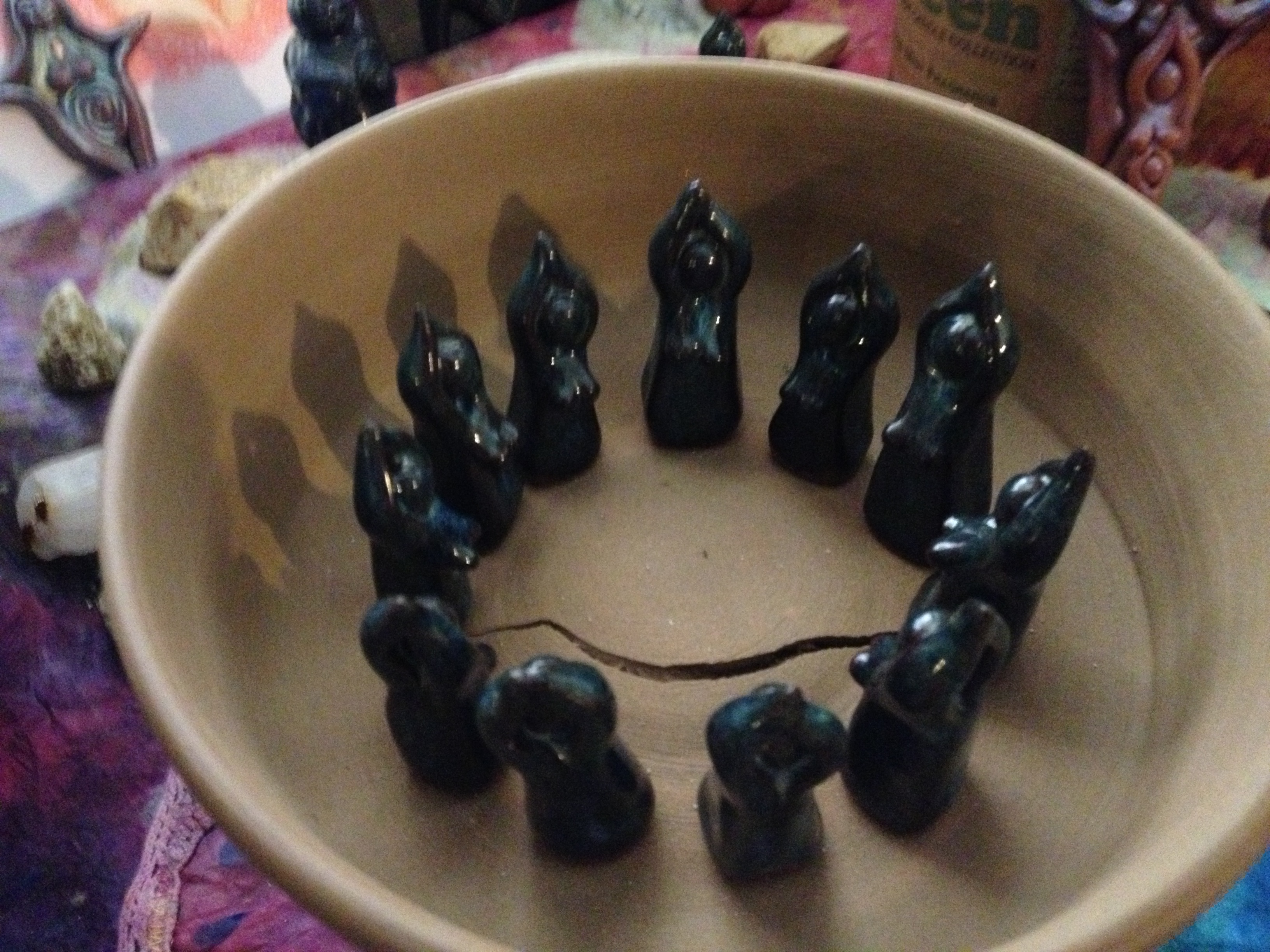
August 2013 011

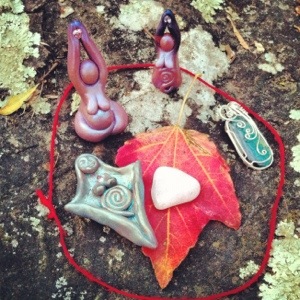
Circle of women sculptures as gifts for my women’s group. Yes, there’s a crack—“the world cracks everyone”—but that is how the light gets in…

to belly dance and chant

while I deliver

to hold me and breathe with me

as I push

to touch me and comfort me

as I cry?

Where are the womyn who know

what it’s like

to give birth?

via Where are the women who know? | Talk Birth.

Thinking about that reminded me of the chant we sang around the fire at the festival I just returned from on Sunday night:

Dance in a circle of women,

Make a web of my life,

Hold me as I spiral and spin,

Make a web of my life…

via Goddess Chants – Dance in a Circle of Women by Marie Summerwood.

May all pregnant women and tender postpartum mamas dance in a circle of women!

I’d hoped to have time to post a festival recap and some lessons learned, but other responsibilities take precedence at least for today, so I’ll leave you with one of the pictures my sister-in-law took on a misty morning, sunrise stroll around the lake and another that I took in the Temple at the festival:

Sept 2013 090

Sept 2013 036

See also:

Postpartum Survival Tips

Timeless Days: More Postpartum Planning

Mothers Matter–Creating a Postpartum Plan

Planning for Postpartum

Some reminders for postpartum mamas & those who love them

Birthing the Mother-Writer (or: Playing My Music, or: Postpartum Feelings, Part 1)

Postpartum Thoughts/Feelings, Part 2

Postpartum Feelings, Part 3

What to tell a mother-to-be about the realities of mothering


Listen to the wise woman…

20120928-123955.jpg

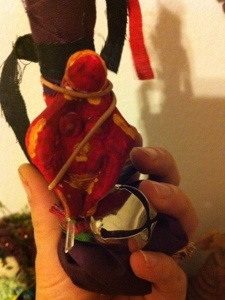
Mini mamapriestess sculpture I made to take with me for my medicine bundle.

Last summer after I finished my priestess certification and I’d been facilitating women’s retreats for two years, I got a wild idea to go to a womanspirit or goddess festival of some kind. I did a google search and found one that sounded great—the Gaea Goddess Gathering–and it was happening in just two weeks. Imagine my surprise to then look at the bottom of the screen and see that it was located only a five-hour drive from me, just over the border into Kansas. I decided it was “meant to be.” My mom and a friend signed up with me (and Alaina) and we packed up my van and went! The night before we left on our adventure, I sat down at the kitchen table and felt a knife-like stinging pain on the back of my leg. I’d accidentally sat on a European giant hornet (these are not regular hornets, they are literally giant hornets about two inches long).

20120928-123138.jpg

Sting before I left.

Though it became hot and swollen and terribly painful, we set forth anyway. I asked for input on Facebook and did google research and started putting benadryl cream on it, even though I usually go with home remedies over medical-model remedies. It got worse and worse, eventually running from my hip to my knee and wrapped around my entire leg so
that two thirds of my thigh was sting-area and the difference in size between my legs was noticeable through clothing. During the festival, as I watched myself get worse and worse and people kept making remarks about needing epi-pens and maybe I should go to the hospital, I decided to dispense with the benadryl and listen to the wise women instead. My friend found plantain and made me a poultice. The cook gave me baking soda that I applied in a paste. I went to a ceremony that involved a healing ritual with sound and a priestess in a tent beat a drum over me as I lay there on my stomach. After a little Reiki healing, she then leaned very, very close to my ear and said quietly, “are you taking good enough care of yourself? You give and give and it is time to receive. You need to be taken care of too.” And, I cried.

20120928-123203.jpg

Sting after arriving. I didn’t take any pictures of it at the worst. It got about twice as bad as this. Every time I thought it could not possible get worse, it got twice as bad!

I came out of the tent and laid on a bench and women I didn’t know came and put their hands on my back and made me tinctures of strange plants they found in the herb garden and I drank it even though it almost made me gag. Another woman I didn’t know rubbed my back and though I couldn’t even see her face, she leaned close to my ear and said, “sometimes life stings you. Your friends, your family, being a parent, taking care of your children. It stings sometimes. Things people say without meaning to sting you. You’re sensitive, Sometimes it stings a lot and you worry that you’re not good enough. I see you with your baby. You are such a good mother.” And, I cried again, lying there on bench in the middle of nowhere with my dress pulled up and my red, sore, swollen, horrible thigh covered with a poultice of mysterious weeds, surrounded by women I didn’t know, but who were caring for me. And, I got better. By the time I got home, the sting was almost totally healed.

As soon as I returned home, I made a list, intending to develop it into a blog post about everything I’d learned at this gathering of women. The list languished in my drafts folder and the wheel of the year continued to turn and now it is September again and next week, some friends and I will be hopping back in my van and heading back to the GGG for this year’s festival. I decided the blog post will never get “developed” into the post I had intended, but that I can still share my list anyway. I also realized that I have been reluctant to post it here for fear of being too “weird” and alienating readers. But, Talk Birth is like a buffet, you can take what works for you and leave the rest! 😉 I’m also writing now because I’m going to go ahead and give myself a week off from blogging and I wanted to post some sort of explanation as to why. I’m going to focus on getting ready for the festival (I’m selling jewelry while there too!) and hanging out with my family (and, oh yeah, grading all the papers that are due this Sunday night!).

So, what did I learn at the GGG?

  • I have a lot to learn
  • Likewise, I know more than I give myself credit for—I am both more skilled than I may think and less skilled than I’d like to be.
  • I want to be more confident
  • I need to always remember to look for a wise woman when I need help. And, that allowing myself to be cared for by strangers is a surprisingly powerful experience.
  • I am much more quickly judgmental than I realized or like to admit—I judge the book by its cover and assess “worth” by appearance more often than I thought and I disappointed myself with that. I learned that ALL women have hidden gifts and I was surprised over and over again what people had to offer, that their appearance might not have suggested.
  • My body knows how to heal (I’ve learned this before, also from a bug)
  • It was great to have just one-on-one time with Alaina. She just wants to be with me. I didn’t have to cook/do laundry or anything else. I just toted her around which is exactly what she needs/wants (*note from this year: she still wants exactly this and I’m looking forward to giving it to her).
  • My mom is incredibly creatively gifted. And, I’m lucky to be around so many creative women in my own community. They have awesome gifts!
  • I don’t need to do everything—other people have their own talents and I don’t have to “do it all,” all of the time.
  • But by the same token, I don’t have to be good at everything and it is still okay to do things and be bad at them, but still try. (However, it also good to let other people have their specialties/share their gifts. I don’t have to do it all.)
  • I can be open to receive.
  • I can be a singer! Perform in a group! Feel awesome!
    20120928-123214.jpg

    Once this started, I knew I’d made the right choice to come after all!

  • Ditto drummer!
  • Explanation of the two points above which also connect to the one about not having to do everything and yet it also being okay to try. One of the sessions at the festival was the “GGG Soul Singers.” One of the women taught a large group of us several cool songs. During the special dinner that night, we got up together with sound equipment and everything and performed our songs. Everyone was yelling and cheering and clapping and it was great. So much fun! I’m a terrible singer, I know that, but that night I felt like I was amazing. And, I learned that being terrible at something doesn’t mean you can’t do it anyway and enjoy yourself. I’m looking forward to doing this again this year! At this festival I was captivated by these massive community drums the women had. Large enough to be played by four or even more women at once, I absolutely loved them. Even though I didn’t know what I was doing, I tried, and discovered I could indeed do it. I could drum and sing and keep up with the group. When I got home, I decided I must have a drum like this and spent way too much money and ordered one online. And, even though I’m tone-deaf and “non-musical,” I can play it. And, I’m still amazing, whether I really am or not!
  • I felt both more and less competent—related to knowing a lot and yet having a lot to learn, I discovered that I’m a pretty good ceremonialist, a lot better than I’d given myself credit for, but that some other people are way better than me (and others are not. What matters is trying).
    20120928-123806.jpg

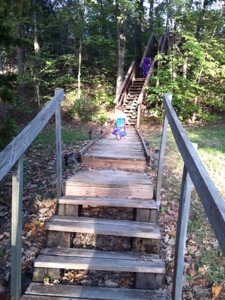
    Intense stairs from the dining hall and lodging to the “ridge” where ceremonies took place. Navigating these was NO FUN with that sting on my leg! But, isn’t tiny Alaina cute setting off on her own and heading on up?!

  • I was acknowledged/recognized as priestess/clergy to my own circle of women and it felt very good to be seen in that way. I’m trying to be/offer/bring something to the local area that still feels tender and vulnerable in myself. I lack some confidence. Want to build it! And, yet, I do it anyway. I’m brave! Maybe I’m not as skilled or musical or awesome as I could be, but I’m pretty darn good and…at least I TRY!
  • Want family to be clear priority. Family harmony is a top goal. I want to make sure to give them my good stuff too! Don’t save my passion and enthusiasm for “others” only!

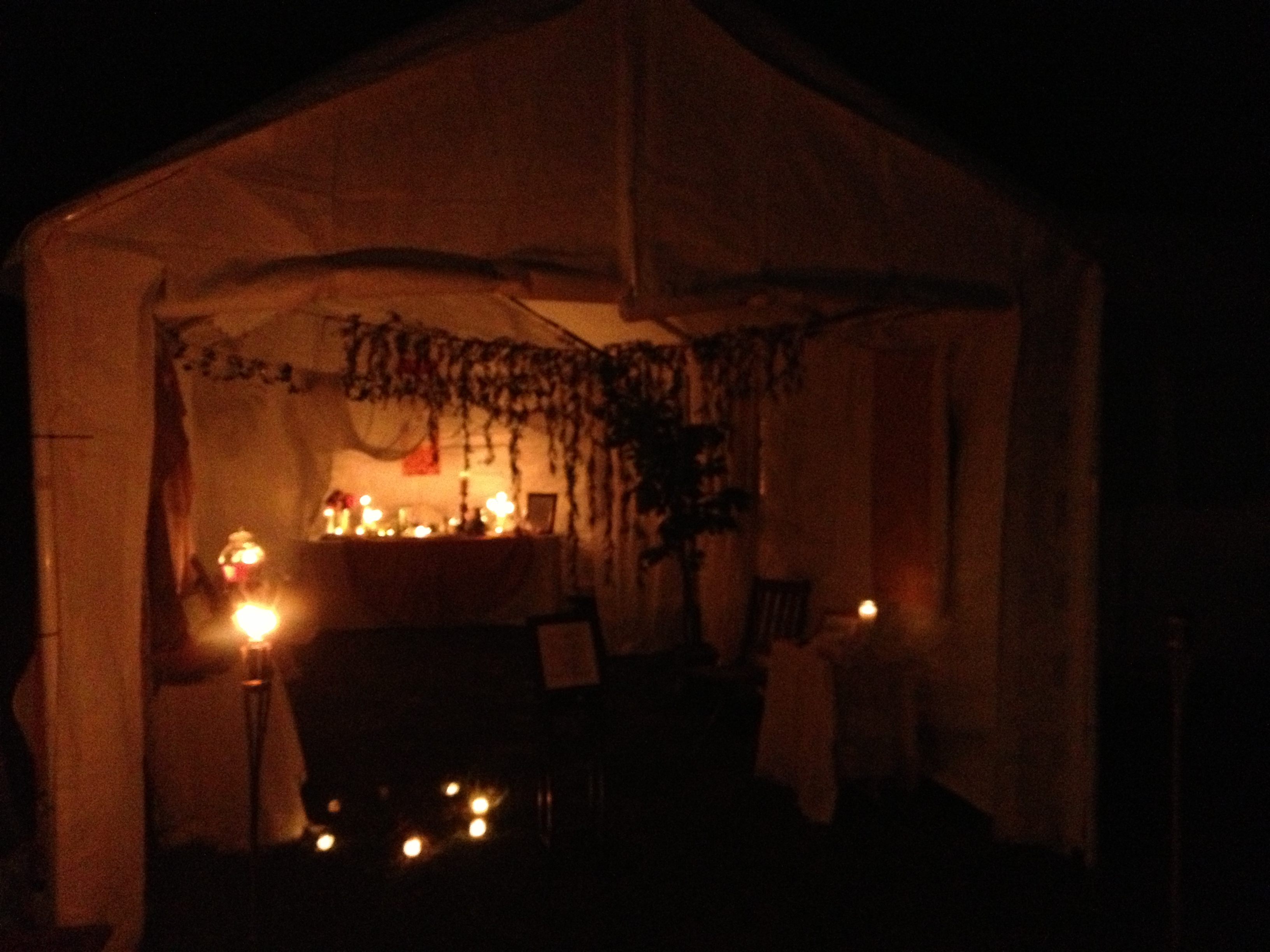
When I got home from this festival, I was so inspired that I planned and facilitated a pretty great nighttime, firelit “sagewoman” ceremony in a teepee (with drumming on my new community drum) for the wise women of my own community. As a ritualist/ceremonialist, I learned from the GGG-experience that ambiance really, really matters in offering a cool ritual.

Since last year, I’ve developed my ceremonialist skills even further and last month received an additional supplemental ordination from the American Priestess Council. I’m almost three years into my D.Min program, I’ve taken advanced coursework in ritual design as well as pastoral counseling, liturgy, the role of the priestess, ethics, history, and so forth. At this time last year, I was struggling with whether or not it was “okay” for me to own the Priestess identity I felt “called” into and at the GGG I was seen and heard into this identity particularly by my friend and also by my mom. It turns out it is okay for me to serve others as a Priestess and to claim that title with authenticity even though I’m not as perfect and amazing as I feel like I should be (I’m also a blogger for SageWoman magazine and I’m currently working on a post called who does she think SHE is, that is about exactly this tension).

Some more pictures:

20120928-123107.jpg

Henna feet! From the woman who did this for me, I learned the phrase: “sparkles are my favorite color.”

20120928-123044.jpg

Medicine bundle! This was the best class ever. The woman brought piles and piles of random and awesome stuff and it was all free to choose what you wanted for your bundle. How cool is this face?!

20120928-123839.jpg

She also had simple clay goddesses for us to paint and attach as well as we could.

20120928-123121.jpg

Pensive little Lainey looking back thoughtfully at the stairs up which she just journeyed.

20120928-123746.jpg

Back home demo’ing a beautiful sarong gifted to my by my seeing friend!

20120928-123817.jpg

What’s this…

20120928-123825.jpg

…I hear…big DRUMS!

20120928-123850.jpg

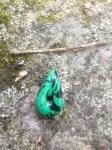
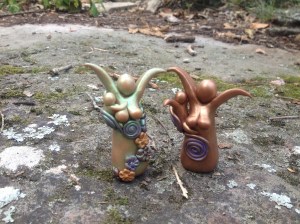
When I got home, I was inspired to make some new sculptures and Mark cut a lovely gemstone and made a pendant.

Here I go again! I wonder what lessons await me this year…

MamaFest!

Last summer, my Rolla Birth Network friends and I conceived of a local event to be held celebrating mothers. We made a couple of August 2013 020decisions in planning our event that were really smart: we decided to focus on celebration rather than education (or even activism), we decided not to involve any money (either for the attendees or the hosts [aside from tabling materials/supplies]), and…this is key…we also decided to only do that which was within our own personal resources to provide. It worked! We pulled off a lovely MamaFest event at Tara Day Spa in Rolla. It was well-attended and fun and involved very little expense for anyone. It was work, of course, but it was within our resources/capacities. Community organizations were welcome to have a table at the event for free with the only stipulations being no formula/bottle materials (this event is co-sponsored by La Leche League of Rolla in conjunction with World Breastfeeding Week) and that they had to provide something to do at their table. Our vision was that this event would not involve simply walking around picking up flyers and leaving, but instead would provide an opportunity to hang out with friends, see cool things, learn some stuff, and make some projects. I had a birth art booth that was a delight for me to offer to the women.

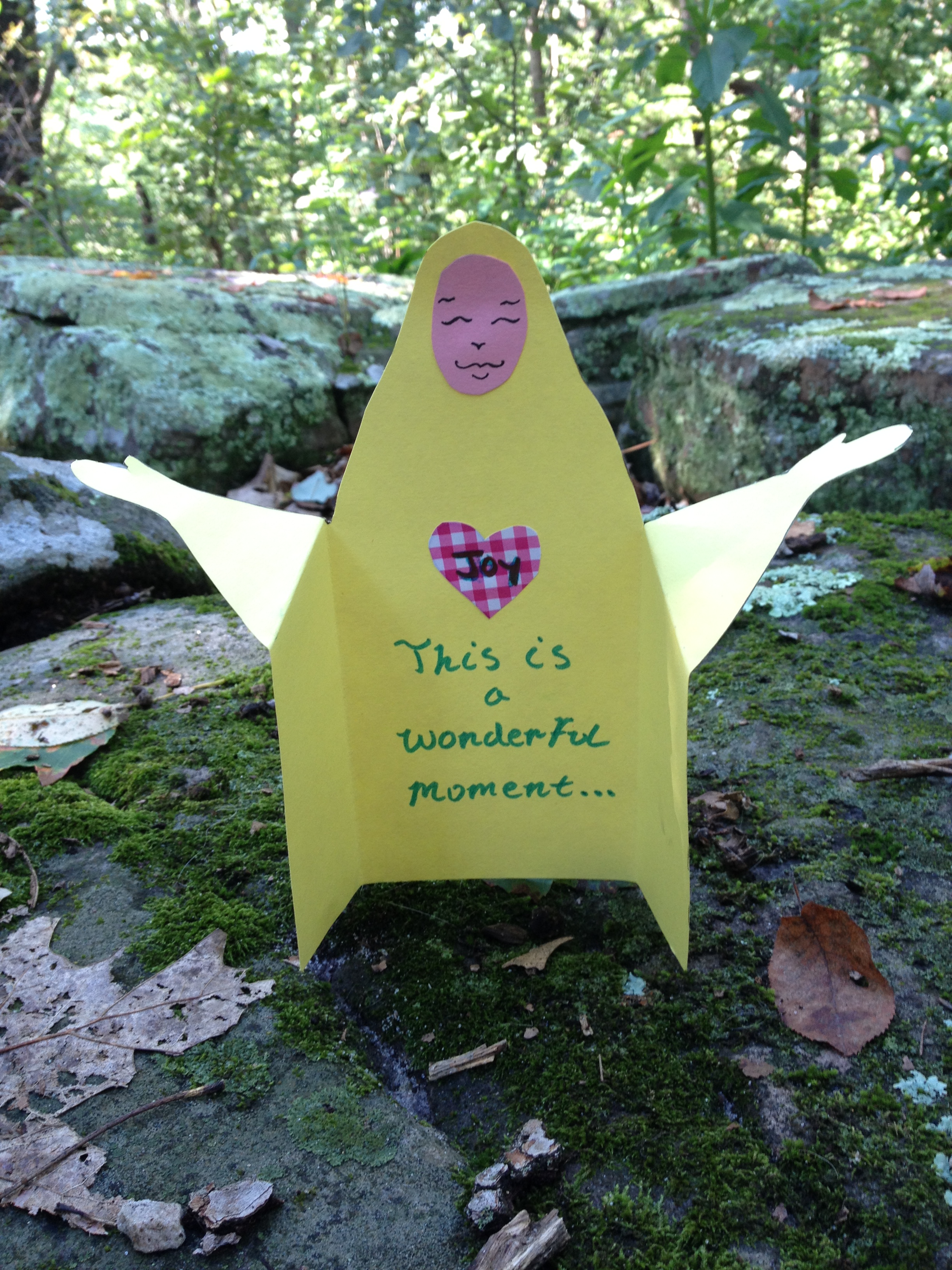
This year in August, we hosted our second annual MamaFest event, again with a similar vision. Our resources/time were a little slimmer August 2013 017this year due to peoples’ schedules (particularly my own, leaving my co-founder shouldering most of the organizing effort), new babies, etc. We had fewer exhibits and fewer attendees and slipped more into the boothy-vibe that we hoped to avoid, and learned some things to try next year. I still consider the event a success, especially considering the fairly minimal womanpower with which we had to work. It was an especially good outreach opportunity for LLL and I said at the end that even if I hadn’t been involved at all with the planning of it, I would definitely have considered it a worthwhile event to continue attending with my LLL booth. I was super excited about my simple, but pretty (and free!) offering for the birth art booth this year: mother affirmation/blessing cards. Unfortunately, very few people took me up on my offer and I was a little sad about that, but my LLL booth with its breastfeeding trivia game and got breastmilk ™ pins was pretty popular. We have lots of ideas for next year and the possibility of experimenting with new directions, such as doing away with the booths altogether and having more retreat-like experience stations (i.e. yoga). What we know we want to keep is our commitment to celebrating women and their capacities, because they’re just super awesome and worth celebrating!

Here are some pictures of my booth and some projects from the event:

August 2013 016

Birth art booth!

August 2013 031

Loved this thumbprint necklace project offered at the booth of a local doula/photographer. Alaina appropriated it immediately because, “me like hearts!”

August 2013 028

Babyloss memorial charms offered by the Rainbow Group (local pregnancy/infant loss support)

August 2013 015

Emergency back up project that I scrambled for when I realized people weren’t making my cards–affirmation “stones” (glass pebbles written or drawn on with glass paint markers).

August 2013 013

At least my own loyal family members showed up and made my project! (mom, sister, and visiting cousin)

What I learned from this event again this year was that you do not have to live in a city to be able to offer something like this in your community, all you need is a small handful of women who care and who can use their skills and resources to make it happen! 🙂

A Mother’s Nest

“Although pregnancy and birth is a richly intuitive and instinctive process, a woman will prepare her ‘nest’ and birth according to the style of her culture, in the same way that a particular species of bird will build its nest with whatever is available.” –Pam England

I am planning a mother blessing ceremony for a good friend in September. In addition to fun plans like a belly cast and henna, she asked for something a little different than our usual “roster” of blessingway activities, in that she wants her friends to prepare a Mother’s Nest for her. We are going to communally decorate a birthing sheet for her bed and bring supplies for a “birth box” to have available during birth and postpartum (i.e. containing raspberry leaf tea, chlorophyll, postpartum pads, paper for placenta prints, outfit for new baby, towels etc. All the supplies you like to have on hand for a homebirth!). And, each guest will bring items to add to her bedroom, so that the whole room becomes a Mother’s Nest of birth power, strength, and support, basically like one huge birth altar!

While it wasn’t a communal process, I did intentionally create a nest for myself for the birth of my last baby. I put a futon on the floor about two feet from the bathroom and double sheeted it with a waterproof sheet in the middle and some chux pads on top. I wanted a nest that allowed me to “crawl to the bathroom” if needed. This is a request I repeated frequently during my pregnancy and it was really important to me. My mom asked, “why would you be crawling to the bathroom? Someone could help you?” and all I could say is, “I want to be able to crawl to the bathroom if I need to!” After my other births resulted in unfortunate and extensive labial tearing, I really, really disliked trying get up and into a regular bed. This time, I wanted a birth nest on the floor that I could roll off of and drop down onto, rather than trying to swing my legs out or lift them up to get in. As it was, I remained in this nest for the first three days after my daughter’s birth. I never crawled to the bathroom, but I could have if I’d needed to, dang it!

In the photo, the gray plastic tub near the futon is my birth box, all packed with labor and postpartum supplies. The cardboard boxes on the floor nearby contain my neonatal resuscitation equipment (before my daughter’s birth I became certified in Neonatal Resuscitation, because I had a fear of the baby not breathing at birth—rather than be frozen by that fear, I decided to do something about it. We then realized that it wasn’t that smart to have the only person who knows how to resuscitate a baby also being the person giving birth to that baby, so I trained my husband and mom how to use the equipment as well). I kept these supplies with my emergency birth plan underneath separate from my birth box, in order to mentally/visually have space between what was “normal” (the birth box) and what was “just in case.” My doppler is also there and some extra chux pads. You can also see my lovely birth altar with my Woman Am I picture on it, watching over my birth nest.

My baby was born into my waiting hands in this very nest, just as I planned. She breathed and cried immediately.

Moments before her birth. You can see the doppler in front of me, because I suddenly got freaked out about needing to listen to her heartbeat. My husband is wearing a hat because it is January and we heat with wood, but were busy having a baby instead of tending a fire!

Moments before her birth. You can see the doppler in front of me, because I suddenly got freaked out about needing to listen to her heartbeat. My husband is wearing a hat because it is January and we heat with wood, but were busy having a baby instead of tending a fire!

I look forward to helping my friend create her mother’s nest. How about you? Do you have any ideas for a Mother’s Nest? Did you build one for yourself? What would you like friends to contribute to a nest for you?
Modified from this post.

Tuesday Tidbits: Miscarriage Care

66112_618725968151055_156983473_nFor ages, I’ve had the following quote about miscarriage and doctors saved in my drafts folder:

“The only person who can really tell you what is happening to you is your own doctor, who peers into you with a light and a speculum, who samples your blood or urine, or who presses a sonogram paddle into your belly. If you are in trouble, bleeding, scared, or more depressed than you think you can handle on your own, you must find help. Read and research all you can, but remember that the one-on-one assistance of a real doctor is the only thing that will give you answers that count. If you don’t like or trust your doctor, then find one you can…”

I Will Carry You

I saved it because it bothered me so much to read. One-on-one assistance of a real doctor is the ONLY thing that will give you answers that count?! I disagree so much with this and it saddens me to know that women turn to doctors for support that they are unlikely to be able to provide, particularly if women are looking for compassion. My own ER doctor experience was horrendous and involved quotes like: “this is very common, it is just natural selection” and, “this wouldn’t hurt so much if you would just stay still,” as well as leaving bloody handprints streaked across the bed and blood on the floor (specifically after being told how very disturbed I was by all the blood). In contrast, I was treated with beautiful compassion (and actual, genuine, useful help) by every midwife I talked to. In defense of doctors though, I also went to my own family practice doctor for a follow-up visit and she said one of the best things I heard from anyone, doctor or not: “some women find comfort in knowing that love was all their babies ever knew.” And, before I left, she asked if she could give me a hug. That mattered more and lasted longer than any “advice” that she gave me about possible causes, trying, again, etc.

So, this week, related miscarriage articles and stories started catching my eye, such as this one that touches on the various dehumanizing ways many women are treated in medical care environments:

Rush of blood to my brain. Pounding in my ears. Breathing comes in short bursts. And I’m ushered out into the waiting area where I’m told to go home to wait for it to ‘come away’. And there I find myself, blinking in the sun, shaking like a leaf. So I waited. And waited. One week later the tiny form within still clung on. I saw it in my minds eye, not wanting to let go of me, its mother. Perish the thought. Instead I spent the week overly busy whilst somehow trying to recalibrate a defeated dream and birth date that would never occur. Finally, I just booked in for the D&C, and signed for an “excavation of contents.”

I am a psychotherapist and counsellor. I focus mainly on fertility in all its guises. From pre pregnancy to birth and beyond I am struck as women and their partners endure dehumanising experience after dehumanising experience, just like this one…

via The heartbreak of miscarriage

And, that reminds me of what Ina May said in her Birth Story documentary that the number one rule of maternity care should be Be Nice and she asks us to consider how just those two words could change maternity wards. While not miscarriage-specific, of course The Neighborhood Doula’s status on Facebook tonight jumped out at me:

“We need to treat women tenderly in labor. This may be the first time she has ever been treated that way. She will pass that on to her baby. If mom has a traumatic birth, filled with interventions she may be afraid of her baby. Fear of baby = disempowerment. A new mother should never feel that way. We need to treat dad with tenderness during labor too. If we treat him well, he will treat mom and baby well.”

Wise words from Ina May Gaskin at the 2012 Joyful Birth and Breastfeeding expo, Asheville, NC

Over the weekend, I was touched to see a photo from Stillbirthday on Facebook with a caption that almost made me cry because I think this perspective is SO important:

Supporting Birth Diversity means…

…Honoring that birth can occur, at any point in pregnancy.

The word “birth” is not reserved for full term, neither is it exclusively for live babies.

(Share your photo and what Supporting Birth Diversity means to you.)

And, of course I’ve already shared my thoughts on miscarriage as a birth event: 421806_605009189522733_1988490402_n

“Miscarriages are labor, miscarriages are birth. To consider them less dishonors the woman whose womb has held life, however briefly.” –Kathryn Miller Ridiman

via Miscarriage and Birth | Talk Birth.

I also read several articles about other women’s experiences with miscarriage as a birth event such as this moving exploration of “missing” when your expectation was of carrying:

Instead I was overwhelmed by pain that felt like the worst wrenching of labor, contractions that came so fast I could barely breathe, shaking and numbness in my limbs that finally made me crawl to the phone and call the nurse who told me to get to the ER as fast as we could. I’d never heard stories of the real, raw truth of what it means to miscarry, so I had no idea what to expect.

But just because a death comes early does not mean it is lighter to bear or let go…

on carrying and missing | mothering spirit.

And this article that touches on the birth event concept, as well as issues of guilt and blame, as well as the idea of miscarriage as a rite of passage:

That is why there is no doubt in my mind that any woman – and indeed any family – who goes through a miscarriage should see it as a rite of passage. The more that miscarriage is seen as horrific, as something which somehow could have been preventable, and is therefore blamed on the woman’s health, fitness or diet, the more we are denying ourselves as fallible animals. We are making women responsible somehow for these acts of nature. We are instilling guilt and fear, layer upon layer. The result is a woman, and by extension her family, who no longer trusts her body to do what is right. It must be faulty – it miscarried. Her body was not healthy enough, not experienced enough or somehow not adequately formed to be able to carry the pregnancy to full term.

This is not a healthy attitude to have, and can only result in more negative birth outcomes. One of the reasons I do not have a black tinge around my memories of my son’s birth is that, through it all, I trusted in my body. I did what I could, and although I couldn’t understand WHY it had happened, I came to accept that this time was just not meant to be. I am an animal, and I am fallible. This time I fell into the statistics of 1 in 7 pregnancies failing. There’s really no more to it – no guilt, no shame, no fear for future pregnancies; it’s just not appropriate.

Having gone through this whole process I now feel more of a woman. Yes, really. Not only have I experienced the horror myself, but I have had countless other women suddenly willing to share their own story with me. In a sad way I feel as if I have entered a secret club, something taboo and a bit shameful. I’m not really sure why nobody wants to discuss miscarriage, when it affects so many of us. If it were accepted as a rite of passage for any woman, as much as childbirth itself, I feel we’d all have a more positive outlook on all births, whatever the outcome.

via Guest Post: Miscarriage as a Rite of Passage | The Happy Womb.

I also finished reading a quick book that was offered free on Kindle last week (now back to a regular, reasonable price) and saved these two quotes:

In the days that followed, the bleeding continued. Every time I would see the blood, I couldn’t help but think I was losing my child slowly bit by bit. It wasn’t just ordinary bleeding; it was the end of my baby’s life. It was the end of my dream to become a mom. I was devastated. I felt so lost and alone. Unfortunately, my husband didn’t seem to understand or be able to comfort me. To him, the baby was not even real yet. And since he was actually afraid of becoming a dad, I think in some ways he was relieved that it didn’t work out. In my mind, I had lost a child. Someone important to me had died, and I was grieving. The hard part is that I was grieving alone with no one to share my sorrow. This is often a problem for women who miscarry. You feel so sad and devastated, but many times your friends and family don’t get it. They don’t realize how much love you can feel for a baby you never saw, met or held. You try to turn to those you love for comfort and support, but they have little to offer you during the time when you need someone to lean on the most. It’s not that they don’t want to help or that they don’t care. No one wants to see you sad or hurting. They just don’t understand what you are feeling and the intensity of your emotions. Even the words they say to you can come across as insensitive or hurtful. They often dismiss your grief and trivialize your pain, all the while thinking they are being encouraging and supportive.

(Amazon.com: From Pain to Parenthood: A Journey Through Miscarriage to Adoption eBook: Deanna Kahler: Kindle Store)

The author also touches on the depth of the grief following miscarriage and how very, very real it is (I’ve written before that one of the things I kept saying to my parents when they came to my house following Noah’s miscarriage-birth was, “this was real. I want you to know it was real.” (I honestly think I didn’t think miscarriages were “real” before, in the sense that I categorized them as something other than birth or death.)

According to The Women’s Encyclopedia of Health and Emotional Healing, “the length of the pregnancy is not as significant as how emotionally linked a woman feels to her baby.” The book goes on to say that if you felt your child was real very early in the pregnancy, then you may experience as much grief as someone who has lost a newborn. If the love for your unborn child was already there, you will be heart-broken and devastated. Your loss can affect you in many different ways, some emotional and some physical. You may notice muscle tension, have trouble sleeping, have difficulty concentrating, suffer from frequent headaches, cry a lot or even notice unusual sensations in your body.

(Amazon.com: From Pain to Parenthood: A Journey Through Miscarriage to Adoption eBook: Deanna Kahler: Kindle Store)

And, these quotes made me remember a brief post from The Amethyst Network regarding early losses and the validity of feelings:

I felt very conflicted over this. I HAD grieved before, but if I was grieving over not-an-actual-miscarriage then did it count? If my loss wasn’t actually a loss, then was my grief valid?

I was talking with a friend (who happens to also be involved with TAN) and explained to her how I was feeling confused and upset over this. She taught me something important.
“You grieved” she said. “It doesn’t matter whether the physical experience was a miscarriage or not, because the grief was real, you experienced the emotional process, and that is valid.”

And so I would say to all mothers who have had an early loss, or a loss that they felt in their gut even though there was no proof. Your feelings–no matter what they are–are valid feelings. We each have different experiences, and we each have different feelings. But what you feel is legitimate, regardless of the circumstances.

Did It Count?

995401_615271668496485_1504558296_n

(and, really, there is no “shame” in not acknowledging how it changes us either, the shame rests in the lack of acknowledgment from so many around us)

This last photo (for some reason it refuses to let me caption it?!) is of some “hope” baubles created by members of the Rainbow Group (local loss support group) at our recent MamaFest event (more about this soon, I hope!).

August 2013 028

Wednesday Tidbits: World Breastfeeding Week!

wbw2

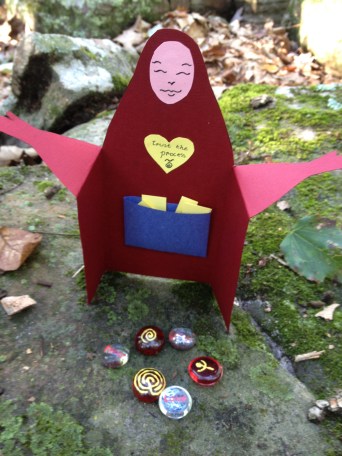
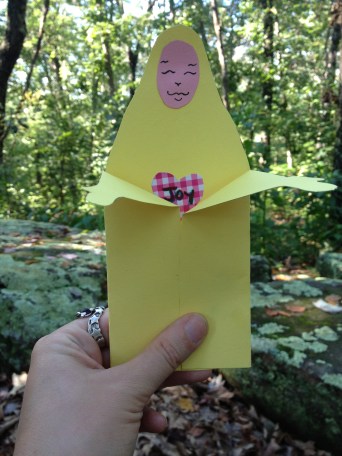
Today is the last day of World Breastfeeding Week and I fully intended to create a link-full Tuesday Tidbits post about this yesterday. However, I was busy helping actual breastfeeding mothers at my monthly LLL meeting and then came home and worked on my handout and project preparations for our second annual MamaFest event this Saturday. I then had a faculty meeting while Mark took Lann to tae kwon do and went grocery shopping with the other kids and by the time I had a few minutes to spare again, it was 11:00 at night and I figured I might as well forgo Tuesday Tidbitting and just watch Teen Wolf instead! 😉 For MamaFest, I’ve been getting together handouts, a trivia game, and pins for prizes for my La Leche League booth, birth art supplies and display items and birth education handouts for the Rolla Birth Network/Talk Birth/birth art booth, and miscarriage/stillbirth handouts for the Rainbow Group loss support table. I’ve toyed with various projects for my birth art booth and finally came up with something that feels perfect—birth or motherhood affirmation/blessing cards!

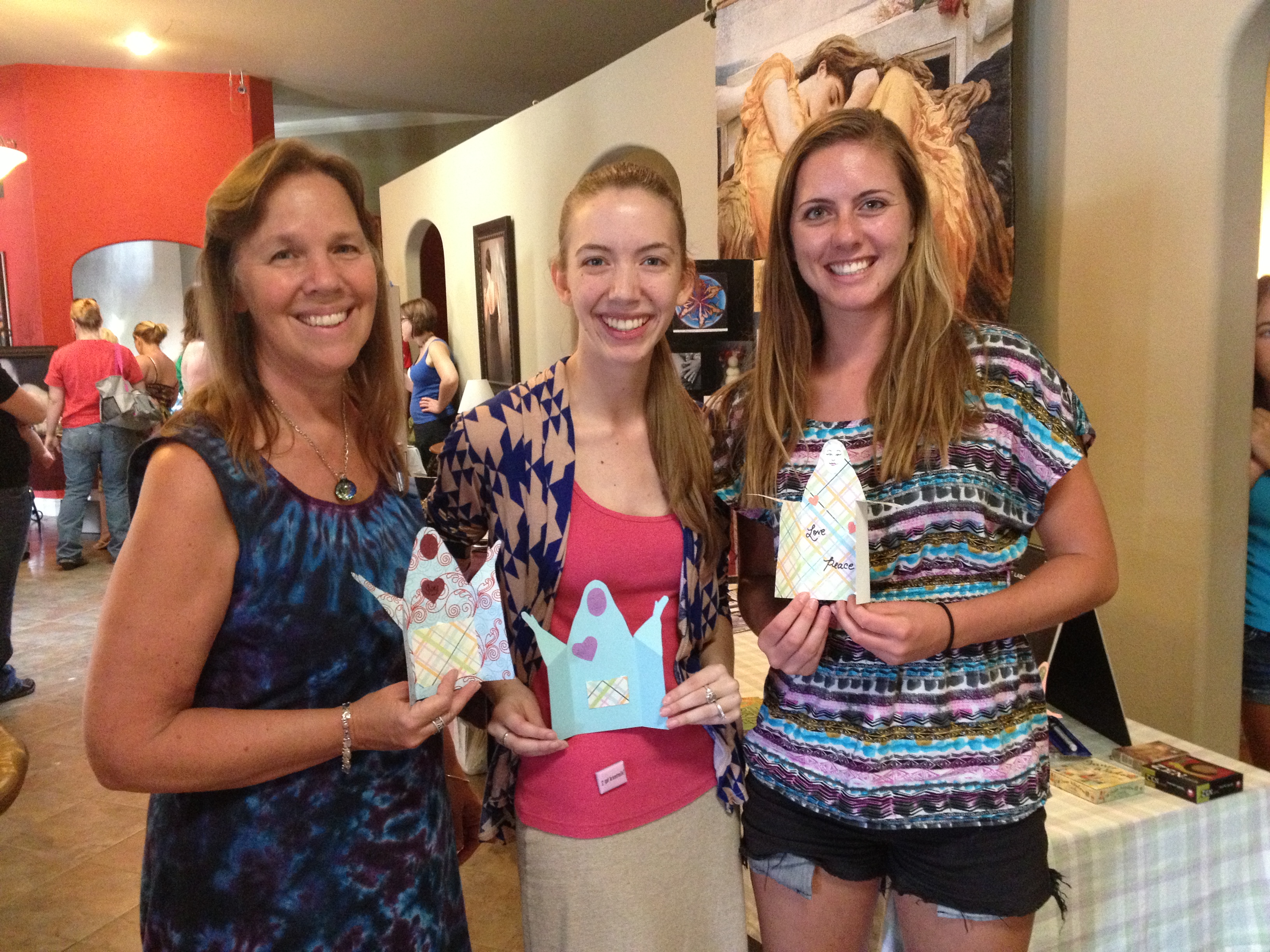
August 2013 042August 2013 046

August 2013 052

I got better at them the more I made. This one has a pocket with other little affirmation cards in it. I also started to experiment with painting on little glass “stones” to go in the pocket too. I need glass paint markers really though and I quickly ordered some, but they won’t make it in time for MamaFest.

For ideas for affirmations for them, I’m bringing along several books, including:

25 Ways to Joy & Inner Peace for Mothers

25 Ways to Awaken Your Birth Power

World Breastfeeding Week often seems like an occasion during which the media perceives non-breastfeeding mothers as being “discriminated” against somehow, and some women seem to take the occasion personally—like its very existence is a personal criticism. This article about the “I Support You” initiative is good in theory, but I sense in it the suggestion that WBW is specifically trying to make non-breastfeeding mothers “feel bad” and I did not appreciate the loads and loads of comments on the article that reference “La Leche Nazis”—particularly because said “Nazis” apparently visit mothers in the hospital to critique their mothering and I seriously doubt that any of the experiences shared in the comments were actually with LLL Leaders (who I have never been known to go to a hospital room uninvited and try to make mothers breastfeed. That isn’t part of our job at all. The commenters were probably dealing with whichever nurse is assigned to lactation, trained or otherwise).

I plan for my message to say: “To all those mothers who’ve learned the difference between the mother you think you will be and the one you actually are — I Support You.”

via I Support You: The Conversation We Should Be Having About Breastfeeding And Formula.

A related article that also has some great insights and thoughtful content (but for which, again, I feel breastfeeding advocacy is misconstrued):

Three billion things can go wrong when you breastfeed. But even with a bad latch, tongue tie, thrush, a clogged duct, and a crazy oversupply, I still think that nursing this little boy is the most amazing magic that I’ve ever felt in my life. I am the only thing that is keeping my child alive right now. You’re damn right that’s a superpower. When my breasts are engorged and I’m in pain, or when I swoop in to a room and soothe my screaming baby with my body, I want to shout it from the rafters, just like all of you did. This time, my breasts make milk. That is my superpower. And yet I have seen that breastfeeding moms get tested too: the nasty stares, the mean comments, the endless questioning that makes you doubt yourself: “Are you sure he’s getting enough? He’d sleep longer if he took a bottle. He’ll never be independent if he’s attached to you all the time.” The Mommy Wars have fueled the embers of fear and failure on both ends of the feeding spectrum. The simple act of feeding your child now comes with having to defend your choices.

via Milk Drunk | Kim Simon.

The underlying message of these articles, however, as well as that of World Breastfeeding Week itself, is really about the value of community support for mothers. The whole “village” and “tribe” concept. When I hear mothers describing attempts to breastfeed, I hear mothers with broken hearts as well as many stories involving broken circles of support:

I am a systems thinker and always hold in mind that breastfeeding, like all aspects of women’s lives, occurs in a context, a context that involves a variety of “circles of support” or lack thereof. Women don’t “fail” at breastfeeding because of personal flaws, society fails breastfeeding women and their babies every day through things like minimal maternity leave, no pumping rooms in workplaces, formula advertising and “gifts” in hospitals, formula company sponsorship of research and materials for doctors, the sexualization of breasts and objectification of women’s bodies, and so on and so forth. According to Milk, Money, and Madness (1995), “
infant formula sales comprise up to 50% of the total profits of Abbott Labs, an enormous pharmaceutical concern.” (p. 164) And the US government is the largest buyer of formula, paying for approximately 50% of all formula sold in the nation…

via Breastfeeding as an Ecofeminist Issue | Talk Birth.

Giving Birth with Confidence also wrote about the role of the breastfeeding village:

You’ve probably heard “it takes a village” when it comes to parenting and raising children. And it’s true — surrounding yourself with supportive family, friends, and professional and online resources goes a long way in making your parenting experience a better one. But what about a “village” for breastfeeding? Breastfeeding can be (and often is) a wonderful experience. It also can be trying, challenging, and hard work. Creating access to a network of people and resources who support breastfeeding will help you in times of need, provide a sounding board for your thoughts, and celebrate with your triumphs.

via World Breastfeeding Week: Creating Your Village — Giving Birth with Confidence.

And, so did Brain, Child magazine:

For breastfeeding advocates, then, your best shot at influencing other mothers to breastfeed is when you’re nursing yourself—and talking it up to your pals, especially if you’re central in your network, which gives you what social scientists call high “transitivity.” And, it stands to reason, that even if you’re not a breastfeeding advocate—even if you don’t even know what colostrum is—you can still be affected by the changing norms. Once your friends breastfeed in front of you, chances are excellent that witnessing a two-year-old lift up her mother’s shirt to nurse at a park just isn’t worthy of a second thought, much less a flinch. Like in the obesity study where friends of friends were shown to convey habits, you’ve become “tolerant.”

via The Village | Brain, Child Magazine.

Reading these articles made me think of the classic article by Teresa Pitman, originally in Mothering magazine (I think). I think this article is responsible for the introduction of the word “tribe” into the natural mothering lexicon as it is currently used (but, maybe it was The Continuum Concept, which is what Pitman references in her article. I know for me, it was Pitman’s article that first introduced me to the notion of a “tribe” and the fact that I needed one!). I was excited to hear her speak on the subject in person at the La Leche League International conference in Chicago in 2007.

I realized that we had formed our own, very small tribe. Spending our days together satisfied our need for adult companionship without separation from our babies, and working together made all the chores — even cleaning disgusting stuff out of the bottom of the fridge — more fun.

Eventually our husbands both found work in other communities, and our daily time together came to an end. But I had seen how important this kind of relationship is for me, and I deliberately tried to recreate it with other friends.

Not long after Vicki and her family moved, I was at a church picnic when I saw Lorna for the first time. She and her family had just arrived in our community. Something about the way she held her baby was familiar to me, and I went up and introduced myself.

She, too, was looking for a tribe, as she had recently moved away from her family. Soon my new friend Lorna and I got together every Thursday to bake bread (and sometimes other foods) for our families for the week. She had a bigger house and roomier kitchen, so we generally went there. We split the cost of the ingredients, and as our children played together (by then, I had three children and Lorna had six), we kneaded and shaped the dough. While the bread was rising, we talked and tended to other tasks. I often brought a basket of things that needed mending, so we could work together while we were waiting.

We were there when she miscarried her seventh baby, and she tended to my older children while I was giving birth to my fourth. I still think of Thursday as baking day, even though Lorna now lives hundreds of miles away.

My children are almost grown, but I still work with parents. The theme of loneliness is as strong and prevalent as it was when I sat crying on my bed with my new baby, wondering how I’d cope with no one to talk to. Certainly the desire to overcome isolation is one of the reasons why women return to work; it’s a need easily understood by those of us who opt to stay home with our children.

We truly are social animals; we need to be with other people to feel good, whole, and happy. It’s worth the effort to create tribes, however small and imperfect they may be.

via Finding Your Tribe – by Teresa Pitman.

I was also reminded of my own past thoughts about surviving postpartum:

“In western society, the baby gets attention while the mother is given lectures. Pregnancy is considered an illness; once the ‘illness’ is over, interest in her wanes. Mothers in ‘civilized’ countries often have no or very little help with a new baby. Women tend to be home alone to fend for themselves and the children. They are typically isolated socially & expected to complete their usual chores
while being the sole person to care for the infant
” –Milk, Money, & Madness

via Postpartum Survival Tips | Talk Birth.

And, I thought about the role that a tribe—or lack of one—plays in “lactation failure,” that may be falsely attributed to biology OR to evil “La Leche Nazis” assaulting unsuspecting women in hospital rooms with steaming piles of dogma doo.

I’ve remained firmly convinced for, like, ever, that it is culture that fails mothers and babies and not women’s bodies that fail. And, I truly wonder if it is ever possible (except for in cases of insufficient glandular tissue, metabolic disorders, breast surgery/removal, and clear physical malformations) to really tease apart whether a mother is actually experiencing lactation failure or sociocultural failure. I remain fairly convinced that in many cases it is impossible to know—but, that a mother (or physician) may certainly experience it as “lactation failure” and thus add that data point to the 1%. I have long maintained that a lot of people forget that breastfeeding occurs in a context and that context doesn’t necessarily support breastfeeding. However, I do also know from years of experience that motherbaby physiology can lead to problems too and we often overlook that in assertions about breastfeeding.

via Preventing Culturally Induced Lactation Failure | Talk Birth.

The idea of the “I Support You” campaign, with its “unbiased” subtext, also caused me to take another look at some past thoughts about “bias” and breastfeeding:

While I very much appreciate this observation and reminder, we also absolutely need to remember that biased means to exhibit “unfair prejudice”–it simply IS NOT “biased” to support breastfeeding as the biological norm and most appropriate food for babies. I was very concerned to read the comments on the post from other educators talking about their own “biases” toward physiologic birth or breastfeeding and how carefully they guard against exhibiting any such bias in their classes. Hold on! Remember that the burden of proof rests on those who promote an intervention—birth educators and breastfeeding educators should not be in a position of having to “prove” or “justify” the biological norm of unmedicated births or breastfed babies. I hate to see birth instructors being cautioned to avoid being “biased” in teaching about breastfeeding or birth, because in avoiding the appearance of bias they’d be lying to mothers. You can’t “balance” two things that are NOT equal and it is irresponsible to try out of a misplaced intention not to appeared biased. So, while I appreciate some of this educator’s points, I do think she’s off the mark in her fear/guilt and her acceptance of the word “bias.” The very fact that making a statement that someone has a bias toward breastfeeding can be accepted as a reasonable critique is indicative of how very deeply the problem goes and how systemic of an issue it is. If I say that drinking plenty of water is a good idea and is healthier for your body than drinking other liquids, no one ever accuses me of having a “bias towards water.” Breastfeeding should be no different. But, as we all know, breastfeeding occurs in a social, cultural, political, and economic context, one that all too often does not value, support, or understand the process…

via A Bias Toward Breastfeeding? | Talk Birth.

And, along these same lines, I saw a great quote from one of my midwife Facebook friends:

“Being an advocate for breastfeeding as the biological norm, healthiest and safest mode of feeding for most mothers and children is just that. It is meant to inform, enthuse, support, save lives, normalize the act. It is not meant as a slight or condemnation of non-breastfeeding mothers. Individually women breastfeed or not for a whole host of reasons. That is reality. That fact is respected and in no way is judgmental. Acknowledging the individual diversity does not change what breastfeeding is and why we need to continue to advocate for it around the world.” Desirre Andrews, CPM, RM

Exactly!

Speaking of my smart Facebook friends, I enjoyed reading a personal post from an IBCLC friend about why she didn’t celebrate WBW this month:

I think I’ve closed the “breastfeeding mother” chapter of my life, content instead to serve other breastfeeding mothers the best I know how. This is a big shift for me, since I’ve never approached breastfeeding support other than from the perspective of a mother who is also “walking the walk.” Am I “over” breastfeeding? The truth is, today, I’m ambivalent about it. My celebration of World Breastfeeding Week will always be welcome—I will never not be a supporter or an advocate, but a decade is a long time to do something, to do anything. A decade is a long time to be a breastfeeding mother; to not be one anymore, without ceremony or the closure that a more formal ending might offer, leaves me a bit unsettled.

via Why I didn’t celebrate World Breastfeeding Week this year | normal, like breathing.

IMG_7716

This small but mighty little girl still really, really, really likes to “nonny.”

Reading this made me reflect on my own breastfeeding journey and the toddler point at which I am with my own (likely) final nursling. I’ve wondered a lot if and when this chapter of my life will close in terms of working with other breastfeeding mothers. It is still very much my current reality, so it is hard to assess. What I do know is that when I go to LLL conferences and I see women who have been Leaders for 30 years, I think…that is my future. And, I leave with the distinct impression that I’m a lifer. However, a couple of years ago I might have said the same about birth work and now when I see pictures from my pregnancies, read some of my own writing, or look at some of the childbirth education supplies I’ve amassed over the years it all feels very far away now.

But, returning to the idea of support and tribes and breastfeeding women and I Support You to mothers of all kinds in their mothering journeys (which I DO absolutely believe in!), I also thought again of this:

This month as I sat in the circle at our mother-to-mother breastfeeding support group meeting, I looked around at all the beautiful mothers in that room. I reflected on each of their journeys and how much each one has been through in her life, to come to this time and this place, and tears filled my eyes. They are all so amazing. And, my simple, fervent prayer for them in that moment was that they could know that. Know that on a deep, incontrovertible level. I tried to tell them then, in that moment. How much they mean to me, how incredible they are, how I see them. How I hope they will celebrate their own capacities and marvel at their own skills. How I see their countless, beautiful, unrecognized, invisible motherful actions. How when I see them struggling in the door with toddlers and diaper bags and organic produce that they’re sharing with each other, I see heroines. They may look and feel “mundane” from the outside, but from where I’m sitting, they shine with a power and potency that takes my breath away. Moderating toddler disputes over swordplay, wiping noses, changing diapers, soothing tears, murmuring words, moving baby from breast to shoulder to floor and back to breast without even seeming consciously aware of how gorgeously they are both parenting and personing in that very moment, speaking their truths, offering what they have to give, reaching out to one another, and nursing, nursing, nursing. Giving their bodies over to their babies again and again in a tender, invisible majesty. In this room is a symphony of sustenance. An embodied maternal dance of being.

via International Women’s Day: Prayer for Mothers | Talk Birth.

August 2013 045

Stopped for some sandy nonnies.

Last year’s World Breastfeeding Week Post Round Up | Talk Birth.

New Baby Ritual (Plus Maruti Beads Review!)

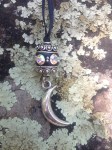
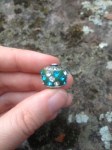
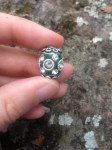
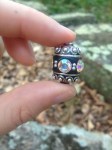
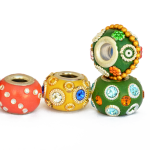
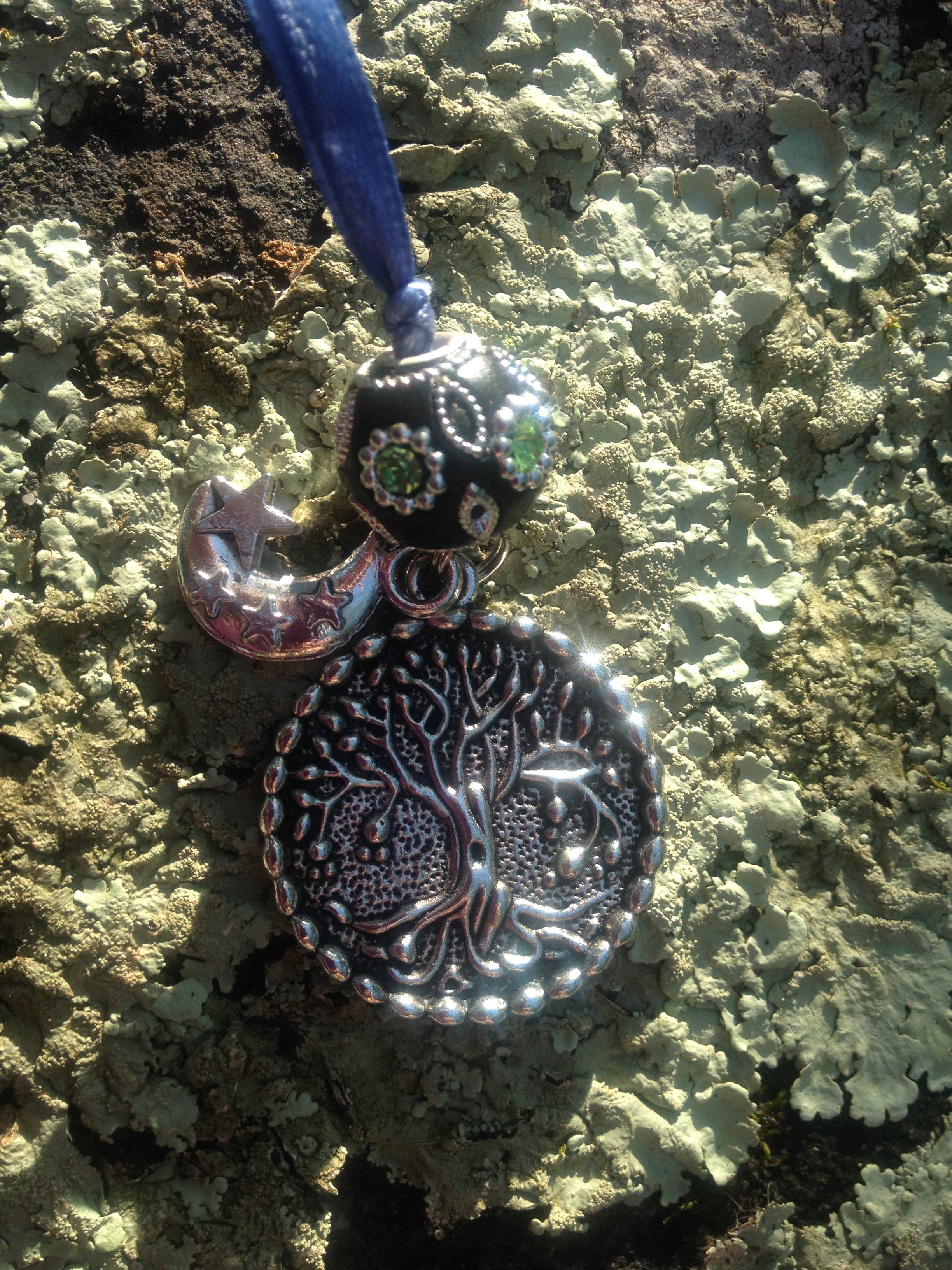
July 2013 014One of my good friends recently had her family’s eighth baby. I’ve had mother blessing ceremonies for her with past babies and I meant to do so for this baby as well, but our unexpected trip to California occurred right at the time we should have been having the blessingway. Last week, I had the chance to visit her and to meet her new baby. I decided to put together a mini-welcome-new-baby-ritual and have it with just us by the river. I called it a “blessingway in a bag” and I included some tea, candles, and bindis in the bag, so that her family could have the complete ceremony themselves on their own if they wanted to do so. Several months ago, I also received a beautiful box of Maruti Beads to review. They’ve been sitting by the computer waiting for a special occasion and this was finally it! I made a pretty necklace for my friend to honor her family’s “tree of life” and I included one of the gorgeous Maruti beads (more pictures to follow).

July 2013 043 At the river, we didn’t actually do the full ceremony that I’ve included below—I’d written it up as a complete ritual that could be done with a group, as needed/wanted—instead, I just read my friend the poems and gave her my gifts 🙂

Ceremony of Welcome for a New Baby

*Opening reading:

Wonder of Wonders

Wonder of wonders,
life is beginning
fragile as blossom,
strong as the earth.
Shaped in a person,
love has new meaning,
parents and people
sing at their birth.
Now with rejoicing,
make celebration;
joy full of promise,
laughter through tears,
naming and blessing
bring dedication,
humble in purpose
over the years.
–Singing the Living Tradition (UU Hymnal)

*Baby name is announced!

 A Prayer for One Who Comes to Choose This Life

May she know the welcome
of open arms and hearts

May she know she is loved
by many and by one

May she know the circle of friendship that gives July 2013 013
and receives love in all its forms

May she know and be known
in the heart of another

May she know the heart
that is this earth
reach for the stars and
call it home

And in the end
may she find everything
in her heart
and her heart
in everything.

(by Danelia Wild in Sisters Singing)

*Gifts, Beads, Blessings

A good idea is for each guest to bring a special bead and add it to a necklace/mobile for the baby–as each person places their bead, they offer a wish or blessing for the baby.

*Sing Call Down a Blessing
(each person fills in a word of choice for the blank space and whole group sings each in turn. i.e. “Joy….joy before you, joy behind you…”)

Call down a blessing

Call down a blessing

Call down a blessing

Call down.

__________before you

__________behind you

__________within you

__________and around you

*Hold up/out baby or mother and baby stand in center of circle.

*Group Reading (optional: simultaneous “anointing” with elements):

Deep peace of the running wave to you.
Deep peace of the flowing air to you.
Deep peace of the quiet earth to you.
Deep peace of the shining stars to you.
Deep peace of the infinite peace to you.

*And/OR

Stars give her strength
Sun turn her eyes
Moon guide her feet
Earth turning hold her
We pray for her
We sing for her
We drum for her
We pray.

–Chrystos (in Open Mind)

Back to the beads!

I received the 50 piece Maruti, Kashmiri & Lac Bead Mix. These beads are really something special! They are handmade in India and are of very high quality. Each one is like a small work of art. They are sparkly and beautiful and solid and wonderful. It is hard to decide how to use them, because they feel really special! Since my friend and her new baby are special too, they deserved one of these beautiful beads 🙂 Maruti Beads would make a wonderful, special addition to any blessingway or mother blessing ceremony.

Tuesday Tidbits: The Role of Doulas…

“So many of us are already working towards this aim – mamas (and groups) like LLL for sure, and doulas, women-centred midwives and July 2013 038doctors, and so many others
but really we need more. And there is no time or space for petty jealousies or in-fighting (and no judgments here, because it happens! I know the pain of this kind of sh*t, I’ve written a little about it before – and I may again – but it’s urgent we move beyond this if at all possible
) because we are already losing it – losing this capacity to give birth without intervention, to feed our babies from our own bodies, to experience love and connection in the fulness of which we are intended to be capable…” -Rebecca Wright (see more on why all of us are needed)

In “The Doula Phenomenon and Authentic Midwifery: Protection as a Keyword,” Michel Odent, writing in Midwifery Today issue 104, Winter 2012 describes the cultural conditioning of birth to think that women can’t do it on their own:

In this age of videos, photos and television, one cannot ignore that our current cultural conditioning is mostly determined by visual messages. Let us mention the powerful effects of the recent epidemics of videos and photos of so-called ‘natural childbirth.’ Almost always, several people surround the labouring woman. Young generations familiar with these pictures understand that the basic need of a labouring woman is to be accompanied by several persons. The effects of these visual messages are reinforced by the modern vocabulary, for example, to give birth women need a ‘coach’ (bringing her expertise) and support persons (bringing their energy). More than ever the message is that a woman has not the power to give birth by herself.

We must add that this cultural conditioning is now shared by the world of women and the world of men as well. While traditionally childbirth was ‘women’s business,’ men are now almost always present at births, a phase of history when most women cannot give birth to the baby and to the placenta without medical assistance. A whole generation of men is learning that a woman is not able to give birth. We have reached an extreme in terms of conditioning. The current dominant paradigm has its keywords: helping, guiding, controlling, managing…coaching, supporting…the focus is always on the role of persons other than two obligatory actors (i.e. mothers and baby). Inside this paradigm, we can include medical circles and natural childbirth movements as well.

Odent then goes on to explain that while the word doula comes from ancient Greek, actual modern-day Greek people advise him to use the word “paramana” instead, meaning literally, “with the mother.” He concludes his article with these important thoughts:

The doula phenomenon must be interpreted in the context of a period of transition. When the doula is understood as the mother figure a young woman can rely on before, during and after the birth, the doula phenomenon can be presented in a positive way as an aspect of the rediscovery of authentic midwifery. When, on the other hand, the doula is still another person introduced into the birthing place in addition to the midwife, the doctor and the father, her presence is counterproductive. If the focus is on the training of the doula rather than on her way of being and her personality, the doula phenomenon will be a missed opportunity. [emphasis mine]

I am concerned when I see rivalry between doula training organizations, because I think they are doing just this: focusing on the training of the doula rather than her way of being and her personality.

A long time ago I saved these two relevant, if somewhat opposing, quotes about doulas, culture, and advocacy:

First about doulas and collusion with patriarchy…

“I hate to say that the rise in popularity of doulas has done absolutely nothing to alter the status quo of hospital birth, but this seems to me to be true. In the past 10 or so years, the popularity of doulas has risen dramatically. And so has the rate of C-section and interventions in general. Am I suggesting correlation or causation? Absolutely not. Do I think that doulas are well-meaning, amazingly hard-working women who are truly passionate about women and birth and are trying to make a positive difference? Yes yes yes. But sadly, I don’t think they’re going to get anywhere. Because hospital birth is the collision of female power and patriarchy, and we aren’t going to change anything by behaving ourselves or adopting the approach of our oppressors. (No, this isn’t hyperbole. I really believe it).”
Doubts About Doulas (and patriarchy and stuff)

And, second about not bringing “politics” into the birth room…

“Now I understand there is a type of doula for everyone. Some women benefit from doulas with a more no nonsense attitude, the ones that don’t sugar coat things or come off more “militant”. Other women prefer a lighter touch or a more “middle of the road” doula. I respect the differences and the need for them. However, I believe there should be a separation of doula and advocate. Politics, in particular your own personal politics, have no business at the birth of your client. Once a client is in labor, any personal agendas should be checked at the door. There is a more appropriate time and venue to try and change faulty birth practices.

I think the same thing goes for the myth that we empower women through these actions at her birth. A woman’s power to advocate for herself and birth in the way she wants isn’t ours to give. It’s her birth and it has to be her job to find the power and be empowered. We can help, we can guide, we can even lead, but we can give that to anyone. Sadly though, through our actions, just like the hospital staff, we can take it away…”

Doulas and Advocacy: Are they mutually exclusive?

July 2013 036And, then, some more thoughts about the difference between activism and advocacy:

Activism, advocacy and support. As a birthworker I am always using one of these three tools. Sometimes I am using two at once, but never all three. And here is why: Support and advocacy can overlap. Advocacy and activism can overlap. But if you try to overlap activism and support you are going to be either ineffective, alienating, or both…

Activism, Advocacy and Support – To Brave Birth

We definitely need advocacy though and this is why:

Horrific abuse in childbirth happens every day in developing nations where women and their babies are often denied access to life-saving obstetric care.

Freedom for Birth – Can Anyone Argue Against Respecting Women’s Rights in Childbirth?

And, regardless of where or with whom or in which country women give birth, they deserve access to evidence-based care: What is Evidence Based Birth and Why Should I Care? — Giving Birth with Confidence

Birth is also a creative process:

“I believe that this is one of the important things about preparation for childbirth–that it should not simply superimpose a series of techniques, conditioned responses to stimuli, on the labouring woman, but that it can be a truly creative act in which she spontaneously expresses herself and the sort of person she is. Education for birth consists not, as some would have it, of ‘conditioning,’ but aims at giving a woman the means by which she can express her own personality creatively in childbirth.” –Sheila Kitzinger via More Thoughts on Birth as a Creative Process | Talk Birth.

And, birth matters a lot. It isn’t “just one day.”

“Homebirth cesarean mothers do not complete their births the way they planned, worked for, meditated on, and dreamed of. As a result, their births as mothers are left unfinished. As I told my therapist when my son was six months old, “His birth was finished but my birth, into being a mother, that’s been left hanging.” –via Homebirth Cesarean: “I was still an authentic mother.” – Momma Trauma.

In non-specifically-doula, but birth-related news, I finished some new sculptures and updated my etsy shop! And, one of my breastfeeding mama sculptures was featured in a neat Etsy treasury called Supporting Breastfeeding.

Yesterday, I finished downloading the The Business of Being Born classroom edition kit, which I’ll be reviewing here and hopefully using in my community development class in August. And, I’m also looking forward to finally watching/reviewing Birth Story: Ina May Gaskin and The Farm Midwives on Thursday with my Rolla Birth Network friends! Speaking of Rolla Birth Network, plans are underway for the second annual footprintscharmMamafest event in Rolla, MO on August 10th. This is a pretty epic event given our smallish town and associated resources. It really was great last year and I expect nothing less this year! I went a little crazy online and bought all kinds of supplies so we can make our own bindis at my booth at Mamafest. I also bought a lot of new charms for several purposes and I’m going to donate my favorite footprints-on-my-heart charms   to the Rainbow babyloss support group to make miscarriage memorial charms at their Mamafest booth.

And, finally, as I shared on Facebook earlier this week: I love it when my two-year-old points at my belly casts on the wall and says, GODDESS! And, I’m like, yes, yes that’s me… 😉