Archives

Book Review: More Than a Midwife

More Than a Midwife: Stories of Grace, Glory, and Motherhood [Paperback]
by Mary Sommers
MavenMark Books (HenschelHAUS Publishing) (October 1, 2011), 148 pages
ISBN-13:978-1595981066

Reviewed by Molly Remer, Talk Birth

More Than a Midwife is a thoroughly delightful little volume by experienced and resourceful midwife, Mary Sommers. One of the things that makes the book particularly distinctive is the impressive diversity of Mary’s work experience. The book includes stories from her work as a midwife in urban Chicago as well as in Africa and Mexico. As always, glimpsing the dire situations facing birthing women cross-culturally is a sobering reminder of the immense challenges international midwives face with few physical resources—they accomplish an amazing level of care with only their heads, hands, and hearts.

Each story shared in the book is selected with care and has an important message to share. The stories are about unique women and their unique births and what Mary (and the reader) can learn from them. From empowering and exhilarating, to difficult and heartbreaking, particularly notable are the stories that remind us all to treat every woman with dignity and respect, regardless of her life’s circumstances or choices. Mary is clearly a midwife who loves women and birth and practices with sensitivity, respect, and positive regard.

More Than a Midwife is a slim paperback. It is nice size to hold easily and the stories are short and easy to read in small chunks of free time. It is occasionally erratic in the organization/flow of a story and in a few of them I had to re-read segments to understand chronology. However, this  was a negligible issue in the context of this thoroughly enjoyable small book.

Mary Sommers has written a true gem of a book. I feel honored to have read More Than a Midwife and I highly recommend it to anyone interested in birth, homebirth, midwifery, or women’s health. Most excellent!

Disclosure: I was provided with a complimentary copy of the book for review purposes.

The Rest and Be Thankful Stage

During my first labor, I experienced what Sheila Kitzinger calls the “rest and be thankful stage” after reaching full dilation and before I pushed out my baby. The “rest and be thankful stage” is the lull in labor that some women experience after full dilation and before feeling the physiological urge to push. While commonly described in Kitzinger’s writings and in some other sources, mention of this stage is absent from many birth resources and many women have not heard of it. After writing recently about the spontaneous birth reflex, I received a comment stating the following: “I was particularly interested in the idea of resting after full dilation before pushing. This makes sense if you are only following your body’s urges to push, but never something I had seen (or remember seeing?) spelled out before.

I always make sure to tell my birth class clients about the possibility of experiencing a lull like this, because it is during this resting phase that labor is sometimes described as having “stalled” or as requiring Pitocin to “kick it off again” or as requiring directed or coached pushing. Also, think of the frequency of remarks from mothers such as, “I just never felt the urge to push.” When exploring further, it is often revealed that what the mother actually experienced was no immediate pushing urge instantly following assessment of full dilation. Depending on the baby’s position, this can be extremely normal. The way I explain it to my clients is that the lull represents the conclusion of the physiological shift happening in the uterus—the transition between contractions that open the cervix and the contractions that push the baby down and out.

As I wrote in a previous post from several years ago:

Your uterus is a powerful muscle and will actually push your baby out without conscious or forced effort from you–-at some point following complete dilation your body will begin involuntarily pushing the baby out. Many women experience the unmistakable urge to push as an “uncontrollable urge”–-but, in order to feel that uncontrollable urge, you often have to wait a little while! Though some care providers and nurses encourage you to begin pushing as soon as you are fully dilated there is often a natural lull in labor before your body’s own pushing urge begins. Some people refer to this lull as the “rest and be thankful” stage. It gives your body a chance to relax and prepare to do a different type of work (in labor the muscles of your uterus are working to draw your cervix up and open. During pushing, the muscles of your uterus change functions and begin to push down instead of pull up). If you wait to push until you really need to, you will often find that your pushing stage is shorter and progresses more smoothly that pushing before you feel the urge.

In the book, Our Bodies, Ourselves: Pregnancy and Birth they share the following important point:

“Research suggests that the length of time before the baby is born is the same if you allow one hour of ‘passive descent’ of the baby (when you relax and don’t consciously try to push) or you start pushing immediately after you are fully dilated.”

via Waiting before pushing… « Talk Birth.

That’s right, the length of time between full dilation and baby’s birth is the same, whether the mother waited one hour before pushing, or started pushing without the urge immediately following full dilation. I know which one sounds easier and more peaceful to me!

In my own experience with my first baby, I found that I felt like I should be pushing after full dilation and thus began to do so before feeling the full urge. I ended up pushing for about an hour and fifteen minutes. I suspect if I’d just continued hanging out for 45 minutes to an hour, he may have flown out in 15 minutes. Prior to pushing though, I did experience a rest and be thankful stage of about 30 minutes in which I sat in a rocking chair, joked about feeling “trippy,” and talked about being an A++ birthing woman. I describe it in my son’s birth story:

After finding out that I was fully dilated, I started to feel very odd and I really think I had to go through a sort of emotional/psychological transition to adjust myself to the fact that I had “missed” the physical transition point…I sat in the rocking chair for a while and kept saying things like, “am I dreaming? Is this real?” I also made a joke about feeling “trippy” like in Spiritual Midwifery. We also joked about what an A+ + + laboring woman I was (a family joke–I was a 4.0 student throughout college and grad school and so we always say that I like to get an A+ + + on everything I do). Those pressure feelings I had been having for a while, got a little more intense and I started pushing kind of experimentally. I was on my knees with my head on the bed on my pillow again and during one of the little pushes my water broke with a giant, startling POP and sprayed across the room including all over my friend. At this point, the midwife left saying, “I think I should call the doctor.” via My First Birth « Talk Birth.

The blog Birth and Baby Wise has some great thoughts to share on resting and being thankful (note the blog is from an educator in London, thus the use of the term Syntocinon, rather than the U.S. based brand Pitocin):

… it seems that there is little appreciation for this well documented pause amongst health professionals working in the consultant-led units of hospitals. Any stop in action once the magic ’10 cm dilatation’ is reached is met with almost instant medical intervention to get the contractions back up and running, ie a syntocinon drip. Women experiencing this are already on a consultant-led unit, where a higher level of medical intervention can be anticipated, but it is strange that there seems to be such a rush to use a syntocinon drip to get the contractions going again, providing mother and baby are both coping well.

One reason the contractions may ease temporarily is in order to allow the baby’s head to get into a better position. If this is the case, then artificially speeding contractions up is hardly likely to have the benefit of a faster birth for the woman – if anything, a slower and more complicated birth as she tries to push out a baby that is not quite in the right position. In addition, she has to cope with stronger contractions that she might find difficult to deal with, necessitating further medical help in the shape of an epidural – which in turn makes pushing the baby out even harder…

…At this stage, the woman and her partner are incredibly vulnerable to this well meant ‘help’ from midwives and obstetricians and are unlikely to question the requirement for additional medical help. It is also unlikely that the calm and relaxed environment so important for a peaceful birth can survive the worries of the health professionals, which will affect most women and their partners. via Rest and be thankful – or panic and have a drip shoved in? | Birth and Baby Wise.

I agree. In my own personal experience with my first birth, I was very vulnerable to just the perceived expectation of it being “time to push.” With later babies, it was intensely important to me that I have very few people present at the birth, knowing how sensitive I am to the expectations of those around me. It is truly only my husband and my mother than I trust to not disrupt my “birth brain” and the freedom of my birth space.

I’d love to hear more from readers about their experiences with the rest and be thankful stage.

Did you experience this lull between full dilation and pushing out your baby?

Was the lull recognized and respected by your birth attendants?

If you pushed without feeling the urge, was the pushing stage fairly long?

With subsequent babies, I had no internal checks during labor, so I never really knew if I experienced the rest and be thankful stage with them. I just pushed when my body started pushing—I have no idea how long after full dilation that was. So, I also am curious to know if women find they experience this stage with all babies, with only the first one, or with only some of their babies?

I suspect I did experience it with Alaina, because I remembering feeling concerned that contractions were suddenly “far apart.” I started talking more and analyzing myself and the labor and this was probably part of a lull in the intensity of the contraction action while my body prepared for a powerful spontaneous birth reflex.

Spontaneous Birth Reflex

Why do we, then, continue to treat women as if their emotions and comfort, and the postures they might want to assume while in labor, are against the rules?

– Ina May Gaskin (via Birth Smart)

I’ve  been intrigued for some time by Michel Odent’s description of what he calls the “fetal ejection reflex.” Personally, I would like to rename it the “spontaneous birth reflex.” Essentially, this reflex involves the spontaneous birth of the baby without coaching or conscious effort on the part of the mother. It is most likely to occur when the mother feels very safe and very private, which may be why we do not read descriptions of it occurring during many births. In an article about the fetal ejection reflex Odent writes: “During the powerful last contractions the mother-to-be seems to be suddenly full of energy, with the need to grasp something. The maternal body has a sudden tendency to be upright. For example, if the woman was previously on hands and knees, her chest tends to be vertical. Other women stand up to give birth, more often than not leaning on the edge of a piece of furniture. A fetus ejection reflex is usually associated with a bending forward posture.

Flicked forward hips?

In the book Optimal Birth: What, Why & How, which was heavily influenced by the work of Odent, the author frequently describes spontaneous birth reflex occurring with a swift “flicked forward” motion of the mother’s hips. I found the description curious at the time that I read the book, not really conceptualizing how one would flick one’s hips forward when pushing out a baby. However, following the birth of my daughter last year, I was completely amazed to hear my husband describe the pushing stage in these words, “…you were down on your hands and knees, but then you pushed up and moved your hips forward and suddenly you were holding her.” I would describe her birth as involving an authentic spontaneous birth reflex much like Odent and Sylvie Donna (the author of Optimal Birth) describe. This is what I wrote three days after her birth:

Shortly following a spontaneous birth reflex!

I was down on hands and knees and then moved partially up on one hand in order to put my other hand down to feel what was happening…her head pushed and pushed itself down as I continued to support myself with my hand and I moved up onto my knees, with them spread apart so I was almost sitting on my heels and her whole body and a whole bunch of fluid blooshed out into my hands… I didn’t realize until some moments later than both Mark and Mom missed the actual moment of her birth. Mark because he was coming around from behind me to the front of me when I moved up to kneeling…I had felt like the pushing went on for a “long” time, but Mark said that from hands and knees to kneeling with baby in my hands was about 12 seconds.

via Alaina’s Complete Birth Story « Talk Birth.

Birth without pushing?

I’ve been meaning to write about the experience for some time and then I received a comment on an older post I wrote titled Pushing the issue of pushing in labor… which addresses physiological pushing vs. coached/directed pushing. The mother wrote: “I would so love to give birth without pushing..I hope I can do this without pushing but is it really possible?? If it’s possible, why isn’t it practiced more widely?”

While I did not experience such a dramatic spontaneous birth reflex with any of my other births, Yes! It IS possible. There are a variety of reasons why it is not practiced more widely, two common ones being that many mothers do not give birth in the atmosphere of privacy that facilitates the reflex and secondly because many birth attendants ascribe to the notion that 10 centimeters of dilation = time to push, regardless of what mother’s body is telling her to do. With my own first baby, I was checked at 10 centimeters and told I could push whenever I felt the urge. While no one coached or directed me to begin pushing, I felt like I “should” be doing so and so start to experiment with actively pushing a little with contractions. It took a little over an hour before my son was finally born. I never felt an intense or irresistible or spontaneous urge to push. With my second baby, I felt literally driven to my knees by the force of the birthing energy. I did not consciously push him out, but it definitely took several pushes and maybe about 15 minutes to push him out. There was a process of pushing involved with his birth. With my daughter, as I describe above, it was like an irresistible force gripped my body and she just came flying out with no directed physical or mental involvement from me.

Trusting the urge

I shared the mother’s question with the CfM Facebook page in order to get some other perspectives on births with “no pushing.” I received several comments to share with the questioning mother-to-be. Most mothers referenced the idea of pushing when their bodies told them to. It is difficult to communicate this with someone who has not yet experienced it—how to recognize the “urge” and what it really means to “push when your body tells you to.” I also suspect it is frustrating for women who are honestly and courageously seeking “answers” in order to best prepare their bodies, minds, and hearts for birth, to receive responses like, “just trust your body,” which can feel trite or dismissive to the pregnant woman who hungers to know. However, then once on the other side of the birthing bridge, we discover there are really few better answers to give. I believe the capacity to trust that her body will communicate the unmistakable urge to push comes with an environment where the mother is treated with dignity and respect. She has her need for privacy honored and that she is mentally able to surrender to the birthing process and let her body take over—no attempting to wrestle with or control the birth, but to dig deep and then to let go.

Personal experiences in birthing without pushing:

ARA shared: “I will say that with my last birth I started out with having coached pushing. Then I felt my body take over. The nurse told me to stop pushing and I told her I can’t my body is doing it on it’s own. It was the most awesome feeling in the world.”

And AK shared: “I pushed when my body said to do so. It was relieving!! lol

EW wrote that she, “highly recommend physiological pushing over directed pushing. listen to your body. Consider hypnobirthing if you are wanting to birth without pushing, it encourages laboring down.

DF had this experience to share: “I don’t know if this is the same thing but with my first child, the nurse didn’t listen to me when I said I thought it was time and when my midwife came to check I was crowning, I had ‘labored down’ as she called it by my body doing the work. So I only actually pushed once on her cue and my baby was here. The second child the same happened automatically I wasn’t even aware it was happening…..maybe subconsciously?

NB shared that, “Because of my uterine prolapse issues, I do not push until the baby is essentially crowning on his own. I also don’t have anyone check to see how far dilated I am (since baby #1, that is) so when that burning feeling starts to get really strong I try a gentle little push to see what happens, and that usually initiates complete crowning… at which time, despite my best efforts, I CANNOT control the pushing urge any longer because I need to get that baby out!! 😉 I think it does make ‘transition’ longer in the sense that perhaps birth would have happened earlier if I’d begun pushing before the baby slid down that far on his/her own, but it makes the pushing stage much shorter and is certainly better for the baby – and me, too, since I’m not putting that strain on my uterine ligaments until the very last seconds.”

JD shared her different experiences: “With my first baby, I felt the need to push waaaay too early. (Baby turned posterior; I had back labor contractions less than a minute apart for several hours.) I spent over an hour pushing, but I can’t blame the wonderful midwives who attended my homebirth. They told me several times that it wasn’t time to push yet. But I was in so much pain, and had exhausted all my coping strategies, and just had to get that baby OUT! Then we had a dystocia, and everybody ended up yelling at me to push even though I wasn’t having a contraction, and my very calm, collected midwife sounded worried, so I pushed some more. Lots of pushing, lots of pain, lots of tearing. My second baby was smaller and lined herself up better. I didn’t push until the very end, and she came in a big hurry and surprised everybody. Nobody told me to push, and I barely needed to. So, yes, it can be done, but there are more factors at play than your doctor/midwife. I had two very different pushing experiences, both at home with the same midwife.

G wrote: “Unmedicated, midwife-assisted home birth, pushed for 3 hours, never really got the hang of it. Baby was not quite lined up right and was stuck, crowned, for an hour. I was exhausted and basically checked out. Eventually it was gravity that got him out – they hauled me upright and he basically fell out of me. I look back and wonder if maybe I should have taken more of a break after dilation – I FELT like I was ready to push, but who knows if I actually was. Maybe he would have labored down on his own if I’d just zonked out.

Why isn’t it encouraged?

I’ve already addressed several reasons why and then LDM shared these important points: “It’s not widely practiced because the obstetric timetable doesn’t allow for it. The physiological urge to push will be there, for some women sooner than others. Most care providers are taught to coach pushing (after all we all know women just can’t do the job they were designed to do) and to have that coached pushing happen under certain conditions (wait for the dr! Ok, doc is here!) Some women say they never felt any urge- they may have had normal physiological signals quelled from drugs or other common labor practices and/or they were not given time to rest and sleep after fully dilating. There is such urgency to force a baby out once she reaches 10, but if she is tired and cannot feel her body pushing, then mom probably needs a nap & maybe a snack. Letting a woman take that break is unheard of in hospitals.

And additionally, Mommy Baby Spot offered this tip: “Stay away from “helping” drugs so that your body knows what to do and learn different positions so that your body puts itself in the prime position to get the baby out with the minimum of hassle (which is different for everyone).

I thank the women who shared their experiences for their thoughts and I wish the mother who posed the question the very, very best with her upcoming birth. May you birth smoothly, peacefully, and spontaneously in harmony with your body’s wisdom, cues, and urging!

(Note: personal experiences are reprinted directly as shared on the CfM FB page, but have had some spelling corrected for readability.)

Sign up for my Brigid’s Grove Newsletter for resources, monthly freebies, and art announcements.

Alaina’s Birth Story–Baba Style!

On Alaina’s birthday I received a special treat—her birth story written by my mom (called Baba in our family). I asked her if I could post it here and here it is!

Alaina’s Birth Story

Baba’s version

Waiting for a baby to be born can be exciting and stressful at the same time – but waiting for baby Alaina was especially poignant because of Molly’s previous loss of little Noah. I was worried. I knew she had a specific vision of how this – her last – birth would be, and I was concerned that my presence would somehow ruin things for her, or not live up to her expectations. I was also actually afraid. I was afraid something would go wrong, either with the birth process or with the baby herself.  I was afraid I’d have to be the one who was called upon to act in some heroic manner and would fail. I was afraid I wouldn’t measure up to Molly’s birth expectations. I wanted to do it all right, perfectly, and was afraid I couldn’t. I felt that voicing these fears would somehow manifest them, and I didn’t want to carry the fear into the sacred birth space. I felt prepared – I had been trained in neonatal resuscitation, knew where all the tinctures, supplements, and supplies were located, had a little bag packed for myself – but I was still emotionally and mentally concerned.

However, a few days before the birth, Molly and I had a talk, and it really cleared the air! When the “stand by” call came from Mark, I knew I was ready to be of service to my daughter and arriving granddaughter. The first request was for us to collect the big brothers, who had awakened early and were impacting Molly’s birth environment. I picked them up and brought them to home with me. At that time, Molly was very clear and focused, doing her work on the birth ball. When Mark called me to come back to the house at about 9:00, I scrambled into the car and tore over there, as if there might not be enough time! Molly has a history of precipitous births…….

There was definitely some birthy energy going on! Molly was on the ball with Mark rubbing her back. I knew she wanted to be left alone and have a peaceful environment, so I spoke as little as possible. At some point, I slipped over to her futon nest and tucked my little cheat sheet list underneath. I didn’t want to forget any of the resuscitation steps or what supplements to give her.  I tried to remind her to eat, drink and use the bathroom, without being obtrusive about it. She was obviously making progress, and I could hear in her voice that the contractions were growing in intensity. She worried about being too much “in her head” and analyzing things. I tried to reassure her that this is always how she approaches the world, and that it was fine to be that way. She was up and moving around, talking and considering, and also worried that she might not be progressing. This made me think transition might be near, but I didn’t say that to her. She felt some rectal pressure and decided to sit on the toilet for a while. It seemed to me that things were progressing apace, when she reached down and felt something squishy. She said she thought she was pushing, and I decided it was time to abandon my “silence” (really hard for me, by the way!) and comment that she should probably get to her nest if she wanted to avoid having the baby on the toilet.  She agreed, but didn’t really seem to want to move. No wonder. She barely made it! Meanwhile, I had called Summer, the doula, and midwife E.

Baba meets Alaina!

Molly dropped to her knees on her futon nest, and had an obviously intense contraction. We helped her get her clothes off. She was upright on her knees, intent upon finding heart tones, when the phone started ringing incessantly. It was SO annoying that I ran over to, picked it up and slammed it down to make it stop. That’s when I heard some garbled crying and Molly had baby Alaina in her arms! In my mad dash to the phone, I had missed the actual moment of birth :(. We all burst into tears and Molly was repeating, “You’re alive! You’re alive! I did it! There’s nothing wrong with me!” The baby was crying lustily, so we got Molly into a prone position (she was still kneeling) with the baby on her chest and covered up. My job was to pop things into Molly’s mouth – supplements, vitamins, chlorophyll, etc., so I got ready to do that. Summer arrived, midwife E arrived, and all was right with the world. Baby Alaina was safe and in her mother’s arms! And in mine, as soon as I could get my hands on her…..

—-

Molly’s version of Alaina’s full birth story.

Thoughts on epidurals, risk, and decision making

In the Winter 2012 issue of The Journal of Perinatal Education I read several interesting tidbits related to women’s experiences of medication during labor, expectations for birth, and thoughts on risk and choice. In an article by Hidaka and Callister titled, “Giving Birth with Epidural Analgesia: The Experience of First-Time Mothers,” I was struck by one mother’s explanation of why she “chose” an epidural: “‘I was nervous about lying down and being confined to the bed again.'” As the researchers explain, “She wanted to stand or sit to cope with labor pain; however, many times she had to lie down for monitoring, and that position made her pain worse, so she was inclined to opt for an epidural” (p. 29).

Some questions immediately arise here. Did this mother actually want an epidural? Do women really need to lie down to be monitored? Was normal labor unbearable without medication? Did she make a free choice? The answer to all is, no. In this case and in so many others around the nation every day, the physiologically normal and fully appropriate need for freedom of movement during labor ran smack into the hospital’s expectation of stillness. And, medication was a consequence of that stillness, not an inability to cope with normal labor–it was an inability to cope with enforced passivity that was directly counter to the natural urges of her birthing body. Where is the “opting” here? When birthing women are literally backed into corners, no wonder epidural analgesia becomes the nationally popular “choice.”

Risk and birth

In another article titled “Risk, Safety, and Choice in Childbirth,” Judith Lothian explores our risk-driven obstetrical model, drawing on material from Raymond De Vries who, “describes that the common strategy of professional groups gaining control is to create risk or exaggerate risk. One ways groups gain power is by reducing risk and uncertainty. Where there is limited risk, it can be ‘created’ by redefining ordinary life events as risky and emphasizing whatever risk exists. The medical model encourages women to see birth as inherently risky for mother and baby…The obstetrician is then in the powerful position of reducing the risk and uncertainty. During pregnancy, women are advised and cautioned about every conceivable, however small, risk; but interestingly, when it comes time for the birth there is little, if any, discussion about the risks of routine interventions, such as continuous electronic fetal monitoring, elective induction, and epidurals…” (p. 45-46).

What are the implications for childbirth educators and doulas? We need to be cautious of perpetuating a medically oriented model that implies that women are responsible for minimizing all possible risks during pregnancy and yet then accepting a climate for giving birth that actually increases risks for both mother and baby. Lothian notes that educators must make it clear “that the current maternity care system increases risk and makes birth less safe for mothers and babies. Women need to know the care practices that make birth safer for mothers and babies and the practices that do not.” She goes on to address a key point, stating that “Childbirth educators need to take a strong stand in support of changing the system to increase safety for mothers and babies…safety is not about frantically trying to minimize small or exaggerated risks during pregnancy and then giving birth in hospitals that protect obstetricians’ interests while increasing risk for mothers and babies” (p. 47). [emphasis mine]

Storytelling and birth

In a later article by Barbara Hotelling about styles of teaching about medications in birthing classes, she references Lothian who suggests, “childbirth educators replace in-depth discussions of stages and phases of labor, medical interventions, hospital policies, and complications…’Let go of trying to fit everything in. Women don’t need to know everything about labor and birth.'” What to do instead? She suggests replacing traditional forms of education with storytelling and other strategies that recall how women through the ages have traditionally come to know and understand birth, stating that, “‘Storytelling is a powerful way to convey basic information about physiology, coping strategies, and confidence'” (p. 51). I’ve written before that what women need isn’t actually just more information and to get educated and these experienced educators agree, “Now there are many books, videos, YouTube videos, and magazines that give expectant parents the information. In their classes, childbirth educators can add storytelling from friends and family about their experiences with pain medication during labor and birth, allowing educators and their class participants to learn from the wise women who went before them” (p. 51).

I’ve long sought ways to help parents cultivate their inner knowing and body wisdom and to focus classes around the development and enhancement of personal resources, rather than on simple information sharing. I would like to re-vision my own approach to childbirth education into a cooperative, woman-to-woman, birth circle type of environment. Michel Odent describes this in his book Birth and Breastfeeding as “new style” childbirth education: “for the most part, these are mothers who have no special qualification but, having given birth to their own children, feel the need to help other women who could benefit from their personal experience. They organize meetings, often at their own homes. They do not usually encumber themselves with any particular theoretical basis for their teaching, but may find it useful to give this or that school of thought as a reference. Their aim could most accurately be described as being to provide information and education, rather than specific preparation.”

Addressing the subject of pain…

Returning to the first article quoted above, in their discussion, Hidaka and Callister state, “Our findings confirm those of a recent systematic review of women’s expectations and experience of pain relief in labor. Across studies, women underestimated the pain of childbirth, we’re not prepared for the intensity of the experience, and often had unrealistic expectations” (p. 29). I’d like to address the other points in a future post, because I think they are very significant, but for now they offer several good tips for childbirth educators to address the topic of labor pain during birth classes:

  • Teach that some pain/sensation has a purpose to alert the laboring woman to the need for movement, doing something different to encourage rotation and descent, or to push
  • Teach that the sense of empowerment for accomplished tasks and goals cannot be replaced only with pain relief
  • Teach that perception of pain is different for every woman
  • teach that every situation is unique so that no single pain management strategy works
  • Teach that the word labor means “hard work” and not “big pain”
  • teach that labor contractions intensify until about 5 cm, and that other sensations (e.g. “downward pressure”) may seem scary or painful
  • Teach that the sensations of labor are not all unique to labor (e.g. bad menstrual cramps, back pain, nausea, pressure)–they have lived through these experiences before

Related posts:

The Illusion of Choice

The Value of Sharing Story

Practical Ways to Enhance Knowledge for Birth

Information ≠ Knowledge

Women and Knowing

Asking the right questions…

Book Review: Passionate Journey: My Unexpected Life

Passionate Journey: My Unexpected LifePassionate Journey: My Unexpected Life
By Marian Leonard Tompson, Melissa Clark Vickers
Paperback, 176 pages
Published June 19th 2011 by Hale Publishing

Reviewed by Molly Remer

Passionate Journey by La Leche League International co-founder Marian Tompson is the story of a young mother who became known worldwide and was even referred to as “The High Priestess of Breastfeeding Mothers.” Written in a light and casual tone, many of Marian’s stories are familiar if you’ve read The LLL Love Story, Seven Voices, One Dream, or The Revolutionaries Wore Pearls. While theoretically a personal memoir from one Founder, rather than a history of LLL, because Marian’s personal history is intimately entwined with the organization’s history, the end result is very similar to existing books about LLLI.

The writing style is simplistic and ironically often fairly dispassionate in tone, perhaps due to having a co-writer for a first person memoir. Chronology jumps are occasionally confusing.

Several anecdotes made me laugh aloud and read them to my husband–such as a medical intern rushing to the physician after witnessing one of Marian’s three natural hospital births and exclaiming, “oh, doctor! How did you do it?” As a birth activist and feminist, I’m fascinated by the radical courage required at the time to support and promote home birth and breastfeeding. While LLLI has always been a “single purpose” organization, it has also always recognized something that seems to escape the notice of many professionals and consumers: that normal, undisturbed breastfeeding begins with normal, undisturbed birth. Tompson notes: “…having a baby at home is at least as safe as a hospital birth, and in most situations home birth is safer. New sciences and new research are helping us understand why giving birth in your own bed, surrounded by people who care for you, where you feel supported and can celebrate the birth, rather than just endure it, changes both the experience and the outcome.” Tompson had her first home birth in 1955 and went on to have three more children at home. Her daughters carried on her legacy, one of them returning to the family home to give birth to her own daughter. The Tompson family home was also the site of multiple family weddings as well as the almost unheard of home funeral for husband Tom in 1981. In a nice touch, reflective paragraphs from each of Marian’s seven children close the book.

An inspirational story of the twists and turns of an ordinary life with an extraordinary global impact, Passionate Journey reminded me of the deep importance and transformative influence of providing support and encouragement to women who wish to breastfeed.

via Goodreads | Passionate Journey: My Unexpected Life by Marian Leonard Tompson – Reviews, Discussion, Bookclubs, Lists.

The Illusion of Choice

A choice is not a choice if it is made in the context of fear.

Informed choice is a popular phrase with birth professionals and healthy birth activists. I’ve read impassioned blog posts from doulas and birth activists claiming that if we support women’s right to homebirth, we must also support her “choice” to have an elective cesarean. But, I believe we have constructed a collaborative mythos within the birth activist community that an informed choice is possible for most women. The statistics tell us a different story. I do not believe that women with full ability to exercise their choices would choose many of the things that are typically on the “menu” for birth in mainstream culture.

What’s on the menu?

Women give their blanket “informed consent” to all manner of hospital procedures without the corollary of informed refusal–is a choice a choice when you don’t have the option of saying no?

In many hospitals, women are STILL not allowed to eat during labor despite ample evidence that this practice is harmful–is a choice a real choice if made in the context of hospital “policies” that are not evidence-based?

Women are told that their babies are “too big” and then “choose” a cesarean. Is a choice a choice when it is made in the context of coercion and deception?

Women choose hospitals and obstetricians that are covered by their insurance companies. Is a choice a real choice when it is made by your HMO?

Women choose hospital birth because they cannot find a local midwife. Is a choice a real choice when it is made in the context of restrictive laws and hostile political climates?

Women often state they are seeking “balanced” birth classes that aren’t “biased” towards natural birth (or towards hospital birth), but is a choice a choice when it is made in the context of misrepresented information? Because, as Kim Wildner notes, balance means “to make two parts equal”–what if the two parts aren’t equal? What is the value of information that appears balanced, but is not factually accurate? Pointing out inequalities and giving evidence-based information does not make an educator “biased” or judgmental–it makes her honest! (though honesty can be “heard” as judgment when it does not reflect one’s own opinions or experiences).

On a somewhat related note, recently, the subject of “quiverfull” families came up amongst my friends and comments were made about feminists needing to support those women’s “choice” to have so many children. However, I worry about women who are making reproductive “choices” in the context of what can be a very repressive religious tradition. Women’s choices about their lives are not always made with free agency. And, that is where some feminist critiques of other women’s choices come from–a critique of the larger context (patriarchy) rather than the woman herself. Is a choice a choice when it is made in the context of oppression?

Where do women get information to make their choices?

In his 2010 presentation, Birthing Ethics: What You Should Know About the Ethics of Childbirth, Raymond DeVries uses data from the Listening to Mother’s studies to help us understand where women are getting their information about birth—this is the context in which their “informed choices” are being made and this is the context we need to consider.

Our choices in birth and life are profoundly influenced by the systems in which we participate…

Some choices shaped by the system
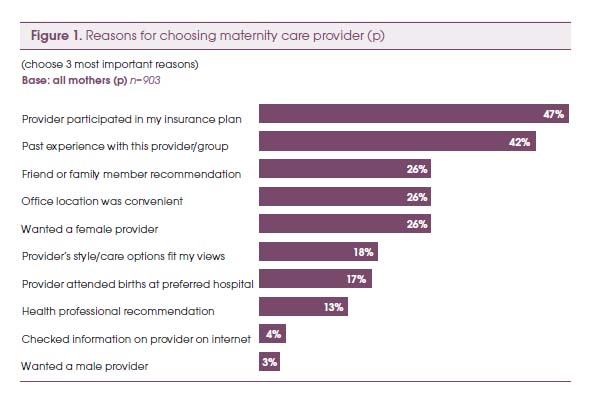

Women learn from books and experiences of others (and self):
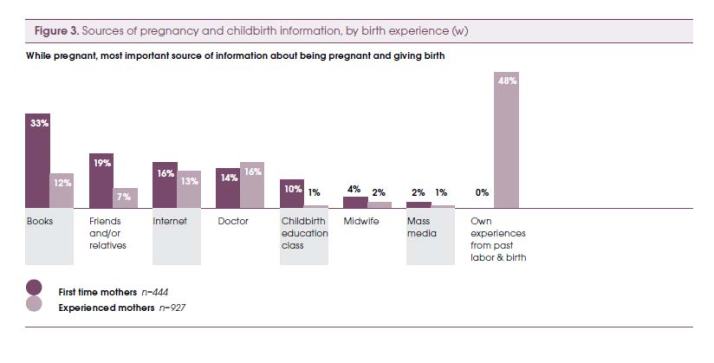
The number one book women learn from is What to Expect When You’re Expecting, which has been number four on NY Times Bestsellers list for over 500 weeks and counting.

According to De Vries, via the Listening to Mothers data, this is what women tell us about how they learn, what they learn, and upon what their choices are based:

Television explains birth
Pain is not your friend
But technology is
Mothers are listening to doctors (and nurses)
Medicalized birth allows mothers to feel capable and confident
Interfering with birth is mostly okay
Our health system works (mostly)
We like choice
We want to be “informed”

He also explains polarization: “We seek information to confirm our opinion. Contrary information does not convince, it polarizes.” How do we share information so that women can make truly informed choices without polarizing?

As advocates, I think we sometimes fall back on the phrase “informed choice” as an excuse not to be outraged, not to despair, and not to give up, because it promises that change is possible if only women change and most of us have access to change at that level.

Birthing room ethics

In another presentation, U.S. Maternity Care: Understanding the Exception That Proves the Rule, DeVries explores the ethical issues surrounding choices in birth, noting that “choice is central at all levels – but can choice do all the moral work?” We wish to respect parental choice, but information does not equal knowledge and we often err on the side of treating them as one and the same. In maternity care, often there is no choice. Tests become routine or practices become policy, and “information [is] given with no effort to understand parental values (the ritual of informed consent).”

Is choice possible while in active labor?
De Vries also raises a really critical question with no clear answers—is choice really possible during active labor? He also asks, “should a healthy pregnant woman be allowed to choose a surgical birth? But is it safe? The problem with data…Interestingly, those who think it should be allowed find it safe, and those who oppose it, find it to be unsafe.” When considering where this “choice” of surgical birth comes from, he identifies the following factors:

The desires of women
• Preserve sexual function
• Preserve ideal body
• The need to fit birth into employment
• Options offered by health care system

The desires of physicians
• Manage an unpredictable process
• The limits of obstetric education

Why should we care, anyway?

Another popular phrase is, “it’s not my birth.” I agree with the opinion of Desirre Andrews on this one:

“I do not believe in the saying ‘Not my birth.’ Women are connected together through the fabric of daily life including birth. What occurs in birth influences local culture, reshapes beliefs, weaves into how we see ourselves as wives, mothers, sisters, & women in our community. Your birth is my birth. My birth is your birth. This is why no matter my age or the age of my children it matters to me.”

Victims of circumstance?

While it may sound as if I am saying women are powerlessly buffeted about by circumstance and environment, I’m not. Theoretically, we always have the power to choose for ourselves, but by ignoring, denying, or minimizing the multiplicity of contexts in which women make “informed choices” about their births and their lives, we oversimplify the issue and turn it into a hollow catchphrase rather than a meaningful concept.

Women’s lives and their choices are deeply embedded in a complex, multifaceted, practically infinite web of social, political, cultural, socioeconomic, religious, historical, and environmental relationships.

And, I maintain that a choice is not a choice if it is made in a context of fear.

But, what do we know?

I read an interesting article by anthropologist and birth activist, Robbie Davis-Floyd, in the summer issue of Pathways Magazine. It was an excerpt from a longer article that appeared in Anthropology News, titled “Anthropology and Birth Activism: What Do We Know?” In the conclusion, Davis-Floyd states the following:

“Doctors ‘know’ they are giving women ‘the best care,’ and ‘what they really want.’ Birth activists…know that this ‘best care’ is too often a travesty of what birth can be. And yet on that existential brink, I tremble at the birth activist’s coding of women as ‘not knowing.’ So, here’s to women educating themselves on healthy, safe birth practices–to women knowing what is best for themselves and their babies, and to women rising above everything else.”

I believe that every woman who has given birth knows something about birth that other people don’t know. I also believe that women know what is right for their bodies and that mothers know what is right for their babies. I’m also pretty certain that these “knowings” are often crowded out or obliterated or rendered useless by the large sociocultural context in which women live their lives, birth their babies, and mother their young. So, how do we celebrate and honor the knowings and help women tease out and identify what they know compared to what they may believe or accept to be true while still respecting their autonomy and not denigrating them by characterizing them as “not knowing” or as needing to “be educated”? As I’ve written previously, with regard to education as a strategy for change: People often suggest “education” as a change strategy with the assumption that education is all that is needed. But, truly, do we want people to know more or do we want them to act differently? There is a LOT of information available to women about birth choices and healthy birth options. What we really want is not actually more education, we want them to act, or to choose, differently. Education in and of itself is not sufficient, it must be complemented by other methods that motivate people to act. As the textbook I use in class states, “a simple lack of information is rarely the major stumbling block.” You have to show them why it matters and the steps they can take to get there…

And, as the wise Pam England points out: “A knowledgeable childbirth teacher can inform mothers about birth, physiology, hospital policies and technology. But that kind of information doesn’t touch what a mother actually experiences IN labor, or what she needs to know as a mother (not a patient) in this rite of passage.”

The systemic context…

We MUST look at the larger system when we ask our questions and when we consider women’s choices. The fact that we even have to teach birth classes and to help women learn how to navigate the hospital system and to assert their rights to evidence-based care, indicates serious issues that go way beyond the individual. When we talk about women making informed choices or make statements like, “well, it’s her birth” or “it’s not my birth, it’s not my birth,” or wonder why she went to “that doctor” or “that hospital,” we are becoming blind to the sociocultural context in which those birth “choices” are embedded. When we teach women to ask their doctors about maintaining freedom of movement in labor or when we tell them to stay home as long as possible, we are, in a very real sense, endorsing, or at least acquiescing to these conditions in the first place. This isn’t changing the world for women, it is only softening the impact of a broken and oftentimes abusive system.

And, then I read an amazing story like this grandmother’s story of supporting her non-breastfeeding daughter-in-law and I don’t know WHAT to do in the end. Can we just trust that women will find their own right ways, define their own experiences, and access their own knowings in the context of all the impediments to free choice that I’ve already explored? What if she says, “why didn’t you TELL me?” But, if we share our information we risk polarization. If we keep silent and just offer neutral “support,” regardless of the choice made, then doesn’t it eventually become that the only voice available for her as she strives to make her own best choices is the voice of What to Expect and of hospital policy?

“Our lives are lived in story. When the stories offered us are limited, our lives are limited as well. Few have the courage, drive and imagination to invent life-narratives drastically different from those they’ve been told are possible. And unfortunately, some self-invented narratives are really just reversals of the limiting stereotype…” –Patricia Monaghan (New Book of Goddesses and Heroines, p. xii)

—-
Related posts:

What to Expect When You Go to the Hospital for a Natural Childbirth
Birth & Culture & Pregnant Feelings
Asking the right questions…
Active Birth in the Hospital
Why do I care?

References:

De Vries, Raymond. May 20, 2010. Birthing Ethics: What You Should Know About the Ethics of Childbirth, Webinar presented by Lamaze International.

De Vries, Raymond. Feb. 26-27. U.S. Maternity Care: Understanding the Exception That Proves the Rule. Coalition for Improving Maternity Services (CIMS). 2010 Mother-Friendly Childbirth Forum

Guest Post: More Business of Being Born Mini-Review

In conjunction with the More Business of Being Born giveaway I’m currently hosting, I’m also pleased to share this mini-review of the first installment (Down on the Farm) guest posted by my friend and colleague, doula Summer:

More Business of Being Born

Down on the Farm: Conversations with Legendary Midwife Ina May

Reviewed by Summer Thorp-Lancaster

http://peacefulbeginnings.wordpress.com
http://summerdoula.wordpress.com

The first installation of More Business of Being Born, Down on the Farm: Conversations with Legendary Midwife Ina May, is infused with loving scenes of midwifery care, loads of vital information and even a few jokes (such as a gift referencing Ina May’s infamous “sphincter law”).  We are given an up close view of the well-known Farm in Tennessee, whose Midwives boast an exemplary track record of Midwife attended, out-of-hospital births. This record includes a less than 2% cesarean section rate in over 2500 births. Throughout the interviews, Ina May’s (and the other Midwives featured) reverence and respect for the Midwifery Model of Care is ever-present. Her passion for the safety and overall well-being of the motherbaby is palpable and stirring.

It would be impossible to cover the many aspects of birth, or even just Midwife attended out-of-hospital birth, in a full length film, let alone an episode, but this piece successfully touches on many topics and will (hopefully) lead to further discussion amongst viewers. As an activist, I found myself left with a renewed sense of action or purpose, a desire to do more and help more so that all mamas and babies have the opportunity to experience birth as the positive, loving and intimate experience it was meant to be as well as a deeper understanding of the crisis surrounding our medical model of birth. I would recommend this film to everyone, as the state of maternity care affects us all.

Birth Fear

“…if you want to know where a woman’s true power lies, look to those primal experiences we’ve been taught to fear…the very same experiences the culture has taught us to distance ourselves from as much as possible, often by medicalizing them so that we are barely conscious of them anymore. Labor and birth rank right up there as experiences that put women in touch with their feminine power…” -Christiane Northrup

Since it was just Halloween, I wanted to re-post some things about fear and birth that I shared on another blog a couple of years ago. I encounter a lot of women who are very scared of birth, particularly of the pain of birth. Grantly Dick-Read’s Fear-Tension-Pain cycle has influenced the teachings of most natural birth educators and most people readily connect to the idea that fear leads to elevated tension in body which leads to increased pain (more about fear-tension-pain in a linked post below).

One of my favorite birth books, Birthing from Within, has several sections about coping with fear. The author’s idea is that by naming fears and looking them in the eye rather than denying they exist, you shift your thinking from frozen, fear-based, thoughts to more fluid, adaptable coping-mechanisms. There is a useful handout based on her ideas available at the Transition to Parenthood site.

I also think of this quote from Jennifer Block:

Why is it that the very things that cause birth related morbidity rates to rise are seen as the ‘safe’ way to go? Why aren’t women and their doctors terrified of the chemicals that are dripped into their spines and veins—the same substances that have been shown to lead to more c-sections? Why aren’t they worried about the harm these drugs might be doing to the future health of their children, as some studies are indicating might be the case? Why aren’t they afraid of picking up drug-resistant staphylococcus infections in the hospital? And why, of all things, aren’t women terrified of being cut open?

I actually was afraid of these things, which is part of why I didn’t go to a hospital to have my babies!

I hope some day all women will be able to greet birth with confidence and joy, instead of fear and anxiety. This does NOT mean denying the possibility of interventions or that cesareans can save lives. And, it also doesn’t mean just encouraging women to “trust birth.” Indeed, I  read a relevant quote in the textbook Childbirth Education: Research, Practice, & Theory: “…if women trust their ability to give birth, cesarean birth is not viewed as a failure but as a sophisticated intervention in response to their bodies’ protection of the baby.”

Here are some more good quotes from Childbirth without Fear:

A well–prepared woman, not ignorant of the processes of birth, is still subject to all the common interventions of the hospital environment, much of which places her under unnecessary stress and disrupts the neuromuscular harmony of her labor.

It is for this reason that thousands of women across the country are staying home to give birth…Women are choosing midwives as attendants, and choosing birth centers and birthing rooms, in order to regain the peaceful freedom to ‘flow with’ their own labors without the stress of disruption and intervention. Pictures on the wall and drapes on the window do not mask the fact that a woman is less free to be completely herself in the hospital environment, even in a birthing room. The possibility of her being disturbed is still there.

The women in labor must have NO STRESS placed upon her. She must be free to move about, walk, rock, go to the bathroom by herself, lie on her side or back, squat or kneel, or anything she finds comfortable, without fear of being scolded or embarrassed. Nor is there any need for her to be either ‘quiet’ or ‘good.’ What is a ‘good’ patient? One who does whatever she is told—who masks all the stresses she is feeling? Why can she not cry, or laugh, or complain?

When a woman in labor knows that she will not be disturbed, that her questions will be answered honestly and every consideration given her, then she will be better able to relax and give birth with her body’s neuromuscular perfection intact. The presence of her loving husband and/or a supportive attendant will add to her feelings of security and peace, so she can center upon the task at hand.

Childbirth without Fear was originally written in the 1940′s. The quotes above are just as relevant and true today.

Related posts:
Fear & Birth
Fears about birth and losing control

Fathers, Fear, and Birth
Fear-Tension-Pain or Excitement-Power-Progress?
Cesarean Birth in a Culture of Fear Handout
Worry is the Work of Pregnancy

Active Birth in the Hospital

One of the inspiring images in ICAN of Atlanta's "Laboring on the Monitors" slideshow.

The vast majority of my birth class clients are women desiring a natural birth in a hospital setting. My classes are based on active birth and include a lot of resources for using your body during labor and working with gravity to help birth your baby. Sometimes I feel like active birth and hospital birth are incompatible—i.e. the woman’s need for activity runs smack dab into the hospital’s need for passivity (i.e. “lie still and be monitored”). So, I was delighted to discover this awesome series of photos from ICAN of Atlanta of VBAC mothers laboring on the monitors. It IS possible to remain active and upright, even while experiencing continuous fetal monitoring.

In my own classes, we talk about how to use a hospital bed without lying down—the idea that a hospital bed can become a tool you can use while actively birthing your baby. Here is a pdf handout on the subject:How to Use a Hospital Bed without Lying Down. In this handout, I offer these tips for using the bed as an active assistant, rather than a place to be “tied down”:

While being monitored and/or receiving IV fluids that limit mobility, try:

  • Sitting on a birth ball and leaning on bed
  • Sitting on bed
  • Sitting on bed and lean over ball (also on bed)
  • Kneeling on bed
  • Hands and knees on bed
  • Standing up and leaning on bed
  • Leaning back of bed up and resting against it on your knees
  • Bringing a beanbag chair, putting it on the bed and draping over it (can also make “nest” with pillows)
  • Partner sitting on bed and woman leaning on him/supported squats with him
  • Partner sitting behind woman on bed (with back leaned up as far as it will go)

While giving birth, try:

  • Hands and knees on bed
  • Kneeling with one leg up (on bed like a platform or “stage”)
  • Holding onto raised back of bed and squatting or kneeling
  • Squatting using squat bar

While most of the above tips can be used during monitoring, additional ideas for coping with a simultaneous need for monitoring AND activity include:

  • Kneel on bed and rotate hips
  • Sit on edge of bed and rock or rotate hips
  • Sit on ball or chair right next to bed (partner can hold monitor in place if need be)

If something truly requires being motionless, it can be helpful to have some breath awareness techniques available in your “bag of tricks.” One of my favorites is: Centering for Birth

Some time ago, a blog reader posed the question, can I really expect to have a great birth in a hospital setting? I definitely think it is possible! I also think there is a lot you can do in preparation for that great hospital birth! When planning a natural birth in the hospital, it is important to consider becoming an informed birth consumer. I always tell my clients that an excellent foundation for a simple, effective, evidence-based birth plan is to base it on Lamaze’s Six Healthy Birth Practices. My own pdf handout summarizing the practices is also available: Six Healthy Birth Practices. Don’t forget there is also a great video series of the birth practices in action! You might also want to get a copy of the book Homebirth in the Hospital. And, check out this post from Giving Birth with Confidence: Six Tips for Gentle but Effective Hospital Negotiations.

Before you go in to the hospital to birth your baby, make sure you have some ideas about this very popular question, how do I know if I’m really in labor?

And, finally, be prepared for the hospital routines you may encounter by reading my post: What to Expect When You Go to the Hospital for a Natural Childbirth.

For some other general ideas about active birth, read my post about Moving During Labor (written for a blog carnival in 2009).

Best wishes for a beautiful, healthy, active hospital birth! You can do it!