Archives

Motherhood and Embodiment

“Loving, knowing, and respecting our bodies is a powerful and invincible act of rebellion in this society.” –Inga Muscio

As I’ve written before, pregnancy, birth, and breastfeeding are incredibly embodied experiences—motherhood in general feels very much a molly37weeks 016physical commitment. Our relationship with our children begins in the body, it is through the maternal body that a baby learns to interpret and engage with the world, and to the maternal body a breastfeeding toddler returns for connection, sustenance, and renewal.
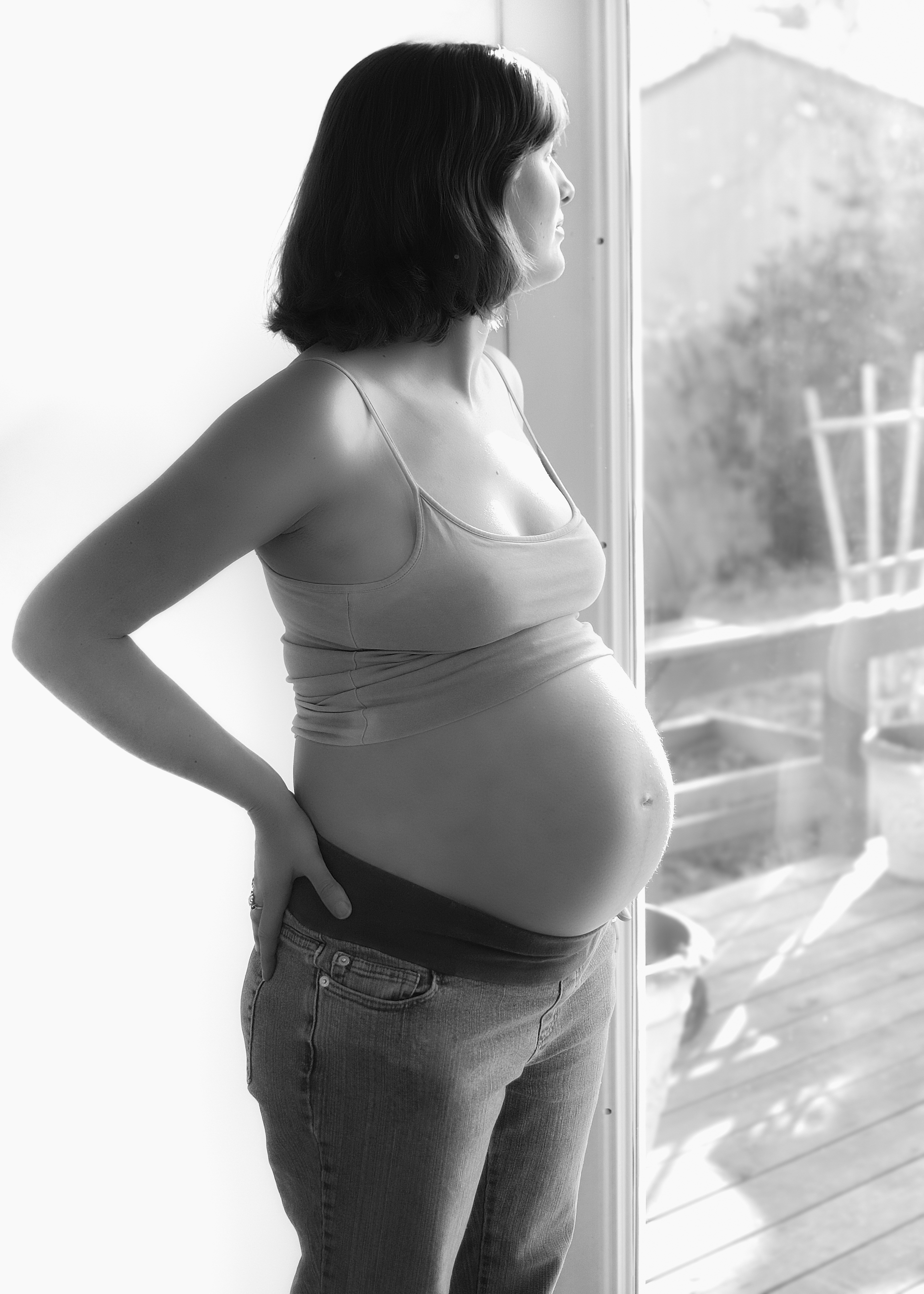
Why might birth be considered an ecofeminist issue though? Because mother’s body is our first habitat. We all entered the world through the body of a woman and that initial habitat has profound and long-lasting effects on us, whether we recognize them or not. Midwife Arisika Razak explains, “the maternal womb is their first environment. The cultural paradigm of birthing is the first institution that receives our children…Each of these elements—womb, birth culture, and family—has a profound effect upon the new human bring. Each deserves our best thinking and analysis. What would it be like if we envisioned a society in which positive, lifelong nurturing support—from old to young, and young to old—were the dominant theme of human interaction?” (p. 167).

What would it be like if we treated birthing women and their babies like they mattered?

Our first and deepest impulse is connection. Before Descartes could articulate his thoughts on philosophy, he reached out his hand for his mother. I have learned a lot about the fundamental truth of relatedness through my own experiences as a mother. Relationship is our first and deepest urge and is vital to survival. The infant’s first instinct is to connect with others. Before an infant can verbalize or mobilize, she reaches out to her mother. Mothering is a profoundly physical experience. The mother’s body is the baby’s “habitat” in pregnancy and for many months following birth. Through the mother’s body, the baby learns to interpret and to relate to the rest of the world and it is to the mother’s body that she returns for safety, nurturance, and peace. Birth and breastfeeding exist on a continuum, with mother’s chest becoming baby’s new “home” after having lived in her body for nine months. These thoroughly embodied experiences of the act of giving life and in creating someone else’s life and relationship to the world are profoundly meaningful experiences and the transition from internal connection to external connection, must be vigorously protected and deeply respected.

via Talk to Your Baby | Talk Birth and Breastfeeding as a Spiritual Practice

I have a particular interest in embodiment and my dissertation topic is related to a thealogy of embodiment (basically the Goddess and the body) and so my attention was caught by some great sections about birth, bodies, and family in the book The Art of Family:

AS WE MOVE THROUGH BODILY stages together, there are some special stages that are worth thinking of in advance. Pregnancy is one, of course, and babies. Nothing is more inescapably BODY than birth. For the mother, both through her pregnancy and the labor and delivery of the baby. In birth, the body gets to drive the soul for a change and one’s soul is on for the wild ride, whatever happens. What does she deliver, after all, but a body, this little lamblike creature packaged in a now wholly-other body? What does she deliver but a body—and what do she and Daddy count but a body’s toes, a body’s fingers? In these small ways we acknowledge our wholeness, our physical sacredness.

Gina Bria (2011-11-28). The Art of Family : Rituals, Imagination, and Everyday Spirituality (Kindle Locations 1693-1700). iUniverse. Kindle Edition.

(Amazon affiliate link included)

And, I appreciate that Bria then moves into a consideration of how men experience pregnancy and birth…

YES, BIRTH IS THE BODY, and for women it is manifestly given. But one should note that the world over, there is a complementary effort by men to try to counterbalance the impressive power of women who have even the potential of birth, whether it is actualized or not. Men, too, have moments of making special use of their bodies. Men make quests, and perform feats of extraordinary effort, to put their bodies on the line in some attempt to match birth.

…For modern men, pregnancy means two things, not one integral, unfolding experience, as for women. First, they must cope with a partner undergoing tremendous physical change. In essence, they are no longer dealing with the same body. It’s a stressful experience, and many men fear they will never see their old partner again, quite literally. They listen to their wives agonize about weight gain and swollen ankles, and secretly grieve the loss, all the while maintaining a show of faith, for their wives, for themselves, that it will come to a happy ending. And on top of that, they must then forge a new relationship with the party responsible for this, someone they can neither see, nor touch, indeed, can hardly believe exists! Women at least get touched by their in-utero babies, even if it’s a swift kick from the inside. “Hey, it’s Daddy,’’ my husband said rather sheepishly into my belly one night. This seemed to me quite amusing, as if the baby needed an introduction to one half of his own genetic material. Then suddenly it struck me that I had never considered introducing myself to the baby, announcer like over an intercom—“This is your mother speaking’’—because I felt the bodily connection so inexorably. I knew I was well known to the baby, but my husband had no such advantage. He had to make connections in other physical ways, in this case using his voice. Making a family where men touch, speak, and care for children is a vital way to connect them to their own progeny; one way that many cultures, including our own, can often deny men. Perhaps you have been stopped in your tracks, as I have, over the recent spate of advertisements of bare-chested men holding tiny babies. Do advertisers, more than Freud, know what women want? Yes! We want to see our handsome men holding babies, snoozing with them, schmoozing with them in chest-to-chest communion. As Jane Austen asks, “What attaches us to life?’’ Anyone who lays on hands gets attached to life.

These thoughts really struck me in a profound way. During each of my own pregnancies, I remember marveling and feeling impressed, as well as a little sad, that my husband had to somehow forge this bond with a newcomer without the same benefit of the embodied, constant experience of pregnancy—pregnancy from the inside is different than pregnancy from the outside. I shared the author’s amusement in picturing how it would have been to “announce” my own presence to my babies. I’ve tried, but cannot fully imagine the process and psychological task involved with the paternal experience, of in a sense, “suddenly” having a baby to hold and care for and “instantly” love, though I’m sure I have the capacity within me somewhere (and, yes, I know that not all mothers feel an instant love either and may have the same sense of suddenness in their own lives—it was certainly true for me that the inner experience of a womb-dwelling baby was pretty different from the external experience of having a physically visible baby to tote around). As a pregnant woman though, the baby is basically inescapably present and part of me in an interconnected, interwoven, symbiosis of being. There is the transition at birth to an “outer” relationship, but that intense embodied interconnection continues immediately with the breastfeeding relationship. It is somewhat impressive or staggering to me almost, that men have to form their own connection born out of different “stuff” that the biology of gestation and lactation that weaves the motherbaby together.

Bria also addresses the loving of a baby’s body that isn’t going to survive:

WE ARE NEVER MORE CRUSHED than when there is trouble at birth. No sadness holds for us the power of an incomplete body, a broken body. We grieve and turn heart stricken at this time like no other. In moments like these we can only comfort ourselves, with love, that love would allow us to care for this child when many would not be able to do so. We hope to find ourselves the kind of people who could, in such circumstances, make a life for a whole person, with an incomplete body. When our son was born with a leaking heart, an old-fashioned “blue baby,’’ and destined to die without surgical repair, we learned quickly that all we could give him, all he could receive as a newborn, was the small, inconsequential daily care of the body, gentle changing, warm nursings, our breath upon his face. Perhaps, we thought, it would be all he would ever get. In that season of attention, we really learned the significance of loving a body. A body, however small, records every trace of touch; it is never unconscious; unlike the mind, a body is never without sensing, even in sleep. A body will always remember.

I liked the description of a body always remembering. We do carry deep, physical memories of our pregnancies, births, and babies. I find the physicality actually comes back most clearly in dreams for me, when I can again feel with a sharp potency the sensation of a baby’s body slipping swiftly from my own body. I also like reading research that indicates that mother’s body carries fetal cells within her forever. I like thinking that physical evidence of the embodied, relational experience of pregnancy remains written into my very cellular structure (well, and on my bones and skin too, I suppose!). I found this a comfort after my little Noah’s birth, thinking that in a very real way, I would truly always remain a “little bit pregnant” with him and that perhaps some of his unique genetic material lives on in my body.

After birth, we continue to relate to our babies on a very physical, body-oriented level. There is nothing like a baby to bring things back to the body, to use your body and their own in a complete, intensive, totalness.

BABIES’ BODIES AND CHILDREN’S BODIES   LIKE PLAY, LOOKING AT THE body of an infant returns us to childhood. Babies’ bodies are a special form of being human, and they elicit in us essential, elemental emotions. They infect us with longing for the integration, the wholeness, they have. As new parents, we experience again all the helpless and exuberant feelings of children, the unfeigned marveling over everything manifested by a baby, a physical miracle. We cannot contain our awe, expressing it to everyone within earshot. New parents on the street can always be identified by their aura of vulnerability; they’ve shed the social cloth that keeps us all appropriately attired to go about our work. Instead, just like the baby, they are naked to everything good. They blink and look around, bemused, tired, and delighted. You will notice they always smile at you at the crosswalk—it is a secret, initiated smile. They assume you either know what they are smiling about or wish that you did. What is it they know? Their babies made them once again aware of the pleasures of physical delight. To care for an infant is a test of our humanness, a trial by fire and love.

What is good about caring for infants is that they never let us forget how essential the body is. They snuffle, bawl, and demand attendance. “Feed me, change me, hold me,’’ for an eternity of right-nows. And when they sleep, it’s as if they have cast themselves on a thin but safe shelf of floating wholeness, complete integration. They show us what we once were, without guile, delightedly in love with our own body. When infants turn into toddlers, the body is still in front, still demanding, but in a bigger world. Now protection from bodily harm becomes a concern of everyday physical life together. We aren’t as impressed by the bodily transmogrification that takes place in front of us, because we’ve learned to live with it happening every day, day to day. It’s impossible for the same miracle to impress us the same way over and over again. Thus begins the very fading away of the lesson we most need from our children—that there is intense pleasure in the active human body. Right under our noses they play. They play and play and we watch and nod as if this itself isn’t a further miracle. What do infants do when they get control of themselves, but move, explore, experience exhilarated delight in their bodies and what they can do. Their essence is to enjoy themselves as bodies, all over…Through physical life with our children, through care of them and play with them, the hands-on of it, we again acquire our innocent selves, a delight in each other and the world around us. We discover all over the potentialities of the senses. This is the heart of being with young children.

Gina Bria (2011-11-28). The Art of Family : Rituals, Imagination, and Everyday Spirituality (Kindle Locations 1729-1760). iUniverse. Kindle Edition.

As they age, this physical, body-based relationality and experiences may wane, and yet still holds important value:

As our children age we must struggle to keep this alive for ourselves, for them, in one form or another, as the world begins its intrusion into our family lives. This may be as simple as pointing out that a flower is beautiful, that rain smells divine, that a hand held feels warm and comfortingly sweet, that nothing satisfies like cool water. Once children hit the walking stage and beyond, we spend more time explaining compared with the time we spent holding. Yet there are still many miniature ways of communicating with one’s body. Its active use—a nod, a wink, a hug—are all fleeting acts of committing one’s body, however momentarily, to another. Looks, touches, squeezes, physical smiles, a physical vocabulary—aren’t they what children long for? Indeed, isn’t that exactly what we thrill to in a romance—those little signals that you belong to each other—and isn’t that what we end up complaining of missing when our marriages seem stale? It isn’t just for romance that these things work, though it is there that we most seem to notice them. All of family life can capitalize on a richer life with each other’s bodies.

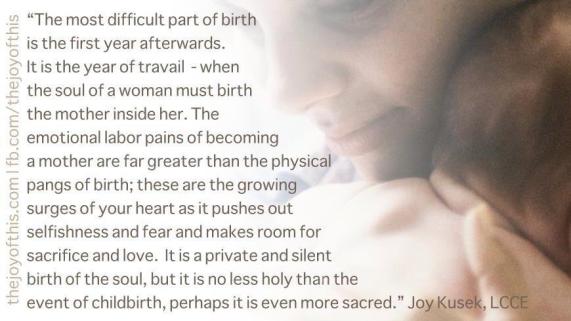
And, bringing it back to birth and the care of birthing bodies, I really liked this image via Facebook:


treatment

Kidbits

“They look so small and frail but they are so great and magnificent. They are born of the same womb that birthed the cosmos and knitted together the galaxies. If you could see them as they truly are, you would be astounded. You would see not little children, but dancing clouds of light, energy in motion, swimming in an ocean of love. They are so much more than what you see. As are you.”

-William Martin
The Parent’s Tao Te Ching

Some things I saved recently to remember about my funny little children:

  • Adorable toddler nursling moment: I was carrying Alaina in the kitchen and she patted my chest and said, “love you, nonnies.” Then, she said, “sank you, mommy.” 🙂 ♥
  • Another charming moment: Alaina standing before me and giving that cute toddler hands raised sort of shrug gesture and saying, “babies…grow…up!” She has also started doing a thing wherein she points at her own belly and says, “baby…belly…me…grow…up,” telling me that she will grow up to have a baby of her own and then points to herself and says “Mama…ME! Babies…grow UP! Mama…ME!”
  • Zander bought hair gel and spiked up his hair, put on a gold chain and sunglasses, took off his shirt and started doing some rocking dance moves and handstands in the living room. Lann said: “hey, we could start a band and call it the Wiggly Brothers.” Zander continued to groove with no response. Lann repeated himself about three times and then said kind of to himself, “I guess I’ll be the weird one…” ;-D
  • At the beginning of this month, Lann brought me an illustrated “breakfast menu” and said I could start ordering breakfast from him in the mornings. Each item is 50 cents or $1. SOLD! He has been making me a spinach and cheese omelet many mornings and I really appreciate it. The café is called Big Spoon. It is so fun to have a kid that is nine!
  • Alaina found some shiny tappy shoes at the thrift shop. The same day, we also bought the Gremlins movies (which I’d never seen) and she  energetically explained how she will use her new shoes to kick bad gremlins–she will “hug good Gizmo” and “kick bad Gizmos” (complete with demo-kick shiny shoe action). In case anyone cares, we didn’t let her keep watching it after they mutated and we muted the computer during the “Santa dad in the chimney” story, which Mark mercifully remembered (due to his own past childhood trauma) just in the nick of time.
  • Said tiny girl likes to push (literal) buttons and last week while still in bed in the morning I was surprised by the serenading CD from the living room where she must have programmed it to be on a timer (I don’t know how to do that myself!) She woke up and I said, “did you make the radio start playing?” And she said, “yes, mommy. Me do dat ting.”
  • Me last week: “Argh! I have SO much I want to do.” Lann: “Me too, Mom. It IS kind of the primary feature of our family.” ;-D

And, video special: Alaina dancing in the car while we waited to get Lann from gymnastics.


Tuesday Tidbits: Mothers and Work

MollyNov 085

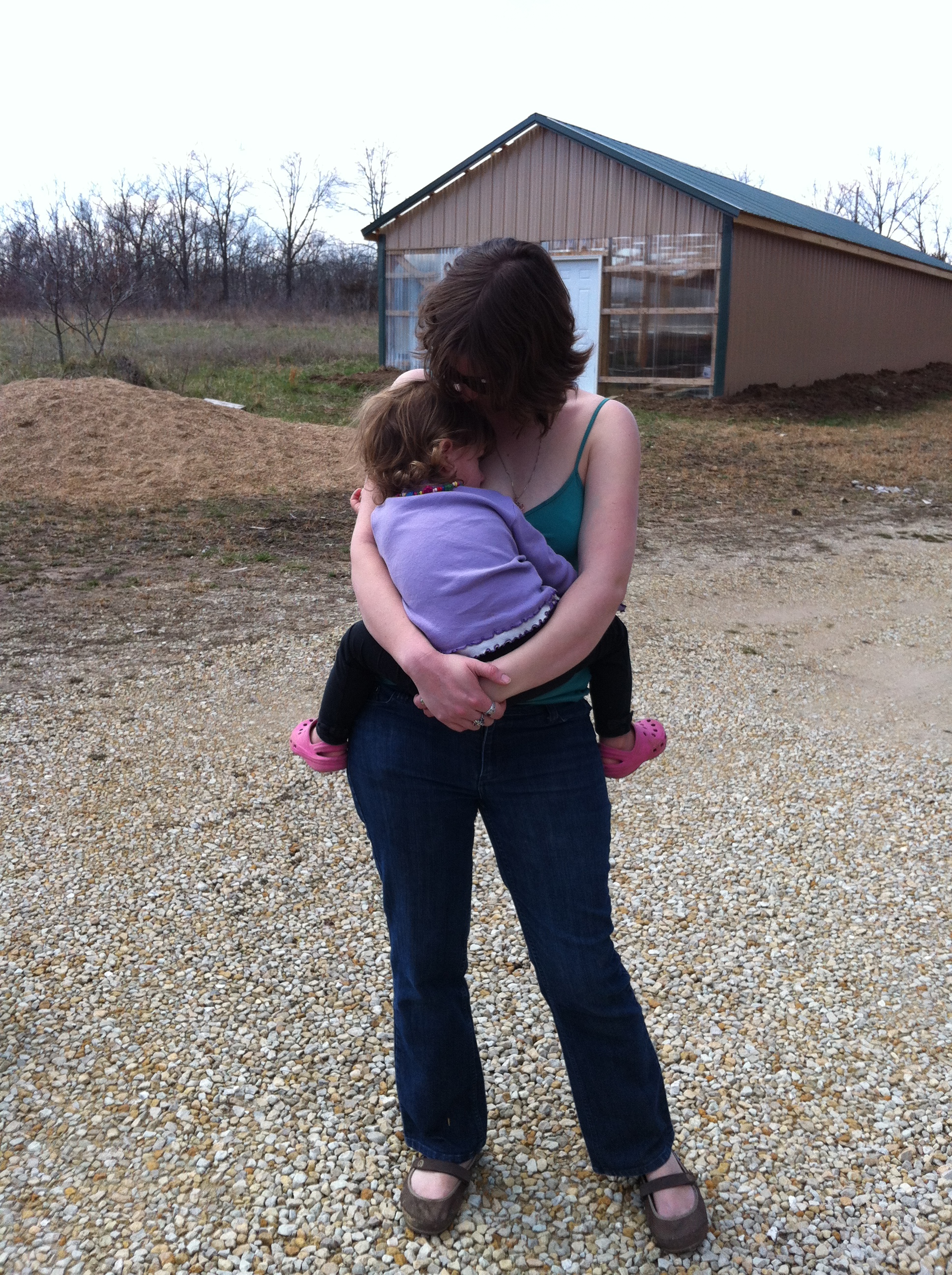
One of the best pictures I have of the “mothering” while “personing” experience!

“I’m winging it every day, praying, surrendering, steeping myself in grace by any means necessary. I grapple with finding my own integrity, to trust the path that I have chosen, to believe that I am mothering well, that I can claim for myself a belief in my own goodness.” – Elizabeth at Mothering with Soul

“Giving birth to a new life is about so much more than just the moment itself. The power of finding your strength as a woman through birth resonates for the rest of your life. It shapes you as a person, and as a parent.” ~ Gina Sewell

I want to say first that I believe, as the organization Mothers and More does, that all work that women do, whether paid or unpaid has social,  political, and economic value. In my own life I don’t distinguish between what I do for money and what I do as a volunteer, but that is partially a function of privilege, because I love all of my work and choose freely to do it. I recently finished reading the book The Art of Family and in it the author makes a point that I’ve made in various posts as well, mothers have always “worked,” it does no good to try to distinguish between “working mothers” and “stay-at-home mothers,” because the difference is much more fluid and alive than a category can hold.

FOUNDATIONAL TO A LASTING FAMILY is acknowledging that we will be many things to each other for our whole lives, even past death. We can abandon the old fears that family life will smother us and instead go after fully practicing ourselves in the presence of partner and children. In short, making a family is the best way to present ourselves, to stake our claim to a spot on earth. But “practicing ourselves’’ in front of our family, what does that mean? To give the essence of ourselves to our children is not necessarily dependent on the amount of time you spend with your children. Here, we must recast the debate over moms who work and those who stay at home with children. This is one of those divisions that turn up damned if you do, damned if you don’t, because it is a false one from the start. First, mothers have always been “at work,’’ whether farming, spinning, pioneering, running cottage industries, or investment banking. In history, women have always, of necessity, worked for the welfare of their families, some even forced to leave their children behind to find ways to sustain them. Imagine that pain, next time you come home late from the office.

The real issue with at-home moms and working moms is the struggle for identity. Having children is the most identity-challenging and identity-changing thing women do—starting with pregnancy, when even your body gets an identity change. That should be our first big clue. But we are terrified to face it. Who wants to watch your identity evaporate, which is what having children often feels like? Identity isn’t about societal roles, either, though the ones we get stuck with can be more burden than help to us. In fact, if we allow societal roles to determine our identity, we are not really in control, we are accepting a series of masks. We have to ask ourselves the hard questions: Who would I be without this job, without this kid, without this income, without this education?—getting at the core of who we are. This is a work we must do solely on our own, and it is excruciating work. But no human gets out of it, not even mothers. Babies make you ask, “Well, who am I now?’’ Though it is currently hot in intellectual theory to say we are nothing but social and cultural constructions, this is not a spiritual truth. Identity is something you build relationship by relationship, not role by role. Families, especially at the young-children stage, are not the pause button pressed down on who you are and what you want to pursue. Yes, we may have to put off finishing that degree, taking the promotion that requires weekly travel, writing that screenplay, or finally learning French, but those things weren’t going to make you you anyway. Your relationships make you who you are, because they give you a chance to actually manifest yourself, which is what you really believe in. We fill up what we do with who we are. What we do can never fill us up.

Gina Bria (2011-11-28). The Art of Family : Rituals, Imagination, and Everyday Spirituality (pp. 8-9). iUniverse. Kindle Edition.

This notion is also explored in an article I enjoyed from Mothering:

“…Women a few hundred years ago worked their butts off every day helping their family survive. They planted and harvested, killed and prepared their own food. The children either watched younger children, played (often unsupervised) or worked right along side them. Women who had to work outside of their home had other people or family members care for their children while they cared for others. The wealthiest women probably had other paid servants care for their children much of the time. Children played with other children. Children worked. Children solved some of their own problems and they found things to do…”

The Benefits of Ignoring Children (Sometimes) – Mothering Community

Personally, I refer to this as “grinding my corn”:

Nov 2012 042

Grinding my corn sculpture from several years ago.

I want to be with my children, but I wish to be engaged in my own pursuits at the same time. When our lives feel happiest and most harmonious is when exactly this is occurring—when we are all together, but each working on our own projects and “doing our own thing.” I envision a life of seamless integration, where there need not even be a notion of “life/work” balance, because it is all just life and living. A life in which children are welcome in workplaces and in which work can be accomplished while in childspaces. A life in which I can grind my corn with my children nearby and not feel I need apologize for doing so or explain myself to anyone…

I just want to grind my corn!

Returning to the issues of identity raised in the quotes from The Art of Family, the question is explored beautifully in the article Beautiful Catastrophe: The Death and Rebirth of Becoming a Mother:

You were twenty, twenty-three, thirty, thirty-five. You were free and young and somebody else.

We were free and young and somebody else.

But now, we’re mothers.

At some point the reality will hit us: We are never alone again, no matter where we are, and we are the only ones in the world who have become this person toward this child.

I’ve been the same woman my whole life. What about her? Where is she? Is she just dead?

Yes, she is just dead.

Does that seem harsh? Well, it is. So is motherhood.

Perhaps we can soften this whole thing by saying our identities are “transformed,” or we are “forever changed,” but the fact of the matter is that the woman you once were is gone, and she will never come back.

Period.

I also recently finished reading the anthology The Maternal is Political and in it Jennifer Margulis (later birth writer of the new book Business of Baby) says:

Jame’s working full time and my staying home wasn’t working. My working full-time and James’s staying home hadn’t worked either. We both wanted to be with our children. And we both wanted to work (something I was only able to admit once I tried being a full-time mom). But neither of us wanted to do one or the other exclusively.

–Jennifer Margulis April 2013 002

This is what we are working towards for my husband and me, hopefully this year. I think we both deserve to be home with the kids, I think we both also have other work that is valuable to pursue. I envision a life of seamless integration of our various roles and passions–all of us. We have a family mantra: “our family works in harmony to meet each member’s needs.” 🙂

“Is there one single aspect of motherhood that isn’t political? From conception to graduation, from your kid’s first apartment until you die, it is basically one political decision after another…” –Rebecca Walker

Also in The Maternal is Political, Beth Osnes writes about Performing Mother Activism (she has a one woman show) and I love her analogy of care being like a loaf of bread…

I go on with scenes that tackle the onslaught of societal expectations and repressive forces that creep into a woman’s life once she becomes a mother: “it happens one day. You find a large parcel on your front porch. You open it to find the status quo being delivered to you…well, actually, the status quo manual…” I go on with scenes that lambaste the fearmongering that goes on in our government and media: “The status quo wants you to dumb down, mother. It will tell you who to trust and who to fear.” I remind mothers that we must think for ourselves: “I say rage, mother. Do not go gently into that good night. Rage, rage, against the dying of your light.”

I have also stopped expecting that caring needs to be a whole and perfect project, like an unsliced loaf of homemade bread. I am April 2013 009coming to accept that, at least for me, caring about the world is more fragmented, much more like a store-bought loaf that splays open as soon as you open the bag. Here’s a slice of caring about antipoverty legislation, here’s one of caring for my three-year-old with the flue, here’s a slice of caring for victims of our country’s warring and, whoops, here’s even a slice of caring about my curtains. I have stopped imagining that caring is pure and unselfish; many people, including me, fashion their identities out of caring, whether for kids or for the world. Still: Bread is bread, and caring is caring. Whole or broken. Homemade or purchased. Consumed or given away.

I’m also learning that social movements will go on, even if nursing mothers or parents of toddlers have to drop out for a while. We will be back,someday, maybe when the youngest turns two or whenever we can again afford to dream like activists, rather than work like dogs. We may be more distracted than before, less available…But when we return, we will give a break to someone else who needs it—like those erstwhile college students who may be finding that carting babies to marches is harder than they anticipated.

And when we do rejoin the movement, it is possible that we will agitate and march and advocate from a deeper place within ourselves than we had known existed. It is possible that we will act from that cavity our children have hollowed out of us, that place where breath begins.

–Valerie Weaver-Zercher

And, as a lovely closing tribute to all women and all their work, remember this…

Mothers — you are powerful. Stand tall. You are full of grace. Stand tall. Join together and stand tall. Be as a Redwood tree. Stand April 2013 028tall. If you have stood next to a Redwood tree or seen photos of one, you will notice that they do not grow alone. They grow in groves with all of the trees connected together, even if they appear to be separate. Their shallow roots form a web that holds these big trees up in the wind. Redwoods do not fall very often. We can emulate those trees, mothers. We can hold each other up.

We may feel alone at times, but believe me and remember: You are being supported underneath the surface of where you live. Right beside you there is somebody thinking about you and supporting you whether you know it or not. Think of all the mothering that goes on in life. I have found in my life that it comes sometimes when you do not expect it and from someone you do not realize has your back. Someone in your root system seems to know that you need something. Women have a natural mothering instinct if they just listen to it.

Stand Tall

Other past posts about mothering and working:

The tensions and triumphs of work at home mothering

Guest post: working/parenting interview

The Ragged Self

Surrender?

April 2013 020

Tuesday Tidbits: Parenting, Help, and Early Motherhood

From The Doula Guide to Pregnancy and Birth’s website (book previously reviewed here), I learned about an upcoming free childbirth and parenting virtual conference. I keep signing up for things like this and not really “finding time” to actually participate in them, but this one looks like it has a pretty amazing line up! Making time to READ something is almost always possible for me (though I have a backlog there too), but making time to listen to or watch something just never seems to actually happen. I wonder if I’ll ever stop signing up for them though–so alluring, so intriguing, so free…and yet, then I get daily emails about the call/talk for that day and feel a nagging sense of “guilt” (or something) for not participating and also like I’m “missing out.” An exception is the Life Balance calls Renée Trudeau used to do from her book The Mother’s Guide to Self-Renewal. I did make time for those and never regretted it! 🙂 (I should get that book back out again.)

Thinking about parenting and self-care and help brings me to several other posts that I’ve enjoyed recently:

To parents of small children: Let me be the one who says it out loud

There are people who say this to me:

“You should enjoy every moment now! They grow up so fast!”

I usually smile and give some sort of guffaw, but inside, I secretly want to hold them under water. Just for a minute or so. Just until they panic a little.

If you have friends with small children — especially if your children are now teenagers or if they’re grown – please vow to me right now that you will never say this to them. Not because it’s not true, but because it really, really doesn’t help.

The reason I liked this acknowledgement is because it is so true that they grow up so fast. It hurts my heart how fast. However, in the moments in which people choose to make this comment or when it is used against yourself or against others as a way of shaming or guilt tripping, it really, really doesn’t help. One comment on this post says, “I hear the first 40 years of parenting are the hardest.” 😉

And, speaking of things that DO help, actual help from actual people helps quite a lot. As a work-at-home mother that blogs, I particularly enjoyed this post from Girl’s Gone Child:

Girl’s Gone Child: Help is (not) a Four-Letter Word

So what’s this big secret we’re trying to keep and who do we think we’re fooling?

And what is it doing to people who read our blogs and books and pin our how-tos and think that all of these projects are being finished while children sit quietly on the sidelines with their hands in their laps.

What is it doing to you?

We write disclosure copy on posts that are sponsored, giveaways that are donated. We are contractually obligated to label and link but where is the disclosure copy stating how we work from home with small children?…

We have help, that’s how!

My help is naptime (quickly fading!), Minecraft, and grandparental cherishment (one mile away, two hours a day = good for kids, I hope good for grandparents, and great for mom!)

And, speaking of blogging, last week Talk Birth hit 400,000 hits. I celebrated by posting this on Facebook:

“Women around the world and throughout time have known how to take care of each other in birth. They’ve shown each other the best positions for comfort in labor, they’ve used nurturing touch and repeated soothing words, and they’ve literally held each other up when it’s needed the most…” –The Doula Guide to Birth

And…they’ve gone looking for support and information on the internet too. Talk Birth hit 400,000 hits today! Woohoo! Thanks, everyone 🙂

I very much enjoyed this quote that I saw on Facebook this morning:
561196_522097027840366_343300980_n

I just finished reading the book The Art of Family and she addresses this tender transition in a way that also felt familiar to me from my own experiences:

What new parents lack most is perspective. They have no idea how fast they are to be catapulted through these early stages. How can they have a perspective of speediness when the nights are endless? It seems apparent to everyone as soon as the baby arrives that this is it—right now is what parenting looks like, and it looks pretty bad. It is a terribly tender, fragile time, akin to sex for the first time. Your first experience at parenting will haunt you in the same way.(emphasis mine)

Yes! I’ve written a lot about my postpartum experiences and I do feel “haunted” in some ways by my introduction to the parenting journey and the process of being forged into a mother. The author goes on to muse that perhaps it is more difficult to parent a boy first (as I did)…

But I had a philosophical breakthrough. Luckily I had a girl first, otherwise it might have taken me a few more years to work through to it. Forgive the tangent, but I have often wondered about the differing routes into parenthood, either having a girl first or having first a boy. Random accounts I have collected tend to confirm the easier route for moms is having a girl first. In part, I wonder if this reflects, as one mother stated, “With a girl I felt immediately in the driver’s seat. I knew all about being a girl.’’ Having a boy first, moms tend to talk about the strangeness of having a truly “other’’ little creature in their care and especially the fear of unintentionally emasculating a son.

And, she takes a look at something that, while not uplifting, was something that I also experienced very clearly in my first months of mothering…

These are, of course, just more thoughts to muse over in the rocking chair. Rocking, rocking, I kept thinking, “But if I am investing my total self in her so that she can take off and fly and reach her full potential, what happens when she becomes a mom, cut down in midflight, so to speak? It can’t be that I am pouring myself into her so that she can turn around and sacrifice herself to her children. Hey, what about my mom—what does she want for me? Was she secretly raising me just to reproduce? Is there life for me past parenting? It has to be that I’m worth more than the second I give birth and the rest of the time I’m downsized to slave.’’ Oh, yes, parenting is slave labor, but only for the opening act, and it’s a long, long play. Once I got a hold of the possibility that being a mom meant staying personally alive through all this, I got some relief from the voice, “It’s Over. My life is Over,’’ whimpering in my head…

–Gina Bria (2011-11-28). The Art of Family : Rituals, Imagination, and Everyday Spirituality (p. 159). iUniverse. Kindle Edition.

I really felt “deconstructed” by early motherhood and often found myself thinking thoughts of this type. I also used to pace around the house with my cranky son in a sling crying and singing, “who am I, I’m Lannbaby’s mama, who am I, I’m Lannbaby’s mama,” over and over again.

The “agony and the ecstasy” of parenting begins with birth. If you’re in the mood for a powerful birth story, here is a triumphant one that I enjoyed reading just tonight:

The Agony and the Ecstasy : The Birth of Santina Maria

 “The natural process of birth sets the stage for parenting. Birth and parenting mirror each other. While it takes courage and strength to cope with labor and birth, it also takes courage and strength to parent a child.” –Marcy White

Driveway Revelations (on Family Size)

Family size has been on my mind since Alaina was born two years ago. Before we got married we talked about having four or even six kids, but as March 2013 022we got a little older we settled on “probably three.” There was a time, post-miscarriages, in which I wondered if two was “enough” and whether we should be happy with our family of two boys. Then, after Alaina was born, even though we’d said she was the last, I found myself spending many moments during her first year thinking, but maybe one more! I fantasize about having a little sister for her. I look at the tight brother-bond of my sons and I want that for her too—for her to have someone on her own little team, rather than being the little tagalong at the end of the family. I have a nagging question of whether three feels like an “unbalanced” number. Then as we moved past one year, I started to have more moments of feeling “done.” Those moments usually came from frustration—i.e. after a long, whiny day, I’d think, “yes, family size is complete. NO MORE! AHHHHHHH.” I also kept having the thought that it makes sense to end our childbearing years on this high, sweet, clear, beautiful, joyful, triumphant note following her birth—why wait until we are fully “burned out” with parenting, why not retain some sweet, delicate wistfulness about infancy and childhood, instead of maxing our personal resources to our fullest extent? (Though, logically I know it isn’t necessarily an either-or proposition, that is how it often feels to me anyway.)

We decided we’d make the final, ultimate decision after she turned two, because too much longer after that point would make more of an age gap than we’d want. I posted on Facebook asking how do people know they’re “done.” I had an expectation of having some kind of blinding epiphany and a deep knowing that our family is complete, as I’ve had so many other people describe: “I just knew, our family was complete.” I didn’t have that knowing though—I vacillated day to day. What if I never know for sure, I fretted. Perhaps this sense of wistfulness and possibility with continue forever—maybe it is simply normal. One more. No, finished. But…ONE more?! And, I have a space in my heart that knows with great confidence that four (living) children would be the ultimate maximum for us. I definitely do not want more than four…so, does that mean there still is one more “out there” for us? And, back I go. I started out postpartum getting rid of maternity clothes and outgrown baby clothes, except for some special pieces and then at some point, I started putting them in a box in the closet instead. I smell her sweet head and think that she’s so wonderful how could I possibly never do this again. I look back at my pregnancies and births and think, WAIT, was that ALL? Is it over? Are my childbearing years behind me now? But, but…they were SO REAL! There is something about keeping the door open still. Not yet saying for sure. And then…some other moments have come recently. Rather than only having exhausted moments of “doneness,” I’ve had some sweet, beautiful moments of doneness too. Two weeks ago, we were all walking in the driveway. Alaina was in the middle with a brother holding each hand and me holding Lann’s hand and Mark holding Zander’s. I looked across at our line of our a family and suddenly there it was…a moment I’d not yet experienced…the sense that our family is complete. And, I thought, it IS a “balanced” family after all, even number or not. Yes, we’ve got the pair of brothers, but we also have “two girls,” so to speak, and that feels more balanced than I expected.

Then, last weekend, we were reorganizing our computer room and I was taking some things down off the walls as well as talking about having let one of my childbirth educator certifications lapse. I looked across at my birth art wall and I had this profound sense of distance from it, like, “oh yeah, I remember that life. It was a long time ago.” It no longer felt current or possible to me, like a part of my future reality, but felt firmly located in the past, in happy memory, rather than linked to possible future. I felt a sense of having “moved on,” past that stage after all, not waiting for the cycle to begin anew.

After my little brother got married last year, I’ve also started to have feelings of readiness to “pass the baton,” so to speak. It can be someone else’s turn to have the newborn, the baby, the toddler, the little kids. When I put away baby things and cloth diapers now, it is with an eye towards being able to give them to my sister-in-law or my sister, rather than saving them for myself. One of the things that has been challenging about the child spacing of my own family of origin is the age gap between my youngest sister, my brother and me. I am almost 11 years older than my sister and 9 years older than my brother (I do have another sister who is 22 months younger than I am too). This has created a “generation gap” of sorts in our lives and sometimes it feels difficult to reach across. A benefit however, that I’ve noticed for a long time, is that it offers the opportunity for each generation to be the “cool people,” to the current little kids of the extended family. Mark and I were the cool people when March 2013 021my little brother and sister were pre-teens and early teenagers—they would come stay at our apartment and we’d take them to the mall and things like that. Then, as they grew and we had kids, they became the cool, fun people to my own kids. I can look forward into a future slightly and see how my kids will now have the opportunity to be a cool, big people to my (as yet unconceived) future nieces and nephews. They won’t have the close-in-age cousin experience, but they will have the opportunity to take their turn as the fun, exciting role models. And, if my sister or sister-in-law hurries up and has a baby, it won’t be too much younger than Alaina and so at least one of my kids still has a shot at having a close in age cousin (and hey, maybe that baby can be her “sister” and teammate like my boys are for each other?! I’m liking this plan!).

Another benefit I can see to this generation-gap style extended family spacing is that each set of grandbabies can have their turn in the sun. If we were all having babies at the same time, how would my parents equally divide up their doting grandparent powers? How would my mom zoom around the state offering her postpartum nurturing skills to multiple new baby households? How would my dad patiently carry around a pile of curious babies? Would I still get my two hours during the day, or would the grandparents be too overwhelmed by having to have 50 grandchildren come over every day? How would I get to be a good, helpful aunt if I was busy taking care of my own newborn at the same time? Now each baby will have the chance to be the center of all the baby-attention and baby-love my whole family has to offer. We’ll all see and celebrate the first crawlings and first steps and first words of each new extended family member in their own turn, rather than having them lost in a shuffle of multiple babies all at the same time. And, I’ll have a chance to be the aunt who smells a tiny newborn head, and cradles soft hair, and marvels at delicate toes, and gummy smiles instead of thinking, “same old, same old.” ;-D

On Sunday afternoon, we took another stroll down the driveway. Mark and I were holding hands and chatting about various topics and when we turned around to head back the opposite direction, this is what we saw…

March 2013 011

And, again, I felt that moment of bright, clear, certain awareness. THIS. This is our family size. These are our babies. We’re done.

(Or, are we?! :-D)

For some gorgeous thoughts on family size, do check out Leonie’s lyrical post On Choosing To Only Have One Kid.

And, on an unrelated note, I also took two pictures of the greenhouse. One during the delightful spring day…
March 2013 013And another during a delightful sunset…

20130331-201839.jpg

Oh, and back to the original topic of family planning, don’t get me started on a conversation about birth control or how we truly plan to make that “ultimate” decision. I don’t freaking know what to do about that. All I know is that while I’m still willing to entertain the possibility of a “surprise” baby at this point in our family life, I am simply NOT willing to push the “reset” button at age 45 and accidentally have another baby then instead of menopause.

And, I realized as I set this to post on April Fool’s Day that someone might think I’m posting this as an April Fool’s joke—surprise, I’m not really “done” after all, in fact I’m pregnant again!!!! Not. ;-D

The Revolving Wheel (Gift from the Sea)

“With a new awareness, both painful and humorous, I begin to understand why the saints were rarely married women. I am convinced it has nothing inherently to do, as I once supposed, with chastity or children. It has to do primarily with distractions. The bearing, rearing, feeding and educating of children; the running of a house with its thousand details; human relationships with their myriad pulls–woman’s normal occupations in general run counter to creative life, or contemplative life, or saintly life. The problem is not merely one of Woman and Career, Woman and the Home, Woman and Independence. It is more basically: how to remain whole in the midst of the distractions of life; how to remain balanced, no matter what centrifugal forces tend to pull one off center; how to remain strong, no matter what shocks come in at the periphery and tend to crack the hub of the wheel.”
Anne Morrow Lindbergh, Gift from the Sea

Lindbergh’s notion of mother as the axis of the household wheel really resonated with me, as did her descriptions of being pulled off center and distracted by a million aspects of the “wheel” of life. Her comment that saints were rarely married women made me smile, because it makes me think of Wayne’s Dyer’s comments that gurus rarely have eight kids, because there is nothing like the experience of parenting to shake your sense of yourself as someone who has it all together, spiritually or otherwise. And, it makes me think about how after some reading about Zen philosophy, I decided that Buddhism and Zen were not for me, because attachment is at the core of a mothering life. I got super irritated with old Buddha and his remarks about being “non-attached” and I thought, “easy for you to say, Mr. Go Sit Under a Tree and Wait for Enlightenment while your wife stays home and takes care of your kid—I guess she was too unenlightened and ‘attached’ to let go.” Being a mother has taught me a lot about relationship as the ground of being and relatedness, not non-attachment, as the core of a rich human experience. As I described in a prior post:

I have learned a lot about the fundamental truth of relatedness through my own experiences as a mother. Relationship is our first and deepest urge. The infant’s first instinct is to connect with others. Before an infant can verbalize or mobilize, she reaches out a hand to her mother. I have seen this with my own babies. Mothering is a profoundly physical experience. The mother’s body is the baby’s “habitat” in pregnancy and for many months following birth. Through the mother’s body the baby learns to interpret and to relate to the rest of the world and it is to mother’s body that she returns for safety, nurturance, and peace. Birth and breastfeeding exist on a continuum as well, with mother’s chest becoming baby’s new “home” after having lived in her womb for nine months. These thoroughly embodied experiences of the act of giving life and in creating someone else’s life and relationship to the world are profoundly meaningful.

via Breastfeeding as a Spiritual Practice | Talk Birth.

Anyway, Lindbergh says:

…to be a woman is to have interests and duties raying out in all directions from the central mother-core, like spokes from the hub of a wheel. The pattern of our lives is essential circular. We must be open to all points of the compass; husband, children, friends, home, community; stretched out, exposed, sensitive like a spider’s web to each breeze that blows, to each call that comes…
How difficult for us, then, to achieve a balance in the midst of these contradictory tensions, and yet how necessary for the proper functioning of our lives. How much we need and how arduous of attainment is that steadiness preached in all rules for holy living…

She also acknowledges the essential, and yet often difficult to find, need for solitude to find stillness as the axis of the revolving wheel of life:

…Women need solitude in order to find again the true essence of themselves; that firm strand which will be the indispensible center of the whole web of human relationships. She must find that inner stillness which Charles Morgan describes as ‘the stilling of the soul within the activities of the mind and body so that it might be still as the axis of a revolving wheel is still…
This beautiful image is to my mind the one that women could hold before their eyes. This is an end toward which we could strive–to be the still axis within the revolving wheel of relationships, obligations and activities…
… she must consciously encourage those pursuits which oppose the centrifugal forces of today. Quiet time alone, contemplation, prayer, music, a centering line of thought or reading, of study or work. It can be physical or intellectual or artistic, any creative life proceeding from oneself…
…It need not be an enormous project or great work. But it should be something of one’s own. Arranging a bowl of flowers in the morning can give a sense of quiet in a crowded day—like writing a poem, or saying a prayer. What matters most is that one be for a time inwardly attentive…
~Anne Morrow Lindbergh from Gift from the Sea

I recall feeling this way about my own mother—that she was the center of our family, the anchoring space, the core to return to.

Other thoughts from Lindbergh that I related to after finding them online when reading reviews of her book and stories about her life include:

“I cannot see what I have gone through until I write it down. I am blind without a pencil…I am convinced that you must write as if no one were ever going to see it. Write it all, as personally and specifically as you can, as deeply and honestly as you can. … In fact, I think it is the only true way to reach the universal, through the knot-hole of the personal. So do, do go ahead and write it as it boils up: the hot lava from the unconscious. Don’t stop to observe, criticize, or be ‘ironic.’ Just write it, like a letter, without rereading. Later, one can decide what to do.”

And that made me think about story and being a story woman and I also saved this quote (not from Lindbergh):

We constantly weave life events into narrative and interpret everything that happens through the veil of story. From our smallest, most personal challenges to global issues that affect nations and generations, we make the world fit into the story we are already carrying. This unceasing interplay between experience and narrative is a uniquely human attribute. We are the storytellers, the ones who put life into words. – Christina Baldwin, Storycatcher (via The Circle)

Here’s what’s been happening in my wheel lately and the stories I’ve been weaving (Zander featured heavily the last time I wrote a primarily personal update post. This one has more moments from Lann):

How funny that we had to wait for spring before being able to actually make a snowman this year! (*note bat posed for imminent destruction too!)

March 2013 018

Last week, Lann had his first test (yellow stripe) in taekwondo. He did a good job!

March 2013 015

March 2013 042

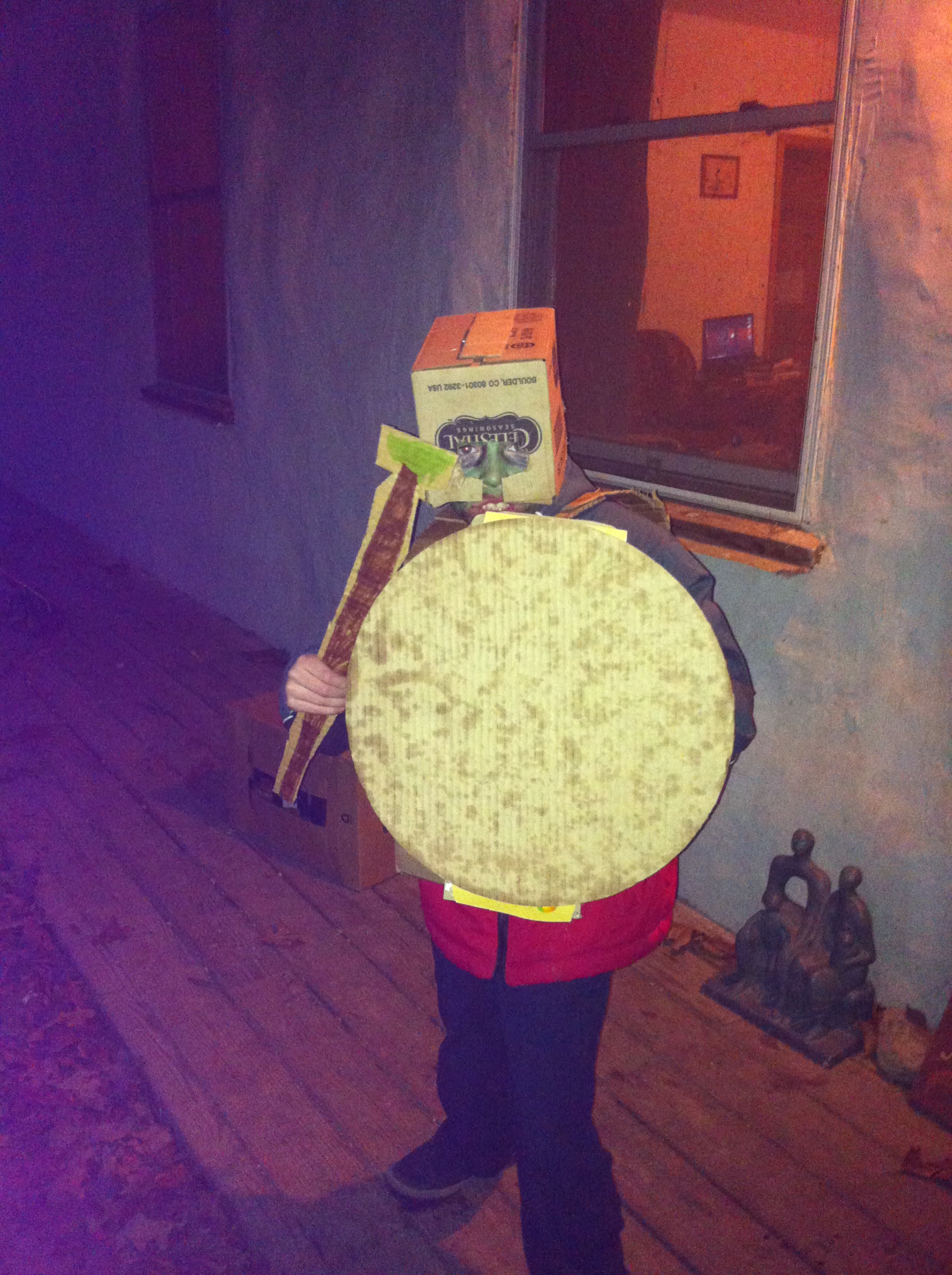
Future plans involve moving on from cardboard armor, to real movie stuff…

In the car on the way home from a different class, Lann was planning his birthday party (Sept). He wants to learn how to make silicone movie masks. He said: “I’ll do the sculpting and art part, you do the reading and talking about it part, Dad can do the sitting around with his mouth open part, Zander can do the running around and squealing part, and Alaina can do the napping.” I said: “does Dad really only sit around with his mouth open?!” And Lann said, “Mom, in AWE!” He also said they’re going to go to the Drury Inn and dress up in Lord the Rings costumes, “and, we’ll have to hang up a sign that says Nerdfest.”

That same week we were briefly discussing the massive scale of the universe and the fact that the Earth is hanging around out there in space, spinning, and Lann said, “sometimes my brain hurts when thinking about a selection of topics.” 😉 And, that reminded me of a long ago Lann story when he was about four. We were doing the whole, “I love you as big as the sky” type of thing, and I said, “I love you as much as the universe–and guess what, the universe has no end, it keeps getting bigger, and goes on forever!” And Lann said, “oh mom, that’s so beautiful I don’t know what to say.”

The week before, Lann hitched a ride to taekwondo with Baba and since I was on break from class, I was home with Zander and Alaina (usually they go grocery shopping with Mark while I’m in class). Zander came running in to get my iphone so he could take a movie of something and I heard him their room taking a movie and narrating to Lann as he does so, so that he can give him the movies when he gets home and catch him up on what Z’s been up to while they’re separated! Good buddies!

March 2013 033

March 2013 085

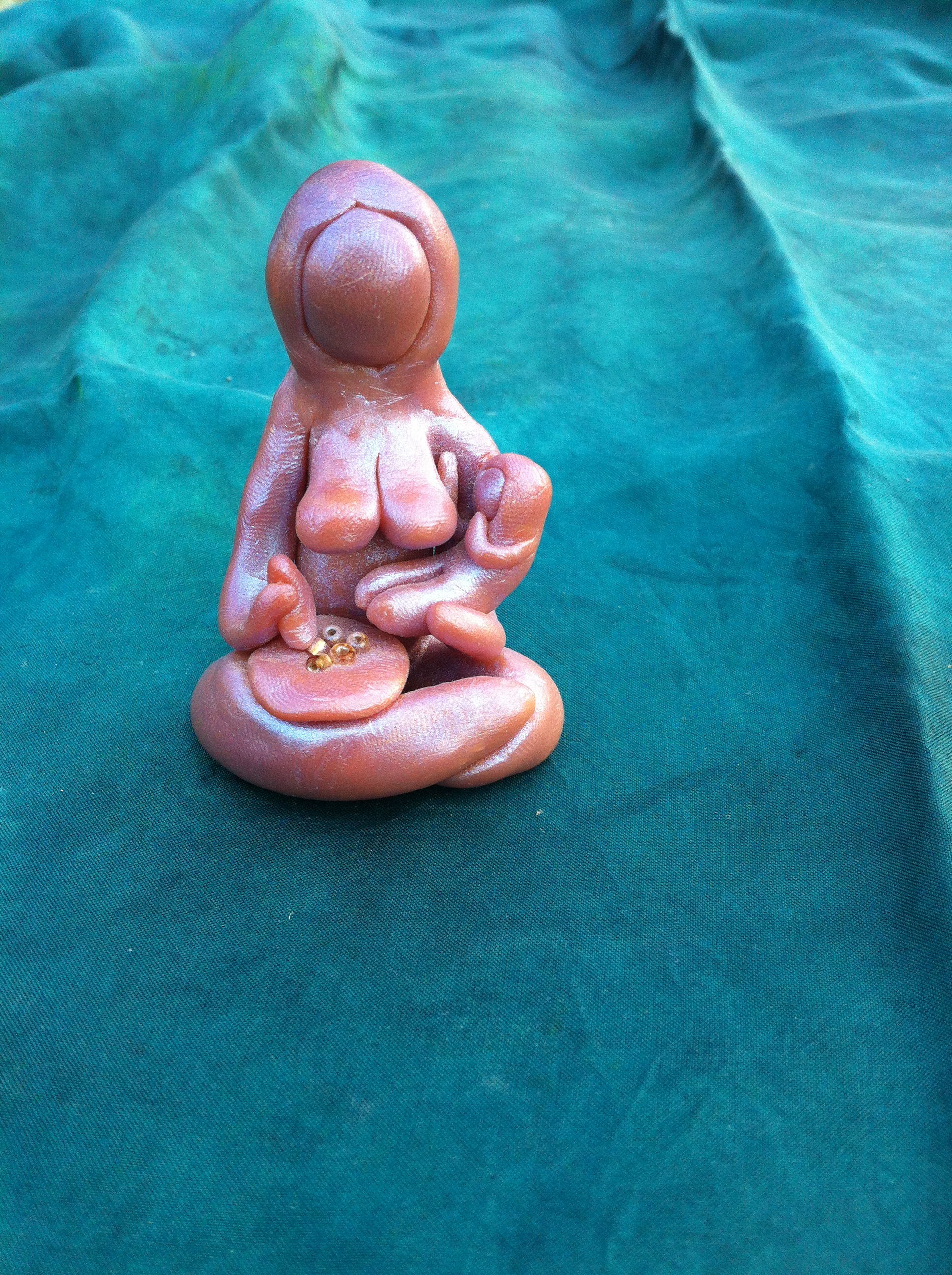
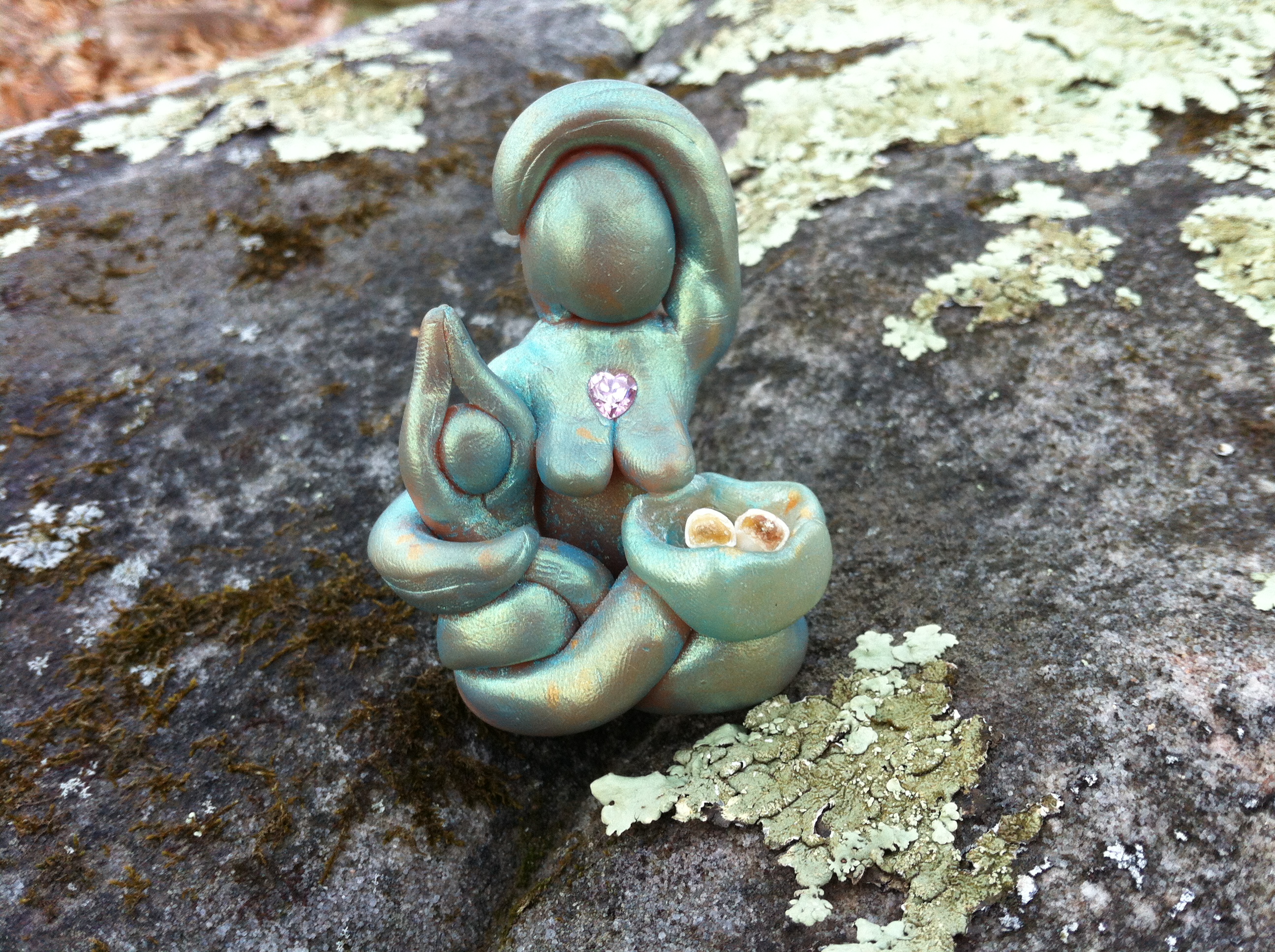
Heartbreak of tooth decay sculpture from fall of last year–mama covers head, not wanting to know and yet holding both baby and the extracted teeth. At her heart is a jewel, because she acts with deep love.

We’re dealing with ongoing dental issues with Alaina. Despite our heroic efforts, she’s ended up with the most severe problems of any of our children. Last week I took her to the local pediatric dentist. He was really nice and informative and Alaina did really great with him. However, she needs a LOT of work, more than I thought, and it is going to be really expensive. She needs the crowns she already has replaced because they were not fitted correctly by the first dentist and there is decay around/behind them, plus she needs four other crowns and also two regular fillings. :*(

We’re definitely going to have to go through the general anesthesia route. The local pediatric dentist only does this work in the hospital and we got the estimate from the surgery center for the hospital portion only and it was $8900. Our insurance will cover part of it (we’ll still have to cover about $4500), but that doesn’t matter. What matters is that that is absurd. What a broken system. Taking your kid to the hospital for two hours to get their teeth worked on just should NOT cost $9000, no matter who pays for it, that is patently ridiculous. So, I’m going ahead with the consultation I made for her in Springfield on Wednesday. I called in advance to double-check and they do their oral surgery work in an outpatient surgery center rather than in a hospital and their estimate for the clinic part is $2000, total. That is more like it and is worth the two-hour drive (one way). I wish I hadn’t bothered taking her locally, because now we just have to do the exact same thing on Wednesday and then still go back. She has to have a physical first, before she can have anesthesia, so I also made an appointment for her first-ever visit to the doctor. What I really, really wish is that I’d just taken her to Springfield in the first place, last year, when we first started to get her teeth taken care of. I am so angry with the dentist we took her to in St. Louis. I was happy with the same office for Lann (different dentist, 8 years ago), but I have HATED everything that happened there with Alaina and I wish I’d never taken her there. I feel like they actually caused the problems she has now by not acting to treat the teeth I first brought her in about and then doing an absolutely CRAPPY job on everything they did after that. I don’t actually feel like I really have energy to really be angry though, my primary feeling is sadness and anxiety about what is to come.

In a cuter Alaina story, I made myself a little sculpture to use as a pendant, but Alaina appropriated it. When I finally put it on her, she said…”dooool.” I said, “did you just say ‘cool’!?” And she said, yes!

She also “knits” and likes tiny dogs…

March 2013 035

March 2013 004

March 2013 027

We get a lot of use out of the Ergo still too!

And, I guess our kids should be in a band:

Alaina sings!

Zander drums!

Lann drums too!

We went to my sister’s house a couple of weeks ago and the kids immediately took to my brother-in-law’s drums. Neither had ever drummed before and Zander really rocked it! Alaina singing was a moment I captured last week when I was printing invoices and she was sitting behind me putting on a show.

In my own news, I finally renewed my ICEA childbirth educator certification after dawdling on it for a long time, but I let my CAPPA certification lapse. It was a hard decision, but made the most sense. I’ve been moving on from birth education for quite some time, and continuing to shell out money for something I’m not using often doesn’t make a lot of sense.

My new classes begin today! After the hectic disequilibrium that comes with the final week of a school session, the following week feels a lot like coming home from being out-of-town—excited to see your familiar life, yet also slightly panicky about needing to “catch up.” Plus, there is so much to be unpacked…and then, BOOM, two weeks off is SHORT. My online class is full and my two in-seat classes have 12 students each. There was a lot of prep to do get ready for them–I always forget that these “breaks” aren’t about having a vacation, they are about preparing for next session.

I’m not sure how good I do about being the “axis,” but my wheel is a pretty fulfilling one 🙂

Tuesday Tidbits: Gift from the Sea (Communication Overwhelm)

March 2013 061

Couldn’t resist putting this photo with this post, since she’s holding little shells. We found them in the river gravel we had delivered for our greenhouse 🙂

The Amethyst Network Board decided to experiment with choosing a “book of the month” to discuss, comment upon, and share during the  month. For March, we chose Gift from the Sea by Anne Morrow Lindbergh. I have had the book on my to-read shelf for years and a few days ago, it literally popped off the shelf and into my hands. I’d like to offer a series of short posts based on the book, sharing quotes that I enjoy as well as associated personal experiences or thoughts.

The first quote that caught my eye was this one immediately following a section about the many exhausting demands on a mother’s time and attention:

For life today in America is based on the premise of ever-widening circles of contact and communication. It involves not only family demands, but community demands, national demands, international demands on the good citizen, through social and cultural pressures, through newspapers, magazines, radio programs, political drives, charitable appeals, and so on. My mind reels in it, What a circus act we women perform every day of our lives. It puts the trapeze artist to shame. Look at us. We run a tight rope daily, balancing a pile of books on the head. Baby-carriage, parasol, kitchen chair, still under control. Steady now!

This is not the life of simplicity but the life of multiplicity that the wise men warn us of. It leads not to unification but to fragmentation. It does not bring grace, it destroys the soul. And this is not only true of my life. I am forced to conclude, it is the life of millions of women in America. I stress America, because today, the American woman more than any other has the privilege of choosing such a life.

Woman in large parts of the civilized world has been forced back by war, by poverty, by collapse, by the sheer struggle to survive, into a smaller circle of immediate time and space, immediate family life, immediate problems of existence. The American woman is still relatively free to choose the wider life…

This almost made me laugh because it was written in 1955, but I feel like she might really be talking about Facebook! 😉 It actually made me feel good to know that this feeling of fragmentation I describe sometimes and the sense of everything and everybody wanting a piece of me all the time, isn’t a new feature of being a woman and mother, and it also isn’t the “fault” of technology. Perhaps it is a feature of caring a lot.

It also reminded me of the quote I keep taped to my laptop:

To allow oneself to be carried away by a multitude of conflicting concerns, to surrender to too many demands, to commit to too many projects, to want to help everyone in everything is itself to succumb to the violence of our times. Frenzy destroys our inner capacity for peace. It destroys the fruitfulness of our work, because it kills the root of inner wisdom which makes work fruitful. –Thomas Merton

Book list: Preparing Children for Homebirth

MR_024The theme of our spring issue of the Friends of Missouri Midwives newsletter was Siblings. Happily, I got a lot of great content for this issue without having to write everything myself (sometimes I prepare issues that should be called “The Molly Issue”). Other than the letter from the editor, the only piece I contributed this time around was a short list of homebirth resources for children. If you have other good resources to add, I’ll gladly accept your contributions and update the list accordingly.

Here’s my list:

(Amazon affiliate link included)

  • Runa’s Birth by Uwe Spillmann and Inga Kamieth– my all-time favorite children’s homebirth book. The illustrations in this book are amazing; I love the tiny details like little shells/rocks on the windowsill and phone messages on the bulletin board.
  • Welcome with Love by Jenni Overend and Julie Vivas (also published as Hello Baby). It has nice, softly drawn pictures that glow with excitement and I really enjoy reading it to my kids.
  • Birth Day DVD by Naoli Vinaver—this one is great because the whole family is involved and older brothers join mom in the birth pool.
  • We’re Having a Homebirth by Kelly Mochel. This book is inexpensive, cute, and informative.
  • Being Born: The Doula’s Role by Jewel Hernandez and R. Michael Mithuna–really nice, detailed illustrations. Focus is on doulas and their job and the wide range of settings in which mothers give birth.
  • Mama Midwife: A Birth Adventure by Christa Tyner— this new children’s book about homebirth and midwifery is available to read for free online. It is cute, though kind of trippy. (I would have preferred it to be just people though, rather than a somewhat incongruous collection of animals.) LOVE the “birth song” at the end.
  • My Mommy’s Midwife by Trish Payne CNM—this one has children’s drawings as the illustrations. It isn’t about homebirth, but instead explains the role of the midwife and that she might come to a birth center, a hospital, or a home birth.

Books that I’ve not read, but would like to check out include:

  • Our Water Baby by Amy Maclean and Jan Nesbitt (water birth specific)
  • Mama, Talk About When Max Was Born by Toni Olson (home waterbirth)
  • Mama, Talk About Our New Baby by Toni Olson (companion book to the above about integrating new baby into the home)

MR_034

Non-Advice Books for Mothers

Mothering can involve a complicated and multileveled emotional terrain. What often speaks most clearly and helpfully to mothers is other women’s stories and experiences, NOT “advice,” prescriptions, promises, or admonishments.

I’ve noticed two types of “attachment parenting” mothers—those who discovered AP after having their baby or child(ren) and those who chose attachment parenting in advance, sometimes way in advance. While of course a host of factors are involved, both internal and external, I’ve also noticed that those who discovered, feel more content and are less likely to be hard on themselves about their AP-“failures.” If you discover something, you have an ideal to live up to. If what you start with is the ideal, essentially the only way to go is down! I’m one of the latter bunch, having envisioned my attachment parenting perfection and bliss for at least three years prior to actually giving birth to my first baby. After my first son’s birth, I dove into more and more and more parenting books, trying to make sense of my new life. And, to me totally honest, Dr. Sears books started to drive me out of my frickin mind, even though I agreed with the guy about almost everything. I still recommend him, I met him in real life in 2007 and consider him an excellent resource, however tMarch 2013 078he subtext I perceived in his books was: “do it the right way and you’ll always be happy and baby will never cry” and that was really, really hard on me as a vulnerable, sensitive new mother of a pretty cranky baby. So, I practically collapsed with relief when one of the birth center doctors suggested reading the book Misconceptions by Naomi Wolf. After this, I became obsessed with what is somewhat dismissively referred to as “the momoir”—memoirs of motherhood written by real women. Loved them. Lived by them. Learned from them. They “heard” me when I really, really needed to be heard.

Recently, a lovely friend and first-time mom on Facebook remarked that she needed to stop reading “advice” books about motherhood and try something else (though, still interested in reading about motherhood). Her comment reminded me so much of myself and I swooped in, ironically, with “advice” about other books to read. As I thought about books to suggests, the piles upon piles of books that I devoured came back to me in a rush. This morning, I went through my bookshelf and made a list of those that were influential enough to make the cut and be kept, versus being resold or passed along in the giveaway box. It is a big list! And, it is only a fraction of what I actually read. What was also really interesting for me to realize was that I haven’t read a book like this in ages, there are probably dozens more now! I still have several unread on shelf, but I no longer feel as if I need them in the same “lifeline” way in which I combed the library shelves with my first baby in his little sling.

So, here are my tips and suggestions on non-advice-based books for mothers. In general, I vote ixnay on any kind of “how to” mothering/parenting books. I vote yes on parenting memoirs, books about self-nurturing and mother-care, and sociopolitical commentary on motherhood. Disclaimer: a lot of the books on my list are written by “mainstream” authors, many of whom are pretty critical, sometimes very harshly, of attachment parenting. I find that some of these books create a lot of polarization with regard to Amazon reviews. At the risk of sounding very snobby myself, I would suggest that you are unlikely to enjoy these books if you are any of the following:

  • Unable or unwilling to engage intellectually with topics surrounding motherhood/parenthood.
  • Uninterested in the larger social, cultural, and political context surrounding individual mothers and their parenting “choices.”
  • Dismissive of the role that sociopolitical influences have on the lives and experiences of individual women.
  • Unable or unwilling to allow other women to define their own experiences and to recognize that not everyone experiences things the same way, and that that is fine, even desirable.
  • Fond of describing maternal honesty as “whining” and prefer “suck it up” approaches to sometimes painful explorations of complex feelings.

Before I list my books, make sure to check out Brain, Child magazine! I DO still read and devour this and feel as if it “saved me” multiple times during the first three years of parenting. And, make sure to check out my What Kind of Mother Are You Quiz, based on a memoir called Inconsolable.

These books may include links to prior posts/reviews about them. A lot of them are a blend of memoir and sociopolitical commentary—I classified them according to my perception of their primary emphasis. For all book reviews I’ve ever posted on my site, see this page.

Memoirs:

  • Let the Baby Drive by Lu Hanessian. This is one of my very favorites. Nourishing and enriching and relevant. May have a small tinge of “do it my way.”
  • Operating Instructions by Anne Lamott. This is a classic. A memoir of the author’s first year with her son. She is a single parent and so the book addresses some of the challenges involved with parenting solo. This book is incredibly funny at times.
  • Callie’s Tally by Betsy Howie. Very, very funny, though not particularly “AP” (so if you’re looking for that, read Let the Baby Drive instead). This book chronicles how much money the author has spent on her daughter during her first year of life.
  • A Better Woman by Susan Johnson this one is an often painful to read memoir of a woman’s experience with an obstetrical fistula
  • Fruitful by Anne Roiphe (also addressed in prior post: Motherhood, Feminism, and More). This is a good look at the tensions between feminism and motherhood and navigating new identities
  • Oh boy, oh boy, oh boy! A tale of mothering three sons.
  • The Blue Jay’s Dance by Louise Erdrich. Very lyrical, mild book. (Quoted or written about in these prior posts)
  • Dispatches from a Not-So Perfect Life–by a frequent contributor to Brain, Child magazine.
  • Inconsolable: How I Threw My Mental Health Out with the Diapers–memoir of a journey through severe postpartum depression. Darkly funny. Critical of attachment parenting, but in a manner in which I can identify.
  • Growing Seasons by Annie Spiegelman. This memoir is by a “sandwich generation” mother, caring for a toddler and for her own ailing mother.

Anthologies:

  • Mothers Who Think—collection of essays from writers for Salon.
  • The Bitch in the House–not all about parenting, about marriage, work, etc. Often angry.
  • Toddler–stories about parenting toddlers by one of the former editors of Brain, Child.
  • Beyond Onecollection of essays about adding a second child. I loved it. A friend I lent it to thought it was “horribly depressing.”
  • Real Moms—a surprising gem from MOPS. While I find many of their books too “surface” in emphasis and also very mainstream-Christian-mom directed, this one is great. One of my favorites.
  • The Fruits of Labor–about parenting at all stages of life. Some are tragic. This is more literary memoir than “tell all” memoir.

Sociopolitical commentary and analysis: March 2013 090

  • What Mothers Do (appears in Motherful) by Naomi Stadlen. I love this book! It takes a close look at how women mother and how skillfully they do so (so that on the outside it looks like they are doing “nothing”). This is not a “how to” book, but a book that tries to look below the surface and explore concepts that are very difficult to verbalize/articulate. She strives to put into words/give us language to describe what is it that mothers do all day–their often invisible contributions to life. Contributions that are often invisible even to ourselves. This is a very affirming and unique book. This is one of my top picks for tender new mothers. There may be some subtext about doing it “right” though.
  • Of Woman Born (included in this post: Motherhood, Feminism, and More). This is a classic sociological and personal exploration of the role, meaning, and cultural valuation (or devaluation) of mothers. This was my first exposure to the notion of motherhood as institution rather than simply as role/relationship.
  • Price of Motherhood  by Ann Crittenden. Emphasis on economics, but very interesting analysis of multiple cultural, political, and social influences on mothers.
  • The Motherhood Manifesto—by Moms Rising. Showed me there is an actual “mother’s movement” afoot!
  • Paradox of Natural Mothering—academic in tone. I really enjoy this book. Lots of food for thought. It is a little uncomfortable to read too because she is so spot-on in her analysis of mothers like me. It is strange to feel “under the microscope.” The author herself is a “quasi-natural mother,” so the analysis isn’t harsh criticism, but it is a critical look at the “cult” (my word, not hers) of natural mothering and has a LOT of excellent discussion about feminism and natural mothering. She says–and I completely agree–that natural mothering represents the intersection of three ideological frameworks: voluntary simplicity, attachment parenting, and cultural feminism.
  • The Mask of Motherhood
  • Misconceptions by Naomi Wolf. As I mentioned, this was the first book that I ever read about a woman’s postpartum experience. It was suggested to me by the doctor at the birth center when I expressed some teary frustrations about adjusting to my new life and wondering if I would ever get “back to normal.” This book is on the “angry” side–it is not a nurturing and tender read and she is critical of things I value (like LLL). I did not identify with the author’s birth experiences or feelings about birth (I felt tremendous during birth and powerful, empowered, triumphant, and confident) and her conclusions seems mis-drawn, i.e. her birth was terrible, ergo, birth itself is terrible and those who tell you otherwise are lying, but her postpartum feelings closely match my own (weak, wounded, invisible, etc.)
  • Perfect Madness by Judith Warner. Included in this post: I just want to grind my corn! Fairly harshly critical of attachment parenting. takes potshots at LLL.
  • The Mother Knot by Jane Lazarre (included in: OBs and Normal)
  • Big Purple Mommy—about creativity and motherhood and still nurturing one’s creative self.
  • The Mother Trip (included in this post: Small Stone Birth Activism)–this one is written by Ariel Gore, original founder of the awesome zine, Hip Mama.
  • The Mother Dance by Harriet Lerner. This one focuses on the psychology of women primarily.

Mother nurturing/validating: March 2013 068

  • 25 Ways to Joy & Inner Peace for Mothers
  • The Tao of Motherhood
  • The Hidden Feelings of Motherhood
  • Mother Nurture by Rick & Jan Hanson. This book is phenomenal. Very comprehensive. It addresses mothers of children from birth to age 5, so even if you are several years past the early postpartum weeks, this book has much to offer to you! One of the focus areas is on “Depleted Mother Syndrome” and addresses coping with it via all areas (body, mind, social/relational).
  • Mothering the New Mother–classic postpartum doula book! Highly recommended.
  • This isn’t what I expected—postpartum depression recovery.
    After the Baby’s Birth by Robin Lim. This book is very holistic in approach and is one of my very favorite postpartum reads. It offers such gems as, “you’re postpartum for the rest of your life” (which some people have said they feel like is depressing, but I find a tremendously empowering statement!) and “when the tears flow, so does the milk” (with regard to the third day postpartum). It does have a large section on Ayurvedic cooking, which, personally, I don’t connect with, so be aware that that section is in there and depending on your belief system, might make perfect sense to you, or might seem inapplicable like it feels to me.
  • Mothers Guide to Self-Renewal

Novels/Others:

  • I Don’t Know How She Does It—fiction about an employed mother and the juggling act with which she tried to balance work and family.
  • Motherhood Confidential–this one is pretty weird. I almost didn’t include it and I also don’t know whether it is fiction or not. It is billed as “chicken soup for the spleen” and as an “anti-advice” book. I like the recommendation to scrape off the “dogma-doo” of parenting. It is about two best friends, one who becomes an attachment parenting homeschooling mother and the other who is a “detachment parent” and how rocky their relationship becomes.
  • Three Shoes, One Sock, and No Hairbrush by Rebecca Abrams. Primarily about adding a second child.

Children’s Birth Art Gifts

I’m not the only birth artist in the house! Last month, while I worked on my own sculptures, Zander worked and worked and created one of the best gifts I’ve ever received:

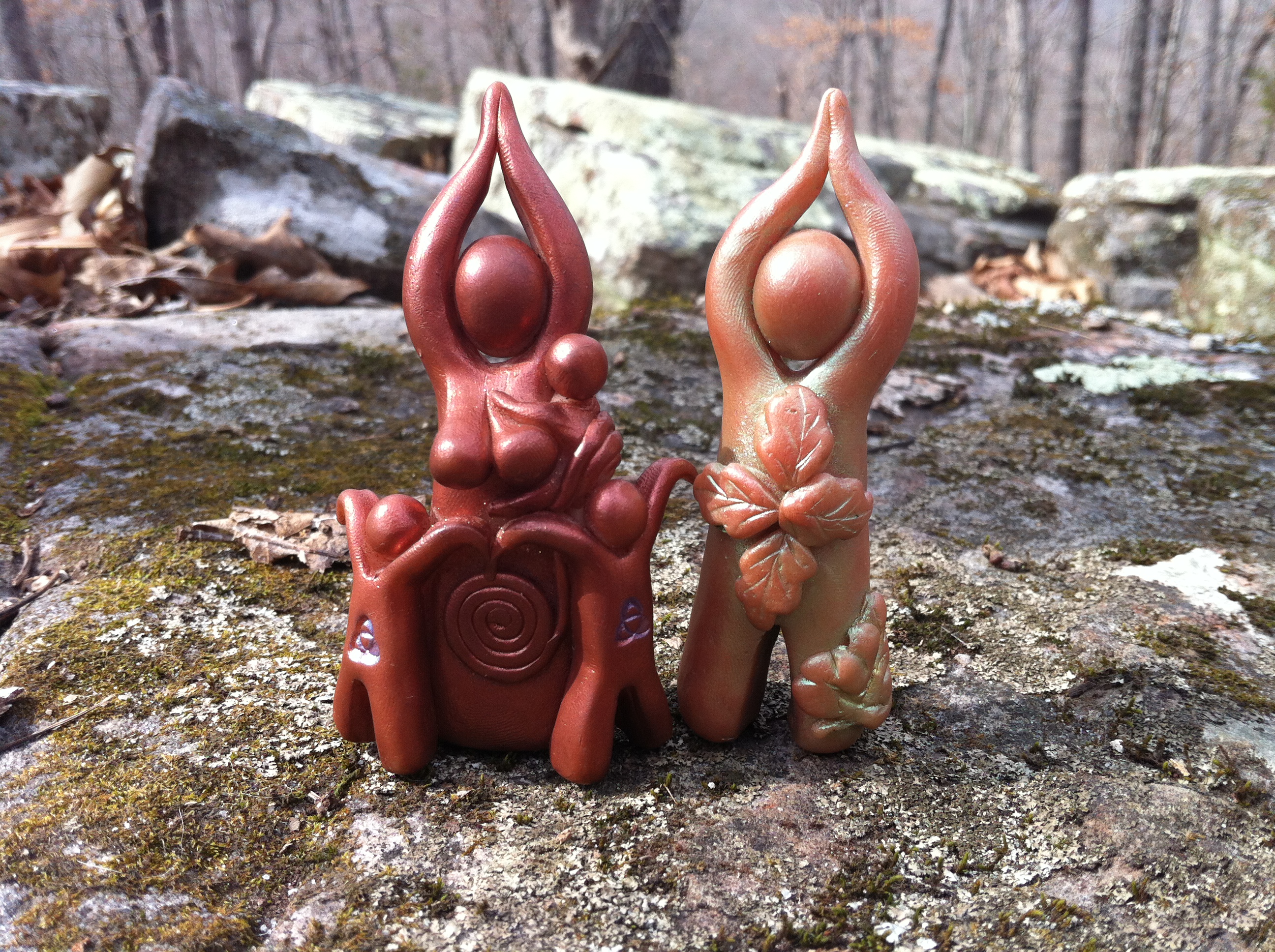
February 2013 051

This is the Goddess of Everything, he told me: “See that pink stone in her belly, mom? That is the ENTIRE UNIVERSE.” She has a lot of detail. A snake on one shoulder, a bird on the other, a moonstone, and hearts. I love her! The boys then went on to create more gifts for me over the course of a couple of days. I love them all, but the one above is something pretty special!