Archives

What to tell a mother-to-be about the realities of mothering…

I see new friends starting out on the road to motherhood with mixed feelings. Immense joy at the ecstasy of love they are about to experience, great protectiveness, wishing to shield them from the scars it will make on their souls, the pain, the heart ache, the worry, the exhaustion, the touching of anger which they had been able to keep hidden all these years. But this is the journey. The one that makes us the mothers that we will be. The mothers that our children will live with every day, yet barely know… –Lucy Pearce, Moods of Motherhood

A few years ago, a life coach and women’s health expert I follow online got pregnant. During her pregnancy, she started a new Facebook fan page called Blissful Motherhood* (*not really. It was called something different, but I’m protecting her identity). I am going to confess that my first reaction was to kind of meanly laugh to myself as I thought, “oh honey! You poor thing. You have NO FREAKIN CLUE.” So, a couple of months after she had her baby, she showed back up on her real Facebook page with a familiar lament: oh my goodness, this is SO HARD, why didn’t anyone TELL ME?! And, again, my initial reaction was kind of a mean secret snicker (so, how’s that Blissful Motherhood page treating you now?!). Then, I swallowed that unbecoming reaction and I told her this:

When I had my first baby, I would see women who were pregnant and feel almost a sense of grief for them—like, just wait, you have NO idea what is coming. I also told my husband more than once: “this is both more wonderful and more HORRIBLE than I ever could have imagined.” The fear of being thought a “bad mom” is SO powerful that it keeps us quiet about many things. I’ve felt more than once that my kids were “torturing” or me or literally trying to crush my spirit/soul. It sounds horrible to type it out, but that is how I feel sometimes! I’ve also written about how it interesting to feel both captivated AND captive. Bonded and also bound. I discovered that there was a whole new section of women’s rights I hadn’t even been aware of prekids–mother’s rights. I do think many, many women have written about this, but when you start out you feel like you’re the only one whose “daring” to mention the ugly side [she’d also mentioned, “why doesn’t anyone write about this?” Um, they totally do. A lot]. Start reading “momoirs”—they’re a lifeline! So many good ones out there. I have a big collection of them. Oh, and start reading Brain, Child magazine. The best look at real mothering I’ve ever know.

This, “why didn’t anyone tell me?” and, “why isn’t anyone talking about this?” is a common refrain echoing in the postpartum tales of many mothers. So, why don’t we tell them? Or, what can we actually tell them? Is there a way to really do so? I kind of think there’s not.

Lucy Pearce explains it like this in her Moods of Motherhood book:

Nobody told me… You look at me bewildered, eyes grey with exhaustion. Milk-spattered, baggy clothes, hair awry. “Nobody told me…” you begin. You look at me, urging me to explain myself. How could I have kept this, all of this, secret from her? Surely it was my duty to prepare her. “Nobody told me how much it would hurt, how exhausted I would feel, how much love I have in my heart that I think I will burst, how overwhelming it all is…” her eyes begin to well with the enormity of her new knowing. All I can do is to smile. To hold her. “We tried.” I say softly. Stroking her tousled hair. And I think to myself. It is not so much that we did not tell you, as you could not hear. Until you have your own child, held in your heart, your ears are blocked, your eyes are blind to the reality of motherhood. Its pains and its glories. Once you have been there, stood in the body of motherhood, then you can hold hands with every woman who has ever mothered. You know her joys and pains. You are her.

Looking at my own pre-motherhood life, I think this is right. I could not hear. I didn’t want to hear. I saw frazzled mothers stumbling into LLL meetings and “complaining” about their precious darlings and thought things like, “I’ll never feel that way!” I remember thinking after my first son was born that everything I’d feared it would be like to have a baby was TRUE and everything I’d dreamed it would be like, was also true. My mother told me before he was born that the, “highs are higher and the lows are lower” after a baby, which is also very true, but I don’t think there’s any way to fully prepare for that. My future doula gave me a letter at my blessingway in which she tried to lovingly express what it is really like and I put it away thinking,”for you maybe!”

First baby tender triumph and dazed reality.

First baby: tender triumph and dazed reality.

In response to the Blissful Motherhood life coach, another woman responded: “I remember my mom trying to get real with me before I had my first baby and I was horrified with what she told me, almost angry that she would try to burst my bubble… then I had my little boy came along and I wondered why she hadn’t told me more…Sometimes the realities of motherhood do just seem too harsh to share…” Personally, I didn’t want to hear much about the realities of parenting from my own mother, because if her experience of mothering was terrible, HELLO, that would have been my fault. I didn’t want to know that I’d made her suffer and stress!

My own childbirth educator simply told a story: when her own first child was a newborn, sometimes the baby cried so much and so long, that the educator would put her down in the middle of the living room floor and go outside and run around the house multiple times. While initially only “hearing” this story in brief passing (i.e. I’ll never feel that way), I touched back in with that story multiple times during my first son’s first year. I never actually did the running, but what the story gave me was permission to feel badly about parenting and to want to get away from it. And, you know why? Because that childbirth educator was a rocking cool lady and if someone that rocking cool had to “lose it” and run around her house like a freak, then I must not be doing such a bad job myself.

However, I also don’t tell them, those sparkling, beautiful, bright, glorious, happy, and full of promise pregnant women, what it is really like, because I don’t want to ever be the one to steal their joy, their excitement, their sense of promise, and their happy anticipation of “the greatest days of their life” or the fulfillment of a lifetime dream of parenthood. And, guess what? I think I’ve also realized that that sense of promise and anticipation is reborn, at least in part, during every pregnancy. It isn’t only the territory of the blissfully unaware, it is a gift that accompanies each new baby—the dream that this baby will be wonderful and perfect and so, too, can you be the mother you’ve always imagined being. It is a new, bright, hopeful start, every time.

It wasn’t actually until I had Alaina that I felt like I finally really enjoyed having a baby and being a mother the way I’d always dreamed of. It wasn’t that I didn’t enjoy the others, I certainly did, but not in that delicious, complete, whole, and vibrant way in which I reveled in her. She was the first baby for whom I felt fully capable of totally giving myself to and not feeling captive by that gift. Perhaps not coincidentally, she was also the first baby for which I did not quit doing other things I wanted to do in order to mother her. My first son’s birth necessitated essentially totally dismantling my previous life and identity. It was SO HARD. I felt so much grief and loss about abandoning so much that I’d cared about so deeply. With my second son, I was finding my legs as a mother-person and feeling my way into other roles and responsibilities that were compatible with motherhood. My feelings of depression and fatigue after him were lifted when I started to find my voice as a blogger, as the editor of the Friends of Missouri Midwives newsletter, as a breastfeeding counselor, and as a birth educator. I’d redefined myself to include motherhood as the core facet of my identity, but in a way that allowed me personal expression and the ability to “make a difference” to other women. With my last baby, my mother-voice outlets were firmly established, my tribe was healthy and strong, and my non-mother career was compatible in an integrated and fairly harmonious way with family life. It was then that I finally felt like being a “good mother” AND doing others things at the same time was actually possible and (pretty much) stopped trying to make excuses for never having given up on that desire.

So what do you think? What can we tell mothers-to-be about the realities of mothering? Do we tell them anything or do we just hug them later when they cry and tell us they had no idea, why didn’t anyone tell me? What stories, like that of my own childbirth educator, do you have that you share with clients? Stories are handy ways of imparting life wisdom without being directive or prescriptive, or implying that someone must be exactly like you. I tell my clients a story of reaching out my hand to my husband, our fingers not quite able to touch, and saying, I miss you. I tell them about my feelings of this parenting thing being both more horrible and more wonderful than I ever imagined. I tell them about my childbirth educator running around her house. I give them tips and tips and more tips about making a postpartum plan. And, I tell them they look gorgeous. And, that they’ll be wonderful parents; that their babies are so lucky to have them. I listen to their happy birth plans and celebrate their enthusiasm. I point out how I notice how well they work together and what a great team they are. I wish them beautiful births and happy babymoons and tell them to email me or call me if they need anything. I hope they’ll remember that I’m there and that I do have the capacity to hear “ugly” without rejecting them. I remind them as many times as I can that they’re strong and beautiful and capable…and then, I open my hands and heart and watch them fly away into their own unknown, mysterious, tender, fragile, and precious journey.

hands

Postpartum hands picture, taken by my mother in 2003.

Some relevant past blog posts:

Postpartum Survival Tips

“In western society, the baby gets attention while the mother is given lectures. Pregnancy is considered an illness; once the ‘illness’ is over, interest in her wanes. Mothers in ‘civilized’ countries often have no or very little help with a new baby. Women tend to be home alone to fend for themselves and the children. They are typically isolated socially & expected to complete their usual chores…while being the sole person to care for the infant…” –Milk, Money, & Madness

324I recently shared this quote on my Facebook page and a reader responded expressing her fear at preparing to face this exact situation. I responded that it is an unfortunately realistic fear and suggested she check out some resources for postpartum planning that might help work through the fear as well as plan for a nurturing postpartum instead of a stressful one. She then responded that she has a very minimal local support system and that got me thinking about postpartum survival tips for when one’s local support system is limited…

My ideas:

  •  Suggest to your out-of-town friends and family that they contribute to a “babymoon” for you and all pitch in to hire a postpartum doula.
  • Tactfully remind people that even if they’re too far away to bring you a meal, they can certainly call up a local restaurant and order a delivery for you! I think a lot of us forget that is an option for a long distance family member (that we would bring food to if they were local). In my experience, getting enough food is a huge issue postpartum! I remember long distance friends having babies a variety of times and wishing I was close enough to bring them dinner. Duh. Many restaurants do, in fact, deliver food!
  • Be your own “best friend” by preparing and freezing meals and snacks now. I know I sound obsessed with food, but it is totally one the hardest things to take care of postpartum, but so important!
  • Put together a mama survival kit for yourself that you can then open up when you need it. Some ideas here and more ideas of variable quality here.
  • If you don’t have a sense of community work, actively work on building one—go to La Leche League meetings, Holistic Moms Network, Mothers of Preschoolers, Attachment Parenting International, or other mothers’ groups. Go BEFORE you have your baby if you can.

Other ideas for helpers:

  • In addition to my idea of ordering delivery for a postpartum family as a way of bringing them dinner long distance, is to order a dinner through the mail via the business Spoonful of Comfort. They will send fresh chicken soup, rolls, cookies, and a baby present via Priority Mail (packed with freezer packs). I send it with a note saying, “this is me, bringing you dinner!” Friendly tip from unfortunate personal experience: if you are doing this for a friend make SURE you enter THEIR address as the shipping address and not your OWN address, or you will then be forced to enjoy their postpartum meal and feel like a total idiot at the same time.
  • Don’t forget about other meals—breakfast = awesome. Muffins = awesome.
  • Pay it forward–I think sometimes people feel like they don’t know someone well enough to bring them food, or maybe they even do a mental “tally” and think, “well, she won’t be bringing me food ever, so why should I take time to bring it to her” or, “she didn’t make anything for me when I had my last baby, so I’m off the hook on this one.” When I had Alaina, a mother who had literally JUST moved to town and that I had not yet met, sent a hot breakfast casserole to me (that my lovely doula delivered to my lovely mother at the snowy end of my gravel road).  I think of that generosity when I bring a postpartum meal to a mama from whom I will never end up getting a reciprocal meal. Who cares. She needs it. You can do it!
  • Another doula commented on my post: “Do you know a mom that is about to have a baby? Or maybe a momma who just gave birth recently? Don’t even ‘offer’ just show up with a bucket of cleaning supplies, a bag of healthy food, and maybe something nice for her. Go tuck her in bed with baby, and get to work on her home.. When she wakes, she has nothing to do but nurse that baby. (If she has other kids, delegate chores with them, if to young, call mutual friends to sit for them! Our Mom’s need this, up through 6-9weeks pp, Mom’s need help, even longer for some. There is a reason the US has the highest postpartum depression issues in the developed world… Create your community! DO IT!” I would add that if you do not know mom well, do not plan to engage in a deep cleaning project and stay for a long time doing such project.

I also posted to the Citizens for Midwifery Facebook page asking for contributions for postpartum survival tips when your local support system is limited. What beautiful, helpful women we have on that page! While I didn’t get many suggestions specifically for minimal local support systems, I did get a nice collection of survival tip ideas:

  • Trust your own instincts. Many women have great advice but if your heart is telling you something else, go with it.
  • Craniosacral therapy… one session for you and one for the baby.
  • In addition to lots of suggestions to hire a postpartum doula, there were lots and lots and lots of shout-outs for placenta encapsulation. I echo it myself.
  • Get out of the house alone! For me, it’s been crucial to my sanity to leave my home, by myself, even if only for an hour or two between nursings. Just a Target run was therapeutic!
  • Kangaroo care for high needs babies.
  • Lots of mentions of it being okay to accept help and okay to ask for help.
  • A lot of new moms get really overwhelmed by family and friends coming by to see baby, and it’s important for them to remember that they can always put out a sign that says “mom and baby sleeping!” (even if they aren’t) anytime they need a break.
  • Watch only positive stuff without violence on TV (cooking shows, home improvement) as regular TV is really violent for new mamas and she may be watching more with all the nursing/healing.
  • Have homemade high protein frozen meals (and snacks) in the freezer before birth so anyone can warm them up for the household after birth. If breastfeeding, get much more rest than you think you need from day one to ensure an abundant milk supply (*note from Molly: it is true that prolactin receptors are “laid down” during the first days of breastfeeding. Breastfeeding “early and often” makes sure that there are an ample supply of receptors in your brain.)
  • Have a sign up sheet for family and friends to choose which chores to help with, gift certificates to a cleaning service, stocking up on disposable plates and dinnerware…
  • A new mommy group can be a life saver. Just knowing that other mommies are going through the same thing help
  • Food registries such as mealtrain and mealbaby. Not enough families know about these amazing and free services. (*note from Molly: we often use Care Calendar locally.)
  • Plan ahead and freeze several of your favorite freeze-able meals. Let the clothes be a little wrinkled. Use paper and plastic ware instead of worrying over dishes. Stay laying down first 3 days postpartum (preferably naked: it gives a certain message and is better for baby anyway) and the first week stay in pajamas. Enjoy frequent rest times, even if you can’t sleep.
  • Baby wearing….lots of time in bed, sleeping cuddling and feeding babe skin to skin…brest friend nursing pillow
  • Send a subliminal message to the limited visitors you’ll have (set limits early with partner) by wearing your robe for several weeks
  • Eat well, accept all offers of help and food, get out of the house alone!
  • I loved getting meals brought by friends, but I didn’t always want to socialize. So, someone to run interference, or maybe a drop-off location for leaving food. (*note from Molly: my doula was the perfect person for this job.)
  • Ask for help! No one will know what you need if you don’t speak up.
  • Don’t go without showering for more than four or five days. Brush your teeth once a day no matter what, even if it ends up being at a weird time. Take your vitamins/ herbal supplements/tea. HYDRATE! Nap with baby if you need to, arrange childcare for older siblings sometimes, but also listen to your instincts—one of my worst baby blues moments was with my third when my older two were gone and I wanted them home!
  • LOVE yourself, nap when you can , Yes you are doing it right, No it’s no ones business (breastfeeding/cosleeping/pumping etc.) allow opinions and advice to slide off, drink lots of water , eat small snacks/meals, love your baby look into their beautiful eyes and connect, skin to skin whenever even with dad or siblings (safely) cherish these moments they don’t last forever, the laundry will get done, the dishes will be get cleaned …
  • Take a “babymoon”. Put on a robe when someone comes to the door–even if you have real clothes underneath. Sleep when the baby sleeps. Don’t answer the phone. Remember, self-care is essential for you to be able to care for your baby.
  • I loved having herbal soaked pad (frozen) to wear afterwards, felt soooo good. Have easy one-handed snacks available and a BIG water bottle.
  • In those last few months of pregnancy I prepare meals to freeze (I start about month 5 or 6). I make up 6 weeks worth of dinners (they always last longer since we have a great church family and friends that bring us meals). After baby is born I can put 2-3 dinners in the refrigerator (to thaw) a few days before I need them. Then all I have to do is pop one in the oven and BAM….dinner’s ready. I love “Don’t Panic, Dinner’s In The Freezer” I & II. The recipes are amazing and all freeze well. Hope that helps!
  • Skin-to-skin in bed for as long as possible; 40 days of rest, recuperation, establishing breastfeeding, bonding, limited visitors, and limited activity; drink when the baby nurses; sleep when the baby sleeps; nurse on demand; learn to wear your baby; and use a peri bottle when peeing! A postpartum herb bath and massage are nice, too.
  • Hot water bottle for afterpains
  • Placenta encapsulation and WishGarden Herbs ReBalance tincture!
  • Chiropractic adjustments, ASAP
  • Call in your mom. My mom’s job after my second was born was to keep me fed and to spend some quality time with my older child.
  • Drag oneself outside and BREATHE! 🙂
  • Water…..hot tub, shower, steam, pool, raindrops, snow, sauna, bath, river, stream, ocean, lake! If you can, immerse yourself, if you cannot, imagine yourself floating 🙂
  • Lots of water, lots of protein and healthy fats, placenta encapsulation and low expectations of anything other than bonding time with baby.
  • Don’t try to impress others with how quickly you can get up and going, even if you can, just take it easy!!!!
  • It’s not in the asking for help; its in the accepting…
Surround her with support!

Surround her with support!

Check out these previous posts:

Mothers Matter–Creating a Postpartum Plan

Planning for Postpartum

Some reminders for postpartum mamas & those who love them

and a great one for helpers written by my own doula:

The Incredible Importance of Postpartum Support

And, remember…

“The first few months after a baby comes can be a lot like floating in a jar of honey—very sweet and golden, but very sticky too.”

–American College of Nurse-Midwives

This article is crossposted at Citizens for Midwifery.

Talk to Your Baby

I already know that you can learn a lot from chickens about giving birth. This summer, I had another profound birth-mothering experience with one of our chickens after she hatched her first baby. During the last several days of incubation, mothers hens “talk” to their babies a lot through the eggshells and the babies respond. It is part of how they get to know each other and imprint before hatching. Then, after baby hatches, the mother hen continues to talk and cluck to the baby in a reassuring manner—she calls to the babies when separated and she calls a special call when there is something good to eat and she clucks softly and reassuringly at bedtime as she snuggles them all beneath her. There is a specific type of “soothing” noise they make to stressed or lost babies and a specific sort of excited sound they make to let the babies know something good is happening. There are also distressed sound that means, “run to me now, there might be danger!”

537

The baby chick who tried desperately to get to a mama who would talk to it (this mama, interestingly, is the same one I wrote about in the Birth Lessons from a Chicken essay several years prior).

We had three broody chickens at the time, each in their own little separate nest box in the broody coop. One of the hens had hatched a baby already and was in the neighboring box. The inexperienced mama hen hatched her baby and she would not talk to it. The baby freaked out. It flailed, it freaked, it stumbled all around. It dragged its tiny little wet, not-even-able-to-walk body to the very corner of the nest box as far away from the mother as possible. It flung itself into the wall where it could hear the neighboring mother clucking to her baby. The baby peeped more frantically and loudly than I’ve ever heard a chick cry out before, it sounded like it was in grave distress and danger. We moved it back to its mother and she fluffed out her wings around it just like she was supposed to do and I thought all would be all right, but…silence. The mother did not talk. Her baby desperately struggled out from under her, still not able to walk, still wet, and flung itself back into the corner, sinking down under the straw, crying piteously. Silence from the mother.

Talk to your baby, we pleaded. Your baby needs to hear you. Please talk to your baby. Silence. The baby squished down on the wire slats, pressed into the corner of the box, screaming at the top of its chick-lungs. The mother in the next box became distressed as well, calling back to the baby more and more loudly. The chick became more frenzied and flopping. The baby in the next box picked up on the fear and began peeping loudly as well. Still, the new mother sat silently and unresponsive. Talk to your baby. We left her alone, thinking her instincts would kick in, but as time passed and we could hear the chick screaming from all the way across the yard, we went back to interfere. We tried twice more to put it back under her and again the same routine repeated. We became concerned the baby would die if its level of distress continued, particularly with forcing itself down and under the straw and into the wire, so we made the decision to remove it and put it in “foster care” with the other, responsive mother. We thought she might attack it, since it wasn’t her own hatchling and because it was several days behind her own baby, but she snuggled it right up, clucking in reassurance, and it went to sleep, the next morning it was fluffy and quiet and perfectly happy with its new mother. The red hen continued to sit, silent, and unresponsive, and of course I felt horrible for stealing her baby and giving it to someone else after she’d worked so hard to hatch it. Luckily for the mental health of all involved, she successfully hatched one more baby and did take care of it, albeit still quite silently compared to all other mama hens we’ve experienced.

What does this have to do with birth?

Babies are primed to hear their mothers’ voices after birth. They expect to be snuggled into the maternal nest. Mammal babies expect to receive a warm breast and to hear comforting words in their own language. I feel fortunate that my own birth pause was respected after all my children’s births and that each baby felt only my hands and heard my voice for their first minutes of life. I talked to all my babies, soothingly and lovingly, and then brought them to my breast. My midwife and the other people around me did not interfere with these sacred, timeless moments of introduction.

It has been several years now, but I’ve worked with a couple of mothers for breastfeeding help postpartum who were unwilling or unable to talk to their babies, even with direct encouragement to do so. Baby was expecting mother’s voice and mother was unable to give it. Not surprisingly to me, these mothers experienced significant difficulty in getting baby to breast. I believe baby is expecting mother’s voice as a guide to the breast as much as it is expecting the smell of her and the sound of her heartbeat. Baby is not expecting multiple, strange voices from nurses (or even helpful breastfeeding helpers like me!). Baby is not expecting gloved hands. Baby is not expecting bright lights or loud noises. Baby is most definitely not expecting to be “helped” to the breast and “shoved” on as many mothers describe experiencing after their births. In Breastfeeding Answers Made Simplethe author emphasizes that what motherbaby pairs need most to successfully breastfeed is time alone to get to know each other. Mother and baby need to explore each other’s bodies and to listen to each other. She points out that with many people in the room, even well-meaning people, mothers have trouble getting to know their babies and getting babies to breastfeed. She says the most helpful strategy to supporting early breastfeeding is to get out of the way and let mother talk to her baby, smell her baby, touch her baby, meet her baby, and learn about her baby.

536

The non-communicative mother and her second baby, who was okay without much talking.

What are we really imprinting upon many newborns at birth in our culture?

As Sister MorningStar writes in her article The Newborn Imprint in Midwifery Today issue 104, Winter 2012…

If you have had the misfortune, as nearly all of us who can read and write have had, to see a baby born, perhaps pulled out, under bright lights with glaring eyes and loud noises of all sorts, in a setting that smells like nothing human, with a mother shocked and teary and scared; if you have witnessed or performed touch that can only be described as brutal and cruel in any other setting…

Every baby born deserves uninterrupted, undisturbed contact with her mother in the environment the mother has nested by her own instinctual nature to create. Any movement we make to enter that inner and external womb must be acknowledged as disturbing and violating to what nature is protecting. We do not know the long-term effects of such disturbance. We cannot consider too seriously a decision to disturb a newborn by touch, sound, light, smell and taste that is different and beyond what the mother is naturally and instinctually providing. Even facilitating is often unnecessary if the motherbaby are given space and time to explore and relate to one another and the life-altering experience they just survived. They both have been turned inside out, one from the other, and the moment to face that seemingly impossible feat cannot be rushed without compromise. We have no right to compromise either a mother or a baby.

I am deliberately leaving out the issue of life-saving because it has become the license for full-scale abuse to every baby born… [emphasis mine]

If mother has been taken to an operating room to give birth, or if mother is for any reason overwhelmed, exhausted, scared, vulnerable, hurt, and traumatized, she may have great difficulty in talking to her baby. If the room is full of people, baby may have difficult hearing her mother’s voice and feeling her welcoming touch. If baby is greeted by a bright light and masked face instead of her mother’s voice, baby may cry loudly in distress and eventually “shut down” into sleep rather than immediately to breastfeeding.

What can we do?

Beyond the obvious answers in carefully choosing place of birth and birth attendant, we can talk to the babies. If birth has been long, scary, or otherwise difficult, talk to the baby. If baby needs immediate care after birth, try as hard as humanly possible to have that care take place on mother’s chest and in reach of mother’s voice. If baby has to be separated from mother, talk to the baby. Call out to him. If mother can’t call out to the baby, father can talk to the baby. If father is unable, doula or midwife or nurse can talk to the baby. Welcome her to the world, reassure her that she is safe and all will be well. Speak gently and soothingly and kindly, never forgetting that this is a new person’s introduction to the world and to life. Our first and deepest impulse is connection. Before Descartes could articulate his thoughts on philosophy, he reached out his hand for his mother. I have learned a lot about the fundamental truth of relatedness through my own experiences as a mother. Relationship is our first and deepest urge and is vital to survival. The infant’s first instinct is to connect with others. Before an infant can verbalize or mobilize, she reaches out to her mother. Mothering is a profoundly physical experience. The mother’s body is the baby’s “habitat” in pregnancy and for many months following birth. Through the mother’s body, the baby learns to interpret and to relate to the rest of the world and it is to the mother’s body that she returns for safety, nurturance, and peace. Birth and breastfeeding exist on a continuum, with mother’s chest becoming baby’s new “home” after having lived in her body for nine months. These thoroughly embodied experiences of the act of giving life and in creating someone else’s life and relationship to the world are profoundly meaningful experiences and the transition from internal connection to external connection, must be vigorously protected and deeply respected.

“Birth should not be a celebration of separation, but rather a reuniting of mother and baby, who joins her for an external connection.” –Barbara Latterner, in New Lives

“No mammal on this planet separates the newborn from its mother at birth except the human animal. No mammal on this planet denies the breast of the newborn except the human.” –James Prescott (neuropsychologist quoted in The Art of Conscious Parenting)

 “A woman’s confidence and ability to give birth and to care for her baby are enhanced or diminished by every person who gives her care, and by the environment in which she gives birth…Every women should have the opportunity to give birth as she wishes in an environment in which she feels nurtured and secure, and her emotional well-being, privacy, and personal preferences are respected.” –Coalition for Improving Maternity Services (CIMS)”


361

Guest Post: Mothers Matter–Creating a Postpartum Plan

I connected with today’s guest post author, Rachel Van Buren, via Facebook. Rachel has a passion for postpartum support and so do I. When she mentioned that she was teaching a postpartum planning workshop, I asked if she’d consider writing up her notes into a post to share and she did!

IMG_5598“Mothers matter” – Creating a postpartum birth plan
by Rachel Van Buren

The Neighborhood Doula

I feel compelled to state the obvious: Society fails to meet the needs of the laboring, birthing, postpartum woman. Because these women lack the support that seems obvious for those around them to give, they assume their feelings are not normal. I am here after having birthed 4 children over the last 13 years to reassure you that your needs are normal. So normal, that I can read ten thousand threads in one afternoon of women who are crying out for support during the postpartum months. Why is it that we dismiss our feelings, and label ourselves as “ungrateful, needy, or weak” because we read one perfect looking blog, or Facebook post? Don’t misunderstand…the 4th trimester is beautiful. It really truly is. But it’s also life changing. Have you ever experienced a life change without experiencing anxiety? Of course not.

My message here is this: Women need to plan for the postpartum time period. It is essential. We get so wrapped up with birth, we forget about what happens when we bring baby home.

There are 3 areas of importance to explore before you bring baby home: Dealing with friends and relatives, how to delegate without guilt, and the importance of self-care.

Let’s explore these topics together.

How to deal with relatives and visitors during those first few weeks:

  • Have a clear vision of what your postpartum time will look like. If you aren’t sure, have that discussion with your partner now. Do not wait.
  • Set clear boundaries: Everyone does better when they know what to expect.
  • Set phones to go directly to voicemail.
  • Change your outgoing voicemail greeting. For example: “You have reached the _______ family, we are sorry we can’t take your call right now, as we are busy enjoying some quiet time together as a family. We are all doing well, and really appreciate your thoughtfulness in calling. We will return your call when we have the opportunity to talk, or are ready to expect company. So good to hear from you, and have a great day!”
  • Stay in bed.
  • Stay in pajamas.
  • Do not offer beverages. Visitors will be less likely to overstay if you are not in the entertaining mode.
  • Have partner or Postpartum doula mediate and advocate to well-intentioned but pushy friends or family. A BFF, parent, or close relative shouldn’t serve in this capacity. Prepare with them an “elevator speech” regarding visitors “Their Doctor/Midwife has encouraged the family to take a postpartum “Baby Moon” and they are really taking that advice to heart.”
  • If mom is breastfeeding: A gentle reminders to others, that she is nursing the baby about every hour(maybe even more) and are spending lots of time skin to skin, so visitors are just not practical right now.
  • Use social media to the fullest…
092b3a174b95cf52f6cbca69837daa08

Update your Facebook status as a way of giving a “heads up“.

Delegating without the guilt: I find it interesting to meet a lot of women that perceive themselves as feminists; they have no problem advocating for a natural/intervention free birth, defending their right to an elective Ceserean, or advocating for their future right to nurse in public. However many of these women come home after birth, and suddenly find themselves struggling to find their inner voice. Suddenly things become sticky because we’re now dealing with people that we have relationships with on a personal level. Boundaries can be tough to establish and maintain because our desire is really to our loved ones. Here’s when guilt creeps in. Perhaps guilt over losing exclusive relationships (first child, partner, or even self). Guilt of not living up to our mother’s example, our friend’s example, or the “perfect” mother on Pinterest who is sewing her own postpartum maxi pads and cloth diapers.

I’m a believer in learning to delegate. It decreases levels of guilt from not being able to be Mrs Cleaver. It lightens our load. Whether it’s with our partner, or our children, we need to do it. The days are gone where we can “do it all”.

Here are some simple steps to practice in order to delegate without feeling guilty:

  • Set your ego aside: There is more than one right way of doing things. Yours is not the only way. Invite the possibility that they might even do the task better or faster than you.
  • Stop waiting for people to volunteer: It is your job to communicate your needs. Partners are not mind readers. Just because they don’t offer, does not mean your needs aren’t normal.
  • Ask and you shall receive: Get to the root as to why you struggle with asking for help (shame? guilt?). Learn a different way. Learn to ask for help.
  • Delegate the objective – NOT the procedure: Dignify the person helping you by allowing them to do it as they choose, but make clear what your desired end result is. This will stop you from being the ever annoying micro-manager. After all, you are not training a robot, but a human being who can adapt and improve.
  • Be patient: The person you delegate will make mistakes, it is part of the learning process. Work consciously to keep a positive and realistic attitude.
  • Recognize your helper: Make sure they hear you brag about them to your friends or family. Everyone loves praise, and when they are appreciated they will be more apt to tune into your needs and want to help. Say THANK YOU! Let partner know that it makes you feel so special that they are working so hard to meet your needs.
  • Avoid controlling partner’s feelings. It doesn’t build up the relationship, and only adds resentment. (“I won’t ask partner to load the dishwasher because I don’t want to hear complaints. I’ll just do it myself to avoid the argument”) Partner has feelings, and is entitled to them, whether you perceive them as “good or bad”. Feelings are not facts. They are interpretations of the facts.
  • It’s OK to feel guilty. NO ONE has ever died from guilt!! (excellent mantra during particular moments of delegating)
  • Avoid saying “yes” when you really mean “no”.
  • Change your “normal”. Embrace the fact that the next 3 months are truly a time to expect the unexpected.

Self care:

Postpartum self-care is an absolute necessity. Get in the habit now of taking care of yourself. I firmly believe that how we take care of ourselves is learned behavior. Surround yourself with women who value their physical and mental health. Watch them, and copy them.

Here is a list of self-care ideas for your physical postpartum recovery: Alaina064

  • Ice packs for perineum
  • Postpartum massage
  • Belly binding
  • C-scar massage
  • Herbal bath (with baby too!)
  • Lots of sleep
  • Ask for help
  • Eat nutritious living food
  • Stay hydrated
  • Listen to your favorite music.
  • Avoid any negative television.
  • If you are already caring for a child with special needs, make sure that support is already in place to continue caring for them during those first few months until you are back into somewhat of a routine.
  • Create a network. Women want intimacy. Do not isolate. Isolation breeds anxiety.
  • Stick to your spiritual routine (whatever that looks like) Feed your soul daily.
  • Avoid stress triggers (if overbearing mother in law is coming by, let partner and baby spend time with her. Go take a shower, or get some rest)
  • Hug your partner. A lot
  • Avoid alcohol and caffeine. These both will be very tempting, and can be OK depending on your circumstances. If you are feeling blue, or have a history of depression, I recommend avoiding during the 4th trimester.

And most of all, listen to your instincts. Don’t compare yourself to others. Believe in yourself. Postpartum is a special time in which we evolve, allow yourself to be transformed.

Be empowered: create a postpartum plan today!

Rachel Van Buren is a birth and postpartum doula living in Charlotte, NC with her husband and four children. Visit her online at The Neighborhood Doula.

Originally posted at The Neighborhood Doula,
Dec 6, 2012

You can read past Talk Birth posts about postpartum here:

Planning for Postpartum

Controversies in Breastfeeding

20120724-174258.jpg

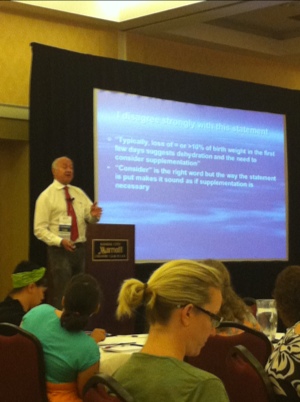
If you get a chance to attend one of his presentations, don’t miss it! In this slide, Dr. Jack explains that he disagrees strongly with the notion that a baby that has lost 10% of its birthweight needs to be supplemented.

Just in time for the start of World Breastfeeding Week, here is part 4 of my CAPPA re-cap series!

This post is a companion to my CAPPA re-cap post about the impact of birth practices on breastfeeding. Dr. Newman’s keynote session about Controversies in Breastfeeding was actually given before his breakout about birth and breastfeeding, but for the chronological value, it made sense to me to put up the birth post first.

As I already shared, in Newman’s perspective we have a huge problem in that many medical care providers do not recognize the critical importance of breastfeeding. Newman also emphasized that there are many people who don’t know squat about breastfeeding and breastmilk and don’t feel like they need to learn anything before they start doing studies and writing papers about it.

Why is hard to study breastmilk?

Because…there is no such thing as “standard” breastmilk. It is a physiological fluid and varies from person to person. We DO NOT have to prove that breastfeeding is better than formula. Those comparison studies are unnecessary.

Some great stuff from Dr. Newman’s presentation about controversies:

  • The exclusively breastfed, well-gaining 5 month old is getting only, at most, 10-15% more milk than the exclusively breastfeeding, well-gaining 1 month old, even though the 5 month old is twice as heavy. Baby continues to gain weight steadily even though it is not “getting enough” compared to its formula fed counterpart. (put that in your pipe and smoke it–yep, he really then said that ;-D)
  • Colostrum has 100,000-5,000,000 leukocytes per ml–that is more than blood. (i.e. colostrum has more white blood cells in it than your actual blood has in it!)
  • Colostrum and formula are the same in the following ways: both are liquid.
  • Breastmilk does not need to supply vitamin D (makes no sense to describe breastmilk as “deficient in” or “lacking” vitamin D).
  • With regard to the high incidence of reflux being diagnosed in babies—his response to why so high is, “because [most] doctors don’t know anything about breastfeeding.”
  • We learn one thing when we hear that the mother has been told to feed her baby X number of minutes per side—>the person telling her this does not understand breastfeeding.
  • There are no such thing as “flat nipples”–women have normal nipples. We live in a bottle feeding culture that makes us assume that if a mother does not have nipples that stick out like a bottle nipple, the nipples are flat (**Molly’s own note–we also live in a culture where 75-90% of women have epidurals during labor which can contribute to edema in the breast and the accompanying appearance of flat nipples).

 And, there should be no controversy about formula feeding vs. breastfeeding. If you actually look at the biochemistry of breastmilk you would know there is no comparison. No controversy. (with a laugh after this he added, “pediatricians are simple folk” ;-D)

In that plainspoken way I found so refreshing, Dr. Jack also pointed out that formula feeding is missing one more thing: breastfeeding. That’s right. Society thinks that bottle feeding is the “same”–it isn’t. Breastfeeding is an intimate relationship. He also pointed out that, “people will lie, lie, lie to sell products.” (see ad to right)

Finally, he explained that this mechanization of breastfeeding (through things like test weighing and nipple shields and timed feedings) will cause more and more mothers to abandon breastfeeding and then she’ll say, ‘we tried everything and it just didn’t work.’ Yes, we did “try everything,” everything to make her not succeed. (And, then she’ll write an article about it complaining about “what’s wrong with breastfeeding.”)

Handouts from Dr. Newman are available here. One I’ve used recently is How to Know a Health Professional is not Supportive of Breastfeeding.

I address other systemic influences on breastfeeding in Breastfeeding as an Ecofeminist Issue

Book Review: Moon Time

Book Review:  Moon Time: a guide to celebrating your menstrual cycle
by Lucy H. Pearce
Paperback, 145 pages, 2012
ISBN13 9781468056716
http://thehappywomb.com/

Reviewed by Molly Remer, Talk Birth

When I wrote my blog post about moontime’s return in April, I was delighted to get a comment from writer and womancraft wisewoman, Lucy Pearce the author of the book Moon Time. Lucy offered to send me a copy of her book and I received it last week and instantly devoured it. Subtitled “a guide to celebrating your menstrual cycle,” Moon Time is written in a friendly, conversational tone and is a quick read with a lot of insight into the texture and tone of our relationships with menstruation.

The book contains information about charting cycles and about the relationship to the phases of the  moon. I especially enjoyed the excellent section on  “Instant PMT [PMS] Busters” and planning time to nurture and nourish yourself during your monthly moon time. The book also includes planning information for Red Tents/Moon Lodges and for menarche rituals and it ends with an absolutely phenomenal list of resources—suggested reading and websites.

Towards the beginning of the book Lucy observes, “We live in a culture which demands that we are ‘turned on’ all the time. Always bright and happy. Always available for intercourse–both sexual and otherwise with people. Psychologist Peter Suedfeld observes that  we are all ‘chronically stimulated, socially and physically and we are probably operating at a stimulation level higher than that for which our species evolved.’ It is up to us to value rest and fallow time. We must demand it for ourselves to ensure our health “(p. 53). She also comments on something I’ve observed in my own life and have previously discussed with my friends:  “I strongly believe that a large amount of the anger and tearfulness we experience pre-menstrually, is our body’s way of expressing the deep truths which we try to stifle” (p. 56)

Since early spring, as I anticipated moontime’s return in my own life, I’ve been reflecting on how I have been such a devoted proponent of taking good care of yourself physically and emotionally during pregnancy, birth, and especially postpartum, so why have I not applied the same care during moontime? Why haven’t I included this monthly experience of being female as an experience worth respecting and as a sacred opportunity to treat my body and my emotions with loving care and self-renewal? Moon Time includes this great reminder with regard to creating retreat space, taking time out for self-care, and creating ritual each month: “Do what you can with what you have, where you are.” You don’t have create something extensive or elaborate or wait for the “perfect time,” but you can still do something with what you have and where you are. (This is a good reminder for many things in life, actually.)

I highly recommend Moon Time as an empowering resource for cycling women! It would also be a great resource for girls who are approaching menarche or for mothers seeking ways to honor their daughters’ entrance into the cycles of a woman’s life.

If you’d like to pick up a copy of Moon Time yourself, Lucy made this offer to my readers: “Would be delighted to offer your readers a discount on the paperback version of MoonTime: a guide to celebrating your menstrual cycle – they just need to enter MBLP20 at the checkout.”

Disclosure: I received a complimentary copy of this book.

Postpartum Thoughts/Feelings, Part 2

The time of danger, what needs to be survived, comes at different times for mothers. For me, it came early — during my [child]’s infancy.

From Sleeping Beauty & The Fairy Prince: A Modern Retelling By Cassie Premo Steele

After posting my “playing my music” essay containing an exploration of my postpartum feelings after the birth of my first son, I went back and forth about continuing to explore the subject. I’ve written about it a lot, but the feelings are scattered throughout a variety of locations—including partially written articles and also blog posts from my first, no-longer-updated blog. I actually wrote this post last year, immediately after my part 1 post, and then ended up not sharing it, but moving straight on to Postpartum Feelings, Part 3 instead.

Weird thoughts

Anyway, I wanted to briefly address the weird/intrusive thoughts that I experienced postpartum with both of my boys. I think one of the reasons I have trouble broaching this topic on this blog is that to look back at my thoughts and feelings is to begin to acknowledge to myself that I very likely experienced a postpartum mood disorder, even though I—perhaps purposefully—did not identify it as such at the time. With my first, I had a recurrent image of the bookshelf in my computer room at the time falling over and squashing me. I also had the sense that the baby was trying to “squash” me—as in stamp out my life spark (actually, who am I kidding, life with kids still makes me feel like this is their goal sometimes! ;-D) and the best way I could come up with to describe my feelings at the end of a long day was that I had been chewed up and had my bones spit out. This is a pretty intense description that some people might feel is ridiculous or over-the-top, but is the way I would have described it.

When my second son was a baby, I planned much better for postpartum and experienced a fairly pleasant babymoon at home with him. I felt like in general, mothering him was easier than mothering my first and as he grew, I frequently would say (and feel) that having a second child was the best thing I’d ever done. Despite those feelings, I had a recurrent image that would pop into my mind unbidden of falling backwards through a grate, my body dissolving into water as I fell and dripping through the grate and the skin of my face remaining a “mask” on the grate, eventually also dissolving/dripping through. I also had a weird, recurrent sensation that my shin bones were fragile somehow and I would imagine them snapping.

So, after typing this out I officially felt mentally ill, and that is why it hasn’t been posted until now.

The current

With my second son, I described my mood to my husband in this way: There is a current that underlies all of my emotions. I feel like I can “dip” into this current and test out how it feels, beneath the mood that I present outwardly or how I feel on the surface. My current lately is always sad—even when I am happy and feeling/acting happy, if I take the time to “dip” beneath, what I feel is sad. I used to actually chart the feelings on my calendar, with a little notation for the surface feeling and a different notation for the current. I tried to explain to him that I did not feel like I had a neutral point and that I would like to feel “even.” However, I also acknowledged that if to feel “even” or neutral as my “current” would mean trading in all peaks of emotion, rather exuberant or despondent, I’d rather have the ups and downs. During this time I looked up various mood disorders, thinking that I might possible qualify as having cyclothymia.

Wal-Mart “angel”

Then, one day, when my second son was perhaps a year or so old, I had an interesting experience at Wal-Mart with a very friendly and cheerful checker. She chatted along with us and was just very nice and pleasant to be around. That night I had a vivid dream that this checker was actually an angel and that she had come to “heal” my feelings. When I woke up that morning, I had very dramatic sensation and announcement of sorts in my head, “you are not depressed anymore” and indeed, when I dipped into the current it had become a wellspring of joy, rather than sadness. Since this time, my “current” has never again shifted back to sad. While I definitely have sad or “down” moods or get distressed about things, I now feel like it is only that surface emotion that is being buffeted, but that what waits underneath is always doing all right. Perhaps you have to know me in real life to understand how strange of an experience this is for me to describe. I have never had another “angel” experience and do not connect with angel imagery. The word “angel” is not one that I use to describe anything, really, and I feel extraordinarily skeptical and uncomfortable when other people say things about having guardian angels. I suppose if I did have PPD, it could be looked upon as a “hallucination” almost. However, I do not have a way to describe what happened to me without using the word. Indeed, I feel so oddly about it, that I have never actually told anyone else about this—I told my husband about the current shifting, but left out the “Wal-Mart angel” piece of the story.

Why tell it now?

As I noted, I’ve been waffling about posting this. It is close on the heels of another post that may seem woo-tastic. It makes me feel vulnerable and embarrassed. Why? Why bother sharing things that bring up these sorts of feelings? My answer was almost, just don’t, and then I read a fabulously amusing essay in the winter issue of Brain, Child magazine about a woman’s experience teaching “sexuality and the new mother” workshops at Babeland in New York City. In her postscript closing the essay, Meredith Fein Lichtenberg writes the following:

“…writing this now, years after it happened, I still felt that sharing something personal cast stark light on the Inner Vat of Chaotic Shit I Haven’t Figured Out Yet. The desire to hide that is amazingly strong; I see it in my students, and I see it in myself. But I also see that when we bend our lives’ stories into words to be shared, everything changes. Sharing stories reminds us we’re not alone with our icky mess of doubts and questions. In the light of day, frightening concerns and general weirdness become more understandable, forgivable, human.”

Reading this, I knew I wanted to share after all. And, it reminded me of another quote, this one by Carol Christ, a thealogy scholar that I love:

“When one woman puts her experiences into words, another woman who has kept silent, afraid of what others will think, can find validation. And when the second woman says aloud, ‘yes, that was my experience too,’ the first woman loses some of her fear.” –Carol Christ

Postpartum Feelings, Part 1

Postpartum Feelings, Part 3

Some reminders for postpartum mamas & those who love them

Postpartum with Alaina, February 2011

I recently finished a series of classes with some truly beautiful, anticipatory, and excited pregnant women and their partners. I cover postpartum planning during the final class and I always feel a tension between accurately addressing the emotional upheavals of welcoming a baby into your life and marriage and “protecting,” in a sense, their innocent, hopeful, eager, and joyful awaiting of their newborns.

This time, I started with a new quote that I think is beautifully true as well as appropriately cautionary: “The first few months after a baby comes can be a lot like floating in a jar of honey—very sweet and golden, but very sticky too.” –American College of Nurse-Midwives

Matrescence

In Uganda there is a special word that means “mother of a newborn”–-nakawere. According to the book Mothering the New Mother, “this word and the special treatment that goes with it apply to a woman following every birth, not only the first one. The massages, the foods, the care, ‘they have to take care of you in a special way for about a month.'”

There is a special word in Korea as well. Referring to the “mother of a newborn child,” san mo describes “a woman every time she has had a baby. Extended family and neighbors who act as family care for older children and for the new mother. ‘This lasts about twenty-one days…they take special care of you.'”

These concepts—and the lack of a similar one in American culture—reminds me of a quote from Sheila Kitzinger that I use when talking about postpartum: “In any society, the way a woman gives birth and the kind of care given to her and the baby points as sharply as an arrowhead to the key values of the culture.” Another quote I use is an Asian proverb paraphrased in the book Fathers at Birth: “There is a proverbial saying in the East: The way a woman takes care of herself after a baby is born determines how long she will live.” While this quote usually gets some nervous laughter, I think it is impresses upon people how vital it is to plan for specific nurturing and care during this vulnerable time.

Dana Raphael, the author of Breastfeeding: The Tender Gift, who is best known for coining the word “doula” as it is presently used, also coined another valuable term: matrescense. “Nothing changes life as dramatically as having a child. And there was no word to describe that. So we invented the word—matrescence—becoming a mother.”

The postpartum law of threes

I also share the “law of threes” with my clients which I learned from an article titled “Baby Moon Bliss” by Beth Leianne Curtis in Natural Life, Fall 2008:

A helpful tool I share with students and clients of mine is what I describe as the ‘law of threes’ when beginning the postpartum period. The first three days after your baby is born, try to stay in bed or at least in your bedroom. Many other cultures worldwide have much longer ‘lying in’ periods for mother and baby. If you can give yourself the much-deserved rest of focusing on breastfeeding, sleeping, eating, and recovering from the work of labor, your body and your baby will thank you for it. While birth is a healthy, normal event, honor the recovery process that your hard working body needs and deserves. The less you physically do in the initial few days following childbirth, the better and stronger you will feel in the weeks ahead. …Next, prepare to have three weeks of meals readily available for breakfast, lunch, and dinner….” (don’t forget plenty of snacks at easy reach for breastfeeding!)

Finally, understand that those first three months after birth are truly a time to embrace the unexpected…for some mothers, after three months is when breastfeeding really begins to be fun and easy. Many parents find that at the end of this [fourth trimester] transitional time, baby has moved through any colicky phases and that suddenly baby looks and acts more like a ‘real person.’…Physically, this is when your body begins to return to its pre-pregnancy state.

When I present about this topic to groups, sometimes I hear the following types of remarks: “Getting back out made me feel better, I would be miserable lying around in bed all day”—at the time when my own first baby was born, I would have said this was true for me as well, but looking below the surface shows me something else. Someone who hadn’t planned for a nurturing, comforting, supportive postpartum cocoon and who hadn’t given herself permission to rest, relax, and restore. The same high-achieving style that served me well in the workplace did not nourish me physically or emotionally as a tender new mother. I firmly believe that a nurturing postpartum downtime lays foundation for continued “mother care” self-nurturing for the rest of your life.

Then, in my notebook, I found the following relevant quotes that I had saved from the book Natural Health After Birth by Aviva Jill Romm:

“Too often women develop the mindset that a good mother gives all and takes nothing for herself. Remember, this is a great cultural fallacy. A good mother gives of herself to her children, but she has to have a self to give. A good mother nurtures herself, develops her own interests, even if in small ways, and grows as a person along with her children. Children don’t need us to be martyrs; they need us to be their mothers. A self-actualized mother sets an example for her own daughters that becoming a mother expands identity, not limits it.”

–Aviva Jill Romm, Natural Heath After Birth

“To put a child on Earth, an immense amount of creative intelligence flowed from the Great Spirit, through nature itself into your body, heart, and mind–remaining now, as an integral part of your own spirit. This energy is yours forever. Like a pocket, deep and filled with magic seeds of creativity and healing, this is the source of unconditional loving from which every wise woman since the beginning of time has drawn her strength.”

–Robin Lim

“Motherhood is raw and pure. It is fierce and gentle. It is up and down. It is magic and madness. Single days last forever and years fly by…Be gentle with yourself as you travel, dear mother. Don’t miss the scenery. Don’t miss conversation with your traveling companions. Laugh at the bumps and say ‘ooh, aah!’ on the hairpin turns. Buckle your seat belt. You’re a mom!”

–Aviva Jill Romm

Helpful articles

Planning for Postpartum—this is one of my past articles that I remain proud of

How other cultures prevent PPD—helpful article by Kathleen Kendall–Tackett

DONA’s handout for making a postpartum plan—I think couples should spend at least as much time to developing a postpartum plan as they do to making their birth plans.

Support & Sanity Savers handout for class from Great Expectations—this is one of my very favorite postpartum handouts to use for birth classes, particularly the last page which is a “request for help after the baby is born” letter to prospective helpers that includes a “coupon” for people to fill out with what they’re willing to do for the new parents.

Rebirth: What We Don’t Say

A new self did emerge. This is what women do not tell each other. I want to say it here: You will die when you become a mother and it will hurt and it will be confusing and you will be someone you never imagined and then, you will be reborn. Truthfully, I have never wanted to be the woman I was before I had children. I loved that woman and I loved that life but I don’t want it again. My daughters have made me more daring, more human, more compassionate. Their births have brought me closer to the earth and they have helped me pare my life down to its essentials. Writing, quick prayers, good food, a few close friends, many deep breaths, love, plants, dancing, music, teaching-these are the ingredients of my/this new self. I waited for this new self in the dark, in the bittersweet water of letting go, in the heavy heartbeat of learning to be a mother, against the isolation, I grew and emerged laughing and crying and here I am, sisters and brothers. Rebirth: What We Don’t Say | The Sage Mama.

One of my favorite songs to listen to after my miscarriage experiences had a refrain of, “it is dark, dark, dark inside.” While previously not connecting to “darkness” as a place of growth or healing, during these experiences I learned that it is in the darkness that new things take root and grow.

As I’ve shared before, one of my favorite quotes about postpartum comes from Naomi Wolf, A mother is not born when a baby is born; a mother is forged, made. The quote I shared above from this “Rebirth” article touches that place in me—that motherhood results in a total life overhaul and a new, enriched identity. (This article also made me think of first postpartum journey which I wrote about here.)

In a previous post, I wrote the following about the idea that giving birth and mothering leaves permanent marks:

I’ve also come to realize that despite the many amazing and wonderful, profound and magical things about birth, the experience of giving birth is very likely to take some kind of toll on a woman—whether her body, mind, or emotions. There is usually some type of “price” to be paid for each and every birth and sometimes the price is very high. This is, I guess, what qualifies, birth as such an intense, initiatory rite for women. It is most definitely a transformative event and transformation does not usually come without some degree of challenge. Sometimes to be triumphed over or overcome, but something that also leaves permanent marks. Sometimes those marks are literal and sometimes they are emotional and sometimes they are truly beautiful, but we all earn some of them, somewhere along the line. And, I also think that by glossing over the marks, the figurative or literal scars birth can leave on us, and talking about only the “sunny side” we can deny or hide the full impact of our journeys.

During Pam England’s presentation about birth stories at the ICAN conference, she said that the place “where you were the most wounded—the place where the meat was chewed off your bones, becomes the seat of your most powerful medicine and the place where you can reach someone where no one else can.

(I’m experimenting with PressThis for this short post)

Eightmonthababy!

I don’t know if it simply because we’ve said she is the last baby, or, because she is such an awesome baby, or what, but Alaina makes me want to never not have a baby. Maybe I have a different perspective this time around because my oldest is now 8, so I can see right in front of me every day how quickly it goes by—or, maybe I am literally able to enjoy her more completely than I was with the older two. The adjustment to motherhood with the first was emotionally complicated. The adjustment to having two was easier, but the juggling of the needs of an infant and an almost-three year old, made some of the days very difficult to cope with. Life isn’t perfect now and I do get maxed out feeling (talk to me on a day when she doesn’t nap as I’ve come to expect!), but I just really, really, really like life with this baby in it! I was trying to explain it to Mark this week, saying that this is the last time anyone is ever going to love me like this. I know that might sound weird and that we think of parents as the ones having unconditional love for their babies, not vice versa, but the depth of the mother-baby attachment is extremely profound and incomparable. It is also simple and uncomplicated. I had the same depth of attachment with my other children, but I also felt more “oppressed” at times by the level of dependence and attachment. Now, I feel more aware of how short-lasting this period of intensity is and I just love how much she loves me. While we’ll always love each other deeply, right now we are a motherbaby—a single psychobiological organism and there just isn’t anything else like it.

Alaina has experienced lots of changes since my 6 month update post. She has four teeth now! (Brushes them herself before naps and at bedtime.) She crawls all over the place, mainly as a means to get to the next place where she can pull to stand. She pulls to stand on just about anything, sometimes letting go and just holding on with one hand. She can transfer between two surfaces, but does not yet “cruise.” We experiment with solid foods—she’s interested in everything, but doesn’t like many of the things she tries. I forgot what it was like to be in this stage of motherhood where I perpetually have weird substances stuck to my clothes and can never stay “clean” (or, keep her clean). Just this month she seems to have figured out how to move food around in her mouth and swallow it, vs. just tasting it and then letting it ooooze back out. She like broccoli (defrosted florets, not mushed up) and those little, too-expensive Gerber baby puffs. Still weighs about 20 pounds and fits most comfortably into size 18m clothes. She is just starting to wave and will—sometimes—say “hi” or “bye” accompanying the wave. She says “mama,” seemingly purposely and has also seemed to say, “brother” and “Baba” purposely as well. She will give high fives. She is working on clapping and on raising her arms in response to, “how big is Alaina?!”

She still does an adorable face-stroking gesture and has also added back/chest patting into her repertoire. When I pick her up or take her from someone, she gives an extra launch kick with her legs that is really cute. She will then pat me on the chest (like I pat her back). Really cute!

I really think she is my most mouthy baby. Everything goes into the mouth. She is always after my computer mouse and my phone, trying to eat them all up. I also feel like she is my quietest baby, spending more time looking and watching than talking about it. She loves to ride along checking out the world from my hip, sometimes with a solemn and contemplative expression, sometimes with leg-kicking enthusiasm. She is still a really happy and content baby—I frequently get comments about her being the, “happiest baby I’ve ever seen,” or, “she just seems to have a really pleasant temperament.” She does get bumped/bonked more often than she used to, primarily by crawling around and getting stuck under tables and things like that, and so she will cry about that. I always find myself a little startled when she cries and not so sure what to do about it (nursing usually works). She remains a night owl—preferring to stay up until around 11:30 and then waking up for the morning at around 11:00. Her hair is looking a little less thin and occasionally I think I catch a hint of curl in it, but that might just be my imagination! It still looks red outside, but then sandy inside (just like the boys). Recently she has started to “dance” when music comes on and sometimes will actually tap her foot in time with music. I think the origin of the tendency to say, “mmm” about tasty food as a lifelong habit that originates in nursing babyhood, as she usually says, “Mmmm! Mmmm! Mmmm!” when she starts nursing 🙂

She is very mama-centric recently, wanting to spend most waking time with me or held by me. I’ve been teaching three college classes this session (two in-seat) and I was offered the opportunity to do so again next session. I opted to turn down the second in-seat class and just teach one. While part of me feels like I’m turning down something that would be good for our future, after a lot of thinking and back-and-forthing, I decided it is too much to expect of Alaina, of my mom (who comes with me to watch Alaina so that she doesn’t have to be separated from me on teaching nights), and of myself. I’m handling it this session, but it has been a challenge and I’ve had several freak out moments about the demands (mainly during grading times—another of which is rapidly approaching). She is becoming more hesitant about the separation—reaching after me, that sort of thing, and above all else, I want to honor her need for me. Regarding the overall workload, I explained to my husband that most of the time everything is going great, but that the balance and my personal emotional equilibrium is very fragile. I rely on everything unfolding “perfectly” in order for me to fit everything into a day that needs to happen. If something disrupts my anticipated schedule (like early naptime wake up, or nap refusal), I go into a tailspin and feel like my life is in a terrible state, etc., etc. I’m looking forward to a break and then to only teaching one in-seat class in the fall. While I feel like I’ve been doing a great job taking care of Alaina and also doing a pretty good job as a professor, I feel like I’m not doing as good of a job as I could be with my boys or with my husband or with my friends.

Now, for a whole row of update pictures! (I do posts like this primarily for my own “memoirs,” rather than to be particularly exciting for anyone else to read!)

She spends a LOT of time in this pouch!

On the go!

Pulling up on mama!

Standing baby!

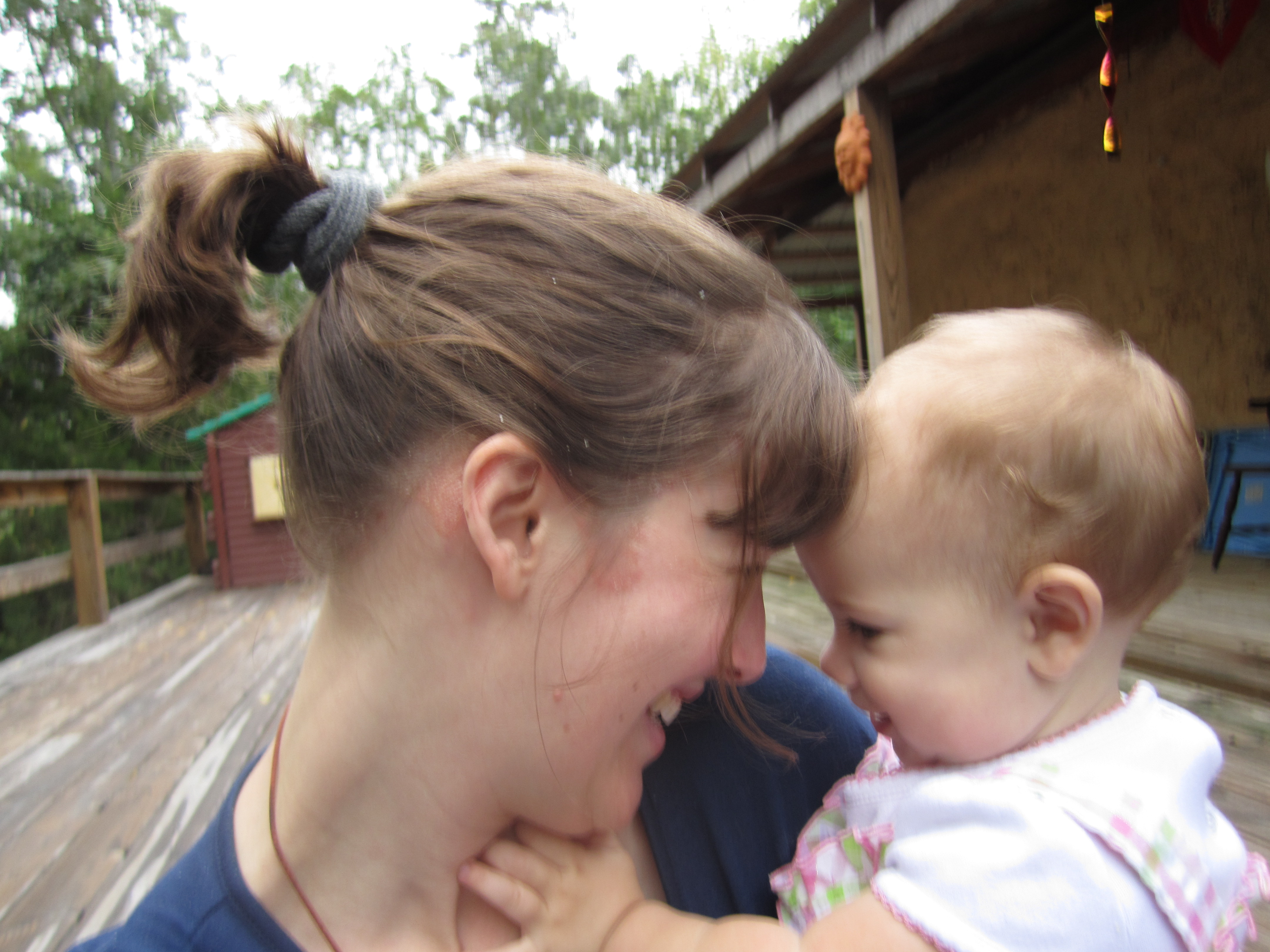
Showing toofs! (that is my hair behind her, not hers!)

Pensive pondering

My baby companion!

Look at those eyes!

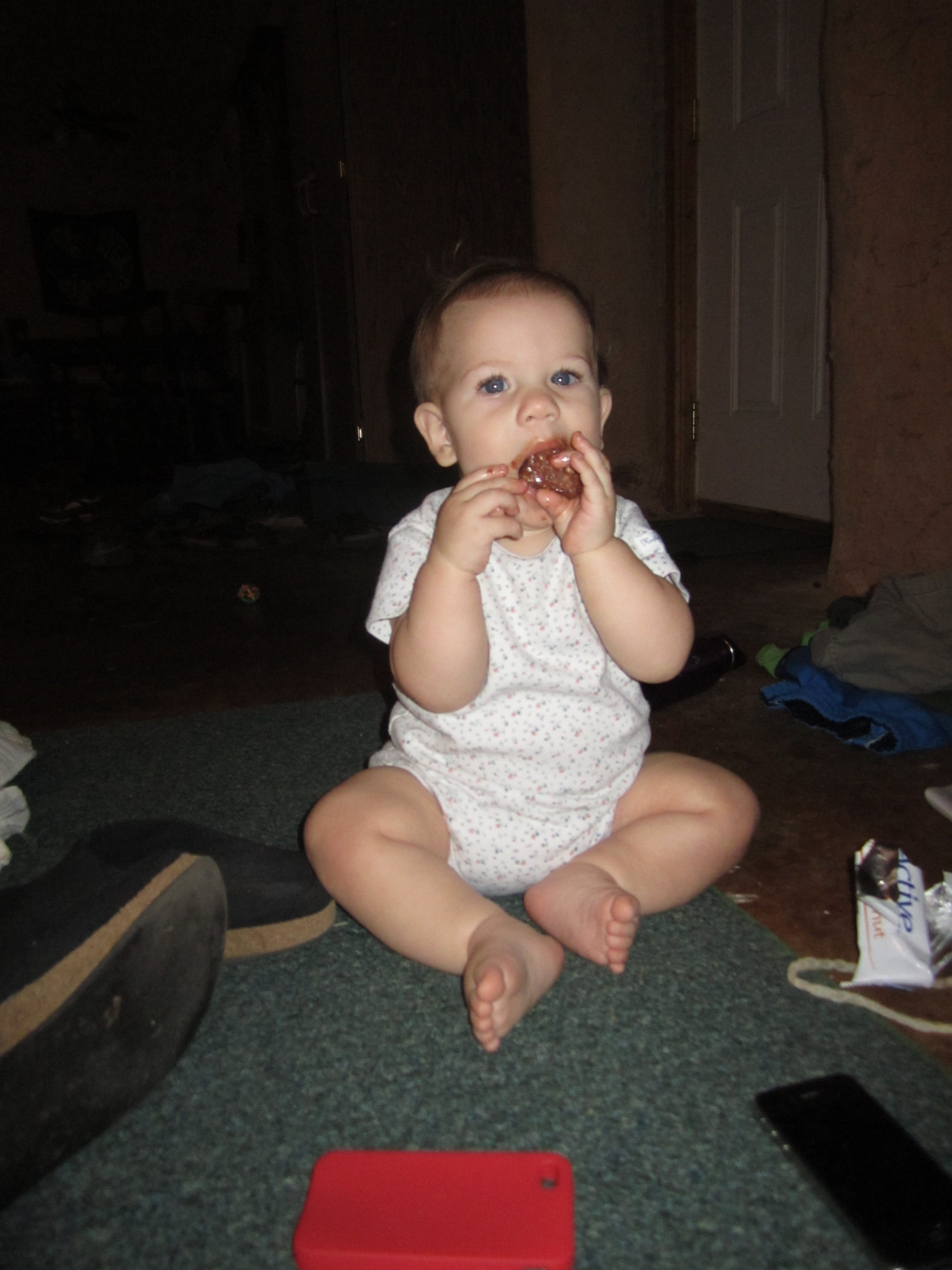
Uh oh! Located a remainder of mama's protein bar and is sucking off the chocolate part...

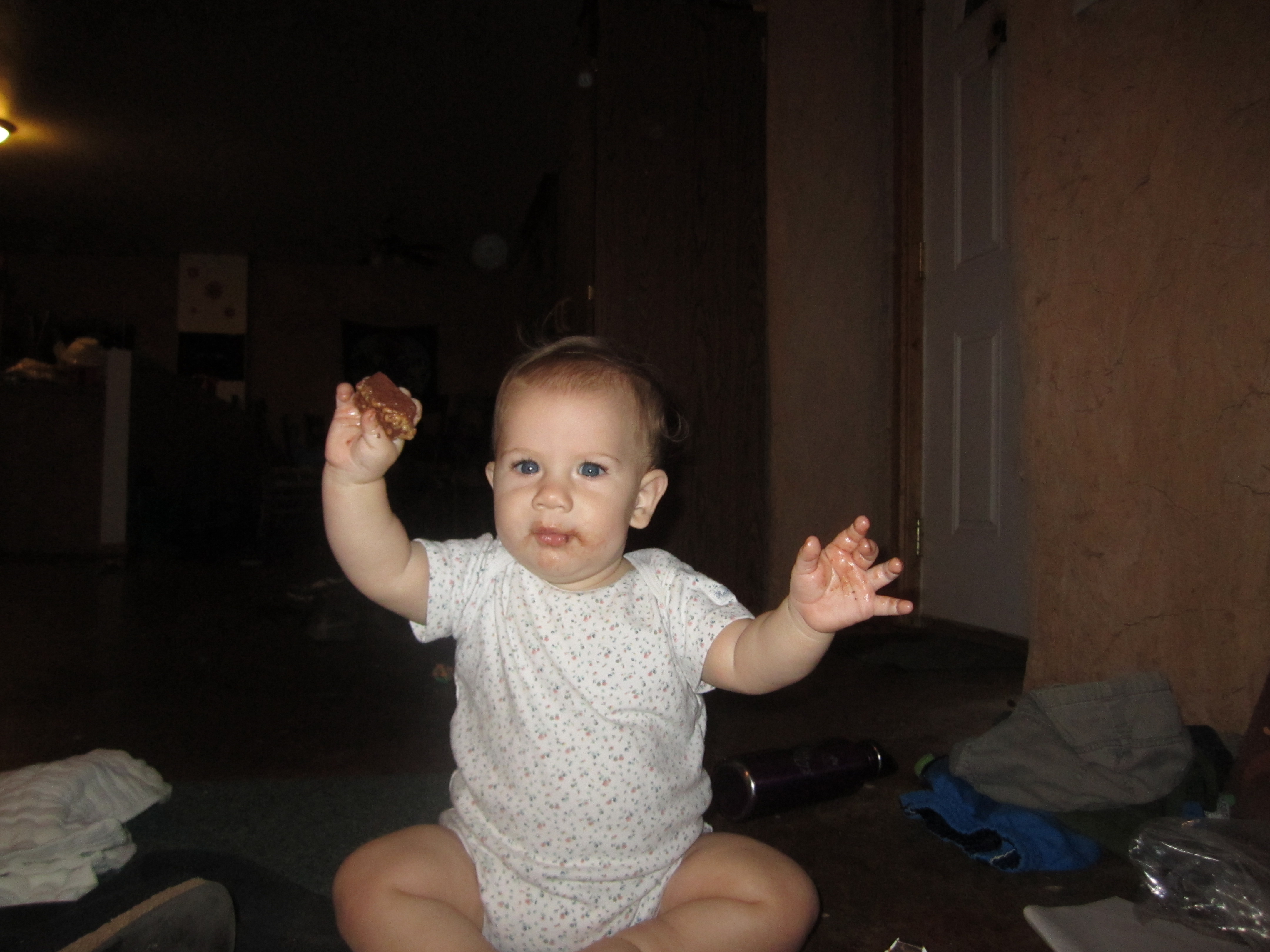
Showing her findings!

Mama is funny!

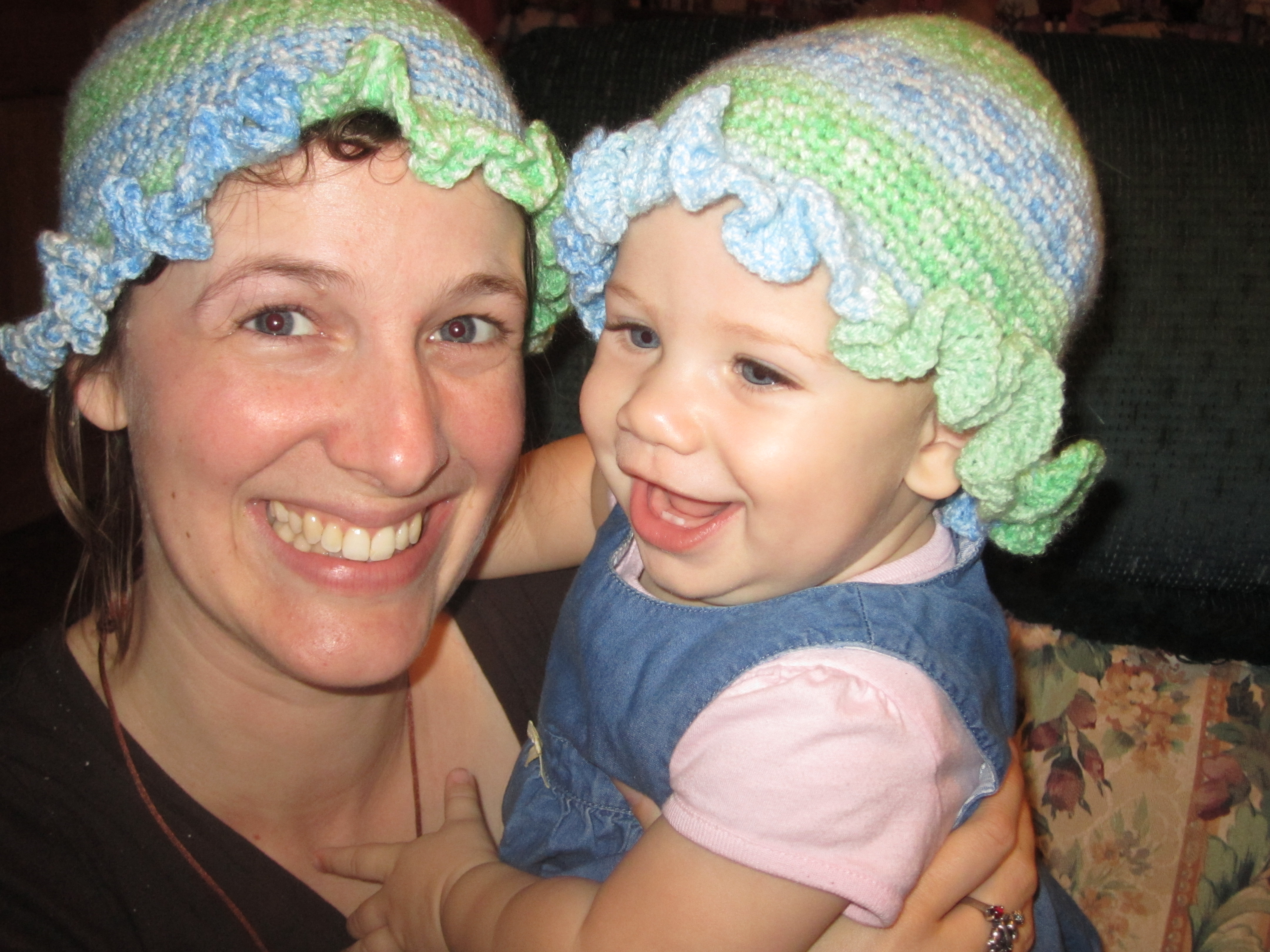
Matching hats!

On Lann's birthday, ready for fall!