Archives

Blog Circle: New Beginnings and Most Significant Events

The January Blog Circle at The Amethyst Network has the theme of New Beginnings. This is perfect for me, since my pregnancy-after-loss “rainbow baby” was born in January. The Amethyst Network was named for the infant sister of one of the founders. Her name was Amethyst. We use “Amethyst babies” as a way to identify and label loss stories on the TAN blog and we are using “Garnet babies” to refer to babies born following loss. Garnet is the January birthstone and several of the founders have January rainbow babies. Several of us also have February miscarriages (amethyst is the birthstone for February). While this obviously isn’t a universal experience, this is how we personally make the connection between our choice to use gemstone names and our own experiences. Here’s the info about this month’s blog circle:

The loss of a baby is the end of something but it is also the beginning of something new. It takes time to find that new, to navigate and find your way in this new world you have been thrust into and to navigate and find your way into this new normal.

The New Year is also an opportunity for New beginnings. Many people set Goals and New Years resolutions to focus on for the year. It may be a time of letting go of the old and focusing on the new.

We have chosen the theme “New Beginnings” for our January Blog circle. The decision was based both on the New Year as well as the new beginning for the Amethyst Network. We have been redoing our website, redefining our mission and creating a space of hope and healing and a place of information for those who in the miscarriage/babyloss community.

We would love to have you participate in our January Blog Circle. The theme is New Beginnings. Was your loss a new beginning for you? Your next baby? How do you feel about the New Year? Are you in a place of letting go? Or embracing?
676

A lot of hopes and dreams rested on this little body!

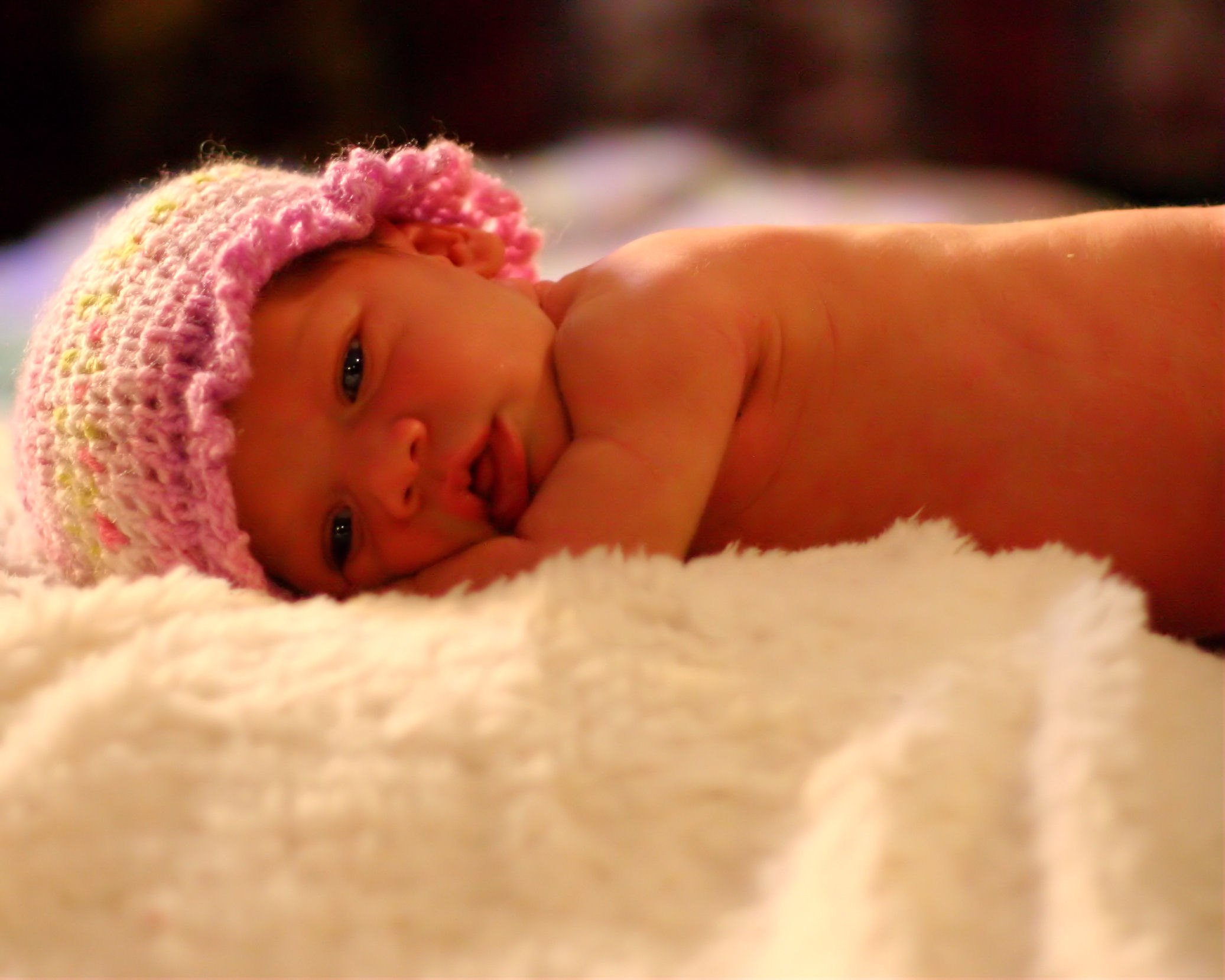
My first loss was, in fact, a new beginning for me in many ways. That miscarriage-birth changed my life forever. It changed my worldview, it changed how I work with women, it changed my understanding of the world, it prompted a spiritual awakening, it changed the trajectory of my work and my focus, and it broadened and deepened the scope of what I’d like to offer in service to others. It was BIG. It was important. It was hard, it was scary, it was emotionally and physically painful, and it lasted a long, long time. It took the birth of my pregnancy-after-loss baby in January of 2011 to really feel “healed” from the scars of loss and so in this way, she was definitely a new beginning as well. I remember thinking during my pregnancy that there was so much riding on her—a lot for a little baby to shoulder—all of our hope, our fears, our very future of a family felt like it rested in her. And, I remember telling her, shortly before her first birthday—you, you healed me. In our conversations among The Amethyst Network board members, I’ve also shared that I didn’t feel completely healed until she reached her first birthday—until we taken one whole turn of the wheel together with her in my arms. And, in that way, I’m also not sure that we ever completely heal from loss—I know that one of the factors behind our decision not to have more children is a still, small, lurking fear of what if it started all over again? That would suggest that a scar on our lives remains (that isn’t necessarily a bad thing. Our scars are part of the landscape of being–of loving, living, risking, losing, learning, and changing).

Considering this topic also brought me an old question, previously posed in response to a midwife’s blog post, in which I ask the following:  What is the most significant event that shaped your life as a woman? As a mother? Are your answers to the two questions different?

My own answers have in fact been different. And, they have changed. Pre-loss, I described my postpartum journey following my first birth as the most significant event shaping my life as a mother. After the miscarriage-birth of my tiny son, the texture of my response and my definition of my life experiences shifted:

When originally writing this post, I was pregnant with my third son. That pregnancy ended very unexpectedly in November, rather than May, when my baby was born after almost 15 weeks of pregnancy. Interestingly, my experience of miscarriage has supplanted the birth of my other two sons as essentially the most powerful/significant and transformative event of my life. (My sense that his birth has “replaced” the birth of my other children as most significant makes sense to me, because though it is classed as miscarriage, it is still my most recent birth experience—all of their births stand out as special, important, and meaningful days and I will remember each with clarity for the rest of my life, but his birth is the freshest and most recent and came with the additional transformative journey of grief. And thus, when I think of giving birth or when I think back to birth memories or birth feelings, his birth is the first one that comes to mind.) Though I still “vote” for postpartum as the most significant event in my life as a mother, I now “vote” for my birth-miscarriage experience as the most significant event in my life as a woman.

Interestingly, my answer has evolved again since writing the post above and I would now include the entire pregnancy-after-loss journey as the most significant event in my life as a mother. It was hard, people. It was day in and day out and never-ending and so, so delicate. So tinged with hope and fear and so laden with meaning. As a woman, though, I’m not sure that my answer has changed. I need to think about it more deeply, but I think that miscarriage-birth is still it. Just as life divides cleaning between before kids and after kids, there is a dramatic, pivotal before miscarriage and after miscarriage that has shaped my female identity and understanding of myself.

567b

The Amethyst Network December Blog Circle: Holidays After Loss

I’m a founding member of the miscarriage support organization, The Amethyst Network. We’ve been hard at work over the past month restructuring our website, clarifying our vision, and expanding our offerings:

As part of our efforts at sharing stories and creating healing circles, we are launching blog circles here at TAN. Each month we will post a brief message introducing the theme for the month, and inviting you to participate in the circle. All you need to do is put your name and link into the Mr Linky widget at the end of this post, and your blog post can be included in the circle. Posts are welcomed throughout the month (and beyond if you write something later and want to share). We hope you will participate!

The theme of the December Blog Circle is Holidays After Loss.

To participate in the blog circle, I immediately looked up an old blog post from the Christmas season in 2009. I experienced my first miscarriage in early November and so when I hit the holidays that year, my loss was very fresh and raw and I remember countless moments of sitting with family members having “happy” celebrations and feeling at the desperate edge of tears the entire time, but trying to be good spirited for my other kids and also not “ruin” the holidays for everyone else.

This is what I wrote…

Missed

Posted on December 21, 2009

…I no longer have the feeling that I “should” be pregnant. It feels “normal” to not be pregnant now, whereas a couple of weeks ago I felt the loss of the physical experience keenly—that embodied connection—and I still “felt pregnant” for about three weeks or so following my miscarriage. I would have to keep reminding myself, “I’m NOT pregnant.” Now, I feel “normally” not-pregnant and I actually feel really good in my body and pretty good in my life. There has been a shift from “I SHOULD be x number of weeks pregnant” to “I WOULD have been x number of weeks pregnant.”

Today, I would have been 21 weeks pregnant and it has been a hard day for me. Our family has a tradition of having a winter solstice party each year. We host at our house (my mom then hosts Christmas) and it is a nice time. We use the occasion to reflect on the past year and the things we’ve accomplished and then set goals for the year to come—things we’d like to “bring into the light” as it were. We also give our immediate family gifts to each other on this day.

Anyway, I just really missed the baby today and also missed the pregnant-self. I felt really strongly how I would have been really looking pregnant by now and the baby would have been making himself well-known to others around me with kicks and rolls and so forth. I can’t describe it in words, I just really FELT it today. The non. The closed door. The two boys instead of three. It started when I opened up my set of Growing Uterus charts and The Birth Atlas from Childbirth Connection. I’ve always wanted them and I ordered them a couple of months ago when they had a wonderful deal. When they arrived, I had Mark put them away for Christmas. I didn’t think it would bother me to open them. I am still interested in birth, birthwork, and childbirth education. I’ve been reading other birth books and not having any “issues” with them, but opening the charts and seeing the point at which my own pregnancy and baby and hopes and dreams and plans arrested, was really difficult. The “cut off”/stopped/ended road point was right there in black and white and I had a strong and unexpected reaction to that. Later in the afternoon we went outside to go for a walk and also to place Noah’s memorial plaque. Standing there looking at it, I just MISSED him. And, I missed the experience of “would’ve” been 21 weeks pregnant–with my hand on my full belly, feeling my baby from within and outside, and having that communion and connection with him. I felt at the edge of tears for most of the rest of the day and just “down” and distressed feeling. I thought it would help me to write about it, but I’m not finding the words easily. I can’t explain or describe what it was I felt today.

As I mentioned, we use today as a time to reflect on our plans for the coming year. In past years, we’ve also each shared a wish for the coming year while lighting candles (the whole “even in the darkness, new light comes again” type of metaphor). In the past, I feel like people have tired of having to take turns saying too many things (we do the goal sharing and reflecting on whether we accomplished last year’s goal and some other things), so this year I just shared a little prayer—feeling like it summed up nicely what we each would wish for in the coming year:

Make me strong in spirit,
Courageous in action,
Gentle of heart,

Let me act in wisdom,
Conquer my fear and doubt,
Discover my own hidden gifts,

Meet others with compassion,
Be a source of healing energies,
And face each day with hope and joy.

(Abby Willowroot)

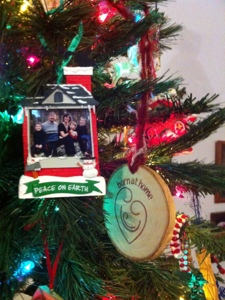
That year, I bought a special ornament for our tree with Noah’s name and birthdate and also the words, Born at Home. As I’ve shared several times, it is very important to me to have miscarriages acknowledged as birth events and it really, really mattered to me to have a homebirth specific ornament to recognize my baby. This year, it hangs on the tree next to our new family ornament for 2012.

20121207-154643.jpg

20121207-154652.jpg

20121207-154659.jpg

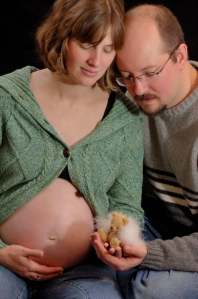
In 2010, when I got maternity photos taken, I made sure to include Noah’s angel bear in several of the photos to acknowledge his presence and place as a member of the family. And again, in 2011, I also included the bear in a photo session with me and the kiddos.

MR_046

MR_051

Alaina9mo 111

This year when we got our family pictures taken, I made sure to wear my baby-in-my-heart pendant, so that Noah, still, was there with us in the pictures as part of our family.

MollyNov 025

In September, my friend’s baby Tossie died at 36 weeks. To honor Tossie’s memory, she’s started a blog to help other loss mamas: Tossie’s Tree & Painted Rocks. One of the first rocks she painted was for my own little Noah. She took a picture of it at sunrise by her own baby’s special tree and it is lovely!

189787_367110260050351_624535046_n

184976_367110413383669_1287450243_n

546989_367498366678207_2129560304_n

The other posts in this month’s blog circle so far are:

Hope and the Holidays ~ Bainne Mama

Thankgiving After A Loss ~ Bainne Mamai

Special Ornaments ~ Mindful Serenity

Michele–Holidays After Loss (this post was especially good, very poignant, and from it I went to a variety of other interesting posts on her blog. Michele also runs Mending Hearts Bellies which focuses on childbirth education and doula support for post-loss families).
Holidays After Loss: Spirit Babies Ceremony

Anthropology & Miscarriage

I recently finished reading a book called Mothers of Thyme: Customs and Rituals of Infertility and Miscarriage and my attention was caught by the explanation of how miscarried babies were viewed by some non-Western cultures:

Anthropologists’ writings reveal that non-Western cultures cultivated a more tender attitude toward miscarriage than Western culture has known. Native American cultures considered unborn children to be human beings…these cultures treated the remains of miscarried babies in the same manner as for adults, by burning or burying them…

Manus women of the Admiralities of New Guinea had similar feelings toward children lost during pregnancy. These women named each baby lost to miscarriage and treated its memory as if it had been a full individual.  Years afterward, when reminiscing about their children, these mothers would not distinguish between a miscarriage at three months, a stillborn infant, and a child who died several days after birth. The Ndranirol people of New Guinea also treated miscarried babies as though they had been born full term, naming each child and holding a ceremony to recognize its existence… (p. 72-73)

Noah’s angel bear and necklace

I identified with this section because of how I always want to mention Noah when people ask how many children I have. I usually leave him out and I never fail to feel a pang of regret for ignoring or erasing him in that way. Prior to Alaina’s birth, I used to include him, but now…somehow…it feels easier or simpler to just refer to the children I actually have with me. His birth counted to me. His life counted. And, while he may not have been a fully grown baby, he counted to me. He was/is one of my babies. His heart beat in my body. I felt his tiny kicks. He had fingers and toes and a little jaw that opened. He had closed eyelids with blue eyes beneath them and I saw his little ribcage through his translucently delicate skin. It is this experience that makes me struggle to reconcile my deep belief in women’s reproductive rights, with my deep knowing that this was my baby and he was real. He counted.

Earlier in the book, the author explains that in other cultures women were blamed or viewed with suspicion for having miscarried or for being infertile:

…blamed the problem on poor social graces. Women with this problem were assured that if they tried harder to get along with their female relatives, their chances of conceiving would improve. But sometimes the problem was more serious, such as when the medium determined that an infertile woman was a witch… (p. 31).

This doesn’t seem altogether dissimilar from being told she needs to “just relax” and then she’ll get pregnant, or from legislative attempts to make women prove they had a miscarriage (or, likewise, to withhold abortion from women who are in grave medical condition).

In general this book wasn’t what I expected or hoped for at all. It was basically a compendium of obscure historical and cultural “rituals” of the eat-three-raw-eggs-mixed-with-bat-dung-while-standing-under-the-banana-tree-on-the-new-moon, variety. It contained some things that were really interesting to read about from a historical perspective, particularly with regard to the way out there and funky misinformed beliefs of the health-care-professionals of the day (will we see continuous electronic fetal monitoring in the anthropology books of the future?!), but there was nothing of relevance to creating ceremony/acknowledgement for mothers today. It is definitely a history/anthropology book more than a miscarriage resource.

Miscarriage and Birth

Last month a fellow birth professional asked a question about whether it was possible to have postpartum depression after miscarriage. My response was as follows:

I think it is crucial to remember that miscarriage is a birth event—sometimes a very, very, very early birth event, but reproductively speaking that is what it is! Since we don’t have a better vocabulary for pregnancy loss in our culture, socioculturally speaking we tend to class it as “something else,” but in most ways it isn’t. A soul (or fertilized egg) touches down in a woman’s womb. Her hormones and all other physiological systems are impacted and feel its presence. The embryo/fetus/baby stays for a time and when it leaves her body, the uterus must contract and the cervix must open and the woman’s body must open to allow its passage. Her body, mind, emotions, and spirit are all affected (to varying degrees). In this way, miscarriage and full-term birth simply exist on a continuum of possible birth outcomes and are all birth events whether the pregnancy lasts five weeks or forty-two weeks.

Miscarriage as a birth event is one of my “pet” subtopics within the wide range of reading about miscarriage and quotes that respect the birth-miscarriage relationship always catch my attention. After the birth-miscarriage of my own third baby three years ago today, I found the following quote in a back issue of Midwifery Today:

“Miscarriages are labor, miscarriages are birth. To consider them less dishonors the woman whose womb has held life, however briefly.” –Kathryn Miller Ridiman

It meant so much to me and I returned to it again and again. I believe I was also responsible for introducing the quote to the internet, because since I first typed it up, I’ve now seen it floating around on many other websites and blog posts. And, in a full circle moment, my own miscarriage-birth story was published in Midwifery Today in 2011. I also latched on to a quote from the book Wild Feminine saying, “though it is not always recognized as such, miscarriage is a birth event.”

20121107-013453.jpgChristine Moulder in the book Miscarriage: Women’s Experiences and Needs quoted another mother: “Although I had a miscarriage technically, I don’t feel this. I went through labour. It was incredibly painful but my husband was with me and it was almost a happy occasion.” I agree, with my own birth experience feeling just as “legitimate” as either of my prior labors or my subsequent birth. I And, actually even more so in that Noah’s birth became possibly the most defining moment of my womanhood. I would also describe it as a spiritual experience or “awakening” of sorts in a way that has profoundly influenced me, shaping my future work with women and my life goals. I return to this experience again and again and continue to draw both strength and insight from it.

Returning to Moulder’s book, later in that section, the author says:

With the exception of women who have a late missed [miscarriage] there will be a baby that has to be born. The baby may or may not have died prior to the miscarriage. As with full-term birth, the waters must break, there will be pains and contractions and the cervix must dilate for the baby to leave the womb. Of course the baby will be smaller, in some cases much smaller, but it is essentially the same process and this comes as a great shock to many women.”

And this is absolutely true, but also not something that is mentioned in very many miscarriage books. This shock of experiencing miscarriage so clearly as a labor and birth rather than as “something else” is what led me to describe my wish for miscarriage doulas on my now-complete miscarriage blog:

On a pregnancy loss message board that I read, a mother posted asking if she was the only one who experience her miscarriage as painful (because no one mentioned it being painful in the stories she had read and she was very shocked by the pain involved). I had a couple of thoughts in response to this question. I also shared my “favorite” miscarriage-birth quote: “Miscarriages are labor, miscarriages are birth. To consider them less dishonors the woman whose womb has held life, however briefly.” (Kathryn Miller Ridiman).

I do think the amount of physical pain probably depends in part on where you are in the pregnancy. Since a lot of women experience very early miscarriages (less than 6 weeks), I think that is perhaps why you don’t hear them talk as much about pain because the baby is still so small. OR, because a lot of women end up having D & C’s and thus do not go through the “natural miscarriage” experience, perhaps that is why pain doesn’t figure heavily into narrative. Or, maybe because there is so much emotional pain involved as well, the physical pain gets overshadowed? That said, my 6-week miscarriage was not physically painful at all (not that it couldn’t be for some women, of course). However, my miscarriage at nearly 15 weeks was indistinguishable from a full-term labor. It was just the same, except with the addition of MASSIVE blood clots following the baby. I value his birth as another birth experience in my life, but at the same time I am SHOCKED that miscarriage is so often overlooked as a birth event that requires tenderness and support (where are the miscarriage doulas and midwives?! While in a way, I feel proud of myself for have an “unassisted” birth-miscarriage, I could have used the care of a knowledgeable, caring woman rather than to just be left on my own trying to gauge how much blood loss is normal, etc.)

So, what about “miscarriage doulas” as an idea? I have seriously thought about becoming one. I am trained as a birth doula, but have no interest in actually working as one, but being a m/c doula does interest me a lot. I feel like adding a section to my business website (I’m a childbirth educator) that says, “having a miscarriage? Call me and I’ll come over and rub your back and bring you things to drink…”

I decided two things shortly after my first miscarriage: one, that I was going to write a book specifically about how to deal (i.e. “what to expect when you’re having a miscarriage”), because I felt very betrayed by having this huge wealth of pregnancy, birth, and midwifery books all around me and NONE of them had the information I was looking; And, two, that if anyone was ever to tell me she was in the process of miscarrying I would go to her right away (unfortunately, it seems like people feel like they have to tough it out alone or don’t want to “bother” anyone and so only tell after the fact). Well, if she wanted me to go, obviously, not against her will. And, that would include going to the hospital with her if she needed a m/c doula there, not just for “home miscarriage.” –Originally posted as Miscarriage Doulas…on June 29, 2010

This interest and post led to the co-founding of the organization The Amethyst Network, originally intended to train the miscarriage doulas I’d longed for during my own experiences. TAN took some time getting off the ground and in the meantime the thoroughly amazing organization Stillbirthday independently arose in vibrant support of women and is now skillfully fulfilling the mission of training loss doulas.

Thankfully, I had already read a long message board thread about, “what exactly do you see with a miscarriage” long before I ever had a miscarriage experience of my own, so I did know to expect mine to be somewhat “like labor” and not to be a “heavy period” (OMG, I wanted to scream when I saw miscarriages described like that in books over, and over, and over again! Though, then when I had my second miscarriage and it WAS, in fact, like the mythical “heavy period,” and so then I understood a little better why that was a prevalent descriptor.)

On Pregnancy and Infant Loss Remembrance Day this October I was out-of-town, but I shared past blog musings on jagged peace, acknowledging that the legacy of miscarriage is profound. I also linked to a friend’s story: Mormon Monkey Mama: A Few Thoughts on Miscarriage and to my own birth-miscarriage story: Noah’s Birth Story (Warning: Miscarriage/Baby Loss).

And, I updated my Facebook status with the following:

Today is Pregnancy and Infant Loss Remembrance Day. Babyloss is part of the spectrum of the childbearing year, and miscarriage is one type of birth experience that a large number of women experience. I appreciate the opportunity to recognize this, rather than to keep a lid on our “negative” stories of grief, loss, and a multitude of complicated emotions. Today I think of my own lost baby N and also my lost babystart. I also think of all the women who do not conceive and birth the rainbow babies they so long for. I also think of a friend whose baby died last month. And, I think about and appreciate my friend/doula from Peaceful Beginnings Doula Services who helped me so much to heal from loss and who has her own babystart to remember today as well.

There are many helpful babyloss organizations and one that was particularly helpful to me was Angel Whispers in Canada. They mailed me a birth certificate for my baby (with an official looking gold seal). It meant a lot to me because it acknowledged that he had lived and was born. It hangs in our hallway and it is amazing to me how meaningful a simple, small act of kindness from strangers can be.

Today we recognize the third anniversary of the birth-miscarriage of our little son Noah. I post not for “sympathy” or condolences, but because memories are important, and because even though he only stayed with us for a couple of months, he shaped our lives and in a very real sense is responsible for the life of Alaina. 20121107-013748.jpgI share because his birth and the long, slow journey of grief was a pivotal, transformative point in my life as a mother/woman and because he helped change my destiny. And, I share because there are SO many loss mamas out there with stories of their own to tell and I hold them all in my heart and wish them all the love, caring, and wisdom that I was lucky enough to receive, both three years ago and ongoing today! ♥

There is a sacredness in tears. They are messengers of overwhelming grief…and unspeakable love.” –Washington Irving

“Remember our heritage is our power; we can know ourselves and our capacities by seeing that other women have been strong.” – Judy Chicago

“Change, when it comes, cracks everything open.” ~Dorothy Allison

“She’s turning her life into something sacred: Each breath a new birth. Each moment, a new chance. She bows her head, gathers her dreams from a pure, deep stream and stretches her arms toward the sky.” –from a journal cover

—-
Related posts:

My memories of this time in 2011: Sand Tray Therapy
From 2010: Pregnancy Update
And memories of the anniversary of the second worst day of my life
And, some past thoughts about Honoring Miscarriage

What If…She’s Stronger than She Knows…

“When I dare to be powerful–to use my strength in the service of my vision–then it becomes less and less important whether I am afraid.”

Audre Lorde

As I was writing about shifting the “what if” dialogue of birth to “positive” anticipation rather than fear, another spin on the relationship between pregnancy, birth, womanhood, and what ifs began to emerge for me. I thought about the what ifs that crawl out of our dark places and lodge in our hearts. The what ifs that snake around the edges of our consciousness in the early hours of the morning. The what ifs we try to push down, down, down and away. The what ifs that stalk us. The what ifs so very awful that we fear in giving voice to them, we might give life to them as well.

We may feel guilty, ashamed, negative, and apologetic about our deepest “what ifs.” We worry that if we speak of them, they might come true. We worry that in voicing them, we might make homebirth or midwifery or whatever look bad. We don’t want to add any fuel to the fire of terror that already dominates the “mainstream” birth climate. And, we don’t want to lose “crunchy points.” We want to be blissfully empowered, confident, and courageous. And, guess what? We are. Sometimes that courage comes from looking the “what ifs” right in the eye. Sometimes it comes from living through them. My most powerful gift from my pregnancy with my daughter, my pregnancy-after-loss baby, was to watch myself feel the fear and do it anyway. I was brave. And, it changed me to learn that.

What if we can learn more from our shadows than we ever thought possible? There is power in thinking what if I can’t do this and then discovering that you CAN.

“It is so easy to close down to risk, to protect ourselves against change and growth. But no baby bird emerges without first destroying the perfect egg sheltering it. We must risk being raw and fresh and awkward. For without such openness, life will not penetrate us anew. Unless we are open, we will not be filled.”
–Patricia Monaghan

I also thought about an experience I had recently at a gathering of midwifery supporters. It was an interesting and insightful presentation about language and the impact on birth. The woman speaking urged us to talk in “positive” ways about birth, to use “positive” words and to avoid “negative” stories. As I listened to her, I thought of my own loss story and knew that my experience in giving birth to my little dead baby would likely have ranked way up there as a “negative” story. And, that bothered me. Giving birth via miscarriage to my third son was the most transformative, formative, and powerful experience of my life. He gave me many gifts, he taught me many lessons, and I am a better person than I was without that experience. So, what does it mean for women when we hide away the “negative” stories? What might we be missing by making sure we never hear about a bad outcome? I wondered what if by avoiding “negative stories,” we also miss out on powerful stories of courage, growth, and transformation…

What if she suffered and survived?
What if she danced with death and she’s still here?
What if she faced fear and held on?
What if she was scarred and broken, but she healed?
What if she hasn’t healed, but she’s working on it?
What if she grieved deeply and came out the other side?
What if she felt fear and did it anyway?
What if she was so scared and felt so weak and so helpless and yet she persevered?
What if she sacrificed her body for her baby?
What if she couldn’t keep going…and then she did?
What if she is stronger in her broken places?

In another woman’s strength, may we see our own. In another woman’s fear, our own becomes acceptable.

I have two personal experiences to share with the healing power of other women’s scars and fears. When I was in the middle of my first miscarriage and I was thinking, “how will I do this?!” the faces of other women I knew who had experienced babyloss came floating through my mind. I saw them all and I knew that if they could do it, so could I. After my own baby’s miscarriage-birth, I then made a list of these women. There were 27 names on the list. As I shared my experience and came to know other women’s stories and as multiple friends then experienced losses during that same year, the list grew to at least 40 names (personal connections, not “online only” friends).

The second story is an amalgamation of multiple encounters with in-person acquaintances. After I shared Alaina’s birth story online, in which, as part of the narrative, I mentioned various fears that went through my mind as I was in labor and then concluded with, I was still worried she was going to die until the moment I held her, I spoke with multiple women who thanked me deeply for having shared those “bad” thoughts.

When I read your story and I saw that Molly, Molly, who lives, breathes, and sleeps birth every day, still worried about those things, it healed something in me. I have been carrying around guilt about my own birth experiences. Feeling like I didn’t ‘trust birth’ enough, like I didn’t ‘believe’ strongly enough in homebirth. Reading your story helped me know that my thoughts and worries were okay after all and that I wasn’t a ‘bad mom’ for having fear…

What if I’d been careful to keep anything “negative” out of my story?

“When one woman puts her experiences into words, another woman who has kept silent, afraid of what others will think, can find validation. And when the second woman says aloud, ‘yes, that was my experience too,’ the first woman loses some of her fear.”

–Carol Christ

I first came across the phrase “worry is the work of pregnancy” in my most favorite of birthing books, Birthing from Within by Pam England. I’ve noticed that women often feel like they shouldn’t have worries during pregnancy and that talking about their fears is somehow “dangerous” (like it will make the fear come true). Bringing fear out into the open and “looking at it” instead of keeping it tucked away and bothering you is actually one of the best ways to work with it. Another common concern is that your worries are “silly” or unfounded. It is okay to have worries, even “silly” ones. The strategy Pam suggest for exploring your worries is as follows:

Explore each worry with questions:

° What would you do if this worry /fear actually came true?

° What do you imagine your partner and/or birth attendant would do/say?

° What would it mean about you as a mother if this happened?

° How have you faced crises in the past?

° What, if anything, can you do to prepare for, or even prevent, what you are worrying about? What is keeping you from doing it?

° If there is nothing you can do to prevent it, how would you like to handle the situation?

(For more see: Tracking your Tigers: Effects of Fear on Labor)

During my pregnancy with Alaina, I actually took some time one night to let myself mentally walk through the worst-possible-outcome scenario. I let myself see/feel it all. I’d become tired of stuffing it down and blocking it out and decided to get it out and look it right in the eye. It was amazing how letting the fear wash through me completely, lessened its power and influence.

As I’ve previously written, I’ve also come to realize that despite the many amazing and wonderful, profound and magical things about birth, the experience of giving birth is very likely to take some kind of toll on a woman—whether her body, mind, or emotions. There is usually some type of “price” to be paid for each and every birth and sometimes the price is very high. This is, I guess, what qualifies, birth as such an intense, initiatory rite for women. It is most definitely a transformative event and transformation does not usually come without some degree of challenge. Something to be triumphed over or overcome, but something that also leaves permanent marks. Sometimes those marks are literal and sometimes they are emotional and sometimes they are truly beautiful, but we all earn some of them, somewhere along the line. And, I also think that by glossing over the marks, the figurative or literal scars birth can leave on us, and talking about only the positive side we can deny or hide the full impact of our journeys. What if it was okay to share our scars with each other? Not in a fear-mongering or “horror story” manner, but in honesty, depth, and truth—what if we let other women see the full range of our courage?

And, also as previously shared, during Pam England’s presentation about birth stories at the ICAN conference, she said that the place “where you were the most wounded—the place where the meat was chewed off your bones, becomes the seat of your most powerful medicine and the place where you can reach someone where no one else can.”

What if we withhold our most powerful medicine?

“The purpose of life is not to maintain personal comfort; it’s to grow the soul.”

–Christina Baldwin

“The emerging woman..will be strong-minded, strong-hearted, strong-souled, and strong-bodied…strength and beauty must go together.”

~Louisa May Alcott

What if…she’s stronger than she knows?

A Jagged Peace

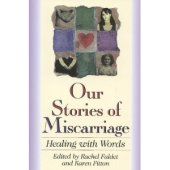
The legacy of miscarriage is profound. Recently, for some reason I felt drawn to read a book that I bought when I was pregnant with Alaina, but didn’t want to read while pregnant. Our Stories of Miscarriage was a very good book and I wish I had read it when my miscarriages were in process rather than now, in retrospect. The book is a collection of personal stories, essays, poems, and reflections about miscarriage and stillbirth (mostly miscarriage). Most of the stories are written by women and there are a handful written by fathers. I marked these things that I found meaningful…

I no longer underestimate the bond between a mother and her baby, no matter how tiny, in her womb (p. 19)

While I know this is not everyone’s experience and that people who are pro-choice often balk at this kind of language, this is true of my own experience. (For the record, I consider myself pro-woman and for me that does mean supporting the full spectrum of reproductive rights, but I have always felt a very uncomfortable and almost impossible to reconcile tension between my own, innate sense that a “fetus” IS a real and valuable baby and my own commitment to upholding the rights of each woman to make the best decisions for her own body).

I also appreciated this quote from a woman writing about talking to a friend who also had a miscarriage (and whether it is okay to talk about your own experiences/share your own story):

I can’t really say I know how you feel. I only know how I felt…

I think this is really nice choice of wording to empathize and share, without dominating another woman’s experience with your own narrative or feelings.

In another story, a mother says:

Now I know what it is like to lose a baby, so when I get pregnant again, I don’t need to know the gender, to have a trauma-free birth, to get the exact birthday, or to worry about making sure I’m relaxed. I just want a baby (p. 113).

I identified with this also, having written repeatedly during my pregnancy with Alaina that my main goal was live baby. While I still think it is perfectly reasonable and indeed should be a given that you have the right to BOTH have a “trauma-free birth” AND a baby (which, I did in fact have), my focus during my post-loss pregnancy experience was more definitely on having that living baby. I have written several times about how miscarriage allowed me to be much more able to understand the women who say, “all that matters is a healthy baby” or, “it doesn’t matter how your baby gets here, what matters is that she gets here.” While I will always maintain that both matter, my empathy for those statements did increase.

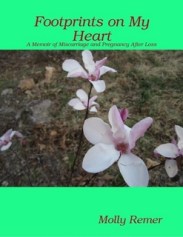
Yesterday, a friend of mine who had borrowed my doppler returned it to me. Looking at that box I remembered how often I’d used it during my pregnancy for the “life status update” of the day. I had a lot of cognitive dissonance about excessive ultrasound exposure and yet I was compelled to know if she was still alive. Looking at the box, it all seemed so far away. That fear. That uncertainty. That inner struggle. One of the reasons I published my own miscarriage memoir is because I wanted to be able to share how it all felt right then. That rawness of emotion and spirit, not the experience as filtered through time and new babies and healing of heartache.

The stories of other women reaching out across the page and across the years is a beautiful gift to all the women to follow who find themselves joining the same, unwanted “club” of babyloss mamas. I identified with the closing journal entry of Our Stories of Miscarriage reflecting on, “all the women who comforted me with stories…a sorority of sorrow, these women, and now myself among them, moving past the pain to find a jagged peace in comforting another suffering sister.” (Edgren, p. 184, emphasis mine)

My labyrinth of pregnancy drawing–see if you can find the doppler…

Woman Rising

No time for a long post today (or, probably, this week), so I share this quote I had saved from the book A Dozen Invisible Pieces by Kimmelin Hull (p. 229):

When faced with behavior battles, health concerns, family finances, and the struggle to stretch time to the fullest, I could choose to sink into the quicksand of life with young children–becoming engulfed in the daily grind, unaware of my own loss of self–or I could rise to the occasion. And I am rising.

Hull goes on to share the following:

Whether it be the thick memory of enduring a non-medicated labor and finally pushing our third child into the world, despite feeling as though I hadn’t an ounce of energy left, or the meager sprint I managed as I neared the finish line of the marathon…, I hold tight to these images as proof that I can and will be able to rise to the occasion–again and again, if and when I need to-because the ability to do so is in my very bones. Because I am a woman.” [emphasis mine]

The birth face, immediately following birth of second son. This feeling--this crying, laughing, euphoric, I DID IT, feeling is the one I draw upon in the rest of life.

This is one of things I find so powerful about women’s birth memories—they can hold onto them as a touchstone, as an affirmation of strength and personal capacity, during other challenging (or mundane) moments of their lives. I also don’t think births have to be “empowering,” natural, or unmedicated births in order to hold this affirmation for women. There is a lot of courage to be found in most birth journeys and the ability to find moments of powerfully conscious strength to draw nourishment from in the rest of life exists in many types of birth experiences. Personally, my birth experiences created a lasting sense of personal worth, that I have drawn from ever since. This includes the birth of Noah, which was not a “happy ending” to my pregnancy. In the months after his birth, I found myself at many times thinking, “I gave birth to my little, nonliving baby alone in my bathroom, I can do this too.” I did the same with the births of my other two boys—only thankfully without the “nonliving” part. Alaina’s birth is more “integrated” somehow, and I don’t find myself thinking about it or referring to it in quite the same way, though I’ve definitely had moments of remembering, “I caught my own baby, I can do this too!

Honoring Miscarriage

When I had my first miscarriage, I vowed several things in the immediate aftermath. One was that I was going to write a book about it so that other women would not have to experience the same total dearth of resources about the physical process of coping with home miscarriage. While I did publish my miscarriage memoir this year, I am still collecting stories and experiences for a different, more comprehensive book on this theme. However, in the time since I made that vow and since I had my miscarriages, a new resource emerged for women: Stillbirthday. This is the website I NEEDED when I was preparing for the birth of my tiny, nonliving baby. While I received emotional support from a variety of sources, I found a void where the physical information I sought should be. That information is skillfully covered in the birth plans section of the Stillbirthday website. I reprinted information from their “early home birth plan” in my Footprints on My Heart memoir, since it was the information I was desperately seeking during my own home miscarriage-birth. I am grateful the information is now available to those who need it.

My second vow was that, if I knew about it, I would never leave another woman to cope with miscarriage alone on her own. My third vow came a little later after more fully processing and thinking about my own experience and that was to always honor and identify miscarriage as a birth event in a woman’s life.

A friend’s loss

In March of 2010, my good friend, who had doula’ed me very gracefully and respectfully and lovingly through my miscarriage-birth postpartum experience and processing, experienced a miscarriage herself. She didn’t call me while she was experiencing it, so I couldn’t go to her as I had imagined I would if needed, but afterwards I went to her with food and small gifts and hugged her tightly, recognizing all too well that hollow, shattered look in her eyes and the defeated and empty stance of her body. Later, I bought her a memorial bracelet. However, I was still in the midst of coping with my own grief and loss process—my second miscarriage having just finally come to a long-drawn out end only a month before and the experience of which having brought another friendship to an almost unsalvageable point—and my dear friend’s own process, her feelings, got lost along the way. She recently wrote about the experience on her own blog and it was harder for me to read than I would have expected. As she noted, I agree that doesn’t matter how little the baby, or baby-start, or baby-potential that is lost-–there is no quantifying loss and no “prize” for the “worst” miscarriage. It is a permanent experience that becomes a part of you forever. Also permanent for me is the empathy and caring showed to me by my friend/doula during my time of loss and sorrow. I regret that I was not able to be that same source of solace, companionship, and understanding to her. I thank her for having held space for me to grieve “out loud” and I’m really sorry that part of the cost of that was the suffocating of her own sadness or minimization of her own experience. While I do feel like I did what I could to acknowledge her miscarriage at the time that it happened I really wish I would have done more, particularly in terms of acknowledging how very long the feelings of emptiness and grief persist. I made a mistake in taking her, “I’m okay” remarks as really meaning it, rather than being part of the story that babyloss mamas often tell themselves in a desperate effort to “get over it” and be “back to normal.”

That said, I also compassionately acknowledge that it can be hard for people to know what it is that we need if we don’t tell them. So, now I’d like to hear from readers. What are your own thoughts on recognizing and acknowledging miscarriage—how do we best hold the space for women to experience, identify, and honor miscarriage as a birth event in their lives?

Charm & book giveaway (**Giveaway is now closed. Veronica was the winner***)

In harmony with my question and associated thoughts, I am hosting a giveaway of a sterling silver footprints on my heart charm exactly like the one I bought for myself after Noah’s birth and that I gave to my husband and my parents afterward (my husband carries his on his keychain). If you win the charm, perhaps it is something that will help you to honor your own miscarriage experience or that you can give to someone else to acknowledge their loss. This giveaway is in concert with the blog contest on Stillbirthday and will end on March 20. Additionally, everyone who enters will receive a free pdf copy of my miscarriage memoir.

To enter the giveaway, please leave a comment addressing the subject of honoring miscarriage. I am wondering things like:

What did you need after miscarriage?

What did you wish people would do/say to honor your miscarriage experience?

How could people have helped you more?

What do you still wish you could do/say/write/share about your miscarriage experience(s)?

What do you wish you had done for yourself?

What did you want to tell people and what do you wish you had been able to say?

What did you want to do that you didn’t feel as if you had “permission” to do? (personal, social, medical, cultural, whatever type of permission…)

I will share my answers to these questions in a later post, but I do want to mention that one of the things that was most important to me to have acknowledged was that this was REAL. That was one of the first things I said to my parents about it when they came over to help me immediately after Noah was born—this is real.

Water babies

I continue to honor the experience of miscarriage and babyloss in my own life in various ways. Recently, I found a buddhist monk garden statue from Overstock.com that reminded me of the “jizo” sculptures that honor and protect “water babies” in Japan (mizuko is a Japanese word meaning “water baby” and specifically refers to babies lost during pregnancy—the only specialized word that exists). I have a small jizo inside on my living room windowsill, but I’ve wanted one that could weather the outdoors by Noah’s tree.

20120222-115308.jpg

20120222-115315.jpg

I took this one for size perspective, but you can barely see the sculpture in the shadow to Alaina's right.

I believe I may be partially responsible for the widespread usage of the following quote on the internet now with regard to babyloss mamas:

Miscarriages are labor, miscarriages are birth. To consider them less dishonors the woman whose womb has held life, however briefly.” –Kathryn Miller Ridiman

I found it in an issue of Midwifery Today from 1995 and shared it multiple times on Facebook and on my blog. I have since seen it in many locations around the web and I feel happy that I was able to be a conduit for the sentiment and the increased recognition of miscarriage as a birth event.

To participate in the Stillbirthday blog contest/carnival go here. And, make sure to check them out on Facebook too.

Guardian of the Womb

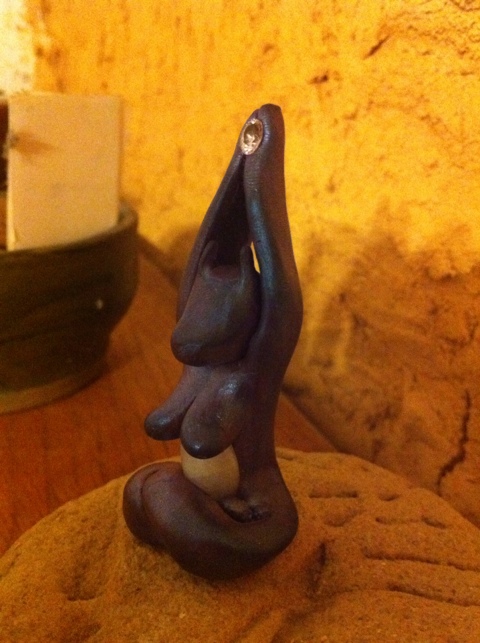
While I experienced my first miscarriage-birth as a powerfully transformative experience, my second miscarriage in 2010 was a terrible blow that brought me into a very dark and distressed place. I still have never managed to write much about this, even in my miscarriage blog/book. Following the second loss, I started reading a really wonderful book called Wild Feminine by Tami Lynn Kent. It contains many visualization exercises centered around healing our “pelvic wounds” and connecting with our “pelvic bowl.” One exercise was about visualizing the “guardian of the womb.” As I read the phrase that night in bed, I immediately experienced a strong, clear image of a black, stone goddess figure with upraised arms and a stylized jackal head. At first, I was saddened by the image, feeling that my subconscious had identified my uterus with Anubis, the God of Death, rather than a place of life and birth. I felt shaken by this spontaneous “vision” and felt like my body was perhaps telling me I would never have another living baby. However, I also intuitively felt like the figure I had seen was not, itself, threatening, but was actually serene and beautiful. After thinking about it for several days, I did a little internet research, wondering if there was a female Anubis or Goddess Anubis, since the “womb guardian” with the jackal head that I had seen was distinctly a female figure. I then discovered that apparently Anubis had a wife, not well known or much explored, named Anput. As I read about her, my heart eased and the message from my body about my womb’s guardian became a deeply meaningful message of comfort rather than despair—Anput was referred to as, “Guide and Guardian. A Bringer of Life and Order.”

I felt like maybe I should put a caution on this post–Warning: approaching woo-tastic territory–but then I decided that there was no need to denigrate or joke about something that was profoundly meaningful to me, even if it doesn’t involve language or imagery that speaks to everyone. Because it feels so personal and private, for a long time I kept the experience to myself. Then, I ended up writing about it for a class and found that I did feel ready to share the experience with others. It is interesting to me how there are some topics that require a significant amount of distance before I feel brave enough to write about them “out loud.” (I still haven’t managed to publish my part two article in my series on postpartum experiences/feelings and the things I wrote about in that post happened over four years ago! I also feel an urge recently to try to write about my experiences with tearing during my births–another one of those topics that is emotionally complicated and makes me scared almost to explore in writing.)

So, why did I bother writing about this womb guardian experience now? Well, because this weekend I felt moved to add to my birth art sculpture collection again, that’s why. I am extremely pleased with my new figure and I wanted to share her via my blog, but didn’t feel like she would make any sense without some explanation 🙂

20120207-154303.jpg

20120207-154314.jpg

Time for a retreat!

It is only when we silence the blaring sounds of our daily existence that we can finally hear the whispers of the truth that life reveals to us, as it stands knocking on the doorsteps of our hearts.

~ K.T. Jong (via Kingfish Komment)

Some time around November each year for the last three years, I’ve had a feeling of being “sped up” in my life and a desperate craving of stillness and rest. I begin to feel like pulling inward, “calling my spirit back” and re-integrating fragmented parts. Aside from my family members, I stop feeling like being “of service” to others and their interruptions of my space or requests for my time or attention begin to feel like impositions. I begin to hear the distant call to “retreat.” I crave stillness, rest, and being alone. I fantasize about broad expanses of silent time in which to think and plan and ponder. It then takes me until February to actually act on this urge. So, as of today, I now begin my annual week of retreat. In the past, I’ve done a computer-off retreat. This year, it is a Facebook-off retreat. I keep returning to the persistent feeling of having my life/brain full of digital noise/clutter and envision taking a sabbatical from the constant, hyperactive flow. My good friend wrote a blog post about her decision to take a FB break and that was the last little nudge I needed to take a break myself. The night before reading her post, I’d gone to bed thinking, “any day in which I think, ‘I didn’t have time to XYZ,’ but I DID check FB, is a day that I lied to myself.” I have a somewhat conflictual relationship with Facebook—in most ways I love it and in some ways I feel like it fosters a false sense of connection with others. I do love that it helps me keep up with and maintain real connections with real friends and with long distance family. I also appreciate the way it “smallens” the gap between people and I appreciate the opportunities it offers me to network. And, I appreciate how I am able to use it to support, encourage, and connect with other women I may never meet—it broadens my reach and impact. Finally, I most definitely appreciate it when someone shares one of my blog posts via Facebook! A good deal of my site’s traffic over the last year has come from Facebook.

Digital noise

What I wish to disconnect from it is ALL the digital “noise” in general—FB, email, e-newsletters, free Kindle books, etc.—all the requests for my time and attention. A lot of it originates from Facebook. I’ve mentioned before how if I wasn’t there, I wouldn’t even know about all the stuff I wasn’t doing–instead, it contributes to this false sense of urgency and immediacy about staying “caught up” with everything and everyone.

I still have to teach and parent, so this isn’t a full retreat, but I am taking this FB break. Yesterday, I deleted my FB apps and prepared to take a rest to focus on CREATING rather than consuming. Upon reflection, I realized it sounds like I mean I want to create digital noise, which isn’t what I mean. Though, I do want to spend more time writing blog posts and articles, so I guess that is kind of ironic. Also, I recognize that it is kind of annoying when people make big announcements/declarations about how they are QUITTING FACEBOOK, but I still feel compelled to explain it… ;-D I didn’t delete my account, just the iPhone/iPad apps that make it so easy to check in often. I’ll reinstall them when I’ve had at least a week of mental space. I value the connections I have via FB and don’t want to lose that, but I need some time away to re-clarify my boundaries. I also need to go on a fan page deleting spree as I am a fan of more than 500 pages. ;-D I need QUIET! Space in my head to hear myself think.

Past retreats

On February 1, 2010, the first year I took a personal retreat (this one was a computer-off retreat), I also started to miscarry for the second time. In my journal, I wrote:

At 4:00 this morning, I began to bleed red. I had allowed myself to become hopeful yesterday since there was no spotting increase (until evening)…Today, I am certain that is not the case and I feel dissolved. I am disconnected from this experience and feel unreal and unmoored…I feel SO foolish–WHY did I think I could do this again? Why did I open myself up to this again so soon?

…I cannot believe Zander was the last–last to nurse, to sleep in our bed, to be carried in the Ergo, to watch crawl and learn to walk, to hold in scrunchy newborness. I’m NOT DONE YET. Or, am I?

…I just want to say two things again:

1. I do NOT want people to feel sorry for me again so soon.

2. I feel DUMB.

I do not feel like I am handling this well or with strength. I just feel numb and dumb and done and done for. I am bottoming out right now. Bottom. Pit. Despair.

20120201-141452.jpg

My nature-loving retreat buddy!

That retreat ended up being a meaningful and spiritually enriching time for me, but it was also full of a lot of darkness and tears.

On February 1, 2011, I had a 13 day old daughter and was enjoying my babymoon with a deeply thankful heart.

And, now on February 1, 2012, I have a robust one year old, whose boundless energy and drive also stimulate my interest in the stillness of retreat!

Why retreat?

Some time ago, I saved this list of why women need retreats (via Jennifer Louden):

I need retreats to remind me who I am.

I need retreats to come home to myself.

I need retreats to connect with the divine feminine.

I need retreats to renew myself.

I need retreats to connect with myself.

I need retreats to connect with others.

I need retreats to rest.

I need retreats to be alone.

I need retreats to find myself.

I need retreats to honor myself.

I need retreats to learn.

I need retreats to dance.

I need retreats to play.

I need retreats to sing.

I need retreats to laugh.

I need retreats to cry.

I need retreats to be myself.

I need retreats to Be.

Yeah. That pretty much sums it up! Though, actually, these are some of the things I wrote down when considering this year’s call to be on retreat:

  • Drum
  • Crochet Yoda for boys
  • Make craft projects with boys
  • Make doll for Alaina
  • Go outside
  • Snuggle!
  • Make more sculptures
  • Draw
  • Journal
  • Read
  • WRITE! Tons! Posts, articles, essays for classes.
  • Be still
  • Rest
  • Play!
  • Plan/brainstorm pregnancy retreats/birth art sessions/prenatal fitness classes—re-vision my plans for birth education
  • Clean out inbox
  • Clean up computer room and go through binders/filing cabinets/bookshelves
  • Declutter in general
  • Clean out closet and spare room
  • Review books (hmm. This is a “should do” rather than a want to. I’ve got about 6 that are staring at me and waiting their turn)

I’m no longer foolish enough to think that I’ll ever be able to get “everything done” (because I’m a fascinating, amazing person after all!), but I do feel confident that I can take some steps to gather the whole, improve my focus, and re-commit to my life’s priorities, as well as consider how to best prioritize my time and energy in order to fully “savor and serve” my family and the world.

20120201-141513.jpg

A nice place to retreat--priestess rocks in the woods behind my house.

20120201-141523.jpg

I love to sit in this stone "chair" to journal and think and feel. I sat here after my miscarriages. I sat here during my pregnancy. I took newborn Alaina here last February to "introduce" her to the earth. I bring the boys out here to play. I sat here today and thought about the ever-turning wheel of life.

20120201-141530.jpg