Archives

Birth Quotes Update

Time for my semi-regular re-sharing of birth quotes I’ve shared on my Talk Birth Facebook page in the last several months (there are also a few grief/miscarriage quotes mixed in as well as some activism quotes too). While I realize that I don’t “own” these quotes—other people said them, not me!—I do have quite a bit of legwork invested in seeking and sharing these quotes (I mostly get them from my own reading) and if you re-post one or more of them on your own Facebook page, blog post, or book, I really appreciate acknowledgement and/or link back to this site or to my FB page, that this is where you originally got the quote!

“…in not disturbing the laboring woman you’re not handing over all control to her…it’s not a question of handing control to the laboring woman, it’s a question of *not controlling* her…while she’s in labor and giving birth physiologically, she’s going to seem well and truly out of control–totally wild!–so the issue of control seems a pretty irrelevant one really.” –Sylvie Donna (Optimal Birth)

“I see my body as an instrument, rather than an ornament.” ~Alanis Morissette, quoted in Reader’s Digest, March 2000 via Denver Doula

‎”Expectant mothers need to be mothered; their hearts need to be infused with love, confidence, and determination. I now see myself as ‘midwife’ to the gestation and birth of women as mothers.” –Pam England (Birthing from Within)

‎[re: “surrender” during labor] “…She may refer to this as the feeling of surrender; but this kind of surrender is a gift, not something she herself did with her mind. At this point the body truly takes over and the thinking mind recedes into the background. This may be how women historically and presently, are able to labor without mental suffering and without pain medication.” –Pam England (Labyrinth of Birth)

This feels true from my personal experiences–I feel like the most important thing anyone can know about birth is to welcome that surrender (to let go of control) and also about the value of *freedom* in enabling the surrender to happen (freedom in the physical space–i.e. no one “letting” you drink or not drink or labor in bed or out of bed).

“[re: ecstatic birth] This exquisite hormonal orchestration unfolds optimally when birth is undisturbed, enhancing safety for both mother and baby. Science is also increasingly discovering what we realise as mothers – that our way of birth affects us life-long, both mother and baby, and that an ecstatic birth —
a birth that takes us beyond our self — is the gift of a life-time.” –Sarah Buckley

“When you don’t follow your nature there is a hole in the universe where you were supposed to be.” –Dane Rudhyar (via Marian Thompson, LLL Founder)

‎”Birth is what women do. Women are privileged to stand in such power! Birth stretches a woman’s limits in every sense. To allow such stretching of one’s limits is the challenge of pregnancy, birth, and parenting. The challenge is to be fully present and to allow the process because of inner trust. How can women find their power, claim it, and stand firm in it throughout?” –Elizabeth Noble

(Her answer: “vertical birth”–thus, to quite literally STAND in one’s birth power!)

‎”…it is not easy for women to lay claim to our life-giving power. How are we to reclaim that which has been declared fearful, polluting and yet unimportant? How are women to name as sacred the actual physical birth, which comes with no sacred ritual…?” –Elizabeth Dodson Gray

‎”A woman’s path to power is more like engaging life’s energies in a swirling movement filling us up, out, into wholeness.” –Lois Stovall

“The body has its own way of knowing, a knowing that has little to do with logic, and much to do with truth, little to do with control, and much to do with acceptance…” –Marilyn Sewell (via Mothering Magazine‘s pregnancy e-newsletters)

“…much of what passes for childbirth education and preparation today actually increases women’s fears by giving them too much concrete information to hang their anxiety on, and too many names for all the bad things they already fear will happen. In the course of trying to calm the higher brain by giving it lots of data, we can end up defeating our purpose by feeding our fears.” –Suzanne Arms (Immaculate Deception II)

“We take for granted in the United States that childbirth is a multi-million dollar industry. It’s as simple as that–women’s bodies and the act of creation are intertwined with the economy. What if our relationship with body and womb and birth was in every sense of the word FREE? What if we didn’t need managed care? Literally or figuratively?” –Baraka Bethany Elihu (Birthing Ourselves into Being)

Reader responded with a question about, “how do we teach our children about birth?” and this was my short answer:

I think by talking about is as something that is a “normal” as can be–i.e. not scary and dangerous–and by not “hiding” birth from them like it is a secret. My kids have seen all kinds of natural birth videos, pictures in books, etc. When …my older son was only 3 1/2 he drew me a picture with the baby attached to the mom with an umbilical cord (both with big smiles on their faces) and the placenta in bowl next to them (which of course couldn’t actually be there unless the baby was not still attached to the mom with the cord). 🙂

“I am starting to see that a woman’s strength in birth is also in the letting go and allowing herself to tumble fearlessly with the current, never losing sight of the belief that, when the energy of the tide is through, she will find herself upright again on the shore.” –Maria (at the blog A Mom is Born)

“Because parents are transients in the maternity care system, there is little cumulative birth experience over successive generations of mothers. Women giving birth don’t make the same mistakes as their mothers or grandmothers–they make new ones.” –Elizabeth Noble (Childbirth with Insight)

‎”Those who push themselves to climb the last hill, cross the finish line, or conquer a challenging dance routine often report feelings of euphoria and increased self-esteem…women who experience natural birth often describe similar feelings of exaltation and increased self-esteem. These feelings of accomplishment, confidence, and strength have the potential to transform women’s lives…In many cultures, the runner who completes the long race is admired, but it is not acknowledged that the laboring woman may experience the same life-altering feelings…” -Giving Birth with Confidence (Lamaze International)

“Fathers’ sharing in the birth experience can be a stimulus for men’s freedom to nurture, and a sign of changing relationships between men and women. In the same way, women’s freedom to give birth at home is a political decision, an assertion of determination to reclaim the experience of birth. Birth at home is about changing society.” –Sheila Kitzinger

(Emphasis mine.) Posted in honor of Independence Day!

I’ve noted that many women (including myself) cite “freedom” as one of the main reasons they choose out-of-hospital birth…

‎”Labor is not a time to judge ourselves but a period for reflecting on our movement through life at a given moment. It is not possible to control labor, it is only possible to follow the process and to meet whatever it may offer.” –Gayle Peterson (An Easier Childbirth)

“There is an urgent need for childbirth education for doctors and nurses so that, instead of superimposing a medical perception of birth, professional helpers listen to, learn from, and respect women’s experiences. Only in this way shall we be able to humanize the culture of birth.” –Sheila Kitzinger (forward in An …Easier Childbirth by Gayle Peterson)

The book was written in 1993 and I think we still haven’t figured that out yet…:(

‎”The absolute miracle of a birth and the emergence of a new human being into the world catapults both mother and father into the realm of awe and wonder. They are flooded with non-ordinary feelings and energies that support a deep connection not only with the newborn and each other, but also with the mystery and power of life itself.” –John & Cher Franklin

‎”A strong woman knows she has strength enough for the journey, but a woman of strength knows it is in the journey where she will become strong.”

“A strong woman isn’t afraid of anything, but a woman of strength shows courage in the midst of her fear.” (from the same “Woman of Strength” poem as above quote, author unknown, many internet versions floating around)

“When I dare to be powerful–to use my strength in the service of my vision–then it becomes less and less important whether I am afraid.” –Audre Lorde

“Despite hundreds of years of negative programming, labor and birth can be a soul-stirring experience!” —Christiane Northrup, MD

“The labor and birth experience itself is a microcosmic slice of what fathering asks of a man.” –John Franklin (FatherBirth)

‎”…an experience of the phenomenal capacity of our birthing body can give us an enduring sense of our own power as women. Birth is the beginning of life; the beginning of mothering, and of fathering. We all deserve a good beginning.” –Sarah J. Buckley

“Birth privacy is important because it fosters FREEDOM and that sense of freedom is fundamental to birthing unhindered and with joy.” –Molly Remer (my contribution to the book/DVD giveaway on Orgasmic Birth: The Best Kept Secret (fan page))

“Cautious, careful people, always casting about to preserve their reputation and social standing, never can bring about a reform.” Susan B. Anthony

“When I say painless, please understand, I don’t mean you will not feel anything. What you will feel is a lot of pressure; you will feel the might of creation move through you. Pain, however, is associated with something gone wrong. Childbirth is a lot of hard work, and the sensations that accompany it are very strong, but there is nothing wrong with labor.” –Giuditta Tornetta

Love this –the “might of creation.” How true!

“Day by day, month by month, year by year we are confronted with all that we do not know, that we do not understand, that we do not grasp. Sometimes we are humbled by this knowledge and say: God, it is too wonderful for me to comprehend but I know this universe is more grand and more beautiful than I ever could have imagined and I give thanks for the blessing of being here and seeing, hearing, experiencing, and sensing all that is so wonderful around and in me…” –Susan L. Suchocki

“Life is full and overflowing with the new. But it is necessary to empty out the old to make room for the new to enter.” —Eileen Caddy

“Once the baby is born, your life will change forever. It will change in so many ways, and until you get there you simply can’t be told. The joys, the sorrows, the excitement, the fear, the frustrations–in fact, I think all the adjectives in the world couldn’t describe what is in store for you.” –Giuditta Tornetta

‎”I love to think that the day you’re born, you’re given to the world as a birthday present.” –Leo Buscaglia (shared on my second son’s fourth birthday)

“Wherever women gather together failure is impossible.” –Susan B. Anthony

“I believe with all my heart that women’s birth noises are often the seat of their power. It’s like a primal birth song, meeting the pain with sound, singing their babies forth. I’ve had my eardrums roared out on
occasions, but I love it. Every time. Never let anyone tell you not to make noise in labor. Roar your babies out, Mamas. Roar.” –Louisa Wales

“…The motherhood mosaic has pieces that are dark and dull, but it’s a work that shines.” –Carol Weston

“Women’s bodies have near-perfect knowledge of childbirth; it’s when their brains get involved that things can go wrong.” –Peggy Vincent (via Sweet Miracles

“A child strips away our illusions that we are perfect, that we have it all figured out, that we are all grown up. In fact, we grow up with our children if we are willing to remain open to their innate goodness as well as our own.” –Peggy O’Mara

“The suckling relationship is one of the sources of real sweetness that we have in human existence…The suckling baby can teach adults about the expression of sweet love and gratitude in a way no words can.”
–Ina May Gaskin

“Unfortunately, birthing woman has not only lost touch with her body and with her ancient female lineage. She has also lost her voice to speak up, to question intervention, to ask for support, to demand respect for the work of giving birth and caring for her infant. When she finds that voice, she will regain a vital part of her creativity and power as a woman.” –Suzanne Arms (Immaculate Deception II)

“Pregnancy is a time of being in touch with the power of creation itself.” –Rahima Baldwin & Terra Richardson

“We ourselves feel that what we are doing is just a drop in the ocean. But the ocean would be less because of that missing drop.” –Mother Teresa

‎”Childbirth calls into question our very existence, requiring an expectant couple to confront not only new life but death, pain, fear, and, most of all, change.” –Elizabeth Noble (quoting a new mother)

“Hope is the thing with feathers, That perches in the soul, And sings the tune without the words, And never stops at all…” –Emily Dickinson

‎”We may tell ourselves that birth is a natural and safe process and recall our childbirth teacher’s emphasis that a woman’s body is designed for giving birth, but our own bodies may hold a different truth. It is essential to honor body memory, as it wields far more influence than the intellect during labor.” –Gayle Peterson (in An Easier Childbirth re: working through birth memories in preparation for future births)

“If a community values its children, it must cherish its mothers.” -John Bowlby

“Just as a tree grows best when anchored firmly in the earth, so can a pregnant mother feel strong and capable when supported by a sisterhood of nurturing friends.” -April Lussier

“Planning for birth is like getting ready for an athletic event…You can’t predict exactly what is going to happen; the events of the game will unfold according to their own particular logic, and not necessarily
according to your plan.” –Adrienne Lieberman

“If we don’t take care of mothers, they can’t take care of their babies.” –Jeanne Driscoll

“And I also know how important it is in life not necessarily to be strong but to feel strong, to measure yourself at least once, to find yourself at least once in the most ancient of human conditions, facing blind, deaf stone alone, with nothing to help you but your own hands and your own head…” –Christopher McCandless

‎”When you are drawing up your list of life’s miracles, you might place near the top the first moment your baby smiles at you.” –Bob Greene

I have crystal clear memories of my second baby’s first smile (the day of birth–looking into my eyes) and of my first baby’s first laugh. Less clear memories of the FIRST smile for my firstborn and first laugh for my second. I guess it is good that they each get one of the special, miracle moments!

“Midwives do NOT empower women. Only women can empower themselves. If you’ve been empowered through birth, thank your midwife for holding the space – but know that it was surely YOU that created and walked the journey” -Pamela Hines (via Barbara Herrera)

“Though we have lost a petal, we are still flowers, lush and full together in a garden of hope.” -Angie M. Yingst

‎”Once her endorphins have kicked in, a woman may actually enjoy labor or may even find it an ecstatic experience. I have many times told the story of one of my clients who was crying and desperate in early labor, only to be smiling and dancing around the room at nine centimeters’ dilation.”–Elizabeth Davis

“Life shrinks or expands in proportion to one’s courage.” –Anais Nin

“Giving birth requires an honest surrendering of your body and soul. You need to be in a relaxed state of love. Love has a way of overpowering fear. The more energy-draining feelings you can unload, the more room you will have for bliss and simplicity. Birth can be an unfolding and emergence like something you’ve never experienced before.” –Lynn Griesemer

“Labor is like mothering: you prepare and do the best you can, but finally, most of it is out of your hands. Birth is a great mystery. Yet we live in a rational, scientific world that doesn’t allow for mystery…” –Jennifer Louden

‎”Although the popularly desired outcome is ‘Healthy mother, healthy baby,’ I think there is room in that equation for ‘Happy, non-traumatized, empowered and elated mother and baby.’” –Ashley Booth Youn

[in reference to before she had her baby] “…I thought the only thing that was important…was to have a healthy baby. Now I recognize that while this is the primary goal, it is not the only goal. Birth is such an emotional experience; it can give or take away so much more than I ever realized…it will change you in such a wonderful and powerful way. It gave me more strength than I ever imagined. Since then, whenever I become overwhelmed, all I have do to is say, ‘I had a baby in my home!’ I am instantly empowered.”–Jody Niekamp (in Journey into Motherhood)

‎”10% of births needfully culminate in intervention. Self-esteem depends on salvaging the most important truth from your experience: Birth cannot be controlled. It is a mystery.” –Karen Fisk

“As doulas, midwives, nurses, and doctors, it’s important to never underestimate how deeply entrusted we are with someone’s most vulnerable, raw, authentic self. We witness their heroic journeys, see them emerge with their babies, hearts wide open…” –Lesley Everest (MotherWit Doula)

“Not every woman experiences unaided, natural childbirth, yet many women hope for it. To strive for birth as a peak experience—to withstand this ‘trial by fire’–a woman must learn what labor pain is and be prepared to accept and work with it. And she must also prepare for the unexpected.” –Karen Fisk

‎”It is so easy to close down to risk, to protect ourselves against change and growth. But no baby bird emerges without first destroying the perfect egg sheltering it. We must risk being raw and fresh and awkward. For without such openness, life will not penetrate us anew. Unless we are open, we will not be filled.” –Patricia Monaghan

“A Life may last for just a moment…. but a memory can make that moment last forever…” (Unknown)

“Birth is an experience that demonstrates that life is not merely function and utility, but form and beauty.” –Christopher Largen

“Birth matters. It brings us into being, on many levels.” –Ananda Lowe

‎”The way a society views a pregnant and birthing woman, reflects how that society views women as a whole. If women are considered weak in their most powerful moments, what does that mean?” –Marcie Macari

“Shrouding information about birth in silence hides the fact that labor and birthing pain is a positive key to transformation. Preparation for and expectation of that pain leads to self-awareness. Thus, birth becomes not only a passage for your child, but a passage for you into instinctual and effective parenting.” –Karen Fisk

What To Do When Newly Pregnant and Wanting a Natural Birth…

Last month, a friend of my younger sister’s emailed to ask some questions about natural birth. She is newly pregnant and very interested in her birth choices (yay! How exciting!). I shared a couple of ideas with her and thought I would share them with my blog as well:

It can be hard to know where to start—there is SO much information out there. I would suggest getting a good, informative book—though I haven’t yet read it myself, Your Best Birth is a new book that is supposed to be good and very “balanced” at helping you make the choices that are right for you. I also have a suggested reading list here.  Mothering Magazine’s Having a Baby, Naturally is also quite good. Speaking of Mothering Magazine, their discussion boards are PACKED with good information and they all come from a natural/holistic perspective (a lot of other message boards have more of an “epidural soon!” culture). You can join a “due date club” there, etc. There is a whole forum just for birth stuff (and a subforum for homebirth), etc. Good resource, as is their entire website. Other good guides include Lamaze’s book Giving Birth with Confidence. One of my favorites as a really good “basic”/intro guide for pregnancy and birth is Pregnancy, Childbirth, and Newborn by Penny Simkin. A brand new edition is out, so think about checking it out!

Particularly if you plan to have your baby in a hospital, a doula would be a really good addition to your birth “team.” Doulas provide non-medical labor support and are there just to support YOU and what you want. It is really good to have continuous labor support. And, she does not replace your partner—he has his own “journey” to take into becoming a father and having a doula there frees him of a lot of the pressure of trying to be your “doula”—he can just be there with you, loving you, rather than trying to remember all kinds of stuff from books!

I would also suggest finding a good independent childbirth educator to take birth classes from when you get closer to your due date (one who doesn’t work in a hospital—it doesn’t matter if you plan to give birth in a hospital, an educator who works for herself instead of for somewhere else, is better able to give you complete information instead of just teaching about the “rules” of that particular location). Read more about “why independent classes” here.

Most of all, spend time celebrating your changing body and marveling at its inherent wisdom. Take time each day to “tune in,” draw inward and connect with your baby. Honor your natural rhythms—eating when you’re hungry, resting when you’re tired. Be gentle and loving with yourself. Know that you already have everything you need within you and strive to create a birth environment that encourages that inner wisdom to blossom and fully respects your right to freedom in birth.

Of Birth & Bugs

I included this story as part of a previous post about how women learn about birth, but I wanted to share it as a separate post because it gets lost as side note in the other post:

Doula in Disguise?!

A powerful pre-birth lesson in my body’s wisdom actually came from an assassin bug (of all things!). Assasin bugs have very potent, posionous bites (and in some countries carry hideous diseases). During my first pregnancy, I was bitten multiple times as I slept by one of them. I had bites on my face (lip) as well as in a row on my arm. The bites caused swelling, ongoing stabbing pain, and joint aching (as well as intense palm-of-hand and sole-of-feet itching when they first occurred).

I turned this into a practice experience for myself in coping with labor—figuring that, like labor, this was something uncomfortable and out of my control, but that would eventually pass and that my body would take care of without my needed to actively do anything about it. The stabbing pain was also intermittent (like a pulse), so I thought that was good practice too. I practicing “softening” around the sensations and “being” with the discomfort. I reminded myself that my body knew what to do and that it would heal itself. And, guess what? It did. Each day as the bites healed, I would marvel, “look how much my body knows! Look what it can do without me even knowing what or how it is doing.” Of course, it took several days of stabbing and aching pain for this process to occur, whereas my first labor involved only 5 hours of intense sensation as well as several preceding hours of totally manageable sensation and my subsequent labors only involved 2 hours each of fairly intense sensation.

This experience in watching my body take care of itself using its own inherent wisdom was a potent (and unexpected) lesson for me in approaching my first birth. I learned almost as much from it as I did from the books I read and the classes I took!

Opening for Birth

Some time ago, I bought several large binders of back issues of The International Journal of Childbirth Education (ICEA‘s publication). The December 2001 edition of the IJCE contains an article titled “The Pelvis Revisited” by Elizabeth Noble. An interesting article overall, I particularly enjoyed the language of the section titled Opening for Birth:

“Birth is what women do. Women are privileged to stand in such power! Birth stretches a woman’s limits in every sense. To allow such stretching of one’s limits is the challenge of pregnancy, birth, and parenting. The challenge is to be fully present and to allow the process because of inner trust. How can women find their power, claim it, and stand firm in it throughout? The vertical position comes again into prominence. Women must ‘stand up’ for what they want and ‘on their own two feet’ by refusing to take their birth ‘lying down’! Being upright is essential for pelvic power–psychological strength, pelvic mobility, gravity’s assistance, pelvic pump efficiency, and the hygienic downflow of bodily fluids.”

In the September 1999 issue, the article “Belly-Dancing Through Pregnancy: A Way to Give Birth and Not Be Delivered” by Gaby Mardshana Oeftering caught my eye. In it, she also addresses the needs to build inner trust and to open to birth through physical movement and an active approach to birthing:

“Women expecting their second or third child don’t necessarily need this [traditional prenatal classes]. They are looking for a way to relax, find their inner selves, and get better acquainted with their bodies, their babies, and the process of birthing. When allowed to move during childbirth, many women instinctively start moving their pelvis in hip circles which are typical of belly-dance…All soft and gentle belly-dance movements are beneficial to pregnant women; for example, hip circles, the various hip-eights, and hip rocking. The rule is: all horizontal movements relax the uterus; vertical movements excite it. Physically speaking, all these movements strengthen and mobilize the pelvis and the legs and train the pelvic floor. They also activate deep abdominal breathing…the hip movements demand a lot of attentiveness and body awareness. On a mental level, this leads to better consciousness of tension and relaxation—a body feeling that is needed during birthing.”

Recently, I feel myself intrigued by the possibilities of working with these women—those who are on their second or third pregnancies and who are seeking to “go beyond” traditional birth class information (that often assumes first baby status). I know that I, personally, have wanted new, fresh, inspirational birth information during each of my pregnancies—labor and birth 101, stages of fetal development, or even labor support and comfort measures isn’t “enough” for me anymore (and wasn’t after my first baby). The desire to honor the pregnancy experience, prepare for the birth experience, and to work with psychological and emotional elements of childbearing are still very much present though! I envision doing a series of “pregnancy retreat” type of things or other types of workshops that “go beyond” and help second, third, or fourth time mothers to spend some dedicated,special attention to each pregnancy and birth experience in a personally enriching and rewarding way 🙂

Poem: Thoughts on Risk

Two years ago, I read Sheila Kitzinger’s book Homebirth. In doing so, I was struck anew how much I love her writing (I quote her often!). It is so lyrical and vibrant and really gets to the heart. I also deeply identify with it. I want to share a poem (not by her) that was in the book in the section about assessing risk and statistics and homebirth and is it really safe, etc. I feel like sharing it today (something that is difficult for me about pregnancy after loss is feeling more “at risk” about pregnancy than I have ever felt before—you know the quote, “birth is as safe as life gets” often said so blithely, has a different impact when you’ve been part of the statistics instead of “escaping” them. I still think the quote is true, but it is NOT a “light” quote!) :

Thoughts on “risk”
by Judith Dickson Luce (in Homebirth by Sheila Kitzinger)

word so small
born a verb
an “action word”

as I learned in 4th grade
I risk
you risk
she risks
even a noun something
I take
you take
she takes

in philosophy a description of what life is
with its own rewards:
I love and risk loss and pain
I try and risk failure
I trust and risk betrayal
I live and risk death
but we’ve moved so far beyond philosophy
to insurance–for anything and everything
to machines
to technology and control
(no daring)

and computers spit out the risk we are “at”
before we breathe
before we take a first step
that might lead us to fall
and the computers and the statisticians tell us
it is healthier and safer
and wiser not to take risks
since we are “at risk”
and they can reduce risk
and with it our capacity
for living
and touching
and caring
it’s safer that way
neater and more efficient
and definitely more sterile
and what more can we ask of life?
—–
Commentary by Tom Luce: “It’s very risky to be born since very few people who are born avoid dying (though many avoid living). If you are born there is a high statistical risk you might die.” 😉

Book Review: Giving Birth with Confidence

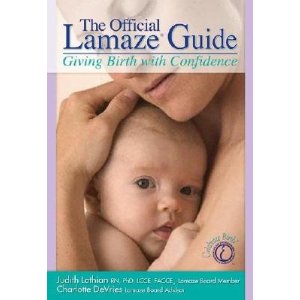
Since I recently wrote a post inspired by a quote from The Official Lamaze Guide: Giving Birth with Confidence, I figured it was high time that I share the review I wrote of the book! The review was originally written in 2007 for CfM News.

The Official Lamaze Guide: Giving Birth with Confidence. By Judith Lothian & Charlotte DeVries. Published in 2005 by Meadowbrook Press (307p), $12.00. ISBN: 088166474X

Reviewed by Molly Remer, MSW, CCCE

Very few pregnancy books deliver the message that we think pregnant women need to hear most: Birth is a normal and natural part of life….We believe deeply that birth is a process you can trust just as millions of women before you have. This belief isn’t sentimental; it’s based on our thorough understanding of the physiologic birth process and research that confirms interfering in that process is harmful unless there is clear evidence that interference provides benefits.

So begins an opening section of the book The Official Lamaze Guide: Giving Birth with Confidence. The degree to which the book accomplishes its simple message can be summarized with a simple review: Excellent! The Lamaze Guide is digestible and reasonable for busy people to manage at less than 300 pages of text and it contains a simple, profound, and elegant message that women in the U.S. desperately need to hear.

The book begins with defining normal birth as “…a normal birth is one that unfolds naturally, free of unnecessary interventions.” It then briefly explains the history of birth and how and why normal birth is not actually the norm in our culture. The authors then clearly address the following areas in one chapter each: early pregnancy; choosing a caregiver and birth site; middle & late pregnancy; preparing for labor and birth; the simple story of birth; keeping birth normal; finding comfort in labor; creating a birth plan and a baby plan; communication and negotiation; greeting your newborn; and early parenting. The authors are clearly very supportive of midwifery and the Midwives Model of Care (though it is not referenced by name) as well as of the benefits of a doula in the birthing room.

The book is framed in the context of Lamaze International’s powerful foundation, the Six Healthy Birth Practices:

The book is also guided by Lamaze’s comprehensive and lovely philosophy of birth:

  • Birth is normal, natural and healthy.
  • The experience of birth profoundly affects women and their families.
  • Women’s inner wisdom guides them through birth.
  • Women’s confidence and ability to give birth is either enhanced or diminished by the care provider and place of birth.
  • Women have the right to give birth free from routine medical interventions.
  • Birth can safely take place in homes, birth centers and hospitals.
  • Childbirth education empowers women to make informed choices in health care, to assume responsibility for their health and to trust their inner wisdom.

After effectively bolstering the confidence of women in birth, The Lamaze Guide concludes with several useful appendices. The first is the excellent tool “Effective Care in Pregnancy & Childbirth: A Synopsis.” Though this information is easily available on the internet (see www.childbirthconnection.org), I find that many parents do not come across it on their own. How powerful to have it included for easy reference of indisputable evidence based practices. The Mother-Friendly Childbirth Initiative is included in another appendix as well as the always excellent text of The Rights of Childbearing Women. I was delighted to see all of these powerful documents in one place—and, in the hands of consumers who need to be aware of them.

This book is a refreshing presence on the shelves of my local bookstore (yes, there is only one retail book shop in my community and The Lamaze Guide is the only “alternative” birth book stocked in the store!). As I read the book, I kept nodding along and wishing it was in the hands of each pregnant woman in my community. Lamaze has a “name recognition” that gives this book the potential to have a wider and broader impact than other alternative birthing books which, though brilliant contributions, may only end up in the hands of “the choir.” The Lamaze Guide is written in such a matter-of-fact and comforting tone that I cannot see it being off putting to the average consumer as having “hippie” language or “extreme” ideas. The blueprint for normal birth that the book lays out is extreme compared to the standard practices at most hospitals, but the way in which the information is presented opens doors of communication, understanding, and exploration as well as providing the evidence basis to back normal birth. I would not hesitate to lend this book out as it will not scare anyone away with “weird” ideas. With the other books in my personal library, I have to carefully consider my audience before choosing which book has the right style and blend of information—not this one! It is good for everyone with its open, simple message. It is a good addition to lending libraries, personal libraries, to give as a gift, or to recommend to others. The Lamaze Guide is straightforward and clearly written with an unabashedly honest and truthful message of what normal birth is and how it can either be supported or undermined.

My only critique of the book is that in contains no real acknowledgment of the several other well known and effective organizations that train and certify birth educators (other than Lamaze International itself). Conspicuously absent from the resources pages are any of these other organizations.

In conclusion, The Lamaze Guide is a source of information that women need to have and a message that women need to hear. I think Giving Birth with Confidence accomplishes its purpose skillfully and has the potential to be a transformative influence. I hope women read it, absorb it, and begin to Celebrate Birth!

A Fantasy

Several years ago, I requested permission to reprint an essay from La Leche League International’s book Learning a Loving Way of Life. The essay is a birth/breastfeeding parody and I realized I’d never shared it here (please do not reprint without permission!).

A Fantasy

By Melanie Axel-Lute

Time: The not-too-distant future.

Scene: A Doctor’s office.

Doctor: Yes, Judy, the test is positive—you are going to have a baby. Now I’ll just give your instructions for the artificial womb.

Judy: Well, doctor, I have been planning to be pregnant.

Doctor: (surprised) Oh! I do have a few patients who say they’d like to try that. It’s very difficult nowadays, though, so many pressures on the modern woman. Of course, I’m all for it. It is the best thing for the fetus, though the new artificial wombs are very good. Now—have you done any preparatory exercises?

Judy: I didn’t think about that.

Doctor: You’ll find it very hard then, especially at first. I usually have my patients do several months of sit-ups and leg-lifts.

Many women say they’d like to try being pregnant, but they have to give it up in a few weeks. They have morning sickness and are very tired. I always recommend that anyone with nausea switch to the artificial womb.

Being pregnant takes a lot out of a woman. You’ll need your strength for the baby. And you don’t seem very big through the pelvis. You may not be big enough to be pregnant. I’ll have to test your amniotic fluid to see if it’s adequate.

It’s very hard to judge the weight of the fetus when it’s in a human womb, too. Some women worry whether it’s gaining enough weight. I always like to start intrauterine feedings at about two months.

Now, how long had you planned to be pregnant?

Judy: I planned on letting the baby be born naturally.

Doctor: (shocked) Oh, my! That’s really not necessary, you know. Most of my patients go for about three months—that’s the critical period—although a few stick it out for six. More than that is definitely unnecessary.

Have you thought about what people will say? Most people don’t mind seeing a woman pregnant with a tiny fetus, but when it gets to be more than six months—well! It’s just very unusual.

Besides, have you thought about how tied down you’ll be? You’ll have to take that fetus everywhere. Women really need to get out alone once in a while, you know. I feel that most women who prolong pregnancy like that do so for very selfish reasons.

Judy: I want to go ahead with it anyway.

Doctor: (patronizing) Well, I guess I just have to let you try it for a while and see how it goes…

This essay was reprinted with permission from the book Learning a Loving Way of Life, published by La Leche League in 1987. The essay reprinted was originally written in 1978. LLLI is the world’s foremost authority on breastfeeding. For a wealth of breastfeeding information, support, resources, or to purchase a copy of the book referenced, visit: www.llli.org.

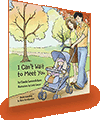
Book Review: I Can’t Wait to Meet You

Book Review: I Can’t Wait to Meet You: Understanding In Vitro Fertilization
By Claudia Santorelli-Bates

So No Wonder Publishing, 2010
ISBN 978-061531935-3
30 pages, hardcover, $15.99

www.icantwaittomeetyou.com/

Reviewed by Molly Remer, MSW, CCCE

Written by a mother of three, I Can’t Wait to Meet You is a story book for children designed to explain in vitro fertilization (IVF) in simple terms. The American Society of Reproductive Medicine has an official position that children conceived via IVF have the right to “full disclosure” of their origins. I confess to wondering if by this logic all children have a right to “full disclosure” about their conception story (!), but, regardless, for children conceived via IVF, I Can’t Wait to Meet You makes the origin story easily accessible. (The author of the book has an article available explaining why disclosure is important available here.)

Colorful cartoon illustrations and basic language tell the story of a couple who longs to have a baby and eventually goes to a doctor for help. Eggs are taken from the mother and sperm from the father in hopes that they “like one another and become an embryo.” The illustrations are friendly, appealing, and fanciful (for example, the embryos are shown resting in little beds before being put back into the mother’s tummy).

The book ends with the couple pushing their toddler in a swing at the park and with the lovely affirmation, “you were so wanted and loved long before we met you.”

I Can’t Wait to Meet You would be a nice addition to the personal libraries of families who have struggled with infertility and who would like to share a piece of their journey with their own “little miracles.”

Disclosure: I received a complimentary copy of this book for review purposes.