Archives

Tuesday Tidbits: Gift from the Sea (Communication Overwhelm)

March 2013 061

Couldn’t resist putting this photo with this post, since she’s holding little shells. We found them in the river gravel we had delivered for our greenhouse 🙂

The Amethyst Network Board decided to experiment with choosing a “book of the month” to discuss, comment upon, and share during the  month. For March, we chose Gift from the Sea by Anne Morrow Lindbergh. I have had the book on my to-read shelf for years and a few days ago, it literally popped off the shelf and into my hands. I’d like to offer a series of short posts based on the book, sharing quotes that I enjoy as well as associated personal experiences or thoughts.

The first quote that caught my eye was this one immediately following a section about the many exhausting demands on a mother’s time and attention:

For life today in America is based on the premise of ever-widening circles of contact and communication. It involves not only family demands, but community demands, national demands, international demands on the good citizen, through social and cultural pressures, through newspapers, magazines, radio programs, political drives, charitable appeals, and so on. My mind reels in it, What a circus act we women perform every day of our lives. It puts the trapeze artist to shame. Look at us. We run a tight rope daily, balancing a pile of books on the head. Baby-carriage, parasol, kitchen chair, still under control. Steady now!

This is not the life of simplicity but the life of multiplicity that the wise men warn us of. It leads not to unification but to fragmentation. It does not bring grace, it destroys the soul. And this is not only true of my life. I am forced to conclude, it is the life of millions of women in America. I stress America, because today, the American woman more than any other has the privilege of choosing such a life.

Woman in large parts of the civilized world has been forced back by war, by poverty, by collapse, by the sheer struggle to survive, into a smaller circle of immediate time and space, immediate family life, immediate problems of existence. The American woman is still relatively free to choose the wider life…

This almost made me laugh because it was written in 1955, but I feel like she might really be talking about Facebook! 😉 It actually made me feel good to know that this feeling of fragmentation I describe sometimes and the sense of everything and everybody wanting a piece of me all the time, isn’t a new feature of being a woman and mother, and it also isn’t the “fault” of technology. Perhaps it is a feature of caring a lot.

It also reminded me of the quote I keep taped to my laptop:

To allow oneself to be carried away by a multitude of conflicting concerns, to surrender to too many demands, to commit to too many projects, to want to help everyone in everything is itself to succumb to the violence of our times. Frenzy destroys our inner capacity for peace. It destroys the fruitfulness of our work, because it kills the root of inner wisdom which makes work fruitful. –Thomas Merton

Tuesday Tidbits: Bragging Rights

“Before I had children I always wondered whether their births would be, for me, like the ultimate in gym class failures. And I discovered instead…that I’d finally found my sport.” –Joyce Maynard

“Our body-wisdom knows how to birth a baby. What is required of the woman who births naturally is for her to surrender to this body-wisdom. You can’t think your way through a birth, and you can’t fake it.” –Leslie McIntyre

February 2013 113
This week I particularly enjoyed a saucy post by my friend, colleague, and doula, Summer. Titled Bragging Rights, she talks about her own experience birthing a very large baby (nearly 12 pounds! I enjoy bragging about her baby too!) and whether or not she really “deserves” bragging rights on birthing a big baby. I absolutely love her concluding thoughts on the topic:

“…Frankly, I think all mothers get bragging rights on their babies births. Birth is awesome and amazing and power-full. Every mother must face it. Sure, she may face it differently than me, but it IS a labyrinth we all go through. This is the way of life. So, mothers, brag away. Brag about whatever part of your labor and baby’s birth made you feel empowered….find that piece, even if it’s just a tiny moment, and cling to it. Shout it from the rooftops!…”

What a great idea that all mothers deserve “bragging rights.” What are your bragging rights moments from your births, however they unfolded?

I immediately thought of one for each of mine, reflecting that each birth does hold a key moment for me, the first thing that comes to mind when I think about that birth, a moment of being power-full.

First birth: my moment was arriving at the birth center fully dilated after having worried I was “only two centimeters.”

Second birth: having a two-hour labor—it was a train ride and I DID IT. Wow!

Third birth (miscarriage): coaching myself through labor and being brave enough and strong enough to open and let go of my little non-living baby.

Fourth birthFebruary 2013 102: catching my own baby! By myself! With my own two hands! And, she was ALIVE!

“…the stories I see of birth in the media don’t reflect the intense emotions, the physical power, or the immense impact of the experience itself. Women screaming, fathers fumbling about, doctors doing most of the heroic work–these images don’t do justice to my experience. I felt empowered, strong, heroic in my efforts to bring my daughter into the world yet, I am painfully aware how little others see the heroism in my birth experience.“ –Amy Hudock (essay in Literary Mama)

“...if you want to know where a woman’s true power lies, look to those primal experiences we’ve been taught to fear…the very same experiences the culture has taught us to distance ourselves from as much as possible, often by medicalizing them so that we are barely conscious of them anymore. Labor and birth rank right up there as experiences that put women in touch with their feminine power…” –Christiane Northrup

Tuesday Tidbits: Blood Wisdom

“Nothing will change as long as women say nothing.” ~ Cynthia Blynn

We are the torchbearers of truth, the tellers of tales of beautiful birth, the weavers of courageous empowering visions to set before the women and families we serve. Our stories must be told often, until they become more compelling and convincing than the horrible […] myths people hear all around them.” ~ Judy Edmunds

I loved these two quotes from the most recent Midwifery Today e-news. And, some quotes via Pagan Families showed up at just the right time, as I had already saved several other menstruation-related quotes to share.

“Honouring our menstrual cycle reminds us how sacred we are.” -Jane Hardwicke Collings in Becoming A Woman

“Childbearing is a form of power, one of the greatest powers in the world, and menstruation is a sign of that power.” –Valerie Tarico

“We are born into blood and with blood.” -Chandra Alexandre, at The Conference on Earth-Based Spiritualities & Gender

via Pagan Families

February 2013 012

Creativity altar during recent retreat time.

Something that has been coming into clearer focus for me lately is the emotional and creative cycle of the menstrual cycle—there is a natural outward directed phase of the cycle and there in an inward directed phase. I’m trying to be more mindful of scheduling my commitments and my expectations for myself to coincide with the rhythms of my body. As I wrote in response to the quotes above, I’m only recently making the connection between birthing body wisdom and menstrual cycle wisdom….how do we honor this naturally “shamanic” time and inward connection in the midst of the swirl of daily life. What I’m finally figuring out is that there is a cycle of energy that goes with our moontime cycles and that life “flows” much more easily when I plan around those natural cycles of energy. For example, during ovulation I feel energetic, outward directed, focused, and creative. During this time, I compose new blog posts, work on articles, and do, do, do–and, finally, I’m realizing that I can do stuff during this time in advance preparation of the reduced energy and inward focus I feel during bleeding. I can take care of my future self, by focusing energy in powerful ways when I have it and then gathering in and being still when THAT is what I need instead. This is a new understanding for me, one that is still developing…

In the Moods of Motherhood, Lucy Pearce discusses this ebb and flow of energy as well, first with respect to children:

This is a little discussed subject. I remember reading in The Wise Wound the fact that there was no research anywhere on the impact of women’s cycles and PMS on children… and yet an effect there must be! We joke about women on the rag. Those around us suffer too, but we do not discuss it, or re-think family life at these times. They also see and feel the effects of our enhanced creativity, libido and need to retreat within. The whole family sails the seas of a mother’s cycles…

I am recognising in myself, my husband, and my kids the pressure valve, the thermostat which rises to boiling point, the markers that say: Please stop the overwhelm I CAN’T COPE. I am recognising that this is essential for our happy, healthy family co-existence. It is not a sign of weakness or manipulation. It is very real: it is how we function and who we are. Pretending it is not the case, getting angry that it is, blaming others for our feelings or trying to ignore it does not work. It is at the point of overwhelm our instincts emerge, the reptilian brain literally takes over the show – we lash out, scream, yell… now is not the time for moralising, for punishments, for anger… now is the time for de-compression…

And then:

I think the most important thing any person can do is to know themselves and try to find balance amongst the various strands of themselves. And for a woman to know her cycles and her energy levels and work to these rather than against herself. This is absolutely what I try to do. But most often I fail on the balance front – I do too much and then burn out. In our culture this is seen as a good thing… but really it’s a form of ego driven insanity.

Via Journey Of Young Women this quote also caught my eye:

Women’s mysteries, the blood mysteries of the body, are not the same as the physical realities of menstruation, lactation, pregnancy, and menopause; for physiology to become mystery, a mystical affiliation must be made between a woman and the archetypal feminine…

Under patriarchy, this connection has been suppressed; there are no words or rituals that celebrate the connection between a woman’s physiological initiations and spiritual meaning.

~ Jean Shinoda Bolen, “Crossing to Avalon”

On Valentine’s Day last week, I helped host a One Billion Rising event in my town. Even though we didn’t have much time to prepare, we danced anyway. When I got home, I saw this quote on Facebook and thought it connected nicely with my Tuesday Tidbits theme this week:
vday

Tuesday Tidbits: Precious and Fragile

Via Birthing Beautiful Ideas, wisdom from BBI sponsor, The Mindful Way through Pregnancy from Shambhala Publications:

A better photo of our matching mother-daughter necklaces made by Mark :)

A better photo of our matching mother-daughter necklaces made by Mark 🙂

“Ultimately, what makes pregnancy a spiritual practice is not what kind of pregnancy we have. It’s who we open to it, moment by moment, breath by breath. Pregnancy is not about escaping or transcending physical existence. It’s about embracing it, in all its grit and mess and blood and uncertainty and pain. Pregnancy pulls us straight to the heart of what it means to be alive. It reminds us we are part of a universe that is infinitely creative and breathtakingly beautiful but where, ultimately, most of what really matters is out of our personal control. It teaches us that life is both precious and fragile–and that our hearts are both bigger and more vulnerable than we could have imagined.” –Anne Cushman

And, in considering life’s precious fragility, we need also consider the preciousness of midwifery:

“Bickering with each other will lead to our demise. We need to move away from a culture of blame and shift our focus to working collaboratively in order to identify a range of care options. This is a vastly different model than one group of midwives exclaiming, ‘VBACs are safe, all midwives should do them!’ or ‘VBACs are unsafe, no midwives should do them!’ (This is the same rigidity that accounts for high c-section rates in hospital settings.) Could it be possible that midwives who feel safe doing VBACs should be doing them and those who do not, should not? What if we each excelled at particular things and referred women to other midwives when we felt unable to provide care for them? We all need to take responsibility for the overall heath of our industry by honoring the journey that others have made to get where they are and the roles they play in service to mothers and babies.” –Jodilyn Owen (in Midwifery Today, Spring 2012, p. 28)

Shared via ScoopIt:

Some articles about birth:

Writer looks for healthiest, happiest approach to childbirth – California Watch

Study finds widespread ‘criminalisation of pregnancy’ in US institutions

Ky. Voices: Doctors often push for risky births | Op-Ed | Kentucky.com

And, some articles about parenting:

In not very enjoyable parenting articles, I found myself annoyed by this piece…

The Attached Family » What To Do When You Crave a “Mommy Time-Out”

The basic message is, you don’t need a timeout! Just hunker down, spend MORE time and love ’em harder! You are bad for ever wanting a break! Breaks need not ever occur to you. Bad, bad! Attach MORE, more, MORE! The sanctimonious and holistic-er-than-thou tone is exactly why I eventually discontinued my API membership. I am a very crunchy, AP-type parent, but I find that there are certain voices of the “movement” that make me want to run away screaming and saying, no wonder some people HATE US!

In enjoyable parenting articles I very much liked these companion pieces from Dreaming Aloud:

Dreaming aloud: The Sacred Role of a Parent

Dreaming aloud: Finding Our Centres – Tried and Tested Techniques for Family Sanity

And, I also found some things to identify with in this article:

Please Don’t Help My Kids

I’m more likely to be irritated by what I call Maternal Failure Alert alarm-raisers, in which someone “helpfully” points out something your child did or is doing or is asking or is needing or is located, when you already know it very well and in some cases are choosing to ignore/not respond/let them do it/or wait a minute.

Over the weekend I updated my Handouts page also.

Tuesday Tidbits: Pain, Power, and Lasting Memory

Inspired by the Wednesday Wisdom series of posts at Pagan Families and because I’m teaching on Tuesdays this session and thus not able to type substantive posts, I’m planning to start doing a new short weekly post with a few quotes and birthy news items that have caught my eye. I’ve thought several times that I should do themed posts or posts on specific days about specific areas, but somehow I don’t really work like that and instead spend hours on long missives that are perhaps never read through to the end. I don’t really have a posting schedule or weekly plan for posting, it just…happens. I notice from my archives that I seem to regularly post about 16 posts a month. Maybe I do have a largely unconscious schedule that I follow…

So, here’s my tidbits for this week:

“A ‘no’ uttered from the deepest conviction is better and greater than a ‘yes’ merely uttered to please, or what is worse, to avoid trouble.” ~ Mahatma Gandhi

I should perhaps pin this to my head. I feel as if I’m constantly being offered wonderful opportunities (what a problem, eh?!) and must ever be mindful of, “choosing the best and leaving the rest.”

See also: Balanced Living and Saying ‘No’ and The Ongoing Crisis of Abundance.

Switching gears into birth and pain:

“Women experience pain differently; some feel strong overwhelming pain, some may feel a deep discomfort during birth, and still others may feel no pain at all. The experience of pain during childbirth facilitates an unfolding of inner power and resources we never imagined we possessed, similar to enduring the pain of completing a marathon at the finish line.”
–Barbara Nicholson and Lysa Parker, API founders

(Prior musings on pain and birth.)

And into the power of place:

“If we believe that birth is a powerful, sacred event that has personal significance and meaning for the mother, baby and family, then we need to recognize that where it takes place is a sacred and holy site.” –Jenny Hall, “The Sacred Place of Birth” (via Pagan Families)

In other news, the first digital-only issue of the Friends of Missouri Midwives newsletter is finally available online! Yay! I’m so excited. The theme is Birth Art.

On Scoop.it, I shared links to a couple of interesting articles:

Childbirth classes if you AREN’T interested in natural birth

Sex After (a Traumatic) Childbirth – Onislam.net

And, finally, I fell in love with this awesome quote:

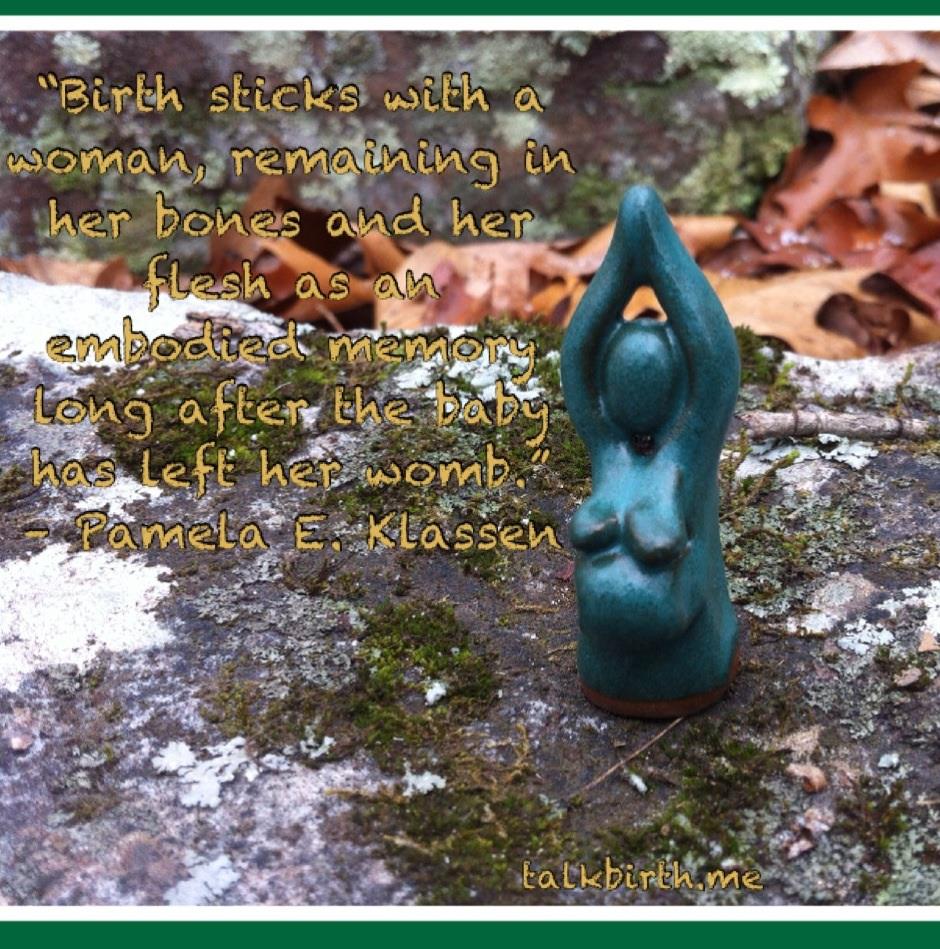
“Birth sticks with a woman, remaining in her bones and her flesh as an embodied memory long after the baby has left her womb.”

– Pamela E. Klassen, in Blessed Events (via Pagan Families)

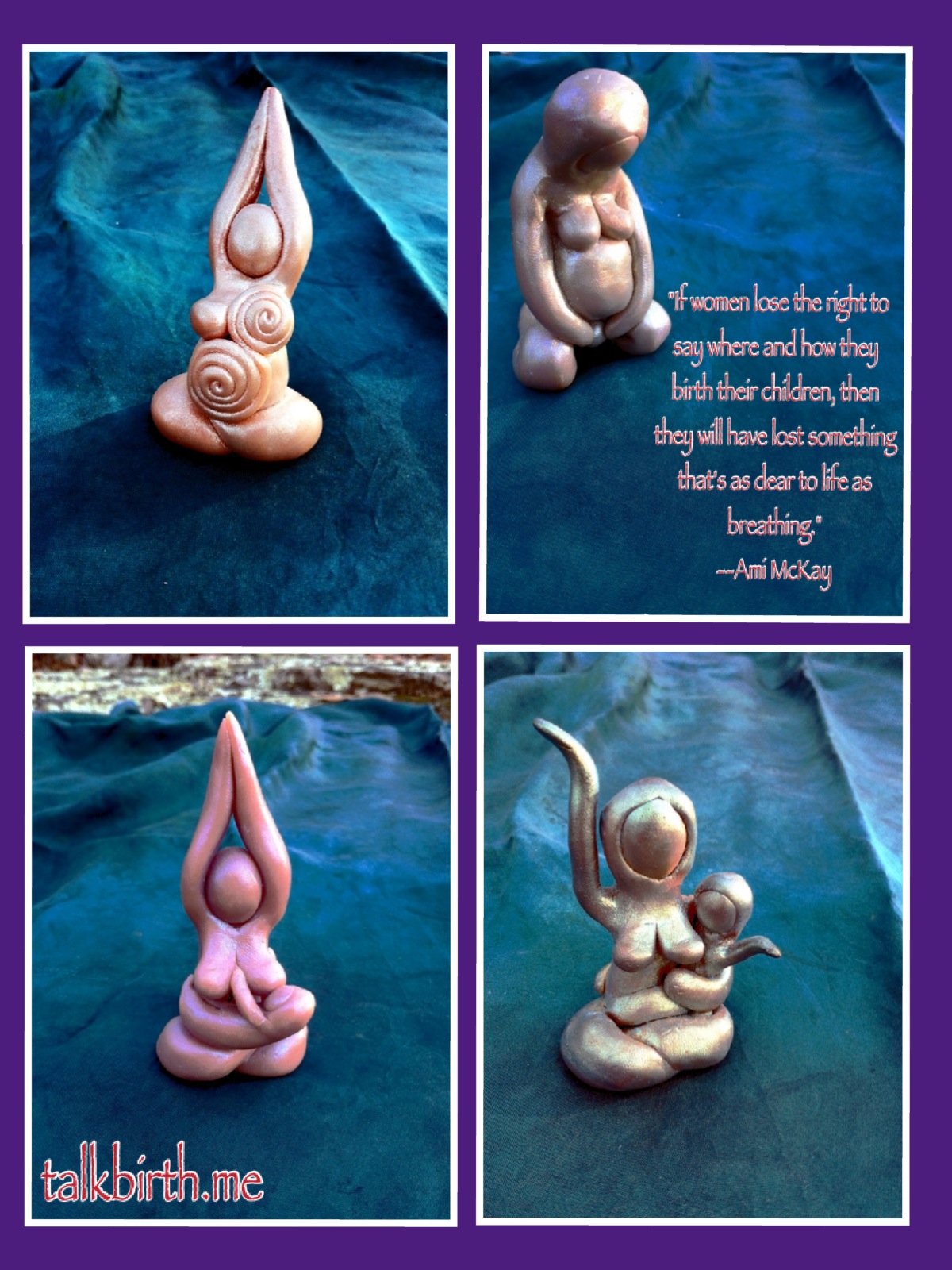
And, I used some of my new art (more about this soon) to make a little graphic with it too…

398124_10152413274040442_130771351_n

Plucking out the heart of mystery

“Birth is a great mystery. Yet, we live in a rational, scientific world that doesn’t allow for mystery. ‘In this day and age, there must be a better way to have a baby,’ implies that if you are informed enough, strong enough, you can control it. Any woman who has given birth, who can be honest, will tell you otherwise. There are no guarantees. It is an uncontrollable experience. Taking care of yourself and being informed and empowered are crucial, but so is surrender. Forget about trying to birth perfectly. Forget about trying to please anyone, least of all your doctor or midwife…” –Jennifer Louden (The Pregnant Woman’s Comfort Book)

Twelve Steps to a Compassionate Life Amazon affiliate link included in text/image.

I’m halfway through a year-long class based on the book Twelve Steps to a Compassionate Life. We’re examining and practicing compassion to ourselves and in personal relationships, community relationships, and to non-humans. The subject of our current month is, “making a place for others.” What does this mean? The author explains…

I began to notice how seldom we “make place for the other” in social interaction. All too often people impose their own experience and beliefs on acquaintances and events, making hurtful, inaccurate, and dismissive snap judgments, not only about individuals but about whole cultures. It often becomes clear, when questioned more closely, that their actual knowledge of the topic under discussion could comfortably be contained on a small postcard. Western society is highly opinionated. Our airwaves are clogged with talk shows, phone-ins, and debates in which people are encouraged to express their views on a wide variety of subjects. This freedom of speech is precious, of course, but do we always know what we are talking about?

Armstrong, Karen (2010-12-28). Twelve Steps to a Compassionate Life (Kindle Locations 1476-1481). Random House, Inc.. Kindle Edition.

I wonder about this sometimes in my own compulsion to blog—am I just adding to the digital cacophony out there, etc. and then that reminded me of a previously shared quote:

“A person who believes too earnestly in [her] own convictions can be dangerous to others, for absence of humor signals a failure in basic humanity.” –Thomas Moore (Original Self)

 Armstrong also makes this important observation:

Hindus acknowledge this when they greet each other by bowing with joined hands to honor the sacred mystery they are encountering. Yet most of us fail to express this reverence for others in our daily lives. All too often we claim omniscience about other people, other nations, other cultures, and even those we claim to love, and our views about them are frequently colored by our own needs, fears, ambitions, and desires.

Armstrong, Karen (2010-12-28). Twelve Steps to a Compassionate Life (Kindle Locations 1596-1599). Random House, Inc.. Kindle Edition.

We all do this so often. I find myself very annoyed when other people play “armchair psychologist” and yet still catch myself doing it as well. I also think about “gossip” and its role in human society. I think curiosity about the lives of others is normal and talking about other people’s behavior and experiences with them is also normal. I am most disturbed when those around me claim seemingly infallible understandings of the motives, characters, and psychology of others (in my classes, I remind students to “separate person from problem” and to “describe behavior rather than character”). It is very common for us not to even understand ourselves, so I find it interesting, frustrating, and surprising that we then seem to think we can have direct understanding of the inner workings and thought-processes of another person. “Instead of discoursing confidently on other people’s motives, intentions, and desires, we should recall the essential ‘mystery’ and realize that there is a certain sacrilege in attempting to ‘pluck out’ its heart to serve an agenda of our own.

What does this have to do with birth?

“Birth is life’s central mystery. No one can predict how a birth may manifest…Our dominant culture is anything but ‘natural’ so it is no surprise that childbirth, even with the most natural lifestyle lived by an individual family, sometimes needs intervention and medical assistance. This is not to say that any one mother’s efforts to have a natural childbirth are futile. Just that birth is bigger than one’s personal desires.” –Jeannine Parvati Baker (in The Goddess Celebrates: An Anthology of Women’s Rituals, p. 215)

When women’s choices are restricted in the birthroom or in access to compatible care providers, we’re plucking out the heart of mystery. When December 2012 073doctors or nurses “let” or “don’t let” a birthing woman do something, they’re plucking out the heart of mystery. When birth activists analyze a woman’s birth story for evidence of why things went “wrong,” we’re plucking out the heart of her rite of passage, of her story. When we fail to acknowledge the sociocultural context of breastfeeding OR when we cannot accept that a mother “couldn’t breastfeed,” we’ve plucked the heart of her mystery. When we need to have or know the “right answer,” chances are, we’re plucking the heart. And, we need to remember that…”Women’s surveillance of other women’s childbirth experiences–in this case, natural childbirth–can shape and constrain the individual choices women make in childbirth in much the same way medicalized assumptions about childbirth can.” (Christa Craven, Pushing for Midwives)
Armstrong goes on to explain…

Third, spend some time trying to define exactly what distinguishes you from everybody else. Delve beneath your everyday consciousness: Do you find your true self—what the Upanishads called the atman? Or does this self constantly elude you? Then ask yourself how you think you can possibly talk so knowingly about the self of other people. As part of your practice of mindfulness, notice how often you contradict yourself and act or speak in a manner that surprises you so that you say, “Now why did I do that?” Try to describe the essence of your personality to somebody else. Write down a list of your qualities, good and bad. And then ask yourself whether it really sums you up. Make a serious attempt to pin down precisely what it is that you love about your partner or a close friend. List that person’s qualities: Is that why you love him? Or is there something about her that you cannot describe? During your mindfulness practice, look around your immediate circle: your family, colleagues, and friends. What do you really know about each and every one of them? What are their deepest fears and hopes? What are their most intimate dreams and fantasies? And how well do you think they really know you?…How many people could say to you that you “pluck out the heart of my mystery”? In your mindfulness practice, notice how often, without thinking, you try to manipulate, control, or exploit others—sometimes in tiny and apparently unimportant ways. How often do you belittle other people in your mind to make them fit your worldview? Notice how upsetting it is when you become aware that somebody is trying to manipulate or control you, or when somebody officiously explains your thoughts and actions to you, plucking out the heart of your mystery…

Armstrong, Karen (2010-12-28). Twelve Steps to a Compassionate Life (Kindle Locations 1644-1658). Random House, Inc.. Kindle Edition.

The irony of the fact that I’ve just filled up a bunch of digital air space with my own opinions, instead of practicing this principle, isn’t lost on me. As I move through this month, in all contexts not just in birthwork, I would like to open more to this “heart of mystery” and to not knowing as well as to avoid the tendency to analyze and “understand” other people. I also wish to be mindful of plucking the heart out of anyone’s mystery—may I be a witness to their mystery and may they feel both seen and heard by me…

“Birth is always the same, yet it is always different. Like a sunset, the mystery is also the appeal to those who get up in the middle of the night to attend laboring women. While the sequence of birth is simple, the nature of the experience is complex and unique to each individual. No matter how much any of us may know about birth, we know nothing about a particular labor and birth until it occurs.” (emphasis mine) –Elizabeth Noble in Childbirth with Insight (previously shared here)
Strong, Strong…

20121121-212301.jpg

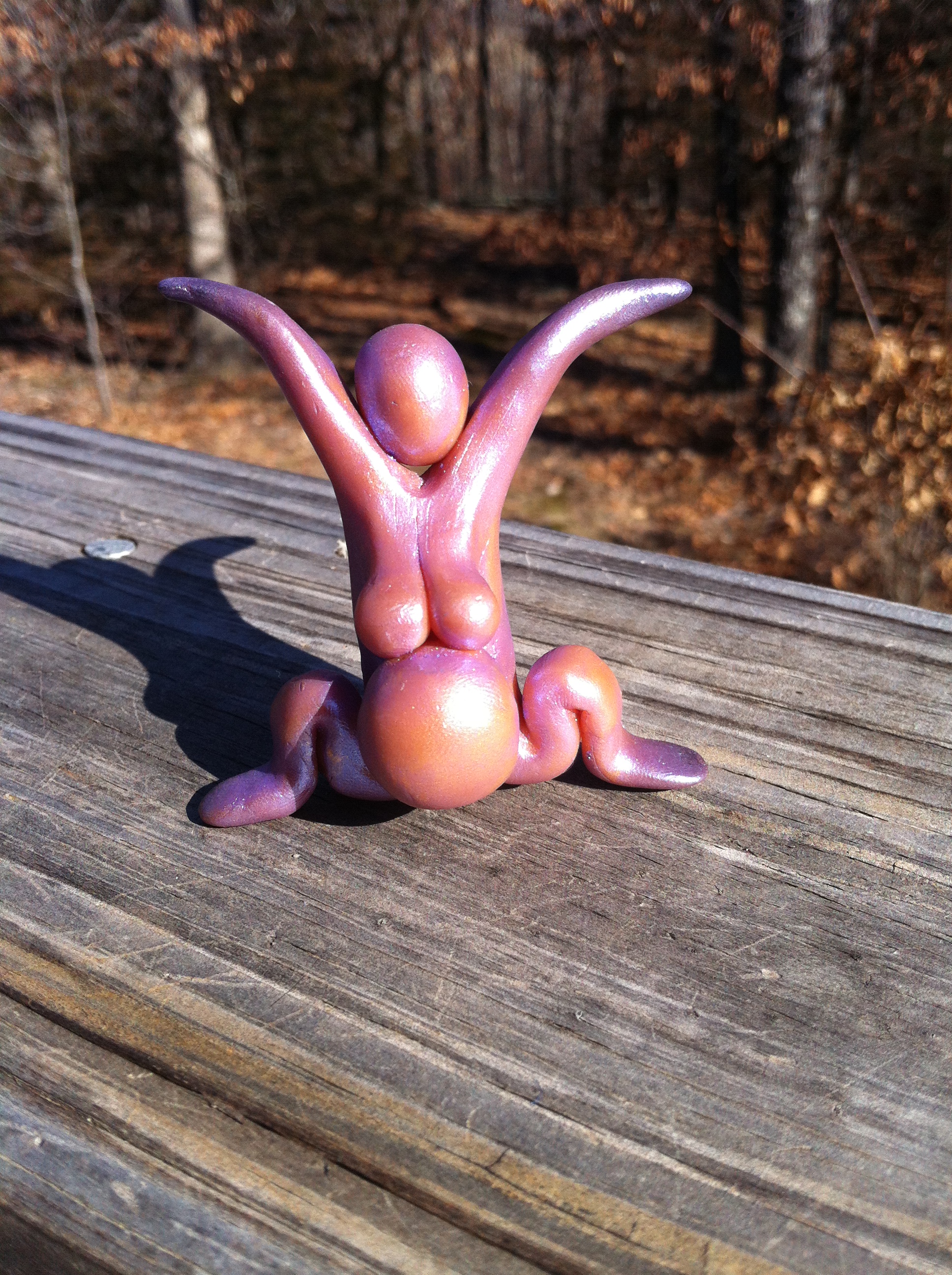
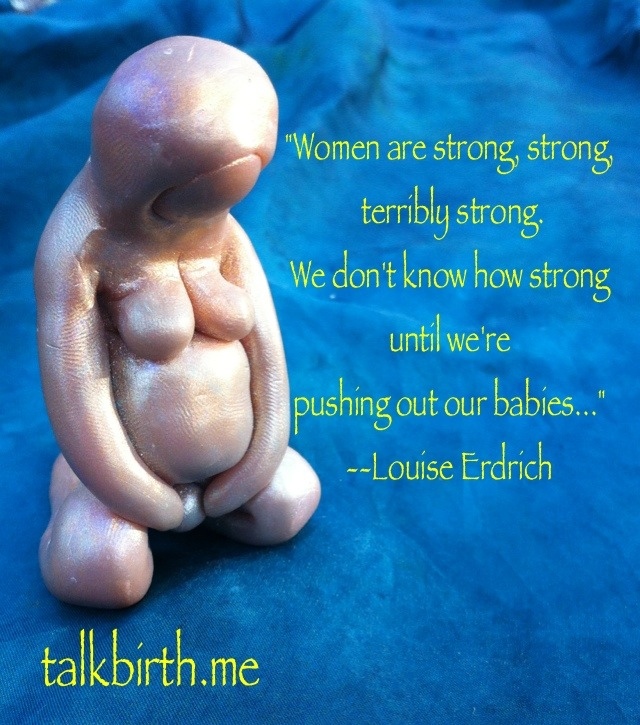
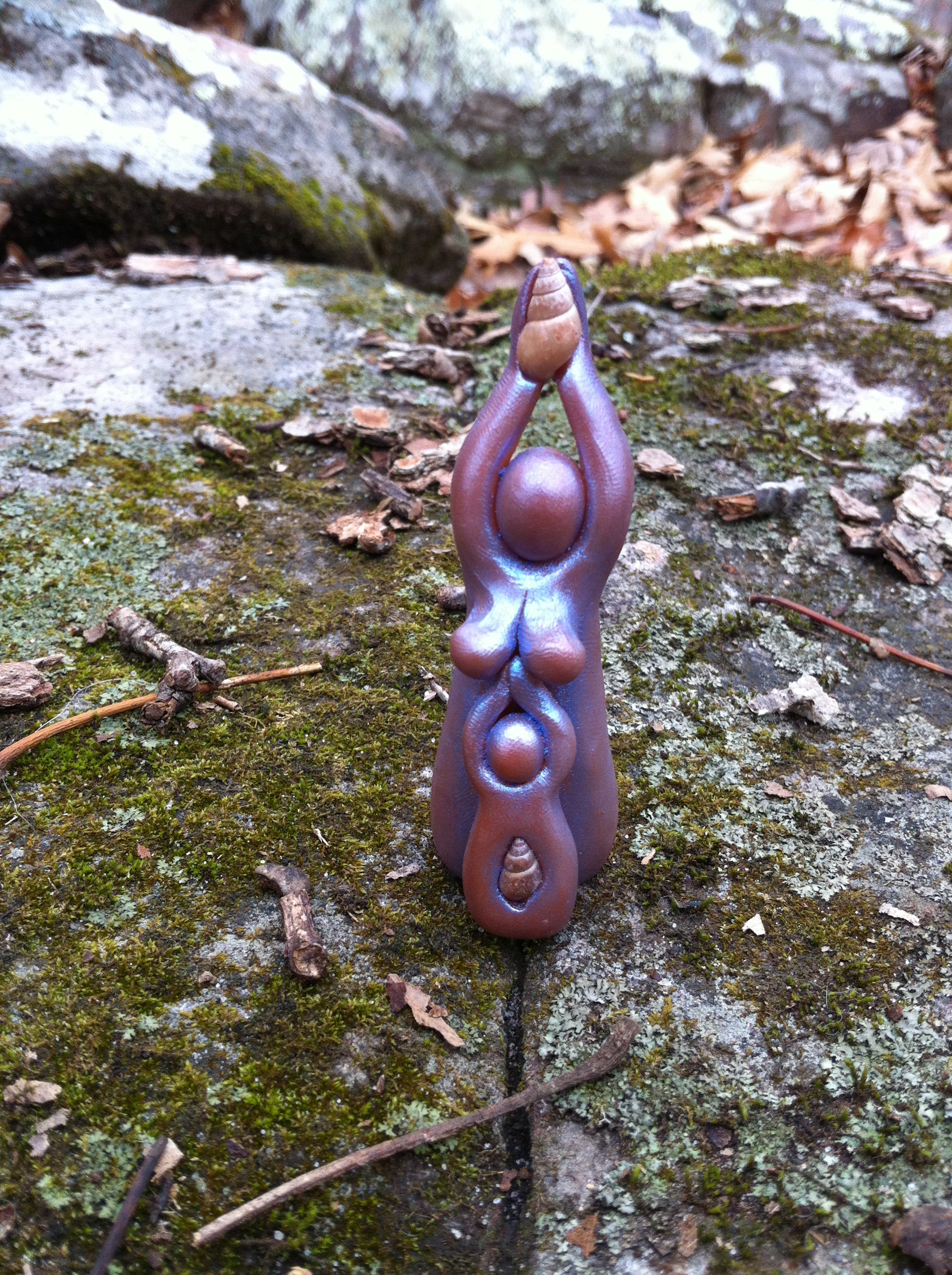
I woke up this morning with this quote running through my head and thinking of a pregnant friend of mine. Since her story is not mine to tell, suffice to say, she had a long and winding road to reach this point and this evening she gave birth at home after having had a cesarean with her first baby! Yay! I’m so excited for her and for their whole family. One part of me just knew she could do it and the other part of me still worried that I was being falsely optimistic. It has happened to me before—that I supported and encouraged and hoped with the mother and despite all those hopes and dreams and wonderful, careful, thoughtful plans, the birth still didn’t go as planned. I also believe that all births are acts of courage and that mothers, whether they push out their babies or not, have the capacity to dig deep and discover strength beyond anything they previously knew. However, just, yay. I’m so happy and excited and relieved for this friend of mine 🙂 The sculpture in the picture is the birth art piece I made after I actually gave birth to my last baby. She captures the pose in which I caught my daughter. My previous photo with this quote was of the pre-birth sculpture I’d made to address my pushing-the-baby-out fears:

Still figuring out the pictures with words app that I got. I love my nature spots in the woods as backgrounds, but they’re too busy and make choosing a text color that actually works almost impossible!

Childbirth is power in its purest and most natural form–it is wild and uncontrollable and takes us on a journey of surrender. Birth is about so much more than babies being born. It is about a mother finding her inner strength at her most vulnerable and powerful moment, which begins her unique and lifelong journey of mothering that child.”

–Brianna Kauer (in Midwifery Today, issue 103)

And, speaking of thankful birthy goodness, Thanksgiving is tomorrow and that reminded me of an earlier post about the rest and be thankful stage!

I also would like to mention that I have a Talk Birth topic on ScoopIt now. I primarily started it so that it could handily feed into my Talk Birth Facebook, while still leaving a more useable record for me to go back to/repost (things just kind of disappear off the page on Facebook and it can be hard to remember what the heck I’ve shared there if I then want to do a blog post about it). I was introduced to ScoopIt via LinkedIn when I started following a really well-curated topic about E-Learning and Online Teaching. There are very, very few birth-related topics on ScoopIt, so start curating one! It is fun and easy and, as I said, really handy for feeding content into your Facebook page or other media (I experimented yesterday with sending a post directly to WordPress and that worked too!)

I’m also thankful for several days at home to spend with my family and without a long to-do list. I have one final paper to grade tonight and then my calendar is pretty deliciously blank for the next four days! We can really use this. I need a stillpoint, a rest, and some time to spend on the fun things I want to do like wallow in piles of books and make fabulous new sculptures and go sit out in the woods and…and…and…

Thankful for all these people too! And, also thankful for fab new pictures from recent photo session with my friend 🙂

The Birthing Dance

I saw this post go by on Facebook during the week and saved it to share, because it would make a nice mother blessing poem to share with a pregnant mama:

The Birthing Dance

Come to me, My Child
Secret longing of my inner heart
Breath of spirit
Wandering the cosmos

Choosing your next lifepath
Seeking sanctuary in my womb
Visions of you stir my dreams
Your gentle essence drifting inward
Merging into matter
Coming into consciousness
Birthing into being
Your tender wisdom speaks
The ancient knowledge
of a mother’s power
Our bodies grow together
Two as one
Turning round, in birthing dance
You lead me
Opening the circle corridor
Descending into unhindered ecstasy
Into my arms

Women’s Retreat Recipe

Quarterly, I get together with some of my friends and we have a women’s retreat. We had our summer retreat this past Sunday and I thought I’d share the outline and our activities as a “retreat recipe” that others may use if they wish to do so. Since my friends do not necessarily share specific religious beliefs, the retreats are spiritual in a somewhat generic “womanspirit” sort of way and you can obviously customize your own retreat to best suit the spiritual beliefs/backgrounds of your own friendship group.

Circle up—we stand in a circle, place our hands on eachother’s backs and hum together three times to raise the energy of the circle.

Invocation to directions. This time we used an invocation by Judith Laura:

We honor the East
Home of air
March wind
Morning’s song
Eagle’s flight
Aurora’s breath
Welcome East

We honor the South
Home of fire
Noon sun
Flame of change
Heat of passion
Pele’s power
Welcome South

We honor the West
Home of water
River’s flow
Font of feelings
World’s womb
Kwan Yin’s love
Welcome West

We honor the North
Home of Earth
Root of life
Shaded mystery
Ground of being
Gaia’s growth
Welcome North.

Light candle/opening quote

“I see the wise woman. And she sees me. She smiles

from shrines in thousands of places. She is buried

in the ground of every country. She flows in every

river and pulses in the oceans. The wise woman’s

robe flows down your back, centering you in the

ever-changing, ever-spiraling mystery.

Everywhere I look, the wise woman looks back.

And she smiles.”

–Susun Weed quoted in Birthing Ourselves Into Being

Check-in–we take turns “passing the rattle” and each woman has about two minutes to share what’s been on her mind.

Since we are close to summer solstice, I then chose to do this solstice prayer of healing from the United Nations as a responsive reading as a group:

A Prayer of Healing
From the United Nations Environmental Sabbath

We join with the earth and with each other.
To celebrate the seas.
To rejoice the sunlight.
To sing the song of the stars.

We join with the earth and with each other.
To recall our destiny.
To renew our spirits.
To reinvigorate our bodies.

We join with the earth and with each other.
To create the human community.
To promote justice and peace.
To remember our children.

We join together as many and diverse expressions of one loving mystery: for the healing of the earth and the renewal of all life. We join with the earth and with each other.
To bring new life to the land.
To restore the waters.
To refresh the air.

We join with the earth and with each other.
To renew the forests.
To care for the plants.
To protect the creatures.

Guided visualization/meditation/relaxation (for this particular retreat, I used a nice full body relaxation from the book Birthing Ourselves into Being. This one isn’t available online that I can find, but you can find others online, like this one for example.)

We followed the relaxation with a muse questions and journaling using one of the questions from Shiloh Sophia’s Museletter:

Your Muse would like to show you something you haven’t been able to see.

She wants to invite you to have a thought you haven’t had yet…isn’t that an enticing thought in and of itself?

A thought that has lingered on the edge of your consciousness for maybe even a few years, or months….tell her…

I want to know what it is I am not seeing.

Then automatic write whatever comes up until you have to put the pen down.

Immediately following this question, it began to rain. Blissful, blessed, healing, glorious rain for which we were in so much need.

Discuss responses/experiences to relaxation/journaling.

Listen to songs/perhaps drum (this time, went outside together and stood in the rain)

Closing circle: Sing Woman Am I (recording of my friends singing it together is here).

Closing quote and extinguish candle

“A circle! No sharp edges, no hierarchy, just a circle of women…We are mothers. We are the portals. The next generation comes through our bodies.” –Annie Lennox

and one of my all-time favorites:

“I believe that these circles of women around us weave invisible nets of love that carry us when we’re weak and sing with us when we’re strong.” –SARK, Succulent Wild Woman

When reading a 1988 back issue of SageWoman magazine, I fell in love with Womanrunes by Shekhinah Mountainwater (originally in her book Ariadne’s Thread, which I then purchased) and so I made copies of the images to share with my friends. We are going to make some sets of runes at our next retreat. (And, after much scouring of the interwebz, I found a pronunciation guide for the runes here).

I also made a handout packet for them of various moon wheels/circular calendars for tracking your cycles, or simply for planning and thinking in circles rather than in lines. In the packets were:

And, then it was time for a craft, so as we snacked and chatted, I showed everyone how to make a small, hardbound pocket journal. You can find instructions for a simple book here, or, to make it even more simple, use this kit from Blick Art Supplies.

It was a delightful afternoon of connection and celebration—my original vision for holding these retreats was to bring some blessingway spirit into our regular lives, rather than only centered on being pregnant and I think that purpose was achieved.

This post is crossposted at Woodspriestess.

Birth Culture

Birth is cultural, the way eating is cultural. We don’t just eat what our bodies need to sustain us. If we only did that, there would be no reason for birthday cake. Birthday cake is part of our food culture. The place you are giving birth in has a local culture as well. It also partakes of our national birth culture. Not everything doctors do regarding birth makes the birth faster or physically easier for you or the baby. Some things are just cultural. For example, most hospitals do not offer enemas to birthing women anymore, yet a few years ago, most women who labored in hospitals were required to have an enema whether they wanted one or not. Enemas are sometimes helpful at birth, but not always…But they used to be part of the birthing culture… –Jan Mallack & Teresa Bailey in (p. 32)

I don’t feel like I have time to construct a big blog post about this subject, but I’ve been having big thoughts lately about birth culture and also how we think about and treat women’s bodies in pregnancy, labor, birth, and postpartum. So, this collection of quotes will have to do for now!

In the short book Birth on the Labyrinth Path by Sarah Whedon, I also marked this passage to share: “In the context of modern medicine, the childbearing year is often treated as a healthcare problem and we are alienated from the natural and holy processes of our reproductive bodies. Let us seek more and more ways to reframe pregnancy as a natural part of the human experience and to honor the holiness of this work that brings a pure and tiny spark of the divine into the messy, beautiful drama of life on Earth. Let us guard mothers, fathers, and babies as they grow families. Let us celebrate our sexy, dangerous, bloody, beautiful ability as people to make and love more people…” (emphasis mine)

Later on, Whedon makes these lovely observations about postpartum bodies:

A body that is curvier than it was before, maybe bearing stretch marks or scars from surgical procedures or tearing, maybe producing milk, is a body that bears the signs of delivering a human being into this world. We may mourn our smooth, skinny, unmarked maiden bodies, but at the same time we can celebrate the beauty of our storied, productive, and strong mama bodies….
—-
You may have seen images of new mothers as mama goddesses, resplendent in their fertility, effortlessly suckling a new babe while woodland creatures graze nearby. This is a lovely scene to aspire to, but my personal experience is that new mama goddesses are more likely to be found pinned to a couch by a ravenous infant, wearing pajamas and a messy ponytail, and surrounded by the remains of hastily grabbed snacks and partially read motherhood memoirs. Those mamas are no less goddesses. In fact, a careful Pagan theology of embodiment will recognize that the true mama goddess must include the range of experience of new motherhood, with all the sleepless nights, messy lochia, and milky-sweet sleeping babes.”

I also came across this quote from Sister MorningStar in the Spring 2011 issue of Midwifery Today: “Every mother has a culture. Every mother is a culture. She is born into an ocean of language, traditions and rituals around how she eats, sleeps, poops, makes love or births a baby.”

And, then from Ani DiFranco’s great introduction to Birth Matters: How What We Don’t Know About Nature, Bodies, and Surgery Can Hurt Us by Ina May Gaskin:
“The pains associated with menstruation and childbirth (even the emotional pain) are the price of having agency with the bloody, pulsing, volcanic divinity of creation, and they lie at the core of feminine wisdom. The literal experience of my body is your body your blood is my blood holds great insight into the way of things. A self-possessed woman in childbirth can be a powerful teacher for all (including herself) on the temporality, humility, and connectedness of life.”
I honestly believe that if modern birth culture rested in perspectives like this, our whole world would change!