Archives

Softening for Birth…

I’ve mentioned a couple of time before how much I enjoy The Pink Kit as a resource for birthing couples. This resource has been available for a number of years, but I only bought a copy two years ago. It rapidly became one of my favorite resources! I continue to find new and useful information within the Kit and I really recommend it. It covers very basic, “common knowledge” information and brings it all together in a useful way. There is a heavy emphasis on knowing your body and how it moves and works and on pelvic bodywork. The Pink Kit consists of a DVD, a book, and three more pdf companion books.

An example from the book: “Modern culture often teaches us to be ‘tight’…trim, taut, and terrific! But there is a difference between being fit and well-exercised and having a ‘tight’ body. We understand the need to stay ‘fit’ at this time, but we would also like to encourage you to soften yourself, in preparation for mothering and nurturing your baby. Soften your viewpoint, soften your body, surrender to this awe-inspiring event. We can assure you that in this way, you will be preparing yourself not only for labour, but for the days and years afterward…”

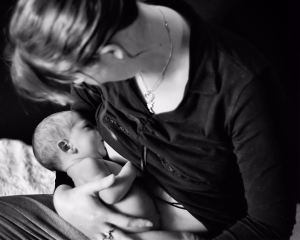
(c) Sincerely Yours Photography

Nursing my baby!

I love this idea of becoming softer in preparation for baby! I also think breastfeeding keeps you “soft”—I know that as I spend time being on many tasks during the day, when I sit down to nurse Alaina I can physically feel my muscles (and mind) loosening and becoming softer. This is one of the gifts that breastfeeding brings.

Review: A Book for Midwives

Review: A Book for Midwives
Hesperian Foundation
CD-Rom, 2011
544 page pdf book in English and Spanish
by Susan Klein, Suellen Miller, and Fiona Thomson
ISBN13: 978-0942364-24-8, $16.00
www.hesperian.org

Reviewed by Molly Remer, MSW, ICCE
https://talkbirth.wordpress.com

As a child, I was fascinated by my father’s copy of the book, Where There is No Doctor. Fast forward twenty or so years and imagine my glee when as a birth activist adult, I then discovered A Book for Midwives, also published by the Hesperian Foundation. Hesperian’s goal “is to promote health and self-determination in poor communities throughout the world by making health information accessible. [They] work toward that goal by producing books and other educational resources for community-based health.” In keeping with this goal, A Book for Midwives is available for FREE download on the Hesperian site. (Personally, I appreciate the professionally printed version of the book I purchased, because I think it would cost more same in ink to print it myself, but without the nice cover!).

A Book for Midwives is excellent; a true community resource. It is also a very sobering look at the reality of women’s health and health care in other countries. It contains reminders such as “do not hit or slap a woman in labor,” and other things that can make you cringe. A Book for Midwives is basically a textbook for midwives, health care workers, or educators working in developing countries and/or with very limited resources. I appreciate how it makes information available that is sometimes “hidden” in other books–i.e. explicitly technical content and “how to’s” that are normally reserved only for “professional” people. It is simply written and extremely blunt. There is no fluff and nothing romanticized about pregnancy, labor, and birth. In a way, it was hard to read a book that makes it so very clear how very, very difficult things are for midwives and women in impoverished areas (living in the US, I am used to the “normal, healthy pregnant women” approach to midwifery care). The book covers a wide range of information from preventing infection, treating obstetrical emergencies, doing pelvic exams, and breastfeeding to HIV/AIDS, testing for STDs and cervical cancer, and IUD insertion. There is also a section in the back of the book about medications, medication administration, giving injections, and other topics. It is an extremely comprehensive resource. (Just a side note, in the section on contraceptives, the book is heavily in favor of hormonal methods such as pills as well as very positive about IUDs and sterilization.)

Recently, Hesperian made A Book for Midwives available for purchase on CD. The CD includes the 544 page book as a pdf file in both English and Spanish. Both high resolution and low resolution versions of the book (in both languages) are included on the disk. This format makes it easy for the book to travel with you via laptop for trainings or presentations. I was particularly excited to convert it for my Kindle, making it readily available for travel and reference.


Disclosure: I received a complimentary copy of the CD for review purposes.

Six Healthy Birth Practices Handout

Lamaze’s Six Healthy Birth Practices are one of my favorites resources when discussing birth plans in my classes. I find that some materials about birth planning on the internet are unnecessarily cumbersome (while simultaneously being very “cookie cutter”). As I tell my clients, the Six Healthy Birth Practices provide an absolutely phenomenal “basic” birth plan and concisely cover each element of a healthy birth. I suggest using them as a foundation for any birth plan the client plans to write. For use in my own classes, I created a one page handout briefly summarizing the practices: Six Healthy Birth Practices. At the bottom of the handout, I also include my own even simpler summary of the information. I just love them and think they should be the core of any class that serves women planning hospital births. Seriously, what women deserve in a birth environment can be summed up in six, clear sentences! How practical.

I also absolutely LOVE the video based on the practices that is available from Injoy. It is extremely affordable (I actually own three copies of it!). It is very concise and clear (just like the practices themselves) and I love how it shows women in a hospital environment, getting their needs met and having satisfying births. While I personally choose homebirth for myself and am a big advocate of homebirth, at least 90% of my clients are planning hospital births and deserve information and resources that support healthy, satisfying births in the environment they have chosen. I have a variety of great videos in my library, but many of them focus on homebirth and I think the message this sends to clients is—“good birth = homebirth.” While that feels personally true for me, it isn’t actually the message I want to share with my clients—I want to share my enthusiasm for birth, period, and to help them discover resources and plans for having a beautiful birth in any setting. I want to communicate to them that they deserve access to these healthy birth practices in the hospital and I hope we can create a birthing world in which all women can expect to have access to these practices in any setting. So, I like how this video shows women getting their needs met within in a hospital setting.

Additionally, the videos are available for free, practice by practice, on the Mother’s Advocate site, which also includes a variety of accompanying handouts to print.

And, again, here is my own handout for use during birth classes: Six Healthy Birth Practices.

I know I sound like a “commercial” for Lamaze’s Birth Practices and though I am a Lamaze member, I am actually certified with other organizations (ICEA and CAPPA). I think it is important that childbirth educators not limit themselves only to the materials and information provided by their own certifying organization and instead seek out excellent materials from a variety of the wonderful organizations that exist to support birthing women!

Handouts for Birth Booths

A frequent topic on email lists for birth professionals is good handouts/resources for booths at maternity or baby fairs. Rather  than making copies of materials or creating my own handouts (reinventing the wheel in a less-professional looking way!),  I am a fan of using glossy, professionally printed, but still very low cost stuff for tables and also a fan of materials that address good maternity care in general. My top faves for having on a booth or as handouts are:

DVD Review: The HUG: Understanding the Secret Language of the Newborn

DVD Review: The HUG: Understanding the Secret Language of the Newborn
Created by Jan Tedder, 2010
21 minutes, $25
http://www.hugyourbaby.org/

Reviewed by Molly Remer, MSW, ICCE
https://talkbirth.wordpress.com

Developed by a nurse-practitioner to help educate new parents,  HUG stands for “help, understanding, guidance for young families.” In this short, informative DVD, parents learn about the baby’s ability to use distinct body language to communicate its needs and emotional states. Short sections showing real newborns with their parents address calming a crying baby, helping baby eat and sleep well, and playing with baby. It is helpful to see footage of real babies that illustrate a baby’s “Zones” and SOS cues (“Sign of Overstimulation”). The families shown are ethnically diverse.

The information provided on The HUG is very simple and basic. It is nurturing, empowering, and clearly presented. Mentions of breastfeeding communicate that it is the normal and expected way to feed babies. The HUG is a good resource for people who have little previous experiences with newborns or for birth/postpartum professionals looking for ideas about communicating newborn behavior to new parents.

Most new parents are eager to learn about more than just the “baby basics” newborn care such as diapering and bathing. The HUG takes parents into more meaningful territory and helps them learn about their baby’s special communication abilities.

Disclosure: I received a complimentary copy of this DVD for review purposes.

Responsive Readings for Women’s Rituals

As I noted in my previous post, I’m choosing some readings for an upcoming women’s retreat. Our theme for the spring is “personal power” and so these responsive readings from the book Readings for Women’s Programs by Meg Bowman and Connie Springer seemed perfect to me. The capitalized (or italicized) sections are read in unison by the group and the non-capitalized/italicized sections are read by the facilitator. I think they could work for any type of women’s ceremony (blessingways, etc.):

Self-Love

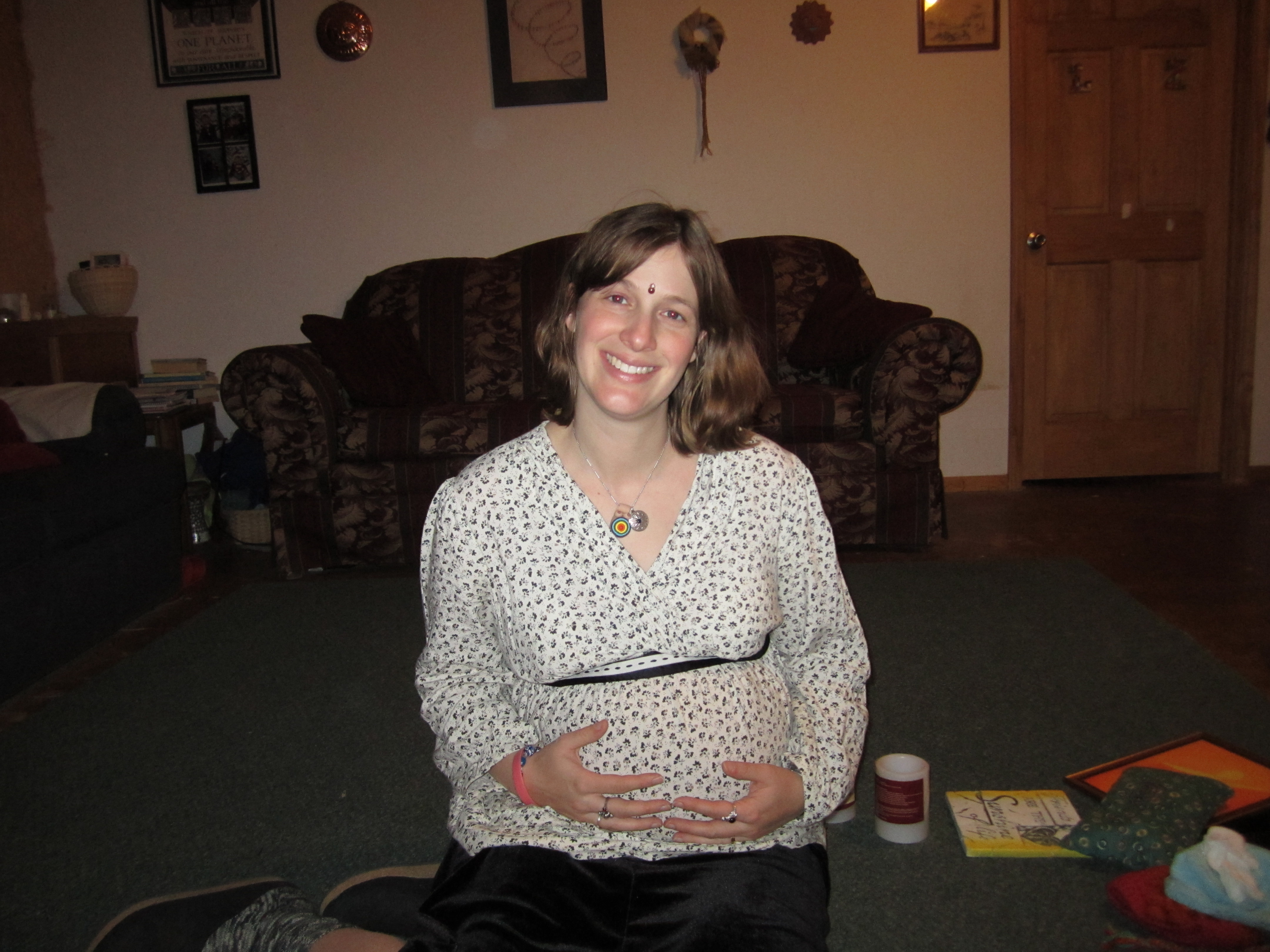
At my blessingway for my second son, May 2006

Self-love is respecting my own uniqueness,

my creativity and my talents.

LEARNING NEW SKILLS,

BEING ASSERTIVE

HAVING CONFIDENCE IN MY ABILITIES

Self-love is acknowledging my good qualities

and following my own guidelines.

SURROUNDING MYSELF WITH PEOPLE

WHO NOURISH ME AND ENHANCE MY SELF-ESTEEM.

Self-love is taking time to enjoy each day.

SURROUNDING MYSELF WITH COLORS AND BEAUTY,

GIVING PLEASURE WITHOUT GUILT

KNOWING THAT I DESERVE THE BEST

Self-love is loving and respecting my body.

REALLY TAKING CARE OF MYSELF

PHYSICALLY AND EMOTIONALLY,

GENTLY AND LOVINGLY

Self-love is seeing myself equal to others,

accepting myself and letting myself win.

NEVER PUNISHING MYSELF

OR HARMING OTHERS

TURNING MY NEGATIVE THOUGHTS

INTO POSITIVE ONES.

The more I love myself,

the more I can love others

and the more others will return my love.

SELF-LOVE

IS BEING MYSELF

AND ENJOYING MY LIFE.

Blessed be.

—-

To Be

BE healthy enough

To live each day to the fullest

BE strong enough

To know that I cannot do everything alone.

BE wise enough

To realize I don’t know everything

BE courageous enough

To speak my mind and to change my mind

BE understanding enough

To listen to those with differing views

BE secure enough

To reveal my own unique personality

BE generous enough

To assist those who need my help

BE frugal enough

To take care of my own needs

BE realistic enough

To let go of the past and live in the present

And above all, BE loving enough

To BE loved

To BE happy

To BE whole

To BE myself.

Blessed Be.

Blessingway Readings & Chants

I’m looking through my files to choose a reading for a mother blessing this weekend as well as choosing readings for a women’s retreat this weekend. Anyway, I felt like sharing some of them here for people who might be googling around looking for something to share at a blessingway:

From the book Joyful Birth: A Spiritual Path to Motherhood by Susan Piver

The path of motherhood has a beginning, but no end. It’s constantly changing and constantly challenging. Along the way, we encounter our personal limits over and over. We fall in love over and over. We ride the sharp edge of hope and fear. On this path of discovery, as on any spiritual path, our pretensions are shattered, our minds are blown, and our hearts are opened. We cry, we laugh, we bumble around and make countless mistakes. Through it all, we are gently—or abruptly—poked into greater honesty, lovingkindness, and understanding. It is a truly joyful path.

The memory of [my child’s] birth has become a talisman that I hold in my heart as I journey deeper and deeper into motherhood. For these moments come again in every mother’s life—the times when we are asked to walk straight into our pain and fear, and in doing so, open up to a love that is greater than anything we ever could have imagined: all life’s beauty and wonder, as well as all the ways that things can break and go wrong…Again and again, motherhood demands that we break through our limitations, that we split our hearts open to make room for something that may be more than we thought we could bear. In that sense, the labor with which we give birth is simply a rehearsal for something we mothers must do over and over: turn ourselves inside out, and then let go.

This is the reading we often use for symbolically summoning the four directions. It is from the book  Mother Rising: The Blessingway Journey into Motherhood:

Blessed be this gathering with the gifts of the East: communication of the heart, mind, and body; fresh beginnings with each rising of the sun; the knowledge of the growth found in sharing silences.

Blessed be this gathering with the gifts of the South: warmth of hearth and home; the heat of the heart’s passion; the light to illuminate the darkest of times.

Blessed be this gathering with the gifts of the West: the lake’s deep commitments; the river’s swift excitement; the sea’s breadth of knowing.

Blessed be this gathering with the gifts of the North: firm foundation on which to build; fertile fields to enrich our lives; a stable home to which we may always return.

From previous posts here is:

After my blessingway with baby girl, January 2011

A birth blessing

Full moon poem

Courage reading

Fear release for birth

Birth warrior affirmation

Two birth poems

Birthing poem

And, finally, here is a handout of the chants we often use. It is formatted with the chants in two columns so it can be cut in half to distribute.

Planning for Postpartum

I have been meaning to share this article on my blog for a long time. Now that I’m rapidly approaching another “babymoon,” it feels like a most excellent time to review my own reminders about planning for postpartum!

—-

Planning for Postpartum

By Molly Remer, MSW, ICCE, CCCE

Originally published in The Journal of Attachment Parenting, 2008.

When my first baby was born in 2003, I had a made a classic new mother error—I spent a lot of time preparing for the birth, but not much time truly preparing for life with a new baby.

I had regularly attended La Leche League (LLL) meetings since halfway through my pregnancy and thought I was prepared for “nursing all the time” and having my life focus around my baby’s needs. However, the actual experience of postpartum slapped me in the face and brought me to my knees.

My son’s birth was a joyous, empowering, triumphant experience, but postpartum was one of the most challenging and painful times in my life. I had not given myself permission to rest, heal, and discover. Instead, I felt intense internal pressure to “perform.” I wondered where my old life had gone and I no longer felt like a “real person.” A painful postpartum infection and a difficult healing process with a tear in an unusual location, left me feeling like an invalid—I had imagined caring for my new baby with my normal (high) energy level, not feeling wounded, weak, and depleted. And yet, at five days postpartum I was at the grocery store, at seven days at the post office resuming shipments for my small online business, at two weeks attending meetings and fulfilling responsibilities with an organization (though I still had difficulty walking normally due to pain), at six weeks hostessing at a fundraising ball, and at eight weeks teaching a volunteer training workshop. In retrospect, I have no regrets about how I cared for my baby. He was always with me and I was sensitive to and responsive to his needs. What I regret is how I cared for myself, what I expected from myself, the demands I placed upon myself, and how I treated myself.

I actually slightly delayed having a second child, not for fear of mothering two, but for fear of experiencing the overwhelm of postpartum again.

In 2006, I gave birth to my second son at home. This time I had planned realistically and specifically for a “babymoon.” My husband took four weeks off of work and I stayed at home for the majority of the first month of life with my new baby. Though I again experienced an unfortunate tear and a painful recovery from it (which was still much quicker and less traumatic than the first time) and also some rapidly shifting mood changes along with some tears and anxiety, I look back on this time with my second son with fondness instead of regret. Instead of rushing to rejoin the world, I allowed myself the time, space, and permission to rest and cocoon, knowing that I would be “real” again soon enough.

Reflecting on my two postpartum experiences leads me to offer the following suggestions for postpartum planning:

  • Try to minimize your out of home commitments in advance. Put a hold on projects and “retire” from committees and responsibilities. I joke that with my first baby I thought I needed to get my responsibilities squared away for six weeks and with my second I realized I needed to try to get them squared away for two years.
  • Have a good book on hand about postpartum. When my first baby was born, I was well stocked with baby care and breastfeeding books, but none about the transition into motherhood. My favorite postpartum book is After the Baby’s Birth by Robin Lim. It offers such gems as, “you’re postpartum for the rest of your life” and “when the tears flow, the milk will flow” (with regard to the third day postpartum). Other good postpartum readings are The Post Pregnancy Handbook by Sylvia Brown and The Year After Childbirth by Sheila Kitzinger. A classic for support people is Mothering the New Mother by Sally Placksin.
  • Prepare and freeze a lot of food in advance. Batches of nutritious muffins are a favorite of mine—freeze them and the reheat one as needed for a quick breakfast or snack. These are great for nursing mothers!
  • Plans to spend three to seven days just in bed with your baby. Skin-to-skin is even better.
  • Everyone is familiar with the “sleep when the baby sleeps” advice, but even if you don’t feel the need to sleep, stay in bed and use the quiet time for reflection or to read or write in your journal. Rest is definitely essential every day, but it doesn’t have to be actual sleep to be restorative.
  • If you have other children, arrange for plenty of help caring for them. Do not feel like you “should” be able to handle them all right away. Of course, you could do it if you had to, but you and your new baby will benefit from an extended period of cocooning together. Plan quiet projects that you can do in bed with your older child while the new baby sleeps (a favorite with my older son was making puppets and masks out of felt. I cut them out while still lying down. He actually started calling our bed the “party deck” because we did lots of fun projects there while I was resting with the new baby. I have no idea where he got the phrase!).
  • Give yourself permission to rest and be off duty.
  • When people ask what they can do to help, give them a specific task (go grocery shopping, pick up pictures, bring me dinner, etc.).
  • Ease back into “real life.” Resist the temptation to catch up with email and so forth. Respond to email or phone requests for time or help with a firm, “I just had a baby and I’m not available right now.”
  • Become comfortable asking for help (I vastly prefer being the helper to being the helped and this is particularly hard for me).
  • Similar to a birth plan, make a written postpartum plan that includes a list of the people in your support network, arrangements for help with household duties (or a plan for what can be left undone), people to call for meals, and so forth. List what each person is willing to do—laundry, grocery shopping, cleaning, childcare, meal preparation (notice that “holding the baby so you can work” isn’t on the list!). An example postpartum plan is available on DONA International’s website.
  • If you have relatives coming to help after the baby is born, make sure they know that their job is to take care of you and the house while you take care of the baby. It is not acceptable for you to be fixing meals and sweeping floors while grandma “helpfully” rocks the baby—it needs to be vice versa!
  • Prepare your partner and anyone else in your support network that you will be Queen for a Month and let them know what you will need from them (also, get it fixed in your mind that being Queen is okay!).
  • Expect to be “nursing all day long.” It is okay and good for you both (10-14 nursings in 24 hours is perfectly normal and acceptable!).
  • Encourage your partner to take as much time off as possible—either saved up vacation time or unpaid FMLA time. He can benefit from an extended period of cocooning with his newborn too!
  • Explore the idea that postpartum can be a time of postpartum expression rather than postpartum depression—letting all of your emotions flow, expressing your needs clearly and assertively, and being aware of and accepting of your continuum of feelings are ways to be expressive. (This concept comes from the excellent, but little known book Transformation Through Birth by Claudia Panuthos.)
  • Plan a few special things for yourself—have a little present for yourself to enjoy during postpartum (a new book, good magazine, postnatal massage, whatever is self-nurturing and brings you pleasure. Personally, I do not encourage TV or movie watching because it can become a passive time filler that distracts you from enjoying your babymoon. Some people may include favorite films as their enjoyable postpartum activities though).
  • As postpartum stretches on, if you experience decreased libido, it is okay to honor and accept that.

Planning for a restful, nurturing, “time out” with your new baby is way to honor this new stage in your family’s life cycle and a way to honor yourself as a woman and mother. I hope you will create space in your life for a time in which vulnerability is accepted. Postpartum is a time of openness—heart, body, and mind. I hope your experience is one of tenderness and joy.

Molly Remer, MSW, ICCE, CCCE is a certified birth educator and activist. She is editor of the Friends of Missouri Midwives newsletter, a breastfeeding counselor, and the mother of two young sons and a baby girl on the way. She loves to write and blogs about birth at http://talkbirth.me, midwifery at http://cfmidwifery.blogspot.com, and miscarriage at http://tinyfootprintsonmyheart.wordpress.com.

This is a preprint of Planning for the Postpartum Period an article published in The Journal of Attachment Parenting Volume 11, Issue 1, pp 28-29. Copyright © 2008 Attachment Parenting International. API’s website is located at: http://www.attachmentparenting.org.
Book Review: The Power of Women

Tonight I realized I apparently never posted my review of The Power of Women to this blog, but instead had it only on the CfM blog. Since I love the book, I decided to remedy the situation immediately!

The Power of Women
By Sister MorningStar
Motherbaby Press, 2009
ISBN 978-1-890446-43-7
201 pages, paperback, $29.95
http://motherbabypress.com/

Reviewed by Molly Remer, MSW, ICCE
https://talkbirth.wordpress.com

Occasionally, a book comes into my life that touches me so deeply that I am at a loss for words. The new book, The Power of Women, by Sister MorningStar, is one of those rare books. A treasure. A gem. A rare jewel. A delight. These are the words that do come to mind. However, superlatives—though true—do little justice to describing the actual book.

The Power of Women is a book of “instinctual” birth stories told through the eyes of a gifted and sensitive midwife. The stories are from her perspective, not the mother’s. Each story has either a lesson to share or is a glimpse into that deep inner wisdom and strength found in birthing women that is so easily ignored or dismissed in our modern birth culture. This book is good “word medicine” and the empowering stories within it shine a light to help other women trust their instincts. This light also helps other birth professionals rediscover the magic and mystery and wonder of birth and women.

The Power of Women also touched me in a special way because the author divides her time between my own native Missouri and a birth center in Mexico. Some of the stories shared take place in each location (more from Mexico). I found it delightful to discover the power of my own Missouri midwifery activist friends represented throughout the book. Familiar names and faces graced the pages for me and it was a treat to experience that connection.

The book consists of twelve chapters, each containing 5-9 different stories each. The stories themselves are not long, narrative birth accounts, but are moments captured brilliantly for the glimpse of powerful truth they share. Some are only 1/2 page in length–but the depth in each is great. The chapters are titled things like “Stories of Power” or “Stories of Courage” or “Stories of Community and the tales shared therein are loosely bound together with that common thread.

To be clear, not all of the stories are “happy” or are necessarily “good” birth stories, some are even fairly scary and even depressing. All are powerful.

My only critique of the book, which I hesitate to share because it seems petty in light of such a beautiful and wise book, is that the formatting of the text is odd. The font size is small and the text tightly spaced with very small indents.

If you find yourself in a place where you feel trapped alone in a world where the birth you love so much is becoming a “mythological story,” read this book. If you are an aspiring or current midwife, doula, or childbirth educator and wish to deepen your understanding of birth, read this book. If you are a pregnant woman hungering to dig deeply into instinctual birth and the wisdom and power of story, read this book. The Power of Women is a powerful, touching, and magical journey.


Disclosure: I received a complimentary copy of this book for review purposes.

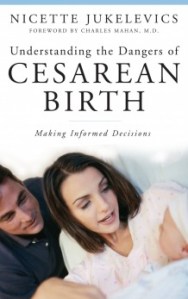
Book Review: Understanding the Dangers of Cesarean Birth

Book Review: Understanding the Dangers of Cesarean Birth: Making Informed Decisions
By Nicette Jukelevics
Praeger Publishers, 2008
ISBN 978-0-275-99906-3
264 pages, hardback, $49.95 (or $40.96 via http://www.icea.org)
http://www.dangersofcesareanbirth.com

Reviewed by Molly Remer, MSW, ICCE, CCCE
https://talkbirth.wordpress.com

Intended to be a comprehensive resource for both consumers and birth professionals, Understanding the Dangers of Cesarean Birth is an in-depth look at the incidence and impact of cesarean birth on mothers, babies, families, and society as well as an overview of prevention strategies. The final section of the book is about “why normal birth matters” and addresses changing the status quo. The Midwives Model of Care is reflected and promoted during the book and doulas also receive strong support.

I have two primary opinions of the book: The first is that I truly believe that Understanding the Dangers of Cesarean Birth should become the “go to” book for current, evidence-based, thorough information about cesarean birth in the U.S. It is a treasure trove of information and any birth professional would be well advised to have a copy on their bookshelf. The second opinion is that the “heavy” subject, extremely in-depth information, academic writing style, and relatively high price, will likely keep this book out of the hands out of its primary intended audience—the consumer. The person who most needs to read this book is the first-time pregnant woman. However, the entire time I was reading it, I kept thinking that there was only a slim likelihood of the average first-time mother being attracted to, or actually picking up this book, to read.

Mothers planning VBACs or seeking to understand their own cesarean birth experiences will probably find Understanding the Dangers of Cesarean Birth to be a valuable resource. Birth activists will find clearly articulated and important information that they will wish to shout to the rooftops and I think that this is how the content in Understanding the Dangers of Cesarean Birth has the best chance of truly reaching the women who need to hear its message.

Disclosure: I received a complimentary copy of this book for review purposes.