Archives

Business of Being Born: Classroom Edition

Childbirth is a women’s rights issue and a reproductive justice issue. The United States maternity system is one of the costliest in the developed world, yet our birth outcomes compare poorly to those of other industrialized nations. Among industrialized countries, we consistently rank last or second to last in perinatal and maternal mortality rates. Moreover, birth is depicted in mainstream media with fear, medical intervention, and crisis…

via The Business of Being Born Classroom Edition.

It took me some time to get around to it, but I’ve finally finished exploring The Business of Being Born: Classroom Edition and its associated toolkit of educational materials! As a long-time childbirth educator and birth activist, of course I was interested in this classroom version of the (new) classic birth advocacy film, but I’m also a college professor and therefore was doubly interested—how might this resource be incorporated into one or more of my human services courses? As the BoBB companion site explains…

Childbirth is an issue most people do not engage with until they have experienced the maternal health system. The Business of Being Born: Classroom Edition reaches out to young adults BEFORE they confront their own birth decisions, both placing the issue on the radar and challenging the prevailing assumptions about birth providers and current obstetrical management trends. The goal is for the next generation of policy makers, practitioners, educators, and parents to approach birth decisions with awareness and confidence. Our strategy is to incorporate this evidence-based presentation into classrooms around the country. We envision empowering the next generation of parents to seek out systemic change and new policies supporting domestic maternity care…

via The Business of Being Born Classroom Edition.

The Classroom Edition of the film runs about 25 minutes and comes packaged with one of my all-time favorite resources for birth classes and tabling events: The Guide to a Healthy Birth from Choices in Childbirth. It also comes with two additional celebrity interviews, the short film Birth by the Numbers, and a instructor’s toolkit with classroom activities tying the themes of the film to major subjects such as Women’s Studies, Public Health, and Sociology.

My only critique of the classroom edition of the film is that the assembled quotes at the beginning of the film are put together in a choppy sort of way that makes it difficult to perceive (for the average viewer), which are the “good” (i.e. accurate) quotes and which are popular types of misinformation. There is also an odd, repetitively distracting, monotonal quality to the music that plays through much of the footage. Excerpted from the full-length film, the classroom edition still includes Ricki Lake’s homebirth in her bathtub, which was one of my top favorite moments of the original film. Content from a historical perspective as well as content involving the shadowing of a homebirth midwife and the personal stories from families choosing midwifery care were greatly reduced from the original version and the classroom edition seems to have more of an emphasis on sociocultural analysis. It is noted that 90% of women in many hospitals experience some type of labor augmentation (usually pitocin) and also that hospitals are businesses, businesses that are not really interested in having women hang around in the labor room.

One of the college courses I teach is American Social Policy. I have always been interested in birth change from a systemic (macro) level as a companion to change on the individual (micro) level, so I especially appreciated watching the Birth by the Numbers presentation included with the classroom edition of BoBB. When speaking about the idea that the increase in cesarean rate reflects maternal choice, public health professor Gene Declercq says, “this blaming of women is farcical. It is not about the mothers, it is about the way we treat care in the United States. Nobody ever wants to admit there is a difficult inherent in the system.” Well, I want to admit it and this is the kind of macrosystem-level change we talk about in my Policy course. At the companion Birth by the Numbers website, you can download a powerpoint presentation and other teaching tools, as well as watch the short film, in which public health professor Gene Declercq debunks popular myths about the causes of the United States cesarean rate increase. The film also looks at disparities in maternity mortality rates and tackles questions of systemic influences on maternal health outcomes.

So, are mothers really asking for cesareans?

slide

Declercq also draws on writing from the classic obstetrics textbook, Williams Obstetrics, and shares this quote about one of the real reasons that cesarean rates continue to rise:
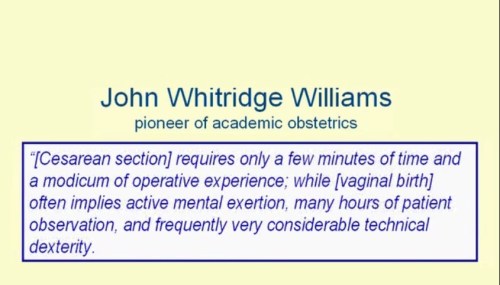
whycesareanAnd, he makes this important observation:womenhaventchanged
As Nadine Goodman says in The Business of Being Born Classroom Edition, “A woman will always remember how she was made to feel during her birth…if you don’t have the reverence and respect for birth, where do you go from here?”

Prior post about The Business of Being Born: Transformation Through Birth | Talk Birth

Disclosure: I received a complimentary digital package for review purposes.

Talk Books: One Recumbent Mommy

Some time ago I received a unique memoir to review along with a companion book for children. The topic of One Recumbent Mommy is bedrest and the book is written in a friendly, conversational, and personal style that has potential to bring an air of sisterhood to women experiencing the same challenge and make them feel less alone. The book is based on the author’s blog and a casual, breezy, lighthearted style comes through strongly. The author writes:

I was on hospital bedrest with incompetent cervix for about 16 weeks and while there, I kept a blog chronicling the ups and down of day to day life in the hospital.  That blog was published and is entitled, One Recumbent Mommy: A Humorous Encounter With Bedrest.  I wrote a children’s companion book as well, entitled Wherever I Am, I Will Love You Still: A Book About An Extended Hospital Stay.  This book was written from my 2 year old son’s point of view.  I was trying to get at a way of explaining the situation in terms that a young child could understand.

The companion children’s book: Where I Am, I Will Love You Still, is friendly and sweet and the illustrations are engaging. This book would be a very useful addition to a family whose mother is experiencing a hospital stay. While the book’s conclusion includes the new baby sister coming home, it definitely has the potential to be applied to non-maternity-related hospital stays as well. Do note that bottle feeding is portrayed in the book.

While I was somewhat disappointed by the very conventional medical model of care in One Recumbent Mommy and the seemingly unquestioning acceptance of it by the author (especially considering that bedrest has come under serious scrutiny as to its actual effectiveness at preventing pregnancy loss), as well as the apparently overlooked irony of the baby’s birth then being induced, I appreciated the reminder that for many women pregnancy is anything but a joyful, flower-strewn walk through a miraculous meadow of belly casts and earth-goddesses. My writing and my posts often trend to a Happy Birth Dance! mode of writing about birth and was beneficial to me to remember that this model can feel very isolating, discouraging, and depressing to women whose experiences of pregnancy and birth are different from my own.

Along this same line of thought, I was reminded of recent writings from beautiful blogger Leonie Dawson about her experiences with severe hyperemesis gravidarum (requiring multiple hospitalizations):

And despite everything – despite it all –

Love is calling me forward.

As ancient as the beginning of time, love calls upon us to do what we could not do without.

Love asks of us great things…

via The Love That Calls Us Forward | Leonie Dawson – Amazing Biz, Amazing Life.

As I read One Recumbent Mommy and my priestess/ceremonialist self came to fore however, I also found myself wishing this mama had had some kind of beautiful hospital blessing ceremony to honor her commitment to her baby or that someone had offered her a nurturing prayer, poem, or blessing for her as a Bedrest Warrior doing what had to be done to protect her baby. Could there be a place for a Happy Bedrest Birth Dance mode of writing and experiencing as well? I gratefully welcome additions to this post of ideas for rituals, poems, prayers, or resources that can be offered to bedrest mamas who are doing their best to welcome a healthy, full-term baby into their lives! 🙂

New Baby Ritual (Plus Maruti Beads Review!)

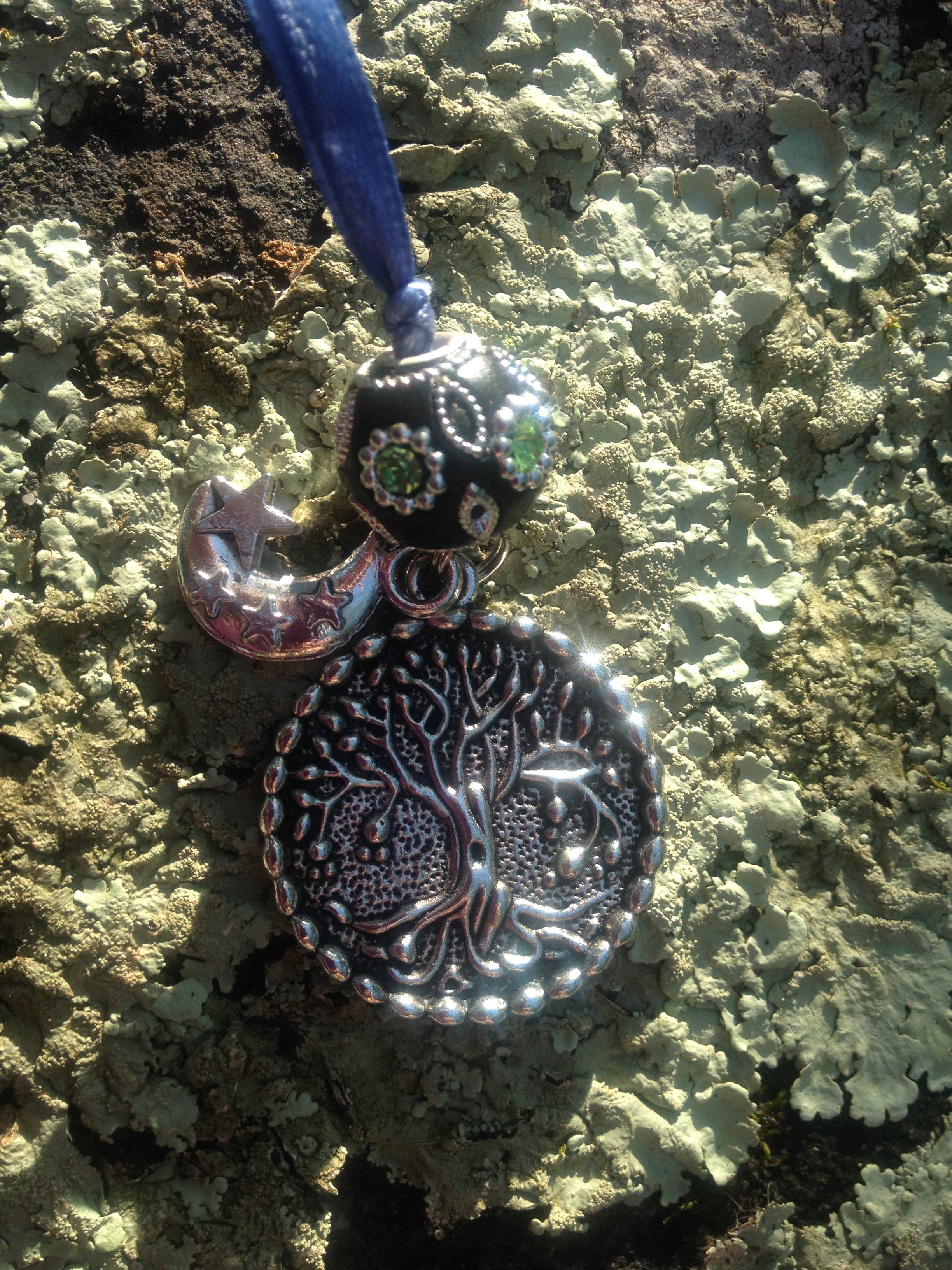
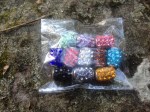
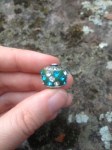
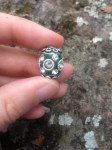
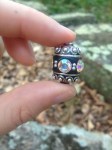
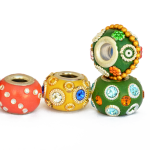
July 2013 014One of my good friends recently had her family’s eighth baby. I’ve had mother blessing ceremonies for her with past babies and I meant to do so for this baby as well, but our unexpected trip to California occurred right at the time we should have been having the blessingway. Last week, I had the chance to visit her and to meet her new baby. I decided to put together a mini-welcome-new-baby-ritual and have it with just us by the river. I called it a “blessingway in a bag” and I included some tea, candles, and bindis in the bag, so that her family could have the complete ceremony themselves on their own if they wanted to do so. Several months ago, I also received a beautiful box of Maruti Beads to review. They’ve been sitting by the computer waiting for a special occasion and this was finally it! I made a pretty necklace for my friend to honor her family’s “tree of life” and I included one of the gorgeous Maruti beads (more pictures to follow).

July 2013 043 At the river, we didn’t actually do the full ceremony that I’ve included below—I’d written it up as a complete ritual that could be done with a group, as needed/wanted—instead, I just read my friend the poems and gave her my gifts 🙂

Ceremony of Welcome for a New Baby

*Opening reading:

Wonder of Wonders

Wonder of wonders,
life is beginning
fragile as blossom,
strong as the earth.
Shaped in a person,
love has new meaning,
parents and people
sing at their birth.
Now with rejoicing,
make celebration;
joy full of promise,
laughter through tears,
naming and blessing
bring dedication,
humble in purpose
over the years.
–Singing the Living Tradition (UU Hymnal)

*Baby name is announced!

 A Prayer for One Who Comes to Choose This Life

May she know the welcome
of open arms and hearts

May she know she is loved
by many and by one

May she know the circle of friendship that gives July 2013 013
and receives love in all its forms

May she know and be known
in the heart of another

May she know the heart
that is this earth
reach for the stars and
call it home

And in the end
may she find everything
in her heart
and her heart
in everything.

(by Danelia Wild in Sisters Singing)

*Gifts, Beads, Blessings…
A good idea is for each guest to bring a special bead and add it to a necklace/mobile for the baby–as each person places their bead, they offer a wish or blessing for the baby.

*Sing Call Down a Blessing
(each person fills in a word of choice for the blank space and whole group sings each in turn. i.e. “Joy….joy before you, joy behind you…”)

Call down a blessing

Call down a blessing

Call down a blessing

Call down.

__________before you

__________behind you

__________within you

__________and around you

*Hold up/out baby or mother and baby stand in center of circle.

*Group Reading (optional: simultaneous “anointing” with elements):

Deep peace of the running wave to you.
Deep peace of the flowing air to you.
Deep peace of the quiet earth to you.
Deep peace of the shining stars to you.
Deep peace of the infinite peace to you.

*And/OR

Stars give her strength
Sun turn her eyes
Moon guide her feet
Earth turning hold her
We pray for her
We sing for her
We drum for her
We pray.

–Chrystos (in Open Mind)

Back to the beads!

I received the 50 piece Maruti, Kashmiri & Lac Bead Mix. These beads are really something special! They are handmade in India and are of very high quality. Each one is like a small work of art. They are sparkly and beautiful and solid and wonderful. It is hard to decide how to use them, because they feel really special! Since my friend and her new baby are special too, they deserved one of these beautiful beads 🙂 Maruti Beads would make a wonderful, special addition to any blessingway or mother blessing ceremony.

Talk Books: Birth, Breath, & Death

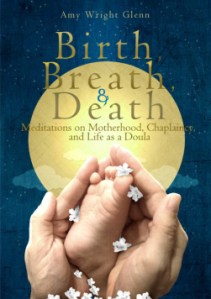
I just finished reading a lovely little book by Amy Wright Glenn. Lyrical, gentle, contemplative, and touching, Birth, Breath, and Death explores Amy’s meditations on life as a doula, mother, and hospital chaplain. birthbreathanddeath-amywrightglenn

Amy Wright Glenn was raised as a Mormon and eventually found her way onto a different faith path, Unitarian Universalism. Her reasons for connecting with the UU church actually closely mirror my own. Amy mentions that she first finds the UU church through her interest in poetry, which I found interesting. She then explains, “I was drawn to the way that Unitarian Universalist (UU) ministers attempt to evoke wonder and exploration in the minds and hearts of their congregants” (p. 10). This attempt to engage with the “transcendent sense of mystery and wonder” is exactly what attracted me to the UU’s, as well as the respect for the interdependent web of life of which we are all a part, the affirmation of the dignity and worth of each human being, and the commitment to social justice.

Amy writes, “I had been raised to acknowledge only one entrance to God’s energy. In fact, one need not use the term ‘God’ at all. Such a term is another doorway into the mysterious heart unifying all existence. However, humans need language to direct the attention to the ineffable. There are many names for this mystery. The doorways were holy too” (p. 13).

She continues with a very UU perspective (I’ve heard of it describes as “the light shines through many windows. We respect all windows and welcome everyone, except for those who think they should throw rocks through everyone else’s window!”):

“Spiritual surface structures open human beings to encounters with the ineffable…I have no doubt when my father bows his head in a small Utah town, and when I meditate in quiet sublime stillness, we touch the same source. At their best, religious traditions affirm the wonder at the heart of existence and provide meaningful contexts for its experience. This mystery allows us to breathe, dream, love, and dimly perceive so,etching beyond time even while we live in time…The moon is simply the moon, a miracle enough” (p 16).

I connect to this sense of wonder, with no need for explanation or interpretation—isn’t it is enough, to just marvel at what is? On my other blog, I once wrote:

I also have a favorite passage from Susan Griffin about the earth in which she exclaims, “We are stunned by this beauty.” That is exactly how I feel. This relationship to the planet is what used to make me feel that a conception of deity was unnecessary—isn’t it enough to just marvel at what is, right here in front of us? The majesty and the miracle of the natural world. I am stunned by this beauty. I am stunned by the realization that we are all suspended in space, spinning timelessly through the universe on this beautiful planet, so small in the vastness of all that surrounds us, and yet so big that it is literally our whole world. Sometimes when I have a bad day or feel overwhelmed by the swirl of daily tasks I remember that old saying about, “sometimes I go about pitying myself when all the while I am being carried by a great wind across the sky.” If we really stopped to think about this—to sense how we are carried by the great wind, I think the whole world would change, how people relate to each other and to the environment would be transformed. Stop, look, listen, breathe, and feel how we spin. Together.

Moving into birth, Glenn addresses the potent, transformative aspects of birth in describing attending her sister’s birth, the birth that led her into doula work (before the birth of her own son): “Birth brings powerful and painful sensations to the most intimate spaces of the female body…I stood transfixed by the life-giving strength found in her feminine power.”

She also explains:

“All forms of birth–physical, intellectual, spiritual, or emotional–bring one to the depths. The power to give birth originates in the creative life spirit birthing all, the seen and the unseen. According to Joseph Campbell, the source of life is beyond gender and the duality of male and female. However, when symbolizing the power that creates, Campbell argues the representation is ‘properly female.’ I agree. From this universal goddess energy emanates the seasons, the mountains, the rivers, and the galaxies. Writ large, human birth embodied the process of manifesting dreams, working diligently through our labors, and bringing vital energies to life. On this level, all human give birth. All humans participate in life’s creative energy…

On this level, we all need the renewing powers of ‘rhythm, ritual, and rest.’ This phrase reminds doulas of three helpful labor techniques outlined by legendary doula trainer, Penny Simkin. Rhythm, ritual, and rest not only aid birthing women, but they support all of us to move skillfully through our life’s labors. The power of rhythm restores vibrancy through dance, music, and motion. The power of ritual opens the way to direct encounter with the mysterious wonder of life. Rest renews and restores the very cells of our often tired and over-stimulated bodies and minds.” (p. 28-29).

And, she makes some poignant observations about breastfeeding, one that almost made me cry: “…only a child knows what his mother’s heartbeat sounds like from the inside” (p. 67) and one that made me cheer: “Family and friends need to draw a fierce circle of protection and non-interference around the nursing mother-child dyad.

In giving birth to her own son, Amy’s awareness and understanding are further deepened and expanded and she explains that:

“For me, birthing was a crucible moment, a dying, a deepening, and a healing. The light of birth transformed me into a mother. The light of birth is love. Looking back I see this clearly. Love was the pain and joy. Love restored me as I rested and held me up when I transformed into a wild eyed Kali. Love chanted with me in the birthing tub and love was certainly the epidural. Love pushed my baby out and gazed at me through Taber’s eyes. Love sustains me now as I watch his sweet small mouth suckle…” (p. 68)

Towards the end of this sweet, thoughtful book, she also used a great analogy that I’m going to borrow for my human services classes. She posits the scenario in which you are passing by a pond on the way to work and notice a small child drowning. You are wearing an expensive pair of new shoes and rushing into the water will ruin them. Do you rush in? The answer is YES. No one should choose their shoes over the life of the child and almost no one would respond to this scenario by saying that they would not save the child, yet, if the pond is world poverty, we do in fact, choose the shoes every day…we just aren’t looking those children in the eyes at the time…

Disclosure: I received a complimentary copy of this book for review purposes.
Film Reaction: Birth Story

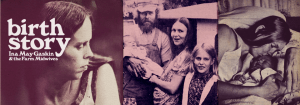
bs_header_f1I have never met anyone with more than a passing interest in birth activism who has not heard of Ina May Gaskin. She isn’t referred to as a the world’s most legendary midwife for nothing! But, how did she get this way? The new documentary film, Birth Story, helps explore that question.

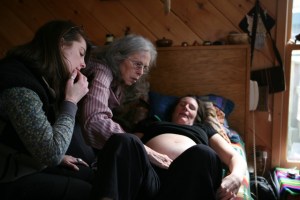
inamayteaches

Prenatal visit

“The feature-length documentary BIRTH STORY: INA MAY GASKIN & THE FARM MIDWIVES tells the story of counterculture heroine Ina May Gaskin and her spirited friends, who began delivering each other’s babies in 1970, on a caravan of hippie school buses, headed to a patch of rural Tennessee land. With Ina May as their leader, the women taught themselves midwifery from the ground up, and, with their families, founded an entirely communal, agricultural society called The Farm. They grew their own food, built their own houses, published their own books, and, as word of their social experiment spread, created a model of care for women and babies that changed a generation’s approach to childbirth.

Forty years ago Ina May led the charge away from isolated hospital birthing rooms, where husbands were not allowed and mandatory forceps deliveries were the norm. Today, as nearly one third of all US babies are born via C-section, she fights to preserve her community’s hard-won knowledge. With incredible access to the midwives’ archival video collection, the film not only captures the unique sisterhood at The Farm Clinic–from its heyday into the present–but shows childbirth the way most people have never seen it–unadorned, unabashed, and awe-inspiring.”

I really enjoyed Birth Story. It skillfully weaves together vintage footage, commentary, and births with a present day shadowing of Ina May in her natural environment: at the Farm. The documentary shows her working in her kitchen, eating, talking to her husband, watering plants, riding her bicycle, teaching workshops, training midwives, going to prenatal visits, and finally, attending a very hands-off gentle waterbirth. It also lets us peek at images from the early days of The Farm community, the caravan of buses, the dreams of Stephen Gaskin and the “hippies” who followed him to Tennessee. Birth Story is not just a film about Ina May though, it chronicles the experiences of several other Farm midwives as well, and I loved hearing the commentary and opinions of the less-famous midwives who helped transform the birth world. inamaystephen

I found footage of Ina May with Stephen to be particularly poignant and very much enjoyed the vintage photos and footage. I also find it interesting how The Farm began because of Stephen’s leadership and ideas and yet Ina May took off as the ongoing famous person in the family. Of Stephen, Ina May explains: “He thought women we supposed to be uppity—this was great relief, I didn’t like being held down.”

Ina May describes her own first birth explaining that in typical birth climates, “there’s nothing about the special energy of birth and that’s kind of the most important thing…I felt like I was doing something sacred.” She also makes the basic and crucial point that the number one rule of maternity care should be Be Nice and laughs as she asks us to consider how just those two words could change maternity wards. There are only a handful of actual births in the film, three of which are from sometime in the 1980’s. We see a breech birth (a lot more hands-on than I think of present-day midwifery practice) and a shoulder dystocia, both rare occurrences in birth films. We also see brief footage of Ina May’s Safe Motherhood quilt project and a brief discussion of disparities in maternal mortality rates.

Another highlight of the film for me was midwife Pamela, whose birth we also see on-screen. She is shown telling us about an early birth she attended saying, “I fell in love with women. How can you see someone be so strong and not fall in love?” Exactly. My doula and friend, Summer, who watched the film with me, developed her reaction to this quote in a lovely blog post and it reminds me of my own past post about my own former midwife who helped me see that midwife means loves women. Ina May explains that she learned how to be a midwife by allowing herself to be instructed by the women themselves and then she trained other midwives. As I watched Birth Story I found myself feeling a little sad, nostalgic, and inamayandbabybittersweet, because I feel like the world that these beautiful midwives envisioned has yet to really be birthed and that in some ways we’ve gotten so far away from the relationship-oriented and community living/engagement model upon which The Farm was based.

My initial feeling as I watched the film was that it would be primarily of interest to people already very familiar with Ina May, thinking that it  may not appeal to or interest “regular” people. However, the friends I viewed the film with had totally different perspectives. One friend told me she thought her husband would really have liked the documentary, particularly for the emphasis on community. The one husband who was present reported that he thought everyone should see the film and not just people who are already “birth junkies.” So, I stand corrected, and will now say that Birth Story has the capacity to engage with many people!

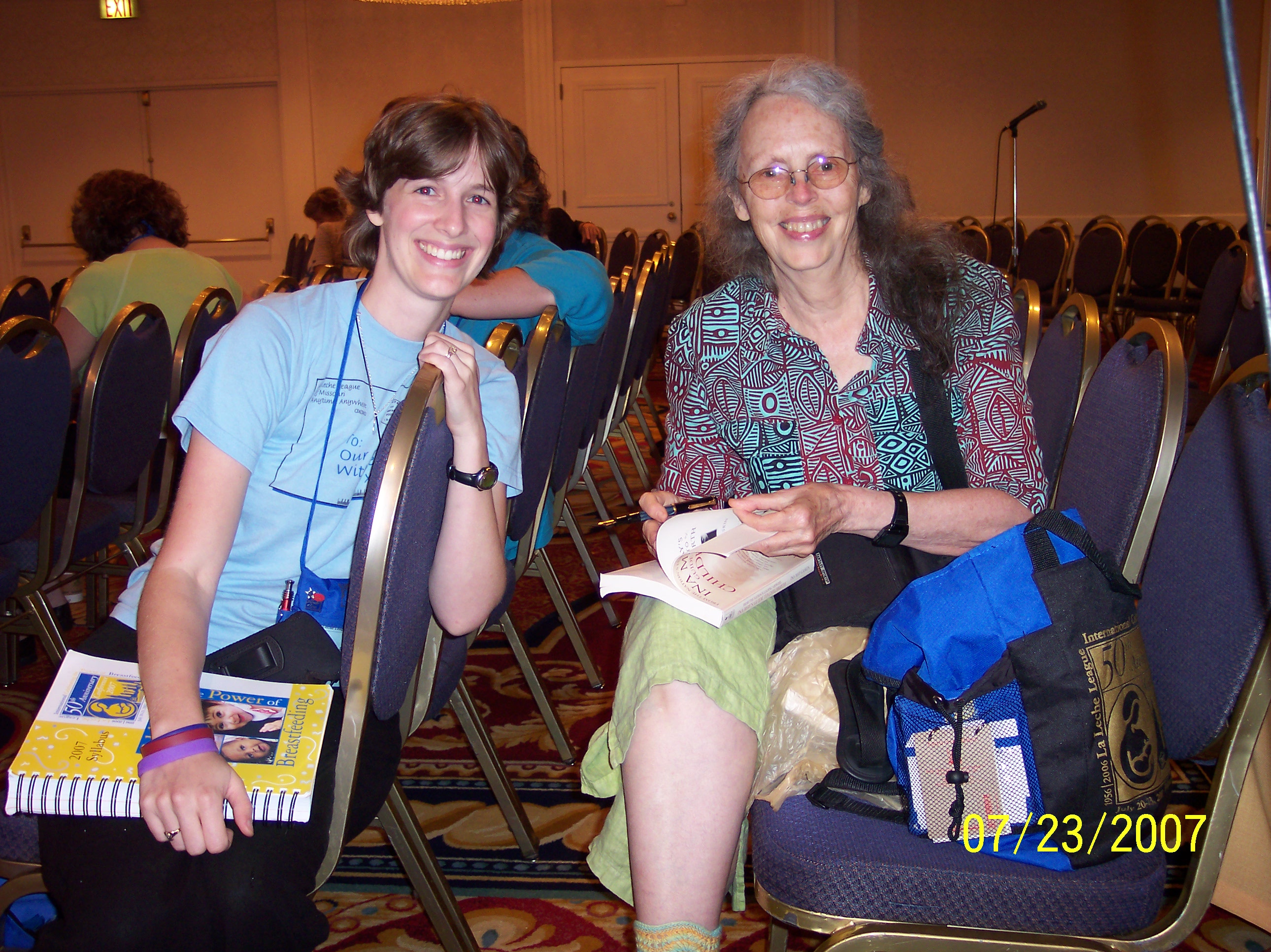
In 2007, I had the opportunity to listen to Ina May speak in person at the La Leche League International conference in Chicago. She talked about sphincter law and made the association with our bodies’ capacity for bowel movements and women’s physical capacity to rebound from childbirth. I will never forget her saying: “I don’t know about you, but my butt closes back up after I poop.” That summed her up for me: plainspoken, real, matter-of-fact, and practical. She’s a legend!

100_0564

Starstruck? Oh, yes I am. My husband said, “these people are like your *celebrities.*”

Disclosure: I received a complimentary screening copy of the film for review purposes.

Book Review: Thea Gallas Always Gets Her Man

TheaGallasFrontCover1-196x300

Thea Gallas Always Gets Her Man (Affiliate link included in title and image)

Thea Gallas Always Gets Her Man
Author: Kristen Panzer
Paperback, 308 pages (also available on Kindle)
ISBN-13: 978-0988566316

When neighbor Roy Groody disappears, lactation consultant wannabe Thea Gallas is hot on the trail. Roy’s wife Dolores says they argued and Roy left her, which satisfies the authorities. Case closed. But why is Dolores digging in her back yard? And why has a crew shown up to pour a concrete slab out back? Thea Gallas might not be fiction’s last word on lactation consulting but she’s the first. And hottest.Thea Gallas Always Gets Her Man is a sexy, dark cozy mystery that will keep you up all night turning pages! —

I really loved this novel about an aspiring IBCLC who solves both breastfeeding problems and an intriguing murder mystery. Thea Gallas is a pregnant mother of three young children and a concerned neighbor who won’t let the strange disappearance of man next door rest.

Even though everyone around her tries to dissuade her suspicions, Thea continues to investigate the suspected murder of her next door neighbor in between making house visits to solve breastfeeding problems as well as taking care of her three small children (she’s also planning a homebirth!). I got a kick out of seeing her use her midwife’s suggestion to “take it one breath at a time” to cope with the other challenges in her life and her mention of reading Spiritual Midwifery. Thea Gallas is clever, fast-paced, and funny too:

“Demonize her? Is that what I was doing? That had never occurred to me and I didn’t think so, but if that was the case, it would be super un-feminist and un-cool of me…”

Lest it sound too lightweight, the book has some very dark themes including abuse and infant loss. The issues the book explores are complex ones without simple interpretations and this is definitely more than just a comedic mystery romp. There is also a smoky subplot involving a youthful “bad boy” of a neighbor who is nearly successful in tempting Thea to stray from her husband!

The author is an IBCLC and the breastfeeding information in this novel is solid and informative. In between talking to the police and being threatened by creeps, Thea helps diagnose a cleft palate, gets babies to latch on by suggesting “laid back breastfeeding” and makes amusing cracks about attempting to read very dense issues of The Journal of Human Lactation. A delightful read!

theagallas

Disclosure: I received a complimentary copy of this book for review purposes.
The Midwife’s Tale: Author Interview and Brief Review

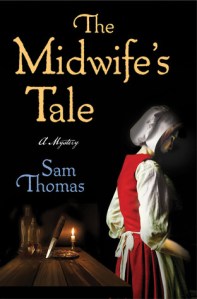
As I’ve written before, I can think of few things better than historical fiction about a midwife! Recently, I enjoyed reading The Midwife’s Tale midwifestaleby Sam Thomas, a historian and writer with an interest in midwives. The Midwife’s Tale is a mystery about seventeenth century English midwife Bridget Hodgson who, along with an assistant with secrets of her own, sets out to discover the answers to a murder, a newborn death, and the political machinations of the local government. The book is well-written, nicely paced, and intriguing. Do be aware that there is a fair amount of infant death, violence against women, and threats of rape, as well as general misogynistic treatment of women authentic to the time period in which in the book takes place. As Bridget notes: “As a midwife, I helped women when I could and comforted them when I could not.” Part of me kept wanting Bridget to stand up even more for women and to rise up in protest against the confines of her time and place and the treatment of women therein, but I found the depiction historically accurate, if also depressing. The following quote touches both on this tension between care and participation in oppression as well as on another element, I found interesting, which is in regard to the economic realities for women of this age:

“But as surely as the women needed me, I needed them. Without my work, who would I be? A wealthy widow and nothing more…The thought of such an uneventful and powerless existence filled me dread, for my work as a midwife mattered in a way that mere housewifery never could. I ensured that men who fathered bastards had to pay for their children and that the women who bore them were whipped. If a maiden was raped, who but a midwife would stand with her against her assailant? Who better than a midwife could recognize the signs of bewitchment and find the witch’s mark? Without midwives, lust would reign, and order would turn to chaos…” (p. 230)

I was fortunate to do an interview with author Sam Thomas as well and here it is!

How did you become interested in writing about midwives from a historical perspective?

It was pure chance, or perhaps fate. I was working on my Ph.D. (about religious persecution and toleration in England), when I stumbled across the will of an incredible midwife. (I posted a transcript of the will on my website.) I then discovered that historians were in the midst of some great new research on midwives, and I was eager to join in the fun.

The more work I did, the more fascinated I became with the subject, and I wound up writing a couple of articles and planning a full-length book. In the end I left the ivory tower, but could not bring myself to leave midwives behind.

Do you follow present day midwifery politics? If so, any thoughts on how this connects to the historical issues raised in the book?

I do, to some extent. We lived in Huntsville, Alabama not far from Ina May Gaskin’s place in Tennessee. And I was surprised to learn that midwife-attended births are illegal in Alabama. As a result some women – including a good friend – “happen” to go to birth in Tennessee so they can be delivered there. (Hi, Celeste!)

Things are rather friendlier in Ohio where we now live, and I’ve had a number of midwives and other childbirth workers come to presentations. We’ve had some wonderful conversations!

Did you find it difficult to balance writing accurately about the misogyny of the time with portraying a strong, female character? (Still within the confines of her time and space)

Great question! In fact this is part of the reason I love writing about midwives and about women more broadly. To be sure, my characters inhabit a misogynistic world, but it is one in which women have at least some room to maneuver. (Men from southern Europe were horrified by how much freedom English women enjoyed. Everything is relative!)

Midwives, of course, wielded more power than most women and in certain circumstances, more power than some men. They were the only women who took a public oath, and the only ones whose work required a license. They also played an important role in the criminal justice system (to use an anachronistic term). Despite being women, midwives had a lot of the rights and responsibilities of men, at least in the context of their practice.

Part of what I’m doing in The Midwife’s Tale – and in future books – is charting Bridget’s gradual realization that despite her wealth and status, she is subject to the same oppression as other women. It really throws her for a loop.

Will we see Bridget return in any further mysteries?

Happily, yes! I have finished The Harlot’s Tale, which will be released in January, 2014, and just completed a second draft of The Witch-Hunter’s Tale, the third in the series. Minotaur-St. Martin’s has bought a fourth in the series, so the pressure’s on!

Oh, I’m also writing a few short stories about different characters’ backstories. One will be about how Bridget got into midwifery, and the other will be focused on Rebecca Hooke and how she became such a nasty piece of work.

If your readers want to keep up to date on future releases (and maybe win a copy!) they can sign up for my quarterly newsletter, The Midwife Mailer. No spam, I promise!

Tuesday Tidbits: Writing, Reading, Rituals

There is an open, flexible, compassionate way of relating to everything we experience, including natural disasters and sudden death. It is not so much a process of learning how to ‘get over’ a profound loss, but rather how to allow it to be there, lightly, gently, like a fine thread woven forever into the tapestry of who we are.” –Nancy J. Rigg (previously used in this post)

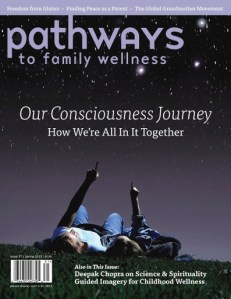
I know it is boring to hear about how busy someone else is, but I’m barely keeping my head above water recently. I’m sad that my blogs are sinking to the bottom of my list, because I do so love to write and I have ideas for new blog posts every single day. And, every single day, no matter how long the to-do list is, I have a secret plan that I’ll work like the wind and finish everything else on my list and then I’ll still have time covershot-37“left over” in which I’ll actually get to write the imagined posts. Just isn’t happening this week though. I haven’t even read any birth articles to share thoughts from! However, past self, who apparently had some more time to spare than current self, did produce some work that has given me fodder for this week’s Tuesday Tidbits post. I was pleased as can be to have my article, Breastfeeding as an Ecofeminist Issue, published in Pathways Magazine this quarter. There are precious few opportunities remaining to be published in a print magazine for natural parents and there is just something extra special about having an article published in a full-color, real magazine 🙂 They sent me a pdf version of the article to distribute on my own website and so I’m doing just that. For the nicely printable pdf version, click here.

We are mammals because as a species we nurse our young. This is a fundamental tie between the women of our time and place and the women of all other times and places as well as between the female members of every mammal species that have ever lived. It is our root tie to the planet, to the cycles of life, and to mammal life on earth. It is precisely this connection to the physical, the earthy, the material, the mundane, the body, that breastfeeding challenges men, feminists, and society.

Breastfeeding is a feminist issue and a fundamental women’s issue. And, it is an issue deeply embedded in a sociocultural context. Attitudes towards breastfeeding are intimately entwined with attitudes toward women, women’s bodies, and who has “ownership” of them. Patriarchy chafes at a woman having the audacity to feed her child with her own body, under her own authority, and without the need for any other. Feminism sometimes chafes at the “control” over the woman’s body exerted by the breastfeeding infant.

via Breastfeeding as an Ecofeminist Issue | Talk Birth.

Then, on my birthday last week, my contribution to a series of guest posts by feminist readers about children’s books appeared on First the Egg:

“Books have always been a huge part of my life, and I have many favorite and noteworthy books from my childhood. When considering the question though, one quartet immediately came to mind since two of my children are in fact named after one of the characters–the same character, no less! The Song of the Lioness quartet by Tamora Pierce is the tale of Alanna, who disguises herself as a boy in order to train as a knight. Alanna is a very kick-ass girl, and though she is small and petite, she learns to be an awesome knight, in fact the very best. She develops close friendships with the other squires while managing to guard her secret from most, even through the changes of puberty, until her final test of knighthood. These books have magic and battles and bullies and evil sorcerers and a talking cat and a Great Mother Goddess who takes a special interest in Alanna.”

via children’s books from feminist readers: the other Molly.

And, as far as reading that I’m supposed to be writing about, I’m really looking forward to finishing my book review of The Midwife’s Tale by Sam Thomas and publishing the author interview I did with him.

I also read a fun treasure of a book called Thea Gallas Always Gets Her Man. It was a mystery about a pregnant-mother-of-three and aspiring lactation consultant who solves a murder mystery in between helping mothers with breastfeeding questions. Review forthcoming, I promise!

I’m also swooning with anticipation about reviewing the new documentary about Ina May Gaskin. My screening copy of Birth Story came in the mail this week and I’m hoping to have a few Birth Network friends over for a movie review night.

I’m wrapping up the session—teaching three classes at once is a LOT for a homeschooling, toddler-breastfeeding, LLL Leader, priestess, student, writer mama—and planning an extensive and complex trip to California for my grandma’s memorial. I’m honored to have been asked to plan and officiate at the ceremony for her committal service and also to give a speech at her celebration of life luncheon. Doing these things is really important to me and I’m pleased to be able to offer them as my gift, but at the same time they’re also tipping me over the edge into reallyreallytoomuchtodoandI’mgoingtofreakoutalittle territory. I spent a long time today crying and looking at pictures of my grandma on her Facebook page when I “should” have been grading. It still doesn’t feel real and I’m still staggered at the magnitude of loss I feel. I miss her. I’ve never landed on California soil without Mamoo living there and waiting to greet us.

200825_1884333220402_1748056_o

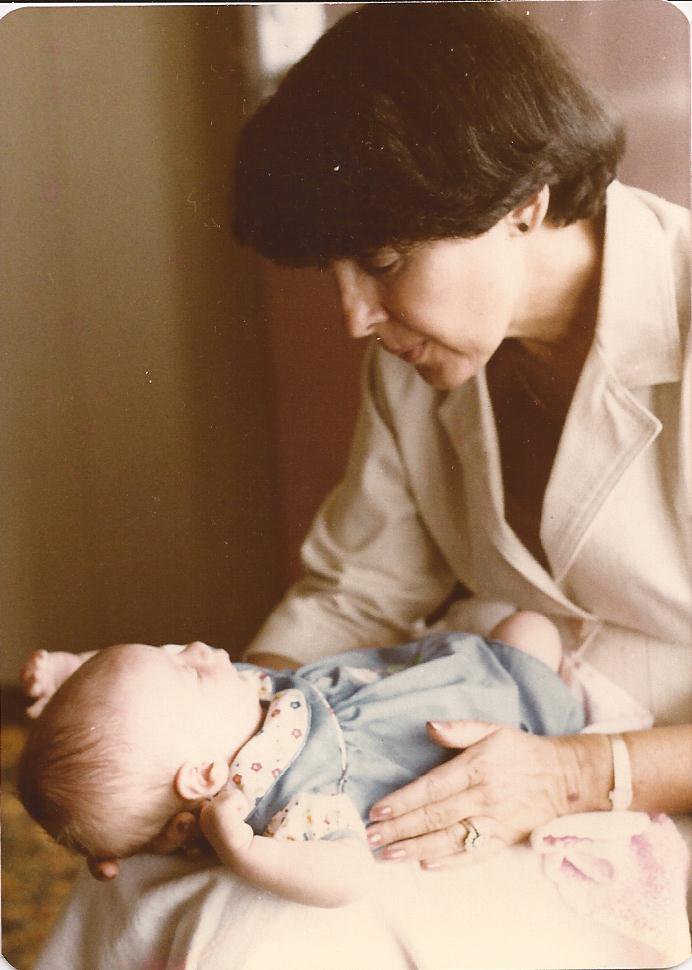
With Mamoo at one month old. Look how our lips are pursed in a matching fashion as we talk to each other!

I’m also finalizing the preparations for our spring women’s retreat at my house this Friday. Again, this is something that I feel very blessed to be able to offer to others, while at the same time I’m also freaking out a little and just not. able. to. rest. and be still, in the way in which I feel I need to do. However, I also feel like I really, really need this retreat. I truly need to do this, for my friends and for myself.

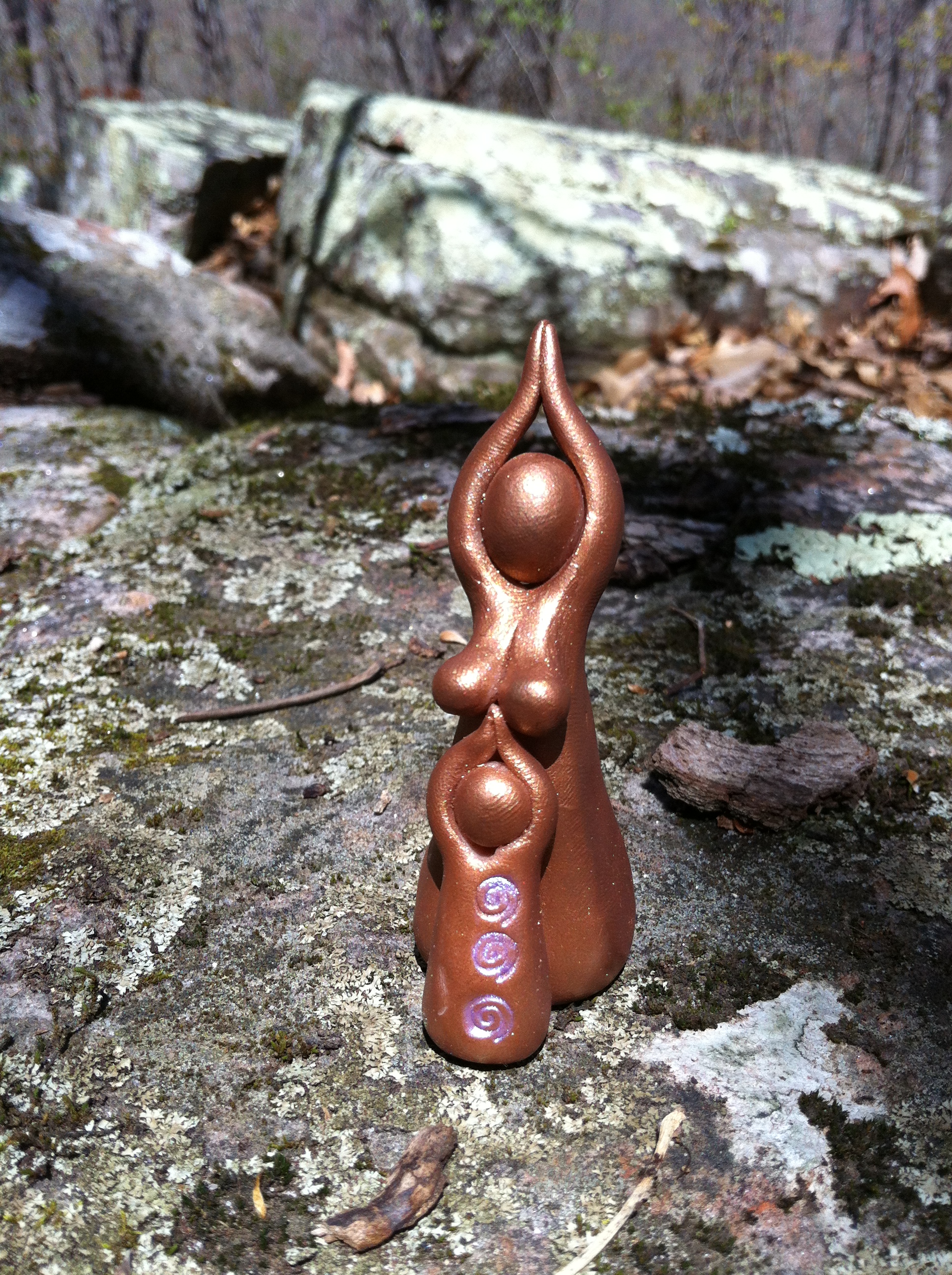
One of the custom VBAC sculptures I made while at Craft Camp made it to its destination and now I’m receiving further requests for them. I keep saying I’m not going to do custom orders because I just don’t really have the time, but these beautiful mamas write to me with their strong stories and their tender hopes and I feel compelled to make the figures they ask for…

April 2013 026 April 2013 028 April 2013 029

Thank goodness for Tuesday Tidbits! It means I’m guaranteed to write at least one post during the week. It gives me the focus, structure, and permission to be brief that I need in order to actually get something published, even if it is hastily organized and sloppily edited!

Talk Books: What Dying People Want

I’ve mentioned before that sometimes I use my blog as a way to store stuff that I want to remember or have easy access to later. I also use it as a means of collecting information all in one place, so that it is easy for me to search and reference again in the future, rather than having to flip through stacks of books. This leads me to a tendency to leave huge stacks of books piled by computer waiting for me to have time to transcribe all of the important stuff out of them. Often, I get fed up and re-shelve them, thinking why bother re-typing someone else’s ideas anyway, shouldn’t I just be having my own ideas?! Or, I think, guess what Molly, there is a way for this information to be stored…it is called a book and the information will still be there if you want to go back to it. But, today I thought that maybe there is a happy medium—maybe as soon as I finish a book, I should do a quick wrap-it-up blog post in which I do simply transcribe the things I want to remember, no pressure to add a bunch of new insights of my own, and if at such time I want to transform any of those quotes into a longer post in the future they’ll be tidily saved and waiting for me. AND, the book can then be re-shelved, or even given away, promptly after being “processed” in this manner, rather than waiting by my computer with a sort of guilt-provoking air of expectancy and rebuke.

(Amazon affiliate link included in image)


Unfortunately, the subject of my most recent read isn’t really a cheerful one to kick off this little experiment! However, I’m doing it anyway. The book is What Dying People Want by David Kuhl, MD. Many people have observed that end-of-life care bears similarities to birth-care (beginning-of-life care) and in fact the content of most the sections I marked to share could very readily have the word “birth” or “pregnant woman” substituted. Of course, with end-of-life care, there is not the happy anticipation of the joyful hope and promise of a new baby, but then, with birth-care there is not actually always a guarantee of that either and many women experience grief and loss from a variety of sources/experiences mingled throughout their childbearing years.

With regard to doctors communicating with patients in a dismissive, brusque, or too no-nonsense of a manner:

…he had no intention of hurting her and seemed not to realize that he could have spared her much suffering if only he had spoken with compassion.”

Seriously. How true is this. How basic. And, how often overlooked.

And then, when talking about the doctor-patient relationship:

It is my sense that people visit physicians expecting to be heard, taken seriously, and understood. Martin Buber speaking of the essence of relationship in his book I and Thou. He states that an I-Thou relationships is one in which both people meet and experience one another in the context of their wholeness, their personhood. Only then do the two become equals with regard to dignity, integrity, and power…

…When the doctor regards the patient only as a disease [or baby container]…the relationship is at risk of becoming the I-It variety. That is also true if the patient regards the doctor only as a body of knowledge, disregarding the impact the doctor-patient relationship might have on the doctor. Hence, the relationship may be reduced from I-Thou, to I-It, or perhaps even to It-It. The relationship is at risk of becoming ‘a disease speaking to a body of knowledge, a body of knowledge speaking to a disease…

I use this in my classes too, explaining that relationship is our medium and without it we can be technically correct, but therapeutically impotent. I caution against falling into a pattern of speaking of people as “cases” or even worse, “the food stamp case” or “the brain tumor in room three” (real-life example from my first MSW internship in an oncology clinic).

I also marked this Emily Dickinson poem, The Mystery of Pain:

Pain—has an Element of Blank—

It cannot recollect

When it began—or if there were

A time when it was not—

It has no Future—but itself—

Its Infinite realms contain

Its Past—enlightened to perceive

New Periods—of Pain.

Dr. Kuhl also writes about the important of touch, something that birthworkers also know well, explaining:

As Bill Moyers writes, “Touch is deeply reassuring and nurturing. It’s the first way a mother and child connect with each other…what a mother is saying to her child with that touch is ‘Live…your life matters to me.'” Remen also describes how people with cancer [or who are having babies] often feel when they’re touched by health care providers. They say they feel as though they are merely ‘a piece of meat.’ She reports that one woman said, ‘Sometimes when I go for my chemotherapy, they touch me as if they don’t know anybody’s inside the body.’

The first part of this made me think about what my mom is doing for my grandma right now, only in the reverse order. Once upon a time, her mother connected to her with that touch…Live…your life matters to me…and now my mom returns this original patient, loving, nurturing touch, only it is saying, I’m here…your life has mattered to me…go with peace.

I’d marked a couple of other things about family relationships and sharing stories, etc., but the last quote I actually want to type out does actually touch on birth:

There are two important things to remember with regard to your childhood and your family of origin. First, each pregnancy changes the family in that it will either result in a miscarriage, which is a death, or a birth, which marks the addition of a new family member…Second, your memory is your story and your truth. Your family members will have experienced the same events differently and will likely have different memories. Your experience and understanding of events is legitimate; the same holds true for other family members.

I wrote my grandma a letter and mailed it at the beginning of this week, but I don’t know that it is going to make it to her in time. So, a couple of days ago, I took this picture of the kids and texted it to my mom to give to her:

April 2013 005

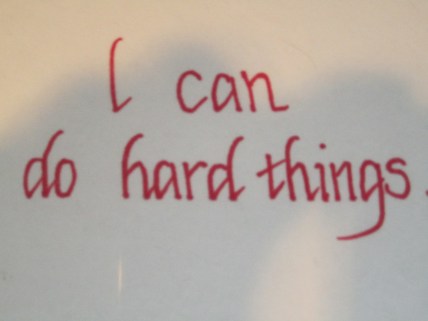
You can do hard things, I’ve told my mom. And, she is. Really hard, sad things. You feel like you can’t do it, but you’re doing it.

It applies to my grandma too.

hardthings

Book Review: The Doula Guide to Birth

Book Review: The Doula Guide to Birth

The Doula Guide to Birth: Secrets Every Pregnant Woman Should Know
By Ananda Lowe & Rachel Zimmerman
Bantam Books, 2009
Softcover, 270 pages
ISBN: 978-0-553-38526-7
www.thedoulaguide.com

Reviewed by Talk Birth

The Doula Guide to Birth is written for pregnant women, though the title may suggest that it is for doulas. It also has a chapter and sections specific to birth partners. However, doulas will also find the book to be a friendly, enjoyable read and may pick up some fresh perspectives for their work with birthing women.

The book also includes (short) sections for often-ignored or marginalized segments of the birthing population such as same-sex partners, parents using a surrogate mother, and women planning for adoption.

The first five chapters of The Doula Guide to Birth cover benefits of doulas, the role of fathers/partners and the complementary nature of the doula role to other support people, general overview of labor, childbirth education options and medications, and finding a doula.

The later seven chapters delve deeper into less typical subjects such as doulas and medical providers, when should you really go to the hospital, labor techniques, unexpected interventions, birth plans/birth essays, and what really happens postpartum.

Though not a criticism per se, I did feel like the first half of the book reads very much like an extended “commercial” for doulas. The second half of the book really shines. My favorite chapter was “labor is not about dilation”: “Although there is currently a heavy emphasis on dilation, vaginal exams, and timelines for giving birth, labor is not about dilation. Your body knows how to give birth whether or not you ever have a pelvic exam during labor. Birthing women need encouragement to trust their bodies, and to be the stars of their own labors. Doulas help provide this encouragement. And the confidence a woman discovers in labor can help carry her through the demands of parenting and future challenges in life.” (emphasis mine).

The Doula Guide to Birth is supportive of the midwifery model in philosophy, but only includes very brief mentions of midwives, the assumption being that most births will be in the hospital.

The book has extensive endnotes and an appendix with a birth evaluation form.

Disclaimer: I received a complimentary copy of this book for review purposes.
Review previously published on Citizens for Midwifery