Archives

Wild Feminine: Miscarriage Wisdom

When I spoke about miscarriage at the LLL of Missouri conference last weekend, I emphasized the recognition of miscarriage as a birth event:

I think it is crucial to remember that miscarriage is a birth event—sometimes a very, very, very early birth event, but reproductively speaking that is what it is! Since we don’t have a better vocabulary for pregnancy loss in our culture, socioculturally speaking we tend to class it as “something else,” but in most ways it isn’t. A soul (or fertilized egg) touches down in a woman’s womb. Her hormones and all other physiological systems are impacted and feel its presence. The embryo/fetus/baby stays for a time and when it leaves her body, the uterus must contract and the cervix must open and the woman’s body must open to allow its passage. Her body, mind, emotions, and spirit are all affected (to varying degrees). In this way, miscarriage and full-term birth simply exist on a continuum of possible birth outcomes and are all birth events whether the pregnancy lasts five weeks or forty-two weeks.

via Miscarriage and Birth | Talk Birth.

Following my own miscarriage experiences, I read like crazy, wanting to discover answers, hear experiences, and process pain. One of the Wild Femininebooks that helped me the most was the unexpected treasure, Wild Feminine, by Tami Lynn Kent. This book is really about pelvic health in general and what I appreciated most was that acknowledgment of miscarriage and the author’s own miscarriage experience was woven throughout the book, not relegated for some “bad outcomes” section. Also, miscarriage was acknowledged as a transformative and powerful experience, rather than solely in relationship to grief.

I re-read several passages from the book several times and I would like to share them here:

Some of a woman’s most profound transformations involve the changes in her womb: menarche, pregnancy, miscarriage, childbirth, and menopause. Every womb desires to give birth by receiving and gestating a particular energy; yet the way a woman specifically utilizes her creative energy is a matter of personal intention. One woman may use the energetic capacity for creation in her work as an artist or other creative endeavor. Another woman relies on her creative energy to nurture her children or reinvent her mothering. A spiritual teacher may receive a divine energy, gestating rituals for celebrating the sacred. A healer uses her intuitive capacity to aid others in physical, energetic, and emotional transformation.

See how miscarriage is just included? “Normal,” almost, rather than defective or secret or needing to be fixed or hidden or forgotten.

And, acknowledging miscarriage as a birth event:

Miscarriage is not, as I had always imagined, like an unexpected menstrual period. On the day of my miscarriage, I awoke from a dream that I was bleeding, but my sense of dread did not dissipate upon awakening. The red of my blood confirmed what my body already knew; miscarriage is birth and death simultaneously. Miscarriage is ecstatic connection and unquenchable loss. The uterus dilates and contracts, as in the process of birth. In its wake follows something ancient, something from the hearts and lives of the  grandmothers and women who have walked before, pouring forth from the uterus…

The event of a soul passing on within her body touches each woman in a different way. Yet it also links her to a broader community of women who share in the transformative effects of such experiences. When a spirit touches down in a woman’s womb and leaves from this place as well, a woman experiences the entry and exit of a soul within her body. When a whole life is contained within the womb without coming to term, a powerful invitation is given to the mother—to connect with the spiritual realm in the core of her body, to sit with her feelings and come to know the spirit of her child. But no matter how long a woman carries a baby, this life asks to be acknowledged and remembered, witnessed and loved. The energy that comes in with each life still must be moved. Without the natural movement of energy that occurs with a typical birth, a woman may have to be more conscious about working with the energy in her core. But if she receives the energy of this soul into her womb and then gives it an expression in her outer life, then she also receives a powerful blessing.

And, regarding miscarriage as a transformative life event: MR_048

My own pregnancy loss by miscarriage was a profound event in my body and my life. The spirit who came to be with me brought tremendous healing and creative energy to my womb that continues to inspire me today. If you have experienced a womb loss, you can still celebrate this soul’s life. For example, you can plant a tree to acknowledge what you experienced or learned as a witness. Ask your body how else you might remember the essence of this spirit.

Enhanced receptivity is also normal after a miscarriage, and in my own life felt like a sacred time—when I received many blessings and lessons into my life.

On my original miscarriage blog, I described this feeling an openness to change and I’ve written several times before about my miscarriage as a pivotal life event and a “religious experience” of a sort:

My first loss was, in fact, a new beginning for me in many ways. That miscarriage-birth changed my life forever. It changed my worldview, it changed how I work with women, it changed my understanding of the world, it prompted a spiritual awakening, it changed the trajectory of my work and my focus, and it broadened and deepened the scope of what I’d like to offer in service to others. It was BIG. It was important. It was hard, it was scary, it was emotionally and physically painful, and it lasted a long, long time…

via Blog Circle: New Beginnings and Most Significant Events | Talk Birth.

Related past post:

Honoring Miscarriage

Book Review: Thea Gallas Always Gets Her Man

TheaGallasFrontCover1-196x300

Thea Gallas Always Gets Her Man (Affiliate link included in title and image)

Thea Gallas Always Gets Her Man
Author: Kristen Panzer
Paperback, 308 pages (also available on Kindle)
ISBN-13: 978-0988566316

When neighbor Roy Groody disappears, lactation consultant wannabe Thea Gallas is hot on the trail. Roy’s wife Dolores says they argued and Roy left her, which satisfies the authorities. Case closed. But why is Dolores digging in her back yard? And why has a crew shown up to pour a concrete slab out back? Thea Gallas might not be fiction’s last word on lactation consulting but she’s the first. And hottest.Thea Gallas Always Gets Her Man is a sexy, dark cozy mystery that will keep you up all night turning pages! —

I really loved this novel about an aspiring IBCLC who solves both breastfeeding problems and an intriguing murder mystery. Thea Gallas is a pregnant mother of three young children and a concerned neighbor who won’t let the strange disappearance of man next door rest.

Even though everyone around her tries to dissuade her suspicions, Thea continues to investigate the suspected murder of her next door neighbor in between making house visits to solve breastfeeding problems as well as taking care of her three small children (she’s also planning a homebirth!). I got a kick out of seeing her use her midwife’s suggestion to “take it one breath at a time” to cope with the other challenges in her life and her mention of reading Spiritual Midwifery. Thea Gallas is clever, fast-paced, and funny too:

“Demonize her? Is that what I was doing? That had never occurred to me and I didn’t think so, but if that was the case, it would be super un-feminist and un-cool of me…”

Lest it sound too lightweight, the book has some very dark themes including abuse and infant loss. The issues the book explores are complex ones without simple interpretations and this is definitely more than just a comedic mystery romp. There is also a smoky subplot involving a youthful “bad boy” of a neighbor who is nearly successful in tempting Thea to stray from her husband!

The author is an IBCLC and the breastfeeding information in this novel is solid and informative. In between talking to the police and being threatened by creeps, Thea helps diagnose a cleft palate, gets babies to latch on by suggesting “laid back breastfeeding” and makes amusing cracks about attempting to read very dense issues of The Journal of Human Lactation. A delightful read!

theagallas

Disclosure: I received a complimentary copy of this book for review purposes.

Free ebook: Reaching for the Moon

There are few things that I enjoy more than free books! Last year, I reviewed a delightful book by Lucy Pearce called Moon Time. Earlier this week she let me know that her companion book for girls has been released and until Sunday only, it is available as a FREE Kindle book from Amazon! (You don’t need a Kindle to read Kindle books, the app works great on tablet, PC, or phone.) Here’s the rest of the info about this new book:

Reaching for the Moon

Reaching for the Moon is the girl’s version of Lucy H. Pearce’s much-loved first book, Moon Time: a guide to celebrating your menstrual cycle. Written especially for girls aged 9-14 as they anticipate and experience their body’s gradual changes.

Beginning with an imaginary journey into the red tent, a traditional place of women’s wisdom, some of the gifts and secrets of womanhood are imparted in a gentle, lyrical way including:

* The secrets of the moon.
* The secrets of our cycles.
* The gift of self-care.

Along with practical advice on:

* Preparing for her first period.
* Choosing menstrual products.
* Herbal healing.
* Celebrating menarche.

Maiden threshold cord.

Maiden threshold cord from past ritual.

Reaching for the Moon is a nurturing celebration of a girl’s transformation to womanhood.

The book is also available to buy as a signed paperback + bookmark + FREE greetings card of one of Lucy’s paintings (usually €2.50) from The Happy Womb. £6.99 + P&P.

This book comes at the perfect time for me because I’m getting ready to present a Moontime session at the upcoming LLL of Missouri conference!


Disclosure: I have no financial relationship with the author or publisher and I received no compensation or other benefit in writing this post—I just shared the information because it is cool and free and good!

Birth on the Labyrinth Path: Anniversary Book Giveaway!

BirthontheLabyrinthPath_300x250-ad_2Last year, while browsing through the Kindle store on Amazon, I made the chance discovery of a delightful little treasure of a book called Birth on the Labyrinth Path. Written by Sarah Whedon, the editor of Pagan Families, the book was very affordable and so I snapped it up and devoured it right away! (I don’t think I had any idea that it had  literally just been published within a few days of my purchase.) The book’s lyrical explorations inspired a brief blog post, through which the author then discovered me. After some time spent enjoying each other’s writing on our respective blogs, she invited me to become a contributor at Pagan Families. While I don’t actually self-identify as Pagan, but instead as something more unwieldy like a Panentheistic Goddess-oriented Unitarian Universalist, I was delighted to begin contributing and find that I have stretched my horizons and come to learn new things about myself through the process of writing for a collaborative project. This week we’re celebrating the anniversary of Sarah’s lovely book with a fun giveaway and a series of thematic posts.

****Giveaway is now closed. Michelle was the winner****

This post is a companion giveaway to the book birthday celebration! You can enter to win your own e-book copy of Birth on the Labyrinth Path. The giveaway will end this Sunday at midnight, so make sure to enter soon 🙂 I’m not fancy enough yet to figure out a Rafflecopter giveaway, so I’m doing this the old-fashioned way. To enter, just leave a comment sharing anything you’d like to share about labyrinths or birth or the two together! 

Also, make sure to check out my long post today at Pagan Families on the subject of life and labyrinths—perhaps better titled, “labyrinths I have known and loved,” or “labyrinths as birth art.” Here’s an excerpt:

It took me a little while, but I eventually discovered that a labyrinth is a perfect metaphor for birth and could be of potent use during birth education, as well as a tool for birth preparation and for processing one’s birth story, feelings about birth, and birth experiences. I was inspired by Pam England’s work with the LabOrinth and began to incorporate the concept into my own birth classes. Most couples seem to connect with it, regardless of their own religious background, though I think on the surface it feels a little too “New Agey” to some of them. Labyrinths are actually ancient (oldest found is 3500 years old!) and have been found in many cultures and places. According to England, they were used by midwives in England 500 years ago as tools for healing. And, centuries ago, mosaic labyrinths inlaid in the floors of churches were walked by pilgrims on their knees (those who could not actually make pilgrimages to the Holy Land in person, would crawl through the labyrinth in the church on their knees as their pilgrimage). I use the crawling example in class to explain that in the “labyrinth” of birth, you can go at your own pace and speed and you can even crawl if you need to! You can also find your own way blindfolded or walking or running or dancing.

via Book birthday party: of life and labyrinths.

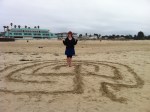
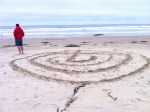
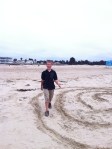
On our last vacation day at Pismo Beach, my husband and I drew a labyrinth in the sand together with our toes and then we walked it with our family.

Talk Books: The Art of Family

(Amazon affiliate link included)

Last month I finished reading The Art of Family by Gina Bria. I’ve already quoted it here a couple of times and I’d like to offer another series of quotes and insights I enjoyed from this book.

We will have doubts about our depth of relationships with our children. Questions will haunt us. (If a baby-sitter picks them up at school today, will they be irrevocably damaged?) But to a parent, doubt is a way of asking all the right questions. What we so often experience as doubt is really the process of creating ongoing relationships. It is when we stop doubting, thinking, questioning, in relationships that they die.

Gina Bria (2011-11-28). The Art of Family : Rituals, Imagination, and Everyday Spirituality (p. 7). iUniverse. Kindle Edition.

I really loved this. It reminded me of another reassuring mothering moment that happened for me at the La Leche League International conference in 2007. Martha Sears was speaking and she said something to the effect of, “does anyone ever wonder if they are ‘attached enough’ to their kids?” She then said that the very fact that you think about those subjects and ask yourself those questions means you are. And, that you are a good motherShe said that only good mothers worry about being good mothers. I found that tremendously reinforcing and have drawn on it repeatedly over the years! I’ve heard other parents say that they feel confident they are making the “right choices” for their families, because if they weren’t right, they wouldn’t do them, but I often lack that sense of complete certainty. I see a lot of possible “right choices” as well as piles of “good enough choices” in the world and it is helpful to remember that turning these things over, asking hard questions about them, and having doubts about your own parenting is actually part of the process of a healthy, alive relationship with your children.

And, speaking of making mistakes and having doubts, I also enjoyed this reminder that children are watching how you handle mistakes and how your repair damage:

Perhaps it will come as no surprise to nonreligious parents that teaching children to resist the status quo is a spiritual gift; but observing what’s wrong about what surrounds us is the first necessary step leading away from the brokenness of a particular culture, setting, or time. Spiritual leadership at home earns a special place in children’s formation, especially in their imagination. Refining our children’s spiritual imagination is essential; it will become their storehouse, a granary, for making choices about the way they will face loss or triumph. Their imaginations will be shaped by the world we present them. Children need to hear not only what we believe in, but also what we long for, what we hope for—not just what we think the world should look like, but what it doesn’t look like, and why. And, yes, we want them to be like ourselves, but more. We want our children to admire us on the deepest level of our own spirituality. Not just our ethics, our morality with others, but also what is our being, our nature, what choices we make, who we are in front of the vastness of everyday life, and what we do when confronted with evil. These questions are alive for children from the very beginning of their lives. We cannot wait until we, as adults, as individuals, have finally answered, to our satisfaction, our own questions and doubts about God, the world, and human nature. We are meant to do it together. We are joined spiritually to our children, it cannot be otherwise. Our children want computer software, Matchbox cars, and iPhones. But what they want most from us is who we are. To them we are Adam and Eve, the first human specimens of their universe. They keep their eyes on us; they know that no other adult will matter quite so much to them while they grow. They want us to be good. And when we are not good, they watch carefully to see how we will handle it. Here is where most of us will have a chance to be heroic—exactly when we stumble.

And, with regard to parents as everyday heroes, Bria touches on something that I’ve tried to communicate in a past poem for mothers:

You may feel uncomfortable and puzzled about this or you may be the most agnostic person you know, and yet, in loving your children, you are practicing the profoundest spirituality. In this you are heroic, and there are days when you know it. You know you’ve been stretched to the limit, faced insanity, wept in the closet, physically found an entirely new level of exhaustion. It’s called sacrifice. No one else, except maybe, maybe, your partner, will ever know what you’ve done. No one else will ever guess how hard it has been. No one will thank you for it. Even when your children have their children, they will only vaguely realize what you’ve done—they will be too frantic caring for their own kids. Yet you do it. Now, that’s heroism.

Gina Bria (2011-11-28). The Art of Family : Rituals, Imagination, and Everyday Spirituality (p. 80). iUniverse. Kindle Edition.

YES! Though, I do actually feel like my children are really good about expressing thanks to me. Little Alaina has a somewhat new habit of saying “thank you” to me for almost everything. She asks me to pick her up and when I do, she throws her arms around my neck, pats my back, and says, “SANK you, mommy!” And, she almost always says, “thanks” for nursing too. She’ll talk to my “na nas,” saying, “thank you, nonnies. Love you, nonnies. Thank you, mommy. Love you, mommy.” No thanklessness there 😀 My boys too will often tell me I’m the “best mom in the world!” or that they would never want a different mom because I’m, “the greatest mom ever!” So, I do, in fact feel appreciated by my kids on a regular basis. However, I identify with the remarks about no one really know how hard its been and that you are heroic in continuing to meet the challenge! March 2013 057

And, as I prepare for a major trip to California later this month, I call to mind two particularly àpropos reminders about having so much to do all the time:

“Face it, now, you will never have enough time to do all the right things, the necessary, even important things you can eternally think up, but you will have enough love.”

“I want my sons, both of them to learn from me that they are free to be rooted in home and still be abroad in the world as men.’’ She also feels being a mother to her sons involves giving them pictures of her as a woman engaging her gifts. She is sharing her interests with him, preparing him to see women as partners, with many interests, giving him a model.

And, finally, a thought about making a home:

HOME IS THE FIRST PLACE we spend our love. It is the site, the space, the enclosure, where we love each other and spin ourselves into a family—mother, daughter, father, son, and over all, lovers. It is the place we disburse our energy, expend our life, and exercise our imagination. It holds all our little memory objects and, with them, the people we love—the ones we are willing to spend our lives on. The ones we most want to show and tell to. It’s never just four walls. Home can be thought of almost as a body to care for; a body that contains the spirit of the family. One can read the character of a family by the home they make. It is not the things they have, but the spirit of life that is manifest in their home, because home is the ultimate joint project families do together. It is imperative that home be made by all family members. It is not a woman’s private project, whereby she creates a space and everyone else just inhabits it. Home is a joint project—that means children must be fully engaged in “keeping’’ house in the same way the adults are. Most chores for children are assigned to build character—not really to attend the body of the home together. By giving children an explanation about why their contribution to the home is important and giving them an opportunity to contribute—a true sense of ownership—a discernible difference in the attitude takes place; it’s a community effort. Young children “play house’’ for real because they understand that you depend on them; and if they feel how vital they are to you, to this project, they respond. After all that is what children inherently want, to belong to someone, in some place, and to give their little selves too.

Gina Bria (2011-11-28). The Art of Family : Rituals, Imagination, and Everyday Spirituality (pp. 126-127). iUniverse. Kindle Edition.

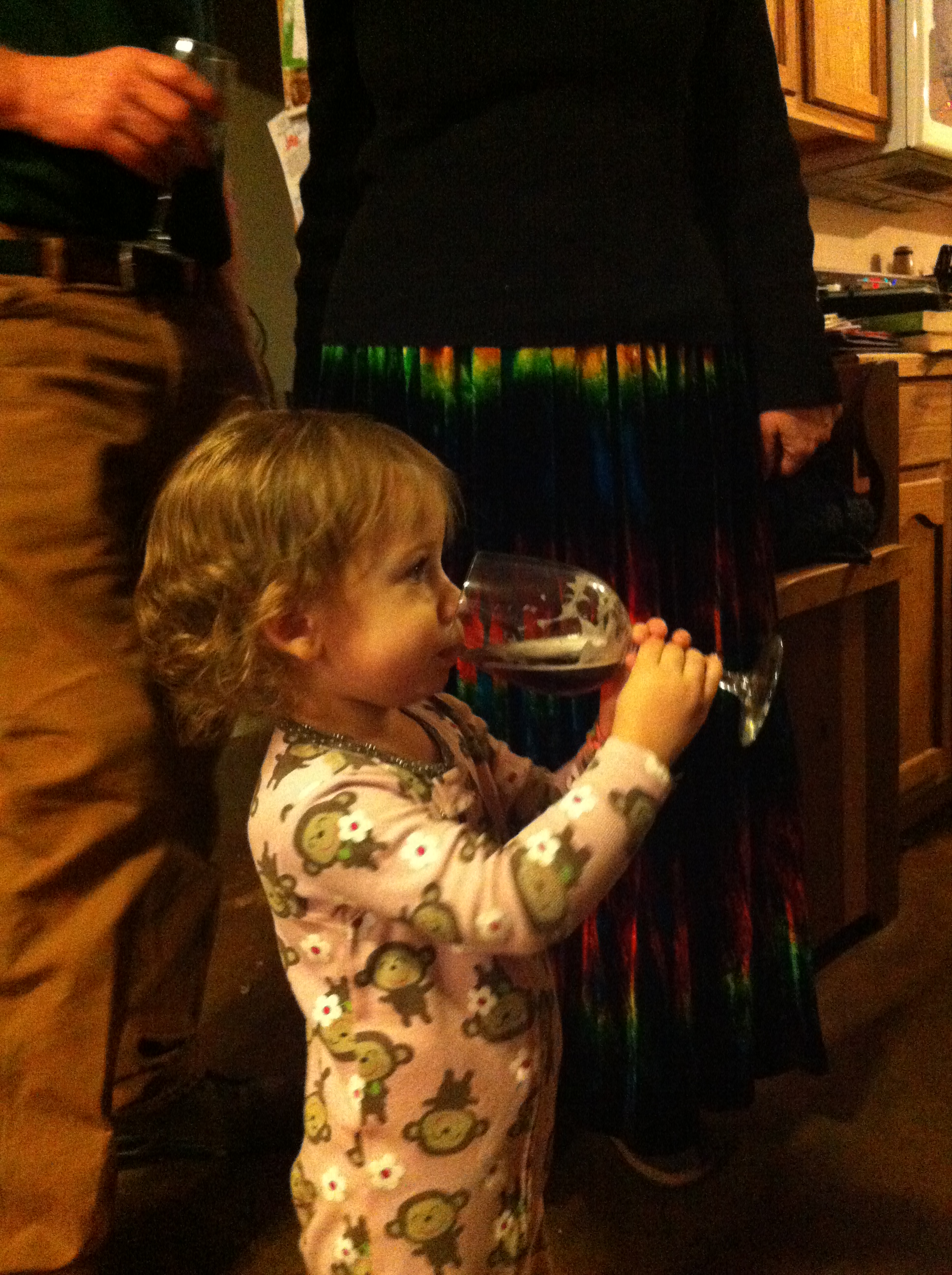
And, one about goblets. Yes, goblets. I feel her!

What is it about goblets that gives me a lump right in the throat? To see a little fist brandishing one about, drink half-sloshing, ought to fill me with terror. Instead I get the deeply satisfying affirmation that, for the moment, we are princes of our palaces, little or big as we are. Goblets ring royalty bells for me, aristocracy, or even only mere martiniesque sophistication, but they symbolize elevation, reminiscent of a chalice. A goblet lifts you up, even as it lifts up the body of liquid you are drinking. The imagery of a child sipping from a goblet is a glimpse of a lost land, some original garden, where animals talk, flowers sing, feasting abounds, and every servant is a noble in disguise. Maybe our little diner parties for children are a silly attempt to taste this vision, but I can’t give it up, even if we do, in the end, lose some goblets, in peril of a gash. When the other mothers come to collect their children, I know they contain their askance glances: I’ve let their children play with glass. I, too, wonder sometimes if I am a demented, too-casual mother. But I am not, I am crazy for the real. I so want to put the real into children’s hands, to promise them while they are still children, still believers, that it is beautiful, exciting, and dangerous to be at a table.

Gina Bria (2011-11-28). The Art of Family : Rituals, Imagination, and Everyday Spirituality (p. 138). iUniverse. Kindle Edition.

Alaina with sparkling cider on New Year's Eve.

Alaina with sparkling cider on New Year’s Eve. She’s got the real in her hands! 🙂


Talk Books: What Dying People Want

I’ve mentioned before that sometimes I use my blog as a way to store stuff that I want to remember or have easy access to later. I also use it as a means of collecting information all in one place, so that it is easy for me to search and reference again in the future, rather than having to flip through stacks of books. This leads me to a tendency to leave huge stacks of books piled by computer waiting for me to have time to transcribe all of the important stuff out of them. Often, I get fed up and re-shelve them, thinking why bother re-typing someone else’s ideas anyway, shouldn’t I just be having my own ideas?! Or, I think, guess what Molly, there is a way for this information to be stored…it is called a book and the information will still be there if you want to go back to it. But, today I thought that maybe there is a happy medium—maybe as soon as I finish a book, I should do a quick wrap-it-up blog post in which I do simply transcribe the things I want to remember, no pressure to add a bunch of new insights of my own, and if at such time I want to transform any of those quotes into a longer post in the future they’ll be tidily saved and waiting for me. AND, the book can then be re-shelved, or even given away, promptly after being “processed” in this manner, rather than waiting by my computer with a sort of guilt-provoking air of expectancy and rebuke.

(Amazon affiliate link included in image)


Unfortunately, the subject of my most recent read isn’t really a cheerful one to kick off this little experiment! However, I’m doing it anyway. The book is What Dying People Want by David Kuhl, MD. Many people have observed that end-of-life care bears similarities to birth-care (beginning-of-life care) and in fact the content of most the sections I marked to share could very readily have the word “birth” or “pregnant woman” substituted. Of course, with end-of-life care, there is not the happy anticipation of the joyful hope and promise of a new baby, but then, with birth-care there is not actually always a guarantee of that either and many women experience grief and loss from a variety of sources/experiences mingled throughout their childbearing years.

With regard to doctors communicating with patients in a dismissive, brusque, or too no-nonsense of a manner:

…he had no intention of hurting her and seemed not to realize that he could have spared her much suffering if only he had spoken with compassion.”

Seriously. How true is this. How basic. And, how often overlooked.

And then, when talking about the doctor-patient relationship:

It is my sense that people visit physicians expecting to be heard, taken seriously, and understood. Martin Buber speaking of the essence of relationship in his book I and Thou. He states that an I-Thou relationships is one in which both people meet and experience one another in the context of their wholeness, their personhood. Only then do the two become equals with regard to dignity, integrity, and power…

…When the doctor regards the patient only as a disease [or baby container]…the relationship is at risk of becoming the I-It variety. That is also true if the patient regards the doctor only as a body of knowledge, disregarding the impact the doctor-patient relationship might have on the doctor. Hence, the relationship may be reduced from I-Thou, to I-It, or perhaps even to It-It. The relationship is at risk of becoming ‘a disease speaking to a body of knowledge, a body of knowledge speaking to a disease…

I use this in my classes too, explaining that relationship is our medium and without it we can be technically correct, but therapeutically impotent. I caution against falling into a pattern of speaking of people as “cases” or even worse, “the food stamp case” or “the brain tumor in room three” (real-life example from my first MSW internship in an oncology clinic).

I also marked this Emily Dickinson poem, The Mystery of Pain:

Pain—has an Element of Blank—

It cannot recollect

When it began—or if there were

A time when it was not—

It has no Future—but itself—

Its Infinite realms contain

Its Past—enlightened to perceive

New Periods—of Pain.

Dr. Kuhl also writes about the important of touch, something that birthworkers also know well, explaining:

As Bill Moyers writes, “Touch is deeply reassuring and nurturing. It’s the first way a mother and child connect with each other…what a mother is saying to her child with that touch is ‘Live…your life matters to me.'” Remen also describes how people with cancer [or who are having babies] often feel when they’re touched by health care providers. They say they feel as though they are merely ‘a piece of meat.’ She reports that one woman said, ‘Sometimes when I go for my chemotherapy, they touch me as if they don’t know anybody’s inside the body.’

The first part of this made me think about what my mom is doing for my grandma right now, only in the reverse order. Once upon a time, her mother connected to her with that touch…Live…your life matters to me…and now my mom returns this original patient, loving, nurturing touch, only it is saying, I’m here…your life has mattered to me…go with peace.

I’d marked a couple of other things about family relationships and sharing stories, etc., but the last quote I actually want to type out does actually touch on birth:

There are two important things to remember with regard to your childhood and your family of origin. First, each pregnancy changes the family in that it will either result in a miscarriage, which is a death, or a birth, which marks the addition of a new family member…Second, your memory is your story and your truth. Your family members will have experienced the same events differently and will likely have different memories. Your experience and understanding of events is legitimate; the same holds true for other family members.

I wrote my grandma a letter and mailed it at the beginning of this week, but I don’t know that it is going to make it to her in time. So, a couple of days ago, I took this picture of the kids and texted it to my mom to give to her:

April 2013 005

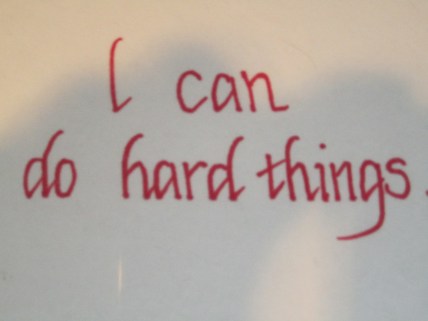
You can do hard things, I’ve told my mom. And, she is. Really hard, sad things. You feel like you can’t do it, but you’re doing it.

It applies to my grandma too.

hardthings