Archives

Thesis Tidbits: Birth as a Shamanic Experience

Childbirth is a rite of passage so intense physically, psychologically, emotionally, spiritually, that most other events in a woman’s life pale next to it. In our modern lives, there are few remaining rituals of initiation, few events that challenge a person’s mettle down to the very core. Childbirth remains a primary initiatory rite for a woman.” –from the book MotherMysteries

When I was pregnant with my first baby, I read an article centered on the theme, “Birth as a Shamanic Experience.” I can no longer find August 2013 050the exact article (online or printed), but I distinctly remember my feeling upon reading it: I was entering into a mystery. Giving birth was big. Bigger than anything I’d ever done before and it went beyond the realm of a purely biological process and into something else. Like shamanic experiences, giving birth is often described as involving a sense of connection to the larger forces of the world as well as being in an altered state of consciousness or even a trance state. While shamanic experiences may involve “journeying” to other realms of reality, giving birth requires the most thoroughly embodied rootedness of being that I’ve ever experienced. It, too, is a journey, but it is a journey into one’s own deepest resources and strongest places. The sensation of being in a totally focused, state of trance and on a soul work mission is intense, defining, and pivotal.

Shamanic journeys may be embarked upon for the purpose of soul retrieval and I can’t help but think that this is the purpose of giving birth as well—the birthing woman travels into herself to bring forth the soul of her child.

“Birth is certainly messy and bloody. It is intense, fierce, fiery and loud, but not violent. It is bloody from shamanic transformation. Birth-blood is the primordial ocean of life that has sustained the child in utero; the giving of this blood in birth is the mother’s gift to her child. The flow of blood is the first sign, following the flow of waters, that signals that new life is on the way, just as it is the first sign of a young maiden’s initiation into a new life at her menarche. The blood of transformation is miraculous. In Spanish, the phrase ‘dar a la luz, to give birth, literally means ‘to give to the light’. Giving to the light — mothers giving birth are giving light to new life through blood. The messiness and bloodiness of birth are the gift of the Earth–elemental chaos coming into form.”

via Article: Birthing as Shamanic Experience.

In the aftermath of giving birth, particularly without medication, many women describe a sense of expansive oneness—with other women, with the earth, with the cycles and rhythms of life. People who become shamans, usually do so after events involving challenge and stress in which the shaman must navigate tough obstacles and confront fears. What is a laboring woman, but the original shaman—a “shemama” as Leslene della Madre would say —as she works through her fears and passes through them, emerging with strength.

In her classic book Shakti Woman, Vicki Noble describes giving birth as a central shamanic experience and perhaps the root of all shamanism:

“I believe I underwent an initiation of the most ancient variety, birth as a shamanic experience, the central act of female shamanism—the quintessential act that offers a woman a completed experience of facing and moving through her fears to the other side. It isn’t that birth is the only way for a woman to experience this initiation—many women climb mountains or face other kinds of physical endurance tests and also come through it reborn into their power. But biologically birth is a doorway, a given for most women on the planet. It is fundamental opportunity to become empowered. Most of us giving birth today do not have the full experience, which is co-opted and distorted beyond recognition, changed from an active process into something that is done to us, as if we don’t know how to do it ourselves. Reclaiming the right to birth in our own instinctual way is a shamanic act of courage that has unfortunately become as remote to us as our ability to fly through the night in the form of an owl or heal the sick with the power of the drum. It wouldn’t hurt if we began to think of our birthing and child rearing as central parts of our shamanic work…” (p. 223).

After explaining that the homebirth of her second son was her, “first initiation into the Goddess…even though at that time I didn’t consciously know of Her,” Monica Sjoo writing in an anthology of priestess essays called Voices of the Goddess, explains:

“The Birthing Woman is the original shaman. She brings the ancestral spirit being into this realm while risking her life doing so. No wonder that the most ancient temples were the sacred birth places and that the priestesses of the Mother were also midwives, healers, astrologers and guides to the souls of the dying. Women bridge the borderline realms between life and death and in the past have therefore always been the oracles, sibyls, mediums and wise women…

…the power of original creation thinking is connected to the power of mothering. Motherhood is ritually powerful and of great spiritual and occult competence because bearing, like bleeding, is a transformative magical act. It is the power of ritual magic, the power of thought or mind, that gives rise to biological organisms as well as to social organizations, cultures and transformations of all kinds…” (page unknown).

20130903-200523.jpg

I’m working on my thesis project on the subject of birth as a spiritual experience and this topic is part of it. You can read more about Birth as a Shamanic Experience in the blog post at Feminism and Religion from which this post is excerpted: Birth as a Shamanic Experience by Molly | Feminism and Religion.

Tuesday Tidbits: More Wild Woman

“Within every woman there is a wild and natural creature, a powerful force, filled with good instincts, passionate creativity, and ageless knowing.20130903-200550.jpg Her name is Wild Woman, but she is an endangered species. Though the gifts of the wildish nature come to us at birth, society’s attempt to “civilize” us into rigid roles has plundered this treasure, and muffled the deep, life-giving messages of our own souls. Without Wild Woman, we become over-domesticated, fearful, uncreative, trapped.”

-Clarissa Pinkola Estes (via TheGypsyPriestess)

“The doors to the world of the wild Self are few but precious. If you have a deep scar, that is a door, if you have an old, old story, that is a door. If you love the sky and the water so much you almost cannot bear it, that is a door. If you yearn for a deeper life, a full life, a sane life, that is a door.” 

— Clarissa Pinkola Estés, Ph.D (Women Who Run With the Wolves)

“An Awakening Woman is a spiritual rebellion engaged in a glowing and embodied, nothing-held-back love affair with the great mystery. She moves in the world with fierce compassion, grace and freedom, and is passionate about truth, rest and real love. She is fluent in angelic, diva and in Kali roars. Earth is home and so is infinity.” 20130903-200523.jpg

–Chameli Ardagh, Awakening Women Institute

“We need the tonic of wildness…At the same time that we are earnest to explore and learn all things, we require that all things be mysterious and unexplorable, that land and sea be indefinitely wild, unsurveyed and unfathomed by us because unfathomable. We can never have enough of nature.”

― Henry David Thoreau

And, then some fiery thoughts as well:

“Hold onto your dream, though it may burn you.
It is the Fire of the Initiate.
Hold onto your Vision, though it may shatter your core and
the earth may tremble with the anticipation of your blossoming.
Hold true to your Heart, though you may crack and bleed.
It is a moon blood cleansing, a womb making space
For a tiny spark, to burst
Into even brighter flame.” 20130903-200533.jpg

by Lisa Buell, JourneyDance Facilitator

Come into the fire, come in,
come in, dance in the flames of the festival
of the strongest sun at the mountain top
of the year when the wheel starts down.
Dance through me as I through you.
Here in the heart of fire in the caves
of the ancient body we are aligned.
Our cells are burning
each a little furnace powered by the sun
and the moon pulls the sea of our blood.
This night the sun and moon dance
and you and I dance in the fire of which
we are the logs, the matches and the flames.

Marge Piercy, from “Shadows of the Burning; The Lunar Cycle”

“She walks not away from the fire…but toward it…because not only can she handle the HEAT…she contains it…and her fire wills forth the work that is meant to be in the world…” ~Anni Daulter, Sacred Pregnancy

Prior Wild Woman post.

20130903-200618.jpg

Tuesday Tidbits: Breastfeeding Research

August 2013 050

Some new (but non-breastfeeding) sculptures this week! 🙂

Before I begin today’s post, I feel like acknowledging that I find it puzzling that we even need to do research on breastfeeding or that it is considered “news” OR that it is something for which the advantages need to be “debunked” OR “proven.” It feels similar to me to seeing journal articles “revealing” that your own blood has special nutrients in it that help your body to function or announcing that having your own blood in your body helps you be healthier and live longer. Or, likewise, if we were to see articles “proving” that it is good for your cells if you drink water or that a special component has been added to a new soda to make it as “close to water as possible.” Some things just don’t really need to be news. And, I’ve observed for over eight years that new, often negative research about breastfeeding often “coincidentally” surfaces right around World Breastfeeding Week, and usually some new campaign also surfaces with a feel-good, but toothless message about “supporting all mothers,” and perhaps some “shocking” reveal article about celebrity breastfeeding will also pop up.

That said, unsurprisingly, some breastfeeding research and general breastfeeding articles have caught my eye recently. The first with regard to weaning and depression:

But the frequency with which women experience depressive episodes when weaning their babies is far less understood. Researchers “The intersection between lactation and mood is important, and it is extremely understudied,” said Dr. Samantha Meltzer-Brody, director of the perinatal psychiatry program at the UNC Center for Women’s Mood Disorders. “There are definitely people who report mood symptoms associated with lactation.”

via Weaning And Depression Linked In Many Women.

The second is one that will actually affect the way I practice when helping breastfeeding women and it is about the relationship that may exist between mothers having trouble breastfeeding and early signs of diabetes.

New research has revealed the hormone insulin plays an important part in the production of breast milk – and mothers who are struggling with feeding may have low levels of insulin.

For a long time, insulin was not thought to play a direct role in regulating the milk-making cells of the human breast.

But scientists now know that the mammary gland in breast becomes sensitive to insulin during lactation.

via Why mothers struggling to breastfeed could be showing early signs of diabetes | Mail Online.

And, not new or surprising or current, but unfortunately of continued relevance is the fact that IV fluids during labor artificially inflate baby’s birthweight:

But when babies lose more than 7% of birth weight during these early days, does this automatically mean they are not getting enough milk? No, according to a recent study.

A greater weight loss may be completely unrelated to breastfeeding and due instead to excess IV fluids mothers receive within the final 2 hours before delivery. According to this study, these excess IV fluids inflate babies’ birth weight in utero and act as a diuretic after birth. Babies whose mothers received more IV fluids before birth urinated more during their first 24 hours and as a result lost more weight. Number of wet diapers during the first 24 hours predicted infant weight loss. This was true whether the babies were born vaginally or by c-section. Another study published earlier this year had similar findings.

This weight loss has nothing whatsoever to do with breastfeeding and milk intake. In fact, the authors suggest that if clinicians want to use weight loss as a gauge of milk intake, they calculate baby’s weight loss not from birth weight, but from their weight at 24 hours. According to their findings, this could neutralize the effect of the mother’s IV fluids on newborn weight loss.

via Breastfeeding Answers Made Simple – Breastfeeding Reporter – Newborn Weight Loss and IV Fluids in Labor.

They way we treat women during birth matters for her breastfeeding relationship and the health of her baby! Birth interventions are not benign.

Also, not benign is the way this article from MSNBC chose to describe some research about breastfeeding women having a lower risk of Alzheimer’s disease (if researchers were more careful to watch their language, ala Diane Wiessinger, and remember that breastfeeding is the biologic norm, the article would actually be titled, “formula feeding increases risk of Alzheimer’s”):

Amazing news for moms who breast-fed: All that hassle was worth it — not just for your baby (who will likely have a higher IQ), but for you as well. A new Cambridge University study suggests that women who breast-feed can cut their risk of Alzheimer’s disease by up to two-thirds and calls the link “highly significant.” Those overly precious attachment parents might have the last laugh yet, as the benefits seemed to increase with longer periods of breast-feeding: Women who breast-fed for a year were found to have about a 20 percent lower risk of developing the disease as someone who had breast-fed for only four months. [Source]

via Breastfeeding cuts Alzheimer’s risk by two-thirds, study says.

Note that this “article” was published during World Breastfeeding Week and inserts little digs about being “overly precious” and a “hassle.” Words matter. They seep into our consciousness and affect our realities and our understandings of ourselves and our babies.

Not coincidentally, we also have to keep “proving” over and over again what many parents often feel in their hearts: that babies need to be with their parents, that they need to be held, and that breastfeeding is good for them.

“Ill-advised practices and beliefs have become commonplace in our culture, such as the use of infant formula, the isolation of infants in their own rooms or the belief that responding too quickly to a fussing baby will ‘spoil’ it,” Narvaez says.

This new research links certain early, nurturing parenting practices — the kind common in foraging hunter-gatherer societies — to specific, healthy emotional outcomes in adulthood, and has many experts rethinking some of our modern, cultural child-rearing “norms.”

“Breast-feeding infants, responsiveness to crying, almost constant touch and having multiple adult caregivers are some of the nurturing ancestral parenting practices that are shown to positively impact the developing brain, which not only shapes personality, but also helps physical health and moral development,” says Narvaez.

Studies show that responding to a baby’s needs (not letting a baby “cry it out”) has been shown to influence the development of conscience; positive touch affects stress reactivity, impulse control and empathy; free play in nature influences social capacities and aggression; and a set of supportive caregivers (beyond the mother alone) predicts IQ and ego resilience as well as empathy.

via Modern parenting may hinder brain development, research shows // News // Research at Notre Dame // University of Notre Dame.

Is anyone else getting tired of these kind of impressive “reveals”? I find it discouraging and frustrating, but maybe I’m just in a bad mood today!

I was less crabby to read this pleasant little story about Selma Blair and her breastfeeding toddler:

Arthur, who just celebrated his second birthday on July 25, seemed to enjoy the tasty snack, smiling and chatting gleefully with his mother and passers-by before the two headed off the train.

Even in more progressive parts of America breastfeeding is still seen as taboo, despite countless studies affirming the list of health benefits for both mothers and their children…

via Selma Blair breastfeeds her son Arthur, 2, during afternoon shopping trip | Mail Online.

And, from the same publication (not always widely renowned as a respectable source!), we see this interesting article about portraits of breastfeeding mothers from the 1800’s along with a little social commentary:

The seemingly normal image of the nursing mother in mid-1800s America poses a stark contrast against the media storm surrounding California mother-of-two Jamie Lynne Grumet last year, who posed on the cover of TIME breastfeeding her three-and-half-year-old son.

via Bizarre pictures reveal the unlikely trend for photographs of breastfeeding mothers in Victorian-era America | Mail Online.

And, interestingly, something else women also feel, but don’t necessarily have “back up” for, is the understanding that it isn’t breastmilk alone that has these effects for women, it is the act of breastfeeding itself, something that is not always differentiated in breastmilk research:

1) Find out what they mean when they say “breastfeeding.” This question by itself can often clear up misperceptions. In many cases, when critics say “breastfeeding,” what they really mean is “breast milk” independent of its delivery method; they do not mean the entire package that is breastfeeding. Breast milk obviously shines when compared to any of its substitutes. But when the independent effects of the milk are teased away from the act of breastfeeding, the differences seem smaller. And that is precisely the point—it’s the milk and the method of delivery that make the difference for both mother and baby.

via Answering the Critics: Breastmilk Separate of Breastfeeding Does Not Produce the Same Results | Kindred Community.

Along these same lines, but from a personal perspective instead, I was pleased, but not particularly surprised to read this mother’s story about breastfeeding her adopted son:

I am surprised by how not different breastfeeding our son feels compared to breastfeeding our older, biological children.

But because he’s adopted, breastfeeding felt even more important. I wanted him to feel that bond — that closeness and skin-to-skin, to help him feel comforted. Not being pregnant, and not knowing what he felt like in the womb beforehand … I wanted that physical connection with him afterward. And it’s just been really easy so far, although I don’t love the supplemental nursing system [laughs]. There have been moments of trying to get him to latch where, I’m just like, ‘Ok! I’m done!’

But I feel so bonded and attached to him, and I think a huge part of that has been the breastfeeding.

via The Breastfeeding Chronicles: Nursing My Adopted Child.

We also see questionable research results that seem to completely overlook the systemic context in which women make their feeding “choices”:

Brown found extraverted, conscientious and emotionally stable mothers were more likely to try breast-feeding. But being agreeable or open to new experiences made no difference, according to the findings published Tuesday (Aug. 6) in the Journal of Advanced Nursing.

Many try, but many quit

More than 80 percent of the women in the study tried to breast-feed, but less than half who tried were still breast-feeding six months later. And women who switched from breast to bottle tended to switch quickly. About 73 percent of the women who stopped breast-feeding did so within two weeks after giving birth.

Women who were conscientious — for example, detailed-oriented and punctual — were likely to start, but also likely to stop breast-feeding.

Mothers who kept breast-feeding during the first six months were more extroverted and less anxious than mothers who always bottle-fed or switched to the bottle. The effect was particularly strong within the first six weeks after birth. [Blossoming Body: 8 Odd Changes That Happen During Pregnancy]

via Mom’s Personality Key to Whether Baby Get the Breast or Bottle | LiveScience.

It is a huge mistake to reduce breastfeeding decisions to a “personal choice,” when it is a public health issue made in the context of a society that treats formula like the norm (as with the breastfeeding reduces risk, rather than formula increases risk research, as referenced above), pays excessive attention to celebrity breastfeeding experiences or public breastfeeding encounters, makes snide remarks under the guise of presenting new, duh-based research, that tolerates disparities in survival rates of black babies, and interferes with the birth process to the extent that we do not even have an accurate starting birth weight to gauge the “success” of breastfeeding by.

August 2013 017

Nursing toddlers at the creek last week. We’re talking about something else, but our faces look like we could be saying: “OMG! Can you *believe* that these things are even issues?!”
Totally.

Thesis Tidbits: Naming and Claiming

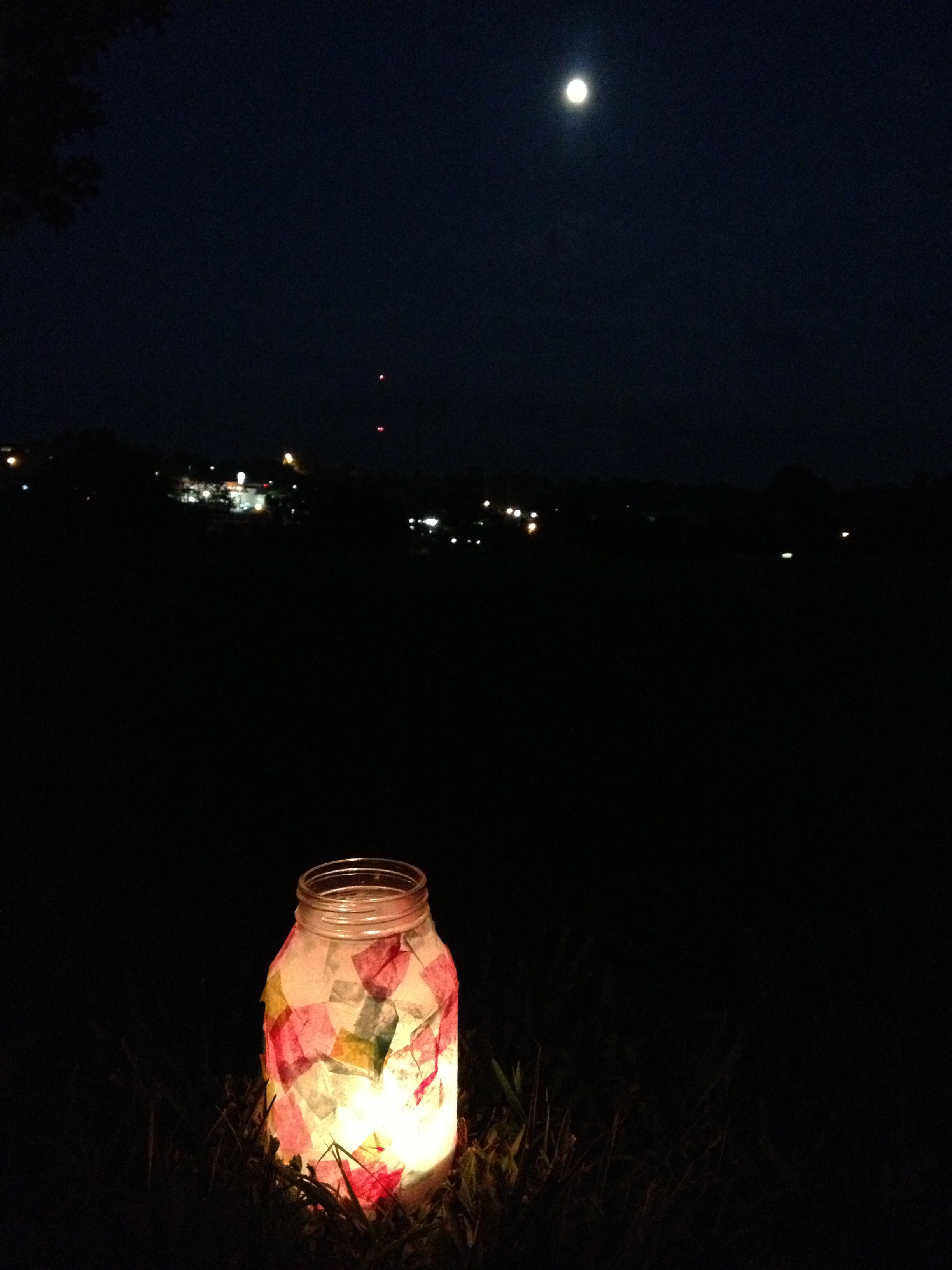
As I mentioned recently, I’m working on my thesis project on the subject of birth as a spiritual experience. Today, instead of my usual August 2013 032Tuesday collection of links, I’m sharing some thought-provoking quotes that I collected while writing the prospectus for my thesis. Pictures in this post are from last night’s Day of Hope and Healing ceremony in Rolla.

The first quote really relates to the whole reason I chose this topic in the first place:

“In this culture…a woman can be made to feel foolish for emphasizing the centrality of giving birth to her identity or her personal religiousness, her ‘womanspirit’” (Listening to Our Bodies, Stephanie Demetrakopoulos, p. 18)

While it is the opposite in my own circle of friends, in the dominant culture, whether given “religious” significance or not, I find this is true: women are made to feel foolish for emphasizing the centrality of birth to her womanspirit, to her life, to her feelings about her capacities as a woman and mother. Women are made to feel foolish for struggling with birth trauma OR for feeling “empowered” by birth. After all, it is just one day. But maybe, just maybe, part of this sensation actually originates in sensitivity to the feelings of other women:

Elizabeth Gray in Sacred Dimensions of Women’s Experience explains:

…this is not the entire story of the ambivalence a woman experiences along the way to claiming the sacredness of her own birthing process. There is the reticence she feels about possibly offending other women by seeming to elevate her own birthing experience. How is one woman to claim her own experience of an ‘easy’ birth when she knows other women labor for days in pain and some women die giving birth? How is she to name as sacred her experience of having babies, when, for whatever reason, other women are childless? How is she to claim her own experience of ‘conscious’ home-birth…,when other women may now regret having been unconscious with medications? Or if you had a ‘bad’ experience giving birth, how are you to name that when women around you are happily anticipating a successful culmination to their Lamaze classes? Women’s naming of much in their own birthing experiences is silenced by the sensitivity to other women’s feelings.

But despite these many reasons for reticence, there is a bonding of women who have given birth. It is deep and silent…a silvery shadowed oath between life and death down which all ‘the birthing mothers on the planet’ have moved, those ‘mothers of all times without whom no one walks this planet.’ Women who have given birth reach out to one another…saying to all those mothers whose birthing experiences were different than hers, ‘Don’t feel badly. ‘Rejoice in the incredible, joyous, astounding fact of creation…Every moment a child is born is a holy moment…’

(Elizabeth Dodson Gray, ed. Sacred Dimensions of Women’s Experience, p. 49-50)

Before this quote, Gray shares that the patriarchal association of birth (and women) with “uncleanliness” continues to impact women August 2013 040today:

“Because of this ancient overlay, it is not easy for women to lay claim to our life-giving power. How are we do reclaim that which has been declared fearful, polluting and yet unimportant? How are women to name as sacred the actual physical birth, which comes with no sacred ritual, while lurking around the corner of time are the long-established meta-physical rituals of circumcision and baptism?” (Elizabeth Dodson Gray p. 49)

Women today are also laboring to birth a healthier, more whole planet and means of being. For many women this begins with how they approach pregnancy and childbirth, how they consciously prepare to the welcome their babies into the world.

It is well past time in human history to push aside male dread and boldly claim the sacred woman-centeredness of every human birth…The wonder at new human life cannot be separated from the sacredness of women’s bodies or women’s lives. We will be involved in a profound betrayal of the gift of life itself as long as individual men and male culture ‘freak out’ before women’s power to give birth…If we cannot affirm women and women’s bodies and women’s birthing and women’s choice, we will go on bringing death to the planet and to ourselves. We cannot affirm life without affirming women. [emphasis mine]

(Elizabeth Dodson Gray, ed. Sacred Dimensions of Women’s Experience, p. 50-51)

And, as I’ve touched on before, birth and breastfeeding are the original sacramental experiences:

“Woman’s body is a transmutation system; it has the power to change blood to milk, to change itself into food which in turn becomes the physical and psychic energy of a child. She is creating an incarnate soul, assisting it in growth.” —Stephanie Demetrakopoulos (Listening to Our Bodies, p. 36)

August 2013 052

(this is my prayer flag this morning when I hung it up at home after the event last night)

August 2013 017

Flowers released on the lake at sunset.


Tuesday Tidbits: Miscarriage Care

66112_618725968151055_156983473_nFor ages, I’ve had the following quote about miscarriage and doctors saved in my drafts folder:

“The only person who can really tell you what is happening to you is your own doctor, who peers into you with a light and a speculum, who samples your blood or urine, or who presses a sonogram paddle into your belly. If you are in trouble, bleeding, scared, or more depressed than you think you can handle on your own, you must find help. Read and research all you can, but remember that the one-on-one assistance of a real doctor is the only thing that will give you answers that count. If you don’t like or trust your doctor, then find one you can…”

I Will Carry You

I saved it because it bothered me so much to read. One-on-one assistance of a real doctor is the ONLY thing that will give you answers that count?! I disagree so much with this and it saddens me to know that women turn to doctors for support that they are unlikely to be able to provide, particularly if women are looking for compassion. My own ER doctor experience was horrendous and involved quotes like: “this is very common, it is just natural selection” and, “this wouldn’t hurt so much if you would just stay still,” as well as leaving bloody handprints streaked across the bed and blood on the floor (specifically after being told how very disturbed I was by all the blood). In contrast, I was treated with beautiful compassion (and actual, genuine, useful help) by every midwife I talked to. In defense of doctors though, I also went to my own family practice doctor for a follow-up visit and she said one of the best things I heard from anyone, doctor or not: “some women find comfort in knowing that love was all their babies ever knew.” And, before I left, she asked if she could give me a hug. That mattered more and lasted longer than any “advice” that she gave me about possible causes, trying, again, etc.

So, this week, related miscarriage articles and stories started catching my eye, such as this one that touches on the various dehumanizing ways many women are treated in medical care environments:

Rush of blood to my brain. Pounding in my ears. Breathing comes in short bursts. And I’m ushered out into the waiting area where I’m told to go home to wait for it to ‘come away’. And there I find myself, blinking in the sun, shaking like a leaf. So I waited. And waited. One week later the tiny form within still clung on. I saw it in my minds eye, not wanting to let go of me, its mother. Perish the thought. Instead I spent the week overly busy whilst somehow trying to recalibrate a defeated dream and birth date that would never occur. Finally, I just booked in for the D&C, and signed for an “excavation of contents.”

I am a psychotherapist and counsellor. I focus mainly on fertility in all its guises. From pre pregnancy to birth and beyond I am struck as women and their partners endure dehumanising experience after dehumanising experience, just like this one…

via The heartbreak of miscarriage

And, that reminds me of what Ina May said in her Birth Story documentary that the number one rule of maternity care should be Be Nice and she asks us to consider how just those two words could change maternity wards. While not miscarriage-specific, of course The Neighborhood Doula’s status on Facebook tonight jumped out at me:

“We need to treat women tenderly in labor. This may be the first time she has ever been treated that way. She will pass that on to her baby. If mom has a traumatic birth, filled with interventions she may be afraid of her baby. Fear of baby = disempowerment. A new mother should never feel that way. We need to treat dad with tenderness during labor too. If we treat him well, he will treat mom and baby well.”

Wise words from Ina May Gaskin at the 2012 Joyful Birth and Breastfeeding expo, Asheville, NC

Over the weekend, I was touched to see a photo from Stillbirthday on Facebook with a caption that almost made me cry because I think this perspective is SO important:

Supporting Birth Diversity means…

…Honoring that birth can occur, at any point in pregnancy.

The word “birth” is not reserved for full term, neither is it exclusively for live babies.

(Share your photo and what Supporting Birth Diversity means to you.)

And, of course I’ve already shared my thoughts on miscarriage as a birth event: 421806_605009189522733_1988490402_n

“Miscarriages are labor, miscarriages are birth. To consider them less dishonors the woman whose womb has held life, however briefly.” –Kathryn Miller Ridiman

via Miscarriage and Birth | Talk Birth.

I also read several articles about other women’s experiences with miscarriage as a birth event such as this moving exploration of “missing” when your expectation was of carrying:

Instead I was overwhelmed by pain that felt like the worst wrenching of labor, contractions that came so fast I could barely breathe, shaking and numbness in my limbs that finally made me crawl to the phone and call the nurse who told me to get to the ER as fast as we could. I’d never heard stories of the real, raw truth of what it means to miscarry, so I had no idea what to expect.

But just because a death comes early does not mean it is lighter to bear or let go…

on carrying and missing | mothering spirit.

And this article that touches on the birth event concept, as well as issues of guilt and blame, as well as the idea of miscarriage as a rite of passage:

That is why there is no doubt in my mind that any woman – and indeed any family – who goes through a miscarriage should see it as a rite of passage. The more that miscarriage is seen as horrific, as something which somehow could have been preventable, and is therefore blamed on the woman’s health, fitness or diet, the more we are denying ourselves as fallible animals. We are making women responsible somehow for these acts of nature. We are instilling guilt and fear, layer upon layer. The result is a woman, and by extension her family, who no longer trusts her body to do what is right. It must be faulty – it miscarried. Her body was not healthy enough, not experienced enough or somehow not adequately formed to be able to carry the pregnancy to full term.

This is not a healthy attitude to have, and can only result in more negative birth outcomes. One of the reasons I do not have a black tinge around my memories of my son’s birth is that, through it all, I trusted in my body. I did what I could, and although I couldn’t understand WHY it had happened, I came to accept that this time was just not meant to be. I am an animal, and I am fallible. This time I fell into the statistics of 1 in 7 pregnancies failing. There’s really no more to it – no guilt, no shame, no fear for future pregnancies; it’s just not appropriate.

Having gone through this whole process I now feel more of a woman. Yes, really. Not only have I experienced the horror myself, but I have had countless other women suddenly willing to share their own story with me. In a sad way I feel as if I have entered a secret club, something taboo and a bit shameful. I’m not really sure why nobody wants to discuss miscarriage, when it affects so many of us. If it were accepted as a rite of passage for any woman, as much as childbirth itself, I feel we’d all have a more positive outlook on all births, whatever the outcome.

via Guest Post: Miscarriage as a Rite of Passage | The Happy Womb.

I also finished reading a quick book that was offered free on Kindle last week (now back to a regular, reasonable price) and saved these two quotes:

In the days that followed, the bleeding continued. Every time I would see the blood, I couldn’t help but think I was losing my child slowly bit by bit. It wasn’t just ordinary bleeding; it was the end of my baby’s life. It was the end of my dream to become a mom. I was devastated. I felt so lost and alone. Unfortunately, my husband didn’t seem to understand or be able to comfort me. To him, the baby was not even real yet. And since he was actually afraid of becoming a dad, I think in some ways he was relieved that it didn’t work out. In my mind, I had lost a child. Someone important to me had died, and I was grieving. The hard part is that I was grieving alone with no one to share my sorrow. This is often a problem for women who miscarry. You feel so sad and devastated, but many times your friends and family don’t get it. They don’t realize how much love you can feel for a baby you never saw, met or held. You try to turn to those you love for comfort and support, but they have little to offer you during the time when you need someone to lean on the most. It’s not that they don’t want to help or that they don’t care. No one wants to see you sad or hurting. They just don’t understand what you are feeling and the intensity of your emotions. Even the words they say to you can come across as insensitive or hurtful. They often dismiss your grief and trivialize your pain, all the while thinking they are being encouraging and supportive.

(Amazon.com: From Pain to Parenthood: A Journey Through Miscarriage to Adoption eBook: Deanna Kahler: Kindle Store)

The author also touches on the depth of the grief following miscarriage and how very, very real it is (I’ve written before that one of the things I kept saying to my parents when they came to my house following Noah’s miscarriage-birth was, “this was real. I want you to know it was real.” (I honestly think I didn’t think miscarriages were “real” before, in the sense that I categorized them as something other than birth or death.)

According to The Women’s Encyclopedia of Health and Emotional Healing, “the length of the pregnancy is not as significant as how emotionally linked a woman feels to her baby.” The book goes on to say that if you felt your child was real very early in the pregnancy, then you may experience as much grief as someone who has lost a newborn. If the love for your unborn child was already there, you will be heart-broken and devastated. Your loss can affect you in many different ways, some emotional and some physical. You may notice muscle tension, have trouble sleeping, have difficulty concentrating, suffer from frequent headaches, cry a lot or even notice unusual sensations in your body.

(Amazon.com: From Pain to Parenthood: A Journey Through Miscarriage to Adoption eBook: Deanna Kahler: Kindle Store)

And, these quotes made me remember a brief post from The Amethyst Network regarding early losses and the validity of feelings:

I felt very conflicted over this. I HAD grieved before, but if I was grieving over not-an-actual-miscarriage then did it count? If my loss wasn’t actually a loss, then was my grief valid?

I was talking with a friend (who happens to also be involved with TAN) and explained to her how I was feeling confused and upset over this. She taught me something important.
“You grieved” she said. “It doesn’t matter whether the physical experience was a miscarriage or not, because the grief was real, you experienced the emotional process, and that is valid.”

And so I would say to all mothers who have had an early loss, or a loss that they felt in their gut even though there was no proof. Your feelings–no matter what they are–are valid feelings. We each have different experiences, and we each have different feelings. But what you feel is legitimate, regardless of the circumstances.

Did It Count?

995401_615271668496485_1504558296_n

(and, really, there is no “shame” in not acknowledging how it changes us either, the shame rests in the lack of acknowledgment from so many around us)

This last photo (for some reason it refuses to let me caption it?!) is of some “hope” baubles created by members of the Rainbow Group (local loss support group) at our recent MamaFest event (more about this soon, I hope!).

August 2013 028

Wednesday Tidbits: World Breastfeeding Week!

wbw2

Today is the last day of World Breastfeeding Week and I fully intended to create a link-full Tuesday Tidbits post about this yesterday. However, I was busy helping actual breastfeeding mothers at my monthly LLL meeting and then came home and worked on my handout and project preparations for our second annual MamaFest event this Saturday. I then had a faculty meeting while Mark took Lann to tae kwon do and went grocery shopping with the other kids and by the time I had a few minutes to spare again, it was 11:00 at night and I figured I might as well forgo Tuesday Tidbitting and just watch Teen Wolf instead! 😉 For MamaFest, I’ve been getting together handouts, a trivia game, and pins for prizes for my La Leche League booth, birth art supplies and display items and birth education handouts for the Rolla Birth Network/Talk Birth/birth art booth, and miscarriage/stillbirth handouts for the Rainbow Group loss support table. I’ve toyed with various projects for my birth art booth and finally came up with something that feels perfect—birth or motherhood affirmation/blessing cards!

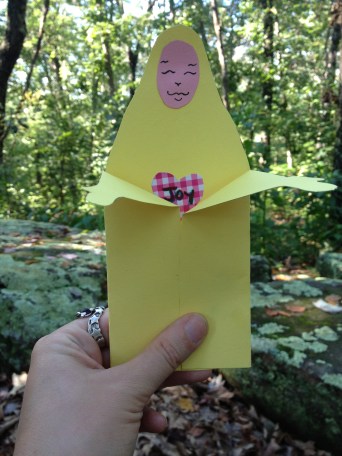
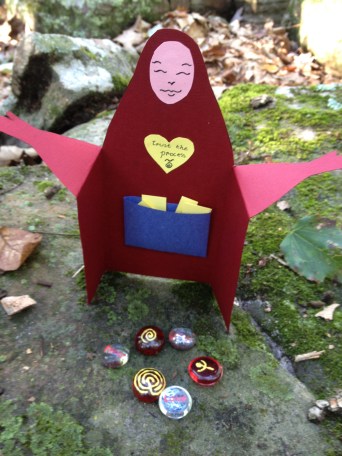
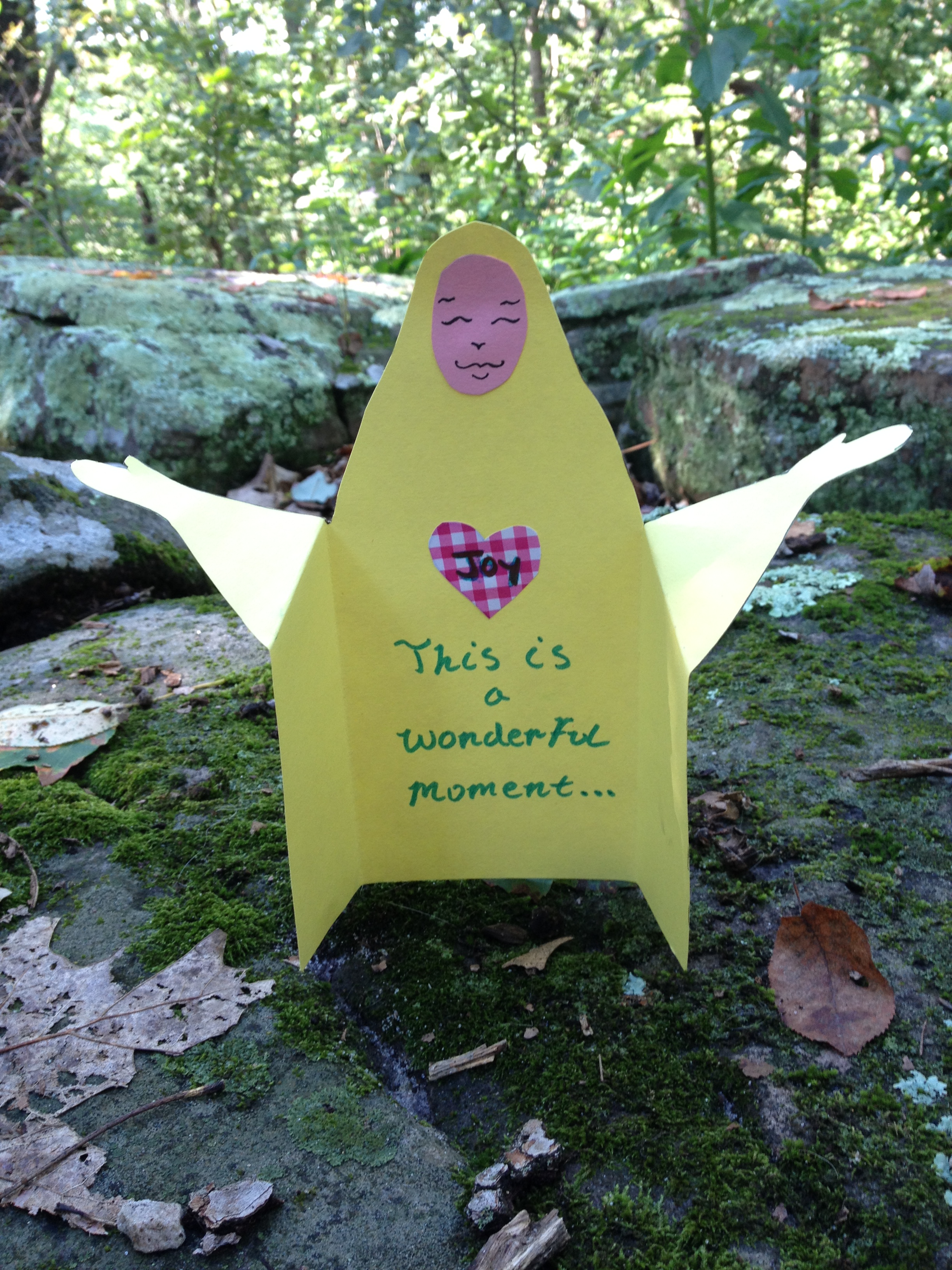
August 2013 042August 2013 046

August 2013 052

I got better at them the more I made. This one has a pocket with other little affirmation cards in it. I also started to experiment with painting on little glass “stones” to go in the pocket too. I need glass paint markers really though and I quickly ordered some, but they won’t make it in time for MamaFest.

For ideas for affirmations for them, I’m bringing along several books, including:

25 Ways to Joy & Inner Peace for Mothers

25 Ways to Awaken Your Birth Power

World Breastfeeding Week often seems like an occasion during which the media perceives non-breastfeeding mothers as being “discriminated” against somehow, and some women seem to take the occasion personally—like its very existence is a personal criticism. This article about the “I Support You” initiative is good in theory, but I sense in it the suggestion that WBW is specifically trying to make non-breastfeeding mothers “feel bad” and I did not appreciate the loads and loads of comments on the article that reference “La Leche Nazis”—particularly because said “Nazis” apparently visit mothers in the hospital to critique their mothering and I seriously doubt that any of the experiences shared in the comments were actually with LLL Leaders (who I have never been known to go to a hospital room uninvited and try to make mothers breastfeed. That isn’t part of our job at all. The commenters were probably dealing with whichever nurse is assigned to lactation, trained or otherwise).

I plan for my message to say: “To all those mothers who’ve learned the difference between the mother you think you will be and the one you actually are — I Support You.”

via I Support You: The Conversation We Should Be Having About Breastfeeding And Formula.

A related article that also has some great insights and thoughtful content (but for which, again, I feel breastfeeding advocacy is misconstrued):

Three billion things can go wrong when you breastfeed. But even with a bad latch, tongue tie, thrush, a clogged duct, and a crazy oversupply, I still think that nursing this little boy is the most amazing magic that I’ve ever felt in my life. I am the only thing that is keeping my child alive right now. You’re damn right that’s a superpower. When my breasts are engorged and I’m in pain, or when I swoop in to a room and soothe my screaming baby with my body, I want to shout it from the rafters, just like all of you did. This time, my breasts make milk. That is my superpower. And yet I have seen that breastfeeding moms get tested too: the nasty stares, the mean comments, the endless questioning that makes you doubt yourself: “Are you sure he’s getting enough? He’d sleep longer if he took a bottle. He’ll never be independent if he’s attached to you all the time.” The Mommy Wars have fueled the embers of fear and failure on both ends of the feeding spectrum. The simple act of feeding your child now comes with having to defend your choices.

via Milk Drunk | Kim Simon.

The underlying message of these articles, however, as well as that of World Breastfeeding Week itself, is really about the value of community support for mothers. The whole “village” and “tribe” concept. When I hear mothers describing attempts to breastfeed, I hear mothers with broken hearts as well as many stories involving broken circles of support:

I am a systems thinker and always hold in mind that breastfeeding, like all aspects of women’s lives, occurs in a context, a context that involves a variety of “circles of support” or lack thereof. Women don’t “fail” at breastfeeding because of personal flaws, society fails breastfeeding women and their babies every day through things like minimal maternity leave, no pumping rooms in workplaces, formula advertising and “gifts” in hospitals, formula company sponsorship of research and materials for doctors, the sexualization of breasts and objectification of women’s bodies, and so on and so forth. According to Milk, Money, and Madness (1995), “…infant formula sales comprise up to 50% of the total profits of Abbott Labs, an enormous pharmaceutical concern.” (p. 164) And the US government is the largest buyer of formula, paying for approximately 50% of all formula sold in the nation…

via Breastfeeding as an Ecofeminist Issue | Talk Birth.

Giving Birth with Confidence also wrote about the role of the breastfeeding village:

You’ve probably heard “it takes a village” when it comes to parenting and raising children. And it’s true — surrounding yourself with supportive family, friends, and professional and online resources goes a long way in making your parenting experience a better one. But what about a “village” for breastfeeding? Breastfeeding can be (and often is) a wonderful experience. It also can be trying, challenging, and hard work. Creating access to a network of people and resources who support breastfeeding will help you in times of need, provide a sounding board for your thoughts, and celebrate with your triumphs.

via World Breastfeeding Week: Creating Your Village — Giving Birth with Confidence.

And, so did Brain, Child magazine:

For breastfeeding advocates, then, your best shot at influencing other mothers to breastfeed is when you’re nursing yourself—and talking it up to your pals, especially if you’re central in your network, which gives you what social scientists call high “transitivity.” And, it stands to reason, that even if you’re not a breastfeeding advocate—even if you don’t even know what colostrum is—you can still be affected by the changing norms. Once your friends breastfeed in front of you, chances are excellent that witnessing a two-year-old lift up her mother’s shirt to nurse at a park just isn’t worthy of a second thought, much less a flinch. Like in the obesity study where friends of friends were shown to convey habits, you’ve become “tolerant.”

via The Village | Brain, Child Magazine.

Reading these articles made me think of the classic article by Teresa Pitman, originally in Mothering magazine (I think). I think this article is responsible for the introduction of the word “tribe” into the natural mothering lexicon as it is currently used (but, maybe it was The Continuum Concept, which is what Pitman references in her article. I know for me, it was Pitman’s article that first introduced me to the notion of a “tribe” and the fact that I needed one!). I was excited to hear her speak on the subject in person at the La Leche League International conference in Chicago in 2007.

I realized that we had formed our own, very small tribe. Spending our days together satisfied our need for adult companionship without separation from our babies, and working together made all the chores — even cleaning disgusting stuff out of the bottom of the fridge — more fun.

Eventually our husbands both found work in other communities, and our daily time together came to an end. But I had seen how important this kind of relationship is for me, and I deliberately tried to recreate it with other friends.

Not long after Vicki and her family moved, I was at a church picnic when I saw Lorna for the first time. She and her family had just arrived in our community. Something about the way she held her baby was familiar to me, and I went up and introduced myself.

She, too, was looking for a tribe, as she had recently moved away from her family. Soon my new friend Lorna and I got together every Thursday to bake bread (and sometimes other foods) for our families for the week. She had a bigger house and roomier kitchen, so we generally went there. We split the cost of the ingredients, and as our children played together (by then, I had three children and Lorna had six), we kneaded and shaped the dough. While the bread was rising, we talked and tended to other tasks. I often brought a basket of things that needed mending, so we could work together while we were waiting.

We were there when she miscarried her seventh baby, and she tended to my older children while I was giving birth to my fourth. I still think of Thursday as baking day, even though Lorna now lives hundreds of miles away.

My children are almost grown, but I still work with parents. The theme of loneliness is as strong and prevalent as it was when I sat crying on my bed with my new baby, wondering how I’d cope with no one to talk to. Certainly the desire to overcome isolation is one of the reasons why women return to work; it’s a need easily understood by those of us who opt to stay home with our children.

We truly are social animals; we need to be with other people to feel good, whole, and happy. It’s worth the effort to create tribes, however small and imperfect they may be.

via Finding Your Tribe – by Teresa Pitman.

I was also reminded of my own past thoughts about surviving postpartum:

“In western society, the baby gets attention while the mother is given lectures. Pregnancy is considered an illness; once the ‘illness’ is over, interest in her wanes. Mothers in ‘civilized’ countries often have no or very little help with a new baby. Women tend to be home alone to fend for themselves and the children. They are typically isolated socially & expected to complete their usual chores…while being the sole person to care for the infant…” –Milk, Money, & Madness

via Postpartum Survival Tips | Talk Birth.

And, I thought about the role that a tribe—or lack of one—plays in “lactation failure,” that may be falsely attributed to biology OR to evil “La Leche Nazis” assaulting unsuspecting women in hospital rooms with steaming piles of dogma doo.

I’ve remained firmly convinced for, like, ever, that it is culture that fails mothers and babies and not women’s bodies that fail. And, I truly wonder if it is ever possible (except for in cases of insufficient glandular tissue, metabolic disorders, breast surgery/removal, and clear physical malformations) to really tease apart whether a mother is actually experiencing lactation failure or sociocultural failure. I remain fairly convinced that in many cases it is impossible to know—but, that a mother (or physician) may certainly experience it as “lactation failure” and thus add that data point to the 1%. I have long maintained that a lot of people forget that breastfeeding occurs in a context and that context doesn’t necessarily support breastfeeding. However, I do also know from years of experience that motherbaby physiology can lead to problems too and we often overlook that in assertions about breastfeeding.

via Preventing Culturally Induced Lactation Failure | Talk Birth.

The idea of the “I Support You” campaign, with its “unbiased” subtext, also caused me to take another look at some past thoughts about “bias” and breastfeeding:

While I very much appreciate this observation and reminder, we also absolutely need to remember that biased means to exhibit “unfair prejudice”–it simply IS NOT “biased” to support breastfeeding as the biological norm and most appropriate food for babies. I was very concerned to read the comments on the post from other educators talking about their own “biases” toward physiologic birth or breastfeeding and how carefully they guard against exhibiting any such bias in their classes. Hold on! Remember that the burden of proof rests on those who promote an intervention—birth educators and breastfeeding educators should not be in a position of having to “prove” or “justify” the biological norm of unmedicated births or breastfed babies. I hate to see birth instructors being cautioned to avoid being “biased” in teaching about breastfeeding or birth, because in avoiding the appearance of bias they’d be lying to mothers. You can’t “balance” two things that are NOT equal and it is irresponsible to try out of a misplaced intention not to appeared biased. So, while I appreciate some of this educator’s points, I do think she’s off the mark in her fear/guilt and her acceptance of the word “bias.” The very fact that making a statement that someone has a bias toward breastfeeding can be accepted as a reasonable critique is indicative of how very deeply the problem goes and how systemic of an issue it is. If I say that drinking plenty of water is a good idea and is healthier for your body than drinking other liquids, no one ever accuses me of having a “bias towards water.” Breastfeeding should be no different. But, as we all know, breastfeeding occurs in a social, cultural, political, and economic context, one that all too often does not value, support, or understand the process…

via A Bias Toward Breastfeeding? | Talk Birth.

And, along these same lines, I saw a great quote from one of my midwife Facebook friends:

“Being an advocate for breastfeeding as the biological norm, healthiest and safest mode of feeding for most mothers and children is just that. It is meant to inform, enthuse, support, save lives, normalize the act. It is not meant as a slight or condemnation of non-breastfeeding mothers. Individually women breastfeed or not for a whole host of reasons. That is reality. That fact is respected and in no way is judgmental. Acknowledging the individual diversity does not change what breastfeeding is and why we need to continue to advocate for it around the world.” Desirre Andrews, CPM, RM

Exactly!

Speaking of my smart Facebook friends, I enjoyed reading a personal post from an IBCLC friend about why she didn’t celebrate WBW this month:

I think I’ve closed the “breastfeeding mother” chapter of my life, content instead to serve other breastfeeding mothers the best I know how. This is a big shift for me, since I’ve never approached breastfeeding support other than from the perspective of a mother who is also “walking the walk.” Am I “over” breastfeeding? The truth is, today, I’m ambivalent about it. My celebration of World Breastfeeding Week will always be welcome—I will never not be a supporter or an advocate, but a decade is a long time to do something, to do anything. A decade is a long time to be a breastfeeding mother; to not be one anymore, without ceremony or the closure that a more formal ending might offer, leaves me a bit unsettled.

via Why I didn’t celebrate World Breastfeeding Week this year | normal, like breathing.

IMG_7716

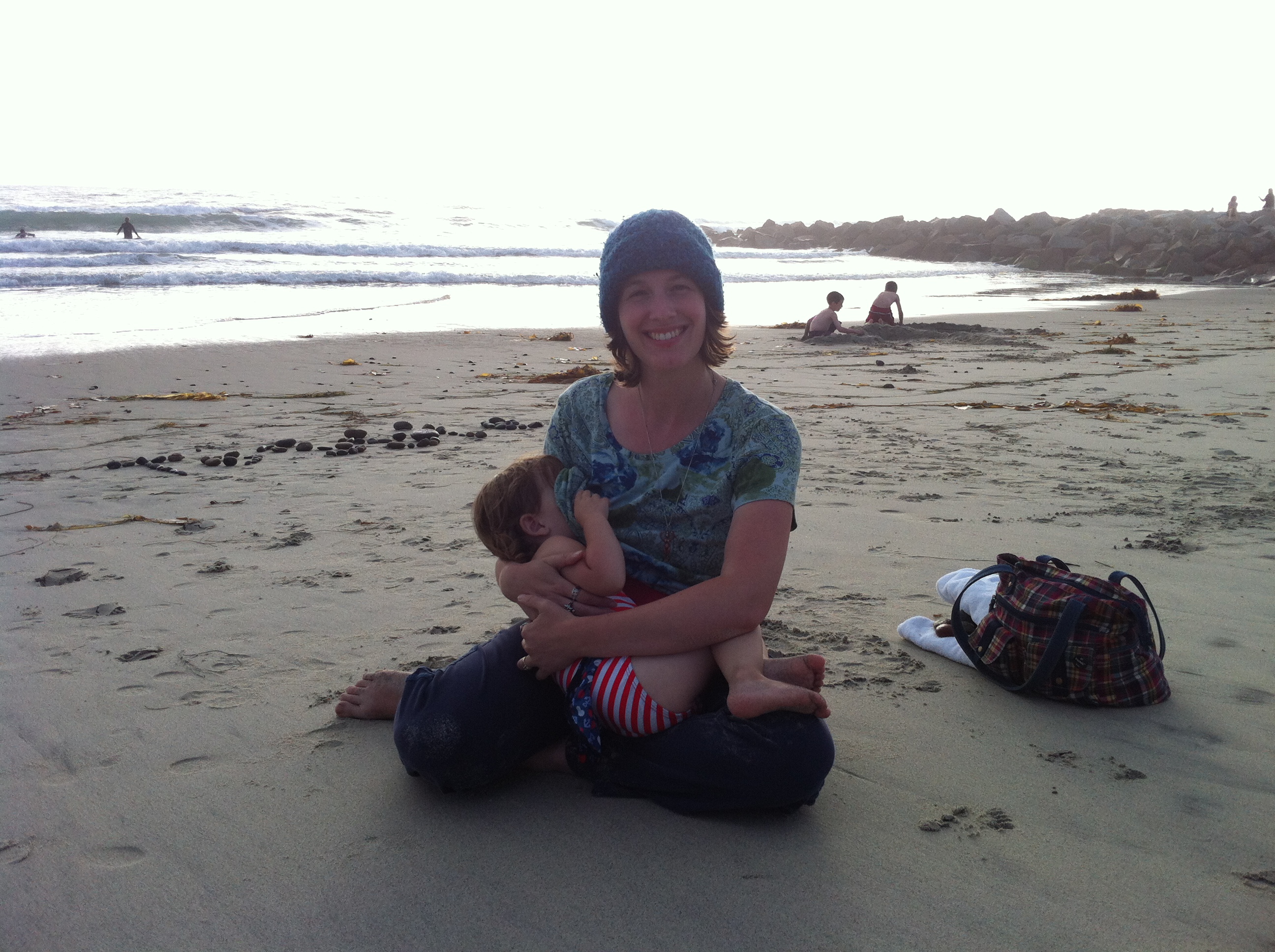
This small but mighty little girl still really, really, really likes to “nonny.”

Reading this made me reflect on my own breastfeeding journey and the toddler point at which I am with my own (likely) final nursling. I’ve wondered a lot if and when this chapter of my life will close in terms of working with other breastfeeding mothers. It is still very much my current reality, so it is hard to assess. What I do know is that when I go to LLL conferences and I see women who have been Leaders for 30 years, I think…that is my future. And, I leave with the distinct impression that I’m a lifer. However, a couple of years ago I might have said the same about birth work and now when I see pictures from my pregnancies, read some of my own writing, or look at some of the childbirth education supplies I’ve amassed over the years it all feels very far away now.

But, returning to the idea of support and tribes and breastfeeding women and I Support You to mothers of all kinds in their mothering journeys (which I DO absolutely believe in!), I also thought again of this:

This month as I sat in the circle at our mother-to-mother breastfeeding support group meeting, I looked around at all the beautiful mothers in that room. I reflected on each of their journeys and how much each one has been through in her life, to come to this time and this place, and tears filled my eyes. They are all so amazing. And, my simple, fervent prayer for them in that moment was that they could know that. Know that on a deep, incontrovertible level. I tried to tell them then, in that moment. How much they mean to me, how incredible they are, how I see them. How I hope they will celebrate their own capacities and marvel at their own skills. How I see their countless, beautiful, unrecognized, invisible motherful actions. How when I see them struggling in the door with toddlers and diaper bags and organic produce that they’re sharing with each other, I see heroines. They may look and feel “mundane” from the outside, but from where I’m sitting, they shine with a power and potency that takes my breath away. Moderating toddler disputes over swordplay, wiping noses, changing diapers, soothing tears, murmuring words, moving baby from breast to shoulder to floor and back to breast without even seeming consciously aware of how gorgeously they are both parenting and personing in that very moment, speaking their truths, offering what they have to give, reaching out to one another, and nursing, nursing, nursing. Giving their bodies over to their babies again and again in a tender, invisible majesty. In this room is a symphony of sustenance. An embodied maternal dance of being.

via International Women’s Day: Prayer for Mothers | Talk Birth.

August 2013 045

Stopped for some sandy nonnies.

Last year’s World Breastfeeding Week Post Round Up | Talk Birth.

Tuesday Tidbits: Birth Imprinting

What are imprinting upon newborns at birth in our culture?

As Sister MorningStar writes in her article The Newborn Imprint in Midwifery Today issue 104, Winter 2012…

If you have had the misfortune, as nearly all of us who can read and write have had, to see a baby born, perhaps pulled out, under bright lights with glaring eyes and loud noises of all sorts, in a setting that smells like nothing human, with a mother shocked and teary and scared; if you have witnessed or performed touch that can only be described as brutal and cruel in any other setting…

Every baby born deserves uninterrupted, undisturbed contact with her mother in the environment the mother has nested by her own instinctual nature to create. Any movement we make to enter that inner and external womb must be acknowledged as disturbing and violating to what nature is protecting. We do not know the long-term effects of such disturbance. We cannot consider too seriously a decision to disturb a newborn by touch, sound, light, smell and taste that is different and beyond what the mother is naturally and instinctually providing. Even facilitating is often unnecessary if the motherbaby are given space and time to explore and relate to one another and the life-altering experience they just survived. They both have been turned inside out, one from the other, and the moment to face that seemingly impossible feat cannot be rushed without compromise. We have no right to compromise either a mother or a baby.

I am deliberately leaving out the issue of life-saving because it has become the license for full-scale abuse to every baby born… [emphasis mine]

In the same issue in an article called Problems in American Maternal Health Care, Dan Currin points out:

Americans put a lot of trust in their physicians. We are socialized to believe that physicians are the only ones capable of taking care of us. For everything from how to eat to how to die, the mantra is the same in the US: ‘Ask your doctor.’ Meanwhile, physicians are more and more subject to a system that, as Gaskin describes, favors the priorities of hospitals, insurances companies and doctors above the best interests of mothers and their babies

And, Judy Slome Cohain writing in Collusion and Negligence in Hospitals describes it thusly:

To err is considered human, even when it involves maternal death, at a hospital birth. When a woman dies from malpractice after birth the protocol is to hold meetings to consider how to improve relevant protocols to prevent future disasters. Survival of the hospital is first and foremost. However, if a woman dies at an attended homebirth, the Ministry of Health policy is to start a case against the guilty part in a disciplinary court…”

I wrote about birth imprinting in another short post, The Magic of Mothering and about the notion of consulting your health care provider in some thoughts about Women’s Power and Self-Authority.

We also need to consider the role of birth “imprinting” on the breastfeeding relationship:

New mothers, and those who help them, are often left wondering, “Where did breastfeeding go wrong?” All too often the answer is, “during labor and birth.” Interventions during the birthing process are an often overlooked answer to the mystery of how breastfeeding becomes derailed. An example is a mother who has an epidural, which leads to excess fluid retention in her breasts (a common side effect of the IV “bolus” of fluid administered in preparation for an epidural). After birth, the baby can’t latch well to the flattened nipple of the overfull breast, leading to frustration for both mother and baby. This frustration can quickly cascade into formula supplementation and before she knows it, the mother is left saying, “something was wrong with my nipples and the baby just couldn’t breastfeed. I tried really hard, but it just didn’t work out.” Nothing is truly wrong with her nipples or with her baby, breastfeeding got off track before her baby was even born!

via The Birth-Breastfeeding Continuum | Talk Birth.

417

If she came with it label, it would say: Imprint with Care…

*Short post today because I’m out-of-town again! What the heck?! I need a vacation from vacations!

Tuesday Tidbits: Birth Thoughts

Lots of birth stuff to share this week! I may be slowly transitioning away from face-to-face birth work, but reading and writing about birth definitely remain on my agenda. First, this post about pivotal moments in one birth professional’s journey:

Thanks to a powerful recent blog by a doula in England about her experience in a Birthing from Within workshop, I have found myself reflecting on my own path as a doula and childbirth educator. Over the years I’ve done ICEA training, DONA Birth Doula Certification, and Birthing from Within Mentor Certification, along with apprenticing as a midwife and a Masters of Science in Parent-Child Nursing – more than my fair share of learning. Through the past twenty + years of practice I can identify the 7 core experiences that have shaped who I am as a birth professional.

via Birthing Ourselves | My Path as a Doula & Childbirth Educator.

Reading her list brought back some of my own pivotal moments and also helped me see how those moments relate to my current priestess/women’s mysteries path. I think I’ve already mentioned that I renewed my ICEA CBE certification this year, but I let my CAPPA certification lapse. I will let my prenatal fitness educator certification lapse as well and I did not renew my membership in several birth-related organizations. And, in a complicated decision related to a variety of factors, I withdrew my registration for a Birthing from Within mentor training this fall. I’ve wanted to train with BfW for ages, but I realized after we got home from California that I just can’t picture myself doing birth classes any more. Single day workshops or presentations, yes, but teaching (or mentoring) series of birth classes is just not on my radar any longer. I feel removed from or distant from it and I also feel okay with that. It is taking me quite some time to realize that birth writing is still a legitimate form of birthwork/birth advocacy/activism and I don’t need to feel like I “should” be doing something else in order to be valuable.

Speaking of birth professionals, I was interested to see this promising new blog by Amy Gilliand: Doulaing The Doula | Professional Development for Birth Doulas.

And, I’m so thankful that Missouri midwives have now known the freedom to practice for five years! I meant to post this link in an earlier Tuesday Tidbits post:

There is something so genuine, so deep, so…right about women serving women. Midwifery and midwives are intricately woven into the fabric of my life.

via 5 Years of Legal Midwifery in Missouri | Midwives, Doulas, Home Birth, OH MY!

Don’t forget to watch the lovely Ballad of the Midwife video that goes with it! Both the video and the post were created by a talented friend of mine 🙂

Speaking of friends, check out these large family blogs and vote for my friend Shauna’s blog Life with 7 Kids! (she just welcomed a new baby, so it is 8 kids now! :))

And, speaking of videos, after seeing a pretty hands-on, baby-twisting sort of breech birth in Birth Story, I found this pictorial article to be a good reminder with lots of useful pictures:

Most important rule is HANDS OFF THE BREECH no matter how tempting it is just to pull on that leg DON’T. It’s the easiest way to create nuchal arms and a completely deflexed head. When you pull on the leg you create a morro reflex in the baby.

via Mechanism of breech | Homebirth: Midwife Mutiny in South Australia.

And, speaking of Ina May:

“Remember this, for it is as true as true gets: Your body is not a lemon. You are not a machine. The Creator is not a careless mechanic. Human female bodies have the same potential to give birth well as aardvarks, lions, rhinoceri, elephants, moose, and water buffalo. Even if it has not been your habit throughout your life so far, I recommend that you learn to think positively about your body.”
― Ina May Gaskin, Ina May’s Guide to Childbirth

And, speaking of watching Birth Story: Ina May Gaskin and The Farm Midwives documentary, it made me think of this old post:

I know the traditional root of the word midwife is “with woman” (some sources say “wise woman”), but I’d like to offer another. When I was pregnant with my second son, I had a wonderful midwife and we spent many hours together talking about birth and midwifery. During one conversation she said to me, “you can’t be a midwife unless you love women.” This struck me profoundly—a midwife must love women.

via Midwife means “loves women”… | Talk Birth

Oh, and speaking of this loving women and this not being a lemon stuff…

Respect for our bodies, our babies, and our rights is never too much to expect.

That’s why I’m joining forces with the folks I thought were nuts. Remember the ones waving the signs? The ones I thought were nosy, yoga-ball bouncing doctor-haters? Turns out, they are none of those things. They are a smart, growing global coalition of people who recognize that we have a problem with the way many women are treated while giving birth. Nine out of 10 women give birth in a hospital in the United States. Through rallies and advocacy, ImprovingBirth.org is making sure everyone knows that all those women do not check their human rights at the door.

via Nosy, Yoga-Ball Bouncing Doctor-Haters – Why I Changed My Tune – Improving Birth | Improving Birth

But, what happens after the birth? I’ve often thought that my role in breastfeeding support, while less “glamorous” or exciting than birth work, has had more lasting value to the women I serve. Breastfeeding is the day in, day out, nitty-gritty reality of daily mothering, rather than a single event and it matters (so does birth, of course, it matters a lot, but birth is a rite of passage, liminal event and breastfeeding is a process and a relationship that goes on and on for every. single. day. for sometimes years). Anyway, sorry for the brief side note, but I enjoyed reading this article about the celebrity culture surrounding pregnancy and birth with its obsession with who has a “bump” and then how after the birth the main deal is losing that weight and having a fabulous bod again! Woot!

And that’s it. There’s no talk of the hard decisions and challenges that arise when bringing another human in the world: coping emotionally, miscarriages and health risks throughout the pregnancy, emotions that range from excitement to loss, how the partner is coping, decisions surrounding the birth, doulas, home birth, hospital birth, breastfeeding, milk supply, c-section recovery, vaginal recovery, colic, sleep, schedules, being tired all the time, depression, regret, fear, hiding in the bathroom crying. Agonizing decisions about work, caregivers and new priorities. Maternity leave. Paid time off. Unpaid time off. Pumping at work. Making time for your partner. Making time for yourself. A body that has changed but can also do incredible things.

Instead it’s mostly about getting skinny again after the baby is born, which we’re told over and over again is the MOST IMPORTANT THING. And it’s not. I know it’s not, and yet I have a constant dialogue in my head about how I have thirty pounds to lose and my thighs rub together and my stomach is bloated and has the texture of a grape that’s not quite a raisin and my face is fat and I’ll never fit into my old clothes again. I say this to friends (who haven’t had kids) and the response is: “Focus on the amazing thing your body just did, girl! A baby came out of you! You’re being too hard on yourself!” And they are right. I know this. But I can’t shake the feeling that I’m a failure because I’m not the size and shape I once was. And then I feel dumb and embarrassed for focusing on my looks when I should be celebrating how awesome it is that I’m a mom to two healthy, wonderful kids. It’s an exhausting, stupid cycle.

There is an important conversation to have about motherhood that we’re not having on a larger level. I know this because I talk to moms all the time. None of us are talking about maxi dresses or nursery colors or how we worked out for 90 minutes a day with our trainers while wearing a corset. We’re talking about how our maternity leaves don’t feel long enough. How often there’s nowhere to pump at work so we do it in our cars. How frustrating it is to be making too much milk/too little milk. How some days we can’t stand our partners, and on other days they totally save us.

via Exclusive: There Is More To Motherhood Than A Post-Baby Bod | Kate Spencer.

Reading all that and thinking about my own “grape” stomach that just isn’t quite making it back to “normal” after having my last baby, I was reminded of a quote from a very recent post:

“…we all need the renewing powers of ‘rhythm, ritual, and rest.’ This phrase reminds doulas of three helpful labor techniques outlined by legendary doula trainer, Penny Simkin. Rhythm, ritual, and rest not only aid birthing women, but they support all of us to move skillfully through our life’s labors. The power of rhythm restores vibrancy through dance, music, and motion. The power of ritual opens the way to direct encounter with the mysterious wonder of life. Rest renews and restores the very cells of our often tired and over-stimulated bodies and minds…” –Amy Wright Glenn

via Talk Books: Birth, Breath, & Death | Talk Birth.

And, speaking of Amy Glenn, I loved her lovely blessing for mothers to be!

“…May your pregnancy unfold with ease

May gentleness surround you

Joy for precious days

Days of two hearts beating in one body

You radiate wonder

Inspiring poetry, art, worship of ancients…” –Amy Glenn

via The Birthing Site

And, speaking of loving lovely words, I just have to re-share this quote as well:

labyrinth

Tuesday Tidbits: Domestic Violence

Tonight in my Introduction to Human Services class we cover Violence, Victim Advocacy, and Corrections. In a stroke of coincidence, I saw some great materials on Facebook this morning that I quickly added to tonight’s lecture:

The first is this infographic series from the World Health Organization. I first saw it here, but it really comes from here.

WHO_NMH_VIP_PVL_13.1_eng-page-001The second was this powerful public service message from Women’s Aid in the UK (trigger warning for violence):

During this same lesson, I also show my favorite mock poster about fool-proof ways to prevent sexual assault:

preventiontipsIs this at all related to birth? Yes, totally. In fact, I used this same poster in a past post that I really liked, if I do say so myself:

I truly think this is a chronic social issue—motherblame. We MUST look at the larger system when we ask our questions. The fact that we even have to teach birth classes and to help women learn how to navigate the hospital system and to assert their rights to evidence-based care, indicates serious issues that go way beyond the individual. When we say things about women making informed choices or make statements like, “well, it’s her birth” or “it’s not my birth, it’s not my birth,” or wonder why she went to “that doctor” or “that hospital,” we are becoming blind to the sociocultural context in which those birth “choices” are embedded. When we teach women to ask their doctors about maintaining freedom of movement in labor or when we tell them to stay home as long as possible, we are, in a very real sense, endorsing, or at least acquiescing to these conditions in the first place. This isn’t changing the world for women, it is only softening the impact of a broken and oftentimes abusive system.

via Asking the right questions….

And, unfortunately, domestic violence often begins during pregnancy:

Violence during pregnancy is an unfortunately common experience. Between four and eight percent of women experience domestic (intimate partner) violence during their pregnancies. The incidence of violence increases for women with unplanned or unwanted pregnancies with 26% of pregnant teens experiencing intimate partner violence and 15% of all women whose pregnancies are unwanted being in an abusive relationship. Indeed, murder is the second only to car accidents as the most common cause of injury related death for pregnant women.[1] Sadly, these statistics are likely higher in reality due to underreporting or misclassification.

via Domestic Violence During Pregnancy.

Our maternity care system unfortunately may also BE the perpetrator of violence against women:

While the situation is different from domestic violence in some ways, it is also similar. Abuse in the medical setting is also about power and control, the pregnant or laboring woman is often blamed for her situation, and verbal and emotional abuse can be similar. Because we are taught to “trust your doctor”, and in fact there is an explicit assumption of trust in the “fiduciary relationship” between the woman and her doctor who is an “expert”, most of us do not think about the possibility of abuse, and many of us stay with the OB or feel we have no choice about our health care providers or settings, especially when we are in labor. Also, the doctors and staff generally are not even aware that their behavior or actions are abusive.

via Guest Post: Abuse of pregnant women in the medical setting.

And finally, “normative” institutional abuse may be a part of many women’s birth experiences:

“‘Old wives’ tales,’ says the Oxford dictionary, are ‘trivial stories, such as are told by garrulous old women.’ It is significant that no one ever talks about ‘old husbands’ tales’ or ‘old doctors’ tales.’ Women are blamed instead. It is implied that there is poison in their speech and that the only safe thing to do is remain silent. The experiences that women share with other women are thus rejected and trivialized…In reality, it is not other women who instill and fuel anxiety in most pregnant women, but the medical system itself.” This quote from the 1980’s book, Giving Birth, by Sheila Kitzinger, remains strikingly relevant today. When women in the United States today enter the hospital to give birth, many experience some form of institutional violence. They may not explicitly define it as violence, but listening to their stories provides a disheartening picture of maternity care today.

via Birth Violence | Talk Birth.

Tuesday Tidbits: The Role of Doulas…

“So many of us are already working towards this aim – mamas (and groups) like LLL for sure, and doulas, women-centred midwives and July 2013 038doctors, and so many others…but really we need more. And there is no time or space for petty jealousies or in-fighting (and no judgments here, because it happens! I know the pain of this kind of sh*t, I’ve written a little about it before – and I may again – but it’s urgent we move beyond this if at all possible…) because we are already losing it – losing this capacity to give birth without intervention, to feed our babies from our own bodies, to experience love and connection in the fulness of which we are intended to be capable…” -Rebecca Wright (see more on why all of us are needed)

In “The Doula Phenomenon and Authentic Midwifery: Protection as a Keyword,” Michel Odent, writing in Midwifery Today issue 104, Winter 2012 describes the cultural conditioning of birth to think that women can’t do it on their own:

In this age of videos, photos and television, one cannot ignore that our current cultural conditioning is mostly determined by visual messages. Let us mention the powerful effects of the recent epidemics of videos and photos of so-called ‘natural childbirth.’ Almost always, several people surround the labouring woman. Young generations familiar with these pictures understand that the basic need of a labouring woman is to be accompanied by several persons. The effects of these visual messages are reinforced by the modern vocabulary, for example, to give birth women need a ‘coach’ (bringing her expertise) and support persons (bringing their energy). More than ever the message is that a woman has not the power to give birth by herself.

We must add that this cultural conditioning is now shared by the world of women and the world of men as well. While traditionally childbirth was ‘women’s business,’ men are now almost always present at births, a phase of history when most women cannot give birth to the baby and to the placenta without medical assistance. A whole generation of men is learning that a woman is not able to give birth. We have reached an extreme in terms of conditioning. The current dominant paradigm has its keywords: helping, guiding, controlling, managing…coaching, supporting…the focus is always on the role of persons other than two obligatory actors (i.e. mothers and baby). Inside this paradigm, we can include medical circles and natural childbirth movements as well.

Odent then goes on to explain that while the word doula comes from ancient Greek, actual modern-day Greek people advise him to use the word “paramana” instead, meaning literally, “with the mother.” He concludes his article with these important thoughts:

The doula phenomenon must be interpreted in the context of a period of transition. When the doula is understood as the mother figure a young woman can rely on before, during and after the birth, the doula phenomenon can be presented in a positive way as an aspect of the rediscovery of authentic midwifery. When, on the other hand, the doula is still another person introduced into the birthing place in addition to the midwife, the doctor and the father, her presence is counterproductive. If the focus is on the training of the doula rather than on her way of being and her personality, the doula phenomenon will be a missed opportunity. [emphasis mine]

I am concerned when I see rivalry between doula training organizations, because I think they are doing just this: focusing on the training of the doula rather than her way of being and her personality.

A long time ago I saved these two relevant, if somewhat opposing, quotes about doulas, culture, and advocacy:

First about doulas and collusion with patriarchy…

“I hate to say that the rise in popularity of doulas has done absolutely nothing to alter the status quo of hospital birth, but this seems to me to be true. In the past 10 or so years, the popularity of doulas has risen dramatically. And so has the rate of C-section and interventions in general. Am I suggesting correlation or causation? Absolutely not. Do I think that doulas are well-meaning, amazingly hard-working women who are truly passionate about women and birth and are trying to make a positive difference? Yes yes yes. But sadly, I don’t think they’re going to get anywhere. Because hospital birth is the collision of female power and patriarchy, and we aren’t going to change anything by behaving ourselves or adopting the approach of our oppressors. (No, this isn’t hyperbole. I really believe it).”

Doubts About Doulas (and patriarchy and stuff)

And, second about not bringing “politics” into the birth room…

“Now I understand there is a type of doula for everyone. Some women benefit from doulas with a more no nonsense attitude, the ones that don’t sugar coat things or come off more “militant”. Other women prefer a lighter touch or a more “middle of the road” doula. I respect the differences and the need for them. However, I believe there should be a separation of doula and advocate. Politics, in particular your own personal politics, have no business at the birth of your client. Once a client is in labor, any personal agendas should be checked at the door. There is a more appropriate time and venue to try and change faulty birth practices.

I think the same thing goes for the myth that we empower women through these actions at her birth. A woman’s power to advocate for herself and birth in the way she wants isn’t ours to give. It’s her birth and it has to be her job to find the power and be empowered. We can help, we can guide, we can even lead, but we can give that to anyone. Sadly though, through our actions, just like the hospital staff, we can take it away…”

Doulas and Advocacy: Are they mutually exclusive?

July 2013 036And, then, some more thoughts about the difference between activism and advocacy:

Activism, advocacy and support. As a birthworker I am always using one of these three tools. Sometimes I am using two at once, but never all three. And here is why: Support and advocacy can overlap. Advocacy and activism can overlap. But if you try to overlap activism and support you are going to be either ineffective, alienating, or both…

Activism, Advocacy and Support – To Brave Birth

We definitely need advocacy though and this is why:

Horrific abuse in childbirth happens every day in developing nations where women and their babies are often denied access to life-saving obstetric care.

Freedom for Birth – Can Anyone Argue Against Respecting Women’s Rights in Childbirth?

And, regardless of where or with whom or in which country women give birth, they deserve access to evidence-based care: What is Evidence Based Birth and Why Should I Care? — Giving Birth with Confidence

Birth is also a creative process:

“I believe that this is one of the important things about preparation for childbirth–that it should not simply superimpose a series of techniques, conditioned responses to stimuli, on the labouring woman, but that it can be a truly creative act in which she spontaneously expresses herself and the sort of person she is. Education for birth consists not, as some would have it, of ‘conditioning,’ but aims at giving a woman the means by which she can express her own personality creatively in childbirth.” –Sheila Kitzinger via More Thoughts on Birth as a Creative Process | Talk Birth.

And, birth matters a lot. It isn’t “just one day.”

“Homebirth cesarean mothers do not complete their births the way they planned, worked for, meditated on, and dreamed of. As a result, their births as mothers are left unfinished. As I told my therapist when my son was six months old, “His birth was finished but my birth, into being a mother, that’s been left hanging.” –via Homebirth Cesarean: “I was still an authentic mother.” – Momma Trauma.

In non-specifically-doula, but birth-related news, I finished some new sculptures and updated my etsy shop! And, one of my breastfeeding mama sculptures was featured in a neat Etsy treasury called Supporting Breastfeeding.

Yesterday, I finished downloading the The Business of Being Born classroom edition kit, which I’ll be reviewing here and hopefully using in my community development class in August. And, I’m also looking forward to finally watching/reviewing Birth Story: Ina May Gaskin and The Farm Midwives on Thursday with my Rolla Birth Network friends! Speaking of Rolla Birth Network, plans are underway for the second annual footprintscharmMamafest event in Rolla, MO on August 10th. This is a pretty epic event given our smallish town and associated resources. It really was great last year and I expect nothing less this year! I went a little crazy online and bought all kinds of supplies so we can make our own bindis at my booth at Mamafest. I also bought a lot of new charms for several purposes and I’m going to donate my favorite footprints-on-my-heart charms   to the Rainbow babyloss support group to make miscarriage memorial charms at their Mamafest booth.

And, finally, as I shared on Facebook earlier this week: I love it when my two-year-old points at my belly casts on the wall and says, GODDESS! And, I’m like, yes, yes that’s me… 😉