Archives

Thesis Tidbits: The Wise Women Behind, Within, and Around Us

October 2013 130

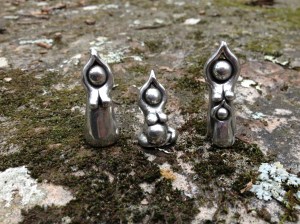
“The Childbearing Year” sculptures cast in pewter.

When I first described my thesis project about birth as a spiritual experience, I described my use of the word “spiritual” in this way:

When I use the word “spiritual,” I mean a range of experiences from a humanistic sensation of being linked to women around the world from all times and spaces while giving birth, to a “generic” sense of feeling the “might of creation” move through you, to a sense of non-specifically-labeled powers of Life and Universe being spun into being through your body, to feeling like a “birth goddess” as you pushed out your baby, to more traditional religious expressions of praying during labor, or drawing upon scripture as a coping measure, or feeling that giving birth brought you closer to the God of your understanding/religion, or, indeed, meeting God/dess or Divinity during labor and birth).

via Birth as a Spiritual Experience (Thesis Project) | Talk Birth.

Just this week, a mother shared a link to her birth story on my Facebook wall and there, embedded within the body of her narrative, was exactly the kind of thing I’m exploring with my thesis:

The pain was deep and blinding at this point. I was still pacing. I felt out of control, my primal being had been unleashed and it was a spirit I could no longer cage. I yelled that I couldn’t do it, I begged for help. In my mind I was screaming, I wanted to claw at my eyes, rip out my uterus, jump off a cliff and end my pain.

Then something happened… I don’t remember what was said, but the walls around me rung with words of encouragement from my men, and from the wise women.

All of a sudden it didn’t feel like we were just 6 people, but the very ground beneath opened and the walls melted and the ceiling cracked to reveal the sky and what I saw were the souls of billions of women who had come before me, gathered together in support of us. I opened my eyes and suddenly it was as though I was immeshed in a tightly woven tapestry of all the mothers who have ever existed- all my sisters and grandmothers- that had birthed their children before me and they held the space- I found myself surrounded by souls from every time and place. These were women of the cities, of the jungles, the sierras, the ghettos, the caves, the shores… these were mothers from every single culture, every walk of life. Starting deep and low and getting louder and louder was a chanting, and in my mind’s ear I heard some ancient song that these mothers sang to me- and it brought me one message: I can do this. I am doing this. I am safe. I have the power. I am protected by all the mothers who have come before me and I will hold the space for all the mothers who will come after In that moment, I was protected and supported by every mother who had ever existed- they stood around me in a circle and from them, I drew my strength.

No more fear. No more pain. I banished the negative feelings and harnessed all positive energy. I opened my eyes and looked deep into the eyes of my child and I was moved by his wisdom- Joell smiled back at me and a universal truth made itself known to me in that moment: all children are deeply connected to birth. Something in his eyes told me, “You can do it, mommy”. They understand the universe in ways we cannot fathom. They are the wise ones, and from them we have much to learn.

via A Slightly Twisted Fairy Tale » A Perfect Circle: The homebirth story of Carmelo Cypress, pt. 1.

I’ve also been catching up with issues of Midwifery Today and noticed the following quote in the article, “Searching for Ancient Childbirth Secrets” in Midwifery Today Autumn 2013. Tsippy Monat writes:

“Anthropology describes trance as a condition is which the senses are heightened and everyday things take on a different meaning. Communicative competence with other people may increase or may not exist. Facts of time and place are revealed differently than in normal everyday consciousness. This description reminded me of situations encountered at birth because birth is a condition in which the mind is altered. When I accompany births, I experience the flooding of oxytocin and endorphins. In Hebrew, the root of the word birth can also mean ‘next to God'” (p. 49).

And, in an essay based around an article about an old Gemanic/Jewish naming ceremony that I wrote for a different blog, I wrote:

If power does indeed rest in the stories that are told, how would the birth culture in the US change if we did have stories and rituals like the Hollekreisch (with original connection to the Goddess intact, of course)? In their book Milk, Money, and Madness, Michels and Baumslag explain: “In western society, the baby gets attention while the mother is given lectures [emphasis mine]. Pregnancy is considered an illness; once the ‘illness’ is over, interest in her wanes. Mothers in ‘civilized’ countries often have no or very little help with a new baby. Women tend to be home alone to fend for themselves and the children. They are typically isolated socially and expected to complete their usual chores, including keeping the house clean and doing the cooking and shopping, while being the sole person to care for the infant…” (p. 17)

This is in contrast with perhaps the original function of the Hollekreisch ceremony which acknowledged the mother’s vital role:

“The consistent connection of the ritual with the motherʼs rise from childbed, and the home-based nature of the ceremony, seem to indicate that the Hollekreisch ceremony gave the mother an important role. Hayyim Schauss, whose research was based on interviews, eyewitness accounts, and historical writings dating from the seventeenth century, indicates that in some areas of Germany, a synagogue ritual preceded the ceremony. The mother of the child walked to worship with the local rebbetzin and donated a new wrapper (wimple), with the infantʼs name sewn onto it, for the Torah scroll. This allowed the mother and her ability to give birth to be celebrated along with the new child—which may be precisely why the ceremony became associated with, or was originally rooted in, the legend of Frau Holle” (p. 66, emphasis mine).

via Hollekreisch: Honoring Childbirth.

Also in a new family project that actually has deep roots in my personal experiences with birth as a spiritual experience, Mark and I have been working on making pewter versions of some of my birth art sculptures. This one is my pushing-the-baby-out sculpture, the original of which was created to help me prepare for the birth of my last baby:

October 2013 134

I am a wild woman
and the spirit of every wild woman
coalesces in me
for we are each wild women
and we are all the spirit
of the wild woman.
I will follow the voice in my heart.

~ Melissa Clary, quoted by Raising Ecstasy

(via Journey Of Young Women)

Tuesday Tidbits: Birth Power

October 2013 032

“When a woman births without drugs…she learns that she is strong and powerful…She learns to trust herself, even in the face of powerful authority figures. Once she realizes her own strength and power, she will have a different attitude for the rest of her life, about pain, illness, disease, fatigue, and difficult situations.” –Polly Perez

~~

“The way a society views a pregnant and birthing woman, reflects how that society views women as a whole. If women are considered weak in their most powerful moments, what does that mean?” –Marcie Macari

~~

“I think one of the best things we could do would be to help women/parents/families discover their own birth power, from within themselves. And to let them know it’s always been there, they just needed to tap into it.” –John H. Kennell, MD

~~

“As doulas, midwives, nurses, and doctors, it’s important to never underestimate how deeply entrusted we are with someone’s most vulnerable, raw, authentic self. We witness their heroic journeys, see them emerge with their babies, hearts wide open…” –Lesley Everest (MotherWit Doula)

~~

“When you have a baby, your own creative training begins. Because of your child, you are now finding new powers and performing amazing feats.” –Elaine Martin

~~

“Learn to respect this sacred moment of birth, as fragile, as fleeting, as elusive as dawn.” ~ Frederick Leboyer (via From Womb to Cradle Doula Services)

~~

‎”It takes force, mighty force, to restrain an instinctual animal in the moment of performing a bodily function, especially birth. Have we successfully used intellectual fear to overpower the instinctual fear of a birthing human, so she will now submit to actions that otherwise would make her bite and kick and run for the hills?” –Sister Morningstar (in Midwifery Today)

~~

“Birth is women’s business; it is the business of our bodies. And our bodies are indeed wondrous, from our monthly cycles to the awesome power inherent in the act of giving birth.” –Sarah Buckley

~~

“We are volcanoes. When we women offer our experience as our truth, all the maps change. There are new mountains. That’s what I want to hear–to hear you erupting. You Mount St. Helenses who don’t know the power in you–I want to hear you…If we don’t tell our truth, who will?” –Ursula K. Le Guin

~~

“For most people, modern life meanders along a path of ups and downs, by and large devoid of high-voltage experiences that have the power to alter our lives in significant ways…The birth of a child is one of those significant experiences.” –John & Cher Franklin (FatherBirth)

~~

Birth power has been on my mind today after I read my friend’s Shauna’s unassisted birth story of her eighth baby:

Our baby was starting to crown as I finally squatted down low with one leg higher than the other (I was out of time to change things up. I’ll just squat and do it the same ‘boring’ highly effective way I always do it I thought lol.) I used some counter pressure on her velvety head to help ease her head out but it wasn’t really needed and a painless contraction inched her head fully out. I noticed I talked a lot to Ricky about what was happening like I was giving him a play-by-play of a sport. I stood up on two legs again…As I stood up Ricky took a few pictures of me holding her fully birthed head with one hand and I said, “Get a picture of me smiling.” I totally posed for a picture while I cradled her head between the two worlds of womb and Earth…

via Life With Eight Kids: Beatrice’s Unassisted Birth Story (half hour labor and birth -with extra info on my favorite topics of vernix, cord cutting, and not pushing).

Completely coincidentally, over the weekend I made a new sculpture that I named in honor of Shauna and her past births.

October 2013 024I called this one “Squatter’s Rights,” after an article draft Shauna wrote several years ago that had a potent impact on me, particularly her line, “and then I reach down and catch what’s mine.” (previously written about in this post.) I made the new sculpture because I received a message on etsy asking me about the sculpture shown at the conclusion of another past post:

“I believe with all my heart that women’s birth noises are often the seat of their power. It’s like a primal birth song, meeting the pain with sound, singing their babies forth. I’ve had my eardrums roared out on occasions, but I love it. Every time. Never let anyone tell you not to make noise in labor. Roar your babies out, Mamas. Roar.” –Louisa Wales

via What Does Coping Well Mean? | Talk Birth.

Over the weekend, I also made a batch of new sculptures for a training taking place in Hawaii:

October 2013 020I hope these bring a sense of birth power to the women receiving them 🙂

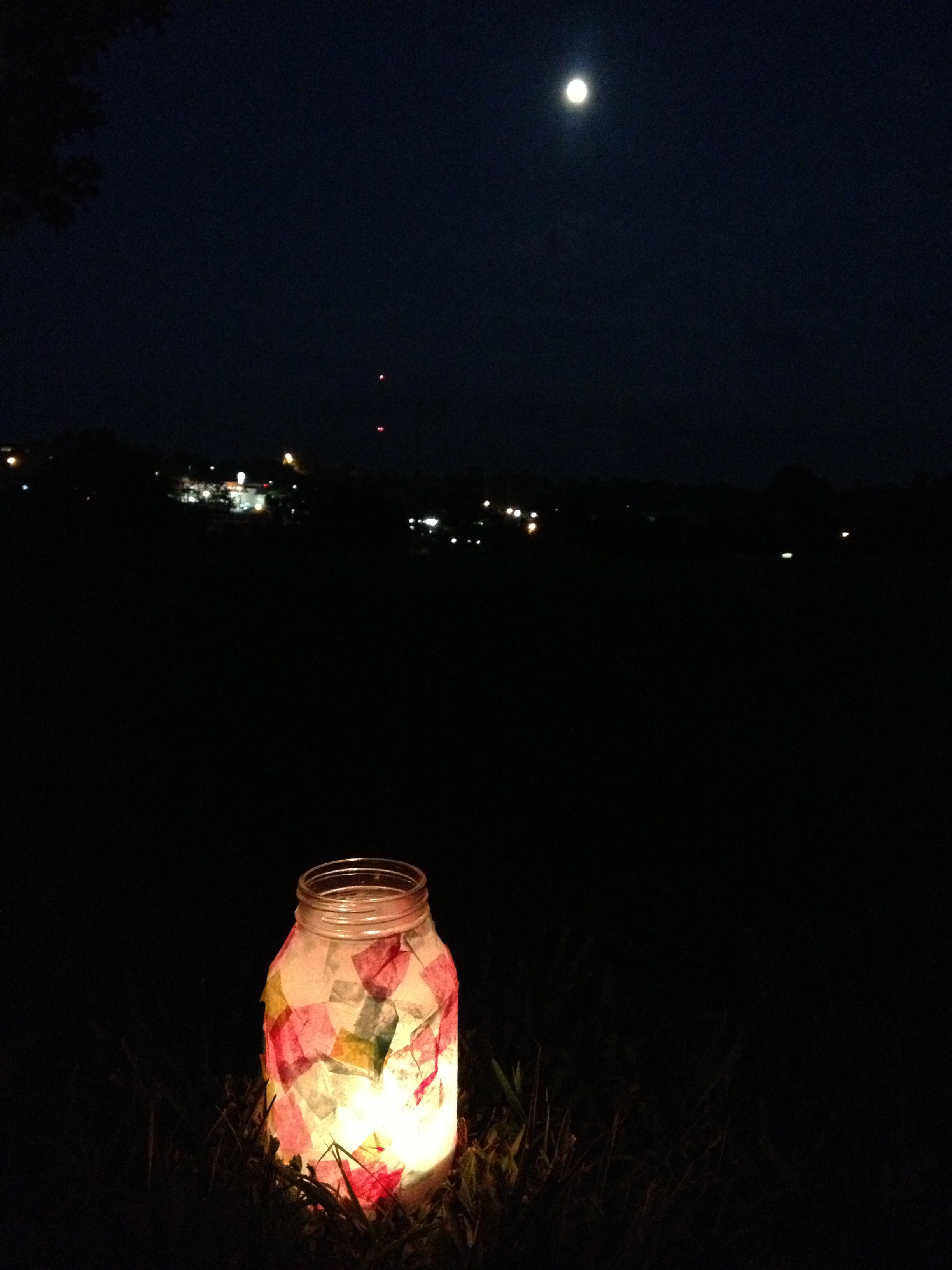
Tonight I lit a candle as part of the Wave of Light for Pregnancy and Infant Loss Remembrance Day. It is important to acknowledge that power may be found in the full spectrum of experiences of the childbearing year…

October 2013 020

And, in a thematically appropriate connection, a Facebook fan sent me a link today to a powerful video of a woman singing during labor. I’d seen a version on YouTube before, so I went looking for it there and instead I found a short webisode specifically about singing during labor:

In my own first labor, I hummed the blessingway chant Woman Am I over and over again until the baby was born. I find that humming, vocalizing, and talking to/coaching myself is one way that I awaken my own birth power during birthing.

How do you awaken your birth power?

I shared some ideas in another past post, but I’d love to add to it!

Tuesday Tidbits: Postpartum Mamas

As Americans, we are under the impression that new moms are ‘Superwomen’ & can return to life as it was before baby. We must remember to celebrate this new mother and emulate the other cultures that honor new mothers by caring for them, supporting them, & placing value on the magnificent transformation she is going through. This is the greatest gift we can give to new mothers & newborns…–Darla Burns (via Tuesday Tidbits: Postpartum Mothering)

“The first few months after a baby comes can be a lot like floating in a jar of honey—very sweet and golden, but very sticky too.” –American College of Nurse-Midwives

The United States are not known for their postpartum care practices. Many women are left caught completely off guard by the postpartum recovery experience and dogged by the nagging self-expectation to do and be it all and that to be a “good mother” means bouncing back, not needing help, and loving every minute of it.

This country is one of the only utterly lacking in a culture of postpartum care. Some version of the lie-in is still prevalent all over Asia, Africa, the Middle East, and particular parts of Europe; in these places, where women have found the postpartum regimens of their own mothers and grandmothers slightly outdated, they’ve revised them. The U.S. seems only to understand pregnancy as a distinct and fragile state. For the expectant, we issue reams of proscriptions—more than can reasonably be followed. We tell them what to eat and what not to eat. We ask that they visit the doctor regularly and that they not do any strenuous activity. We give them our seats on the bus. Finally, once they’ve actually undergone the physical trauma of it, their bodies thoroughly depleted, we beckon them most immediately to rejoin the rest of us. One New York mother summed up her recent postpartum experience this way: “You’re not hemorrhaging? OK, peace, see you later…”

…“A culturally accepted postpartum period sends a powerful message that’s not being sent in this country,” said Dr. Margaret Howard, the director of the Day Hospital for Postpartum Depression in Providence, Rhode Island. “American mothers internalize the prevailing attitude—‘I should be able to handle this myself; women have babies every day’—and if they’re not up and functioning, they feel like there’s something wrong with them.”

via Why Are America’s Postpartum Practices So Rough On New Mothers? – The Daily Beast.

Via First the Egg, I then read this powerful reflection prompted by the article above:

In the piece, one woman mentions that women are literally still bleeding, long after they’re expected to “bounce back” and reclaim their old lives and be totally self-sufficient. Our bodies haven’t finished healing, and we’re supposed to look and act as though nothing even happened here, it’s all good. It’s all just the same as it was.

Secretly, I’ve been the slightest bit ashamed of all the help I’ve needed.

via Eat the Damn Cake » bleeding time.

I also read this raw, honest, and touching look at the “betrayal” experienced by women who enter into the mystery of birth expecting a blissed out, earth mother, orgasmic birth experience:

…But inside my head, I could not believe what was happening. How painful it was. How terrifying. I felt helpless. And degraded and humiliated by there being witnesses. And at the same time, I felt so, so alone. I remember at one point saying, completely out of my mind, “I don’t understand why no one is doing anything to help me! Please help me!” Della reminded me that what I was feeling was the baby coming. That I was doing just what I was supposed to, having the baby, right then….

via Mutha Magazine » S. LYNN ALDERMAN’S Ugliest, Beautiful Moment (Or, Fuck Ina May).

And, that made me think of my own thoughts about birth regret and how we may hide it from the pregnant woman we perceive as vulnerable in her beautiful, fleeting state as Pregnant Woman:

I’ve come to realize that just as each woman has moments of triumph in birth, almost every woman, even those with the most blissful birth stories to share, have birth regrets of some kind of another. And, we may often look at subsequent births as an opportunity to “fix” whatever it was that went “wrong” with the birth that came before it. While it may seem to some that most mother swap “horror stories” more often than tales of exhilaration, I’ve noticed that those who are particularly passionate about birth, may withhold or hurry past their own birth regret moments, perhaps out of a desire not to tarnish the blissful birth image, a desire not to lose crunchy points, or a desire not to contribute to the climate of doubt already potently swirling around pregnant women…

via Birth Regrets? | Talk Birth.

Which then made me think about the women who know...

Where are the witches, midwives

and friends

August 2013 011

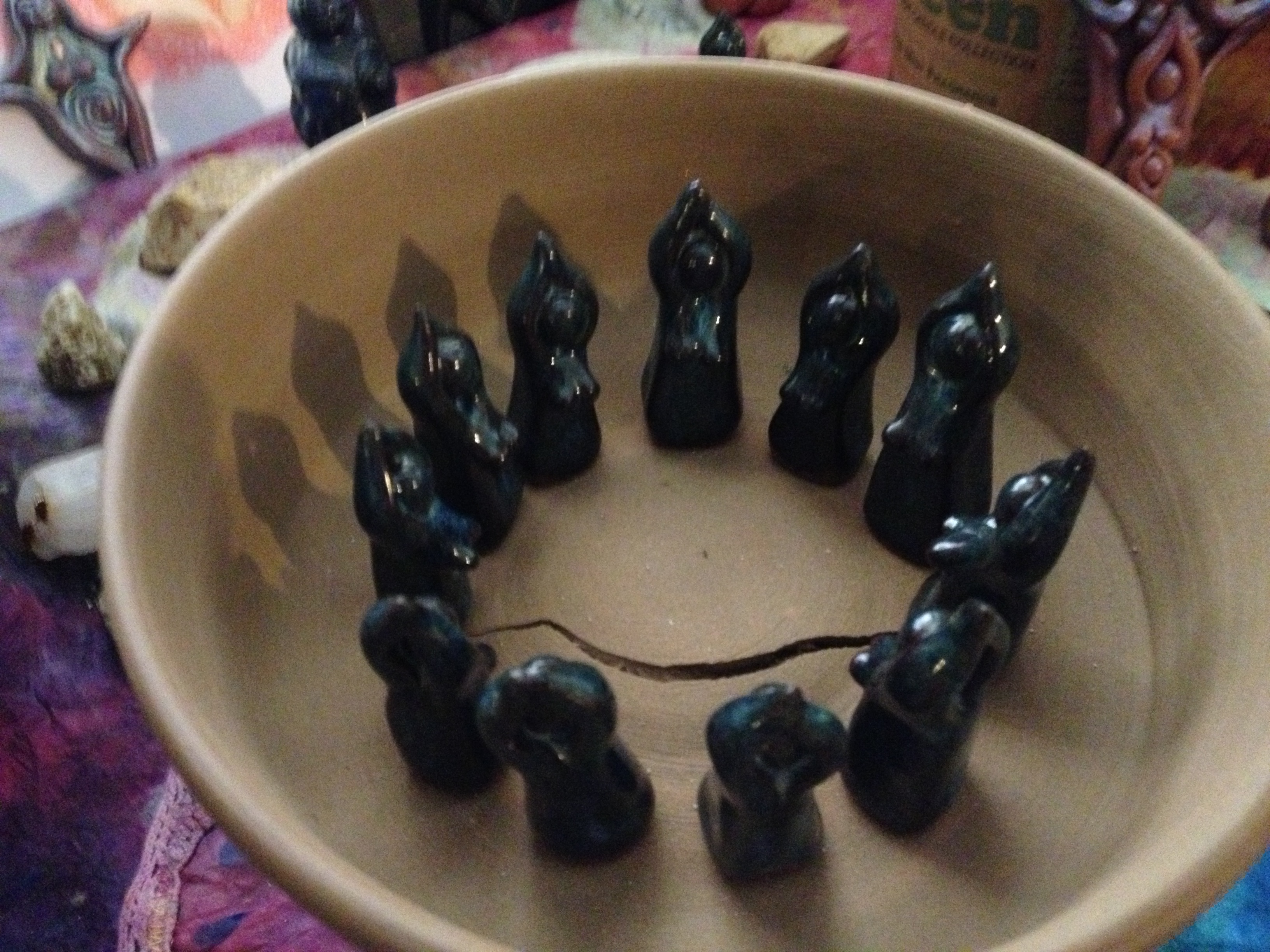
Circle of women sculptures as gifts for my women’s group. Yes, there’s a crack—“the world cracks everyone”—but that is how the light gets in…

to belly dance and chant

while I deliver

to hold me and breathe with me

as I push

to touch me and comfort me

as I cry?

Where are the womyn who know

what it’s like

to give birth?

via Where are the women who know? | Talk Birth.

Thinking about that reminded me of the chant we sang around the fire at the festival I just returned from on Sunday night:

Dance in a circle of women,

Make a web of my life,

Hold me as I spiral and spin,

Make a web of my life…

via Goddess Chants – Dance in a Circle of Women by Marie Summerwood.

May all pregnant women and tender postpartum mamas dance in a circle of women!

I’d hoped to have time to post a festival recap and some lessons learned, but other responsibilities take precedence at least for today, so I’ll leave you with one of the pictures my sister-in-law took on a misty morning, sunrise stroll around the lake and another that I took in the Temple at the festival:

Sept 2013 090

Sept 2013 036

See also:

Postpartum Survival Tips

Timeless Days: More Postpartum Planning

Mothers Matter–Creating a Postpartum Plan

Planning for Postpartum

Some reminders for postpartum mamas & those who love them

Birthing the Mother-Writer (or: Playing My Music, or: Postpartum Feelings, Part 1)

Postpartum Thoughts/Feelings, Part 2

Postpartum Feelings, Part 3

What to tell a mother-to-be about the realities of mothering…

Listen to the wise woman…

20120928-123955.jpg

Mini mamapriestess sculpture I made to take with me for my medicine bundle.

Last summer after I finished my priestess certification and I’d been facilitating women’s retreats for two years, I got a wild idea to go to a womanspirit or goddess festival of some kind. I did a google search and found one that sounded great—the Gaea Goddess Gathering–and it was happening in just two weeks. Imagine my surprise to then look at the bottom of the screen and see that it was located only a five-hour drive from me, just over the border into Kansas. I decided it was “meant to be.” My mom and a friend signed up with me (and Alaina) and we packed up my van and went! The night before we left on our adventure, I sat down at the kitchen table and felt a knife-like stinging pain on the back of my leg. I’d accidentally sat on a European giant hornet (these are not regular hornets, they are literally giant hornets about two inches long).

20120928-123138.jpg

Sting before I left.

Though it became hot and swollen and terribly painful, we set forth anyway. I asked for input on Facebook and did google research and started putting benadryl cream on it, even though I usually go with home remedies over medical-model remedies. It got worse and worse, eventually running from my hip to my knee and wrapped around my entire leg so
that two thirds of my thigh was sting-area and the difference in size between my legs was noticeable through clothing. During the festival, as I watched myself get worse and worse and people kept making remarks about needing epi-pens and maybe I should go to the hospital, I decided to dispense with the benadryl and listen to the wise women instead. My friend found plantain and made me a poultice. The cook gave me baking soda that I applied in a paste. I went to a ceremony that involved a healing ritual with sound and a priestess in a tent beat a drum over me as I lay there on my stomach. After a little Reiki healing, she then leaned very, very close to my ear and said quietly, “are you taking good enough care of yourself? You give and give and it is time to receive. You need to be taken care of too.” And, I cried.

20120928-123203.jpg

Sting after arriving. I didn’t take any pictures of it at the worst. It got about twice as bad as this. Every time I thought it could not possible get worse, it got twice as bad!

I came out of the tent and laid on a bench and women I didn’t know came and put their hands on my back and made me tinctures of strange plants they found in the herb garden and I drank it even though it almost made me gag. Another woman I didn’t know rubbed my back and though I couldn’t even see her face, she leaned close to my ear and said, “sometimes life stings you. Your friends, your family, being a parent, taking care of your children. It stings sometimes. Things people say without meaning to sting you. You’re sensitive, Sometimes it stings a lot and you worry that you’re not good enough. I see you with your baby. You are such a good mother.” And, I cried again, lying there on bench in the middle of nowhere with my dress pulled up and my red, sore, swollen, horrible thigh covered with a poultice of mysterious weeds, surrounded by women I didn’t know, but who were caring for me. And, I got better. By the time I got home, the sting was almost totally healed.

As soon as I returned home, I made a list, intending to develop it into a blog post about everything I’d learned at this gathering of women. The list languished in my drafts folder and the wheel of the year continued to turn and now it is September again and next week, some friends and I will be hopping back in my van and heading back to the GGG for this year’s festival. I decided the blog post will never get “developed” into the post I had intended, but that I can still share my list anyway. I also realized that I have been reluctant to post it here for fear of being too “weird” and alienating readers. But, Talk Birth is like a buffet, you can take what works for you and leave the rest! 😉 I’m also writing now because I’m going to go ahead and give myself a week off from blogging and I wanted to post some sort of explanation as to why. I’m going to focus on getting ready for the festival (I’m selling jewelry while there too!) and hanging out with my family (and, oh yeah, grading all the papers that are due this Sunday night!).

So, what did I learn at the GGG?

  • I have a lot to learn
  • Likewise, I know more than I give myself credit for—I am both more skilled than I may think and less skilled than I’d like to be.
  • I want to be more confident
  • I need to always remember to look for a wise woman when I need help. And, that allowing myself to be cared for by strangers is a surprisingly powerful experience.
  • I am much more quickly judgmental than I realized or like to admit—I judge the book by its cover and assess “worth” by appearance more often than I thought and I disappointed myself with that. I learned that ALL women have hidden gifts and I was surprised over and over again what people had to offer, that their appearance might not have suggested.
  • My body knows how to heal (I’ve learned this before, also from a bug)
  • It was great to have just one-on-one time with Alaina. She just wants to be with me. I didn’t have to cook/do laundry or anything else. I just toted her around which is exactly what she needs/wants (*note from this year: she still wants exactly this and I’m looking forward to giving it to her).
  • My mom is incredibly creatively gifted. And, I’m lucky to be around so many creative women in my own community. They have awesome gifts!
  • I don’t need to do everything—other people have their own talents and I don’t have to “do it all,” all of the time.
  • But by the same token, I don’t have to be good at everything and it is still okay to do things and be bad at them, but still try. (However, it also good to let other people have their specialties/share their gifts. I don’t have to do it all.)
  • I can be open to receive.
  • I can be a singer! Perform in a group! Feel awesome!
    20120928-123214.jpg

    Once this started, I knew I’d made the right choice to come after all!

  • Ditto drummer!
  • Explanation of the two points above which also connect to the one about not having to do everything and yet it also being okay to try. One of the sessions at the festival was the “GGG Soul Singers.” One of the women taught a large group of us several cool songs. During the special dinner that night, we got up together with sound equipment and everything and performed our songs. Everyone was yelling and cheering and clapping and it was great. So much fun! I’m a terrible singer, I know that, but that night I felt like I was amazing. And, I learned that being terrible at something doesn’t mean you can’t do it anyway and enjoy yourself. I’m looking forward to doing this again this year! At this festival I was captivated by these massive community drums the women had. Large enough to be played by four or even more women at once, I absolutely loved them. Even though I didn’t know what I was doing, I tried, and discovered I could indeed do it. I could drum and sing and keep up with the group. When I got home, I decided I must have a drum like this and spent way too much money and ordered one online. And, even though I’m tone-deaf and “non-musical,” I can play it. And, I’m still amazing, whether I really am or not!
  • I felt both more and less competent—related to knowing a lot and yet having a lot to learn, I discovered that I’m a pretty good ceremonialist, a lot better than I’d given myself credit for, but that some other people are way better than me (and others are not. What matters is trying).
    20120928-123806.jpg

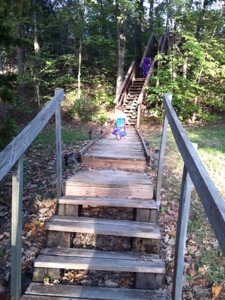
    Intense stairs from the dining hall and lodging to the “ridge” where ceremonies took place. Navigating these was NO FUN with that sting on my leg! But, isn’t tiny Alaina cute setting off on her own and heading on up?!

  • I was acknowledged/recognized as priestess/clergy to my own circle of women and it felt very good to be seen in that way. I’m trying to be/offer/bring something to the local area that still feels tender and vulnerable in myself. I lack some confidence. Want to build it! And, yet, I do it anyway. I’m brave! Maybe I’m not as skilled or musical or awesome as I could be, but I’m pretty darn good and…at least I TRY!
  • Want family to be clear priority. Family harmony is a top goal. I want to make sure to give them my good stuff too! Don’t save my passion and enthusiasm for “others” only!

When I got home from this festival, I was so inspired that I planned and facilitated a pretty great nighttime, firelit “sagewoman” ceremony in a teepee (with drumming on my new community drum) for the wise women of my own community. As a ritualist/ceremonialist, I learned from the GGG-experience that ambiance really, really matters in offering a cool ritual.

Since last year, I’ve developed my ceremonialist skills even further and last month received an additional supplemental ordination from the American Priestess Council. I’m almost three years into my D.Min program, I’ve taken advanced coursework in ritual design as well as pastoral counseling, liturgy, the role of the priestess, ethics, history, and so forth. At this time last year, I was struggling with whether or not it was “okay” for me to own the Priestess identity I felt “called” into and at the GGG I was seen and heard into this identity particularly by my friend and also by my mom. It turns out it is okay for me to serve others as a Priestess and to claim that title with authenticity even though I’m not as perfect and amazing as I feel like I should be (I’m also a blogger for SageWoman magazine and I’m currently working on a post called who does she think SHE is, that is about exactly this tension).

Some more pictures:

20120928-123107.jpg

Henna feet! From the woman who did this for me, I learned the phrase: “sparkles are my favorite color.”

20120928-123044.jpg

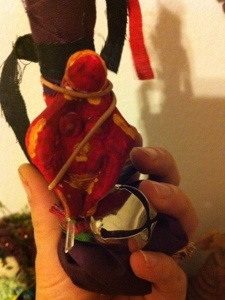
Medicine bundle! This was the best class ever. The woman brought piles and piles of random and awesome stuff and it was all free to choose what you wanted for your bundle. How cool is this face?!

20120928-123839.jpg

She also had simple clay goddesses for us to paint and attach as well as we could.

20120928-123121.jpg

Pensive little Lainey looking back thoughtfully at the stairs up which she just journeyed.

20120928-123746.jpg

Back home demo’ing a beautiful sarong gifted to my by my seeing friend!

20120928-123817.jpg

What’s this…

20120928-123825.jpg

…I hear…big DRUMS!

20120928-123850.jpg

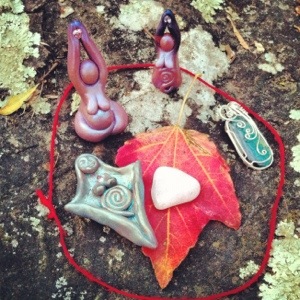
When I got home, I was inspired to make some new sculptures and Mark cut a lovely gemstone and made a pendant.

Here I go again! I wonder what lessons await me this year…

Thesis Tidbits: Birth as a Shamanic Experience

Childbirth is a rite of passage so intense physically, psychologically, emotionally, spiritually, that most other events in a woman’s life pale next to it. In our modern lives, there are few remaining rituals of initiation, few events that challenge a person’s mettle down to the very core. Childbirth remains a primary initiatory rite for a woman.” –from the book MotherMysteries

When I was pregnant with my first baby, I read an article centered on the theme, “Birth as a Shamanic Experience.” I can no longer find August 2013 050the exact article (online or printed), but I distinctly remember my feeling upon reading it: I was entering into a mystery. Giving birth was big. Bigger than anything I’d ever done before and it went beyond the realm of a purely biological process and into something else. Like shamanic experiences, giving birth is often described as involving a sense of connection to the larger forces of the world as well as being in an altered state of consciousness or even a trance state. While shamanic experiences may involve “journeying” to other realms of reality, giving birth requires the most thoroughly embodied rootedness of being that I’ve ever experienced. It, too, is a journey, but it is a journey into one’s own deepest resources and strongest places. The sensation of being in a totally focused, state of trance and on a soul work mission is intense, defining, and pivotal.

Shamanic journeys may be embarked upon for the purpose of soul retrieval and I can’t help but think that this is the purpose of giving birth as well—the birthing woman travels into herself to bring forth the soul of her child.

“Birth is certainly messy and bloody. It is intense, fierce, fiery and loud, but not violent. It is bloody from shamanic transformation. Birth-blood is the primordial ocean of life that has sustained the child in utero; the giving of this blood in birth is the mother’s gift to her child. The flow of blood is the first sign, following the flow of waters, that signals that new life is on the way, just as it is the first sign of a young maiden’s initiation into a new life at her menarche. The blood of transformation is miraculous. In Spanish, the phrase ‘dar a la luz, to give birth, literally means ‘to give to the light’. Giving to the light — mothers giving birth are giving light to new life through blood. The messiness and bloodiness of birth are the gift of the Earth–elemental chaos coming into form.”

via Article: Birthing as Shamanic Experience.

In the aftermath of giving birth, particularly without medication, many women describe a sense of expansive oneness—with other women, with the earth, with the cycles and rhythms of life. People who become shamans, usually do so after events involving challenge and stress in which the shaman must navigate tough obstacles and confront fears. What is a laboring woman, but the original shaman—a “shemama” as Leslene della Madre would say —as she works through her fears and passes through them, emerging with strength.

In her classic book Shakti Woman, Vicki Noble describes giving birth as a central shamanic experience and perhaps the root of all shamanism:

“I believe I underwent an initiation of the most ancient variety, birth as a shamanic experience, the central act of female shamanism—the quintessential act that offers a woman a completed experience of facing and moving through her fears to the other side. It isn’t that birth is the only way for a woman to experience this initiation—many women climb mountains or face other kinds of physical endurance tests and also come through it reborn into their power. But biologically birth is a doorway, a given for most women on the planet. It is fundamental opportunity to become empowered. Most of us giving birth today do not have the full experience, which is co-opted and distorted beyond recognition, changed from an active process into something that is done to us, as if we don’t know how to do it ourselves. Reclaiming the right to birth in our own instinctual way is a shamanic act of courage that has unfortunately become as remote to us as our ability to fly through the night in the form of an owl or heal the sick with the power of the drum. It wouldn’t hurt if we began to think of our birthing and child rearing as central parts of our shamanic work…” (p. 223).

After explaining that the homebirth of her second son was her, “first initiation into the Goddess…even though at that time I didn’t consciously know of Her,” Monica Sjoo writing in an anthology of priestess essays called Voices of the Goddess, explains:

“The Birthing Woman is the original shaman. She brings the ancestral spirit being into this realm while risking her life doing so. No wonder that the most ancient temples were the sacred birth places and that the priestesses of the Mother were also midwives, healers, astrologers and guides to the souls of the dying. Women bridge the borderline realms between life and death and in the past have therefore always been the oracles, sibyls, mediums and wise women…

…the power of original creation thinking is connected to the power of mothering. Motherhood is ritually powerful and of great spiritual and occult competence because bearing, like bleeding, is a transformative magical act. It is the power of ritual magic, the power of thought or mind, that gives rise to biological organisms as well as to social organizations, cultures and transformations of all kinds…” (page unknown).

20130903-200523.jpg

I’m working on my thesis project on the subject of birth as a spiritual experience and this topic is part of it. You can read more about Birth as a Shamanic Experience in the blog post at Feminism and Religion from which this post is excerpted: Birth as a Shamanic Experience by Molly | Feminism and Religion.

MamaFest!

Last summer, my Rolla Birth Network friends and I conceived of a local event to be held celebrating mothers. We made a couple of August 2013 020decisions in planning our event that were really smart: we decided to focus on celebration rather than education (or even activism), we decided not to involve any money (either for the attendees or the hosts [aside from tabling materials/supplies]), and…this is key…we also decided to only do that which was within our own personal resources to provide. It worked! We pulled off a lovely MamaFest event at Tara Day Spa in Rolla. It was well-attended and fun and involved very little expense for anyone. It was work, of course, but it was within our resources/capacities. Community organizations were welcome to have a table at the event for free with the only stipulations being no formula/bottle materials (this event is co-sponsored by La Leche League of Rolla in conjunction with World Breastfeeding Week) and that they had to provide something to do at their table. Our vision was that this event would not involve simply walking around picking up flyers and leaving, but instead would provide an opportunity to hang out with friends, see cool things, learn some stuff, and make some projects. I had a birth art booth that was a delight for me to offer to the women.

This year in August, we hosted our second annual MamaFest event, again with a similar vision. Our resources/time were a little slimmer August 2013 017this year due to peoples’ schedules (particularly my own, leaving my co-founder shouldering most of the organizing effort), new babies, etc. We had fewer exhibits and fewer attendees and slipped more into the boothy-vibe that we hoped to avoid, and learned some things to try next year. I still consider the event a success, especially considering the fairly minimal womanpower with which we had to work. It was an especially good outreach opportunity for LLL and I said at the end that even if I hadn’t been involved at all with the planning of it, I would definitely have considered it a worthwhile event to continue attending with my LLL booth. I was super excited about my simple, but pretty (and free!) offering for the birth art booth this year: mother affirmation/blessing cards. Unfortunately, very few people took me up on my offer and I was a little sad about that, but my LLL booth with its breastfeeding trivia game and got breastmilk ™ pins was pretty popular. We have lots of ideas for next year and the possibility of experimenting with new directions, such as doing away with the booths altogether and having more retreat-like experience stations (i.e. yoga). What we know we want to keep is our commitment to celebrating women and their capacities, because they’re just super awesome and worth celebrating!

Here are some pictures of my booth and some projects from the event:

August 2013 016

Birth art booth!

August 2013 031

Loved this thumbprint necklace project offered at the booth of a local doula/photographer. Alaina appropriated it immediately because, “me like hearts!”

August 2013 028

Babyloss memorial charms offered by the Rainbow Group (local pregnancy/infant loss support)

August 2013 015

Emergency back up project that I scrambled for when I realized people weren’t making my cards–affirmation “stones” (glass pebbles written or drawn on with glass paint markers).

August 2013 013

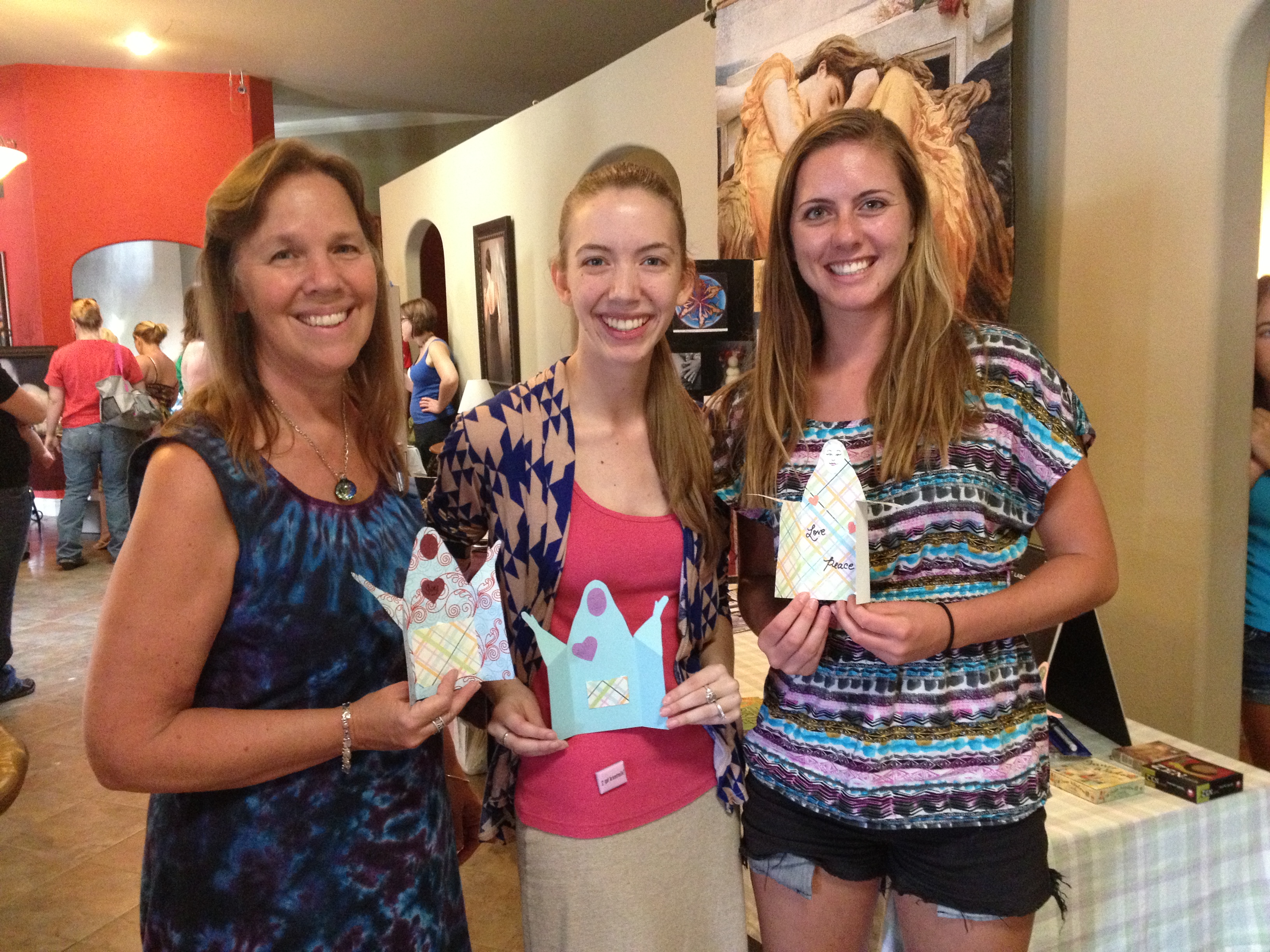
At least my own loyal family members showed up and made my project! (mom, sister, and visiting cousin)

What I learned from this event again this year was that you do not have to live in a city to be able to offer something like this in your community, all you need is a small handful of women who care and who can use their skills and resources to make it happen! 🙂

Tuesday Tidbits: More Wild Woman

“Within every woman there is a wild and natural creature, a powerful force, filled with good instincts, passionate creativity, and ageless knowing.20130903-200550.jpg Her name is Wild Woman, but she is an endangered species. Though the gifts of the wildish nature come to us at birth, society’s attempt to “civilize” us into rigid roles has plundered this treasure, and muffled the deep, life-giving messages of our own souls. Without Wild Woman, we become over-domesticated, fearful, uncreative, trapped.”

-Clarissa Pinkola Estes (via TheGypsyPriestess)

“The doors to the world of the wild Self are few but precious. If you have a deep scar, that is a door, if you have an old, old story, that is a door. If you love the sky and the water so much you almost cannot bear it, that is a door. If you yearn for a deeper life, a full life, a sane life, that is a door.” 

— Clarissa Pinkola Estés, Ph.D (Women Who Run With the Wolves)

“An Awakening Woman is a spiritual rebellion engaged in a glowing and embodied, nothing-held-back love affair with the great mystery. She moves in the world with fierce compassion, grace and freedom, and is passionate about truth, rest and real love. She is fluent in angelic, diva and in Kali roars. Earth is home and so is infinity.” 20130903-200523.jpg

–Chameli Ardagh, Awakening Women Institute

“We need the tonic of wildness…At the same time that we are earnest to explore and learn all things, we require that all things be mysterious and unexplorable, that land and sea be indefinitely wild, unsurveyed and unfathomed by us because unfathomable. We can never have enough of nature.”

― Henry David Thoreau

And, then some fiery thoughts as well:

“Hold onto your dream, though it may burn you.
It is the Fire of the Initiate.
Hold onto your Vision, though it may shatter your core and
the earth may tremble with the anticipation of your blossoming.
Hold true to your Heart, though you may crack and bleed.
It is a moon blood cleansing, a womb making space
For a tiny spark, to burst
Into even brighter flame.” 20130903-200533.jpg

by Lisa Buell, JourneyDance Facilitator

Come into the fire, come in,
come in, dance in the flames of the festival
of the strongest sun at the mountain top
of the year when the wheel starts down.
Dance through me as I through you.
Here in the heart of fire in the caves
of the ancient body we are aligned.
Our cells are burning
each a little furnace powered by the sun
and the moon pulls the sea of our blood.
This night the sun and moon dance
and you and I dance in the fire of which
we are the logs, the matches and the flames.

Marge Piercy, from “Shadows of the Burning; The Lunar Cycle”

“She walks not away from the fire…but toward it…because not only can she handle the HEAT…she contains it…and her fire wills forth the work that is meant to be in the world…” ~Anni Daulter, Sacred Pregnancy

Prior Wild Woman post.

20130903-200618.jpg

Brought to our knees

“Rigid plans work best if you’re building a skyscraper; with something as mysteriously human as giving birth, it’s best, both literally and figuratively, to keep your knees bent.” –Mark Sloan, MD (Birth Day)

Today I spent a few minutes listening to a lovely webinar by Amy Glenn, the author of Birth, Breath, & Death. The topic was Supporting a Birthing Woman’s Spiritual Practice and I was immediately caught by Amy’s comparison of giving birth to kneeling in prayer. She mentioned that giving birth may drop us to our knees, just as those who pray may pray on their knees. Since I’m currently writing about birth as a spiritual experience, I connected to this implied notion: birth as embodied prayer. And, looking at the webinar photo of a woman kneeling in August 2013 019child’s pose, my own birth-prayers came vividly to mind. In my first labor, I spent a lot of time on my knees, later wishing that I had also given birth on hands and knees rather than being encouraged to birth in a semi-sitting position that I felt contributed to tearing. Later, when I discovered birthing room yoga, I loved realizing that these kneeling postures that I adopted spontaneously and intuitively in my first labor were yoga poses—an inherent body wisdom I carried within me, waiting to arise when called upon. This is part of my first birth story, briefly touching on my time on my knees…

Mark & Mom were wonderfully supportive of me as I labored. I tried various positions and they stacked up pillows for me on the bed so that I could be on my hands and knees on a soft surface (they put the Boppy onto some other pillows to make a “well” for my belly) and then Mom read some of my birth affirmations to me. That worked for a while. I also tried the birth ball for a while and ended up spending a lot of time on my knees on the floor with my head and arms resting on a pillow on the bed…

via My First Birth | Talk Birth.

Kneeling to birth played a prominent role in my second birth experience as well and I have frequently described the rapid birth of my second son as an experience that literally drove me to my knees. When writing about this birth experience, I said:

I was extremely proud of my body and its super-awesomeness 🙂 I felt that my sense of birth trust was physically manifested in my actual birth experience. My body was a powerful and unstoppable force and I had to get out of my own way and let it happen! I felt driven to my hands and knees–like a power was holding me there. After the birth my body felt weak and “run over by a truck”—I felt powerful and like a warrior during the birth…

via Quick Births | Talk Birth.

And, in perhaps my most spiritually meaningful birth experience, the home miscarriage-birth of my third baby also brought me to my knees:

August 2013 041

Brand new sculpture inspired by the thoughts in this post.

When I was still having the “HOW?” questions, other women that I knew who had experienced miscarriage started to come to mind and I knew I could do it too. I told myself that I had to do what I had to do. I said out loud, “let go, let go, let go.” I said I was okay and “my body knows what to do.” The afternoon I found out the baby died, I’d received a package that included a little lavender sachet as a free gift with my order. When my labor began, for some reason I wanted the sachet and held and smelled it throughout the experience. As I chanted to myself, “let go, let go, let go,” I smelled my sachet (later, I read in one of my miscarriage books that in aromatherapy lavender is for letting go). I also told myself, “I can do it, I can do it” and “I’m okay, I’m okay.” I felt like I should get more upright and though it was very difficult to move out of the safety of child’s pose, I got up onto my knees and felt a small pop/gush. I checked and it was my water breaking. The water was clear and a small amount. I was touched that now these gray pants were my water-breaking pants too…

Contractions continued fairly intensely and I continue to talk myself through them while Mark rubbed my back. I coached myself to rise again and after I sat back on my heels, I felt a warm blob leave my body. I put my hand down and said, “something came out. I need to look, but I’m scared.” Then, “I can do it, I can do it,” I coached myself and went into the bathroom to check (it was extremely important to me not to have the baby on the toilet). I saw that it was a very large blood clot. I was a little confused and wondered if we were going to have to “dissect” the clot looking for the baby. Then I had another contraction and, standing with my knees slightly bent, our baby slipped out…

via Noah’s Birth Story (Warning: Miscarriage/Baby Loss) | Talk Birth.

When the time came to gave birth to my rainbow daughter, she brought me to my knees as well and she was the only baby I caught in my own hands while in a kneeling position. Here is a segment from her birth-prayer:

At some point in the bathroom, I said, “I think this is pushing.” I was feeling desperate for my water to break. It felt like it was in the way and holding things up. I reached my hand down and thought I felt squooshy sac-ish feeling, but Mom and Mark looked and could not see anything. And, it still didn’t break. Mom mentioned that I should probably go to my birth nest in order to avoid having the baby on the toilet. My birth nest was a futon stack near the bathroom door. I got down on hands and knees after feeling like I might not make it all the way to the futons. Felt like I wanted to kneel on hard floor before reaching the nest.

…I couldn’t find her heartbeat and started to feel a little panicky about that as well as really uncomfortable and then threw IMG_0422the Doppler to the side saying, “forget it!” because big pushing was coming. I was down on hands and knees and then moved partially up on one hand in order to put my other hand down to feel what was happening. Could feel squishiness and water finally broke (not much, just a small trickle before her head). I could feel her head with my fingers and began to feel familiar sensation of front-burning. I said, “stretchy, stretchy, stretchy, stretchy,” the phone rang, her head pushed and pushed itself down as I continued to support myself with my hand and I moved up onto my knees, with them spread apart so I was almost sitting on my heels and her whole body and a whole bunch of fluid blooshed out into my hands. She was pink and warm and slippery and crying instantly—quite a lot of crying, actually. I said, “you’re alive, you’re alive! I did it! There’s nothing wrong with me!” and I kissed her and cried and laughed and was amazed.

via Alaina’s Complete Birth Story | Talk Birth.

Motherhood, especially my postpartum experience with my first baby also dropped the legs out from under me and I used the same expression echoed above in writing about this postpartum crucible:

I had regularly attended La Leche League (LLL) meetings since halfway through my pregnancy and thought I was prepared for “nursing all the time” and having my life focus around my baby’s needs. However, the actual experience of postpartum slapped me in the face and brought me to my knees…

via Planning for Postpartum | Talk Birth.

I’m not the only mother who finds this an apt description of the process of giving birth, today I found this touching story about memorializing the still birth of a mother’s baby girl:

This blanket isn’t much to look at. It isn’t a work of art. But it holds an entire story within its stitches. It holds the legacy of our precious baby girl who was stillborn, yes, but she was still born. Her name is etched on our hearts, and her short little life was not in vain. In those 37 weeks, she brought us joy and excitement. She brought us laughter. She brought me to my knees (to dry heave, because of being in pain, and to pray…). She brought us together, tighter, as a family. She brought us love. She brought us hope.

via Mind Mumbles: Our Stillbirth Storm.

And, I also read this gorgeous birth story that brings the concepts of prayer and birth kneeling into direct, evocative connection:

August 2013 047

Brand new sculpture inspired by the thoughts in this post.

From this point on, labor was like a long, hard prayer taking place through a dark and cold night. It literally brought me to my knees. At times I knelt, hands clasped in front of me. I had to work hard to surrender, to open myself up to the reality of labor and pain and let it be. It was a challenge. Knowing I needed to surrender to the labor, and to your advent, I made a silent decision to open my hands. I held them open and palm up in between each contraction. I tried to keep them open as long as I could once a contraction started. This was one of the most poignant parts of your birth – this surrender. I had to keep pushing my soul in the direction of you. I needed an openness of spirit as much as of body, for my spirit was caught up in a complicated grief from the months prior. At one point, when a contraction was coming, Kristen said to me, “Camille, you need to let this be big.” How did she know that I was holding back, hesitating? I needed to surrender to the hugeness of the mystery of life and birth and yes, even death. The challenge in your birth, dear Silas, was in the soul places…

…Kristen said simply, “Ok. Just listen to your body.” She trusted my body, which was so freeing. As I pushed, it felt natural. I was part of the pushing, as were you. I knew that the pushing was working, that you were coming down into the world. No one moved closer or moved away. No one tried to move me. I remained in the cleared meadow of a space with the freedom to move as my body wanted to move. There was complete freedom to do just as my midwife asked – to listen, and listen closely. To be. I was on my hands and knees, as close to earth as I could muster in the middle of Queens. And the transition to pushing felt seamless. I was permitted to remain in the deep cavities of my body, which were doing such brave work…

via The Birth Pause: Unhurrying the Moment of Meeting: The Story of Your Birth.

It isn’t only mothers who are brought to their knees by the act of birth, so are birth witnesses:

This is the story of falling in love with a baby before we even met her, the story of witnessing two friends fall deeper in love and the joy of meeting someone you just know you’ll know a lifetime in their very first second of life. This experience brought me to my knees in the end, a wreck of being awake 39.5 hours after witnessing such beauty I thought my heart would explode. I wailed in happiness, and entered a place where the only logical thing to do was roll around in the grass in the sun in full, tearful joy. I forever remain grateful to be a part of this.

It’s beautiful to document beauty, to witness beauty and just downright jump inside beauty…

via a birth story » Sara Parsons Photography.

In fact, we even see birth and knees referenced in the Bible as well:

Now when Rachel saw that she bore Jacob no children, Rachel envied her sister, and said to Jacob, “Give me children, or else I die!” And Jacob’s anger was aroused against Rachel, and he said, “Am I in the place of God, who has withheld from you the fruit of the womb?” So she said, “Here is my maid Bilhah; go in to her, and she will bear a child on my knees, that I also may have children by her.” Then she gave him Bilhah her maid as wife, and Jacob went in to her.

[No need to note how strongly I object to the notion of women being “given” to men. The author of the post referencing this quote then goes on to explain what ‘on my knees’ actually means, which is a little different than what I was thinking…]

…On my knees refers to the custom where the husband impregnated the surrogate while the surrogate reclined on the lap of the wife, and how she might even recline on the wife as she gave birth. The symbolism clearly showed the child was legally the child of the mother, not the surrogate, who was merely in the place of the wife in both conception and birth.

via Genesis 30 – The Children Born to Jacob.

Other birthing women experience the energy of birth as an embodied experience of Shakti. While Shakti can be personified as a Goddess, she is also understood as the great cosmic “fuel” of the universe, the feminine force that drives creation. Women may experience the energy of birth as Shakti moving through, with, and within them. While not specifically about birth, I recently wrote about Shakti in a related sense:

Shakti woman speaks August 2013 043
She says Dance
Write
Create
Share
Speak.

Don’t let me down
I wait within
coiled at the base of your spine
draped around your hips
like a bellydancer’s sash
snaking my way up
through your belly
and your throat
until I burst forth
in radiant power
that shall not be denied.

Do not silence me
do not coil my energy back inside
stuffing it down
where it might wither in darkness
biding its time
becoming something that waits
to strike. August 2013 050

Let me sing
let me flood through your body
in ripples of ecstasy
stretch your hands wide
wear jewels on your fingers
and your heart on your sleeve.

Spin
spin with me now
until we dance shadows into art
hope into being
and pain into power.

7/1/2013
via Woodspriestess: Shakti Woman Speaks

After thinking about this post all day and working on it in snippets at a time, a friend shared this quote with me saying that it reminded her of me. It felt like the perfect closing:

“As women connected to the earth, we are nurturing and we are fierce, we are wicked and we are sublime. The full range is ours. We hold the moon in our bellies and fire in our hearts. We bleed. We give milk. We are the mothers of first words. These words grow. They are our children. They are our stories and our poems.”

–An excerpt from “Undressing the Bear” by Terry Tempest Williams

Thesis Tidbits: Naming and Claiming

As I mentioned recently, I’m working on my thesis project on the subject of birth as a spiritual experience. Today, instead of my usual August 2013 032Tuesday collection of links, I’m sharing some thought-provoking quotes that I collected while writing the prospectus for my thesis. Pictures in this post are from last night’s Day of Hope and Healing ceremony in Rolla.

The first quote really relates to the whole reason I chose this topic in the first place:

“In this culture…a woman can be made to feel foolish for emphasizing the centrality of giving birth to her identity or her personal religiousness, her ‘womanspirit’” (Listening to Our Bodies, Stephanie Demetrakopoulos, p. 18)

While it is the opposite in my own circle of friends, in the dominant culture, whether given “religious” significance or not, I find this is true: women are made to feel foolish for emphasizing the centrality of birth to her womanspirit, to her life, to her feelings about her capacities as a woman and mother. Women are made to feel foolish for struggling with birth trauma OR for feeling “empowered” by birth. After all, it is just one day. But maybe, just maybe, part of this sensation actually originates in sensitivity to the feelings of other women:

Elizabeth Gray in Sacred Dimensions of Women’s Experience explains:

…this is not the entire story of the ambivalence a woman experiences along the way to claiming the sacredness of her own birthing process. There is the reticence she feels about possibly offending other women by seeming to elevate her own birthing experience. How is one woman to claim her own experience of an ‘easy’ birth when she knows other women labor for days in pain and some women die giving birth? How is she to name as sacred her experience of having babies, when, for whatever reason, other women are childless? How is she to claim her own experience of ‘conscious’ home-birth…,when other women may now regret having been unconscious with medications? Or if you had a ‘bad’ experience giving birth, how are you to name that when women around you are happily anticipating a successful culmination to their Lamaze classes? Women’s naming of much in their own birthing experiences is silenced by the sensitivity to other women’s feelings.

But despite these many reasons for reticence, there is a bonding of women who have given birth. It is deep and silent…a silvery shadowed oath between life and death down which all ‘the birthing mothers on the planet’ have moved, those ‘mothers of all times without whom no one walks this planet.’ Women who have given birth reach out to one another…saying to all those mothers whose birthing experiences were different than hers, ‘Don’t feel badly. ‘Rejoice in the incredible, joyous, astounding fact of creation…Every moment a child is born is a holy moment…’

(Elizabeth Dodson Gray, ed. Sacred Dimensions of Women’s Experience, p. 49-50)

Before this quote, Gray shares that the patriarchal association of birth (and women) with “uncleanliness” continues to impact women August 2013 040today:

“Because of this ancient overlay, it is not easy for women to lay claim to our life-giving power. How are we do reclaim that which has been declared fearful, polluting and yet unimportant? How are women to name as sacred the actual physical birth, which comes with no sacred ritual, while lurking around the corner of time are the long-established meta-physical rituals of circumcision and baptism?” (Elizabeth Dodson Gray p. 49)

Women today are also laboring to birth a healthier, more whole planet and means of being. For many women this begins with how they approach pregnancy and childbirth, how they consciously prepare to the welcome their babies into the world.

It is well past time in human history to push aside male dread and boldly claim the sacred woman-centeredness of every human birth…The wonder at new human life cannot be separated from the sacredness of women’s bodies or women’s lives. We will be involved in a profound betrayal of the gift of life itself as long as individual men and male culture ‘freak out’ before women’s power to give birth…If we cannot affirm women and women’s bodies and women’s birthing and women’s choice, we will go on bringing death to the planet and to ourselves. We cannot affirm life without affirming women. [emphasis mine]

(Elizabeth Dodson Gray, ed. Sacred Dimensions of Women’s Experience, p. 50-51)

And, as I’ve touched on before, birth and breastfeeding are the original sacramental experiences:

“Woman’s body is a transmutation system; it has the power to change blood to milk, to change itself into food which in turn becomes the physical and psychic energy of a child. She is creating an incarnate soul, assisting it in growth.” —Stephanie Demetrakopoulos (Listening to Our Bodies, p. 36)

August 2013 052

(this is my prayer flag this morning when I hung it up at home after the event last night)

August 2013 017

Flowers released on the lake at sunset.


Wednesday Tidbits: World Breastfeeding Week!

wbw2

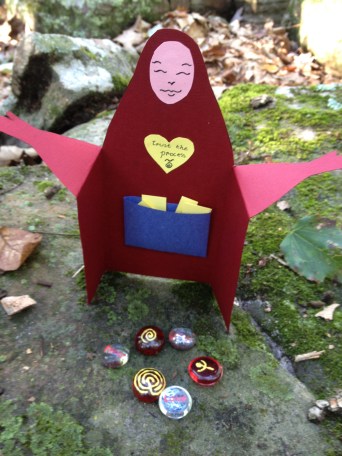
Today is the last day of World Breastfeeding Week and I fully intended to create a link-full Tuesday Tidbits post about this yesterday. However, I was busy helping actual breastfeeding mothers at my monthly LLL meeting and then came home and worked on my handout and project preparations for our second annual MamaFest event this Saturday. I then had a faculty meeting while Mark took Lann to tae kwon do and went grocery shopping with the other kids and by the time I had a few minutes to spare again, it was 11:00 at night and I figured I might as well forgo Tuesday Tidbitting and just watch Teen Wolf instead! 😉 For MamaFest, I’ve been getting together handouts, a trivia game, and pins for prizes for my La Leche League booth, birth art supplies and display items and birth education handouts for the Rolla Birth Network/Talk Birth/birth art booth, and miscarriage/stillbirth handouts for the Rainbow Group loss support table. I’ve toyed with various projects for my birth art booth and finally came up with something that feels perfect—birth or motherhood affirmation/blessing cards!

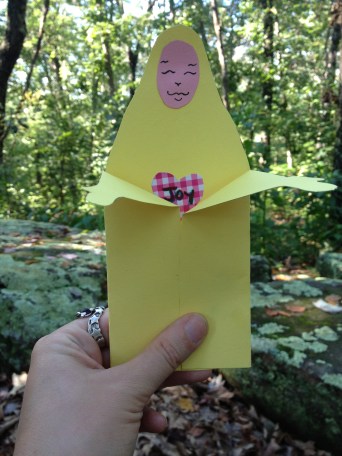
August 2013 042August 2013 046

August 2013 052

I got better at them the more I made. This one has a pocket with other little affirmation cards in it. I also started to experiment with painting on little glass “stones” to go in the pocket too. I need glass paint markers really though and I quickly ordered some, but they won’t make it in time for MamaFest.

For ideas for affirmations for them, I’m bringing along several books, including:

25 Ways to Joy & Inner Peace for Mothers

25 Ways to Awaken Your Birth Power

World Breastfeeding Week often seems like an occasion during which the media perceives non-breastfeeding mothers as being “discriminated” against somehow, and some women seem to take the occasion personally—like its very existence is a personal criticism. This article about the “I Support You” initiative is good in theory, but I sense in it the suggestion that WBW is specifically trying to make non-breastfeeding mothers “feel bad” and I did not appreciate the loads and loads of comments on the article that reference “La Leche Nazis”—particularly because said “Nazis” apparently visit mothers in the hospital to critique their mothering and I seriously doubt that any of the experiences shared in the comments were actually with LLL Leaders (who I have never been known to go to a hospital room uninvited and try to make mothers breastfeed. That isn’t part of our job at all. The commenters were probably dealing with whichever nurse is assigned to lactation, trained or otherwise).

I plan for my message to say: “To all those mothers who’ve learned the difference between the mother you think you will be and the one you actually are — I Support You.”

via I Support You: The Conversation We Should Be Having About Breastfeeding And Formula.

A related article that also has some great insights and thoughtful content (but for which, again, I feel breastfeeding advocacy is misconstrued):

Three billion things can go wrong when you breastfeed. But even with a bad latch, tongue tie, thrush, a clogged duct, and a crazy oversupply, I still think that nursing this little boy is the most amazing magic that I’ve ever felt in my life. I am the only thing that is keeping my child alive right now. You’re damn right that’s a superpower. When my breasts are engorged and I’m in pain, or when I swoop in to a room and soothe my screaming baby with my body, I want to shout it from the rafters, just like all of you did. This time, my breasts make milk. That is my superpower. And yet I have seen that breastfeeding moms get tested too: the nasty stares, the mean comments, the endless questioning that makes you doubt yourself: “Are you sure he’s getting enough? He’d sleep longer if he took a bottle. He’ll never be independent if he’s attached to you all the time.” The Mommy Wars have fueled the embers of fear and failure on both ends of the feeding spectrum. The simple act of feeding your child now comes with having to defend your choices.

via Milk Drunk | Kim Simon.

The underlying message of these articles, however, as well as that of World Breastfeeding Week itself, is really about the value of community support for mothers. The whole “village” and “tribe” concept. When I hear mothers describing attempts to breastfeed, I hear mothers with broken hearts as well as many stories involving broken circles of support:

I am a systems thinker and always hold in mind that breastfeeding, like all aspects of women’s lives, occurs in a context, a context that involves a variety of “circles of support” or lack thereof. Women don’t “fail” at breastfeeding because of personal flaws, society fails breastfeeding women and their babies every day through things like minimal maternity leave, no pumping rooms in workplaces, formula advertising and “gifts” in hospitals, formula company sponsorship of research and materials for doctors, the sexualization of breasts and objectification of women’s bodies, and so on and so forth. According to Milk, Money, and Madness (1995), “…infant formula sales comprise up to 50% of the total profits of Abbott Labs, an enormous pharmaceutical concern.” (p. 164) And the US government is the largest buyer of formula, paying for approximately 50% of all formula sold in the nation…

via Breastfeeding as an Ecofeminist Issue | Talk Birth.

Giving Birth with Confidence also wrote about the role of the breastfeeding village:

You’ve probably heard “it takes a village” when it comes to parenting and raising children. And it’s true — surrounding yourself with supportive family, friends, and professional and online resources goes a long way in making your parenting experience a better one. But what about a “village” for breastfeeding? Breastfeeding can be (and often is) a wonderful experience. It also can be trying, challenging, and hard work. Creating access to a network of people and resources who support breastfeeding will help you in times of need, provide a sounding board for your thoughts, and celebrate with your triumphs.

via World Breastfeeding Week: Creating Your Village — Giving Birth with Confidence.

And, so did Brain, Child magazine:

For breastfeeding advocates, then, your best shot at influencing other mothers to breastfeed is when you’re nursing yourself—and talking it up to your pals, especially if you’re central in your network, which gives you what social scientists call high “transitivity.” And, it stands to reason, that even if you’re not a breastfeeding advocate—even if you don’t even know what colostrum is—you can still be affected by the changing norms. Once your friends breastfeed in front of you, chances are excellent that witnessing a two-year-old lift up her mother’s shirt to nurse at a park just isn’t worthy of a second thought, much less a flinch. Like in the obesity study where friends of friends were shown to convey habits, you’ve become “tolerant.”

via The Village | Brain, Child Magazine.

Reading these articles made me think of the classic article by Teresa Pitman, originally in Mothering magazine (I think). I think this article is responsible for the introduction of the word “tribe” into the natural mothering lexicon as it is currently used (but, maybe it was The Continuum Concept, which is what Pitman references in her article. I know for me, it was Pitman’s article that first introduced me to the notion of a “tribe” and the fact that I needed one!). I was excited to hear her speak on the subject in person at the La Leche League International conference in Chicago in 2007.

I realized that we had formed our own, very small tribe. Spending our days together satisfied our need for adult companionship without separation from our babies, and working together made all the chores — even cleaning disgusting stuff out of the bottom of the fridge — more fun.

Eventually our husbands both found work in other communities, and our daily time together came to an end. But I had seen how important this kind of relationship is for me, and I deliberately tried to recreate it with other friends.

Not long after Vicki and her family moved, I was at a church picnic when I saw Lorna for the first time. She and her family had just arrived in our community. Something about the way she held her baby was familiar to me, and I went up and introduced myself.

She, too, was looking for a tribe, as she had recently moved away from her family. Soon my new friend Lorna and I got together every Thursday to bake bread (and sometimes other foods) for our families for the week. She had a bigger house and roomier kitchen, so we generally went there. We split the cost of the ingredients, and as our children played together (by then, I had three children and Lorna had six), we kneaded and shaped the dough. While the bread was rising, we talked and tended to other tasks. I often brought a basket of things that needed mending, so we could work together while we were waiting.

We were there when she miscarried her seventh baby, and she tended to my older children while I was giving birth to my fourth. I still think of Thursday as baking day, even though Lorna now lives hundreds of miles away.

My children are almost grown, but I still work with parents. The theme of loneliness is as strong and prevalent as it was when I sat crying on my bed with my new baby, wondering how I’d cope with no one to talk to. Certainly the desire to overcome isolation is one of the reasons why women return to work; it’s a need easily understood by those of us who opt to stay home with our children.

We truly are social animals; we need to be with other people to feel good, whole, and happy. It’s worth the effort to create tribes, however small and imperfect they may be.

via Finding Your Tribe – by Teresa Pitman.

I was also reminded of my own past thoughts about surviving postpartum:

“In western society, the baby gets attention while the mother is given lectures. Pregnancy is considered an illness; once the ‘illness’ is over, interest in her wanes. Mothers in ‘civilized’ countries often have no or very little help with a new baby. Women tend to be home alone to fend for themselves and the children. They are typically isolated socially & expected to complete their usual chores…while being the sole person to care for the infant…” –Milk, Money, & Madness

via Postpartum Survival Tips | Talk Birth.

And, I thought about the role that a tribe—or lack of one—plays in “lactation failure,” that may be falsely attributed to biology OR to evil “La Leche Nazis” assaulting unsuspecting women in hospital rooms with steaming piles of dogma doo.

I’ve remained firmly convinced for, like, ever, that it is culture that fails mothers and babies and not women’s bodies that fail. And, I truly wonder if it is ever possible (except for in cases of insufficient glandular tissue, metabolic disorders, breast surgery/removal, and clear physical malformations) to really tease apart whether a mother is actually experiencing lactation failure or sociocultural failure. I remain fairly convinced that in many cases it is impossible to know—but, that a mother (or physician) may certainly experience it as “lactation failure” and thus add that data point to the 1%. I have long maintained that a lot of people forget that breastfeeding occurs in a context and that context doesn’t necessarily support breastfeeding. However, I do also know from years of experience that motherbaby physiology can lead to problems too and we often overlook that in assertions about breastfeeding.

via Preventing Culturally Induced Lactation Failure | Talk Birth.

The idea of the “I Support You” campaign, with its “unbiased” subtext, also caused me to take another look at some past thoughts about “bias” and breastfeeding:

While I very much appreciate this observation and reminder, we also absolutely need to remember that biased means to exhibit “unfair prejudice”–it simply IS NOT “biased” to support breastfeeding as the biological norm and most appropriate food for babies. I was very concerned to read the comments on the post from other educators talking about their own “biases” toward physiologic birth or breastfeeding and how carefully they guard against exhibiting any such bias in their classes. Hold on! Remember that the burden of proof rests on those who promote an intervention—birth educators and breastfeeding educators should not be in a position of having to “prove” or “justify” the biological norm of unmedicated births or breastfed babies. I hate to see birth instructors being cautioned to avoid being “biased” in teaching about breastfeeding or birth, because in avoiding the appearance of bias they’d be lying to mothers. You can’t “balance” two things that are NOT equal and it is irresponsible to try out of a misplaced intention not to appeared biased. So, while I appreciate some of this educator’s points, I do think she’s off the mark in her fear/guilt and her acceptance of the word “bias.” The very fact that making a statement that someone has a bias toward breastfeeding can be accepted as a reasonable critique is indicative of how very deeply the problem goes and how systemic of an issue it is. If I say that drinking plenty of water is a good idea and is healthier for your body than drinking other liquids, no one ever accuses me of having a “bias towards water.” Breastfeeding should be no different. But, as we all know, breastfeeding occurs in a social, cultural, political, and economic context, one that all too often does not value, support, or understand the process…

via A Bias Toward Breastfeeding? | Talk Birth.

And, along these same lines, I saw a great quote from one of my midwife Facebook friends:

“Being an advocate for breastfeeding as the biological norm, healthiest and safest mode of feeding for most mothers and children is just that. It is meant to inform, enthuse, support, save lives, normalize the act. It is not meant as a slight or condemnation of non-breastfeeding mothers. Individually women breastfeed or not for a whole host of reasons. That is reality. That fact is respected and in no way is judgmental. Acknowledging the individual diversity does not change what breastfeeding is and why we need to continue to advocate for it around the world.” Desirre Andrews, CPM, RM

Exactly!

Speaking of my smart Facebook friends, I enjoyed reading a personal post from an IBCLC friend about why she didn’t celebrate WBW this month:

I think I’ve closed the “breastfeeding mother” chapter of my life, content instead to serve other breastfeeding mothers the best I know how. This is a big shift for me, since I’ve never approached breastfeeding support other than from the perspective of a mother who is also “walking the walk.” Am I “over” breastfeeding? The truth is, today, I’m ambivalent about it. My celebration of World Breastfeeding Week will always be welcome—I will never not be a supporter or an advocate, but a decade is a long time to do something, to do anything. A decade is a long time to be a breastfeeding mother; to not be one anymore, without ceremony or the closure that a more formal ending might offer, leaves me a bit unsettled.

via Why I didn’t celebrate World Breastfeeding Week this year | normal, like breathing.

IMG_7716

This small but mighty little girl still really, really, really likes to “nonny.”

Reading this made me reflect on my own breastfeeding journey and the toddler point at which I am with my own (likely) final nursling. I’ve wondered a lot if and when this chapter of my life will close in terms of working with other breastfeeding mothers. It is still very much my current reality, so it is hard to assess. What I do know is that when I go to LLL conferences and I see women who have been Leaders for 30 years, I think…that is my future. And, I leave with the distinct impression that I’m a lifer. However, a couple of years ago I might have said the same about birth work and now when I see pictures from my pregnancies, read some of my own writing, or look at some of the childbirth education supplies I’ve amassed over the years it all feels very far away now.

But, returning to the idea of support and tribes and breastfeeding women and I Support You to mothers of all kinds in their mothering journeys (which I DO absolutely believe in!), I also thought again of this:

This month as I sat in the circle at our mother-to-mother breastfeeding support group meeting, I looked around at all the beautiful mothers in that room. I reflected on each of their journeys and how much each one has been through in her life, to come to this time and this place, and tears filled my eyes. They are all so amazing. And, my simple, fervent prayer for them in that moment was that they could know that. Know that on a deep, incontrovertible level. I tried to tell them then, in that moment. How much they mean to me, how incredible they are, how I see them. How I hope they will celebrate their own capacities and marvel at their own skills. How I see their countless, beautiful, unrecognized, invisible motherful actions. How when I see them struggling in the door with toddlers and diaper bags and organic produce that they’re sharing with each other, I see heroines. They may look and feel “mundane” from the outside, but from where I’m sitting, they shine with a power and potency that takes my breath away. Moderating toddler disputes over swordplay, wiping noses, changing diapers, soothing tears, murmuring words, moving baby from breast to shoulder to floor and back to breast without even seeming consciously aware of how gorgeously they are both parenting and personing in that very moment, speaking their truths, offering what they have to give, reaching out to one another, and nursing, nursing, nursing. Giving their bodies over to their babies again and again in a tender, invisible majesty. In this room is a symphony of sustenance. An embodied maternal dance of being.

via International Women’s Day: Prayer for Mothers | Talk Birth.

August 2013 045

Stopped for some sandy nonnies.
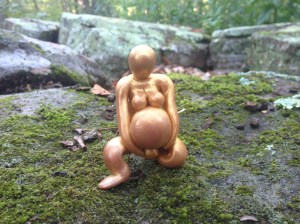
Last year’s World Breastfeeding Week Post Round Up | Talk Birth.