Archives

Tuesday Tidbits: Tree Mother

“Childbirth takes place at the intersection of time; in all cultures it links past, present and future. In traditional cultures birth unites the world of ‘now’ with the world of the ancestors, and is part of the great tree of life extending in time and eternity.” –Sheila Kitzinger

“Just as a tree grows best when anchored firmly in the earth, so can a pregnant mother feel strong and capable when supported by a sisterhood of nurturing friends.” -April Lussier

”And I say the sacred hoop of my people was one of the many hoops that made one circle, wide as daylight and as starlight, and in the center grew one mighty flowering tree to shelter all the children of one mother and one father.” – Black Elk (via Literary Mama)

“Good timber does not grow with ease; the stronger the wind, the stronger the trees.” – J. Willard Marriott

“A pregnant woman is like a beautiful flowering tree, but take care when it comes time for the harvest that you do not shake or bruise the tree, for in doing so, you may harm both the tree and its fruit.” –Peter Jackson

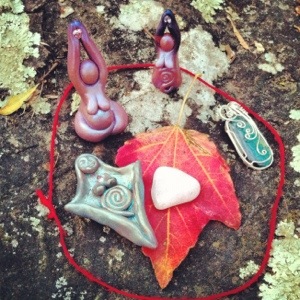
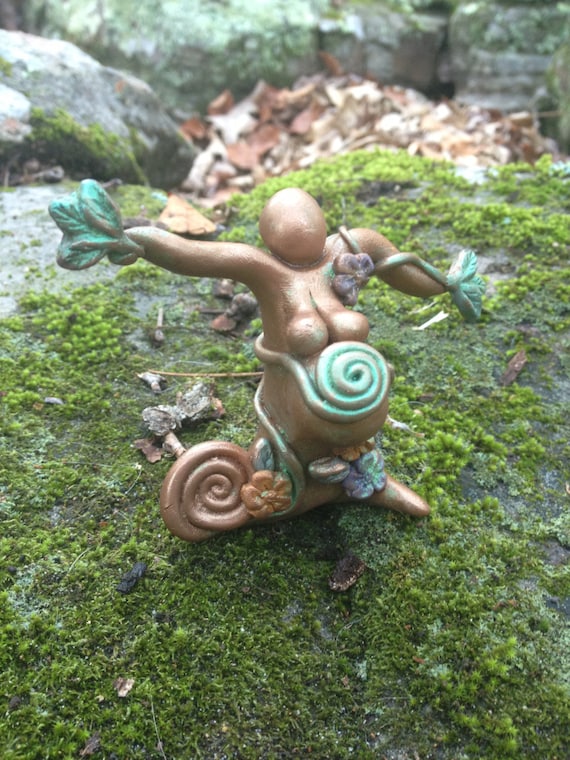
I am at the point in my school session in which I’m barely keeping my head above water! So, since I recently made a tree mama sculpture and because I recently helped do a tree-themed henna design on a pregnant mama, I decided to just go with some quotes today and call it a day!

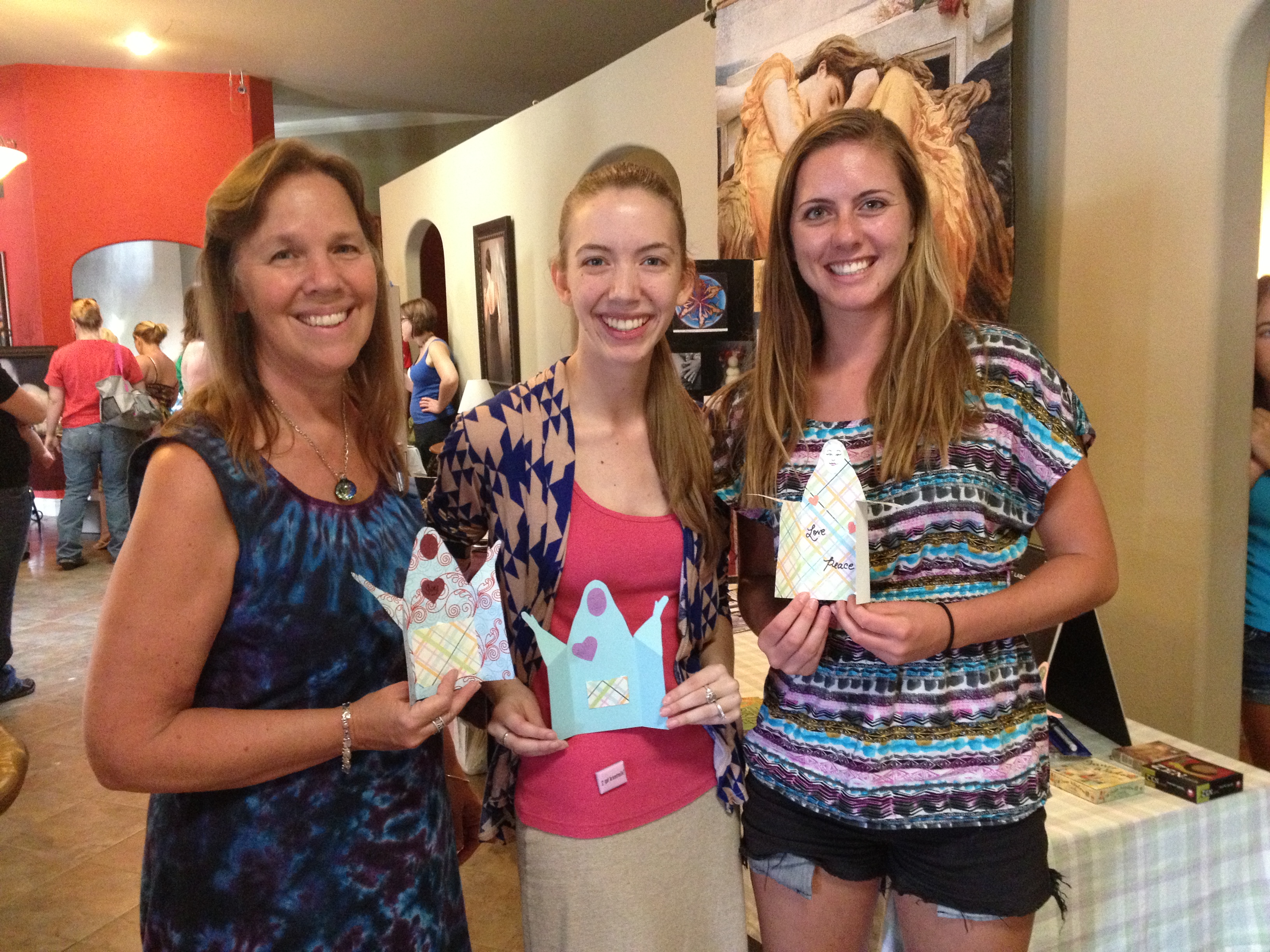
I’m definitely no Mandala Journey, but my mom and I did a tree mandala attempt with my friend anyway:


And, the next day she had her baby! I think he was waiting for henna… 🙂

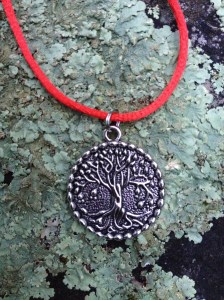
I also added some simple tree of life “birth amulet” pendants to my etsy shop! 🙂
Sept 2013 010

Talk Books: Sweetening the Pill

I haven’t actually read this book yet, or even obtained a copy, but I am intrigued enough by the promo spot that I’m doing a short blog post about it anyway! I’ve struggled with the question of birth control for some time. I took the pill for about six years and then after having my first baby in 2003 and going on the minipill, I had the sudden “epiphany” that if I was so committed to natural birth and breastfeeding and natural living and trusting my body, why the heck was I okay with filling said body full of hormones?! (The same epiphany, but including cloth diapers, led me to start using cloth moon pads rather than disposable as well. Never looked back!) We started using natural family planning instead (really, the Billings method) and it has been excellent for nine years—no “accidents” and more babies exactly when we decided we wanted them. And, no side effects, no money, and no hormones. Now that our family size feels complete, I find myself struggling with whether or not NFP will continue be “enough” until natural infertility takes over. NFP was fine when an accidental pregnancy was an acceptable option. At this point, an unexpected pregnancy would still be an acceptable option, however fast-forwarding the clock, I really, really, really, do not want to be someone who ends up having her first unexpected pregnancy at age 45 or something! I also do not want to engage in any permanent body-modification efforts (for either myself or my husband) when my own fertility will be up in the next 15 years or so (but body modification is forever!). So, I feel very optionless at this point…Anyway, on to the book I haven’t read. Here’s the promo copy I got that piqued my interest!

SWEETENING THE PILL OR HOW WE GOT HOOKED ON HORMONAL BIRTH CONTROL by Holly Grigg-Spall
Book Description: Millions of healthy women take a powerful medication every day from their mid-teens to menopause – the Pill – but few know how this drug works or the potential side effects. Contrary to cultural myth, the birth control pill impacts on every organ and function of the body, and yet most women do not even think of it as a drug. Depression, anxiety, paranoia, rage, panic attacks – just a few of the effects of the Pill on half of the over 80% of women who pop these tablets during their lifetimes.When the Pill was released, it was thought that women would not submit to taking a medication each day when they were not sick. Now the Pill is making women sick.However, there are a growing number of women looking for non-hormonal alternatives for preventing pregnancy. In a bid to spark a backlash against hormonal contraceptives, this book asks: Why can’t we criticize the Pill?

Carol Downer of Women’s Health in Women’s Hands makes a really important that our feminist health commitment to birth control access may blind us to the actual poor health impacts of the Pill:

“We discovered in the ’70s that the personal is political. Holly Grigg-Spall starts with her and other women’s personal experiences with the Pill, then thoughtfully and thoroughly considers it scientifically, medically and philosophically to discover the political truth of the Pill. She shares strategies for finding new ways to control our fertility while regaining control of our destiny. Grigg-Spall’s careful study on the Pill’s effect on women’s health is long, long overdue. We are so busy fighting to keep hormonal birth control available that we don’t want to question what it is doing to our health and our lives. After reading this book, we can never see the Pill in the same way again.”

Comments and resources welcome! 🙂

Tuesday Tidbits: Postpartum Mamas

As Americans, we are under the impression that new moms are ‘Superwomen’ & can return to life as it was before baby. We must remember to celebrate this new mother and emulate the other cultures that honor new mothers by caring for them, supporting them, & placing value on the magnificent transformation she is going through. This is the greatest gift we can give to new mothers & newborns…–Darla Burns (via Tuesday Tidbits: Postpartum Mothering)

“The first few months after a baby comes can be a lot like floating in a jar of honey—very sweet and golden, but very sticky too.” –American College of Nurse-Midwives

The United States are not known for their postpartum care practices. Many women are left caught completely off guard by the postpartum recovery experience and dogged by the nagging self-expectation to do and be it all and that to be a “good mother” means bouncing back, not needing help, and loving every minute of it.

This country is one of the only utterly lacking in a culture of postpartum care. Some version of the lie-in is still prevalent all over Asia, Africa, the Middle East, and particular parts of Europe; in these places, where women have found the postpartum regimens of their own mothers and grandmothers slightly outdated, they’ve revised them. The U.S. seems only to understand pregnancy as a distinct and fragile state. For the expectant, we issue reams of proscriptions—more than can reasonably be followed. We tell them what to eat and what not to eat. We ask that they visit the doctor regularly and that they not do any strenuous activity. We give them our seats on the bus. Finally, once they’ve actually undergone the physical trauma of it, their bodies thoroughly depleted, we beckon them most immediately to rejoin the rest of us. One New York mother summed up her recent postpartum experience this way: “You’re not hemorrhaging? OK, peace, see you later…”

…“A culturally accepted postpartum period sends a powerful message that’s not being sent in this country,” said Dr. Margaret Howard, the director of the Day Hospital for Postpartum Depression in Providence, Rhode Island. “American mothers internalize the prevailing attitude—‘I should be able to handle this myself; women have babies every day’—and if they’re not up and functioning, they feel like there’s something wrong with them.”

via Why Are America’s Postpartum Practices So Rough On New Mothers? – The Daily Beast.

Via First the Egg, I then read this powerful reflection prompted by the article above:

In the piece, one woman mentions that women are literally still bleeding, long after they’re expected to “bounce back” and reclaim their old lives and be totally self-sufficient. Our bodies haven’t finished healing, and we’re supposed to look and act as though nothing even happened here, it’s all good. It’s all just the same as it was.

Secretly, I’ve been the slightest bit ashamed of all the help I’ve needed.

via Eat the Damn Cake » bleeding time.

I also read this raw, honest, and touching look at the “betrayal” experienced by women who enter into the mystery of birth expecting a blissed out, earth mother, orgasmic birth experience:

…But inside my head, I could not believe what was happening. How painful it was. How terrifying. I felt helpless. And degraded and humiliated by there being witnesses. And at the same time, I felt so, so alone. I remember at one point saying, completely out of my mind, “I don’t understand why no one is doing anything to help me! Please help me!” Della reminded me that what I was feeling was the baby coming. That I was doing just what I was supposed to, having the baby, right then….

via Mutha Magazine » S. LYNN ALDERMAN’S Ugliest, Beautiful Moment (Or, Fuck Ina May).

And, that made me think of my own thoughts about birth regret and how we may hide it from the pregnant woman we perceive as vulnerable in her beautiful, fleeting state as Pregnant Woman:

I’ve come to realize that just as each woman has moments of triumph in birth, almost every woman, even those with the most blissful birth stories to share, have birth regrets of some kind of another. And, we may often look at subsequent births as an opportunity to “fix” whatever it was that went “wrong” with the birth that came before it. While it may seem to some that most mother swap “horror stories” more often than tales of exhilaration, I’ve noticed that those who are particularly passionate about birth, may withhold or hurry past their own birth regret moments, perhaps out of a desire not to tarnish the blissful birth image, a desire not to lose crunchy points, or a desire not to contribute to the climate of doubt already potently swirling around pregnant women…

via Birth Regrets? | Talk Birth.

Which then made me think about the women who know...

Where are the witches, midwives

and friends

August 2013 011

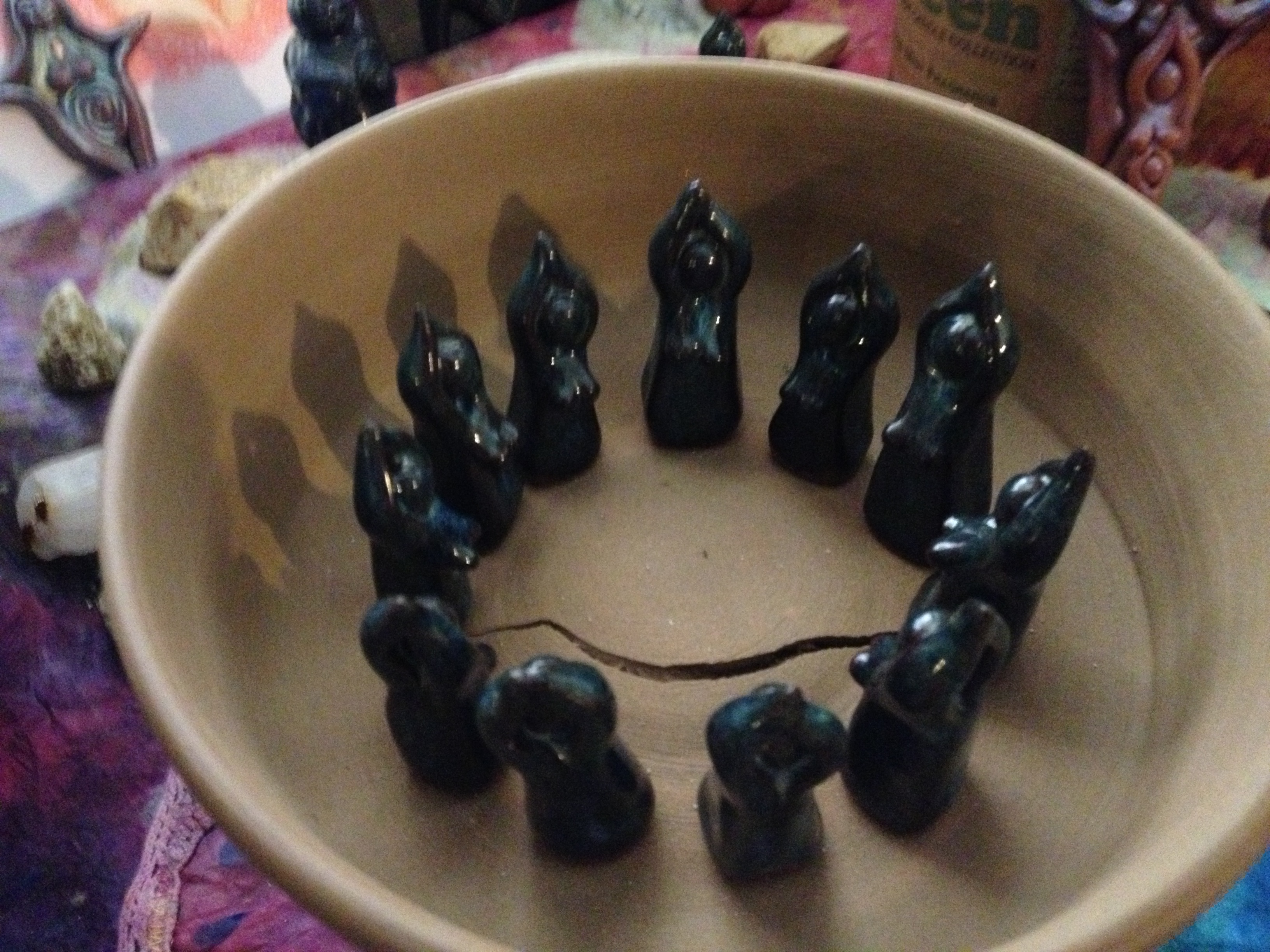
Circle of women sculptures as gifts for my women’s group. Yes, there’s a crack—“the world cracks everyone”—but that is how the light gets in…

to belly dance and chant

while I deliver

to hold me and breathe with me

as I push

to touch me and comfort me

as I cry?

Where are the womyn who know

what it’s like

to give birth?

via Where are the women who know? | Talk Birth.

Thinking about that reminded me of the chant we sang around the fire at the festival I just returned from on Sunday night:

Dance in a circle of women,

Make a web of my life,

Hold me as I spiral and spin,

Make a web of my life…

via Goddess Chants – Dance in a Circle of Women by Marie Summerwood.

May all pregnant women and tender postpartum mamas dance in a circle of women!

I’d hoped to have time to post a festival recap and some lessons learned, but other responsibilities take precedence at least for today, so I’ll leave you with one of the pictures my sister-in-law took on a misty morning, sunrise stroll around the lake and another that I took in the Temple at the festival:

Sept 2013 090

Sept 2013 036

See also:

Postpartum Survival Tips

Timeless Days: More Postpartum Planning

Mothers Matter–Creating a Postpartum Plan

Planning for Postpartum

Some reminders for postpartum mamas & those who love them

Birthing the Mother-Writer (or: Playing My Music, or: Postpartum Feelings, Part 1)

Postpartum Thoughts/Feelings, Part 2

Postpartum Feelings, Part 3

What to tell a mother-to-be about the realities of mothering…

Listen to the wise woman…

20120928-123955.jpg

Mini mamapriestess sculpture I made to take with me for my medicine bundle.

Last summer after I finished my priestess certification and I’d been facilitating women’s retreats for two years, I got a wild idea to go to a womanspirit or goddess festival of some kind. I did a google search and found one that sounded great—the Gaea Goddess Gathering–and it was happening in just two weeks. Imagine my surprise to then look at the bottom of the screen and see that it was located only a five-hour drive from me, just over the border into Kansas. I decided it was “meant to be.” My mom and a friend signed up with me (and Alaina) and we packed up my van and went! The night before we left on our adventure, I sat down at the kitchen table and felt a knife-like stinging pain on the back of my leg. I’d accidentally sat on a European giant hornet (these are not regular hornets, they are literally giant hornets about two inches long).

20120928-123138.jpg

Sting before I left.

Though it became hot and swollen and terribly painful, we set forth anyway. I asked for input on Facebook and did google research and started putting benadryl cream on it, even though I usually go with home remedies over medical-model remedies. It got worse and worse, eventually running from my hip to my knee and wrapped around my entire leg so
that two thirds of my thigh was sting-area and the difference in size between my legs was noticeable through clothing. During the festival, as I watched myself get worse and worse and people kept making remarks about needing epi-pens and maybe I should go to the hospital, I decided to dispense with the benadryl and listen to the wise women instead. My friend found plantain and made me a poultice. The cook gave me baking soda that I applied in a paste. I went to a ceremony that involved a healing ritual with sound and a priestess in a tent beat a drum over me as I lay there on my stomach. After a little Reiki healing, she then leaned very, very close to my ear and said quietly, “are you taking good enough care of yourself? You give and give and it is time to receive. You need to be taken care of too.” And, I cried.

20120928-123203.jpg

Sting after arriving. I didn’t take any pictures of it at the worst. It got about twice as bad as this. Every time I thought it could not possible get worse, it got twice as bad!

I came out of the tent and laid on a bench and women I didn’t know came and put their hands on my back and made me tinctures of strange plants they found in the herb garden and I drank it even though it almost made me gag. Another woman I didn’t know rubbed my back and though I couldn’t even see her face, she leaned close to my ear and said, “sometimes life stings you. Your friends, your family, being a parent, taking care of your children. It stings sometimes. Things people say without meaning to sting you. You’re sensitive, Sometimes it stings a lot and you worry that you’re not good enough. I see you with your baby. You are such a good mother.” And, I cried again, lying there on bench in the middle of nowhere with my dress pulled up and my red, sore, swollen, horrible thigh covered with a poultice of mysterious weeds, surrounded by women I didn’t know, but who were caring for me. And, I got better. By the time I got home, the sting was almost totally healed.

As soon as I returned home, I made a list, intending to develop it into a blog post about everything I’d learned at this gathering of women. The list languished in my drafts folder and the wheel of the year continued to turn and now it is September again and next week, some friends and I will be hopping back in my van and heading back to the GGG for this year’s festival. I decided the blog post will never get “developed” into the post I had intended, but that I can still share my list anyway. I also realized that I have been reluctant to post it here for fear of being too “weird” and alienating readers. But, Talk Birth is like a buffet, you can take what works for you and leave the rest! 😉 I’m also writing now because I’m going to go ahead and give myself a week off from blogging and I wanted to post some sort of explanation as to why. I’m going to focus on getting ready for the festival (I’m selling jewelry while there too!) and hanging out with my family (and, oh yeah, grading all the papers that are due this Sunday night!).

So, what did I learn at the GGG?

  • I have a lot to learn
  • Likewise, I know more than I give myself credit for—I am both more skilled than I may think and less skilled than I’d like to be.
  • I want to be more confident
  • I need to always remember to look for a wise woman when I need help. And, that allowing myself to be cared for by strangers is a surprisingly powerful experience.
  • I am much more quickly judgmental than I realized or like to admit—I judge the book by its cover and assess “worth” by appearance more often than I thought and I disappointed myself with that. I learned that ALL women have hidden gifts and I was surprised over and over again what people had to offer, that their appearance might not have suggested.
  • My body knows how to heal (I’ve learned this before, also from a bug)
  • It was great to have just one-on-one time with Alaina. She just wants to be with me. I didn’t have to cook/do laundry or anything else. I just toted her around which is exactly what she needs/wants (*note from this year: she still wants exactly this and I’m looking forward to giving it to her).
  • My mom is incredibly creatively gifted. And, I’m lucky to be around so many creative women in my own community. They have awesome gifts!
  • I don’t need to do everything—other people have their own talents and I don’t have to “do it all,” all of the time.
  • But by the same token, I don’t have to be good at everything and it is still okay to do things and be bad at them, but still try. (However, it also good to let other people have their specialties/share their gifts. I don’t have to do it all.)
  • I can be open to receive.
  • I can be a singer! Perform in a group! Feel awesome!
    20120928-123214.jpg

    Once this started, I knew I’d made the right choice to come after all!

  • Ditto drummer!
  • Explanation of the two points above which also connect to the one about not having to do everything and yet it also being okay to try. One of the sessions at the festival was the “GGG Soul Singers.” One of the women taught a large group of us several cool songs. During the special dinner that night, we got up together with sound equipment and everything and performed our songs. Everyone was yelling and cheering and clapping and it was great. So much fun! I’m a terrible singer, I know that, but that night I felt like I was amazing. And, I learned that being terrible at something doesn’t mean you can’t do it anyway and enjoy yourself. I’m looking forward to doing this again this year! At this festival I was captivated by these massive community drums the women had. Large enough to be played by four or even more women at once, I absolutely loved them. Even though I didn’t know what I was doing, I tried, and discovered I could indeed do it. I could drum and sing and keep up with the group. When I got home, I decided I must have a drum like this and spent way too much money and ordered one online. And, even though I’m tone-deaf and “non-musical,” I can play it. And, I’m still amazing, whether I really am or not!
  • I felt both more and less competent—related to knowing a lot and yet having a lot to learn, I discovered that I’m a pretty good ceremonialist, a lot better than I’d given myself credit for, but that some other people are way better than me (and others are not. What matters is trying).
    20120928-123806.jpg

    Intense stairs from the dining hall and lodging to the “ridge” where ceremonies took place. Navigating these was NO FUN with that sting on my leg! But, isn’t tiny Alaina cute setting off on her own and heading on up?!

  • I was acknowledged/recognized as priestess/clergy to my own circle of women and it felt very good to be seen in that way. I’m trying to be/offer/bring something to the local area that still feels tender and vulnerable in myself. I lack some confidence. Want to build it! And, yet, I do it anyway. I’m brave! Maybe I’m not as skilled or musical or awesome as I could be, but I’m pretty darn good and…at least I TRY!
  • Want family to be clear priority. Family harmony is a top goal. I want to make sure to give them my good stuff too! Don’t save my passion and enthusiasm for “others” only!

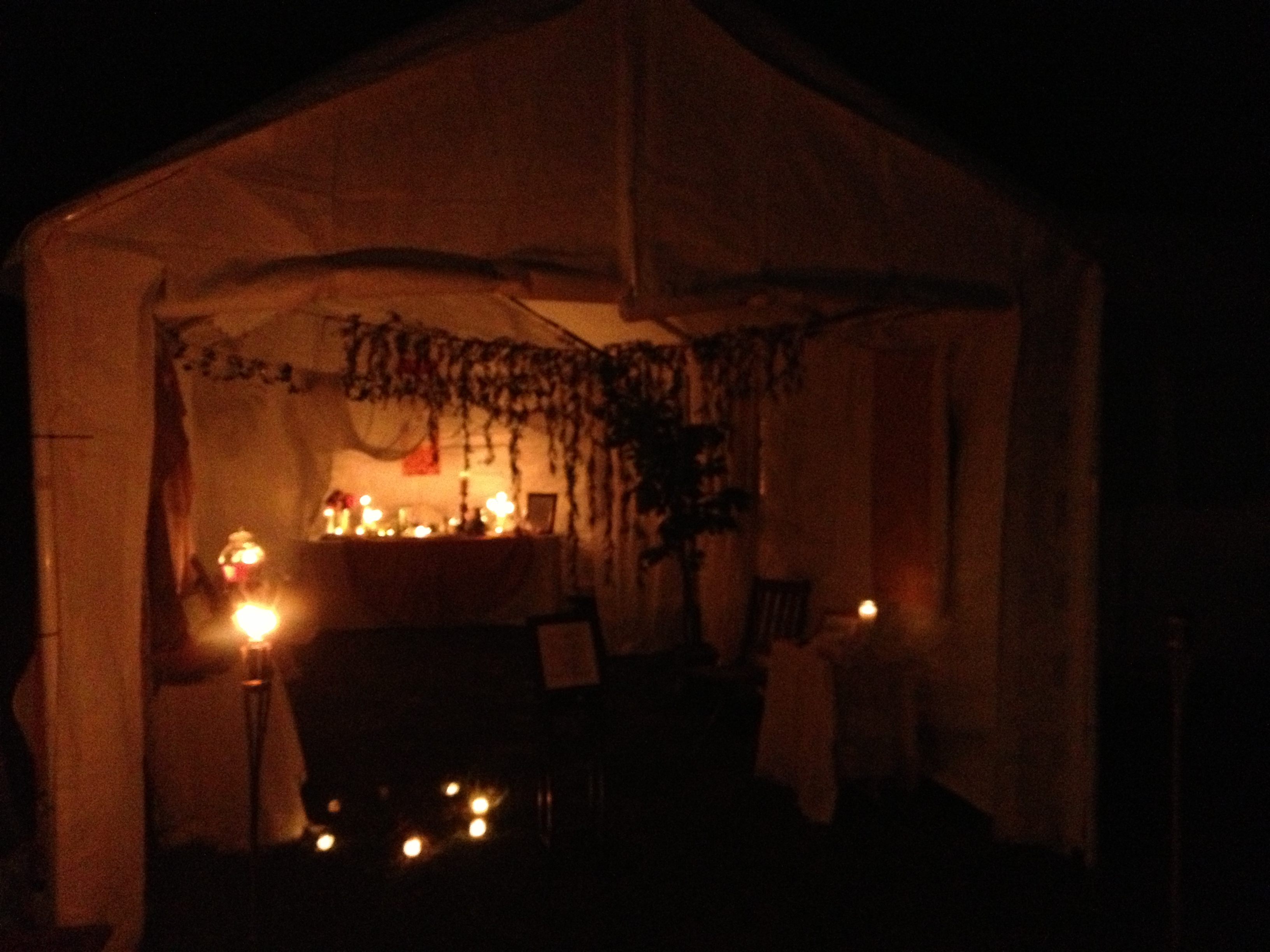
When I got home from this festival, I was so inspired that I planned and facilitated a pretty great nighttime, firelit “sagewoman” ceremony in a teepee (with drumming on my new community drum) for the wise women of my own community. As a ritualist/ceremonialist, I learned from the GGG-experience that ambiance really, really matters in offering a cool ritual.

Since last year, I’ve developed my ceremonialist skills even further and last month received an additional supplemental ordination from the American Priestess Council. I’m almost three years into my D.Min program, I’ve taken advanced coursework in ritual design as well as pastoral counseling, liturgy, the role of the priestess, ethics, history, and so forth. At this time last year, I was struggling with whether or not it was “okay” for me to own the Priestess identity I felt “called” into and at the GGG I was seen and heard into this identity particularly by my friend and also by my mom. It turns out it is okay for me to serve others as a Priestess and to claim that title with authenticity even though I’m not as perfect and amazing as I feel like I should be (I’m also a blogger for SageWoman magazine and I’m currently working on a post called who does she think SHE is, that is about exactly this tension).

Some more pictures:

20120928-123107.jpg

Henna feet! From the woman who did this for me, I learned the phrase: “sparkles are my favorite color.”

20120928-123044.jpg

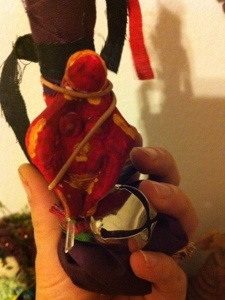
Medicine bundle! This was the best class ever. The woman brought piles and piles of random and awesome stuff and it was all free to choose what you wanted for your bundle. How cool is this face?!

20120928-123839.jpg

She also had simple clay goddesses for us to paint and attach as well as we could.

20120928-123121.jpg

Pensive little Lainey looking back thoughtfully at the stairs up which she just journeyed.

20120928-123746.jpg

Back home demo’ing a beautiful sarong gifted to my by my seeing friend!

20120928-123817.jpg

What’s this…

20120928-123825.jpg

…I hear…big DRUMS!

20120928-123850.jpg

When I got home, I was inspired to make some new sculptures and Mark cut a lovely gemstone and made a pendant.

Here I go again! I wonder what lessons await me this year…

Thesis Tidbits: Birth as a Shamanic Experience

Childbirth is a rite of passage so intense physically, psychologically, emotionally, spiritually, that most other events in a woman’s life pale next to it. In our modern lives, there are few remaining rituals of initiation, few events that challenge a person’s mettle down to the very core. Childbirth remains a primary initiatory rite for a woman.” –from the book MotherMysteries

When I was pregnant with my first baby, I read an article centered on the theme, “Birth as a Shamanic Experience.” I can no longer find August 2013 050the exact article (online or printed), but I distinctly remember my feeling upon reading it: I was entering into a mystery. Giving birth was big. Bigger than anything I’d ever done before and it went beyond the realm of a purely biological process and into something else. Like shamanic experiences, giving birth is often described as involving a sense of connection to the larger forces of the world as well as being in an altered state of consciousness or even a trance state. While shamanic experiences may involve “journeying” to other realms of reality, giving birth requires the most thoroughly embodied rootedness of being that I’ve ever experienced. It, too, is a journey, but it is a journey into one’s own deepest resources and strongest places. The sensation of being in a totally focused, state of trance and on a soul work mission is intense, defining, and pivotal.

Shamanic journeys may be embarked upon for the purpose of soul retrieval and I can’t help but think that this is the purpose of giving birth as well—the birthing woman travels into herself to bring forth the soul of her child.

“Birth is certainly messy and bloody. It is intense, fierce, fiery and loud, but not violent. It is bloody from shamanic transformation. Birth-blood is the primordial ocean of life that has sustained the child in utero; the giving of this blood in birth is the mother’s gift to her child. The flow of blood is the first sign, following the flow of waters, that signals that new life is on the way, just as it is the first sign of a young maiden’s initiation into a new life at her menarche. The blood of transformation is miraculous. In Spanish, the phrase ‘dar a la luz, to give birth, literally means ‘to give to the light’. Giving to the light — mothers giving birth are giving light to new life through blood. The messiness and bloodiness of birth are the gift of the Earth–elemental chaos coming into form.”

via Article: Birthing as Shamanic Experience.

In the aftermath of giving birth, particularly without medication, many women describe a sense of expansive oneness—with other women, with the earth, with the cycles and rhythms of life. People who become shamans, usually do so after events involving challenge and stress in which the shaman must navigate tough obstacles and confront fears. What is a laboring woman, but the original shaman—a “shemama” as Leslene della Madre would say —as she works through her fears and passes through them, emerging with strength.

In her classic book Shakti Woman, Vicki Noble describes giving birth as a central shamanic experience and perhaps the root of all shamanism:

“I believe I underwent an initiation of the most ancient variety, birth as a shamanic experience, the central act of female shamanism—the quintessential act that offers a woman a completed experience of facing and moving through her fears to the other side. It isn’t that birth is the only way for a woman to experience this initiation—many women climb mountains or face other kinds of physical endurance tests and also come through it reborn into their power. But biologically birth is a doorway, a given for most women on the planet. It is fundamental opportunity to become empowered. Most of us giving birth today do not have the full experience, which is co-opted and distorted beyond recognition, changed from an active process into something that is done to us, as if we don’t know how to do it ourselves. Reclaiming the right to birth in our own instinctual way is a shamanic act of courage that has unfortunately become as remote to us as our ability to fly through the night in the form of an owl or heal the sick with the power of the drum. It wouldn’t hurt if we began to think of our birthing and child rearing as central parts of our shamanic work…” (p. 223).

After explaining that the homebirth of her second son was her, “first initiation into the Goddess…even though at that time I didn’t consciously know of Her,” Monica Sjoo writing in an anthology of priestess essays called Voices of the Goddess, explains:

“The Birthing Woman is the original shaman. She brings the ancestral spirit being into this realm while risking her life doing so. No wonder that the most ancient temples were the sacred birth places and that the priestesses of the Mother were also midwives, healers, astrologers and guides to the souls of the dying. Women bridge the borderline realms between life and death and in the past have therefore always been the oracles, sibyls, mediums and wise women…

…the power of original creation thinking is connected to the power of mothering. Motherhood is ritually powerful and of great spiritual and occult competence because bearing, like bleeding, is a transformative magical act. It is the power of ritual magic, the power of thought or mind, that gives rise to biological organisms as well as to social organizations, cultures and transformations of all kinds…” (page unknown).

20130903-200523.jpg

I’m working on my thesis project on the subject of birth as a spiritual experience and this topic is part of it. You can read more about Birth as a Shamanic Experience in the blog post at Feminism and Religion from which this post is excerpted: Birth as a Shamanic Experience by Molly | Feminism and Religion.

Guest Post: Paid Menstrual Leave?

Paid Menstrual Leave – it’s time!  

by DeAnna L’am. Reprinted with permission.

A Russian lawmaker has asked parliament to give women two days paid leave a month when they menstruate… Mikhail Degtyaryov, a member of the nationalist LDPR party, wrote on his website “During that period (of menstruation), most women experience psychological and physiological discomfort. The pain for the fair sex is often so intense that it is necessary to call an ambulance”… Scientists and gynecologists look on difficult menstruation not only as a medical, but also a social problem…” ~ Standard Digital, August 2013

Fascinating! Lets look at how good things are turned on their heads, yet again, to result (unsurprisingly) in women’s dis-empowerment.

Indeed, a paid monthly Menstrual Leave would be an honoring, empowering option for women worldwide. Yet proposing it for all the wrong reasons diminishes us, and our cyclicity, to “a social problem.”

Campaigns have been initiated over the years under the guise of empowering women, which ended up diminishing, dis-empowering, and ultimately killing us! Marketing guru Edward Bernays was hired in 1928 by an American Tobacco Company president to increase sales of Lucky Strike cigarettes. Sigmond Freud’s work was utilized to expand understanding of ‘What Women Want’ and capitalize on it for marketing purposes.

Realizing that women were motivated and empowered by the suffrage movement, Bernays manipulated a real need – into a persuasive sales tactic. He hired women to march in the Easted Sunday parade smoking what he cleverly named their “Torches of Freedom.” Bernays succeeded overnight: he persuaded women to pick up an unhealthy habit, and commit to spending their hard earned money for years, by equating cigarettes with personal freedom and equality to men. Smoking among women exploded into unparalleled heights. Their personal freedom and equality to men continued to suffer…

Similarly, women were encouraged by manipulative campaigns to start giving birth in hospitals after countless generations of home births. Many new hospitals were built as a result of Second World War, to accommodate the staggering number of injured soldiers returning from battle. It took a few years for most hospitals to empty, as wounded soldiers either recovered or died. Faced with many large vacant hospital buildings and idle staff, administrators procured and released ad campaigns, which sinisterly manipulated women to believe that giving birth at home was ‘primitive’ and unsafe, while birthing at the hospital was promoted as safer, ‘modern’, and a highly intelligent choice.

Women bought into these campaigns, and many others like them, all over the world. They started smoking and felt ‘glamorous’. They started giving birth in hospitals and felt ‘modern’. They started using disposable menstrual products and felt ‘progressive’ and ‘in control.’ All along they have also been developing an array of respiratory diseases and dying of lung cancer; They have been cut open in cesarean sections (1 in 4, to accommodate doctor’s convenience); They have reached an all-time-high maternal and infant mortality rates following hospital birth; And they have been contributing to our planetary ecological crisis by damping 12 billion “feminine hygiene” products into landfills every year, in the U.S.A. Alone!

And here we are: In the midst of a pioneering worldwide movement of women reclaiming menstruation as the heightened state of awareness for which it was recognized in all indigenous cultures; In the process of inspiring women to honor their menstrual blood and their body’s needs, by taking time off to rest and renew themselves on the first day of their period — we are faced with a legal initiative which is both revolutionary and reactionary at the same time!

Wouldn’t it be revolutionary for the workplace to grant Paid Menstrual Leave to women? Wouldn’t we feel validated in our need for rejuvenation, honored for our body’s monthly regeneration, and empowered by the cultural acknowledgment of our rhythm?

We certainly would, if it weren’t billed as a response to “a social problem” of the “fair sex” who suffers “psychological and physiological discomfort.” Our menstrual cycle is neither a social problem nor a mere discomfort. Our menstrual flow is profound and life affirming work performed monthly by our bodies. We need to rest and renew in response to it, or we develop symptoms labled “psychological and physiological discomfort” by our culture (and frequently by us, too…)

Cigarettes, hospital births, and disposable menstrual products were sold to us through clever manipulative tactics, yet we never needed them… We DO NEED Paid Menstrual Leave!

We have stopped smoking in drovers. We have been reclaiming home births, and have started using sustainable menstrual products (such as cloth pads, sea sponges, and menstrual cups). It is time to claim for ourselves, and demand from our culture, a monthly PML to replace PMS!

PML (Paid Menstrual Leave) is the deeply deserved rest our body, mind, and spirit need monthly. In its absence, our body screams in PMS pain, and will continue to do so until we listen to its needs and honor them.

This is a call for action! Lets unite in demanding legaly-bound Paid Menstrual Leave — not as a patronizing gesture designed to send us home for being a “social problem.” But rather as the honoring of a deep need, which springs from our depth, to renew our body, our emotions, and our spirit – monthly – while preparing for another cycle in the ever turning wheel of our lives.  


© 2013, DeAnna L’am, Red Moon – Cycles of Women’s Wisdom™

DeAnna L’am, (B.A.) speaker, coach, and trainer, is author of ‘Becoming Peers – Mentoring Girls Into Womanhood’ and ‘A Diva’s guide to Getting Your Period’. She is founder of Red Moon School of Empowerment for Women & Girls™ and of Red Tents In Every Neighborhood – Global Network. Her pioneering work has been transforming women’s & girls’ lives around the world, for over 20 years.

DeAnna helps women & girls love themselves unconditionally! She specializes in helping women make peace with their cycle; Instructs Moms in the art of welcoming girls to empowered womanhood, and trains women to hold RED TENTS in their communities. Visit her at: www.deannalam.com

Disclaimer: I am a Red Moon program affiliate. However, the only affiliate link in this post is the one included here!

MamaFest!

Last summer, my Rolla Birth Network friends and I conceived of a local event to be held celebrating mothers. We made a couple of August 2013 020decisions in planning our event that were really smart: we decided to focus on celebration rather than education (or even activism), we decided not to involve any money (either for the attendees or the hosts [aside from tabling materials/supplies]), and…this is key…we also decided to only do that which was within our own personal resources to provide. It worked! We pulled off a lovely MamaFest event at Tara Day Spa in Rolla. It was well-attended and fun and involved very little expense for anyone. It was work, of course, but it was within our resources/capacities. Community organizations were welcome to have a table at the event for free with the only stipulations being no formula/bottle materials (this event is co-sponsored by La Leche League of Rolla in conjunction with World Breastfeeding Week) and that they had to provide something to do at their table. Our vision was that this event would not involve simply walking around picking up flyers and leaving, but instead would provide an opportunity to hang out with friends, see cool things, learn some stuff, and make some projects. I had a birth art booth that was a delight for me to offer to the women.

This year in August, we hosted our second annual MamaFest event, again with a similar vision. Our resources/time were a little slimmer August 2013 017this year due to peoples’ schedules (particularly my own, leaving my co-founder shouldering most of the organizing effort), new babies, etc. We had fewer exhibits and fewer attendees and slipped more into the boothy-vibe that we hoped to avoid, and learned some things to try next year. I still consider the event a success, especially considering the fairly minimal womanpower with which we had to work. It was an especially good outreach opportunity for LLL and I said at the end that even if I hadn’t been involved at all with the planning of it, I would definitely have considered it a worthwhile event to continue attending with my LLL booth. I was super excited about my simple, but pretty (and free!) offering for the birth art booth this year: mother affirmation/blessing cards. Unfortunately, very few people took me up on my offer and I was a little sad about that, but my LLL booth with its breastfeeding trivia game and got breastmilk ™ pins was pretty popular. We have lots of ideas for next year and the possibility of experimenting with new directions, such as doing away with the booths altogether and having more retreat-like experience stations (i.e. yoga). What we know we want to keep is our commitment to celebrating women and their capacities, because they’re just super awesome and worth celebrating!

Here are some pictures of my booth and some projects from the event:

August 2013 016

Birth art booth!

August 2013 031

Loved this thumbprint necklace project offered at the booth of a local doula/photographer. Alaina appropriated it immediately because, “me like hearts!”

August 2013 028

Babyloss memorial charms offered by the Rainbow Group (local pregnancy/infant loss support)

August 2013 015

Emergency back up project that I scrambled for when I realized people weren’t making my cards–affirmation “stones” (glass pebbles written or drawn on with glass paint markers).

August 2013 013

At least my own loyal family members showed up and made my project! (mom, sister, and visiting cousin)

What I learned from this event again this year was that you do not have to live in a city to be able to offer something like this in your community, all you need is a small handful of women who care and who can use their skills and resources to make it happen! 🙂

Tuesday Tidbits: More Wild Woman

“Within every woman there is a wild and natural creature, a powerful force, filled with good instincts, passionate creativity, and ageless knowing.20130903-200550.jpg Her name is Wild Woman, but she is an endangered species. Though the gifts of the wildish nature come to us at birth, society’s attempt to “civilize” us into rigid roles has plundered this treasure, and muffled the deep, life-giving messages of our own souls. Without Wild Woman, we become over-domesticated, fearful, uncreative, trapped.”

-Clarissa Pinkola Estes (via TheGypsyPriestess)

“The doors to the world of the wild Self are few but precious. If you have a deep scar, that is a door, if you have an old, old story, that is a door. If you love the sky and the water so much you almost cannot bear it, that is a door. If you yearn for a deeper life, a full life, a sane life, that is a door.” 

— Clarissa Pinkola Estés, Ph.D (Women Who Run With the Wolves)

“An Awakening Woman is a spiritual rebellion engaged in a glowing and embodied, nothing-held-back love affair with the great mystery. She moves in the world with fierce compassion, grace and freedom, and is passionate about truth, rest and real love. She is fluent in angelic, diva and in Kali roars. Earth is home and so is infinity.” 20130903-200523.jpg

–Chameli Ardagh, Awakening Women Institute

“We need the tonic of wildness…At the same time that we are earnest to explore and learn all things, we require that all things be mysterious and unexplorable, that land and sea be indefinitely wild, unsurveyed and unfathomed by us because unfathomable. We can never have enough of nature.”

― Henry David Thoreau

And, then some fiery thoughts as well:

“Hold onto your dream, though it may burn you.
It is the Fire of the Initiate.
Hold onto your Vision, though it may shatter your core and
the earth may tremble with the anticipation of your blossoming.
Hold true to your Heart, though you may crack and bleed.
It is a moon blood cleansing, a womb making space
For a tiny spark, to burst
Into even brighter flame.” 20130903-200533.jpg

by Lisa Buell, JourneyDance Facilitator

Come into the fire, come in,
come in, dance in the flames of the festival
of the strongest sun at the mountain top
of the year when the wheel starts down.
Dance through me as I through you.
Here in the heart of fire in the caves
of the ancient body we are aligned.
Our cells are burning
each a little furnace powered by the sun
and the moon pulls the sea of our blood.
This night the sun and moon dance
and you and I dance in the fire of which
we are the logs, the matches and the flames.

Marge Piercy, from “Shadows of the Burning; The Lunar Cycle”

“She walks not away from the fire…but toward it…because not only can she handle the HEAT…she contains it…and her fire wills forth the work that is meant to be in the world…” ~Anni Daulter, Sacred Pregnancy

Prior Wild Woman post.

20130903-200618.jpg

Tuesday Tidbits: Breastfeeding Research

August 2013 050

Some new (but non-breastfeeding) sculptures this week! 🙂

Before I begin today’s post, I feel like acknowledging that I find it puzzling that we even need to do research on breastfeeding or that it is considered “news” OR that it is something for which the advantages need to be “debunked” OR “proven.” It feels similar to me to seeing journal articles “revealing” that your own blood has special nutrients in it that help your body to function or announcing that having your own blood in your body helps you be healthier and live longer. Or, likewise, if we were to see articles “proving” that it is good for your cells if you drink water or that a special component has been added to a new soda to make it as “close to water as possible.” Some things just don’t really need to be news. And, I’ve observed for over eight years that new, often negative research about breastfeeding often “coincidentally” surfaces right around World Breastfeeding Week, and usually some new campaign also surfaces with a feel-good, but toothless message about “supporting all mothers,” and perhaps some “shocking” reveal article about celebrity breastfeeding will also pop up.

That said, unsurprisingly, some breastfeeding research and general breastfeeding articles have caught my eye recently. The first with regard to weaning and depression:

But the frequency with which women experience depressive episodes when weaning their babies is far less understood. Researchers “The intersection between lactation and mood is important, and it is extremely understudied,” said Dr. Samantha Meltzer-Brody, director of the perinatal psychiatry program at the UNC Center for Women’s Mood Disorders. “There are definitely people who report mood symptoms associated with lactation.”

via Weaning And Depression Linked In Many Women.

The second is one that will actually affect the way I practice when helping breastfeeding women and it is about the relationship that may exist between mothers having trouble breastfeeding and early signs of diabetes.

New research has revealed the hormone insulin plays an important part in the production of breast milk – and mothers who are struggling with feeding may have low levels of insulin.

For a long time, insulin was not thought to play a direct role in regulating the milk-making cells of the human breast.

But scientists now know that the mammary gland in breast becomes sensitive to insulin during lactation.

via Why mothers struggling to breastfeed could be showing early signs of diabetes | Mail Online.

And, not new or surprising or current, but unfortunately of continued relevance is the fact that IV fluids during labor artificially inflate baby’s birthweight:

But when babies lose more than 7% of birth weight during these early days, does this automatically mean they are not getting enough milk? No, according to a recent study.

A greater weight loss may be completely unrelated to breastfeeding and due instead to excess IV fluids mothers receive within the final 2 hours before delivery. According to this study, these excess IV fluids inflate babies’ birth weight in utero and act as a diuretic after birth. Babies whose mothers received more IV fluids before birth urinated more during their first 24 hours and as a result lost more weight. Number of wet diapers during the first 24 hours predicted infant weight loss. This was true whether the babies were born vaginally or by c-section. Another study published earlier this year had similar findings.

This weight loss has nothing whatsoever to do with breastfeeding and milk intake. In fact, the authors suggest that if clinicians want to use weight loss as a gauge of milk intake, they calculate baby’s weight loss not from birth weight, but from their weight at 24 hours. According to their findings, this could neutralize the effect of the mother’s IV fluids on newborn weight loss.

via Breastfeeding Answers Made Simple – Breastfeeding Reporter – Newborn Weight Loss and IV Fluids in Labor.

They way we treat women during birth matters for her breastfeeding relationship and the health of her baby! Birth interventions are not benign.

Also, not benign is the way this article from MSNBC chose to describe some research about breastfeeding women having a lower risk of Alzheimer’s disease (if researchers were more careful to watch their language, ala Diane Wiessinger, and remember that breastfeeding is the biologic norm, the article would actually be titled, “formula feeding increases risk of Alzheimer’s”):

Amazing news for moms who breast-fed: All that hassle was worth it — not just for your baby (who will likely have a higher IQ), but for you as well. A new Cambridge University study suggests that women who breast-feed can cut their risk of Alzheimer’s disease by up to two-thirds and calls the link “highly significant.” Those overly precious attachment parents might have the last laugh yet, as the benefits seemed to increase with longer periods of breast-feeding: Women who breast-fed for a year were found to have about a 20 percent lower risk of developing the disease as someone who had breast-fed for only four months. [Source]

via Breastfeeding cuts Alzheimer’s risk by two-thirds, study says.

Note that this “article” was published during World Breastfeeding Week and inserts little digs about being “overly precious” and a “hassle.” Words matter. They seep into our consciousness and affect our realities and our understandings of ourselves and our babies.

Not coincidentally, we also have to keep “proving” over and over again what many parents often feel in their hearts: that babies need to be with their parents, that they need to be held, and that breastfeeding is good for them.

“Ill-advised practices and beliefs have become commonplace in our culture, such as the use of infant formula, the isolation of infants in their own rooms or the belief that responding too quickly to a fussing baby will ‘spoil’ it,” Narvaez says.

This new research links certain early, nurturing parenting practices — the kind common in foraging hunter-gatherer societies — to specific, healthy emotional outcomes in adulthood, and has many experts rethinking some of our modern, cultural child-rearing “norms.”

“Breast-feeding infants, responsiveness to crying, almost constant touch and having multiple adult caregivers are some of the nurturing ancestral parenting practices that are shown to positively impact the developing brain, which not only shapes personality, but also helps physical health and moral development,” says Narvaez.

Studies show that responding to a baby’s needs (not letting a baby “cry it out”) has been shown to influence the development of conscience; positive touch affects stress reactivity, impulse control and empathy; free play in nature influences social capacities and aggression; and a set of supportive caregivers (beyond the mother alone) predicts IQ and ego resilience as well as empathy.

via Modern parenting may hinder brain development, research shows // News // Research at Notre Dame // University of Notre Dame.

Is anyone else getting tired of these kind of impressive “reveals”? I find it discouraging and frustrating, but maybe I’m just in a bad mood today!

I was less crabby to read this pleasant little story about Selma Blair and her breastfeeding toddler:

Arthur, who just celebrated his second birthday on July 25, seemed to enjoy the tasty snack, smiling and chatting gleefully with his mother and passers-by before the two headed off the train.

Even in more progressive parts of America breastfeeding is still seen as taboo, despite countless studies affirming the list of health benefits for both mothers and their children…

via Selma Blair breastfeeds her son Arthur, 2, during afternoon shopping trip | Mail Online.

And, from the same publication (not always widely renowned as a respectable source!), we see this interesting article about portraits of breastfeeding mothers from the 1800’s along with a little social commentary:

The seemingly normal image of the nursing mother in mid-1800s America poses a stark contrast against the media storm surrounding California mother-of-two Jamie Lynne Grumet last year, who posed on the cover of TIME breastfeeding her three-and-half-year-old son.

via Bizarre pictures reveal the unlikely trend for photographs of breastfeeding mothers in Victorian-era America | Mail Online.

And, interestingly, something else women also feel, but don’t necessarily have “back up” for, is the understanding that it isn’t breastmilk alone that has these effects for women, it is the act of breastfeeding itself, something that is not always differentiated in breastmilk research:

1) Find out what they mean when they say “breastfeeding.” This question by itself can often clear up misperceptions. In many cases, when critics say “breastfeeding,” what they really mean is “breast milk” independent of its delivery method; they do not mean the entire package that is breastfeeding. Breast milk obviously shines when compared to any of its substitutes. But when the independent effects of the milk are teased away from the act of breastfeeding, the differences seem smaller. And that is precisely the point—it’s the milk and the method of delivery that make the difference for both mother and baby.

via Answering the Critics: Breastmilk Separate of Breastfeeding Does Not Produce the Same Results | Kindred Community.

Along these same lines, but from a personal perspective instead, I was pleased, but not particularly surprised to read this mother’s story about breastfeeding her adopted son:

I am surprised by how not different breastfeeding our son feels compared to breastfeeding our older, biological children.

But because he’s adopted, breastfeeding felt even more important. I wanted him to feel that bond — that closeness and skin-to-skin, to help him feel comforted. Not being pregnant, and not knowing what he felt like in the womb beforehand … I wanted that physical connection with him afterward. And it’s just been really easy so far, although I don’t love the supplemental nursing system [laughs]. There have been moments of trying to get him to latch where, I’m just like, ‘Ok! I’m done!’

But I feel so bonded and attached to him, and I think a huge part of that has been the breastfeeding.

via The Breastfeeding Chronicles: Nursing My Adopted Child.

We also see questionable research results that seem to completely overlook the systemic context in which women make their feeding “choices”:

Brown found extraverted, conscientious and emotionally stable mothers were more likely to try breast-feeding. But being agreeable or open to new experiences made no difference, according to the findings published Tuesday (Aug. 6) in the Journal of Advanced Nursing.

Many try, but many quit

More than 80 percent of the women in the study tried to breast-feed, but less than half who tried were still breast-feeding six months later. And women who switched from breast to bottle tended to switch quickly. About 73 percent of the women who stopped breast-feeding did so within two weeks after giving birth.

Women who were conscientious — for example, detailed-oriented and punctual — were likely to start, but also likely to stop breast-feeding.

Mothers who kept breast-feeding during the first six months were more extroverted and less anxious than mothers who always bottle-fed or switched to the bottle. The effect was particularly strong within the first six weeks after birth. [Blossoming Body: 8 Odd Changes That Happen During Pregnancy]

via Mom’s Personality Key to Whether Baby Get the Breast or Bottle | LiveScience.

It is a huge mistake to reduce breastfeeding decisions to a “personal choice,” when it is a public health issue made in the context of a society that treats formula like the norm (as with the breastfeeding reduces risk, rather than formula increases risk research, as referenced above), pays excessive attention to celebrity breastfeeding experiences or public breastfeeding encounters, makes snide remarks under the guise of presenting new, duh-based research, that tolerates disparities in survival rates of black babies, and interferes with the birth process to the extent that we do not even have an accurate starting birth weight to gauge the “success” of breastfeeding by.

August 2013 017

Nursing toddlers at the creek last week. We’re talking about something else, but our faces look like we could be saying: “OMG! Can you *believe* that these things are even issues?!”
Totally.
Thesis Tidbits: Naming and Claiming

As I mentioned recently, I’m working on my thesis project on the subject of birth as a spiritual experience. Today, instead of my usual August 2013 032Tuesday collection of links, I’m sharing some thought-provoking quotes that I collected while writing the prospectus for my thesis. Pictures in this post are from last night’s Day of Hope and Healing ceremony in Rolla.

The first quote really relates to the whole reason I chose this topic in the first place:

“In this culture…a woman can be made to feel foolish for emphasizing the centrality of giving birth to her identity or her personal religiousness, her ‘womanspirit’” (Listening to Our Bodies, Stephanie Demetrakopoulos, p. 18)

While it is the opposite in my own circle of friends, in the dominant culture, whether given “religious” significance or not, I find this is true: women are made to feel foolish for emphasizing the centrality of birth to her womanspirit, to her life, to her feelings about her capacities as a woman and mother. Women are made to feel foolish for struggling with birth trauma OR for feeling “empowered” by birth. After all, it is just one day. But maybe, just maybe, part of this sensation actually originates in sensitivity to the feelings of other women:

Elizabeth Gray in Sacred Dimensions of Women’s Experience explains:

…this is not the entire story of the ambivalence a woman experiences along the way to claiming the sacredness of her own birthing process. There is the reticence she feels about possibly offending other women by seeming to elevate her own birthing experience. How is one woman to claim her own experience of an ‘easy’ birth when she knows other women labor for days in pain and some women die giving birth? How is she to name as sacred her experience of having babies, when, for whatever reason, other women are childless? How is she to claim her own experience of ‘conscious’ home-birth…,when other women may now regret having been unconscious with medications? Or if you had a ‘bad’ experience giving birth, how are you to name that when women around you are happily anticipating a successful culmination to their Lamaze classes? Women’s naming of much in their own birthing experiences is silenced by the sensitivity to other women’s feelings.

But despite these many reasons for reticence, there is a bonding of women who have given birth. It is deep and silent…a silvery shadowed oath between life and death down which all ‘the birthing mothers on the planet’ have moved, those ‘mothers of all times without whom no one walks this planet.’ Women who have given birth reach out to one another…saying to all those mothers whose birthing experiences were different than hers, ‘Don’t feel badly. ‘Rejoice in the incredible, joyous, astounding fact of creation…Every moment a child is born is a holy moment…’

(Elizabeth Dodson Gray, ed. Sacred Dimensions of Women’s Experience, p. 49-50)

Before this quote, Gray shares that the patriarchal association of birth (and women) with “uncleanliness” continues to impact women August 2013 040today:

“Because of this ancient overlay, it is not easy for women to lay claim to our life-giving power. How are we do reclaim that which has been declared fearful, polluting and yet unimportant? How are women to name as sacred the actual physical birth, which comes with no sacred ritual, while lurking around the corner of time are the long-established meta-physical rituals of circumcision and baptism?” (Elizabeth Dodson Gray p. 49)

Women today are also laboring to birth a healthier, more whole planet and means of being. For many women this begins with how they approach pregnancy and childbirth, how they consciously prepare to the welcome their babies into the world.

It is well past time in human history to push aside male dread and boldly claim the sacred woman-centeredness of every human birth…The wonder at new human life cannot be separated from the sacredness of women’s bodies or women’s lives. We will be involved in a profound betrayal of the gift of life itself as long as individual men and male culture ‘freak out’ before women’s power to give birth…If we cannot affirm women and women’s bodies and women’s birthing and women’s choice, we will go on bringing death to the planet and to ourselves. We cannot affirm life without affirming women. [emphasis mine]

(Elizabeth Dodson Gray, ed. Sacred Dimensions of Women’s Experience, p. 50-51)

And, as I’ve touched on before, birth and breastfeeding are the original sacramental experiences:

“Woman’s body is a transmutation system; it has the power to change blood to milk, to change itself into food which in turn becomes the physical and psychic energy of a child. She is creating an incarnate soul, assisting it in growth.” —Stephanie Demetrakopoulos (Listening to Our Bodies, p. 36)

August 2013 052

(this is my prayer flag this morning when I hung it up at home after the event last night)

August 2013 017

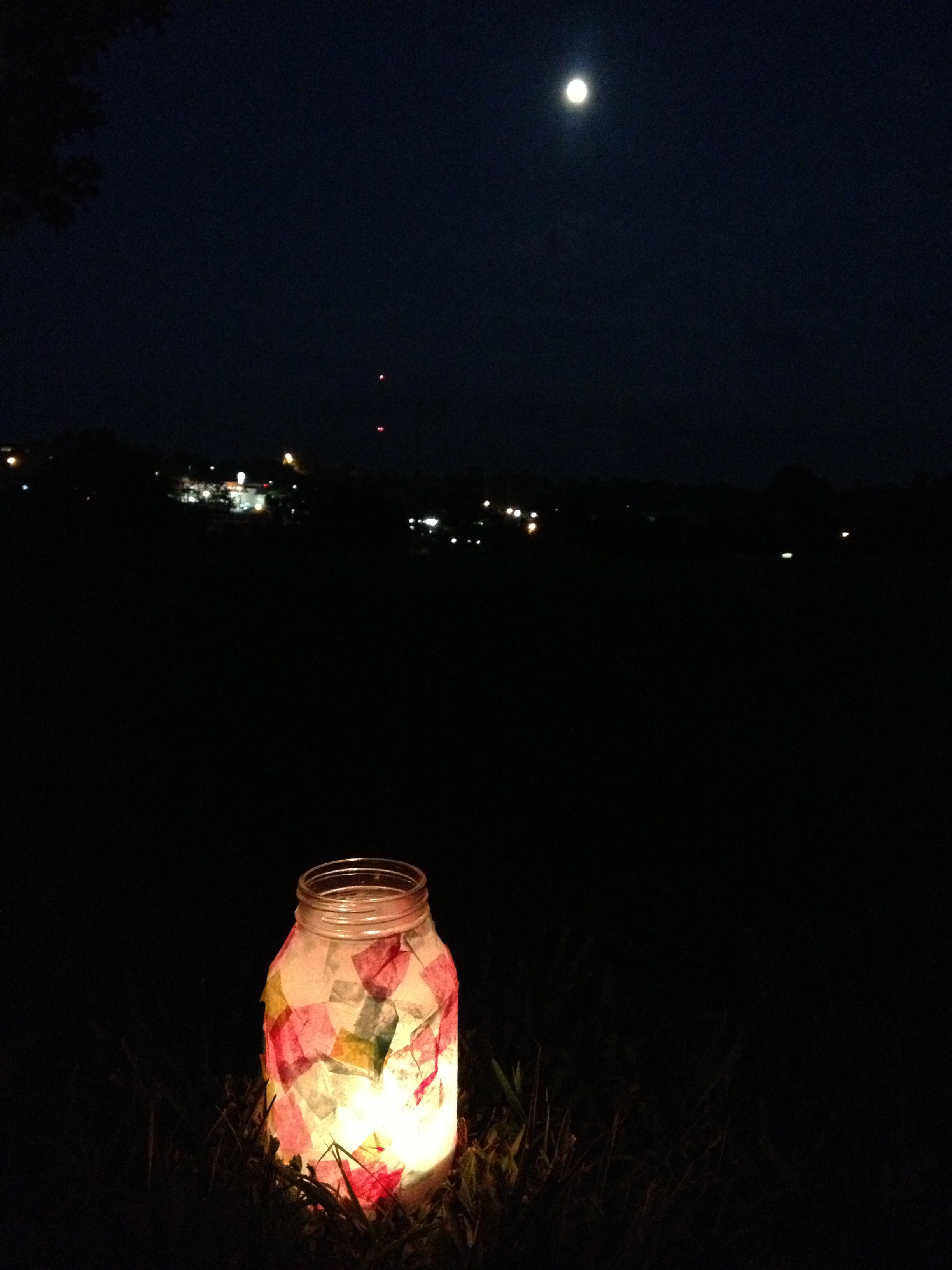
Flowers released on the lake at sunset.