Archives

Birth as a Spiritual Experience (Thesis Project)

Here is your sacrament MR_089
Take. Eat. this is my body
this is real milk, thin, sweet, bluish,
which I give for the life of the world…
Here is your bread of life.
Here is the blood by which you live in me.”
–Robin Morgan (in Life Prayers, p. 148)

“…When I say painless, please understand, I don’t mean you will not feel anything. What you will feel is a lot of pressure; you will feel the might of creation move through you…” – Giuditta Tornetta in Painless Childbirth

“I am the holy mother; . . . She is not so far from me. And perhaps She is not so very distinct from me, either. I am her child, born in Her, living and moving in Her, perhaps at death to be birthed into yet some other new life, still living and having my being in Her. But while on this earth She and I share the act of creation, of being, and Motherhood.”Niki Whiting, “On Being a Holy Mother” in Whedon

“Woman-to-woman help through the rites of passage that are important in every birth has significance not only for the individuals directly involved, but for the whole community. The task in which the women are engaged is political. It forms the warp and weft of society.” –Sheila Kitzinger

In 2011, I started working on my doctoral degree in women’s spirituality/thealogy (Goddess studies). Before I even began my first class, I chose my dissertation subject: birth as a spiritual experience. I’ve been steadily plugging away on my coursework and somehow in the midst of everything else that I am responsible for, I’ve successfully completed 13 of my classes. I already have a (not related) master’s degree and this is why I was admitted straight into the doctoral program, even though I have to complete a lot of M.Div (master’s of divinity) level coursework as prerequisites to the actual doctoral classes. After I finished my most recent class and got my updated transcript, I finally actually noticed how many M.Div classes I’ve completed thus far on my journey and it occurred to me to email to inquire what it would take to finish an M.Div degree first. I had this sudden feeling of what a nice stepping stone or milestone experience it would be to finish something, since I know that I have a minimum of three more years remaining before I complete the D.Min! They wrote back quickly and let me know that with the completion of three courses in matriarchal myth (I’m halfway through the first right now), my almost-completed year-long class in Compassion (I’m in month 11), and The Role of the Priestess course (involving three ten-page papers), all of which are also part of my doctoral program, the only other thing required for successful completion of my M.Div would be a thesis (minimum of 70 pages).

As I’ve been working through my classes, I’ve felt a gradual shift in what I want to focus on for my dissertation, and I already decided to switch to writing about theapoetics and ecopsychology now, rather than strictly about birth. I was planning to mash my previous ideas about birth and a “thealogy of the body” into this new topic somehow, perhaps: theapoetics, ecopsychology, and embodied thealogy. Then, when I got the news about the option of writing a thesis and finishing my M.Div, it became clear to me: my thesis subject is birth as a spiritual experience! This allows me to use the ideas and information I’d already been collecting as dissertation “seeds” as a thesis instead and frees me up to explore and develop my more original ideas about theapoetics for my dissertation! (This is the primary subject of my other blog.) So…why post about this now? Well, one because I’m super excited about all this and just wanted to share and two, because I’d love to hear from readers about their experiences with birth as a spiritual experience! While I don’t have to do the kind of independent research for a thesis that I will be doing for my dissertation and while my focus is unabashedly situated within a feminist context and a thealogical orientation, I would love to be informed by a diverse chorus of voices regarding this topic so that the project becomes an interfaith dialog. Luckily for me I’ve already reviewed a series of relevant titles.

Now, I’d like to hear from you. What are your experiences with the spirituality of birth? Do you consider birth to be a spiritual experience? Did you have any spiritual revelations or encounters during your births or any other events along your reproductive timeline? (miscarriage, menstruation, lactation…) Did you draw upon spiritual coping measures or resources as you labored and gave birth? Did giving birth deepen, expand, or otherwise impact your sense of spirituality or your sense of yourself as a spiritual or religious person? Did any of your reproductive experiences open your understanding of spirituality in a way that you had not previously experienced or reveal beliefs or understandings not previously uncovered?

When I use the word “spiritual,” I mean a range of experiences from a humanistic sensation of being linked to women around the world from all times and spaces while giving birth, to a “generic” sense of feeling the “might of creation” move through you, to a sense of non-specifically-labeled powers of Life and Universe being spun into being through your body, to feeling like a “birth goddess” as you pushed out your baby, to more traditional religious expressions of praying during labor, or drawing upon scripture as a coping measure, or feeling that giving birth brought you closer to the God of your understanding/religion, or, indeed, meeting God/dess or Divinity during labor and birth).  I’m particularly interested in women’s embodied experiences of creation and whether or not your previous religious beliefs or spiritual understandings in life affirmed, acknowledged, or encouraged your body and bodily experience of giving birth as sacred and valuable as well as your own sense of yourself as spiritually connected or supported while giving birth. I would appreciate links to birth stories or articles that you found helpful, books you enjoyed or connected with, and comments relating to your own personal experiences with any of the comments or questions I have raised above. I would love to hear about your thoughts as they relate to:

  • Pregnancy IMG_0225
  • Labor
  • Birthing
  • Lactation
  • Miscarriage
  • Infertility
  • Menstruation
  • Reproductive Rights
  • Birth as a feminist or social justice issue…

 Thank you!

With these things said, I also want to mention that I’m planning to redirect a lot of my writing energy/time into this thesis project rather than to blog posts. I’m trying to come up with a blog posting schedule for myself, but in order to actually do this thing, I must acknowledge that I have to re-prioritize some things and that means writing for my blogs probably needs to slip down a couple of notches in terms of priority of focus.

Oh, and I also hope this thesis project will turn into a book of some kind as well! 🙂

“It is hard to find a female-based concept such as Shakti alive within Western spiritual traditions. Shakti could be viewed as an expression of goddess in the female body at the time of birth. I would say its flow / expression and outcome of love is hindered by unnecessary interventions at birth which divert such energy towards fear- based, masculine forms. The use of masculine, rescue-based healing forms such as cutting (Grahn, 1993) can be necessary and useful, yet such procedures are currently used at the cost of women’s autonomy in the birthing process (see Jordan on C-section, 2007), and define the parameters of what feminist thinker Mary Daly called patriarchal medicine (1978). Modern women are largely lost when it comes to giving birth, turning to medical authority figures to be told what to do. Daly pointed to the dangers of this appropriation for women’s personal and collective autonomy.

Birthing bodies resist, disrupt and threaten standard North American modernist investments in linear time, rationality, order, and objectivity. Birth disrupts the Judeo-Christian male image of God, even as He hides the reality of female creation and creativity. I hold that women giving birth act from a focal point of power within their respective cultures and locations, the power to generate and renew human life itself from within the female body. This power is more absolute in its human reality then any other culturally sanctioned act of replication and material production, or social construction. I speculate that how this female power is expressed, denied, or acknowledged by women and within the society around a birthing woman reflects the degree to which women can and may express themselves at large. As each soul makes the journey through her/his mother, re-centring human consciousness within the female-based reality of human birth causes transformation of patriarchal consciousness as a whole…” –Nane Jordan, Towards an Ontology of Women Giving Birth

Tuesday Tidbits: Wild Woman

Women are the most beautiful embodiment of empowered awakening. We breathe life into the world with the heave of our body, sing the sacred into song with our soul, and heal the deepest of wounds with our boundless heart. Our time has come. Love is calling us all to remember the eternal ecstasy of Being. Now is the time. Now is the place. Love is here pressing itself into the moment. Love calls us to remember the universal creative pulse. Love calls all of humanity to its embrace. Love calls for women to claim their deepest truth, to create their greatest gift, and to rise from the ashes of a yesterday gone, to rise to fulfill authentic self. We women are awakening. We women are empowering. We women are rising. I am a woman rising.

~ Ani Kaspar

wildwoman

via Wild Woman Sisterhood on Facebook

This past weekend was the La Leche League of Missouri conference. I absolutely love these conferences and always learn so much, usually things I can use instantly. At this conference, I gave two presentations. The first was about miscarriage and grief and was sparsely attended, but pretty powerful. The second was about Moontime and it was really crowded! The participants were a diverse crowd and I felt a little unsure of my ability to connect with all of them without being excessively “woo woo.” Though, I expressed that concern in a comment on another woman’s blog post and I got this wonderful remark in return: I was just listening to an online interview with Sonia Choquette where she said that “woo woo” should be “where it’s at,” meaning that when we’re “woo woo,” we’re actually connecting to our authentic self, being in touch with our intuition, etc.

I’m going to remember this in the future—woo woo is where it’s at! 😉

Anyway, one of the things I shared during my talk is that mothers of small children are more likely to have PMS than anyone else—it is partly because our bodies call out to us to rest and be alone and we often can’t be when we have little babies that need us. It really, really does help with all pre-menstrual symptoms to be able to take some time to yourself to rest and rejuvenate rather than staying “on” all the time. Several women emailed me with follow-up questions and so here are the links and resources that I suggested for them:

Check out Miranda Gray’s website, particularly her free handouts. Deanna L’am is another favorite resource and she has resources for pre-moontime daughters as well.  Oh, and Tisha Lin’s Pleasurable Periods is another good resource as well as The Happy Womb from Lucy Pearce which has a free ebook about having a happy, healthy menstrual cycle. I’ve been digging into this subject a lot over the past year—any posts I’ve written are here. I’m also really liking the book I recently got called Honoring Menstruation by Lara Owen.

Bringing it back to the Wild Woman, I also shared a quote previously shared here:

“…Could it be that women who get wild with rage do so because they are deeply deprived of quiet and alone time, in which to recharge and renew themselves?

Isn’t PMS a wise mechanism designed to remind us of the deep need to withdraw from everyday demands to the serenity of our inner wilderness? Wouldn’t it follow, then, that in the absence of quiet, sacred spaces to withdraw to while we bleed — women express their deprivation with wild or raging behaviors?…” –DeAnna L’am via Occupy Menstruation

And, this book project recently caught my eye: Blood Sister, Moon Mama: a Celebration of Womanly Ways – submissions for a new book

Less related, but cool, I also just downloaded The Creative Joy Workbook (free!) from the incomparable Jennifer Louden.

For me, honoring moontime in my own life is very much about taking it to the body and listening to myself in the way in which I learned to do during pregnancy, birth, postpartum, and lactation. So, I loved this quote I spied on Facebook late last night:

Your body is your own.
This may seem obvious.
But to inhabit your physical self fully,
with no apology, is a true act of power.
This sovereignty over your body may need to be cultivated.
Most of us have been colonized; other people’s ideas, desires,
and expectations have taken hold in our flesh. It takes some time
and effort to reclaim our own terrain.

Own yourself. Say no when you need to.
Only then can you say yes…

– Camille Maurine, Meditation Secrets for Women (via TheGypsyPriestess)

I have read this book and actually have used part of the quote on my own before, but it spoke to me again in this different medium last night.

I’ve also written about the thoroughly embodied act of motherhood and likewise enjoyed this snippet via Facebook as well:

Nitty Gritty Motherhood | Theresa Martin

Motherhood came as quite a shock to me. It was just so… physical. It was often messy and gritty. Without motherhood, I probably could have lived my whole life without being truly present for any of it.

But as I reflect, it seems so much of a female’s life is just so physical.

Take menstruation for example, that first initiation into womanhood. It’s holy and sacred, a reorienting of our bodies from girlhood to womanhood, a constant preparation for the possibility of nourishing new life within us.

Menstruation is that time when we are called to change our focus from “doing” and “completing” to just being and reflecting. We are called to rest and to reevaluate our priorities and to ponder how our lives are going. So while this time is special and sacred, the shocking physical reality remains. I think my girlhood reaction to first learning about menstruation sums it up well: “We bleed?! From THERE!!??”

All of motherhood is no different. There’s that act that causes motherhood in the first place. It’s carnal and messy. Then there’s pregnancy. Like menstruation and sex, it occurs inside my body. I have the experience of housing, protecting, and growing my children until they can breathe for themselves. After that comes labor and birth. Once again, messy, gritty, carnal reality.

~ Theresa Martin, excerpt from “Nitty Gritty Motherhood”

Read more! http://www.newfeminismrising.com/2012/07/nitty-gritty-motherhood.html

Katharine Krueger ~ Journey Of Young Women, Consultant and guide, Girls’ Empowerment and Coming of Age http://JoYW.org/

And, yesterday, I went on my own wild woman adventure picking wild raspberries with my kids. I wrote about it on Pagan Families and included a bonus recipe for wild raspberry sorbet:

…may I be reminded June 2013 024
of the courage and love
shown in small, wild adventures.

Wild black raspberries are ripe at my Missouri homestead and this morning I went on an expedition with my three children to gather what we could. As I returned, red-faced, sweating, and after having yelled much more than I should and having said several things I instantly regretted, I was reminded of something that I manage to forget every year: one definition of insanity is picking wild berries with a toddler. In fact, the closest I ever came to spanking one of my kids was during one of these idyllic romps through the brambles when my second son was three. While still involving some suffering, today’s ramble was easier since I have a nine and a half year old now as well as the toddler. This time, my oldest son took my toddler daughter back inside and gave her a bath and put her in new clothes while I was still outside crawling under the deck in an effort to retrieve the shoes and the tiny ceramic bluebird I’ve had since I was ten that my girl tossed over the railing and into the thorns “for mama.”

While under the deck, I successfully fished out the shoes (could not find the tiny bird) and I found one more small handful of June 2013 038raspberries. Since the kids were all safely indoors, I took my sweaty and scratched up and irritable self and ran down to my small, sacred space in the woods. I was thinking about how I was hot, tired, sweaty, sore, scratched, bloody, worn, and stained from what “should” have been a simple, fun little outing with my children and the above prayer came to my lips. I felt inspired by the idea that parenting involves uncountable numbers of small, wild adventures. I was no longer “just” a mom trying to find raspberries with her kids, I was a raspberry warrior. I braved brambles, swallowed irritations, battled bugs, sweated, swore, argued, struggled, crawled into scary spaces and over rough terrain, lost possessions and let go of the need to find them, and served as a rescuer of others. I gave my blood and body over to the task.

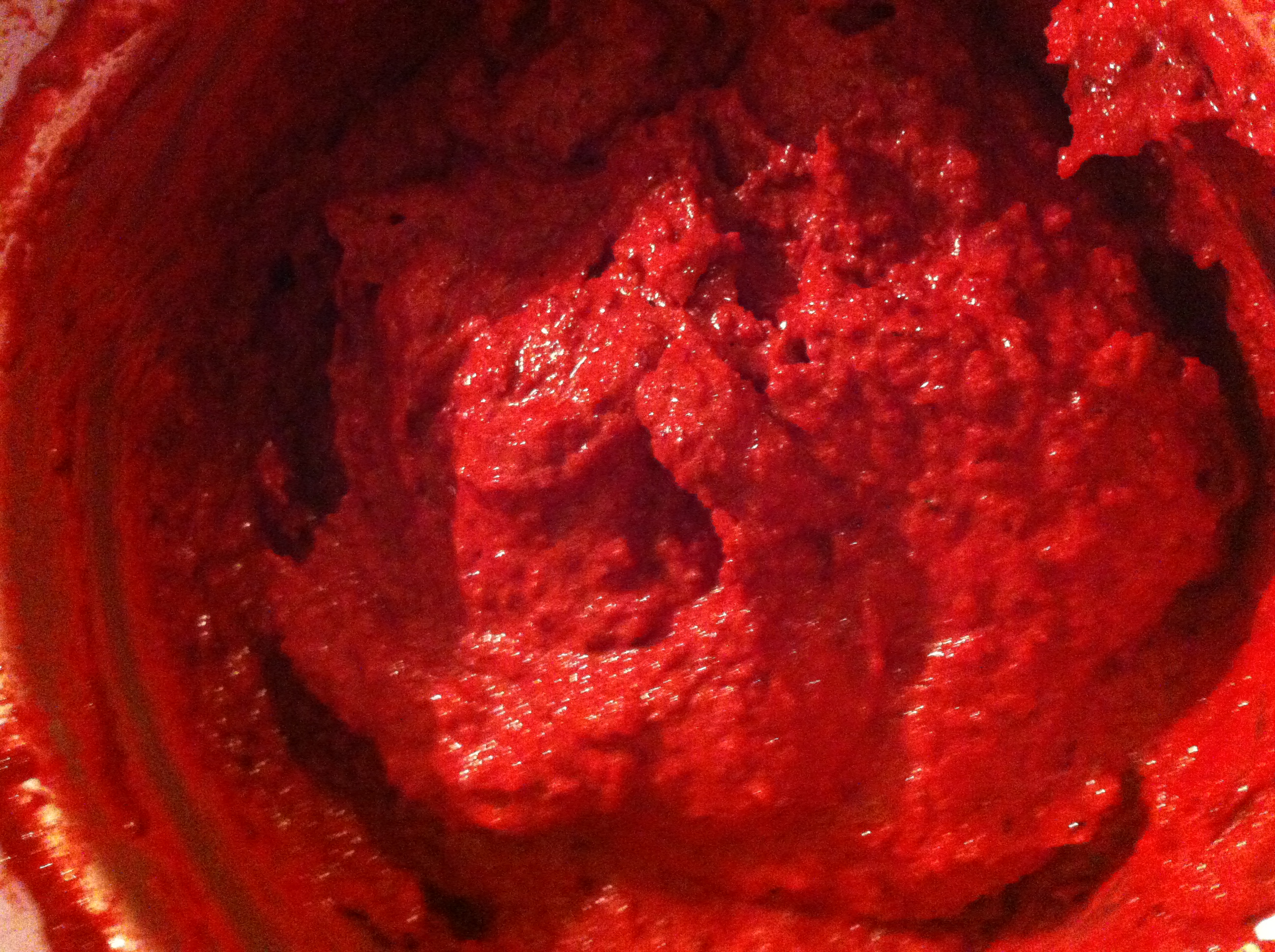
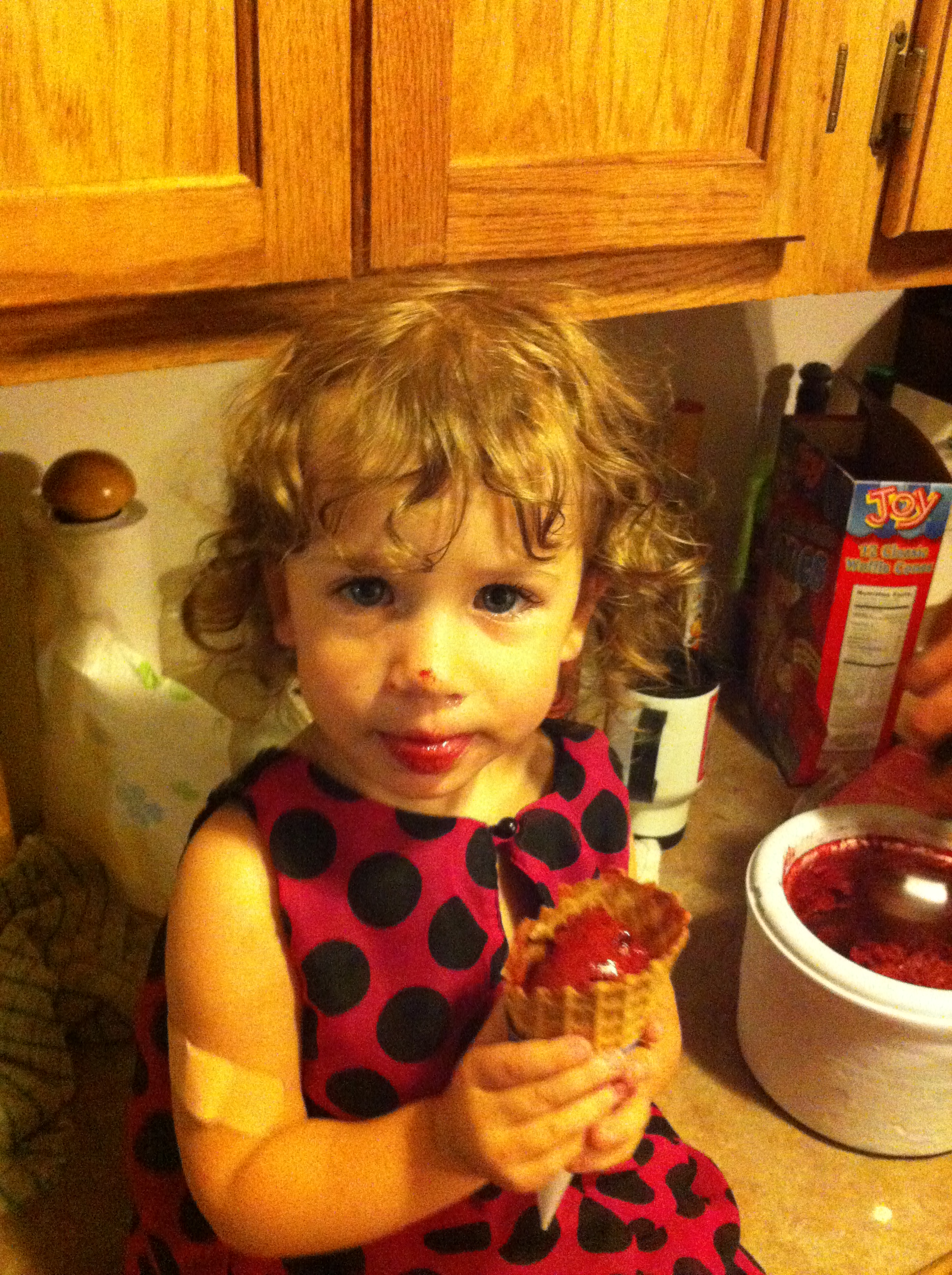
When I returned and showered, my oldest begged for me to make homemade raspberry sorbet with our findings. I’ve never made June 2013 063sorbet before and wasn’t sure I should dare try, but then I gathered my resources and said yes to yet another small adventure…

via Small Adventures (sorbet recipe included there!)

I’ve also been enjoying the wild, riotous blooms of summer:

June 2013 041June 2013 049 June 2013 037

Rites of Passage… Celebrating Real Women’s Wisdom

“Woman-to-woman help through the rites of passage that are important in every birth has significance not only for the individuals directly bellypictureinvolved, but for the whole community. The task in which the women are engaged is political. It forms the warp and weft of society.” –Sheila Kitzinger (Rediscovering Birth)

“I love and respect birth. The body is a temple, it creates its own rites, its own prayers…all we must do is listen. With the labor and birth of my daughter I went so deep down, so far into the underworld that I had to crawl my way out. I did this only by surrendering. I did this by trusting the goddess in my bones. She moved through me and has left her power in me.” ~Lea B., Fairfax, CA via Mama Birth)

Summary of Article: How do today’s women prepare for major life changes such as becoming a mother? Have our once meaningful rites of passage been trivialised, and if so at what cost? Kat Skarbek looks at ways to reclaim what we have lost.

Permission is given to publish this story on the web (thanks to Women’s Mysteries Teacher Circle e-journal).

Without wishing to appear overly dramatic, I think that our society may be in danger of becoming devoid of any important spiritually nourishing rites of passage. Women no longer seem to know how to celebrate important transitions. We have fallen into the horrible habit of treating life-changing events in trite and meaningless ways and as a result, we are cheating ourselves out of the powerful positive effects that these rites of passage can bring us.

For women, menstruation, puberty, marriage, pregnancy & birth, menopause, death – even divorce and separation, all need to be properly acknowledged when passing through these stages of life. Instead we either ignore them completely as in the case of puberty, first menses and divorce, which sends the message that they are both shameful and unworthy of celebration. Or we use the opportunity to get drunk, act like strippers and carry out questionable tasks which would make a sober person question why she would want to get married in the first place – as on your average hen night. At a friend’s baby shower recently I watched with sinking heart as one of the most important events in a woman’s life was celebrated with games involving stealing pegs from other women’s clothing the minute they unconsciously crossed their legs, guessing the baby’s weight and answering questions such as did she have ‘an inney or an outey’ bellybutton? How, I found myself asking, does this in any way prepare a woman to deal with the rigours of labour and birthing and the demands of the first year of motherhood? Why are we so seemingly unaware that our accepted celebrations offer absolutely nothing to women except a bunch of baby clothes? At standard baby showers there is no molly5wisdom shared, no loving support offered and no nourishment given (unless you count cupcakes!).

How did it come to this?

What happened to our once vital and spiritually awakening rites of passage? The easy (and heavily feminist) answer is 500 years or more of patriarchy. Prior to this and from the earliest records of society, it has been apparent that there were very well observed, meaningful and symbolic rituals to mark just about any occasion. Rituals existed for everything from simple agricultural celebrations of the changing seasons and giving thanks for food and supplies, to complex marriage and birthing rituals that eased newlyweds into their new roles and prepared the way for women to birth with dignity and power. Women in particular carried enormous wisdom about the cyclical nature of life and shared nourishing rites of passage, which enabled them to marry in confidence and with awareness, birth without fear and to die with dignity and grace. Once patriarchy became established it began the systematic erasure (or appropriation) of many of these important rites and in particular it diminished the roles and experiences of women so that they went from being important and respected members of their communities, with power over land, name and children to women whose only role was to birth heirs and to be subservient to their men. Even in today’s changing society the roles of ‘wife’ and ‘mother’ are still considered less important than the roles of ‘career woman’ and ‘breadwinner’. We have higher rates of divorce, higher rates of birth intervention and subsequent post-natal depression and more difficult menopauses now than women experienced 50 years ago. I believe that this is directly linked to the fact that we are now expected to just ‘get on with it’ and disappear into these changes without the proper observances being made. I’m not suggesting that women to disappear into mud huts every time they bleed or to give birth in fields as we did in the tribal days, but I do think that we need to pay more attention to our needs at these powerful times of change. Menstruation is not a curse, it’s a promise of our life-giving ability to come. Menopause is not a loss of youth and sex appeal, it’s a vital gateway to the enormous power of our wisdom years. And pregnancy, birth and marriage are life-changing experiences that need to be embraced and celebrated with something more nourishing than ‘Mr December’ and his overstuffed banana hammock.

A graceful acceptance of our changing roles and an awareness of the power that these changes bring, gives us huge personal freedom. Freedom from the current obsession with youth and aging, freedom to explore our new shapes, our new lives and the possibilities they hold. Isn’t that worth exploring?

Reclaiming simple rites of passage

So how can today’s modern goddesses, and in particular mammas-to-be, prepare themselves for life’s many transitions? A good starting point is to create your own rite of passage for whatever transition you may be going through. Pregnant women could change their planned baby shower to a Mother Shower (also known as a Blessingway). Mother Showers celebrate and nurture the mother rather than focusing exclusively on the child and are a growing trend amongst women. They offer pregnant women a chance to honour their pregnancy journey, to enjoy symbolic rituals of preparation for the labour and birthing ahead and indulge in an afternoon of loving, nourishing attention from their closest friends and family. And yes, there are still cupcakes! During one of these afternoons a pregnant woman can expect to be waited on hand and foot – often quite literally. Celebrations often include some kind of pampering for the mamma-to-be such as a foot and hand massage with beautiful, pregnancy-safe essential oils. She might choose to have her belly, hands or feet hennaed as a recognition of her changing status. She might enjoy creating a beautiful ‘labour necklace’ created out of beads gifted by each woman present and blessed with all of their best wishes for a wonderful birth. These necklaces can be used as a powerful focusing tool during the darkest hours of her labour and can become a beautiful heirloom that gets passed on from mother to daughter, or even from woman to woman within her community, with each subsequent pregnancy adding more beads to the necklace.

What you can do

There are a number of meaningful activities that you could include in your celebration. You could even combine elements of a traditional baby shower with elements from a mother shower by adding in any of the following:

  • A Fear Releasing Ceremony. Writing down your fears on a piece of paper and ritually burning them can help you rid your unconscious IMG_0821mind of any impediments to an easy and positive birth.
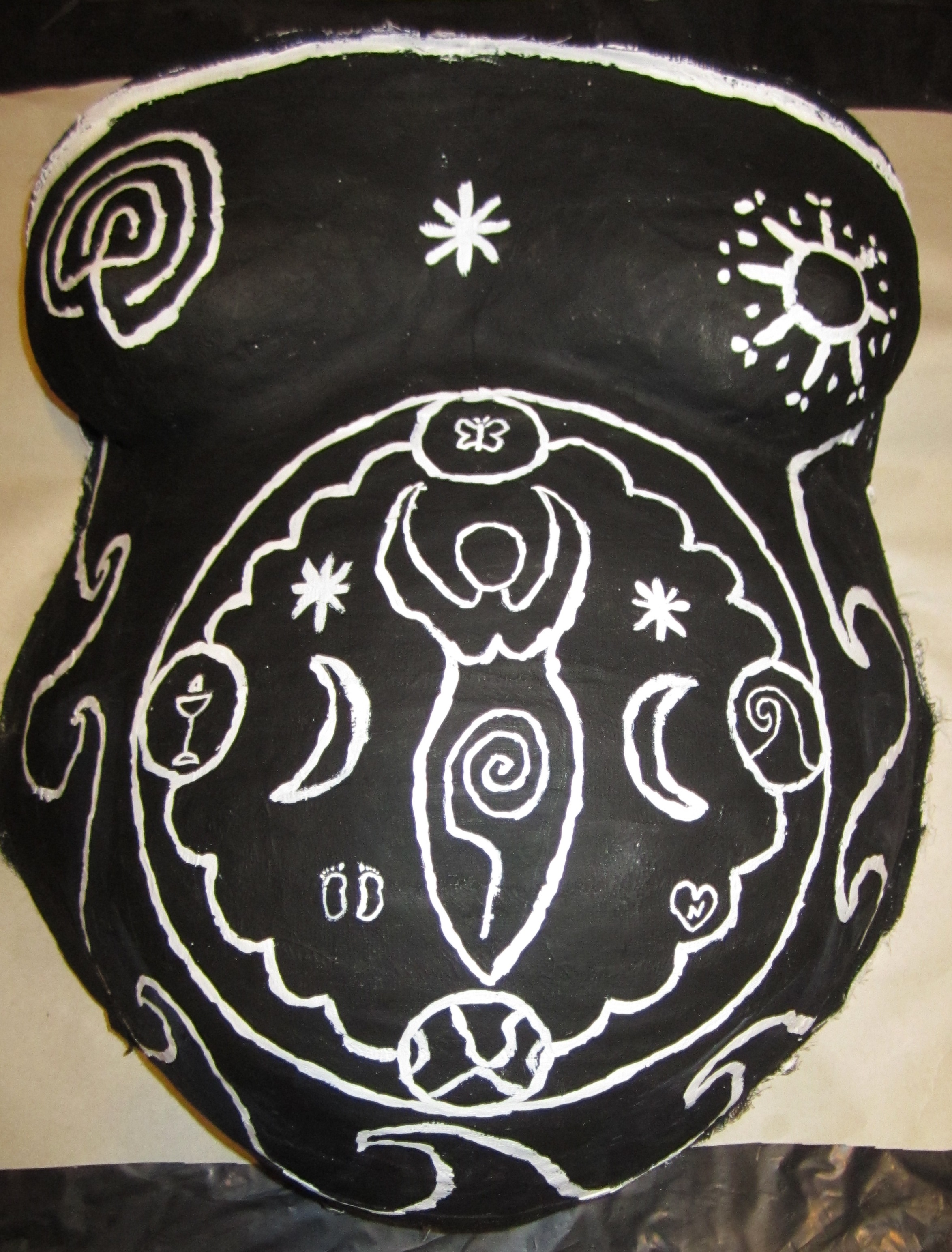
  • Belly Casting. Creating and painting a belly cast (a 3D plaster cast of the beautiful pregnant belly) can be a wonderful meditative tool to connect you more consciously with your body and your baby.
  • Guided Meditation or Visualisations. If there is a group of you, each woman can place a loving hand on the mamma-to-be, while another guides her into a place of deep relaxation where she can communicate with her unborn child or any guides or angels she feels drawn to, in order to receive information or just reassurance.
  • Plant a Tree. Buy a beautiful fruit tree to plant in honour of your newborn. You can tie birth blessings and wishes to its branches until after the baby is born.
  • Give gifts to nurture the mind, body or soul of the mamma-to-be. Most women won’t get the opportunity to enjoy a spot of luxury once the baby is born, so instead of yet more baby clothes why not spoil the mamma with something indulgent such as a pregnancy massage, a hair appointment, a manicure or pedicure or simply some beautiful skin cream to minimise stretchmarks? You can even buy her a gift for after the birth such as a post- natal spa voucher, to give her some ‘me’ time to look forward to when she needs it most.
  • Share Birthing Stories (no horror stories please!). Poetry, singing or chanting can also be a very uplifting way of connecting with your wise inner goddess.
  • Create a Phone-Tree. When labour is established, each woman is called and lights a candle for the birthing mamma to re-create the loving circle of support present on the day and send her thoughts of courage and strength.
  • Provide Nourishing Food and Drink. Each woman present can contribute a meal to be frozen for after the birth.
  • Pledge an Act of Support for after the Birth. Each woman offers one tangible act of support for after the birth when the mother and child are getting to know one another. It can be something simple like providing a home cooked meal, offering to take care of an older child for an afternoon so that the mamma can get some rest, taking the dog for a walk or taking the newborn off her hands so the she can have a recuperative bath.
  • The Baby Moon (or a month of ‘lying in’ with the newborn) is still observed in many cultures and offers a chance for the infant and mother to really bond and get to know one another without the usual worries about cooking, cleaning and taking care of other children. I think it would be very beneficial to women to reclaim this particular tradition.

Finding our way back home.

On the day that a baby is born, so too is a mother. Without properly acknowledging our changing lives in these beautiful and memorable ways, we go into motherhood unprepared for the challenges it may bring. No amount of reading can bring you the kind of self-knowledge needed to be a good mother. No amount of beautiful nursery furniture can enable you to trust in your mothering instincts when you are frightened of making a mistake with your precious little bundle. These things all take time. Reclaiming our rites of passage, no matter in how small a way, can help restore to women something vital for their spiritual and emotional wellbeing. And if you are worried that it might be boring or heavy, you needn’t. Celebrations are just that, a joyous coming together of loved ones to honour something wonderful. Keep that in mind and enjoy the many wonderful ways of celebrating this amazing and challenging time in a woman’s life. Choose the things that work for you, that you will enjoy and that will really give you the space to recognise the momentous changes that are happening and offer you some genuine support and acknowledgement of this special time.

More information about alternative pregnancy celebrations can be found in books such as Mother Rising by Yana Cortlund, Barb Lucke and Donna Miller Watelet (OK) and Blessingways, A Guide to Mother-Centred Baby Showers by Shari Maser (OK).
If published on the web please include the following contact details: Website: www.thedivinefeminine.com.au Email: info@thedivinefeminine.com.au Phone: 0439 636 958

Kat Skarbek
www.thedivinefeminine.com.au
About Kat Skarbek…
Kat Skarbek is a writer, presenter of the Shamballa Spirit Show on 3MDR 97.1FM and the Head Honcho of The Divine Feminine (www.thedivinefeminine.com.au) which specialises in creating unique and spiritually nourishing transitional celebrations and events for women. These include alternative Hen Nights and Mother Showers for pregnant women. She is a proud survivor of the first two years of motherhood and a visit from the PND Fairy.
Phone: 0439 636 958
Email: info@thedivinefeminine.com.au

Previous posts about rites of passage and women’s mysteries:

Rites of Passage Resources for Daughters & Sons

Birth as a Rite of Passage & ‘Digging Deeper’

Blessingways and the role of ritual

Blessingways / Women’s Programs

Red Tent Resources


Happy Mother’s Day!

“Blessed be all the mothers of mothers.
Blessed be all the daughters of daughters.
Blessed be all the daughters of mothers.
Blessed be all the mothers of daughters.
Now and forever, wherever we are.” –Diann L. Neu

In Uganda there is a special word that means “mother of a newborn”–nakawere. According to the book Mothering the New Mother, “this word and the special treatment that goes with it apply to a woman following every birth, not only the first one. The massages, the foods, the care, ‘they have to take care of you in a special way for about a month.'”

There is a special word in Korea as well. Referring to the “mother of a newborn child,” san mo describes “a woman every time she has had a baby. Extended family and neighbors who act as family care for older children and for the new mother. ‘This lasts about twenty-one days…they take special care of you.'”

These concepts–and the lack of a similar one in American culture–remind me of a quote from Sheila Kitzinger that I use when talking about postpartum: “In any society, the way a woman gives birth and the kind of care given to her and the baby points as sharply as an arrowhead to the key values of the culture.” Another quote I use is an Asian proverb paraphrased in the book Fathers at Birth: “The way a woman cares for herself postpartum determines how long she will live.

Dana Raphael, the author of Breastfeeding: The Tender Gift, who is best known for coining the word “doula” as it is presently used, also coined another valuable term: matrescense. “Nothing changes life as dramatically as having a child. And there was no word to describe that. So we invented the word–matrescence–becoming a mother.”

Happy Mother’s Day to mothers around the world!

Mother's Day

Want to find out what mothers really want? Check out the newest Listening to Mothers survey results: Listening to Mothers III: Report of the Third National U.S. Survey of Women’s Childbearing Experiences

Other Mother’s Day reads:

Womenergy (Womanergy)

Prayer for Mothers

What If…She’s Stronger than She Knows…

This is a modified repost of a previous post for Citizens for Midwifery. It is being crossposted today at CfM, Talk Birth, and Pagan Families.

Womenergy (Womanergy)

The day before my grandma died, my dad came over and said he’d coined a new word and that I could have it: Womenergy. He said he’d googled it and didn’t come up with anything. I googled it later though and there are a couple of people who have used it before, so I think my dad actually said Womanergy instead, which is still available. So, womanergy has been coined now too! 🙂 I dozed off during Alaina’s nap today and when I woke up the word was in my head and so were a bunch of other words. I channeled a bit of my inner Alice Walker and wrote:

Womenergy (Womanergy):

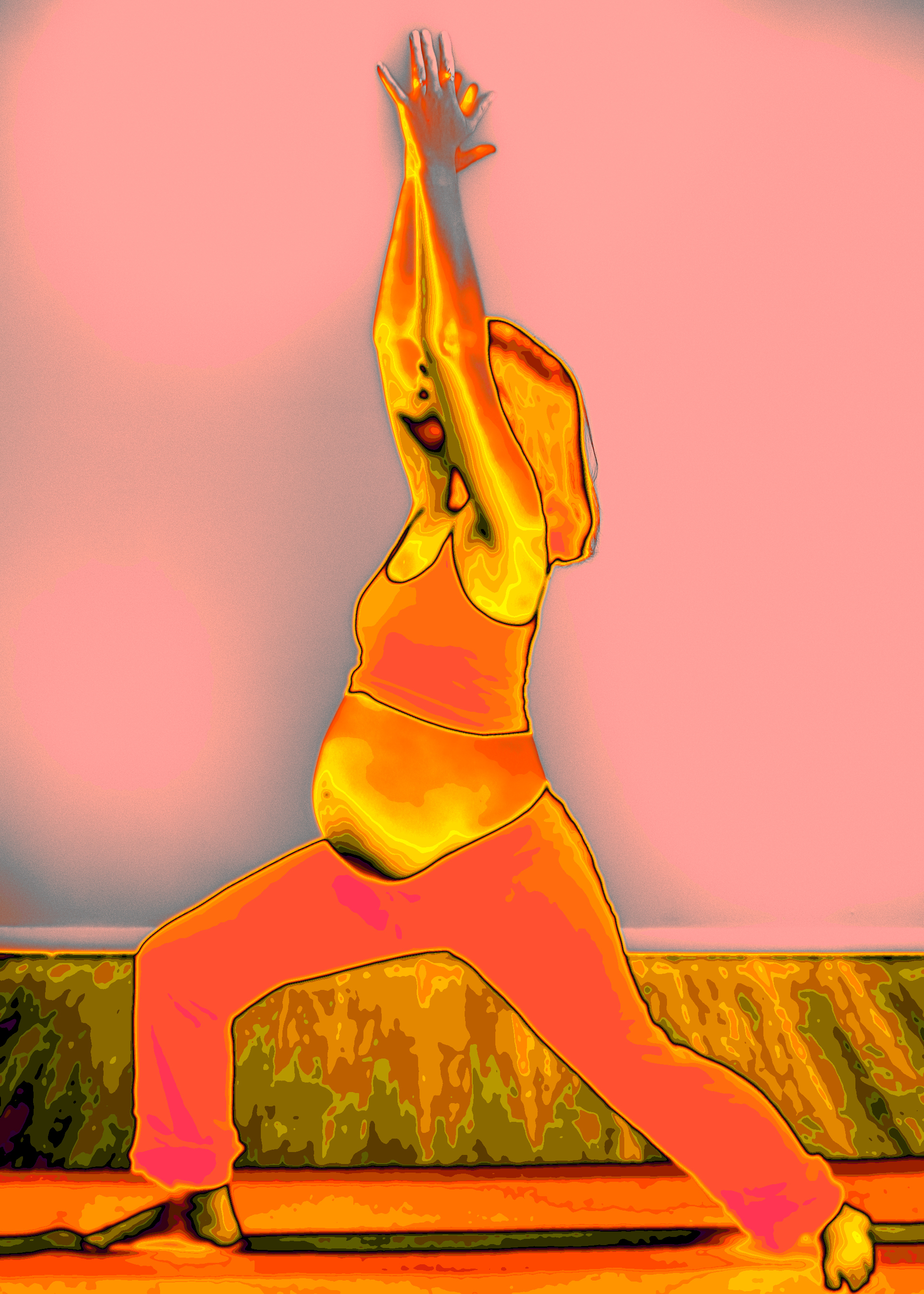
Feeling fierce at 37 weeks last year.

Feeling fierce at 37 weeks in 2011.

Often felt when giving birth. Also felt at blessingways and circling with women in ceremony and rituals. Involved in the fabric of creation and breath of life. Drawn upon when nursing babies and toting toddlers. Known also as womanpower, closely related to womanspirit and the hearing of one’s “sacred roar.” That which is wild, fierce. Embedded and embodied, it may also be that which has been denied and suppressed and yet waits below her surface, its hot, holy breath igniting her. Experienced as the “invisible nets of love” that surround us, womanergy makes meals for postpartum women, hugs you when you cry, smiles in solidarity at melting down toddlers. It is the force that rises in the night to take care of sick children, that which holds hands with the dying, and stretches out arms to the grieving. It sits with laboring women, nurses the sick, heals the wounded, and nurtures the young. It dances in the moonlight. Womenergy is that which holds the space, that which bears witness, that which hears and sees one another into speech, into being, into personal power. Called upon when digging deep, trying again, and rising up. That which cannot be silenced. The heart and soul of connection. The small voice within that says, “maybe I can, I think I can, I know I can. I AM doing it. Look what I did!” Creates art, weaves words, births babies, gathers people. Thinks in circles, webs, and patterns rather than in lines and angles. Felt as action, resistance, creation, struggle, power, and inherent wisdom.

Womenergy moved humanity across continents, birthed civilization, invented agriculture, conceived of art and writing, pottery, sculpture, and drumming, painted cave walls, raised sacred stones and built Goddess temples. It rises anew during ritual, sacred song, and drumming together. It says She Is Here. I Am Here. You Are Here and We Can Do This. It speaks through women’s hands, bodies, and heartsongs. Felt in hope, in tears, in blood, and in triumph.

Womenergy is the chain of the generations, the “red thread” that binds us womb to womb across time and space to the women who have come before and those who will come after. Spinning stories, memories, and bodies, it is that force which unfolds the body of humanity from single cells, to spiraled souls, and pushes them forth into the waiting world.

Used in a sentence:

“I’m headed to the women’s circle tonight. I could really use the womenergy.” February 2013 196

“I felt like I couldn’t keep going, but then my womanergy rose up and I did it anyway.”

“Feel the womenergy in this room!”

“She said she didn’t think she could give birth after all, but then she tapped into her womanergy and kept going.”

“I hope my friends have a blessingway for me, I need to be reminded of the womenergy that surrounds me as I get ready to have this baby.”

Feel it…

Listen to it…

Know it…

In the air, in her touch, in your soul.

Rising
Potent
Embodied
Yours…

“For months I just looked at you
I wondered about all the mothers before me
if they looked at their babies the way I looked at you.
In an instant I knew what moved humankind
from continent to continent
Against all odds.”

–Michelle Singer (in We’Moon 2011 datebook)

“I believe that these circles of women around us weave invisible nets of love that carry us when we’re weak and sing with us when we’re strong.” –SARK, Succulent Wild Woman

There is a wild tiger in every woman’s heart. Its hot and holy breath quietly, relentlessly feeding her.” – Chameli Ardagh

Circles of women (and art)...