Book Review: The Gift of Giving Life

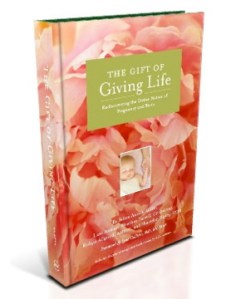
Book Review: The Gift of Giving Life: Rediscovering the Divine Nature of Pregnancy and Birth
Authored by Felice Austin
Authored with Lani Axman, Heather Farrell, Robyn Allgood, Sheridan Ripley
ISBN: 9780615622521
542 pages, softcover
http://thegiftofgivinglife.com/

Reviewed by Molly Remer, Talk Birth

Written for women who wish to delve into the divine nature of pregnancy and birth from a Christian perspective, The Gift of Giving Life is co-authored by several childbirth educators and doulas who are also members of the Latter-Day Saints (LDS) church. The book is rich with the stories and experiences of dozens of LDS women who share their birth stories and reflections. These additional stories are sprinkled throughout the body of the text, making it very easy to read and “digest” in small sections. The stories represent a wide breadth of experiences—I anticipated many of them to gloss over the difficult parts of pregnancy and birth, but they address both the nitty-gritty, challenging aspects and the transcendent. I especially appreciated that women’s experiences with pregnancy loss and baby loss are integrated throughout the book rather than relegated to a specific subsection. A helpful touch is that stories dealing with loss are indicated with an awareness ribbon symbol, so that if a reader does want to avoid these stories, she is readily able to do so.

As a non-LDS woman as well as someone who does not identify as Christian, I did encounter many segments that had little relevance to my own experience of or interpretation of the world. For example, it was startling for me to come across repeated statements that seemed to hold a literal view of “Satan” as a real entity holding some kind of power or control over people. That said, I was impressed with how deeply and solidly integrated the text is with the spiritual teachings of the LDS faith. For women who wish to permeate their pregnancy and birth experiences with an intimate and intricately woven connection to Christian theology and scripture, The Gift of Giving Life is a faith-based treasure.

As I noted in my recent interview with one of The Gift of Giving Life‘s co-authors, I am fascinated by the concept of Heavenly Mother and really enjoyed the sections of the book that touched on the relationship with Her. I also enjoyed the book’s explanation of Eve’s pivotal choice in the Garden, which was very meaningful framing of the event in a way that was completely new to me.

The Gift of Giving Life has much to offer both to pregnant women and to birth professionals. It will likely have most appeal to those with LDS connections and to members of other Christian traditions who are familiar with scripture and wish to apply these messages to the childbearing year.

Disclosure: I received a complimentary copy of this book for review purposes.

Breastfeeding as an Ecofeminist Issue

Breasts are a scandal because they shatter the border between motherhood and sexuality.

––Iris Marion Young

After Hurricane Katrina, I read a news story about a young mother whose newborn baby died of dehydration during the days in which she had been stranded without access to clean water. Upon admittance to the hospital, the mother was asked if she needed anything and she replied that her breasts were uncomfortable and could she have something to dry up the milk. This story brings tears to my eyes and chills to my body. What does this say about our culture that it is actually possible for mothers to be unaware that they carry the power to completely nourish their own babies with their own bodies? As mammals, all women have the potential to be lactating women until we choose not to be. The genius of formula marketing and advertising is to get women to withhold from their offspring that which they already have and to instead purchase a replacement product of questionable quality. To me this feels like being a given a “choice” between the blood already flowing through your veins and a replacement product that marginally resembles blood.

We are mammals because as a species we nurse our young. This is a fundamental tie between the women of our time and place and the women of all other times and places as well as between the female members of every mammal species that have ever lived. It is our root tie to the planet, to the cycles of life, and to mammal life on earth. It is precisely this connection to the physical, the earthy, the material, the mundane, the body, that breastfeeding challenges men, feminists, and society.

Breastfeeding is a feminist issue and a fundamental women’s issue. And, it is an issue deeply embedded in a sociocultural context. Attitudes towards breastfeeding are intimately entwined with attitudes toward women, women’s bodies, and who has “ownership” of them. Patriarchy chafes at a woman having the audacity to feed her child with her own body, under her own authority, and without the need for any other. Feminism sometimes chafes at the “control” over the woman’s body exerted by the breastfeeding infant.

Part of the root core of patriarchy is a rejection of the female and of women’s bodies as abnormal OR as enticing or sinful or messy, hormonal, complicated, confusing…. Authentic feminism need not be about denying biological differences between women and men, but instead about defining both as profoundly worthy and capable and of never denying an opportunity to anyone for a sex-based reason. Feminism can be about creating a culture that values what is female as well as what is male, not a culture that tries to erase or hide “messy” evidence of femaleness.

However, precisely because of the patriarchal association of the female with the earthy and the physical, feminists have perhaps wanted to distance themselves from breastfeeding. This intensely embodied biologically mandated physical experience so clearly represents a fundamental difference between men and women that it appears to bolster biological reductionism. Yet in so doing feminism then colludes with patriarchy and itself becomes a tool of the patriarchy in the repression and silencing of women and their leaky ever-changing, endlessly cycling bodies: these bodies that change blood into food and bleed without dying and provide safe passage for new souls upon the earth. Sometimes the issue of a woman’s right not to breastfeed is framed as a feminist “choice.” This is a myth, made in the context of a society that places little value on women, children, and caregiving. It is society that needs to change. Not women and not babies.

Systemic and Structural Context

In an essay for the Academy of Breastfeeding Medicine on “What does feminism have to do with breastfeeding?”, Maternal–fetal medicine specialist Dr. Alison Stuebe (2010) points out that for the most part feminist advocacy ignores breastfeeding and that most breastfeeding advocacy sidesteps the complicated contextual issues of women’s lives. Stuebe notes:

…the conventional wisdom is that breastfeeding is a maternal duty that forces women to eschew their career aspirations to fulfill some ideal of motherhood, while feminism is about liberating women from exactly those constraints. Case closed. Or is it?…The result is that women end up fighting among themselves about the choices our society forces us to make — motherhood or career? Breast or bottle? — instead of uniting to address the societal structures that prevent women from realizing their full potential.

Appropriately, Stuebe further notes that:

…breastfeeding is not a ‘choice.’  Breastfeeding is a reproductive right. This is a simple, but remarkably radical, concept. Here’s why: When we frame infant feeding as a choice made by an individual women, we place the entire responsibility for carrying out that choice on the individual woman…Indeed, the ultimate link between breastfeeding and feminism is that in a truly equitable society, women would have the capacity to fulfill to pursue both their productive and reproductive work without penalty.

And, in considering contextual and systemic issues that impact women every day, Stuebe points out that:

These issues transcend breastfeeding. Why, for example, do we pit “stay at home moms” against “working moms,” rather than demand  high-quality, affordable child care, flexible work, and paid maternity leave so that each woman can pursue both market work and caring work, in the proportion she finds most fulfilling? Why do we accept that, if a woman devotes all of her time to caring for her family, she does not earn any social security benefits, whereas if she gets a paying job and sends her children to day care, she and her day care provider earn credits toward financial security in old age? And why do we enact social policies that subsidize child care and require poor mothers to enter the paid work force, rather than support poor mothers to care for their own children?…

Naomi Wolf (2003) also addresses the myth of  “choice” regarding breastfeeding (specifically with regard to lack of support for breastfeeding while working outside the home) in her book Misconceptions: “…it was unconscionable for our culture to insist that women ‘choose’ to leave their suckling babies abruptly at home in order simply to be available for paid work.” (p. 270) Wolf also quotes Robbie Kahn who says, “the job market holds out an all-or-nothing prospect to new mothers: you can give your body and heart and lose much of your status, your money, your equality, and your income; or, you can keep your identity and your income—only if you abandon your baby all day long and try desperately to switch off the most powerful primal drive the human animal can feel.” And, then considering the argument that bottle feeding “liberates” women from the tyranny/restrictiveness of breastfeeding: “The liberation women need is to breastfeed free of social, medical, and employer constraints [emphasis mine]. Instead, they have been presented with the notion that liberation comes with being able to abandon breastfeeding without guilt. This ‘liberation,’ though, is an illusion representing a distorted view of what breastfeeding is, what breastfeeding does, and what both mothers and babies need after birth” (Michels, p. xxx). Often, not breastfeeding is a structural and systemic symptom of a patriarchal society that devalues women and caregiving work and views the masculine body as normative, not a personal choice!

I am a systems thinker and always hold in mind that breastfeeding, like all aspects of women’s lives, occurs in a context, a context that involves a variety of “circles of support” or lack thereof. Women don’t “fail” at breastfeeding because of personal flaws, society fails breastfeeding women and their babies every day through things like minimal maternity leave, no pumping rooms in workplaces, formula advertising and “gifts” in hospitals, formula company sponsorship of research and materials for doctors, the sexualization of breasts and objectification of women’s bodies, and so on and so forth. According to Milk, Money, and Madness (1995), “…infant formula sales comprise up to 50% of the total profits of Abbott Labs, an enormous pharmaceutical concern.” (p. 164) And the US government is the largest buyer of formula, paying for approximately 50% of all formula sold in the nation.

In a brilliant analysis of the politics of breastfeeding in the US, Milk, Money, and Madness (1995), by Dia Michels and Naomi Baumslag, the following salient points are made about why women in the US so often experience breastfeeding problems: “In western society, the baby gets attention while the mother is given lectures [emphasis mine]. Pregnancy is considered an illness; once the ‘illness’ is over, interest in her wanes. Mothers in ‘civilized’ countries often have no or very little help with a new baby. Women tend to be home alone to fend for themselves and the children. They are typically isolated socially and expected to complete their usual chores, including keeping the house clean and doing the cooking and shopping, while being the sole person to care for the infant…” (p. 17)

Michels and Baumslag go on to explain:

According to the US rules and regulations governing the federal worker, the pregnancy and postdelivery period is referred to as “the period of incapacitation.” This reflects the reality of a situation that should be called ‘the period of joy.’ Historically, mothering was a group process shared by the available adults. This provided not only needed relief but also readily available advice and experience. Of the “traditional” and “modern” child-rearing situations, it is the modern isolated western mom who is much more likely to find herself experiencing lactation failure [emphasis mine]. (p. 18)

There is a tendency for modern women to look inward and blame themselves for “failing” at breastfeeding. There is also an unfortunate tendency for other mothers to also blame the mother for “failing”—she was “too lazy” or “just made an excuse,” etc. We live in a bottle-feeding culture; the cards are stacked against breastfeeding from many angles–economically, socially, medically. When I hear women discussing why they couldn’t breastfeed, I don’t hear “excuses,” I hear “broken systems of support” (whether it be the epidural in the hospital that caused fluid retention and the accompanying flat nipples, the employer who won’t provide a pumping location, the husband who doesn’t want to share “his breasts”, or the mother-in-law who thinks breastfeeding is perverted). Of course, there can actually be true “excuses” and “bad reasons” and women theoretically always have the power to choose for themselves rather than be swayed by those around them, but there are a tremendous amount of variables that go into not breastfeeding, besides the quickest answer or what is initially apparent on the surface. As noted previously, breastfeeding occurs in a context and that context is often one that does not reinforce a breastfeeding relationship. In my seven years in breastfeeding support, with well over 800 helping contacts, I’ve more often thought it is a miracle that a mother manages to breastfeed, than I have wondered why she doesn’t.

The ecology of breastfeeding

A breastfeeding baby is the topmost point on the food chain (above other humans who consume other animals, because a breastfeeding baby is consuming a human product) and as such is deeply impacted by the body burden of chemicals stored by the mother. The book Having Faith: An Ecologist’s Journey to Motherhood (2003), Sandra Steingraber closely examines these factors in both an interesting and disturbing read. The body of the mother during pregnancy and breastfeeding is the natural “habitat” of the baby and our larger, very polluted environment has a profound impact on these habitats. Mothers have pesticide residues and dry cleaning chemicals, for example, in their breastmilk. The breastfeeding mother’s body is quite literally the maternal nest and a motherbaby is a single psychobiological organism. At an international breastfeeding conference in 2007, I was fortunate enough to hear Dr. Nils Bergman speak about skin-to-skin contact, breastfeeding, and perinatal neuroscience. The summary version of his findings are that babies need to be with their mothers following birth in order to develop proper neural connections and ensure healthy brain development and proper brain “organization”; mother’s chest is baby’s natural post-birth “habitat” and is of vital developmental and survival significance; and that breastfeeding = brain wiring.

A baby has no concept of the notion of independence. Even though we live in a culture that pushes for independence at young ages, all babies are born hard-wired for connection; for dependence. It is completely biologically appropriate and is the baby’s first and most potent instinct. Mother’s body is baby’s home—the maternal nest. If a baby cries when her mother puts her down, that means she has a smart baby, not a “dependent” or “manipulative” one.

What happens when society and culture pollute the maternal nest? Is that mother and baby’s problem or is it a political and cultural issue that should be of top priority? Unfortunately, many politicians continue to focus on reproductive control of women, rather than on human and planetary health.

Antonelli (1994) explores women’s reproductive rights in this passage in The Politics of Women’s Spirituality:

Human life is valuable and sacred when it is the freely given gift of the Mother—through the human mother. To bear new life is a grave responsibility, requiring a deep commitment—one which no one can force on another. To coerce a woman by force or fear or guilt or law or economic pressure to bear an unwanted child is the height of immorality. It denies her right to exercise her own sacred will and conscience, robs her of her humanity, and dishonors the Goddess manifest in her being. The concern of the anti-abortion forces is not truly with the preservation of life, it is with punishment for sexuality [and devaluation of the female]. If there were genuinely concerned with life, they would be protesting the spraying of our forests and fields with pesticides known to cause birth defects. They would be working to shut down nuclear power plants and dismantle nuclear weapons, to avert the threat of widespread genetic damage which may plague wanted children for generations to come… (p. 420).


If we valued breastfeeding as the birthright of each new member of our species, we would not continue inventing new breastmilk substitutes that encourage mothers to abandon breastfeeding. We would not continue to pollute the earth, water, and sky and in so doing increase the body burden of hazardous chemicals carried by mother and child. We would not treat as normative workplaces that expect and champion mother–baby separation after a few scant weeks of maternity leave. We would not accept broken circles of support as, “just the way things are.” And, we would not settle for a world that continues to sicken its entire population by devaluing, dishonoring, dismissing, and degrading our own biological connection to the natural world. As Charlene Spretnak states in The Womanspirit Sourcebook (1988):

In a broader sense the term patriarchal culture connotes not only injustice toward women but also the accompanying cultural traits: love of hierarchical structure and competition, love of dominance-or-submission modes of relating, alienation from Nature, suppression of empathy or other emotions, and haunting insecurity about all of those matters. The spiritually grounded transformative power of Earth-based wisdom and compassion is our best hope for creating a future worth living. Women have been associated with transformative power from the beginning: we can grow people out of our very flesh, take in food and transform it into milk for the young. Women’s transformative wisdom and energy are absolutely necessary in the contemporary struggle for ecological sanity, secure peace, and social justice. (p. 90)

As Glenys Livingstone stated: “It is not female biology that has betrayed the female…it is the stories and myths we have come to believe about ourselves [emphasis mine].” (p. 78) The stories we have come to believe are many and have complicated roots in both patriarchal social structures and in feminist philosophies that fail to recognize the potent and profound sociocultural legacy represented by the transformation of women’s blood to milk to life

Molly Remer, MSW, ICCE, CCCE is a certified birth educator, writer, and activist who lives with her husband and children in central Missouri. She is the editor of the Friends of Missouri Midwives newsletter, a breastfeeding counselor, a professor of human services, and a doctoral student in women’s spirituality at Ocean Seminary College. She blogs about birth, motherhood, and women’s issues at https://talkbirth.me/.

This is a preprint version of the following article: Remer, M. (2012). Breastfeeding as an ecofeminist issue. Restoration Earth: An Interdisciplinary Journal for the Study of Nature & Civilization, 1(2), 34–39. Copyright © The Authors. All rights
reserved. For reprint information contact: oceanseminary@ verizon.net.

Click here for a typeset pdf version of the original article.

Sign up for the Brigid’s Grove Newsletter for resources, monthly freebies, + art and workshop announcements.

References:

Antonelli, J. (1994). Feminist spirituality: The politics of the psyche. In C. Spretnak (Ed), The politics of women’s spirituality (p. 420) Garden City, NY: Anchor Books.

Baumslag, N., & Michels, D. (1995). Milk, money, and madness: The culture and politics of breastfeeding. Washington, DC, Bergin & Garvey Trade.

Spretnak, C. (1988). The womanspirit sourcebook. New York: Harpercollins.

Steingraber, S. (2003). Having faith: An ecologist’s journey to motherhood. Cambridge, MA: Perseus Books Group.

Stuebe, A. (2010). What does feminism have to do with breastfeeding. Breastfeeding Medicine, http://bfmed.wordpress.com/2010/06/12/what-does-feminism-have-to-do-with-breastfeeding/ Retrieved on March 1, 2012.

Wolf, N. (2003). Misconceptions: Truth, lies, and the unexpected on the journal to motherhood. New York: Anchor Books.

For some more information about breastfeeding as an ecological issue, see this article: Nursing the World Back to Health, http://www.llli.org/nb/nbmayjun95p68.html
Birth Culture

Birth is cultural, the way eating is cultural. We don’t just eat what our bodies need to sustain us. If we only did that, there would be no reason for birthday cake. Birthday cake is part of our food culture. The place you are giving birth in has a local culture as well. It also partakes of our national birth culture. Not everything doctors do regarding birth makes the birth faster or physically easier for you or the baby. Some things are just cultural. For example, most hospitals do not offer enemas to birthing women anymore, yet a few years ago, most women who labored in hospitals were required to have an enema whether they wanted one or not. Enemas are sometimes helpful at birth, but not always…But they used to be part of the birthing culture… –Jan Mallack & Teresa Bailey in (p. 32)

I don’t feel like I have time to construct a big blog post about this subject, but I’ve been having big thoughts lately about birth culture and also how we think about and treat women’s bodies in pregnancy, labor, birth, and postpartum. So, this collection of quotes will have to do for now!

In the short book Birth on the Labyrinth Path by Sarah Whedon, I also marked this passage to share: “In the context of modern medicine, the childbearing year is often treated as a healthcare problem and we are alienated from the natural and holy processes of our reproductive bodies. Let us seek more and more ways to reframe pregnancy as a natural part of the human experience and to honor the holiness of this work that brings a pure and tiny spark of the divine into the messy, beautiful drama of life on Earth. Let us guard mothers, fathers, and babies as they grow families. Let us celebrate our sexy, dangerous, bloody, beautiful ability as people to make and love more people…” (emphasis mine)

Later on, Whedon makes these lovely observations about postpartum bodies:

A body that is curvier than it was before, maybe bearing stretch marks or scars from surgical procedures or tearing, maybe producing milk, is a body that bears the signs of delivering a human being into this world. We may mourn our smooth, skinny, unmarked maiden bodies, but at the same time we can celebrate the beauty of our storied, productive, and strong mama bodies….
—-
You may have seen images of new mothers as mama goddesses, resplendent in their fertility, effortlessly suckling a new babe while woodland creatures graze nearby. This is a lovely scene to aspire to, but my personal experience is that new mama goddesses are more likely to be found pinned to a couch by a ravenous infant, wearing pajamas and a messy ponytail, and surrounded by the remains of hastily grabbed snacks and partially read motherhood memoirs. Those mamas are no less goddesses. In fact, a careful Pagan theology of embodiment will recognize that the true mama goddess must include the range of experience of new motherhood, with all the sleepless nights, messy lochia, and milky-sweet sleeping babes.”

I also came across this quote from Sister MorningStar in the Spring 2011 issue of Midwifery Today: “Every mother has a culture. Every mother is a culture. She is born into an ocean of language, traditions and rituals around how she eats, sleeps, poops, makes love or births a baby.”

And, then from Ani DiFranco’s great introduction to Birth Matters: How What We Don’t Know About Nature, Bodies, and Surgery Can Hurt Us by Ina May Gaskin:
“The pains associated with menstruation and childbirth (even the emotional pain) are the price of having agency with the bloody, pulsing, volcanic divinity of creation, and they lie at the core of feminine wisdom. The literal experience of my body is your body your blood is my blood holds great insight into the way of things. A self-possessed woman in childbirth can be a powerful teacher for all (including herself) on the temporality, humility, and connectedness of life.”
I honestly believe that if modern birth culture rested in perspectives like this, our whole world would change!

New Blogs!

After spending the last year deciding to centralize my blogging efforts in this blog only, I’ve suddenly started two new blogs! Stonehaven is our family/farm blog and it is mainly pictures and updates about life on our land. WomanSpace is a place for me to share my musings on women’s spirituality, thealogy, the Goddess, and a little touch of sociopolitical commentary. While for me these topics have intimate roots in my work with birth, I also recognize that they make some people feel uncomfortable and they also make me feel vulnerable. I’d rather not worry about losing Talk Birth readership over the other topics I’d like to discuss and so I’m going to locate most of my spirituality-oriented writings there and keep Talk Birth to its main focus of birth, motherhood, and women’s issues. Right now, the WomanSpace blog is primarily serving as a place for me to store readings/poems/prayers that I’d like to save for later and there is little original content at the current time.

I’m also considering makes a couple of changes to Talk Birth and accepting advertising and/or sponsors. Any thoughts on that appreciated…

20120613-140316.jpg

The world unfolding

When I watch my children meet the world each day, I realize new meaning in ‘discovery,’ ‘fascination,’ ‘enthusiasm.’ I hear their awe-filled murmurings, and I know there is much I do not see, touch, taste, rub up against…Can I learn to pause in my reaching ahead? Can I become an explorer of this time and place? Play is the ability to throw oneself fully and joyfully into the present moment. When we play we release memory and yearning. We find the moment at hand is sufficient to hold us, and we wallow in it like a sparkling river on a hot summer day. As I play with my children, I am reminded: I cannot choose now or tomorrow. I can only choose to see or not see this world unfolding before my eyes. –Shea Darian, Seven Times the Sun, p. 61 (emphasis mine)

I’m decluttering my bookshelves today and in so doing have been finding things I’d marked and now need to transcribe if I wish to keep/remember them after getting rid of the books I’m culling. I love this reminder above, particularly the part I italicized.

Some recent things that unfolded in our house…

Customizing selves with markers:

20120610-132749.jpg

Playing in hose while brothers were at dentist appt:20120610-132824.jpg

Playing in hammock swing: 20120610-132833.jpg

Edited to add: this is my 600 blog post here! And, I typed it all on my phone…

Review & Giveaway: EasyCanvasPrints

Since I’m lucky enough to have an ongoing collection of great photos taken by my friend Karen, I was very excited to be contacted by the website EasyCanvasPrints about hosting a review and giveaway. At EasyCanvasPrints.com, you can upload personal photos and have them printed on any size canvas. The main “problem” was choosing which photo to send! After some debate, I decided to go with one of my favorite pictures of Alaina from our most recent photo session in April.

Here was the photo I submitted for my canvas:

(c) Karen Orozco

I absolutely love this picture! The cheeks, the eyelashes, the puffy hair, the powerful shoulders…

It is really hard to take a good picture of a picture (especially if you are a non-photographer), but suffice to say that when the canvas actually arrived and I got it out of the box I almost cried it was so beautiful (you’ll just have to trust me, since, as I mentioned, hard to get a picture of a picture):

20120605-194207.jpg

20120608-181916.jpg

(I also have a lovely new dress that I bought from my dye-queen friend just this afternoon!)

Closer up picture. The quality of the canvas is very nice and the printing on it is beautiful—very clear and with a slight glossiness that looks like paint almost when you turn it.

20120605-204201.jpg

I decided to hang it on the wall near my belly cast and think it is funny that it looks like she’s looking up at it—“hey, remember when?!”

20120606-084922.jpg

****This giveaway is now closed. Sarah Z was the winner!*****

Luckily for you, you now have a chance to enter to win a lovely photo canvas yourself! The giveaway is for an 11×14 custom canvas photo (includes free shipping as well). This giveaway is open to U.S. mailing addresses only (excluding Hawaii and Alaska due to shipping costs).

To enter do any or all of the following (you will get one entry for each item!):

  • Leave a comment using the comment box below!
  • Share the giveaway on Facebook (make sure to tag Talk Birth, so that I know to count your entry!)
  • Share the giveaway on Twitter (make sure to tag @talk_birth, so that I know to count it!)

I will close the giveaway next Friday (6/15/12)

Disclosure: I received a complimentary canvas photo for review purposes.

The Gift of Giving Life: Interview with Sheridan Ripley

This interview with Sheridan Ripley is a stop on the Virtual Book Tour for The Gift of Giving Life.

Q1: Many people liken the writing of a book to giving birth to a baby? Did you find this an apt analogy?

YES! We (the co-authors) brought this up a lot. It was like we were gestating together and ideas were growing and growing. The first trimester I actually felt like I missed as I joined the group at the beginning of the 2nd year. It was a 3 year process so the trimester analogy works well.

The 2nd trimester we had plenty of energy and got a lot done and things moved forward quickly. We had that happy, easy 2nd trimester.

That 3rd trimester felt SO SLOW!!! It was the editing, book layout, more editing. Details and more details and felt so long. I know I felt so heavy and weighed down by the process. Luckily we had each other for support and we made a great team.

Finally we were pushing the baby out and while there were little hold ups along the way, it was so exciting. The triumph we felt as we finally held our book in our hands was pretty amazing!

Q2: I’m fascinated by the concept of Heavenly Mother and really enjoyed the sections of The Gift of Giving Life that touched on the relationship with Her. Can you explore more about how LDS women might find strength and connection in this image of the Feminine Divine and how she might aid in giving life?

I believe I am a literal child of a Heavenly Father and knowing that he is a partner with a Heavenly Mother and together they are able to love billions of children, helps me to have faith in my ability to love and raise my boys.

Knowing that our bodies are patterned after their bodies also gives me faith that my body can grow and birth babies! We are mortal and there are instances when medical intervention is needed, but the majority of the time birth is safe. Our bodies are created to create!

As we connect with other women in a supportive loving way we can feel connected to Her because we are each created in Her image. Maybe that is why when women gather around women in childbirth we feel so uplifted, powerful and humbled at the same time.

Some women really feel a need for a connection of a mother figure, especially while pregnant. I have an earthly mom who I am very connected to and she was very helpful during my pregnancy, so I didn’t personally have a desire for a connection with a Feminine Divine at that point.

However there are women who may be missing that mother figure in their life and we all have a deep desire for such a connection. Knowing that there is a Heavenly Mother who stands beside Heavenly Father to help guide us and protect us especially during this time of pregnancy and birth is powerful.

Meditating and pondering on the idea of a Heavenly Mother and how that can help us as we give the gift of life and then raise our children is the best way for me to connect to her. I actually just took time to do this as I hadn’t really thought of this question until you asked it.

That is the great thing about our book and having so many contributors is it will speak to different women, because so many view points are included.

Q3: Do you have any specific tips for women wishing to incorporate more spiritual practices into their pregnancies?

We actually have a newsletter that moms can sign up for where they get a free 20 minute meditation MP3 as well as 5 tips to have a more spiritual pregnancy/birth. I think for each mom it may look different. Prayer and meditation are great places to start, as you will often get inspiration on where to go from there. I also love Mother’s Blessings as a way to have the strength of other women buoy up the pregnant mom. She can benefit from feeling their love and spiritual support

Q4: When women in the birth stories say they asked their husband for a blessing or that their husband gave them a blessing, what does that mean?

A blessing is similar to a prayer. All male members of the Church who are prepared receive the priesthood, which is the authority to act in God’s name. One of the ways they can serve others with the priesthood is by giving blessings by the laying on of hands. They can give blessings of healing or for comfort and guidance. In some cases a wife might ask her husband (or other priesthood holder) for a blessing before or during birth.

I know for me in my first birth, it was so comforting because with my first birth my husband gave me a blessing when I was concerned about the Thing 1’s lack of movement. In the blessing he said he would be born when he was ready. When we discovered that he needed to be born by emergency cesarean immediately even though I was only 34 weeks, I had peace knowing that my husband had just blessed me that “he would be born when he was ready.” I knew everything would be OK.

—-

Thanks for the interesting interview and the review copy of The Gift of Giving Life, Sheridan!

Visit The Gift of Giving Life site to sign up for their newsletter and to receive a free Meditation MP3 as well as tips to help increase spirituality in your pregnancy and birth.

For my readers I have a coupon code for 10% off a copy of The Gift of Giving Life. Click here and after you add the book to your cart use this coupon code. GWFWXR3F This code is good until Father’s Day 2012.

A Jagged Peace

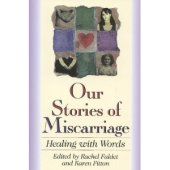
The legacy of miscarriage is profound. Recently, for some reason I felt drawn to read a book that I bought when I was pregnant with Alaina, but didn’t want to read while pregnant. Our Stories of Miscarriage was a very good book and I wish I had read it when my miscarriages were in process rather than now, in retrospect. The book is a collection of personal stories, essays, poems, and reflections about miscarriage and stillbirth (mostly miscarriage). Most of the stories are written by women and there are a handful written by fathers. I marked these things that I found meaningful…

I no longer underestimate the bond between a mother and her baby, no matter how tiny, in her womb (p. 19)

While I know this is not everyone’s experience and that people who are pro-choice often balk at this kind of language, this is true of my own experience. (For the record, I consider myself pro-woman and for me that does mean supporting the full spectrum of reproductive rights, but I have always felt a very uncomfortable and almost impossible to reconcile tension between my own, innate sense that a “fetus” IS a real and valuable baby and my own commitment to upholding the rights of each woman to make the best decisions for her own body).

I also appreciated this quote from a woman writing about talking to a friend who also had a miscarriage (and whether it is okay to talk about your own experiences/share your own story):

I can’t really say I know how you feel. I only know how I felt…

I think this is really nice choice of wording to empathize and share, without dominating another woman’s experience with your own narrative or feelings.

In another story, a mother says:

Now I know what it is like to lose a baby, so when I get pregnant again, I don’t need to know the gender, to have a trauma-free birth, to get the exact birthday, or to worry about making sure I’m relaxed. I just want a baby (p. 113).

I identified with this also, having written repeatedly during my pregnancy with Alaina that my main goal was live baby. While I still think it is perfectly reasonable and indeed should be a given that you have the right to BOTH have a “trauma-free birth” AND a baby (which, I did in fact have), my focus during my post-loss pregnancy experience was more definitely on having that living baby. I have written several times about how miscarriage allowed me to be much more able to understand the women who say, “all that matters is a healthy baby” or, “it doesn’t matter how your baby gets here, what matters is that she gets here.” While I will always maintain that both matter, my empathy for those statements did increase.

Yesterday, a friend of mine who had borrowed my doppler returned it to me. Looking at that box I remembered how often I’d used it during my pregnancy for the “life status update” of the day. I had a lot of cognitive dissonance about excessive ultrasound exposure and yet I was compelled to know if she was still alive. Looking at the box, it all seemed so far away. That fear. That uncertainty. That inner struggle. One of the reasons I published my own miscarriage memoir is because I wanted to be able to share how it all felt right then. That rawness of emotion and spirit, not the experience as filtered through time and new babies and healing of heartache.

The stories of other women reaching out across the page and across the years is a beautiful gift to all the women to follow who find themselves joining the same, unwanted “club” of babyloss mamas. I identified with the closing journal entry of Our Stories of Miscarriage reflecting on, “all the women who comforted me with stories…a sorority of sorrow, these women, and now myself among them, moving past the pain to find a jagged peace in comforting another suffering sister.” (Edgren, p. 184, emphasis mine)

My labyrinth of pregnancy drawing–see if you can find the doppler…

Book Review: Sacred Pregnancy

Sacred Pregnancy
by Anni Daulter, MSW
Paperback: 360 pages
Publisher: North Atlantic Books; 1 edition (May 1, 2012)
ISBN-13: 978-1583944448

http://www.sacredpregnancy.com/

Reviewed by Molly Remer, Talk Birth

Sacred Pregnancy is absolutely gorgeous! Seriously, it is one of the most appealing books I’ve encountered in a long time. The photography is breathtaking, the layout is lovely, and the colors are beautiful. It is a very visually nourishing book to hold and encounter. A combination week-by-week guide to pregnancy and personal journal, Sacred Pregnancy covers a lot of ground from basic pregnancy information and fetal development to making a special birth necklace. There are sections on exercise, nutrition, blessingways, forgiveness, nesting, sisterhood, naming ceremonies, and much, much more.

Two of my favorite points from the book, the first from Ina May’s foreword:

“In discussions in which the sacred nature of pregnancy and birth is brought up, the answer often presumes that anything that would revalue the sanctity of birth would automatically put babies in danger. Nothing could actually be farther from the truth.”

And the second from the author, Anni Daulter:

“Women are born gifted! They can birth babies for heaven’s sake. This is a magical and joyous event and something that, even though the medical community can tell us how it works, is incredible in so many ways. The fact that you can create a human life, carry it in your body, and birth it into existence is just so unbelievably miraculous that there are hardly words for it” (p. 129).

Sacred Pregnancy would make a delicious, nurturing gift for any pregnant woman wishing to dive deep into the experience of her pregnancy and into conscious birth preparation. Just beautiful!

Disclosure: I received a complimentary copy of this book for review purposes.

Strong Women

“The vulva is at its most beautiful when transformed by a crowning baby who slides out into her mother’s hands. Women are strong. Women are powerful. Women were made to birth their babies—in their own time, in their own way and with their own innate wisdom. The natural birth community is full of the strongest, most fearless women on the planet—women supporting women.”
–Care Messer (in Midwifery Today, Spring 2012)

20120526-193012.jpg

My 6-year-old son took this picture of part of one of my textbook’s covers as I was typing this post and I thought it seems oddly suited to it!