Being Succulent

From the The Bodacious Book of Succulence by SARK:

We are succulent with our shredded fantasies, our unread books, our misguided perfectionism, our hiding in bed eating rows of cookies, or neurotically running to and away from things. We are succulent just like this. Just the way we are NOW!….

I like the way this book emphasizes that you are succulent right NOW—you don’t have to do anything special to be it (of course, I still get the “do something and you’ll finally be wonderful” message anyway!).

I had a rough weekend in which I felt overwhelmed by to-dos and “shoulds” and was crabby and snappy at my family and then extremely hard on myself about being crabby and snappy and so on and so forth in an endless spiral of ick. I have known for a long time that I honestly think that if I just read the right book and did the RIGHT thing, I would finally be PERFECT!!!! And, it just sucks when I remember…again!…that I’m not and that it isn’t possible and that the pursuit of doing it all “right,” really ends up making me less than in many respects in the end. I also feel like all the reading I do can mute my own intuition—how can I know what I truly feel and believe, if the words of 5 dozen self-help authors are chasing around inside my brain and each making the “most sense”? (I feel similarly about parenting books—I try so hard to parent the “right” way and wonder if I’ve lost touch with my own sense of what the right way is, by always reading and trying to incorporate other people’s right ways…?) Seriously, there was so much messy should in my brain this weekend I honestly could not distinguish what I really wanted to do from the shoulds—right down to, “I should be having more fun and being a more delightful person.”

P.S. The spellcheck attempted to change, “neurotically” in the quote above to “erotically.” ;-D

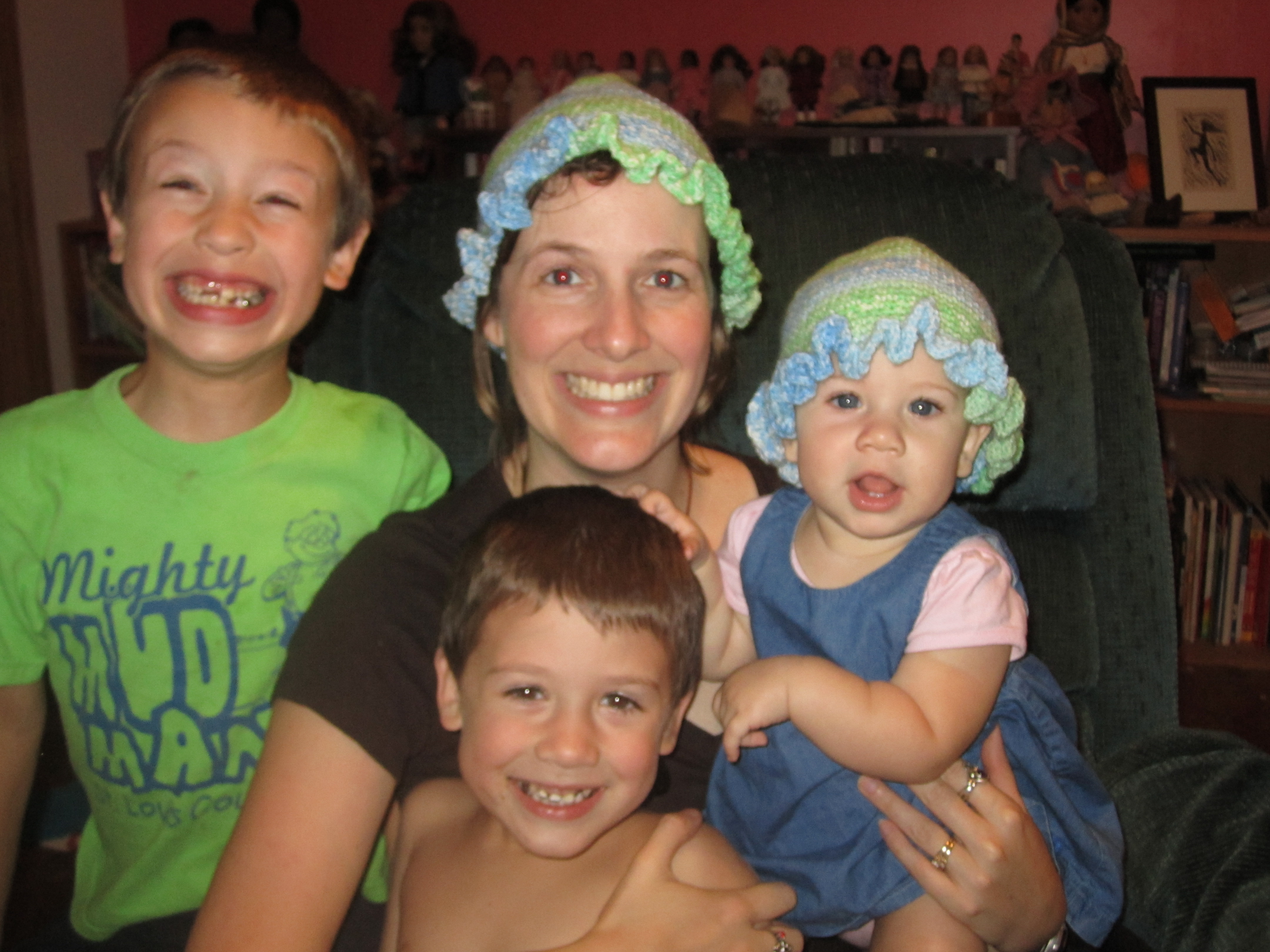
Tried to get a family picture of all our succulence—and, fittingly, it turned out kind of blurry ;-D


New Quotes About Birth, Motherhood, Activism, and Women

I have a LOT of new quotes to add to my collection! I’ve got to start updating more frequently. As I’ve mentioned before that while these quotes are obviously not my own words, I do appreciate a linkback to my site if you re-post them because I have a significant amount of legwork invested in finding and typing the quotes. Most are not recycled from other pages (I give credit if they are), but are typed up when they catch my eye in the books/magazines/journals I’m reading.

‎”Women experience pain differently; some feel strong overwhelming pain, some may feel a deep discomfort during birth, and still others may feel no pain at all. The experience of pain during childbirth facilitates an unfolding of inner power and resources we never imagined we possessed, similar to enduring the pain of completing a marathon at the finish line.” –Barbara Nicholson and Lysa Parker, API founders

(I do wish the analogy was flipped culturally–ie running a marathon is like giving birth, rather than vice versa. We’ll get there!)

“For months I just looked at you. I wondered about all the mothers before me–if they looked at their babies the way I looked at you. In an instant I knew what moved humankind from continent to continent, Against all odds.” –Michelle Singer (in We’Moon 2011 datebook)

“I use the word midwife to refer to all birth practitioners. Whether you are a mother, doula, educator, or understanding doctor or nurse you are doing midwifery when you care for motherbaby.” –Midwifery Today editorial by Jan Tritten

“Change, when it comes, cracks everything open.” ~Dorothy Allison

“I invite people to examine their lives, knowing that it’s scary, but that not doing it is even scarier.” – Barbara De Angelis

‎”There isn’t a lot you actually *need* to do to birth, but there is a lot you can do to get in the *way* of birth…” –Elizabeth McKeown

‎”Mother love is the fuel that enables a normal human being to do the impossible.” –Marion C. Garretty

‎”In western society, the baby gets attention while the mother is given lectures. Pregnancy is considered an illness; once the ‘illness’ is over, interest in her wanes. Mothers in ‘civilized’ countries often have no or very little help with a new baby. Women tend to be home alone to fend for themselves and the children. They are typically isolated socially & expected to complete their usual chores…while being the sole person to care for the infant…” –Milk, Money, & Madness

 “I have discovered nothing more stunning, nothing more emotionally stirring, nothing more intriguing than a woman as she creates life.” –Patrick Stull

‎”My first delivery was a traumatic experience, physically and psychologically almost destroying me. My second, with a midwife, allowed me to regain my womanhood and experience my biological imperative. And yet, I would do them both over again to have what I created.” –mother quoted in the book Evolve, by Patrick Stull

‎”Too often in modern busy obstetric practice, we doctors forget this meaningfulness of childbirth. In our anxiety and impatience, or in our sincere, but misguided efforts to relieve suffering (and childbirth is not without it), we relieve a woman not only of this suffering, but also of her ‘birth right.'” ~John Miller, MD, Childbirth via Citizens for Midwifery

‎”Too often in modern busy obstetric practice, we doctors forget this meaningfulness of childbirth. In our anxiety and impatience, or in our sincere, but misguided efforts to relieve suffering (and childbirth is not without it), we relieve a woman not only of this suffering, but also of her ‘birth right.'” ~John Miller, MD, Childbirth

 “A woman’s confidence and ability to give birth and to care for her baby are enhanced or diminished by every person who gives her care, and by the environment in which she gives birth…Every women should have the opportunity to give birth as she wishes in an environment in which she feels nurtured and secure, and her emotional well-being, privacy, and personal preferences are respected.” –Coalition for Improving Maternity Services (CIMS)

‎”Aside from new babies, new mothers must be the most beautiful creatures on earth.” ~Terri Guillemets

‎”It’s a good day not to judge anything – not myself, not others, not the world. Let us just be.” ~ Sonia Choquette

‎”We’re volcanoes. When we women offer our experience as our truth, as human truth, all the maps change. New mountains form” – Ursula Le Guin

‎”Be wild; that is how to clear the river.” –Clarissa Pinkola Estes

‎”I believe global transformation hangs on the empowerment of women.” –Vajra Ma

‎”Grace reveals to you a great mothering love that you can step into, that’s been here before you and will be here after you. Grace will be with you as you open your arms, as you release your children and send them out into the world. If you listen carefully, you can hear grace whispering its thanks to you for being a mother to these souls.” –Denise Roy (Momfulness)

‎”No one has yet realized the wealth of sympathy, the kindness and generosity hidden in the soul of a child. The effort of every true education should be to unlock that treasure.” – Emma Goldman

‎”A person who believes too earnestly in [her] own convictions can be dangerous to others, for absence of humor signals a failure in basic humanity.” –Thomas Moore (Original Self)

 “There is a sacredness in tears. They are messengers of overwhelming grief…and unspeakable love.” –Washington Irving

‎”It is easier to build strong children than to repair broken men.” – Frederick Douglass

‎”No mammal on this planet separates the newborn from its mother at birth except the human animal. No mammal on this planet denies the breast of the newborn except the human.” –James Prescott (neuropsychologist quoted in The Art of Conscious Parenting)

‎”Every society practices the birthing ceremonies that best mirror its values, norms, and philosophy.” –Gregory Bateson (quoted in The Art of Conscious Parenting)

‎”The world can only value mothering to the extent that women everywhere stand and declare that it must be so.” –Oprah

‎”Motherhood focused my early political consciousness. It helped me understand how the choices I make in my personal life are linked to those I make on a larger scale.” –Wendy Priesnitz

‎”There is a wild tiger in every woman’s heart. Its hot and holy breath quietly, relentlessly feeding her.” – Chameli Ardagh

 “The state of the world today demands that women become less modest and dream/plan/act/risk on a larger scale.” – Charlotte Bunch

‎”Prenatal care of the future will be guided by a [this rule]: “Eat sardines, be happy…and sing!” –Michel Odent

‎”If you are going to generalize about women, you’ll find yourself up to here in exceptions.” – Dolores Hitchens

‎”If we can mobilize the mothering instinct in all of us, we could save the planet. It is inappropriate to be dispassionate right now.” –Helen Caldicott (1981) in Momfulness

‎”There’s something contagious about demanding freedom.” – Robin Morgan

‎”Remember our heritage is our power; we can know ourselves and our capacities by seeing that other women have been strong.” – Judy Chicago

“For months I just looked at you. I wondered about all the mothers before me–if they looked at their babies the way I looked at you. In an instant I knew what moved humankind from continent to continent, Against all odds.” –Michelle Singer (in We’Moon 2011 datebook)

‎”I use the word midwife to refer to all birth practitioners. Whether you are a mother, doula, educator, or understanding doctor or nurse you are doing midwifery when you care for motherbaby.” –Midwifery Today editorial by Jan Tritten

“Change, when it comes, cracks everything open.” – Dorothy Allison

“I invite people to examine their lives, knowing that it’s scary, but that not doing it is even scarier.” – Barbara De Angelis”There isn’t a lot you actually *need* to do to birth, but there is a lot you can do to get in the *way* of birth…” –Elizabeth McKeown

‎”Mother love is the fuel that enables a normal human being to do the impossible.” –Marion C. Garretty

‎”As a woman, you are powerful. Birth is of course only one of many amazing pieces of being female, but it is unique in some very key ways…it is a time in a woman’s life that requires physical, spiritual, and emotional strength. It tests the foundation of who we believe we are as women, and challenges our beliefs about our own power.” –Marcie Macari (She Births)

‎”And I say the sacred hoop of my people was one of the many hoops that made one circle, wide as daylight and as starlight, and in the center grew one mighty flowering tree to shelter all the children of one mother and one father.” – Black Elk (via Literary Mama)

‎”We must act to keep the knowledge and the powers of women alive.” – Lynn Andrews

‎”Doctors ‘know’ they are giving women ‘the best care’…Birth activists…know that this ‘best care’ is too often a travesty of what birth can be. And yet on that existential brink, I tremble at the birth activist’s coding of women as ‘not knowing.’ So, here’s to women…to women knowing what is best for themselves and their babies, and to women rising above everything else.” -Robbie Davis-Floyd

 “The natural process of birth sets the stage for parenting. Birth and parenting mirror each other. While it takes courage and strength to cope with labor and birth, it also takes courage and strength to parent a child.” –Marcy White

“For each of us as women, there is a deep place within, where hidden and growing our true spirit rises…Within these deep places, each one holds an incredible reserve of creativity and power, of unexamined and unrecorded emotion and feeling. The woman’s place of power within each of us…it is dark, it is ancient, and it is deep.” –Audre Lorde

‎”Time stands still best in moments that look suspiciously like ordinary life.” –Brian Andreas (quoted in Momfulness)

‎”Your children love you. Be the trampoline for their rocketing and the cupped palms for their returning.” –Shae Savoy (in We’Moon 2011 datebook)

‎”Birth should not be a celebration of separation, but rather a reuniting of mother and baby, who joins her for an external connection.” –Barbara Latterner, in New Lives

‎”When you bring consciousness to anything, things begin to shift.”–Eve Ensler

‎”Birth is a time we need to believe in – and need those around us to trust and encourage – our bodies, our power.” –Choices in Childbirth blog

‎”Scientific medicine has never been shy to dismiss if not denigrate any perceived threat to its values or power.” –from the book Breakthrough: How the 10 Greatest Discoveries in Medicine Saved Millions and Saved the World

‎”Fatherhood challenges us, but it also enlarges us and reshapes our perception of what is important in the world around us. As we take stock of this new world, we find that doing our job as a dad is inherently honorable and respectful, and brings to us the dignity that goes with the territory. Far from being emasculating, being a dad makes us men in the finest sense of the term.” –Dads Adventure

‎”Where you give birth is not nearly as important as who is there. The *human environment*–the people who surround you and your relationships with them–is what sets the tone for the birth, directly affecting its safety and success, as well as your own satisfaction.” –Jan Mallak/Teresa Bailey, Doula’s Guide to Birthing Your Way

‎”Drugs, machinery, and medical personnel are not match for a woman’s own intellect and intuition. Birth is sexual and spiritual, magical and miraculous–but not when it is managed, controlled, and manipulated by the medical establishment, or hindered by the mother’s own mind.” –Laura Shanley quoted in book Home/Birth: A Poemic

I am compelled by some deep hunger of the soul, driven by a desire that will not leave me alone, to live life to the fullest. And I know this does not mean working endlessly, accomplishing the most, or consuming the greatest amount & variety of things and experiences. It means tasting each mouthful, feeling each breath, listening to each song, being awake & aware of each moment as it unfolds. ~ Oriah Mountain Dreamer

‎”The expectant mother is an image of strength, power, and creativity. She is able to carry twenty to thirty or more extra pounds and still continue her daily activities. And more wonderful, she is able to bring forth a new life.” – Carl Jones

‎”Make the most of yourself by fanning the tiny, inner sparks of possibility into flames of achievement.” -Golda Meir

‎”Every birth is holy. I think a midwife must be religious because the energy she’s dealing with is holy. She needs to know that other people’s energy is sacred…By religious, I mean that compassion must be a way of life for her. Her religion has to come forth in her practice…it cannot be just theory. Truly caring for people cannot be a part-time job.” Ina May Gaskin, from The Spiritual Midwife, Mothering #8, 1978

‎”We have barely tapped the power that is ours. We are more than we know.” –Charlene Spretnak

‎”Birth always alters you. It’s a learning experience…no matter how many classes you go to, how much you practice relaxation, how many books you read, or how many prayers you put out into the universe, childbirth is beyond your control, a force of nature, like a tornado, a blizzard, or an earthquake.” –Patrician Harman (Arms Wide Open: A Midwife’s Memoir)

“Becoming a mother makes you the mother of all children. From now on each wounded, abandoned, frightened child is yours. You live in the suffering mothers of every race and creed and weep with them. You long to comfort all who are desolate.” — Charlotte Gray (via Giving Birth with Confidence)

‎”It is not female biology that has betrayed the female…it is the stories and myths we have come to believe about ourselves.” –Glenys Livingstone

‎”In western society, the baby gets attention while the mother is given lectures. Pregnancy is considered an illness; once the ‘illness’ is over, interest in her wanes. Mothers in ‘civilized’ countries often have no or very little help with a new baby. Women tend to be home alone to fend for themselves and the children. They are typically isolated socially & expected to complete their usual chores…while being the sole person to care for the infant…” –Milk, Money, & Madness

“Women experience pain differently; some feel strong overwhelming pain, some may feel a deep discomfort during birth, and still others may feel no pain at all. The experience of pain during childbirth facilitates an unfolding of inner power and resources we never imagined we possessed, similar to enduring the pain of completing a marathon at the finish line.” –Barbara Nicholson and Lysa Parker, API founders

“Nourish beginnings, let us nourish beginnings. Not all things are blest, but the seeds of all things are blest.The blessing is in the seed.” –Muriel Rukeyser

 “One of the most important things I have learned about birthing babies is that the process is more of an unfolding marvel than a routine progression of events.” –Tori Kropp

“There is no telling how many miles you will have to run while chasing a dream.” ~Author Unknown

“Aside from new babies, new mothers must be the most beautiful creatures on earth.” ~Terri Guillemets (via Brio Birth)

‎”There’s nothing that can help you understand your beliefs more than trying to explain them to an inquisitive child.” – Frank A. Clark

“Grace reveals to you a great mothering love that you can step into, that’s been here before you and will be here after you. Grace will be with you as you open your arms, as you release your children and send them out into the world. If you listen carefully, you can hear grace whispering its thanks to you for being a mother to these souls.” –Denise Roy (Momfulness)

“I believe global transformation hangs on the empowerment of women.” –Vajra Ma

“Learning too soon our limitations, we never learn our powers. We will learn them now.” – Mignon McLaughlin

‎”No one has yet realized the wealth of sympathy, the kindness and generosity hidden in the soul of a child. The effort of every true education should be to unlock that treasure.” – Emma Goldman

“A person who believes too earnestly in [her] own convictions can be dangerous to others, for absence of humor signals a failure in basic humanity.” –Thomas Moore (Original Self)

“No mammal on this planet separates the newborn from its mother at birth except the human animal. No mammal on this planet denies the breast of the newborn except the human.” –James Prescott (neuropsychologist quoted in The Art of Conscious Parenting)

(While I like this quote, the snarky part of me wants to say, no other mammal wears clothes, sleeps in a bed, drives a car, etc., etc.)

“If we can mobilize the mothering instinct in all of us, we could save the planet. It is inappropriate to be dispassionate right now.” –Helen Caldicott (1981) in Momfulness

“Parenting is a mirror in which we get to see the best of ourselves, and the worst; the richest moments of living, and the most frightening.” –Myla & Jon Kabat-Zinn quoted in Momfulness

“Remember our heritage is our power; we can know ourselves and our capacities by seeing that other women have been strong.” – Judy Chicago

‎”I hear the singing of the lives of women. The clear mystery, the offering, and the pride.” – Muriel Rukeyser

“She’s turning her life into something sacred: Each breath a new birth. Each moment, a new chance. She bows her head, gathers her dreams from a pure, deep stream and stretches her arms toward the sky.” –from the journal offered for giveaway on Mamahhh

“Birthing is the most profound initiation to Spirituality a woman can have.” –Robin Lim (in She Births)

“As a woman, you are powerful. Birth is of course only one of many amazing pieces of being female, but it is unique in some very key ways…it is a time in a woman’s life that requires physical, spiritual, and emotional strength. It tests the foundation of who we believe we are as women, and challenges our beliefs about our own power.” –Marcie Macari (She Births)

“There is something wonderfully bold and liberating about saying yes to our entire imperfect and messy life.” –Tara Brach (in Momfulness)

“We cannot withhold facts for fear of offending because the importance of the information outweighs people’s right to not be challenged in their beliefs.” ~Maddy Reid

“Courage is what it takes to stand up and speak; Courage is also what it takes to sit down and listen.” –Winston Churchill

“A ‘no’ uttered from the deepest conviction is better and greater than a ‘yes’ merely uttered to please, or what is worse, to avoid trouble.” ~ Mahatma Gandhi

“Let’s declare a permanent truce with our bodies for the sake of our daughters. Imagine with me being at home, at ease, and at peace with our bodies.” –Patricia Lynn Reilly

 “I believe that natural childbirth is a right and a privilege…Our country needs to step up to the plate in educating women about the benefits of natural birth, and we need to help women actually do it – not just hear about it.” –Mayim Bialik

“I dream of giving birth to a child who will ask, ‘Mother, what was war?'” – Eve Merriam

“…undisturbed (not neglected or abandoned) birth is a powerful initiation into motherhood, not only in a physical and physiological sense, but also in an emotional and spiritual sense.” –Christina Hurst-Prager (in (ICEA) International Childbirth Education Association’s journal)
Simple Pleasures

Saved quote from 2007 (in book Simple Pleasures):

When we lack proper time for the simple pleasures of life, for the enjoyment of eating, drinking, playing, creating, visiting friends, and watching children at play, then we have missed the purpose of life. Not on bread alone do we live, but on all these human and heart-hungry luxuries.” –Ed Hayes

I need to stick this to my forehead!

And, a favorite quote that I used to have on my FB page:

A simplified home feels friendlier. A simplified life seems easier. And remarkable joy comes from simple things–like having work to do that matters, and having people to love who matter a lot.” –Victoria Moran (Shelter for the Spirit)

Milk, Money, & Madness

In early August, I received a press email from Evenflo about their “in-law feeding frenzy” video. While I recognized they were attempting to be playful and funny, I chose not to share the video with my readers because I found several elements of it problematic. Rather than recognize the opportunity to create an internet stir over the video, I just wrote back to the company and told them, “I try not to encourage the notion of other people having a chance to feed the baby, so I do not plan to use the video myself—I would have been more pleased with it if somehow mom stood her ground and helped in-laws see that there are other ways to be involved with the baby other than by feeding it expressed milk. I don’t promote the idea that mothers need to pump, ‘just because.’” Considering what a controversy has now boiled up this week over Evenflo’s “funny” breastfeeding video, I confess I sort of feel like I missed my opportunity for a major wave of blog traffic by exposing the ad and expositing on the problems therein when I received it in August! 😉  However, when considering the controversy, I thought of some wonderful quotes I’d saved to share from the book Milk, Money, & Madness and so I’m sharing them instead.

Dia Michels is one of the co-authors of Milk, Money, and Madness and I’ve actually heard her speak twice—once in 2003 when I was pregnant with L and then in 2007 at the LLL of MO conference. I’m surprised at how thoroughly riveting a book about the “culture and politics of breastfeeding” can be and I highly recommend it to breastfeeding and women’s health activists.

In perfect response to the Evenflo video, we have this quote:

“Babies need holding, stroking, dressing, bathing, comforting, burping, and, within a short time, feeding solids. Dad can do every one of these. The desire to participate should not be confused with the need to give the baby the best of what each partner has to offer.”

I hear from people SO often that they want Daddy to be able to participate in baby care by giving the baby a bottle. There are LOTS of things that fathers can do for their babies, other than feeding—bathing, snuggling skin-to-skin, diaper changes, playing, babywearing, and just plain walking around holding the baby while mom takes care of her own needs.

And, here is an excellent quote with regard to public breastfeeding/breasts as sexual objects:

“When the attitude is taken that a woman’s breasts belong to her and no job is more important than caring for one’s young, the confusion between breastfeeding and obscenity goes away.”

And, then considering the argument that bottle feeding “liberates” women from the tyranny/restrictiveness of breastfeeding:

The liberation women need is to breastfeed free of social, medical, and employer constraints. Instead, they have been presented with the notion that liberation comes with being able to abandon breastfeeding without guilt. This ‘liberation,’ though, is an illusion representing a distorted view of what breastfeeding is, what breastfeeding does, and what both mothers and babies need after birth. [emphasis mine]

I’ve noted before that I am a systems thinker and I think this way about breastfeeding as well as many other experiences—breastfeeding occurs in a context, a context that involves a variety of “circles of support” or lack thereof. Women don’t “fail” at breastfeeding because of personal flaws, society fails breastfeeding women and their babies every day through things like minimal maternity leave, no pumping rooms in workplaces, formula advertising and “gifts” in hospitals, formula company sponsorship of research and materials for doctors, the sexualization of breasts and objectification of women’s bodies, and so on and so forth. According to the book, “…infant formula sales comprise up to 50% of the total profits of Abbott Labs, an enormous pharmaceutical concern.” And the U.S. government is the largest buyer of formula, providing it for something like 37% of babies. (I should have written that quote down too!)

I have a special interest in how women are treated postpartum and Milk, Money, and Madness has some gems to share about postpartum care as well:

An entirely different situation exists in societies where technology is emphasized. The birth process is seen from a clinical viewpoint, with obstetricians emphasizing technology. A battery of defensive practices are employed, some of which are totally irrelevant to the health of either mother or infant. Skilled technicians spend their time and the family’s money on identifying the baby’s gender and performing various stress tests. All the focus is geared toward the actual birth. After the birth, mother and baby become medically separated. The infant is relegated to the care of the pediatrician, the uterus to the obstetrician, the breast abscess to the surgeon. While the various anatomical parts are given the required care, the person who is the new mother is often left to fend for herself…All the tender loving care goes flows to the infant; the mother becomes an unpaid nursemaid. [emphasis mine]

When I do breastfeeding help with mothers, I always make sure I address the whole woman and do not  focus only on the mechanics of breastfeeding. Recently a mother told me, “I don’t know if it was your breastfeeding advice or just the encouragement that helped most, probably both.” Women need both—“technical assistance” and emotional support. Sometimes, all they need is the emotional support and they can figure out the rest with some undisturbed time with their babies. The pendulum in breastfeeding support is shifting from active, “education” based strategies, to the recognition that often the best we can do for mothers is give them time to get to know their babies. Rather than offering positioning “advice” and “breastfeeding management suggestions,” we need to give her space, stand aside, and offer encouragement as she discovers her baby and the biological dance they are hardwired to engage in. The Milk quote continues with:

This may appear to be a harsh evaluation, but it is realistic. In western society, the baby gets attention while the mother is given lectures. Pregnancy is considered an illness; once the ‘illness’ is over, interest in her wanes. Mothers in ‘civilized’ countries often have no or very little help with a new baby. Women tend to be home alone to fend for themselves and the children. They are typically isolated socially and expected to complete their usual chores, including keeping the house clean and doing the cooking and shopping, while being the sole person to care for the infant… (emphasis mine)

According to the U.S. rules and regulations governing the federal worker, the pregnancy and postdelivery period is referred to as ‘the period of incapacitation.’ This reflects the reality of the a situation that should be called ‘the period of joy.’ Historically, mothering was a group process shared by the available adults. This provided not only needed relief but also readily available advice and experience. Of the ‘traditional’ and ‘modern’ child-rearing situations, it is the modern isolated western mom who is much more likely to find herself experiencing lactation failure.

I think these quotes are important because I think there is a tendency for women to look inward and blame themselves for “failing” at breastfeeding. There is also an unfortunate tendency for other mothers to also blame the mother for “failing”—she was “too lazy” or “just made an excuse,” etc. We live in a bottle feeding culture; the cards are stacked against breastfeeding from many angles–economically, socially, medically. When I hear women discussing why they couldn’t breastfeed, I don’t hear “excuses,” I hear “broken systems of support” (whether it be the epidural in the hospital that caused fluid retention and the accompanying flat nipples, the employer who won’t provide a pumping location, the husband who doesn’t want to share “his breasts,” the mother-in-law who thinks breastfeeding is perverted, or the video that promotes expressing milk so other people can feed the baby). Of course, there can actually be true “excuses” and “bad reasons” and women theoretically always have the power to choose for themselves rather than be swayed by those around them, but there is a whole lot that goes into not-breastfeeding, besides the quickest answer or what is initially apparent on the surface. As I said above, breastfeeding occurs in a context and that context is often one that DOES NOT reinforce a breastfeeding relationship. In my six years in breastfeeding support, with well over 600 helping contacts, I’ve more often thought it is a miracle that a mother manages to breastfeed, than I have wondered why she doesn’t.

For more about the relationship between birth and breastfeeding, check out my previous post: The Birth-Breastfeeding Continuum.

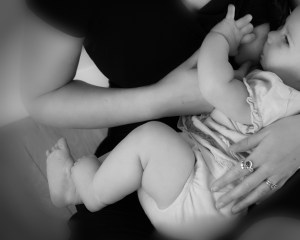
Check out those exclusively breastfed thighs!

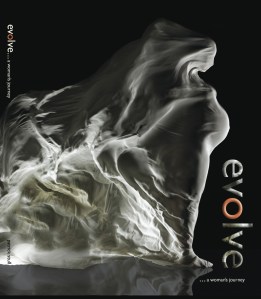
Book Review: Evolve…a woman’s journey

Book Review: Evolve…a woman’s journey
by Patrick Stull
Stull Visual Arts, 2011
Hardcover, 164 pages, $44.95
Also available as an iPad app and as an iBook in Itunes for $9.99.
http://www.patrickstull.com/books/

Reviewed by Molly Remer

A combination of stirring photography celebrating the creative journey of pregnancy and lyrical ode to women, Evolve is a unique book presented by artist Patrick Stull. The author-photographer’s love, respect, and honor for women shines through on every page. The photographs are arresting and dramatic and the prose is poetic and beautiful. The book is part of a multimedia exhibit taking place in 2012. I would love to see the full exhibit, which involves full body casts as well as images and voice recordings.

Why would a man prepare a project such as this? According to his introduction, due to “this insatiable desire to be part of something that excludes me…I have found something within me that one might call love, though I think it is more a sense of attachment to something that makes me whole. I have fallen in love with this creature and she has left her imprint on my being, casting me out to share the love—the humanity I have found.” Later he also shares that: “I have discovered nothing more stunning, nothing more emotionally stirring, nothing more intriguing than a woman as she creates life.” He also has an activist purpose behind his work, asserting that one mission of the Evolve project is to help people recognize the strength and value that all women possess. Stull states, “I also want people to consider the daily injustices to women and children all over the world, and how often they suffer the greatest costs of conflict. Why are women treated so cruelly?”

The early photographs shared are the faces of the women we follow throughout the rest of the book. A short snippet of information about the woman’s life accompanies each portrait. One woman is a midwife and several mothers had homebirths and/or hired doulas or midwives for their births. Evolve is a high quality hardback book that would be a great addition to a birth center waiting room or midwife’s office. If the price for the hardback book is out of your budget, luckily there is an affordable iBook version available.

The overwhelming message received through Evolve is of pregnancy as an active process. The pictures are very active and dynamic in feel, celebrating form and motion. Evolve is not a book of “belly pictures,” it is a book about women and their lives in the act of creation.

Disclosure: I received a complimentary copy of this book for review purposes.

Guest Post: 5 Easy Ways to Stay Happy and Relaxed

Chicago Healers Practitioner Dr. Helen Lee provides five easy ways to stay calm, relaxed and connected to the self throughout even the busiest days.

  • Breathe – It may feel silly to remind oneself to breathe, but it is so important.  There are two types of breathing: shallow and deep.  Taking shallow chest breaths causes the body to operate in “fight or flight” mode, which is highly stressful.  Less oxygen goes to the brain and the body continues to operate on high alert.  It is important to take deep abdominal breaths, which stimulate the parasympathetic nervous system.  This optimizes digestion, relaxation and detoxification while keeping hormones balanced.
  • Gratitude – Remembering things to be grateful for throughout the day really does wonders for personal state of mind and for the body.  Positive thinking releases chemicals that help with digestion, euphoria, relaxation and overall well-being.
  • Laughter – Laughter is the best medicine as the saying goes, and this is often the case.  Laughing for 10 minutes a day will do amazing things.  It changes the physiology of the entire body—increases circulation, releases different “happy” chemicals in the body, reduces stress, keeps everyone in a lighter frame of mind, helps the heart and can even burn calories!  It’s contagious, too!
  • Sit in Silence – Taking 10-30 minutes to quiet the mind and clear thoughts can be so beneficial.  If meditating is not preferable, spend the time visualizing goals for the day.  This will put focus on personal needs, which will be relaxing later when the day starts to get stressful.
  • Take a 15-20 Minute Walk Outside – Sometimes all that’s needed is fresh air and sunlight.  Taking a step away from the computer, the phone, the office, etc. can really help clear thoughts and be very calming.

Stress is almost unavoidable these days but there are many ways to keep it at bay.  Practicing these five methods is a great start.

Chicago Healers (www.ChicagoHealers.com) is the nation’s pioneer prescreened integrative health care network, offering a comprehensive understanding of each practitioner’s services, approach, and philosophy.  Our holistic health experts teach and advocate natural and empowered health and life choices through their practices, the media, educational events, and our website.  With close to 200 practitioners and over 300 treatment services, Chicago Healers has provided nearly 400 free educational events for Chicagoans and has been featured in 300+ TV news programs and print publications.  For more information, visit www.ChicagoHealers.com.

Active Birth in the Hospital

One of the inspiring images in ICAN of Atlanta's "Laboring on the Monitors" slideshow.

The vast majority of my birth class clients are women desiring a natural birth in a hospital setting. My classes are based on active birth and include a lot of resources for using your body during labor and working with gravity to help birth your baby. Sometimes I feel like active birth and hospital birth are incompatible—i.e. the woman’s need for activity runs smack dab into the hospital’s need for passivity (i.e. “lie still and be monitored”). So, I was delighted to discover this awesome series of photos from ICAN of Atlanta of VBAC mothers laboring on the monitors. It IS possible to remain active and upright, even while experiencing continuous fetal monitoring.

In my own classes, we talk about how to use a hospital bed without lying down—the idea that a hospital bed can become a tool you can use while actively birthing your baby. Here is a pdf handout on the subject:How to Use a Hospital Bed without Lying Down. In this handout, I offer these tips for using the bed as an active assistant, rather than a place to be “tied down”:

While being monitored and/or receiving IV fluids that limit mobility, try:

  • Sitting on a birth ball and leaning on bed
  • Sitting on bed
  • Sitting on bed and lean over ball (also on bed)
  • Kneeling on bed
  • Hands and knees on bed
  • Standing up and leaning on bed
  • Leaning back of bed up and resting against it on your knees
  • Bringing a beanbag chair, putting it on the bed and draping over it (can also make “nest” with pillows)
  • Partner sitting on bed and woman leaning on him/supported squats with him
  • Partner sitting behind woman on bed (with back leaned up as far as it will go)

While giving birth, try:

  • Hands and knees on bed
  • Kneeling with one leg up (on bed like a platform or “stage”)
  • Holding onto raised back of bed and squatting or kneeling
  • Squatting using squat bar

While most of the above tips can be used during monitoring, additional ideas for coping with a simultaneous need for monitoring AND activity include:

  • Kneel on bed and rotate hips
  • Sit on edge of bed and rock or rotate hips
  • Sit on ball or chair right next to bed (partner can hold monitor in place if need be)

If something truly requires being motionless, it can be helpful to have some breath awareness techniques available in your “bag of tricks.” One of my favorites is: Centering for Birth

Some time ago, a blog reader posed the question, can I really expect to have a great birth in a hospital setting? I definitely think it is possible! I also think there is a lot you can do in preparation for that great hospital birth! When planning a natural birth in the hospital, it is important to consider becoming an informed birth consumer. I always tell my clients that an excellent foundation for a simple, effective, evidence-based birth plan is to base it on Lamaze’s Six Healthy Birth Practices. My own pdf handout summarizing the practices is also available: Six Healthy Birth Practices. Don’t forget there is also a great video series of the birth practices in action! You might also want to get a copy of the book Homebirth in the Hospital. And, check out this post from Giving Birth with Confidence: Six Tips for Gentle but Effective Hospital Negotiations.

Before you go in to the hospital to birth your baby, make sure you have some ideas about this very popular question, how do I know if I’m really in labor?

And, finally, be prepared for the hospital routines you may encounter by reading my post: What to Expect When You Go to the Hospital for a Natural Childbirth.

For some other general ideas about active birth, read my post about Moving During Labor (written for a blog carnival in 2009).

Best wishes for a beautiful, healthy, active hospital birth! You can do it!

Book Review: Homebirth in the Hospital

Homebirth in the Hospital
by Stacey Marie Kerr, MD
Sentient Publications, 2008
Softcover, 212 pages
ISBN: 978-1-59181-077-3
www.homebirthinthehospital.com

Reviewed by Molly Remer, MSW, ICCE, https://talkbirth.wordpress.com

I would venture to say that most midwifery activists and birth professionals have said at some point, “what she wants is a homebirth in the hospital…” This comment is accompanied with a knowing look, a bit of head shaking, and an unspoken continuation of the thought, “…and we all know that’s not going to happen.”

Well, what if it is possible? A new book by Dr. Stacey Kerr, Homebirth in the Hospital, asserts that it is. She was originally trained at The Farm in TN (home of legendary midwife Ina May Gaskin) and after going to medical school realized that she, “…needed to balance my new knowledge with my old priorities. I missed the feeling of normal birth, the trust that the birthing process would occur without technology, and the time-tested techniques that help women birth naturally. And so it was that I went back to midwives to find the balance.”
If you are a dedicated homebirth advocate, I recommend reading Homebirth in the Hospital with an open mind—clear out any cobwebs and assumptions about doctors, hospitals, and birth and read the book for what it is: an attempt to create a new model of hospital birth. What Dr. Kerr proposes in her book is a model of “integrative childbirth”—the emotional care and support of home, while nestled into the technology of a hospital.

The opening chapter explores the concept of integrative childbirth and “the 5 C’s” of a successful integrative birth: choices, communication, continuity of care, confidence, and control of protocols (“protocols are the most disempowering aspect of modern maternity care…”).

This section is followed by fifteen different birth stories, beginning with the author’s own (at a Missouri birthing center—my own first baby was born in a birth center in Missouri, so I felt a kinship there).

The births are not all happy and “perfect,” not all intervention-free, and most are quite a bit more “managed” and interfered with than a lot of homebirthers prefer (one is a cesarean, several involve epidurals or medications). I, personally, would never freely choose a “homebirth in a hospital” (I also confess to retaining a deep-seated opinion that this phrase is an oxymoron!). However, that is not the point. Over 90% of women do give birth in a hospital attended by a physician and I appreciate the exploration of a new model within the constraints and philosophy of the hospital.

The book closes with a chapter called “how to be an integrative childbirth provider.” The book has no resources section and no index.

I certainly hope that doctors read this book. I am also glad it is available for women who feel like homebirth is not an option or not available and would like to explore an integrative approach. Even though my opinion is that none of the births are really “homebirths in the hospital” as most bear little resemblance to the homebirths I know and love, unlike the content of the standard hospital birth story, they are deeply respectful births in the hospital and that’s the issue truly at the heart of this book.

—-

Disclosure: I received a complimentary copy of this book for review purposes.

Benefits of Prenatal Massage

In the U.S. there are more the six million pregnancies each year, and a growing number of women are opting to use massage to deal with the aches, pains and stress that come along with pregnancy. Studies have shown that prenatal massage can reduce anxiety, joint pain and swelling caused by poor circulation, according to the American Pregnancy Association. Massage therapists who are trained in prenatal massage must take extra precautions when giving an expectant mother a massage, including avoiding specific pressure points and ensuring the client is in a position that will not cause added stress to their body.

I recently had the opportunity to interview Colleen Bryan of Hand & Stone Massage and Facial Spa. about the benefits of prenatal massage:

Q: How can the benefits of massage transfer into the delivery/birthing room?
A. Regular massage can assist the labor process by enabling each woman to begin labor with less tension in the back, pelvis and legs. It also provides flexibility, prepares muscles and reduces stress levels which can improve the outcome of labor. It has been noted that labor is shorter with fewer complications for women who receive regular massage.

Q:  Are there any special tricks and tips that can be used through massage to help a birthing woman?
A: It takes a lot of hard physical work to get a baby into the world but steps can be taken to make that process easier. Regular massage throughout the second and third trimester will allow the muscles to be more relaxed and flexible through the delivery process. Not only does massage help throughout pregnancy and delivery but once baby and Mom are home that’s when disrupted sleep patterns need rejuvenation. A one hour massage is equivalent to three hours of deep sleep….often needed not only for Moms but Dads as well.

Q: When are the best times to receive a massage for pregnant women?
A: Pregnancy is a wonderful experience, but it often comes with physical challenges from a changing body. The second trimester is the safest time to start receiving regular massage, once or twice a month. Weight gain in the front of the body can change the center of gravity placing more stress on joints, the spine and muscles. Massage can offer relief from muscle pain and joint stiffness on into the third trimester as the baby grows and changes the body even more. At this time it would be beneficial to receive a massage every week.
Receiving massage during pregnancy is an excellent way to care for both Mom & baby. It should be part of every pregnant woman’s self-care plan.

Q: What are some of the cautions about receiving massage during pregnancy?
A: Prenatal massage is effective and safe for women with uncomplicated, low risk pregnancies. High risk pregnancies with certain medical conditions should get consent from their doctor before receiving massage. Massage should be avoided during the first trimester and there are regions of the body and specific therapeutic techniques that are contraindicated for prenatal massage. A professional massage therapist trained in prenatal massage will know what precautions need to be taken.

The Ragged Self

Several years ago I read a book called Trees Make the Best Mobiles. Primarily geared towards first time parents of infants, it didn’t cover a lot of new ground for me, but there were a couple of good reminders in it about present, mindful parenting. I originally wrote about this on an old blog and this week the notion of the “ragged self” came back up for me again. In the book regarding time with our children, the authors write: “They offer us a chance, not only to quell past demons, but to leave behind the pressures of the day. With them, we can be our best selves: alert, vibrant, and generous—and fully alive in the present tense.” And then, with regard to children learning your behaviors: “Make sure that what your child is absorbing isn’t your ragged, frustrated, or furious self, but your best self. And when it’s not, let him know that you know, and that you’ll try harder next time.”

Unfortunately, I think I often do show my “ragged” self to my family and am NOT necessarily my best, alert and vibrant self. It isn’t a “furious” self usually, but sort of a worn out and taut self. My husband “gets” to see this side a lot—I start out the day much more vibrantly and as it passes, I become more ragged so when he gets home, all that is left for him is “scraps.” I hate that. I also feel like my mom sees my ragged self more often than I’d like—aren’t these the people that matter most? Why do “other people” get the vibrant parts?! I try to tell them sometimes that that raggedness isn’t how I am or how I feel for a lot of the day, it is just that which is only “allowed” to reveal herself in front of them.

I’ve noticed the ragged self emerges when:

  • I’m hungry
  • I’m tired
  • I have a headache (sometimes related to the above two)
  • I haven’t had my two hours

What’s this about two hours?

Well, picture that newspaper kid from the movie Better Off Dead and you’ll have how I feel about it 😉 Almost every day, my wonderful parents pick up my boys and take them to their house to visit for approximately two hours. If I play my cards right, this is also when Alaina takes her afternoon nap, which gives me two hours on my own to “get things done.” I NEED this time in order to survive—in order to keep up with the other elements of my life besides mothering. I know other mothers swoon with jealousy at the idea of having a regular two hours—they should, my parents are awesome and they are a key factor in how I’m able to “do it all.” They’re my “tribe”—the village that comes to help me grind my corn. I rely on having this time and so when I don’t get it for some reason, I become very ragged and feel like I must quit everything else (surrender). So, sometimes when I start feeling ragged and can’t put my finger on exactly why, it comes to me: “I WANT MY TWO HOURS!”

Yes, that kid’s face is exactly how my own looks when I say it!

Another minute?

From the same book quoted above, the authors write “Each time you say, ‘I need another minute to finish this…,’ you squander a moment with your child, never to be reclaimed.”

I confess, though this is another good reminder, it also annoys me. There is a little too much “romanticizing” of parenting implicit within it. I thought of all the times when I’ve said “I just need another minute to…” Hmmm. Go to the BATHROOM! Finish fixing breakfast, put the baby to sleep, help someone else go to the bathroom, talk to my husband—the love of my life… I guess each could be seen as “squandering” and I have an inner monitor in my head that lets me know that! But, get real, sometimes you really DO need another minute to “finish this” and there is no reason to get all blamey about it! (I also confess that my defensiveness here is also about the times I do say “just a minute” when it really ISN’T that important and I could drop what I’m doing to meet their needs—but is it always actual needs, or sometimes just a nonstop desire for parental entertainment?)

The entertainment committee?

In thinking about entertainment, another quote:

“Keep in mind, too, that life isn’t all entertainment—even when you’re only three…Allowing them to become bored means letting them draw on their own resources. It means trusting them to make their own fun. A child who can reach inside herself for amusement or consolation is a child who is truly plugged in.”

And a final reminder:

“What we all crave is to be seen, really seen, and through that seeing, know ourselves. We spend much of our life—in work, love, friendship, and sometimes even in therapy—trying to achieve this.”

Self-improvement

I’ve been having a ragged couple of days and have been lamenting my tendency to turn myself into one, long, relentless, failure-filled, self-improvement project. I get annoyed with myself for always wanting to be “productive” and conclude that becoming more awesomely zen-like is required aaaand! There’s another self-improvement project… 😉 Or, that I need to focus on just BE-ing (which as soon as it becomes a “pursuit” the very point is lost! That is just the kind of mental conundrum that makes me spin ruts in my brain). Anyway, yesterday morning I saw the tiny edge of a new top tooth in Alaina’s mouth and suddenly it all became clear to me why she hadn’t been napping as expected (thus not getting me my TWO HOURS!). I would have thought I’d be wise to this pattern by now—unexplained non-napping baby precipitates spiral of despair in mama involving large doses of self-criticism and conclusion that giving up all personal goals is required and then tiny tooth is revealed. Since I’ve done this exact thing with two other kids as well as with Alaina herself just last month, you’d think I’d finally get a clue!

I was trying to come up with a picture to share of a ragged self—you know, sticking up hair and crazy eyes—and instead I felt like sharing a picture of Xena instead. And, sharing these two quotes:

Be wild; that is how to clear the river.” (Clarissa Pinkola Estes)

We’re volcanoes. When we women offer our experience as our truth, as human truth, all the maps change. New mountains form” – Ursula Le Guin

But, returning to the notion of “being seen,” I’ve decided that rather than take a complete break from blogging, I’ve instead got to let go of making long, self-analyzing, personal journal type posts. I don’t know that anyone even actually wants to read them AND they take a long time to write (and make me seem neurotic and needy. Inside my head is an intense place!). This blog didn’t start out in that vein, but as I’ve noted, it took on more of a personal journal feel when I was pregnant with Alaina and in the months following her birth. I think it is time to bring it back from that personal ramble place and just share shorter and more simple posts. I have trouble with short—this is why I don’t enjoy Twitter very much—but I also know that long posts are very unlikely to be fully read. So, this is my last navel-gazing post for some time to come (unless something is already in my drafts folder—I do have 78 drafts in there!).

I got a necklace at the ICAN conference with the image of a standing woman holding her arms up to the moon. Inscribed on the back it says, “the call of the wild is not a difficult song.

Clear the river!