Archive | 2010

Interview with Elizabeth Stein, CNM

Recently I had the opportunity to interview certified-nurse midwife, Elizabeth Stein, CNM, MSN, MPH. Elizabeth practices in New York and has experience with high-risk populations. Visit her at her website: Ask Your Midwife.

1. Please tell me a little bit about your services as a midwife:

My private practice provides obstetrical care, which includes prenatal care, labor and delivery, postpartum and breast feeding. After delivery, women are seen 6 weeks postpartum. Alternatively, women who had a cesarean delivery are seen for an incision site check at 10-14 days post partum and once again at 6 weeks.

GYN care includes an annual GYN exam, which includes a Pap smear, STD testing and treatment, breast exam, urine test and blood work. I also address common GYN complaints, such as family planning/birth control, basic infertility, and pre/ postmenopausal care. I provide primary care and stress the importance of being proactive.

2. How long have you practiced?

I have been a certified nurse midwife 25 years and have delivered more than 2600 babies.

3. What inspired you to become a CNM?

I was an EMT before I was a nurse. On one occasion, I was working in the emergency room when the director told me to go upstairs to L & D to learn how to do a delivery, since that would be helpful while working in the ER. The female doctor I worked with was so beautiful, calm and relaxed, yet very attentive. She calmly and gently delivered the baby. Instantly, I knew this was what I should be doing!

4. What are the top questions you are asked by expectant mothers?

Is my baby ok? Is it a girl or boy? Where will I deliver? When can I have a sonogram? When is my next appointment? How much weight should I gain? Do I have to take prenatal vitamins? How will I know if the water breaks? How will I know when labor starts?

5. What are your thoughts on current bioethical issues in maternity care? (particularly elective cesarean section)

  • Elective cesarean delivery (maternal request)
  • TOL/VBAC (trial of labor-vaginal birth after cesarean) versus repeat cesarean delivery
  • Home births
  • Circumcisions
  • Cord blood collection (fetal stem cells)
  • Chorionic villus sampling (CVS) and amniocentesis
  • Oocyte and embryo storage (prepregnancy)
  • 6. Any tips for women planning a natural hospital birth?

    The hardest yet most rewarding day of your life! Natural means vaginal versus abdominal (surgical).

  • Baby’s going to come, when the baby’s going to come (doesn’t read the sonogram report or prenatal chart). Baby is in charge.
  • Stay home as long as possible (exceptions: rupture of membranes, group b strep positive, vaginal bleeding, other medical or obstetrical reason to come right in)
  • Your birth plan is a wish list, not a guarantee!
  • Don’t start labor exhausted! Rest!
  • Eat and drink (you may vomit later)
  • Know who will deliver you
  • Know  when to go to labor and delivery
  • Beware of unrealistic expectations. Go with the flow of your body. Be flexible and open minded.
  • Know how you may labor…..in bed, on the ball, walking, on the fetal monitor, in the shower
  • You may have to bail out……and have a cesarean delivery….it’s not a failure, just another route of delivery
  • It’s your baby……everyone wants the baby in the first 5 minutes! Bonding is ongoing and forever
  • Breast feeding is not as easy as it sounds but everyone will help you
  • Nobody is judging you! Once you are a mom, you wear the badge MOM.
  • Whatever pregnancy and birth experiences it took to make you MOM should remain a memory and should not haunt you.

    Enjoy your baby!

    Thank you for sharing your expertise with my readers, Elizabeth!

    Book Review: Painless Childbirth: An Empowering Journey Through Pregnancy and Birth

    Book Review: Painless Childbirth: An Empowering Journey Through Pregnancy and Birth

    By Giuditta Tornetta
    Cumberland House, 2008
    ISBN 978-1-58182-640-1
    320 pages, softcover, $16.95

    http://joyinbirthing.com/

    Reviewed by Molly Remer, MSW, CCCE

    Written by a mother of two who is also a doula, childbirth educator, hypnotherapist, Painless Childbirth takes the pregnant mother on a physical, mental, and spiritual journey from conception through postpartum. The text is interspersed with personal stories from the author’s own pregnancies and births as well as those of her doula clients.

    A lot of people are initially skeptical of the phrase “painless childbirth” and I really loved the author’s description of what painless childbirth means: “When I say painless, please understand, I don’t mean you will not feel anything. What you will feel is a lot of pressure; you will feel the might of creation move through you. Pain, however, is associated with something gone wrong. Childbirth is a lot of hard work, and the sensations that accompany it are very strong, but there is nothing wrong with labor.” The book has no rigid concept of what “painless” means and no suggestion that mothers who do not experience birth as painless have “failed.” Painless Childbirth is written in a gently nurturing tone throughout (you can “hear” the author’s doula skills coming through), but is also very assertive that painless childbirth is very reasonable, doable, and is, indeed, the birthing mother’s right.

    The book contains a lot of ideas and concepts that are of use to doulas and childbirth educators. I particularly liked Tornetta’s characterization of the three phases of first stage labor according to the primary means of coping with each phase—distraction, concentration, and surrender.

    After my own experiences with pregnancy loss, I have become more aware of the treatment of the subject in birth books. Painless Childbirth directly addresses childbearing losses in a short, but compassionately written segment about healing past grief. The book also has content about exploring and overcoming fears.

    The book is holistic in its approach, addressing body, mind, and spirit. It contains a lot of spiritual content of a “new age” flavor (for example, lots of references to the law of attraction and the book is organized by month according to fetal development as well as associated body chakra). While I definitely agree that birth is a spiritual event, my practical, down-to-earth side stumbled a bit over some of the concepts and phrasing, and the esoteric content may not appeal to all audiences. That said, Painless Childbirth presents a positive, loving, welcoming approach to giving birth that is both refreshing and interesting.

    Disclosure: I received a complimentary copy of this book for review purposes.

    Birth Warrior?

    On Memorial Day, I shared a “birth warrior” quote on Facebook (I was making a thematic connection). It prompted some interesting comments regarding the appropriateness or not of associating “war” or “fighting” with birth. I shared my personal reasons for enjoying the quote in a FB comment and decided to share those thoughts via my blog as well:

    I recognize that not everyone connects with the “birth warrior” imagery and I have some personal thoughts to share about its relevance in my own experiences. I was surprised to find myself connect with the birth warrior metaphor in labor. Shortly after my first baby was born, I turned to my dear friend who had been present and said, “I feel like I’ve been in a war.” I distinctly recall my sense of vulnerability, amazement, and weariness in saying that. It was my fundamental and deep, heart assessment of how I felt at the time—I mostly associated it with the blood. I tend to have extremely bloody births and there was blood all over my arms, belly, etc. I felt like one of those bloody, battle-weary soldiers staggering off the battlefield. This is interesting imagery for me, because I tend towards the pacifist/antiwar type of mentality. The second birth also involved lots of blood—I had it streaked on my face, the bottoms of my feet, EVERYWHERE. In that birth and with my third as well, I connected with the “hero’s journey” type of metaphor. Like I had journeyed to my personal threshold and successfully, powerfully crossed it.

    So, to me, the “birth warrior” image represents that experience of focusing and channeling and “riding” the waves of intense energy and the feeling of having climbed my mountain, run my marathon, swum my ocean, crossed my threshold, faced my self-doubt, taken my journey, felt my personal POWER, and brought home my prize.

    I agree with Carla Hartley wholeheartedly that birth is not a time when a woman should have to *fight* for anything. I also feel like there is a place for the “warrior” archetype in the birthroom. To me, it represents the active nature of birth and dispels any sense of a passive “patient” lying in a bed accepting her “fate.”

    And, as I often note, I think it is critical that each woman define her OWN experience—and likewise not try to put limits on other peoples’ experiences/descriptions of their feelings.

    WomanSpace

    Yesterday, a friend/colleague and I toured a possible studio space to rent in Rolla. We do not have a particularly clear idea of what we’d like to do exactly, but we have both long felt the desire to create a “women’s resource center” as well as to have a dedicated “birth studio” for our birthwork (she is a doula and I’m a birth educator and soon to be prenatal yoga teacher). The space felt perfect and was in our exact price range. I left feeling tremendously excited and inspired about the possibilities. Later that evening, the doubts, realities, and fears started to crowd in—I do not want to live a fear-based life, but I also want to be “practical” (which can be a handicap as well as an asset). I have too much to do already, etc., etc. In February, after my miscarriages, I took a personal renewal retreat in which I kept my computer off for 5 days and spent the time nurturing myself and doing those many things I always say I “really want to do.” During that time, I spontaneously wrote a description in my notebook of the women’s center I envision. So, this morning I opened up my notebook and re-read my “vision” there. I want to share it now and continue to explore the possibilities angle of the studio opportunity, rather than get bogged down in fears and self-doubts:

    I visualize a center. A place where women can come together to learn, to talk, to develop, to grow. A safe place. A nurturing place. A supportive place. Hostess to LLL meetings, book clubs, birth circle, birth info nights, prenatal yoga classes, birth classes, birth art workshops, pregnancy retreats, journaling workshops, craft classes, crafty mamas meetings, a miscarriage support group, postpartum mamas support group, birth counseling/consultation sessions, dancing for birth, prenatal bellydance, drop-in support chats, blessingways, red tent events, meet the doulas night, Mother’s Guide to Self-Renewal groups, women’s spirituality circles, playgroups, baby massage classes, baby/tot yoga, girls’ coming of age classes, an ICAN chapter, Friends of Missouri Midwives meetings. A gathering place. A woman’s place.

    It will have a large, open meeting room, access to a bathroom and another, smaller room that could be an office, consult room, or playroom. We will have counter space to plug in some minimal cooking implements (like a microwave). There will be comfy couches, chairs, toys, a lending library of books and films as well as perhaps toys/games/puzzles. There will be big pillows on the floor and beautiful art all over the walls. Other women wishing to have groups/classes for women, could also use the space for their groups/events.

    Think we can do it? (And, if so, what can I not do to make space in my life for it? 😉 )

    In a way, my vision is that this will be that classic “room of one’s one” that every woman needs access to. WomanSpace.

    The Birth-Breastfeeding Continuum


    Birth professionals have long been aware that there is a connection between birth and breastfeeding, but in recent years experts are making this link more explicit and the inextricable nature of the two experiences is becoming clearer. Birth and breastfeeding exist on a continuum. They are not discreet events. As speaker and author Dia Michels says, “we need a new word—birthandbreastfeeding.” Human women are mammals and the same things that disrupt bonding and breastfeeding for other mammals also apply to women. Darkness, quiet, no disruptions/interruptions, safe, upright, mobile, easy access to food and drink as they choose….these things support healthy births for female mammals! In brief, a normal, healthy, undisturbed birth leads naturally into a normal, healthy, undisturbed breastfeeding relationship. Disturbed birth contributes to disrupted breastfeeding.

    New mothers, and those who help them, are often left wondering, “Where did breastfeeding go wrong?” All too often the answer is, “during labor and birth.” Interventions during the birthing process are an often overlooked answer to the mystery of how breastfeeding becomes derailed. An example is a mother who has an epidural, which leads to excess fluid retention in her breasts (a common side effect of the IV “bolus” of fluid administered in preparation for an epidural). After birth, the baby can’t latch well to the flattened nipple of the overfull breast, leading to frustration for both mother and baby. This frustration can quickly cascade into formula supplementation and before she knows it, the mother is left saying, “something was wrong with my nipples and the baby just couldn’t breastfeed. I tried really hard, but it just didn’t work out.” Nothing is truly wrong with her nipples or with her baby, breastfeeding got off track before her baby was even born!

    Problems with breastfeeding often start before baby is born. According to Linda Smith, BSN, FACCE, IBCLC, co-author of the book Impact of Birthing Experiences on Breastfeeding (2004), birth practices that impact breastfeeding include:

    • Mechanical forces of labor (positioning of baby, positioning of mother, etc.)
    • Chemicals (drugs) used in labor
    • Injuries to mother or baby
    • Treatment of mother during labor
    • Treatment of mother after birth
    • Separation from mother after birth
    • Procedures that alter behavior

    Linda Smith also notes that a mother’s confidence and trust in her body’s ability to give birth is related to her confidence in her body’s ability to breastfeeding. There are several birth related risk factors for breastfeeding problems (please note that not all babies with risk factors will actually have problems):

    • Induction of labor
    • Epidural and/or narcotic medications
    • Cesarean
    • Instrumental delivery (forceps or vacuum)
    • Post birth suctioning of baby’s airway

    Additional procedures that affect baby’s ability to breastfeed if they are done before baby’s first breastfeeding include:

    • Separation of mother and baby for any reason.
    • Weighing and measuring
    • Vitamin K injection
    • Metabolic tests
    • Circumcision
    • Infant hypothermia

    According to the Academy of Breastfeeding Medicine (www.bfmed.org), “unmedicated, spontaneous, vaginal birth with immediate skin-to-skin contact leads to the highest likelihood of baby-led breastfeeding initiation.” Immediate skin-to-skin contact restores the biologic continuum begun during conception.

    When I was in graduate school, one of my professors used the following analogy to make a point and I now use it with my own students:

    There is a river running through town. Daily, emergency workers are called upon to rescue people from the river who have fallen in and are floating downstream drowning. Day after day they pull the gasping people back to land until one of the workers suddenly realizes, “maybe we should go see what is happening upstream and try to stop these people from falling in to begin with?”

    My professor then encouraged us to always remember to go “upstream” when working in the helping professions rather than only addressing the immediately presenting problem. Childbirth professionals are in an “upstream” position when it comes to protecting the birth-breastfeeding continuum!

    —-

    For more about the value of keeping mothers and babies together following birth, check on Healthy Birth Practice Six: Keep Mother and Baby Together – It’s Best for Mother, Baby, and Breastfeeding from Lamaze.

    —-

    References:

    If my mom were a platypus: what we can learn by studying mammal lactation, presentation by Dia L. Michels, La Leche League of Missouri Conference, November 2007.

    Impact of Birthing Practices on Breastfeeding: Protecting the Mother and Baby Continuum. Mary Kroeger and Linda J. Smith, Jones and Bartlett Publishers, Inc.; 1 edition (February 2004). ISBN-13 978-0763724818.

    Mother-Baby Togetherness, presentation by Dr. Nils Bergman, La Leche League International Conference, July 2007.

    The Power of Touch, presentation by Diane Wiessinger, La Leche League of Missouri Conference, November 2007.

    Winning at Birth, presentation by Linda J. Smith, La Leche League International Conference, July 2007.

    ——

    This article is adapted from “Celebrating World Breastfeeding Week and the Birth-Breastfeeding Continuum” by Molly Remer, MSW, ICCE, published in the International Journal of Childbirth Education, June 2008.

    The Power of Noise in Labor

    I believe with all my heart that women’s birth noises are often the seat of their power. It’s like a primal birth song, meeting the pain with sound, singing their babies forth. I’ve had my eardrums roared out on occasions, but I love it. Every time. Never let anyone tell you not to make noise in labor. Roar your babies out, Mamas. Roar.” –Louisa Wales

    When I shared the above quote on the CfM Facebook page, it had the honor of being the most “liked” quote I’ve ever posted. Women responded powerfully with their own stories—with experiences of how they “roared” and experiences of being silenced. (The classic, “Don’t scare the other patients!”)

    I gave birth to my first in a birth center and while the staff there were wonderful and kind, I still felt noise-inhibited and was pretty quiet, except for humming to myself and talking somewhat during pushing (saying things like, “how come some people say pushing feels good?!”). My second son was born at home and I roared and I LOVED it. There is a lot of power in that and when I read stories where women say, “I didn’t make any noise” the whole time, or “I was so calm people thought I was sleeping,” I feel like I, personally, wouldn’t have wanted to miss out of the sense of personal power that came with using my voice. The raw intensity of just doing what felt right, with NO inhibitions about what other other people are thinking or feeling. I have written another post about the association between “coping well” and “silence” in some people’s minds. If a woman WANTS to be silent during labor and that feels powerful to her, then obviously, I think that is great, but often when I hear “quiet and calm” stories I feel a little sad because I suspect perhaps she was in an environment where she didn’t feel safe enough to use her voice.

    I am talker in real life and it makes a lot more sense to me that I would be noisy in labor rather than silent. I talked to/coached myself through the whole thing. My third labor I also talked myself through the whole thing—out loud, repeating certain things over and over, etc. What I do NOT like during labor is having anyone else talk to me—that was my number one item on my birth plan with my second baby, “no extraneous talking or noise.” I can talk, but no one else!

    Information ≠ Knowledge

    Last week I attended a webinar about the ethics of childbirth. The presenter, sociologist Raymond De Vries, noted that choice is central to each of the ethical questions surrounding birth and then made the point that the problem with choice is that information does not equal knowledge. (He also mentioned the “ritual” of informed consent.) In the context of the webinar, the point was being made about ethical issues of prenatal testing, birth planning, and asking women to make decisions while in labor, but I think it has broader implications for our work as childbirth educators as well. We spend a lot of time informing and educating women about their choices surrounding birth and are often then surprised that this apparent information does not translate into experience once in the birth room. Obviously, this is partially because the birth room is a context impacted by a large number of social, cultural, psychological, and environmental factors, but I believe it is also because with all of our information we still haven’t managed to help parents develop knowledge and the two are not the same. Parents are often not able to recall or to mobilize information resources while actually embroiled in the birth experience. They need an inner knowing and inner resources to draw on for coping.

    While I have known this for a long time, I still find it difficult to translate my conviction into practice. How do people develop knowledge about an experience that is ultimately unknowable until they are in it?

    I do think that within the field of childbirth education, Birthing from Within is the method that most attempts to address this issue and I really value these two quotes from Pam England:

    “A knowledgeable childbirth teacher can inform mothers about birth, physiology, hospital policies and technology. But that kind of information doesn’t touch what a mother actually experiences IN labor, or what she needs to know as a mother (not a patient) in this rite of passage.”

    “While all of your (birth) planning may spin a cocoon of security, in actuality, the course of your labor is unknowable…your critical task is to prepare for a birth that has NO script.”

    Personally, though, even with the practices and ideas offered by wonderful resources like Birthing from Within, I find I am still working on the actual execution of the how in my classes of translating information into knowledge…

    Edited to add…I’m working on resolving this discrepancy through my new plan to offer birth workshops as part of a birth network, rather than as an independent educator.

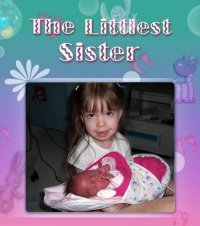
    Book Review: The Littlest Sister

    Book Review: The Littlest Sister
    By Leigh Schilling Edwards
    Strategic Book Publishing, 2008
    ISBN 978-1-60693-041-0
    14 pages, softcover, $12.00
    http://www.facebook.com/pages/The-Littlest-Sister/317995643791

    Reviewed by Molly Remer, MSW, CCCE

    Written from the perspective of a family’s middle child—the big sister of a hospitalized baby—The Littlest Sister is designed for siblings of a baby in the Neonatal Intensive Care Unit (NICU). It would also be a good book for a child who was formerly a preemie themselves. There is an older brother in the story as well, which enables readers of either gender can easily identify with the children.

    Color snapshots of a real family grace each page and make the book very genuine and true-to-life. The baby in the book was born at 30 weeks and has Down Syndrome and a mild heart defect. The pictures and text contain a lot of details children will identify with—there is a picture of the big brother touching the baby in her isolette, pictures of the baby sister with a tube in her nose and monitors attached, and so forth. Bottle feeding is mentioned briefly and I wish breastfeeding had been mentioned as well

    I have a special interest in the subject area because I worked for the Ronald McDonald House for four years. Written in a warm, personal tone, using easy to understand language and simple descriptions, The Littlest Sister would be a great addition to the lending library resources of Ronald McDonald Houses or NICU facilities.


    Disclosure: I received a complimentary copy of this book for review purposes.

    Courage Reading for Mother Blessing

    I have already shared a fear release for birth exercise here. I also want to share a “courage” reading that could be used for mother blessings:

    Courage Ritual:

    (write down fears and burn or bury them them)

    Friends gather in circle holding hands surrounding the mother and say:

    We accept that you have fears

    You are not your fears

    You are now cleansed and renewed

    Go forward with courage at your side.

    ——–

    Simple, but meaningful!

    Book Review: Brought to Earth by Birth

    Book Review: Brought to Earth by Birth

    By Harriette Hartigan
    Motherbaby Press, 2008
    ISBN 978-1-890-44642-0
    93 pages, softcover, $25.95

    www.motherbabypress.com

    Reviewed by Molly Remer, MSW, CCCE

    Written by well-known birth photographer Harriette Hartigan, Brought to Earth by Birth is a lyrical ode to the power of birth and babies. The book feels like an extended “poem” expressed in both word and image. The emphasis of the book is the black and white photos of pregnant women, families, and newborns that grace the pages. There are several photos of women in labor and a couple of breastfeeding images. Surrounding the photos are carefully chosen quotes and gentle words.

    Brought to Earth by Birth is separated into six “chapters” and contains several birth photos, but no crowning photos or any other photos that some may consider “graphic.” The book is short—under 100 pages—and some photos were familiar to me (cover images in birth publications). The concluding emphasis is on the newborn, the one who is, after all, “brought to earth by birth.”

    The book would make a nice gift for a midwife, doula, or childbirth educator and is a nice “waiting room” book to browse through. It would also make an inspirational mother blessing gift. As the author states, “The experience of birth is vast. It is a diverse tapestry woven by cultural customs, shaped in personal choices, affected by biological factors, marked by political circumstances. Yet the nature of birth itself prevails in elegant design of simple complexity.” Brought to Earth by Birth is a lovely glimpse of some strands of that elegant tapestry.

    Disclosure: I received a complimentary copy of this book for review purposes.