Archives

Strong Mothers (& Birth Network Resources)

“Birth is not only about making babies. Birth is about making mothers – strong, competent, capable mothers who trust themselves and know their inner strength.” –Barbara Katz Rothman

This classic quote from Barbara Katz Rothman sums up the potent impact of the birth experience on women’s lives and it seemed like  perfect quote to kick off the website of the Rolla Birth Network that I founded with my birth advocate friends and colleagues. We believe that strong, healthy babies, vibrant families and resourceful communities begin with strong mothers. We chose Strong Mothers, Strong Babies, and Strong Community as our tagline because we believe that when women dig deep into their inner strength, everything else follows. We also chose this as our tagline because it reflects the conviction that women have already got it. They have the inner wisdom and the strength they need. While outside professionals and resources can be tremendously helpful, she’s already got what it takes within her, we may just be a part of helping her to access the strength she already possesses.

We agree with doula and birth educator Heather McCue who said: “The whole point of woman-centered birth is the knowledge that a woman is the birth power source. She may need, and deserve, help, but in essence, she always had, currently has, and will have the power.”

On a related note, Holly Kennedy raises this question in her guest editorial in the spring 2011 issue of The Journal of Perinatal Education:

What “matters” in birth is complex, extremely hard to quantify, and will vary from one person to the next…I found myself contemplating what matted most in my ability to support women in birth so they could emerge from the process as strong, healthy mothers. I believe we have collectively lost our way over time about this outcome—the strong mother. The mother’s experience of childbearing, which will affect her forever, can directly influence her future as a mother. How do we address this as a discipline?

Yes, the strong mother. This is what is about. The strong mother who feels capable and competent in the mothering of her newborn and of her infant as it grows.

Another favorite quote about the strength of women:

“Women are strong, strong, terribly strong. We don’t know how strong until we are pushing out our babies. We are too often treated like babies having babies when we should be in training, like acolytes, novices to high priestesshood, like serious applicants for the space program.”

Louise Erdrich, The Blue Jay’s Dance

It is also important to note that we believe that strength is found in all kinds of birth experiences from the triumphantly empowered to the extraordinarily taxing and even traumatic. (Previous post about Birth Strength and the quote above.)

So, speaking of birth networks. One of the things that I’ve been excited about working on now that I am not actively teaching birth classes is on projects for our local Birth Network. I’ve wanted to do something like this for ages, feeling excited about the potential and momentum created by bringing multiple people together to collaborate on projects that make a difference in our community. We have some great ideas planned and I feel rejuvenated and enthusiastic after every meeting.

Here are some resources on forming a birth network in your own community:

Tools, Tips and Resources for Birth Networks

Birth Network National Resources

Programs from Athens Birth Circle

Some time ago a follower of this page, Nora from Happy Within, posted to let me know that she hosts a virtual birth circle for mothers. She describes it thusly: “the birthcircle is a virtual community which is a sacred women´s circle about conscious pregnancy and birth and its free. You can get details here: http://happywithin.wordpress.com/your-birthcircle/.” You can also keep up with her work on Facebook.

I am a Midwife Campaign

MANA has a great educational campaign going on right now called I am a Midwife. The campaign involves a series of short videos released once a week about a variety of topics. More than just a general education campaign, each video includes a variety of different women–midwives, mothers, public health activists, maternity care activists, authors—speaking out on important topics in maternity care. Each woman also identifies, “I am a Midwife.” This week’s video is about health disparities in maternity care, which is a very important and too-often ignored topic. It raises the concern that African American women and their babies are more likely to die than their Caucasian counterparts even when other variables are equalized (i.e. same socioeconomic status, same education, etc.) and moves into wider discussions about racism and the treatment of minority group members. It then focuses on the value and role of midwifery care in addressing these concerns.

As MANA states in relationship to this campaign: “For midwives, sharing is daring. We dare to challenge the status quo. We dare to speak up for women’s innate wisdom in pregnancy and birth. We dare to assert that there is a better way for our babies to be born. And we dare to insist that birth belongs to families.

Absolutely! The I am a Midwife public education campaign is extremely powerful. I have to confess that when it originally launched, I didn’t personally make time to watch the videos right away, somehow assuming that they were “generic” videos with a “rah, midwives!” type of message. Don’t make the same mistake I did. These are quality videos with important messages, powerful voices, and essential education and information. You will definitely learn something from watching them!

The videos aren’t only of use to birth professionals, when I teach community organizing at the college level I show videos like this as examples of activism strategies. In fact, for the final exam in that course I show the Crisis in the Crib video about infant mortality and disparities from the Office of Minority Health’s A Healthy Baby Begins With You campaign. This MANA video could be an interesting follow-up addition to the video I already use. As a related side note, during this class I also show footage from The Doula Story, a project by the Georgia Campaign for Adolescent Teen Pregnancy Prevention (whose program director I heard speak at the CAPPA conference in NC in 2010—she was amazing!). So, people do not leave my class without having heard of doulas and midwives and their relationship to community health. Go me and my mad birth activist skills! ;-D

Book Review: Into These Hands

Into These Hands: Wisdom from Midwives
Geradine Simkins
Paperback, 300 pages
Published by Spirituality & Health Publisher, 2011
ISBN: 9780981870854
Wisdom from Midwives

Reviewed by Molly Remer, Talk Birth

Into These Hands is an amazing anthology of midwives’ retrospectives about their careers and midwifery journey. You won’t find birth stories here–this is book about women’s lives and journeys to midwifery. A book of midwife stories–how women are birthed as midwives, rather than about births they attended–Into These Hands is great reading for aspiring midwives or for currently practicing midwives who wish to feel a sense of solidarity with their sisters. There are many paths, many lessons, many voices and each midwife clearly loves women and has a passion for birth.

From the press release:

We are eager for you to meet some modern-day wise women, healers, revolutionaries, and reformers. Into These Hands, Wisdom from Midwives© is a comprehensive anthology of the life stories of 25 remarkable women who have dedicated their lives and careers to the path of social change through midwifery. These exemplary midwives are all over 50 years of age with 25-40 years in the field. Collectively, they have over 800 years of experience and have assisted in over 35,000 births.

The midwives whose voices are included in the anthology come from diverse backgrounds, training, experiences, and range of practice settings. Quite a few of the stories are from “bridge club” members–women who began as direct entry midwives and later became CNMs. These midwives have a foot in both worlds and insight into the politics of the profession. In general, Into These Hands is a good look at the politics of midwifery both past and present. Almost all of the midwives in the book have homebirth roots or orientation.

Since there are lots of voices represented, the tone or style of some stories is more compelling than others. Some within-story chronology jumps were a little confusing and there were a couple of stories in which I had to do some re-reading for clarity.

Into These Hands is likely to be of particular interest to midwifery activists, aspiring midwives, or current/retired midwives and may hold less appeal for general birth enthusiasts, doulas, or childbirth educators. The stories are rich, insightful, thought-provoking, and diverse and they brought tears to my eyes several times. This book is a treasury of women’s wisdom and a powerful legacy for the generations of women to follow.

20120402-120957.jpg

An indicator of how much I like a book is how many page corners I turn down in order to come back to re-read those sections and write blog posts based on them/share quotes/etc. This is Into These Hands last night as I was finishing it...;-D

Disclosure: I was provided with a complimentary copy of the book for review purposes.

An Act of Motherhood

Some time ago I read a clever essay by Jeannie Babb Taylor called “May, 2052.” It is about birth in the future and is told from the perspective of a grandmother who gave birth in 2007, sharing with her granddaughter how birth was “back in the day” and the granddaughter being shocked by how horrible the birth climate was in the “old days” of 2007). Side note: in some ways this story reminds me of a piece that I reprinted with permission of LLL called A Fantasy, which is a satire about birth and breastfeeding that I’m still not convinced won’t actually come to pass.

Feeling fierce at 37 weeks last year.

However, I was struck afresh by the power of the closing lines in May, 2052 (when discussing how/why things finally changed):

We insisted on dignity. We did not let doctors push us into inductions or surgeries just to accommodate their schedules. Women who still used hospitals refused the wheelchair and the gown that were presented at check-in. Women refused to be starved, or to have their veins punctured with unnecessary IVs. Mothers refused to let doctors break their waters or insert electronic monitors in the baby’s scalp. When we pushed our babies into the world with our own fierce power, then we refused to let them out of our sight.

…Eventually even the medical community came to recognize that birth is an act of motherhood, not an act of medical science. Today a laboring woman is not regarded as a body on a table, as if she and the baby needed some doctor to ‘deliver’ them from each other. Today women are honored as life-bringers.

Don’t you just love that? Recognizing that birth is an an act of motherhood, not an act of medical science… So true.

I can’t write about it in-depth, but I began thinking about this today after speaking with a mother who had received very, very questionable (to the point of thoroughly bizarre) breastfeeding advice from her doctor. When I could not help but express my dismay at the suggestions she had received, I had the distinct feeling that she was not able to even consider that possibility that her doctor might have been wrong. I wish I could write about the actual circumstance because it just boggled my mind and made my heart cringe. Breastfeeding too is an act of motherhood, not an act of medical science, and not one that “belongs” to anyone except for the motherbaby unit.

However, returning to the act of motherhood, vs. medical act, I also have this quote saved from the older book, Who Made the Lamb:

“Tom [her husband] laughed at this idealism. ‘You don’t understand,’ he said, ‘Pregnancy is not regarded as a process of creation. It’s a disease of the uterus.'” [emphasis mine]

What a (culturally) still true and unfortunate sentiment: A disease of the uterus. This is absolutely how many within the medical system and the general population continue to view pregnancy (and birth is the excavation of the disease). This reminds me of our “friendly” neighborhood doctor testifying at the Capitol against the midwifery bill several years ago stating that pregnancy can be viewed as a foreign object in the body and therefore “babies are like tumors that need to be removed.”

I look forward to the day when our acts of motherhood are celebrated and valued, the motherbaby bond is accepted as inviolable, and pregnancy is a state of health and well-being.*

—-

Note: I am aware that pregnancy and birth take a physical toll on most women and that for some pregnant women, “disease of the uterus” might feel like an apt descriptor—I’m speaking in more general terms of the emotional and cultural climate surrounding pregnancy and birth.

Virtual Screening of More Business of Being Born!

How exciting! Tonight birth activists and pregnant women across the country have the chance to virtually attend a free screening of one of the More Business of Being Born films: “Special Deliveries: Celebrity Mothers Talk Straight on Birth” on The Huffington Post.

From the press release:

LOS ANGELES, CA – Executive Producer Ricki Lake and Filmmaker Abby Epstein present an online screening of Special Deliveries: Celebrity Mothers Talk Straight Talk on Birth from their highly influential four-part DVD series More Business of Being Born on Monday, March 5th at 6:00pm PST on The Huffington Post.  Lake, Epstein and special guests from the film including Kellie Martin will host a live Q&A chat following the film beginning at 7:10pm PST. Viewers are encouraged to ask questions and engage in conversation with Lake, Epstein, and Martin by directing messages via twitter to @rickilake with #mbobb as the hash tag.

More Business of Being Born, a follow up to their landmark documentary, The Business of Being Born, offers a practical look at birthing options as well as poignant celebrity birth stories from stars. The virtual screening will air on HuffingtonPost.com and MyBestBirth.com. BabyCenter will host the virtual screening on their Facebook fan page.

I’m also excited that the Classroom Edition of the film premieres today. I would definitely like to add it to my birth class library.

More about the episode of MBOBB airing during the screening tonight:

Special Deliveries: Celebrity Mothers Talk Straight on Birth

Featuring celebrity moms Laila Ali, Gisele Bundchen, Cindy Crawford, Alyson Hannigan, Melissa Joan Hart, Kellie Martin, Alanis Morissette, Christy Turlington-Burns and Kimberly Williams-Paisley, Special Deliveries is a collection of intimate birth stories from a diverse group of mothers. Whether they chose to deliver at a hospital, home or birthing center, these heartfelt and humorous testimonies speak to the lasting power of the birth experience.  True inspiration for any mother-to-be, this group of women trusted their bodies and intuitions, taking responsibility for their birth decisions even when things didn’t go according to plan. None of these courageous women has ever spoken on the record in such compelling detail, and, on this DVD, the filmmakers weave together their passionate narratives as a celebration of the journey to motherhood that will leave viewers with a renewed sense of amazement about the power of women.
(Running Time: 74 min)

 Enjoy!


Small Stone Birth Activism

As someone who feels deeply, passionately, and intensely about the need to transform the birth culture in the US, I have often experienced an immobilizing feeling of not doing enough. Of not helping enough. Of not being enough to affect the kind of social change I want to see happen in the world. As a mother of small children, I often feel limited with regard to the kind of large-scale changes I’d like to make in the birth world. I have been a childbirth educator since 2005 and I’m also trained as a birth doula, a postpartum doula, a prenatal fitness education, a prenatal yoga teacher, a birth art facilitator, and a breastfeeding educator. I’ve accepted that birth doula work doesn’t fit into my life right now (and even without young children, I do not know that I actually possess the strength to lend witness to the hospital birth machine). I’ve happily taught independent birth classes, usually privately in homes one-on-one, for quite a few years which feels like smaller scale change than I envision. It is also becoming less easy to integrate into the rest of my life’s responsibilities. Rather than relying only on teaching independent classes as my primary outlet for change, I enjoy discovering alternate ways of educating others about birth.

While reading the book The Mother Trip by Ariel Gore, I came across this quote from civil rights activist Alice Walker: “It has become a common feeling, I believe, as we have watched our heroes failing over the years, that our own small stone of activism, which might not seem to measure up to the rugged boulders of heroism we have so admired, is a paltry offering toward the building of an edifice of hope. Many who believe this choose to withhold their offerings out of shame. This is the tragedy of our world.” Ariel adds her own thoughts to this: “Remember: as women, as mothers, we cannot not work. Put aside your ideas that your work should be something different or grander than it is. In each area of your life—in work, art, child-rearing, gardening, friendships, politics, love, and spirituality—do what you can do. That’s enough. Your small stone is enough.”

These quotes caused me to reflect on the myriad methods of “small stone” birth activism that can be engaged in as a passionate birth activist mother embroiled in a season of her life in which the needs of her own young family take precedence over “changing the world.” We can offer the small stones of:

  • Speaking positively about normal, natural birth, to whomever we are speaking with whenever the topic arises.
  • Birth advocacy bumper stickers.
  • Sharing our birth stories.
  • Creating little informational cards (inspired by Carla Hartley’s Trust Birth Initiative cards) to seed around our communities in creative locations. I am fond of using Vistaprint and ordering their horizontal premium cards for just the cost of shipping.
  • Creating bookmarks with inspiring information about birth and giving them to pregnant women, handing them out at health fairs, etc.
  • Buying subscriptions to enlightening magazines for doctors’ offices.
  • Buying gift subscriptions to enlightening magazines for our public libraries.
  • Talking to pregnant women—my most recent approach is simply to say, “I wish you a wonderful birth!”
  • Responding to “action alerts” from the organizations in our states promoting healthy, normal birth and midwifery.
  • Supporting healthy birth related organizations with your membership. I am a member of 11 birth-related organizations. I also maintain subscriptions to a variety of magazines and journals.
  • Volunteering—either for advocacy organizations or directly with pregnant women.
  • Showing up at events, fundraisers, and rallies. Maybe we are not able to plan these events by ourselves at this point in our lives (or maybe we can!), but we can certainly show up and be counted!
  • Talking to non-pregnant women and girls about birth.
  • Giving empowering books to pregnant friends (or to not pregnant friends!).
  • Buying memberships to supportive organizations for friends and family members.
  • Give back issues of inspiring, positive magazines to people as part of your baby shower gifts.
  • Making donations as you are able to local chapters, statewide organizations, or national organizations promoting birth, breastfeeding, doulas, midwives, etc.
  • Making your birth stories available online.
  • Blogging about birth and about issues in the birth world (in addition to writing my Talk Birth blog since 2007, I’ve also blogged for ICEA and maintained the CfM blog).
  • Being an online childbirth educator—visit message boards (especially “mainstream” message boards) and give accurate, evidence based information. This has the potential to reach many people, but also can be very time-consuming (and addictive in a way) and can replace the face- to-face good you could do, so be careful with this one.
  • Participating in online research (such as the Birth Survey transparency in maternity care project).
  • Writing letters to the editor of your local newspaper educating the public about birth options and midwifery care.

Despite my persistent feelings of wishing to do more, when I examine each of my offerings, I begin to acknowledge that maybe my own small stones of effort are enough after all…

What stones do you add to the pile?

—-

Molly Remer, MSW, ICCE, CCCE is a certified birth educator, writer, and activist who lives with her husband and children in central Missouri. She is the editor of the Friends of Missouri Midwives newsletter, a breastfeeding counselor, a professor of human services, and doctoral student in women’s spirituality. She blogs about birth, motherhood, and women’s issues at http://talkbirth.me.posts.

The first version of this article was published in Citizens for Midwifery News, March 2008. Revised version published in the Fall 2009 edition of the International Journal of Childbirth Education (ICEA’s publication).

Honoring Miscarriage

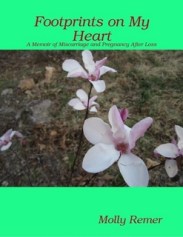
When I had my first miscarriage, I vowed several things in the immediate aftermath. One was that I was going to write a book about it so that other women would not have to experience the same total dearth of resources about the physical process of coping with home miscarriage. While I did publish my miscarriage memoir this year, I am still collecting stories and experiences for a different, more comprehensive book on this theme. However, in the time since I made that vow and since I had my miscarriages, a new resource emerged for women: Stillbirthday. This is the website I NEEDED when I was preparing for the birth of my tiny, nonliving baby. While I received emotional support from a variety of sources, I found a void where the physical information I sought should be. That information is skillfully covered in the birth plans section of the Stillbirthday website. I reprinted information from their “early home birth plan” in my Footprints on My Heart memoir, since it was the information I was desperately seeking during my own home miscarriage-birth. I am grateful the information is now available to those who need it.

My second vow was that, if I knew about it, I would never leave another woman to cope with miscarriage alone on her own. My third vow came a little later after more fully processing and thinking about my own experience and that was to always honor and identify miscarriage as a birth event in a woman’s life.

A friend’s loss

In March of 2010, my good friend, who had doula’ed me very gracefully and respectfully and lovingly through my miscarriage-birth postpartum experience and processing, experienced a miscarriage herself. She didn’t call me while she was experiencing it, so I couldn’t go to her as I had imagined I would if needed, but afterwards I went to her with food and small gifts and hugged her tightly, recognizing all too well that hollow, shattered look in her eyes and the defeated and empty stance of her body. Later, I bought her a memorial bracelet. However, I was still in the midst of coping with my own grief and loss process—my second miscarriage having just finally come to a long-drawn out end only a month before and the experience of which having brought another friendship to an almost unsalvageable point—and my dear friend’s own process, her feelings, got lost along the way. She recently wrote about the experience on her own blog and it was harder for me to read than I would have expected. As she noted, I agree that doesn’t matter how little the baby, or baby-start, or baby-potential that is lost-–there is no quantifying loss and no “prize” for the “worst” miscarriage. It is a permanent experience that becomes a part of you forever. Also permanent for me is the empathy and caring showed to me by my friend/doula during my time of loss and sorrow. I regret that I was not able to be that same source of solace, companionship, and understanding to her. I thank her for having held space for me to grieve “out loud” and I’m really sorry that part of the cost of that was the suffocating of her own sadness or minimization of her own experience. While I do feel like I did what I could to acknowledge her miscarriage at the time that it happened I really wish I would have done more, particularly in terms of acknowledging how very long the feelings of emptiness and grief persist. I made a mistake in taking her, “I’m okay” remarks as really meaning it, rather than being part of the story that babyloss mamas often tell themselves in a desperate effort to “get over it” and be “back to normal.”

That said, I also compassionately acknowledge that it can be hard for people to know what it is that we need if we don’t tell them. So, now I’d like to hear from readers. What are your own thoughts on recognizing and acknowledging miscarriage—how do we best hold the space for women to experience, identify, and honor miscarriage as a birth event in their lives?

Charm & book giveaway (**Giveaway is now closed. Veronica was the winner***)

In harmony with my question and associated thoughts, I am hosting a giveaway of a sterling silver footprints on my heart charm exactly like the one I bought for myself after Noah’s birth and that I gave to my husband and my parents afterward (my husband carries his on his keychain). If you win the charm, perhaps it is something that will help you to honor your own miscarriage experience or that you can give to someone else to acknowledge their loss. This giveaway is in concert with the blog contest on Stillbirthday and will end on March 20. Additionally, everyone who enters will receive a free pdf copy of my miscarriage memoir.

To enter the giveaway, please leave a comment addressing the subject of honoring miscarriage. I am wondering things like:

What did you need after miscarriage?

What did you wish people would do/say to honor your miscarriage experience?

How could people have helped you more?

What do you still wish you could do/say/write/share about your miscarriage experience(s)?

What do you wish you had done for yourself?

What did you want to tell people and what do you wish you had been able to say?

What did you want to do that you didn’t feel as if you had “permission” to do? (personal, social, medical, cultural, whatever type of permission…)

I will share my answers to these questions in a later post, but I do want to mention that one of the things that was most important to me to have acknowledged was that this was REAL. That was one of the first things I said to my parents about it when they came over to help me immediately after Noah was born—this is real.

Water babies

I continue to honor the experience of miscarriage and babyloss in my own life in various ways. Recently, I found a buddhist monk garden statue from Overstock.com that reminded me of the “jizo” sculptures that honor and protect “water babies” in Japan (mizuko is a Japanese word meaning “water baby” and specifically refers to babies lost during pregnancy—the only specialized word that exists). I have a small jizo inside on my living room windowsill, but I’ve wanted one that could weather the outdoors by Noah’s tree.

20120222-115308.jpg

20120222-115315.jpg

I took this one for size perspective, but you can barely see the sculpture in the shadow to Alaina's right.

I believe I may be partially responsible for the widespread usage of the following quote on the internet now with regard to babyloss mamas:

Miscarriages are labor, miscarriages are birth. To consider them less dishonors the woman whose womb has held life, however briefly.” –Kathryn Miller Ridiman

I found it in an issue of Midwifery Today from 1995 and shared it multiple times on Facebook and on my blog. I have since seen it in many locations around the web and I feel happy that I was able to be a conduit for the sentiment and the increased recognition of miscarriage as a birth event.

To participate in the Stillbirthday blog contest/carnival go here. And, make sure to check them out on Facebook too.

All That Matters is a Healthy Husband (or: why giving birth matters)

It is your wedding day. You have been planning this day since you got engaged nine months ago. You are happy, excited, and a little nervous. When you get to the church, you are told that it is necessary to switch your wedding to the courthouse instead—it is disappointing, but the minister’s assistant reminds you that the courthouse is probably a safer location for your wedding because there are more people on staff there to handle any problems that might arise. When you arrive, you are told that your minister isn’t going to be there for the ceremony after all, but there is a perfectly good justice of the peace available instead.

You ask when the ceremony can begin and the clerk tells you not until your fiancé’s heart rate has been monitored for twenty minutes—“We need a baseline strip on him, hon. After all, you do want a healthy husband out of all this, don’t you?!” she says.

You are asked to change out of your wedding gown and into a blue robe. When you express your dismay, you are reminded that your dress could get messy during the wedding and also, “Why does it really matter what you’re wearing? In the end you’ll have your husband and you’ll be married and that’s really what counts.”

Next, the clerk starts an IV in your hand because, as she explains, you might get dehydrated while you wait for your fiancé.

I have my favorite juice here, I’ll drink that instead,” you reply.

No, no dear. No juice. You could aspirate it and die if you end up needing surgery.”

SURGERY!” you exclaim, “Why would I need surgery? I’m just getting married!

The clerk gives you a knowing glance, “Honey, about forty percent of women who get married here need surgery before their marriages are finalized. This is an excellent courthouse! We do everything possible to make sure you have a healthy husband when you leave here. Isn’t that what you want?

Yes,” you reply weakly.

Finally, the other clerk signals that your fiancé is ready. You turn to look at him and see that he has a monitor strapped to his chest to monitor his heart rate and that he has an electrode on his scalp. You smile at him and prepare to say your vows—you’ve waited for this moment for so long! But, as you begin to speak, the clerk tells you to stop making so much noise. You start to cry in confusion and embarrassment and she tells you that you really need to get control over yourself.

She calls over several other clerks who stand near you and they all begin chanting loudly, “Say I DO! Say I DO!

Wait,” you protest, “What about our vows?”

No time for that—you’ve got to get married as quickly as possible. Husbands can only bear to stand at the altar for a short time before they start showing signs of distress—you wouldn’t want anything to happen to your husband would you? Now, say ‘I DO,’ say ‘I DO’!!

So, you say the words, feeling a sense of dismay at it not being like you had planned, but excited to finally be married to your beloved. You turn to your new husband and reach out for him eager for your first married kiss, but the clerk grabs his arm and tugs him away after her.

Wait!” you call, “I want to see my husband!”

Sorry,” is the reply, “He needs to be taken to the new husbands’ lounge for observation.”

Observation of what?”

Weddings are stressful for husbands; we need to make sure he is all right. Now wait here, while the other clerk brings you a wheelchair to take you to your waiting room.”

Instead of leaving for your honeymoon, you end up staying at the courthouse for three days. You keep asking to see your husband, but the clerk tells you he needs to gain some weight before he can leave and that he also needs some more blood drawn. She also lets you know that he has finally stopped complaining about his spinal tap.

Spinal tap?! Your dismay shows on your face and she tells you, “Come on! You’ll be married for the rest of your life! A few hours of separation isn’t going to hurt either one of you. You’ll have plenty of time with him after you get home and will probably just get fed up with him then! What really matters now is that your husband is healthy.”

Yes, of course…

Finally, you get to go home, but you feel distant and sad. Your wedding was nothing like you’d dreamed of and you feel disappointed and betrayed. You enjoy being married and snuggling with your new husband, but you keep thinking about your wedding day and all of your ruined plans to make it special. When you try to tell your mother how you feel, she tells you that you should be grateful, at least your husband is nice and healthy.

When you tell your best friend about your disappointment, she tells you it is time to get over it—“Your wedding is just one day of your entire life. It is the marriage that really matters in the end. You only get married once, but in the end, you’re married and you’ve got a healthy husband and that’s really what counts, not how you get there!

You tell another friend about your ruined plans and she reminds you that you are lucky your husband is healthy and that it is selfish of you to keep thinking about your wedding. It is over and you’ve got your nice healthy husband to keep you busy now.

Yes, but I feel like I missed out,” you venture.

On what? Weddings are SO overrated. It isn’t like you get a medal for having a beautiful wedding or anything. People have weddings every day.”

You stop sharing your feelings, but you can’t shake the memories. What you expected to be a beautiful day filled with love and celebration was not and you feel a real sense of grief at the loss of your dreams. You know you shouldn’t feel this way. You know that what really matters is your healthy, happy husband, but you keep wondering if your wedding really had to be that way. Yes, you love your husband and you are so happy that he is healthy, but you also wonder if that really is all that matters. Don’t you matter too? Doesn’t your relationship matter? What about respect, dignity, love, and self worth? Don’t those matter too? Wasn’t this a special life transition for your family? Wasn’t it the beginning of a special relationship together and couldn’t that relationship have been celebrated, honored, and treated as worthy of care and respect?

————————————————————————————————————

Notes: I originally wrote this essay in 2007. It was retained for publication by Mothering magazine, but did not end up making it in before the print publication ceased. It was then retained for publication by Midwifery Today, but has not yet appeared. I decided it is FINALLY time for it to see the light of day!

I was inspired to write this essay after reflecting upon the similarities between weddings and births—both mark the beginning of a new form of relationship and a change to the family structure and to individual roles in society. Yet, in our culture, one of these transitions is celebrated as a milestone of adult life and the value of honoring the first steps in life as new partners in a relationship is a given. The other is institutionalized and mechanized and the partners’ individuality is minimized or ignored. Much preparation, energy, time, and finances are invested in planning a lavish wedding and you are expected to expect things to go beautifully, perfectly, and as planned. If they didn’t and your wedding was ruined, most people would say, “It is awful that your wedding was ruined! Wow!” and not call into question your love of your husband or your commitment to your new role as his wife. The wedding ceremony is respected as having value in its own right. This is not true of birth, which is widely viewed as unimportant in terms of how it happens, as long as the result is a “healthy baby.”

Molly Remer, MSW, ICCE is a certified birth educator, writer, and activist. She is a breastfeeding counselor, editor of the Friends of Missouri Midwives newsletter, and a professor of Human Services. Molly has two wonderful sons and one delightful daughter and lives in central Missouri. She blogs about birth, motherhood, and women’s issues at http://talkbirth.me and is the author of the miscarriage memoir Footprints on My Heart.

The Grassroots of Safer Birth: Get Karen There

Midwives speak the same lan­guage, regardless of politics: women come first.

–Palestinian Midwife (quoted by COHI)

I have found that it is easy to get so caught up in local or national birth activism that I forget to even consider the birth climate and concerns of other regions of the planet.

Why should we care?

Most simply, because lack of access to good maternity care is a huge issue around the world, with a profound impact on women, mothers, babies, families, and communities. Some selected facts (via COHI):

  • Nearly 400,000 women will die each year from pregnancy-related causes and 99% of these deaths will occur in de­veloping countries, according to the World Health Organization (WHO).
  • For each woman who dies, 20 others will suffer from serious complications.
  • The five leading causes of pregnancy-related deaths are bleeding, infec­tion, high blood pressure, prolonged labor and abortion complications. In poor countries, a mother’s death leaves her new­born at risk of dying as well.
  • The majority of pregnant women die because of the three major delays that have been identified as:
  1. Delay in the woman, her family or community members’ recognition of a life-threatening problem and the decision to seek care.
  2. Delay in a woman’s access to trans­portation to a health facility, espe­cially at night.
  3. Delay in the woman’s access to quali­fied health workers with access to es­sential equipment and supplies.
  • Women and children constitute as 80% of the world’s refugees and displaced people.
  • In areas where conflict and turmoil is rampant, nurses and midwives are the primary reproductive health care providers. They provide up to 80% of direct patient care around the world every day.

Recently, I was asked to participate in a fundraising effort to get midwife Karen Feltham to Haiti. Spearheaded by BirthSwell in connection with the amazing organization Circle of Health International, the fundraiser already reached its goal before my post was scheduled to run! That’s what I call some effective grassroots organizing! The fundraiser is still open for contributions however, and now any additional funds raised will be used to sponsor other midwifery volunteers to disaster areas in need of support. COHI knows that the majority of pregnant and birthing women worldwide are cared for and by midwives and believes that, “midwives should be involved in the effort to foster change by bringing about increased access to services, support and care for women everywhere.”

What can you do?

  • Make a contribution!
  • Get connected! Visit the fundraiser’s indiegogo site and be sure to share it on Twitter, Facebook, and your listserves.  (The indiegogo site has great tools and widgets for sharing – try them out!)
  • Tweet about the fundraiser using hashtag #getkarenthere
  • Make sure to follow COHI on Facebook!

I have a personal tradition of getting a new We’Moon datebook every year and I was pleased to notice that part of the proceeds from the 2012 edition goes to support Circle of Health International also. COHI focuses on: “Working with women and their communities in times of crisis and disaster to ensure access to quality reproductive, maternal, and newborn care.”
COHI lists the following as their core values:

  • Grassroots social change by creating local, community driven collaborations in order to foster social change from the top down, as well as from the bottom up.
  • Nonviolence in terms of active resistance requiring one to act when faced with injustice. Leadership at COHI is supporting women to lead, to be forces for change in communities healing from conflict and disaster, and in organizational movements to support women in leadership roles.
  • Volunteerism through the giving of time, money, knowledge, and general support with the goal of easing the suffering of others.
  • Activism in individual responses to inequity and injustice.
  • Supporting women and their families in their right to make their own decisions in all aspects of birth spacing and family size, while protecting access to the resources required to honor their choices.

I value all of the above as well, which is why I’m pleased to be involved with the effort to Get Karen There!

http://www.indiegogo.com/project/badge/45681?a=

Book Review: Passionate Journey: My Unexpected Life

Passionate Journey: My Unexpected LifePassionate Journey: My Unexpected Life
By Marian Leonard Tompson, Melissa Clark Vickers
Paperback, 176 pages
Published June 19th 2011 by Hale Publishing

Reviewed by Molly Remer

Passionate Journey by La Leche League International co-founder Marian Tompson is the story of a young mother who became known worldwide and was even referred to as “The High Priestess of Breastfeeding Mothers.” Written in a light and casual tone, many of Marian’s stories are familiar if you’ve read The LLL Love Story, Seven Voices, One Dream, or The Revolutionaries Wore Pearls. While theoretically a personal memoir from one Founder, rather than a history of LLL, because Marian’s personal history is intimately entwined with the organization’s history, the end result is very similar to existing books about LLLI.

The writing style is simplistic and ironically often fairly dispassionate in tone, perhaps due to having a co-writer for a first person memoir. Chronology jumps are occasionally confusing.

Several anecdotes made me laugh aloud and read them to my husband–such as a medical intern rushing to the physician after witnessing one of Marian’s three natural hospital births and exclaiming, “oh, doctor! How did you do it?” As a birth activist and feminist, I’m fascinated by the radical courage required at the time to support and promote home birth and breastfeeding. While LLLI has always been a “single purpose” organization, it has also always recognized something that seems to escape the notice of many professionals and consumers: that normal, undisturbed breastfeeding begins with normal, undisturbed birth. Tompson notes: “…having a baby at home is at least as safe as a hospital birth, and in most situations home birth is safer. New sciences and new research are helping us understand why giving birth in your own bed, surrounded by people who care for you, where you feel supported and can celebrate the birth, rather than just endure it, changes both the experience and the outcome.” Tompson had her first home birth in 1955 and went on to have three more children at home. Her daughters carried on her legacy, one of them returning to the family home to give birth to her own daughter. The Tompson family home was also the site of multiple family weddings as well as the almost unheard of home funeral for husband Tom in 1981. In a nice touch, reflective paragraphs from each of Marian’s seven children close the book.

An inspirational story of the twists and turns of an ordinary life with an extraordinary global impact, Passionate Journey reminded me of the deep importance and transformative influence of providing support and encouragement to women who wish to breastfeed.

via Goodreads | Passionate Journey: My Unexpected Life by Marian Leonard Tompson – Reviews, Discussion, Bookclubs, Lists.