Archives

Birth as a Spiritual Experience (Thesis Project)

Here is your sacrament MR_089
Take. Eat. this is my body
this is real milk, thin, sweet, bluish,
which I give for the life of the world…
Here is your bread of life.
Here is the blood by which you live in me.”
–Robin Morgan (in Life Prayers, p. 148)

“…When I say painless, please understand, I don’t mean you will not feel anything. What you will feel is a lot of pressure; you will feel the might of creation move through you…” – Giuditta Tornetta in Painless Childbirth

“I am the holy mother; . . . She is not so far from me. And perhaps She is not so very distinct from me, either. I am her child, born in Her, living and moving in Her, perhaps at death to be birthed into yet some other new life, still living and having my being in Her. But while on this earth She and I share the act of creation, of being, and Motherhood.”Niki Whiting, “On Being a Holy Mother” in Whedon

“Woman-to-woman help through the rites of passage that are important in every birth has significance not only for the individuals directly involved, but for the whole community. The task in which the women are engaged is political. It forms the warp and weft of society.” –Sheila Kitzinger

In 2011, I started working on my doctoral degree in women’s spirituality/thealogy (Goddess studies). Before I even began my first class, I chose my dissertation subject: birth as a spiritual experience. I’ve been steadily plugging away on my coursework and somehow in the midst of everything else that I am responsible for, I’ve successfully completed 13 of my classes. I already have a (not related) master’s degree and this is why I was admitted straight into the doctoral program, even though I have to complete a lot of M.Div (master’s of divinity) level coursework as prerequisites to the actual doctoral classes. After I finished my most recent class and got my updated transcript, I finally actually noticed how many M.Div classes I’ve completed thus far on my journey and it occurred to me to email to inquire what it would take to finish an M.Div degree first. I had this sudden feeling of what a nice stepping stone or milestone experience it would be to finish something, since I know that I have a minimum of three more years remaining before I complete the D.Min! They wrote back quickly and let me know that with the completion of three courses in matriarchal myth (I’m halfway through the first right now), my almost-completed year-long class in Compassion (I’m in month 11), and The Role of the Priestess course (involving three ten-page papers), all of which are also part of my doctoral program, the only other thing required for successful completion of my M.Div would be a thesis (minimum of 70 pages).

As I’ve been working through my classes, I’ve felt a gradual shift in what I want to focus on for my dissertation, and I already decided to switch to writing about theapoetics and ecopsychology now, rather than strictly about birth. I was planning to mash my previous ideas about birth and a “thealogy of the body” into this new topic somehow, perhaps: theapoetics, ecopsychology, and embodied thealogy. Then, when I got the news about the option of writing a thesis and finishing my M.Div, it became clear to me: my thesis subject is birth as a spiritual experience! This allows me to use the ideas and information I’d already been collecting as dissertation “seeds” as a thesis instead and frees me up to explore and develop my more original ideas about theapoetics for my dissertation! (This is the primary subject of my other blog.) So…why post about this now? Well, one because I’m super excited about all this and just wanted to share and two, because I’d love to hear from readers about their experiences with birth as a spiritual experience! While I don’t have to do the kind of independent research for a thesis that I will be doing for my dissertation and while my focus is unabashedly situated within a feminist context and a thealogical orientation, I would love to be informed by a diverse chorus of voices regarding this topic so that the project becomes an interfaith dialog. Luckily for me I’ve already reviewed a series of relevant titles.

Now, I’d like to hear from you. What are your experiences with the spirituality of birth? Do you consider birth to be a spiritual experience? Did you have any spiritual revelations or encounters during your births or any other events along your reproductive timeline? (miscarriage, menstruation, lactation…) Did you draw upon spiritual coping measures or resources as you labored and gave birth? Did giving birth deepen, expand, or otherwise impact your sense of spirituality or your sense of yourself as a spiritual or religious person? Did any of your reproductive experiences open your understanding of spirituality in a way that you had not previously experienced or reveal beliefs or understandings not previously uncovered?

When I use the word “spiritual,” I mean a range of experiences from a humanistic sensation of being linked to women around the world from all times and spaces while giving birth, to a “generic” sense of feeling the “might of creation” move through you, to a sense of non-specifically-labeled powers of Life and Universe being spun into being through your body, to feeling like a “birth goddess” as you pushed out your baby, to more traditional religious expressions of praying during labor, or drawing upon scripture as a coping measure, or feeling that giving birth brought you closer to the God of your understanding/religion, or, indeed, meeting God/dess or Divinity during labor and birth).  I’m particularly interested in women’s embodied experiences of creation and whether or not your previous religious beliefs or spiritual understandings in life affirmed, acknowledged, or encouraged your body and bodily experience of giving birth as sacred and valuable as well as your own sense of yourself as spiritually connected or supported while giving birth. I would appreciate links to birth stories or articles that you found helpful, books you enjoyed or connected with, and comments relating to your own personal experiences with any of the comments or questions I have raised above. I would love to hear about your thoughts as they relate to:

  • Pregnancy IMG_0225
  • Labor
  • Birthing
  • Lactation
  • Miscarriage
  • Infertility
  • Menstruation
  • Reproductive Rights
  • Birth as a feminist or social justice issue…

 Thank you!

With these things said, I also want to mention that I’m planning to redirect a lot of my writing energy/time into this thesis project rather than to blog posts. I’m trying to come up with a blog posting schedule for myself, but in order to actually do this thing, I must acknowledge that I have to re-prioritize some things and that means writing for my blogs probably needs to slip down a couple of notches in terms of priority of focus.

Oh, and I also hope this thesis project will turn into a book of some kind as well! 🙂

“It is hard to find a female-based concept such as Shakti alive within Western spiritual traditions. Shakti could be viewed as an expression of goddess in the female body at the time of birth. I would say its flow / expression and outcome of love is hindered by unnecessary interventions at birth which divert such energy towards fear- based, masculine forms. The use of masculine, rescue-based healing forms such as cutting (Grahn, 1993) can be necessary and useful, yet such procedures are currently used at the cost of women’s autonomy in the birthing process (see Jordan on C-section, 2007), and define the parameters of what feminist thinker Mary Daly called patriarchal medicine (1978). Modern women are largely lost when it comes to giving birth, turning to medical authority figures to be told what to do. Daly pointed to the dangers of this appropriation for women’s personal and collective autonomy.

Birthing bodies resist, disrupt and threaten standard North American modernist investments in linear time, rationality, order, and objectivity. Birth disrupts the Judeo-Christian male image of God, even as He hides the reality of female creation and creativity. I hold that women giving birth act from a focal point of power within their respective cultures and locations, the power to generate and renew human life itself from within the female body. This power is more absolute in its human reality then any other culturally sanctioned act of replication and material production, or social construction. I speculate that how this female power is expressed, denied, or acknowledged by women and within the society around a birthing woman reflects the degree to which women can and may express themselves at large. As each soul makes the journey through her/his mother, re-centring human consciousness within the female-based reality of human birth causes transformation of patriarchal consciousness as a whole…” –Nane Jordan, Towards an Ontology of Women Giving Birth

Cesarean Birth Art Sculptures

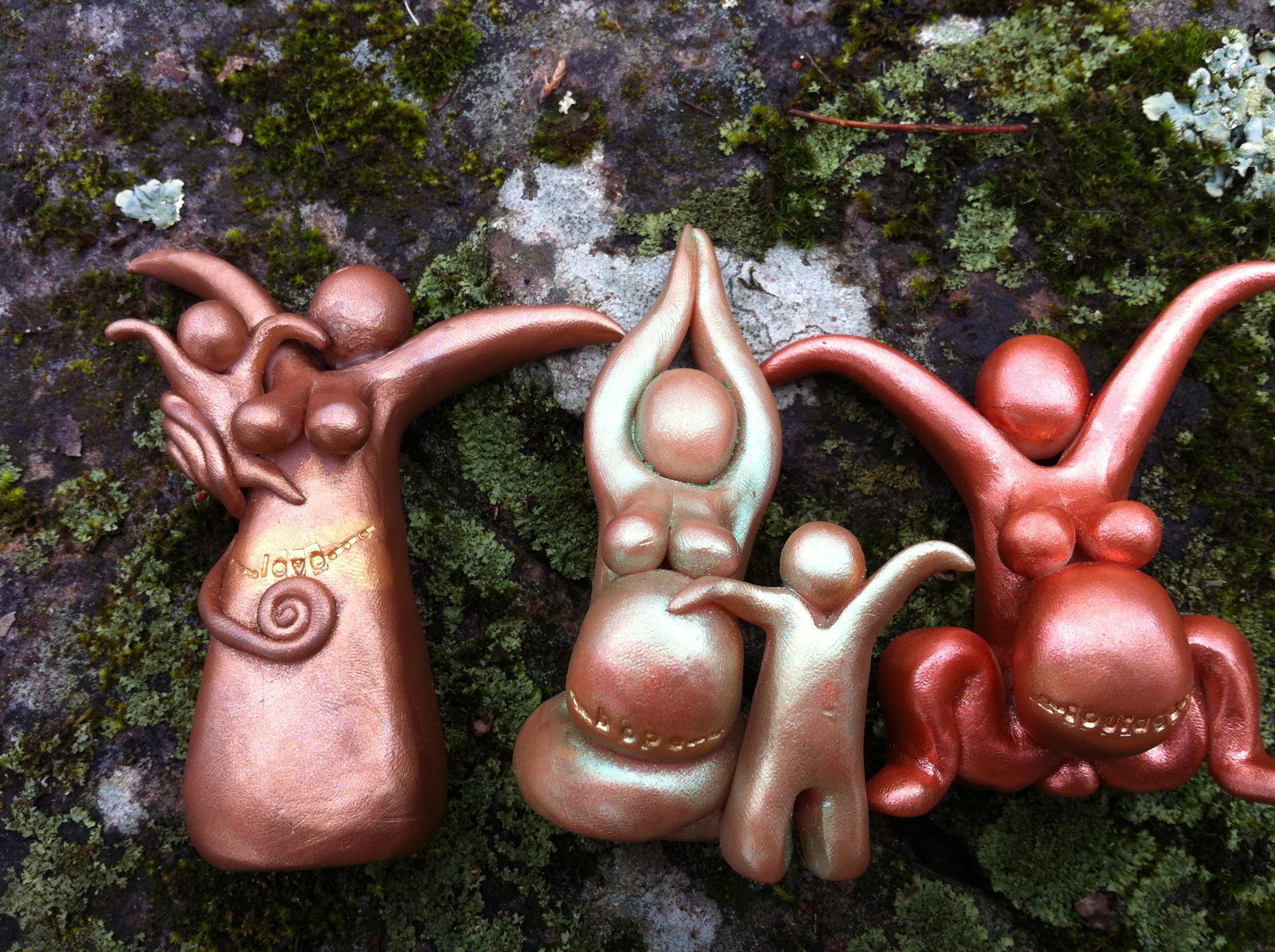
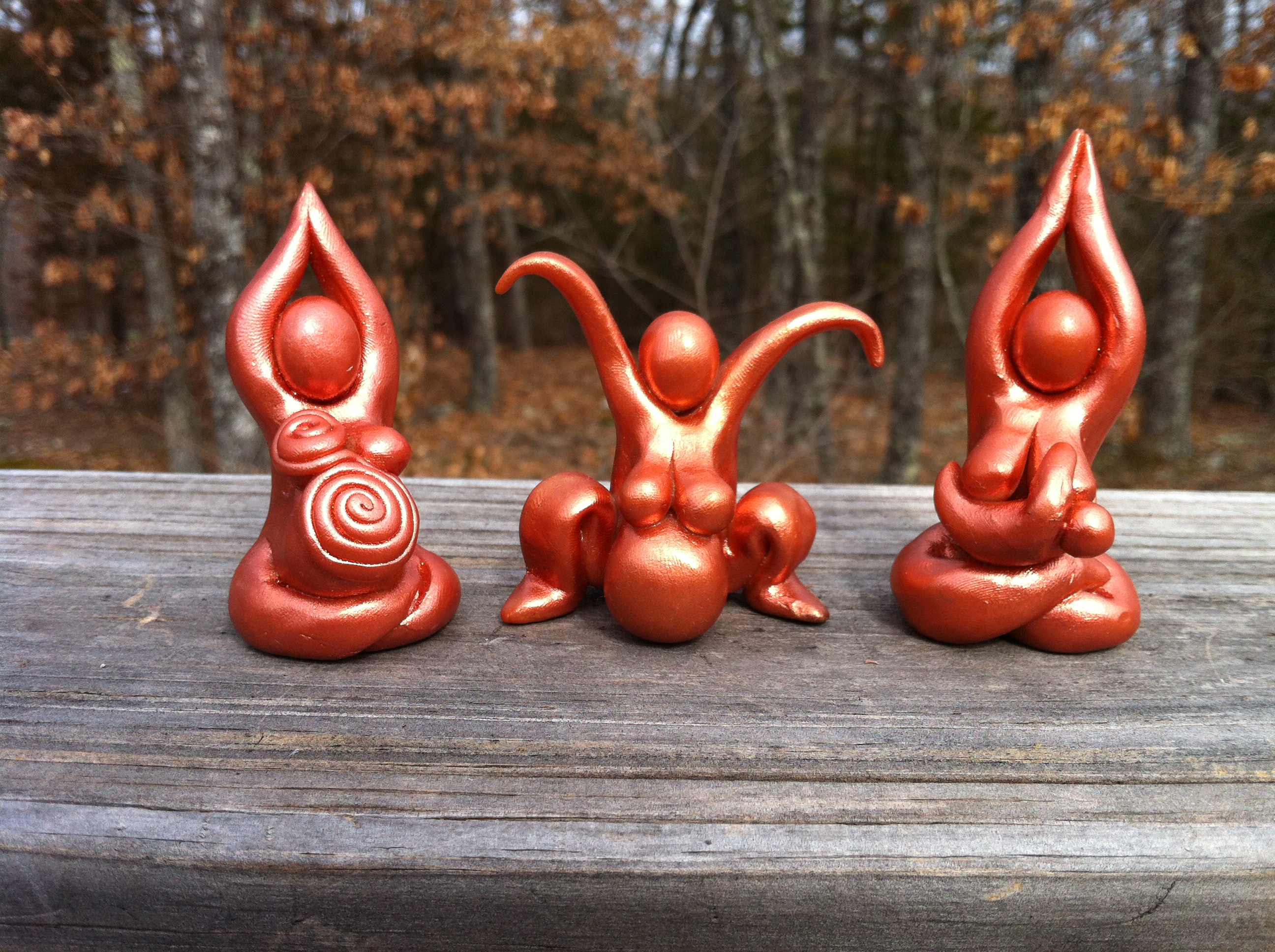
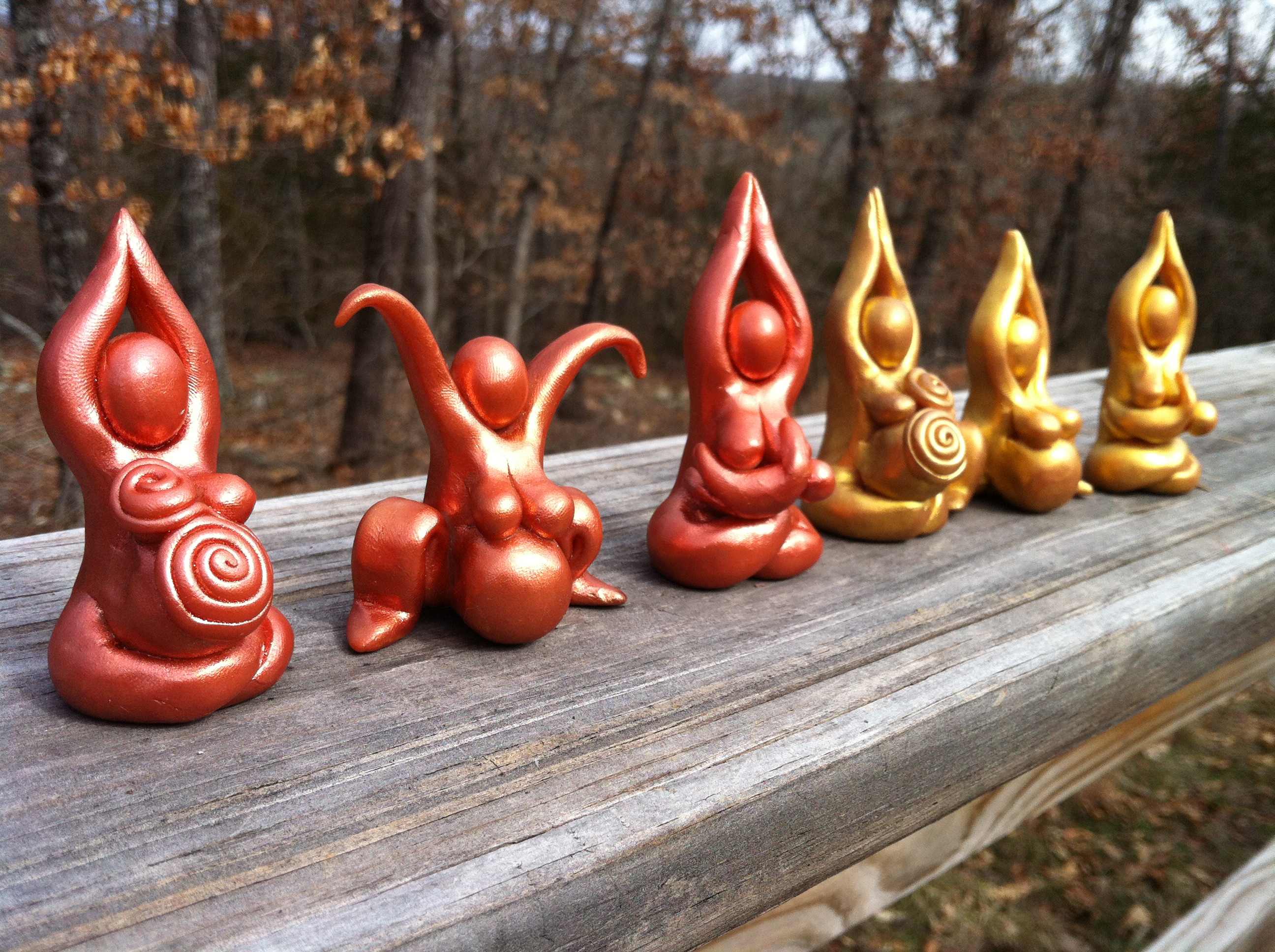
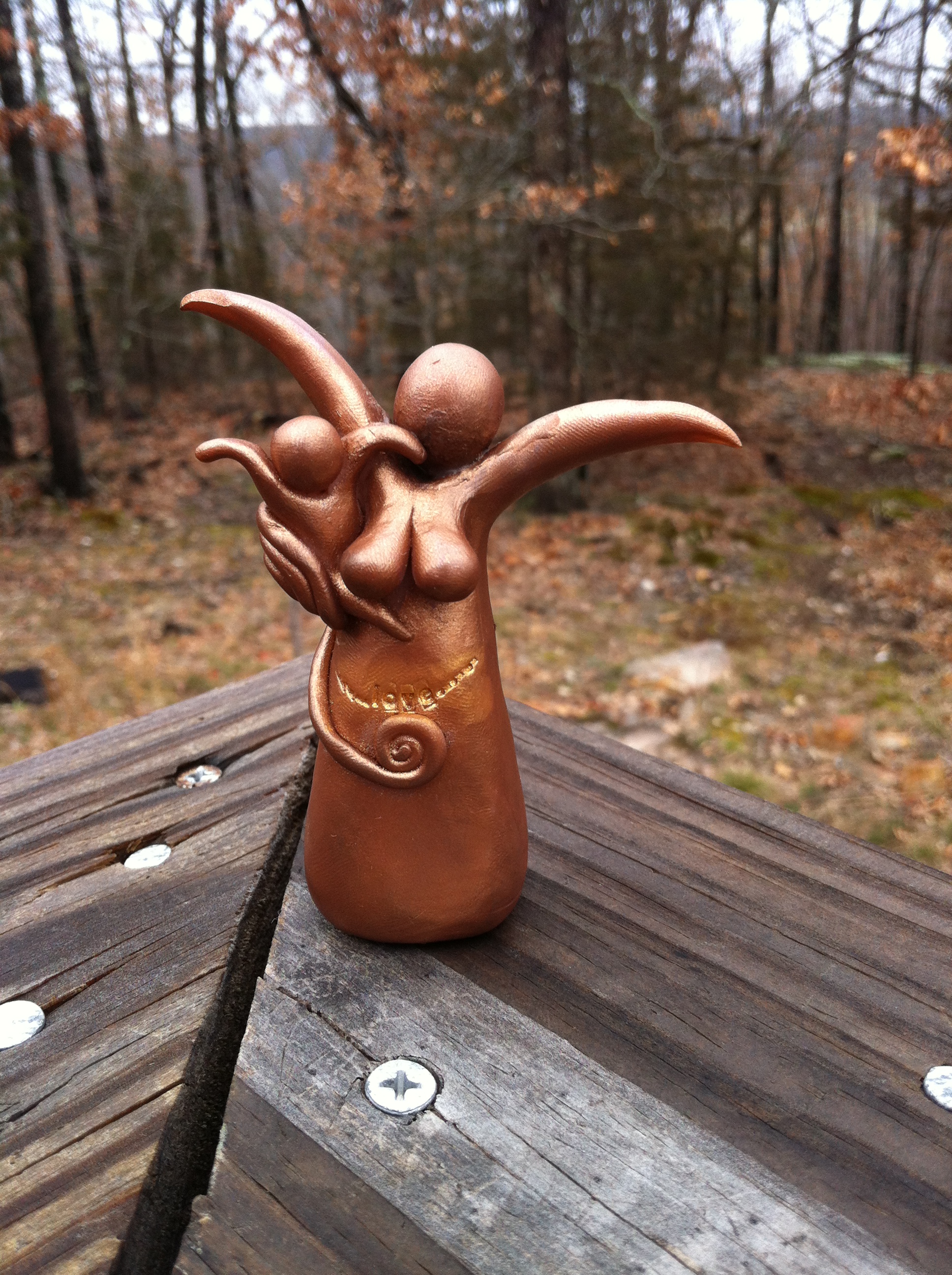
While it is still Cesarean Awareness Month, I wanted to make sure to write a quick blog post about a special series of custom sculptures I made recently for a special VBAC-hopeful mama. Earlier this year I was contacted via Facebook by a mother who shared a little bit of her story with me and who has given me permission to share it here as well. She experienced a traumatic cesarean following a birth-center-labor turned emergency transfer. Her baby almost died and she is still struggling to reconcile her feelings and her grief about his birth. She was very appreciative of the care from her birth center midwives and asked me if I would make a set of custom sculptures for them as a gift. While I previously only made sculptures for myself or for my friends, her story touched me and I agreed to make the figures. The picture I took of them ended up becoming the “famous” cake-pan lid photo that launched me into selling a whole lot of birth art sculptures over the last two months and opening up my little etsy shop. After receiving the sculptures, she requested I make another special set of sculptures, this time for her. Her request was to have a figure that was “wearing her scar proudly” and that would help her heal from the trauma and disempowerment of her emergency cesarean as well as prepare for a hopeful future VBAC. I was intimidated by the idea of making something to help someone else heal. I mean, wow! What a privilege and responsibility. There felt like a real risk in interpreting another woman’s experience artistically and I worried about disappointing her or not getting it. Around the same time as this request, I talked to a real-life friend about her experience with ovarian surgery during pregnancy and her feelings about her scar. After talking to her, I kept thinking, “her courage is written on her body” and I knew I wanted to include words as part of the scar. For my friend, the result was this figure:

March 2013 032

For the VBAC mama, I wanted to create a figure that showed her joy in the birth of her healthy baby, the link between scar and baby, and the fact that her body has been marked by this experience in a profound way. You can’t really see in the picture, but written in the middle of the scar is the word, “love,” because she acted with great love.March 2013 042For the next figure, the one representing her future, planned pregnancy, I included the word “hope” written into the scar, as well as her now-toddler by her side:

March 2013 066And, finally, I wanted to create a powerful VBAC mama sculpture, courageously pushing out her baby in triumphant joy and relief:

March 2013 047In her scar is the word, “courage.” For these figures, I am pleased with how the scar feels like an integrated part of them. They hold that experience, they wear it, their courage, love, and hope has been permanently written upon their bodies. It is there, loud and clear, and yet new experiences are too. To me, these figures felt unifying and whole. I hope the recipient also felt that message 🙂

March 2013 064 March 2013 065 March 2013 068 March 2013 070

After writing this post and scheduling it, I read a deeply touching story by a mother who had cesarean births: Being a C-Section Mama In the Birth Goddess Club

But, there was a moment after my section with Louise where I got out of bed for the first time and walked to the shower. Everything was quiet. My baby girl was sleeping. My husband, Kurt, was holding my hands and trying to help me. It hurt so bad that I was nauseated and started dry heaving. The straining of my torn and abused stomach muscles put me over the edge into a universe of suffering and pain. I thought I couldn’t, it was too far, but I made it across the room and into the shower. I stood there, gray-faced and trembling and sobbed and sobbed while the water ran over my defeated, mutilated body. I couldn’t bend down to wash myself. My head was spinning. I focused all of my concentration on fending off the nausea. My husband got onto his hands and knees and crawled onto the floor of the shower. He knelt at my feet, fully clothed and getting soaked by the warm water. He washed my feet and my legs and my incision, also my deflated and sagging stomach. He looked up at me and he was crying. He wrapped his arms around my thighs and held on to me tight. He cried and said, “Thank you.”

I will never know what it’s like to triumph in birthing a baby, but I feel like I became a warrior and a goddess in my own, lopsided way.

–Amanda King

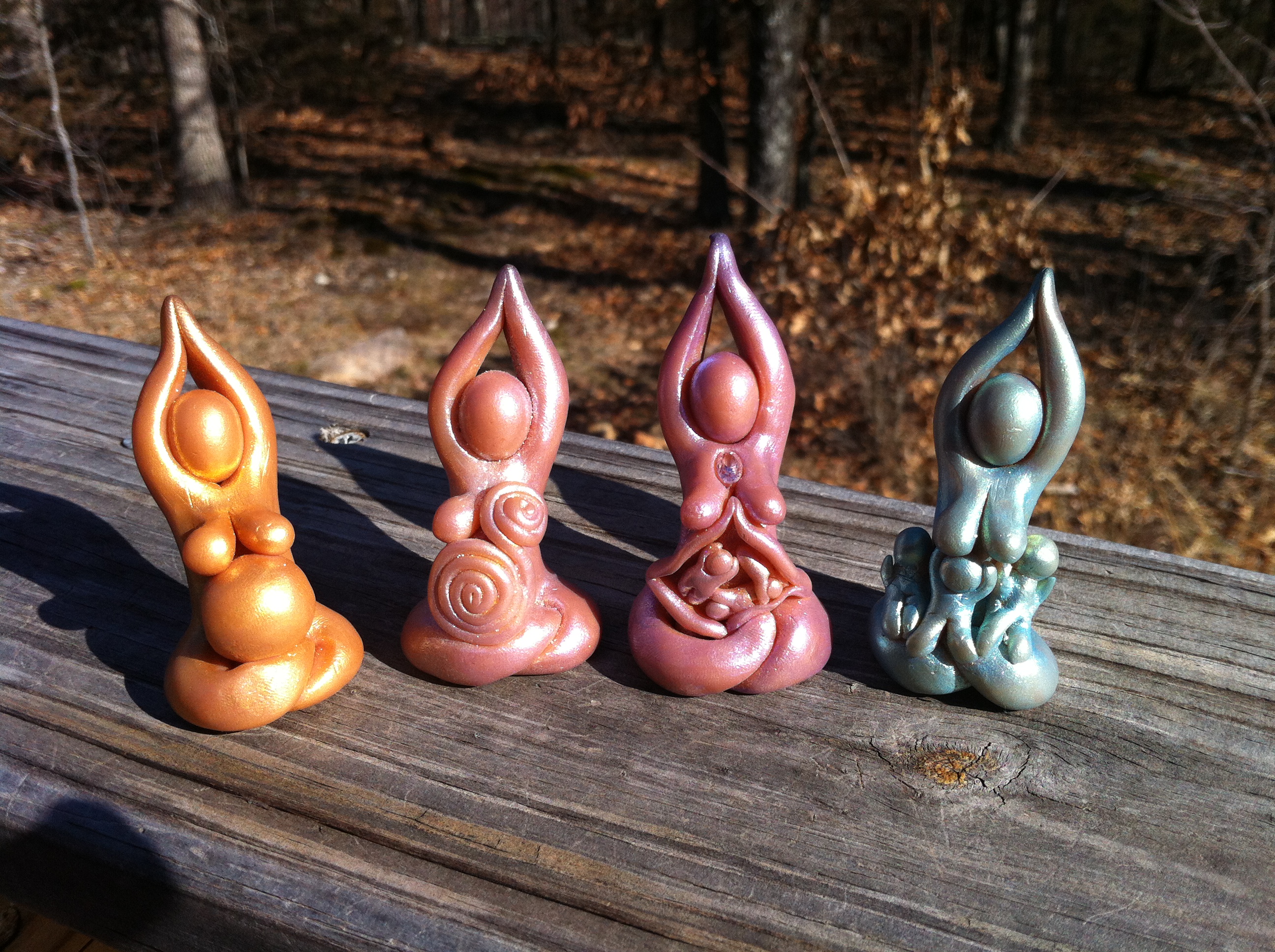
I almost forgot to include it, but the first cesarean birth art piece I created was actually not about VBAC at all, but was about the birth of triplets. The mother wanted a set of sculptures acknowledging her triplet birth journey, which included a cesarean birth and also not being able to breastfeed the babies. I felt anxious about making the “right” kind of cesarean piece and went with something that I felt conveyed the sense of the mother’s body “flowering” open to release her babies. I also set a jewel at her heart to indicate the love with which she opened her body to let her babies enter the world.

February 2013 099

February 2013 096

The Childbearing Year Sculpture Series: Pregnant Woman, Laboring Woman, Cesarean Birth Goddess, Mother (of Triplets)

  February 2013 170 February 2013 148

“I became a mama goddess, too. I became a wonder of fertility, of softness, of late nights and warm beds; a body capable of unimaginable things. I labored and tore open, too.”

–Amanda King (in Being a C-Section Mama In the Birth Goddess Club)

Birth Matters!

“A well taken care of and rested mama almost always translates into a well taken care of and rested baby. Respecting mothers is an act of social change.” —Mother Health International

“The way a society views a pregnant and birthing woman, reflects how that society views women as a whole. If women are considered weak in their most powerful moments, what does that mean?” –Marcie Macari (She Births)

“…it is not easy for women to lay claim to our life-giving power. How are we to reclaim that which has been declared fearful, polluting and yet unimportant? How are women to name as sacred the actual physical birth, which comes with no sacred ritual…?” –Elizabeth Dodson Gray

Birth matters. It truly does. The impact is often ignored or minimized, but giving birth remains one of life’s most profound, pivotal, liminal, and initiatory events. Bizarrely, this is overlooked by much of modern culture. We spent many thousands of dollars on weddings each year as well as months of planning and preparation for “just one day,” and yet in pregnancy and birth are willing to let insurance companies dictate access to care providers and let care providers dictate access to evidence-based care. Some time ago I expanded the wedding analogy into a satirical look at why birth matters:

You stop sharing your feelings, but you can’t shake the memories. What you expected to be a beautiful day filled with love and celebration was not and you feel a real sense of grief at the loss of your dreams. You know you shouldn’t feel this way. You know that what really matters is your healthy, happy husband, but you keep wondering if your wedding really had to be that way. Yes, you love your husband and you are so happy that he is healthy, but you also wonder if that really is all that matters. Don’t you matter too? Doesn’t your relationship matter? What about respect, dignity, love, and self-worth? Don’t those matter too? Wasn’t this a special life transition for your family? Wasn’t it the beginning of a special relationship together and couldn’t that relationship have been celebrated, honored, and treated as worthy of care and respect?

via All That Matters is a Healthy Husband (or: why giving birth matters)

And, in a different post I made a list of why I care about birth, concluding with the following:

Because I know in my heart that birth matters for women, for babies, for families, for culture, for society, and for the world.

via Why Do I Care About Birth?

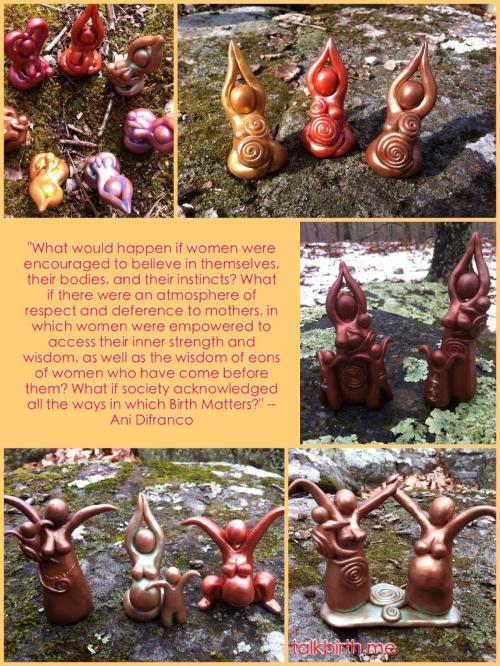
So, I particularly loved this quote from Ani DiFranco and I had to turn it into a picture! 🙂

902248_10152670748305442_735801331_o

Tuesday Tidbits: Birth Research

“Women around the world and throughout time have known how to take care of each other in birth. They’ve shown each other the best positions for comfort in labor, they’ve used nurturing touch and repeated soothing words, and they’ve literally held each other up when it’s needed the most…”

–The Doula Guide to Birth

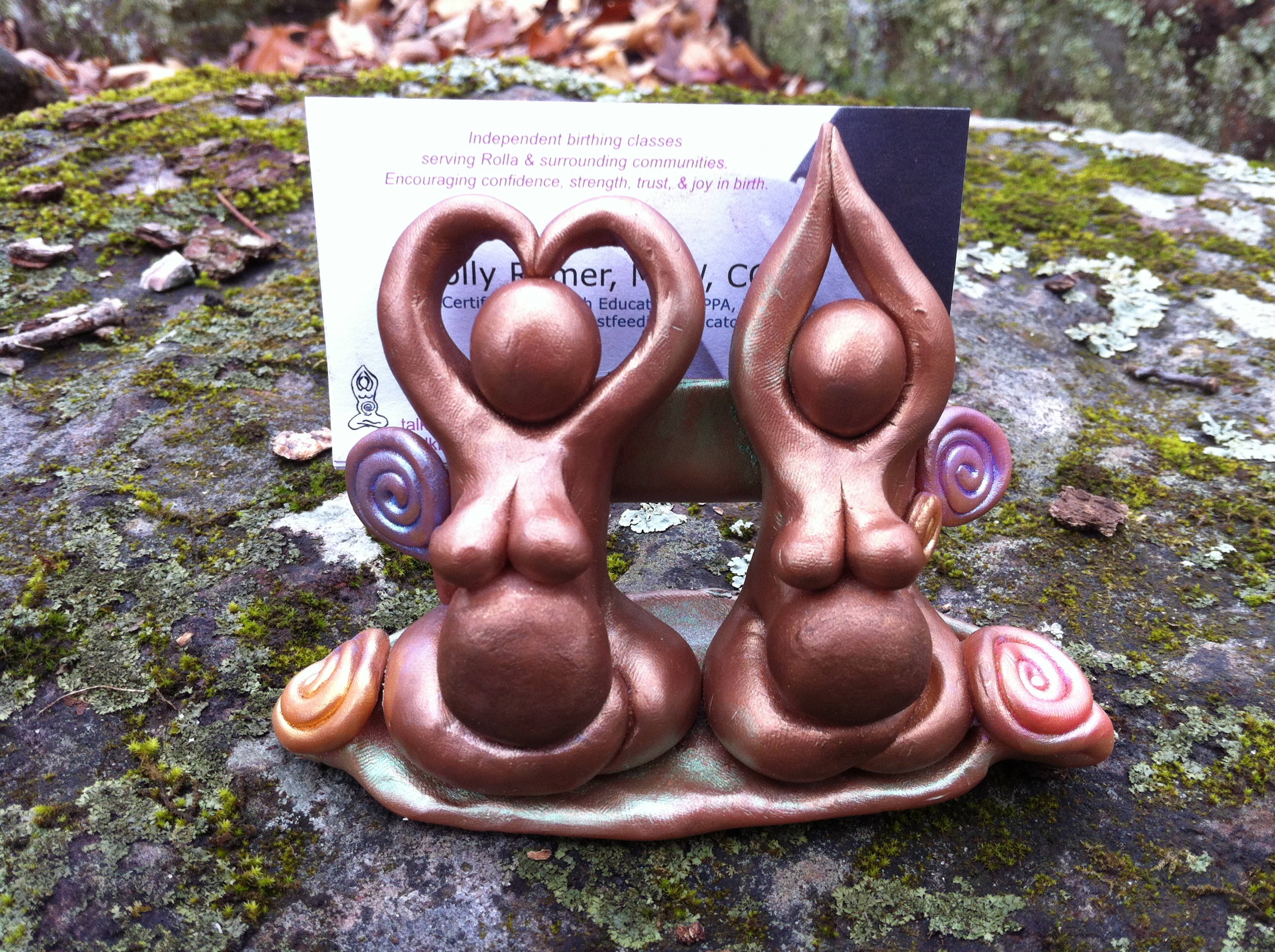
New experiment with a business card holder!

New experiment with a business card holder!

A lot of things caught my eye to share this week. A Faceboook friend is conducting research about birth professionals for her master’s thesis for Sociology:

Ahmie Yeung is working on her Master’s thesis in Sociology at Cleveland State University, under the guidance of Dr. Linda Francis. Ms. Yeung’s thesis research is looking at the attitudes of professionals in the United States who provide care for women and infants during pregnancy, birth, and the newborn period – also known as “perinatal care providers.” This can be anyone who is normally paid for the services they are providing during that time period. Examples of kinds of professionals we want to hear from are: doulas, midwives, OB/Gyns, Family Practicioners, and Pediatricians. This research will hopefully provide some insight into differences between types of providers that may be of use to future families seeking maternity and newborn care. Please ask those who are or have provided care for you to take the brief survey at http://tinyurl.com/perinatalcaresurvey and forward this request on to any other expecting/new parents or perinatal care professionals you may know.

And via Citizens for Midwifery:

Researchers are developing a new tool to educate pregnant mothers about their birth options. They need your help to learn what matters most to pregnant mothers. Pregnant or planning another birth? Please share!

Childbirth Preferences Study

The Spring issue of the Friends of Missouri Midwives newsletter is finished and available online! The theme of this issue was Siblings and we’ve got a variety of articles about including siblings at births 🙂

I got a little crazy with my ScoopIt page and went through over 100 articles of possible things to “curate.” And, I found some good stuff!

Which included this gem:

“To paraphrase Simon, everybody loves mothers, as long as they restrict their fertility to the outlines demarked by the social and moral norms of the age they find themselves in, and don’t have the audacity to give birth too young, or too old, or too regularly, or at too great a cost to the state, or to a child that they share with another parent of the wrong race or gender…”

And, an interesting article debunking the idea that women “forget” the feelings of childbirth. Memories are affected by the “halo effect” of the euphoria following birth, but the feelings are not actually forgotten:

I also thought of a couple of older posts of my own:

Talk to Your Baby

“Babies are primed to hear their mothers’ voices after birth. They expect to be snuggled into the maternal nest. Mammal babies expect to receive a warm breast and to hear comforting words in their own language…”

Birth as a Rite of Passage & ‘Digging Deeper’

“All cultures believe that women become better and more generous through the process of giving birth. That is why some cultures use words such as ‘sacrifice,’ ‘suffering’ and ‘labour.’ These terms can seem overwhelming and to be avoided’ however, seen from a different viewpoint, childbirth helps us to become strong, resourceful and determined…”

Birth & Culture & Pregnant Feelings

“Giving birth is not an isolated event in a person’s life. A woman births with both her mind and her body and participates in the attitudes toward childbearing of her culture and her family…”

Where are the women who know?

“…the most important thing is to never bring fear into the room of a laboring woman. ‘A woman must be completely open to birth a child,’ she says, ‘and so she is unable to defend herself from the thoughts of those around her…’”

And, a funny story from a couple of weeks ago:

“Visiting kid working on costume: “why do you have all this red fabric?” Me: “I think I planned to make placentas out of it.” Later, same kid: “this is an interesting color of yarn.” Me: “I got that to knit uteruses.” Kid: “maybe I should dress up like a scary doula.” 😉

Birth Regrets?

March 2013 034I usually talk in my classes about how ‘this’ is the only chance you’re going to get to birth this baby. Sure you may go on to have other babies, but you only get *THIS* chance to birth *THIS* baby. I also share with moms that because of this fact, the significance of this birth is infinitely greater than the significance of this birth is to your nurse, OB, midwife, etc.” – Louise Delaney

As I was writing my post last week about “bragging rights” in birth, I was also considering the role of birth regret. I’ve come to realize that just as each woman has moments of triumph in birth, almost every woman, even those with the most blissful birth stories to share, have birth regrets of some kind of another. And, we may often look at subsequent births as an opportunity to “fix” whatever it was that went “wrong” with the birth that came before it. While it may seem to some that most mother swap “horror stories” more often than tales of exhilaration, I’ve noticed that those who are particularly passionate about birth, may withhold or hurry past their own birth regret moments, perhaps out of a desire not to tarnish the blissful birth image, a desire not to lose crunchy points, or a desire not to contribute to the climate of doubt already potently swirling around pregnant women. I’ve already acknowledged all of my own moments of birth regret, but never all in the same post…so, here they are…

First birth: This birth was great and very empowering, but I also learned a lot of things I’d like to do differently the next time. Maybe “regret” is too strong a word, but there were things I definitely knew I wanted to change for next time. I regretted feeling pushed into several things I wouldn’t have chosen on my own, such as giving birth in a semi-sitting position rather than on hands and knees. I wished I hadn’t had quite so many people around me at the birth and I wished I would have just stayed home, rather than driving to a birth center. I regretting not asking to squat after the placenta to help the “sequestered clots” come out and possibly avoid the manual extraction I experienced which was pretty awful (I swear my uterus actually twinges when writing/thinking about it). I regretted having a pitocin shot after the birth, because I still don’t think I actually needed it and it bothered me for a long time that I couldn’t figure out whether or not I’d really needed it. I was also pretty physically and emotionally traumatized by the labial/clitoral tearing I experienced and desperately wanted to fix that next time! Interestingly, most of these regrets were clearly connected to other people and to events in the immediate postpartum period, rather than anything to do with the labor or birth process itself.

Second birth: With this birth, I see very clearly how I deliberately made choices to “fix” the things that nagged at me from my first birth. I gave birth at home, I had very few people present, I gave birth on hands and knees. I was extremely distraught to tear again in the same unfortunate and traumatic way. I’d been totally convinced before the birth that it was all related to positioning and I could fix it, next time. I regretted getting up and showering, etc. so soon after the birth and I wished for more postpartum care (noticing a theme here…). I wished I hadn’t almost fainted several times and still recall the feeling of my head snapping back as I almost went under. That said, I felt the proudest and most exhilarated after this birth.

Third birth: Aside from the obvious of wishing my baby had been born alive, I “fixed” some things from prior births in that I stayed down after the birth to keep myself from fainting. I regretted drinking Emergen-C after the birth. I regretted not being better informed about coping physically with a miscarriage. And, I wished I’d been better able to assess blood loss. I also wished I’d had an attendant of some kind, particularly for immediate postpartum care. I still feel traumatized from the memory of what felt like extreme blood loss during this birth. This was the most physically demanding experience of my life. Not just my birth life, my whole life.

Fourth birth: My biggest regret from this birth was having tried to use a hypnosis for birth program while in labor. I feel as if there were some pre-birth benefits from using the program, but it was not a match for the way I labor and birth and I actually feel as if using it had a negative impact both on my ability to clearly remember and to focus my energy. I did still tear in the same place and in what seems like some new ways as well. I never want to tear like that again. I hate it. I’ve reached my physical and emotional limit with experiencing that type of tearing and I feel like I still have some negative lasting effects. I also think I had some nerve damage that continued until about six months ago. What I “fixed” this time was having a living baby and rediscovering that I could in fact do this and there was nothing wrong with me. I loved that I caught my own baby. (Best. Moment. Ever.) I also had the immediate postpartum care I’ve finally learned I really, really need. I consumed a small piece of placenta postpartum, I drank chlorophyll (and not vitamin C), when I went to the bathroom and did not look down, so I didn’t get all fainty and woozy from seeing the blood, and my doula encapsulated the placenta and I loved it.

It is interesting to me to look at these feelings and situations in the same place. With my last birth, I finally “fixed” the postpartum and blood loss issues that haunted me, but I created new things to fix by experimenting with hypnosis rather than the active birth, birth warrior, Birthing from Within type of experience that truly suits me. I guess I will never fix the tearing situation (I still want to write about that someday!). I also notice how impacted I was and still am by the two births that involved major blood loss. This came up for me very viscerally in reading the current Midwifery Today issue about hemorrhage. While the topic is important and the issue is really informative and useful, I actually had to put it down by page nine because my uterus was hurting/twinging so much (low back too). I really don’t think it was only my imagination either. (This is one reason my work with birth is never going to actually include becoming a midwife!)

I’m curious to know…do you have birth regrets? Or, things that you used subsequent births to fix, overcome, or cope with? Do you see any patterns to your birth experiences like I see in mine?

The other thing this exercise brought up for me is the important of preparing for the birth you want during this birth. This baby is only born once. This birth only happens once. I have clients tell me sometimes while still pregnant with their first baby, “well, next time, I’ll try XYZ…” Don’t wait for next time, do it this time!

The first birth is the pivotal birth. Every birth experience that follows builds on that one. Our choices now are choices for the NEXT birth. The first birth doesn’t have to be either perfect or awful and earth shattering to make us think. We don’t have to choose differently than the first birth; but it’s the first one that gives us a place to begin experiencing not just birth but ourselves as mothers, women, people. We may not all have ground shaking, earth thundering thoughts but we have them. The experience belongs to us. We choose what to do with it. Choosing to do nothing different is still an influenced choice ~ made on that experience…

…What will YOU do to have a first birth that leaves you with few regrets or changes for your NEXT birth? Why not have the birth of your choosing, rooted in truth and your ability to know yourself and your baby now?…

via The Home Birth Experience: The First Birth is HERstory | Real women. Real options. Real birth..

These types of triumphs and regrets produce both birth professionals dedicated to helping others and also mothers who become so hurt and disillusioned with birth that they may actively reject the “natural birth” movement.

March 2013 049

Tuesday Tidbits: Bragging Rights

“Before I had children I always wondered whether their births would be, for me, like the ultimate in gym class failures. And I discovered instead…that I’d finally found my sport.” –Joyce Maynard

“Our body-wisdom knows how to birth a baby. What is required of the woman who births naturally is for her to surrender to this body-wisdom. You can’t think your way through a birth, and you can’t fake it.” –Leslie McIntyre

February 2013 113
This week I particularly enjoyed a saucy post by my friend, colleague, and doula, Summer. Titled Bragging Rights, she talks about her own experience birthing a very large baby (nearly 12 pounds! I enjoy bragging about her baby too!) and whether or not she really “deserves” bragging rights on birthing a big baby. I absolutely love her concluding thoughts on the topic:

“…Frankly, I think all mothers get bragging rights on their babies births. Birth is awesome and amazing and power-full. Every mother must face it. Sure, she may face it differently than me, but it IS a labyrinth we all go through. This is the way of life. So, mothers, brag away. Brag about whatever part of your labor and baby’s birth made you feel empowered….find that piece, even if it’s just a tiny moment, and cling to it. Shout it from the rooftops!…”

What a great idea that all mothers deserve “bragging rights.” What are your bragging rights moments from your births, however they unfolded?

I immediately thought of one for each of mine, reflecting that each birth does hold a key moment for me, the first thing that comes to mind when I think about that birth, a moment of being power-full.

First birth: my moment was arriving at the birth center fully dilated after having worried I was “only two centimeters.”

Second birth: having a two-hour labor—it was a train ride and I DID IT. Wow!

Third birth (miscarriage): coaching myself through labor and being brave enough and strong enough to open and let go of my little non-living baby.

Fourth birthFebruary 2013 102: catching my own baby! By myself! With my own two hands! And, she was ALIVE!

…the stories I see of birth in the media don’t reflect the intense emotions, the physical power, or the immense impact of the experience itself. Women screaming, fathers fumbling about, doctors doing most of the heroic work–these images don’t do justice to my experience. I felt empowered, strong, heroic in my efforts to bring my daughter into the world yet, I am painfully aware how little others see the heroism in my birth experience.“ –Amy Hudock (essay in Literary Mama)

“...if you want to know where a woman’s true power lies, look to those primal experiences we’ve been taught to fear…the very same experiences the culture has taught us to distance ourselves from as much as possible, often by medicalizing them so that we are barely conscious of them anymore. Labor and birth rank right up there as experiences that put women in touch with their feminine power…” –Christiane Northrup

Introverted Mama

This post is excerpted from one written in response to the current Patheos Book Club exploration of the book Quiet: The Power of Introverts in a World That Can’t Stop Talking. I previously wrote a post for my blog about Quiet and then built on that post for my book club post. The previous post is here and my new additions are below…

I really enjoy being around people and I’m friendly and social, but on the flip side I feel very drained after people contact and need time alone to recharge. I find I am restored by being alone and drained by being with others (even though I like them!), hence I would self-label as an “extroverted-introvert,” “ambivert,” or social introvert. By definition it isn’t that extroverts “like people” and introverts don’t like people, it is a difference between whether they are fueled or drained by people contact. However, I’ve observed that people seem to make an assumption that being introverted means someone is “shy” or “doesn’t like people,” so that’s why I would choose extroverted-introvert for myself. I recently took a week-long retreat from Facebook, email, social media, and reading articles online. I did this primarily to silence the digital noise in my life (see some good explorations of why you, too, may be an introvert in this article: “Noise” Got You Down? Maybe You’re an Introvert).

Once I starting thinking about this book, Quiet, I was amazed at the connections I uncovered with how my introverted personality is expressed during pregnancy, labor, and birth. This was actually the very first time I’ve made the connection between my own birthing preferences and my introvert nature, that finds such renewal in solitude and craves silence.

Labyrinth of pregnancy pre-birth sculpture.

Pregnancy—towards the end of pregnancy I feel an inward call. I start wanting to quit things, to be alone, to “nest,” to create art, to journal, and to sink into myself. Nothing sounds better to me in late pregnancy than sitting in the sunlight with my hands on my belly, breathing, and being alone with my baby and my thoughts.

Labor—during my first pregnancy, the very first thing on my birth plan was “no extraneous noise.” It was really essential to me to labor without beeping, chattering, or questions. This birth room silence, in fact, was SO essential that it was one of my only requests for my second labor—no unnecessary talking. I can talk during labor, I talk a lot in fact, but I don’t want people around me talking. I want silence. My epiphany as I thought about the Quiet book was that this is why. I’m an Introverted Mama. I know many women are very nourished by the presence of supportive and loving family members and friends during their labors. They express wanting to be encircled by support and companionship. For me, I like to cut my birth attendants down to only the very most essential companions (and they’d better be quiet!). And, this leads me to…

Birth—after my first birth, in which I’d had the loving and supportive accompaniment of my husband, my mother, my best friend, my doula, a midwife, and a doctor, one of my most potent longings for my second birth was as few people present as possible. And, indeed, for this second labor I had my husband alone present for the first hour of a train ride of a two-hour labor, my mother and toddler son present for about 30 minutes and my midwife who walked in as my son’s head was crowning. For my last birth, I wanted even fewer companions, spending the bulk of the labor alone with my husband and later calling in my mother. When my daughter was actually born, I was the sole witness to her emergence as she slid forth into my grateful hands in one swift spontaneous birth reflex just as my mother stepped into another room and my husband was moving from behind me around to the front of my body. Shortly after her birth, my doula arrived to provide amazing postpartum care and my midwife came shortly after that to assess blood loss and to help with the placenta. This was the perfect companionship arrangement for an Introverted Mama. My older children were pretty disappointed not to be present, but I need solitude in birth and I heeded that call.

324

Postpartum—I am firmly convinced of the critical importance of planning for a postpartum “nesting” time or babymoon, in which parents can cocoon privately with their new baby in the solitude of their own home. I only now came to realize that perhaps this is Introverted Mama talking! I’ve spoken to other women who say that getting out and seeing people was really important during their own postpartum time. I’ve maintained for ages that this is probably culture talking (“get back to ‘normal,’ prove how capable of a mother you are,” etc.), and not what the tender new motherbaby most needs, but perhaps my preference is largely a function of personality. There is nothing better for me than spending at least four weeks nested at home with my new baby and my immediate family, no long-time visitors, no phone calls, little email, and no travel, visiting, or responsibilities. Ahhhh….babymoon bliss.

Breastfeeding—in the early days, weeks, and months of breastfeeding the symbiosis of the nursing relationship is so complete that the baby becomes a part of me. A newborn does not “disturb my peace” the way toddlers are wont to do. I especially feel this interdependent connection during nighttime nursings, in which the harmony with the baby feels complete and total and a peace like little else.

Toddlerhood and Beyond—Oh dear, now is when “no time to think” starts to wear on Introverted Mama’s nerves and stamina. I’ve met some awesome mothers of large families who comment on how they, “love the chaos” of home with lots of children. “Our house is wild and crazy and full of noise and I love it,” they may be known to say. Thinking of how desperately I crave silence and solitude, sometimes with an almost physical pain and longing, I feel inadequate in comparison to these declarations. Is this too simply a function of personality? Can these chaos-thriving mamas be extroverts who gain energy from interaction with others? I find that my own dear children, my own flesh and blood and bone and sweat and tears, still feel very much like “company” in terms of the drain on my energy that I experience. Whether it is socializing with a group or friends or spending the day with my energetic, loveable, highly talkative children, I crave time alone to recollect myself and to become whole once more. I once commented to my husband that I feel most like a “real person” when I’m alone. That means that the intensiveness and unyielding commitment of parenting can be really, really hard on me emotionally. Maybe it is okay to “own” that need for quiet, even as a mother, rather than to consider it some type of failure or an indication of not being truly cut out for this motherhood gig. (See more in a past, lengthy, navel-gazing post on why I need my “two hours”.)

How do you experience (and honor) introversion in your life as a parent? Sometimes I feel like being an introvert and being a mother are not very compatible, but as I learn to respect my own needs, to speak up for myself, and to heed that call for silence and solitude, I realize it is compatible after all. My children have two introverted parents and will hopefully grow up feeling confident in the knowing that there is profound power in being quiet, in taking time to think deeply, and to respond to the call of solitude if it comes knocking at the door of their hearts.

It is only when we silence the blaring sounds of our daily existence that we can finally hear the whispers of the truth that life reveals to us, as it stands knocking on the doorsteps of our hearts.

~ K.T. Jong (via Kingfish Komment)

Tuesday Tidbits: Birth Pause

BirthontheLabyrinthPath_300x250-ad_1Last year I wrote about the birth pause, that timeless moment of inhaling after birth and exhaling into motherhood:

This moment when mother meets baby, earthside. Malloy notes that for many women, the moment of meeting is “hurried” by the immediate placement of the baby on mother’s chest. Many women are in a brief, transitional state almost like “birthshock” at this moment—it is the moment before the classic euphoria and “I did it!” hits. Mother often has her eyes closed and needs a second to breathe and re-focus on the world outside her deeply inner focus…

So, of course, when one of my Facebook friends posted the following thoughts last week, I asked her if I could quote her on my blog!

One moment that EVERY MOTHER remembers is the moment she first laid eyes on her baby. I am asking every woman to consider what that moment means to you and how she pictures it to be? Will it be in your home with dim lights and scented candles, and the loving arms of your partner embracing you both physically and emotionally at the moment of emergence? Or will it be in a brightly lit hospital room lying on your back while 6-10 strangers yell for you to push and stare at your vagina while you lay there feeling a bit helpless being strapped with cords to a half dozen medical devices?

Will your baby be touched first by your hands and brought up to your bare breasts as he fills his lungs for the very first time? Or will your baby be caught with a cold latex glove, lifted mid-air with glaring lights and strange sounds all around him? Will his oxygen supply and blood be stolen from his body with a quickly cut cord as he is swept away and rubbed by unfamiliar hands. Will he be swaddled so tight he cannot feel his mother’s warm skin when she holds him at her breast?

Think these are details that do not matter in the grand scheme of things? Think again… PLEASE! Because… BIRTH REALLY DOES MATTER. Know where and with whom you desire to give birth. Do the necessary research to make that happen! You DO have options, so do NOT let ANYONE tell you that you don’t. Birth matters. Make your decisions wisely. You WILL remember that moment! –Pamela Brott, Beginning at Home

And, then I read a great little post from Rebecca Wright about being a birthkeeper rather than “catching” babies:

As a birth keeper it’s not my place to catch babies. It’s my place to hold space. It’s my place to support the mama-baby dyad so that they birth in power and remain undisturbed as far as possible in this process.

One of my friends wrote an article some time ago about catching your own baby. She called it “squatter’s rights” and concluded with something to the effect of, “and then I reach down and catch what’s mine.” It gave me chills. Alaina is the only baby that I caught myself and it was the most potent moment of any birth. Sometimes I still can’t believe I did it.

And, on a related note, I also shared these two articles via ScoopIt:

Active birth positions for the hospital–Effective Birthing Positions | Taking Charge of Your Health

Some musings about mental comfort zones and birth–Planning a Childbirth: Is there a Comfort Zone and Should You get out of it…

BirthontheLabyrinthPath_300x250-ad_2

Talk to Your Baby

I already know that you can learn a lot from chickens about giving birth. This summer, I had another profound birth-mothering experience with one of our chickens after she hatched her first baby. During the last several days of incubation, mothers hens “talk” to their babies a lot through the eggshells and the babies respond. It is part of how they get to know each other and imprint before hatching. Then, after baby hatches, the mother hen continues to talk and cluck to the baby in a reassuring manner—she calls to the babies when separated and she calls a special call when there is something good to eat and she clucks softly and reassuringly at bedtime as she snuggles them all beneath her. There is a specific type of “soothing” noise they make to stressed or lost babies and a specific sort of excited sound they make to let the babies know something good is happening. There are also distressed sound that means, “run to me now, there might be danger!”

537

The baby chick who tried desperately to get to a mama who would talk to it (this mama, interestingly, is the same one I wrote about in the Birth Lessons from a Chicken essay several years prior).

We had three broody chickens at the time, each in their own little separate nest box in the broody coop. One of the hens had hatched a baby already and was in the neighboring box. The inexperienced mama hen hatched her baby and she would not talk to it. The baby freaked out. It flailed, it freaked, it stumbled all around. It dragged its tiny little wet, not-even-able-to-walk body to the very corner of the nest box as far away from the mother as possible. It flung itself into the wall where it could hear the neighboring mother clucking to her baby. The baby peeped more frantically and loudly than I’ve ever heard a chick cry out before, it sounded like it was in grave distress and danger. We moved it back to its mother and she fluffed out her wings around it just like she was supposed to do and I thought all would be all right, but…silence. The mother did not talk. Her baby desperately struggled out from under her, still not able to walk, still wet, and flung itself back into the corner, sinking down under the straw, crying piteously. Silence from the mother.

Talk to your baby, we pleaded. Your baby needs to hear you. Please talk to your baby. Silence. The baby squished down on the wire slats, pressed into the corner of the box, screaming at the top of its chick-lungs. The mother in the next box became distressed as well, calling back to the baby more and more loudly. The chick became more frenzied and flopping. The baby in the next box picked up on the fear and began peeping loudly as well. Still, the new mother sat silently and unresponsive. Talk to your baby. We left her alone, thinking her instincts would kick in, but as time passed and we could hear the chick screaming from all the way across the yard, we went back to interfere. We tried twice more to put it back under her and again the same routine repeated. We became concerned the baby would die if its level of distress continued, particularly with forcing itself down and under the straw and into the wire, so we made the decision to remove it and put it in “foster care” with the other, responsive mother. We thought she might attack it, since it wasn’t her own hatchling and because it was several days behind her own baby, but she snuggled it right up, clucking in reassurance, and it went to sleep, the next morning it was fluffy and quiet and perfectly happy with its new mother. The red hen continued to sit, silent, and unresponsive, and of course I felt horrible for stealing her baby and giving it to someone else after she’d worked so hard to hatch it. Luckily for the mental health of all involved, she successfully hatched one more baby and did take care of it, albeit still quite silently compared to all other mama hens we’ve experienced.

What does this have to do with birth?

Babies are primed to hear their mothers’ voices after birth. They expect to be snuggled into the maternal nest. Mammal babies expect to receive a warm breast and to hear comforting words in their own language. I feel fortunate that my own birth pause was respected after all my children’s births and that each baby felt only my hands and heard my voice for their first minutes of life. I talked to all my babies, soothingly and lovingly, and then brought them to my breast. My midwife and the other people around me did not interfere with these sacred, timeless moments of introduction.

It has been several years now, but I’ve worked with a couple of mothers for breastfeeding help postpartum who were unwilling or unable to talk to their babies, even with direct encouragement to do so. Baby was expecting mother’s voice and mother was unable to give it. Not surprisingly to me, these mothers experienced significant difficulty in getting baby to breast. I believe baby is expecting mother’s voice as a guide to the breast as much as it is expecting the smell of her and the sound of her heartbeat. Baby is not expecting multiple, strange voices from nurses (or even helpful breastfeeding helpers like me!). Baby is not expecting gloved hands. Baby is not expecting bright lights or loud noises. Baby is most definitely not expecting to be “helped” to the breast and “shoved” on as many mothers describe experiencing after their births. In Breastfeeding Answers Made Simplethe author emphasizes that what motherbaby pairs need most to successfully breastfeed is time alone to get to know each other. Mother and baby need to explore each other’s bodies and to listen to each other. She points out that with many people in the room, even well-meaning people, mothers have trouble getting to know their babies and getting babies to breastfeed. She says the most helpful strategy to supporting early breastfeeding is to get out of the way and let mother talk to her baby, smell her baby, touch her baby, meet her baby, and learn about her baby.

536

The non-communicative mother and her second baby, who was okay without much talking.

What are we really imprinting upon many newborns at birth in our culture?

As Sister MorningStar writes in her article The Newborn Imprint in Midwifery Today issue 104, Winter 2012…

If you have had the misfortune, as nearly all of us who can read and write have had, to see a baby born, perhaps pulled out, under bright lights with glaring eyes and loud noises of all sorts, in a setting that smells like nothing human, with a mother shocked and teary and scared; if you have witnessed or performed touch that can only be described as brutal and cruel in any other setting…

Every baby born deserves uninterrupted, undisturbed contact with her mother in the environment the mother has nested by her own instinctual nature to create. Any movement we make to enter that inner and external womb must be acknowledged as disturbing and violating to what nature is protecting. We do not know the long-term effects of such disturbance. We cannot consider too seriously a decision to disturb a newborn by touch, sound, light, smell and taste that is different and beyond what the mother is naturally and instinctually providing. Even facilitating is often unnecessary if the motherbaby are given space and time to explore and relate to one another and the life-altering experience they just survived. They both have been turned inside out, one from the other, and the moment to face that seemingly impossible feat cannot be rushed without compromise. We have no right to compromise either a mother or a baby.

I am deliberately leaving out the issue of life-saving because it has become the license for full-scale abuse to every baby born… [emphasis mine]

If mother has been taken to an operating room to give birth, or if mother is for any reason overwhelmed, exhausted, scared, vulnerable, hurt, and traumatized, she may have great difficulty in talking to her baby. If the room is full of people, baby may have difficult hearing her mother’s voice and feeling her welcoming touch. If baby is greeted by a bright light and masked face instead of her mother’s voice, baby may cry loudly in distress and eventually “shut down” into sleep rather than immediately to breastfeeding.

What can we do?

Beyond the obvious answers in carefully choosing place of birth and birth attendant, we can talk to the babies. If birth has been long, scary, or otherwise difficult, talk to the baby. If baby needs immediate care after birth, try as hard as humanly possible to have that care take place on mother’s chest and in reach of mother’s voice. If baby has to be separated from mother, talk to the baby. Call out to him. If mother can’t call out to the baby, father can talk to the baby. If father is unable, doula or midwife or nurse can talk to the baby. Welcome her to the world, reassure her that she is safe and all will be well. Speak gently and soothingly and kindly, never forgetting that this is a new person’s introduction to the world and to life. Our first and deepest impulse is connection. Before Descartes could articulate his thoughts on philosophy, he reached out his hand for his mother. I have learned a lot about the fundamental truth of relatedness through my own experiences as a mother. Relationship is our first and deepest urge and is vital to survival. The infant’s first instinct is to connect with others. Before an infant can verbalize or mobilize, she reaches out to her mother. Mothering is a profoundly physical experience. The mother’s body is the baby’s “habitat” in pregnancy and for many months following birth. Through the mother’s body, the baby learns to interpret and to relate to the rest of the world and it is to the mother’s body that she returns for safety, nurturance, and peace. Birth and breastfeeding exist on a continuum, with mother’s chest becoming baby’s new “home” after having lived in her body for nine months. These thoroughly embodied experiences of the act of giving life and in creating someone else’s life and relationship to the world are profoundly meaningful experiences and the transition from internal connection to external connection, must be vigorously protected and deeply respected.

“Birth should not be a celebration of separation, but rather a reuniting of mother and baby, who joins her for an external connection.” –Barbara Latterner, in New Lives

“No mammal on this planet separates the newborn from its mother at birth except the human animal. No mammal on this planet denies the breast of the newborn except the human.” –James Prescott (neuropsychologist quoted in The Art of Conscious Parenting)

 “A woman’s confidence and ability to give birth and to care for her baby are enhanced or diminished by every person who gives her care, and by the environment in which she gives birth…Every women should have the opportunity to give birth as she wishes in an environment in which she feels nurtured and secure, and her emotional well-being, privacy, and personal preferences are respected.” –Coalition for Improving Maternity Services (CIMS)”


361

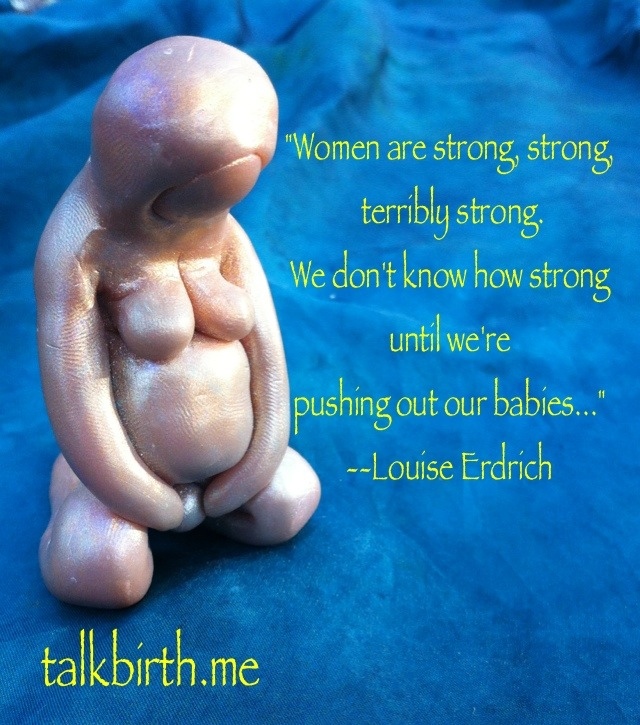
Strong, Strong…

20121121-212301.jpg

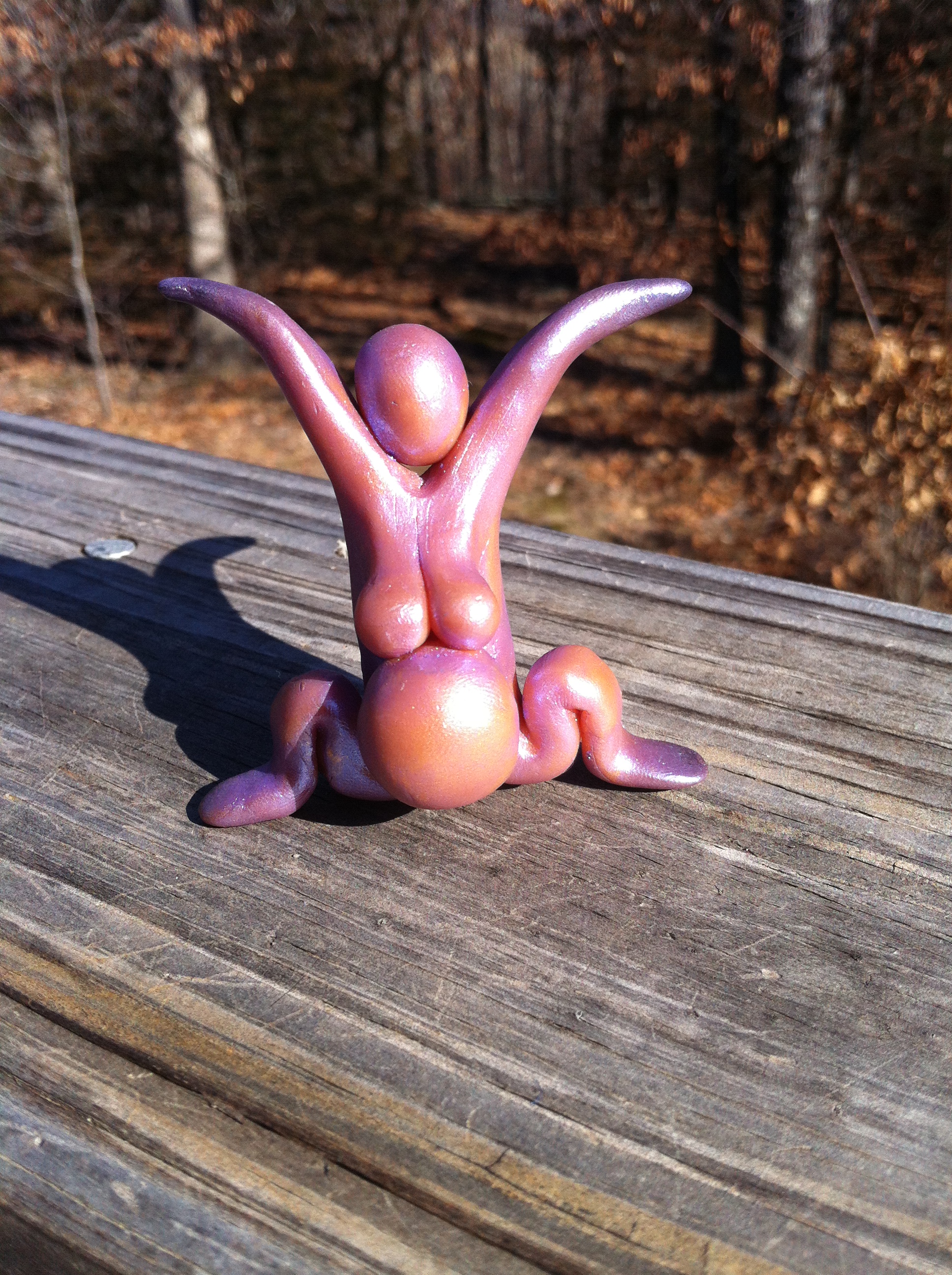
I woke up this morning with this quote running through my head and thinking of a pregnant friend of mine. Since her story is not mine to tell, suffice to say, she had a long and winding road to reach this point and this evening she gave birth at home after having had a cesarean with her first baby! Yay! I’m so excited for her and for their whole family. One part of me just knew she could do it and the other part of me still worried that I was being falsely optimistic. It has happened to me before—that I supported and encouraged and hoped with the mother and despite all those hopes and dreams and wonderful, careful, thoughtful plans, the birth still didn’t go as planned. I also believe that all births are acts of courage and that mothers, whether they push out their babies or not, have the capacity to dig deep and discover strength beyond anything they previously knew. However, just, yay. I’m so happy and excited and relieved for this friend of mine 🙂 The sculpture in the picture is the birth art piece I made after I actually gave birth to my last baby. She captures the pose in which I caught my daughter. My previous photo with this quote was of the pre-birth sculpture I’d made to address my pushing-the-baby-out fears:

Still figuring out the pictures with words app that I got. I love my nature spots in the woods as backgrounds, but they’re too busy and make choosing a text color that actually works almost impossible!

Childbirth is power in its purest and most natural form–it is wild and uncontrollable and takes us on a journey of surrender. Birth is about so much more than babies being born. It is about a mother finding her inner strength at her most vulnerable and powerful moment, which begins her unique and lifelong journey of mothering that child.”

–Brianna Kauer (in Midwifery Today, issue 103)

And, speaking of thankful birthy goodness, Thanksgiving is tomorrow and that reminded me of an earlier post about the rest and be thankful stage!

I also would like to mention that I have a Talk Birth topic on ScoopIt now. I primarily started it so that it could handily feed into my Talk Birth Facebook, while still leaving a more useable record for me to go back to/repost (things just kind of disappear off the page on Facebook and it can be hard to remember what the heck I’ve shared there if I then want to do a blog post about it). I was introduced to ScoopIt via LinkedIn when I started following a really well-curated topic about E-Learning and Online Teaching. There are very, very few birth-related topics on ScoopIt, so start curating one! It is fun and easy and, as I said, really handy for feeding content into your Facebook page or other media (I experimented yesterday with sending a post directly to WordPress and that worked too!)

I’m also thankful for several days at home to spend with my family and without a long to-do list. I have one final paper to grade tonight and then my calendar is pretty deliciously blank for the next four days! We can really use this. I need a stillpoint, a rest, and some time to spend on the fun things I want to do like wallow in piles of books and make fabulous new sculptures and go sit out in the woods and…and…and…

Thankful for all these people too! And, also thankful for fab new pictures from recent photo session with my friend 🙂