Archives

The Value of Sharing Story

“..no matter what her experience in birth was, every mother knows something other people don’t know.”—Pam England


“Stories are medicine…They have such power; they do not require that we do, be, act anything—we need only listen. The remedies for repair or reclamation of any lost psychic drive are contained in stories.” –Clarissa Pinkola Estes


Every woman who has given birth knows something about birth that other people don’t know. She has something unique and powerful to offer.

As birth professionals, we are often cautioned against sharing our personal stories. We must remember that it is her birth and her story, not ours. In doula and childbirth educator trainings, trainees are taught to keep their own stories to themselves and to present evidence-based information so that women can make their own informed choices. As a breastfeeding counselor too, I must remind myself to keep my own personal experiences out of the helping relationship. My formal education is in clinical social work and in that field as well we are indoctrinated to guard against inappropriate self-disclosure in a client-helper setting. In each environment, we are taught how to be good listeners without clouding the exchange with our own “baggage.” The messages are powerful—keep your own stories out of it. Recently, I have been wondering how this caution might impact our real-life connections with women?

Nine months after I experienced a powerful miscarriage at home at 15 weeks, a good friend found out at 13 weeks that her baby died. As I had, she decided to let nature take its course and to let her body let go of the pregnancy on its own timetable, rather than a medical timetable. When she emailed me for support, it was extremely difficult to separate our experiences. I kept sharing bits and pieces of my own loss experiences and then apologizing and feeling guilty for having violated the “no stories” rule. I kept telling her, “I know this isn’t about me, but I felt this way…” I told her about choosing to take pictures of the baby and to have a ceremony for him at home. That I wished I had gotten his footprints and handprints. The kinds of personal sharing that may have been frowned upon in my varied collection of professional trainings. After several apologies of this sort, I began to reflect and remembered that what I hungered for most in the aftermath of my own miscarriage was other women’s voices and stories. Real stories. The nitty gritty, how-much-blood-is-normal and did-you-feel-like-you-were-going-to-die, type of stories. Just as many women enjoy and benefit from reading other women’s birth stories, I craved real, deep, miscarriage-birth stories. These stories told me the most about what I needed to know and more than organization websites or “coping with loss” books ever could.

I had a similar realization the following month when considering the effectiveness of childbirth classes and trying to pin down what truly had reached me as a first time mother. The question I was trying to answer as I considered my own childbirth education practice was how do women really learn about birth? What did I, personally, retain and carry with me into my own birth journey? The answer, for me, was again, story.

On this blog, I have a narrative about my experiences during my first pregnancy with being able to feel my baby practicing breathing while in-utero. More than any other post on the site, this post receives more comments on an ongoing basis from women saying, “thank you for sharing”–that the story has validated their own current experience. In this example, rather than getting what they need from books, experts, or classes, women have found what they needed from story and, indeed, most of them reference that it was the only place they were able to find the information they were seeking.

And finally, as breastfeeding counselor, during monthly support meetings, I cannot count the number of times I’ve seen mothers’ faces fill with relief when another mother validates her story with a similar one.

So, what is special about story as a medium and what can it offer to women that traditional forms of education cannot? Stories are validating. They can communicate that you are not alone, not crazy, and not weird. Stories are instructive without being directive or prescriptive. It is very easy to take what works from stories and leave the rest because stories communicate personal experiences and lessons learned, rather than expert direction, recommendations, or advice. Stories can also provide a point of identification and clarification as a way of sharing information that is open to possibility, rather than advice-giving.

Cautions in sharing stories while also listening to another’s experience include:

  • Are you so busy in your own story that you can’t see the person in front of you?
  • Does the story contain bad, inaccurate, or misleading information?
  • Is the story so long and involved that it is distracting from the other person’s point?
  • Does the story communicate that you are the only right person and that everyone else should do things exactly like you?
  • Is the story really advice or a “to do” disguised as a story?
  • Does the story redirect attention to you and away from the person in need of help/listening?
  • Does the story keep the focus in the past and not in the here and now present moment?
  • Is there a subtext of, “you should…”?

Several of these self-awareness questions are much bigger concerns during a person-to-person direct dialogue rather than in written form such as blog. In reading stories, the reader has the power to engage or disengage with the story, while in person there is a possibility of becoming stuck in an unwelcome story. Some things to keep in mind while sharing stories in person are:

  • Sensitivity to whether your story is welcome, helpful, or contributing to the other person’s process.
  • Being mindful of personal motives—are you telling a story to bolster your own self-image, as a means of pointing out others’ flaws and failings, or to secretly give advice?
  • Asking yourself whether the story is one that will move us forward (returning to the here and now question above).

While my training and professional background might suggest otherwise, my personal lived experience is that stories have had more power in my own childbearing life than most other single influences. The sharing of story in an appropriate way is, indeed, intimately intertwined with good listening and warm connection. As the authors of the book, Sacred Circles, remind us “…in listening you become an opening for that other person…Indeed, nothing comes close to an evening spent spellbound by the stories of women’s inner lives.”

Molly Remer, MSW, ICCE, CCCE is a certified birth educator, writer, and activist who lives in central Missouri with her husband and children. She is an LLL Leader, a professor of Human Services, and the editor of the Friends of Missouri Midwives newsletter. She blogs about birth, women, and motherhood at https://talkbirth.wordpress.com.

This is a preprint of The Value of Sharing Story, an article by Molly Remer, MSW, ICCE, published in Midwifery Today, Issue 99, Autumn 2011. Copyright © 2011 Midwifery Today. Midwifery Today’s website is located at: http://www.midwiferytoday.com/

Have you met Pachamama?

I have a friend who was taking a mythology class in college this session. She sent me an email titled, “have you met Pachamama?” and included this great little picture:

I just love her! Love her serene little face and the yin-yang type of background.

“Pachamama is a goddess revered by the indigenous people of the Andes. Pachamama is usually translated as Mother Earth, but a more literal translation would be “Mother world” (in Aymara and Quechua mama = mother / pacha = world or land; and later widened in a modern meaning as the cosmos or the universe).[1] Pachamama and Inti are the most benevolent deities; they are worshiped in parts of the Andean mountain ranges, also known as Tawantinsuyu (the former Inca Empire) (stretching from present day Ecuador to Chile and northern Argentina being present day Peru the center of the empire with its capital city in Cuzco).”

http://en.wikipedia.org/wiki/Pachamama

New Quotes About Birth, Motherhood, Activism, and Women

I have a LOT of new quotes to add to my collection! I’ve got to start updating more frequently. As I’ve mentioned before that while these quotes are obviously not my own words, I do appreciate a linkback to my site if you re-post them because I have a significant amount of legwork invested in finding and typing the quotes. Most are not recycled from other pages (I give credit if they are), but are typed up when they catch my eye in the books/magazines/journals I’m reading.

‎”Women experience pain differently; some feel strong overwhelming pain, some may feel a deep discomfort during birth, and still others may feel no pain at all. The experience of pain during childbirth facilitates an unfolding of inner power and resources we never imagined we possessed, similar to enduring the pain of completing a marathon at the finish line.” –Barbara Nicholson and Lysa Parker, API founders

(I do wish the analogy was flipped culturally–ie running a marathon is like giving birth, rather than vice versa. We’ll get there!)

“For months I just looked at you. I wondered about all the mothers before me–if they looked at their babies the way I looked at you. In an instant I knew what moved humankind from continent to continent, Against all odds.” –Michelle Singer (in We’Moon 2011 datebook)

“I use the word midwife to refer to all birth practitioners. Whether you are a mother, doula, educator, or understanding doctor or nurse you are doing midwifery when you care for motherbaby.” –Midwifery Today editorial by Jan Tritten

“Change, when it comes, cracks everything open.” ~Dorothy Allison

“I invite people to examine their lives, knowing that it’s scary, but that not doing it is even scarier.” – Barbara De Angelis

‎”There isn’t a lot you actually *need* to do to birth, but there is a lot you can do to get in the *way* of birth…” –Elizabeth McKeown

‎”Mother love is the fuel that enables a normal human being to do the impossible.” –Marion C. Garretty

‎”In western society, the baby gets attention while the mother is given lectures. Pregnancy is considered an illness; once the ‘illness’ is over, interest in her wanes. Mothers in ‘civilized’ countries often have no or very little help with a new baby. Women tend to be home alone to fend for themselves and the children. They are typically isolated socially & expected to complete their usual chores…while being the sole person to care for the infant…” –Milk, Money, & Madness

 “I have discovered nothing more stunning, nothing more emotionally stirring, nothing more intriguing than a woman as she creates life.” –Patrick Stull

‎”My first delivery was a traumatic experience, physically and psychologically almost destroying me. My second, with a midwife, allowed me to regain my womanhood and experience my biological imperative. And yet, I would do them both over again to have what I created.” –mother quoted in the book Evolve, by Patrick Stull

‎”Too often in modern busy obstetric practice, we doctors forget this meaningfulness of childbirth. In our anxiety and impatience, or in our sincere, but misguided efforts to relieve suffering (and childbirth is not without it), we relieve a woman not only of this suffering, but also of her ‘birth right.'” ~John Miller, MD, Childbirth via Citizens for Midwifery

‎”Too often in modern busy obstetric practice, we doctors forget this meaningfulness of childbirth. In our anxiety and impatience, or in our sincere, but misguided efforts to relieve suffering (and childbirth is not without it), we relieve a woman not only of this suffering, but also of her ‘birth right.'” ~John Miller, MD, Childbirth

 “A woman’s confidence and ability to give birth and to care for her baby are enhanced or diminished by every person who gives her care, and by the environment in which she gives birth…Every women should have the opportunity to give birth as she wishes in an environment in which she feels nurtured and secure, and her emotional well-being, privacy, and personal preferences are respected.” –Coalition for Improving Maternity Services (CIMS)

‎”Aside from new babies, new mothers must be the most beautiful creatures on earth.” ~Terri Guillemets

‎”It’s a good day not to judge anything – not myself, not others, not the world. Let us just be.” ~ Sonia Choquette

‎”We’re volcanoes. When we women offer our experience as our truth, as human truth, all the maps change. New mountains form” – Ursula Le Guin

‎”Be wild; that is how to clear the river.” –Clarissa Pinkola Estes

‎”I believe global transformation hangs on the empowerment of women.” –Vajra Ma

‎”Grace reveals to you a great mothering love that you can step into, that’s been here before you and will be here after you. Grace will be with you as you open your arms, as you release your children and send them out into the world. If you listen carefully, you can hear grace whispering its thanks to you for being a mother to these souls.” –Denise Roy (Momfulness)

‎”No one has yet realized the wealth of sympathy, the kindness and generosity hidden in the soul of a child. The effort of every true education should be to unlock that treasure.” – Emma Goldman

‎”A person who believes too earnestly in [her] own convictions can be dangerous to others, for absence of humor signals a failure in basic humanity.” –Thomas Moore (Original Self)

 “There is a sacredness in tears. They are messengers of overwhelming grief…and unspeakable love.” –Washington Irving

‎”It is easier to build strong children than to repair broken men.” – Frederick Douglass

‎”No mammal on this planet separates the newborn from its mother at birth except the human animal. No mammal on this planet denies the breast of the newborn except the human.” –James Prescott (neuropsychologist quoted in The Art of Conscious Parenting)

‎”Every society practices the birthing ceremonies that best mirror its values, norms, and philosophy.” –Gregory Bateson (quoted in The Art of Conscious Parenting)

‎”The world can only value mothering to the extent that women everywhere stand and declare that it must be so.” –Oprah

‎”Motherhood focused my early political consciousness. It helped me understand how the choices I make in my personal life are linked to those I make on a larger scale.” –Wendy Priesnitz

‎”There is a wild tiger in every woman’s heart. Its hot and holy breath quietly, relentlessly feeding her.” – Chameli Ardagh

 “The state of the world today demands that women become less modest and dream/plan/act/risk on a larger scale.” – Charlotte Bunch

‎”Prenatal care of the future will be guided by a [this rule]: “Eat sardines, be happy…and sing!” –Michel Odent

‎”If you are going to generalize about women, you’ll find yourself up to here in exceptions.” – Dolores Hitchens

‎”If we can mobilize the mothering instinct in all of us, we could save the planet. It is inappropriate to be dispassionate right now.” –Helen Caldicott (1981) in Momfulness

‎”There’s something contagious about demanding freedom.” – Robin Morgan

‎”Remember our heritage is our power; we can know ourselves and our capacities by seeing that other women have been strong.” – Judy Chicago

“For months I just looked at you. I wondered about all the mothers before me–if they looked at their babies the way I looked at you. In an instant I knew what moved humankind from continent to continent, Against all odds.” –Michelle Singer (in We’Moon 2011 datebook)

‎”I use the word midwife to refer to all birth practitioners. Whether you are a mother, doula, educator, or understanding doctor or nurse you are doing midwifery when you care for motherbaby.” –Midwifery Today editorial by Jan Tritten

“Change, when it comes, cracks everything open.” – Dorothy Allison

“I invite people to examine their lives, knowing that it’s scary, but that not doing it is even scarier.” – Barbara De Angelis”There isn’t a lot you actually *need* to do to birth, but there is a lot you can do to get in the *way* of birth…” –Elizabeth McKeown

‎”Mother love is the fuel that enables a normal human being to do the impossible.” –Marion C. Garretty

‎”As a woman, you are powerful. Birth is of course only one of many amazing pieces of being female, but it is unique in some very key ways…it is a time in a woman’s life that requires physical, spiritual, and emotional strength. It tests the foundation of who we believe we are as women, and challenges our beliefs about our own power.” –Marcie Macari (She Births)

‎”And I say the sacred hoop of my people was one of the many hoops that made one circle, wide as daylight and as starlight, and in the center grew one mighty flowering tree to shelter all the children of one mother and one father.” – Black Elk (via Literary Mama)

‎”We must act to keep the knowledge and the powers of women alive.” – Lynn Andrews

‎”Doctors ‘know’ they are giving women ‘the best care’…Birth activists…know that this ‘best care’ is too often a travesty of what birth can be. And yet on that existential brink, I tremble at the birth activist’s coding of women as ‘not knowing.’ So, here’s to women…to women knowing what is best for themselves and their babies, and to women rising above everything else.” -Robbie Davis-Floyd

 “The natural process of birth sets the stage for parenting. Birth and parenting mirror each other. While it takes courage and strength to cope with labor and birth, it also takes courage and strength to parent a child.” –Marcy White

“For each of us as women, there is a deep place within, where hidden and growing our true spirit rises…Within these deep places, each one holds an incredible reserve of creativity and power, of unexamined and unrecorded emotion and feeling. The woman’s place of power within each of us…it is dark, it is ancient, and it is deep.” –Audre Lorde

‎”Time stands still best in moments that look suspiciously like ordinary life.” –Brian Andreas (quoted in Momfulness)

‎”Your children love you. Be the trampoline for their rocketing and the cupped palms for their returning.” –Shae Savoy (in We’Moon 2011 datebook)

‎”Birth should not be a celebration of separation, but rather a reuniting of mother and baby, who joins her for an external connection.” –Barbara Latterner, in New Lives

‎”When you bring consciousness to anything, things begin to shift.”–Eve Ensler

‎”Birth is a time we need to believe in – and need those around us to trust and encourage – our bodies, our power.” –Choices in Childbirth blog

‎”Scientific medicine has never been shy to dismiss if not denigrate any perceived threat to its values or power.” –from the book Breakthrough: How the 10 Greatest Discoveries in Medicine Saved Millions and Saved the World

‎”Fatherhood challenges us, but it also enlarges us and reshapes our perception of what is important in the world around us. As we take stock of this new world, we find that doing our job as a dad is inherently honorable and respectful, and brings to us the dignity that goes with the territory. Far from being emasculating, being a dad makes us men in the finest sense of the term.” –Dads Adventure

‎”Where you give birth is not nearly as important as who is there. The *human environment*–the people who surround you and your relationships with them–is what sets the tone for the birth, directly affecting its safety and success, as well as your own satisfaction.” –Jan Mallak/Teresa Bailey, Doula’s Guide to Birthing Your Way

‎”Drugs, machinery, and medical personnel are not match for a woman’s own intellect and intuition. Birth is sexual and spiritual, magical and miraculous–but not when it is managed, controlled, and manipulated by the medical establishment, or hindered by the mother’s own mind.” –Laura Shanley quoted in book Home/Birth: A Poemic

I am compelled by some deep hunger of the soul, driven by a desire that will not leave me alone, to live life to the fullest. And I know this does not mean working endlessly, accomplishing the most, or consuming the greatest amount & variety of things and experiences. It means tasting each mouthful, feeling each breath, listening to each song, being awake & aware of each moment as it unfolds. ~ Oriah Mountain Dreamer

‎”The expectant mother is an image of strength, power, and creativity. She is able to carry twenty to thirty or more extra pounds and still continue her daily activities. And more wonderful, she is able to bring forth a new life.” – Carl Jones

‎”Make the most of yourself by fanning the tiny, inner sparks of possibility into flames of achievement.” -Golda Meir

‎”Every birth is holy. I think a midwife must be religious because the energy she’s dealing with is holy. She needs to know that other people’s energy is sacred…By religious, I mean that compassion must be a way of life for her. Her religion has to come forth in her practice…it cannot be just theory. Truly caring for people cannot be a part-time job.” Ina May Gaskin, from The Spiritual Midwife, Mothering #8, 1978

‎”We have barely tapped the power that is ours. We are more than we know.” –Charlene Spretnak

‎”Birth always alters you. It’s a learning experience…no matter how many classes you go to, how much you practice relaxation, how many books you read, or how many prayers you put out into the universe, childbirth is beyond your control, a force of nature, like a tornado, a blizzard, or an earthquake.” –Patrician Harman (Arms Wide Open: A Midwife’s Memoir)

“Becoming a mother makes you the mother of all children. From now on each wounded, abandoned, frightened child is yours. You live in the suffering mothers of every race and creed and weep with them. You long to comfort all who are desolate.” — Charlotte Gray (via Giving Birth with Confidence)

‎”It is not female biology that has betrayed the female…it is the stories and myths we have come to believe about ourselves.” –Glenys Livingstone

‎”In western society, the baby gets attention while the mother is given lectures. Pregnancy is considered an illness; once the ‘illness’ is over, interest in her wanes. Mothers in ‘civilized’ countries often have no or very little help with a new baby. Women tend to be home alone to fend for themselves and the children. They are typically isolated socially & expected to complete their usual chores…while being the sole person to care for the infant…” –Milk, Money, & Madness

“Women experience pain differently; some feel strong overwhelming pain, some may feel a deep discomfort during birth, and still others may feel no pain at all. The experience of pain during childbirth facilitates an unfolding of inner power and resources we never imagined we possessed, similar to enduring the pain of completing a marathon at the finish line.” –Barbara Nicholson and Lysa Parker, API founders

“Nourish beginnings, let us nourish beginnings. Not all things are blest, but the seeds of all things are blest.The blessing is in the seed.” –Muriel Rukeyser

 “One of the most important things I have learned about birthing babies is that the process is more of an unfolding marvel than a routine progression of events.” –Tori Kropp

“There is no telling how many miles you will have to run while chasing a dream.” ~Author Unknown

“Aside from new babies, new mothers must be the most beautiful creatures on earth.” ~Terri Guillemets (via Brio Birth)

‎”There’s nothing that can help you understand your beliefs more than trying to explain them to an inquisitive child.” – Frank A. Clark

“Grace reveals to you a great mothering love that you can step into, that’s been here before you and will be here after you. Grace will be with you as you open your arms, as you release your children and send them out into the world. If you listen carefully, you can hear grace whispering its thanks to you for being a mother to these souls.” –Denise Roy (Momfulness)

“I believe global transformation hangs on the empowerment of women.” –Vajra Ma

“Learning too soon our limitations, we never learn our powers. We will learn them now.” – Mignon McLaughlin

‎”No one has yet realized the wealth of sympathy, the kindness and generosity hidden in the soul of a child. The effort of every true education should be to unlock that treasure.” – Emma Goldman

“A person who believes too earnestly in [her] own convictions can be dangerous to others, for absence of humor signals a failure in basic humanity.” –Thomas Moore (Original Self)

“No mammal on this planet separates the newborn from its mother at birth except the human animal. No mammal on this planet denies the breast of the newborn except the human.” –James Prescott (neuropsychologist quoted in The Art of Conscious Parenting)

(While I like this quote, the snarky part of me wants to say, no other mammal wears clothes, sleeps in a bed, drives a car, etc., etc.)

“If we can mobilize the mothering instinct in all of us, we could save the planet. It is inappropriate to be dispassionate right now.” –Helen Caldicott (1981) in Momfulness

“Parenting is a mirror in which we get to see the best of ourselves, and the worst; the richest moments of living, and the most frightening.” –Myla & Jon Kabat-Zinn quoted in Momfulness

“Remember our heritage is our power; we can know ourselves and our capacities by seeing that other women have been strong.” – Judy Chicago

‎”I hear the singing of the lives of women. The clear mystery, the offering, and the pride.” – Muriel Rukeyser

“She’s turning her life into something sacred: Each breath a new birth. Each moment, a new chance. She bows her head, gathers her dreams from a pure, deep stream and stretches her arms toward the sky.” –from the journal offered for giveaway on Mamahhh

“Birthing is the most profound initiation to Spirituality a woman can have.” –Robin Lim (in She Births)

“As a woman, you are powerful. Birth is of course only one of many amazing pieces of being female, but it is unique in some very key ways…it is a time in a woman’s life that requires physical, spiritual, and emotional strength. It tests the foundation of who we believe we are as women, and challenges our beliefs about our own power.” –Marcie Macari (She Births)

“There is something wonderfully bold and liberating about saying yes to our entire imperfect and messy life.” –Tara Brach (in Momfulness)

“We cannot withhold facts for fear of offending because the importance of the information outweighs people’s right to not be challenged in their beliefs.” ~Maddy Reid

“Courage is what it takes to stand up and speak; Courage is also what it takes to sit down and listen.” –Winston Churchill

“A ‘no’ uttered from the deepest conviction is better and greater than a ‘yes’ merely uttered to please, or what is worse, to avoid trouble.” ~ Mahatma Gandhi

“Let’s declare a permanent truce with our bodies for the sake of our daughters. Imagine with me being at home, at ease, and at peace with our bodies.” –Patricia Lynn Reilly

 “I believe that natural childbirth is a right and a privilege…Our country needs to step up to the plate in educating women about the benefits of natural birth, and we need to help women actually do it – not just hear about it.” –Mayim Bialik

“I dream of giving birth to a child who will ask, ‘Mother, what was war?'” – Eve Merriam

“…undisturbed (not neglected or abandoned) birth is a powerful initiation into motherhood, not only in a physical and physiological sense, but also in an emotional and spiritual sense.” –Christina Hurst-Prager (in (ICEA) International Childbirth Education Association’s journal)
Milk, Money, & Madness

In early August, I received a press email from Evenflo about their “in-law feeding frenzy” video. While I recognized they were attempting to be playful and funny, I chose not to share the video with my readers because I found several elements of it problematic. Rather than recognize the opportunity to create an internet stir over the video, I just wrote back to the company and told them, “I try not to encourage the notion of other people having a chance to feed the baby, so I do not plan to use the video myself—I would have been more pleased with it if somehow mom stood her ground and helped in-laws see that there are other ways to be involved with the baby other than by feeding it expressed milk. I don’t promote the idea that mothers need to pump, ‘just because.’” Considering what a controversy has now boiled up this week over Evenflo’s “funny” breastfeeding video, I confess I sort of feel like I missed my opportunity for a major wave of blog traffic by exposing the ad and expositing on the problems therein when I received it in August! 😉  However, when considering the controversy, I thought of some wonderful quotes I’d saved to share from the book Milk, Money, & Madness and so I’m sharing them instead.

Dia Michels is one of the co-authors of Milk, Money, and Madness and I’ve actually heard her speak twice—once in 2003 when I was pregnant with L and then in 2007 at the LLL of MO conference. I’m surprised at how thoroughly riveting a book about the “culture and politics of breastfeeding” can be and I highly recommend it to breastfeeding and women’s health activists.

In perfect response to the Evenflo video, we have this quote:

“Babies need holding, stroking, dressing, bathing, comforting, burping, and, within a short time, feeding solids. Dad can do every one of these. The desire to participate should not be confused with the need to give the baby the best of what each partner has to offer.”

I hear from people SO often that they want Daddy to be able to participate in baby care by giving the baby a bottle. There are LOTS of things that fathers can do for their babies, other than feeding—bathing, snuggling skin-to-skin, diaper changes, playing, babywearing, and just plain walking around holding the baby while mom takes care of her own needs.

And, here is an excellent quote with regard to public breastfeeding/breasts as sexual objects:

“When the attitude is taken that a woman’s breasts belong to her and no job is more important than caring for one’s young, the confusion between breastfeeding and obscenity goes away.”

And, then considering the argument that bottle feeding “liberates” women from the tyranny/restrictiveness of breastfeeding:

The liberation women need is to breastfeed free of social, medical, and employer constraints. Instead, they have been presented with the notion that liberation comes with being able to abandon breastfeeding without guilt. This ‘liberation,’ though, is an illusion representing a distorted view of what breastfeeding is, what breastfeeding does, and what both mothers and babies need after birth. [emphasis mine]

I’ve noted before that I am a systems thinker and I think this way about breastfeeding as well as many other experiences—breastfeeding occurs in a context, a context that involves a variety of “circles of support” or lack thereof. Women don’t “fail” at breastfeeding because of personal flaws, society fails breastfeeding women and their babies every day through things like minimal maternity leave, no pumping rooms in workplaces, formula advertising and “gifts” in hospitals, formula company sponsorship of research and materials for doctors, the sexualization of breasts and objectification of women’s bodies, and so on and so forth. According to the book, “…infant formula sales comprise up to 50% of the total profits of Abbott Labs, an enormous pharmaceutical concern.” And the U.S. government is the largest buyer of formula, providing it for something like 37% of babies. (I should have written that quote down too!)

I have a special interest in how women are treated postpartum and Milk, Money, and Madness has some gems to share about postpartum care as well:

An entirely different situation exists in societies where technology is emphasized. The birth process is seen from a clinical viewpoint, with obstetricians emphasizing technology. A battery of defensive practices are employed, some of which are totally irrelevant to the health of either mother or infant. Skilled technicians spend their time and the family’s money on identifying the baby’s gender and performing various stress tests. All the focus is geared toward the actual birth. After the birth, mother and baby become medically separated. The infant is relegated to the care of the pediatrician, the uterus to the obstetrician, the breast abscess to the surgeon. While the various anatomical parts are given the required care, the person who is the new mother is often left to fend for herself…All the tender loving care goes flows to the infant; the mother becomes an unpaid nursemaid. [emphasis mine]

When I do breastfeeding help with mothers, I always make sure I address the whole woman and do not  focus only on the mechanics of breastfeeding. Recently a mother told me, “I don’t know if it was your breastfeeding advice or just the encouragement that helped most, probably both.” Women need both—“technical assistance” and emotional support. Sometimes, all they need is the emotional support and they can figure out the rest with some undisturbed time with their babies. The pendulum in breastfeeding support is shifting from active, “education” based strategies, to the recognition that often the best we can do for mothers is give them time to get to know their babies. Rather than offering positioning “advice” and “breastfeeding management suggestions,” we need to give her space, stand aside, and offer encouragement as she discovers her baby and the biological dance they are hardwired to engage in. The Milk quote continues with:

This may appear to be a harsh evaluation, but it is realistic. In western society, the baby gets attention while the mother is given lectures. Pregnancy is considered an illness; once the ‘illness’ is over, interest in her wanes. Mothers in ‘civilized’ countries often have no or very little help with a new baby. Women tend to be home alone to fend for themselves and the children. They are typically isolated socially and expected to complete their usual chores, including keeping the house clean and doing the cooking and shopping, while being the sole person to care for the infant… (emphasis mine)

According to the U.S. rules and regulations governing the federal worker, the pregnancy and postdelivery period is referred to as ‘the period of incapacitation.’ This reflects the reality of the a situation that should be called ‘the period of joy.’ Historically, mothering was a group process shared by the available adults. This provided not only needed relief but also readily available advice and experience. Of the ‘traditional’ and ‘modern’ child-rearing situations, it is the modern isolated western mom who is much more likely to find herself experiencing lactation failure.

I think these quotes are important because I think there is a tendency for women to look inward and blame themselves for “failing” at breastfeeding. There is also an unfortunate tendency for other mothers to also blame the mother for “failing”—she was “too lazy” or “just made an excuse,” etc. We live in a bottle feeding culture; the cards are stacked against breastfeeding from many angles–economically, socially, medically. When I hear women discussing why they couldn’t breastfeed, I don’t hear “excuses,” I hear “broken systems of support” (whether it be the epidural in the hospital that caused fluid retention and the accompanying flat nipples, the employer who won’t provide a pumping location, the husband who doesn’t want to share “his breasts,” the mother-in-law who thinks breastfeeding is perverted, or the video that promotes expressing milk so other people can feed the baby). Of course, there can actually be true “excuses” and “bad reasons” and women theoretically always have the power to choose for themselves rather than be swayed by those around them, but there is a whole lot that goes into not-breastfeeding, besides the quickest answer or what is initially apparent on the surface. As I said above, breastfeeding occurs in a context and that context is often one that DOES NOT reinforce a breastfeeding relationship. In my six years in breastfeeding support, with well over 600 helping contacts, I’ve more often thought it is a miracle that a mother manages to breastfeed, than I have wondered why she doesn’t.

For more about the relationship between birth and breastfeeding, check out my previous post: The Birth-Breastfeeding Continuum.

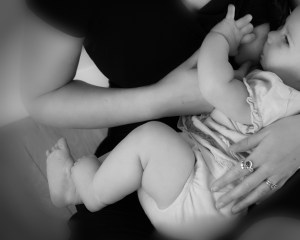
Check out those exclusively breastfed thighs!

Active Birth in the Hospital

One of the inspiring images in ICAN of Atlanta's "Laboring on the Monitors" slideshow.

The vast majority of my birth class clients are women desiring a natural birth in a hospital setting. My classes are based on active birth and include a lot of resources for using your body during labor and working with gravity to help birth your baby. Sometimes I feel like active birth and hospital birth are incompatible—i.e. the woman’s need for activity runs smack dab into the hospital’s need for passivity (i.e. “lie still and be monitored”). So, I was delighted to discover this awesome series of photos from ICAN of Atlanta of VBAC mothers laboring on the monitors. It IS possible to remain active and upright, even while experiencing continuous fetal monitoring.

In my own classes, we talk about how to use a hospital bed without lying down—the idea that a hospital bed can become a tool you can use while actively birthing your baby. Here is a pdf handout on the subject:How to Use a Hospital Bed without Lying Down. In this handout, I offer these tips for using the bed as an active assistant, rather than a place to be “tied down”:

While being monitored and/or receiving IV fluids that limit mobility, try:

  • Sitting on a birth ball and leaning on bed
  • Sitting on bed
  • Sitting on bed and lean over ball (also on bed)
  • Kneeling on bed
  • Hands and knees on bed
  • Standing up and leaning on bed
  • Leaning back of bed up and resting against it on your knees
  • Bringing a beanbag chair, putting it on the bed and draping over it (can also make “nest” with pillows)
  • Partner sitting on bed and woman leaning on him/supported squats with him
  • Partner sitting behind woman on bed (with back leaned up as far as it will go)

While giving birth, try:

  • Hands and knees on bed
  • Kneeling with one leg up (on bed like a platform or “stage”)
  • Holding onto raised back of bed and squatting or kneeling
  • Squatting using squat bar

While most of the above tips can be used during monitoring, additional ideas for coping with a simultaneous need for monitoring AND activity include:

  • Kneel on bed and rotate hips
  • Sit on edge of bed and rock or rotate hips
  • Sit on ball or chair right next to bed (partner can hold monitor in place if need be)

If something truly requires being motionless, it can be helpful to have some breath awareness techniques available in your “bag of tricks.” One of my favorites is: Centering for Birth

Some time ago, a blog reader posed the question, can I really expect to have a great birth in a hospital setting? I definitely think it is possible! I also think there is a lot you can do in preparation for that great hospital birth! When planning a natural birth in the hospital, it is important to consider becoming an informed birth consumer. I always tell my clients that an excellent foundation for a simple, effective, evidence-based birth plan is to base it on Lamaze’s Six Healthy Birth Practices. My own pdf handout summarizing the practices is also available: Six Healthy Birth Practices. Don’t forget there is also a great video series of the birth practices in action! You might also want to get a copy of the book Homebirth in the Hospital. And, check out this post from Giving Birth with Confidence: Six Tips for Gentle but Effective Hospital Negotiations.

Before you go in to the hospital to birth your baby, make sure you have some ideas about this very popular question, how do I know if I’m really in labor?

And, finally, be prepared for the hospital routines you may encounter by reading my post: What to Expect When You Go to the Hospital for a Natural Childbirth.

For some other general ideas about active birth, read my post about Moving During Labor (written for a blog carnival in 2009).

Best wishes for a beautiful, healthy, active hospital birth! You can do it!

Book Review: Homebirth in the Hospital

Homebirth in the Hospital
by Stacey Marie Kerr, MD
Sentient Publications, 2008
Softcover, 212 pages
ISBN: 978-1-59181-077-3
www.homebirthinthehospital.com

Reviewed by Molly Remer, MSW, ICCE, https://talkbirth.wordpress.com

I would venture to say that most midwifery activists and birth professionals have said at some point, “what she wants is a homebirth in the hospital…” This comment is accompanied with a knowing look, a bit of head shaking, and an unspoken continuation of the thought, “…and we all know that’s not going to happen.”

Well, what if it is possible? A new book by Dr. Stacey Kerr, Homebirth in the Hospital, asserts that it is. She was originally trained at The Farm in TN (home of legendary midwife Ina May Gaskin) and after going to medical school realized that she, “…needed to balance my new knowledge with my old priorities. I missed the feeling of normal birth, the trust that the birthing process would occur without technology, and the time-tested techniques that help women birth naturally. And so it was that I went back to midwives to find the balance.”
If you are a dedicated homebirth advocate, I recommend reading Homebirth in the Hospital with an open mind—clear out any cobwebs and assumptions about doctors, hospitals, and birth and read the book for what it is: an attempt to create a new model of hospital birth. What Dr. Kerr proposes in her book is a model of “integrative childbirth”—the emotional care and support of home, while nestled into the technology of a hospital.

The opening chapter explores the concept of integrative childbirth and “the 5 C’s” of a successful integrative birth: choices, communication, continuity of care, confidence, and control of protocols (“protocols are the most disempowering aspect of modern maternity care…”).

This section is followed by fifteen different birth stories, beginning with the author’s own (at a Missouri birthing center—my own first baby was born in a birth center in Missouri, so I felt a kinship there).

The births are not all happy and “perfect,” not all intervention-free, and most are quite a bit more “managed” and interfered with than a lot of homebirthers prefer (one is a cesarean, several involve epidurals or medications). I, personally, would never freely choose a “homebirth in a hospital” (I also confess to retaining a deep-seated opinion that this phrase is an oxymoron!). However, that is not the point. Over 90% of women do give birth in a hospital attended by a physician and I appreciate the exploration of a new model within the constraints and philosophy of the hospital.

The book closes with a chapter called “how to be an integrative childbirth provider.” The book has no resources section and no index.

I certainly hope that doctors read this book. I am also glad it is available for women who feel like homebirth is not an option or not available and would like to explore an integrative approach. Even though my opinion is that none of the births are really “homebirths in the hospital” as most bear little resemblance to the homebirths I know and love, unlike the content of the standard hospital birth story, they are deeply respectful births in the hospital and that’s the issue truly at the heart of this book.

—-

Disclosure: I received a complimentary copy of this book for review purposes.

Health Care or Medical Care?

For quite some time, breastfeeding advocates have been working to change the language of infant feeding to reflect that breastfeeding is the biological norm (and formula feeding is the replacement/substitute). This includes sharing about the “risks of formula feeding” rather than the “benefits of breastfeeding” as well as encouraging research that no longer uses formula-fed babies as the control group or considers formula to be a benign variable (i.e. the babies in the breastfed group of many research projects also received some formula, but since our culture views formula as the “norm,” this was not seen as a conflict). I love Diane Wiessinger‘s example—would we ever see a research project titled “Clear air and the incidence of lung cancer.” No! Problem behavior is linked to problem outcomes in other areas of research, so it would be “Smoking and the incidence of lung cancer.” However, we routinely see research titles like “Breastfeeding and the rate of diabetes” rather than linking problem to outcome–“Infant formula and the rate of diabetes.”

Similarly, “intactivists” (people who oppose circumcision) have pointed out that there should be no need to refer to some boys as “uncircumcised”—being uncircumcised is the biological norm, it is “circumcised” boys that should received the special word/label. (On a related side note, I have written about “pleonasms”–words that contain unnecessary repetition–and birth and breastfeeding in a previous post.)

So, this brings me to another need for a change in the common language–correctly identifying whether we are really talking about “Health Care” or “Medical Care.” This was originally brought to my attention by Jody McLaughlin the publisher of Compleat Mother magazine. We have a tendency to refer to “health care” and to “health care reform” and “health insurance” and and “health care providers” and “health care centers,” when it reality what we are truly referring to is “medical care”—medical care reform, medical insurance, medical care providers, and medical care centers. As Jody says (paraphrasing), “we do not have a HEALTH care system in this country, we have a MEDICAL care system.” She also makes an interesting point about a trend to re-name medical care systems with names that use the word “health” instead:

This is what I have observed: Our local facility was called Trinity HOSPITAL, later re-named Trinity MEDICAL CENTER, and now it is Trinity HEALTH.

In the late 70’s and early 80’s the discussions centered around the MEDICAL crisis, MEDICAL reform, MEDICAL insurance and MEDICAL care cost containment.

MEDICAL insurance morphed into HEALTH CARE insurance. MEDICAL reform morphed into HEALTHCARE reform.

This is a difference with a distinction.

Health care includes clean air and safe water, enough good food to eat, exercise, rest, shelter and a safe environment as well as healing arts and the availability of and appropriate utilization of medical care services.

Medical care is surgery, pharmaceuticals, invasive tests and procedures. Malpractice tort reform is on the agenda too but no one is talking about reducing the incidence of malpractice, or alleviating the malpractice crisis by improving outcomes.

Why does this discussion belong here? First, I wanted to address it because I have a special interest in our use of language surrounding birth and how that language can impact our birth experiences. Secondly, if we emphasize that birth is a normal bodily process, a normal life function, and not an illness, we need to make sure that we are focused on health care services for birth, rather than medical care services. Personally, I think the midwives model of care can truly be described as health care, whereas standard maternity care in the U.S. can much more aptly be described as medical care.

Maternal-Fetal Conflict?

You will have ideas, options and paths to ponder, but you will also have a sense of possible directions to take as you consider midwifery, childbirth education, or being a doula or an activist. Your path may be circular or straight, but meanwhile you can serve motherbaby while on the path, with a destination clearly in mind.” She also says, “I use the word midwife to refer to all birth practitioners. Whether you are a mother, doula, educator, or understanding doctor or nurse you are doing midwifery when you care for motherbaby.” —Midwifery Today editorial by Jan Tritten

Mamatoto is a Swahili word meaning “motherbaby”–reflecting the concept that mother and infant are not two separate people, but an interrelated dyad. What impacts one impacts the other and what is good for one is good for the other. The midwifery and birth communities have used this concept for quite some time and more recently some maternal health researchers have also referenced the idea of the “maternal nest”–that even following birth, the mother is the baby’s “habitat.”

Critiques of homebirth sometimes rest on a (flawed) assumption of maternal-fetal conflict (which is also invoked to describe situations with substance abuse or other risky behavior). In the Fall 2007 issue of CfM News, Willa Powell wrote about maternal-fetal conflict in response to an ABC segment on unassisted birth. She wrote:

[quoting the expert physician interviewed for the segment] “The few hours of labor are the most dangerous time during the entire lifetime of that soon to be born child. Because of this, I would argue, all soon to be born children have a right to access to immediate cesarean delivery, and women who insist on denying this right are irresponsible.”

This was the only professional opinion in the program on unassisted birth, and he set up a typical expression of an obstetric community belief: the “maternal-fetal conflict.” The notion is that there are two “patients”, where the mother’s desires are sometimes in conflict with the well-being of the baby, and that the obstetrician has a moral/professional obligation to abandon the mother in favor of the baby.

I have to remind myself that Dr. Chervenak is setting up a false choice. In fact, this scenario is a “doctor-patient conflict”. The mother wants what’s best for herself and her child, but she disagrees with her doctor about what is, in fact, best. Women are making choices they believe are best for themselves and best for their babies, but those choices are often at odds with what doctors consider best for both, and certainly at odds with what is best for the obstetrician!

In the book Birth Tides, the author discusses maternal-fetal conflict:

According to obstetricians, the infant’s need to be born in what they have defined as a safe environment, i.e. an obstetric unit, takes precedence over the mother’s desire to give birth in what doctors have described as the comfort of her own home. It is a perspective that pits the baby’s needs against those of the mother, setting ‘overriding’ physical needs against ‘mere’ psychological ones. It is rooted in the perception that the baby is a passenger in the carriage of its mother’s body–the ‘hard and soft passages,’ as they are called. It is also rooted in the notion of the mind-body split, in the idea that the two are separate and function, somehow, independently of each other, just like the passenger and the passages. While women may speak about ‘carrying’ babies, they do not see themselves as ‘carriers,’ any more than they regard their babies as ‘parasites’ in the ‘maternal environment.’ If you see your baby as a part of you, there can be no conflicts on interests between you.

I previously linked to a book review that explores this concept of the more aptly described “obstetric conflict” in even more depth.

I think it is fitting to remember that mother and baby dyads are NOT independent of each other. With a mamatoto—or, motherbaby—mother and baby are a single psychobiological organism whose needs are in harmony (what’s good for one is good for the other).

As Willa concluded in her CfM News article, “...we must reject the language that portrays a mother as hostile to her baby, just because she disagrees with her doctor.

An example of a mamatoto 🙂

Women and Knowing

I read an interesting article by anthropologist and birth activist, Robbie Davis-Floyd, in the summer issue of Pathways Magazine. It was an excerpt from a longer article that appeared in Anthropology News, titled “Anthropology and Birth Activism: What Do We Know?” In the conclusion, Davis-Floyd states the following:

“Doctors ‘know’ they are giving women ‘the best care,’ and ‘what they really want.’ Birth activists…know that this ‘best care’ is too often a travesty of what birth can be. And yet on that existential brink, I tremble at the birth activist’s coding of women as ‘not knowing.’ So, here’s to women educating themselves on healthy, safe birth practices–to women knowing what is best for themselves and their babies, and to women rising above everything else.” –Robbie Davis-Floyd

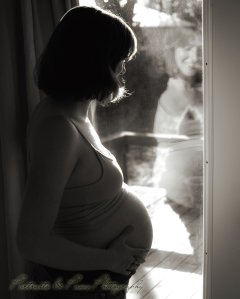
I believe that every woman who has given birth knows something about birth that other people don’t know. I also believe that women know what is right for their bodies and that mothers know what is right for their babies. I’m also pretty certain that these “knowings” are often crowded out or obliterated or rendered useless by the large sociocultural context in which women live their lives, birth their babies, and mother their young. So, how do we celebrate and honor the knowings and help women tease out and identify what they know compared to what they may believe or accept to be true while still respecting their autonomy and not denigrating them by characterizing them as “not knowing” or as needing to “be educated”?

Additionally, with regard to education as a strategy for change, I’m brought back to a point I raise in my community organizing class: People often suggest “education” as a change strategy with the assumption that education is all that is needed. But, truly, do we want people to know more or do we want them to act differently? There is a LOT of education available to women about birth choices and healthy birth options. What we really want is not actually more education, we want them to act, or to choose, differently. Education in and of itself is not sufficient, it must be complemented by other methods that motivate people to act. As the textbook I use in class states, “a simple lack of information is rarely the major stumbling block.” You have to show them why it matters and the steps they can take to get there…

She knows

Mother Blessing Quotes

For the mother blessing ceremony I wrote about recently, I also went through my birth quotes collection (which is becoming quite extensive!) and picked out some special quotes that reminded me of things I wanted to share with the birthing mama-to-be.

“For each of us as women, there is a deep place within, where hidden and growing our true spirit rises…Within these deep places, each one holds an incredible reserve of creativity and power, of unexamined and unrecorded emotion and feeling. The woman’s place of power within each of us…it is dark, it is ancient, and it is deep.” –Audre Lorde

While some people have said they don’t like the use of the word “dark” in this quote, I think it is perfect. In the darkness is where wonderful seeds take root and grow.

“It is so easy to close down to risk, to protect ourselves against change and growth. But no baby bird emerges without first destroying the perfect egg sheltering it. We must risk being raw and fresh and awkward. For without such openness, life will not penetrate us anew. Unless we are open, we will not be filled.” –Patricia Monaghan

Since, as I mentioned, this recent ceremony was for a PAL-mama, I included the above quote. While I don’t really like the image of the egg being destroyed (if I relate the quote to birth), I feel like this is a good quote to describe the bravery involved with consciously undertaking the pregnancy after loss journey.

I also included my top two favorite quotes about birth and pain. The first:

“When I say painless, please understand, I don’t mean you will not feel anything. What you will feel is a lot of pressure; you will feel the might of creation move through you. Pain, however, is associated with something gone wrong. Childbirth is a lot of hard work, and the sensations that accompany it are very strong, but there is nothing wrong with labor.” –Giuditta Tornetta

I love the part about the might of creation. How is that for a bold summation of the potency and power of birth. While some people object to the inclusion of the word “painless” in it, to me the takeaway message of the quote is that birth is too big for the word “pain” to adequately contain or describe it. We need more and better language for it! And, that brings me to the second quote:

“So the question remains. Is childbirth painful? Yes. It can be, along with a thousand amazing sensations for which we have yet to find adequate language. Every Birth is different, and every woman’s experience and telling of her story will be unique.” –Marcie Macari

From the same author, two more quotes, this time describing the transformative power of birth:

“Birth is an opportunity to transcend. To rise above what we are accustomed to, reach deeper inside ourselves than we are familiar with, and to see not only what we are truly made of, but the strength we can access in and through Birth.” –Marcie Macari

“A woman in Birth is at once her most powerful, and most vulnerable. But any woman who has birthed unhindered understands that we are stronger than we know.” –Marcie Macari

And, then, a helpful reminder, that birth is our gateway to conscious, active, full-on parenting for the rest of our lives!

“The natural process of birth sets the stage for parenting. Birth and parenting mirror each other. While it takes courage and strength to cope with labor and birth, it also takes courage and strength to parent a child.” –Marcy White

And, finally, I shared the quote that to me was a touchstone describing my feelings about Alaina’s entrance into my world. She did this for me.

“A baby, a baby, she will come to remind us of the sweetness in this world, what ripe, fragile, sturdy beauty exists when you allow yourself the air, the sunshine, the reverence for what nature provides…” – Sarah Werthan Buttenwieser (in Literary Mama)

Speaking of that sweet baby of mine, here she is at my friend’s mother blessing ceremony. I’m so glad she’s here! And, my heart is full for my friend as she is soclose to her own fresh baby girl. I’m glad my daughter is going to grow up within a circle of strong, empowered, healthy women and girls and I love taking her to blessingways with me, knowing that I am socializing her into a model of womanhood and life that values the feminine 🙂 (and, yes, that is a bindi on her forehead).

(c) Sincerely Yours Photography