Archives

Non-Advice Books for Mothers

Mothering can involve a complicated and multileveled emotional terrain. What often speaks most clearly and helpfully to mothers is other women’s stories and experiences, NOT “advice,” prescriptions, promises, or admonishments.

I’ve noticed two types of “attachment parenting” mothers—those who discovered AP after having their baby or child(ren) and those who chose attachment parenting in advance, sometimes way in advance. While of course a host of factors are involved, both internal and external, I’ve also noticed that those who discovered, feel more content and are less likely to be hard on themselves about their AP-“failures.” If you discover something, you have an ideal to live up to. If what you start with is the ideal, essentially the only way to go is down! I’m one of the latter bunch, having envisioned my attachment parenting perfection and bliss for at least three years prior to actually giving birth to my first baby. After my first son’s birth, I dove into more and more and more parenting books, trying to make sense of my new life. And, to me totally honest, Dr. Sears books started to drive me out of my frickin mind, even though I agreed with the guy about almost everything. I still recommend him, I met him in real life in 2007 and consider him an excellent resource, however tMarch 2013 078he subtext I perceived in his books was: “do it the right way and you’ll always be happy and baby will never cry” and that was really, really hard on me as a vulnerable, sensitive new mother of a pretty cranky baby. So, I practically collapsed with relief when one of the birth center doctors suggested reading the book Misconceptions by Naomi Wolf. After this, I became obsessed with what is somewhat dismissively referred to as “the momoir”—memoirs of motherhood written by real women. Loved them. Lived by them. Learned from them. They “heard” me when I really, really needed to be heard.
Recently, a lovely friend and first-time mom on Facebook remarked that she needed to stop reading “advice” books about motherhood and try something else (though, still interested in reading about motherhood). Her comment reminded me so much of myself and I swooped in, ironically, with “advice” about other books to read. As I thought about books to suggests, the piles upon piles of books that I devoured came back to me in a rush. This morning, I went through my bookshelf and made a list of those that were influential enough to make the cut and be kept, versus being resold or passed along in the giveaway box. It is a big list! And, it is only a fraction of what I actually read. What was also really interesting for me to realize was that I haven’t read a book like this in ages, there are probably dozens more now! I still have several unread on shelf, but I no longer feel as if I need them in the same “lifeline” way in which I combed the library shelves with my first baby in his little sling.

So, here are my tips and suggestions on non-advice-based books for mothers. In general, I vote ixnay on any kind of “how to” mothering/parenting books. I vote yes on parenting memoirs, books about self-nurturing and mother-care, and sociopolitical commentary on motherhood. Disclaimer: a lot of the books on my list are written by “mainstream” authors, many of whom are pretty critical, sometimes very harshly, of attachment parenting. I find that some of these books create a lot of polarization with regard to Amazon reviews. At the risk of sounding very snobby myself, I would suggest that you are unlikely to enjoy these books if you are any of the following:

  • Unable or unwilling to engage intellectually with topics surrounding motherhood/parenthood.
  • Uninterested in the larger social, cultural, and political context surrounding individual mothers and their parenting “choices.”
  • Dismissive of the role that sociopolitical influences have on the lives and experiences of individual women.
  • Unable or unwilling to allow other women to define their own experiences and to recognize that not everyone experiences things the same way, and that that is fine, even desirable.
  • Fond of describing maternal honesty as “whining” and prefer “suck it up” approaches to sometimes painful explorations of complex feelings.

Before I list my books, make sure to check out Brain, Child magazine! I DO still read and devour this and feel as if it “saved me” multiple times during the first three years of parenting. And, make sure to check out my What Kind of Mother Are You Quiz, based on a memoir called Inconsolable.

These books may include links to prior posts/reviews about them. A lot of them are a blend of memoir and sociopolitical commentary—I classified them according to my perception of their primary emphasis. For all book reviews I’ve ever posted on my site, see this page.

Memoirs:

  • Let the Baby Drive by Lu Hanessian. This is one of my very favorites. Nourishing and enriching and relevant. May have a small tinge of “do it my way.”
  • Operating Instructions by Anne Lamott. This is a classic. A memoir of the author’s first year with her son. She is a single parent and so the book addresses some of the challenges involved with parenting solo. This book is incredibly funny at times.
  • Callie’s Tally by Betsy Howie. Very, very funny, though not particularly “AP” (so if you’re looking for that, read Let the Baby Drive instead). This book chronicles how much money the author has spent on her daughter during her first year of life.
  • A Better Woman by Susan Johnson this one is an often painful to read memoir of a woman’s experience with an obstetrical fistula
  • Fruitful by Anne Roiphe (also addressed in prior post: Motherhood, Feminism, and More). This is a good look at the tensions between feminism and motherhood and navigating new identities
  • Oh boy, oh boy, oh boy! A tale of mothering three sons.
  • The Blue Jay’s Dance by Louise Erdrich. Very lyrical, mild book. (Quoted or written about in these prior posts)
  • Dispatches from a Not-So Perfect Life–by a frequent contributor to Brain, Child magazine.
  • Inconsolable: How I Threw My Mental Health Out with the Diapers–memoir of a journey through severe postpartum depression. Darkly funny. Critical of attachment parenting, but in a manner in which I can identify.
  • Growing Seasons by Annie Spiegelman. This memoir is by a “sandwich generation” mother, caring for a toddler and for her own ailing mother.

Anthologies:

  • Mothers Who Think—collection of essays from writers for Salon.
  • The Bitch in the House–not all about parenting, about marriage, work, etc. Often angry.
  • Toddler–stories about parenting toddlers by one of the former editors of Brain, Child.
  • Beyond Onecollection of essays about adding a second child. I loved it. A friend I lent it to thought it was “horribly depressing.”
  • Real Moms—a surprising gem from MOPS. While I find many of their books too “surface” in emphasis and also very mainstream-Christian-mom directed, this one is great. One of my favorites.
  • The Fruits of Labor–about parenting at all stages of life. Some are tragic. This is more literary memoir than “tell all” memoir.

Sociopolitical commentary and analysis: March 2013 090
  • What Mothers Do (appears in Motherful) by Naomi Stadlen. I love this book! It takes a close look at how women mother and how skillfully they do so (so that on the outside it looks like they are doing “nothing”). This is not a “how to” book, but a book that tries to look below the surface and explore concepts that are very difficult to verbalize/articulate. She strives to put into words/give us language to describe what is it that mothers do all day–their often invisible contributions to life. Contributions that are often invisible even to ourselves. This is a very affirming and unique book. This is one of my top picks for tender new mothers. There may be some subtext about doing it “right” though.
  • Of Woman Born (included in this post: Motherhood, Feminism, and More). This is a classic sociological and personal exploration of the role, meaning, and cultural valuation (or devaluation) of mothers. This was my first exposure to the notion of motherhood as institution rather than simply as role/relationship.
  • Price of Motherhood  by Ann Crittenden. Emphasis on economics, but very interesting analysis of multiple cultural, political, and social influences on mothers.
  • The Motherhood Manifesto—by Moms Rising. Showed me there is an actual “mother’s movement” afoot!
  • Paradox of Natural Mothering—academic in tone. I really enjoy this book. Lots of food for thought. It is a little uncomfortable to read too because she is so spot-on in her analysis of mothers like me. It is strange to feel “under the microscope.” The author herself is a “quasi-natural mother,” so the analysis isn’t harsh criticism, but it is a critical look at the “cult” (my word, not hers) of natural mothering and has a LOT of excellent discussion about feminism and natural mothering. She says–and I completely agree–that natural mothering represents the intersection of three ideological frameworks: voluntary simplicity, attachment parenting, and cultural feminism.
  • The Mask of Motherhood
  • Misconceptions by Naomi Wolf. As I mentioned, this was the first book that I ever read about a woman’s postpartum experience. It was suggested to me by the doctor at the birth center when I expressed some teary frustrations about adjusting to my new life and wondering if I would ever get “back to normal.” This book is on the “angry” side–it is not a nurturing and tender read and she is critical of things I value (like LLL). I did not identify with the author’s birth experiences or feelings about birth (I felt tremendous during birth and powerful, empowered, triumphant, and confident) and her conclusions seems mis-drawn, i.e. her birth was terrible, ergo, birth itself is terrible and those who tell you otherwise are lying, but her postpartum feelings closely match my own (weak, wounded, invisible, etc.)
  • Perfect Madness by Judith Warner. Included in this post: I just want to grind my corn! Fairly harshly critical of attachment parenting. takes potshots at LLL.
  • The Mother Knot by Jane Lazarre (included in: OBs and Normal)
  • Big Purple Mommy—about creativity and motherhood and still nurturing one’s creative self.
  • The Mother Trip (included in this post: Small Stone Birth Activism)–this one is written by Ariel Gore, original founder of the awesome zine, Hip Mama.
  • The Mother Dance by Harriet Lerner. This one focuses on the psychology of women primarily.

Mother nurturing/validating: March 2013 068

  • 25 Ways to Joy & Inner Peace for Mothers
  • The Tao of Motherhood
  • The Hidden Feelings of Motherhood
  • Mother Nurture by Rick & Jan Hanson. This book is phenomenal. Very comprehensive. It addresses mothers of children from birth to age 5, so even if you are several years past the early postpartum weeks, this book has much to offer to you! One of the focus areas is on “Depleted Mother Syndrome” and addresses coping with it via all areas (body, mind, social/relational).
  • Mothering the New Mother–classic postpartum doula book! Highly recommended.
  • This isn’t what I expected—postpartum depression recovery.
    After the Baby’s Birth by Robin Lim. This book is very holistic in approach and is one of my very favorite postpartum reads. It offers such gems as, “you’re postpartum for the rest of your life” (which some people have said they feel like is depressing, but I find a tremendously empowering statement!) and “when the tears flow, so does the milk” (with regard to the third day postpartum). It does have a large section on Ayurvedic cooking, which, personally, I don’t connect with, so be aware that that section is in there and depending on your belief system, might make perfect sense to you, or might seem inapplicable like it feels to me.
  • Mothers Guide to Self-Renewal

Novels/Others:

  • I Don’t Know How She Does It—fiction about an employed mother and the juggling act with which she tried to balance work and family.
  • Motherhood Confidential–this one is pretty weird. I almost didn’t include it and I also don’t know whether it is fiction or not. It is billed as “chicken soup for the spleen” and as an “anti-advice” book. I like the recommendation to scrape off the “dogma-doo” of parenting. It is about two best friends, one who becomes an attachment parenting homeschooling mother and the other who is a “detachment parent” and how rocky their relationship becomes.
  • Three Shoes, One Sock, and No Hairbrush by Rebecca Abrams. Primarily about adding a second child.

Tuesday Tidbits: Story Power

“The great motherhood friendships are the ones in which two women can admit [how difficult mothering is] quietly to each other, over cups of tea at a table sticky with spilled apple juice and littered with markers without tops.” ― Anna Quindlen February 2013 138

This week, almost ten years after I actually had my first experience with my first baby practice breathing in the womb, I received yet another comment from a mother worried that the practice breathing movements she was feeling were really her baby having seizures. This reminds me of both the power of personal stories and of the power of the internet. I didn’t know ten years ago that my voice would still be able to reach off the page and touch another mother’s life today. That feels good! I also like that this long-lasting post is just my little story. It isn’t a scientific article, it isn’t written in a professional tone, or  written with detached objectivity, it is just me telling my story about something that happened and what I learned from it. And, that speaks to other mothers in an irreplaceable way. Since the post now has 130 comments on it, it has become a story-house, so to speak of woman after woman’s stories of this experience and so each woman who comes for the initial story can then benefit from the voices of many other mothers, all in the same place.

And, in a beautiful full-circle experience, the original author of that “miscarriages are labor, miscarriages are birth” quote I’ve used so many times since 2009 and that meant so much to me, found my website this week and left a comment with an update about her own life:

“I am so pleased that my words brought you comfort during a painful time of your life. My miscarriages shaped my life profoundly, as did my experiences as a miscarriage/stillbirth doula. Happily, after many years of infertility, I did give birth to living children, and am now a happy grandmother. The older I get, the more I realize that those little souls who spent their entire lives within me brought me incredible gifts. I am a much better person because they existed…”

Her story and her “old” words reached off the page to me and touched me deeply at a time when I desperately needed them and they’ve gone on and on from there to help many other women.

A lot of other things about stories have been popping off the page at me…

I got a e-newsletter from one of my favorite writers, Jen Loudon, and she was doing an interview with Justine Musk. About said interview with Justine, Jen says:

She writes powerfully about the intersections of so many things I care about: being a creative woman and a feminist, the power of shaping our own stories, the sacred obligation to “connect with your gifts and search for that sweet spot where they cross with the call of the times,” truth, and even thigh-high boots…

And, speaking of feminism and all that good stuff, I followed an internet rabbit trail that started with First the egg’s link to a post at blue milk about slacker moms and white privilege (really good observations, by the way, that behavior reflecting questionable judgement exhibited by a white, middle class mother is way more likely to be blown off or viewed as a funny story than the same story about a poor and/or not-white mother) and eventually landed me at this post about “mothers you hate.” Nestled midway through the article was this interesting observation:

“…The militant mother feels strongly about what happens to her body during birth – and to her baby’s – and she wants women to know about their options. She’s also readily marginalised by powerful institutions. In pro-choice circles we otherwise call the women fighting for rights like these ‘activists’. As a feminist, it concerns me that we’re so intolerant towards birth activism when abortion activism is core to our understanding of bodily autonomy. The activist mother’s beliefs are dismissed as inflexibility, but I’ve had just as many mothers recommend an epidural to me as I’ve had women recommend drug-free births, and they all did so with equal enthusiasm…”

Thinking about mothers and how they interact and how they experience themselves and their lives, my eyes then snapped to this quote in a longer book review:

“…In a sharp observation early in the book, Smyth comments that ‘the role of mother is not immediately intelligible to those who find themselves inhabiting it’ (p. 4). This is certainly borne out in the confessional writing and memoirs of young (feminist) women, who try to make sense of their experiences as a new mother. They write of a crisis of selfhood, feeling undifferentiated in ‘a primordial soup of femaleness’ (Wolf 2001) and of experiencing a gendered, embodied and relational self for the first time (Stephens 2012)…”

Returning to the power of personal stories (but also reminding us not layer our own unresolved personal stories on top of another mother’s grief), I read this very strong, powerful article about miscarriage:

“…I am grieving my enormous loss while simultaneously feeling more at home in my body than ever before. No one seems to want to hear this. No one seems to believe me. Ironically, it wasn’t until I began sharing my story of my daughter emerging from me at 15 weeks that I began to feel sprinkles of shame. Why would I be ashamed of chromosomes gone wrong? How would I have any control over this? Magical thinking and long stored up dark reserves seep out as women experience reproductive hardships. They think they must have done something to “deserve” this, had to have been “unlucky”, and chase every possible line of thinking imaginable to connect the dots. There are no dots here. Miscarriage isn’t about pregnancy ambivalence or anxiety, prior abortions or outbursts of venomous anger, feelings of sadness or anything else that you can seemingly control.

Miscarriage is simpler than all of that. It is loss of life that wasn’t sustainable.

I have fantasies of shouting this from rooftops and tweeting random cryptic notes containing the facts about pregnancy loss in the hopes of galvanizing women’s perceptions of themselves. I daydream about pleading with women not to blame their beautiful bodies for their reproductive devastations. I wish I could dare every woman who has at some point or another wondered if they were somehow the root cause of a reproductive disappointment to turn that question on its head. “What if you are not the reason that this happened to you? What if it just is?” I can’t help but wonder if this would [elicit] more anger, more grief, more relief, and/or more hope. Or maybe something else completely. I am confident that it would engender less competitiveness, less perfectionistic strivings, and more self-love…”

One of my own unresolved bits about my own losses that gets layered on top of (or in the way of listening to) other women’s stories is the WHY of my own losses. I don’t know for certain that Noah’s birth at almost 15 weeks was actually because his life wasn’t sustainable. I continue to have the lingering fear that it was really the UTI I had at the time (the first of my life) that killed him. My gut says that his lifespan only extended that far and was genetically programmed to end at that point, but there is a little part of me that still wonders, what if my body killed him. Ditto with my early miscarriage, my fear is that my hormone levels were low and because I got pregnant again “too soon,” my body couldn’t sustain what might have under different body-circumstances been a perfectly viable baby.

What stories have touched your own life this week? How have your stories helped another mother?

“We live by story. Yours enlarges the circle.” — Richard Rhodes

I am a Story Woman

Taking it to the Body, Part 4: Women’s Bodies and Self-Authority

This is a somewhat shortened version of a prior post. I revised it to be a part of my taking it to the bodyDecember 2012 001 series.

I believe a potent source of female power lies in the female body and that body wisdom has been suppressed and denied over the course of many years as a means of oppression and control. One of the root issues of patriarchy is who “owns” women’s bodies—is it men, is it the government, is the medical system, or is it the woman herself? (you know my pick!).

Body wisdom and sources of power

Considering power, sources of power, and body wisdom, I appreciated reading Barbara Starrett’s essay The Metaphors of Power in the book The Politics of Women’s Spirituality. While she uses a different example, I have modified and paraphrased her thoughts to make the idea about birth. Starrett originally states, “We can create power centers both within and outside ourselves…Power is where power is perceived. Power resides in the mind. We can give or withhold power through our beliefs, our felt thoughts.” Medical professionals can make decisions about a woman’s body and birth choices effectively only as long as women believe that the professionals have the right to do this. When women reclaim the power to decide for themselves about birth, the doctors proclaim in a vacuum. Their power depends on the transference of our power, through our belief that this is right…Power is where power is perceived. This also means that in any given in-the-world situation, we can intentionally set up our own power centers. If we believe that power resides in those centers, it will. We will act successfully on this belief. Women’s organizations, unions, birth coalitions, etc., will never work unless we regard them, “as the legitimate centers of power…We must grant our own power to ourselves” (p. 191).

While this comes a little too close for comfort to me with the idea that “we create our own reality” (which I cannot fully embrace due to the logical extension into blaming the victim that it creates), I connect deeply with the idea that we must treat women’s organizations and work as legitimate power sources. I think of books/movements like Our Bodies, Ourselves, for example. To me, this is a definitive women’s health resource—by women, for women and separated from the medical establishment that often dehumanizes women. If we continue to believe our “alternative” structures are just that, “alternative,” then the dominant model is still the norm and still accepted, even by us, as “normal.”

Starrett continues her essay by sharing that “It is necessary for some women to risk total reclamation, to risk the direct and intentional use of power, in bold, even outrageous ways. It takes only a minority of women to alter present reality, to create new reality, because our efforts are more completely focused, more total.” (p. 193) This is the risk that the creators of Our Bodies, Ourselves took. It is the risk birth activists and women’s health activists continue to take.

Consult your health care provider?

In my own life, I am frustrated by the ubiquitous phrase, “Consult your health care provider.” No, thanks. I prefer consulting myself, my books, google, my own research, and my friends. Last time I checked, my doctor did not own my body nor did she have divine revelation as to what I need in my life. I am a breastfeeding counselor providing phone and email support to women who have breastfeeding questions. Women frequently receive very poor breastfeeding “advice” from their doctors—to the extent that I honestly think they’d receive better information by polling random strangers at Wal-Mart with their questions (and, yes, I will actually tell women this). One caller once used the phrase, “but, I don’t want to disobey my doctor” and I found this extraordinarily telling as well as depressing. I recognize that doctors have special training and can be life-saving, however, what does that say about mothering in our culture that a woman would not act on behalf of her own baby and herself because of fear of being disobedient to a professional that she has hired? She is a consumer of a service, not the subject of a ruler!

This brings me to a thought by Dr. Michelle Harrison, author of the book A Woman in Residence:

I used to have fantasies…about women in a state of revolution. I saw them getting up out of their beds and refusing the knife, refusing to be tied down, refusing to submit…Women’s health care will not improve until women reject the present system and begin instead to develop less destructive means of creating and maintaining a state of wellness.”

Indeed! And, in an essay by Sally Gearhart’s about womanpower, she notes: “…there’s no forcing any other woman into a full trot or a gallop; she will move at her own pace, but at her own pace we can be sure she will move. At this point I always remind myself that the patriarchal use of crash programs is antithetical to organic movement; in a crash program the theory goes that if you can get nine women pregnant you can have a baby in one month; it takes women, I suppose, to understand that it doesn’t work that way.” (p. 202-203)

Reclaiming power

So, how do women reclaim power? I think story holds a key to power reclamation in this context. As I’ve referenced before, Carol Christ describes it thusly, “When one woman puts her experiences into words, another woman who has kept silent, afraid of what others will think, can find validation. And when the second woman says aloud, ‘yes, that was my experience too,’ the first woman loses some of her fear.” As I touch on above, for me it is to see myself and my body as a source of wisdom and to refuse to participate in structures that do not honor my power and personal agency. It involves more often turning to my peers, to other women, for advice and comfort and support, rather than to experts.

I’ve written many times before that I am a systems thinker. Women’s choices about their bodies and about birth are not made in personal isolation, but in a complexly interwoven network of social, political, medical, religious, and cultural systems. As Gearhart notes, “There may be no ‘enemy’ except a system. How do we deal with ‘the enemy’? As seldom as possible but when necessary by opening the way for [their] transformation into not-the-enemy. What weapons do we use? Our healing, our self-protection, our health, our fantasies, our collective care…” (p. 203).

20121218-134856.jpg

Taking it to the body… Part 2: Embodied mindfulness, introversion, and two hours!

Trust yourself. Take it to the body. She always knows.”

For my meditation practice for my compassion class, I’ve been working with several things, starting with the above quote. As I explained in part 1, how often do we deny the urgings of our bodies? It seems as if mindfulness begins there.

So, I’ve decided to practice an embodied mindfulness and meditation…taking it to the body and checking in with what she knows. Consciously noticing and being aware of my body’s signals to sleep, eat, and eliminate. It is much harder than you would think for something so basic and essential for well-being and I “fail” many, many times a day, but, and this is the point: I notice as I am failing, as I am not listening. That is better than remaining unconscious, right?!

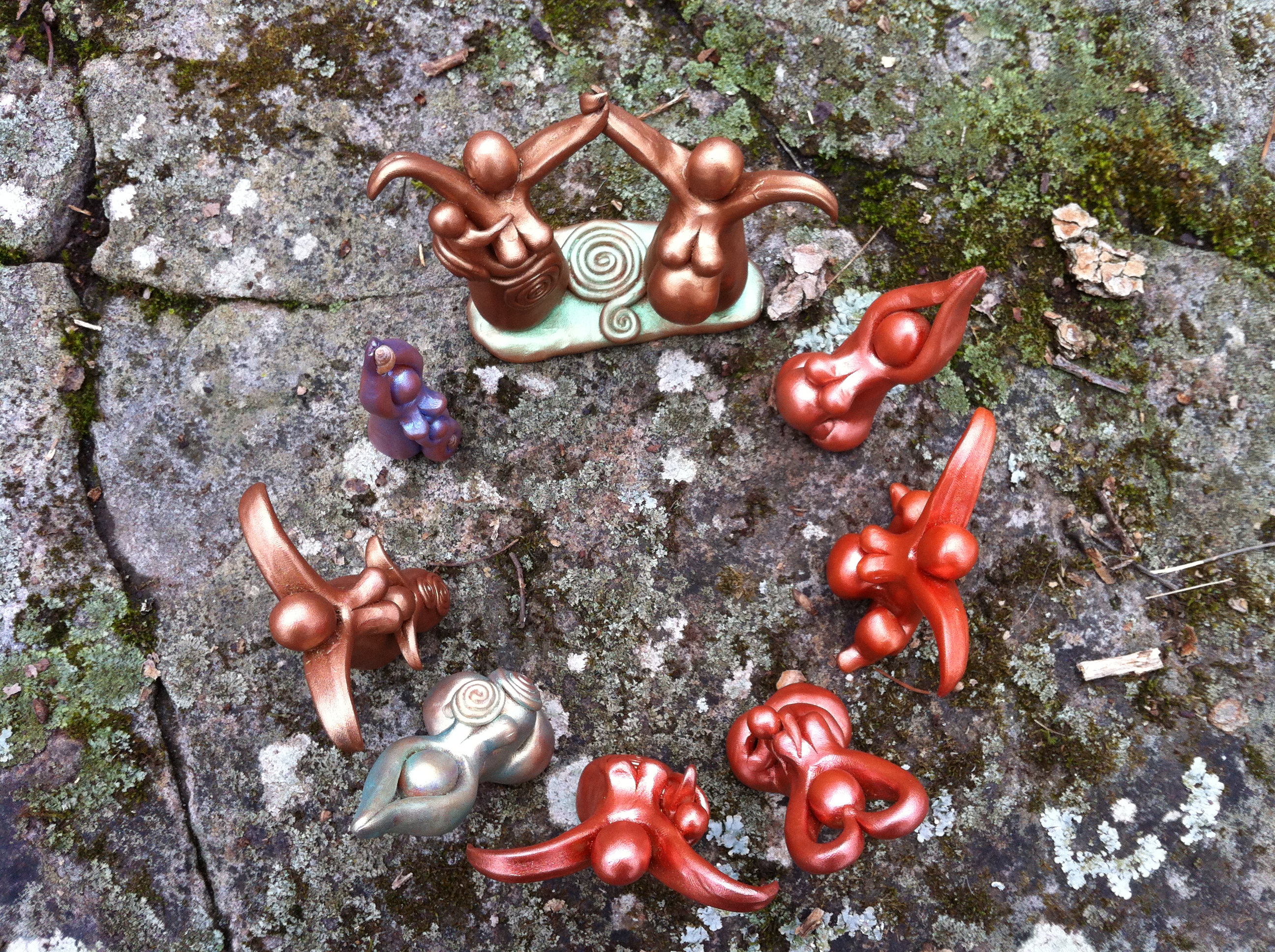
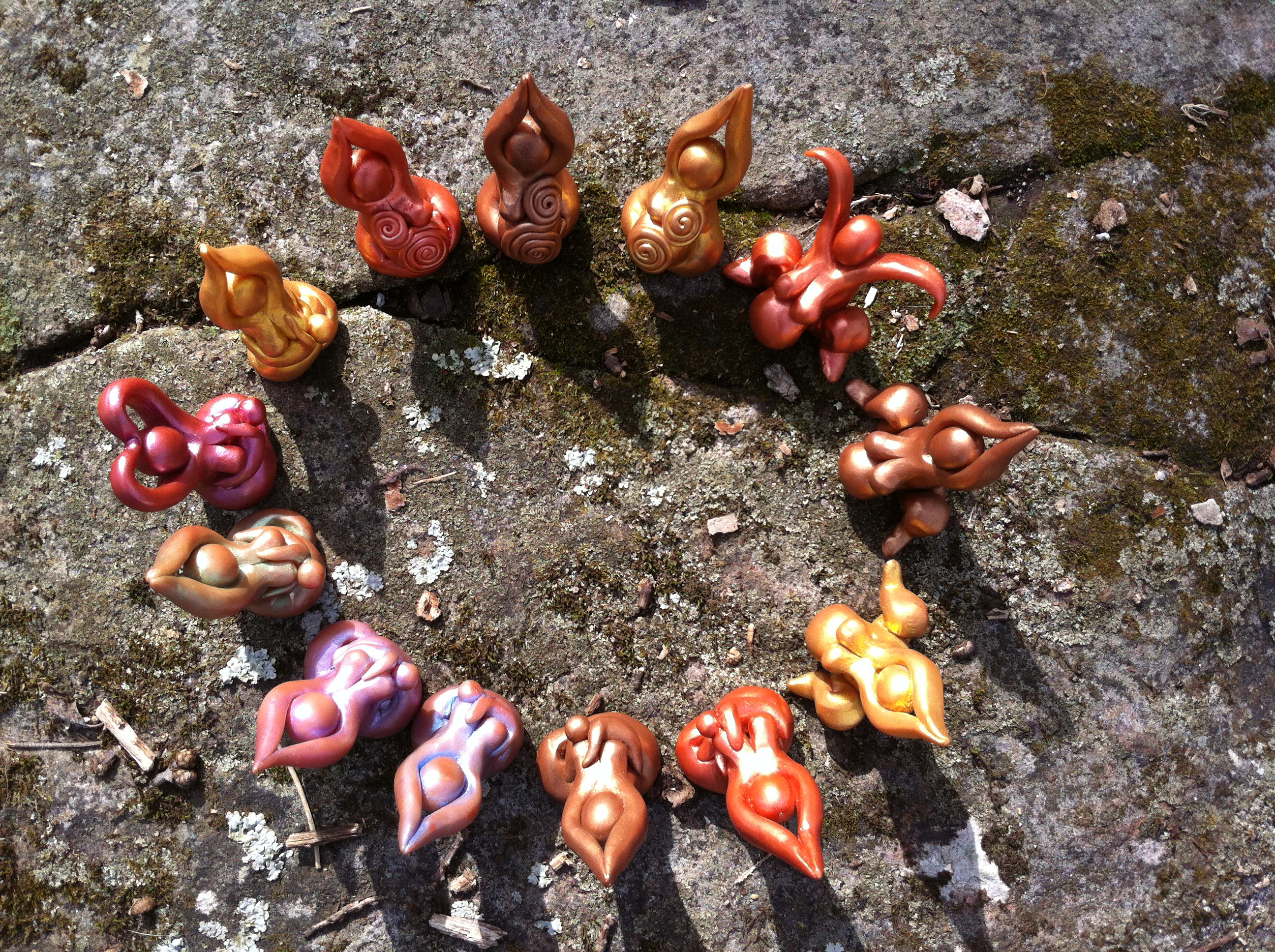
The second part of my practice is that I’m trying to make sure I feed my spirit first—going to the woods, praying, setting intentions for the day, lighting a candle and setting up some of my goddess art sculptures near me as I work, rather than letting those things languish for “when I have enough time” and “later.”

The third part of my practice is to notice my thoughts and how I think about things, bringing mindfulness to the repetitive, wheel-spinning , brain-groove making patterns of thought that I habitually engage in. I frequently feel like, “something has got to change!” or, “I need to change what I’m doing and THEN, XYZ.” In mindfulness practice, I notice that more often it isn’t what is actually happening in my life that is upsetting or stimulating the “change” urge, it is expressly how I think about things that needs to change. I have become aware of the following unhelpful brain-groove thoughts that continue to dictate my behavior, choices, feelings, and responses:

I might die

I need to be perfect

I can’t rest

I’m out of time/running out of time/there isn’t enough time

(I haven’t fixed these yet, but awareness of them is a big part of the puzzle.)

As appears to be my custom at this time of year, I had a big meltdown this weekend feeling resentful, overbooked, stressed, ragged, frustrated, blocked, irritable, etc., etc. Then, I piled on a hearty dose of self-admonishment for all those feelings and stirred in some big helpings of guilt. I blamed various things, I blamed myself, I ranted and raved about how something needs to change and I need to do something different because this just isn’t working. (most of this was actually in my own head because Mark was sleeping in the living room as he recovered from the stomach flu that swept our house this week, more on this later.) I was crabby at loved ones. I felt guilty for wanting to be alone and for feeling done with snuggling my nursling and smelling her sweet head, knowing, knowing, knowing that the time is passing and that I will miss it and yet, dang it, stop climbing all over me and ramming your hands down my shirt! I felt like I “should” be doing all kinds of things differently. Like I should be a better, nicer person and like maybe I’m choosing wrongly in my life. I wanted to just stop, to get off, to quit everything. I decided I don’t want to help anyone else anymore and I just want to take care of myself. I cried because I need my parents and Mark to help me so that I can help other people and if I just stopped trying to help anyone else, I could take care of myself/family and not need anyone to help me either. I made plans to make a big life map and ruthlessly chop things off it. I decided to embark on a massive self-care, self-improvement project for the new year. I dragged out piles of books to look through. I remembered that busy is boring , I craved time for a retreat. I exclaimed that I just want to grind my corn! I lamented my ongoing crisis of abundance. I looked up my old post about balanced living and saying ‘no’ and thought about how I’m going to say a big fat NO to everything all the time! Must be clear on priorities. Must choose well and wisely. Then, I got annoyed with myself for already having figured this stuff out before, for writing about it already, for boringly lamenting it all before, for never learning (or integrating) my life lessons, and for knowing better and yet doing it anyway.

And, then…everyone went to bed. I sat up by myself and worked on a drawing for a “make a plate.” The kids all did this at my mom’s house over the weekend as a Christmas project—you draw a design on a special piece of paper, send it in to the company, and they send it back to you as a plate. I wanted to make one too! So, I did:
20121203-093946.jpg

I really like it. After drawing, I felt tons better. I sat alone in the living room with my computer and got my online class all caught up for the week. And, suddenly it hit me. This ugly ragged self of mine I was seeing and experiencing and hating. She was popping out because I hadn’t had my two hours all damn week! And, after I realized that, I understood that things weren’t really that bad after all. Last week was insane. I knew it in advance, but it doesn’t mean it was easier to cope with it. And, if I tuned in to myself and my body, which is really, really hard to do when you’re an introvert without your requisite two hours, I just heard the familiar cry for what I need, to just be by myself at home for some time each week. Not to quit everything, all the time, but just to have some regular, consistent still points of solitude.

This is what last week looked like for us:

Monday: Twenty papers submitted by my online students, they all need to be graded in addition to my usual weekly grades for the week. While I did my usual grades and online class prep work, no papers got graded with the time I had available. Manage to quickly write an assignment for my own class, part of which is excerpted at the beginning of this post. Scramble to town to take the kids to meet Mark. Teach class on Monday night from 5-10. Come home freaking out about the rest of the week and HOW CAN I POSSIBLY GRADE THIS MANY PAPERS WHEN I HAVE NO TIME! Maybe I’m not meant to do this, maybe three classes is too many, maybe there is just something wrong with me.

Tuesday: After doing school with the boys, laboriously make pumpkin pasties to take to the Harry Potter potluck for the last day of homeschool co-op Wednesday. Insist on all three children helping with the “fun” and get super stressed out at not being a more zen mother of awesomeness. Call my dad desperately in the afternoon requesting “tribal reinforcement” (my tribe is a good one!).

20121203-144224.jpg

Pumpkin pasties. Awesome, or unnecessary torture?

After he takes the kids over to play at his house, manage to grade four of the papers among many other tasks. Then, take the kids and head to town for their taekwondo class and my own reiki class (why take a reiki class now when I already have so much going on? Who knows?! Crazy, remember?) Reiki class is great—totally works and I feel like such a healer! Go home and practice fab skills on Mark and boys and they are impressed. Feel buzzing with energy and hands are tingling. Stay up until 2:00 a.m, on purpose and finish grading ALL papers. Feel awesome and smug and have killer, killer headache.

Wednesday: killer headache continues. Take kids to homeschool co-op and potluck. Pumpkin pasties meet with approval. Pick up two of boys’ friends for an overnight. Fingers crossed for Alaina to nap when we get home, since I’m desperate to be alone and need to get “caught up.” She doesn’t.

Make homemade mac and cheese for dinner and it rocks. Boys and friends stay up until past midnight. I stay up and finish prepping for Friday’s class.

20121203-144140.jpg

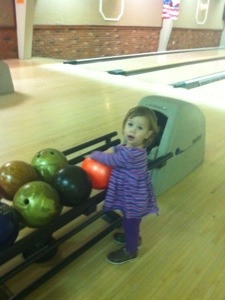
She actually wore bowling shoes this time! Insisted on carrying ball every time for a whole game!

Thursday: Killer headache remains (not enough sleep, I think at the time). Make quesadillas for all kids in house and barely stagger out door with them all to go to playgroup at bowling alley. Bowl a terrible 85, but have lots of fun (Alaina is adorable bowler and gets a 17 [non-bumper lane]). Belabor different post-playgroup scenarios to manage rest of day.

20121203-144200.jpg

Mine, mine?

20121203-144214.jpg

Brothers are not into bowling and complain nonstop and sit staring like this. I finish their games.

20121203-144234.jpg

She’s a natural!

Send boys with friend to get pizza and go to park, while Alaina and I go to Wal-Mart to buy dinner supplies for a postpartum mama. Take dinner to new mama and listen to fab birth story and do breastfeeding help for next two hours. Kids come back from park and are sent with other friend in my van to gymnastics class. Help jump friend’s car and then go to pick up all gymnastics kids (my own boys + two). Am slightly late and they’re getting worried. Zoom to taekwondo to drop all off. Go to Panera to eat dinner and meet couple for wedding ceremony planning. Alaina finally falls asleep and nurse-sleeps throughout Panera visit. Back to get boys at 8:00 and meet other friend to deliver books she’s borrowing, plus pick up evaluation from her from recent birth workshop. Head home, dropping off boys’ friend at her house on the way. Remember LLL monthly stats are due and do them (27 helping contacts for November!), plus send overdue emails and answer help message. Catch up in online class. Collapse in recliner, hoping Alaina’s Panera snooze wasn’t an uber-late nap. She nurses more and falls asleep. Score! Mark and I start a Teen Wolf ep while she keeps nursing. Suddenly, A wakes and projectile vomits all over my body. Yikes! What’s up?! As I wash the chunks off in the shower I start to feel bad too (headache continues, FYI). At 1:30, I throw up too. Alaina throws up seven more times during night with various degrees of mess. Grateful for Mark and his clean-up skills.

Friday: Mark stays home to help, but still needs to get own work done from home. I throw up one more time and debate going to class tonight—do I go or stay?! Zander starts throwing up. My head is actually going to explode with pain. Have fever and chills. Decide not to go to class, even though it means incredible hassle with double make-up classes now (because of no class on Thanksgiving). Nap and wake at 3:00 deciding it is class or bust after all. Both options feel like dumb options. Decide to be Typhoid Molly. Take Advil, get dressed, and head for the Fort where I teach. Class is fine. I have a guest speaker and show a video about child abuse. Hope to leave early, but feel better as class goes on and get busy with student questions/discussions. Dismiss early enough to get out the back gate and take short route home.

20121203-144258.jpg

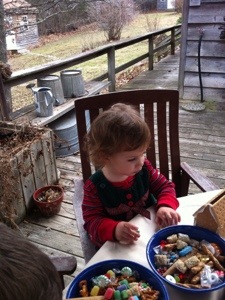
Selecting candies.

Saturday: Work party at my mom’s house. She has good projects planned. While the men cut firewood, the women make seasoning blends using herbs and spices I ordered last week from the bulk food buying club. Alaina is fretful and clingy and nurses nonstop, even though she has to stand on a chair to do it while I mix my seasoning blends. Kids draw pictures for their plates and also make fun cracker houses. Alaina finally naps and I grade two late papers, respond to a help message, and try to catch up with my online class again. Feel bad and guilty about not helping with dinner prep and also misunderstood by others about legitimately needing to get my work done. Feel annoyed that I have to make excuses or justifications for it, feel others are annoyed with me. Eat communal turkey dinner and yummy cake. Home feeling generally distressed, unhappy, and overbooked. Am reminded that I’ve forgotten/misunderstood something again. This keeps happening. My brain is leaking. I can’t hold everything and I keep dropping balls, communicating poorly/not enough, missing things or misunderstanding things, and forgetting stuff. Wish I hadn’t had to go anywhere on the weekend. Need regroup time. Suddenly remember with a shock that today is the FoMM newsletter deadline (for contributions, not for me). Send requisite emails and consider fact that I have exactly zero contributions thus far. Lann wakes before we make it to bed and barfs turkey dinner ALL OVER bedroom floor. As Mark cleans it up, he starts to feel sick too. Is up and down during night with stomach pain and finally also vomits.

20121203-144343.jpg

Finished houses with architects.

20121203-144352.jpg

Lann’s house.


Sunday: I feel pretty good at start of day, but start to freak out as day progresses. Mark is down sick in recliner all day. Alaina is whiny and clingy and doesn’t stay asleep at naptime. By 2:30, I’m still in PJ’s and feeling emotionally fragile. Begin the internal monologue of self-doubt, criticism, and desire for change described above. Kids go visit my parents and I work frantically on various bits and pieces, like preparing for my class on Monday night. Feel I’m choosing wrongly and still not taking care of myself. What’s wrong with priorities?! Argh. Gnash. Suffer.

Sunday night: stay up after others are in bed. Make my drawing for my plate. Have epiphany that this is all about the two hours. I usually get two hours to myself multiple times a week. Review week and see NO two hours. No wonder I feel like crap. I need it. I really do. It’s this introversion thing. I have to be able to count on sometimes being alone. Hmm. Maybe that is all it is. Maybe I don’t really need to quit everything after all, but maybe I need to plan carefully and assertively and strongly avoid weeks like this last one. Maybe I just need to firmly, guilt-free-edly, hold some space for myself, no matter what. Mentally review week and see, DUH. That was a busy, hard week. I got barfed on. I threw up. I taught class with the flu. No wonder I feel overwhelmed, stressed, and upset. It would be weird if I didn’t feel that way. Isn’t it normal to be a little crazy when life is crazy? Remember that one crazy week doesn’t mean entire life is unraveling after all. Wonder if maybe, just maybe, I should actually feel impressed at my own capacities. Stay up “too late” and enter all my grades so that on Monday, I can do some other things that I want to do—like write blog posts—rather than work on my classes and then go teach as well.

Remember I wasn’t going to write long, boring, navel-gazing blog posts like this one anymore and consider not posting it after all…

Think of lots more things to add and remember lots of other to-dos I got done…

Notice current students have become “fans” on Facebook and really, really consider not posting after all…

Spend way too long trying to format pictures for this post and finally give up and set it to post later in the week with crappy-alignment pictures.

Copy this picture from Facebook and try really, really hard to remember it…

20121203-144400.jpg

Deep breath. Hug self. Hug kids. Try again.

Taking it to the body… (part 1)

The following is excerpted from one of my lessons in my recently finished Ecofeminism course.

20121203-150406.jpgIn Mara Keller’s essay in the ecofeminist anthology Reweaving the World, she explains that in our cells remember an ancient era of mother-centered life. As I observe in my own children’s relationship to me as their mother, this seems extremely logical to me. Keller writes: “The renewal I long for is a return of a reverence for Mother Earth and her abundant forces of creations; an affirmation of the sacredness of sexuality and enduring human love; and the belief in the inevitability of death and the immortality of the soul” (p. 51). Mother Earth is abundant and fertile and awe-inspiring, she can also be wild and unpredictable and dangerous and is deserving of reverence and respect.

Chellis Glendinning in The Politics of Women’s Spirituality sums up the consequences of patriarchy perfectly:

“When women are faced each day with enforced cesarean deliveries, birth control that maims and kills them, and doctors who think them dirty, when we encounter rape, violence in the streets, job discrimination, sexual slavery around the world, pollution and nuclear madness, we realize that reclaiming the integrative ways of our ancestors must involve our healing powers on all fronts—from the medical to the social to the environmental to the political to the psychological to the spiritual. Healing the divisions that were imposed during the patriarchal era is the survival issue of our time and our planet. A world that systematically sickens its women cannot survive.” [emphasis mine]

Returning to Reweaving the World, in a similar line of thought, Paula Allen states that “a society based on body hate destroys itself and causes harm to all of Grandmother’s grandchildren” (p. 53). I honestly think that many, many children enter the world in an atmosphere of body hate (this can be true regardless of birthing environment). I read an article recently by the famous French obstetrician Michel Odent who explains that the human species may actually be losing the capacity to give birth on its own. Odent sums up the sobering conclusion of current research with this chilling observation: “after just 3 or 4 generations of highly technological childbirth, it seems very possible that our human oxytocin system is weakening. In other words, our capacity to give birth is weakening…” What will it mean for society if our human women can no longer successfully carry and bear new members of the species without significant technological assistance?!

So, planetary healing may actually rest in body respect and love. Allen explains that rejoicing in our bodies is how we show our respect to the planet. We can heal our bodies…”our own dear body, our own dear flesh. For the body is not the dwelling place of the spirit, it is the spirit. It is not a tomb, it is life itself” (p. 56). Allen asks the reader to consider how often we deny the urgings of our bodies. I ask this of women also—how often do you respond to the first cue from your body to use the bathroom? Usually, we resist several times—sometimes even hours—before finally going. If this basic, daily function we each experience multiple times a day is a time in which to deny and ignore our bodies’ messages, how do we expect women to then speak up for themselves in birth? To ask for what they need and to follow the instinctive dance of their birthing bodies? These same questions can be expanded to other areas of our lives as well of course…

Allen also has a refreshing perspective that now is not the time for tranquility. So often in New Age writings and Western-adapted Buddhist and Zen types of thought we see admonishments towards calmness, serenity, peace, and so forth and in the non-attachment and “I create my own reality” and “there is no reality but the present moment.” I appreciate this call for action and for passion, rather than a stilling of the emotions.

And, finally, returning to the body theme, during a recent women’s retreat one of the guests brought us each a card that reads: “Trust yourself. Take it to the body. She always knows.” I loved this and will explain more in part 2

Woman-Centered Collaboration

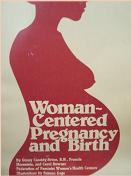
I’ve posted a couple of times about a collaboration with the Women’s Health in Women’s Hands launch of the feminist women’s health classic Woman-Centered Pregnancy and Childbirth as a pdf version for free online. When I wrote my What to Expect post based on Woman-Centered Childbirth in 2009, I had no idea that one of the authors of the book would later find me on the internet, let alone distribute postcards at the National Rally for Change in Los Angeles containing a quote from me and link to my site. As I’ve said several times lately, I just love the internet. It is amazing to me that these types of connections and collaborations can occur over long distances and without face-to-face contact. Very cool!

Anyway, this week I received a promo launch packet for the online release of the book. It includes two printouts from my own website and the re-formatted flier based on my blog post, as well as a folder and postcards.
20121008-164805.jpg

And, then I took picture of the packet and included my own vintage copy of the original Woman-Centered Childbirth book 🙂
20121008-164812.jpgThis has been a fun link between past and present activism and between a foremother in birth activism and my current self!

Guest Post: What is a 21st Century Feminist?

Molly’s note: I have a lot of diversity amongst my Facebook friends and amidst the many politically liberal posts I see every day there are also links to anti-feminist articles, written by mothers, that make me incredibly sad. Last month an acquaintance posted one of them and I responded to her: “This article made me sad, because of the writer’s distorted experience of what feminism is (or the distortion she’s experienced of it). I hate it when women perceive feminism as a ‘dirty word’ or incompatible with their lives as homemakers and mothers.” As our conversation continued, I went on to explain: I’ve been a feminist forever–like before I even knew there was an actual word for it. I do understand that there is a tension between feminism and motherhood sometimes (in a negative way). I think because I mostly read or associate with feminist mothers, and feminist attachment-parenting-minded mothers at that, I’ve had less exposure to the “other kind” and I tend to feel like, “I’m not that way, so surely no one else is either!” I guess it might be similar to other large movements and certain representatives of those movements making the whole thing look bad–i.e. if people might say “religion is oppressive!” rather than realizing that it is really how some people USE religion that is oppressive, not necessarily the institution itself.

I am a feminist. I was one long before I had children. It was my first “cause.” I’m also the mother of three. I’m totally into birth and breastfeeding and female-biological-processes. I might be able to be accused of being biologically reductionist in some of my ideas, because of the importance I place on the body, particularly the female body, in how I relate to the world and to my own spirituality. However, to me, feminism feels simple and obvious. I love women. I think they’re awesome. I don’t think they should be exploited, controlled, victimized, or dominated. Boom. I’m a feminist! Duh.

In addition, I don’t consider myself pro-choice OR pro-life. I consider myself pro-woman and for me that means upholding all women’s reproductive rights, regardless of how I feel about making those choices for myself and regardless of how I am personally uncomfortable with some women’s choices. Women MUST be able to control their own bodies and who has access to them. To me it is that simple and that nonnegotiable.

So, I appreciated this guest post that came in today and how it lays out very simply what it means to be a 21st century feminist…


What is a 21st Century Feminist?
Women’s Author Says She (and He) May Look A Lot Like You!

With all the talk of a “war on women” during this explosive election year, the notion of feminism is once again in the news – and open to debate. Especially among women.

Nothing illustrates that better than the rash of commentary following the recent death of sexual-revolution era author Helen Gurley Brown, says Heather Huffman (www.heatherhuffman.net), a 35-year-old author whose newest book, “Devil in Disguise,” continues her tradition of upbeat romances featuring strong female protagonists.

“Some writers took her to task for advocating sexual freedom for women,” Huffman says. “They say she wasn’t a ‘feminist’ because she was all for promiscuity, not women’s rights, and her actions led to an explosion of single moms and STDs.

“Others viewed her as the ultimate ‘feminist,’ a heroine who chopped through a cultural thicket to break down repressive social mores.”

The truth is, Huffman says, that Brown did important work on behalf of women.

“While I don’t advocate promiscuity, I do acknowledge that Gurley Brown’s boundary-pushing stance brought the topic of women’s rights to the forefront, paving the way for change,” she says.

The problem is, she says, that when people hear the word “feminist,” they picture a woman from another time, like Helen Gurley Brown. They don’t see themselves at all.

“I hear some women say, ‘I’m not a feminist!’ They think a feminist is a strident, angry man-hater who gets up in arms over any perceived slight,” Huffman says. “That’s too bad, because the world needs feminists as much as it needs any group that advocates for human rights.”

Feminism changes with the times, she says. So what is a 21st century feminist? Huffman offers her observations:

• She (or he) supports a woman’s right to be a mom – or not.  When women won acceptance and equal rights in the workplace, we were released from one box and plopped right into another one. “We went from raising children to raising children and working. Too often, that’s the expectation now,” Huffman says. Feminists support a woman’s right to choose her life’s direction, whether that’s staying at home and being mothers, choosing never to become mothers, or some hybrid of work and motherhood.   “Having equal rights is having the freedom to choose our life’s direction without being subjected to discrimination because of what other people expect our role to be,” Huffman says.

• Supports removing double standards. “You still see, in the workplace and at home, the tough guy gets praised, and the tough woman, well, she’s a ‘witch’ or worse,” Huffman says. More smart, savvy women have earned respect professionally – Hillary Clinton, Condoleezza Rice, Madeleine Albright – and that’s progress, but we still have work to do. “Professional women still get criticized about their hair style, their fashion choices.  Rarely are professional men snubbed for these things.”

• Understands what rights are being legislated and by whom. We all know the hot-button “values” issues that polarize voters. “The reality is a politician’s party affiliation doesn’t paint an accurate picture of who they are or what they stand for. Voting records, corporate associations, and actions are much more telling. As citizens, as women with a voice, we must do our homework to ensure our values are being reflected in Washington. And, in truth, feminism is more than a political movement – it’s the empowerment of women to live the life they were created for.”

About Heather Huffman

Heather Huffman is a women’s advocate, writer, former human relations specialist and mother of three. She and her family are currently homesteading 10 acres in the Ozarks. Huffman is the author of seven novels, including “Throwaway” and its prequel, “Tumbleweed.” A portion of proceeds from sales of her books benefit groups fighting human trafficking.

Book Review: Pushing for Midwives


Book Review: Pushing for Midwives: Homebirth Mothers and the Reproductive Rights Movement
by Christa Craven
Paperback: 232 pages
Publisher: Temple University Press; 1 edition (October 28, 2010)
ISBN-13: 978-1439902202

Reviewed by Molly Remer, Talk Birth

Mainstream feminist groups have been slow to recognize the right to reproduce along with the right to be free from reproducing. A focus of the second-wave women’s movement was shaking off motherhood as what solely defined womanhood. So perhaps there has been a reluctance to watch over the process that makes women mothers. –Jennifer Block quoted in Pushing for Midwives

Framed as a health policy concern, Pushing for Midwives assesses the homebirth movement and midwifery activism in the context of the reproductive rights movement. The focus of the book is on legislation in Virginia, but is still of relevance and interest to activists from other states. Craven also tackles complicated topics that are often ignored in homebirth and midwifery texts, addressing issues of race, privilege, and socioeconomic status and the impact on access to care. She also takes a solid look at issues of political and religious diversity within the homebirth activist community.

Written in a densely academic style evocative of a dissertation, Pushing for Midwives, became tedious and dry in places and took a long time to finish reading. The very narrow focus on Virginia, while still applicable to other states, became tiresome by the final chapters.

I particularly enjoyed Craven’s exploration of the history of consumer activism in midwifery as well as the consideration of homebirth in the larger context of women’s health activism. I appreciated her exploration of the feminist movement and how it has historically neglected issues of birth advocacy and reform, while also looking the current relationship between feminism and midwifery activism, particularly how birth advocates choose to self-identify. Women’s health activists and midwifery advocates will likely find a lot of food for thought in the pages of Pushing for Midwives.

Disclosures: I received a complimentary copy of this book for review purposes.

Amazon affiliate links included in book title and image.

Woman Centered Pregnancy and Birth

“Woman-centered childbirth recognizes the primary role of the mother, and allows labor to progress according to the mother’s natural rhythms.” —ALACE CBE training manual

Several years ago I wrote a popular and somewhat controversial post called What to Expect When You Go to the Hospital for a Natural Childbirth. The article took a look at what women can realistically expect from a “standard” hospital birth and included some thoughts on what they deserve, my conclusion being that what women can expect and what they deserve are often, sadly, very different things. The article was one of my widest-reaching pieces and it was republished on both the Unncesarean and on Navelgazing Midwife. I also converted it into an article that was published in Pathways magazine, laid out so beautifully and professionally I practically cried.

However, my idea for the post didn’t come from me alone, it was sparked by reading a similar list in the 1970’s book Woman-Centered Pregnancy and Birth, co-authored by Carol Downer. So, imagine my delight when I was contacted last month by her assistant, letting me know that they’d read and enjoyed my post and telling me this awesome news:

We recently published the book in its entirety online at: www.womenshealthinwomenshands.org/BirthingOurBabies.html.

That’s right, free online! Check it out!

For my conservative readers, do be aware that the book and website both come from a solidly feminist and pro-choice perspective!

“The whole point of woman-centered birth is the knowledge that a woman is the birth power source. She may need, and deserve, help, but in essence, she always had, currently has, and will have the power.” –Heather McCue

Previous thoughts on Why “Woman-Centered” Childbirth?

Women’s Power & Self-Authority

“I know myself linked by chains of fires,
to every woman who has kept a hearth.
In the resinous smoke
I smell hut, castle, cave,
mansion and hovel,
See in the shifting flame
my mother and grandmothers
out over the world.”
–Elsa Gidlo

I used the quote above as my winter solstice Facebook posting last year. It reminds me of a quote from Margaret Atwood used in the book Sacred Circles, “Sons branch out, but one woman leads to another.” One of the powerful gifts of feminist spirituality is the sense of intergenerational connectedness to all women of all time. We begin to sense the buried matrilineal links across time and culture. Links that have often been culturally, socially, and religiously broken on purpose as a way to separate and disempower women and to bury women’s wisdom. I believe a potent source of female power lies in the female body and that body wisdom has been suppressed and denied over the course of many years as a means of oppression and control. One of the root issues of patriarchy is who “owns” women’s bodies—is it men, is it the government, is the medical system, or is it the woman herself? (you know my pick).

Body wisdom and sources of power

Considering power, sources of power, and body wisdom, I appreciated reading Barbara Starrett’s essay The Metaphors of Power in the book The Politics of Women’s Spirituality. While she used abortion as her example, I have modified and paraphrased her thoughts to make the idea about birth instead. Starrett originally states, “We can create power centers both within and outside ourselves…Power is where power is perceived. Power resides in the mind. We can give or withhold power through our beliefs, our felt thoughts.” Medical professionals can make decisions about a woman’s body and birth choices effectively only as long as women believe that the professionals have the right to do this. When women reclaim the power to decide for themselves about birth, the doctors proclaim in a vacuum. Their power depends on the transference of our power, through our belief that this is right…Power is where power is perceived. This also means that in any given in-the-world situation, we can intentionally set up our own power centers. If we believe that power resides in those centers, it will. We will act successfully on this belief. Women’s organizations, unions, birth coalitions, etc., will never work unless we regard them, “as the legitimate centers of power…We must grant our own power to ourselves” (p. 191).

Lucky to have such a great group of friends to gather in the park to take part in the Our Bodies, Our Votes campaign.

While this comes a little too close for comfort to me with the idea that “we create our own reality” (which I cannot fully embrace due to the logical extension into blaming the victim that it creates), I connect deeply with the idea that we must treat women’s organizations and work as legitimate power sources. I think of books/movements like Our Bodies, Ourselves, for example. To me, this is a definitive women’s health resource—by women, for women and separated from the medical establishment that often dehumanizes women. If we continue to believe our “alternative” structures are just that, “alternative,” then the dominant model is still the norm and still accepted, even by us, as “normal.”

Starrett continues her essay by sharing that “It is necessary for some women to risk total reclamation, to risk the direct and intentional use of power, in bold, even outrageous ways. It takes only a minority of women to alter present reality, to create new reality, because our efforts are more completely focused, more total.” (p. 193) This is the risk that the creators of Our Bodies, Ourselves took. It is the risk birth activists and women’s health activists continue to take.

Peggy O’Mara tackles a similar topic in her essay, “Holy Mother,” in her collection of essays The Way Back Home, observing:

We live in a society…that romanticizes and trivializes the feminine…we live in an economy that regards women as cheap labor. In the marketplace, women work for less than men. At home, we do the large majority of the work. I believe that we enslave ourselves.

Is it any wonder, then, that we have not successfully resolved the childcare debate? Child care and national family policy are process issues, and thus sexist issues. Women themselves engage in sexism when they debate the either/or dichotomy of work or home. Too often, we do not realize the devaluation involved in playing by the crumbling rules of a male-dominated society rather than making up our own. The matriarchal process-based model comes from a religious belief system in which the Divine is immanent, within life, within us, ascribing sacredness to the ordinary processes of daily life. Rather than choosing between opposites, let us evolve a culture that values both the product and the process, a culture that synthesizes both the patriarchy and the matriarchy.

…we must put all of our loves–work and family, mothering and career, self and others—on the bargaining table at once, and not assume that because we are women, we must acquiesce to the cultural ideal. To run our personal lives in enslavement to an economic reality that does not serve our needs makes society crazy.

In a brief except from author Libba Bray, she states that for years she “…heard feminist Gloria Steinem described as ‘shrill’ and ‘hostile’ and many other dismissive, denigrating terms. But after reading about her struggles as a human being and as a leader of feminism’s second wave…I got a truer picture…I learned that it’s far too easy for women to be shamed into staying quiet about their lives–their dreams, needs, desires, anger, aspirations—and that the old adage, ‘Well-behaved women seldom make history’ is all too true.”

Consult your health care provider?

In my own life, I am frustrated by the ubiquitous phrase, “Consult your health care provider.” No thanks. I prefer consulting myself, my books, google, my own research, and my friends. Last time I checked, my doctor did not own my body nor did she have divine revelation as to what I need in my life. I am a breastfeeding counselor providing phone and email support to women who have breastfeeding questions. Women frequently receive very poor breastfeeding “advice” from their doctors—to the extent that I honestly think they’d receive better information by polling random strangers at Wal-Mart with their questions (and, yes, I will actually tell women this). One caller once used the phrase, “but, I don’t want to disobey my doctor” and I found this extraordinarily telling as well as depressing. I recognize that doctors have special training and can be life-saving, however, what does that say about mothering in our culture that a woman would not act on behalf of her own baby and herself because of fear of being disobedient to a professional that she has hired? She is a consumer of a service, not the subject of a ruler!

This brings me to a thought by Dr. Michelle Harrison, author of the book A Woman in Residence: “I used to have fantasies…about women in a state of revolution. I saw them getting up out of their beds and refusing the knife, refusing to be tied down, refusing to submit…Women’s health care will not improve until women reject the present system and begin instead to develop less destructive means of creating and maintaining a state of wellness.” Indeed! And, in an essay by Sally Gearhart’s about womanpower, she notes: “…there’s no forcing any other woman into a full trot or a gallop; she will move at her own pace, but at her own pace we can be sure she will move. At this point I always remind myself that the patriarchal use of crash programs is antithetical to organic movement; in a crash program the theory goes that if you can get nine women pregnant you can have a baby in one month; it takes women, I suppose, to understand that it doesn’t work that way.” (p. 202-203)

Reclaiming power

So, how do women reclaim power? I think story holds a key to power reclamation in this context. As I’ve referenced before, Carol Christ describes it thusly, “When one woman puts her experiences into words, another woman who has kept silent, afraid of what others will think, can find validation. And when the second woman says aloud, ‘yes, that was my experience too,’ the first woman loses some of her fear.” As I touch on above, for me it is to see myself and my body as a source of wisdom and to refuse to participate in structures that do not honor my power and personal agency. It involves more often turning to my peers, to other women, for advice and comfort and support, rather than to experts.

Returning to Gearhart, she states: “If I can move out of the patriarchy for my re-sourcement, then I do indeed march to a different drummer; but I have to march with the consciousness in my very bones of the cost in blood and pain and death that is somewhere being paid for my personal growth.” (p. 203)

I’ve written before that I am a systems thinker. Women’s choices about their bodies and about birth are not made in personal isolation, but in a complexly interwoven network of social, political, medical, religious, and cultural systems. As Gearhart notes, “There may be no ‘enemy’ except a system. How do we deal with ‘the enemy’? As seldom as possible but when necessary by opening the way for [their] transformation into not-the-enemy. What weapons do we use? Our healing, our self-protection, our health, our fantasies, our collective care…” (p. 203).

And, in closing I like this reminder:

“Study after study has taught us that there is no tool for development more effective than the empowerment of women. No other policy is as likely to raise economic productivity, or to reduce infant and maternal mortality. No other policy is as sure to improve nutrition and promote health—including the prevention of HIV/AIDS. No other policy is as powerful in increasing the chances of education for the next generation. But whatever the very real benefits of investing in women, the most important fact remains: Women themselves have the right to live in dignity, in freedom from want and from fear.” —Former UN Secretary-General Kofi Annan

This is the whole point—women’s rights aren’t about “taking” rights from anyone else OR about demanding “special treatment,” they are important for a HUMANE WORLD for all people. I think it is hilariously awful that “women’s rights” are considered a political issue and that there is a section about “women’s rights” in the “opposing viewpoints” database for my social policy class. As long as women’s rights are considered a political issue or as something about which an opposing viewpoint can be held, rather than as self-evident, we are in continued, desperate need of revolution.

—-

(note: portions of this post are excerpted from one of my essays for a class I took about Goddess Traditions)