Archives

Womenergy (Womanergy)

The day before my grandma died, my dad came over and said he’d coined a new word and that I could have it: Womenergy. He said he’d googled it and didn’t come up with anything. I googled it later though and there are a couple of people who have used it before, so I think my dad actually said Womanergy instead, which is still available. So, womanergy has been coined now too! 🙂 I dozed off during Alaina’s nap today and when I woke up the word was in my head and so were a bunch of other words. I channeled a bit of my inner Alice Walker and wrote:

Womenergy (Womanergy):

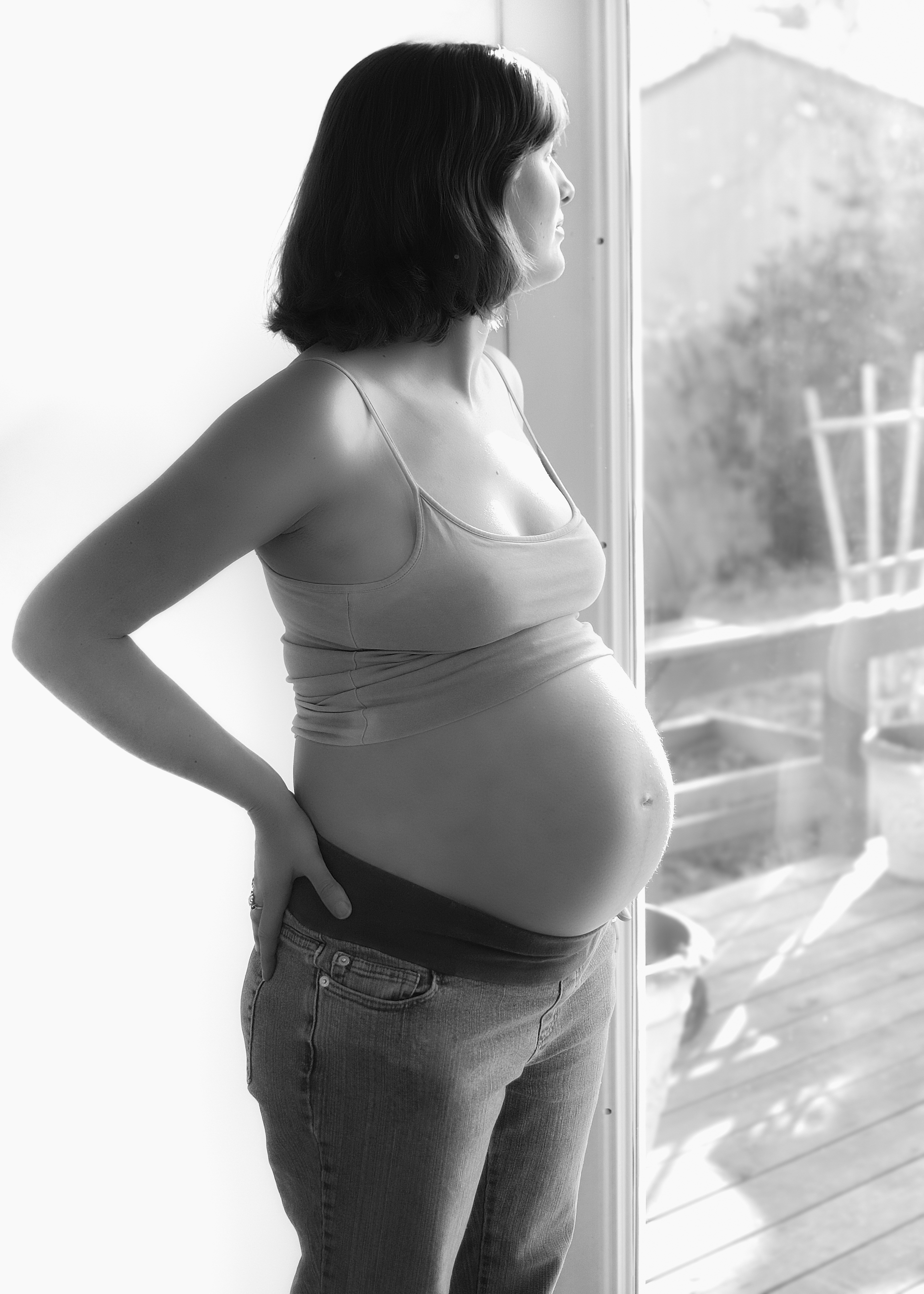
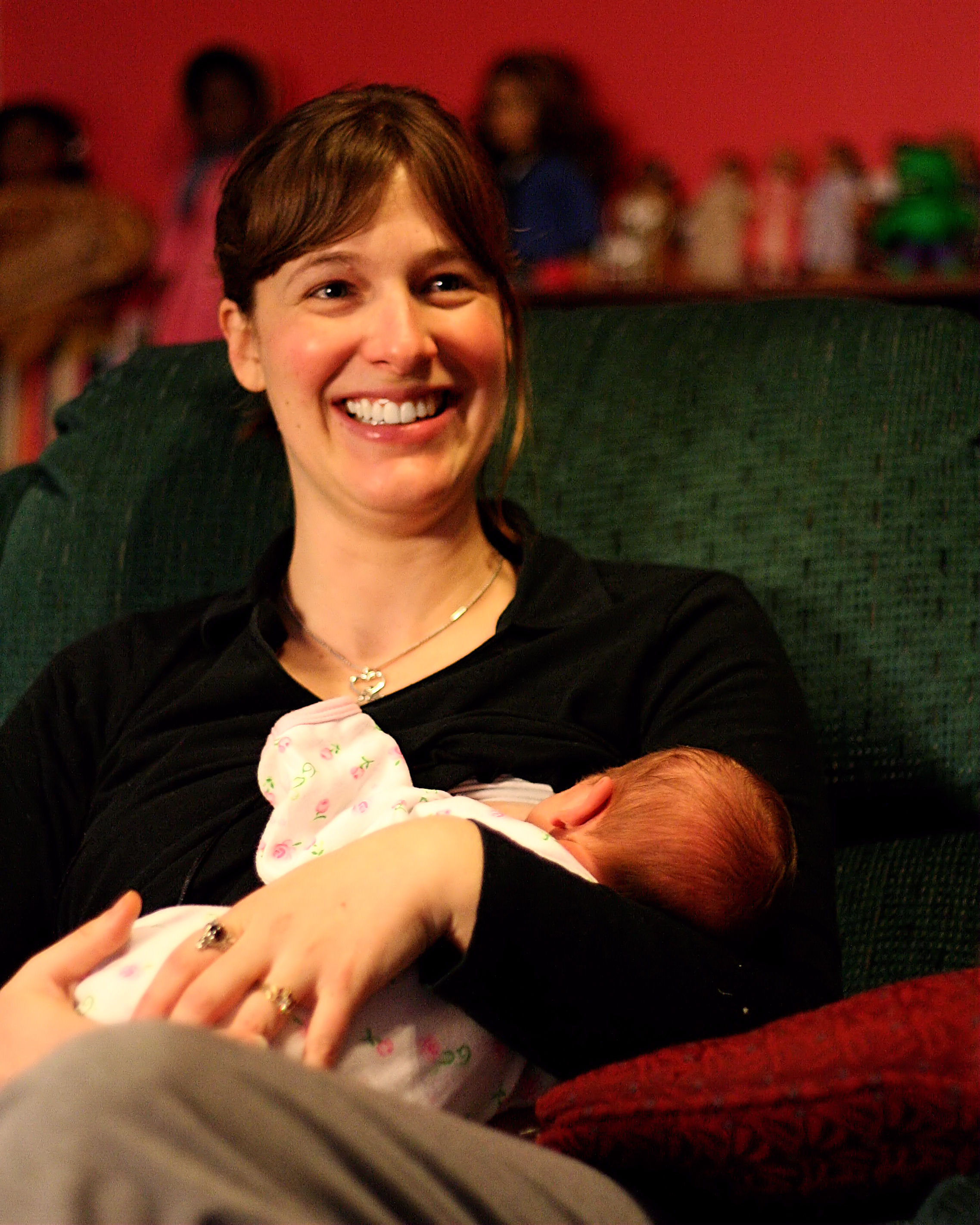
Feeling fierce at 37 weeks last year.

Feeling fierce at 37 weeks in 2011.

Often felt when giving birth. Also felt at blessingways and circling with women in ceremony and rituals. Involved in the fabric of creation and breath of life. Drawn upon when nursing babies and toting toddlers. Known also as womanpower, closely related to womanspirit and the hearing of one’s “sacred roar.” That which is wild, fierce. Embedded and embodied, it may also be that which has been denied and suppressed and yet waits below her surface, its hot, holy breath igniting her. Experienced as the “invisible nets of love” that surround us, womanergy makes meals for postpartum women, hugs you when you cry, smiles in solidarity at melting down toddlers. It is the force that rises in the night to take care of sick children, that which holds hands with the dying, and stretches out arms to the grieving. It sits with laboring women, nurses the sick, heals the wounded, and nurtures the young. It dances in the moonlight. Womenergy is that which holds the space, that which bears witness, that which hears and sees one another into speech, into being, into personal power. Called upon when digging deep, trying again, and rising up. That which cannot be silenced. The heart and soul of connection. The small voice within that says, “maybe I can, I think I can, I know I can. I AM doing it. Look what I did!” Creates art, weaves words, births babies, gathers people. Thinks in circles, webs, and patterns rather than in lines and angles. Felt as action, resistance, creation, struggle, power, and inherent wisdom.

Womenergy moved humanity across continents, birthed civilization, invented agriculture, conceived of art and writing, pottery, sculpture, and drumming, painted cave walls, raised sacred stones and built Goddess temples. It rises anew during ritual, sacred song, and drumming together. It says She Is Here. I Am Here. You Are Here and We Can Do This. It speaks through women’s hands, bodies, and heartsongs. Felt in hope, in tears, in blood, and in triumph.

Womenergy is the chain of the generations, the “red thread” that binds us womb to womb across time and space to the women who have come before and those who will come after. Spinning stories, memories, and bodies, it is that force which unfolds the body of humanity from single cells, to spiraled souls, and pushes them forth into the waiting world.

Used in a sentence:

“I’m headed to the women’s circle tonight. I could really use the womenergy.” February 2013 196

“I felt like I couldn’t keep going, but then my womanergy rose up and I did it anyway.”

“Feel the womenergy in this room!”

“She said she didn’t think she could give birth after all, but then she tapped into her womanergy and kept going.”

“I hope my friends have a blessingway for me, I need to be reminded of the womenergy that surrounds me as I get ready to have this baby.”

Feel it…

Listen to it…

Know it…

In the air, in her touch, in your soul.

Rising
Potent
Embodied
Yours…

“For months I just looked at you
I wondered about all the mothers before me
if they looked at their babies the way I looked at you.
In an instant I knew what moved humankind
from continent to continent
Against all odds.”

–Michelle Singer (in We’Moon 2011 datebook)

“I believe that these circles of women around us weave invisible nets of love that carry us when we’re weak and sing with us when we’re strong.” –SARK, Succulent Wild Woman

There is a wild tiger in every woman’s heart. Its hot and holy breath quietly, relentlessly feeding her.” – Chameli Ardagh

Circles of women (and art)...

Motherhood and Embodiment

“Loving, knowing, and respecting our bodies is a powerful and invincible act of rebellion in this society.” –Inga Muscio

As I’ve written before, pregnancy, birth, and breastfeeding are incredibly embodied experiences—motherhood in general feels very much a molly37weeks 016physical commitment. Our relationship with our children begins in the body, it is through the maternal body that a baby learns to interpret and engage with the world, and to the maternal body a breastfeeding toddler returns for connection, sustenance, and renewal.

Why might birth be considered an ecofeminist issue though? Because mother’s body is our first habitat. We all entered the world through the body of a woman and that initial habitat has profound and long-lasting effects on us, whether we recognize them or not. Midwife Arisika Razak explains, “the maternal womb is their first environment. The cultural paradigm of birthing is the first institution that receives our children…Each of these elements—womb, birth culture, and family—has a profound effect upon the new human bring. Each deserves our best thinking and analysis. What would it be like if we envisioned a society in which positive, lifelong nurturing support—from old to young, and young to old—were the dominant theme of human interaction?” (p. 167).

What would it be like if we treated birthing women and their babies like they mattered?

Our first and deepest impulse is connection. Before Descartes could articulate his thoughts on philosophy, he reached out his hand for his mother. I have learned a lot about the fundamental truth of relatedness through my own experiences as a mother. Relationship is our first and deepest urge and is vital to survival. The infant’s first instinct is to connect with others. Before an infant can verbalize or mobilize, she reaches out to her mother. Mothering is a profoundly physical experience. The mother’s body is the baby’s “habitat” in pregnancy and for many months following birth. Through the mother’s body, the baby learns to interpret and to relate to the rest of the world and it is to the mother’s body that she returns for safety, nurturance, and peace. Birth and breastfeeding exist on a continuum, with mother’s chest becoming baby’s new “home” after having lived in her body for nine months. These thoroughly embodied experiences of the act of giving life and in creating someone else’s life and relationship to the world are profoundly meaningful experiences and the transition from internal connection to external connection, must be vigorously protected and deeply respected.

via Talk to Your Baby | Talk Birth and Breastfeeding as a Spiritual Practice

I have a particular interest in embodiment and my dissertation topic is related to a thealogy of embodiment (basically the Goddess and the body) and so my attention was caught by some great sections about birth, bodies, and family in the book The Art of Family:

AS WE MOVE THROUGH BODILY stages together, there are some special stages that are worth thinking of in advance. Pregnancy is one, of course, and babies. Nothing is more inescapably BODY than birth. For the mother, both through her pregnancy and the labor and delivery of the baby. In birth, the body gets to drive the soul for a change and one’s soul is on for the wild ride, whatever happens. What does she deliver, after all, but a body, this little lamblike creature packaged in a now wholly-other body? What does she deliver but a body—and what do she and Daddy count but a body’s toes, a body’s fingers? In these small ways we acknowledge our wholeness, our physical sacredness.

Gina Bria (2011-11-28). The Art of Family : Rituals, Imagination, and Everyday Spirituality (Kindle Locations 1693-1700). iUniverse. Kindle Edition.

(Amazon affiliate link included)

And, I appreciate that Bria then moves into a consideration of how men experience pregnancy and birth…

YES, BIRTH IS THE BODY, and for women it is manifestly given. But one should note that the world over, there is a complementary effort by men to try to counterbalance the impressive power of women who have even the potential of birth, whether it is actualized or not. Men, too, have moments of making special use of their bodies. Men make quests, and perform feats of extraordinary effort, to put their bodies on the line in some attempt to match birth.

…For modern men, pregnancy means two things, not one integral, unfolding experience, as for women. First, they must cope with a partner undergoing tremendous physical change. In essence, they are no longer dealing with the same body. It’s a stressful experience, and many men fear they will never see their old partner again, quite literally. They listen to their wives agonize about weight gain and swollen ankles, and secretly grieve the loss, all the while maintaining a show of faith, for their wives, for themselves, that it will come to a happy ending. And on top of that, they must then forge a new relationship with the party responsible for this, someone they can neither see, nor touch, indeed, can hardly believe exists! Women at least get touched by their in-utero babies, even if it’s a swift kick from the inside. “Hey, it’s Daddy,’’ my husband said rather sheepishly into my belly one night. This seemed to me quite amusing, as if the baby needed an introduction to one half of his own genetic material. Then suddenly it struck me that I had never considered introducing myself to the baby, announcer like over an intercom—“This is your mother speaking’’—because I felt the bodily connection so inexorably. I knew I was well known to the baby, but my husband had no such advantage. He had to make connections in other physical ways, in this case using his voice. Making a family where men touch, speak, and care for children is a vital way to connect them to their own progeny; one way that many cultures, including our own, can often deny men. Perhaps you have been stopped in your tracks, as I have, over the recent spate of advertisements of bare-chested men holding tiny babies. Do advertisers, more than Freud, know what women want? Yes! We want to see our handsome men holding babies, snoozing with them, schmoozing with them in chest-to-chest communion. As Jane Austen asks, “What attaches us to life?’’ Anyone who lays on hands gets attached to life.

These thoughts really struck me in a profound way. During each of my own pregnancies, I remember marveling and feeling impressed, as well as a little sad, that my husband had to somehow forge this bond with a newcomer without the same benefit of the embodied, constant experience of pregnancy—pregnancy from the inside is different than pregnancy from the outside. I shared the author’s amusement in picturing how it would have been to “announce” my own presence to my babies. I’ve tried, but cannot fully imagine the process and psychological task involved with the paternal experience, of in a sense, “suddenly” having a baby to hold and care for and “instantly” love, though I’m sure I have the capacity within me somewhere (and, yes, I know that not all mothers feel an instant love either and may have the same sense of suddenness in their own lives—it was certainly true for me that the inner experience of a womb-dwelling baby was pretty different from the external experience of having a physically visible baby to tote around). As a pregnant woman though, the baby is basically inescapably present and part of me in an interconnected, interwoven, symbiosis of being. There is the transition at birth to an “outer” relationship, but that intense embodied interconnection continues immediately with the breastfeeding relationship. It is somewhat impressive or staggering to me almost, that men have to form their own connection born out of different “stuff” that the biology of gestation and lactation that weaves the motherbaby together.

Bria also addresses the loving of a baby’s body that isn’t going to survive:

WE ARE NEVER MORE CRUSHED than when there is trouble at birth. No sadness holds for us the power of an incomplete body, a broken body. We grieve and turn heart stricken at this time like no other. In moments like these we can only comfort ourselves, with love, that love would allow us to care for this child when many would not be able to do so. We hope to find ourselves the kind of people who could, in such circumstances, make a life for a whole person, with an incomplete body. When our son was born with a leaking heart, an old-fashioned “blue baby,’’ and destined to die without surgical repair, we learned quickly that all we could give him, all he could receive as a newborn, was the small, inconsequential daily care of the body, gentle changing, warm nursings, our breath upon his face. Perhaps, we thought, it would be all he would ever get. In that season of attention, we really learned the significance of loving a body. A body, however small, records every trace of touch; it is never unconscious; unlike the mind, a body is never without sensing, even in sleep. A body will always remember.

I liked the description of a body always remembering. We do carry deep, physical memories of our pregnancies, births, and babies. I find the physicality actually comes back most clearly in dreams for me, when I can again feel with a sharp potency the sensation of a baby’s body slipping swiftly from my own body. I also like reading research that indicates that mother’s body carries fetal cells within her forever. I like thinking that physical evidence of the embodied, relational experience of pregnancy remains written into my very cellular structure (well, and on my bones and skin too, I suppose!). I found this a comfort after my little Noah’s birth, thinking that in a very real way, I would truly always remain a “little bit pregnant” with him and that perhaps some of his unique genetic material lives on in my body.

After birth, we continue to relate to our babies on a very physical, body-oriented level. There is nothing like a baby to bring things back to the body, to use your body and their own in a complete, intensive, totalness.

BABIES’ BODIES AND CHILDREN’S BODIES   LIKE PLAY, LOOKING AT THE body of an infant returns us to childhood. Babies’ bodies are a special form of being human, and they elicit in us essential, elemental emotions. They infect us with longing for the integration, the wholeness, they have. As new parents, we experience again all the helpless and exuberant feelings of children, the unfeigned marveling over everything manifested by a baby, a physical miracle. We cannot contain our awe, expressing it to everyone within earshot. New parents on the street can always be identified by their aura of vulnerability; they’ve shed the social cloth that keeps us all appropriately attired to go about our work. Instead, just like the baby, they are naked to everything good. They blink and look around, bemused, tired, and delighted. You will notice they always smile at you at the crosswalk—it is a secret, initiated smile. They assume you either know what they are smiling about or wish that you did. What is it they know? Their babies made them once again aware of the pleasures of physical delight. To care for an infant is a test of our humanness, a trial by fire and love.

What is good about caring for infants is that they never let us forget how essential the body is. They snuffle, bawl, and demand attendance. “Feed me, change me, hold me,’’ for an eternity of right-nows. And when they sleep, it’s as if they have cast themselves on a thin but safe shelf of floating wholeness, complete integration. They show us what we once were, without guile, delightedly in love with our own body. When infants turn into toddlers, the body is still in front, still demanding, but in a bigger world. Now protection from bodily harm becomes a concern of everyday physical life together. We aren’t as impressed by the bodily transmogrification that takes place in front of us, because we’ve learned to live with it happening every day, day to day. It’s impossible for the same miracle to impress us the same way over and over again. Thus begins the very fading away of the lesson we most need from our children—that there is intense pleasure in the active human body. Right under our noses they play. They play and play and we watch and nod as if this itself isn’t a further miracle. What do infants do when they get control of themselves, but move, explore, experience exhilarated delight in their bodies and what they can do. Their essence is to enjoy themselves as bodies, all over…Through physical life with our children, through care of them and play with them, the hands-on of it, we again acquire our innocent selves, a delight in each other and the world around us. We discover all over the potentialities of the senses. This is the heart of being with young children.

Gina Bria (2011-11-28). The Art of Family : Rituals, Imagination, and Everyday Spirituality (Kindle Locations 1729-1760). iUniverse. Kindle Edition.

As they age, this physical, body-based relationality and experiences may wane, and yet still holds important value:

As our children age we must struggle to keep this alive for ourselves, for them, in one form or another, as the world begins its intrusion into our family lives. This may be as simple as pointing out that a flower is beautiful, that rain smells divine, that a hand held feels warm and comfortingly sweet, that nothing satisfies like cool water. Once children hit the walking stage and beyond, we spend more time explaining compared with the time we spent holding. Yet there are still many miniature ways of communicating with one’s body. Its active use—a nod, a wink, a hug—are all fleeting acts of committing one’s body, however momentarily, to another. Looks, touches, squeezes, physical smiles, a physical vocabulary—aren’t they what children long for? Indeed, isn’t that exactly what we thrill to in a romance—those little signals that you belong to each other—and isn’t that what we end up complaining of missing when our marriages seem stale? It isn’t just for romance that these things work, though it is there that we most seem to notice them. All of family life can capitalize on a richer life with each other’s bodies.

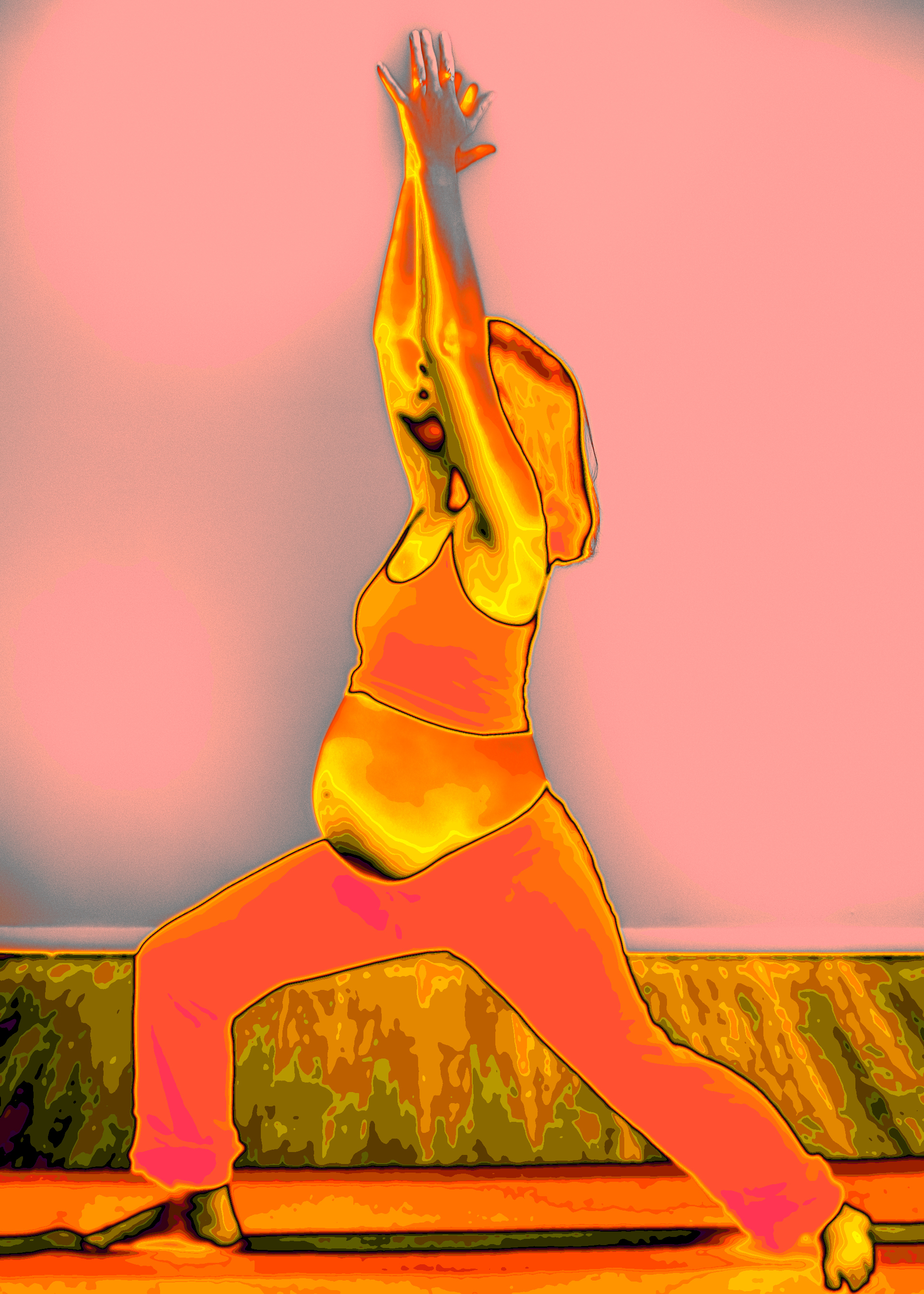
And, bringing it back to birth and the care of birthing bodies, I really liked this image via Facebook:

treatment

Wordweaving

“Giving birth to a new life is about so much more than just the moment itself. The power of finding your strength as a woman through birth resonates for the rest of your life. It shapes you as a person, and as a parent.” ~ Gina Sewell

“Childbirth is a time when a woman’s power and strength emerge full force, but it is also a vulnerable time, and a time of many changes presenting opportunities for personal growth.” ~ Annemarie Van Oploo

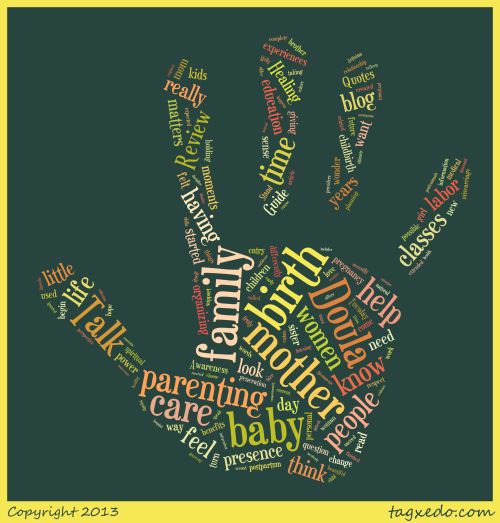
So, this is kind of weird little post, but I had some fun things to share. I’ve been playing around with Tagxedo and made a Talk Birth image!
talkbirthAnd, I learned that this year is the 70th anniversary of the classic Myers-Briggs Type Inventory. I have my online students take this test every session and we compare our results and the overall class dynamic. In celebration of the MBTI birthday, they have cool little wordcloud heads available with your type. Here’s mine!

infj-head

I like that “intense” is up there at the top of the head. Feels fitting 😉 And, here’s my husband’s!
intj-headI also used Tagxedo to make a “strong elephant” for my elephant-collecting mom to take with her on her visit to my grandma!

strongelephant

Bringing it around back to birth though, I also read an article about the potent impact of the language of birth.

So maternity care workers. Words do matter. To you and to all in earshot of you.

via Childbirth and the language we use: does it really matter?

I’ve had an interest for a long time in what I call the “lexicon” of birth. As I’ve referenced before, that is what puts the “Talk” in my Talk Birth name! Language is powerful. Language shapes our lives and experiences. Much of the language surrounding birth and women’s bodies is negative or degrading. Think, “trial of labor,” “inadequate pelvis,” “failure to progress,” “incompetent cervix,” “irritable uterus,” “habitual aborter” (yes, that is the name for women who experience multiple miscarriages).

On the flip side, I’ve also read other writer’s critiques of an overly positive language of birth, labeling and mocking words like “primal” as “euphemisms” for hours of “excruciating” pain. But, that makes me think about the locus of control in the average birth room. It seems like it might more difficult to start an IV in a “triumphant” woman, so lets call her stubborn or even “insisting on being a martyr”? Could you tell someone making “primal” noises to be quiet? Probably not, but you can tell someone who is “screaming” to “stop scaring” others. Asserting that a painful and degrading language of labor and birth is “real” English and that the language of homebirth advocates are “euphemisms” is a way to deny women power and to keep the locus of control with medicine. This language is often that which dehumanizes and denies the personhood of the birthing women. And, not only is the language disempowering and also incomplete—I honestly never felt “agonized” or “screamed” during any of my births, so why would I use inadequate words like that in place of my more accurate “euphemisms”?

Some other past posts about language and birth:

Birth Talk

Health Care or Medical Care?

Maternal-Fetal Conflict?

Pain with a Purpose?

Perceptions of Pain

Words for Pain

Consumer Blame

Cut here?? What not to say to pregnant or laboring women…

Tuesday Tidbits: Cesarean Awareness Month Round-Up

motherbaby

April is Cesarean Awareness Month and a lot of great resources have been catching my eye! First, there is a free webinar about the “Natural Cesarean” coming up on April 11th.

If you’re a first-time parent, make sure to check out 10 Tips for Avoiding a First-Time Cesarean from Giving Birth with Confidence. This blog also has a response to the question of Are “Big Babies” Cause for Cesarean? 

And, of course, also check out ICAN’s blog for an ongoing collection of Cesarean Awareness Month related posts as well as helpful cesarean awareness information on a year-round basis.

Science & Sensibility offers a great round-up of resources for clients and classes with regard to cesarean births, cesarean rates, and cesarean prevention: April is Cesarean Awareness Month! Resources for You and Your Classes

One a related note, Science and Sensibility also has a two-part series of posts analyzing the role of doulas in reducing cesareans for mothers using Medicaid:

Medicaid Coverage for Doula Care: Re-Examining the Arguments through a Reproductive Justice Lens, Part One

More fundamentally, however, we argue that doula benefits cannot be captured solely through an economic model.  Neither should doulas be promoted as a primary means to reduce cesarean rates.  Both strategies (economic benefits and cesarean reduction) for promoting doulas have significant barrier.

Medicaid Coverage for Doula Care: Re-Examining the Arguments through a Reproductive Justice Lens, Part Two

However, greater attention needs to be paid to issues of privilege and oppression within the doula community at large.  Advocates need to consider how the prioritization of the cesarean rate as a primary research or policy issue reflects a certain level of unexamined privilege. For those facing spotty access to health care, cultural and linguistic incompetence in care settings, the detrimental effects of the prison industrial complex and the child welfare system on families, and the effects of poverty, racism, and/or homophobia in general, there are other, perhaps equally pressing concerns surrounding childbirth than over-medicalization. Certainly, unnecessary cesareans and over-medicalization are detrimental to everyone, but we need to understand how the effects of these problems play out differently for differently situated people and not limit advocacy to these issues.

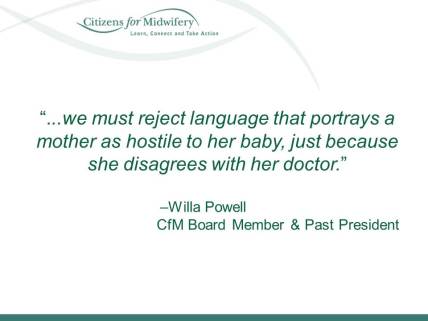
When I consider coercion into unneeded cesareans, I think of my own post addressing the flawed notion of Maternal-Fetal Conflict and from these earlier thoughts, I created the little graphic for Citizens for Midwifery seen above.

I think it is fitting to remember that mother and baby dyads are NOT independent of each other. With a mamatoto—or, motherbaby—mother and baby are a single psychobiological organism whose needs are in harmony (what’s good for one is good for the other).

As Willa concluded in her CfM News article, “…we must reject the language that portrays a mother as hostile to her baby, just because she disagrees with her doctor.”

via Maternal-Fetal Conflict? | Talk Birth.

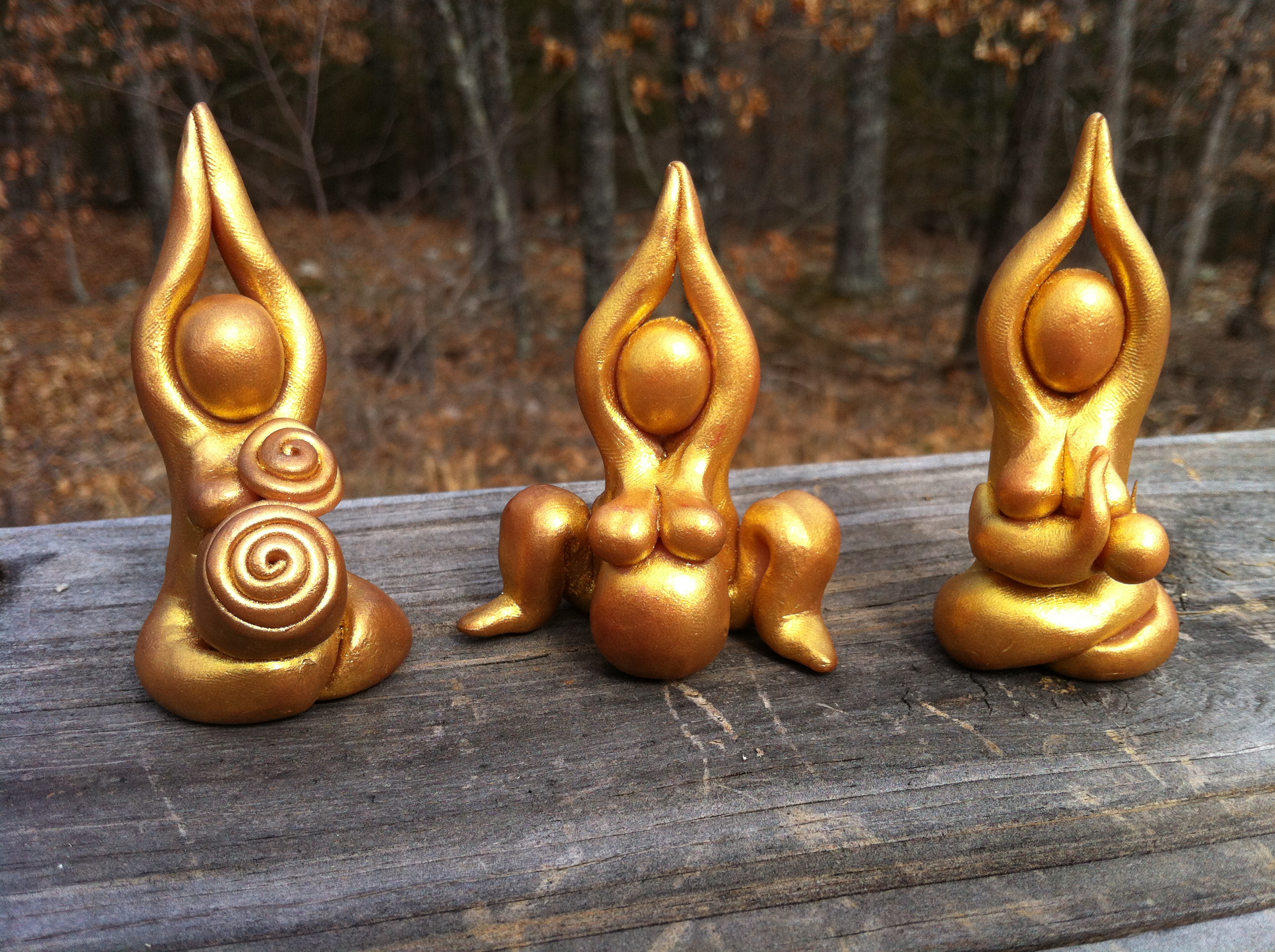
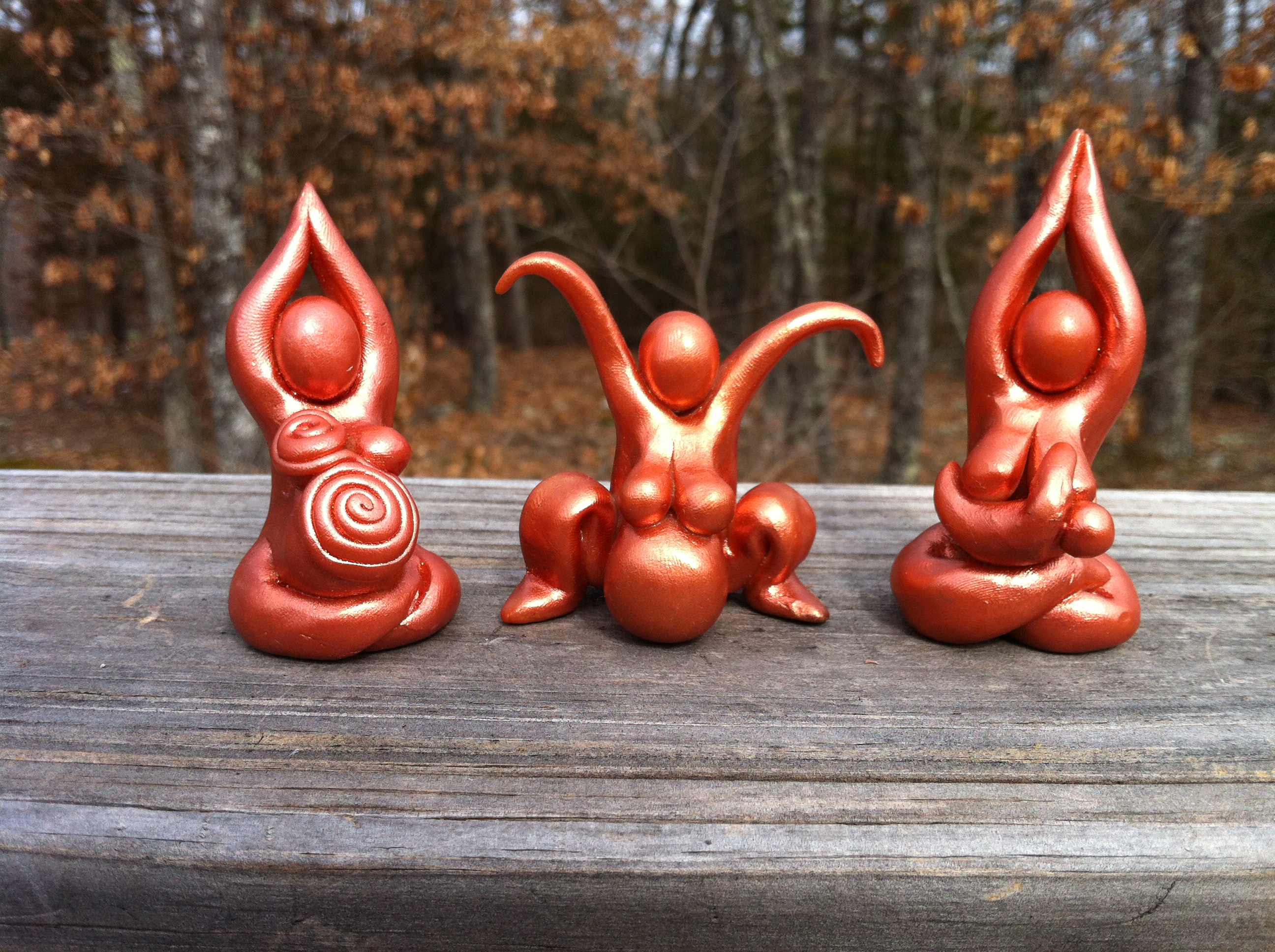
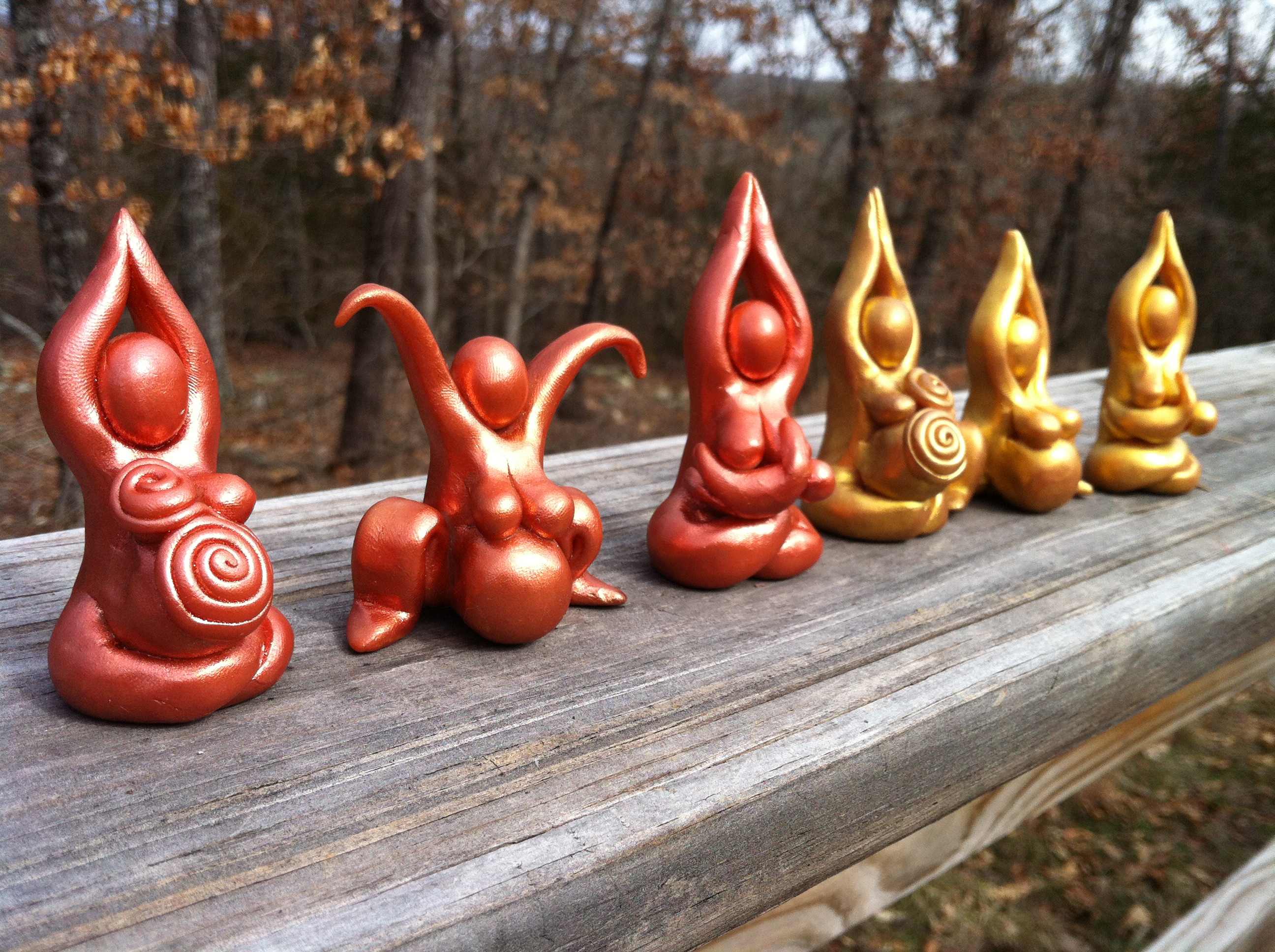
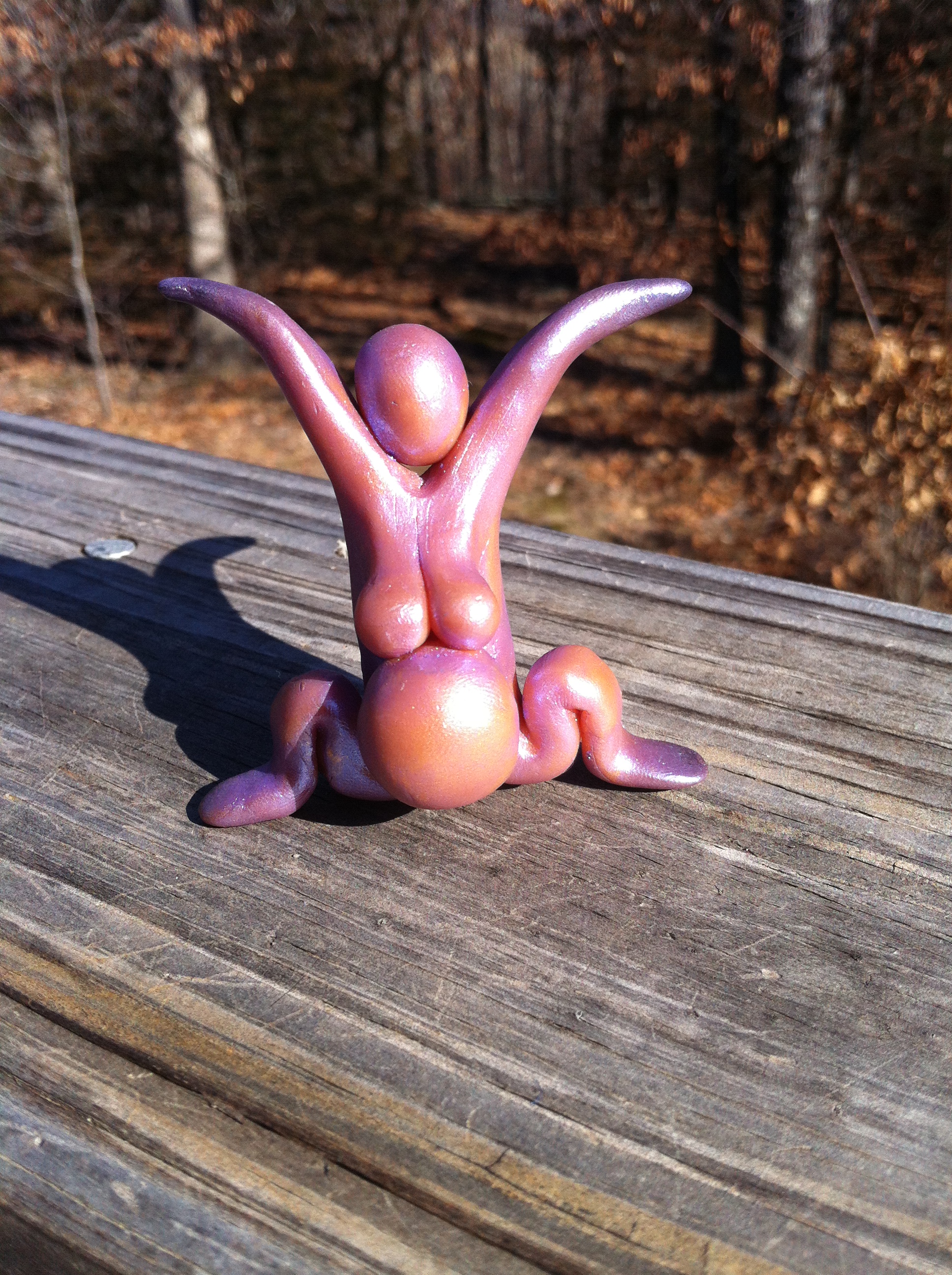
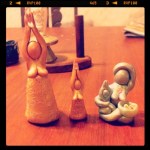
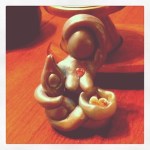
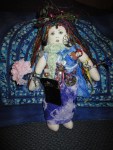
I was honored recently to make a series of sculptures for mom recovering from a traumatic cesarean and hoping for a VBAC in the future. I hope to make a more detailed post in the future describing these figures and what they’re trying to communicate!

March 2013 070

I dug into the archives and found some older posts either about cesareans or relating to cesarean prevention:

Book Review: Understanding the Dangers of Cesarean Birth

Cesarean Awareness Month

Cesarean Trivia

Cesarean Birth in a Culture of Fear Handout

Guest Post: Abuse of pregnant women in the medical setting

Becoming an Informed Birth Consumer (updated edition)

The Illusion of Choice

ICAN Conference Thoughts

Helping a Woman Give Birth?

Women’s (Birth) History Month

…we  need to grasp an honest understanding of birthing history – one that tells HERstory not HIStory.  Because birth is about Women.  It is a woman’s story. And we need to also understand why and how this herstory compels women to make the choices they make surrounding birth in the present day.

People become the product of the culture that feeds them.

It takes an immense amount of work to deconstruct cultural lies. Especially ones as insidious as the ones that we, as birthing women, have been fed for more than a century. We need to stop blaming women for their place in this System. Women are victims and by-products (not accomplices) of medicalized birth.

via That Joke Never Gets Old. Or Good

March 2013 039In honor of Women’s History Month, I’ve been considering the women in (recent) history who have changed the climate surrounding pregnancy and birth. While I’m sure Ina May Gaskin’s name would probably spring to the lips of most birth activists considering the theme, I felt like taking a quick look at the many other classic authors who have had a profound influence on my own ideas about birth. This thought, coupled with the fact that for some time I’ve wanted to write a post about “older birth books” that are still excellent reads today, has brought me to the present moment: a list of my favorite “old” birth books and the lovely women who wrote them. When I first started out in birthwork, I wanted to read “new” stuff—stuff that was “up to date” and “current.” After I read almost all of the “new” books, I started to cast my eye around for more and guess what I discovered? No surprise to many of you, but many of those “out of date” books with the retro-looking covers are still just as good and just as relevant as they were 20-30 years ago. Since medical information and science/evidence changes fairly rapidly and a pregnancy and childbirth 101 type book from 30 years IS more often than not completely inappropriate today, I had made the mistake of thinking ALL “old” birth books would be similarly irrelevant. Instead, many have a power and passion that is not easy to come by in any decade and that rouses the activism spirit, or stirs the heart, or challenges the psyche just as effectively today. Here are some of my recommendations (and of course, Spiritual Midwifery remains a good choice too, I just want to add some less usual recommendations!):

  • Transformation through Birth by Claudia Panuthos (also known for writing another great resource: Ended Beginnings: Healing Childbearing Losses). Written in 1984, this book “goes beyond” the scope of traditional birth books and really gets into some deep topics and insightful ideas. Previously written about here.
  • Special Delivery by Rahima Baldwin (another good, less well-known one from her is Pregnant Feelings, explored in depth in this post). Revised in 1986, this book is one of my favorite homebirth resource books. Though some segments are in fact, “outdated,” I still find this to be one of the very best (“old” or new!) resource books for women planning to give birth at home.
  • Open Season by Nancy Wainer (Cohen) in 1991 (how can 1991 be called “old”? Well, it is over 20 years ago and considering that many women giving birth today were born after that date, it IS old!). Nancy has a lot of FIRE and I love it. Some people have been known to call her “angry” or “bitter.” I call her…amazing. Her writing lights you up and calls you to action. She has incredible passion, fire, brightness, drive, and enthusiasm. One of her articles in Midwifery Today that is available online is also well worth the read: VBAC and Choice. And, I use some of her quotes in this post.
  • Birth Book by Raven Lang. This is the original counterculture birth book written in 1972 at the launch of what would become the modern movement to return birth to the hands of women.
  • Childbirth with Insight written in 1983 by Elizabeth Noble, is another one of the birth books that I say “goes beyond.” As a childbirth education, I especially benefited from her exploration of some of the failings of traditional approaches to childbirth education.
  • Lots of older books from Sheila Kitzinger are very good also. I particularly enjoy The Experience of Childbirth and Giving Birth: How it Really Feels.
  • My last recommendation for the moment is Mothering the New Mother by Sally Placksin (revised in 2000, which again sounds reasonably recent, but in reality is thirteen years ago–how is that possible?). It is classic must-read for doulas as well as any other birth companions. It is wonderful and I wish I would have read it before my own first child was born.

There are many more excellent books out there, both modern and “herstorical,” but I’ll leave you with these treasures for now. I’m grateful for each of these birth activists whose words and spirits helped deepen and refine my own passion for birth.

I long to speak out the intense inspiration that comes to me from the lives of strong women.” –Ruth Benedict


(Adapted from a post originally made at CfM several years ago.)

Birth Regrets?

March 2013 034I usually talk in my classes about how ‘this’ is the only chance you’re going to get to birth this baby. Sure you may go on to have other babies, but you only get *THIS* chance to birth *THIS* baby. I also share with moms that because of this fact, the significance of this birth is infinitely greater than the significance of this birth is to your nurse, OB, midwife, etc.” – Louise Delaney

As I was writing my post last week about “bragging rights” in birth, I was also considering the role of birth regret. I’ve come to realize that just as each woman has moments of triumph in birth, almost every woman, even those with the most blissful birth stories to share, have birth regrets of some kind of another. And, we may often look at subsequent births as an opportunity to “fix” whatever it was that went “wrong” with the birth that came before it. While it may seem to some that most mother swap “horror stories” more often than tales of exhilaration, I’ve noticed that those who are particularly passionate about birth, may withhold or hurry past their own birth regret moments, perhaps out of a desire not to tarnish the blissful birth image, a desire not to lose crunchy points, or a desire not to contribute to the climate of doubt already potently swirling around pregnant women. I’ve already acknowledged all of my own moments of birth regret, but never all in the same post…so, here they are…

First birth: This birth was great and very empowering, but I also learned a lot of things I’d like to do differently the next time. Maybe “regret” is too strong a word, but there were things I definitely knew I wanted to change for next time. I regretted feeling pushed into several things I wouldn’t have chosen on my own, such as giving birth in a semi-sitting position rather than on hands and knees. I wished I hadn’t had quite so many people around me at the birth and I wished I would have just stayed home, rather than driving to a birth center. I regretting not asking to squat after the placenta to help the “sequestered clots” come out and possibly avoid the manual extraction I experienced which was pretty awful (I swear my uterus actually twinges when writing/thinking about it). I regretted having a pitocin shot after the birth, because I still don’t think I actually needed it and it bothered me for a long time that I couldn’t figure out whether or not I’d really needed it. I was also pretty physically and emotionally traumatized by the labial/clitoral tearing I experienced and desperately wanted to fix that next time! Interestingly, most of these regrets were clearly connected to other people and to events in the immediate postpartum period, rather than anything to do with the labor or birth process itself.

Second birth: With this birth, I see very clearly how I deliberately made choices to “fix” the things that nagged at me from my first birth. I gave birth at home, I had very few people present, I gave birth on hands and knees. I was extremely distraught to tear again in the same unfortunate and traumatic way. I’d been totally convinced before the birth that it was all related to positioning and I could fix it, next time. I regretted getting up and showering, etc. so soon after the birth and I wished for more postpartum care (noticing a theme here…). I wished I hadn’t almost fainted several times and still recall the feeling of my head snapping back as I almost went under. That said, I felt the proudest and most exhilarated after this birth.

Third birth: Aside from the obvious of wishing my baby had been born alive, I “fixed” some things from prior births in that I stayed down after the birth to keep myself from fainting. I regretted drinking Emergen-C after the birth. I regretted not being better informed about coping physically with a miscarriage. And, I wished I’d been better able to assess blood loss. I also wished I’d had an attendant of some kind, particularly for immediate postpartum care. I still feel traumatized from the memory of what felt like extreme blood loss during this birth. This was the most physically demanding experience of my life. Not just my birth life, my whole life.

Fourth birth: My biggest regret from this birth was having tried to use a hypnosis for birth program while in labor. I feel as if there were some pre-birth benefits from using the program, but it was not a match for the way I labor and birth and I actually feel as if using it had a negative impact both on my ability to clearly remember and to focus my energy. I did still tear in the same place and in what seems like some new ways as well. I never want to tear like that again. I hate it. I’ve reached my physical and emotional limit with experiencing that type of tearing and I feel like I still have some negative lasting effects. I also think I had some nerve damage that continued until about six months ago. What I “fixed” this time was having a living baby and rediscovering that I could in fact do this and there was nothing wrong with me. I loved that I caught my own baby. (Best. Moment. Ever.) I also had the immediate postpartum care I’ve finally learned I really, really need. I consumed a small piece of placenta postpartum, I drank chlorophyll (and not vitamin C), when I went to the bathroom and did not look down, so I didn’t get all fainty and woozy from seeing the blood, and my doula encapsulated the placenta and I loved it.

It is interesting to me to look at these feelings and situations in the same place. With my last birth, I finally “fixed” the postpartum and blood loss issues that haunted me, but I created new things to fix by experimenting with hypnosis rather than the active birth, birth warrior, Birthing from Within type of experience that truly suits me. I guess I will never fix the tearing situation (I still want to write about that someday!). I also notice how impacted I was and still am by the two births that involved major blood loss. This came up for me very viscerally in reading the current Midwifery Today issue about hemorrhage. While the topic is important and the issue is really informative and useful, I actually had to put it down by page nine because my uterus was hurting/twinging so much (low back too). I really don’t think it was only my imagination either. (This is one reason my work with birth is never going to actually include becoming a midwife!)

I’m curious to know…do you have birth regrets? Or, things that you used subsequent births to fix, overcome, or cope with? Do you see any patterns to your birth experiences like I see in mine?

The other thing this exercise brought up for me is the important of preparing for the birth you want during this birth. This baby is only born once. This birth only happens once. I have clients tell me sometimes while still pregnant with their first baby, “well, next time, I’ll try XYZ…” Don’t wait for next time, do it this time!

The first birth is the pivotal birth. Every birth experience that follows builds on that one. Our choices now are choices for the NEXT birth. The first birth doesn’t have to be either perfect or awful and earth shattering to make us think. We don’t have to choose differently than the first birth; but it’s the first one that gives us a place to begin experiencing not just birth but ourselves as mothers, women, people. We may not all have ground shaking, earth thundering thoughts but we have them. The experience belongs to us. We choose what to do with it. Choosing to do nothing different is still an influenced choice ~ made on that experience…

…What will YOU do to have a first birth that leaves you with few regrets or changes for your NEXT birth? Why not have the birth of your choosing, rooted in truth and your ability to know yourself and your baby now?…

via The Home Birth Experience: The First Birth is HERstory | Real women. Real options. Real birth..

These types of triumphs and regrets produce both birth professionals dedicated to helping others and also mothers who become so hurt and disillusioned with birth that they may actively reject the “natural birth” movement.

March 2013 049

Tuesday Tidbits: Bragging Rights

“Before I had children I always wondered whether their births would be, for me, like the ultimate in gym class failures. And I discovered instead…that I’d finally found my sport.” –Joyce Maynard

“Our body-wisdom knows how to birth a baby. What is required of the woman who births naturally is for her to surrender to this body-wisdom. You can’t think your way through a birth, and you can’t fake it.” –Leslie McIntyre

February 2013 113
This week I particularly enjoyed a saucy post by my friend, colleague, and doula, Summer. Titled Bragging Rights, she talks about her own experience birthing a very large baby (nearly 12 pounds! I enjoy bragging about her baby too!) and whether or not she really “deserves” bragging rights on birthing a big baby. I absolutely love her concluding thoughts on the topic:

“…Frankly, I think all mothers get bragging rights on their babies births. Birth is awesome and amazing and power-full. Every mother must face it. Sure, she may face it differently than me, but it IS a labyrinth we all go through. This is the way of life. So, mothers, brag away. Brag about whatever part of your labor and baby’s birth made you feel empowered….find that piece, even if it’s just a tiny moment, and cling to it. Shout it from the rooftops!…”

What a great idea that all mothers deserve “bragging rights.” What are your bragging rights moments from your births, however they unfolded?

I immediately thought of one for each of mine, reflecting that each birth does hold a key moment for me, the first thing that comes to mind when I think about that birth, a moment of being power-full.

First birth: my moment was arriving at the birth center fully dilated after having worried I was “only two centimeters.”

Second birth: having a two-hour labor—it was a train ride and I DID IT. Wow!

Third birth (miscarriage): coaching myself through labor and being brave enough and strong enough to open and let go of my little non-living baby.

Fourth birthFebruary 2013 102: catching my own baby! By myself! With my own two hands! And, she was ALIVE!

…the stories I see of birth in the media don’t reflect the intense emotions, the physical power, or the immense impact of the experience itself. Women screaming, fathers fumbling about, doctors doing most of the heroic work–these images don’t do justice to my experience. I felt empowered, strong, heroic in my efforts to bring my daughter into the world yet, I am painfully aware how little others see the heroism in my birth experience.“ –Amy Hudock (essay in Literary Mama)

“...if you want to know where a woman’s true power lies, look to those primal experiences we’ve been taught to fear…the very same experiences the culture has taught us to distance ourselves from as much as possible, often by medicalizing them so that we are barely conscious of them anymore. Labor and birth rank right up there as experiences that put women in touch with their feminine power…” –Christiane Northrup

Tuesday Tidbits: Pain, Power, and Lasting Memory

Inspired by the Wednesday Wisdom series of posts at Pagan Families and because I’m teaching on Tuesdays this session and thus not able to type substantive posts, I’m planning to start doing a new short weekly post with a few quotes and birthy news items that have caught my eye. I’ve thought several times that I should do themed posts or posts on specific days about specific areas, but somehow I don’t really work like that and instead spend hours on long missives that are perhaps never read through to the end. I don’t really have a posting schedule or weekly plan for posting, it just…happens. I notice from my archives that I seem to regularly post about 16 posts a month. Maybe I do have a largely unconscious schedule that I follow…

So, here’s my tidbits for this week:
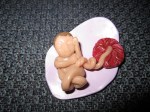
“A ‘no’ uttered from the deepest conviction is better and greater than a ‘yes’ merely uttered to please, or what is worse, to avoid trouble.” ~ Mahatma Gandhi

I should perhaps pin this to my head. I feel as if I’m constantly being offered wonderful opportunities (what a problem, eh?!) and must ever be mindful of, “choosing the best and leaving the rest.”

See also: Balanced Living and Saying ‘No’ and The Ongoing Crisis of Abundance.
Switching gears into birth and pain:

“Women experience pain differently; some feel strong overwhelming pain, some may feel a deep discomfort during birth, and still others may feel no pain at all. The experience of pain during childbirth facilitates an unfolding of inner power and resources we never imagined we possessed, similar to enduring the pain of completing a marathon at the finish line.”
–Barbara Nicholson and Lysa Parker, API founders

(Prior musings on pain and birth.)

And into the power of place:

“If we believe that birth is a powerful, sacred event that has personal significance and meaning for the mother, baby and family, then we need to recognize that where it takes place is a sacred and holy site.” –Jenny Hall, “The Sacred Place of Birth” (via Pagan Families)

In other news, the first digital-only issue of the Friends of Missouri Midwives newsletter is finally available online! Yay! I’m so excited. The theme is Birth Art.

On Scoop.it, I shared links to a couple of interesting articles:

Childbirth classes if you AREN’T interested in natural birth

Sex After (a Traumatic) Childbirth – Onislam.net

And, finally, I fell in love with this awesome quote:

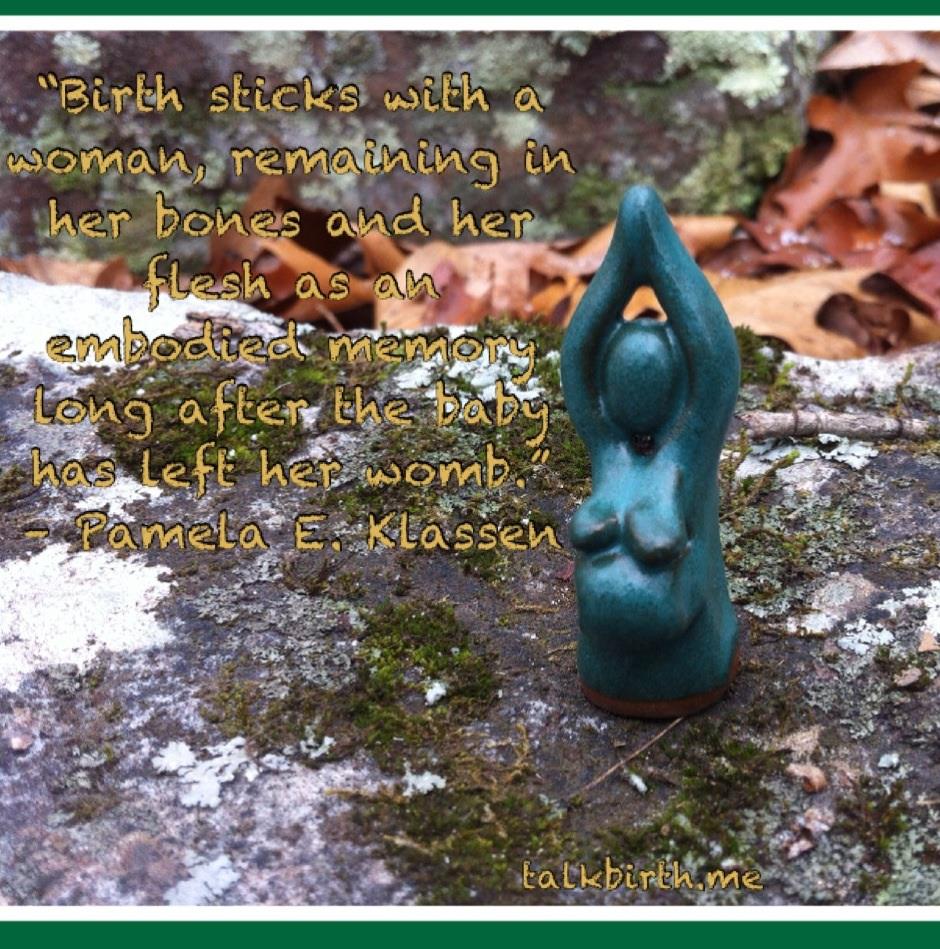
“Birth sticks with a woman, remaining in her bones and her flesh as an embodied memory long after the baby has left her womb.”

– Pamela E. Klassen, in Blessed Events (via Pagan Families)

And, I used some of my new art (more about this soon) to make a little graphic with it too…

398124_10152413274040442_130771351_n

Preventing Culturally Induced Lactation Failure

281How often does it happen that women truly are physically unable to breastfeed?

No one actually has a solid answer to this question. The common estimate is a very hazy, “less than 1%.” I’ve said it, very hazily, plenty of times myself. But, what does that really mean? I’ve certainly talked with a lot of struggling mothers over the years—many of whom go on to continue to breastfeed successfully, but who might very well not have done so without encouragement, reinforcement, and practical suggestions. If they never reached out for help, might they have ended up as part of that semi-mythical 1%? How about those mothers that absolutely stagger me with their ability to keep going and keep trying when I would understand completely if they decided to quit and in fact question that I, personally, would have been able to continue if faced with the same obstacles—where do they fit in? Maybe just in the category box labeled amazing.

Yesterday, I read an article on the Breastfeeding Medicine blog that really shook my personal framework up a bit:

…I would argue that there’s a very fine line between “sensationalizing” and “truth in advertising.” Reproductive biology is imperfect — some couples can’t conceive, and some pregnancies end in miscarriage or stillbirth. The silence around these losses and the isolation that women have historically experienced has probably worsened the suffering for many women. On the other hand, emphasizing these risks and creating a culture of fear harms the majority of mothers who will have successful pregnancies and births.

Lactation is probably a few decades behind infertility and pregnancy loss in coming “out into the open” as a generally robust, but not invincible, part of reproductive biology.

via Establishing the Fourth Trimester « Breastfeeding Medicine.

Wow! Brain boggled in reading this. Heart clenched at thinking that I may have treated someone as casually in breastfeeding loss as other mothers have been treated over and over again in pregnancy loss. The author goes on to explain that women used to be blamed for having miscarriages and we just might be doing the same thing to women who physically can’t breastfeed. I have never in my wildest dreams considered adding “lactation failure” to my understandings of the things that can truly go wrong during the childbearing year. I usually consider, “some mothers are physically unable to breastfeed” to essentially be in the same territory as dragons and unicorns. I’ve remained firmly convinced for, like, ever, that it is culture that fails mothers and babies and not women’s bodies that fail. And, I truly wonder if it is ever possible (except for in cases of insufficient glandular tissue, metabolic disorders, breast surgery/removal, and clear physical malformations) to really tease apart whether a mother is actually experiencing lactation failure or sociocultural failure. I remain fairly convinced that in many cases it is impossible to know—but, that a mother (or physician) may certainly experience it as “lactation failure” and thus add that data point to the 1%. I have long maintained that a lot of people forget that breastfeeding occurs in a context and that context doesn’t necessarily support breastfeeding. However, I do also know from years of experience that motherbaby physiology can lead to problems too and we often overlook that in assertions about breastfeeding.

How do we get breastfeeding off to a good start?

At our 2011 Big Latch On event.

At our 2011 Big Latch On event.

How do we make sure that mothers do not experience sociocultural breastfeeding failure? It begins with the birth. Birth and breastfeeding are not discreet events—they exist on a biological continuum. When I attended the La Leche League International conference in 2007, there was an exciting emphasis on “the motherbaby” as a single psychobiological organism. The womb is the baby’s first habitat and following birth the baby’s “habitat” becomes the mother’s chest—otherwise referred to as “the maternal nest.” In short, a normal, healthy, undisturbed birth leads naturally into a normal, healthy, undisturbed breastfeeding relationship. Disturbed birth contributes to disrupted breastfeeding. In a previous article on this topic I wrote:

New mothers, and those who help them, are often left wondering, “Where did breastfeeding go wrong?” All too often the answer is, “during labor and birth.” Interventions during the birthing process are an often overlooked answer to the mystery of how breastfeeding becomes derailed. An example is a mother who has an epidural, which leads to excess fluid retention in her breasts (a common side effect of the IV “bolus” of fluid administered in preparation for an epidural). After birth, the baby can’t latch well to the flattened nipple of the overfull breast, leading to frustration for both mother and baby. This frustration can quickly cascade into formula supplementation and before she knows it, the mother is left saying, “something was wrong with my nipples and the baby just couldn’t breastfeed. I tried really hard, but it just didn’t work out.” Nothing is truly wrong with her nipples or with her baby,

I know that my birth experiences significantly impacted my breastfeeding experiences in that my babies were never separated from me after my peaceful, undisturbed births (one birth center, two homebirth). They went directly from being born to my breast, keeping the physicality and continuity of our relationship unbroken and undisturbed. That is not to say that we never experienced any challenges, I struggled with oversupply with all of them—which reminds me of attending another LLL conference presentation by Diana West in which she stated that she is seeing much fewer “normal course of breastfeeding” issues in her practice and instead of noticing an “epidemic of both low milk supply and oversupply.” She asked the room if we were noticing the same thing and many of us raised our hands. One possible theory is the amount of endocrine disruptors in our food supply. Again, is that actual lactation failure or is that ecological failure?!

Some time ago I wrote an article for the Friends of Missouri Midwives newsletter in which I asked for submissions regarding the topic of how birth experiences impact breastfeeding. A doula wrote to share her experiences:

My births definitely affected my breastfeeding experiences. I prepared extensively for my first child’s birth. I felt fully educated about birth and also breastfeeding. I planned and had a natural birth. Being empowered by that helped me know I could handle and be successful at breastfeeding too. My two unassisted births were “all me”. There was no one telling me what to do. I was confident in that and that also helped build my confidence one again in breastfeeding. I will also go on to say that not only did my natural hospital birth and subsequent home births help in breastfeeding, but also generally as a mother. They empowered me to know that I was capable of a lot more than I could ever imagine! (Which is great on a day with three little ones screaming around the house!)

 And, a local physician also had input about the question:

Gosh, my own experience–how can I know how my birthing influenced my breastfeeding?  Since the nursing part was so easy, and I birthed at home (thank heavens), well, how would I know if it would have been different if we had done it differently?  But I know this:  it is SO much easier being a breastfeeding supportive physician to home born babies than it was trying to support breastfeeding when the birth was distorted.  In my experience, the only other thing that makes that much difference is La Leche League attendance.  I think mothers and babies are designed to experience labor and birth and then breastfeed.  When things go differently–like when labor is started early for some reason, or when mothers don’t get to experience their labors and births because of epidurals or other drugs or cesarean  sections, then the breastfeeding is more likely to be challenged.

Babies are programmed to learn to nurse in that first hour after birth.  They need to be in contact with their mothers for that time to do that.  It doesn’t take much intervention to undermine that.  Our babies are working so hard, learning to live on the outside of the womb–changing everything, including their breathing, their circulation, their digestion, elimination, integrating new and overwhelming sensations–and also learning the complex skill of finding the nipple, grasping the nipple, holding the nipple, milking the nipple (and don’t forget to swallow and breathe!).  We should leave them alone and not ask them to do one more thing–like meet Grandma, or deal with the nurse, or warm back up from a bath.

So here’s my advice:  If you want to breastfeed and do it effortlessly:

1.  Get great prenatal care from the best midwife you can find

2.   Plan and achieve a home birth

3. Go to La Leche League regularly during pregnancy and nursing.

This doctor then wrote back to me again with some additional comments about breastfeeding and La Leche League:

La Leche League makes a BIG difference.  In my experience, mothers who are members have far fewer reasons to call me for advice (of any kind, really).  And when they do, they tend to be focused, easy-to-answer questions or requests.  So, instead of “my nipples hurt,” it is, “I’ve been reading/talking to/consulting with various sources and I think that I have nipple thrush.  The things I have tried haven’t worked and I am not ready to try Nystatin.  Can you prescribe this for me?”  LLL ladies ROCK!

I am convinced that a thousand little adjustments get made in the wise nursing circles–a comment made, a slight modification of a nursing  position, an encouraging word, a question asked, a behavior modeled.  With these gentle, under-the-radar moves, nursing just gets easier or stays easy.  The woman and her circle never consider that a “nursing problem” existed.  No big intervention needs to happen.

Without these “interventions” nursing problems DO develop, and then the rescue team gets called in–people have big feelings, do big or little interventions, they help or they don’t and people feel like heroes or failures and “breastfeeding problems” get into the story-telling.  But what gets lost is how easily these things are “prevented”.

Midwifery is like this.  Parenting is like this.  Life is like this.

I really appreciate her closing observations here about wise nursing circles. I believe it can be in these circles that we find the women who know and we can certainly give each woman who we come into contact with the best chance at preventing or overcoming culturally induced lactation failure.

Celebrating Pregnancy & Birth Through Art

This article is adapted from my notes for past birth art workshop presentations. It is part of a story for the Winter 2013 edition of the Friends of Missouri Midwives newsletter.

Celebrating Pregnancy & Birth Through Art

by Molly Remer, MSW, ICCE, CCCE

http://talkbirth.me

See other posts and pictures about birth art here.

Birth art is one of my favorite birthy subtopics and I used art during my pregnancies, postpartum, and continuing in life today. I love exploring birth art with women and I’ve presented on the subject at multiple conferences, as well as hosted a “birth art booth” at our local MamaFest event this past fall. Art can play an important role in self-discovery and preparation for birth and parenting. Art used during pregnancy and following birth can be powerful tool of validation, celebration, exploration, and insight.

Why is art during pregnancy is useful?

Art during pregnancy is primarily as a tool to tap into “right brain” consciousness and express unexplored gifts, primal wisdom, or release hidden fears. Creating birth art can help both women and men explore your feelings, memories, beliefs, and perceptions surrounding birth outside of the confines of the spoken or written word. The purpose of birth art is to explore what you find within as you create your art and not the final product—as Pam England describes, birth art is as raw, honest, spontaneous, and personal as birth itself.

Art during pregnancy can be used for:

    • Birth preparation.
    • Exploration of fears.
    • Celebration of feelings & experiences.
    • Fun!
    • Visualization.
    • Focal point.
    • Exploration of the unknown.
    • Self-discovery & insight.
    • Healing.
    • Revealing unconscious patterns/ideas.
    • Celebration of the power of the female form.
    • Celebration of new life.
    • Representing hopes/dreams.
    • Communicating hard to verbalize ideas/feelings.
    • Exploring “right brain” methods of understanding the birth journey.
    • Explaining concepts in new ways.
    • Symbolic/spiritual insights.
    • Revealing hidden birth wisdom.
    • Expressing creative gifts.
    • Mementos

Types of art exploration in pregnancy:

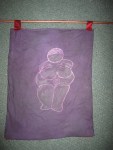
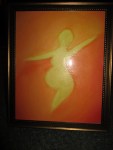
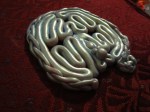
    • Sculpture—variety of mediums (fiber, clay, pottery…)
    • Painting
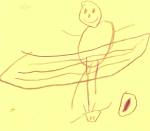
    • Drawing
    • Photos
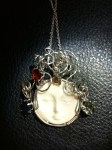
    • Jewelry
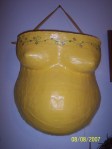
    • Belly casting
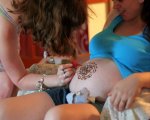
    • Body art (such as henna)
    • Collage
    • Mandalas
    • Decorating objects—prayer box, wreath
    • Quilting

Birth Art Examples:


Two Suggested Exercises for Birth Professionals or Parents:

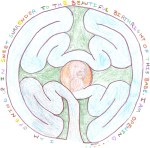
Based on Pam England’s LabOrinth article, I enjoy showing parents how to draw a birth labyrinth (several examples can be seen in the gallery above). Drawing a labyrinth with an explanation of how this type of image can be used to explain/explore the progress of labor as opposed to medical models such as cervical dilation charts or labor progress “bell curves,” can be a very eye-opening exercise for parents. The resulting image is a powerful visual of “normal birth,” instead of “clock watching” birth. I’ve made two posters than I use when I teach birth classes. The first shows a rough Friedman’s curve and a cervical dilation chart—these images are part of a deeply ingrained cultural view of birth and it is hard to shake these associations. This linear birth structure may be how we view labor from the outside, but it is not how we experience it from the inside, the labyrinth is a more appropriate birthing image as it feels from within and this is why…

      • No shortcuts—have to keep going til the end.
      • Speed varies.
      • Can’t get off the path (no falling off the curve).
      • Can get through blindfolded.
      • One step at a time will get you through—one foot in front of the other (one contraction at a time).
      • Can’t get lost. If you get out of the lines, you get lost—try to take shortcuts, get lost. Have to continue on your path.
      • Can crawl if you need to (or run!).
      • Circular (nonlinear)
      • No right way to finish.
      • Contemplative
      • Meditative
      • Journey
      • Everyone gets to the same place eventually—can go own speed, some fast, some slow
      • Do not need instruction to complete (no birth plan)
      • No timeline
      • No need to study.
      • Can rest if you need to.


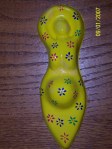
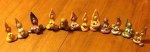
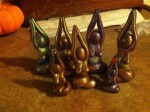
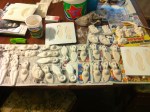
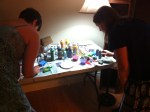
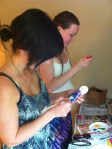
My other favorite group birth art project is to painting small pregnant goddess figurines (I make big batches of these in a mold using plaster). My most recent experience in doing so was at Rolla Birth Network’s MamaFest event:

This experience reaffirmed for me that birth art is about process not product. And, also that I don’t have to personally do anything to have the process be a meaningful one to participants. As an example of what I mean: at MamaFest, a very young mother came into the birth art sanctuary. I gave her my one minute spiel about the purpose of birth art and she painted her figures alone in the room for about 20 minutes. When she emerged, she showed her figures to me and explained what all the symbols and colors meant. Then, with tears in her eyes, she hugged me and said thank you and left. This was a mother I’d never met before and I’ve never seen again. And yet, we shared a special moment through birth art.

Molly Remer is the Friends of Missouri Midwives newsletter editor. She enjoys blogging about birth, motherhood, and women’s issues at http://talkbirth.me.