Archives

Talk Books: Sweetening the Pill

I haven’t actually read this book yet, or even obtained a copy, but I am intrigued enough by the promo spot that I’m doing a short blog post about it anyway! I’ve struggled with the question of birth control for some time. I took the pill for about six years and then after having my first baby in 2003 and going on the minipill, I had the sudden “epiphany” that if I was so committed to natural birth and breastfeeding and natural living and trusting my body, why the heck was I okay with filling said body full of hormones?! (The same epiphany, but including cloth diapers, led me to start using cloth moon pads rather than disposable as well. Never looked back!) We started using natural family planning instead (really, the Billings method) and it has been excellent for nine years—no “accidents” and more babies exactly when we decided we wanted them. And, no side effects, no money, and no hormones. Now that our family size feels complete, I find myself struggling with whether or not NFP will continue be “enough” until natural infertility takes over. NFP was fine when an accidental pregnancy was an acceptable option. At this point, an unexpected pregnancy would still be an acceptable option, however fast-forwarding the clock, I really, really, really, do not want to be someone who ends up having her first unexpected pregnancy at age 45 or something! I also do not want to engage in any permanent body-modification efforts (for either myself or my husband) when my own fertility will be up in the next 15 years or so (but body modification is forever!). So, I feel very optionless at this point…Anyway, on to the book I haven’t read. Here’s the promo copy I got that piqued my interest!

SWEETENING THE PILL OR HOW WE GOT HOOKED ON HORMONAL BIRTH CONTROL by Holly Grigg-Spall
Book Description: Millions of healthy women take a powerful medication every day from their mid-teens to menopause – the Pill – but few know how this drug works or the potential side effects. Contrary to cultural myth, the birth control pill impacts on every organ and function of the body, and yet most women do not even think of it as a drug. Depression, anxiety, paranoia, rage, panic attacks – just a few of the effects of the Pill on half of the over 80% of women who pop these tablets during their lifetimes.When the Pill was released, it was thought that women would not submit to taking a medication each day when they were not sick. Now the Pill is making women sick.However, there are a growing number of women looking for non-hormonal alternatives for preventing pregnancy. In a bid to spark a backlash against hormonal contraceptives, this book asks: Why can’t we criticize the Pill?

Carol Downer of Women’s Health in Women’s Hands makes a really important that our feminist health commitment to birth control access may blind us to the actual poor health impacts of the Pill:

“We discovered in the ’70s that the personal is political. Holly Grigg-Spall starts with her and other women’s personal experiences with the Pill, then thoughtfully and thoroughly considers it scientifically, medically and philosophically to discover the political truth of the Pill. She shares strategies for finding new ways to control our fertility while regaining control of our destiny. Grigg-Spall’s careful study on the Pill’s effect on women’s health is long, long overdue. We are so busy fighting to keep hormonal birth control available that we don’t want to question what it is doing to our health and our lives. After reading this book, we can never see the Pill in the same way again.”

Comments and resources welcome! 🙂

Tuesday Tidbits: Birth Imprinting

What are imprinting upon newborns at birth in our culture?

As Sister MorningStar writes in her article The Newborn Imprint in Midwifery Today issue 104, Winter 2012…

If you have had the misfortune, as nearly all of us who can read and write have had, to see a baby born, perhaps pulled out, under bright lights with glaring eyes and loud noises of all sorts, in a setting that smells like nothing human, with a mother shocked and teary and scared; if you have witnessed or performed touch that can only be described as brutal and cruel in any other setting…

Every baby born deserves uninterrupted, undisturbed contact with her mother in the environment the mother has nested by her own instinctual nature to create. Any movement we make to enter that inner and external womb must be acknowledged as disturbing and violating to what nature is protecting. We do not know the long-term effects of such disturbance. We cannot consider too seriously a decision to disturb a newborn by touch, sound, light, smell and taste that is different and beyond what the mother is naturally and instinctually providing. Even facilitating is often unnecessary if the motherbaby are given space and time to explore and relate to one another and the life-altering experience they just survived. They both have been turned inside out, one from the other, and the moment to face that seemingly impossible feat cannot be rushed without compromise. We have no right to compromise either a mother or a baby.

I am deliberately leaving out the issue of life-saving because it has become the license for full-scale abuse to every baby born… [emphasis mine]

In the same issue in an article called Problems in American Maternal Health Care, Dan Currin points out:

Americans put a lot of trust in their physicians. We are socialized to believe that physicians are the only ones capable of taking care of us. For everything from how to eat to how to die, the mantra is the same in the US: ‘Ask your doctor.’ Meanwhile, physicians are more and more subject to a system that, as Gaskin describes, favors the priorities of hospitals, insurances companies and doctors above the best interests of mothers and their babies

And, Judy Slome Cohain writing in Collusion and Negligence in Hospitals describes it thusly:

To err is considered human, even when it involves maternal death, at a hospital birth. When a woman dies from malpractice after birth the protocol is to hold meetings to consider how to improve relevant protocols to prevent future disasters. Survival of the hospital is first and foremost. However, if a woman dies at an attended homebirth, the Ministry of Health policy is to start a case against the guilty part in a disciplinary court…”

I wrote about birth imprinting in another short post, The Magic of Mothering and about the notion of consulting your health care provider in some thoughts about Women’s Power and Self-Authority.

We also need to consider the role of birth “imprinting” on the breastfeeding relationship:

New mothers, and those who help them, are often left wondering, “Where did breastfeeding go wrong?” All too often the answer is, “during labor and birth.” Interventions during the birthing process are an often overlooked answer to the mystery of how breastfeeding becomes derailed. An example is a mother who has an epidural, which leads to excess fluid retention in her breasts (a common side effect of the IV “bolus” of fluid administered in preparation for an epidural). After birth, the baby can’t latch well to the flattened nipple of the overfull breast, leading to frustration for both mother and baby. This frustration can quickly cascade into formula supplementation and before she knows it, the mother is left saying, “something was wrong with my nipples and the baby just couldn’t breastfeed. I tried really hard, but it just didn’t work out.” Nothing is truly wrong with her nipples or with her baby, breastfeeding got off track before her baby was even born!

via The Birth-Breastfeeding Continuum | Talk Birth.

417

If she came with it label, it would say: Imprint with Care…

*Short post today because I’m out-of-town again! What the heck?! I need a vacation from vacations!

Tuesday Tidbits: Cesarean Awareness Month Round-Up

motherbaby

April is Cesarean Awareness Month and a lot of great resources have been catching my eye! First, there is a free webinar about the “Natural Cesarean” coming up on April 11th.

If you’re a first-time parent, make sure to check out 10 Tips for Avoiding a First-Time Cesarean from Giving Birth with Confidence. This blog also has a response to the question of Are “Big Babies” Cause for Cesarean? 

And, of course, also check out ICAN’s blog for an ongoing collection of Cesarean Awareness Month related posts as well as helpful cesarean awareness information on a year-round basis.

Science & Sensibility offers a great round-up of resources for clients and classes with regard to cesarean births, cesarean rates, and cesarean prevention: April is Cesarean Awareness Month! Resources for You and Your Classes

One a related note, Science and Sensibility also has a two-part series of posts analyzing the role of doulas in reducing cesareans for mothers using Medicaid:

Medicaid Coverage for Doula Care: Re-Examining the Arguments through a Reproductive Justice Lens, Part One

More fundamentally, however, we argue that doula benefits cannot be captured solely through an economic model.  Neither should doulas be promoted as a primary means to reduce cesarean rates.  Both strategies (economic benefits and cesarean reduction) for promoting doulas have significant barrier.

Medicaid Coverage for Doula Care: Re-Examining the Arguments through a Reproductive Justice Lens, Part Two

However, greater attention needs to be paid to issues of privilege and oppression within the doula community at large.  Advocates need to consider how the prioritization of the cesarean rate as a primary research or policy issue reflects a certain level of unexamined privilege. For those facing spotty access to health care, cultural and linguistic incompetence in care settings, the detrimental effects of the prison industrial complex and the child welfare system on families, and the effects of poverty, racism, and/or homophobia in general, there are other, perhaps equally pressing concerns surrounding childbirth than over-medicalization. Certainly, unnecessary cesareans and over-medicalization are detrimental to everyone, but we need to understand how the effects of these problems play out differently for differently situated people and not limit advocacy to these issues.

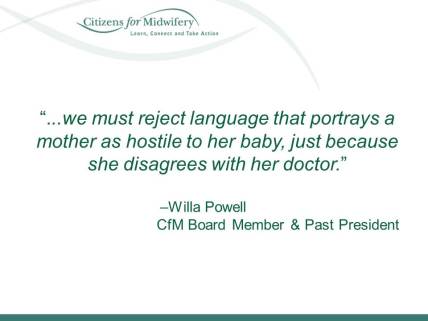
When I consider coercion into unneeded cesareans, I think of my own post addressing the flawed notion of Maternal-Fetal Conflict and from these earlier thoughts, I created the little graphic for Citizens for Midwifery seen above.

I think it is fitting to remember that mother and baby dyads are NOT independent of each other. With a mamatoto—or, motherbaby—mother and baby are a single psychobiological organism whose needs are in harmony (what’s good for one is good for the other).

As Willa concluded in her CfM News article, “…we must reject the language that portrays a mother as hostile to her baby, just because she disagrees with her doctor.”

via Maternal-Fetal Conflict? | Talk Birth.

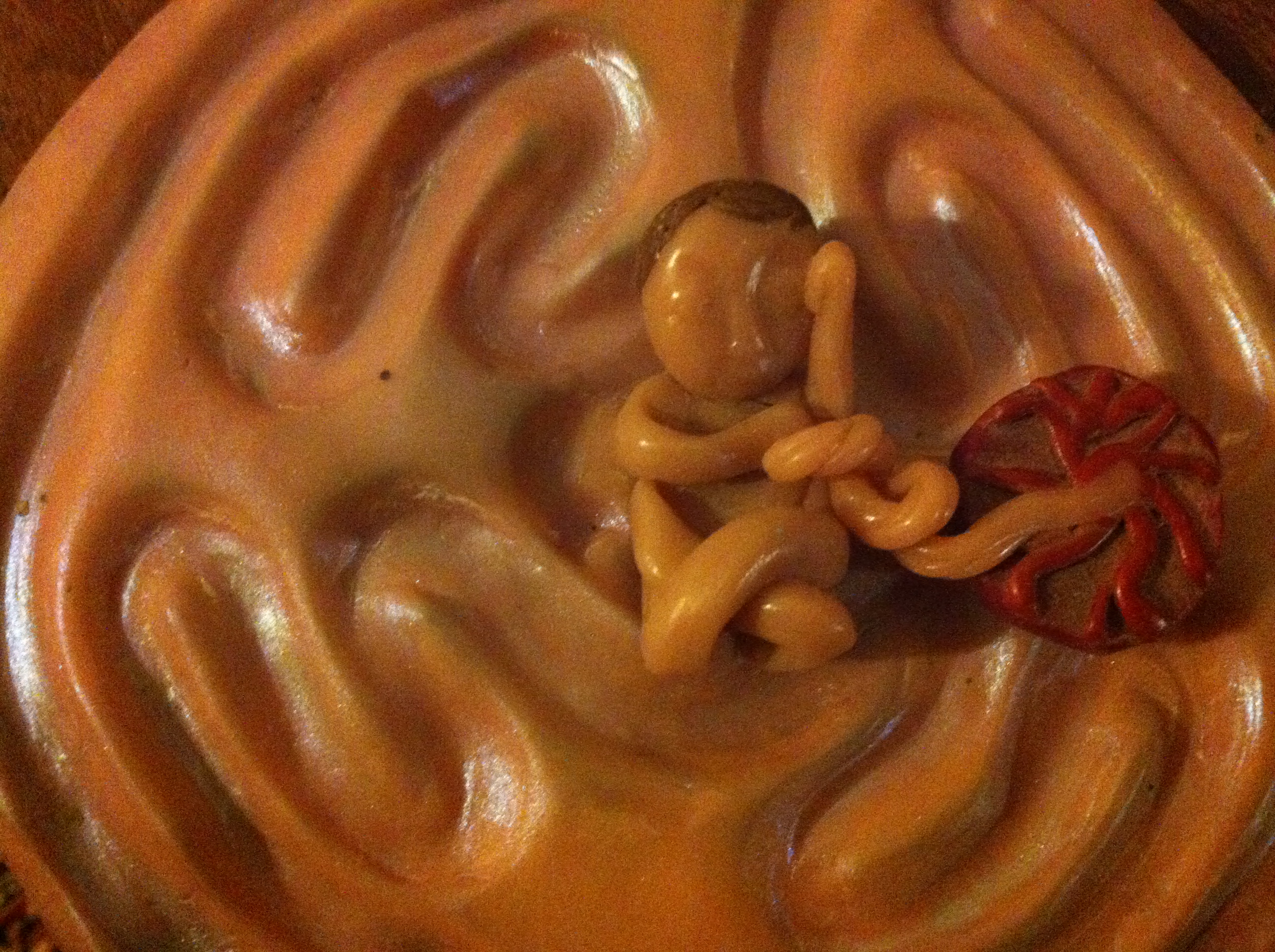
I was honored recently to make a series of sculptures for mom recovering from a traumatic cesarean and hoping for a VBAC in the future. I hope to make a more detailed post in the future describing these figures and what they’re trying to communicate!

March 2013 070

I dug into the archives and found some older posts either about cesareans or relating to cesarean prevention:

Book Review: Understanding the Dangers of Cesarean Birth

Cesarean Awareness Month

Cesarean Trivia

Cesarean Birth in a Culture of Fear Handout

Guest Post: Abuse of pregnant women in the medical setting

Becoming an Informed Birth Consumer (updated edition)

The Illusion of Choice

ICAN Conference Thoughts

Helping a Woman Give Birth?

Women of Color Can Push for Better Outcomes: What Every Mother-to-Be Should Know About Birth

Guest post by Tara Owens-ShulerImage

As an African American Lamaze Certified Childbirth Educator, I have observed over my 18 years of teaching that childbirth education class participants are less likely to be women of color. My desire for more women of color to attend childbirth education classes is rooted deeper than just their presence in a classroom – it is rooted in my desire for more women of color to understand the disparities that exist in maternal and birth outcomes.

In a recent Science and Sensibility blog post by Christine Morton on maternal health disparities, she reviewed the work of several well-known public health researchers – Dr. Eugene Declercq, Dr. Mary Barger and Dr. Judith Weiss. Their findings point to the fact that African American women have higher rates of cesarean births at nearly every age group and across every level of education.

In addition, the U.S. Department of Health and Human Services reports that one of every five non-Hispanic,black births are pre-term, African American mothers experience an infant mortality rate twice that of non-Hispanic, white mothers, and breastfeeding rates among African American mothers are 16 percent lower than white mothers.

Given the disparities that exist in maternal and birth outcomes for women of color, I think April as Minority Health Awareness Month is a great opportunity to talk about a few other factors that minority moms or mothers-to-be can control or influence. It’s a hard reality that mothers face real challenges in getting the childbirth care they want and deserve. Even though medical evidence may tell us certain practices are good for mothers and babies, the “system” is not always geared to deliver that care. Health care providers are rushed, spread thin, or incentivized for practices that are not most beneficial to the mother.

Let’s go back to the fact that African American women have higher rates of cesarean births than non-Hispanic,white women. Is it because African American women are sicker and need to have a cesarean birth? Researchers report that this is untrue. They conclude that higher rates of cesarean births among African American women are a result of a shift in obstetric practices to focus more heavily on use of childbirth interventions. And, when we bring in an induction to the equation, there is a correlation between the increased rates of induction to the increased rates of cesarean births!

Research shows that babies pay a steep price for these early births caused by inductions or a failed induction, which led to a cesarean. Babies have greater difficulties breathing, breastfeeding, and maintaining their temperature, which usually means being separated from moms and spending time in the Intensive Care Unit. While an increasing number of hospitals and health care professionals are shying away from unnecessary cesarean birth and induction, it’s one of many care practices that just aren’t supported by good medical evidence.

So how can women of color push for better care?

  • Become an active partner with your care provider. While doctors or midwives have professional knowledge and skills, they may not know everything about your personal background and preferences. Finding a provider who will also act as your partner can help you push for the care that’s best for you and your baby.
  • Ask questions – lots of them! Labor and birth in particular can be unpredictable. That’s why it’s a smart idea to prepare a list of rolling questions throughout your pregnancy to help you determine if the right care is being recommended during labor, birth and after birth.
  • Do your research. Understand your available care options before, during and after labor at the hospital or birth center. If you know that during labor you’d like the ability to walk around, eat and drink – choose a birth facility that will be more aligned with your birth preferences or wishes.
  • Participate in a childbirth education class. Taking a Lamaze class will help you understand maternity care best practices and be better prepared to navigate your labor and birth. A childbirth educator will help you identify the right questions to ask when making decisions about your care.

I encourage all women – particularly African American women – to learn more about getting the right care in pregnancy and childbirth by attending a childbirth education class. Skipping out on childbirth education is a lost opportunity to stack the deck in your favor and become a well-informed consumer of evidence-based practices! As a consumer, it is your right to be a partner in your health care decisions.

Tara Owens Shuler, MEd, LCCE, FACCE is the president of Lamaze International. She has practiced as a childbirth educator since 1995. In 2005, she became the Director of the Duke AHEC Lamaze Childbirth Educator Program. In addition to training individuals to become childbirth educators and preparing expectant women and their partners for a safe and healthy birth experience, Tara provides labor support services. Along with coordinating the Lamaze program in the Duke AHEC office, Tara works with her statewide AHEC partners in developing continuing education programs and/or resources for healthcare providers in North Carolina and assists with the Duke AHEC PATHWAYS Health Careers program for K-12 students. When not working, Tara and her husband enjoy playing with their dog, Gramps, and traveling.

Visit Lamaze International for great resources to help mothers and mothers-to-be learn their options.

Tuesday Tidbits: Birth Research

“Women around the world and throughout time have known how to take care of each other in birth. They’ve shown each other the best positions for comfort in labor, they’ve used nurturing touch and repeated soothing words, and they’ve literally held each other up when it’s needed the most…”

–The Doula Guide to Birth

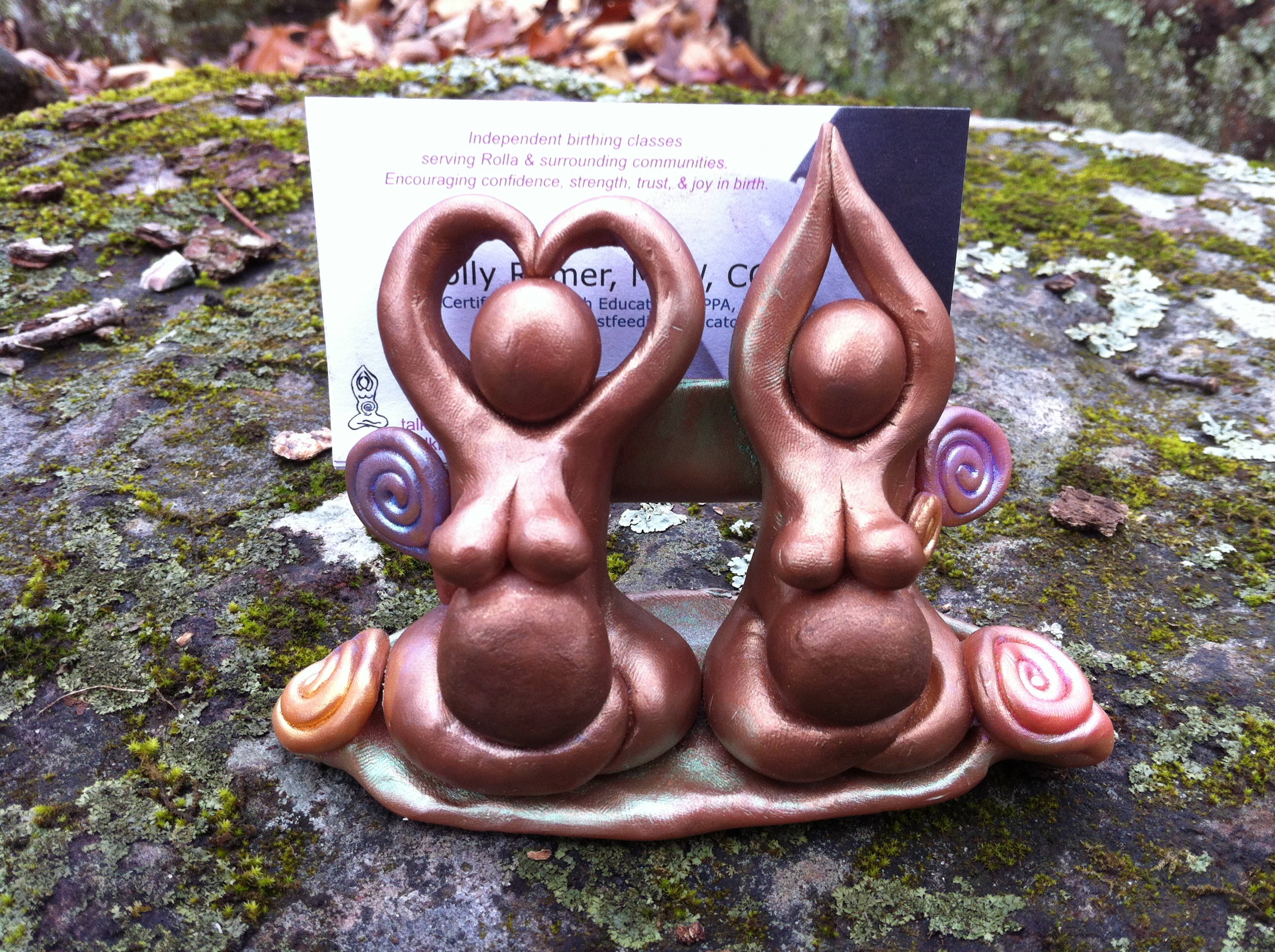
New experiment with a business card holder!

New experiment with a business card holder!

A lot of things caught my eye to share this week. A Faceboook friend is conducting research about birth professionals for her master’s thesis for Sociology:

Ahmie Yeung is working on her Master’s thesis in Sociology at Cleveland State University, under the guidance of Dr. Linda Francis. Ms. Yeung’s thesis research is looking at the attitudes of professionals in the United States who provide care for women and infants during pregnancy, birth, and the newborn period – also known as “perinatal care providers.” This can be anyone who is normally paid for the services they are providing during that time period. Examples of kinds of professionals we want to hear from are: doulas, midwives, OB/Gyns, Family Practicioners, and Pediatricians. This research will hopefully provide some insight into differences between types of providers that may be of use to future families seeking maternity and newborn care. Please ask those who are or have provided care for you to take the brief survey at http://tinyurl.com/perinatalcaresurvey and forward this request on to any other expecting/new parents or perinatal care professionals you may know.

And via Citizens for Midwifery:

Researchers are developing a new tool to educate pregnant mothers about their birth options. They need your help to learn what matters most to pregnant mothers. Pregnant or planning another birth? Please share!

Childbirth Preferences Study

The Spring issue of the Friends of Missouri Midwives newsletter is finished and available online! The theme of this issue was Siblings and we’ve got a variety of articles about including siblings at births 🙂

I got a little crazy with my ScoopIt page and went through over 100 articles of possible things to “curate.” And, I found some good stuff!

Which included this gem:

“To paraphrase Simon, everybody loves mothers, as long as they restrict their fertility to the outlines demarked by the social and moral norms of the age they find themselves in, and don’t have the audacity to give birth too young, or too old, or too regularly, or at too great a cost to the state, or to a child that they share with another parent of the wrong race or gender…”

And, an interesting article debunking the idea that women “forget” the feelings of childbirth. Memories are affected by the “halo effect” of the euphoria following birth, but the feelings are not actually forgotten:

I also thought of a couple of older posts of my own:

Talk to Your Baby

“Babies are primed to hear their mothers’ voices after birth. They expect to be snuggled into the maternal nest. Mammal babies expect to receive a warm breast and to hear comforting words in their own language…”

Birth as a Rite of Passage & ‘Digging Deeper’

“All cultures believe that women become better and more generous through the process of giving birth. That is why some cultures use words such as ‘sacrifice,’ ‘suffering’ and ‘labour.’ These terms can seem overwhelming and to be avoided’ however, seen from a different viewpoint, childbirth helps us to become strong, resourceful and determined…”

Birth & Culture & Pregnant Feelings

“Giving birth is not an isolated event in a person’s life. A woman births with both her mind and her body and participates in the attitudes toward childbearing of her culture and her family…”

Where are the women who know?

“…the most important thing is to never bring fear into the room of a laboring woman. ‘A woman must be completely open to birth a child,’ she says, ‘and so she is unable to defend herself from the thoughts of those around her…’”

And, a funny story from a couple of weeks ago:

“Visiting kid working on costume: “why do you have all this red fabric?” Me: “I think I planned to make placentas out of it.” Later, same kid: “this is an interesting color of yarn.” Me: “I got that to knit uteruses.” Kid: “maybe I should dress up like a scary doula.” 😉

Women’s (Birth) History Month

…we  need to grasp an honest understanding of birthing history – one that tells HERstory not HIStory.  Because birth is about Women.  It is a woman’s story. And we need to also understand why and how this herstory compels women to make the choices they make surrounding birth in the present day.

People become the product of the culture that feeds them.

It takes an immense amount of work to deconstruct cultural lies. Especially ones as insidious as the ones that we, as birthing women, have been fed for more than a century. We need to stop blaming women for their place in this System. Women are victims and by-products (not accomplices) of medicalized birth.

via That Joke Never Gets Old. Or Good

March 2013 039In honor of Women’s History Month, I’ve been considering the women in (recent) history who have changed the climate surrounding pregnancy and birth. While I’m sure Ina May Gaskin’s name would probably spring to the lips of most birth activists considering the theme, I felt like taking a quick look at the many other classic authors who have had a profound influence on my own ideas about birth. This thought, coupled with the fact that for some time I’ve wanted to write a post about “older birth books” that are still excellent reads today, has brought me to the present moment: a list of my favorite “old” birth books and the lovely women who wrote them. When I first started out in birthwork, I wanted to read “new” stuff—stuff that was “up to date” and “current.” After I read almost all of the “new” books, I started to cast my eye around for more and guess what I discovered? No surprise to many of you, but many of those “out of date” books with the retro-looking covers are still just as good and just as relevant as they were 20-30 years ago. Since medical information and science/evidence changes fairly rapidly and a pregnancy and childbirth 101 type book from 30 years IS more often than not completely inappropriate today, I had made the mistake of thinking ALL “old” birth books would be similarly irrelevant. Instead, many have a power and passion that is not easy to come by in any decade and that rouses the activism spirit, or stirs the heart, or challenges the psyche just as effectively today. Here are some of my recommendations (and of course, Spiritual Midwifery remains a good choice too, I just want to add some less usual recommendations!):

  • Transformation through Birth by Claudia Panuthos (also known for writing another great resource: Ended Beginnings: Healing Childbearing Losses). Written in 1984, this book “goes beyond” the scope of traditional birth books and really gets into some deep topics and insightful ideas. Previously written about here.
  • Special Delivery by Rahima Baldwin (another good, less well-known one from her is Pregnant Feelings, explored in depth in this post). Revised in 1986, this book is one of my favorite homebirth resource books. Though some segments are in fact, “outdated,” I still find this to be one of the very best (“old” or new!) resource books for women planning to give birth at home.
  • Open Season by Nancy Wainer (Cohen) in 1991 (how can 1991 be called “old”? Well, it is over 20 years ago and considering that many women giving birth today were born after that date, it IS old!). Nancy has a lot of FIRE and I love it. Some people have been known to call her “angry” or “bitter.” I call her…amazing. Her writing lights you up and calls you to action. She has incredible passion, fire, brightness, drive, and enthusiasm. One of her articles in Midwifery Today that is available online is also well worth the read: VBAC and Choice. And, I use some of her quotes in this post.
  • Birth Book by Raven Lang. This is the original counterculture birth book written in 1972 at the launch of what would become the modern movement to return birth to the hands of women.
  • Childbirth with Insight written in 1983 by Elizabeth Noble, is another one of the birth books that I say “goes beyond.” As a childbirth education, I especially benefited from her exploration of some of the failings of traditional approaches to childbirth education.
  • Lots of older books from Sheila Kitzinger are very good also. I particularly enjoy The Experience of Childbirth and Giving Birth: How it Really Feels.
  • My last recommendation for the moment is Mothering the New Mother by Sally Placksin (revised in 2000, which again sounds reasonably recent, but in reality is thirteen years ago–how is that possible?). It is classic must-read for doulas as well as any other birth companions. It is wonderful and I wish I would have read it before my own first child was born.

There are many more excellent books out there, both modern and “herstorical,” but I’ll leave you with these treasures for now. I’m grateful for each of these birth activists whose words and spirits helped deepen and refine my own passion for birth.

I long to speak out the intense inspiration that comes to me from the lives of strong women.” –Ruth Benedict


(Adapted from a post originally made at CfM several years ago.)

Tuesday Tidbits: Hemorrhage & Postpartum Care

March 2013 068“A bright red ribbon of blood weaves women together. We are blood sisters. We bleed and bleed, and we do not die. Usually.” –Susun Weed

These Tuesday Tidbits all come from the current issue of Midwifery Today. It is an excellent issue with tons of great information. As I referenced before, however, it is literally making my uterus ache and contract to read it since the theme is Hemorrhage. I’ve had to read it in small doses—5-10 pages at a time—and then come back to it later because the contractions/crampiness in my uterus and lower back get too intense for me to continue. I’ve always known that I have an intense response to blood, but this is the first time that I’ve really tuned in to the body memory my pelvic bowl still holds with regard to excessive postpartum blood loss. That blood loss is one of the things I don’t blog about, but today I’m writing about hemorrhage anyway (even though my back/uterus is starting up again as I type this). I guess you could call it “psychosomatic,” but I call it uterine memory.

Robin Lim’s article about postpartum hemorrhage in Bali includes a nice list of preventing and managing hemorrhage, one of the most significant being to minimize prenatal “scare” as much as possible. She writes about good prenatal nutrition and nurturing prenatal care and she also recommends this essential:

Build layers of support and trust for the mother in pregnancy and labor to help her cope with any social, psychological or spiritual challenges that she might be carrying…

Lim also says that laboring women use “qi” while laboring and birthing, which is our life force, our energy. She says that if women run out of “qi,” they have to dip into their “jin,” which is, “one’s God-given lifespan”:

“If a mother uses all of her qi to bring her baby out, then she has none left to bring her baby out and to close her uterus properly…As birth-keepers it is our job to maintain the qi of pregnant, laboring, birthing and breastfeeding mothers. The mother who maintains her qi and does not use up her jin can still be glowing and full of energy after having five children…the mother who has dipped too deeply into her jin, due to having depleted her qi, can be dangerously run down after having just one baby…”

While one might interpret this as being a little too esoteric for the practical mind and perhaps a tad too close to the victim-blaming “you create your own reality” thought processes that grate on my nerves, I really appreciated the idea of the responsibility of birth-keepers to guard mothers’ life-force energy and to act to preserve mother’s natural resources and reserves of strength.

On a midwifery education note, I love the writing of Sister MorningStar and I loved reading her thoughts on midwifery education, especially her observation that

…I’m dreaming of a way and time when women are as healthy as deer and mothers birth in the night before professionals arrive. Don’t misunderstand, I want and am willing to talk at any roundtable about midwifery education. We need everyone who cares about birth at such a table, including mothers. We need a global table with a global voice, passion and wisdom. I am not saying that birth and midwives are not made better with midwifery education, but I am saying that I have many questions about modern midwifery education and its effect on the experience of birth.

And, moving on to postpartum care, loved this quote from Darla Burns in an article by Allie Chee:

As Americans, we are under the impression that new moms are ‘Superwomen’ & can return to life as it was before baby. We must remember to celebrate this new mother and emulate the other cultures that honor new mothers by caring for them, supporting them, & placing value on the magnificent transformation she is going through. This is the greatest gift we can give to new mothers & newborns…

I appreciated that Chee included information about postpartum recovery from miscarriage and stillbirth as well, rather than assuming that postpartum care is a need only following a live birth. Consistent with my own experiences and observations she notes that, “in the case of miscarriage and stillbirth, a woman is usually sent home with no postpartum care instructions other than perhaps a list of negative signs to watch for that may indicate further complications with her health. In these instances, many friends and family members, often not knowing how to respond, leave the mother to grieve alone and to recover physically by herself.” Other interesting notes with regard to postpartum recovery after miscarriage or stillbirth include these two:

  • The depression and anxiety experienced by many women after a miscarriage can continue for years, even after the birth of a healthy child….
  • [with regard to postpartum recovery/”lying in” time in other cultures]…Amy Wong, an internationally acclaimed author and expert on postpartum writes, “Natural delivery requires at least 30 days of rest, while cesarean delivery, miscarriage and abortion require at least 40 days…”

Of course, this made me reflect on my own experiences. I feel fortunate that I was cared for with a lot of love and tenderness in my own miscarriage postpartum, with my mom bringing us food and providing child care and support, and my doula organizing and delivering meals from friends as well as offering a loving and supportive listening ear. That said, I was back in front of the classroom two weeks postpartum and felt like perhaps I was taking “too long” to get back to “normal.”

Definitely make sure to check out the complete issue! Midwifery Today is my favorite birth publication and is a treasure trove of information as well as personal experiences and reflection.

March 2013 040

Tuesday Tidbits: Birth Pause

BirthontheLabyrinthPath_300x250-ad_1Last year I wrote about the birth pause, that timeless moment of inhaling after birth and exhaling into motherhood:

This moment when mother meets baby, earthside. Malloy notes that for many women, the moment of meeting is “hurried” by the immediate placement of the baby on mother’s chest. Many women are in a brief, transitional state almost like “birthshock” at this moment—it is the moment before the classic euphoria and “I did it!” hits. Mother often has her eyes closed and needs a second to breathe and re-focus on the world outside her deeply inner focus…

So, of course, when one of my Facebook friends posted the following thoughts last week, I asked her if I could quote her on my blog!

One moment that EVERY MOTHER remembers is the moment she first laid eyes on her baby. I am asking every woman to consider what that moment means to you and how she pictures it to be? Will it be in your home with dim lights and scented candles, and the loving arms of your partner embracing you both physically and emotionally at the moment of emergence? Or will it be in a brightly lit hospital room lying on your back while 6-10 strangers yell for you to push and stare at your vagina while you lay there feeling a bit helpless being strapped with cords to a half dozen medical devices?

Will your baby be touched first by your hands and brought up to your bare breasts as he fills his lungs for the very first time? Or will your baby be caught with a cold latex glove, lifted mid-air with glaring lights and strange sounds all around him? Will his oxygen supply and blood be stolen from his body with a quickly cut cord as he is swept away and rubbed by unfamiliar hands. Will he be swaddled so tight he cannot feel his mother’s warm skin when she holds him at her breast?

Think these are details that do not matter in the grand scheme of things? Think again… PLEASE! Because… BIRTH REALLY DOES MATTER. Know where and with whom you desire to give birth. Do the necessary research to make that happen! You DO have options, so do NOT let ANYONE tell you that you don’t. Birth matters. Make your decisions wisely. You WILL remember that moment! –Pamela Brott, Beginning at Home

And, then I read a great little post from Rebecca Wright about being a birthkeeper rather than “catching” babies:

As a birth keeper it’s not my place to catch babies. It’s my place to hold space. It’s my place to support the mama-baby dyad so that they birth in power and remain undisturbed as far as possible in this process.

One of my friends wrote an article some time ago about catching your own baby. She called it “squatter’s rights” and concluded with something to the effect of, “and then I reach down and catch what’s mine.” It gave me chills. Alaina is the only baby that I caught myself and it was the most potent moment of any birth. Sometimes I still can’t believe I did it.

And, on a related note, I also shared these two articles via ScoopIt:

Active birth positions for the hospital–Effective Birthing Positions | Taking Charge of Your Health

Some musings about mental comfort zones and birth–Planning a Childbirth: Is there a Comfort Zone and Should You get out of it…

BirthontheLabyrinthPath_300x250-ad_2

Tuesday Tidbits: Teeth and Teaching

“Do not try to satisfy your vanity by teaching a great many things. Awaken people’s curiosity. It is enough to open minds; do not overload them. Put there just a spark. If there is some good inflammable stuff, it will catch fire.”
Anatole France (in The Earth Speaks)

A woman who writes has power, and a woman with power is feared.” —Gloria Anzaldúa, “Speaking in Tongues” (via The Girl God via Guerrilla Feminism)

Bits of the birth net:

It is old news, but this week a 2009 post from The Unnecesarean caught my eye: An OB’s Birth Plan: Obstetrician’s Disclosure Sent One Mom Running. The article describes the “doctor’s birth plan” a mother received from her medical care provider, which includes gems like this one:

“…I do not accept birth plans. Many birth plans conflict with approved modern obstetrical techniques and guidelines. I follow the guidelines of the American College of Obstetrics and Gynecology which is the organization responsible for setting the standard of care in the United States. Certain organizations, under the guise of “Natural Birth” promote practices that are outdated and unsafe. You should notify me immediately, if you are enrolled in courses that encourage a specific birth plan. Conflicts should be resolved long before we approach your due date. Please note that I do not accept the Bradley Birth Plan. You may ask my office staff for our list of recommended childbirth classes…”

One of many reasons to run far away from this doctor! One of my Facebook friends made a great point though: “at least he’s honest! I think there are other doctors with similar views who might not make it clear until it’s ‘too late.'” This is true–he said it, but you know a LOT of people are thinking it/acting on it. So, that IS good that he was up front. Another mother then commented to add her own similar experience: “We went to an OB who had us sign something saying we would not have a birth plan or hire a doula. It felt so creepy to sign away all involvement in my own child’s birth – and doing so at 9 weeks felt like I was signing that I’d keep my mouth shut throughout the pregnancy, too. But gratefully, as you’re saying, it was clear early on that way this was not the OB for us. I’m sure many don’t get to find out before labor.”

Speaking of teaching and igniting sparks, it isn’t too late to register for our next Birth Skills Workshop—rapidly approaching on February 2nd! This workshop is specifically designed not to be a lecture, but is a hands-on, skills-building workshop.

Also via ScoopIt, I shared this article: Bearing the Burden of Choice: A Young Feminist’s Perspective

“Based on personal observation, choices concerning women’s reproductive health are heavily concentrated in preventative action – what are the best practices to avoid pregnancy? Consequently, prevention inspired language lends to a negative association with child bearing. It is something to prevent rather than embrace…”

She goes on to address something that I find to be a reason why sometimes birth activists have trouble connecting to the larger feminist community:

Abortion is one of those issues that seems to leak into every “women’s issue” whether initially intended or not. Needless to say, we talked about abortion to the point of exhaustion. Not to take away from the weight of abortion to the feminist cause, I began to recognize a gap in our reproductive justice discussions. I found myself asking the question:What about the women who choose the path of childbearing?

Those women are basically why I’m here and why I do what I do. And, what has been on my mind recently is explored in my most recent post: What to tell a mother-to-be about the realities of mothering…

“Why didn’t anyone tell me?” and, “why isn’t anyone talking about this?” is a common refrain echoing in the postpartum tales of many mothers. So, why don’t we tell them? Or, what can we actually tell them? Is there a way to really do so? I kind of think there’s not

And, connecting the teaching and the sparks and the women’s issues and the women writing having power, I also made sure to sign this petition: Vigorously support women’s rights by fully engaging in efforts to ratify the 1972 Equal Rights Amendment. This is going to be one of the discussions towards the end of my current Social Policy class (I can’t really write much about it here, but suffice to say the class is extraordinarily challenging so far and we’re only to week three). I hope no one vigorously disagrees with it or I might FREAK OUT! When I shared it on Facebook, a friend commented: “I am enraged that women’s rights are an ‘issue.‘” To which I replied: “Isn’t that the truth?! I hate that. It boggles my mind that women’s rights are considered a political issue that anyone could have a ‘position’ on. The nerve!!! ARGH. FREAK OUT, I TELL YOU”

And now, the teeth…

This post is essentially all about what I shared on Facebook apparently (might as well get some mileage out of it!). This is what I wrote yesterday:

In case anyone cares, I’m totally sick of taking my kids to the dentist! All three had appointments in Sullivan today (1.25 hour drive one way). Alaina wasn’t cooperative and is clearly traumatized from prior dental experience and we will need to go back to a pediatric dentist for her (crowns on two molars). Zander’s were good and he got two seals. Lann had two extractions (previously filled teeth) and one filling. I’m exhausted!

I still haven’t written my planned blog post about the heartbreak of tooth decay. I came home yesterday all fired up to write it, but then I had to get caught up on grading instead. But, I did take these pictures of my little pearls-wearing, skirt-sporting, curly-haired, brave little girl:

20130128-175534.jpg

20130128-175545.jpg

I told her I wanted to take a picture of her face and she ran away from me like this!

20130128-175613.jpg

Two other Facebook kid updates from this week that were funny:

Alaina put a bracelet on pushed high on her arm. When she took it off, it left a red mark. She looked at the mark solemnly and said, “scar.” Poor little sugar. She said it very acceptingly. Like, yep, I’m scarred now…

And

Yesterday, my little entrepreneurs cooked up a plan to raise some money to buy a pug. They decided they should raise Dobermans and sell them…”When people see the big cage of Dobermans in our yard, we’ll just tell them, don’t worry…it’s for pugs!” Hmm. I see a couple of flaws with this plan…

Hearing this, it suddenly became clear to me how puppy mills were invented—a couple of pre-ten-year-olds (or, adults with similar critical thinking skills) hung around talking about money-making schemes…

What to tell a mother-to-be about the realities of mothering…

I see new friends starting out on the road to motherhood with mixed feelings. Immense joy at the ecstasy of love they are about to experience, great protectiveness, wishing to shield them from the scars it will make on their souls, the pain, the heart ache, the worry, the exhaustion, the touching of anger which they had been able to keep hidden all these years. But this is the journey. The one that makes us the mothers that we will be. The mothers that our children will live with every day, yet barely know… –Lucy Pearce, Moods of Motherhood

A few years ago, a life coach and women’s health expert I follow online got pregnant. During her pregnancy, she started a new Facebook fan page called Blissful Motherhood* (*not really. It was called something different, but I’m protecting her identity). I am going to confess that my first reaction was to kind of meanly laugh to myself as I thought, “oh honey! You poor thing. You have NO FREAKIN CLUE.” So, a couple of months after she had her baby, she showed back up on her real Facebook page with a familiar lament: oh my goodness, this is SO HARD, why didn’t anyone TELL ME?! And, again, my initial reaction was kind of a mean secret snicker (so, how’s that Blissful Motherhood page treating you now?!). Then, I swallowed that unbecoming reaction and I told her this:

When I had my first baby, I would see women who were pregnant and feel almost a sense of grief for them—like, just wait, you have NO idea what is coming. I also told my husband more than once: “this is both more wonderful and more HORRIBLE than I ever could have imagined.” The fear of being thought a “bad mom” is SO powerful that it keeps us quiet about many things. I’ve felt more than once that my kids were “torturing” or me or literally trying to crush my spirit/soul. It sounds horrible to type it out, but that is how I feel sometimes! I’ve also written about how it interesting to feel both captivated AND captive. Bonded and also bound. I discovered that there was a whole new section of women’s rights I hadn’t even been aware of prekids–mother’s rights. I do think many, many women have written about this, but when you start out you feel like you’re the only one whose “daring” to mention the ugly side [she’d also mentioned, “why doesn’t anyone write about this?” Um, they totally do. A lot]. Start reading “momoirs”—they’re a lifeline! So many good ones out there. I have a big collection of them. Oh, and start reading Brain, Child magazine. The best look at real mothering I’ve ever know.

This, “why didn’t anyone tell me?” and, “why isn’t anyone talking about this?” is a common refrain echoing in the postpartum tales of many mothers. So, why don’t we tell them? Or, what can we actually tell them? Is there a way to really do so? I kind of think there’s not.

Lucy Pearce explains it like this in her Moods of Motherhood book:

Nobody told me… You look at me bewildered, eyes grey with exhaustion. Milk-spattered, baggy clothes, hair awry. “Nobody told me…” you begin. You look at me, urging me to explain myself. How could I have kept this, all of this, secret from her? Surely it was my duty to prepare her. “Nobody told me how much it would hurt, how exhausted I would feel, how much love I have in my heart that I think I will burst, how overwhelming it all is…” her eyes begin to well with the enormity of her new knowing. All I can do is to smile. To hold her. “We tried.” I say softly. Stroking her tousled hair. And I think to myself. It is not so much that we did not tell you, as you could not hear. Until you have your own child, held in your heart, your ears are blocked, your eyes are blind to the reality of motherhood. Its pains and its glories. Once you have been there, stood in the body of motherhood, then you can hold hands with every woman who has ever mothered. You know her joys and pains. You are her.

Looking at my own pre-motherhood life, I think this is right. I could not hear. I didn’t want to hear. I saw frazzled mothers stumbling into LLL meetings and “complaining” about their precious darlings and thought things like, “I’ll never feel that way!” I remember thinking after my first son was born that everything I’d feared it would be like to have a baby was TRUE and everything I’d dreamed it would be like, was also true. My mother told me before he was born that the, “highs are higher and the lows are lower” after a baby, which is also very true, but I don’t think there’s any way to fully prepare for that. My future doula gave me a letter at my blessingway in which she tried to lovingly express what it is really like and I put it away thinking,”for you maybe!”

First baby tender triumph and dazed reality.

First baby: tender triumph and dazed reality.

In response to the Blissful Motherhood life coach, another woman responded: “I remember my mom trying to get real with me before I had my first baby and I was horrified with what she told me, almost angry that she would try to burst my bubble… then I had my little boy came along and I wondered why she hadn’t told me more…Sometimes the realities of motherhood do just seem too harsh to share…” Personally, I didn’t want to hear much about the realities of parenting from my own mother, because if her experience of mothering was terrible, HELLO, that would have been my fault. I didn’t want to know that I’d made her suffer and stress!

My own childbirth educator simply told a story: when her own first child was a newborn, sometimes the baby cried so much and so long, that the educator would put her down in the middle of the living room floor and go outside and run around the house multiple times. While initially only “hearing” this story in brief passing (i.e. I’ll never feel that way), I touched back in with that story multiple times during my first son’s first year. I never actually did the running, but what the story gave me was permission to feel badly about parenting and to want to get away from it. And, you know why? Because that childbirth educator was a rocking cool lady and if someone that rocking cool had to “lose it” and run around her house like a freak, then I must not be doing such a bad job myself.

However, I also don’t tell them, those sparkling, beautiful, bright, glorious, happy, and full of promise pregnant women, what it is really like, because I don’t want to ever be the one to steal their joy, their excitement, their sense of promise, and their happy anticipation of “the greatest days of their life” or the fulfillment of a lifetime dream of parenthood. And, guess what? I think I’ve also realized that that sense of promise and anticipation is reborn, at least in part, during every pregnancy. It isn’t only the territory of the blissfully unaware, it is a gift that accompanies each new baby—the dream that this baby will be wonderful and perfect and so, too, can you be the mother you’ve always imagined being. It is a new, bright, hopeful start, every time.

It wasn’t actually until I had Alaina that I felt like I finally really enjoyed having a baby and being a mother the way I’d always dreamed of. It wasn’t that I didn’t enjoy the others, I certainly did, but not in that delicious, complete, whole, and vibrant way in which I reveled in her. She was the first baby for whom I felt fully capable of totally giving myself to and not feeling captive by that gift. Perhaps not coincidentally, she was also the first baby for which I did not quit doing other things I wanted to do in order to mother her. My first son’s birth necessitated essentially totally dismantling my previous life and identity. It was SO HARD. I felt so much grief and loss about abandoning so much that I’d cared about so deeply. With my second son, I was finding my legs as a mother-person and feeling my way into other roles and responsibilities that were compatible with motherhood. My feelings of depression and fatigue after him were lifted when I started to find my voice as a blogger, as the editor of the Friends of Missouri Midwives newsletter, as a breastfeeding counselor, and as a birth educator. I’d redefined myself to include motherhood as the core facet of my identity, but in a way that allowed me personal expression and the ability to “make a difference” to other women. With my last baby, my mother-voice outlets were firmly established, my tribe was healthy and strong, and my non-mother career was compatible in an integrated and fairly harmonious way with family life. It was then that I finally felt like being a “good mother” AND doing others things at the same time was actually possible and (pretty much) stopped trying to make excuses for never having given up on that desire.

So what do you think? What can we tell mothers-to-be about the realities of mothering? Do we tell them anything or do we just hug them later when they cry and tell us they had no idea, why didn’t anyone tell me? What stories, like that of my own childbirth educator, do you have that you share with clients? Stories are handy ways of imparting life wisdom without being directive or prescriptive, or implying that someone must be exactly like you. I tell my clients a story of reaching out my hand to my husband, our fingers not quite able to touch, and saying, I miss you. I tell them about my feelings of this parenting thing being both more horrible and more wonderful than I ever imagined. I tell them about my childbirth educator running around her house. I give them tips and tips and more tips about making a postpartum plan. And, I tell them they look gorgeous. And, that they’ll be wonderful parents; that their babies are so lucky to have them. I listen to their happy birth plans and celebrate their enthusiasm. I point out how I notice how well they work together and what a great team they are. I wish them beautiful births and happy babymoons and tell them to email me or call me if they need anything. I hope they’ll remember that I’m there and that I do have the capacity to hear “ugly” without rejecting them. I remind them as many times as I can that they’re strong and beautiful and capable…and then, I open my hands and heart and watch them fly away into their own unknown, mysterious, tender, fragile, and precious journey.

hands

Postpartum hands picture, taken by my mother in 2003.

Some relevant past blog posts: