Archives

Women and Knowing

I read an interesting article by anthropologist and birth activist, Robbie Davis-Floyd, in the summer issue of Pathways Magazine. It was an excerpt from a longer article that appeared in Anthropology News, titled “Anthropology and Birth Activism: What Do We Know?” In the conclusion, Davis-Floyd states the following:

“Doctors ‘know’ they are giving women ‘the best care,’ and ‘what they really want.’ Birth activists…know that this ‘best care’ is too often a travesty of what birth can be. And yet on that existential brink, I tremble at the birth activist’s coding of women as ‘not knowing.’ So, here’s to women educating themselves on healthy, safe birth practices–to women knowing what is best for themselves and their babies, and to women rising above everything else.” –Robbie Davis-Floyd

I believe that every woman who has given birth knows something about birth that other people don’t know. I also believe that women know what is right for their bodies and that mothers know what is right for their babies. I’m also pretty certain that these “knowings” are often crowded out or obliterated or rendered useless by the large sociocultural context in which women live their lives, birth their babies, and mother their young. So, how do we celebrate and honor the knowings and help women tease out and identify what they know compared to what they may believe or accept to be true while still respecting their autonomy and not denigrating them by characterizing them as “not knowing” or as needing to “be educated”?

Additionally, with regard to education as a strategy for change, I’m brought back to a point I raise in my community organizing class: People often suggest “education” as a change strategy with the assumption that education is all that is needed. But, truly, do we want people to know more or do we want them to act differently? There is a LOT of education available to women about birth choices and healthy birth options. What we really want is not actually more education, we want them to act, or to choose, differently. Education in and of itself is not sufficient, it must be complemented by other methods that motivate people to act. As the textbook I use in class states, “a simple lack of information is rarely the major stumbling block.” You have to show them why it matters and the steps they can take to get there…

She knows

Guest Post: Overcoming Stigma: A Film Story of Stillbirth, Miscarriage

This post is republished from the blog of the Bill & Melinda Gates Foundation:

Overcoming Stigma: A Film Story of Stillbirth, Miscarriage

by Jhene Erwin

In 2007, with one two and half-year-old child, my husband and I decided it was time to have another baby. My first miscarriage occurred at six weeks. My second was at almost eleven weeks. The grief was alarming but I did what many women do – my best to quietly “carry on.”

Simple tasks became challenging. I’d stand in the cereal aisle frozen by the choice between honey-nut and plain. The question, “Paper or plastic?” should not make a person cry. Maintaining this external “everything-is-ok” façade was agonizing.

It was the tension – between façade and grief – which inspired my short film about miscarriage, stillbirth and early infant loss. “The House I Keep” is a story of transformation during one woman’s struggle to come to terms with the loss of her child.

My hope is that this film frees people to talk more openly about what remains stubbornly taboo. When people hear about my film total strangers let loose regardless of location: be it the gym or in a grocery store. Their stories are always deeply moving and I am honored by their candor.

What do they say?

They tell me there is no appropriate place to mourn this loss. While family and community are powerful sources of comfort, the silence on this subject prevents women from accessing that healing power. Consequently, the mental health of not only mothers but also their children suffers.

Consider this stigma magnified around the globe. In some developing countries, superstitious beliefs lead women to be blamed for a stillbirth or miscarriage. Some communities feel more people will die if the bereaved mother is in contact with other women and children. Subsequently, access to the healing power of family and community becomes greatly restricted. As we move forward with the important work of improving global maternal and newborn health, the long term effects of stigma on the mental health of women and their surviving children cannot be over looked or marginalized.

Talking heals. Women want to feel reassured that their child’s too-short life had a place in the world and that the world is different because of that child’s absence. You can help mark that life by just being willing to talk and listen. The landmark Lancet Stillbirth Series released in April is already impacting the worldwide perception of stillbirth.

In my own community of Seattle, Washington, in the United States, nonprofits that counsel women postpartum will be using my film as a starting place for open discussions. The ripple effect of community efforts, combined with the work of organizations including PATH, UNICEF, Save the Children, and the Bill & Melinda Gates Foundation, will undoubtedly lessen the stigma of a tragedy for which no woman should ever be held accountable.

By letting women talk openly, and by listening, our communities around the world can help women – including me – begin to heal.

More to Explore

Jhene Erwin is an actor and filmmaker. She lives in Seattle, Washington with her husband and six year old daughter.
—-
The Bill & Melinda Gates Foundation works to help all people lead healthy, productive lives. Safeguarding the health of mothers and young children is one of the world’s most urgent priorities and a core focus of the foundation’s work; especially in the developing world.

Inseparable

Notice how she is holding my finger?

The cutting of the umbilical cord tends to herald the arrival of a new and unique life. Though this tiny being began its existence many months before, growing nestled and protected within the womb, the just-born infant is seen as an individual apart from his or her mother. There is, however, a significant error in this thinking, for baby and mother are one, so to speak, and severing this unit denies an empirical truth. Birth should not be a celebration of separation, but rather a reuniting of mother and baby, who joins her for an external connection. –Barbara Latterner, in the book New Lives [emphasis mine]

I felt like this was a completely relevant quote for our Independence Day weekend. A baby has no concept of the notion of independence. Even though we live in a culture that pushes for independence at young ages, all babies are born hard-wired for connection. For dependence. It is completely biologically appropriate and is the baby’s first and most potent instinct. I remind mothers that after birth your chest literally becomes your new baby’s habitat. Mother’s body is baby’s home—the maternal nest. If the baby cries when you put her down, that means you have a smart baby! Not a “dependent” or “manipulative” one. People are fond of making comments about babies being “spoiled” if they are held often. It is impossible to spoil a baby by responding to her needs (why do people have such an issue with other people holding babies anyway?). I am 100% certain that it is impossible to “spoil” any baby under the age of one by answering her when she cries and giving her what she needs (which at this point is food, warmth, safety, love, and physical closeness). One of LLL’s  pearls of wisdom is, “a baby’s wants are a baby’s needs”—-there is no difference between them at this age. A baby is not “manipulating” you by crying for you to come to her and then stopping when you pick her up—-that is a perfect example of skillful mother-baby communication (if someone says, “she is only crying to get you to pick her up” the answer is “yes! She is! Isn’t she smart!”) .

New Lives is a compilation of essays by NICU nurses and it is no surprise to me that the essay from which the above quote comes was written by a former LLL Leader 🙂

Speaking of LLL, at the last international conference in 2007 I was fortunate enough to hear Dr. Nils Bergman speak about skin-to-skin contact, breastfeeding, and perinatal neuroscience. In super short summary: babies NEED to be with their mothers following birth in order to develop proper neural connections and ensure healthy brain development and proper brain “organization”; Mother’s chest is baby’s natural post-birth “habitat” and is of vital developmental and survival significance; Breastfeeding = Brain wiring.

And, as long as I’m reminiscing about the conference and Dr. Bergman, in fact I actually ended up “performing” on stage with him in a mimed play put on immediately prior to his presentation! He is a dynamic and engaging speaker (with a great accent!) and has so much of value to share. I will never forget hearing his duet with an LLL Leader of the song, “Anything Tech Can Do, Mum Can Do Better.”

Yes she can, yes she can, yes she CAAAANNNNNN!!

Today, let’s celebrate being in dependence with our babies 🙂

Asking the right questions…

A couple of weeks ago a list of sexual assault prevention tips made the rounds on Facebook. Containing reminders such as, “When you see someone walking by themselves, leave them alone” and “Carry a whistle! If you are worried you might assault someone ‘on accident’ you can hand it to the person you are with, so they can blow it if you do,” these tips are absolutely perfect and so very appropriate. I spent several years working in domestic violence shelters answering the hotline. The number one question/comment I used to get from people about this work was, “why doesn’t she just leave?” And, we always used to reply that that is the wrong question, “the question isn’t, ‘why does she stay?’ but ‘Why does HE do it?!'” And, why, as a society, do we accept it? The same website that created the SA Prevention Tips poster, also noted this:

When we talk about rape as something that happens to 1 in 6 women, it is something that happens to women. Oh no, women! You have a problem! A women’s problem! That has to do with women! What are women going to do to solve this problem? Perhaps if we rephrased that as ‘one in…however many…men will commit rape in his lifetime,’ the problem might start to look a little different to certain people.

The wrong questions

Quite a while before this, an article made the rounds about women in another country ironing their pubescent daughters’ breasts flat to try to make them less appealing as rape targets. Many comments on the article were to the effect of, “ugh! What horrible mothers.” Again, entirely the wrong lens with which to be looking. Why is it okay to rape little girls?! Ditto for the news reports of a reporter being sexually harassed by the football team when she went to  interview them—people responded with things like, “she should try dressing professionally.” Um, excuse me? How about the football players—adult, capable men—try acting like professionals? Wrong questions, wrong lens, wrong direction to point the fingers. And, it is because I respect men as people that I give them more credit than this—I believe men are rational and fully capable people who are responsible for their own behavior, not out of control pigs who women are responsible for “taming” and/or not “provoking” (sexually or otherwise). Men are smart, let’s treat them like it by remembering to ask the right questions and to give the right sets of tips.

Of cannibalism & implied social acceptance

These topics remind me of an example I use in the college classes I teach and the questions I encourage my students to ask about all kinds of social services: If we respond to the presence of disturbing social conditions by working primarily to soften the pain they cause, does this imply tolerance for their existence? Our actions do help, but we need to be sensitive to the fact that our limited actions indicate endorsement of, or at least acquiescence to, these conditions that call for all our hurry and scramble. Under the guise of caring we may have reached a point of acceptance of conditions that produce the pain we try to ease…Why are we accepting that children go hungry, that people are homeless, and that women are beaten and raped? Are these conditions that you find acceptable? Are these things just part of the “normal” course of life? I then ask my students to consider cannibalism—what would it be like if rape was as unheard of in our culture as cannibalism? We don’t have “cannibalism survivors support groups” and cannibal hotlines and shelters, because as a whole, our culture does NOT accept cannibalism as a remotely acceptable activity. All of our “services” for sexual assault and domestic violence tell a different story—while these things are “too bad” and “shouldn’t happen,” we’ve accepted that they do and in a way tolerate their existence. I believe we can and should create a world where DV and SA are as unheard of as cannibalism! Usually this example gives students pause. We need to ask bigger social questions that go beyond the individual cases right in front of us.

But what about pregnancy and birth, anyway?

Okay, what does any of this have to do with pregnancy or birth?! Well, in the most recent issue of Brain, Child magazine, I was reading an essay called “Play Parallels” by Dorothy Fortenberry, exploring parallels between her play, Good Egg, and reading What to Expect during her own pregnancy. In it, she makes this fabulous observation:

“I also left my obstetrician. The more I saw him, the less I wanted to talk to him—and if you don’t like chatting with someone, I’ve usually found you also don’t want to have his face in your crotch.”

And how! She then comments on reading an article about how the environment in the womb sets the stage for the baby’s entire life and that mothers are responsible for making this environment as pure as possible–it is in your hands! She also is thinking about the dangers of eating coldcuts during pregnancy, frequently warned about in popular pregnancy books and media: “Hold on, I thought, deep breath. Stop hating yourself and start asking questions. Like: Where was an article about why cities have air pollution in the first place? What about an article about what to do if you want to leave your ob/gyn? Or the headline I would have written: ‘Pregnant Women Routinely Denied Health Insurance, Perhaps a Bigger Deal for Babies Than Tuna‘?…I’d be damned if I paid someone else to make me feel bad about myself. The next time I started to panic, I vowed to put my time and money to helping women with real challenges in pregnancy, and more worrisome things on their plate than sliced turkey.” [emphases mine]

Finally, she describes the book as, “a long, depressing catalogue of all the ways I had already failed my baby” and then concludes, “I saw it as one more way our society puts all of the blame and credit on individual mothers, casually omitting any larger forces like politics, or fate.”

Motherblame

I truly think this is a chronic social issue—motherblame. We MUST look at the larger system when we ask our questions. The fact that we even have to teach birth classes and to help women learn how to navigate the hospital system and to assert their rights to evidence-based care, indicates serious issues that go way beyond the individual. When we say things about women making informed choices or make statements like, “well, it’s her birth” or “it’s not my birth, it’s not my birth,” or wonder why she went to “that doctor” or “that hospital,” we are becoming blind to the sociocultural context in which those birth “choices” are embedded. When we teach women to ask their doctors about maintaining freedom of movement in labor or when we tell them to stay home as long as possible, we are, in a very real sense, endorsing, or at least acquiescing to these conditions in the first place. This isn’t changing the world for women, it is only softening the impact of a broken and oftentimes abusive system.

Abusive or Honest?

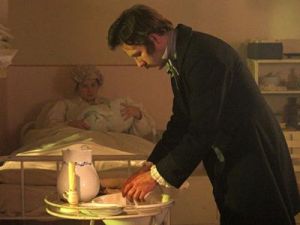
I recently finished reading the book, Breakthrough: How the 10 Greatest Discoveries in Medicine Saved Millions and Saved the World, which I got for free on my Kindle. The section about germ theory talked about Ignaz Semmelweis, of course, and his conviction that it was an “invisible particle” carried by physician to woman that was causing “childbed fever” to be a rampant problem in hospitals. (I appreciated that the book noted that mortality rates for women attended by midwives or giving birth in their own homes were very low compared to hospital-based physicians.) During the latter part of his life, Semmelweis became very agitated by the failure of his colleagues to recognize the validity of his theory of the cause of childbed fever and began sending them, “vicious letters.” An example included in the book was the following:

Your teaching, Herr Hofrath, is based on the dead bodies of women slaughtered through ignorance…If, sir, you continue to teach your students and midwives that puerperal fever is an ordinary disease, I proclaim you before God and the world to be an assassin…

The author goes on to explain that Semmelweis later died in a mental institution and that, “Ironically, some contend that Semmelweis’ final vitriolic attacks against his colleagues constituted a third key milestone: His abusive letters may have helped raise awareness years later, as other evidence for germ theory began to accumulate.”

I find it fascinating that his frustration and anger towards his colleagues is described as “abusive” and “vitriolic,” when Semmelweis wrote a book, presented papers, and spoke with other professionals at length about the issue and was dismissed and even mocked for his ideas. When his (correct!) theory continued to be ignored and women continued to die, isn’t he a little entitled to be angry and express that?! I think he was being honest in his letters, not abusive. It made me think of how women are dismissed as being “drama queens” for being upset about unnecessary cesareans and that the terms “birthrape” or “birth trauma” are viewed by some as too “extreme” and how the medical profession all too often continues to NOT practice evidence based maternity care with regard to a variety of issues from restrictions on freedom of movement, to continuous fetal monitoring without indication, to risky induction of labor procedures, to cesareans for “failure to progress.” In the future, these experiences and women’s and birth advocates’ “vitriolic” reactions to them may be viewed through the same lens in which I view Semmelweis’ attempts to share his findings—they were trying to tell people something really important after all.

In another section of the book, the author says, “Scientific medicine has never been shy to dismiss if not denigrate any perceived threat to its values or power.” We continue to regularly see this in maternity care today!

Review: A Book for Midwives

Review: A Book for Midwives
Hesperian Foundation
CD-Rom, 2011
544 page pdf book in English and Spanish
by Susan Klein, Suellen Miller, and Fiona Thomson
ISBN13: 978-0942364-24-8, $16.00
www.hesperian.org

Reviewed by Molly Remer, MSW, ICCE
https://talkbirth.wordpress.com

As a child, I was fascinated by my father’s copy of the book, Where There is No Doctor. Fast forward twenty or so years and imagine my glee when as a birth activist adult, I then discovered A Book for Midwives, also published by the Hesperian Foundation. Hesperian’s goal “is to promote health and self-determination in poor communities throughout the world by making health information accessible. [They] work toward that goal by producing books and other educational resources for community-based health.” In keeping with this goal, A Book for Midwives is available for FREE download on the Hesperian site. (Personally, I appreciate the professionally printed version of the book I purchased, because I think it would cost more same in ink to print it myself, but without the nice cover!).

A Book for Midwives is excellent; a true community resource. It is also a very sobering look at the reality of women’s health and health care in other countries. It contains reminders such as “do not hit or slap a woman in labor,” and other things that can make you cringe. A Book for Midwives is basically a textbook for midwives, health care workers, or educators working in developing countries and/or with very limited resources. I appreciate how it makes information available that is sometimes “hidden” in other books–i.e. explicitly technical content and “how to’s” that are normally reserved only for “professional” people. It is simply written and extremely blunt. There is no fluff and nothing romanticized about pregnancy, labor, and birth. In a way, it was hard to read a book that makes it so very clear how very, very difficult things are for midwives and women in impoverished areas (living in the US, I am used to the “normal, healthy pregnant women” approach to midwifery care). The book covers a wide range of information from preventing infection, treating obstetrical emergencies, doing pelvic exams, and breastfeeding to HIV/AIDS, testing for STDs and cervical cancer, and IUD insertion. There is also a section in the back of the book about medications, medication administration, giving injections, and other topics. It is an extremely comprehensive resource. (Just a side note, in the section on contraceptives, the book is heavily in favor of hormonal methods such as pills as well as very positive about IUDs and sterilization.)

Recently, Hesperian made A Book for Midwives available for purchase on CD. The CD includes the 544 page book as a pdf file in both English and Spanish. Both high resolution and low resolution versions of the book (in both languages) are included on the disk. This format makes it easy for the book to travel with you via laptop for trainings or presentations. I was particularly excited to convert it for my Kindle, making it readily available for travel and reference.


Disclosure: I received a complimentary copy of the CD for review purposes.

Six Healthy Birth Practices Handout

Lamaze’s Six Healthy Birth Practices are one of my favorites resources when discussing birth plans in my classes. I find that some materials about birth planning on the internet are unnecessarily cumbersome (while simultaneously being very “cookie cutter”). As I tell my clients, the Six Healthy Birth Practices provide an absolutely phenomenal “basic” birth plan and concisely cover each element of a healthy birth. I suggest using them as a foundation for any birth plan the client plans to write. For use in my own classes, I created a one page handout briefly summarizing the practices: Six Healthy Birth Practices. At the bottom of the handout, I also include my own even simpler summary of the information. I just love them and think they should be the core of any class that serves women planning hospital births. Seriously, what women deserve in a birth environment can be summed up in six, clear sentences! How practical.

I also absolutely LOVE the video based on the practices that is available from Injoy. It is extremely affordable (I actually own three copies of it!). It is very concise and clear (just like the practices themselves) and I love how it shows women in a hospital environment, getting their needs met and having satisfying births. While I personally choose homebirth for myself and am a big advocate of homebirth, at least 90% of my clients are planning hospital births and deserve information and resources that support healthy, satisfying births in the environment they have chosen. I have a variety of great videos in my library, but many of them focus on homebirth and I think the message this sends to clients is—“good birth = homebirth.” While that feels personally true for me, it isn’t actually the message I want to share with my clients—I want to share my enthusiasm for birth, period, and to help them discover resources and plans for having a beautiful birth in any setting. I want to communicate to them that they deserve access to these healthy birth practices in the hospital and I hope we can create a birthing world in which all women can expect to have access to these practices in any setting. So, I like how this video shows women getting their needs met within in a hospital setting.

Additionally, the videos are available for free, practice by practice, on the Mother’s Advocate site, which also includes a variety of accompanying handouts to print.

And, again, here is my own handout for use during birth classes: Six Healthy Birth Practices.

I know I sound like a “commercial” for Lamaze’s Birth Practices and though I am a Lamaze member, I am actually certified with other organizations (ICEA and CAPPA). I think it is important that childbirth educators not limit themselves only to the materials and information provided by their own certifying organization and instead seek out excellent materials from a variety of the wonderful organizations that exist to support birthing women!

Handouts for Birth Booths

A frequent topic on email lists for birth professionals is good handouts/resources for booths at maternity or baby fairs. Rather  than making copies of materials or creating my own handouts (reinventing the wheel in a less-professional looking way!),  I am a fan of using glossy, professionally printed, but still very low cost stuff for tables and also a fan of materials that address good maternity care in general. My top faves for having on a booth or as handouts are:

International Women’s Day, Birth Activism, and Feminism

“The minute my child was born, I was reborn as a feminist. It’s so incredible what women can do…Birthing naturally, as most women do around the globe, is a superhuman act. You leave behind the comforts of being human and plunge back into being an animal. My friend’s partner said, ‘Birth is like going for a swim in the ocean. Will there be a riptide? A big storm? Or will it just be a beautiful, sunny little dip?’ Its indeterminate length, the mystery of its process, is so much a part of the nature of birth. The regimentation of a hospital birth that wants to make it happen and use their gizmos to maximum effect is counter to birth in general.” –Ani DiFranco interviewed in Mothering magazine, May/June 2008

“We were all held, touched, interrelated, in an invisible net of incarnation. I would scarcely think of it ordinarily; yet for each creature I saw, someone, a mother, had given birth….Motherhood was the gate. It was something that had always been invisible to me before, or so unvalued as to be beneath noticing: the motheredness of the world.” –Naomi Wolf, Misconceptions

Since tomorrow is International Women’s Day, I felt moved to share the above quotes. I also wanted to touch briefly on birth as a feminist issue, spurred by this thought-provoking post by my friend Summer (I have TONS more ideas about this topic, but limited time in which to share them!). Personally, I’ve identified as a feminist since I was a child—long before I became a birth activist. Identifying in this way was my first taste of the activist spirit that has fueled me for the rest of my life. For me, my birth activism is intimately and inextricably entwined with my larger interest in women’s rights. I have always been somewhat confused to hear any woman say she is not a feminist, it grieves me because when you dig a little deeper, it is usually because they are defining feminism according to a very skewed, simplified, inaccurate, media misportrayal of feminism (i.e. a man-hating caricature). I also like the term “womanist.” To me, being a feminist most simply means believing and acting as if women have value. All too often, those who mischaracterize feminism in the above ways believe EXACTLY the opposite.

In one of my many books about women’s issues, I found these awesome explanations of what feminism is—the source being of some surprise to me, the Roman Catholic Order of Sisters of Loretto:

Feminism: a world-wide social change movement which critically but lovingly rejects relationships and structures based on stereotyped roles of dominance (male) and submission (female).

Feminism: a life-affirming movement reorganizing institutions and relationships, so that women will have equal access to society’s goods, services, status, and power.

Feminism: the bonding of women discovering the joy of woman-identity.

Feminism: a process freeing women to work toward liberation for themselves and other oppressed persons.

And here is another definition: “Feminism is a conscious and continuous effort to improve the lives of all women, an effort which requires changing the system that defines success as making a lot of money.” –Jane O’Reilly

To me it also means defining all women’s work, paid or unpaid, as having real value (this includes the “invisible” work of mothering reflected in the second quote I chose to open this post).

I think all of these definitions can be well applied to our work with birth!

I  also think some women who do not self-identify as feminist do not because they feel like, “feminists want women to be like men.” So, here is a feminist quote about that too 🙂 “A woman should not be a mirror image of man’s universe. A woman should not try to emulate men, thus taking on masculine traits, she should develop herself, realize herself, gain direct vision into her own being.” —Anais Nin

I love the final point especially—gain direct vision into her own being. I think empowered birth often triggers this for women.

Net of love in action!

And, then finally, bringing us back to International Women’s Day I have a final quote:

“I believe that these circles of women around us weave invisible nets of love that carry us when we’re weak and sing with us when we’re strong.” –SARK, Succulent Wild Woman

As I noted in my post for CfM this week, in honor of International Women’s Day—and every day—let us celebrate our bodies, honor our mothers, and trust in the nets of love woven around us by a multitude of remarkable, powerful, everyday women.

Pushed Thoughts

If you are looking to get fired up about about birth activism, I recommend reading the book Pushed by Jennifer Block. This book is seriously GOOD! Lots of weighty, meaty information, scathing critiques, astute observations, and clever commentary. She has plenty of scientific backup for her claims and the book is written in an engaging, fast paced style that skillfully weaves facts into descriptive commentary and personal, illuminating interviews. I originally checked this book out of the library, but after seeing all of the data contained within—she pulls together vast quantities of data about effectiveness of “routine” practices, etc. and makes it accessible to the average reader—I quickly ended up acquiring two copies (one hardback and one soft cover, both autographed from when Jennifer was our featured speaker at FoMM‘s annual Cookie Day event!).

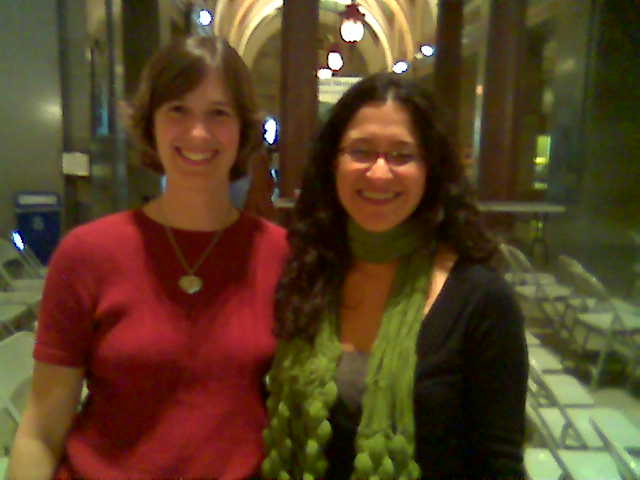
Yes, I was a geeky fangirl in the Capitol rotunda in 2009 when Jennifer Block spoke at the annual Friends of Missouri Midwives Cookie Day event.

Pushed is a thorough critique of obstetrics as an industry and how women and babies are being HURT by the systems ostensibly in place to “protect” them. Especially thought provoking is Block’s descriptive exploration of the cesarean epidemic. She points out on one occasion when discussing the whole uterine rupture straw man used to deny women VBACs, that people must prefer “controlled uterine rupture” (i.e. cesarean) than the small chance of natural uterine rupture. Later, in a separate section regarding blood loss during birth, she mentions that average loss is 300-500 mil and over 500 is considered a hemorrhage. She then notes that during a cesarean the average loss is 1000 mil. Reading that, I thought so essentially with a cesarean you have a 100% chance of a uterine rupture AND a 100% chance of a hemorrhage.  ::sob:: 😦

The information about blood loss wasn’t new to me, but I did learn something I hadn’t known at the time–300-500 mil of blood is approximately 8-9 menstrual periods worth. Isn’t the female body thoroughly awesome?!

Some assorted random thoughts and quotes from Pushed:

Re: EFM (external fetal monitoring): “For the natural childbirth movement, the emergence of the monitor was unfortunate timing. Just as activists were urging women to get up and birth, hospitals reined them back down in bed and strapped them, both physically & psychologically, to a machine that falsely promised a safe birth.”

While my feelings about unassisted birth have been “refined” and tempered somewhat since first reading Pushed in 2008, I did find the sections about UC to be frustrating and annoying. Quoting a midwife re: unassisted birth: “‘That’s not why you’re hiring a midwife. You’re hiring a midwife because you want her there for complications’ Some of Linda’s clients are such believers in birth that they toy with the idea of going unassisted. To this, Linda is fond of telling the story of a birth she attended where the baby had its umbilical cord wrapped around its neck three times and need resuscitation. ‘You never know when you’re going to have a problem,’ she says. ‘It’s like playing Russian roulette.'”

This makes me frustrated because those kinds of scare-tactic comments and implied “you must not really love your baby” subtext is EXACTLY the same as the conventional medical system’s attitude toward homebirth. The midwife quoted seemed totally oblivious that her remarks are virtually identical to the things OBs say say about homebirth and, regardless of any other personal opinions, I think they are just as demeaning and restrictive to women as the anti-homebirth sentiments are.

Okay, brief rant aside for another quote, this one while the author was observing a home water birth:

“It is at this point that I begin to fathom what supporting normal birth really entails. Linda is on her knees, sleeves pushed up, gloved hand in a soiled kiddy pool up to her bare elbow, gleaning diarrhea wisps with a spaghetti strainer by flashlight. I try to imagine a doctor doing this work and have great difficulty. This is not medicine. This is birth. It is messy, backbreaking, humble work.” [emphasis mine]

During the conclusion of the book after a discussion about the NAPW and whether childbirth is a reproductive right or not:

To her [a doctor who thinks it is not], it is a medical issue, one that may need reform, but one that belongs under the purview of physicians. ‘To my mind, I’m all for people having a pleasant and safe birth experience,’ she says. ‘But my highest priority would be for them to have a safe birth experience.’ But what’s considered safe is political. What’s safe changes. Thirty years ago obstetricians said VBAC was dangerous. Then they said it was safe. Now they’ve gone back to saying it’s dangerous. ACOG says out-of-hospital birth isn’t safe, but the research has consistently suggested that for women with normal, uncomplicated pregnancies it is not just safe, but safer, because those women are far more likely to have a normal, spontaneous vaginal birth and far less likely to experience harmful, unnecessary interventions….”

“…The goal is to have a healthy baby. ‘This phrase is used over and over and over to shut down women’s requests,’ she [Erica Lyon] says. ‘The context needs to be that the goal is a healthy mom. Because mothers never make decisions without thinking about that healthy baby. And to suggest otherwise is insulting and degrading and disrespectful’…What’s best for women is best for babies. and what’s best for women and babies is minimally invasive births that are physically, emotionally, and socially supported. This is not the kind of experience that most women have. In the age of evidence based medicine, women need to know that standard American maternity care is not primarily driven by their health and well-being or by the health and well-being of their babies. Care is constrained and determined by liability and financial considerations, by a provider’s licensing regulations and malpractice insurer. The evidence often has nothing to do with it.

This the TRUTH and I hope women hear it.

The only critique I have of this book is one I echo from several other reviews. The book fires you up and has a lot of passion and energy, but provides no outlet or ideas for where to channel that energy. There is no “resources” section, no suggestion to join Citizens for Midwifery or your state midwifery advocates, no list of birth-positive organizations who are working diligently for birth change in our culture, etc.

For some ideas that address the above, read my small-stone birth activism article 🙂