Archives

International Women’s Day, Birth Activism, and Feminism

“The minute my child was born, I was reborn as a feminist. It’s so incredible what women can do…Birthing naturally, as most women do around the globe, is a superhuman act. You leave behind the comforts of being human and plunge back into being an animal. My friend’s partner said, ‘Birth is like going for a swim in the ocean. Will there be a riptide? A big storm? Or will it just be a beautiful, sunny little dip?’ Its indeterminate length, the mystery of its process, is so much a part of the nature of birth. The regimentation of a hospital birth that wants to make it happen and use their gizmos to maximum effect is counter to birth in general.” –Ani DiFranco interviewed in Mothering magazine, May/June 2008

“We were all held, touched, interrelated, in an invisible net of incarnation. I would scarcely think of it ordinarily; yet for each creature I saw, someone, a mother, had given birth….Motherhood was the gate. It was something that had always been invisible to me before, or so unvalued as to be beneath noticing: the motheredness of the world.” –Naomi Wolf, Misconceptions

Since tomorrow is International Women’s Day, I felt moved to share the above quotes. I also wanted to touch briefly on birth as a feminist issue, spurred by this thought-provoking post by my friend Summer (I have TONS more ideas about this topic, but limited time in which to share them!). Personally, I’ve identified as a feminist since I was a child—long before I became a birth activist. Identifying in this way was my first taste of the activist spirit that has fueled me for the rest of my life. For me, my birth activism is intimately and inextricably entwined with my larger interest in women’s rights. I have always been somewhat confused to hear any woman say she is not a feminist, it grieves me because when you dig a little deeper, it is usually because they are defining feminism according to a very skewed, simplified, inaccurate, media misportrayal of feminism (i.e. a man-hating caricature). I also like the term “womanist.” To me, being a feminist most simply means believing and acting as if women have value. All too often, those who mischaracterize feminism in the above ways believe EXACTLY the opposite.

In one of my many books about women’s issues, I found these awesome explanations of what feminism is—the source being of some surprise to me, the Roman Catholic Order of Sisters of Loretto:

Feminism: a world-wide social change movement which critically but lovingly rejects relationships and structures based on stereotyped roles of dominance (male) and submission (female).

Feminism: a life-affirming movement reorganizing institutions and relationships, so that women will have equal access to society’s goods, services, status, and power.

Feminism: the bonding of women discovering the joy of woman-identity.

Feminism: a process freeing women to work toward liberation for themselves and other oppressed persons.

And here is another definition: “Feminism is a conscious and continuous effort to improve the lives of all women, an effort which requires changing the system that defines success as making a lot of money.” –Jane O’Reilly

To me it also means defining all women’s work, paid or unpaid, as having real value (this includes the “invisible” work of mothering reflected in the second quote I chose to open this post).

I think all of these definitions can be well applied to our work with birth!

IĀ  also think some women who do not self-identify as feminist do not because they feel like, “feminists want women to be like men.” So, here is a feminist quote about that too šŸ™‚ “A woman should not be a mirror image of man’s universe. A woman should not try to emulate men, thus taking on masculine traits, she should develop herself, realize herself, gain direct vision into her own being.” —Anais Nin

I love the final point especially—gain direct vision into her own being. I think empowered birth often triggers this for women.

Net of love in action!

And, then finally, bringing us back to International Women’s Day I have a final quote:

“I believe that these circles of women around us weave invisible nets of love that carry us when we’re weak and sing with us when we’re strong.” –SARK, Succulent Wild Woman

As I noted in my post for CfM this week, in honor of International Women’s Day—and every day—let us celebrate our bodies, honor our mothers, and trust in the nets of love woven around us by a multitude of remarkable, powerful, everyday women.

I’m a Birth Warrior!

Earlier this week, I was surprised and pleased to get a small package in the mail from my Birthing from Within mentor friend. In it was a sweet little “My Mama is a Birth Warrior” t-shirt. The words surround a labyrinth image, which of course, I love.

Modeling new t-shirt šŸ™‚

In the enclosed card was the following:

Imagine a tribe in which a woman is prepared for childbirth in the same way warriors are prepared for battle. Imagine a Ceremony for this woman before she gives birth, a grand send-off with holy songs and fire. Imagine a feast, prepared just for her.

Her tribe tells her, they say to her “Go to your journey,Ā  you have prepared. We have prepared you. If you fall from your horse once or a hundred times, it does not matter. All that matters is that you come back to us, that you come home.

Throughout your journey–your labyrinth of Great Love, Great Determination, Great Faith and Great Doubt—you rode on!

The Great Tribe of Mothers welcomes you back from your birth journey with honor.

Imagine, indeed. I have a partially prepared blog post about my own labyrinth of pregnancy and birth. I hope to eventually publish it, but for now, just know that I do feel I embarked on a mighty journey during this last pregnancy, I did pass through those Gates, and I did ride on. I AM a birth warrior! šŸ™‚

Standing up so big!

Transformation Through Birth

One of my favorite birth books is Transformation Through Birth. Written in 1984 by Claudia Panuthos, who also wrote the excellent book Ended Beginnings (about miscarriage, stillbirth, neonatal death, and healing all sorts of childbearing losses), it is one of the books I recommend as “going beyond” typical pregnancy/birth book material. I enjoy books that are designed to help women with the emotional work of pregnancy instead of just the physical work, with a quick dabble into the psyche. I find they are few and far between.

Some quotes and ideas from this book that I particular like:

“In some sense, childbirth is much like a marathon. Once given some general guidelines, marathon runners know how to breathe, to run, and to complete their race according to their own body signals. Similarly, women know how to breathe, to birth, and to complete the delivery according to their own body signals. Marathon runners who are true champions are free to stop the fast pace, and even quit the race without loss of integrity.”

She then makes the point that birth is really more like a “Zen marathon” in that “the focus is to become centered and one with the body, to remain on purpose and directed toward a single goal and to act from the witness or higher mind within” and goes on to say, “Because we view marathon running as an expression of ultimate physical health, a similar attitude toward childbearing may greatly aid in the altering of present attitudes that respond to childbearing as an abnormal condition requiring medical treatment.”

I use the marathon example in my birth classes usually—particularly when talking about “pain” and what birth feels like. I use the marathon analogy to illustrate how the sensations of birth are not like the sensations of accident, illness, or injury, which send us pain signals indicating something is wrong. There is nothing wrong with birth! (well, usually) The sensations of birthing are more similar to the feeling of healthy muscles working hard and working for a long time, but doing something of which they are fully capable.

I’ve posted about this before, but the marathon talk reminds me of something one of the doctors in the Business of Being Born film said that made me really outraged. He said something to the effect of: “in three months you’re just going to be pushing a baby in a stroller, so what difference does it make how you gave birth?” What difference does it make?! Would anyone even THINK to say something like that to a marathon runner or Olympian—“in three months, you’ll just be pushing a baby in a stroller, who cares that you won a gold medal?” (analogy side note, feeling good that you won a gold medal [gave birth in a triumphant and empowering way] does not invalidate or cause guilt in those who did not run the marathon, or had to quit early, or needed help finishing. There is no shame in not running, but there is also rightful PRIDE and “glory” in finishing the “race” you set out on.

Okay, back to the actual book! Another good quote, but one I have a mixed reaction to:

“Women who birth joyfully do so because of who they are, what they believe, and how they live.”

While I like the sentiment, there is an unintended subtext of—if you did NOT birth joyfully, it must be because you have a sucky life in general and does not take into consideration the millions of factors that go into any one birth (it isn’t JUST about what the individual believes and how she lives, it is also about what those around her believe and how they live, and also what our culture believes about birth).

That said, the book is very compassionate with regard to cesarean birth experiences, stating:

“For the woman who delivered surgically, her task is to see that she was attempting to save her baby’s life through an act of personal courage.”

I love this re-framing—it isn’t a failure to have a cesarean birth, it is often an act of personal courage.

The final element I love from Transformation Through Birth is the author’s concept of encouraging and preparing for postpartum EXPRESSION instead of postpartum depression (the theory being that stuffed down, unexpressed feelings, moods, conflicts, emotions contribute to depression by repression of expression. That’s my own bit of alliteration there–I’m so catchy! šŸ˜‰

OBs and Normal

I’ve been looking through posts on my old book blog, because I shared lots of birth-related thoughts/quotes there that are now lost in the shuffle and would be more relevant transferred over to this blog. From the book The Mother Knot by Jane Lazarre, written in the 70’s she shares an anecdote about her OB that I think carries a huge ring of truth still today:

My obstetrician had whispered a secret to me on a sunny afternoon. I had come to the office prepared with my written list of questions. Why was I feeling nauseated, I asked, and what was all this pain in my thighs? And he had answered wearily, ‘If you want answers to questions, have a miscarriage, or toxemia, or let something else go wrong with your pregnancy. We don’t know anything about normal births.’ So much for technological know-how. [emphasis mine]

This is a perfect example of the differences in approach to caring for women present in the midwives model of care and the modern obstetrics model of care. Another good example of some differences is in the Snow Baby story I put on the CfM blog on Friday.

Time Round

I connect to the circle now

and see my life and death

in the child before me–

the glorious whole that spins so fast

it seems not to move

as the sun stands still in the heavens

until we glance again at dusk.

Where did it go and when

did we forget to look?


No matter, just turn.

The circle: our map

The heart: our book.

–Karen Engelmann

I copied this poem onto the first page of my journal when my second son was a newborn. I’m not totally sure what the meaning is intended to be, but I take it as a reminder to slow down and remember to look šŸ™‚ My new baby is already one month old (tomorrow). How is that possible? I still look at her with surprise and amazement almost daily—sort of a, “where did you come from?!” feeling. There is something magic about her.

I have surprised myself by not having much urge to write in the last couple of weeks—usually I am consumed with blog post and article ideas. Something switched this week and the topics are flooding in again, as well as the sense of frustration of not having “enough time” to write them all. It may be because of Mark going back to work and now I feel like I am no longer “off” either and have to get caught back up with real life again. So, I remembered that poem and got it back out again. I also want to remember that my conditions of enoughness for the foreseeable future are:

1. take care of my baby.

2. take care of the boys–including doing some school every day.

3. eat enough food.

3. teach my online class.

That’s it. Write scintillating blog posts is not on the list. Nor is write books, which has suddenly popped back into my consciousness as a “want to do RIGHT NOW!” Nor is laundry really, though it has been haunting me this week. Even birth activism efforts are not really on my list, though there is a lot going on right now that I could/should contribute to. I’ve had a familiar sort of pressure this week to get back to “normal” and to prove to myself that I can handle everything I need to handle (without help).

But look…

This is where my heart is right now.

Fatherbaby

“Nurturing is not a genetically feminine attribute. Tears and laughter are not the province of women only. The last time I looked, men had tear ducts. They had arms for holding babies. They cared about their children. And they cried at births…let the shared experience of childbirth reclaim the human soul.” –-Ariska Razak (midwife and healer)

Daddy and his two week old baby girl!

Yesterday, my husband went back to work for the first time since our new baby was born last month. He was off for slightly under 4 weeks. I strongly encourage all of the fathers who take my classes to take off as much time as possible after their babies are born. Many of them seem surprised by the suggestion, a few of them seem disinterested (like, “but isn’t that her job?”), but most of them express sadness and regret at their workplaces’ unsupportive attitude towards (or flat-out refusal to grant) paternity leave. Many of them are only able (or only feel able) to take the day of the birth off and perhaps one to two more days. I meet many who will only be able to be at home with their new families if the birth straddles a weekend. I could almost cry at the social attitudes this reflects—a complete devaluation of the father’s role, his birth as a father, and his baby and family’s need for his presence. Fathers as well as mothers absolutely need this time to “cocoon” with their new babies. To absorb the magnitude of the changes in their lives, to have time to consider the meaning of their new roles, and to re-integrate into the “normal” rhythms of home life after having experienced the rite of passage and labyrinth of birth.

When our first baby was born in 2003, my husband took one week off and then followed it with a week of half days. He was crushed to leave us—describing it as feeling like we were his “wolf pack” and he was having to leave his pack when he really belonged with us. When our second son was born in 2006, we’d wised up somewhat and he took off 4 weeks. It still didn’t feel like enough for any of us, but it seemed to be viewed by his workplace/co-workers as an unusually long length of time to take off. This time he again took 4 weeks and it hasn’t felt like enough for any of us. I’m interested by how his time off seems to be viewed by most as him needing to be home in order to “help” me, not as a time with inherent value to him. While I certainly do need his “help” while postpartum, I view our relationship as a partnership and our family as just that, our family, not as an exclusive maternal domain with occasional visits from the “daddysitter.” No thanks. Is spending time with his new baby, taking care of his other children, and taking care of household tasks in the home we share, “helping” me, or is it being a complete part of our real lives?! A part that is completely ignored/denied by the modern workplace culture and social attitudes. Spending time with Alaina is of value and importance to both of them, as people who will have a lifelong relationship with each other. Also, somewhat ironically, I am the one who took no time off this time around. I teach online and I had no leave from doing so—it was my own choice to sign a contract for this session and the online staff doesn’t even know I was pregnant or that I had a baby. I took 5 hours off and then posted in my class again. I obviously wouldn’t be doing it if it wasn’t compatible with having a newborn—it is excellently compatible—and I prepared those around me for weeks before her birth that the only things I planned to be responsible for for the first two months or so, were my baby and my class (and, obviously, taking care of my other kids too—but, not even them in the early days postpartum!).

We have discussed how each of our babies has been a catalyst for big changes in our home situation. Our first baby was the catalyst we needed to move away from our by-the-highway-no-yard townhouse in a city and onto our own land in the country near my parents. Our second baby was the catalyst we needed to finish building our real house and to move out of our temporary house and into our permanent home. So, we are now wondering what kind of catalyst our baby girl will be? We have spent our entire married life (13 years!) saying that we want to live a “home based life.” I truly do not think it is (biologically) normal, desirable, or healthy for anyone to spend 40+ hours a week out of their home, regardless of whether or not they have children or who the primary caregiver is. I don’t think fathers belong at work that much time, I don’t think mothers do either, and I don’t think children belong at school every day. The home-based life idea came to us long before we had kids and it came from all the reading and thinking I did about the simple living movement. So, I wonder—and hope—that maybe our new baby will be the catalyst we need to finally face the fear of possible failure (and/or no money!) that accompanies jettisoning his full-time job and building our other “multiple streams of income.” Maybe we will, maybe we’ll keep talking ourselves out of it, but that is what our baby girl makes us feel like doing!

So, here’s to Papatoto! May the fatherbaby unit be recognized as having inherent worth and value.

ā€œWhen he becomes a father, a man leaves behind his life as a single individual and expands into a more inclusive role. He becomes a link in an unbroken chain. And in doing so, he himself undergoes a birth process–the birth of himself as a father.ā€ –John Franklin (FatherBirth)

ā€The absolute miracle of a birth and the emergence of a new human being into the world catapults both mother and father into the realm of awe and wonder. They are flooded with non-ordinary feelings and energies that support a deep connection not only with the newborn and each other, but also with the mystery and power of life itself.ā€ –John & Cher Franklin


Birth Quotes Update

“Remember that most of the people who really need your work are not hanging out in the oversaturated twitterverse, but in places where what you do isn’t common. Get out of the crowded room and go where there’s a dearth of and a thirst for what you do. Don’t try to shout over lots of shouting.” –Tara Sophia Mohr

(Not specifically birth-related, but an excellent reminder from this post. I’ve often felt with blogging and writing for birth publications that maybe I’m just clamoring to …be heard in a cacophony of other voices (that also have good things to say–am I contributing anything unique?!)

“When my kids become wild and unruly, I use a nice, safe playpen. When they’re finished, I climb out.” ~Erma Bombeck (via MobyĀ® Wrap)

“The miraculous nature inherent in the unfolding of a flower is the very same that moves through a woman as she gives life to the world. We can neither control nor improve upon it, only trust it.” -Robin Sale

…the stories I see of birth in the media don’t reflect the intense emotions, the physical power, or the immense impact of the experience itself. Women screaming, fathers fumbling about, doctors doing most of the heroic work–these images don’t do justice to my experience. I felt empowered, strong, heroic in my efforts to bring my daughter into the world yet, I am painfully aware how little others see the heroism in my birth experience.”Ā  –Amy Hudock (essay in Literary Mama)

“It’s not only children who grow. Parents do too. As much as we watch to see what our children do with their lives, they are watching us to see what we do with ours. I can’t tell my children to reach for the sun. All I can do is reach for it, myself.” – Joyce Maynard (via Literary Mama)

Giving birth, certainly, should rank among the pivotal heroic adventures celebrated in our culture. Certainly it is more heroic than catching a football or acting in front of a camera, and perhaps even more heroic than going off to war. Men return from the battlefield with victory, but women return from the birthing room with life…” –Amy Hudock (in Literary Mama)

“...if you want to know where a woman’s true power lies, look to those primal experiences we’ve been taught to fear…the very same experiences the culture has taught us to distance ourselves from as much as possible, often by medicalizing them so that we are barely conscious of them anymore. Labor and birth rank right up there as experiences that put women in touch with their feminine power…” –Christiane Northrup

The intrinsic intelligence of women’s bodies can be sabotaged when they’re put into clinical settings, surrounded by strangers, and attached to machines that limit their freedom to move. They then risk falling victim to the powerful forces of fear, loneliness, doubt , and distrust, all of which increase pain. Their hopes for a normal birth disappear as quickly as the fluid in an IV bottle.” ~Peggy Vincent

So many words commonly used to describe childbirth–support, patient, management, delivered by, coached, helped, guided–suggest that a woman does not have the power to give birth without being dependent on somebody else. This isn’t the case at all.” –Michel Odent

(This reminds me of that Odent quote about not actively supporting a woman in birth that stirred me up a couple of months ago. That one I had some objections to, the one above, I can definitely get behind, even though I think he is actually …saying the same thing in both quotes!)

I believe that natural childbirth is a right and a privilege…Our country needs to step up to the plate in educating women about the benefits of natural birth, and we need to help women actually do it – not just hear about it.” –Mayim Bialik (via ToLabor Doulas Dallas)

In the moments of labor and birth, all the forces of the universe are flowing through a woman’s body.” – Sister MorningStar (The Power of Women)

Birth Art: Final Chapter

As I have noted before, this was my most art-making pregnancy. Rather than make birth art just because I like it (I do!), during my most recent pregnancy I used it as a way to work on—or through—various things. I wrote more about this in this post. So, now that my pregnancy has been completed with the powerful birth of my magical tiny daughter, I felt an intense urge to make two final pieces of birth art (that are directly related to my own current experiences, rather than just birth art for birth art’s sake!). Since I pushed her out on my knees and caught her myself and had worked on my pushing fears with birth art previously, I felt like making a new type of crowning mama sculpture. (Yes, her arms are raised and not doing the catching—because it just works better for me to make them with raised arms!)Ā  I have also written previously about the labyrinth metaphor for pregnancy and birth and so it seemed fitting to put this mama in the center of the finger labyrinth that my friend made for me as a blessingway gift šŸ™‚ She’s taken her journey and she is birthing her baby!

Crowning mama in the center of the fabric labyrinth that my friend Denise made me for a blessingway gift

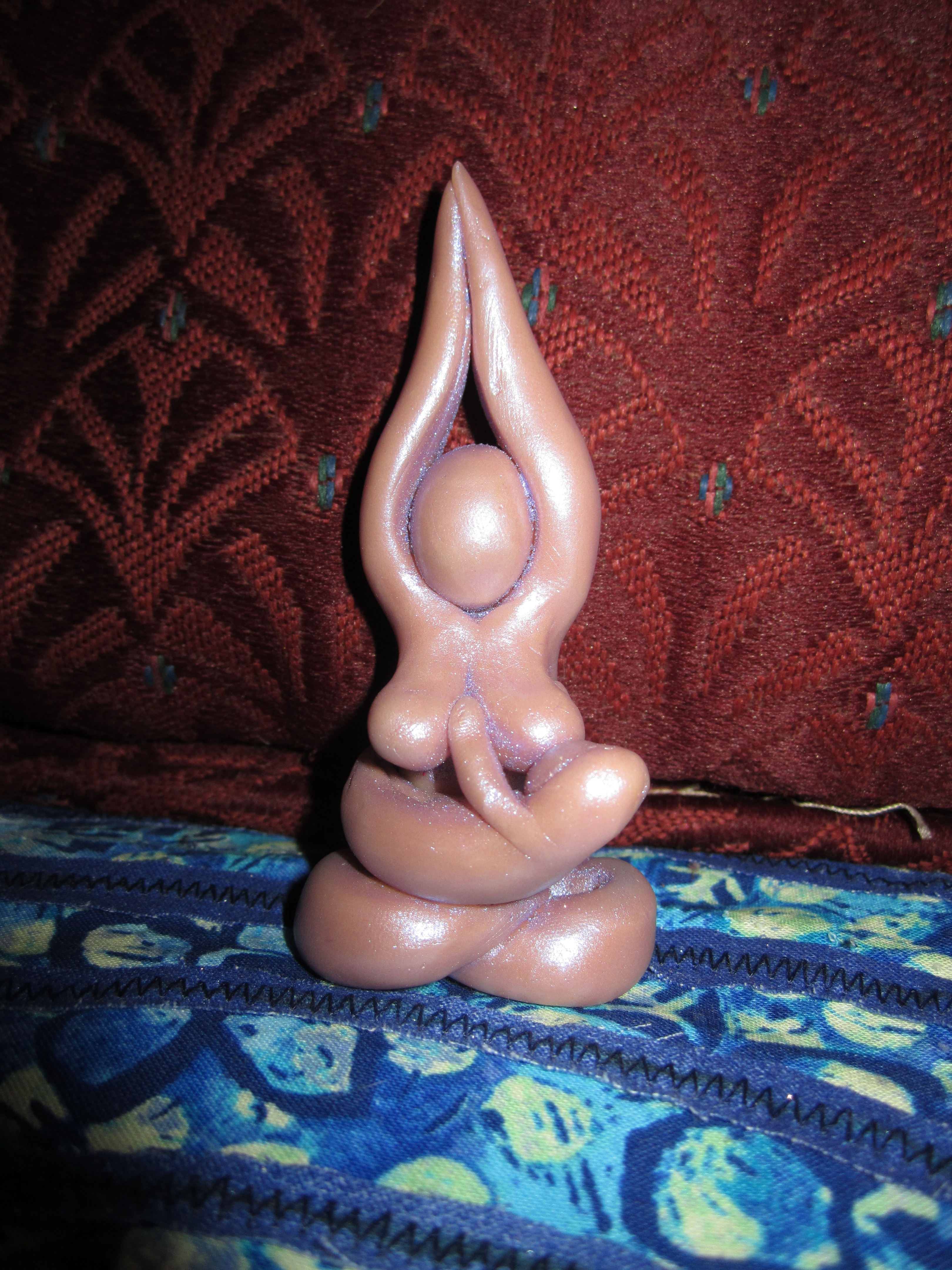
And, the logical final sculpture in my “series” is a mama WITH her baby!

This mama is happy to finally have her baby to hold and nurse!

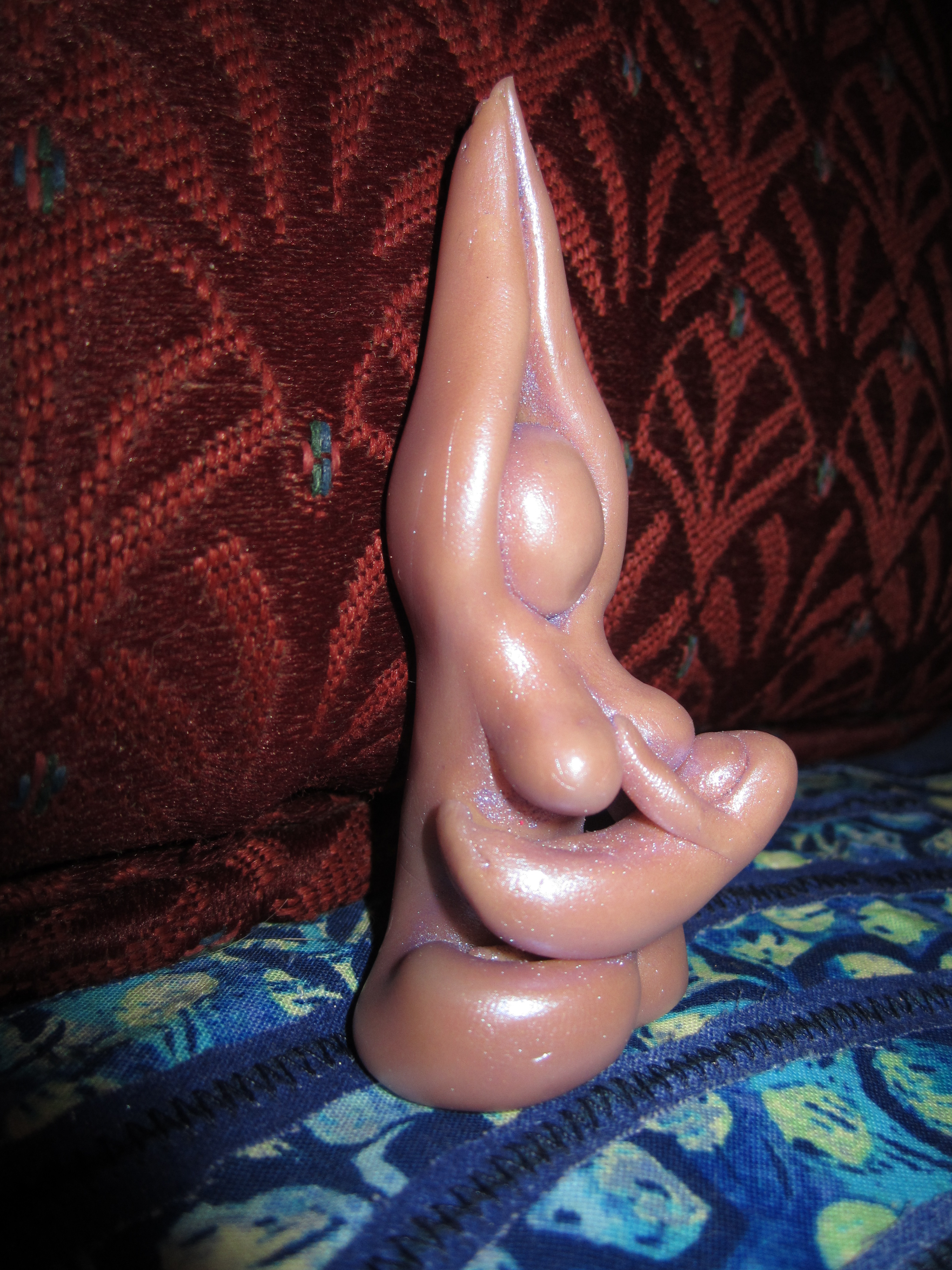
I wish I had put the baby in a sling, so it doesn’t look so much like it is desperately clinging on with no support! I didn’t think of it until today though (I made these last night).

Side view

I actually made this one while nursing my own baby šŸ™‚

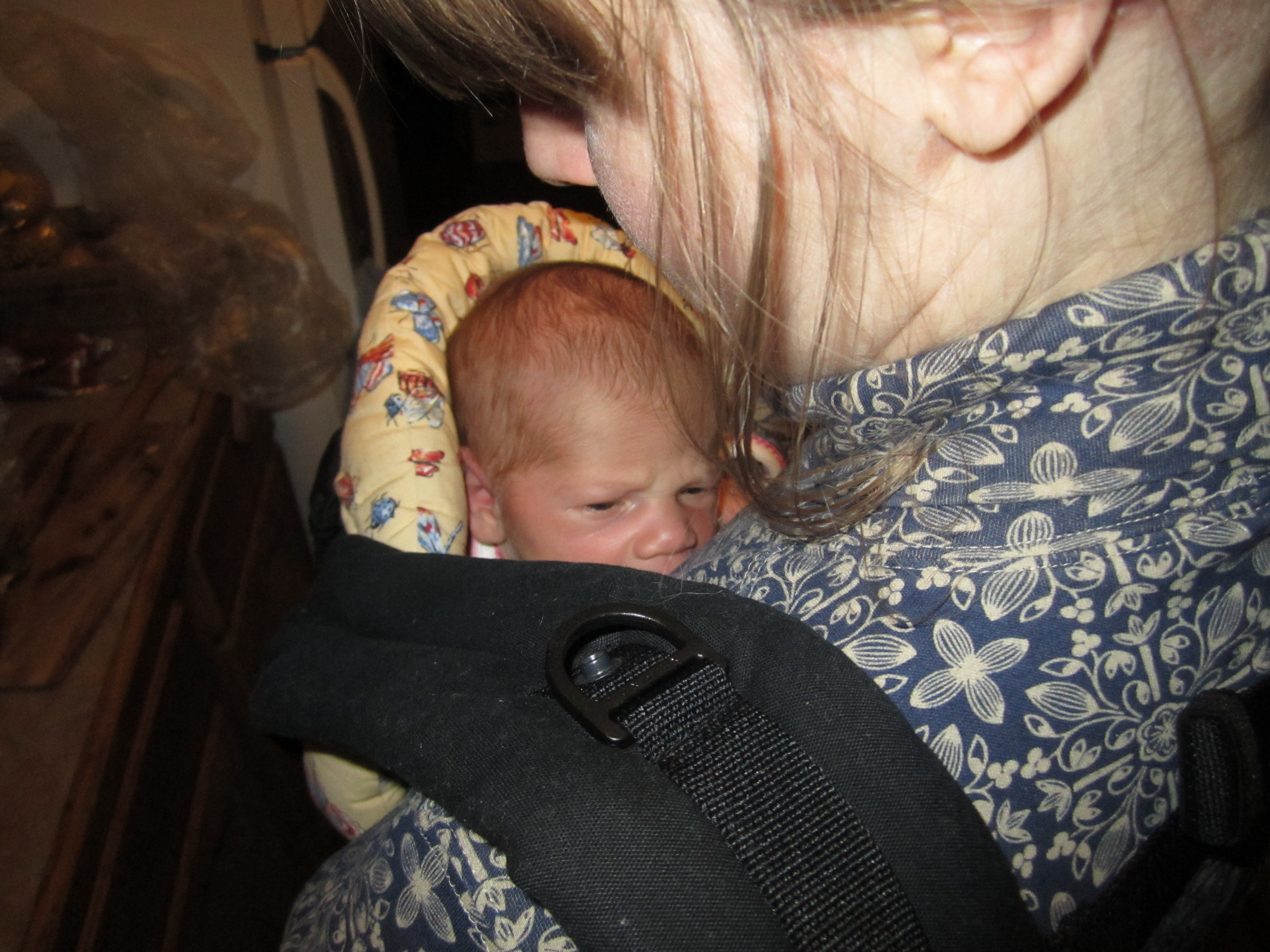
And finally, here is a picture of my little treasure trying out the Ergo for the second time today. She looks a little skeptical!

Close enough to kiss!

Birth Quotes of the Week

“I believe that natural childbirth is a right and a privilege…Our country needs to step up to the plate in educating women about the benefits of natural birth, and we need to help women actually do it – not just hear about it.” –Mayim Bialik (via ToLabor Doulas Dallas)

“In the moments of labor and birth, all the forces of the universe are flowing through a woman’s body.” – Sister MorningStar (The Power of Women)

“These hands are big enough to save the world, and small enough to rock a child to sleep.” –Zelda Brown

“Birth is as vast and voluminous, as unfathomable and inevitable as the rising and setting of the sun. And true to the inexorable power and rhythm of their life-giving bodies, women will continue to birth with dignity, grace and courage.” —Mandala Mom

ā€œIn the sheltered simplicity of the first days after a baby is born, one sees again the magical closed circle, the miraculous sense of two people existing only for each other.ā€ –Anne Morrow Lindbergh

ā€Ž”I feel the most important thing the birthing woman does is to listen to her own body and find out what her body is telling her she needs to do. And that neither the partner, nor the midwife, nor the doula, or whomever, should be giving orders, ‘Now do this’ or ‘Now do that’ because that interferes with what she is really trying to get from her body…” ~Marsden Wagner, M.D. (via Birth Without Fear)

ā€Ž”All labor that uplifts humanity has dignity and importance and should be undertaken with painstaking excellence.” – Martin Luther King, Jr. (via Literary Mama)

ā€œA baby, a baby, she will come to remind us of the sweetness in this world, what ripe, fragile, sturdy beauty exists when you allow yourself the air, the sunshine, the reverence for what nature provides…ā€ – Sarah Werthan Buttenwieser (in Literary Mama)


My Baby Girl is Here!

ā€œA baby, a baby, she will come to remind us of the sweetness in this world, what ripe, fragile, sturdy beauty exists when you allow yourself the air, the sunshine, the reverence for what nature provides…ā€

– Sarah Werthan Buttenwieser (in Literary Mama)

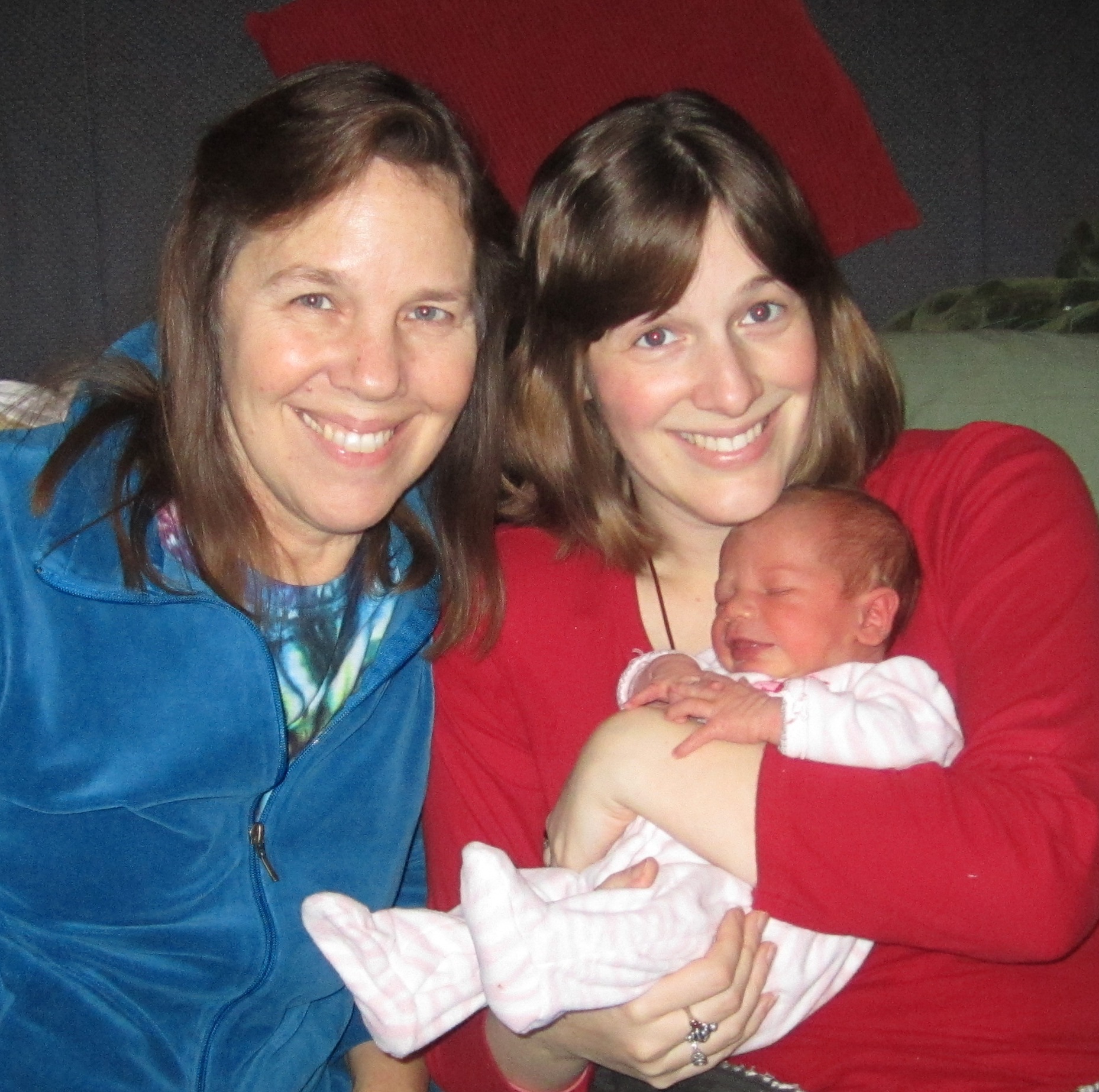
Three generations!

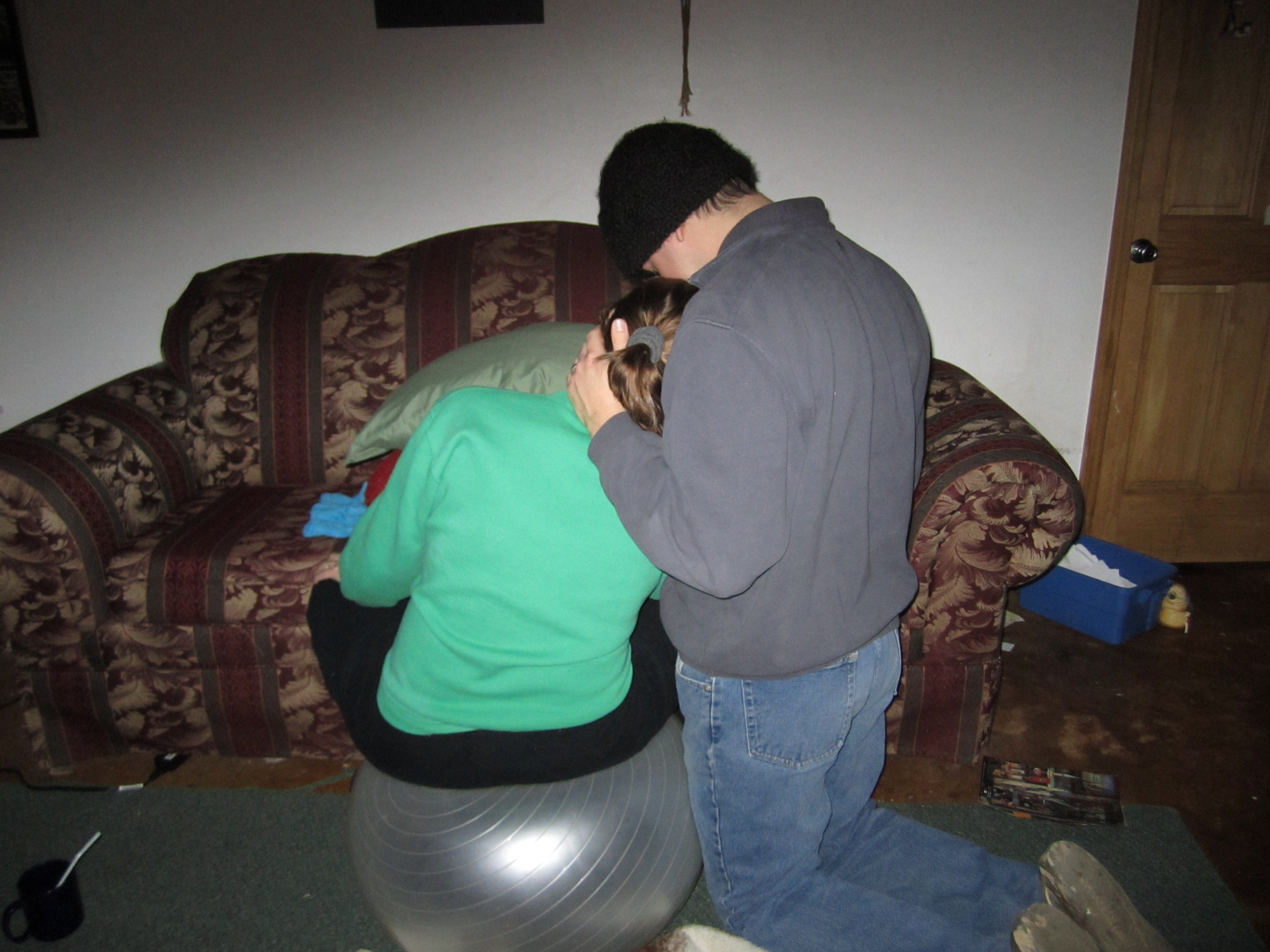
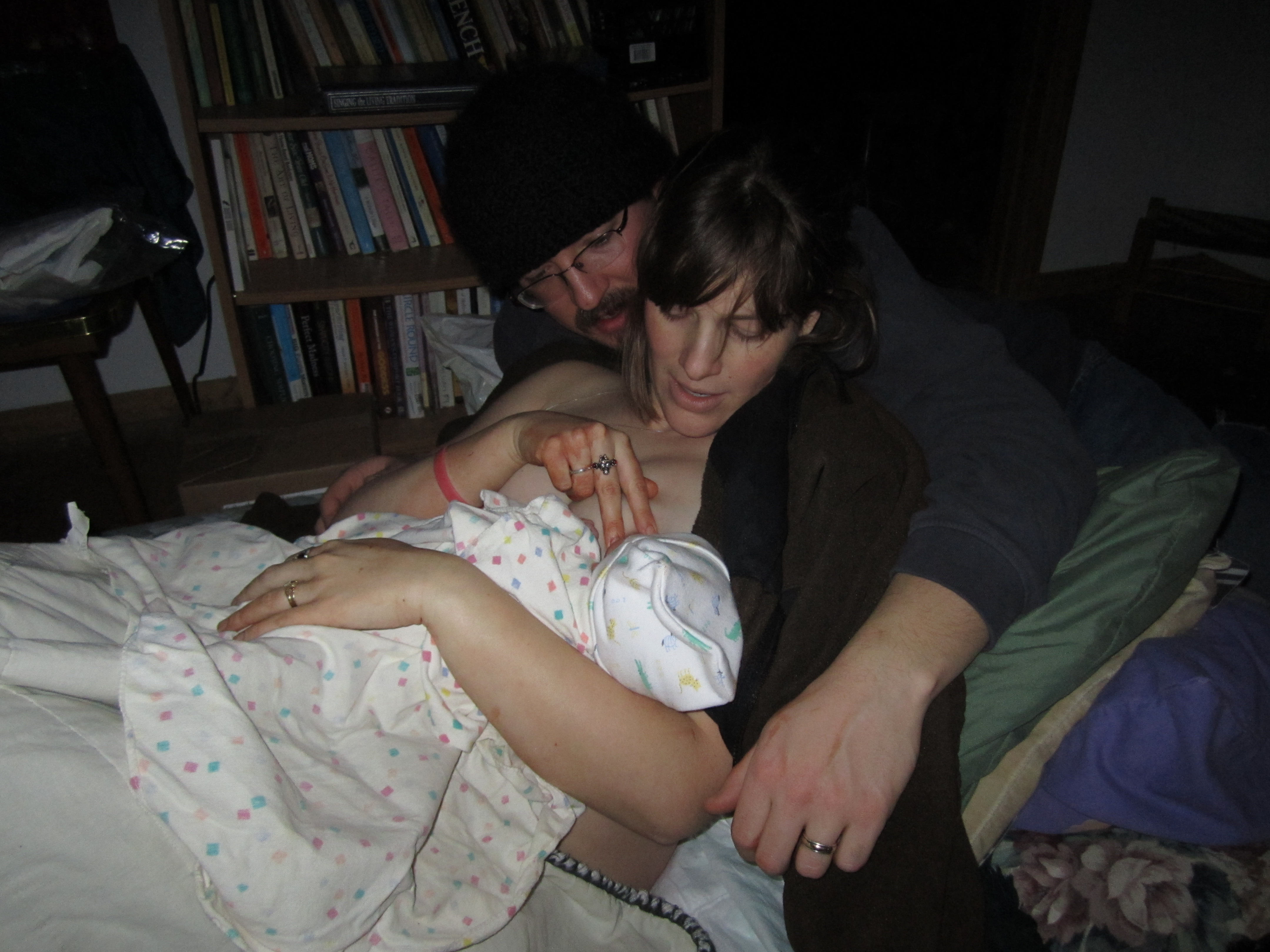
Alaina Diana was born at 11:15 a.m. on January 19th, 2011! She only weighed 7lbs, 8oz and was 20 inches. (My other babies were 8lbs4oz and 9lbs, 2oz.) I’ve sent a short-version birth story to a couple of friends over the last couple of days and decided I could work it up into a short blog post as well (of course, a full-length birth story will eventually follow). I actually had a little trouble getting started in writing about her birth—it was pretty uneventful until the end and I felt like the best description would be: walked around the kitchen, sat on the birth ball, walked around a little more, more time on the ball, hummed and ooohhhhhed, seemed as ifĀ  suddenly things changed and I felt big, big things happening and then baby was born all at once! And, I caught her! Emotionally more than temporally, it felt like a long labor and I felt like I experienced less mind-body integration than with previous labors (the actual moment of birth was much more instinctive and powerful than with the other babies though). In general, lots was unexpected about this labor—-it lasted longer than I expected (about 5 hours that were serious, but some warm-up time before that too) and was somewhat erratic and I had quite a bit of back pain. Right before pushing, contractions were still 4-8 minutes apart and it was hard for me to assess where I was/how “active” of labor it was—I was thinking I could either be at the 3cm point OR the transition point! My water didn’t break until seconds before she was born and I felt like it REALLY needed to break, but wasn’t. My kids weren’t here, because her birth was during the day (also unexpected, and a Wednesday, not a weekend!). It was just Mark, my Mom and me.

I spent a lot of time on the birth ball and Mark would stroke my back in just the right way

After criticizing myself at length for being “too analytical,” “thinking too much,” and not letting “my monkey do it,” I experienced a spontaneous birth reflex and pushed her out in a kneeling position and it only took one contraction—her whole head and body came out all at once, no moment of crowning or head birthed and then body following, just a bloosh of entire baby. I caught her myself. Mom and Mark both missed seeing her come out, because the phone rang at the same time. My mom went to stop it and Mark was moving around to the front of me, and when they looked again, I was holding her (Mark says it was about 12 seconds). So, no birth pix 😦

I did tear again, exact same extra-delicate and non-“traditional” place from what I can tell. Feels better than previous births already though–I know how to heal from this (even though I wish I didn’t have to).

My plan for immediate postpartum worked out perfectly and just like we planned. The midwife came about 40 minutes after the birth and checked blood loss. My doula was here about 20 minutes after and fed me a bite of placenta—and, I ate it! No gagging or anything!

I have very different post-birth feelings this time around—though I still had the “I did it!” moment, I felt less euphoric and triumphant and more relief and the feeling that, ā€œwe survived!ā€ Blog posts about this will eventually follow…

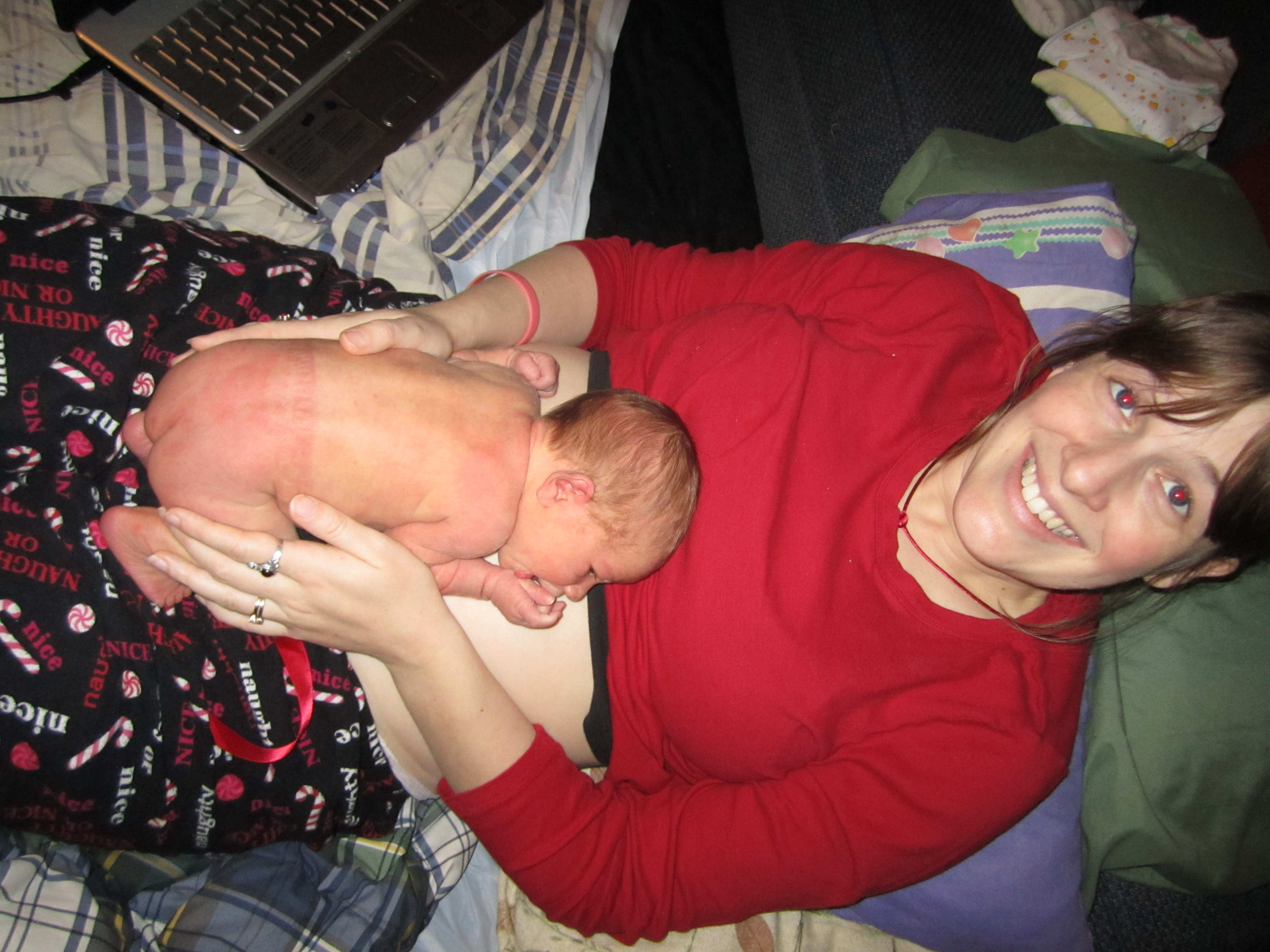
And, did I mention that I caught her myself?! šŸ™‚

Shortly post-birth

  • My "40 weeks" picture--due date was Jan. 22nd, so took a picture on that day to show how she could (theoretically) still fit! (though she wasn't breech!)