Archives

Opening Up…

Sacred Body  May 2014 070
Sacred Space
Sacred Womb

Holding
enfolding
protecting
nourishing.

Spinning cells into soul
into body
into breath
into life.

Unfurling without conscious control or effort.
Dancing together in the incredible might of creation…

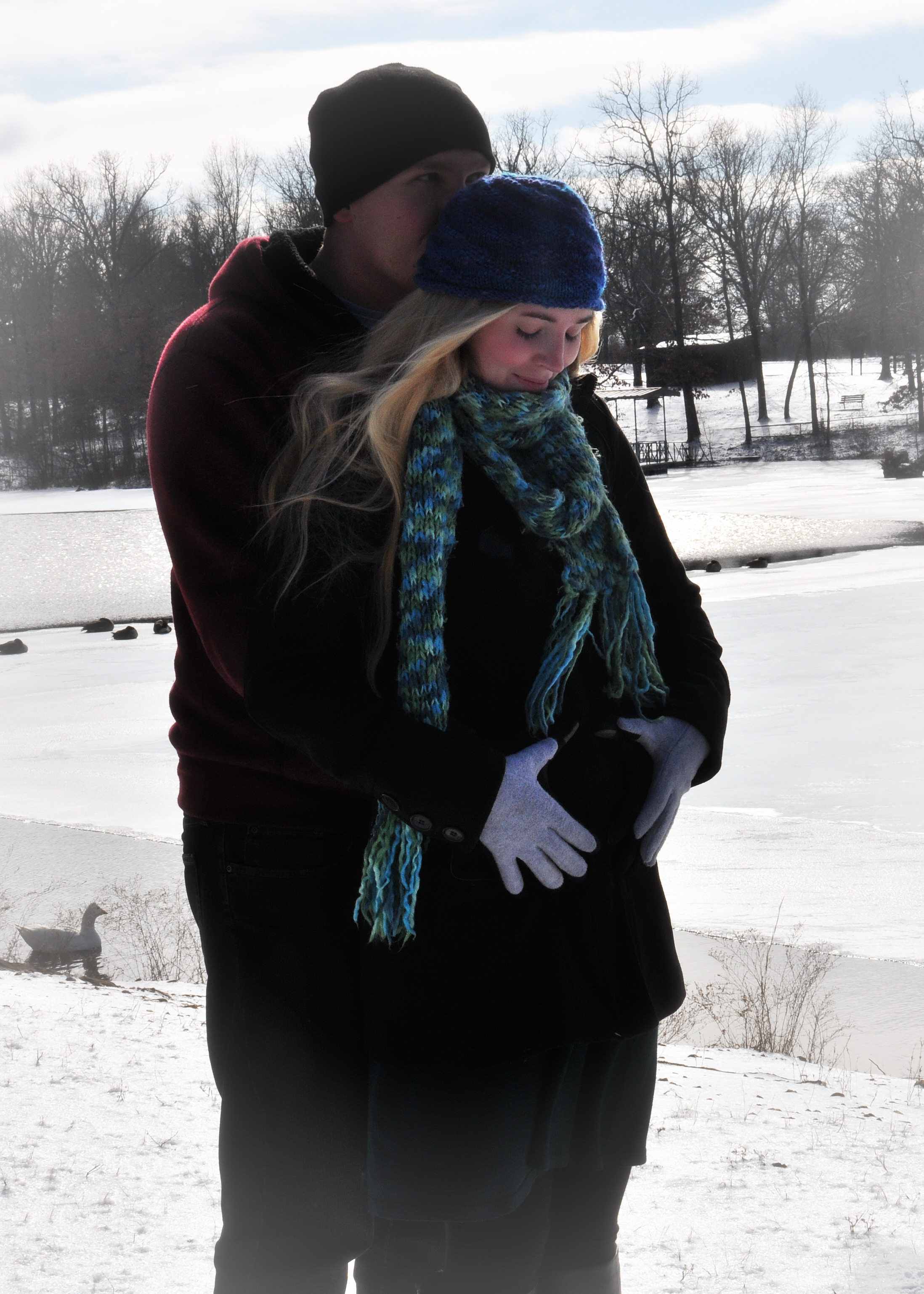
Last month, one of the blogs I write for was doing a round robin topic on what makes a family. Though I missed my chance to officially participate I still have something to say about the topic anyway! For me, the question of what makes a family boils down to opening up to make room. In February of this year I found out I was pregnant again, even though we’d made what felt like a very firm decision not to have any more children. We’ve never experienced an unexpected pregnancy before. I’m a “planner” by nature and my children have all been very planned out (I even went for a “preconception” health care appointment before conceiving our first baby!) After my initial feelings of surprise and some degree of distress and even sadness, I was really amazed to see how very soon I started to feel space opening up in my mind, heart, body, and family for a new person. And, I thought, isn’t this the very essence of family? Opening up. I spent my childhood with three siblings, but geographically isolated from other family members and so almost all of our holidays were spent as just us, the immediate family. It used to make my mom feel sad not to have a houseful of company for Thanksgiving. However, then, even as the residents of the actual family house decreased as we grew up and moved away, our family opened and expanded to include more members (and more schedules!). I got married in 1998 and our family boundary expanded to include my husband. We then had our first baby in 2003 and the family opened up to receive a first grandchild and then later the spouses of my siblings and two more grandchildren from me. My brother and his wife are having their first baby in July and again our now-extended family expands to create room and joyfully anticipates his arrival. And, with my own new baby boy due in October, we again open and welcome with love.

My parents’ house at Thanksgiving is pretty full and pretty busy now!

Body opens
heart opens
hands open to receive

Birth mama
birth goddess
she’s finding her way
she’s finding her way…

via Birth as Initiation.

May 2014 043


New Baby!

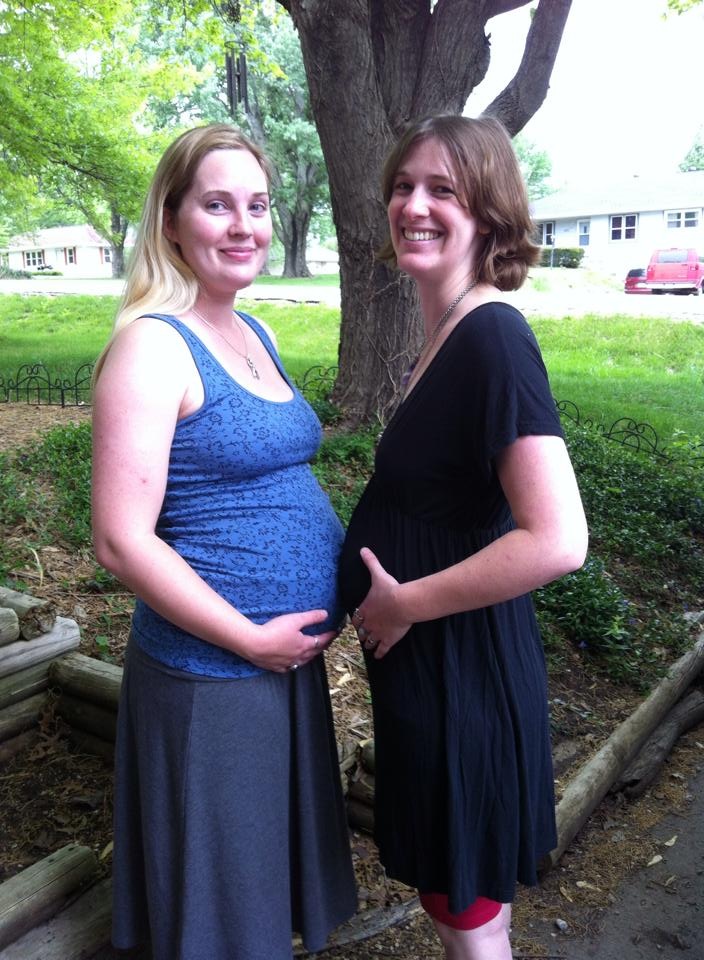
While we were originally going to wait until after our ultrasound appointment on May 22 to officially Facebook-and-blog announce my pregnancy, when I visited my sister-in-law and brother in Kansas when I was 15 weeks along, we took some cute “cousins meet” pictures and decided to toss one of them on Facebook after all 🙂

May 2014 005

This is my 900th post on my blog and I thought it would be a perfect opportunity for a pregnancy update. I’ve been saving little notes of things I want to say and so forth, but time keeps on slippin, slippin, slippin and now I’m 17 weeks pregnant and still have written anything about it!

I’m due October 27th. We actually weren’t planning to have any more children, but now we are, and it is amazing to me how quickly the family opens up to make room for a new person. The kids are very excited and we plan to find out whether the new baby is a sister or a brother on May 22nd. I was surprised to learn how many “scars” I retain from my past pregnancy losses and I find myself more anxious than I’d like to feel every day about the baby. This anxiety increased exponentially as I drew closer and closer to the point in pregnancy to when we lost our tiny son Noah in 2009. After I passed 15 weeks, I did, in fact, breathe easier, but there are still multiple times a day in which I think things like, “what if it’s heart stopped since yesterday?!” I thought since I did have a post-loss successful pregnancy AND because this pregnancy was a surprise that I’d feel more casual or relaxed about it instead of daily having, “I hope the baby is still alive!” thoughts, but apparently this is just what pregnancy feels like for me now.

At first I felt very shocked to be pregnant and I was upset about assorted things like these:

  • older than I’d like to be (35! Isn’t that “advanced maternal age”? Sheesh!)
  • weigh more than I ever have starting out a pregnancy (though, now at 17 weeks I’ve only gained two pounds, so this one wasn’t so bad after all)
  • bigger age gaps between kids than I want—in my own family of origin I didn’t really like having my siblings be nine and eleven years younger than me, it felt like a generational gap that has been hard for us to bridge in adulthood (though, now that my brother and his wife are having a baby and I am having one after them, we actually have a lot of life cycle stuff in common at last after all!). Now, Lann will be eleven before this baby is born and technically will be older than this baby than I am than my youngest sister.
  • on the same note, having watched my parents parent as “older” parents I noticed that it dragged on for a really, really long time—and their time having teenagers and having grandchildren overlapped in a way that seemed like it would be kind of not the funnest. I had my first baby when I was 24 and had been married for 5 years already, but my teenage siblings were still at home, so my parents went from having their own kids at home to having little grandchildren chaotically stumbling through the house to visit without ever having a “down time” where they were truly on their own. However, I also realize that after you have kids, you will never really ever be on your own again. Kids still seem to need their parents pretty much forever. I still need mine. My mom still needs her mom (even though she is gone now). Not in a sense of dependency, but in a sense of relationship.
  • feeling really quite done with parenting small children and ready to move on to having only bigger kids
  • not wanting to experience a clitoral tear again—I really, really feel like I’ve paid a pretty high body price for my existing kids and I felt like I was pretty done sacrificing that part of my body!
  • feeling very “distant” and far away from pregnancy/birth. I’d mentally closed that chapter of my life already.
  • having given away my maternity clothes and a lot of my baby stuff already
  • being a little embarrassed to have had a “surprise”—that is just not ME to have a surprise baby. My other kids were uber-planned-out tiny people!
  • not wanting to start over with toting a baby + caregiver to class with me while I teach
  • worried about being the primary wage-earner now that we took the leap into Mark being home with the rest of us (though our etsy shop has gratifyingly become a viable second income!). I won’t be able to teach in the fall session when the baby is due and then I always have an unpaid month off from Dec-Jan, which means we’re looking at an October-February period of relying only on me teaching a single online class for our primary source of income?! Yikes! Better start sculpting more birth art, pronto, Molly dear!

010

However, then these things happened too:

  • months before knowing I was pregnant Alaina started talking about her little sister “Lily.” AND, the boys started to say, “we think you should have another baby after all, mom!”
  • I watched the kids running up the driveway flying a kite (I have had previous driveway revelations!) and suddenly realized our family looked very small and like someone was missing.
  • a friend experienced a traumatic miscarriage at 11 weeks. I was just a little behind her in pregnancy at the time and immediately after I read her story, I went to the bathroom and there was some blood (not much and just brownish). While I now think it may actually have been “sympathy” spotting OR somehow a stored body-memory from my own miscarriages (or, just a coincidence), I knew in that moment that I want my new baby so much. I wasn’t upset about being pregnant after all, I really, really want this baby to join us.

Returning to the scars of pregnancy loss, for whatever reason from 4-15 weeks of this pregnancy, it was truly like my pregnancy with Noah was the only other pregnancy experience I could remember. It was weird. AND, what was also weird was how many overlapping “re-do” moments I experienced:

At 13 weeks I started to have symptoms of a UTI (same thing happened with Alaina at 13 weeks). My first ever UTI was during my pregnancy with Noah and what sent me to the doctor to find out he had no heartbeat. I have never stopped wondering if that UTI is why my baby died.

At 14w2d with this pregnancy I had a consultation with a prospective midwife. At 14w2d with Noah I had a midwife consultation too (and felt “scarred” from that experience too as it was a pretty unpleasant consultation AND I started to have a headache/cramping right after it). This midwife was very nice and we had a delightful consultation and a quick bond.

On May 1st, I went to the paint-your-own pottery place for my birthday because I really wanted to paint a “water bearer” figure I saw there earlier this year. As I painted with my friend, I realized I might not be going to finish it before they closed. I clearly remembered that the last time I painted anything there I was pregnant with Noah and talking with friends about pregnancy and birth. I didn’t finish that day and after he died, I could NEVER go back into that place to finish painting my plate (they sold it to different owners and it moved to a different building, so now I can go back, but not without remembering). Another friend went back and finished it for me (I will never forget that either. I don’t know sometimes if people realize how small, unusual, helpful things like that can have a big impact on a grieving mama). I use the plate, but I never forgot. This time I couldn’t not finish. It would be like a horrible déjà vu. I painted and painted, my friend wanted to leave (long drive, but she rode with me and thus was trapped!), we passed closing time, but I was almost done. So, I apologized to my friend and to the store owner and I stayed and finished it anyway. (My poor friend!) There was NO way I was going to leave that store without finishing my project…again.May 2014 048
On my birthday this year I was 14w5d pregnant. My miscarriage with Noah happened at 14w5d AND I was due on my birthday (2010 though).

For my birthday dinner, my mom made stroganoff (at my request) and it was only after I was sitting there happily eating it that I realized that is what I’d asked her to make after Noah too.

And, in one other weird overlap, his pregnancy and this current one are the only two I’ve ever been sick with. WHY?! This bothered me for weeks. Oh well, it has passed now and I’m still pregnant this time and the baby still has a very good heartbeat. I have an anterior placenta this time, so I don’t feel as much movement as I usually do by this time with other pregnancies, so I’m still relying on “life status updates” from my trusty Doppler. (I don’t even feel like apologizing or rationalizing my use of it. I’m desperately glad I have one. No regrets.)

(This may be the weirdest, illogical, many-thoughts-pregnancy-update post ever!)

Another thing I’m not interested in rationalizing or justifying is that I really, really like finding out the sex of the baby before birth. I am SO looking forward to our ultrasound this week. I can’t wait! I’m almost obsessed with it. In six pregnancies, I’ve only ever been right in my intuition about the sex once (I was really, really right though!). So, since this time I feel like it is a girl, I’m expecting it probably really is a boy (so, wait! Is that my “intuition,” which would really mean this IS a girl? LOL! ). Alaina is 100% certain it is a girl. She actually gets kind of mad when I say it might be a boy. She’s been saying it was a girl since before she knew I was actually pregnant (and, yes, if it is a girl, “Lily” is in the running for her name! It wasn’t on my radar before Alaina started saying it). Right before I found out I was pregnant, I went down to my place in the woods. I was upset with life in general—my kids were driving me NUTS, I was NOT having a good day. I was kind of talk-ranting to myself, including a mention of how nice it was that we weren’t going to have any more kids because I was SO DANG DONE. And…then I knew. I’m pregnant. I looked up and my eyes met the eyes of a raccoon sitting in the tree. Too weird. I’ve never before come eye to eye with a raccoon in the woods before! We stared and stared at each other. After I broke eye contact, I thought, I’m totally pregnant and it is totally a girl. I went inside and took an expired pregnancy test and it was positive (I bought a real one and took it in the movie theater bathroom at The Lego Movie a couple of days later). Here we go! 🙂

April 2014 096

029

Oh, and this literally is my 900th post on this blog, in case anyone thought I was exaggerating the number! 😉

The Goddess of Willendorf & Does My Uterus Make Me Look Fat?

“Loving, knowing, and respecting our bodies is a powerful and invincible act of rebellion in this society.”
~ Inga Muscio

IMG_0222

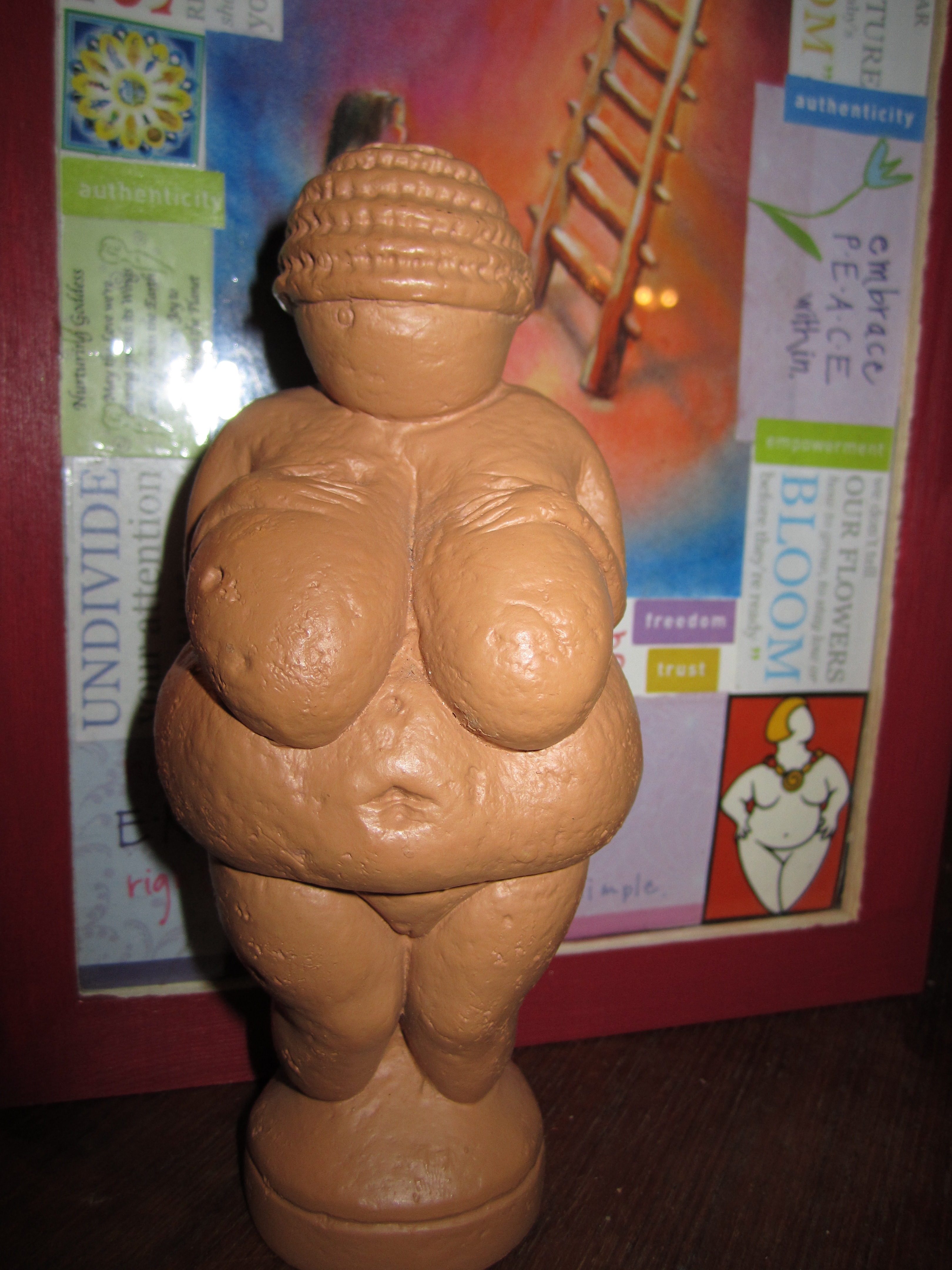
Replica on my birth altar.

I do not remember the first time I ever saw her, but I do know that I have loved the Goddess (Venus) of Willendorf sculpture for many, many years now. I consider her almost a personal “totem.” I do not see her as a literal representation of a particular deity (though when someone uses the phrase, “Great Goddess” or “Great Mother,” she’s the figure I see!), I see her more as honoring the female form. I love that she is so full-figured and not “perfect” or beautiful. I like that she is not pregnant (there is some disagreement about this and many people do describe her as pregnant) and what I like best is that she is complete unto herself. She is a complete form–not just a headless pregnant belly–I just LOVE her. She represents this deep, ancient power to me.

In a past assignment for one of D.Min classes, I wrote:

I have a strong emotional connection to the Paleolithic and Neolithic figures. I do not find that I feel as personally connected to Egyptian and Greek and Roman Goddess imagery, but the ancient figures really speak to something powerful within me. I have a sculpture of the Goddess of Willendorf at a central point on my altar. Sometimes I hold her and wonder and muse about who carved the original. I almost feel a thread that reaches out and continues to connect us to that nearly lost past—all the culture and society and how very much we don’t know about early human history. There is such a solid power to these early figures and to me they speak of the numinous, non-personified, Great Goddess.

I know ancient goddess figures are commonly described as “fertility figures” or as pregnant, but most of the early sculptures do not actually appear pregnant to me, they appear simply full-figured. One of the things I love about the Willendorf Goddess is her air of self-possession. She is complete unto herself. She may be a fertile figure, but she is not clearly pregnant and she does not have a baby in her arms, which indicates that her value was not exclusively in the maternal role. Early goddess figurines are usually portrayed alone, it is only later that we see the addition of the son/baby figure at the mother’s breast or in arms. The earliest figures seem independent of specifically maternal imagery, it is later that we begin to see Goddess defined in relationship to children or as exclusively maternal. I think this reflects a shift that women continue to struggle with today (in Goddess religion as well as personal life) with the mother role see as exhaustive or exclusive. In contemporary society, the only mainstream representation of the Goddess that manages to survive under public recognition is the Madonna and Child and here, not only has Goddess been completely subsumed by her offspring, but she is no longer even recognized as truly divine.

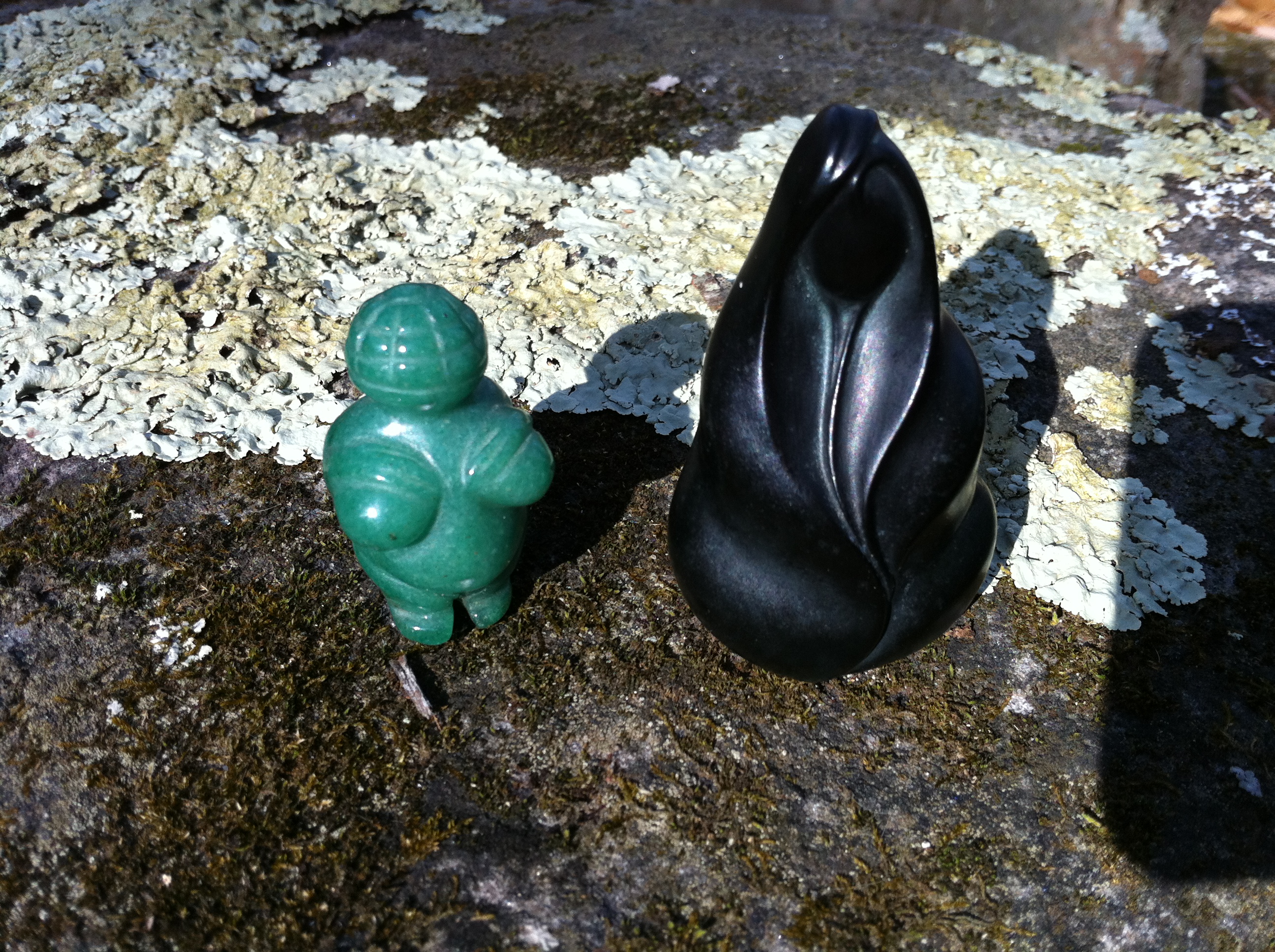
This image has been a potent affirmation for me many times in my life. One Mother’s Day, my then four-year-old son Lann found a IMG_0636little green aventurine Goddess of Willendorf at a local rock shop: “We have GOT to get this for Mom!” he told my husband and they surprised me with it that afternoon. It still makes me get a little teary to look at it, because it was such a beautiful moment of feeling seen by my little child.  When I found out I was pregnant for the third time, my husband surprised me with a beautiful, large Goddess of Willendorf pendant. I was holding onto that pendant during the ultrasound that told us that our third son no longer had a heartbeat and during my labor with my little non-living baby, I wore and held onto the pendant. It went with me to the emergency room and I could feel its solid, reassuring weight against my chest when dressed in just a hospital gown and receiving IV fluids as blood continued to come from me as my body said goodbye to my baby. I buried a goddess of willendorf bead with my baby’s body and put a matching one on his memorial necklace.
100_2269

Bead ready to go in with my baby.

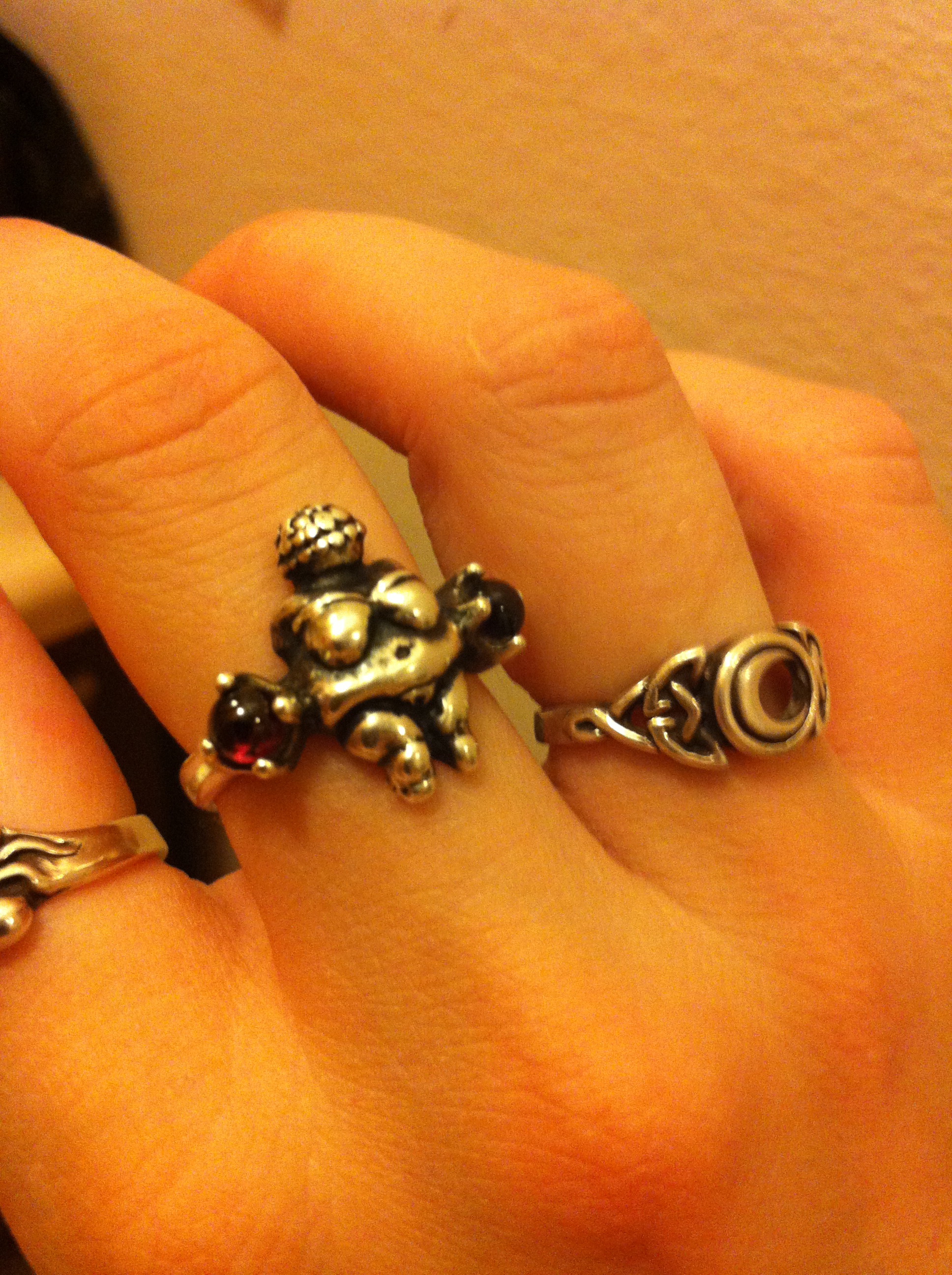
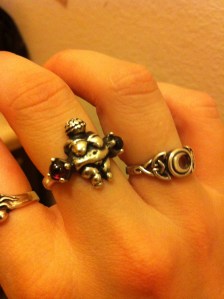
On Mother’s Day the following year, right after finding out I was pregnant with my rainbow baby girl, my husband gave me a beautiful new Goddess of Willendorf ring. I was little scared to wear it, because what if she too, became a sad reminder of a pregnancy lost (I have only worn the pendant again a tiny handful of times since the miscarriage-birth experience, even though I took a lot of comfort in it during that time), but wear it I did up to and through the moment when I caught my sweet little living girl in my own grateful, be-ringed hands.

The website that he bought the ring from went down shortly after and I’d not ever seen another ring like it for sale. However, I signed up to become a retailer for Wellstone Jewelry in 2011. While on the phone making an order, I requested one of their Venus of Lespugue pendants. The woman on the phone told me, “we don’t sell very many of those. She seems to make people uncomfortable. In fact, we used to make a ring too. A venus of willendorf ring, but no one ever wanted her. I think because 1057she is ‘too fat’ and she makes people feel weird.” Oh my goodness, I replied, I think I have one of your rings! I emailed her a picture of my hand and sure enough, though discontinued now, I’d coincidentally gotten one of the last ones ever made. She said they could get the mold out of storage and make some more custom rings just for me. Since I’m a business genius (what? You said they never sold? Sign me up for a dozen!), I immediately said yes and she shipped me several beautiful Goddess of Willendorf rings, which I then sold to several friends. (I still have two left if anyone wants to buy one! I would wear them all if I had enough fingers. My favorite ring ever!)
What does this have to do with my uterus making me look fat? Well, I’ve had the experience of wearing this ring and having another woman, a wonderful, peaceful, healer of a woman, laugh at it, like it was a joke ring. My mom sold a pottery sculpture version of the Willendorf to a man at our craft workshop and he laughed at her too saying, “this is hilarious.” Hilarious? Because she is fat, I guess? Several years ago, I read a post online titled Does My Uterus Make Me Look Fat? and I thought of my beloved Goddess of Willendorf, She of the Ample Uterus. While I can no longer locate the article itself and the post I had linked to in my drafts folder takes me to a re-direct site, I remember the article talking about how even pre-teen girls have a slight swell to their bellies. The author of the post was like, “duh, a flat belly IS NEVER POSSIBLE. THERE IS A UTERUS IN THERE.” When I read it, I thought about the jewelry woman’s comments about women not liking the goddess of willendorf ring because she is too fat. And, I saved a couple of quotes, the first two from the Our Bodies edition of Sage Woman magazine (Spring, 1996):

IMG_0243

Batik Goddess of Willendorf from a friend at my blessingway.

“…so it has been: women’s power has declined as woman’s belly has been violated and shamed…5,000 years of patriarchal culture has degraded belly, body, woman, the sacred feminine, the soul, the feminine sensibility in both women and men, native peoples, and nature–all in a single process of devaluation. Because our belly is the bodily site of feminine sensibility, our patriarchal culture marks the belly as a target of assault, through rape, unnecessary hysterectomies and Cesarians [sic], reproductive technology, legal restrictions on women’s authority in pregnancy and childbirth, and belly-belittling fashions, exercise regimens, and diet schemes…a culture that literally hates women’s guts…” –Lisa Sarasohn, The Goddess Ungirdled

“Our bodies are vessels of the sacred, not the homes of sinful urges. Our bodies create and sustain the sacred. And that sacredness does not equate with any artificial notion of bodily perfection. All of us are fit habitations for the divine, no matter what the diet doctors, fitness gurus, health good fanatics, New Age healers, and the fashion police try to force on us. If we don’t take our bodies into account in our expression of [our religion], then it becomes a mere shadow of itself. When we are fully present in our bodies [women’s religion] becomes a three-dimensional, vibrant, fully fleshed-out expression of the divine…” –DeAnna Alba in How to Flesh Our Your Magick

And, perhaps from the original Does My Uterus Make Me Look Fat article, I had this quote saved as well that addresses the “love your body,” rhetoric so often expressed, including, I suppose, in even the quote I chose to open this post:

“the fact that “love your body” rhetoric shifts the responsibility for body acceptance over to the individual, and away from communities, institutions, and power, is also problematic. individuals who do not love their bodies, who find their bodies difficult to love, are seen as being part of the problem. the underlying assumption is that if we all loved our bodies just as they are, our fat-shaming, beauty-policing culture would be different. if we don’t love our bodies, we are, in effect, perpetuating normative (read: impossible) beauty standards. if we don’t love our individual bodies, we are at fault for collectively continuing the oppressive and misogynistic culture. if you don’t love your body, you’re not trying hard enough to love it. in this framework, your body is still the paramount focus, and one way or another, you’re failing. it’s too close to the usual body-shaming, self-policing crap, albeit with a few quasi-feminist twists, for comfort.”

–saved from this post

March 2014 023
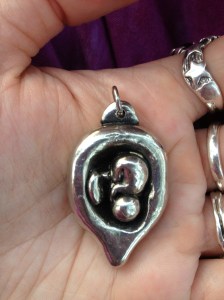
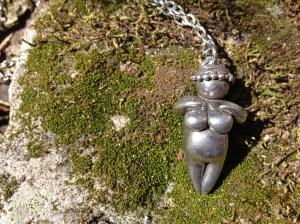
Even though I am a goddess sculptor myself, I have never been able to make my own version of the Goddess of Willendorf that satisfied me. I tried polymer clay, I tried pottery clay, I tried making my husband make one for me. None of them were right. Finally, just this month, my husband said, why don’t you make one, but using your own style? This was an ah ha moment for me and guess what, it worked! I successfully used the same technique and structure I use for all of my sculptures, but with a Willendorf-style-twist and I finally made my own sculpture that I’m really proud of. My husband made a mold and cast her in pewter and I’m wearing her right now. Her uterus might make her look fat, but to me, she is one of the most powerfully affirming images of womanhood I have ever encountered and there is nothing funny about her.

        “Your body is your own. This may seem obvious. But to inhabit your physical self fully, with no apology, is a true act of power.”

–Camille Maurine (Meditation Secrets for Women)
March 2014 022  March 2014 038

Wednesday Tidbits: Pregnancy and the Sacred

“I see the beautiful curve of a pregnant belly shaped by the soul within.” –Hafiz
(quoted in The Art of Pregnancy) 

IMG_8522Today we’re heading over to my parents’ house to see my brother and his wife for the big “gender reveal” of their baby! They had an ultrasound last week and had the sex of the baby sealed in an envelope (and then baked into cake pops) and are traveling here to share the surprise with their family. While permission has been given for me to talk about their pregnancy in my blog posts, I find myself hesitant somehow—this is their journey and their experience! However, let me just say that I had no idea how excited I’d feel about their baby. I really look forward to having a niece or nephew! My brother is nine years younger than me. I also have two sisters. My brother and I had a conflictual relationship in childhood and our personalities always clashed a lot. I occasionally worried about who he’d end up marrying, because I was pretty certain that he’d choose someone “clashy” and we’d gradually drift apart and rarely see him. However, my brother grew up to be an awesome man (he was actually an awesome kid too, he was just high impact—much like my second child is—and it was hard for me to cope with that energy as a pre-teen/teen/young adult woman) and now he has an awesome wife who is not clashy at all. In fact she pretty much feels just like a sister and I love and appreciate her. JanuaryMollyBarb 005They are planning a homebirth with a midwife and I can’t wait to keep talking birth together! On New Year’s Eve I helped them listen to their baby’s heartbeat for the first time and it was one of the best experiences of my life 🙂 JanuaryMollyBarb 087There is a lot of “everyday sacred” to pay attention to pregnancy as well as in parenting (and life!) and several topics caught my eye this week. The first was this short post on First the Egg:

The person leading the service asked the congregation to think about and support, among other groups, “parents and all those whose primary spiritual practice is caring for children.” And I’m so tired–so tired–because we never get decent sleep and we’re always ‘on,’ and I have so little self left over for creativity or meditation beyond the practice that is parenting (one act of care and then the next and then the next) and the practice that is writing (one word and then the next and then the next). And it felt goofy even at the time, but a wave of gratitude washed through me. I felt recognized in a way that I never, ever do outside my household. I felt like I was sitting amongst a community that could see what parenting is and what children are. Articulating that parenting is an intellectual, emotional, spiritual discipline and practice is both powerful and rare…

via parenting as a spiritual practice.

Reading Molly’s post brought back to mind my own post on breastfeeding and parenting as spiritual practices:

I calculated that so far in my life I’ve put a baby to my breast more than 12,000 times. Even if I only experienced a February 2014 003single moment of mindful awareness or contemplation or transcendence or sacredness during each of those occasions, that is one heck of a potent, dedicated, and holy practice. In the unique symbiosis of the nursing relationship, I recall a quote from the book The Blue Jay’s Dance (1996) by Louise Erdrich about male writers from the nineteenth century and their longing for an experience of oneness and seeking the mystery of an epiphany. She says: “Perhaps we owe some of our most moving literature to men who didn’t understand that they wanted to be women nursing babies.” (p. 148)

via Breastfeeding as a Spiritual Practice | Talk Birth.

I also absolutely loved this blog post on bringing the sacred into a hospital birth:

As a doula, one of the largest roles we take on is the job of environmental modification. In simple terms? Atmosphere.

Many times, we are the weavers of the “bubble”, so to speak, that mother will labor in – be it the physical atmosphere (furniture, objects, beloved items), the sensory atmosphere (sounds, smells, textures), or the emotional atmosphere (tension, ease and calm, excitement, and love).

All of the amazing doulas I have come across use elements of the above principles. Time and time again, I hear stories of “my awesome doula who used a soft voice when I felt frantic” (setting the emotional atmosphere), or “the soothing sound of piano that really grounded me in early labor” (setting the sensory atmosphere). We can be the key builders, setting the tone for the overall experience, utilizing whatever mom has discussed early on as her needs, wants, and wishes…

via How to Bring Sacred to the Hospital Setting — Lauren A. Condron, MOT, OTR/L.

February 2014 014

Birth Labyrinth

 IMG_0571 The labyrinth is a powerful metaphor for each woman’s unique journey of pregnancy and birth. I first discovered the “LabOrinth” via Birthing from Within and Pam England and I quickly incorporated into my birth education classes, making two homemade posters to discuss in class—one illustrating “clock watching” birth and one illustrating birth as a labyrinth. When I send gifts to long distance pregnant friends, I usually include a drawing of a womb labyrinth and this quick explanation:

The journey through birth is like a labyrinth—it has unexpected twists and turns, but it takes you where you need to go. You can find your way blindfolded if you need to, you can walk, run or crawl, and you’ll get to the center—to your baby—in your own time and in your own way. The postpartum return is also a labyrinth, one that can take some time to integrate into your life, being, and “new normal.”

Based on a drawing from my second pregnancy of a womb labyrinth, my husband carefully worked carving a small womb labyrinth design into clay and then making a mold from it and casting the design in pewter. The result is a little uneven and asymmetrical, much like life itself, but I love it! I took the new pendant to the woods with me and this is what I said about it’s meaning…

Womb Labyrinth January 2014 007

Birth journey. Each of us walks our own path. In the center, a baby waits. And, so too, wait deep truths about ourselves. Our own courage, our own  fears, our own strength, our own power. One foot in front of the other. That’s how the journey is made. You set out for the threshhold, unknowing. Maybe a little fearful. Maybe intrigued. Maybe anticipatory. Maybe excited. And you start to walk. One foot in front of the other. Sometimes our journeys drop us to our knees. Sometimes we feel around in the dark, searching for something to hold onto. Sometimes we skip and twirl along the path. Sometimes we run. Sometimes we pause and sit down and wait. Sometimes someone walks with us, holding our hand. Maybe even giving us a little push from behind. But, ultimately, it is our own private journey. When we get to the center, we will discover what it is that we know that no one else does.

As I mention to pregnant women, the return journey of postpartum is a labyrinth as well…

Postpartum Labyrinth

The journey of postpartum is a labyrinth too. Carrying our babies in our arms, past sleepless nights, through endless days. Through worry and tears, through sharp, sweet, timeless moments of a joy so bone deep it knows no words and in a love so endless that it defies description. And, we walk. Sometimes we bounce. Sometimes we sway. Sometimes we sing a little tune. Sometimes we beg. Sometimes we scream. Sometimes we sit down and say we can’t keep going. Sometimes we skip through the sunshine and dance in the moonlight. Sometimes we can’t believe how much fun we are having and how wonderful this is. Sometimes we feel so alone, we think we might break. And, yet, we keep going, and we emerge, blinking at the newness of it all.

This new pendant is one of the designs released for the launch of Brigid’s Grove, my collaborative project with my husband. We’re hosting giveaways on our website throughout the month of February to correspond with our launch and one of these pendants will be offered as a giveaway! We’ve also got an etsy discount code, a free digital Ritual Recipe Kit, and more to check out on the Brigid’s Grove website and Facebook page.

book

Thesis Tidbits: Birth as an Initiation

“We owe it both to our children and to the world, to conceive, birth and welcome our children with as much love and prayerfulness as possible.” –Jackie Singer (Birthrites)

“Childbirth is a rite of passage so intense physically, psychologically, emotionally, spiritually, that most other events in a woman’s life pale next to it. In our modern lives, there are few remaining rituals of initiation, few events that challenge a person’s mettle down to the very core. Childbirth remains a primary initiatory rite for a woman.” –from the book MotherMysteries

via Thesis Tidbits: Birth as a Shamanic Experience | Talk Birth.

I recently finished reading a short book called Return to the Great Mother, which is very specifically focused on giving birth as an initiatory event. It includes a variety of birthing women’s voices and experiences with accessing the energy and wisdom of the “great mother,” be it archetype, an inner resource, or one face of the Sacred. The author, Isa Gucciardi, writes:

Giving birth is one of a series of important initiations a woman may experience in her lifetime. Initiations are intimately tied https://www.sacredstream.org/components/com_virtuemart/shop_image/product/b0e92ae33095ca07867acb0a841a9f05.jpgwith change. They bring the initiate from one state of being into a new state of being. Initiations accomplish this task by putting the initiate through a series of experiences that challenge them in a particular way and bring them into new ways of being and of understanding. The initiate must meet these challenges and overcome any obstacles in order for the initiation to succeed in bringing about these changes.

Today, many people going through initiations and many people managing initiations do not have a clear understanding of the nature of the power and vulnerability that is at the heart of initiation. Initiates must render themselves vulnerable to initiatory processes in order for initiations to become complete, and the power in that vulnerability must be managed carefully and thoughtfully. Most importantly, for an initiation to be successful, that power and vulnerability must be safeguarded and dedicated to the initiate.

The process of meeting an obstacle and overcoming it in order to ultimately gain greater insight and power is described by Joseph Campbell as the “hero’s journey.” The “hero’s journey” is an initiatory experience. Every woman takes this journey when she gives birth and it can be the primary initiation a woman undergoes in the course of her life.

Often a woman encounters herself in an entirely new way during the process of giving birth. She may encounter the effect of traumas long buried, or she may encounter fear long denied. She may also discover power deep within herself that she had never imagined.

When the processes of birth are allowed to take their course, a woman with the proper care has the opportunity to come to terms with whatever may arise. In doing so, she may experience a shift into a new way of being or understanding. Yet, when the birth process is interrupted, or not properly held, the power of the initiation is often lost or distorted… (p. 10)

We know that women do not always have full and free choice when it comes to decisions about their birthing bodies and childbearing years…so, how does this impact the initiatory process? Isa writes:

In modern births, the power of the initiation of birth is often co-opted by doctors, pharmaceutical companies, insurance companies, and hospitals. It is also co-opted by the fear of pain and the influence of friends and family. It is difficult for women to hold onto the power of the initiation of birth under these circumstances. The unfortunate implication here is that the subsequent initiations of women interrupted in this way will be affected by their inability to hold onto the power of their birthing process.

Based on the level of interruption of the birth initiation caused by unnecessary interventions in the birthing process today, it seems reasonable to suggest that many women experience incomplete initiations when giving birth…

(Personally, I would clarify that it is not that women are unable to hold onto the power of the birthing process, but rather that it is often systematically stripped from them.)

Each of my children’s birth experience was an initiatory event for me, but in varying ways. With my first, it was the initiation to motherhood, the mystery and anticipation of giving birth. The crucible moment for me with him was actually my journey through the harrowing landscape of postpartum. With my second son, giving birth rapidly and with great intensity and power, the initiation felt like it was in letting go and hanging on for the ride—letting my mind stop and my body go. With my third birth, which was my first miscarriage, the initiation was in the physically grueling and bloody aftermath of his birth and then the broad, deep, unknown, transformative path of grief and change. I still feel as if this was one of the most powerfully initiatory experiences of my life. (And, I did have an encounter with one face of the great mother.) After Alaina’s birthday this week, I was talking to my husband about my memories of this last birth and telling him that I do not review the details of her birth with the same sense of power or initiation as the births of my other children. It doesn’t hold that same “touchstone” energy for me as the births of my boys—experiences that I continued to draw strength from as I went on into other events in my life. I don’t return to her birth for strength or courage the way I remember returning to the births of each of my sons. And, then I said it was because with her, the pregnancy was the initiation. The long, long, path of pregnancy after loss and all the fear and all the hope and all the strain of feeling the feelings and doing it anyway. Her birth itself was the moment of relief. The end of a trial, rather than the triumph or peak experience of the births of my first two babies. So, while of course I still carry powerful and potent memories of her birth as well, it was the journey of pregnancy that holds the talismans of initiation for me.

In her classic book Shakti Woman, Vicki Noble describes giving birth as a central shamanic experience and perhaps the root of all shamanism:

“I believe I underwent an initiation of the most ancient variety, birth as a shamanic experience, the central act of female shamanism—the quintessential act that offers a woman a completed experience of facing and moving through her fears to the other side. It isn’t that birth is the only way for a woman to experience this initiation—many women climb mountains or face other kinds of physical endurance tests and also come through it reborn into their power. But biologically birth is a doorway, a given for most women on the planet. It is fundamental opportunity to become empowered. Most of us giving birth today do not have the full experience, which is co-opted and distorted beyond recognition, changed from an active process into something that is done to us, as if we don’t know how to do it ourselves. Reclaiming the right to birth in our own instinctual way is a shamanic act of courage that has unfortunately become as remote to us as our ability to fly through the night in the form of an owl or heal the sick with the power of the drum. It wouldn’t hurt if we began to think of our birthing and child rearing as central parts of our shamanic work…” (p. 223).

via Thesis Tidbits: Birth as a Shamanic Experience | Talk Birth.

I just finished a new sculpt for a medium sized version of our classic birth goddess pendant and Mark cast and finished some of them last night. I woke up this morning with a phrase from a past piece of poetry floating through my mind over and over:

Soft belly January 2014 088
no longer bearing children
I am pregnant with myself
ripe with potential,
possibility, power
I incubate my dreams
and give birth to my vision…

I also thought about what I hope to communicate to others through my sculptures and when I took the new pendant down to the woods with me, a little song emerged to go with her:

Birth mama
birth goddess

reaching out
to join the circle of mothers

feeling her way
finding her place
in the web of women

Birth mama January 2014 050
birth goddess

hold strong
hold steady

make way for baby
make way for baby

Body opens
heart opens
hands open to receive

Birth mama
birth goddess

she’s finding her way
she’s finding her way…

Disclosure: I received a complimentary digital copy of the book for review purposes.

Birthrites: Ritual

October 2013 021“This is my body; this is the temple of light. This is my heart; this is the altar of love.”

–Sufi song (quoted in Birthrites)

I received a lot of wonderful books for Christmas this year. One that particularly caught my attention was Birthrites: Ceremonies and Rituals for the Child-bearing Years by Jackie Singer. While it doesn’t contain any ritual outlines, per se (which I had been hoping for), it does contain a lot of thoughtful information. I especially appreciated that it includes information about creating ceremonies to acknowledge a variety of outcomes during the childbearing year, including infertility, abortion, and miscarriage, as well as full-term birth. Two quotes from Birthrites about the value and purpose of rituals in general:

Making ritual diverts our attention from the everyday tasks of survival, and for a brief time allows us to notice and comment on where we are. Faced with the awesome experience of findings ourselves conscious in an unpredictable universe, making ritual is a noble attempt to confer rhythm and coherence to our lives…

…there is a paradox inherent in the whole concept of new ceremony, because part of the power of ceremony is that it has the weight of tradition behind it. In times of continuity, ritual would be something handed down by the elders. Perhaps this is an ideal, but we do not live in times of continuity. Rather than abandoning the whole idea of ritual as irrelevant, we need to respond to the challenges of our fast-changing age by renewing ritual practise in a way that honours the past but makes sense to us now.

This reminded me of my own previous post about blessingways and the role of ritual:

…We’re blessing each other. When we “call down a blessing” we’re invoking the connection of the women around us, the women of all past times and places, and of the beautiful world that surrounds us. We might each personally add something more to that calling down, but at the root, to me, it is an affirmation of connection to the rhythms and cycles of relationship, time, and place. Blessings come from within and around us all the time, there’s nothing supernatural about it.

I also think, though I could be wrong, that it is possible to plan and facilitate women’s rituals that speak to the “womanspirit” in all of us and do not require a specifically shared spiritual framework or belief system in order to gain something special from the connection with other women.

In another book I finished recently, The Power of Ritual, the author explains:

“Ritual opens a doorway in the invisible wall that seems to separate the spiritual and the physical. The formal quality of ritual allows us to move into the space between the worlds, experience what we need, and then step back and once more close the doorway so we can return to our lives enriched.”

via Blessingways and the role of ritual | Talk Birth.

This post is part of a four-part series of short posts from Birthrites.

Good Birth Books to Gift to Others

I’ve recently had several requests from friends asking about the best birth books to give as gifts to pregnant relatives. After sending my third response, I realized that there’s a blog post in here somewhere!December 2013 010

Here are my current recommendations:

Sacred Pregnancythis book is simply beautiful. My past review is here.

Giving Birth with Confidence—this is the well-known childbirth education organization Lamaze International’s guide to pregnancy and birth and it is one of my favorites. My review of a past edition is here.

The Birth Partnerthis guide by Penny Simkin is a classic for helping fathers or other birth partners serve during labor

The Greatest Pregnancy Everfocused on positive mental attitude during pregnancy and cultivating a mother-baby bond prenatally (caveat: I’ve not actually finished reading this one, so I’m not sure if I have any reservations about it or not. I bought it at the last CAPPA conference)

Birthing from Within—the original birth art resource and a fabulous “out-of-the-box” handbook for preparing for birth. It is not attached to a particular outcome and can help mothers dig deep whether experiencing a home birth or a cesarean. This book is my all-time favorite, but my recommendation comes with a caveat that the short breastfeeding section is terrible.

The Baby Book-a comprehensive, reassuring look at baby’s first year by Dr. and Martha Sears.

For birth stories, I love and adore Simply Give Birth (past mini-review is here). I also like Journey Into Motherhood (available as a free digital copy here) and Adventures in Natural Childbirth.

I used to recommend The Thinking Woman’s Guide to a Better Birth, but is has been replaced by an updated version called Optimal Care in Childbirth and I’ve not yet read that one. My educated guess is that it is still an excellent recommendation! 🙂 I also used to recommend The Birth Book by Dr. Sears. It is still a good suggestion, but it is now an “older” book and so I don’t put it at the top of my list any longer.

Also, make sure you grab a copy of the free Guide to a Healthy Birth from Choices in Childbirth. I love this little booklet so much! It is my top favorite resource for tabling at community events. Another free educational resource that I recommend (particularly for women planning natural births in hospital settings) is Mother’s Advocate. There is a free booklet and a series of videos that explore Lamaze’s Six Healthy Birth Practices (which all mothers deserve as part of evidence-based care during birth, regardless of birth location).

Past book lists and related suggestions:

What To Do When Newly Pregnant and Wanting a Natural Birth…

Suggested Reading

Postpartum Reading List

Book list: Preparing Children for Homebirth

Non-Advice Books for Mothers

2012 Book List (all kinds of stuff, not just birth)

In addition, all the books I’ve reviewed in the past are available on my website from this link, so make sure to browse and see if anything else jumps out at you as a good match.

“Everyone who interacts with a pregnant woman is, in some way, her ‘teacher.’ Telling birth stories, sharing resources, imparting obstetrical information, giving advice or warnings—these are all direct or indirect ways of teaching about birth and parenting. Whether you currently identify yourself as a ‘childbirth teacher,’ or you are a midwife, doctor, doula, yoga teacher, nurse, therapist, breastfeeding counselor, or you are simply a woman or man who cares about the power of the childbearing year, you already hold the power of mentoring within you.”

–Pam England

Talk Books: One Recumbent Mommy

Some time ago I received a unique memoir to review along with a companion book for children. The topic of One Recumbent Mommy is bedrest and the book is written in a friendly, conversational, and personal style that has potential to bring an air of sisterhood to women experiencing the same challenge and make them feel less alone. The book is based on the author’s blog and a casual, breezy, lighthearted style comes through strongly. The author writes:

I was on hospital bedrest with incompetent cervix for about 16 weeks and while there, I kept a blog chronicling the ups and down of day to day life in the hospital.  That blog was published and is entitled, One Recumbent Mommy: A Humorous Encounter With Bedrest.  I wrote a children’s companion book as well, entitled Wherever I Am, I Will Love You Still: A Book About An Extended Hospital Stay.  This book was written from my 2 year old son’s point of view.  I was trying to get at a way of explaining the situation in terms that a young child could understand.

The companion children’s book: Where I Am, I Will Love You Still, is friendly and sweet and the illustrations are engaging. This book would be a very useful addition to a family whose mother is experiencing a hospital stay. While the book’s conclusion includes the new baby sister coming home, it definitely has the potential to be applied to non-maternity-related hospital stays as well. Do note that bottle feeding is portrayed in the book.

While I was somewhat disappointed by the very conventional medical model of care in One Recumbent Mommy and the seemingly unquestioning acceptance of it by the author (especially considering that bedrest has come under serious scrutiny as to its actual effectiveness at preventing pregnancy loss), as well as the apparently overlooked irony of the baby’s birth then being induced, I appreciated the reminder that for many women pregnancy is anything but a joyful, flower-strewn walk through a miraculous meadow of belly casts and earth-goddesses. My writing and my posts often trend to a Happy Birth Dance! mode of writing about birth and was beneficial to me to remember that this model can feel very isolating, discouraging, and depressing to women whose experiences of pregnancy and birth are different from my own.

Along this same line of thought, I was reminded of recent writings from beautiful blogger Leonie Dawson about her experiences with severe hyperemesis gravidarum (requiring multiple hospitalizations):

And despite everything – despite it all –

Love is calling me forward.

As ancient as the beginning of time, love calls upon us to do what we could not do without.

Love asks of us great things…

via The Love That Calls Us Forward | Leonie Dawson – Amazing Biz, Amazing Life.

As I read One Recumbent Mommy and my priestess/ceremonialist self came to fore however, I also found myself wishing this mama had had some kind of beautiful hospital blessing ceremony to honor her commitment to her baby or that someone had offered her a nurturing prayer, poem, or blessing for her as a Bedrest Warrior doing what had to be done to protect her baby. Could there be a place for a Happy Bedrest Birth Dance mode of writing and experiencing as well? I gratefully welcome additions to this post of ideas for rituals, poems, prayers, or resources that can be offered to bedrest mamas who are doing their best to welcome a healthy, full-term baby into their lives! 🙂

Tuesday Tidbits: Postpartum Mamas

As Americans, we are under the impression that new moms are ‘Superwomen’ & can return to life as it was before baby. We must remember to celebrate this new mother and emulate the other cultures that honor new mothers by caring for them, supporting them, & placing value on the magnificent transformation she is going through. This is the greatest gift we can give to new mothers & newborns…–Darla Burns (via Tuesday Tidbits: Postpartum Mothering)

“The first few months after a baby comes can be a lot like floating in a jar of honey—very sweet and golden, but very sticky too.” –American College of Nurse-Midwives

The United States are not known for their postpartum care practices. Many women are left caught completely off guard by the postpartum recovery experience and dogged by the nagging self-expectation to do and be it all and that to be a “good mother” means bouncing back, not needing help, and loving every minute of it.

This country is one of the only utterly lacking in a culture of postpartum care. Some version of the lie-in is still prevalent all over Asia, Africa, the Middle East, and particular parts of Europe; in these places, where women have found the postpartum regimens of their own mothers and grandmothers slightly outdated, they’ve revised them. The U.S. seems only to understand pregnancy as a distinct and fragile state. For the expectant, we issue reams of proscriptions—more than can reasonably be followed. We tell them what to eat and what not to eat. We ask that they visit the doctor regularly and that they not do any strenuous activity. We give them our seats on the bus. Finally, once they’ve actually undergone the physical trauma of it, their bodies thoroughly depleted, we beckon them most immediately to rejoin the rest of us. One New York mother summed up her recent postpartum experience this way: “You’re not hemorrhaging? OK, peace, see you later…”

…“A culturally accepted postpartum period sends a powerful message that’s not being sent in this country,” said Dr. Margaret Howard, the director of the Day Hospital for Postpartum Depression in Providence, Rhode Island. “American mothers internalize the prevailing attitude—‘I should be able to handle this myself; women have babies every day’—and if they’re not up and functioning, they feel like there’s something wrong with them.”

via Why Are America’s Postpartum Practices So Rough On New Mothers? – The Daily Beast.

Via First the Egg, I then read this powerful reflection prompted by the article above:

In the piece, one woman mentions that women are literally still bleeding, long after they’re expected to “bounce back” and reclaim their old lives and be totally self-sufficient. Our bodies haven’t finished healing, and we’re supposed to look and act as though nothing even happened here, it’s all good. It’s all just the same as it was.

Secretly, I’ve been the slightest bit ashamed of all the help I’ve needed.

via Eat the Damn Cake » bleeding time.

I also read this raw, honest, and touching look at the “betrayal” experienced by women who enter into the mystery of birth expecting a blissed out, earth mother, orgasmic birth experience:

…But inside my head, I could not believe what was happening. How painful it was. How terrifying. I felt helpless. And degraded and humiliated by there being witnesses. And at the same time, I felt so, so alone. I remember at one point saying, completely out of my mind, “I don’t understand why no one is doing anything to help me! Please help me!” Della reminded me that what I was feeling was the baby coming. That I was doing just what I was supposed to, having the baby, right then….

via Mutha Magazine » S. LYNN ALDERMAN’S Ugliest, Beautiful Moment (Or, Fuck Ina May).

And, that made me think of my own thoughts about birth regret and how we may hide it from the pregnant woman we perceive as vulnerable in her beautiful, fleeting state as Pregnant Woman:

I’ve come to realize that just as each woman has moments of triumph in birth, almost every woman, even those with the most blissful birth stories to share, have birth regrets of some kind of another. And, we may often look at subsequent births as an opportunity to “fix” whatever it was that went “wrong” with the birth that came before it. While it may seem to some that most mother swap “horror stories” more often than tales of exhilaration, I’ve noticed that those who are particularly passionate about birth, may withhold or hurry past their own birth regret moments, perhaps out of a desire not to tarnish the blissful birth image, a desire not to lose crunchy points, or a desire not to contribute to the climate of doubt already potently swirling around pregnant women…

via Birth Regrets? | Talk Birth.

Which then made me think about the women who know...

Where are the witches, midwives

and friends

August 2013 011

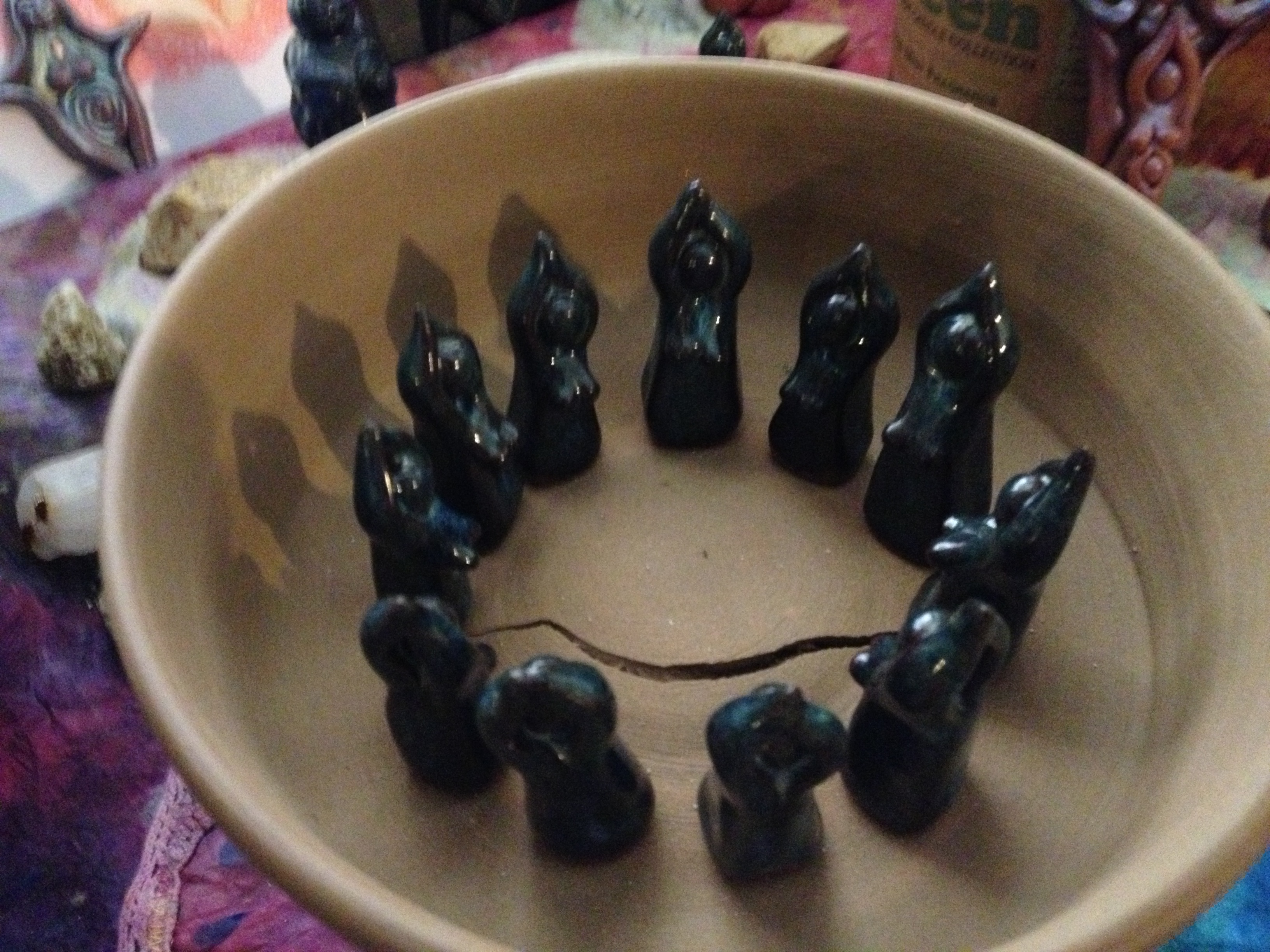
Circle of women sculptures as gifts for my women’s group. Yes, there’s a crack—“the world cracks everyone”—but that is how the light gets in…

to belly dance and chant

while I deliver

to hold me and breathe with me

as I push

to touch me and comfort me

as I cry?

Where are the womyn who know

what it’s like

to give birth?

via Where are the women who know? | Talk Birth.

Thinking about that reminded me of the chant we sang around the fire at the festival I just returned from on Sunday night:

Dance in a circle of women,

Make a web of my life,

Hold me as I spiral and spin,

Make a web of my life…

via Goddess Chants – Dance in a Circle of Women by Marie Summerwood.

May all pregnant women and tender postpartum mamas dance in a circle of women!

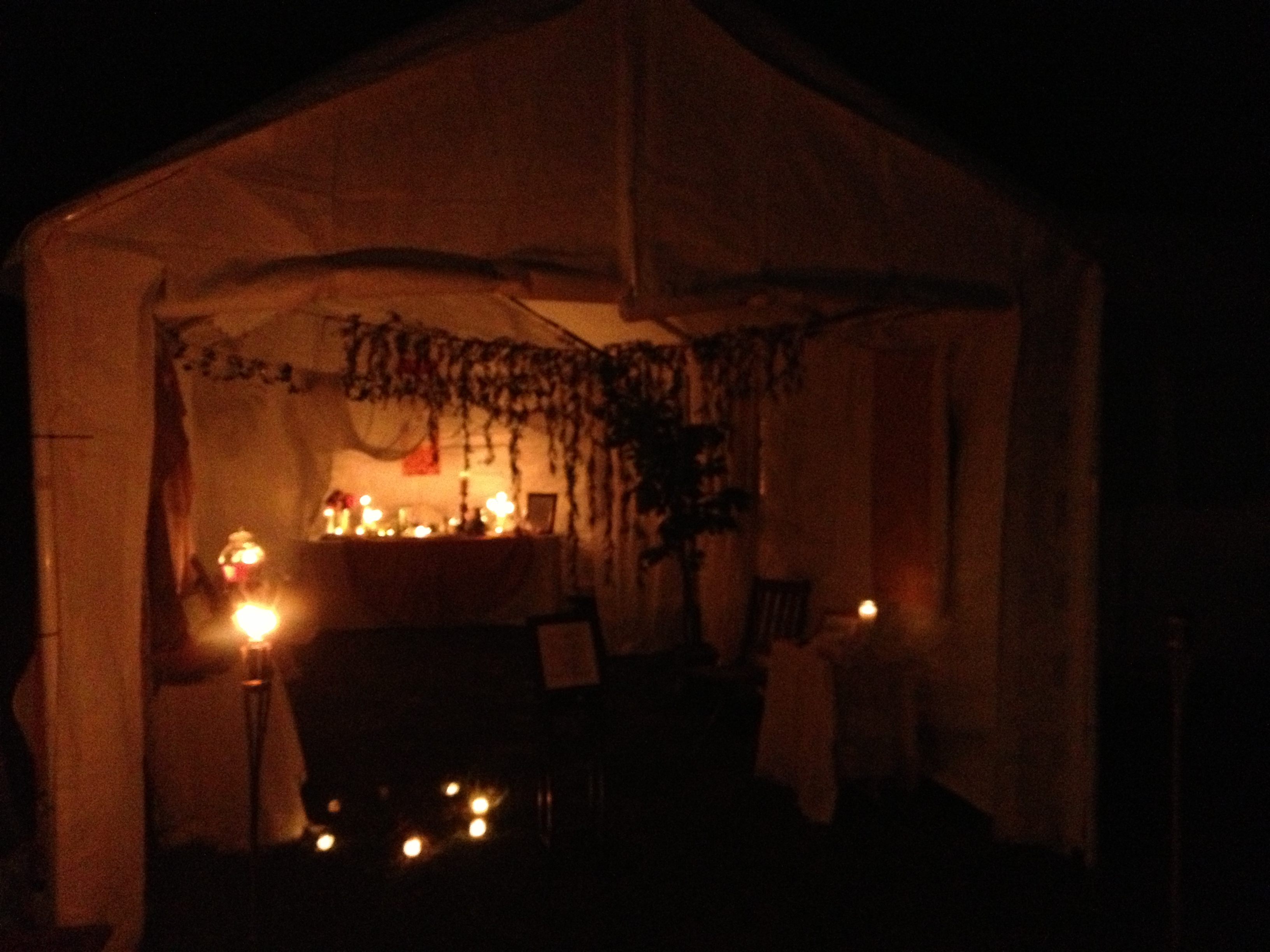
I’d hoped to have time to post a festival recap and some lessons learned, but other responsibilities take precedence at least for today, so I’ll leave you with one of the pictures my sister-in-law took on a misty morning, sunrise stroll around the lake and another that I took in the Temple at the festival:

Sept 2013 090

Sept 2013 036

See also:

Postpartum Survival Tips

Timeless Days: More Postpartum Planning

Mothers Matter–Creating a Postpartum Plan

Planning for Postpartum

Some reminders for postpartum mamas & those who love them

Birthing the Mother-Writer (or: Playing My Music, or: Postpartum Feelings, Part 1)

Postpartum Thoughts/Feelings, Part 2

Postpartum Feelings, Part 3

What to tell a mother-to-be about the realities of mothering…