Archives

Talk Less, Learn More: Evolving as an Educator

Since late 2006, I have written at the top of each of my teaching outlines: “Talk less, listen more.” This simple reminder has  fundamental importance and has completely revolutionized how I structure and guide my childbirth classes. During each series that I teach, I realize how listening to the women and giving them a space in which to share, is one of the most important things I can offer. Though I studied principles of adult learning and designing effective curricula during my certification program, I started out my childbirth education journey with a lecture and information-heavy approach I’ve since heard called, “opening their heads and dumping information in.” As I continue to teach, I’m continually discovering ways to talk less, but hopefully, impart more, creating a guiding philosophy of “talk less, [they] learn more” for myself as I plan and implement my classes.
Real birth preparation

After my first year of teaching, I realized that couples that sign up for my classes are not really looking for pregnancy and prenatal care information, but for real birth preparation. They are there because the women want to learn, “Can I do this?” and “How will I do this?” and the men are asking, “How I can help her do this?” It feels almost insulting to meet this quest for inner knowing with a discussion about the benefits of prenatal vitamins. I had to confront the fact that some of the things I was teaching seemed irrelevant, redundant, or obvious.

It became clear to me that I had to tackle the slightly embarrassing reality that I was following a model of prenatal education that was not in line with the true needs of the women in my community. I teach independent, natural childbirth classes privately in people’s homes. Maybe with a different population, my original approach would be more successful or I would take a different approach altogether. Also, just as students have different learning styles educators naturally have preferred methods. I have an information-heavy personal style that spilled into my teaching. I continue to wrestle with this tendency and struggle to rein in the information overload approach I gravitate towards.

Action!

As I made my discoveries, I began to drastically cut my talk time (lecture) and focus on action instead. Though it felt nearly sacrilegious to do so, I trimmed many things out of my outlines that were about nutrition, prenatal testing and so forth, because many of the women I work with have already read a great deal and don’t need to hear it again from me. I’ve come to see I really need to skip a great deal of the “book learning” and get them actually moving and practicing and using skills. Then, the “book learning” naturally arises during the course of the class, either via questions or via me needing to explain why something is useful or helpful during pregnancy or in labor.

I totally restructured and rearranged my class outlines to include a whole class about the mind-body connection and psychological preparation for birth. This class took the place of a previous class about birth planning. I was finding that many people already had a birth plan written and/or the birth plan information naturally comes up during the course of the six weeks without my needing to spend an excessive amount of lecture time on it. I tell them that I have the information, ask if you want it! I also dedicated a whole class to labor support with plenty of time to practice hands-on support techniques. In addition, I created a brand new class called “Active Birth” that involves lots of moving and positioning as well as many helpful ways to use a hospital bed without lying down. Informed consent, consumerism, and birth planning naturally arise as topics during this class, rather than being separately scheduled topics.

Information overload

Many pregnant women have information overload. They are faced with more information than they know what to do with. They are bombarded by it. What they really need is “knowing.” They need to know: “What skills do I possess or can learn that will help me greet my birth with anticipation and confidence? What are my tools? My resources? Can I just let it happen?” As an educator I ask myself, “What will help them feel confident? Feel ready? Trust their bodies and their capacities?”

I want people in my classes to learn material that is dynamic, active, exploratory, self-illuminating, supportive, positive, enriching, and affirming. I created a vision statement and asked myself where my classes stood in relationship to my vision. The answer was, “not as close as I want them to!” My vision statement for my classes is: to focus on celebration, exploration, motivation, education, inspiration, validation, initiation, and dedication.

I know I’m hitting the mark when couples comment, “Oh, this makes so much sense! I see how this works!” Or, “This was a really good illustration of what you were just talking about.” In this way, class participants readily reinforce (or modify) my own presentation style and I learn from series to series what to change, continue using, discard, or alter.

“Talk less…” teaching tips

I have many ideas of ways to “talk less” in birth classes, here are a few:

  • Media portrayals of birth—show two contrasting clips, such as a birth from a popular TV show (I often show Rachel’s birth from the show Friends) paired with an empowering birth from a film like Birth as We Know It and then have students discuss the two.
  • Use “The Ice Cube Minute” exercise from Family-Centered Education: The Process of Teaching Birth. In this exercise, couples hold an ice-cube in one hand for one minute and see what coping measures spontaneously arise for them. I do this exercise fairly early in my class series, before we’ve done a lot of formal talking about coping measures. It is very empowering for couples to discover what tools and resources come from within as they try the ice-cube minute.
  • To illustrate the potency of the mind-body contraction, practice two pretend contractions while holding ice. One contraction has an accompanying “stressful” paragraph read with it (“your body fills with tension…it hurts! Oh no!”) and the second contraction has a soothing paragraph read with it (“you greet the wave….it is YOUR power….”). This illustrates the fear-tension-pain cycle viscerally.
  • Use a five minutes series of birthing room yoga poses to begin the class—birth happens in our bodies, not our heads. Practicing the poses opens space to simultaneously discuss and practice: squatting, pelvic rocks, optimal fetal positioning ideas, healthy sitting, pelvic floor exercises, leg cramp prevention, back pain alleviation, and more.
  • Role playing cards—talk through various scenarios. I’ve found that couples are more receptive to talking through the cards than actually getting into a role and playing it through.
  • Values clarification exercise–participants cut out values from a list and arrange them in a grid to help them figure out if they are in alignment with each other and with their caregivers.
  • Leg stretch exercise to explore the use of vocalizations and other coping mechanisms during labor.
  • Ask plenty of open-ended questions that stimulate discussion and ideas, “what have you heard about XYZ?” or “what is your experience with…?”

Evolutionary spiral of a childbirth educator

After I had already done all of this self-inquiry and curriculum modification, I discovered Trish Booth’s concept of “The Evolutionary Spiral of a Childbirth Educator.” I quickly recognized myself and my experiences along the loops of the spiral. In the Early Stage of the spiral, educators are focused on “content and presenting the information.” This perfectly matches where I was when I started out with my “open heads and dump information in” approach. The Intermediate Stage is focused on the “group as a whole” and also “emphasizes learning rather than teaching.” Though I tend to teach one-to-one private classes and not groups, this seems to clearly be the stage I was in when I looked at my vision and realized that I needed to talk less so people would learn more. In the Advanced Stage, the educator “understands the meaning of the childbearing experience” and the focus is on the “individual learners.” This feels like the stage to which my teaching has spiraled. Further along the spiral is the Master Stage in which the educator “integrates the first three stages and moves gracefully between them” with a focus on “cognitive, emotional, and spiritual needs of the group as well as the individual learners” (Booth, 1995).

Perhaps my insights are old news to experienced educators, but they have made a profound difference in the quality of my classes. I’m sure as I continue to teach, I will continue to deepen and refine my approach and will continue to blossom as an effective educator.

Molly Remer, MSW, ICCE, CCCE is a certified birth educator, writer, and activist who lives with her husband and children in central Missouri. She is the editor of the Friends of Missouri Midwives newsletter, a breastfeeding counselor, a professor of human services, and doctoral student in women’s spirituality. She blogs about birth, motherhood, and women’s issues at https://talkbirth.me/posts.

Modified from an article originally published in the International Journal of Childbirth Education, December 2008.

References:

Booth, Trish. Family-Centered Education: The Process of Teaching Birth, ICEA, 1995.
An Act of Motherhood

Some time ago I read a clever essay by Jeannie Babb Taylor called “May, 2052.” It is about birth in the future and is told from the perspective of a grandmother who gave birth in 2007, sharing with her granddaughter how birth was “back in the day” and the granddaughter being shocked by how horrible the birth climate was in the “old days” of 2007). Side note: in some ways this story reminds me of a piece that I reprinted with permission of LLL called A Fantasy, which is a satire about birth and breastfeeding that I’m still not convinced won’t actually come to pass.

Feeling fierce at 37 weeks last year.

However, I was struck afresh by the power of the closing lines in May, 2052 (when discussing how/why things finally changed):

We insisted on dignity. We did not let doctors push us into inductions or surgeries just to accommodate their schedules. Women who still used hospitals refused the wheelchair and the gown that were presented at check-in. Women refused to be starved, or to have their veins punctured with unnecessary IVs. Mothers refused to let doctors break their waters or insert electronic monitors in the baby’s scalp. When we pushed our babies into the world with our own fierce power, then we refused to let them out of our sight.

…Eventually even the medical community came to recognize that birth is an act of motherhood, not an act of medical science. Today a laboring woman is not regarded as a body on a table, as if she and the baby needed some doctor to ‘deliver’ them from each other. Today women are honored as life-bringers.

Don’t you just love that? Recognizing that birth is an an act of motherhood, not an act of medical science… So true.

I can’t write about it in-depth, but I began thinking about this today after speaking with a mother who had received very, very questionable (to the point of thoroughly bizarre) breastfeeding advice from her doctor. When I could not help but express my dismay at the suggestions she had received, I had the distinct feeling that she was not able to even consider that possibility that her doctor might have been wrong. I wish I could write about the actual circumstance because it just boggled my mind and made my heart cringe. Breastfeeding too is an act of motherhood, not an act of medical science, and not one that “belongs” to anyone except for the motherbaby unit.

However, returning to the act of motherhood, vs. medical act, I also have this quote saved from the older book, Who Made the Lamb:

“Tom [her husband] laughed at this idealism. ‘You don’t understand,’ he said, ‘Pregnancy is not regarded as a process of creation. It’s a disease of the uterus.'” [emphasis mine]

What a (culturally) still true and unfortunate sentiment: A disease of the uterus. This is absolutely how many within the medical system and the general population continue to view pregnancy (and birth is the excavation of the disease). This reminds me of our “friendly” neighborhood doctor testifying at the Capitol against the midwifery bill several years ago stating that pregnancy can be viewed as a foreign object in the body and therefore “babies are like tumors that need to be removed.”

I look forward to the day when our acts of motherhood are celebrated and valued, the motherbaby bond is accepted as inviolable, and pregnancy is a state of health and well-being.*

—-

Note: I am aware that pregnancy and birth take a physical toll on most women and that for some pregnant women, “disease of the uterus” might feel like an apt descriptor—I’m speaking in more general terms of the emotional and cultural climate surrounding pregnancy and birth.

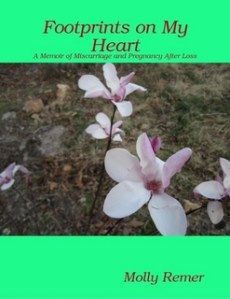
Footprints on My Heart: A Memoir of Miscarriage & Pregnancy After Loss

As of this week, my miscarriage memoir, Footprints on My Heart, has finally been published and is now available in eBook format via Kindle and Lulu, Inc. (epub format compatible with Nook and iBooks). There are a few formatting errors and some other general problems (like with the sample/preview–it is totally wonky–and with the lettering on the cover), but guess what, it is DONE, it available, and it is out there. I’m really, really excited about it and I feel this huge sense of relief. I still want to write my Empowered Miscarriage book someday, but for now, this memoir is what I had in me and it will have to do for the time being. I realized after Alaina was born and was, in a sense, the happy “ending” to my Noah story, that in writing my miscarriage blog I had actually ended up writing most of a book. So, the bulk of the book is drawn from my miscarriage blog and from this blog as well (for the pregnancy after loss content). I also included an appendix of resource information/additional thoughts that is fresh.

I’ve felt haunted by the desire to publish this for the entire last year. It took a surprising amount of work, as well as emotional energy, to prepare for publication, even though I actually did most of the actual writing via blog in 2010. Now that it is ready, I just feel lighter somehow and have this really potent sense of relief and ease, as if this was my final task. My final act of tribute. My remaining “to do” in the grief process.

If anyone really, really, really wants it and cannot afford the $3.99 for which I priced it, I do have it available as a pdf file, a mobi file, and an epub file and I will be happy to email it to you in one of those formats.

<deep breath> Aaaaaahhhhhh….

Polymer Clay Birth Power Pendants

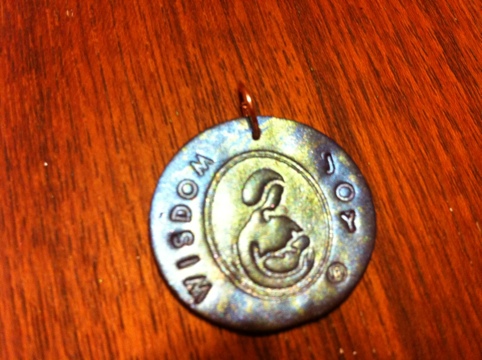
20111219-192036.jpgInspired by a tutorial pinned by a friend on Pinterest, I made a bunch of polymer clay birth power pendants this weekend. Short version instructions are to roll out polymer clay in a pasta maker. Stamp something cool on them using a rubber stamp and cut it out using a clay/cookie cutter and then either carve or write a meaningful word on it. I used individual pieces of type from my dad’s antique printing press to make the letters on mine. I was psyched to make these because I already have my birth logo as a rubber stamp (I drew it and it is fun to be able to get so much mileage out of just one drawing once upon a time!) I also have a rubber stamp of the LLL logo. More awesomeness.20111219-192106.jpg

I used metallic powdered pigments (Pearlex brand) to color them–I did some by brushing the pigment onto the unbaked clay after already having stamped it and others by brushed pigment over a whole section of rolled out clay and then stamping and cutting it.

My husband drilled small holes in the tops and made copper rings for them, so they can be strung as a pendant or used as an ornament.

I had a delightful time having the lifespace to be crafty and then my husband accidentally cooked my art at 350 degrees and burned the living daylights out of all of them.

20111219-192154.jpg

So, after a few tears from me about my wasted effort, we started over from the beginning and made a new batch. We put ribbons on the least burned ones and used them as birth power ornaments for the Christmas tree!

They do have a certain similarity to Necco wafers or poker chips, but I’m pretty pleased with them.

20111219-192120.jpg

Birth Fear

“…if you want to know where a woman’s true power lies, look to those primal experiences we’ve been taught to fear…the very same experiences the culture has taught us to distance ourselves from as much as possible, often by medicalizing them so that we are barely conscious of them anymore. Labor and birth rank right up there as experiences that put women in touch with their feminine power…” -Christiane Northrup

Since it was just Halloween, I wanted to re-post some things about fear and birth that I shared on another blog a couple of years ago. I encounter a lot of women who are very scared of birth, particularly of the pain of birth. Grantly Dick-Read’s Fear-Tension-Pain cycle has influenced the teachings of most natural birth educators and most people readily connect to the idea that fear leads to elevated tension in body which leads to increased pain (more about fear-tension-pain in a linked post below).

One of my favorite birth books, Birthing from Within, has several sections about coping with fear. The author’s idea is that by naming fears and looking them in the eye rather than denying they exist, you shift your thinking from frozen, fear-based, thoughts to more fluid, adaptable coping-mechanisms. There is a useful handout based on her ideas available at the Transition to Parenthood site.

I also think of this quote from Jennifer Block:

Why is it that the very things that cause birth related morbidity rates to rise are seen as the ‘safe’ way to go? Why aren’t women and their doctors terrified of the chemicals that are dripped into their spines and veins—the same substances that have been shown to lead to more c-sections? Why aren’t they worried about the harm these drugs might be doing to the future health of their children, as some studies are indicating might be the case? Why aren’t they afraid of picking up drug-resistant staphylococcus infections in the hospital? And why, of all things, aren’t women terrified of being cut open?

I actually was afraid of these things, which is part of why I didn’t go to a hospital to have my babies!

I hope some day all women will be able to greet birth with confidence and joy, instead of fear and anxiety. This does NOT mean denying the possibility of interventions or that cesareans can save lives. And, it also doesn’t mean just encouraging women to “trust birth.” Indeed, I  read a relevant quote in the textbook Childbirth Education: Research, Practice, & Theory: “…if women trust their ability to give birth, cesarean birth is not viewed as a failure but as a sophisticated intervention in response to their bodies’ protection of the baby.”

Here are some more good quotes from Childbirth without Fear:

A well–prepared woman, not ignorant of the processes of birth, is still subject to all the common interventions of the hospital environment, much of which places her under unnecessary stress and disrupts the neuromuscular harmony of her labor.

It is for this reason that thousands of women across the country are staying home to give birth…Women are choosing midwives as attendants, and choosing birth centers and birthing rooms, in order to regain the peaceful freedom to ‘flow with’ their own labors without the stress of disruption and intervention. Pictures on the wall and drapes on the window do not mask the fact that a woman is less free to be completely herself in the hospital environment, even in a birthing room. The possibility of her being disturbed is still there.

The women in labor must have NO STRESS placed upon her. She must be free to move about, walk, rock, go to the bathroom by herself, lie on her side or back, squat or kneel, or anything she finds comfortable, without fear of being scolded or embarrassed. Nor is there any need for her to be either ‘quiet’ or ‘good.’ What is a ‘good’ patient? One who does whatever she is told—who masks all the stresses she is feeling? Why can she not cry, or laugh, or complain?

When a woman in labor knows that she will not be disturbed, that her questions will be answered honestly and every consideration given her, then she will be better able to relax and give birth with her body’s neuromuscular perfection intact. The presence of her loving husband and/or a supportive attendant will add to her feelings of security and peace, so she can center upon the task at hand.

Childbirth without Fear was originally written in the 1940′s. The quotes above are just as relevant and true today.

Related posts:
Fear & Birth
Fears about birth and losing control

Fathers, Fear, and Birth
Fear-Tension-Pain or Excitement-Power-Progress?
Cesarean Birth in a Culture of Fear Handout
Worry is the Work of Pregnancy

Happy Halloween!

This time last year I was entering the third trimester of my pregnancy. It feels almost surprising to me to look back at my pictures and posts from that time. I love having it be my past experience now—it feels great. And, in some ways it seems so far away that it is hard to believe that it was just last year. I’ve reposted several links from old posts to my Talk Birth Facebook page recently because of that feelings—I’m like, remember just LAST YEAR you were PREGNANT??!!

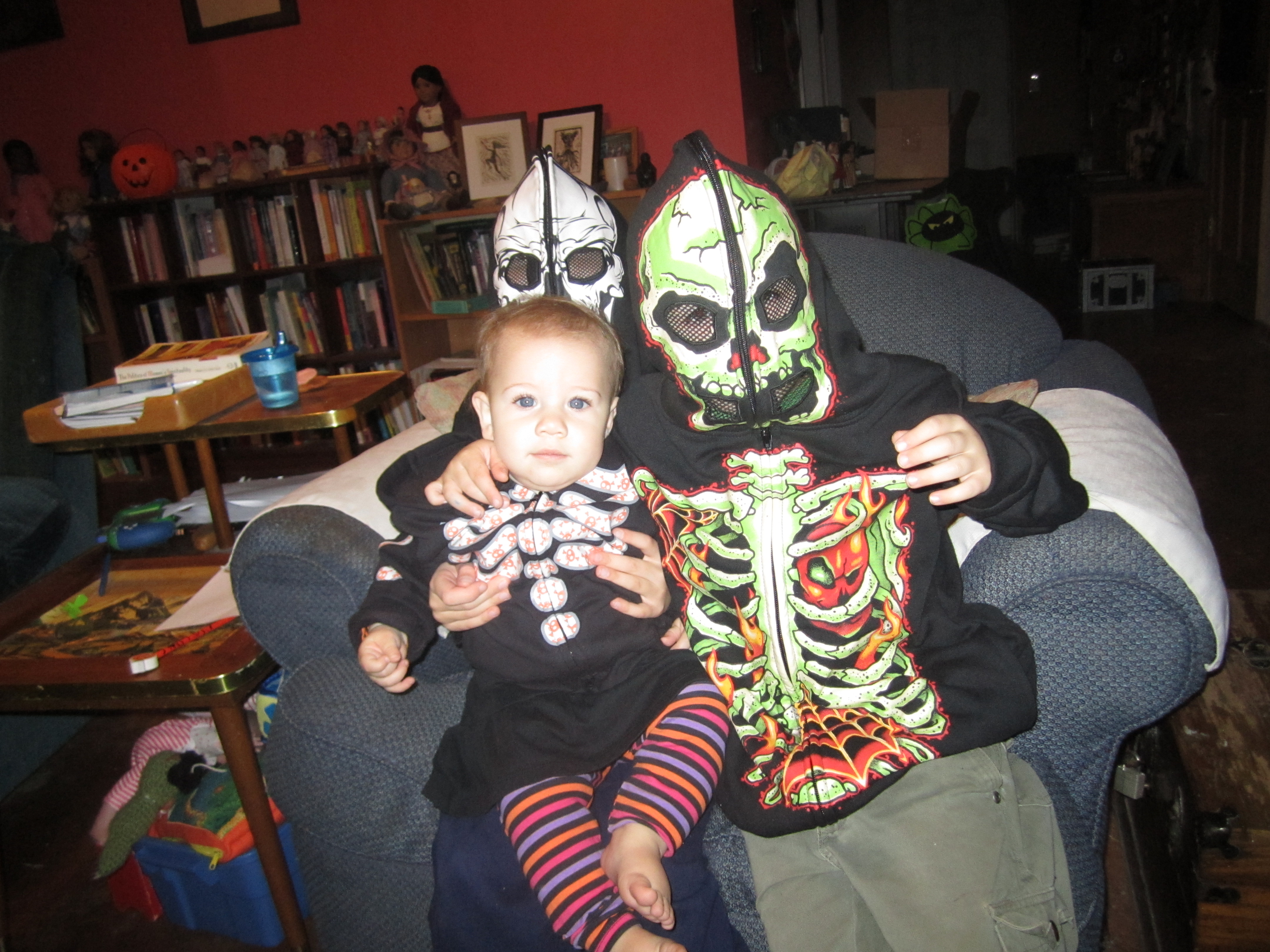
Today was our playgroup Halloween party again and here we are (Lann took the picture so isn’t in this one):

Yes, I have three troll pins on 🙂

When my first son was three, my friend sent him a skeleton sweatshirt that glows in the dark. He wore it for about three years! Now, it has passed on to my younger son and he has been wearing it for a year. So, imagine the delight when we found these cool sweatshirts at KMart this week. I got one for each of them (these glow in the dark too) and I couldn’t resist getting a smaller skeleton sweatshirt for Alaina as well. (Hers doesn’t have the cool hood-mask though.)

Three little skeletons!

Moon Salutation Yoga Series for Blessingway or Women’s Gathering

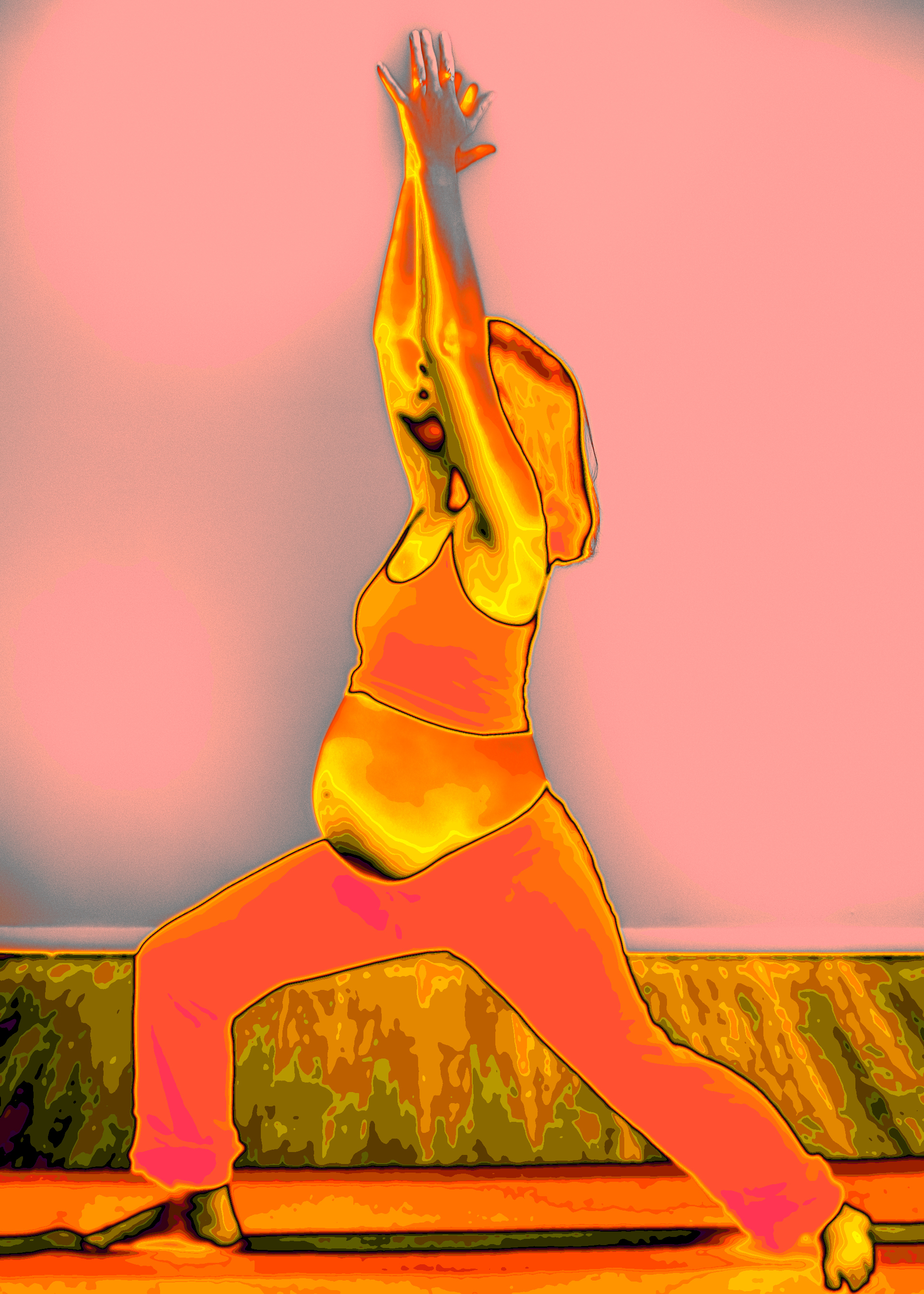
At my blessingway with my second son, my mom led us through a moon salutation together outside and then we all entered the blessingway space via a “birth arch” made with the women’s arms (think London Bridge only all in a row making a channel of arms to pass through). This weekend, we had a women’s retreat with the theme of the sacred body and I found this moon salutation from the book She Who Changes for us to do together—seemed fitting that with a theme of the body, we should actually use our bodies! (In addition to the moon salutation below, I also have a handout with a birthing room yoga series available.)

Moon Salutation
I stand tall, heart open to the world, body full and present in all of its beauty.

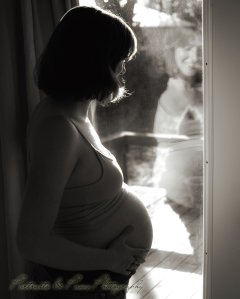
(c) Karen Orozco, Portraits & Paws (Molly at 37 weeks)

(standing with arms in prayer position)

I open my arms wide to bring all of life into my being.

(opening arms and tracing the circle of the moon)

My arms form a temple above me, sheltering and protecting me.

I know that I am on holy ground.

(arms completing the circle extended with palms touching above the head)

Yielding now, softening, my body takes the shape of the crescent moon.

I see visions of women, young and old, helping and loving each other.

(bending to the side with arms still above the head and palms touching)

Rising up and bending to the other side, I know that my softness is my strength. I am tested, but not broken.

(bending to the other side)

Up again, I feel the sweet stillness, always present within me.

(arms above head, palms still touching)

I step wide now into a squat. Mother Earth’s ferocious powers rise up through my strong legs, hips and back. As woman, I give birth to all that is, caring for and protecting life.

(arms bent in priestess pose, legs bent and open in birth pose)

Straightening arms and legs, I am a star. I am the universe. Planets and galaxies whirl within me. I radiate in all directions.

(legs straight and spread widely apart, arms straight out to the sides)

Supple and yielding, I stretch to the side. I open my arms and look up, opening to love and compassion.

I reach, yearning and striving, and yet rest, accepting fully.

(triangle pose)

Turning to pyramid pose, I become quiet. Head to knee, I sense the inner workings of my own being.

(typical runners’ stretch)

Lunging, I stretch long and feel the glorious length of my body.

As I look up, the moon shines on my path.

(lunge pose)

Turning now, I touch the earth, hands on the blessed Mother, strong and steady.

Gratefully and tenderly, I bow my head.

(turning and bending to touch the earth)

Coming into a squat, I am connected with all animal and plant life. My body open and close to the earth, I know my body’s ability to give birth, to love, to work, to pray. I resolve to hold all of these activities as sacred.

(full squat)


The Moon Salutation continues with the poses repeated in reverse order to form a complete circle and cycle of the moon with the whole body. The combination of words and yoga movement creates connections between the body and the mind, enabling the meaning of the words to come into the body. The full meaning of the Moon Salutation can be appreciated only in the doing. It celebrates the female body and the earth body, affirming that the female body is sacred, an image of the body of Goddess. It names the connection between women and the moon, positively affirming cycles of change, in contrast to classical theological traditions. In the Moon Salutation, women’s changing bodies and the process of giving birth become images of the divine creativity of the Goddess. The Moon Salutation celebrates strength as supple and yielding, yet ferocious in the protection of life. These are images of strength as power with, not power over. In the Moon Salutation, the female body is not perceived negatively as it is in traditions associating femininity with the “weaker” light of the moon. Still, it might be asked: Does the Moon Salutation limit women to the body or the traditional roles associated with it? I do not find this to be so. In the Moon Salutation the female body is an image of all the creative powers in the universe. It can expand to include planets and galaxies. The female body is celebrated not only for its capacity to give birth, but also for its ability to love, to work, and to pray.

From: Carol P. Christ. She Who Changes: Re-imagining the Divine in the World, Kindle Edition.

The Value of Sharing Story

“..no matter what her experience in birth was, every mother knows something other people don’t know.”—Pam England


“Stories are medicine…They have such power; they do not require that we do, be, act anything—we need only listen. The remedies for repair or reclamation of any lost psychic drive are contained in stories.” –Clarissa Pinkola Estes


Every woman who has given birth knows something about birth that other people don’t know. She has something unique and powerful to offer.

As birth professionals, we are often cautioned against sharing our personal stories. We must remember that it is her birth and her story, not ours. In doula and childbirth educator trainings, trainees are taught to keep their own stories to themselves and to present evidence-based information so that women can make their own informed choices. As a breastfeeding counselor too, I must remind myself to keep my own personal experiences out of the helping relationship. My formal education is in clinical social work and in that field as well we are indoctrinated to guard against inappropriate self-disclosure in a client-helper setting. In each environment, we are taught how to be good listeners without clouding the exchange with our own “baggage.” The messages are powerful—keep your own stories out of it. Recently, I have been wondering how this caution might impact our real-life connections with women?

Nine months after I experienced a powerful miscarriage at home at 15 weeks, a good friend found out at 13 weeks that her baby died. As I had, she decided to let nature take its course and to let her body let go of the pregnancy on its own timetable, rather than a medical timetable. When she emailed me for support, it was extremely difficult to separate our experiences. I kept sharing bits and pieces of my own loss experiences and then apologizing and feeling guilty for having violated the “no stories” rule. I kept telling her, “I know this isn’t about me, but I felt this way…” I told her about choosing to take pictures of the baby and to have a ceremony for him at home. That I wished I had gotten his footprints and handprints. The kinds of personal sharing that may have been frowned upon in my varied collection of professional trainings. After several apologies of this sort, I began to reflect and remembered that what I hungered for most in the aftermath of my own miscarriage was other women’s voices and stories. Real stories. The nitty gritty, how-much-blood-is-normal and did-you-feel-like-you-were-going-to-die, type of stories. Just as many women enjoy and benefit from reading other women’s birth stories, I craved real, deep, miscarriage-birth stories. These stories told me the most about what I needed to know and more than organization websites or “coping with loss” books ever could.

I had a similar realization the following month when considering the effectiveness of childbirth classes and trying to pin down what truly had reached me as a first time mother. The question I was trying to answer as I considered my own childbirth education practice was how do women really learn about birth? What did I, personally, retain and carry with me into my own birth journey? The answer, for me, was again, story.

On this blog, I have a narrative about my experiences during my first pregnancy with being able to feel my baby practicing breathing while in-utero. More than any other post on the site, this post receives more comments on an ongoing basis from women saying, “thank you for sharing”–that the story has validated their own current experience. In this example, rather than getting what they need from books, experts, or classes, women have found what they needed from story and, indeed, most of them reference that it was the only place they were able to find the information they were seeking.

And finally, as breastfeeding counselor, during monthly support meetings, I cannot count the number of times I’ve seen mothers’ faces fill with relief when another mother validates her story with a similar one.

So, what is special about story as a medium and what can it offer to women that traditional forms of education cannot? Stories are validating. They can communicate that you are not alone, not crazy, and not weird. Stories are instructive without being directive or prescriptive. It is very easy to take what works from stories and leave the rest because stories communicate personal experiences and lessons learned, rather than expert direction, recommendations, or advice. Stories can also provide a point of identification and clarification as a way of sharing information that is open to possibility, rather than advice-giving.

Cautions in sharing stories while also listening to another’s experience include:

  • Are you so busy in your own story that you can’t see the person in front of you?
  • Does the story contain bad, inaccurate, or misleading information?
  • Is the story so long and involved that it is distracting from the other person’s point?
  • Does the story communicate that you are the only right person and that everyone else should do things exactly like you?
  • Is the story really advice or a “to do” disguised as a story?
  • Does the story redirect attention to you and away from the person in need of help/listening?
  • Does the story keep the focus in the past and not in the here and now present moment?
  • Is there a subtext of, “you should…”?

Several of these self-awareness questions are much bigger concerns during a person-to-person direct dialogue rather than in written form such as blog. In reading stories, the reader has the power to engage or disengage with the story, while in person there is a possibility of becoming stuck in an unwelcome story. Some things to keep in mind while sharing stories in person are:

  • Sensitivity to whether your story is welcome, helpful, or contributing to the other person’s process.
  • Being mindful of personal motives—are you telling a story to bolster your own self-image, as a means of pointing out others’ flaws and failings, or to secretly give advice?
  • Asking yourself whether the story is one that will move us forward (returning to the here and now question above).

While my training and professional background might suggest otherwise, my personal lived experience is that stories have had more power in my own childbearing life than most other single influences. The sharing of story in an appropriate way is, indeed, intimately intertwined with good listening and warm connection. As the authors of the book, Sacred Circles, remind us “…in listening you become an opening for that other person…Indeed, nothing comes close to an evening spent spellbound by the stories of women’s inner lives.”

Molly Remer, MSW, ICCE, CCCE is a certified birth educator, writer, and activist who lives in central Missouri with her husband and children. She is an LLL Leader, a professor of Human Services, and the editor of the Friends of Missouri Midwives newsletter. She blogs about birth, women, and motherhood at https://talkbirth.wordpress.com.

This is a preprint of The Value of Sharing Story, an article by Molly Remer, MSW, ICCE, published in Midwifery Today, Issue 99, Autumn 2011. Copyright © 2011 Midwifery Today. Midwifery Today’s website is located at: http://www.midwiferytoday.com/

Affordable Fetal Model

Two things to know about me:

1. I love dolls.

2. I love bargains.

For quite a while, I’ve wanted a realistic baby model to use in my birth classes. My ideal model could be used both for demonstrations of fetal positioning in the pelvis and also for demo’ing newborn care and possibly breastfeeding. Most fetal models sold by CBE supply companies range from $60-150. I usually use a Bitty Baby doll to demo newborn care and breastfeeding (a third thing to know about me is that my love of bargains makes an exception when it comes to American Girl dolls. I have an embarrassing number of AG dolls and vast quantities of accessories. I’ve had this Bitty Baby for over 10 years, I didn’t buy her to use in class). In my knitted uterus, resides a cute little baby doll I bought at Target for $5. Neither of these dolls works at all for fetal positioning or with my demonstration pelvis.

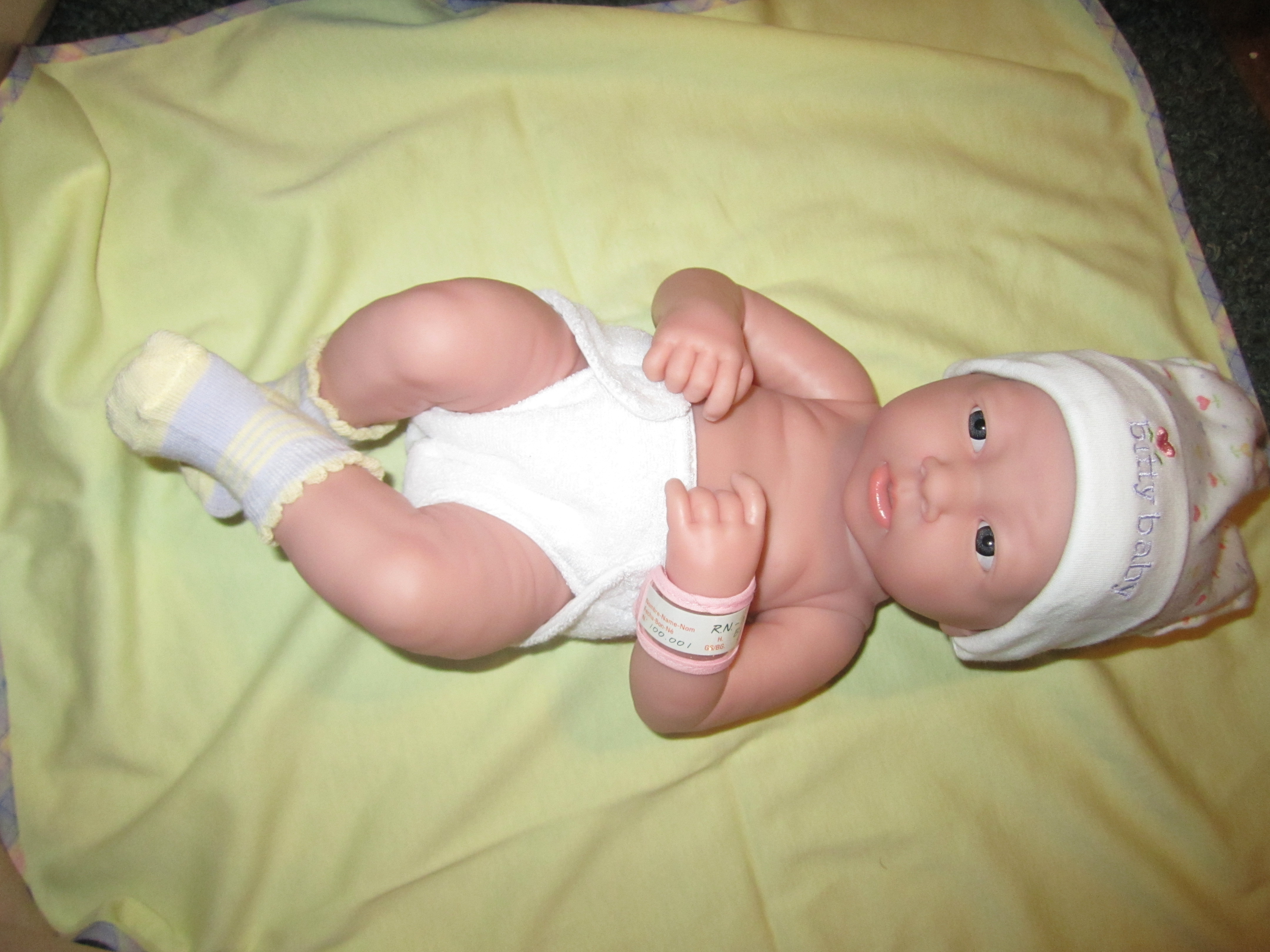
Look at this cute baby!

So, imagine my delight when I found a nearly perfect model newborn at Kmart yesterday while my son was picking out his birthday presents. I named her Sasha AND, get this, she was $20. In a bonus twist, unlike 99.9% of the dolls in the store, she did not come with a bottle! (There is a bottle pictured with a different doll on the back of the box.) She did come with a little cloth diaper, a onesie, a band to cover her cord stump (yes, she seems to have one, but it could just be a dramatic “outie”!), a little outfit, a hat, and socks. Called La Newborn (nursery doll), she is made by Berenguer.

Legs and arms straightened out a little

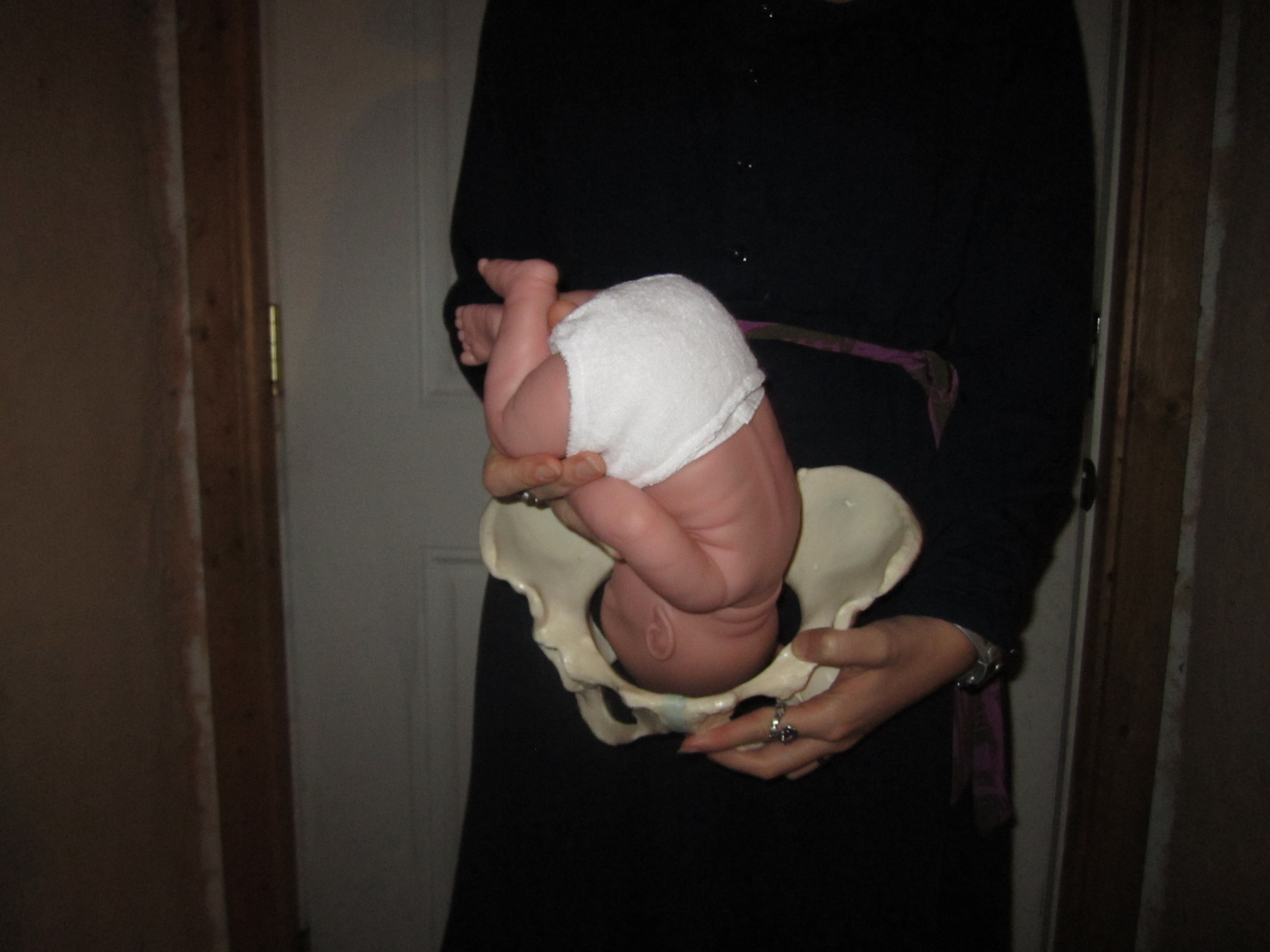
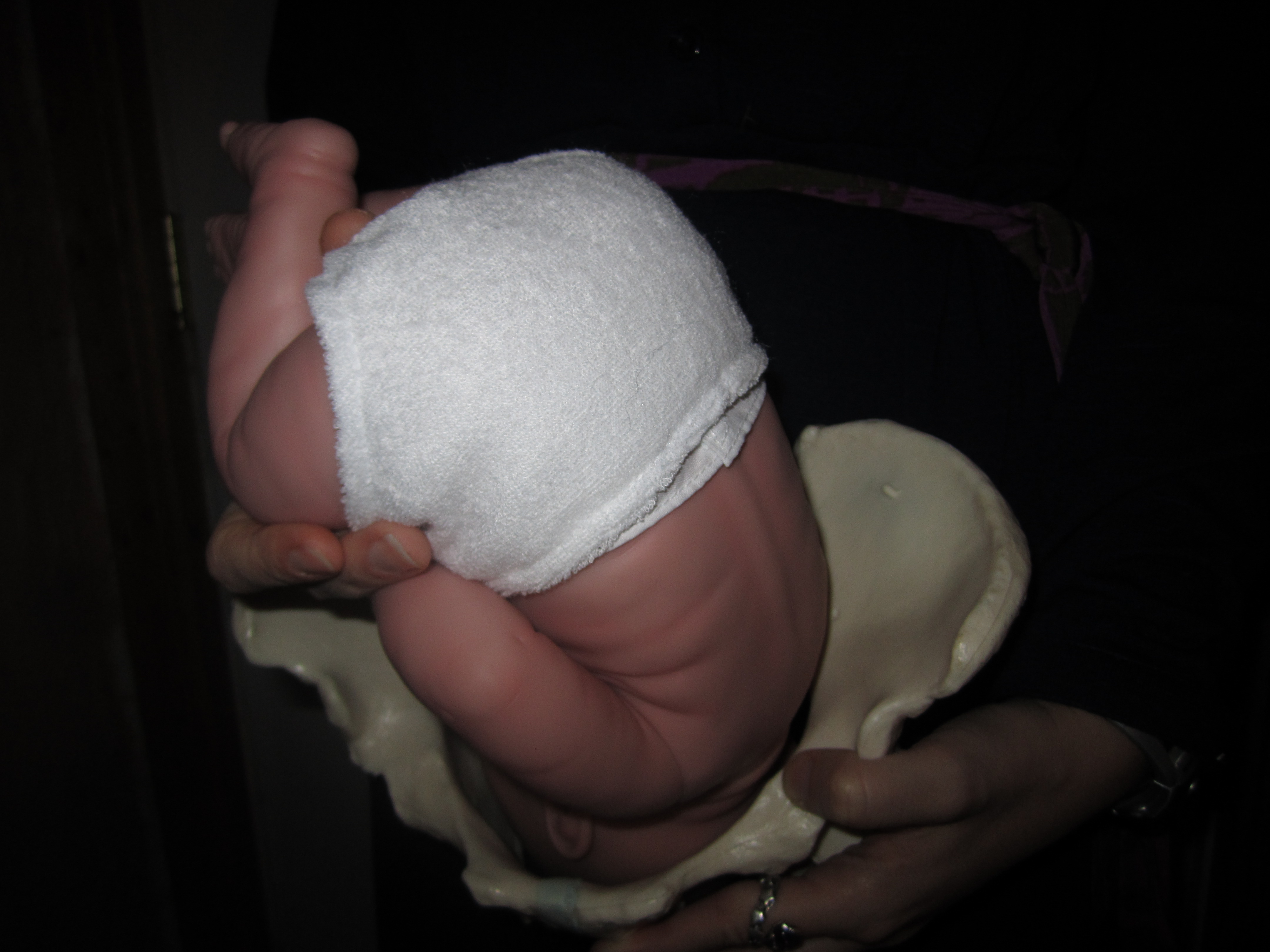
The only drawback is she is not very flexible and so would be hard to use comfortably for things like practicing putting on diapers. Her fairly flexed permanent body position does make her absolutely ideal for use for fetal positioning and even for swaddling or babywearing practice. I originally planned to take her arms and legs off to fill with plastic pellets to add weight, but I’d don’t think I’m going to bother. While nothing near the weight of a real baby, she is made from good quality vinyl.

After looking these dolls up various places online, I’m now thinking I should have bought the remaining one or two that they had at K-Mart. They don’t seem to be widely available for the $20 price.

This morning, my older son helped me take all kinds of pictures of my new toy—I mean, teaching aid!—today (yet another of the many benefits of having an 8 year old in the house!). So, this is a photo-heavy post!

See what I mean about well flexed for fetal positioning information?!

And now my Christmas pelvis gets in on the demo…

If the demo pelvis had a coccyx joint, the baby would fit perfect through. As it is, her head does get stuck on it (good teaching moment about the importance of active positions for birthing!)

Bitty Baby Noelle and Target Baby are less than impressed with this interloper…

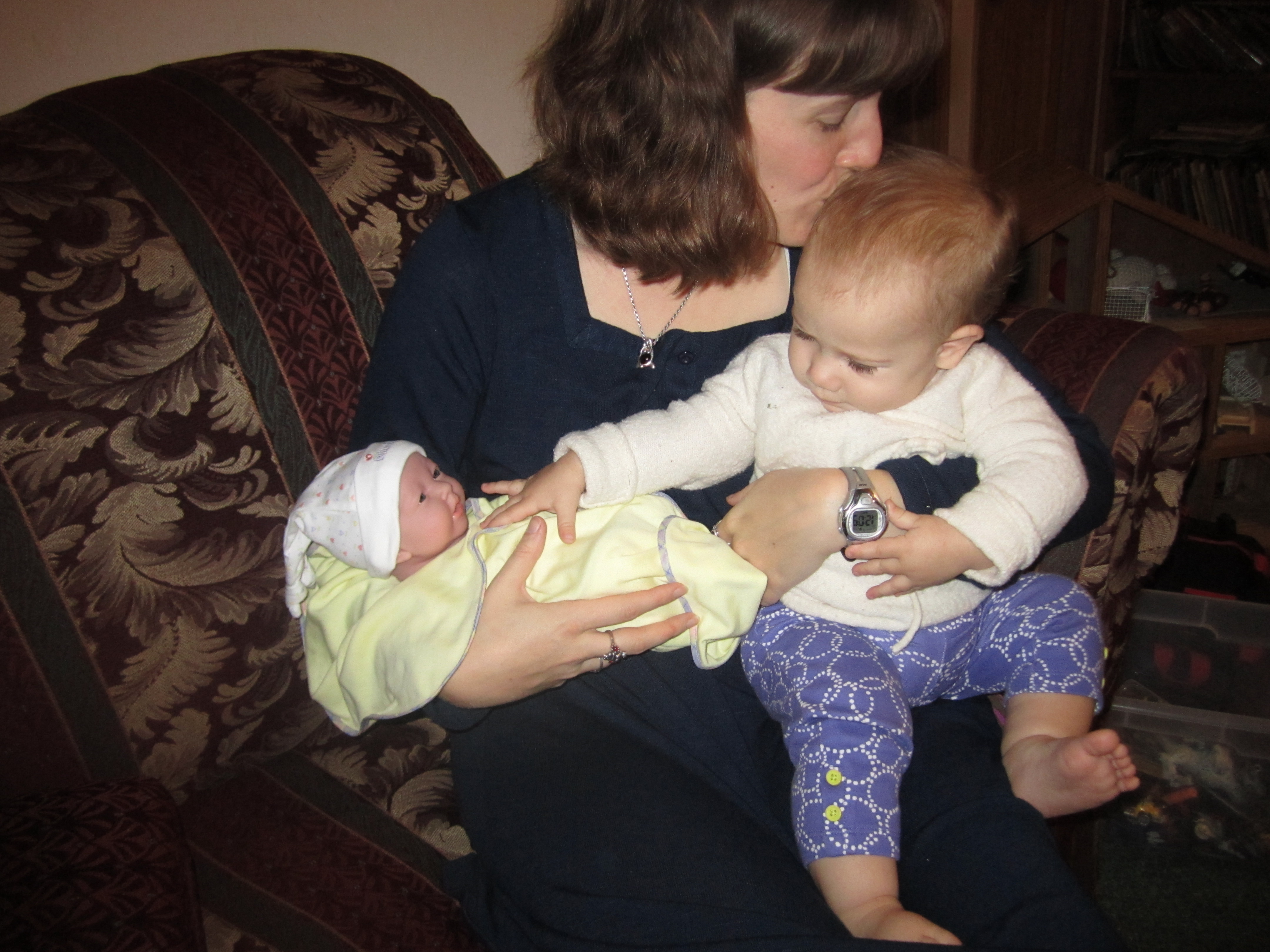
Alaina helps take care of baby Sasha…

For sizing purposes—while I think she appears to be the perfect, realistic size when held up to my belly as a fetal model for positioning, when held in arms, she is more the size of a preemie baby (maybe a 31 weeker or so). She is about 15 inches.

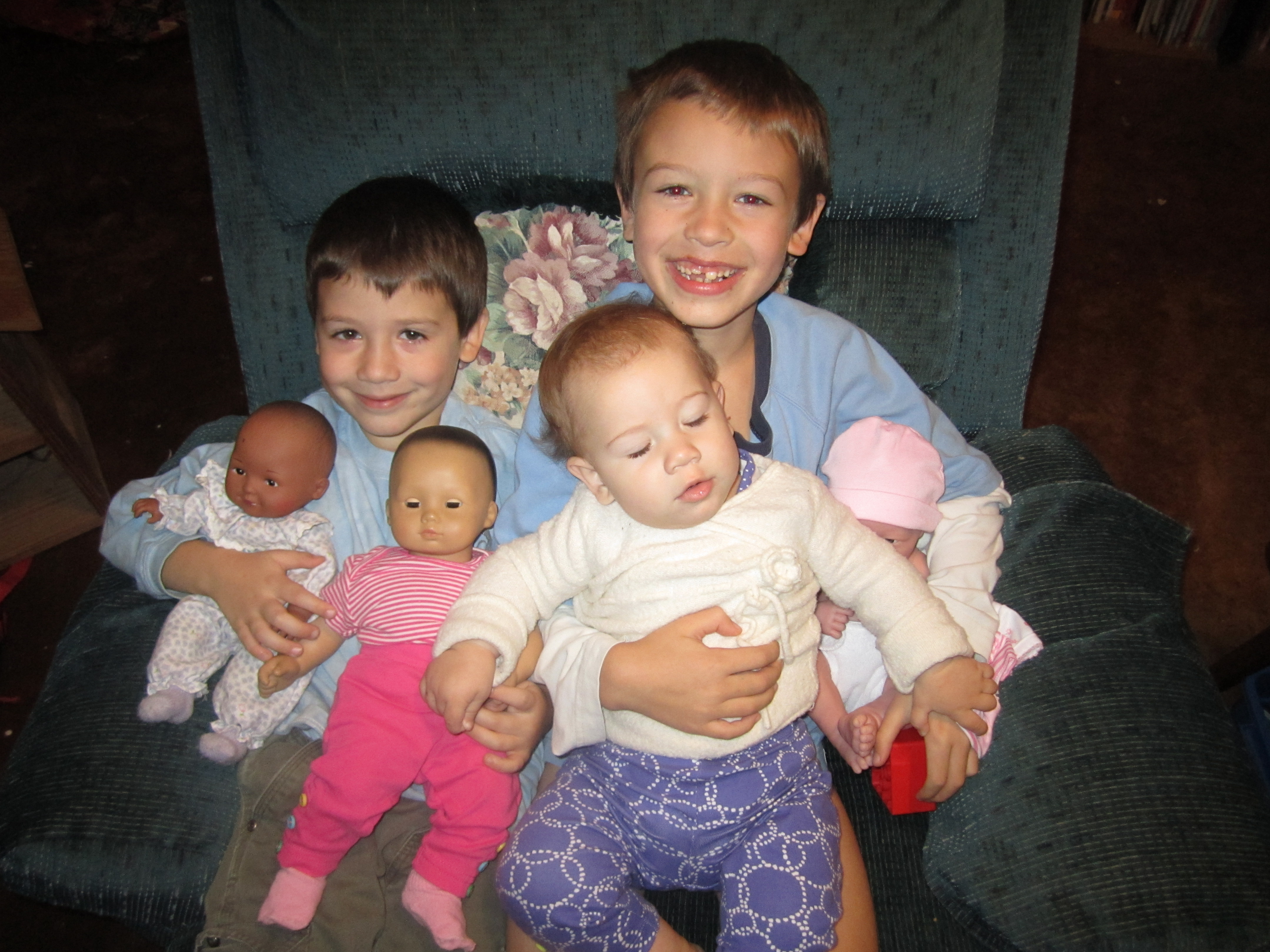
Lann wanted me to take this one—“make them guess who’s the real baby!!!”—conveniently, Alaina closed her eyes for this picture, making identification of the real baby even trickier…


Edited to add, Baby Sasha later experienced an unfortunate accident and had to be replaced. See Fetal Model Update post for pictures.

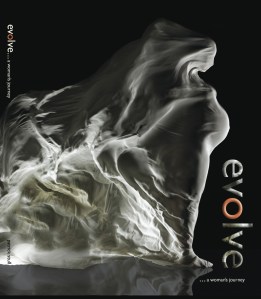
Book Review: Evolve…a woman’s journey

Book Review: Evolve…a woman’s journey
by Patrick Stull
Stull Visual Arts, 2011
Hardcover, 164 pages, $44.95
Also available as an iPad app and as an iBook in Itunes for $9.99.
http://www.patrickstull.com/books/

Reviewed by Molly Remer

A combination of stirring photography celebrating the creative journey of pregnancy and lyrical ode to women, Evolve is a unique book presented by artist Patrick Stull. The author-photographer’s love, respect, and honor for women shines through on every page. The photographs are arresting and dramatic and the prose is poetic and beautiful. The book is part of a multimedia exhibit taking place in 2012. I would love to see the full exhibit, which involves full body casts as well as images and voice recordings.

Why would a man prepare a project such as this? According to his introduction, due to “this insatiable desire to be part of something that excludes me…I have found something within me that one might call love, though I think it is more a sense of attachment to something that makes me whole. I have fallen in love with this creature and she has left her imprint on my being, casting me out to share the love—the humanity I have found.” Later he also shares that: “I have discovered nothing more stunning, nothing more emotionally stirring, nothing more intriguing than a woman as she creates life.” He also has an activist purpose behind his work, asserting that one mission of the Evolve project is to help people recognize the strength and value that all women possess. Stull states, “I also want people to consider the daily injustices to women and children all over the world, and how often they suffer the greatest costs of conflict. Why are women treated so cruelly?”

The early photographs shared are the faces of the women we follow throughout the rest of the book. A short snippet of information about the woman’s life accompanies each portrait. One woman is a midwife and several mothers had homebirths and/or hired doulas or midwives for their births. Evolve is a high quality hardback book that would be a great addition to a birth center waiting room or midwife’s office. If the price for the hardback book is out of your budget, luckily there is an affordable iBook version available.

The overwhelming message received through Evolve is of pregnancy as an active process. The pictures are very active and dynamic in feel, celebrating form and motion. Evolve is not a book of “belly pictures,” it is a book about women and their lives in the act of creation.

Disclosure: I received a complimentary copy of this book for review purposes.