Archives

Guest Book Review: The First 8 Days of Being a Mom

The First 8 Days of Being a Mom

By Gea Meijering

iCare Press, 2008/2009

Softcover, 77 pages, $14.95

ISBN: 978-0-692-00009-0

http://www.thefirst8days.com/

Reviewed by Summer Thorp-Lancaster, http://peacefulbeginnings.wordpress.com

The First 8 Days of Being a Mom is an English language translation of a manual given to new moms in the Netherlands, the Kraamwijzer.

For many moms, the initial magic of new baby is quickly overshadowed by the realization that this tiny person is entirely dependent upon them for everything.  This is can be especially true for women who give birth in the hospital, where the sense of being totally alone and responsible hits hard upon returning home.

This book is intended to help moms know what to expect in those first chaotic days after baby’s arrival.  It includes space for journaling/record keeping each day.  At only 77 pages, it is an easy carry along for those birthing in the hospital.

I liked the inclusion of midwives (they are the main care provider for pregnant women in the Netherlands) doulas and home births, which are still scarce in “mainstream” publications here. The author has carefully mentioned both vaginal and cesarean births, which makes this book appropriate for anyone.  It concisely and clearly covers such basics as bathing and feeding, including both breast and bottle, with pictures to help further understanding.  There is also a strong emphasis on asking for help when needed, which is essential in the first few weeks and months.

Some of the downfalls of the book include the choppiness that comes from translated texts, no bed sharing information and somewhat inaccurate sleeping information, as well as a strong reliance on “call the professional” instead of self-knowledge.  I found this last bit extremely difficult to swallow as I feel it is important for new mothers to trust their knowledge as primary with a “professional” as the secondary opinion.  In my opinion, no one knows baby better than mama (except maybe daddy!).

Overall, this book would make a nice quick-reference guide for first time moms or refresher for veteran moms.  The inclusion of the journaling pages moves it into keepsake material, which balances out the somewhat hefty $20 price tag. [editor’s note: special price currently on website is $14.95]

Disclosure: a complimentary copy of this book was received for review purposes.

Giveaway: Dreamgenii Pregnancy Pillow

This giveaway is now closed, Amee was the winner. FYI, the longer I use this pillow the more I love it, so make sure to go to the Dreamgenii website and check it out!

Recently, I received a Dreamgenii Pregnancy Support Pillow to review. At 29 weeks pregnant, I am just at the right point to benefit from a pillow like this and I was happy to try it out. Unlike the “traditional” body pillow that many women use during pregnancy, the Dreamgenii is much more streamlined and takes up a lot less room in the bed. It has both a leg and “bump” support cushion in front and a back pillow in the back. This also makes it unique—I like feeling like I’m in a little pillow “nest” without having to bunch up and arrange a lot of individual pillows. The bump/leg support is supposed to support you on your left side. I confess that I actually prefer lying with my back to that side (feels cozy and kind of cradled up) and with my belly leaning on the “back support” part.  Another neat thing about this pillow is that it can be used as a breastfeeding support pillow after baby is born!

Luckily for you, you now have a chance to win one of these pillows for yourself! To enter, just leave a comment telling me why you’d like to win the pillow. You can earn bonus entries by sharing the giveaway on your Facebook page or blog (please leave an additional separate comment letting me know you did this so that I know to count you twice).

Giveaway ends Friday, Nov. 12th.

Book Review: The Father’s Home Birth Handbook

I came to my attention today that I have never posted this book review! (also, as I prepared to “tag” this post, I realized that I don’t have a tag set up for “homebirth.” Can this really be true??!!)

The Father’s Home Birth Handbook

By Leah Hazard
Victoria Park Press, 2008
Softcover, 208 pages
ISBN: 978-0-9560711-0-1
www.homebirthbook.com

Reviewed by Molly Remer, MSW, ICCE

The Father’s Home Birth Handbook is a succinct and easy to read little guide for fathers and adds to the growing library of birth resources specifically geared towards fathers-to-be. The book is written by a woman, but contains ample quotes from fathers which lend a male perspective. It also includes a number of good birth stories interspersed throughout, which were all written by men.

The target audience for the handbook is easily summed up in the prologue: “…I’ve met far more men who have responded to their partners’ home birth wishes with a mixture of shock, cynicism, and fear…Far from being domineering ogres who just want to see wifey tucked ‘safely’ away a hospital, these loving fathers have simply had very little access to accurate, impartial information about the safety and logistics of home births versus hospital births.”

The first chapter addresses “Risk & Responsibility,” because that is one of the very first issues of concern for most people new to the idea of homebirth. It moves on to a chapter called “Think Positive,” followed by “Choosing the Guest List” and then one titled “Pleasure and Pain” This chapter covers comfort measures and what to do while the woman you love is giving birth: “…away from the intravenous drip and ticking clocks, you can support your partner in experiencing labour in all of its awesome, challenging power.”

Chapter five—“Birth: Normal and Extraordinary” covers Labor 101 topics, including what to do with the placenta. This is followed by “Challenges & Complications” which covers some common issues of concern such as premature labor, being overdue, prolonged labor, distressed baby, cord around the neck, tearing, and blood loss. Each of these is followed by a “what can I do to help?” section.

The final chapter—“Now What?”—concludes with a nice segment called “how can I carry the lessons I’ve learned from my homebirth with me into the rest of my life as a father?”

Published in Scotland, the handbook has a UK perspective—it assumes participation in the NHS and a “booked” midwife and homebirth. There is no “how to choose a midwife” type of section (because there is no choice of midwives). For US readers, this leaves a set of issues unaddressed—such as varying legal statuses, etc. UK specific issues also arise based on the possibility of caregivers who are not thrilled about homebirth, but who have to come to the birth since it is a government supported option. It comes across that in Scotland homebirth may seem readily okay on paper, but in reality is more difficult to pull off.

The book does briefly discuss the birth climate in the US and soundly critiques ACOG’s position on homebirth.

The book has an index and a resources section.

The Father’s Home Birth Handbook is a friendly, practical, matter-of-fact, helpful little guide that neatly addresses common questions and concerns many fathers-to-be have about planning a homebirth.

——————

Disclosure: I received a complimentary copy of this book for review purposes.

Associated amusing anecdote: my then three year old noticed me reading this book, looked at the cover and said, “The dad is trying to grab him, but that little baby is floating away!

Book Review: Living without Reservations

Book Review: Living without Reservations

By Barbara Singer
Hear Me Roar Press, 2020
ISBN 978-098-432540-5
softcover, $18.95

http://www.barbaraelainesinger.com

Reviewed by Molly Remer, MSW, CCCE

A spirited tale of personal adventure, Living without Reservations is a travel memoir written by a woman who at age 44, “quits” her life and sees the world. Marketed as The Secret meets Eat, Pray, Love, Living without Reservations explores Barbara Singer’s journey of self-discovery.

Left adrift after a series of life changes (daughter to college, divorce, death of fiancé), Barbara decides to start, “collecting experiences rather than things” and that she never wants to be someone who dreams of “someday,” but never actually follows her dreams. Her first trek is a cross country drive to Alaska with her father in a small RV. After Alaska, she lives and works for a time on a small island and then sets off by sea as first mate on a private sailboat. She and her traveling companion spend over 3 months sailing from port to port in the many small islands of the Bahamas, British Virgin Islands, and the Dominican Republic. After the sailing expedition, she travels to her beloved Italy. Living in a small village in Tuscany (and later in Florence), she studies Italian, enjoys a slow-paced life, and meets a handsome Italian winery owner. A somewhat strained relationship with her daughter is a substory that lends a humbling element to the exhilaration and excitement of Barbara’s travels,

Though a postscript minimally address her financial situation (not a “trust fund baby”), it remains unclear how her trips are financed or how realistic the suggestion to “just do it” is for the average person. However, there is a helpful section available on her website with ideas and tips on how you, too, can “quit your life.”

While on ongoing refrain of, “I’m the luckiest girl in the world,” started to get on my nerves a little by the end of the book (you’re not a “girl,” you’re a woman!), Living without Reservations is an engaging and inspiring memoir with heart, courage, honesty, and passion.

Disclosure: I received a complimentary copy of this book for review purposes.

Book Review: Survivor Moms


Book Review: Survivor Moms: Women’s Stories of Birthing, Mothering and Healing after Sexual Abuse

By Mickey Sperlich & Julia Seng
Motherbaby Press, 2008
ISBN 978-1-89-044641-3
245 pages, softcover
http://www.midwiferytoday.com

Reviewed by Molly Remer, MSW, CCCE

Past sexual abuse is an unfortunately common experience for women. Anyone who works with women of childbearing age should be mindful and informed of the effects of an abuse history on the woman’s experience of pregnancy, birthing, and mothering. Indeed, I consider this awareness to be a fundamental professional responsibility. Enter Survivor Moms, published by Motherbaby Press. This book is an incredibly in-depth look at the experiences and need of survivors of sexual abuse during the childbearing year.

One of the best and most unique features of the book is the “tab” format used for much of the clinical, research-based, or fact-based content in the book. Rather than lengthy chapters reviewing research and analyzing the phenomenon, textboxes containing quick facts and reference material are printed in the margins of many of the pages. The bulk of the narrative information in the main body of the text is then in the voices of mothers themselves, interspersed with commentary by the authors linking concepts, explaining ideas, and clarifying essentials. This is a powerful format that makes information readily and quickly available for reference as well as making the overall book very readable and approachable.

As someone with no personal abuse history who is currently pregnant, I did find the book to be a very emotionally difficult, intense, and almost overwhelming read at times. This is not a criticism in any way—sexual abuse is not a light or cheerful topic and it can be one that many people prefer to avoid. This is all the more reason for birth professionals to make a specific effort to be educated and informed.

Written both for mothers themselves and for the professionals who work with them, Survivor Moms is an essential part of any birth professional’s library. As noted in the book’s introduction, “We need to understand the impact of childhood abuse on birthing and mothering deeply, from hearing women’s stories. We also need to understand it broadly—from looking at the impact on samples and populations, on the body and on the culture.” Survivor Moms offers an accessible way of hearing those critically important stories and developing the necessary understanding to care compassionately for birthing women.


Disclosure: I received a complimentary copy of this book for review purposes.

Book Review: Understanding Pregnancy and Childbirth: Your Complete Guide

Book Review: Understanding Pregnancy and Childbirth: Your Complete Guide

By Linda Ayertey, CCCE
Resolve Medical Services, 2008
ISBN 978-9988-1-2163-1
152 pages, softcover

http://www.resolvegh.com

Reviewed by Molly Remer, MSW, CCCE

Written in simple, straightforward language, Understanding Pregnancy and Childbirth is a basic guide intended primarily for first-time mothers. It would be appropriate for clients with low literacy levels. With sections covering each trimester of pregnancy, physical changes, labor, comfort measures, and postpartum, the book is a handy, portable size that makes it easy for reference.

Published in Ghana by a midwife working in a small maternity hospital that she founded with her husband (an OB), the book contains some country-specific phrases and suggestions that may be mildly confusing to readers based in the U.S. I noted a higher than average number of minor errors in the text as well as some incorrect information (such as calling all morning sickness “hyperemesis gravidarum” and the advice to shave your pubic hair regularly because otherwise it, “may cause you to have an unpleasant odour”).

Overall, the information provided by Understanding Pregnancy and Childbirth is very basic as well as conventional. There is a nice illustrated section of positions for labor. However, the only “delivery” position described is the standard semi-sitting position and episiotomies are discussed without criticism (as are other interventions like IVs). The illustrations in the book (aside from cover image) are all of women, couples, and babies of color, which is a welcome change from many similar books on the market.

Disclosure: I received a complimentary copy of this book for review purposes.

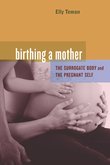
Book Review: Birthing a Mother: The Surrogate Body and the Pregnant Self

Book Review: Birthing a Mother: The Surrogate Body and the Pregnant Self

By Elly Teman
University of California Press, 2010
ISBN 978-0-520-25964-5
362 pages, softcover, $21.95

http://www.ucpress.edu

Reviewed by Molly Remer, MSW, CCCE

A scholarly work of passion and depth, Birthing a Mother is an in-depth look at the experience and feelings of Jewish surrogates and intended mothers in Israel. The book explores both perspectives—the unique experience of being a gestational surrogate and that of the intended mother. (The term “surrogate mother” is not considered a desirable one and this is clearly explained in the text, the surrogate is not the mother of the baby and this is reinforced over and over again by both surrogate and intended mother.)

Divided into four broad sections chronicling the surrogate journey, a special focus of Birthing a Mother is the intensive strategies employed by surrogates to dis-identify from the pregnant identity (the pregnant body) and focus the attention and bonding experiences on the intended mothers. Surrogates and intended parents both were very careful to identify the surrogate’s role as “container” for the baby, not as a maternal role. No surrogates in Israel use their own eggs and this was significantly emphasized—i.e. “maybe if it was my own egg, I would feel differently, but I know that this is not my baby.” I was very interested to read that this process actually leads some surrogates to choose elective cesareans (after having normal, vaginal births for their own biological children), feeling that to give birth to the baby vaginally might remove some of the containing elements and connect them physically to the baby in an undesirable way.

As the title would suggest, I was touched by the book’s passionate emphasis on the process of birthing a mother. The surrogacy experience was most often defined as this process—as giving birth to new parents by carrying their child and surrogacy is often seen as a profound gift (by both sets of people involved). And, indeed, most often the surrogates noted feelings of grief and dismay at having to give up the relationship with the intended mother following the birth, rather than “giving up” the baby. With the “container” identity firmly in place, most surrogates did not view the experience as a “relinquishment” of the baby at all, but as placing it into the arms of its rightful parents. As one intended mother stated, “You are not just giving birth to children; you are giving birth to new mothers and to new and happy families.”

A work of medical anthropology and women’s studies, rather than a book designed for birthworkers, Birthing a Mother has an academic feel and occasionally reads like a dissertation, but for the most part this style does not become overly cumbersome. The tight focus on the experiences of women in Israel made me wonder how stories and feelings would change cross-culturally. As someone who is admittedly not very informed about domestic surrogacy arrangements, I remain unclear how applicable the book’s observations and conclusions are to the U.S. population.

While not specifically directed at birthworkers, nor at surrogates or intended mothers, Birthing a Mother is a worthwhile read for anyone interested in exploring the intricacies and unique challenges of the surrogate experience.

Disclosure: I received a complimentary copy of this book for review purposes.

Product Review: PumpEase Hands Free Pumping Bra

This review was written for Talk Birth by Amanda Prim of the blog Raising a Green Bean in a Material World.

They say necessity is the mother of invention and I believe that may be true.  At least it was for me when I had to pump breast milk to feed my son every two hours ‘round the clock.  For 15 minutes every two hours I was tied to the kitchen table pumping.  I couldn’t see the TV, I couldn’t have a snack, I couldn’t read, all I could seem to do was sit there holding these plastic horns to my breast.   After a few days of that I just couldn’t take anymore so I decided there had to be a better way.  I whipped out an old sports bra, cut an “X” over where my nipples where and presto! a hands free pumping bra.  I was pretty proud of my ingenious plan, until my husband came in the kitchen, took one look at me and started laughing so hard he had to sit down.  Then I just felt stupid!  I loved that I could have a snack or read a book while I pumped while wearing it, but I HATED that I had to get completely undressed from the waist up to put it on and use it. I also HATED that when I wore it I looked like Madonna in a bad 80’s music video.

I was offered the chance to review a PumpEase Hands Free pumping support.   As a full time college student I have to do a lot of pumping when school is in session so I jumped at the chance to do the review.  I was very happy to see that PumpEase accommodates moms with breast sizes from 32AA to 48H.  That was great news for me because it seems like you can seldom find nursing bra’s for anything bigger than a D cup. I wear a 42 E bra and I ordered a size large in the PumpEase.  It is loose enough to be comfortable but tight enough to hold the “horns” of the pump in place.

I ordered mine in the “Snowy Leopard” print.  When it came in I fell in love with the print and the feel of the bra.  The material is soft and almost silky feeling and has some stretch to it.  I had expected it to fit like a traditional bra with openings at the nipple for the pump.  It turned out to fit more like a tube top than a bra.  It latches in the front between the breasts and is just one piece of material.  My favorite part of the design? You can wear it OVER your regular nursing bra, so there is no need to undress from the waist up to pump!!! When my husband saw me pumping in this bra he didn’t burst into laughter.  He raised one eyebrow (his attempt at being seductive) and growled then said he sure liked that pattern.

Overall I love this bra!  I think the color/design selection is fabulous and I love that I can still feel pretty while pumping (a hard combo if you asking me!).  It is easy on and easy off so pumping is a breeze.  The sizing is wonderful because it easily accommodates us bigger girls.  I would suggest that if you are on the borderline of sizes (say between a medium and a large) that you choose the smaller size.  The bit of stretch in the material will allow it to fit snugly and you won’t have to worry about it being too loose.

Amanda Prim

http://avinsmomma.blogspot.com/

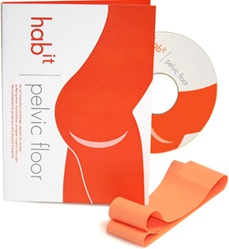
DVD Review: Hab It: Pelvic Floor

DVD Review: Hab It: Pelvic Floor

PT Partners, 2008
DVD, 1 hour 42 minutes, $29.95

www.hab-it.com

Reviewed by Molly Remer, MSW, CCCE

Most women, and certainly all birth professionals, are aware of the importance of the pelvic floor. Less well-known are methods and exercises beyond the basic “Kegel” to strengthen and rehabilitate weakened pelvic floor muscles. Hab It: Pelvic Floor is a physical therapy DVD specifically targeting the pelvic floor. It is designed for women who are experiencing incontinence, prolapse, or pelvic floor pain. It is also a preventative tool for women to avert the development of these distressing issues.

Hab It: Pelvic Floor begins with an anatomy overview and Kegel explanation/instruction and moves into correct postural positioning. The DVD contains four progressive workouts each more than 20 minutes long and also “time efficient” versions of each workout. Each workout is coached by physical therapist Tasha Mulligan while being demonstrated by another woman. All of the information is clearly presented and easy to follow and the instructor is pleasant and earnest. The DVD comes with an exercise band for use during some of the exercises and no other equipment or props are required.

A very thorough and complete resource for any woman of any age, Hab It: Pelvic Floor is a relevant, interesting, and worthwhile addition to the libraries of doulas, childbirth educators, and anyone who cares about women’s health.

Note: The DVD is not designed specifically for use by pregnant women and there are several exercises that are not compatible with pregnancy—it is ideal for pre or post-pregnancy however!

Disclosure: I received a complimentary copy of the DVD for review purposes.

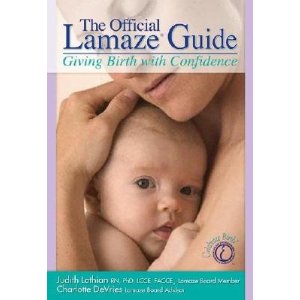
Book Review: Giving Birth with Confidence

Since I recently wrote a post inspired by a quote from The Official Lamaze Guide: Giving Birth with Confidence, I figured it was high time that I share the review I wrote of the book! The review was originally written in 2007 for CfM News.

The Official Lamaze Guide: Giving Birth with Confidence. By Judith Lothian & Charlotte DeVries. Published in 2005 by Meadowbrook Press (307p), $12.00. ISBN: 088166474X

Reviewed by Molly Remer, MSW, CCCE

Very few pregnancy books deliver the message that we think pregnant women need to hear most: Birth is a normal and natural part of life….We believe deeply that birth is a process you can trust just as millions of women before you have. This belief isn’t sentimental; it’s based on our thorough understanding of the physiologic birth process and research that confirms interfering in that process is harmful unless there is clear evidence that interference provides benefits.

So begins an opening section of the book The Official Lamaze Guide: Giving Birth with Confidence. The degree to which the book accomplishes its simple message can be summarized with a simple review: Excellent! The Lamaze Guide is digestible and reasonable for busy people to manage at less than 300 pages of text and it contains a simple, profound, and elegant message that women in the U.S. desperately need to hear.

The book begins with defining normal birth as “…a normal birth is one that unfolds naturally, free of unnecessary interventions.” It then briefly explains the history of birth and how and why normal birth is not actually the norm in our culture. The authors then clearly address the following areas in one chapter each: early pregnancy; choosing a caregiver and birth site; middle & late pregnancy; preparing for labor and birth; the simple story of birth; keeping birth normal; finding comfort in labor; creating a birth plan and a baby plan; communication and negotiation; greeting your newborn; and early parenting. The authors are clearly very supportive of midwifery and the Midwives Model of Care (though it is not referenced by name) as well as of the benefits of a doula in the birthing room.

The book is framed in the context of Lamaze International’s powerful foundation, the Six Healthy Birth Practices:

The book is also guided by Lamaze’s comprehensive and lovely philosophy of birth:

  • Birth is normal, natural and healthy.
  • The experience of birth profoundly affects women and their families.
  • Women’s inner wisdom guides them through birth.
  • Women’s confidence and ability to give birth is either enhanced or diminished by the care provider and place of birth.
  • Women have the right to give birth free from routine medical interventions.
  • Birth can safely take place in homes, birth centers and hospitals.
  • Childbirth education empowers women to make informed choices in health care, to assume responsibility for their health and to trust their inner wisdom.

After effectively bolstering the confidence of women in birth, The Lamaze Guide concludes with several useful appendices. The first is the excellent tool “Effective Care in Pregnancy & Childbirth: A Synopsis.” Though this information is easily available on the internet (see www.childbirthconnection.org), I find that many parents do not come across it on their own. How powerful to have it included for easy reference of indisputable evidence based practices. The Mother-Friendly Childbirth Initiative is included in another appendix as well as the always excellent text of The Rights of Childbearing Women. I was delighted to see all of these powerful documents in one place—and, in the hands of consumers who need to be aware of them.

This book is a refreshing presence on the shelves of my local bookstore (yes, there is only one retail book shop in my community and The Lamaze Guide is the only “alternative” birth book stocked in the store!). As I read the book, I kept nodding along and wishing it was in the hands of each pregnant woman in my community. Lamaze has a “name recognition” that gives this book the potential to have a wider and broader impact than other alternative birthing books which, though brilliant contributions, may only end up in the hands of “the choir.” The Lamaze Guide is written in such a matter-of-fact and comforting tone that I cannot see it being off putting to the average consumer as having “hippie” language or “extreme” ideas. The blueprint for normal birth that the book lays out is extreme compared to the standard practices at most hospitals, but the way in which the information is presented opens doors of communication, understanding, and exploration as well as providing the evidence basis to back normal birth. I would not hesitate to lend this book out as it will not scare anyone away with “weird” ideas. With the other books in my personal library, I have to carefully consider my audience before choosing which book has the right style and blend of information—not this one! It is good for everyone with its open, simple message. It is a good addition to lending libraries, personal libraries, to give as a gift, or to recommend to others. The Lamaze Guide is straightforward and clearly written with an unabashedly honest and truthful message of what normal birth is and how it can either be supported or undermined.

My only critique of the book is that in contains no real acknowledgment of the several other well known and effective organizations that train and certify birth educators (other than Lamaze International itself). Conspicuously absent from the resources pages are any of these other organizations.

In conclusion, The Lamaze Guide is a source of information that women need to have and a message that women need to hear. I think Giving Birth with Confidence accomplishes its purpose skillfully and has the potential to be a transformative influence. I hope women read it, absorb it, and begin to Celebrate Birth!