Archives

Red Tent Resources

“Blood Mysteries recall the immense power of the bleeding woman. Power enough to share in great nourishing give-aways. Give-away from woman womb to earth womb, give-away from mother to matrix, give-away of nourisher to nourisher…bleeding freely, we know ourselves as women, as nourishers of life…” –Susan Weed

International Women’s Day is coming up on March 8th and I signed up for a cool sounding free online class about working with your moon cycle. I’m loving the focus and I hope to learn some useful things:

What you do on the first day of your cycle radically affects your health and happiness for the next 30 (or so) days. It impacts your relationships, creativity, energy, spiritual connectedness, and self-confidence, just to name a few things…”

This class is part of a free online 28 day event about honoring our moon cycles that is already in progress—I wish I would have learned about it a little earlier!

Also, on International Women’s Day is a Red Tent Activation offering from Deanna L’am:

We’ve Birthed The world We Want To Live In…

Lets Re-Member, Re-Activate & Re-claim
Our cellular memories of The Red Tent!

I do a lot of work with women already. I have provided breastfeeding support and counseling for eight years now. I’ve been teaching and writing about birth and doing birth activism for just about as long. I help plan blessingway/rite of passage ceremonies and facilitate workshops and lead rituals (and occasionally, I do weddings). I hold quarterly women’s retreats and this year I’m doing a year-long monthly women’s spirituality class. But, I still want to do more! I envision having a fabulous red yurt out in the field that would always be available to any woman who wanted to come to it. I envision a “Women’s Temple” and nurturing, enriching, replenishing WomanSpace. I envision monthly full moon circles and seasonal ceremonies and plenty of time for celebration of Women’s Mysteries…

I also really, really want to host a screening of the Red Tent Movie (this is totally within my capacity for this year at least!)

While I also have a whole collection of favorite women’s temple/women’s mysteries resources, some of my favorite Red Tent specific resources on Facebook are:

Your period is a vehicle for greater compassion in the world at large.

Your period is a universal language.

Yet, it’s one of the least understood by women today.

It’s one of the topics that is least talked about in our modern culture…

Pleasurable Periods

20130303-100804.jpg

Birth art journey: mamapriestess

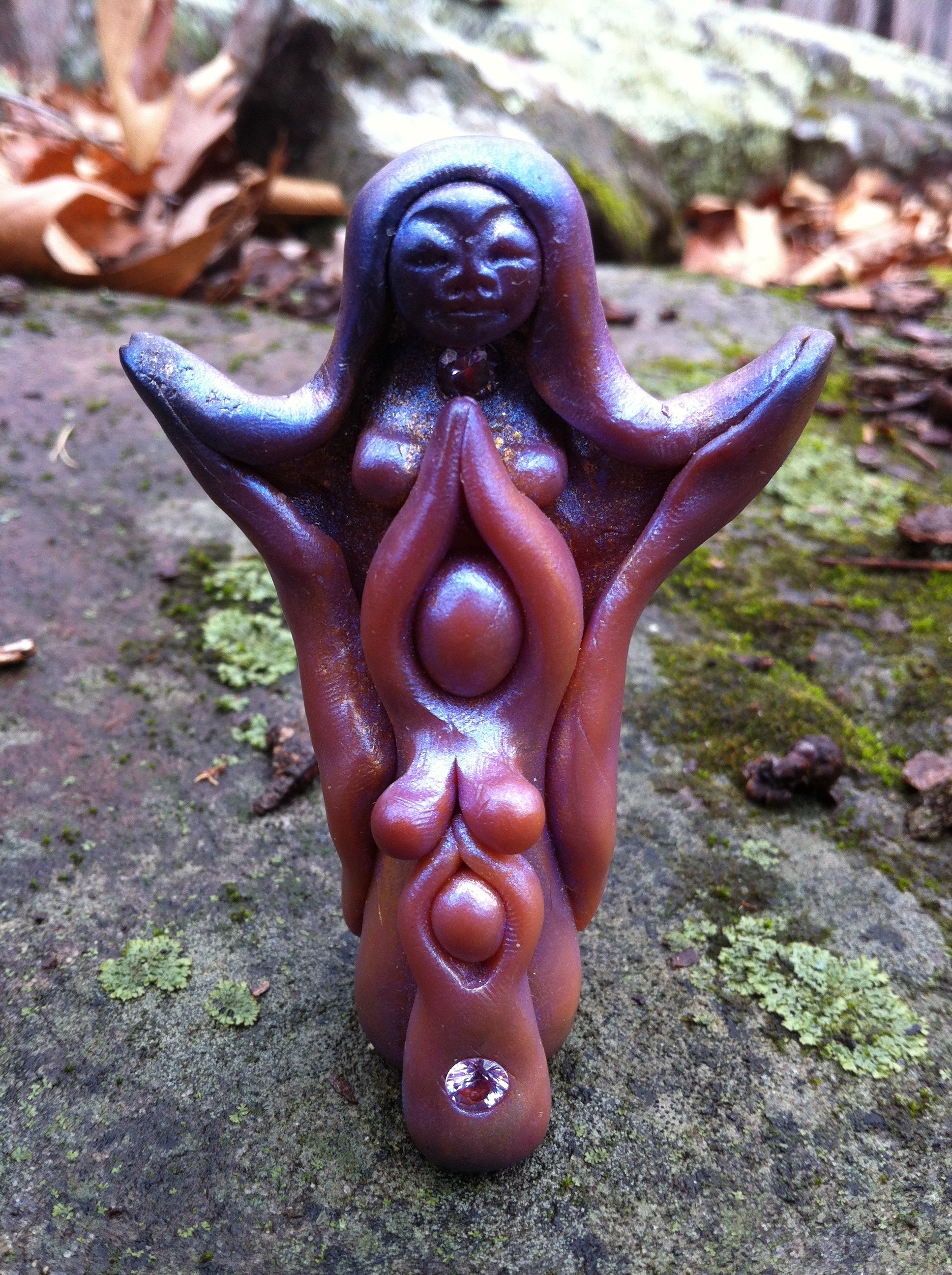
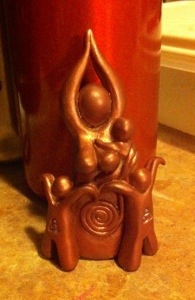
This month during my computer-off retreat I felt the itch to add to my birth art journey collection. I haven’t made a new addition to it since Alaina’s dental work in September. Since she is so very interested in rituals and likes participating in women’s circles and wearing my special jewelry and setting up altars (this month two words added to her vocabulary were “altar” and “sacred bundle.” Adorable!), I created a mamapriestess sculpture as the next in my series:

20130208-102013.jpg
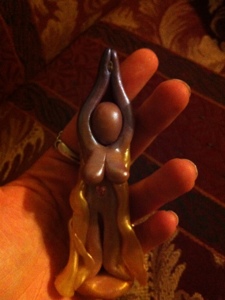
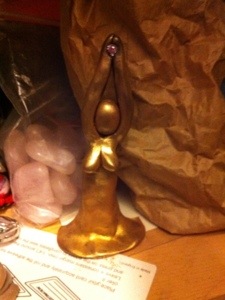
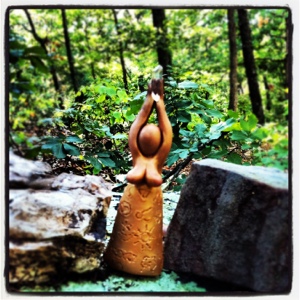
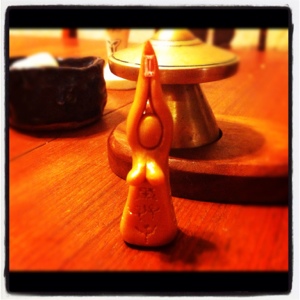
It felt perfect to me, which was great, because I’ve been experimenting with (single) priestess sculptures since my priestess ordination in July and I had a lot of bum starts like this unfortunate try:

20120918-175749.jpgCouldn’t figure out yet HOW to do a standing figure after so many creations of seated figures. This one quickly ended up in my closet as did this one:

20120928-131811.jpg

Not only not very attractive and leaning over, but ended up with burned hands and a broken skirt piece too!)

My next attempt was this one:

20120918-175651.jpgAh! Getting better! Then, this one:

20120918-175533.jpgI created a mini version of her intending to include it in a “sacred bundle” at a festival, but I didn’t end up using her for that after all:

20120918-175437.jpg

20120918-175426.jpg

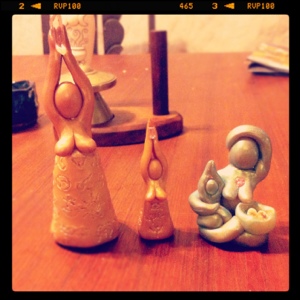
Larger priestess and mini priestess and tooth decay sadness mama sculptures.

I became enraptured with the tiny priestesses though and made this one also, who is still one my favorite sculptures (I call her the Womb of Creation):

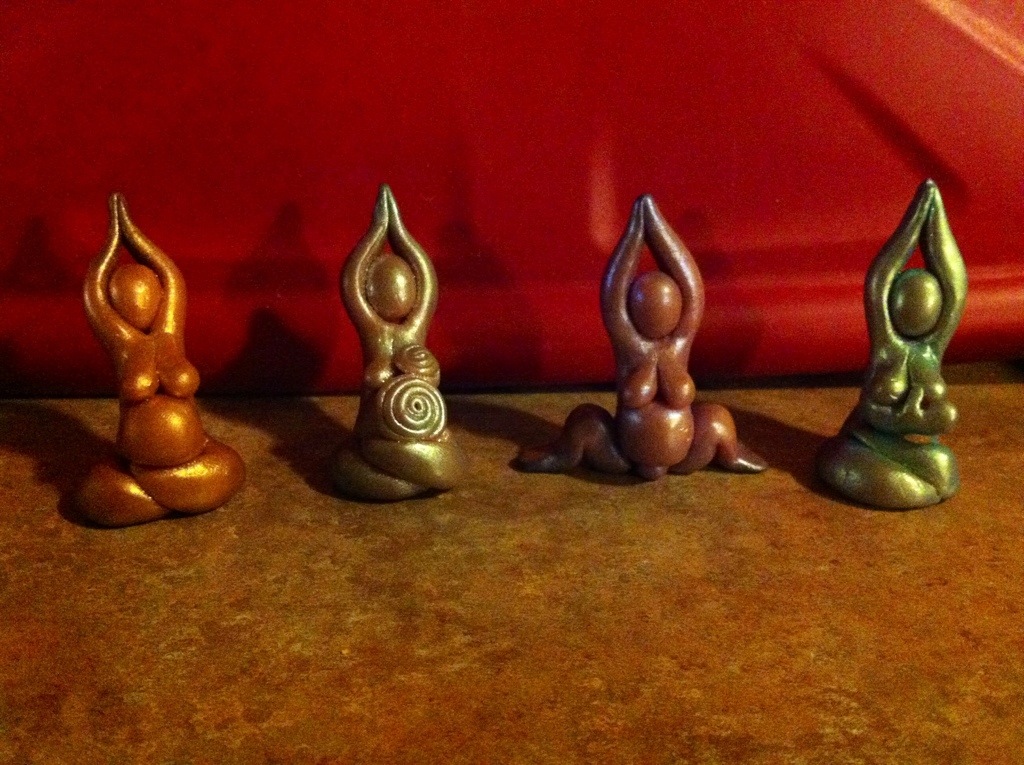
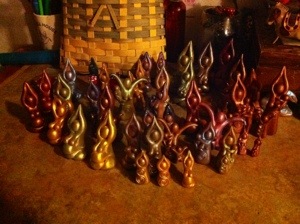
20120928-130033.jpgEach figure in what I think of as my original birth art series has a special meaning to me. It is a 3-D journal of my life with my daughter. Each figure either had a message for me or was created to express a message or a lesson or to incorporate some aspect of my identity or to capture a memory. Here was the full series this summer:

20120918-175358.jpgAfter making the newest mamapriestess to add to the birth art journey series, I was on a roll and I created this version which I like even better:

February 2013 062And, I made a mini-mamapriestess as well:

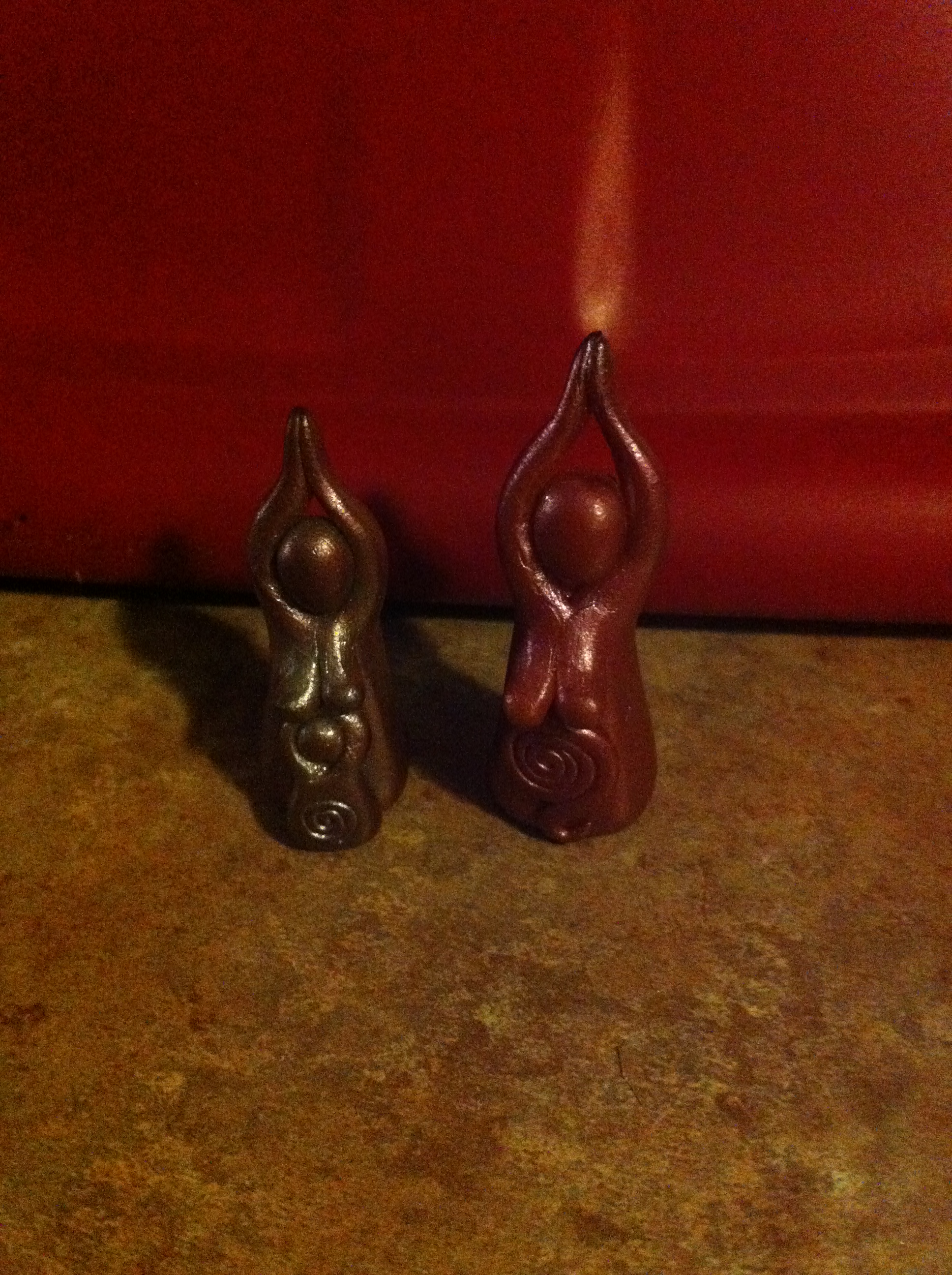
20130210-155422.jpg

February 2013 066

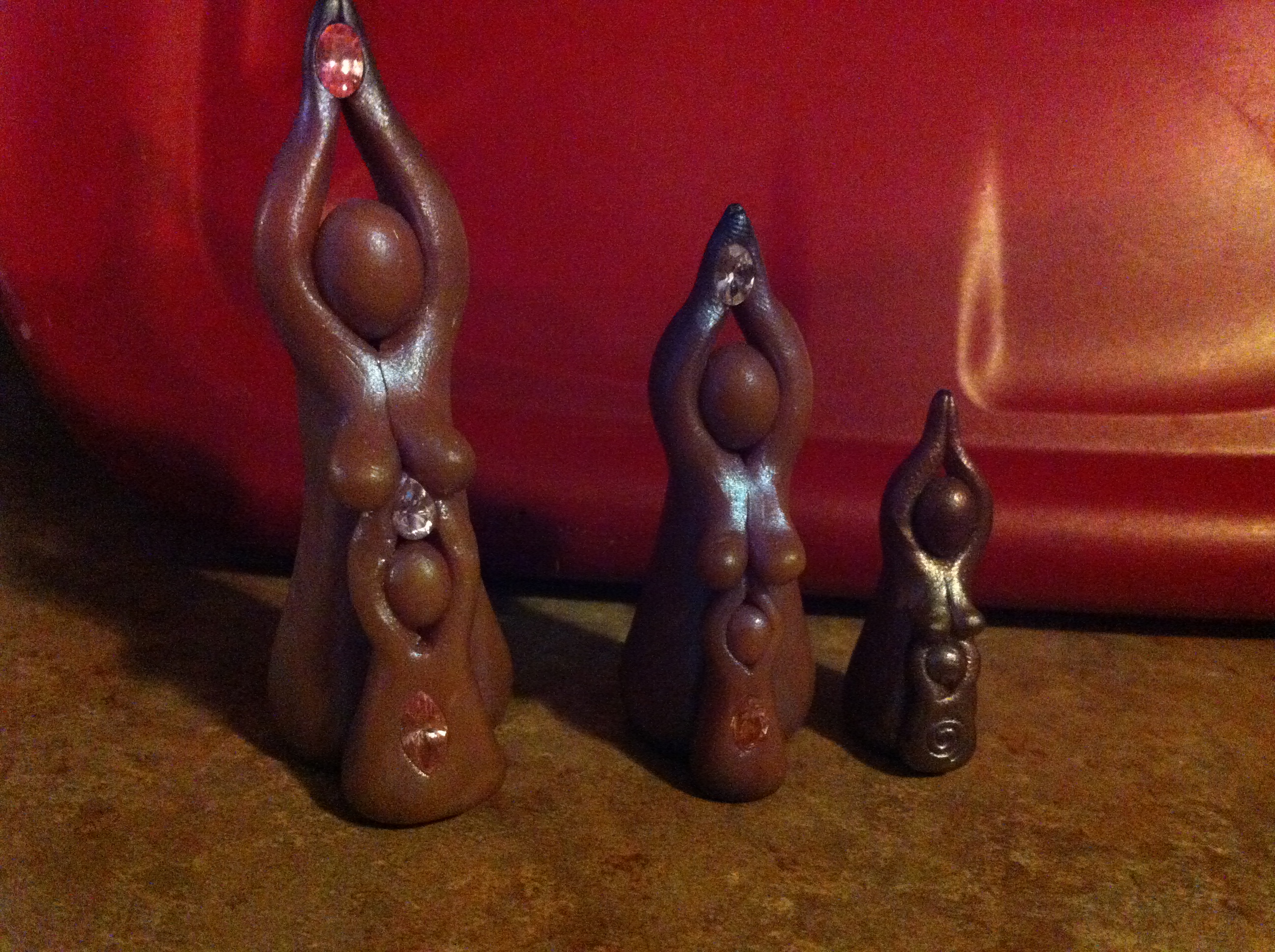
Then, I started making other mini mamas and their babies:

February 2013 120856227_10152570363905442_1915663021_oAnd, I made a custom sculpture for Journey of Young Women:

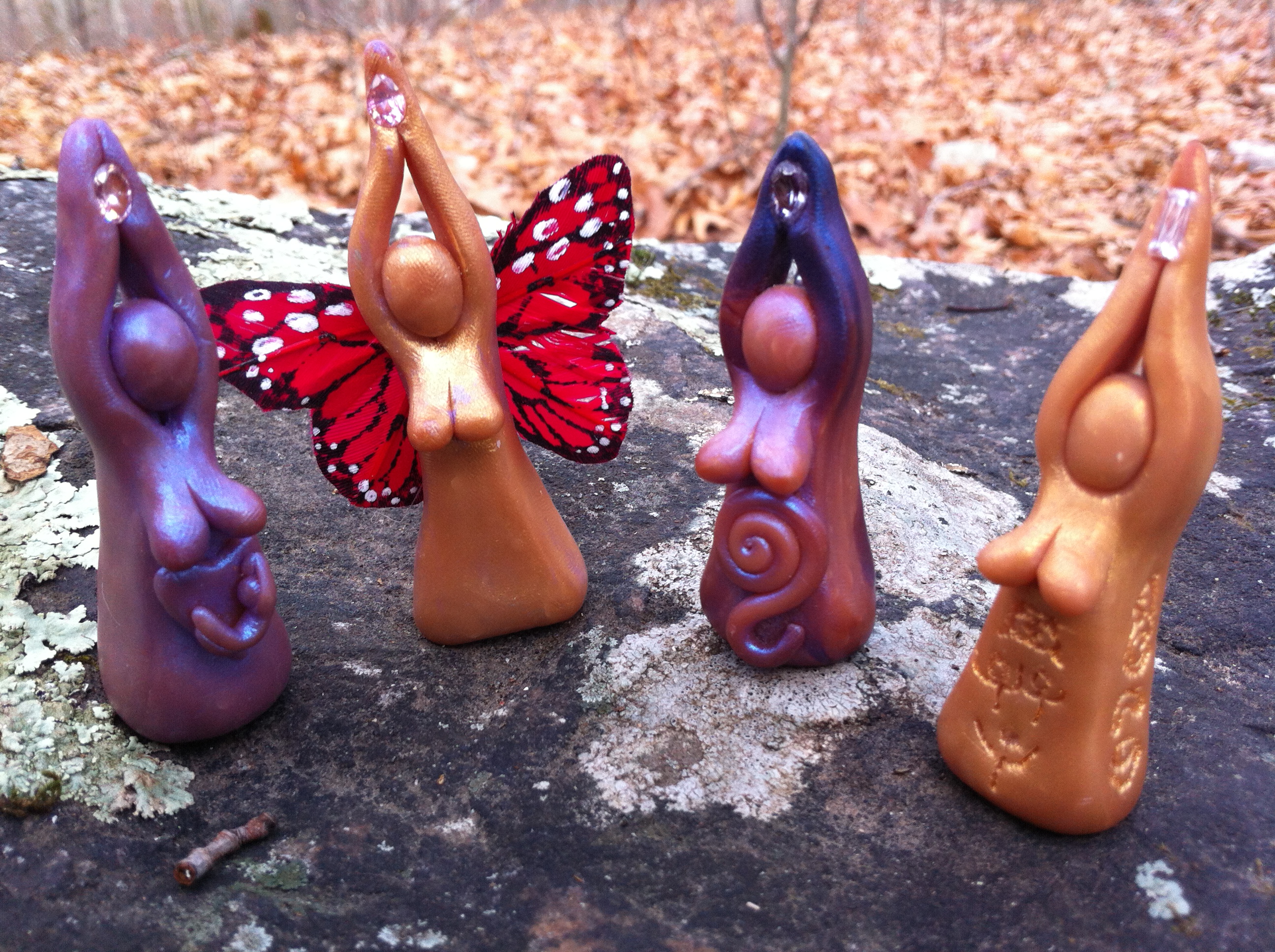
February 2013 164Before mailing, I included her figures in a little grouping of minis on the altar for our women’s circle ritual this month:

February 2013 196

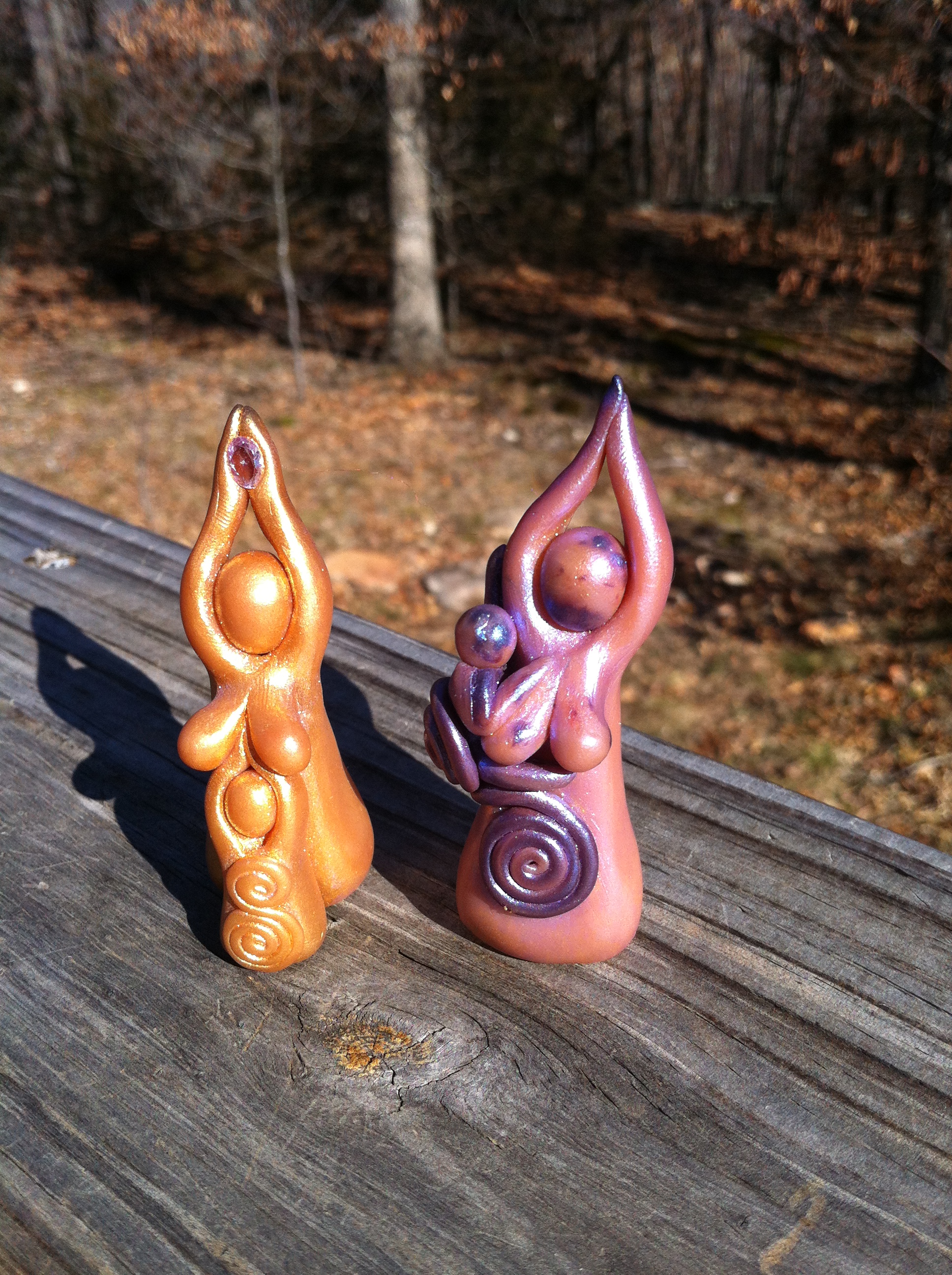
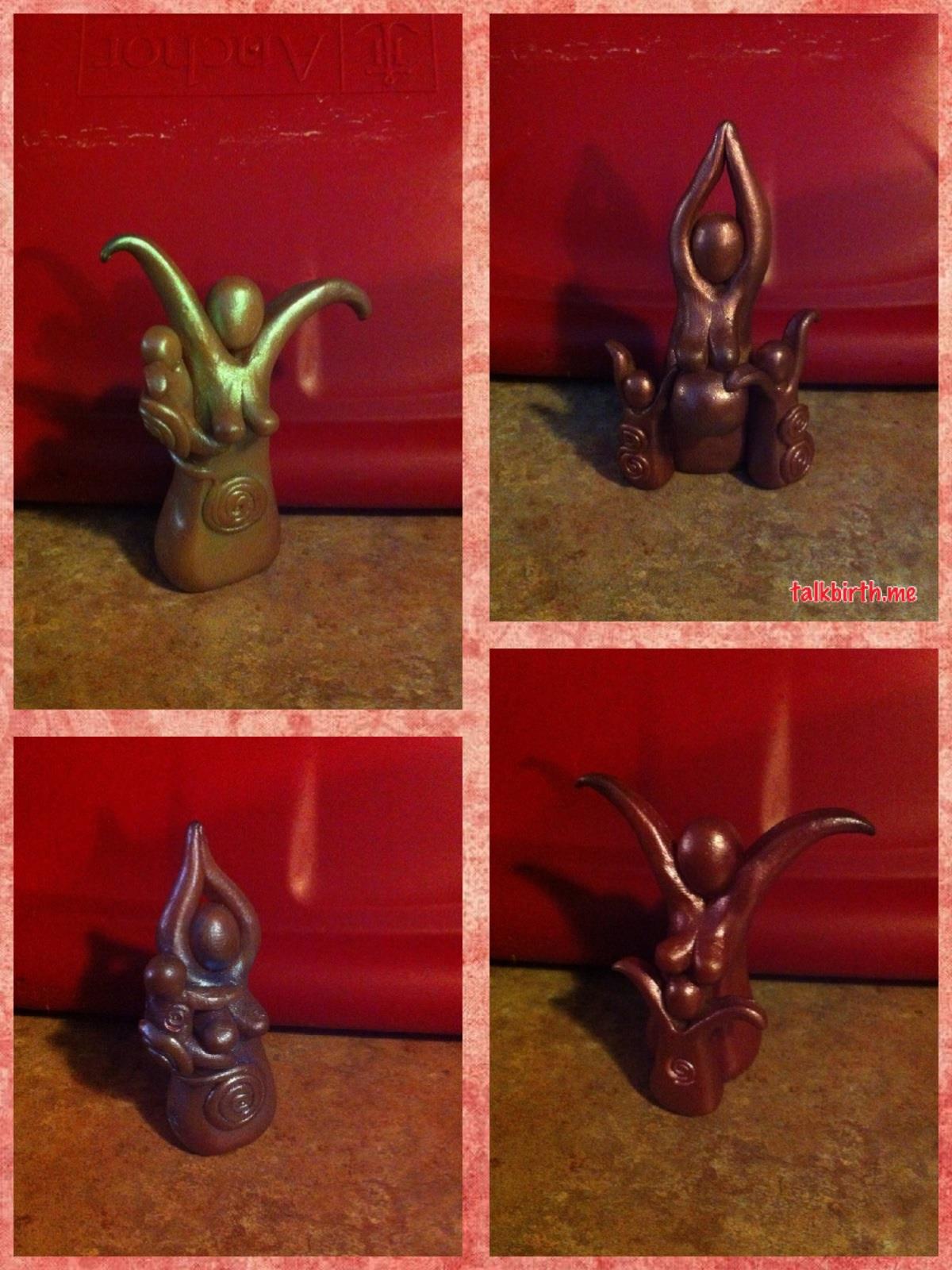
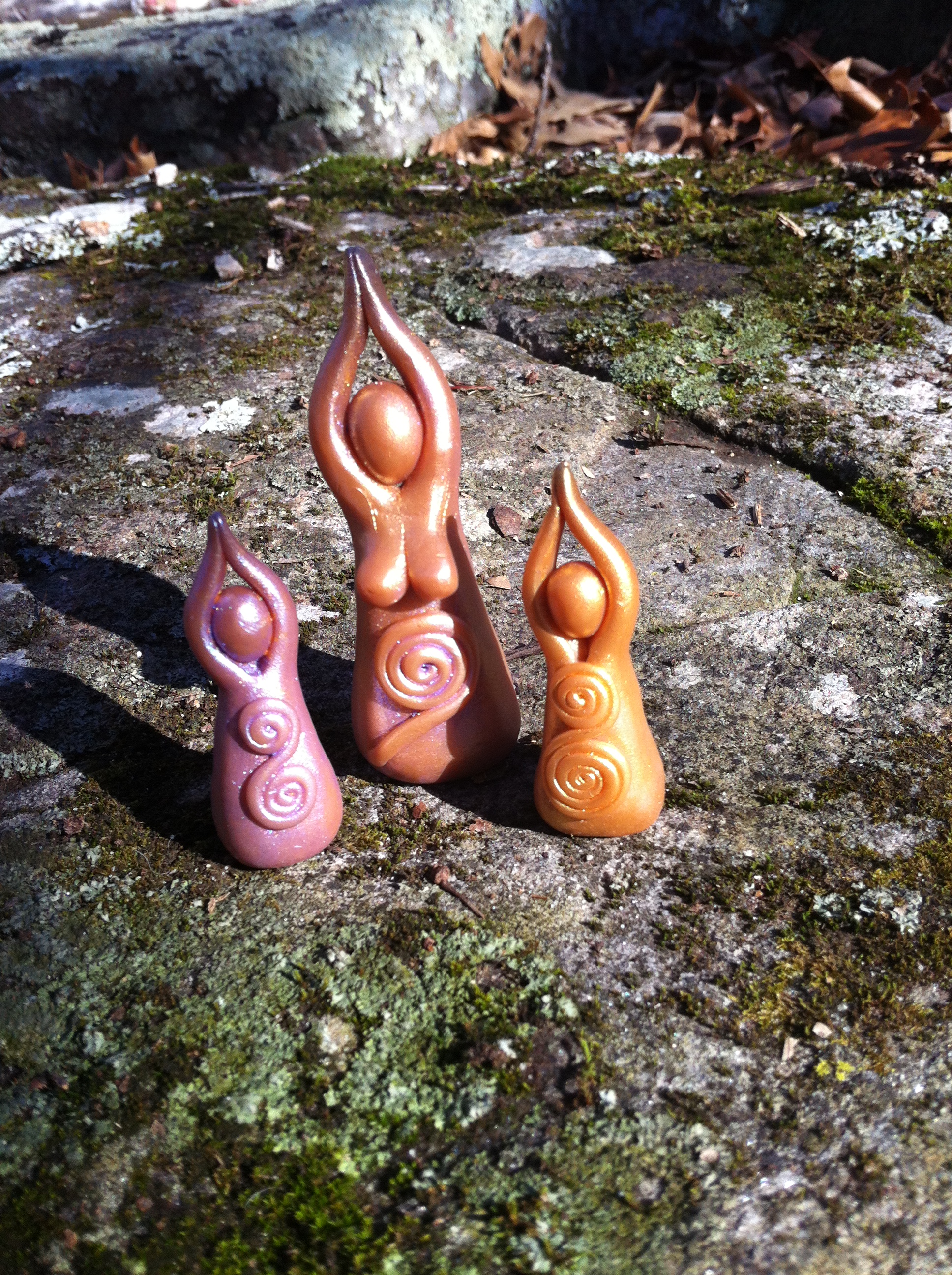
The same week that my picture of my first custom sculpture order taken on my kitchen counter in front of a humble cake pan lid took off on Facebook (seriously, it had around 250 likes and over 130 shares, which is pretty close to “viral” in terms of birth art I think 😉 ), I also had two photos entered in a Goddess art contest in which this one won a prize…20120918-175346.jpgThese figures are very near and dear to my heart and really represent my own journey through pregnancy, birth, and motherhood is a way that feels very meaningful to me, so I appreciated the feedback from the contest hostess on the photo also:

I love this one, Molly. It’s so perfect in its simplicity. The cast of shadows from the bright sunshine is lovely! The detail and uniqueness of each of the Goddesses Gathered is amazing! I find myself looking at each one wondering which is me! Such a special little altar for the Goddess. I can imagine myself focusing all my prayers in the center…. knowing that they will either slip through the crevice as dream seeds planted in the richness of the dark unknown, or being lifted upward to be gathered by the air, the wind and the very spirit of life and infinite possibility. Thank you for sharing. Blessings.

December 2012 109

And this photo was a runner-up in the art contest 🙂

20130210-155632.jpg

The “famous” cake pan lid photo!

In new experiments this week, I tried making some very tiny sculptures to use as pendants, with one continuing the “mamapriestess” motif…

February 2013 046 February 2013 048

Even tinier than that are these two I just finished late last night:

20130227-003934.jpg

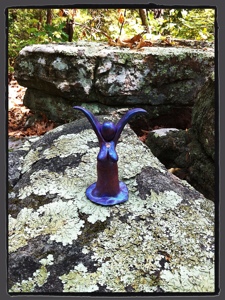
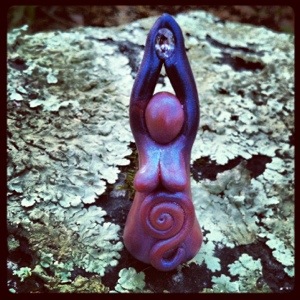
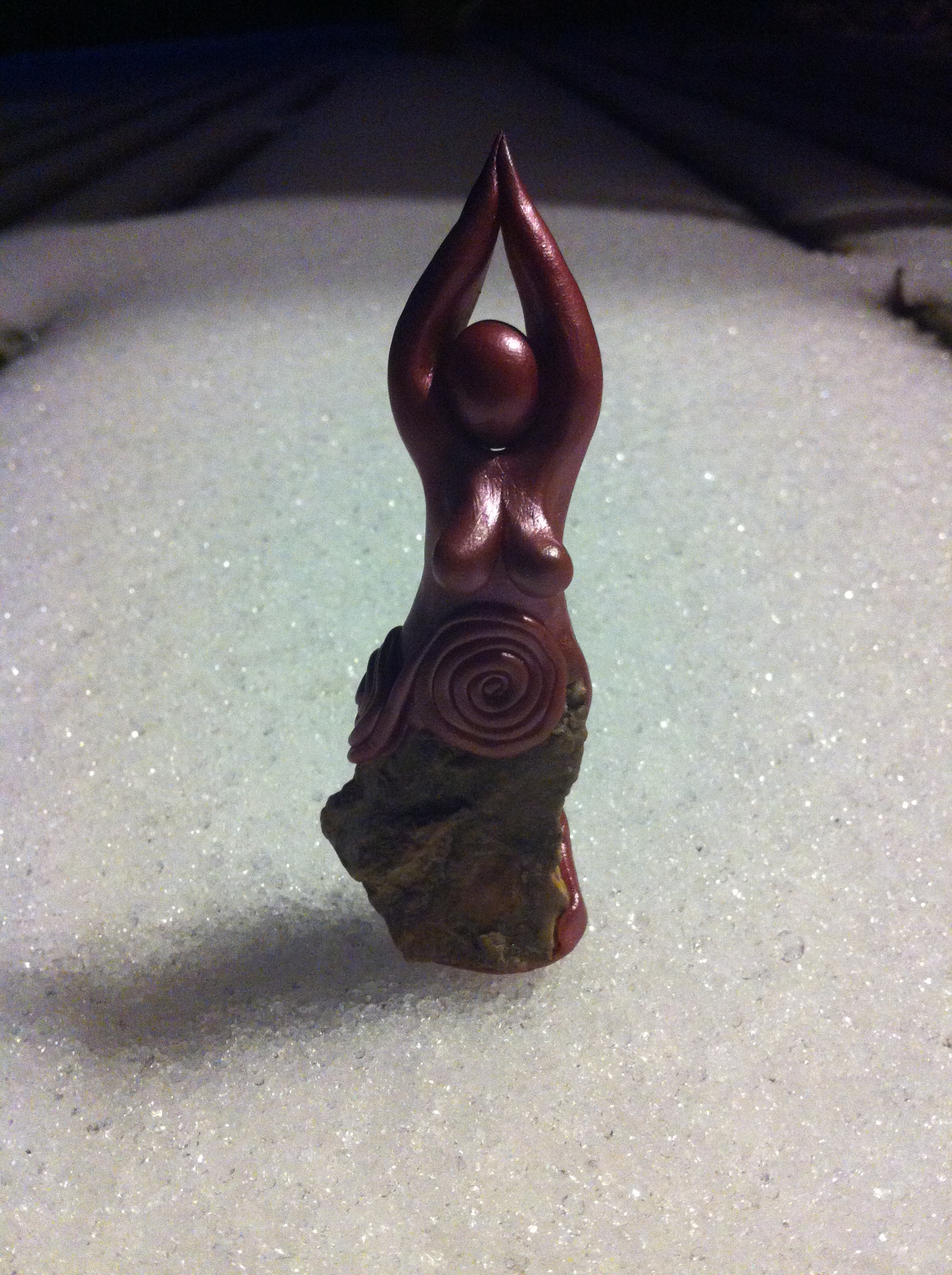
And, if I do say so myself, I made a pretty cool sculpture using a rock I found in the woods:

February 2013 065

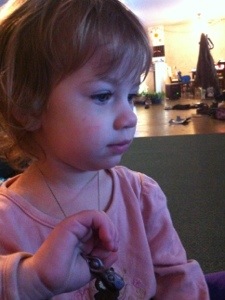
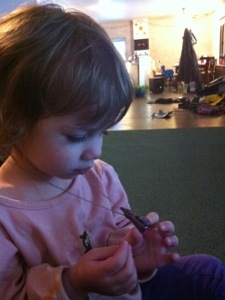
And, since my mamapriestess sculpture was about her in the first place, at her insistence, I gave the first little mini-mini mamapriestess to Alaina to wear as a necklace:

20130223-171228.jpg

20130223-171242.jpgFinally, lest anyone think all I do is waltz through the forest photographing my art in the sunshine and feeling all Goddess-esque and Earth-mama divine, this is really what is sometimes like behind the scenes:

20130223-172556.jpg

Crabby and wanting to go back inside (note my hand holding her back from stepping on me).

20130223-172610.jpg

Scratchy knocking-stuff-down cat and toddler with pig ball “helping” me set up my little sculptures!

20130227-004342.jpg

She also is very, very, very eager to help me put the pigment on (note the table and her arm!)

While this birth art journey has very much been intertwined with my pregnancy-after-loss journey, my preparation for birth, incorporating the lessons of birth, and expressing the phases and feelings of life with my new baby-turned-bigger-baby-turned-toddler as well as my life as a woman, I realized that it was high time I add another figure to my series that includes all of my kids!

20130227-003926.jpg

They’re all bigger than this in proportion to me, obviously, but these aren’t meant to be perfect representations (I also don’t just have a smooth, faceless head!)

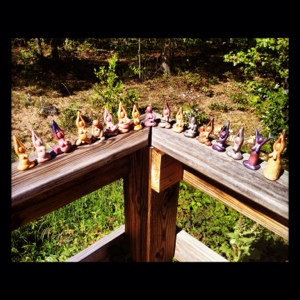
I also finished a bunch more sculptures late last night (my oldest said they look like a rainbow :)):

20130227-003942.jpg

In giving birth to our babies, we may find that we give birth to new possibilities within ourselves.

Everyday Blessings

Tuesday Tidbits: Precious and Fragile

Via Birthing Beautiful Ideas, wisdom from BBI sponsor, The Mindful Way through Pregnancy from Shambhala Publications:

A better photo of our matching mother-daughter necklaces made by Mark :)

A better photo of our matching mother-daughter necklaces made by Mark 🙂

“Ultimately, what makes pregnancy a spiritual practice is not what kind of pregnancy we have. It’s who we open to it, moment by moment, breath by breath. Pregnancy is not about escaping or transcending physical existence. It’s about embracing it, in all its grit and mess and blood and uncertainty and pain. Pregnancy pulls us straight to the heart of what it means to be alive. It reminds us we are part of a universe that is infinitely creative and breathtakingly beautiful but where, ultimately, most of what really matters is out of our personal control. It teaches us that life is both precious and fragile–and that our hearts are both bigger and more vulnerable than we could have imagined.” –Anne Cushman

And, in considering life’s precious fragility, we need also consider the preciousness of midwifery:

“Bickering with each other will lead to our demise. We need to move away from a culture of blame and shift our focus to working collaboratively in order to identify a range of care options. This is a vastly different model than one group of midwives exclaiming, ‘VBACs are safe, all midwives should do them!’ or ‘VBACs are unsafe, no midwives should do them!’ (This is the same rigidity that accounts for high c-section rates in hospital settings.) Could it be possible that midwives who feel safe doing VBACs should be doing them and those who do not, should not? What if we each excelled at particular things and referred women to other midwives when we felt unable to provide care for them? We all need to take responsibility for the overall heath of our industry by honoring the journey that others have made to get where they are and the roles they play in service to mothers and babies.” –Jodilyn Owen (in Midwifery Today, Spring 2012, p. 28)

Shared via ScoopIt:

Some articles about birth:

Writer looks for healthiest, happiest approach to childbirth – California Watch

Study finds widespread ‘criminalisation of pregnancy’ in US institutions

Ky. Voices: Doctors often push for risky births | Op-Ed | Kentucky.com

And, some articles about parenting:

In not very enjoyable parenting articles, I found myself annoyed by this piece…

The Attached Family » What To Do When You Crave a “Mommy Time-Out”

The basic message is, you don’t need a timeout! Just hunker down, spend MORE time and love ’em harder! You are bad for ever wanting a break! Breaks need not ever occur to you. Bad, bad! Attach MORE, more, MORE! The sanctimonious and holistic-er-than-thou tone is exactly why I eventually discontinued my API membership. I am a very crunchy, AP-type parent, but I find that there are certain voices of the “movement” that make me want to run away screaming and saying, no wonder some people HATE US!

In enjoyable parenting articles I very much liked these companion pieces from Dreaming Aloud:

Dreaming aloud: The Sacred Role of a Parent

Dreaming aloud: Finding Our Centres – Tried and Tested Techniques for Family Sanity

And, I also found some things to identify with in this article:

Please Don’t Help My Kids

I’m more likely to be irritated by what I call Maternal Failure Alert alarm-raisers, in which someone “helpfully” points out something your child did or is doing or is asking or is needing or is located, when you already know it very well and in some cases are choosing to ignore/not respond/let them do it/or wait a minute.

Over the weekend I updated my Handouts page also.

Jewelry Memory

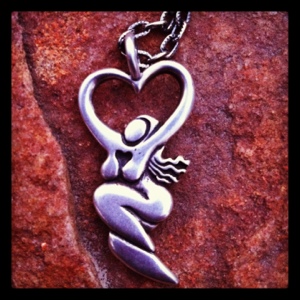
Those of you who know me in real life may know that I really like jewelry. You may or may not also know that I often use jewelry to mark significant moments in my life, to communicate certain messages, and to remind myself of things or serve as touchstones. For the last couple of days, I made sure to put on three significant necklaces and the order of the necklaces told a story. The first was my baby-in-my-heart pendant. Unfortunately no longer available for sale anywhere, I very much connected to this pendant and bought it as a connection to the baby in my own heart. I used to even sleep and shower wearing it and wore it continuously until midway through my pregnancy-after-loss in which I then felt like putting it away. Now, I wear it on certain meaningful occasions like on Noah’s birthday or on holidays.

20121107-222337.jpg

The second is a pendant I bought right after my second miscarriage. It is a small medallion style piece with the words, “believe in yourself” on the back. I wore it throughout my pregnancy with Alaina, including in labor. Now, I wear it when I need encouragement, courage, or strength. I have a tradition of wearing it to the first night of every class I teach. It serves as a reminder for me and helps me feel strong.

20121107-222343.jpg20121107-222350.jpg

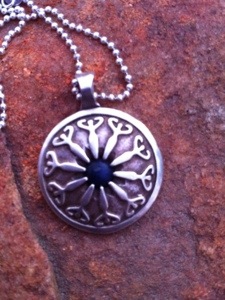
The third pendant is the dancing goddess logo from SageWoman magazine. My husband gave it to me after Alaina was born in 2011. It reminds me of my Happy Birth Dance feelings of relief and joy at her birth. I still wear this one almost every day.

20121107-222736.jpg

Together, obviously, the three in a row tell a story of loss, hope, and joy.

20121106-223159.jpg

Lann took this picture of me a couple of days ago on Nov. 6, the third anniversary of the day we found out the baby had died and I was going to have a miscarriage.

[Side note: Jewelry is significant enough to me that there are still birthy necklaces I haven’t worn since my miscarriages because they represent a happy point of pre-loss naïvety to me and I now feel uncomfortable wearing them. I put many of my very favorite necklaces away after Noah was born, because I couldn’t even stand to look at them and be confronted with the joy they had previously represented, and even though I am no longer in that dark and distressed place, I still don’t enjoy wearing them. Their association for me has permanently changed.]

20121107-222428.jpg

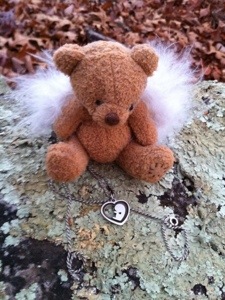
Noah’s angel bear and my necklace on the priestess rocks yesterday afternoon.

Do you have jewelry that is especially significant to you? Do you wear it when you need to tell the world something or remind yourself of an important moment or experience? I’d love to see a picture of it!

I also felt inspired to quickly make a new birth art figure—this one incorporating the “baby in my heart” image that I found so valuable. And, it also connects to the persistent feeling I had for months after he was born (until I reached his due date really) that I was going to be, “a little bit pregnant” with him forever.

20121107-224515.jpg

Ceremony Preparations!

My brother got married at my parents’ house early last month and it involved a surprisingly huge amount of work and preparation even though it was a small wedding. Now, we’re getting ready for an overnight women’s retreat at the same location and it feels like almost the same amount of prep work! I’ve been planning and facilitating quarterly women’s spirituality retreats locally for two years. Early this year, we decided to have a special “SageWoman” ceremony in the fall to honor our Queen/Crone members of the circle. It will be similar to a coming of age ceremony for a maiden or a mother blessing ceremony for a pregnant woman. My own mother has already been celebrated multiple times, but the other four honorees have never had a blessingway ceremony—not for coming of age or for pregnancy. (Side note regarding my own mom: she has already been a part of a group ceremony like this for wise women and then through two blessingways during her own pregnancies–I’m one of the only people I know whose mom who was also given blessingways during her pregnancies. I think sometimes the current generation feels like they “invented” them, but there were plenty of awesome women who paved the way to ritually acknowledging the power of the transition to motherhood. In fact, I feel like in many ways, it was my mom who “brought back” the mother blessing to my own circle of friends when she hosted a ceremony for me during my own first pregnancy. Before that, the local women were no longer holding the kinds of ceremonies they’d held during the 80’s.)

We’re having an overnight retreat and planning to have a nighttime ceremony of awesomeness with candlelight and a fire and the deep tones of my new community drum. That’s right, after being totally entranced by the large powwow/community drums at the Goddess festival I attended in Kansas in Sept, I spent way too much money and bought one of my own! We’ve often tried drumming as a group, but just can’t quite get it going. The community drum is going to change all that by involving multiple people on the same drum. Plus, we learned cool chants! I’ve been drumming and singing with my husband since the powwow drum arrived. There is something about the deep sound and the rhythm and the energy of drumming together on the same drum that makes you feel like you are great and could take this show on the road! (I’m not really musically skilled at all, quite the opposite, but the community drum changes that feel of arthymic tone-deafness into awesomeness.)

It is thankfulness-every-day month on Facebook and on Nov. first I shared the following:

Today I’m thankful for a husband that has spent hours and hours this week helping me make presents for MY friends (including a trip to the store today to fix a problem), staying up too late to do so (1:00 a.m. two [three] nights in a row), and patiently persevering when I said I was ready to quit! And, I’m also thankful for a dad and a good friend who spent hours this morning setting up a tipi for us to have a ceremony in this weekend. I guess behind every great women-only ritual are several helpful and awesome men 🙂

20121102-152058.jpg

20121102-152110.jpg

And then yesterday, my dad made a beautiful drum stand using native hardwoods (I made the drumstick in the pic, but Mark made four others for us. See what I mean about the awesome, helpful men?! And, unlike popular stereotypes, this is proof that it is possible to be both a feminist and love and appreciate your menfolk :))

20121102-152043.jpg

Since words and ritual creation are my thing, I’ve been working hard creating what I hope will be a beautiful and meaningful ceremony. I will have the ritual outline to share and pictures of the aforementioned gifts I’ve been slaving over after they’ve actually been presented to my friends. Here are two of the readings I’ve chosen to use:

Womanspirit Rising
(an opening. Call and response)

We have come from years of pondering

Silently and alone
As we nurtured our children.

We have come from long, slow generations of women

Who knew their minds
And would not settle

We have come from the ages of pre-history,
Out of the civilizations of Mycenae and Minos
Of Lesbos and Crete.

Of the Olemecs and the Druids
Of Mesopotamia and China

We have come through the ages

Bearing the children,
Nurturing the community
In search of ourselves

We have come to know that

The rising of the womanspirit
Means the rising of humanity

Now we are discovering and re-discovering ourselves

And creating and re-creating
Our depths and our heights…

And our womanspirit is rising
And rising again…

Blessed Be.


*From a Unitarian Universalist Women’s meeting in Albuquerque, NM. Reprinted in the book Readings for Women’s Programs

Womanspirit Rising
(a closing. Call and response)

We come to stay forever

Our womanspirit is rising
Deepening
Converging

We rejoice in it and in one another

We who are many are also one
We who are one are also many

On behalf of our Sisters around the globe

We give thanks.

On behalf of our Sisters who have gone before us.

We give thanks.

On behalf of our Sisters yet to be born

We give thanks.

We are the past.

And we are the future.

We are the here

And we are the now

We are one, we are Sisters

And our womanspirit is rising
And rising again.

We rejoice in our Sisterhood.

Blessed be.


*From a Unitarian Universalist Women’s meeting in Albuquerque, NM . Reprinted in the book Readings for Women’s Programs

Blessingways and the role of ritual

In this circle No Fear
In this circle Deep Peace
In this circle Great Happiness
In this circle Rich Connection

I saw this gorgeous blessingway image pinned on Pinterest a while ago. Love it!

I’ve recently been on a reading streak with books on ritual. I’ve always been interested in ritual, especially women’s rituals, and I’ve planned and facilitated a lot of different rituals. I also have a huge variety of books that include information on planning rituals, women’s spirituality books, books about blessingways, and more. I’m branching out even more with my recent kick though, starting with buying books on officiating/planning wedding ceremonies (I have two weddings coming up in October). Then, I was talking to some mothers of newly teenage boys about planning some kind of coming of age rite/ritual for them and  bought some more books on creating sacred ceremonies for teenagers. (I’m good with books for women/girls, but sadly lacking in resources for ceremonies and celebrations for boys/men.) One of the books I purchased was Rituals for Our Times, a book about “celebrating, healing, and changing our lives and relationships.” I left a mini-review on goodreads already:

There were some good things about this book about the meaning, value, purpose, and role of ritual in family life. I lost interest about halfway through and ended up skimming the second half. While it does contain some planning lists/worksheets for considering your own family rituals, the overall emphasis is on short vignettes of how other families have coped with challenges or occasions in their own lives. Also, the focus is on very conventional, mainstream “ritual” occasions–birthdays, anniversaries, holidays–rather than on life cycle rites of passage and other more spiritual transitions in one’s life.

However, one section I marked was about the elements that make ritual work for us and I thought about blessingways and how they neatly fulfill all of the necessary ritual elements (which I would note are not about symbols, actions, and physical objects, but are instead about the emotional elements of connection, affection, and relationship):

Relating–“the shaping, expressing, and maintaining of important relationships…established relationships were reaffirmed and new relationship possibilities opened.” Many women choose to invite those from their inner circle to their blessingways. This means of deeply engaging with and connecting with those closest to you, reaffirms and strengthens important relationships. In my own life, I’ve always chosen to invite more women than just those in my “inner circle” (thinking of it as the next circle out from inner circle) and in so doing have found that it is true that new relationship possibilities emerge from the reaching out and inclusion of those who were originally less close, but who after the connection of shared ritual, then became closer friends.

Changing–“the making and marking of transitions for self and others.” Birth and the entry into motherhood—an intense and permanent life change–is one of life’s most significant transitions. A blessingway marks the significance of this huge change.

Healing–“recovery from loss,” special tributes, recovering from fears or scars from previous births or cultural socialization about birth. My mom and some close friends had a meaningful ceremony for me following the miscarriage-birth of my third baby. I’ve also planned several blessingways in which releasing fears was a potent element of the ritual.

Believing–“the voicing of beliefs and the making of meaning.” By honoring a pregnant woman through ceremony, we are affirming that pregnancy, birth, and motherhood are valuable and meaningful rites of passage deserving of celebration and acknowledgement.

Celebrating–“the expressing of deep joy and the honoring of life with festivity.” Celebrating accomplishments of…one’s very being.

Notice that what is NOT included is any mention of a specific religion, deity, or “should do” list of what color of candle to include! I’ve observed that many people are starved for ritual, but they may so too be deeply scarred from rituals of their pasts. I come from a family history of “non-religious” people and I feel like I seem to have less baggage about ritual and ceremony than other people do. An example from the recent planning for a mother blessing ceremony: we were talking about one of the blessingway songs that we customarily sing–Call Down Blessing–we weren’t sure if we should include it for fear that it would seem too “spiritual” or metaphysical for the honoree (i.e. blessings from where?!) and I remembered another friend asking during a body blessing ritual we did at a women’s retreat, “but WHO’s doing the blessing?” As someone who does not come a religious framework in which blessings are traditionally bestowed from outside sources–i.e. a priest/priestess or an Abrahamic God–the answer felt simple, well, WE are. We’re blessing each other. When we “call down a blessing” we’re invoking the connection of the women around us, the women of all past times and places, and of the beautiful world that surrounds us. We might each personally add something more to that calling down, but at the root, to me, it is an affirmation of connection to the rhythms and cycles of relationship, time, and place. Blessings come from within and around us all the time, there’s nothing supernatural about it.

I also think, though I could be wrong, that it is possible to plan and facilitate women’s rituals that speak to the “womanspirit” in all of us and do not require a specifically shared spiritual framework or belief system in order to gain something special from the connection with other women.

In another book I finished recently, The Power of Ritual, the author explains:

“Ritual opens a doorway in the invisible wall that seems to separate the spiritual and the physical. The formal quality of ritual allows us to move into the space between the worlds, experience what we need, and then step back and once more close the doorway so we can return to our lives enriched.”

She goes on to say:

You do not actually have to accept the ideas of any single tradition, or even believe in divine forces at all, to take part in ritual. Ritual is a direct experience, not a doctrine. Though it will certainly help to suspend your disbelief for the time of the ritual, you could attend a group ritual, take part in the chanting and drumming, and find yourself transported to a sense of wonder at the simple beauty of it all without ever actually believing in any of the claims made or the Spirits invoked. You can also adapt rituals to your own beliefs. If evolution means more to you than a Creator, you could see ritual as a way to connect yourself to the life force…

As I continued to think about these ideas, I finished reading another book on ritual called The Goddess Celebrates. An anthology of women’s rituals, this book included two essays by wisewoman birthkeeper, Jeannine Pavarti Baker. She says:

The entire Blessingway Ceremony is a template for childbirth. The beginning rituals are like nesting and early labor. The grooming and washing like active labor. The gift giving like giving birth and the closing songs/prayers, delivery of the placenta and postpartum. A shamanic midwife learns how to read a Blessingway diagnostically and mythically, sharing what she saw with the pregnant woman in order to clear the road better for birth.

[emphasis mine, because isn’t that just a cool idea?! I feel another blog post coming on in which I “read” my own blessingway experiences and how they cleared the way for my births]

Baker goes on to describe the potent meaning of birth and its affirmation through and by ritual acknowledgement:

Birth is a woman’s spiritual vision quest. When this idea is ritualized beforehand, the deeper meanings of childbirth can more readily be accessed. Birth is also beyond any one woman’s personal desires and will, binding her in the community of all women. Like the birthing beads, her experiences is one more bead on a very long strand connecting all mothers. Rituals for birth hone these birthing beads, bringing to light each facet of the journey of birth…

20120818-120826.jpg

I wish for you a life full of ritual and community.” —Flaming Rainbow Woman, Spiritual Warrior 

(in The Thundering Years: Rituals and Sacred Wisdom for Teens)

Genuine, heartfelt ritual helps us reconnect with power and vision as well as with the sadness and pain of the human condition. When the power and vision come together, there’s some sense of doing things properly for their own sake.” —Pema Chodron

(in The Thundering Years: Rituals and Sacred Wisdom for Teens)

Other posts about mother blessings can be found here.


Amazon affiliate links included in book titles.

Women’s Retreat Recipe

Quarterly, I get together with some of my friends and we have a women’s retreat. We had our summer retreat this past Sunday and I thought I’d share the outline and our activities as a “retreat recipe” that others may use if they wish to do so. Since my friends do not necessarily share specific religious beliefs, the retreats are spiritual in a somewhat generic “womanspirit” sort of way and you can obviously customize your own retreat to best suit the spiritual beliefs/backgrounds of your own friendship group.

Circle up—we stand in a circle, place our hands on eachother’s backs and hum together three times to raise the energy of the circle.

Invocation to directions. This time we used an invocation by Judith Laura:

We honor the East
Home of air
March wind
Morning’s song
Eagle’s flight
Aurora’s breath
Welcome East

We honor the South
Home of fire
Noon sun
Flame of change
Heat of passion
Pele’s power
Welcome South

We honor the West
Home of water
River’s flow
Font of feelings
World’s womb
Kwan Yin’s love
Welcome West

We honor the North
Home of Earth
Root of life
Shaded mystery
Ground of being
Gaia’s growth
Welcome North.

Light candle/opening quote

“I see the wise woman. And she sees me. She smiles

from shrines in thousands of places. She is buried

in the ground of every country. She flows in every

river and pulses in the oceans. The wise woman’s

robe flows down your back, centering you in the

ever-changing, ever-spiraling mystery.

Everywhere I look, the wise woman looks back.

And she smiles.”

–Susun Weed quoted in Birthing Ourselves Into Being

Check-in–we take turns “passing the rattle” and each woman has about two minutes to share what’s been on her mind.

Since we are close to summer solstice, I then chose to do this solstice prayer of healing from the United Nations as a responsive reading as a group:

A Prayer of Healing
From the United Nations Environmental Sabbath

We join with the earth and with each other.
To celebrate the seas.
To rejoice the sunlight.
To sing the song of the stars.

We join with the earth and with each other.
To recall our destiny.
To renew our spirits.
To reinvigorate our bodies.

We join with the earth and with each other.
To create the human community.
To promote justice and peace.
To remember our children.

We join together as many and diverse expressions of one loving mystery: for the healing of the earth and the renewal of all life. We join with the earth and with each other.
To bring new life to the land.
To restore the waters.
To refresh the air.

We join with the earth and with each other.
To renew the forests.
To care for the plants.
To protect the creatures.

Guided visualization/meditation/relaxation (for this particular retreat, I used a nice full body relaxation from the book Birthing Ourselves into Being. This one isn’t available online that I can find, but you can find others online, like this one for example.)

We followed the relaxation with a muse questions and journaling using one of the questions from Shiloh Sophia’s Museletter:

Your Muse would like to show you something you haven’t been able to see.

She wants to invite you to have a thought you haven’t had yet…isn’t that an enticing thought in and of itself?

A thought that has lingered on the edge of your consciousness for maybe even a few years, or months….tell her…

I want to know what it is I am not seeing.

Then automatic write whatever comes up until you have to put the pen down.

Immediately following this question, it began to rain. Blissful, blessed, healing, glorious rain for which we were in so much need.

Discuss responses/experiences to relaxation/journaling.

Listen to songs/perhaps drum (this time, went outside together and stood in the rain)

Closing circle: Sing Woman Am I (recording of my friends singing it together is here).

Closing quote and extinguish candle

“A circle! No sharp edges, no hierarchy, just a circle of women…We are mothers. We are the portals. The next generation comes through our bodies.” –Annie Lennox

and one of my all-time favorites:

“I believe that these circles of women around us weave invisible nets of love that carry us when we’re weak and sing with us when we’re strong.” –SARK, Succulent Wild Woman

When reading a 1988 back issue of SageWoman magazine, I fell in love with Womanrunes by Shekhinah Mountainwater (originally in her book Ariadne’s Thread, which I then purchased) and so I made copies of the images to share with my friends. We are going to make some sets of runes at our next retreat. (And, after much scouring of the interwebz, I found a pronunciation guide for the runes here).

I also made a handout packet for them of various moon wheels/circular calendars for tracking your cycles, or simply for planning and thinking in circles rather than in lines. In the packets were:

And, then it was time for a craft, so as we snacked and chatted, I showed everyone how to make a small, hardbound pocket journal. You can find instructions for a simple book here, or, to make it even more simple, use this kit from Blick Art Supplies.

It was a delightful afternoon of connection and celebration—my original vision for holding these retreats was to bring some blessingway spirit into our regular lives, rather than only centered on being pregnant and I think that purpose was achieved.

This post is crossposted at Woodspriestess.

Women’s Power & Self-Authority

“I know myself linked by chains of fires,
to every woman who has kept a hearth.
In the resinous smoke
I smell hut, castle, cave,
mansion and hovel,
See in the shifting flame
my mother and grandmothers
out over the world.”
–Elsa Gidlo

I used the quote above as my winter solstice Facebook posting last year. It reminds me of a quote from Margaret Atwood used in the book Sacred Circles, “Sons branch out, but one woman leads to another.” One of the powerful gifts of feminist spirituality is the sense of intergenerational connectedness to all women of all time. We begin to sense the buried matrilineal links across time and culture. Links that have often been culturally, socially, and religiously broken on purpose as a way to separate and disempower women and to bury women’s wisdom. I believe a potent source of female power lies in the female body and that body wisdom has been suppressed and denied over the course of many years as a means of oppression and control. One of the root issues of patriarchy is who “owns” women’s bodies—is it men, is it the government, is the medical system, or is it the woman herself? (you know my pick).

Body wisdom and sources of power

Considering power, sources of power, and body wisdom, I appreciated reading Barbara Starrett’s essay The Metaphors of Power in the book The Politics of Women’s Spirituality. While she used abortion as her example, I have modified and paraphrased her thoughts to make the idea about birth instead. Starrett originally states, “We can create power centers both within and outside ourselves…Power is where power is perceived. Power resides in the mind. We can give or withhold power through our beliefs, our felt thoughts.” Medical professionals can make decisions about a woman’s body and birth choices effectively only as long as women believe that the professionals have the right to do this. When women reclaim the power to decide for themselves about birth, the doctors proclaim in a vacuum. Their power depends on the transference of our power, through our belief that this is right…Power is where power is perceived. This also means that in any given in-the-world situation, we can intentionally set up our own power centers. If we believe that power resides in those centers, it will. We will act successfully on this belief. Women’s organizations, unions, birth coalitions, etc., will never work unless we regard them, “as the legitimate centers of power…We must grant our own power to ourselves” (p. 191).

Lucky to have such a great group of friends to gather in the park to take part in the Our Bodies, Our Votes campaign.

While this comes a little too close for comfort to me with the idea that “we create our own reality” (which I cannot fully embrace due to the logical extension into blaming the victim that it creates), I connect deeply with the idea that we must treat women’s organizations and work as legitimate power sources. I think of books/movements like Our Bodies, Ourselves, for example. To me, this is a definitive women’s health resource—by women, for women and separated from the medical establishment that often dehumanizes women. If we continue to believe our “alternative” structures are just that, “alternative,” then the dominant model is still the norm and still accepted, even by us, as “normal.”

Starrett continues her essay by sharing that “It is necessary for some women to risk total reclamation, to risk the direct and intentional use of power, in bold, even outrageous ways. It takes only a minority of women to alter present reality, to create new reality, because our efforts are more completely focused, more total.” (p. 193) This is the risk that the creators of Our Bodies, Ourselves took. It is the risk birth activists and women’s health activists continue to take.

Peggy O’Mara tackles a similar topic in her essay, “Holy Mother,” in her collection of essays The Way Back Home, observing:

We live in a society…that romanticizes and trivializes the feminine…we live in an economy that regards women as cheap labor. In the marketplace, women work for less than men. At home, we do the large majority of the work. I believe that we enslave ourselves.

Is it any wonder, then, that we have not successfully resolved the childcare debate? Child care and national family policy are process issues, and thus sexist issues. Women themselves engage in sexism when they debate the either/or dichotomy of work or home. Too often, we do not realize the devaluation involved in playing by the crumbling rules of a male-dominated society rather than making up our own. The matriarchal process-based model comes from a religious belief system in which the Divine is immanent, within life, within us, ascribing sacredness to the ordinary processes of daily life. Rather than choosing between opposites, let us evolve a culture that values both the product and the process, a culture that synthesizes both the patriarchy and the matriarchy.

…we must put all of our loves–work and family, mothering and career, self and others—on the bargaining table at once, and not assume that because we are women, we must acquiesce to the cultural ideal. To run our personal lives in enslavement to an economic reality that does not serve our needs makes society crazy.

In a brief except from author Libba Bray, she states that for years she “…heard feminist Gloria Steinem described as ‘shrill’ and ‘hostile’ and many other dismissive, denigrating terms. But after reading about her struggles as a human being and as a leader of feminism’s second wave…I got a truer picture…I learned that it’s far too easy for women to be shamed into staying quiet about their lives–their dreams, needs, desires, anger, aspirations—and that the old adage, ‘Well-behaved women seldom make history’ is all too true.”

Consult your health care provider?

In my own life, I am frustrated by the ubiquitous phrase, “Consult your health care provider.” No thanks. I prefer consulting myself, my books, google, my own research, and my friends. Last time I checked, my doctor did not own my body nor did she have divine revelation as to what I need in my life. I am a breastfeeding counselor providing phone and email support to women who have breastfeeding questions. Women frequently receive very poor breastfeeding “advice” from their doctors—to the extent that I honestly think they’d receive better information by polling random strangers at Wal-Mart with their questions (and, yes, I will actually tell women this). One caller once used the phrase, “but, I don’t want to disobey my doctor” and I found this extraordinarily telling as well as depressing. I recognize that doctors have special training and can be life-saving, however, what does that say about mothering in our culture that a woman would not act on behalf of her own baby and herself because of fear of being disobedient to a professional that she has hired? She is a consumer of a service, not the subject of a ruler!

This brings me to a thought by Dr. Michelle Harrison, author of the book A Woman in Residence: “I used to have fantasies…about women in a state of revolution. I saw them getting up out of their beds and refusing the knife, refusing to be tied down, refusing to submit…Women’s health care will not improve until women reject the present system and begin instead to develop less destructive means of creating and maintaining a state of wellness.” Indeed! And, in an essay by Sally Gearhart’s about womanpower, she notes: “…there’s no forcing any other woman into a full trot or a gallop; she will move at her own pace, but at her own pace we can be sure she will move. At this point I always remind myself that the patriarchal use of crash programs is antithetical to organic movement; in a crash program the theory goes that if you can get nine women pregnant you can have a baby in one month; it takes women, I suppose, to understand that it doesn’t work that way.” (p. 202-203)

Reclaiming power

So, how do women reclaim power? I think story holds a key to power reclamation in this context. As I’ve referenced before, Carol Christ describes it thusly, “When one woman puts her experiences into words, another woman who has kept silent, afraid of what others will think, can find validation. And when the second woman says aloud, ‘yes, that was my experience too,’ the first woman loses some of her fear.” As I touch on above, for me it is to see myself and my body as a source of wisdom and to refuse to participate in structures that do not honor my power and personal agency. It involves more often turning to my peers, to other women, for advice and comfort and support, rather than to experts.

Returning to Gearhart, she states: “If I can move out of the patriarchy for my re-sourcement, then I do indeed march to a different drummer; but I have to march with the consciousness in my very bones of the cost in blood and pain and death that is somewhere being paid for my personal growth.” (p. 203)

I’ve written before that I am a systems thinker. Women’s choices about their bodies and about birth are not made in personal isolation, but in a complexly interwoven network of social, political, medical, religious, and cultural systems. As Gearhart notes, “There may be no ‘enemy’ except a system. How do we deal with ‘the enemy’? As seldom as possible but when necessary by opening the way for [their] transformation into not-the-enemy. What weapons do we use? Our healing, our self-protection, our health, our fantasies, our collective care…” (p. 203).

And, in closing I like this reminder:

“Study after study has taught us that there is no tool for development more effective than the empowerment of women. No other policy is as likely to raise economic productivity, or to reduce infant and maternal mortality. No other policy is as sure to improve nutrition and promote health—including the prevention of HIV/AIDS. No other policy is as powerful in increasing the chances of education for the next generation. But whatever the very real benefits of investing in women, the most important fact remains: Women themselves have the right to live in dignity, in freedom from want and from fear.” —Former UN Secretary-General Kofi Annan

This is the whole point—women’s rights aren’t about “taking” rights from anyone else OR about demanding “special treatment,” they are important for a HUMANE WORLD for all people. I think it is hilariously awful that “women’s rights” are considered a political issue and that there is a section about “women’s rights” in the “opposing viewpoints” database for my social policy class. As long as women’s rights are considered a political issue or as something about which an opposing viewpoint can be held, rather than as self-evident, we are in continued, desperate need of revolution.

—-

(note: portions of this post are excerpted from one of my essays for a class I took about Goddess Traditions)

Breastfeeding as a Spiritual Practice

Note: This is a preprint of the following article:  Remer, M. (2012). Breastfeeding as a spiritual practice. Restoration Earth: An Interdisciplinary Journal for the Study of Nature & Civilization, 1(2), 39–43. Copyright © The Authors. All rights reserved. For reprint information contact: oceanseminary@verizon.net.

Click here for a typset pdf version of the original article.

The article was constructed from several of my prior blog posts, so if you’re familiar with my blog, a lot of the content here will sound familiar!

Breastfeeding as a Spiritual Practice

By Molly Remer, MSW, ICCE, CCCE

Every single human being was drummed into this world by a woman, having listened to the heart rhythms of their mother.

––Connie Sauer

When I became a mother, many things in my life changed. I was startled and dismayed by the magnitude in which my free time diminished and one by one many of my leisure pursuits and hobbies were discarded. The time for one of my favorite hobbies increased exponentially, however: reading. As a child I was a voracious reader—my mother had to set a limit for me of “only two books a day.” In college and graduate school, reading for fun fell away and I spent six years reading primarily textbooks and journal articles. In the years following, I began to read for pleasure again and when my first baby was born in 2003, I once again became a truly avid reader. Why? Because of breastfeeding. As I nursed my little son, I read and read and read. This became the rhythm of our lives: suck, swallow, read, and consider.

At first I scoured The Womanly Art of Breastfeeding and the Sears’ The Baby Book to try to make sense of my new life and then began to gobble up books about motherhood and women’s experiences of mothering. Reading did actually help me adjust to motherhood. Subtitled “Breastfeeding as a Spiritual Practice,” an article published in the fall 2003 issue of Mothering magazine was immensely meaningful to me. My baby was about two weeks old when the magazine arrived—the first issue I had received after his birth. This article was in it and it was exactly what I needed to read. Breastfeeding can be a meditative and spiritual act––it is actually a “practice” a “discipline” of sorts. The author, Leslie Davis, explains it better:

I realized I’d never before devoted myself to something so entirely. Of course I’ve devoted myself to my husband, to my family, to friends, to my writing, to mothering, and even to God and other spiritual endeavors at various points in my life…I’d completely given myself to this act of nursing in a way that I never had before. Nothing was more important than nursing my son. Nothing was put before it. There was no procrastination as with exercise, no excuses as with trying to stop eating sugar, no laziness as with housecleaning and other chores. Nursing had to be done, and I did it, over and over again, multiple times a day, for more than 800 days in a row. It was the closest thing to a spiritual practice that I’d ever experienced. 

With my first baby, viewing the act of breastfeeding through a spiritual lens like this was a lifeline to me as a vulnerable, sensitive, and bruised postpartum woman trying desperately to adjust my pace as an overachieving “successful” independent person to one spending hours in my nursing chair attached to a tiny mouth. I marvel at the uncountable number of times I spent nursing my first son and then my second son and now my daughter.  The intensity and totality of the breastfeeding relationship is extremely profound—it requires a more complete physical/body investment with someone than you will ever have with anyone else in your life, including sexual relationships. While I don’t like to lump the breastfeeding relationship in the same category with sex, because it feels like I’m saying breastfeeding is sexual, when it isn’t…though, since lactation is definitely part of a woman’s reproductive functions, I guess maybe it is…my basic line of thought was that if you nurse a couple of kids through toddlerhood, odds are high that you will have nursed them many more times than you will end up having sex with a partner in your entire lifetime.

I calculated that so far in my life I’ve put a baby to my breast more than 12,000 times. Even if I only experienced a single moment of mindful awareness or contemplation or transcendence or sacredness during each of those occasions, that is one heck of a potent, dedicated, and holy practice. In the unique symbiosis of the nursing relationship, I recall a quote from the book The Blue Jay’s Dance (1996) by Louise Erdrich about male writers from the nineteenth century and their longing for an experience of oneness and seeking the mystery of an epiphany. She says: “Perhaps we owe some of our most moving literature to men who didn’t understand that they wanted to be women nursing babies.” (p. 148)

I have learned a lot about the fundamental truth of relatedness through my own experiences as a mother. Relationship is our first and deepest urge. The infant’s first instinct is to connect with others. Before an infant can verbalize or mobilize, she reaches out a hand to her mother. I have seen this with my own babies. Mothering is a profoundly physical experience. The mother’s body is the baby’s “habitat” in pregnancy and for many months following birth. Through the mother’s body the baby learns to interpret and to relate to the rest of the world and it is to mother’s body that she returns for safety, nurturance, and peace. Birth and breastfeeding exist on a continuum as well, with mother’s chest becoming baby’s new “home” after having lived in her womb for nine months. These thoroughly embodied experiences of the act of giving life and in creating someone else’s life and relationship to the world are profoundly meaningful.

How many generations of women have pushed out their babies and fed them at the breast without knowing the exact mechanics of reproduction, let alone milk production. There are all kinds of historical myths and “rules” about breastmilk and breastfeeding and even ten years ago we used to think the inner structure of the breast was completely different than what we think it is like now. Guess what? Our breasts still made milk and we still fed our babies, whether or not we knew exactly how the milk was being produced and delivered. Body knowledge, in this case, definitely still trumped scientific knowledge. I love that feeling when I snuggle down to nurse my own baby—my body is producing milk for her regardless of my conscious knowledge of the patterns or processes. And, guess what, humans cannot improve upon it. The body continues to do what the human mind and hand cannot replicate in a lab. And, has done so for millennia. I couldn’t make this milk myself using my brain and hands and yet day in and day out I do make it for her, using the literal blood and breath of my body, approximately 32 ounces of milk every single day for the last seventeen months. That is beautiful.
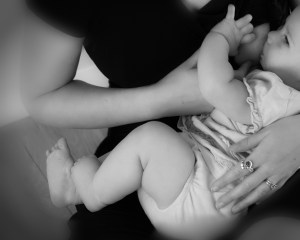
A simple meditation technique to use while breastfeeding is: “breathing in, I am nursing my baby. Breathing out, I am at peace.

Parenting as a Spiritual Practice

The spirituality of daily life with children is not only to be found in the breastfeeding relationship, but is woven into the warp and weft of the daily tasks of parenting with mindfulness, connection, and love. In this simple little verse from Eileen Rosensteel in the 2011 We’Moon Datebook, she describes it thusly:

My prayers are

The food I cook

The children I hug

The art I create

The words I write

I need no religion. (p. 152)

In the book Tying Rocks to Clouds (1996) the author interviews Stephen Levine, the father of three children and in response to a question about whether serious spiritual development is possible when having relationships with others (spouse, children, etc.) he says: “Talk about a fierce teaching. It is easier to sit for three years in a cave than to raise a child from the time he is born to three years old.” (p 160)

In the book, The Tao of Motherhood (2011) (literally the Tao Te Ching for mothers—a translation of the ancient Tao Te Ching by Lao-Tzu, but reworked slightly so that every “chapter” is about mothering and mothering well) a quote from the end of the chapter on selflessness:

“You can sit and meditate while

your baby cries himself to sleep.

Or you can go to him and share

his tears, and find your Self.”

And, then from Peggy O’Mara’s (1993) collection of essays, The Way Back Home, she raises this question: “Why is it that to rise gladly at 4:00 am to meditate and meet one’s God is considered a religious experience, and yet to rise at 4:00 am to serve the needs of one’s helpless child is considered the ultimate in deprivation?” (p. 19) O’Mara continues by explaining,

One can learn sitting meditation by rocking and nursing a little one to sleep; one can learn reclining meditation by staying still to avoid disturbing a little one who has been awake for hours; and one can learn walking meditation by walking and swaying with a little one who would like to be asleep for hours. One must learn to breathe deeply in a relaxed and meditative manner in order to still the mind that doubts one’s strength to go on, that sees every speck of dust on the floor and wants to clean it, and that tempts one to be up and about the busyness of accomplishment… (p. 19)

I do find that I have a tendency to think about my own spiritual practices as something that has to wait until I am alone, until I have “down time,” until I have space alone in my head in which to think and to be still. On the flip side, as I noted earlier, the act of breastfeeding, day in and day out, provides all manner of time for spiritual contemplation and meditative reflection. I often find it difficult to stay centered and grounded in mindfulness of breath and spirit during the swirl of life with little ones. I’ve done a lot of reading about “Zen parenting” type topics and it seems like it would be so simple to integrate mothering with mindfulness. Then, I find myself frazzled and scattered and self-berating, and wonder what the heck happened to my Zen. Then, I read an interesting article about anger and Zen Buddhism that clarified that meditation and Zen practices are not about being serene and unfrazzled, but about being present and able to sit with it all. And, it offered this helpful reminder:

I used to imagine that spiritual work was undertaken alone in a cave somewhere with prayer beads and a leather-bound religious tome. Nowadays, that sounds to me more like a vacation from spiritual work. Group monastic living has taught me that the people in your life don’t get in the way of your spiritual practice; these people are your spiritual practice. (Haubner, 2012, “The Angry Monk”)

I don’t need to wait to be alone in order to be “spiritual” in this life with my babies. This sometimes messy, sometimes chaotic, sometimes serene, sometimes frazzling, often joyful life is it.

Motherhood is an intensely embodied experience. It is profoundly empowering to know that you can build a whole person and sustain their lives with nothing but the materials of your own body—this is my blood, my milk, made flesh.

Molly Remer, MSW, ICCE, CCCE is a certified birth educator, writer, and activist who lives with her husband and children in central Missouri. She is the editor of the Friends of Missouri Midwives newsletter, a breastfeeding counselor, a professor of human services, and doctoral student in women’s spirituality at Ocean Seminary College. She blogs about birth, motherhood, and women’s issues at https://talkbirth.me/

References

Davis, L. (2003). Breathing in: I am nursing my baby. Mothering, Issue 120, September/October 2003 (pages unknown—electronic version available here: http://mothering.com/breastfeeding/breathing-i-am-nursing-my-baby-breastfeeding-spiritual-practice)

Erdrich, L. (1996). The Blue Jay’s Dance. New York, NY: Harper Perennial

Haubner, S. J. (September/October, 2012). The angry monk. Utne. Retrieved from http://www.utne.com/Mind-Body/Angry-Monk-Buddhism-Zen-Spiritual-Practice.aspx?page=5 on March 1, 2012.

Elliott, W. (1996). Tying rocks to clouds. New York: Doubleday.

McClure, V., & Thoele, S. P. (2011). The Tao of motherhood. Novato, CA: New World Library.

O’Mara, P. (1993). The way back home. Santa Fe, NM: Mothering Magazine

Rosensteel, E. (2011). Untitled. In We’Moon datebook (p. 152 ). Wolfcreek, OR: Mother Tongue Ink & We’Moon Company.

—-

The Spirituality of Birth + Book Giveaway: Birth on the Labyrinth Path

I’ve been experiencing a fun trend in the books I’ve been reviewing lately—many new resources are being published with a shared theme of approaching birth from a spiritual perspective. There are resources now available for women from a variety of spiritual backgrounds, all honoring and respecting pregnancy and birth as experiences uniquely connected in an embodied way to the numinous and sacred, in whichever manner we choose to name it. I recently finished a class for my doctoral program and the subject of my final paper was “A Thealogy of Birth,” in which explored the sociopolitical, cultural, religious, and personal relevance of birth from a thealogical (Goddess-oriented) perspective.
  • I just reviewed The Gift of Giving Life which delves into the divine nature of pregnancy and birth from a Christian (specifically LDS/Mormon) perspective.
  • I then pre-reviewed the upcoming book Embodying the Sacred, which is written from a Catholic point of view.
  • And, earlier in the month I finished reading a gorgeous book with a non-specific spiritual perspective: Sacred Pregnancy
  • In the past, I also reviewed the book L’Mazeltov, which is written specifically for Jewish parents-to-be.

All of these resources are amazing and I’m so glad they’re available for pregnant women.

Now, I’m excited to offer a short review and a giveaway of another new book, this one written from a pagan perspective. Published by Pantheos Press, Birth on the Labyrinth Path is written by Sarah Whedon and focuses on “Sacred Embodiment in the Childbearing Year.”

My mini-review from Goodreads is as follows:

I really enjoyed this short book about pregnancy and birth from a pagan perspective. The reflections on the embodied, spiritual nature of pregnancy and birth were wonderful. It is very positive and reinforcing and contains great thoughts like this one: “A body that is curvier than it was before, maybe bearing stretch marks or scars from surgical procedures or tearing, maybe producing milk, is a body that bears the signs of delivering a human being into this world. We may mourn our smooth, skinny, unmarked maiden bodies, but at the same time we can celebrate the beauty of our storied, productive, and strong mama bodies.” Whedon also quotes this lovely passage regarding the connection pagan women might feel to the Divine: “I am the holy mother; . . . She is not so far from me. And perhaps She is not so very distinct from me, either. I am her child, born in Her, living and moving in Her, perhaps at death to be birthed into yet some other new life, still living and having my being in Her. But while on this earth She and I share the act of creation, of being, and Motherhood” (from Niki Whiting, “On Being a Holy Mother” in Whedon, p.)

I also shared some lovely quotes from Birth on the Labyrinth Path in my recent post on Birth Culture.

*********The giveaway is now closed. Ellen was the winner!*********

I’m also pleased to host a giveaway of a Kindle copy of Birth on the Labyrinth Path for one lucky winner!  To enter, just leave a comment sharing one of your own thoughts or favorite resources about the spirituality of pregnancy and birth. The giveaway will run through next Wednesday (6/27).