Archives

Rites of Passage… Celebrating Real Women’s Wisdom

“Woman-to-woman help through the rites of passage that are important in every birth has significance not only for the individuals directly bellypictureinvolved, but for the whole community. The task in which the women are engaged is political. It forms the warp and weft of society.” –Sheila Kitzinger (Rediscovering Birth)

“I love and respect birth. The body is a temple, it creates its own rites, its own prayers…all we must do is listen. With the labor and birth of my daughter I went so deep down, so far into the underworld that I had to crawl my way out. I did this only by surrendering. I did this by trusting the goddess in my bones. She moved through me and has left her power in me.” ~Lea B., Fairfax, CA via Mama Birth)

Summary of Article: How do today’s women prepare for major life changes such as becoming a mother? Have our once meaningful rites of passage been trivialised, and if so at what cost? Kat Skarbek looks at ways to reclaim what we have lost.

Permission is given to publish this story on the web (thanks to Women’s Mysteries Teacher Circle e-journal).

Without wishing to appear overly dramatic, I think that our society may be in danger of becoming devoid of any important spiritually nourishing rites of passage. Women no longer seem to know how to celebrate important transitions. We have fallen into the horrible habit of treating life-changing events in trite and meaningless ways and as a result, we are cheating ourselves out of the powerful positive effects that these rites of passage can bring us.

For women, menstruation, puberty, marriage, pregnancy & birth, menopause, death – even divorce and separation, all need to be properly acknowledged when passing through these stages of life. Instead we either ignore them completely as in the case of puberty, first menses and divorce, which sends the message that they are both shameful and unworthy of celebration. Or we use the opportunity to get drunk, act like strippers and carry out questionable tasks which would make a sober person question why she would want to get married in the first place – as on your average hen night. At a friend’s baby shower recently I watched with sinking heart as one of the most important events in a woman’s life was celebrated with games involving stealing pegs from other women’s clothing the minute they unconsciously crossed their legs, guessing the baby’s weight and answering questions such as did she have ‘an inney or an outey’ bellybutton? How, I found myself asking, does this in any way prepare a woman to deal with the rigours of labour and birthing and the demands of the first year of motherhood? Why are we so seemingly unaware that our accepted celebrations offer absolutely nothing to women except a bunch of baby clothes? At standard baby showers there is no molly5wisdom shared, no loving support offered and no nourishment given (unless you count cupcakes!).

How did it come to this?

What happened to our once vital and spiritually awakening rites of passage? The easy (and heavily feminist) answer is 500 years or more of patriarchy. Prior to this and from the earliest records of society, it has been apparent that there were very well observed, meaningful and symbolic rituals to mark just about any occasion. Rituals existed for everything from simple agricultural celebrations of the changing seasons and giving thanks for food and supplies, to complex marriage and birthing rituals that eased newlyweds into their new roles and prepared the way for women to birth with dignity and power. Women in particular carried enormous wisdom about the cyclical nature of life and shared nourishing rites of passage, which enabled them to marry in confidence and with awareness, birth without fear and to die with dignity and grace. Once patriarchy became established it began the systematic erasure (or appropriation) of many of these important rites and in particular it diminished the roles and experiences of women so that they went from being important and respected members of their communities, with power over land, name and children to women whose only role was to birth heirs and to be subservient to their men. Even in today’s changing society the roles of ‘wife’ and ‘mother’ are still considered less important than the roles of ‘career woman’ and ‘breadwinner’. We have higher rates of divorce, higher rates of birth intervention and subsequent post-natal depression and more difficult menopauses now than women experienced 50 years ago. I believe that this is directly linked to the fact that we are now expected to just ‘get on with it’ and disappear into these changes without the proper observances being made. I’m not suggesting that women to disappear into mud huts every time they bleed or to give birth in fields as we did in the tribal days, but I do think that we need to pay more attention to our needs at these powerful times of change. Menstruation is not a curse, it’s a promise of our life-giving ability to come. Menopause is not a loss of youth and sex appeal, it’s a vital gateway to the enormous power of our wisdom years. And pregnancy, birth and marriage are life-changing experiences that need to be embraced and celebrated with something more nourishing than ‘Mr December’ and his overstuffed banana hammock.

A graceful acceptance of our changing roles and an awareness of the power that these changes bring, gives us huge personal freedom. Freedom from the current obsession with youth and aging, freedom to explore our new shapes, our new lives and the possibilities they hold. Isn’t that worth exploring?

Reclaiming simple rites of passage

So how can today’s modern goddesses, and in particular mammas-to-be, prepare themselves for life’s many transitions? A good starting point is to create your own rite of passage for whatever transition you may be going through. Pregnant women could change their planned baby shower to a Mother Shower (also known as a Blessingway). Mother Showers celebrate and nurture the mother rather than focusing exclusively on the child and are a growing trend amongst women. They offer pregnant women a chance to honour their pregnancy journey, to enjoy symbolic rituals of preparation for the labour and birthing ahead and indulge in an afternoon of loving, nourishing attention from their closest friends and family. And yes, there are still cupcakes! During one of these afternoons a pregnant woman can expect to be waited on hand and foot – often quite literally. Celebrations often include some kind of pampering for the mamma-to-be such as a foot and hand massage with beautiful, pregnancy-safe essential oils. She might choose to have her belly, hands or feet hennaed as a recognition of her changing status. She might enjoy creating a beautiful ‘labour necklace’ created out of beads gifted by each woman present and blessed with all of their best wishes for a wonderful birth. These necklaces can be used as a powerful focusing tool during the darkest hours of her labour and can become a beautiful heirloom that gets passed on from mother to daughter, or even from woman to woman within her community, with each subsequent pregnancy adding more beads to the necklace.

What you can do

There are a number of meaningful activities that you could include in your celebration. You could even combine elements of a traditional baby shower with elements from a mother shower by adding in any of the following:

  • A Fear Releasing Ceremony. Writing down your fears on a piece of paper and ritually burning them can help you rid your unconscious IMG_0821mind of any impediments to an easy and positive birth.
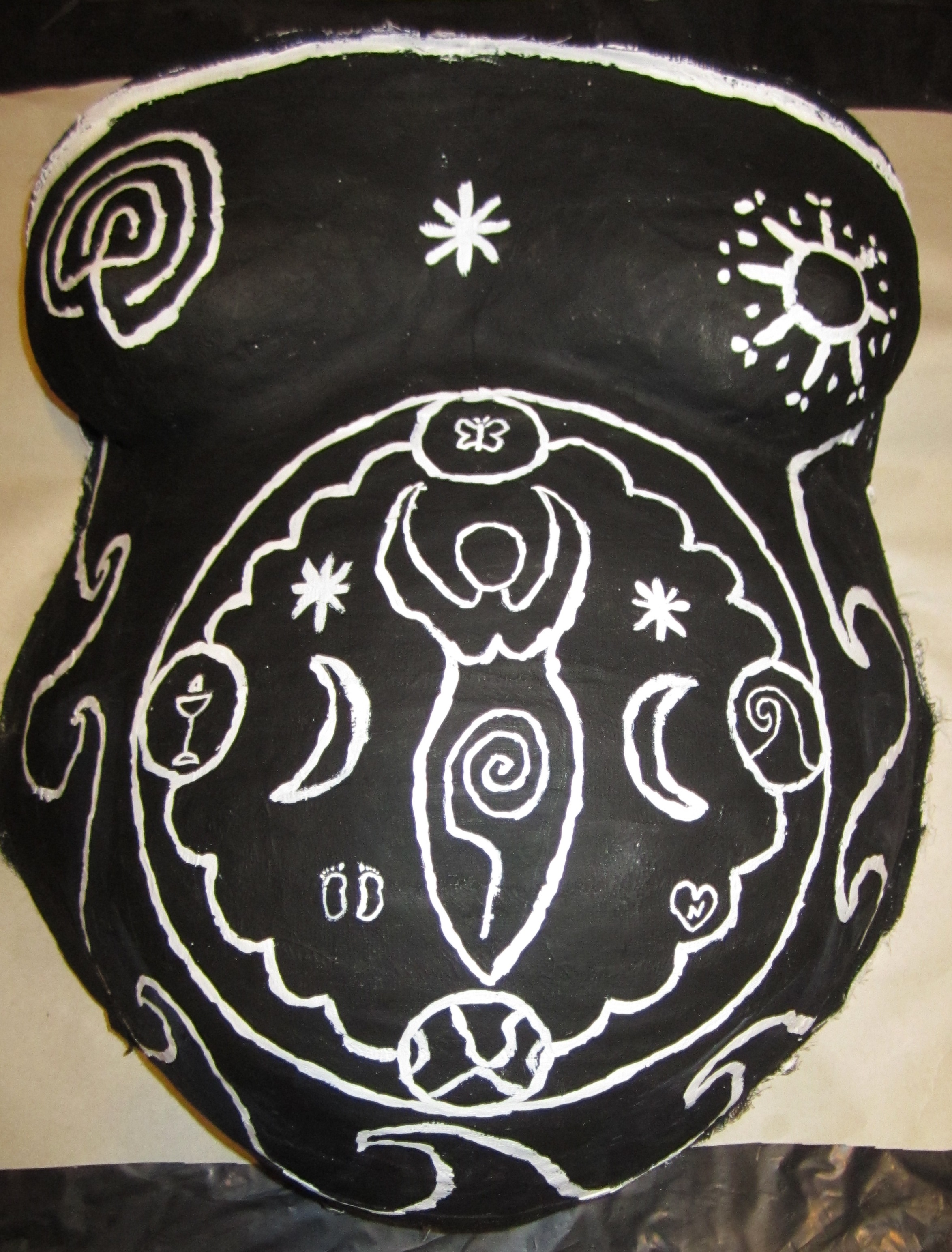
  • Belly Casting. Creating and painting a belly cast (a 3D plaster cast of the beautiful pregnant belly) can be a wonderful meditative tool to connect you more consciously with your body and your baby.
  • Guided Meditation or Visualisations. If there is a group of you, each woman can place a loving hand on the mamma-to-be, while another guides her into a place of deep relaxation where she can communicate with her unborn child or any guides or angels she feels drawn to, in order to receive information or just reassurance.
  • Plant a Tree. Buy a beautiful fruit tree to plant in honour of your newborn. You can tie birth blessings and wishes to its branches until after the baby is born.
  • Give gifts to nurture the mind, body or soul of the mamma-to-be. Most women won’t get the opportunity to enjoy a spot of luxury once the baby is born, so instead of yet more baby clothes why not spoil the mamma with something indulgent such as a pregnancy massage, a hair appointment, a manicure or pedicure or simply some beautiful skin cream to minimise stretchmarks? You can even buy her a gift for after the birth such as a post- natal spa voucher, to give her some ‘me’ time to look forward to when she needs it most.
  • Share Birthing Stories (no horror stories please!). Poetry, singing or chanting can also be a very uplifting way of connecting with your wise inner goddess.
  • Create a Phone-Tree. When labour is established, each woman is called and lights a candle for the birthing mamma to re-create the loving circle of support present on the day and send her thoughts of courage and strength.
  • Provide Nourishing Food and Drink. Each woman present can contribute a meal to be frozen for after the birth.
  • Pledge an Act of Support for after the Birth. Each woman offers one tangible act of support for after the birth when the mother and child are getting to know one another. It can be something simple like providing a home cooked meal, offering to take care of an older child for an afternoon so that the mamma can get some rest, taking the dog for a walk or taking the newborn off her hands so the she can have a recuperative bath.
  • The Baby Moon (or a month of ‘lying in’ with the newborn) is still observed in many cultures and offers a chance for the infant and mother to really bond and get to know one another without the usual worries about cooking, cleaning and taking care of other children. I think it would be very beneficial to women to reclaim this particular tradition.
Finding our way back home.

On the day that a baby is born, so too is a mother. Without properly acknowledging our changing lives in these beautiful and memorable ways, we go into motherhood unprepared for the challenges it may bring. No amount of reading can bring you the kind of self-knowledge needed to be a good mother. No amount of beautiful nursery furniture can enable you to trust in your mothering instincts when you are frightened of making a mistake with your precious little bundle. These things all take time. Reclaiming our rites of passage, no matter in how small a way, can help restore to women something vital for their spiritual and emotional wellbeing. And if you are worried that it might be boring or heavy, you needn’t. Celebrations are just that, a joyous coming together of loved ones to honour something wonderful. Keep that in mind and enjoy the many wonderful ways of celebrating this amazing and challenging time in a woman’s life. Choose the things that work for you, that you will enjoy and that will really give you the space to recognise the momentous changes that are happening and offer you some genuine support and acknowledgement of this special time.

More information about alternative pregnancy celebrations can be found in books such as Mother Rising by Yana Cortlund, Barb Lucke and Donna Miller Watelet (OK) and Blessingways, A Guide to Mother-Centred Baby Showers by Shari Maser (OK).
If published on the web please include the following contact details: Website: www.thedivinefeminine.com.au Email: info@thedivinefeminine.com.au Phone: 0439 636 958

Kat Skarbek
www.thedivinefeminine.com.au
About Kat Skarbek…
Kat Skarbek is a writer, presenter of the Shamballa Spirit Show on 3MDR 97.1FM and the Head Honcho of The Divine Feminine (www.thedivinefeminine.com.au) which specialises in creating unique and spiritually nourishing transitional celebrations and events for women. These include alternative Hen Nights and Mother Showers for pregnant women. She is a proud survivor of the first two years of motherhood and a visit from the PND Fairy.
Phone: 0439 636 958
Email: info@thedivinefeminine.com.au

Previous posts about rites of passage and women’s mysteries:

Rites of Passage Resources for Daughters & Sons

Birth as a Rite of Passage & ‘Digging Deeper’

Blessingways and the role of ritual

Blessingways / Women’s Programs
Red Tent Resources


Tuesday Tidbits: Speaking Birth

Someone came to my site recently by searching for: “how to speak birth.” What do you think? How do you “speak birth” in a way that reaches women?

I asked this question on my Facebook page last week and got several responses:

  • With our stories.
  • Every woman is different. You listen to her. Then you respond
  • Speak it forward. Speak everything forward.
  • I speak birth from an awareness stand point, in a non biased stance and of course judgment free and I do A LOT of listening first.

This question also made me think of some of my own past writing about the language of birth and why it is that how we speak birth matters:

Birth Talk

Health Care or Medical Care?

Maternal-Fetal Conflict?

Pain with a Purpose?

Perceptions of Pain

Words for Pain

Consumer Blame

Cut here?? What not to say to pregnant or laboring women…

I also re-read one of my own articles as I worked on a lesson for one of my classes:

“…I also think, though I could be wrong, that it is possible to plan and facilitate women’s rituals that speak to the “womanspirit” in all of us and do not require a specifically shared spiritual framework or belief system in order to gain something special from the connection with other women…”

After sharing the link on Facebook, I got a lovely comment from a midwife sharing that she shares my handouts with her clients in Trinidad and Tobega and I was humbled at how my “talking birth” in this form reaches out across the ocean and around the world. This is why I keep writing, even when I get discouraged and feel like it is an “indulgence” of some kind to write and blog.

While not about birth, but still related to the  overall theme—perhaps how we speak sisterhood—one of my Facebook friends validated my stressed and overwhelmed experiences/feelings of the past month with an “of course” response and I really appreciated it!

“Through the act of controlling birth, we disassociate ourselves with its raw power. Disassociation makes it easier to identify with our ‘civilized’ nature, deny our ‘savage’ roots and connection with indigenous cultures. Birth simultaneously encompasses the three events that civilized societies fear–birth, death, and sexuality.” –Holly Richards

via The Of COURSE response… | Talk Birth.

talkbirth

Tuesday Tidbits: Writing, Reading, Rituals

There is an open, flexible, compassionate way of relating to everything we experience, including natural disasters and sudden death. It is not so much a process of learning how to ‘get over’ a profound loss, but rather how to allow it to be there, lightly, gently, like a fine thread woven forever into the tapestry of who we are.” –Nancy J. Rigg (previously used in this post)

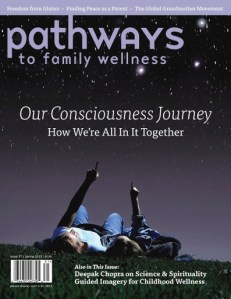
I know it is boring to hear about how busy someone else is, but I’m barely keeping my head above water recently. I’m sad that my blogs are sinking to the bottom of my list, because I do so love to write and I have ideas for new blog posts every single day. And, every single day, no matter how long the to-do list is, I have a secret plan that I’ll work like the wind and finish everything else on my list and then I’ll still have time covershot-37“left over” in which I’ll actually get to write the imagined posts. Just isn’t happening this week though. I haven’t even read any birth articles to share thoughts from! However, past self, who apparently had some more time to spare than current self, did produce some work that has given me fodder for this week’s Tuesday Tidbits post. I was pleased as can be to have my article, Breastfeeding as an Ecofeminist Issue, published in Pathways Magazine this quarter. There are precious few opportunities remaining to be published in a print magazine for natural parents and there is just something extra special about having an article published in a full-color, real magazine 🙂 They sent me a pdf version of the article to distribute on my own website and so I’m doing just that. For the nicely printable pdf version, click here.

We are mammals because as a species we nurse our young. This is a fundamental tie between the women of our time and place and the women of all other times and places as well as between the female members of every mammal species that have ever lived. It is our root tie to the planet, to the cycles of life, and to mammal life on earth. It is precisely this connection to the physical, the earthy, the material, the mundane, the body, that breastfeeding challenges men, feminists, and society.

Breastfeeding is a feminist issue and a fundamental women’s issue. And, it is an issue deeply embedded in a sociocultural context. Attitudes towards breastfeeding are intimately entwined with attitudes toward women, women’s bodies, and who has “ownership” of them. Patriarchy chafes at a woman having the audacity to feed her child with her own body, under her own authority, and without the need for any other. Feminism sometimes chafes at the “control” over the woman’s body exerted by the breastfeeding infant.

via Breastfeeding as an Ecofeminist Issue | Talk Birth.

Then, on my birthday last week, my contribution to a series of guest posts by feminist readers about children’s books appeared on First the Egg:

“Books have always been a huge part of my life, and I have many favorite and noteworthy books from my childhood. When considering the question though, one quartet immediately came to mind since two of my children are in fact named after one of the characters–the same character, no less! The Song of the Lioness quartet by Tamora Pierce is the tale of Alanna, who disguises herself as a boy in order to train as a knight. Alanna is a very kick-ass girl, and though she is small and petite, she learns to be an awesome knight, in fact the very best. She develops close friendships with the other squires while managing to guard her secret from most, even through the changes of puberty, until her final test of knighthood. These books have magic and battles and bullies and evil sorcerers and a talking cat and a Great Mother Goddess who takes a special interest in Alanna.”

via children’s books from feminist readers: the other Molly.

And, as far as reading that I’m supposed to be writing about, I’m really looking forward to finishing my book review of The Midwife’s Tale by Sam Thomas and publishing the author interview I did with him.

I also read a fun treasure of a book called Thea Gallas Always Gets Her Man. It was a mystery about a pregnant-mother-of-three and aspiring lactation consultant who solves a murder mystery in between helping mothers with breastfeeding questions. Review forthcoming, I promise!

I’m also swooning with anticipation about reviewing the new documentary about Ina May Gaskin. My screening copy of Birth Story came in the mail this week and I’m hoping to have a few Birth Network friends over for a movie review night.

I’m wrapping up the session—teaching three classes at once is a LOT for a homeschooling, toddler-breastfeeding, LLL Leader, priestess, student, writer mama—and planning an extensive and complex trip to California for my grandma’s memorial. I’m honored to have been asked to plan and officiate at the ceremony for her committal service and also to give a speech at her celebration of life luncheon. Doing these things is really important to me and I’m pleased to be able to offer them as my gift, but at the same time they’re also tipping me over the edge into reallyreallytoomuchtodoandI’mgoingtofreakoutalittle territory. I spent a long time today crying and looking at pictures of my grandma on her Facebook page when I “should” have been grading. It still doesn’t feel real and I’m still staggered at the magnitude of loss I feel. I miss her. I’ve never landed on California soil without Mamoo living there and waiting to greet us.

200825_1884333220402_1748056_o

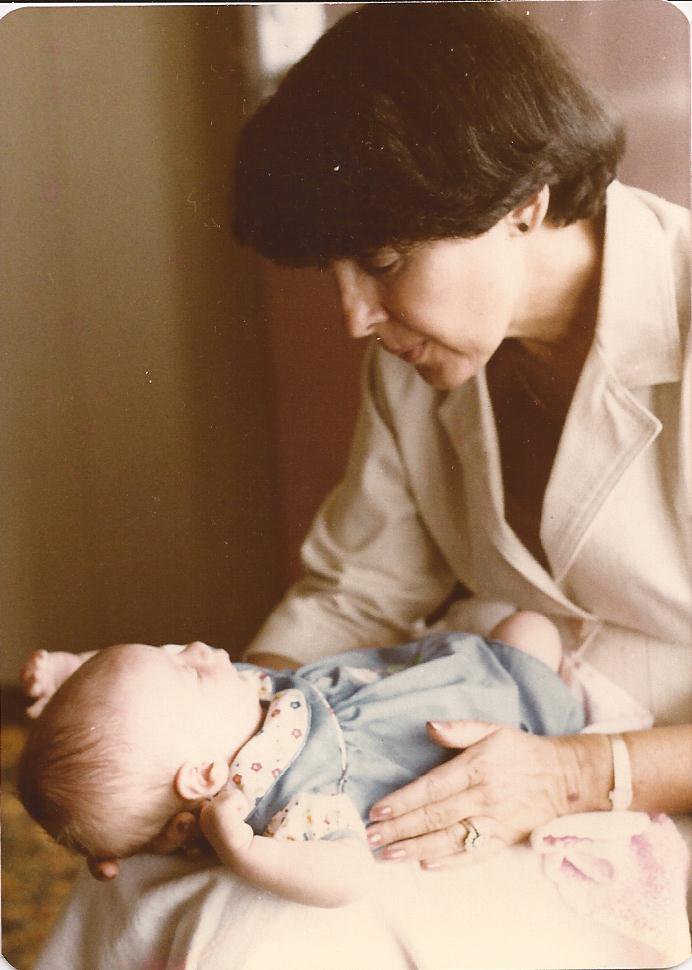
With Mamoo at one month old. Look how our lips are pursed in a matching fashion as we talk to each other!

I’m also finalizing the preparations for our spring women’s retreat at my house this Friday. Again, this is something that I feel very blessed to be able to offer to others, while at the same time I’m also freaking out a little and just not. able. to. rest. and be still, in the way in which I feel I need to do. However, I also feel like I really, really need this retreat. I truly need to do this, for my friends and for myself.

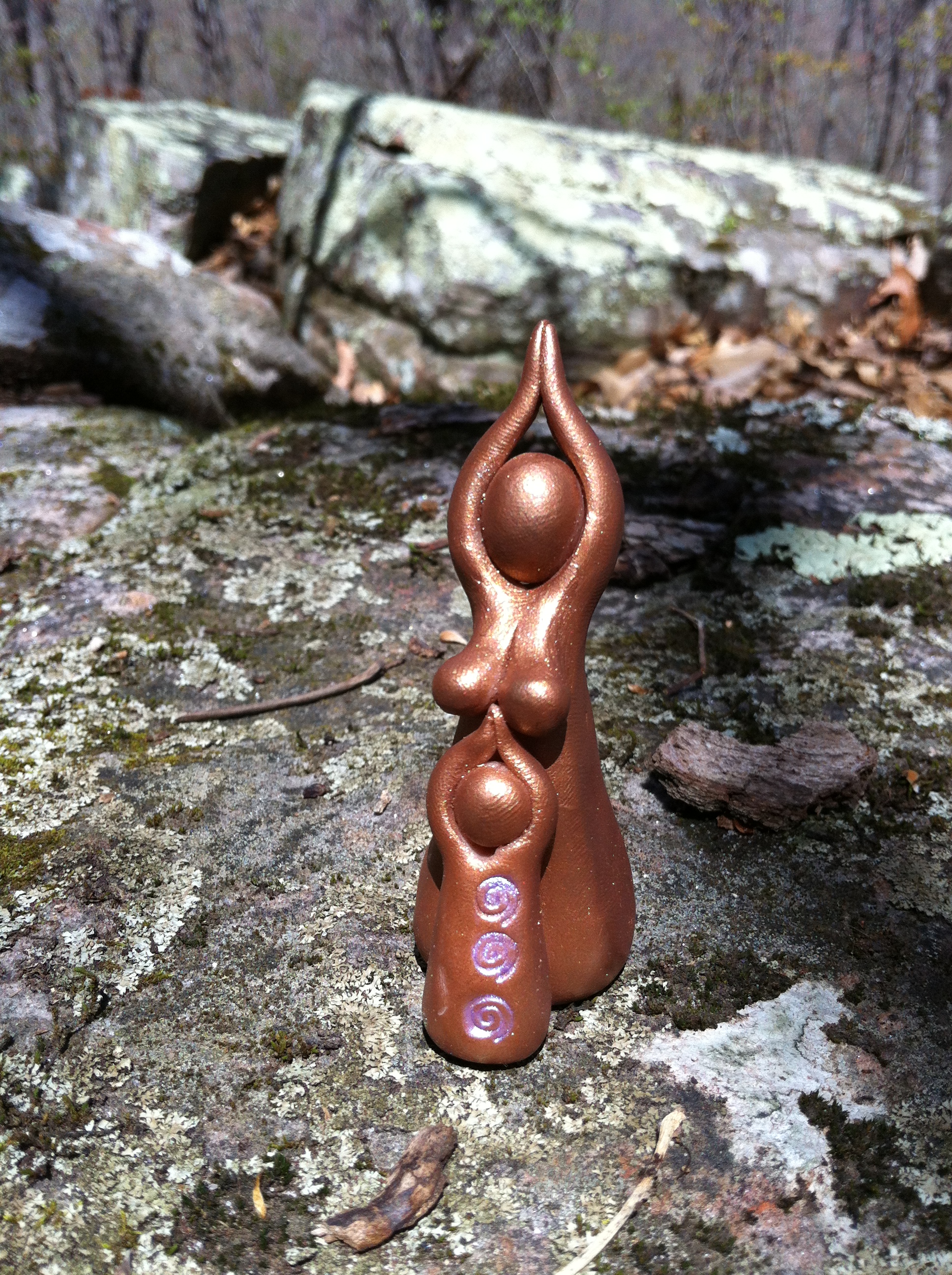
One of the custom VBAC sculptures I made while at Craft Camp made it to its destination and now I’m receiving further requests for them. I keep saying I’m not going to do custom orders because I just don’t really have the time, but these beautiful mamas write to me with their strong stories and their tender hopes and I feel compelled to make the figures they ask for…

April 2013 026 April 2013 028 April 2013 029

Thank goodness for Tuesday Tidbits! It means I’m guaranteed to write at least one post during the week. It gives me the focus, structure, and permission to be brief that I need in order to actually get something published, even if it is hastily organized and sloppily edited!

Womenergy (Womanergy)

The day before my grandma died, my dad came over and said he’d coined a new word and that I could have it: Womenergy. He said he’d googled it and didn’t come up with anything. I googled it later though and there are a couple of people who have used it before, so I think my dad actually said Womanergy instead, which is still available. So, womanergy has been coined now too! 🙂 I dozed off during Alaina’s nap today and when I woke up the word was in my head and so were a bunch of other words. I channeled a bit of my inner Alice Walker and wrote:

Womenergy (Womanergy):

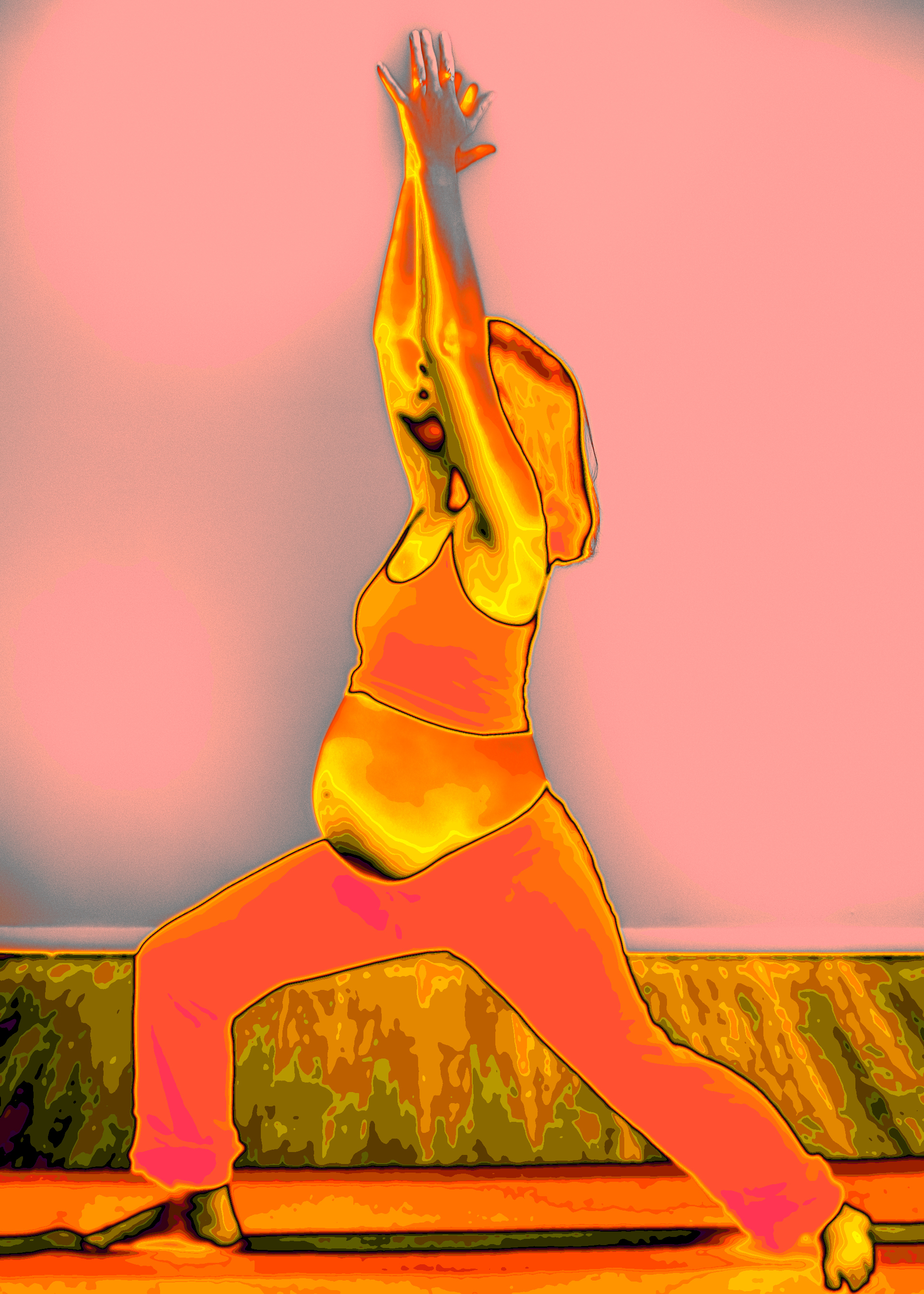
Feeling fierce at 37 weeks last year.

Feeling fierce at 37 weeks in 2011.

Often felt when giving birth. Also felt at blessingways and circling with women in ceremony and rituals. Involved in the fabric of creation and breath of life. Drawn upon when nursing babies and toting toddlers. Known also as womanpower, closely related to womanspirit and the hearing of one’s “sacred roar.” That which is wild, fierce. Embedded and embodied, it may also be that which has been denied and suppressed and yet waits below her surface, its hot, holy breath igniting her. Experienced as the “invisible nets of love” that surround us, womanergy makes meals for postpartum women, hugs you when you cry, smiles in solidarity at melting down toddlers. It is the force that rises in the night to take care of sick children, that which holds hands with the dying, and stretches out arms to the grieving. It sits with laboring women, nurses the sick, heals the wounded, and nurtures the young. It dances in the moonlight. Womenergy is that which holds the space, that which bears witness, that which hears and sees one another into speech, into being, into personal power. Called upon when digging deep, trying again, and rising up. That which cannot be silenced. The heart and soul of connection. The small voice within that says, “maybe I can, I think I can, I know I can. I AM doing it. Look what I did!” Creates art, weaves words, births babies, gathers people. Thinks in circles, webs, and patterns rather than in lines and angles. Felt as action, resistance, creation, struggle, power, and inherent wisdom.

Womenergy moved humanity across continents, birthed civilization, invented agriculture, conceived of art and writing, pottery, sculpture, and drumming, painted cave walls, raised sacred stones and built Goddess temples. It rises anew during ritual, sacred song, and drumming together. It says She Is Here. I Am Here. You Are Here and We Can Do This. It speaks through women’s hands, bodies, and heartsongs. Felt in hope, in tears, in blood, and in triumph.

Womenergy is the chain of the generations, the “red thread” that binds us womb to womb across time and space to the women who have come before and those who will come after. Spinning stories, memories, and bodies, it is that force which unfolds the body of humanity from single cells, to spiraled souls, and pushes them forth into the waiting world.

Used in a sentence:

“I’m headed to the women’s circle tonight. I could really use the womenergy.” February 2013 196

“I felt like I couldn’t keep going, but then my womanergy rose up and I did it anyway.”

“Feel the womenergy in this room!”

“She said she didn’t think she could give birth after all, but then she tapped into her womanergy and kept going.”

“I hope my friends have a blessingway for me, I need to be reminded of the womenergy that surrounds me as I get ready to have this baby.”

Feel it…

Listen to it…

Know it…

In the air, in her touch, in your soul.

Rising
Potent
Embodied
Yours…

“For months I just looked at you
I wondered about all the mothers before me
if they looked at their babies the way I looked at you.
In an instant I knew what moved humankind
from continent to continent
Against all odds.”

–Michelle Singer (in We’Moon 2011 datebook)

“I believe that these circles of women around us weave invisible nets of love that carry us when we’re weak and sing with us when we’re strong.” –SARK, Succulent Wild Woman

There is a wild tiger in every woman’s heart. Its hot and holy breath quietly, relentlessly feeding her.” – Chameli Ardagh

Circles of women (and art)...

Tuesday Tidbits: Red Tent

April 2013 019

Dogwoods are blooming here.

“..by honouring the demands of our bleeding, our blood gives us something in return. The crazed bitch from irritation hell recedes. In her place arises a side of ourselves with whom we may not-at first- be comfortable. She is a vulnerable, highly perceptive genius who can ponder a given issue and take her world by storm. When we’re quiet and bleeding, we stumble upon solutions to dilemmas that’ve been bugging us all month. Inspiration hits and moments of epiphany rumba ‘cross de tundra of our senses…”
Inga Muscio

“The great mother whom we call Innana gave a gift to woman that is not known among men, and this is the secret of blood. The flow at the dark of the moon, the healing blood of the moon’s birth – to men, this is flux and distemper, bother and pain. They imagine we suffer and consider themselves lucky…In the red tent, the truth is known. In the red tent, where days pass like a gentle stream, as the gift of Innana courses through us, cleansing the body of last month’s death, preparing the body to receive the new month’s life, women give thanks — for repose and restoration, for the knowledge that life comes from between our legs, and that life costs blood.
Anita Diamant

I have to be quick today—lots going on. I don’t know if anyone else is enjoying my little Tuesday Tidbits post series particularly, but I really love doing it, because it gives me an automatic structure for a post, a sense of focus rather than an open book of endless possibility, and also the ability to put something up quickly even admidst life swirls. And, I find it funny how things collect around a theme without me consciously trying to do so. What collected around me during the past week was Red Tent Resources again…

First, a short video about starting a Red Tent:

Then, this cool Lunation website where you can subscribe to a newsletter and receive a free guided meditation called Connect to the Red Threads.

And, I enjoyed an article called Menstrually Yours – Women Can Map Periods as a Path to Self-Awareness.

This article uses the same “seasons” metaphor for understanding the energy of your cycle that a lot of menstrual empowerment activists are using. This seasons idea has helped me find an enhanced place of understanding about my own ebb and flow of energy, enthusiasm, and creativity.

Winter is the first stage, when we bleed. Characteristically it’s the time of wanting to hibernate (or just hide under a duvet and eat chocolate). We are withdrawn and inward and it’s tough to focus and find a lot of energy, contrary to the images forced on us by the Bodyform adverts.

Spring is the week after when the bleeding has stopped and we suddenly feel more energised and sociable. We want to get on and often we get stuff done quickly and with grace and ease.

Summer is characterised by our really coming into fullness, it’s when we are ovulating and energetically we are fully blooming and really advancing.

Autumn is when we start the decline back into ourselves. Typically now we may experience some PMT, being a bit snappy or less tolerant than we were in spring and summer.

via Claire Snowdon-Darling: Menstrually Yours – Women Can Map Periods as a Path to Self-Awareness.

What I find transformative about this understanding is the acceptance that comes from realizing what season I’m in and knowing that a new season is coming. Rather than get frustrated with myself during “autumn” or winter, thinking it means a permanent state of being, I say, “ah ha! This sense of needing to pull in and retreat. I know this. Time to break out some of those saved guided meditations, say no to things I can say no to, and sit down with a book and some tea.” Just a few months ago, I would have taken this impulse as a sign that my life is too crowded and I MUST. QUIT. SOMETHING. NOW. THINGS. MUST CHANGE. ARGHHHH. NO MORE! Now, I see that it is just a call for right now, for this little season, not a permanent change, just an honoring of body rhythms. Interestingly, I’m actually in the summer stage of my own cycle right now, which is the time I usually wait for and get a bunch of “stuff done” and scheduled to post so that when I feel withdrawn again, my blog can go on on its own. However, with my grandma’s dying process and my mom’s absence while she cares for my grandma in California, I actually feel extremely “autumn” right now and would like nothing better than to just lie down with a book and STOP. My kids and my students all need attention though.

And, I enjoyed this cool website too:

Birthing Art Birthing Heart is a website

that promotes, facilitates and offers examples of art made by woman.

Birthing Art Birthing Heart offers new ways for woman to explore what they are ‘birthing’ at any given moment.

via Birthing Art – Birthing Heart – Home.

Bringing it into the Red Tent theme, they have a current project called Bleeding Art, Bleeding Heart too.

Speaking of art, though it isn’t finished yet, I made a couple of new pieces about my grandma. This is the first one:

April 2013 038

The shells were supposed to be a spiral, not a “6,” but on such a small surface, I couldn’t spiral them any better.

Related past posts:

Red Tent Resources

Book Review: Moon Time

Moontime’s Return…

Blog Circle: Tender Mercies, Unexpected Gifts

The Amethyst Network blog circle for April is on the subject of Tender Mercies:

Blessings, Magic, Tender Mercies, Grace, whatever you call it, there are these moments, times and experience of light in the darkness. Sometimes they are very small. Just a moment where you see a little bit of magic, or a blessing wrapped in the grief. Sometimes it is significant, like close friendships made with people you may never have had the chance to meet otherwise.

For our Blog Circle this month (April) please share your own experiences of grace, tender mercies, magic, blessings, or gifts that your miscarriage has given you. If you have not experienced a miscarriage, please feel free to participate. We all know someone who has miscarried and therefore have been touched by miscarriage in some way.

via April Blog Circle ~ Blessings, Magic, Tender Mercies, Grace… » The Amethyst Network.

As soon as this theme was picked, I knew what I wanted to write about. It was the experience of an unexpected gift from my little baby Noah. It was one of the only moments of “communication” I ever felt from him after his death-birth. I sort of expected or hoped to have some dreams or some other sorts of “metaphysical” sorts of experiences with him, but I didn’t have that, he was simply gone. I did, however, have this one little gift (originally posted about on August 11, 2010)…

This past weekend [August, 2010]…We went to visit my friend M whose baby recently died and was born at a similar gestation point to Noah. While we were there, she showed us the memory box she’d put together for her baby and then she brought out the folder she’d received from Angel Whispers (source of the birth certificate that I got for Noah and that I like so much). She held it out to me silently, and printed on the front was, “this folder was made possible by a donation in memory of sweet baby Noah Remer, November 7, 2009.” Oh. My. Goodness. How could it be that I made a donation to Angel Whispers back in May ([2010] for my due date), the check traveling all the way to Canada, and yet, this folder somehow finding its way back into my life and into the hands of my dear, grieving friend? It was an amazing feeling.

I sent a donation to cover three folders. I wonder who has received the other two? We came up with all kinds of possible reasons for this “coincidence,” but none of them were very logical (she lives in IL, I live in MO-–it isn’t like they saw our addresses and though, “ah ha! We’ll send this one!”) and we were left with the only option to be just to marvel at this simple little gift. :)

In more current tender mercies, Noah’s memorial tulip tree is about to bloom!

20130412-141712.jpgIt is in a shaded area behind the house and thus is a little off-schedule from the rest of the trees like this in the area. My parents have a matching tree and theirs is fully blooming now:

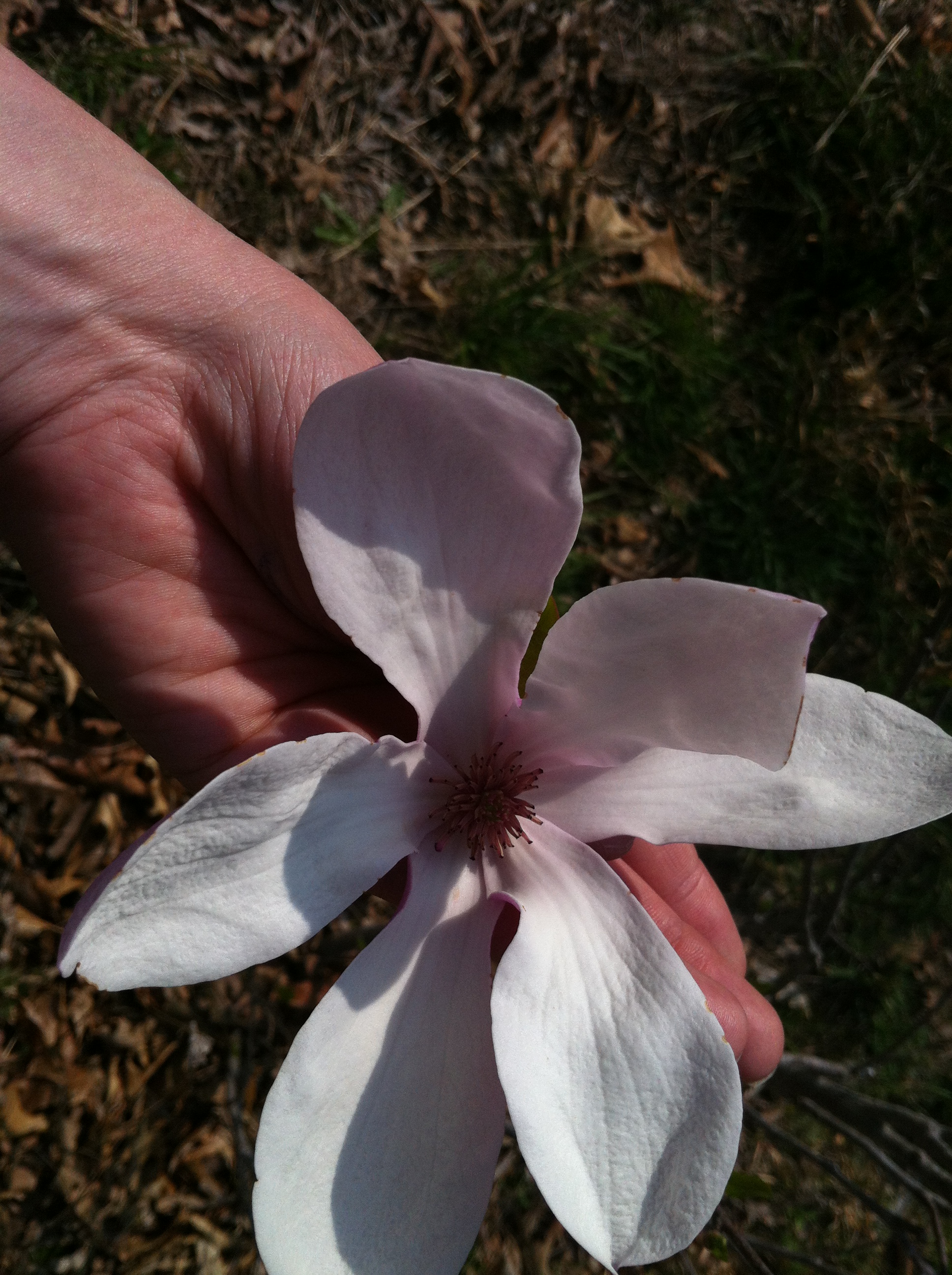
20130410-155034.jpgSeeing these flowers each year is really meaningful to me and that’s why I used a photo of the flowers as the cover image on my miscarriage memoir. new_coverThinking about this post made me dig around in my archived photos where I found some not-often-before-shared photos of the ritual my mom and friends had for me near my birthday (Noah’s due date), during which we planted said tulip tree. Under the tree I buried the embryo from my second miscarriage and also the hospital bracelet from my ER trip following Noah’s birth. At the time of these photos I was tentatively hoping I might possibly be pregnant again and, in fact, I was justatinybitpregnant with the future Alaina!

mizuko4

Placing the tree in a barely scratched out dip in the rocky soil!

mizuko5

My mom adds a scoop of dirt.

mizuko6

My doula!

mizuko12

I feel lucky to have a supportive mom who does things like this for me! 🙂

And, after I prepped and scheduled this post, I took this photo of the almost opening bloom…

20130415-191007.jpg

And then, the day before it was scheduled to post…YAY! A full flower!

April 2013 031

Not picked, just stabilized for photo op.

April 2013 034 April 2013 016

International Women’s Day: Prayer for Mothers

nursingmamas

This week marked my eighth anniversary as a breastfeeding counselor.  When I began, I didn’t how long I’d keep doing it and I’ve had a lot of discouraging rough patches with dwindling group membership in which I felt like giving up, but now I suspect I might end up as a “lifer.” When I started this work I had one little 18 month old boy. Now, that little boy is closing in on TEN this year! I’ve logged over 1200 contacts since my accreditation. I’ve learned so much from the mothers I’ve worked with and I continue learning new things all the time.

This month as I sat in the circle at our mother-to-mother breastfeeding support group meeting, I looked around at all the beautiful mothers in that room. I reflected on each of their journeys and how much each one has been through in her life, to come to this time and this place, and tears filled my eyes. They are all so amazing. And, my simple, fervent prayer for them in that moment was that they could know that. Know that on a deep, incontrovertible level. I tried to tell them then, in that moment. How much they mean to me, how incredible they are, how I see them. How I hope they will celebrate their own capacities and marvel at their own skills. How I see their countless, beautiful, unrecognized, invisible motherful actions. How when I see them struggling in the door with toddlers and diaper bags and organic produce that they’re sharing with each other, I see heroines. They may look and feel “mundane” from the outside, but from where I’m sitting, they shine with a power and potency that takes my breath away. Moderating toddler disputes over swordplay, wiping noses, changing diapers, soothing tears, murmuring words, moving baby from breast to shoulder to floor and back to breast without even seeming consciously aware of how gorgeously they are both parenting and personing in that very moment, speaking their truths, offering what they have to give, reaching out to one another, and nursing, nursing, nursing. Giving their bodies over to their babies again and again in a tender, invisible majesty. In this room is a symphony of sustenance. An embodied maternal dance of being.

So, today on International Women’s Day, when I visited the woods behind my house, I offered up this…

Prayer for Mothers: March 2013 057

I offer a prayer for all mothers
may you breathe deep down into your belly
may you tip your face to the sky
let your shoulders soften
your forehead smooth
your eyes close gently
your lips part

And may you take a deep cleansing breath
from your feet on the earth
all the way up through your legs
hips
belly
chest
shoulders
and throat

And with this breath
honor your own capacities
marvel at your own resources
notice your strengths
celebrate your successes
listen to your own wisdom
recognize your own heart.

Take a moment to see
really see
how often you act with great courage
how often you act with deep love
and how much of your life’s energy
spirals and spins around your children.

See your worth
hear your value
sing your body’s power
and potency
dance your dreams
recognize within yourself
that which you do so well
so invisibly
and with such love.

Fill your body with this breath
expand your heart with this message
you are such a good mother.

Red Tent Resources

“Blood Mysteries recall the immense power of the bleeding woman. Power enough to share in great nourishing give-aways. Give-away from woman womb to earth womb, give-away from mother to matrix, give-away of nourisher to nourisher…bleeding freely, we know ourselves as women, as nourishers of life…” –Susan Weed

International Women’s Day is coming up on March 8th and I signed up for a cool sounding free online class about working with your moon cycle. I’m loving the focus and I hope to learn some useful things:

What you do on the first day of your cycle radically affects your health and happiness for the next 30 (or so) days. It impacts your relationships, creativity, energy, spiritual connectedness, and self-confidence, just to name a few things…”

This class is part of a free online 28 day event about honoring our moon cycles that is already in progress—I wish I would have learned about it a little earlier!

Also, on International Women’s Day is a Red Tent Activation offering from Deanna L’am:

We’ve Birthed The world We Want To Live In…

Lets Re-Member, Re-Activate & Re-claim
Our cellular memories of The Red Tent!

I do a lot of work with women already. I have provided breastfeeding support and counseling for eight years now. I’ve been teaching and writing about birth and doing birth activism for just about as long. I help plan blessingway/rite of passage ceremonies and facilitate workshops and lead rituals (and occasionally, I do weddings). I hold quarterly women’s retreats and this year I’m doing a year-long monthly women’s spirituality class. But, I still want to do more! I envision having a fabulous red yurt out in the field that would always be available to any woman who wanted to come to it. I envision a “Women’s Temple” and nurturing, enriching, replenishing WomanSpace. I envision monthly full moon circles and seasonal ceremonies and plenty of time for celebration of Women’s Mysteries…

I also really, really want to host a screening of the Red Tent Movie (this is totally within my capacity for this year at least!)

While I also have a whole collection of favorite women’s temple/women’s mysteries resources, some of my favorite Red Tent specific resources on Facebook are:

Your period is a vehicle for greater compassion in the world at large.

Your period is a universal language.

Yet, it’s one of the least understood by women today.

It’s one of the topics that is least talked about in our modern culture…

Pleasurable Periods

20130303-100804.jpg

Tuesday Tidbits: Teeth and Teaching

“Do not try to satisfy your vanity by teaching a great many things. Awaken people’s curiosity. It is enough to open minds; do not overload them. Put there just a spark. If there is some good inflammable stuff, it will catch fire.”
Anatole France (in The Earth Speaks)

A woman who writes has power, and a woman with power is feared.” —Gloria Anzaldúa, “Speaking in Tongues” (via The Girl God via Guerrilla Feminism)

Bits of the birth net:

It is old news, but this week a 2009 post from The Unnecesarean caught my eye: An OB’s Birth Plan: Obstetrician’s Disclosure Sent One Mom Running. The article describes the “doctor’s birth plan” a mother received from her medical care provider, which includes gems like this one:

“…I do not accept birth plans. Many birth plans conflict with approved modern obstetrical techniques and guidelines. I follow the guidelines of the American College of Obstetrics and Gynecology which is the organization responsible for setting the standard of care in the United States. Certain organizations, under the guise of “Natural Birth” promote practices that are outdated and unsafe. You should notify me immediately, if you are enrolled in courses that encourage a specific birth plan. Conflicts should be resolved long before we approach your due date. Please note that I do not accept the Bradley Birth Plan. You may ask my office staff for our list of recommended childbirth classes…”

One of many reasons to run far away from this doctor! One of my Facebook friends made a great point though: “at least he’s honest! I think there are other doctors with similar views who might not make it clear until it’s ‘too late.'” This is true–he said it, but you know a LOT of people are thinking it/acting on it. So, that IS good that he was up front. Another mother then commented to add her own similar experience: “We went to an OB who had us sign something saying we would not have a birth plan or hire a doula. It felt so creepy to sign away all involvement in my own child’s birth – and doing so at 9 weeks felt like I was signing that I’d keep my mouth shut throughout the pregnancy, too. But gratefully, as you’re saying, it was clear early on that way this was not the OB for us. I’m sure many don’t get to find out before labor.”

Speaking of teaching and igniting sparks, it isn’t too late to register for our next Birth Skills Workshop—rapidly approaching on February 2nd! This workshop is specifically designed not to be a lecture, but is a hands-on, skills-building workshop.

Also via ScoopIt, I shared this article: Bearing the Burden of Choice: A Young Feminist’s Perspective

“Based on personal observation, choices concerning women’s reproductive health are heavily concentrated in preventative action – what are the best practices to avoid pregnancy? Consequently, prevention inspired language lends to a negative association with child bearing. It is something to prevent rather than embrace…”

She goes on to address something that I find to be a reason why sometimes birth activists have trouble connecting to the larger feminist community:

Abortion is one of those issues that seems to leak into every “women’s issue” whether initially intended or not. Needless to say, we talked about abortion to the point of exhaustion. Not to take away from the weight of abortion to the feminist cause, I began to recognize a gap in our reproductive justice discussions. I found myself asking the question:What about the women who choose the path of childbearing?

Those women are basically why I’m here and why I do what I do. And, what has been on my mind recently is explored in my most recent post: What to tell a mother-to-be about the realities of mothering…

“Why didn’t anyone tell me?” and, “why isn’t anyone talking about this?” is a common refrain echoing in the postpartum tales of many mothers. So, why don’t we tell them? Or, what can we actually tell them? Is there a way to really do so? I kind of think there’s not

And, connecting the teaching and the sparks and the women’s issues and the women writing having power, I also made sure to sign this petition: Vigorously support women’s rights by fully engaging in efforts to ratify the 1972 Equal Rights Amendment. This is going to be one of the discussions towards the end of my current Social Policy class (I can’t really write much about it here, but suffice to say the class is extraordinarily challenging so far and we’re only to week three). I hope no one vigorously disagrees with it or I might FREAK OUT! When I shared it on Facebook, a friend commented: “I am enraged that women’s rights are an ‘issue.‘” To which I replied: “Isn’t that the truth?! I hate that. It boggles my mind that women’s rights are considered a political issue that anyone could have a ‘position’ on. The nerve!!! ARGH. FREAK OUT, I TELL YOU”

And now, the teeth…

This post is essentially all about what I shared on Facebook apparently (might as well get some mileage out of it!). This is what I wrote yesterday:

In case anyone cares, I’m totally sick of taking my kids to the dentist! All three had appointments in Sullivan today (1.25 hour drive one way). Alaina wasn’t cooperative and is clearly traumatized from prior dental experience and we will need to go back to a pediatric dentist for her (crowns on two molars). Zander’s were good and he got two seals. Lann had two extractions (previously filled teeth) and one filling. I’m exhausted!

I still haven’t written my planned blog post about the heartbreak of tooth decay. I came home yesterday all fired up to write it, but then I had to get caught up on grading instead. But, I did take these pictures of my little pearls-wearing, skirt-sporting, curly-haired, brave little girl:

20130128-175534.jpg

20130128-175545.jpg

I told her I wanted to take a picture of her face and she ran away from me like this!

20130128-175613.jpg

Two other Facebook kid updates from this week that were funny:

Alaina put a bracelet on pushed high on her arm. When she took it off, it left a red mark. She looked at the mark solemnly and said, “scar.” Poor little sugar. She said it very acceptingly. Like, yep, I’m scarred now…

And

Yesterday, my little entrepreneurs cooked up a plan to raise some money to buy a pug. They decided they should raise Dobermans and sell them…”When people see the big cage of Dobermans in our yard, we’ll just tell them, don’t worry…it’s for pugs!” Hmm. I see a couple of flaws with this plan…

Hearing this, it suddenly became clear to me how puppy mills were invented—a couple of pre-ten-year-olds (or, adults with similar critical thinking skills) hung around talking about money-making schemes…

Preventing Culturally Induced Lactation Failure

281How often does it happen that women truly are physically unable to breastfeed?

No one actually has a solid answer to this question. The common estimate is a very hazy, “less than 1%.” I’ve said it, very hazily, plenty of times myself. But, what does that really mean? I’ve certainly talked with a lot of struggling mothers over the years—many of whom go on to continue to breastfeed successfully, but who might very well not have done so without encouragement, reinforcement, and practical suggestions. If they never reached out for help, might they have ended up as part of that semi-mythical 1%? How about those mothers that absolutely stagger me with their ability to keep going and keep trying when I would understand completely if they decided to quit and in fact question that I, personally, would have been able to continue if faced with the same obstacles—where do they fit in? Maybe just in the category box labeled amazing.

Yesterday, I read an article on the Breastfeeding Medicine blog that really shook my personal framework up a bit:

…I would argue that there’s a very fine line between “sensationalizing” and “truth in advertising.” Reproductive biology is imperfect — some couples can’t conceive, and some pregnancies end in miscarriage or stillbirth. The silence around these losses and the isolation that women have historically experienced has probably worsened the suffering for many women. On the other hand, emphasizing these risks and creating a culture of fear harms the majority of mothers who will have successful pregnancies and births.

Lactation is probably a few decades behind infertility and pregnancy loss in coming “out into the open” as a generally robust, but not invincible, part of reproductive biology.

via Establishing the Fourth Trimester « Breastfeeding Medicine.

Wow! Brain boggled in reading this. Heart clenched at thinking that I may have treated someone as casually in breastfeeding loss as other mothers have been treated over and over again in pregnancy loss. The author goes on to explain that women used to be blamed for having miscarriages and we just might be doing the same thing to women who physically can’t breastfeed. I have never in my wildest dreams considered adding “lactation failure” to my understandings of the things that can truly go wrong during the childbearing year. I usually consider, “some mothers are physically unable to breastfeed” to essentially be in the same territory as dragons and unicorns. I’ve remained firmly convinced for, like, ever, that it is culture that fails mothers and babies and not women’s bodies that fail. And, I truly wonder if it is ever possible (except for in cases of insufficient glandular tissue, metabolic disorders, breast surgery/removal, and clear physical malformations) to really tease apart whether a mother is actually experiencing lactation failure or sociocultural failure. I remain fairly convinced that in many cases it is impossible to know—but, that a mother (or physician) may certainly experience it as “lactation failure” and thus add that data point to the 1%. I have long maintained that a lot of people forget that breastfeeding occurs in a context and that context doesn’t necessarily support breastfeeding. However, I do also know from years of experience that motherbaby physiology can lead to problems too and we often overlook that in assertions about breastfeeding.

How do we get breastfeeding off to a good start?

At our 2011 Big Latch On event.

At our 2011 Big Latch On event.

How do we make sure that mothers do not experience sociocultural breastfeeding failure? It begins with the birth. Birth and breastfeeding are not discreet events—they exist on a biological continuum. When I attended the La Leche League International conference in 2007, there was an exciting emphasis on “the motherbaby” as a single psychobiological organism. The womb is the baby’s first habitat and following birth the baby’s “habitat” becomes the mother’s chest—otherwise referred to as “the maternal nest.” In short, a normal, healthy, undisturbed birth leads naturally into a normal, healthy, undisturbed breastfeeding relationship. Disturbed birth contributes to disrupted breastfeeding. In a previous article on this topic I wrote:

New mothers, and those who help them, are often left wondering, “Where did breastfeeding go wrong?” All too often the answer is, “during labor and birth.” Interventions during the birthing process are an often overlooked answer to the mystery of how breastfeeding becomes derailed. An example is a mother who has an epidural, which leads to excess fluid retention in her breasts (a common side effect of the IV “bolus” of fluid administered in preparation for an epidural). After birth, the baby can’t latch well to the flattened nipple of the overfull breast, leading to frustration for both mother and baby. This frustration can quickly cascade into formula supplementation and before she knows it, the mother is left saying, “something was wrong with my nipples and the baby just couldn’t breastfeed. I tried really hard, but it just didn’t work out.” Nothing is truly wrong with her nipples or with her baby,

I know that my birth experiences significantly impacted my breastfeeding experiences in that my babies were never separated from me after my peaceful, undisturbed births (one birth center, two homebirth). They went directly from being born to my breast, keeping the physicality and continuity of our relationship unbroken and undisturbed. That is not to say that we never experienced any challenges, I struggled with oversupply with all of them—which reminds me of attending another LLL conference presentation by Diana West in which she stated that she is seeing much fewer “normal course of breastfeeding” issues in her practice and instead of noticing an “epidemic of both low milk supply and oversupply.” She asked the room if we were noticing the same thing and many of us raised our hands. One possible theory is the amount of endocrine disruptors in our food supply. Again, is that actual lactation failure or is that ecological failure?!

Some time ago I wrote an article for the Friends of Missouri Midwives newsletter in which I asked for submissions regarding the topic of how birth experiences impact breastfeeding. A doula wrote to share her experiences:

My births definitely affected my breastfeeding experiences. I prepared extensively for my first child’s birth. I felt fully educated about birth and also breastfeeding. I planned and had a natural birth. Being empowered by that helped me know I could handle and be successful at breastfeeding too. My two unassisted births were “all me”. There was no one telling me what to do. I was confident in that and that also helped build my confidence one again in breastfeeding. I will also go on to say that not only did my natural hospital birth and subsequent home births help in breastfeeding, but also generally as a mother. They empowered me to know that I was capable of a lot more than I could ever imagine! (Which is great on a day with three little ones screaming around the house!)

 And, a local physician also had input about the question:

Gosh, my own experience–how can I know how my birthing influenced my breastfeeding?  Since the nursing part was so easy, and I birthed at home (thank heavens), well, how would I know if it would have been different if we had done it differently?  But I know this:  it is SO much easier being a breastfeeding supportive physician to home born babies than it was trying to support breastfeeding when the birth was distorted.  In my experience, the only other thing that makes that much difference is La Leche League attendance.  I think mothers and babies are designed to experience labor and birth and then breastfeed.  When things go differently–like when labor is started early for some reason, or when mothers don’t get to experience their labors and births because of epidurals or other drugs or cesarean  sections, then the breastfeeding is more likely to be challenged.

Babies are programmed to learn to nurse in that first hour after birth.  They need to be in contact with their mothers for that time to do that.  It doesn’t take much intervention to undermine that.  Our babies are working so hard, learning to live on the outside of the womb–changing everything, including their breathing, their circulation, their digestion, elimination, integrating new and overwhelming sensations–and also learning the complex skill of finding the nipple, grasping the nipple, holding the nipple, milking the nipple (and don’t forget to swallow and breathe!).  We should leave them alone and not ask them to do one more thing–like meet Grandma, or deal with the nurse, or warm back up from a bath.

So here’s my advice:  If you want to breastfeed and do it effortlessly:

1.  Get great prenatal care from the best midwife you can find

2.   Plan and achieve a home birth

3. Go to La Leche League regularly during pregnancy and nursing.

This doctor then wrote back to me again with some additional comments about breastfeeding and La Leche League:

La Leche League makes a BIG difference.  In my experience, mothers who are members have far fewer reasons to call me for advice (of any kind, really).  And when they do, they tend to be focused, easy-to-answer questions or requests.  So, instead of “my nipples hurt,” it is, “I’ve been reading/talking to/consulting with various sources and I think that I have nipple thrush.  The things I have tried haven’t worked and I am not ready to try Nystatin.  Can you prescribe this for me?”  LLL ladies ROCK!

I am convinced that a thousand little adjustments get made in the wise nursing circles–a comment made, a slight modification of a nursing  position, an encouraging word, a question asked, a behavior modeled.  With these gentle, under-the-radar moves, nursing just gets easier or stays easy.  The woman and her circle never consider that a “nursing problem” existed.  No big intervention needs to happen.

Without these “interventions” nursing problems DO develop, and then the rescue team gets called in–people have big feelings, do big or little interventions, they help or they don’t and people feel like heroes or failures and “breastfeeding problems” get into the story-telling.  But what gets lost is how easily these things are “prevented”.

Midwifery is like this.  Parenting is like this.  Life is like this.

I really appreciate her closing observations here about wise nursing circles. I believe it can be in these circles that we find the women who know and we can certainly give each woman who we come into contact with the best chance at preventing or overcoming culturally induced lactation failure.