Tuesday Tidbits: Mothers and Work

MollyNov 085

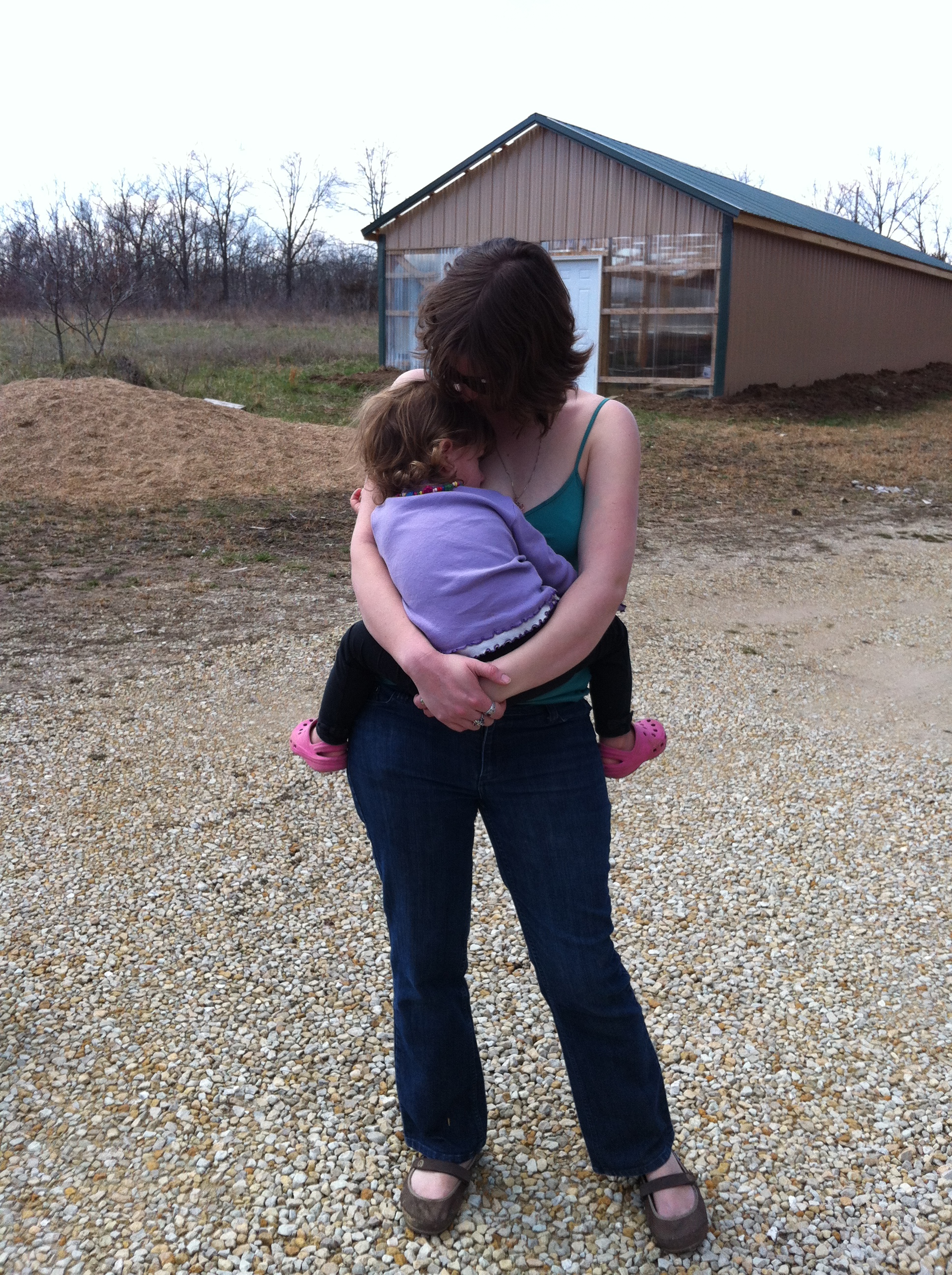
One of the best pictures I have of the “mothering” while “personing” experience!

“I’m winging it every day, praying, surrendering, steeping myself in grace by any means necessary. I grapple with finding my own integrity, to trust the path that I have chosen, to believe that I am mothering well, that I can claim for myself a belief in my own goodness.” – Elizabeth at Mothering with Soul

“Giving birth to a new life is about so much more than just the moment itself. The power of finding your strength as a woman through birth resonates for the rest of your life. It shapes you as a person, and as a parent.” ~ Gina Sewell

I want to say first that I believe, as the organization Mothers and More does, that all work that women do, whether paid or unpaid has social,  political, and economic value. In my own life I don’t distinguish between what I do for money and what I do as a volunteer, but that is partially a function of privilege, because I love all of my work and choose freely to do it. I recently finished reading the book The Art of Family and in it the author makes a point that I’ve made in various posts as well, mothers have always “worked,” it does no good to try to distinguish between “working mothers” and “stay-at-home mothers,” because the difference is much more fluid and alive than a category can hold.

FOUNDATIONAL TO A LASTING FAMILY is acknowledging that we will be many things to each other for our whole lives, even past death. We can abandon the old fears that family life will smother us and instead go after fully practicing ourselves in the presence of partner and children. In short, making a family is the best way to present ourselves, to stake our claim to a spot on earth. But “practicing ourselves’’ in front of our family, what does that mean? To give the essence of ourselves to our children is not necessarily dependent on the amount of time you spend with your children. Here, we must recast the debate over moms who work and those who stay at home with children. This is one of those divisions that turn up damned if you do, damned if you don’t, because it is a false one from the start. First, mothers have always been “at work,’’ whether farming, spinning, pioneering, running cottage industries, or investment banking. In history, women have always, of necessity, worked for the welfare of their families, some even forced to leave their children behind to find ways to sustain them. Imagine that pain, next time you come home late from the office.

The real issue with at-home moms and working moms is the struggle for identity. Having children is the most identity-challenging and identity-changing thing women do—starting with pregnancy, when even your body gets an identity change. That should be our first big clue. But we are terrified to face it. Who wants to watch your identity evaporate, which is what having children often feels like? Identity isn’t about societal roles, either, though the ones we get stuck with can be more burden than help to us. In fact, if we allow societal roles to determine our identity, we are not really in control, we are accepting a series of masks. We have to ask ourselves the hard questions: Who would I be without this job, without this kid, without this income, without this education?—getting at the core of who we are. This is a work we must do solely on our own, and it is excruciating work. But no human gets out of it, not even mothers. Babies make you ask, “Well, who am I now?’’ Though it is currently hot in intellectual theory to say we are nothing but social and cultural constructions, this is not a spiritual truth. Identity is something you build relationship by relationship, not role by role. Families, especially at the young-children stage, are not the pause button pressed down on who you are and what you want to pursue. Yes, we may have to put off finishing that degree, taking the promotion that requires weekly travel, writing that screenplay, or finally learning French, but those things weren’t going to make you you anyway. Your relationships make you who you are, because they give you a chance to actually manifest yourself, which is what you really believe in. We fill up what we do with who we are. What we do can never fill us up.

Gina Bria (2011-11-28). The Art of Family : Rituals, Imagination, and Everyday Spirituality (pp. 8-9). iUniverse. Kindle Edition.

This notion is also explored in an article I enjoyed from Mothering:

“…Women a few hundred years ago worked their butts off every day helping their family survive. They planted and harvested, killed and prepared their own food. The children either watched younger children, played (often unsupervised) or worked right along side them. Women who had to work outside of their home had other people or family members care for their children while they cared for others. The wealthiest women probably had other paid servants care for their children much of the time. Children played with other children. Children worked. Children solved some of their own problems and they found things to do…”

The Benefits of Ignoring Children (Sometimes) – Mothering Community

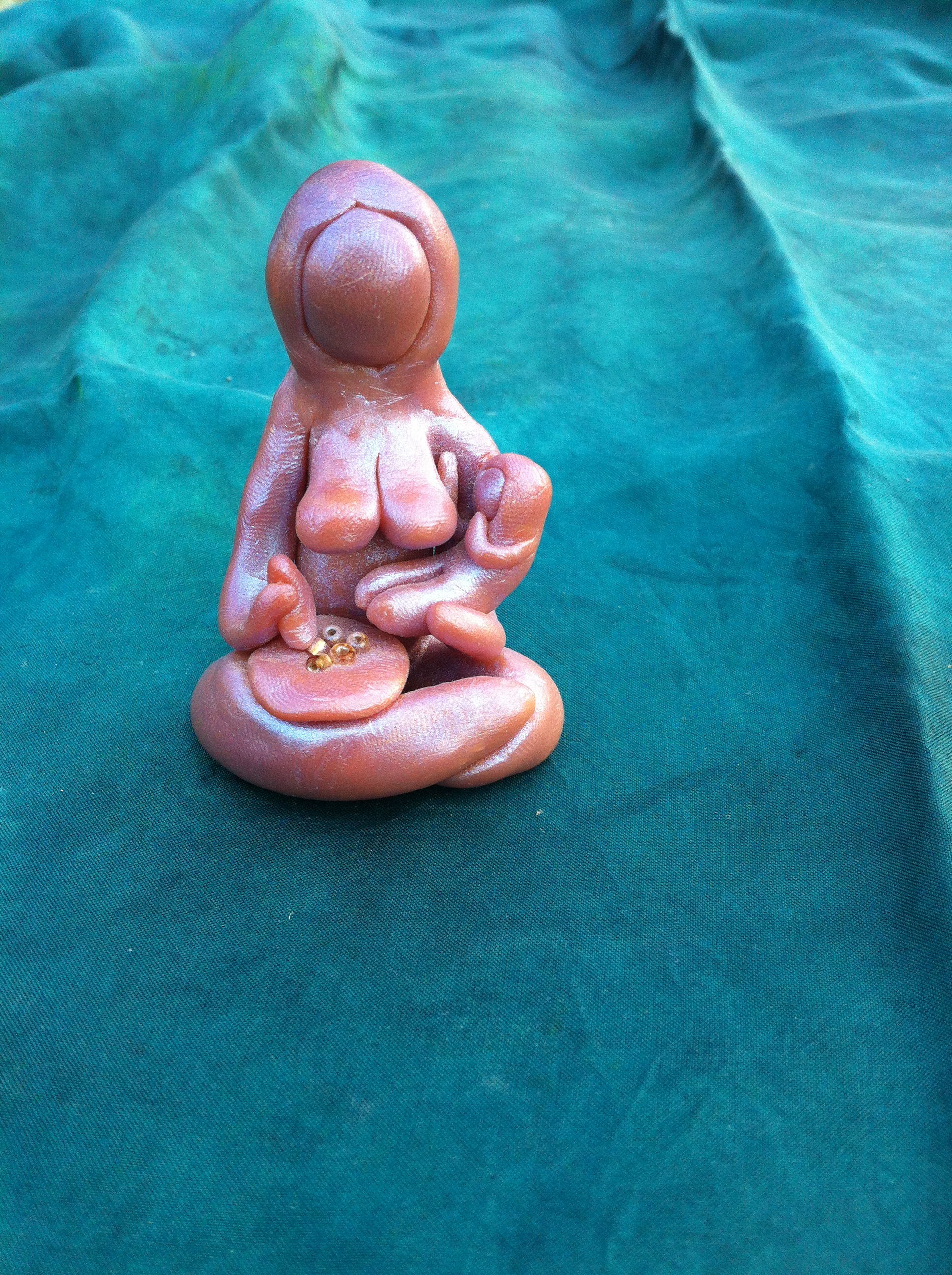
Personally, I refer to this as “grinding my corn”:
Nov 2012 042

Grinding my corn sculpture from several years ago.

I want to be with my children, but I wish to be engaged in my own pursuits at the same time. When our lives feel happiest and most harmonious is when exactly this is occurring—when we are all together, but each working on our own projects and “doing our own thing.” I envision a life of seamless integration, where there need not even be a notion of “life/work” balance, because it is all just life and living. A life in which children are welcome in workplaces and in which work can be accomplished while in childspaces. A life in which I can grind my corn with my children nearby and not feel I need apologize for doing so or explain myself to anyone…

I just want to grind my corn!

Returning to the issues of identity raised in the quotes from The Art of Family, the question is explored beautifully in the article Beautiful Catastrophe: The Death and Rebirth of Becoming a Mother:

You were twenty, twenty-three, thirty, thirty-five. You were free and young and somebody else.

We were free and young and somebody else.

But now, we’re mothers.

At some point the reality will hit us: We are never alone again, no matter where we are, and we are the only ones in the world who have become this person toward this child.

I’ve been the same woman my whole life. What about her? Where is she? Is she just dead?

Yes, she is just dead.

Does that seem harsh? Well, it is. So is motherhood.

Perhaps we can soften this whole thing by saying our identities are “transformed,” or we are “forever changed,” but the fact of the matter is that the woman you once were is gone, and she will never come back.

Period.

I also recently finished reading the anthology The Maternal is Political and in it Jennifer Margulis (later birth writer of the new book Business of Baby) says:

Jame’s working full time and my staying home wasn’t working. My working full-time and James’s staying home hadn’t worked either. We both wanted to be with our children. And we both wanted to work (something I was only able to admit once I tried being a full-time mom). But neither of us wanted to do one or the other exclusively.

–Jennifer Margulis April 2013 002
This is what we are working towards for my husband and me, hopefully this year. I think we both deserve to be home with the kids, I think we both also have other work that is valuable to pursue. I envision a life of seamless integration of our various roles and passions–all of us. We have a family mantra: “our family works in harmony to meet each member’s needs.” 🙂

“Is there one single aspect of motherhood that isn’t political? From conception to graduation, from your kid’s first apartment until you die, it is basically one political decision after another…” –Rebecca Walker

Also in The Maternal is Political, Beth Osnes writes about Performing Mother Activism (she has a one woman show) and I love her analogy of care being like a loaf of bread…

I go on with scenes that tackle the onslaught of societal expectations and repressive forces that creep into a woman’s life once she becomes a mother: “it happens one day. You find a large parcel on your front porch. You open it to find the status quo being delivered to you…well, actually, the status quo manual…” I go on with scenes that lambaste the fearmongering that goes on in our government and media: “The status quo wants you to dumb down, mother. It will tell you who to trust and who to fear.” I remind mothers that we must think for ourselves: “I say rage, mother. Do not go gently into that good night. Rage, rage, against the dying of your light.”

I have also stopped expecting that caring needs to be a whole and perfect project, like an unsliced loaf of homemade bread. I am April 2013 009coming to accept that, at least for me, caring about the world is more fragmented, much more like a store-bought loaf that splays open as soon as you open the bag. Here’s a slice of caring about antipoverty legislation, here’s one of caring for my three-year-old with the flue, here’s a slice of caring for victims of our country’s warring and, whoops, here’s even a slice of caring about my curtains. I have stopped imagining that caring is pure and unselfish; many people, including me, fashion their identities out of caring, whether for kids or for the world. Still: Bread is bread, and caring is caring. Whole or broken. Homemade or purchased. Consumed or given away.

I’m also learning that social movements will go on, even if nursing mothers or parents of toddlers have to drop out for a while. We will be back,someday, maybe when the youngest turns two or whenever we can again afford to dream like activists, rather than work like dogs. We may be more distracted than before, less available…But when we return, we will give a break to someone else who needs it—like those erstwhile college students who may be finding that carting babies to marches is harder than they anticipated.

And when we do rejoin the movement, it is possible that we will agitate and march and advocate from a deeper place within ourselves than we had known existed. It is possible that we will act from that cavity our children have hollowed out of us, that place where breath begins.

–Valerie Weaver-Zercher

And, as a lovely closing tribute to all women and all their work, remember this…

Mothers — you are powerful. Stand tall. You are full of grace. Stand tall. Join together and stand tall. Be as a Redwood tree. Stand April 2013 028tall. If you have stood next to a Redwood tree or seen photos of one, you will notice that they do not grow alone. They grow in groves with all of the trees connected together, even if they appear to be separate. Their shallow roots form a web that holds these big trees up in the wind. Redwoods do not fall very often. We can emulate those trees, mothers. We can hold each other up.

We may feel alone at times, but believe me and remember: You are being supported underneath the surface of where you live. Right beside you there is somebody thinking about you and supporting you whether you know it or not. Think of all the mothering that goes on in life. I have found in my life that it comes sometimes when you do not expect it and from someone you do not realize has your back. Someone in your root system seems to know that you need something. Women have a natural mothering instinct if they just listen to it.

Stand Tall

Other past posts about mothering and working:

The tensions and triumphs of work at home mothering

Guest post: working/parenting interview

The Ragged Self

Surrender?

April 2013 020

Cesarean Birth Art Sculptures

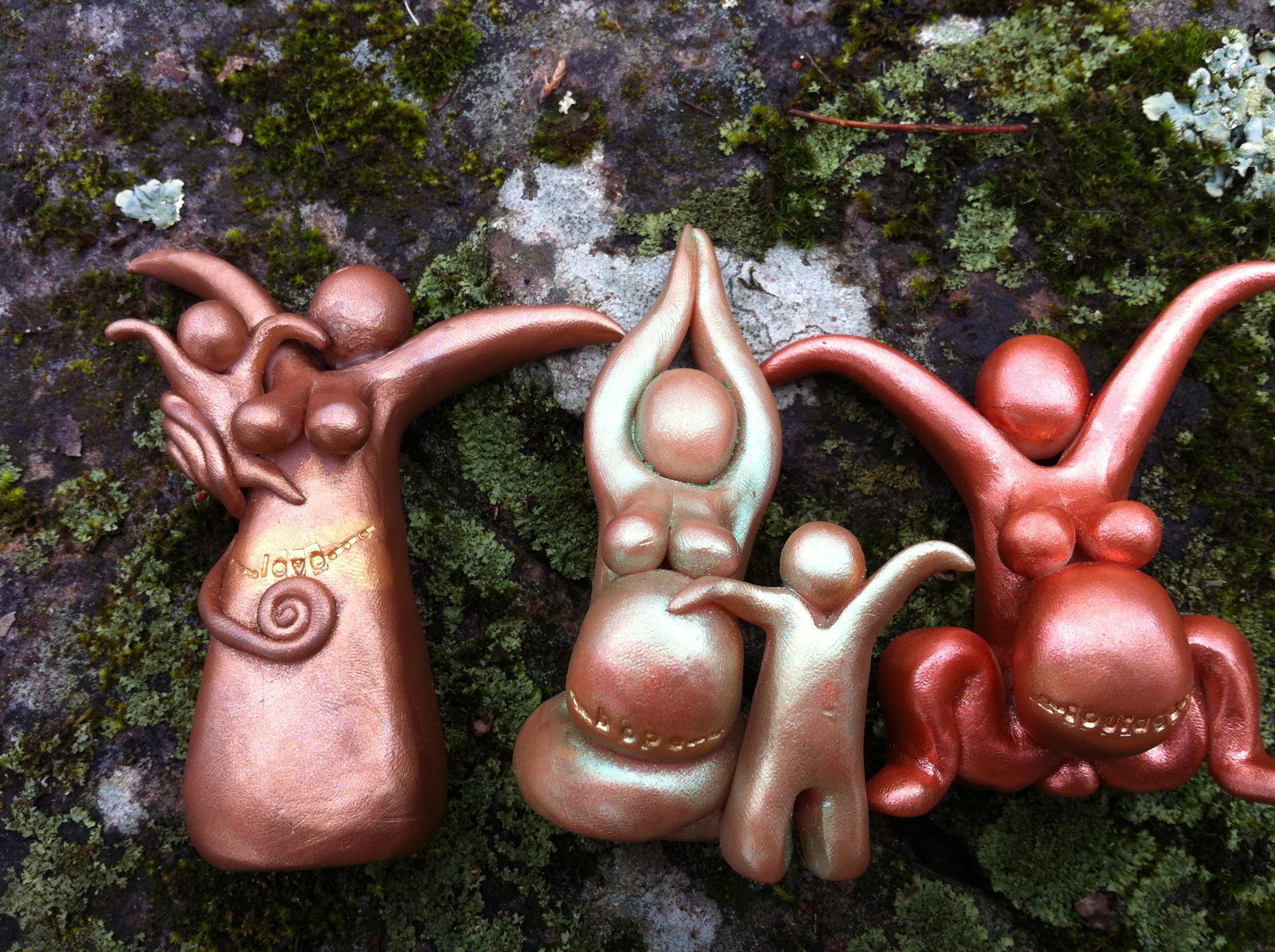
While it is still Cesarean Awareness Month, I wanted to make sure to write a quick blog post about a special series of custom sculptures I made recently for a special VBAC-hopeful mama. Earlier this year I was contacted via Facebook by a mother who shared a little bit of her story with me and who has given me permission to share it here as well. She experienced a traumatic cesarean following a birth-center-labor turned emergency transfer. Her baby almost died and she is still struggling to reconcile her feelings and her grief about his birth. She was very appreciative of the care from her birth center midwives and asked me if I would make a set of custom sculptures for them as a gift. While I previously only made sculptures for myself or for my friends, her story touched me and I agreed to make the figures. The picture I took of them ended up becoming the “famous” cake-pan lid photo that launched me into selling a whole lot of birth art sculptures over the last two months and opening up my little etsy shop. After receiving the sculptures, she requested I make another special set of sculptures, this time for her. Her request was to have a figure that was “wearing her scar proudly” and that would help her heal from the trauma and disempowerment of her emergency cesarean as well as prepare for a hopeful future VBAC. I was intimidated by the idea of making something to help someone else heal. I mean, wow! What a privilege and responsibility. There felt like a real risk in interpreting another woman’s experience artistically and I worried about disappointing her or not getting it. Around the same time as this request, I talked to a real-life friend about her experience with ovarian surgery during pregnancy and her feelings about her scar. After talking to her, I kept thinking, “her courage is written on her body” and I knew I wanted to include words as part of the scar. For my friend, the result was this figure:

March 2013 032

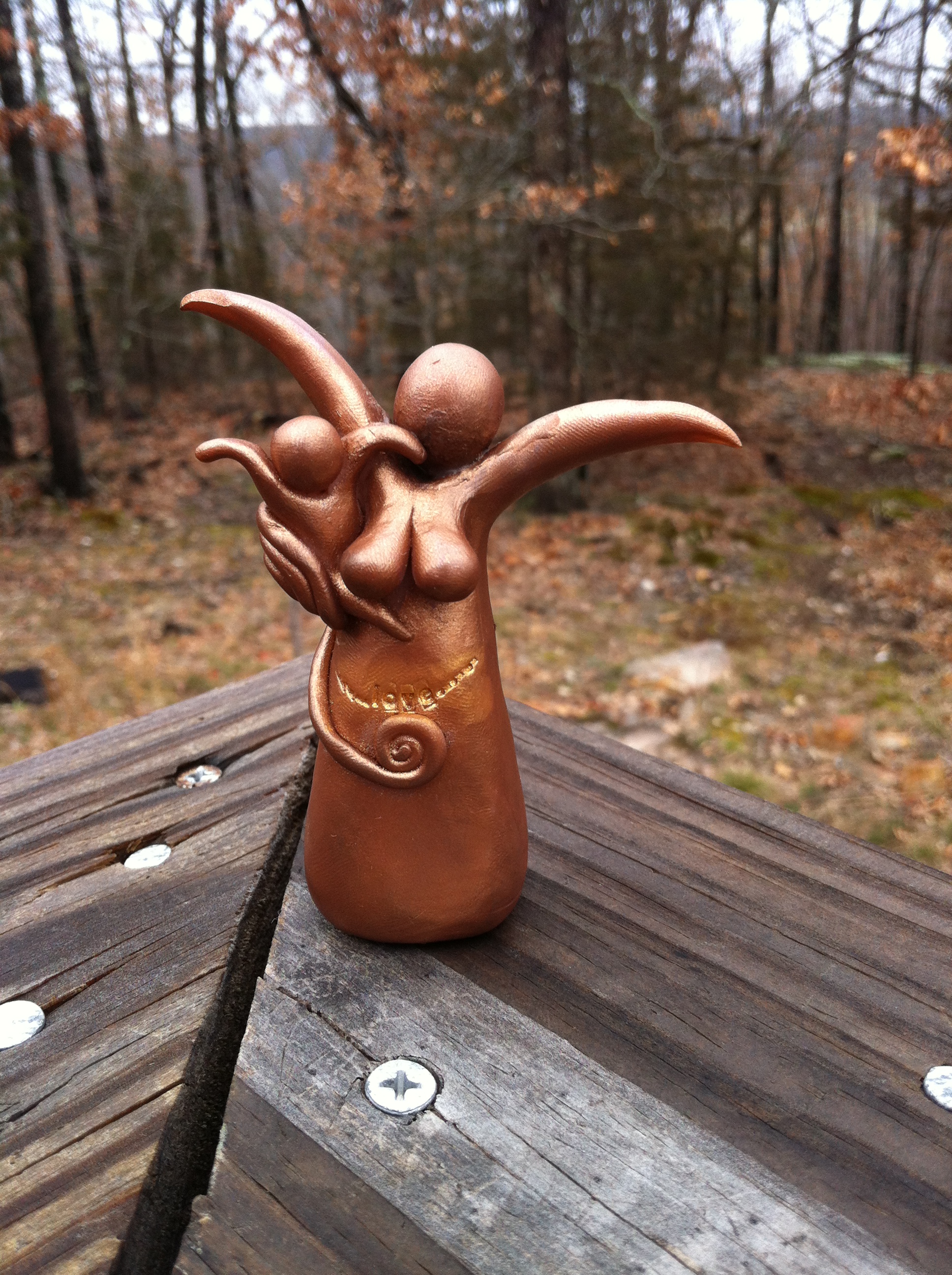
For the VBAC mama, I wanted to create a figure that showed her joy in the birth of her healthy baby, the link between scar and baby, and the fact that her body has been marked by this experience in a profound way. You can’t really see in the picture, but written in the middle of the scar is the word, “love,” because she acted with great love.March 2013 042For the next figure, the one representing her future, planned pregnancy, I included the word “hope” written into the scar, as well as her now-toddler by her side:

March 2013 066And, finally, I wanted to create a powerful VBAC mama sculpture, courageously pushing out her baby in triumphant joy and relief:

March 2013 047In her scar is the word, “courage.” For these figures, I am pleased with how the scar feels like an integrated part of them. They hold that experience, they wear it, their courage, love, and hope has been permanently written upon their bodies. It is there, loud and clear, and yet new experiences are too. To me, these figures felt unifying and whole. I hope the recipient also felt that message 🙂

March 2013 064 March 2013 065 March 2013 068 March 2013 070

After writing this post and scheduling it, I read a deeply touching story by a mother who had cesarean births: Being a C-Section Mama In the Birth Goddess Club

But, there was a moment after my section with Louise where I got out of bed for the first time and walked to the shower. Everything was quiet. My baby girl was sleeping. My husband, Kurt, was holding my hands and trying to help me. It hurt so bad that I was nauseated and started dry heaving. The straining of my torn and abused stomach muscles put me over the edge into a universe of suffering and pain. I thought I couldn’t, it was too far, but I made it across the room and into the shower. I stood there, gray-faced and trembling and sobbed and sobbed while the water ran over my defeated, mutilated body. I couldn’t bend down to wash myself. My head was spinning. I focused all of my concentration on fending off the nausea. My husband got onto his hands and knees and crawled onto the floor of the shower. He knelt at my feet, fully clothed and getting soaked by the warm water. He washed my feet and my legs and my incision, also my deflated and sagging stomach. He looked up at me and he was crying. He wrapped his arms around my thighs and held on to me tight. He cried and said, “Thank you.”

I will never know what it’s like to triumph in birthing a baby, but I feel like I became a warrior and a goddess in my own, lopsided way.

–Amanda King

I almost forgot to include it, but the first cesarean birth art piece I created was actually not about VBAC at all, but was about the birth of triplets. The mother wanted a set of sculptures acknowledging her triplet birth journey, which included a cesarean birth and also not being able to breastfeed the babies. I felt anxious about making the “right” kind of cesarean piece and went with something that I felt conveyed the sense of the mother’s body “flowering” open to release her babies. I also set a jewel at her heart to indicate the love with which she opened her body to let her babies enter the world.

February 2013 099

February 2013 096

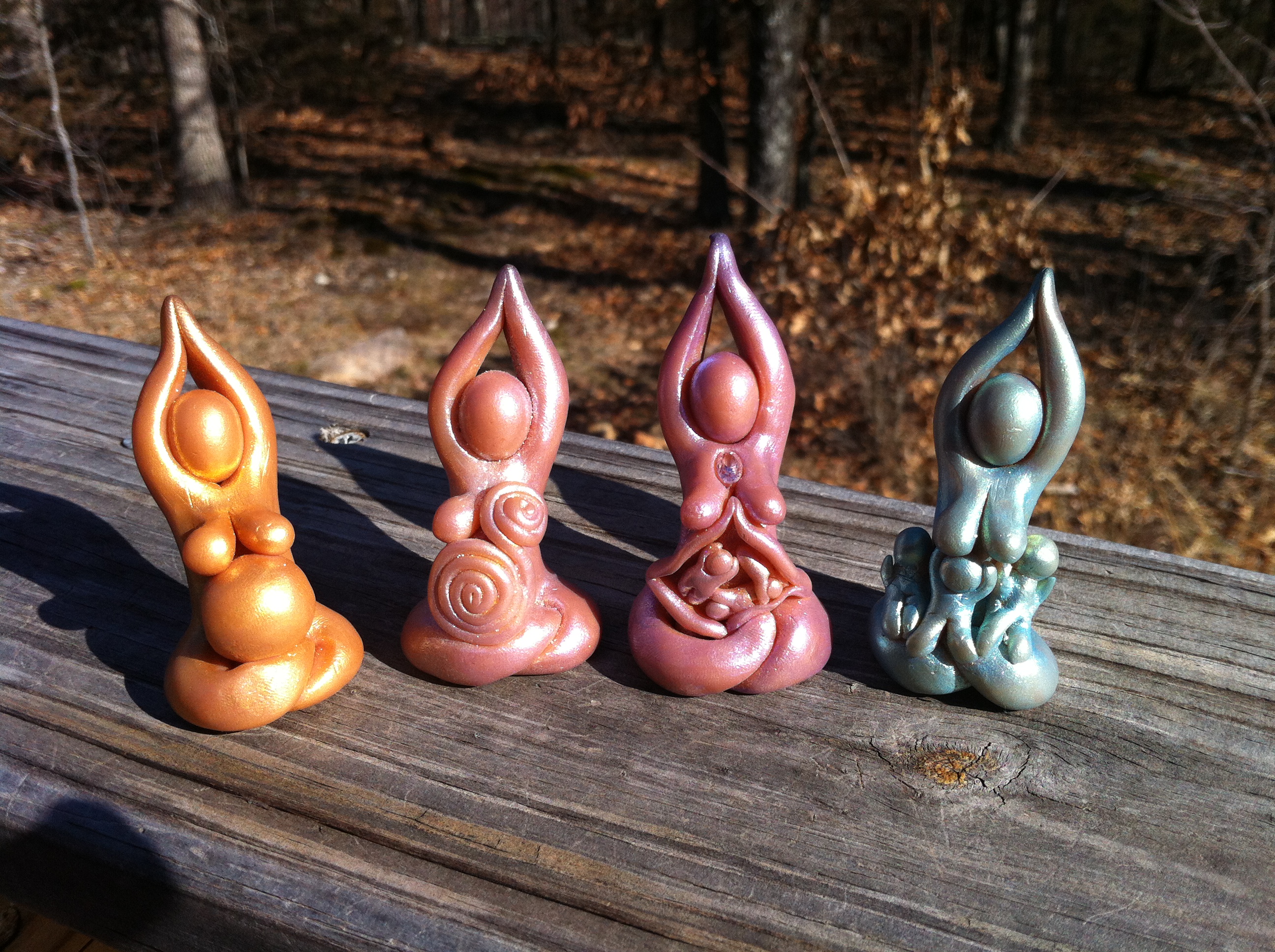
The Childbearing Year Sculpture Series: Pregnant Woman, Laboring Woman, Cesarean Birth Goddess, Mother (of Triplets)

  February 2013 170 February 2013 148

“I became a mama goddess, too. I became a wonder of fertility, of softness, of late nights and warm beds; a body capable of unimaginable things. I labored and tore open, too.”

–Amanda King (in Being a C-Section Mama In the Birth Goddess Club)

Wordweaving

“Giving birth to a new life is about so much more than just the moment itself. The power of finding your strength as a woman through birth resonates for the rest of your life. It shapes you as a person, and as a parent.” ~ Gina Sewell

“Childbirth is a time when a woman’s power and strength emerge full force, but it is also a vulnerable time, and a time of many changes presenting opportunities for personal growth.” ~ Annemarie Van Oploo

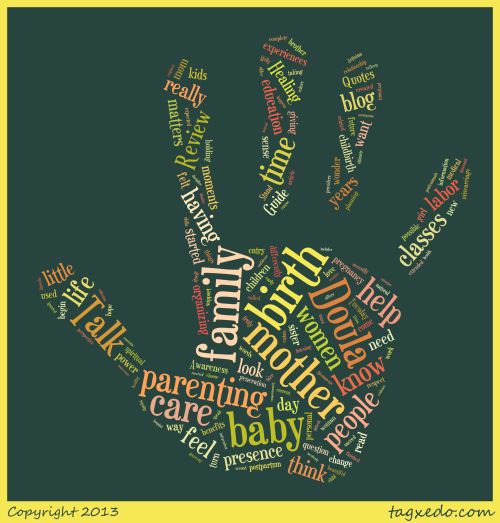
So, this is kind of weird little post, but I had some fun things to share. I’ve been playing around with Tagxedo and made a Talk Birth image!
talkbirthAnd, I learned that this year is the 70th anniversary of the classic Myers-Briggs Type Inventory. I have my online students take this test every session and we compare our results and the overall class dynamic. In celebration of the MBTI birthday, they have cool little wordcloud heads available with your type. Here’s mine!

infj-head

I like that “intense” is up there at the top of the head. Feels fitting 😉 And, here’s my husband’s!
intj-headI also used Tagxedo to make a “strong elephant” for my elephant-collecting mom to take with her on her visit to my grandma!

strongelephant

Bringing it around back to birth though, I also read an article about the potent impact of the language of birth.

So maternity care workers. Words do matter. To you and to all in earshot of you.

via Childbirth and the language we use: does it really matter?

I’ve had an interest for a long time in what I call the “lexicon” of birth. As I’ve referenced before, that is what puts the “Talk” in my Talk Birth name! Language is powerful. Language shapes our lives and experiences. Much of the language surrounding birth and women’s bodies is negative or degrading. Think, “trial of labor,” “inadequate pelvis,” “failure to progress,” “incompetent cervix,” “irritable uterus,” “habitual aborter” (yes, that is the name for women who experience multiple miscarriages).

On the flip side, I’ve also read other writer’s critiques of an overly positive language of birth, labeling and mocking words like “primal” as “euphemisms” for hours of “excruciating” pain. But, that makes me think about the locus of control in the average birth room. It seems like it might more difficult to start an IV in a “triumphant” woman, so lets call her stubborn or even “insisting on being a martyr”? Could you tell someone making “primal” noises to be quiet? Probably not, but you can tell someone who is “screaming” to “stop scaring” others. Asserting that a painful and degrading language of labor and birth is “real” English and that the language of homebirth advocates are “euphemisms” is a way to deny women power and to keep the locus of control with medicine. This language is often that which dehumanizes and denies the personhood of the birthing women. And, not only is the language disempowering and also incomplete—I honestly never felt “agonized” or “screamed” during any of my births, so why would I use inadequate words like that in place of my more accurate “euphemisms”?

Some other past posts about language and birth:

Birth Talk

Health Care or Medical Care?

Maternal-Fetal Conflict?

Pain with a Purpose?

Perceptions of Pain

Words for Pain

Consumer Blame

Cut here?? What not to say to pregnant or laboring women…

Healing Presence

My extended family is in the middle of a stressful medical situation with my grandmother that is absorbing a lot of collective family energy lately. Such experiences always lend “perspective” to a variety of areas and I’ve felt a little blocked in the writing of blog posts because they feel frivolous or unnecessary or like they’re distracting me from where I could be spending my attention. I bought a short book for my Kindle yesterday called The Art of Being a Healing Presence, and finished reading it last night. I bought it specifically to help my mom who is going to visit my grandma and also hopefully to help me be there better for her (both my mom and grandma). It dovetails nicely with my current lesson at OSC, which is about speech and how we talk to others. So, for today’s post, I picked out some quotes from a book that I feel like fit well into any type of relationship requiring compassionate listening and attention, not solely end-of-life care, because these ideas could relate to listening to women talk about birth and motherhood as well.

Healing presence is everything life itself is: messy and mysterious, exasperating and exhilarating, wearying and wonderful. That’s what makes it so sacred.

(Kindle Locations 793-794)…

Yep. Sounds like giving birth and like birth listening too.

Healing presence is a spiritual practice or discipline as well…

(Amazon affiliate link included)

…Healing presence is essentially a spiritual discipline in itself. As you begin, you may think of healing presence primarily as something you do for someone else. Eventually, however, you’ll realize that healing presence has become an integral and significant part of your own spiritual development. As you choose to keep opening yourself to this discipline, even when it’s difficult, even when you feel yourself rebelling, you necessarily mature spiritually. As you repeatedly ask yourself, “How can I be a healing presence in this particular situation?”, you expand your horizons and you make new and fruitful connections with all dimensions of life, especially life’s sacred foundation. The more you are a healing presence in the midst of everyday events, the more you come to appreciate that the common ground on which you stand with another is pulsing with all that is divine. You realize that holiness is at work as you consciously and compassionately accompany others. Then sometimes when you least expect it, a sense of awe overwhelms you—awe, perhaps strong assurance, or waves of gratitude, or an immense sense of peace. You cannot make any of this happen. You can only welcome it as it unfolds, revealing itself and making its presence known. It is The Sacred. (Kindle Locations 821-830)

Also, from the very beginning of the book, I saved this little quote:

“In every person there is royalty. Address the royalty and royalty will respond.” –Scandinavian Proverb

The relates to the idea of seeing one another that I explored in a prior post:

I often remind students in my human services classes that all people have a basic need to be both seen and heard. This doesn’t mean agreeing with everything someone else says and does, it means being present and witnessing them as they follow their own paths.

In a newsletter recently, I read an article called “I See You” by Sue Scott, a communication skills instructor. She explains that in South Africa, native peoples greet each other with an expression that literally means, “I see you.” The response is then, “I am here.” She observes, “what a powerful and beautiful gift it is to recognize another individuals in this way: ‘I see you.’ Acknowledgement, recognition, and respect all require focus on the other person…the word respect comes from the Latin word ‘respecere’ meaning ‘to look at again and again…’I see you’…seems to me to be the ultimate in respect.” Sue goes on to explain that when we truly SEE another mother—”when we truly hear her concerns—then we affirm her ability to mother her baby in her own best way.”

A little more than two years ago, I received the precious gift of being seen when a mother that I had previously helped with many breastfeeding questions called to ask me another question. We had become friends over the course of time since she’d had her first baby and I was in the process of my second miscarriage when she called with a question about her own pregnancy. I told her about the miscarriage, but said I felt like I could still talk with her about her question. We ended up then talking for a time about miscarriage and about cesarean birth, because we discover numerous surprising connections between the feelings and experiences of an unexpected outcome to our dreams for our pregnancies. She then said, “You know in that movie Avatar how they say, ‘I see you’?” I said yes, and she said, “I just wanted to let you know that I see you, Molly.” These words were such a gift to me. It was beautiful to hear them and I cried. I felt so seen. It was just what I needed and I hadn’t even known it. I will never forget that simple and yet extremely potent gift of acknowledgement from another woman.

via I See You

In my classes, I always try to explain that not only do you see someone, but they see you seeing them, and if what you see is valuable and worthy, that is what they rise to. So, that is why I liked this “royalty” proverb from the book.

And, later in the book, this concept is addressed as well:

As people experience healing presence, they change. This shift may be subtle or dramatic. They’re likely to open more—to themselves, to others, to the world, to the amazing mystery of life itself. Sensing another’s belief in them, and seeing that belief reflect-ed in life around them, they can begin to develop in completely unexpected ways, and to move in directions they have not gone before. Or perhaps they will return to their original path, but with new spirit, new vision, new hope. As they encounter the inevitable pains and diminishments that life will present, they can begin to understand that such adversities can be experienced as more than adversities—they can be known as opportunities for growth, as avenues for moving toward wholeness. Your authenticity and the compassion in your presence will fan out generously around you, always returning to envelop you again and again. As you become less driven by your own concerns and less given to your own needs, and as you forsake your need to help, you’ll become a more mature and helpful companion. (Kindle Locations 841-849).

April 2013 036

Tuesday Tidbits: Cesarean Awareness Month Round-Up

motherbaby

April is Cesarean Awareness Month and a lot of great resources have been catching my eye! First, there is a free webinar about the “Natural Cesarean” coming up on April 11th.

If you’re a first-time parent, make sure to check out 10 Tips for Avoiding a First-Time Cesarean from Giving Birth with Confidence. This blog also has a response to the question of Are “Big Babies” Cause for Cesarean? 

And, of course, also check out ICAN’s blog for an ongoing collection of Cesarean Awareness Month related posts as well as helpful cesarean awareness information on a year-round basis.

Science & Sensibility offers a great round-up of resources for clients and classes with regard to cesarean births, cesarean rates, and cesarean prevention: April is Cesarean Awareness Month! Resources for You and Your Classes

One a related note, Science and Sensibility also has a two-part series of posts analyzing the role of doulas in reducing cesareans for mothers using Medicaid:

Medicaid Coverage for Doula Care: Re-Examining the Arguments through a Reproductive Justice Lens, Part One

More fundamentally, however, we argue that doula benefits cannot be captured solely through an economic model.  Neither should doulas be promoted as a primary means to reduce cesarean rates.  Both strategies (economic benefits and cesarean reduction) for promoting doulas have significant barrier.

Medicaid Coverage for Doula Care: Re-Examining the Arguments through a Reproductive Justice Lens, Part Two

However, greater attention needs to be paid to issues of privilege and oppression within the doula community at large.  Advocates need to consider how the prioritization of the cesarean rate as a primary research or policy issue reflects a certain level of unexamined privilege. For those facing spotty access to health care, cultural and linguistic incompetence in care settings, the detrimental effects of the prison industrial complex and the child welfare system on families, and the effects of poverty, racism, and/or homophobia in general, there are other, perhaps equally pressing concerns surrounding childbirth than over-medicalization. Certainly, unnecessary cesareans and over-medicalization are detrimental to everyone, but we need to understand how the effects of these problems play out differently for differently situated people and not limit advocacy to these issues.

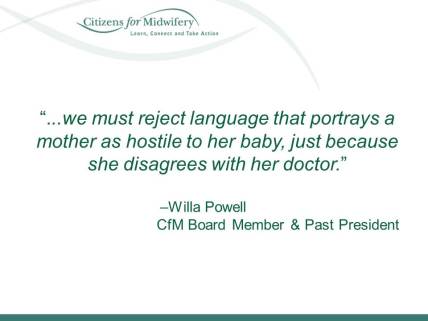
When I consider coercion into unneeded cesareans, I think of my own post addressing the flawed notion of Maternal-Fetal Conflict and from these earlier thoughts, I created the little graphic for Citizens for Midwifery seen above.

I think it is fitting to remember that mother and baby dyads are NOT independent of each other. With a mamatoto—or, motherbaby—mother and baby are a single psychobiological organism whose needs are in harmony (what’s good for one is good for the other).

As Willa concluded in her CfM News article, “…we must reject the language that portrays a mother as hostile to her baby, just because she disagrees with her doctor.”

via Maternal-Fetal Conflict? | Talk Birth.

I was honored recently to make a series of sculptures for mom recovering from a traumatic cesarean and hoping for a VBAC in the future. I hope to make a more detailed post in the future describing these figures and what they’re trying to communicate!

March 2013 070

I dug into the archives and found some older posts either about cesareans or relating to cesarean prevention:

Book Review: Understanding the Dangers of Cesarean Birth

Cesarean Awareness Month

Cesarean Trivia

Cesarean Birth in a Culture of Fear Handout

Guest Post: Abuse of pregnant women in the medical setting

Becoming an Informed Birth Consumer (updated edition)

The Illusion of Choice

ICAN Conference Thoughts

Helping a Woman Give Birth?

Community Organizing

Alone, you can fight,
you can refuse, you can
take what revenge you can
but they roll over you.molly37weeks 071

But two people fighting
back to back can cut through
a mob, a snake-dancing file
can break a cordon, an army
can meet an army.

Two people can keep each other
sane, can give support, conviction,
love, massage, hope, sex.
Three people are a delegation,
a committee, a wedge. With four
you can play bridge and start
an organization. With six
you can rent a whole house,
eat pie for dinner with no
seconds, and hold a fund raising party.

A dozen make a demonstration.
A hundred fill a hall.
A thousand have solidarity and your own newsletter;
ten thousand, power and your own paper;
a hundred thousand, your own media;
ten million, your own country.

It goes on one at a time,
it starts when you care
to act, it starts when you do
it again after they said no,
it starts when you say We
and know who you mean, and each
day you mean one more.

–Marge Piercy (in Life Prayers, p. 143)

I’m teaching community organizing again this session and the above is a poem I saved to share with my class when we talk about community organizing, creating change, and mobilizing power. I love it, because it starts small, which is where we all have to start. And, of course, it makes me think of birth change efforts as well. In a previous post about creating birth change, I used my community organizing class to explain the difference between education and action…

Additionally, with regard to education as a strategy for change, I’m brought back to a point I raise in my community organizing class: People often suggest “education” as a change strategy with the assumption that education is all that is needed. But, truly, do we want people to know more or do we want them to act differently? There is a LOT of education available to women about birth choices and healthy birth options. What we really want is not actually more education, we want them to act, or to choose, differently. Education in and of itself is not sufficient, it must be complemented by other methods that motivate people to act. As the textbook I use in class states, “a simple lack of information is rarely the major stumbling block.” You have to show them why it matters and the steps they can take to get there…

via Women and Knowing

Book Review: The Doula Guide to Birth

Book Review: The Doula Guide to Birth

The Doula Guide to Birth: Secrets Every Pregnant Woman Should Know
By Ananda Lowe & Rachel Zimmerman
Bantam Books, 2009
Softcover, 270 pages
ISBN: 978-0-553-38526-7
www.thedoulaguide.com

Reviewed by Talk Birth

The Doula Guide to Birth is written for pregnant women, though the title may suggest that it is for doulas. It also has a chapter and sections specific to birth partners. However, doulas will also find the book to be a friendly, enjoyable read and may pick up some fresh perspectives for their work with birthing women.

The book also includes (short) sections for often-ignored or marginalized segments of the birthing population such as same-sex partners, parents using a surrogate mother, and women planning for adoption.

The first five chapters of The Doula Guide to Birth cover benefits of doulas, the role of fathers/partners and the complementary nature of the doula role to other support people, general overview of labor, childbirth education options and medications, and finding a doula.

The later seven chapters delve deeper into less typical subjects such as doulas and medical providers, when should you really go to the hospital, labor techniques, unexpected interventions, birth plans/birth essays, and what really happens postpartum.

Though not a criticism per se, I did feel like the first half of the book reads very much like an extended “commercial” for doulas. The second half of the book really shines. My favorite chapter was “labor is not about dilation”: “Although there is currently a heavy emphasis on dilation, vaginal exams, and timelines for giving birth, labor is not about dilation. Your body knows how to give birth whether or not you ever have a pelvic exam during labor. Birthing women need encouragement to trust their bodies, and to be the stars of their own labors. Doulas help provide this encouragement. And the confidence a woman discovers in labor can help carry her through the demands of parenting and future challenges in life.” (emphasis mine).

The Doula Guide to Birth is supportive of the midwifery model in philosophy, but only includes very brief mentions of midwives, the assumption being that most births will be in the hospital.

The book has extensive endnotes and an appendix with a birth evaluation form.

Disclaimer: I received a complimentary copy of this book for review purposes.

Review previously published on Citizens for Midwifery

Birth Matters!

“A well taken care of and rested mama almost always translates into a well taken care of and rested baby. Respecting mothers is an act of social change.” —Mother Health International

“The way a society views a pregnant and birthing woman, reflects how that society views women as a whole. If women are considered weak in their most powerful moments, what does that mean?” –Marcie Macari (She Births)

“…it is not easy for women to lay claim to our life-giving power. How are we to reclaim that which has been declared fearful, polluting and yet unimportant? How are women to name as sacred the actual physical birth, which comes with no sacred ritual…?” –Elizabeth Dodson Gray

Birth matters. It truly does. The impact is often ignored or minimized, but giving birth remains one of life’s most profound, pivotal, liminal, and initiatory events. Bizarrely, this is overlooked by much of modern culture. We spent many thousands of dollars on weddings each year as well as months of planning and preparation for “just one day,” and yet in pregnancy and birth are willing to let insurance companies dictate access to care providers and let care providers dictate access to evidence-based care. Some time ago I expanded the wedding analogy into a satirical look at why birth matters:

You stop sharing your feelings, but you can’t shake the memories. What you expected to be a beautiful day filled with love and celebration was not and you feel a real sense of grief at the loss of your dreams. You know you shouldn’t feel this way. You know that what really matters is your healthy, happy husband, but you keep wondering if your wedding really had to be that way. Yes, you love your husband and you are so happy that he is healthy, but you also wonder if that really is all that matters. Don’t you matter too? Doesn’t your relationship matter? What about respect, dignity, love, and self-worth? Don’t those matter too? Wasn’t this a special life transition for your family? Wasn’t it the beginning of a special relationship together and couldn’t that relationship have been celebrated, honored, and treated as worthy of care and respect?

via All That Matters is a Healthy Husband (or: why giving birth matters)

And, in a different post I made a list of why I care about birth, concluding with the following:

Because I know in my heart that birth matters for women, for babies, for families, for culture, for society, and for the world.

via Why Do I Care About Birth?

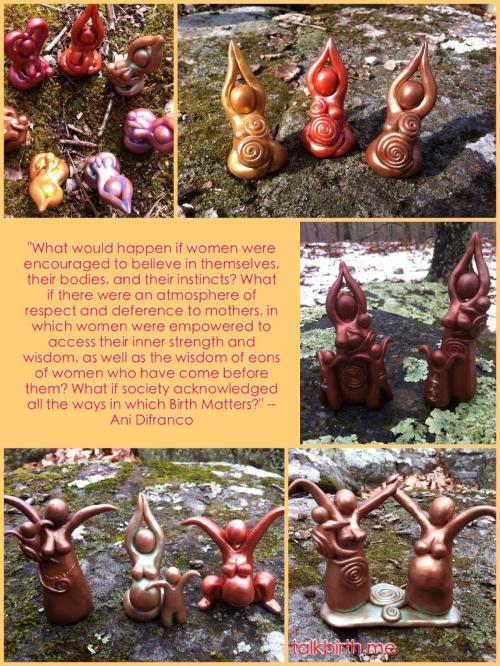
So, I particularly loved this quote from Ani DiFranco and I had to turn it into a picture! 🙂

902248_10152670748305442_735801331_o

Tuesday Tidbits: Parenting, Help, and Early Motherhood

From The Doula Guide to Pregnancy and Birth’s website (book previously reviewed here), I learned about an upcoming free childbirth and parenting virtual conference. I keep signing up for things like this and not really “finding time” to actually participate in them, but this one looks like it has a pretty amazing line up! Making time to READ something is almost always possible for me (though I have a backlog there too), but making time to listen to or watch something just never seems to actually happen. I wonder if I’ll ever stop signing up for them though–so alluring, so intriguing, so free…and yet, then I get daily emails about the call/talk for that day and feel a nagging sense of “guilt” (or something) for not participating and also like I’m “missing out.” An exception is the Life Balance calls Renée Trudeau used to do from her book The Mother’s Guide to Self-Renewal. I did make time for those and never regretted it! 🙂 (I should get that book back out again.)

Thinking about parenting and self-care and help brings me to several other posts that I’ve enjoyed recently:

To parents of small children: Let me be the one who says it out loud

There are people who say this to me:

“You should enjoy every moment now! They grow up so fast!”

I usually smile and give some sort of guffaw, but inside, I secretly want to hold them under water. Just for a minute or so. Just until they panic a little.

If you have friends with small children — especially if your children are now teenagers or if they’re grown – please vow to me right now that you will never say this to them. Not because it’s not true, but because it really, really doesn’t help.

The reason I liked this acknowledgement is because it is so true that they grow up so fast. It hurts my heart how fast. However, in the moments in which people choose to make this comment or when it is used against yourself or against others as a way of shaming or guilt tripping, it really, really doesn’t help. One comment on this post says, “I hear the first 40 years of parenting are the hardest.” 😉

And, speaking of things that DO help, actual help from actual people helps quite a lot. As a work-at-home mother that blogs, I particularly enjoyed this post from Girl’s Gone Child:

Girl’s Gone Child: Help is (not) a Four-Letter Word

So what’s this big secret we’re trying to keep and who do we think we’re fooling?

And what is it doing to people who read our blogs and books and pin our how-tos and think that all of these projects are being finished while children sit quietly on the sidelines with their hands in their laps.

What is it doing to you?

We write disclosure copy on posts that are sponsored, giveaways that are donated. We are contractually obligated to label and link but where is the disclosure copy stating how we work from home with small children?…

We have help, that’s how!

My help is naptime (quickly fading!), Minecraft, and grandparental cherishment (one mile away, two hours a day = good for kids, I hope good for grandparents, and great for mom!)

And, speaking of blogging, last week Talk Birth hit 400,000 hits. I celebrated by posting this on Facebook:

“Women around the world and throughout time have known how to take care of each other in birth. They’ve shown each other the best positions for comfort in labor, they’ve used nurturing touch and repeated soothing words, and they’ve literally held each other up when it’s needed the most…” –The Doula Guide to Birth

And…they’ve gone looking for support and information on the internet too. Talk Birth hit 400,000 hits today! Woohoo! Thanks, everyone 🙂

I very much enjoyed this quote that I saw on Facebook this morning:

561196_522097027840366_343300980_n

I just finished reading the book The Art of Family and she addresses this tender transition in a way that also felt familiar to me from my own experiences:

What new parents lack most is perspective. They have no idea how fast they are to be catapulted through these early stages. How can they have a perspective of speediness when the nights are endless? It seems apparent to everyone as soon as the baby arrives that this is it—right now is what parenting looks like, and it looks pretty bad. It is a terribly tender, fragile time, akin to sex for the first time. Your first experience at parenting will haunt you in the same way.(emphasis mine)

Yes! I’ve written a lot about my postpartum experiences and I do feel “haunted” in some ways by my introduction to the parenting journey and the process of being forged into a mother. The author goes on to muse that perhaps it is more difficult to parent a boy first (as I did)…

But I had a philosophical breakthrough. Luckily I had a girl first, otherwise it might have taken me a few more years to work through to it. Forgive the tangent, but I have often wondered about the differing routes into parenthood, either having a girl first or having first a boy. Random accounts I have collected tend to confirm the easier route for moms is having a girl first. In part, I wonder if this reflects, as one mother stated, “With a girl I felt immediately in the driver’s seat. I knew all about being a girl.’’ Having a boy first, moms tend to talk about the strangeness of having a truly “other’’ little creature in their care and especially the fear of unintentionally emasculating a son.

And, she takes a look at something that, while not uplifting, was something that I also experienced very clearly in my first months of mothering…

These are, of course, just more thoughts to muse over in the rocking chair. Rocking, rocking, I kept thinking, “But if I am investing my total self in her so that she can take off and fly and reach her full potential, what happens when she becomes a mom, cut down in midflight, so to speak? It can’t be that I am pouring myself into her so that she can turn around and sacrifice herself to her children. Hey, what about my mom—what does she want for me? Was she secretly raising me just to reproduce? Is there life for me past parenting? It has to be that I’m worth more than the second I give birth and the rest of the time I’m downsized to slave.’’ Oh, yes, parenting is slave labor, but only for the opening act, and it’s a long, long play. Once I got a hold of the possibility that being a mom meant staying personally alive through all this, I got some relief from the voice, “It’s Over. My life is Over,’’ whimpering in my head…

–Gina Bria (2011-11-28). The Art of Family : Rituals, Imagination, and Everyday Spirituality (p. 159). iUniverse. Kindle Edition.

I really felt “deconstructed” by early motherhood and often found myself thinking thoughts of this type. I also used to pace around the house with my cranky son in a sling crying and singing, “who am I, I’m Lannbaby’s mama, who am I, I’m Lannbaby’s mama,” over and over again.

The “agony and the ecstasy” of parenting begins with birth. If you’re in the mood for a powerful birth story, here is a triumphant one that I enjoyed reading just tonight:

The Agony and the Ecstasy : The Birth of Santina Maria

 “The natural process of birth sets the stage for parenting. Birth and parenting mirror each other. While it takes courage and strength to cope with labor and birth, it also takes courage and strength to parent a child.” –Marcy White

Driveway Revelations (on Family Size)

Family size has been on my mind since Alaina was born two years ago. Before we got married we talked about having four or even six kids, but as March 2013 022we got a little older we settled on “probably three.” There was a time, post-miscarriages, in which I wondered if two was “enough” and whether we should be happy with our family of two boys. Then, after Alaina was born, even though we’d said she was the last, I found myself spending many moments during her first year thinking, but maybe one more! I fantasize about having a little sister for her. I look at the tight brother-bond of my sons and I want that for her too—for her to have someone on her own little team, rather than being the little tagalong at the end of the family. I have a nagging question of whether three feels like an “unbalanced” number. Then as we moved past one year, I started to have more moments of feeling “done.” Those moments usually came from frustration—i.e. after a long, whiny day, I’d think, “yes, family size is complete. NO MORE! AHHHHHHH.” I also kept having the thought that it makes sense to end our childbearing years on this high, sweet, clear, beautiful, joyful, triumphant note following her birth—why wait until we are fully “burned out” with parenting, why not retain some sweet, delicate wistfulness about infancy and childhood, instead of maxing our personal resources to our fullest extent? (Though, logically I know it isn’t necessarily an either-or proposition, that is how it often feels to me anyway.)

We decided we’d make the final, ultimate decision after she turned two, because too much longer after that point would make more of an age gap than we’d want. I posted on Facebook asking how do people know they’re “done.” I had an expectation of having some kind of blinding epiphany and a deep knowing that our family is complete, as I’ve had so many other people describe: “I just knew, our family was complete.” I didn’t have that knowing though—I vacillated day to day. What if I never know for sure, I fretted. Perhaps this sense of wistfulness and possibility with continue forever—maybe it is simply normal. One more. No, finished. But…ONE more?! And, I have a space in my heart that knows with great confidence that four (living) children would be the ultimate maximum for us. I definitely do not want more than four…so, does that mean there still is one more “out there” for us? And, back I go. I started out postpartum getting rid of maternity clothes and outgrown baby clothes, except for some special pieces and then at some point, I started putting them in a box in the closet instead. I smell her sweet head and think that she’s so wonderful how could I possibly never do this again. I look back at my pregnancies and births and think, WAIT, was that ALL? Is it over? Are my childbearing years behind me now? But, but…they were SO REAL! There is something about keeping the door open still. Not yet saying for sure. And then…some other moments have come recently. Rather than only having exhausted moments of “doneness,” I’ve had some sweet, beautiful moments of doneness too. Two weeks ago, we were all walking in the driveway. Alaina was in the middle with a brother holding each hand and me holding Lann’s hand and Mark holding Zander’s. I looked across at our line of our a family and suddenly there it was…a moment I’d not yet experienced…the sense that our family is complete. And, I thought, it IS a “balanced” family after all, even number or not. Yes, we’ve got the pair of brothers, but we also have “two girls,” so to speak, and that feels more balanced than I expected.

Then, last weekend, we were reorganizing our computer room and I was taking some things down off the walls as well as talking about having let one of my childbirth educator certifications lapse. I looked across at my birth art wall and I had this profound sense of distance from it, like, “oh yeah, I remember that life. It was a long time ago.” It no longer felt current or possible to me, like a part of my future reality, but felt firmly located in the past, in happy memory, rather than linked to possible future. I felt a sense of having “moved on,” past that stage after all, not waiting for the cycle to begin anew.

After my little brother got married last year, I’ve also started to have feelings of readiness to “pass the baton,” so to speak. It can be someone else’s turn to have the newborn, the baby, the toddler, the little kids. When I put away baby things and cloth diapers now, it is with an eye towards being able to give them to my sister-in-law or my sister, rather than saving them for myself. One of the things that has been challenging about the child spacing of my own family of origin is the age gap between my youngest sister, my brother and me. I am almost 11 years older than my sister and 9 years older than my brother (I do have another sister who is 22 months younger than I am too). This has created a “generation gap” of sorts in our lives and sometimes it feels difficult to reach across. A benefit however, that I’ve noticed for a long time, is that it offers the opportunity for each generation to be the “cool people,” to the current little kids of the extended family. Mark and I were the cool people when March 2013 021my little brother and sister were pre-teens and early teenagers—they would come stay at our apartment and we’d take them to the mall and things like that. Then, as they grew and we had kids, they became the cool, fun people to my own kids. I can look forward into a future slightly and see how my kids will now have the opportunity to be a cool, big people to my (as yet unconceived) future nieces and nephews. They won’t have the close-in-age cousin experience, but they will have the opportunity to take their turn as the fun, exciting role models. And, if my sister or sister-in-law hurries up and has a baby, it won’t be too much younger than Alaina and so at least one of my kids still has a shot at having a close in age cousin (and hey, maybe that baby can be her “sister” and teammate like my boys are for each other?! I’m liking this plan!).

Another benefit I can see to this generation-gap style extended family spacing is that each set of grandbabies can have their turn in the sun. If we were all having babies at the same time, how would my parents equally divide up their doting grandparent powers? How would my mom zoom around the state offering her postpartum nurturing skills to multiple new baby households? How would my dad patiently carry around a pile of curious babies? Would I still get my two hours during the day, or would the grandparents be too overwhelmed by having to have 50 grandchildren come over every day? How would I get to be a good, helpful aunt if I was busy taking care of my own newborn at the same time? Now each baby will have the chance to be the center of all the baby-attention and baby-love my whole family has to offer. We’ll all see and celebrate the first crawlings and first steps and first words of each new extended family member in their own turn, rather than having them lost in a shuffle of multiple babies all at the same time. And, I’ll have a chance to be the aunt who smells a tiny newborn head, and cradles soft hair, and marvels at delicate toes, and gummy smiles instead of thinking, “same old, same old.” ;-D

On Sunday afternoon, we took another stroll down the driveway. Mark and I were holding hands and chatting about various topics and when we turned around to head back the opposite direction, this is what we saw…

March 2013 011

And, again, I felt that moment of bright, clear, certain awareness. THIS. This is our family size. These are our babies. We’re done.

(Or, are we?! :-D)

For some gorgeous thoughts on family size, do check out Leonie’s lyrical post On Choosing To Only Have One Kid.

And, on an unrelated note, I also took two pictures of the greenhouse. One during the delightful spring day…
March 2013 013And another during a delightful sunset…

20130331-201839.jpg

Oh, and back to the original topic of family planning, don’t get me started on a conversation about birth control or how we truly plan to make that “ultimate” decision. I don’t freaking know what to do about that. All I know is that while I’m still willing to entertain the possibility of a “surprise” baby at this point in our family life, I am simply NOT willing to push the “reset” button at age 45 and accidentally have another baby then instead of menopause.

And, I realized as I set this to post on April Fool’s Day that someone might think I’m posting this as an April Fool’s joke—surprise, I’m not really “done” after all, in fact I’m pregnant again!!!! Not. ;-D