Productive!

“Being bored is an insult to oneself.” –Jules Renard

This afternoon I made such a long status update on Facebook that I joked it should really be a blog post. So, I decided to convert it into one! (albeit not particularly fascinating or relevant to my blog’s theme. Perhaps I need to remember that Busy is Boring!) I think the abrupt shift in local weather from horrendously hot to near-fall-like crispness has rejuvenated me and we just had a great day today. This morning I went for a walk in the woods with the boys to scout locations for “real life Minecraft.” We also investigated the yard barn shed in our field for rehabilitation possibilities into a cool clubhouse. Then, we had a mini Pinterest Day making baked mozzarella bites and healthy chocolate chip muffins. I gave the kids applesauce with cinnamon for a snack which was met with genuine exclamations of, “this is the best day ever!” (hmm. If that’s all it takes, should break out the applesauce more often!). Also, the doctor finally called back and Zander’s arm is NOT broken (more about this in a minute). We’re finally on a roll with school and Z did 18 worksheets this morning, plus Lann is clicking with things too. On the less productive side, at 2:00 when I made said status update I was still in my pajamas (yes, even on the woods walk and clubhouse scout) and hadn’t taken a shower, let alone finished prepping for Friday’s class. I did get checked in with my online students this morning while still in bed using the miracles of iPad goodness. And, as it turned out, later in the afternoon when the kids went to visit my parents I did finish my prep for Friday’s class after all. What was just delightful about today is that we spent most of the day having fun and enjoying each others’ company—something that sometimes seems not to go hand in hand with productivity! ;-D

Okay, now for the mini-Pinterest Day verdict…

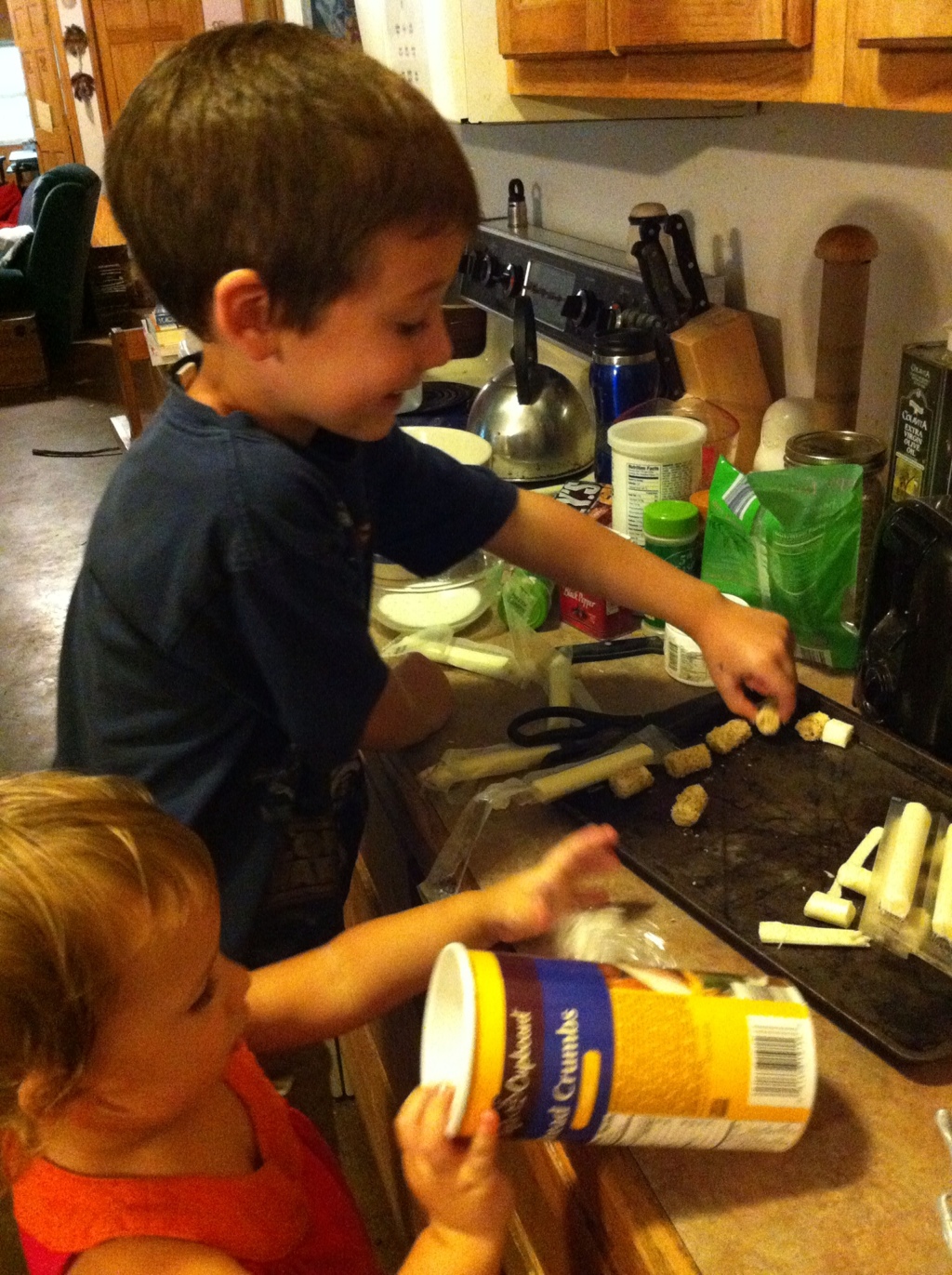
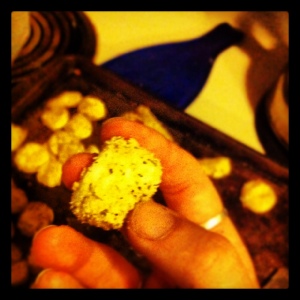
The mozzarella bites were just cut up string cheese dipped in milk and then in bread crumbs which I doctored up with Italian seasoning, pepper, onion and garlic powder. (They were originally inspired by this blog post.)

They were fun to make with kids, tasted great (I recommended my doctored bread crumbs version), and were easy.
20120813-161646.jpg

Zander cut up the cheese and helped me dip the pieces into the crumbs. Alaina helped too.
20120813-162049.jpg

While they flattened some during baking, they had remarkable integrity and did not turn into melted cheese puddles.

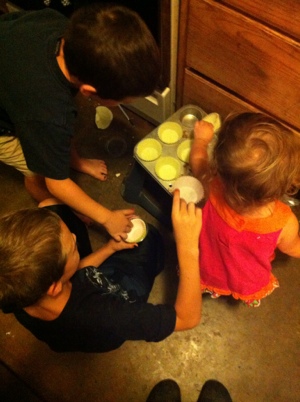
Our next Pinterest Day project was to make some delightfully healthy double chocolate muffins…
20120813-161656.jpg

I thought this little threesome all working together so cooperatively was adorable.

20120813-162100.jpg

What a cutie waiting for cupcakes!

20120813-162043.jpg

Alaina enjoyed some batter.

I changed the recipe somewhat from the original and this is what I ended up with:

Double Chocolate Muffins (flourless!)

Ingredients:

1 3/4 c. oats
3 eggs
3/4 c. unsweetened cocoa
1/2 c. applesauce
dash vanilla extract
1/2 c. plain Greek yogurt
1-1/2 TB vinegar
1-1/2 ts baking powder
1-1/2 ts baking soda
1/4 ts salt
1 c. hot water
1 c. sugar
1/2 c. milk chocolate chips

Preheat oven to 350 degrees. Line 2, 12-cup muffin pans. In a food processor, mix all of the ingredients except for the chocolate chips. Blend until oats are ground and mixture is smooth. Gently stir in the chocolate chips (or, if you forget like I did, sprinkle them generously over the top–they kind of sink in and make a gooey center). Spoon mixture into prepared muffin pans. Bake at 350 for about 20 minutes.

My kids said these muffins were too “intense” after the first one…they’re pretty gooey/rich seeming and they actually thought they were too sweet. I think I’ll cut back the sugar next time–I think 2/3 c. would have been more than enough.

I totally loved them though! They taste like nice squishy brownies! (The kids shaped up later in the day and ate more of them, no longer complaining about being too intense.) As of right now, there are two of the 24 we made left in the house…

20120813-162036.jpg

Finished muffin/cupcake! Look at the nice texture and tasty squishiness.

Okay, and remember the non-broken arm? Last Thursday we spent a lovely playgroup at the river…

20120813-161604.jpg

The boys enjoy playing in this goopy, nasty moss/algae stuff.

20120813-161612.jpg

Zander, “Moss-Man”

20120813-161627.jpg

Having some hummus by the river side and close to Mama’s skirt as is the preferred location (if not in arms)

As we were leaving the river, the boys wanted to stop and play on the playground by the parking lot. Lann tried to swing across on the monkey bars type thing (with a slidey handle deal) and fell off and hurt his tailbone. Rather than learn from this experience, Zander instead decided to see if HE could slide across with only one arm. When he fell off, he fell with arm under him. I saw him go down and my first thought was, he broke his arm! But, after some tears and snuggles, he seemed okay—the arm had full range of motion, etc. However, that night he woke up crying three times in the night because his arm hurt too bad to sleep. We did arnica and healing salve and then tylenol. In the morning, he was cheerful and playing like usual, but I noticed he wasn’t using his arm at all and I started to get worried. He held it up close to his body at a weird angle and was often holding it with his other hand. Then, he mentioned to me that it hurt too bad to push down the soap dispenser in the bathroom. So, I became 99% sure that it was fractured somewhere (somewhere, like on the underside, that didn’t impact his range of motion). The bottom of his forearm also felt really hot to the touch, almost feverish. So, we packed up and went to the urgent care clinic sort of place in town:

20120813-164423.jpg

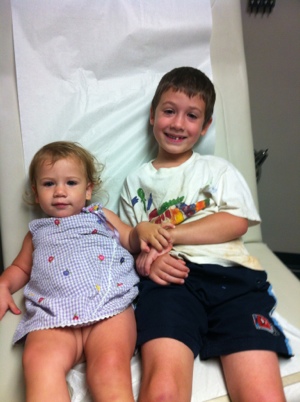
Feeling kind of cool about being up on the exam table.
20120813-164431.jpg

Alaina wants to get in on the “fun”!

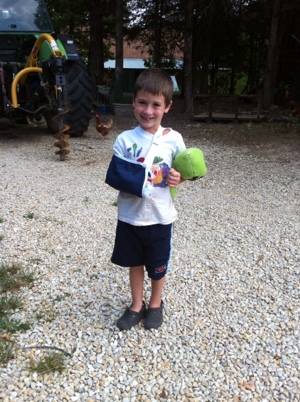
After an x-ray, they put a splint and sling on it “just in case,” saying they did not see a fracture in the x-ray, but that they would send it to radiology for a million dollars (j/k) and they might be able to see a very fine one there.
20120813-164440.jpg

Feeling all doctored up with sling (plus, favored homemade Creeper “snuggly” made by Baba)

It then took until today to get the radiology report which was “negative.” So, sling is now off, arm seems normal, I expect to receive an unpleasantly hefty bill (we have sucky, “catastrophic only” insurance–when Mark cut his leg with the chainsaw earlier this year it cost us about $2000 out-of-pocket), and yet I do still feel like I made the right call in taking him in.

And, there you have it. Facebook status turned blog post. See why I’m just not cut out for Twitter?!

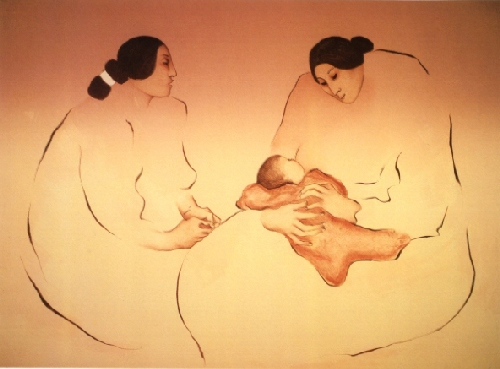
A Bias Toward Breastfeeding?

During World Breastfeeding Week, Lamaze’s Science and Sensibility blog published an interesting and thought-provoking guest post called “Instructor Has A Clear Bias Toward Breastfeeding!” The post explores a birth educator’s experience with teaching breastfeeding classes and receiving the title phrase on one of her evaluations. She is very disturbed by the evaluation and offers this profound and potent reminder: “We must not leave mothers less than whole.”

While I very much appreciate this observation and reminder, we also absolutely need to remember that biased means to exhibit “unfair prejudice”–it simply IS NOT “biased” to support breastfeeding as the biological norm and most appropriate food for babies. I was very concerned to read the comments on the post from other educators talking about their own “biases” toward physiologic birth or breastfeeding and how carefully they guard against exhibiting any such bias in their classes. Hold on! Remember that the burden of proof rests on those who promote an intervention—birth educators and breastfeeding educators should not be in a position of having to “prove” or “justify” the biological norm of unmedicated births or breastfed babies. I hate to see birth instructors being cautioned to avoid being “biased” in teaching about breastfeeding or birth, because in avoiding the appearance of bias they’d be lying to mothers. You can’t “balance” two things that are NOT equal and it is irresponsible to try out of a misplaced intention not to appeared biased. So, while I appreciate some of this educator’s points, I do think she’s off the mark in her fear/guilt and her acceptance of the word “bias.” The very fact that making a statement that someone has a bias toward breastfeeding can be accepted as a reasonable critique is indicative of how very deeply the problem goes and how systemic of an issue it is. If I say that drinking plenty of water is a good idea and is healthier for your body than drinking other liquids, no one ever accuses me of having a “bias towards water.” Breastfeeding should be no different. But, as we all know, breastfeeding occurs in a social, cultural, political, and economic context, one that all too often does not value, support, or understand the process.

This reminds me of an excellent section in the book Mother’s Intention: How Belief Shapes Birth about judgment and bias. The author also address how the word “balanced” is misused in childbirth education–as in, “I’m taking a class at the hospital because it will be more balanced.” Balance means “to make two parts equal”–-what if the two parts aren’t equal though? What is the value of information that appears balanced, but is not factually accurate? Pointing out inequalities and giving evidence-based information does not make an educator “biased” or judgmental-–it makes her honest! (though honesty can be “heard” as judgment when it does not reflect one’s own opinions or experiences).  (formerly quoted in this post. And, see this post for some thoughts about pleonasms.)

I do value the reminder that pregnant and postpartum mothers are vulnerable and how we speak to them really matters. I know that. I also worry that too much “tender” speech regarding breastfeeding as a “choice,” a “personal decision” and “we support you no matter what”—leaves the door wide open for continued systemic support of a bottle feeding culture that treats formula feeding and breastfeeding as similar or interchangeable. I’m not sure what the answer is. Maternal wholeness matters, so does breastfeeding!

World Breastfeeding Week Post Round Up

I ended up writing a lot of breastfeeding posts during WBW this year and decided to gather them all together in one post, plus extras, so that no one manages to miss out!

Other favorite posts about breastfeeding:

  • Breastfeeding as a Spiritual Practice: Reflections on the intimate, spiritual connection and meditative quality of being a breastfeeding mother as well as thoughts about parenting as a (rigorous) spiritual practice of its own.
  • Breastfeeding as an Ecofeminist Issue: Why does breastfeeding threaten both feminists and the patriarchy? Why is breastfeeding a core women’s issue? And, why aren’t we more concerned about systemic barriers?
  • The Birth-Breastfeeding Continuum: From a biological perspective birth and breastfeeding are not discreet events, but are inextricably linked. Healthy breastfeeding begins with healthy birth!
  • Ode to my nursling: What it is like to nurse my baby.
  • Nursing Johnny Depp: My “classic” essay on what it is like to nurse things other than my baby…
  • Listening Well Enough: What I learned from a dream about listening to breastfeeding mothers.
  • Listening to my baby…even when we disagreed! Personal story about how I learned to listen to my baby about what he needed with regard to breastfeeding even when I didn’t like what he was telling me.
  • Inseparable: Personal thoughts about being “in dependence” with our babies.

Other great resources:

Infographic for parents (and heck, providers too!) about the first few days of breastfeeding–newborn stomach sizes, number of diapers, etc.

Ban the Bags toolkit: Great rebuttals to common arguments about the assumed neutrality of distributing formula marketing materials via medical care settings/providers as well as evidence about the link between “free” formula distribution and reduced rates of successful breastfeeding.

Resources from the Breastfeeding Taskforce of Greater Los Angeles including:

Also, you can check Baby Friendly USA to see if your birthing facility is Baby Friendly.

CIMS sent out some good WBW information about how Birth Practices Affect Breastfeeding:

CIMS is proud that the WHO/UNICEF included recommendations in the Ten Steps of the Mother-Friendly Childbirth Initiative in the WHO/UNICEF’s Infant and young child feeding: A tool for assessing national practices, policies and programmes (2003).

The WHO and UNICEF recommend that to maximize the establishment of successful breastfeeding women in labor, regardless of birth setting, should have access to the following practices recommended in the MFCI:

  • Care that is sensitive and responsive to the specific beliefs, values, and customs of the mother’s culture, ethnicity and religion;
  • Birth companions of her choice who provide emotional and physical support throughout labor and delivery;
  • The freedom to walk, move about, and assume the positions of her choice during labor;
  • Care by staff trained in non-drug methods of pain relief and who do not promote the use of analgesic or anesthetic drugs unless required by a medical condition;
  • Care that minimizes routine practices and procedures that are not supported by scientific evidence including withholding nourishment, early rupture of  membranes, use of IVs,  routine electronic fetal monitoring, episiotomy and instrumental delivery;
  • Care that minimizes invasive procedures such as unnecessary acceleration or induction of labor and medically unnecessary cesarean sections.

And, so did Lamaze:

Valuable resources and information for expecting parents, like Lamaze’s Push for Your Baby, are aimed at giving expecting parents the tools to push for the best care practices for moms and babies, including those that support breastfeeding education and awareness.

Lamaze calls out the following top five breastfeeding barriers within the first 24 hours of birth to help expecting moms prepare for the best breastfeeding experience:

  1. Unnecessary birth interventions
  2. Separating mom and baby
  3. Use of pacifiers or other artificial nipples before breastfeeding is well established
  4. Supplementing breastmilk with formula
  5. Lack of postpartum breastfeeding support

Note: on August 15, Lamaze is hosting a free webinar called Moms, Babies, Milk and the Law: Legal and Ethical Issues When Teaching Breastfeeding

And, some other interesting posts not by me:

World Breastfeeding Week Sucks According to this Lactation Consultant

While I don’t really care for the title because I think it may cause people to not even read the article, I really appreciated this IBCLC’s thoughts about the correlation between the occurrence of WBW each year and the strategic release “breaking” news about some kind of breastfeeding related controversy. Call me a conspiracy theorist, but this does in fact happen every. single. year. During World Breastfeeding Week, something comes out that causes doubt about breastfeeding or breastfeeding advocates. Maybe it is about vitamin D and how “deficient” breastmilk is, or maybe it is a trumped up “mommy wars” tale or hyperbolic call to action about not letting those mean “breastfeeding Nazis” try to tell us how to raise our babies, or, like this year, a bizarre spin on the idea that formula should not be readily distributed in large “gift packs” via our medical care system, but should instead be reserved for cases in which it is actually needed (see above mentioned notion of those mythical, control-freak breastfeeding Nazis who are out to get us all). Anyway, the LC points out this:

I really hate World Breastfeeding Week because much of the media takes it as an opportunity to attack those who wish to support mothers who breastfeed rather than celebrate their efforts to improve infant feeding. Every year I hope I will not have to read more faux feminist manifestos that denigrate the value of women who enjoy their care-giving roles. I hope I won’t have to read more junk science fishing expeditions by journalists who deliberately exclude the wide body of solid research that does show that what infants are fed does matter. This year sets a new low with the addition of outrageously false claims that New York’s City’s Mayor has imposed a ban on formula that is going to deprive mothers of their rights. –Susan Burger

And, speaking of the bizarre spin of this year’s anti-WBW backlash conspiracy, Moxie wrote a great post exploring this issue: The illusion of choice, the free market, and your boobs

If you truly care about a woman’s right to choose what’s best for her and her baby, you will take the financial pressure out of the equation, and eliminate any actions that impede free choice. Putting formula samples right next to the baby’s head impedes free choice. Having to ask for formula (just like you have to ask for tylenol, or an extra chucks pad, or another container of orange juice) doesn’t impede free choice. It doesn’t change anything for women who cannot breastfeed–they can still get those formula samples easily by asking. It doesn’t change anything for women who don’t want to breastfeed–they can still get those formula samples easily by asking. It could change everything for women who want to breasfeed but don’t have correct information or are experiencing problems they can overcome if they’re given help, because they will be given EQUAL ACCESS to information that can help them breastfeed and formula samples. They ask for help or they ask for formula. Equal access. No privilege for formula.

I don’t want the decisions I make about how to parent my children made by the highest bidder. Especially since the highest bidder doesn’t care about me and only wants my money. (Let’s not forget that those formula samples are worth about $1.50. A woman who chooses to feed formula based on those samples has just been signed on to spend hundreds or thousands of dollars on formula once she leaves the hospital. She is never informed of that. Is THAT free choice?)

I don’t care how you feed your baby. But I want you to make a decision about it with all the information, all the support, and all the help you can get. Free choice. I do not want your choices narrowed by the huge financial incentives formula manufacturers pour into hospitals. [emphasis mine]

And, as I’ve already referenced in some of the posts linked to above, Dr. Newman has a helpful article about How to Know a Health Professional is not Supportive of Breastfeeding that directly connects to the issue of formula distribution by medical care professionals. One way to know right away is if the provider distributes material provided by a formula company—even if that material is labeled “breastfeeding information.”

The lifelong impact of breastfeeding support

I’m on a roll with breastfeeding-related posts during World Breastfeeding Week. Why stop now? This essay is an older story that was previously published in Leaven, LLL’s publication for Leaders.

Nursing Zander at our 2006 WBW picnic.

In 2006 I was in the post office — 24 weeks pregnant and holding my sleepy two-year-old, three packages, and my purse. An older woman in front of me offered to hold my packages so that I could hold Lann better. We chatted for a minute about how crowded the post office was. She glanced at my necklace then and said, “I like your necklace. Is that La Leche League?” (I was wearing my logo pendant.) I told her it was, and she said, “LLL saved me about 32 years ago.” She proceeded to tell me her story.

Her baby had weighed seven pounds, 13 ounces at birth. At his two-week checkup, he weighed seven pounds, three ounces. The doctor watched her nurse, weighed the baby, and then decreed that she wasn’t making enough milk for him. He “ordered” her to give the baby formula. She said she is someone who always follows orders. He had previously ordered that she feed the baby only every four hours and never wake him when he was sleeping. Wanting to nurse before it was “time,” her baby had been crying himself to sleep; she wouldn’t wake him to nurse when the prescribed four hours had passed because she had been ordered not to wake him. So, he was “starving to death.” She went to the store, got all she needed for formula feeding, and went home crying.

When her husband came home, the woman was still crying. He had seen a poster for La Leche League and told her, “Before you give him that stuff, call that La Leche person.” She called, and the Leader encouraged her to nurse the baby as often and long as he wanted; so she did. The baby started to perk up and gain weight, and they had no more problems. When she went back to the doctor, he said it looked like his plan was working. She said, “No, I know what really works!” and told him that she was nursing the baby anytime he wanted and that everything was going great. (The doctor then told her that his office could no longer help her and she would need to find a new doctor.) “He never did have a drop of formula!” she reported with obvious happiness. Then she told me that her daughter-in-law is expecting a baby and is going to breastfeed and that she had told her about LLL.

One of the things that stood out to me about this story is that the woman had never gone to any LLL meetings, met the Leader she talked to, nor had any further contact with LLL…and yet she still recognized the logo and felt so positively about her experience that she wanted to tell me about it 32 years later. These seemingly little contacts we make with mothers matter. They have a lifelong impact. As birth advocates and breastfeeding helpers, we may never know the potent impact of our words on a woman’s life, but someday, perhaps 32 years in the future, someone may be sharing the legacy of our own words to another stranger in the post office. Choose carefully, choose consciously, and make a difference!

Kansas City Adventure

This post is my final post in my CAPPA re-cap series.

In addition to going to the CAPPA conference while in Kansas City, we did several other things for family fun—some with only marginal fun-success. Looking back at our trip, I see that we had good times, did fun things, and overall had a successful trip. While we there it felt a lot more stressful and much less fun. Why? Mostly because we had to do a ton of driving and most of our plans each day got messed up in some way—turning on the wrong roads over and over again, getting to the store when it was closed, etc., etc.

20120724-211801.jpg

Kids went swimming in the (green, murky) hotel pool every night and loved it!

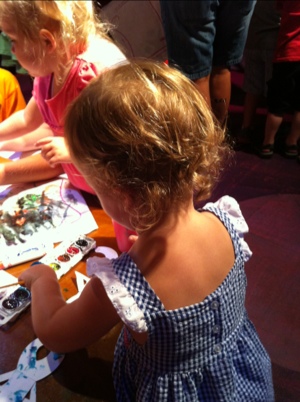
On Friday afternoon we went to Kaleidoscope a free kid’s art center offered by Hallmark. I lost track of the boys (they were with Mark and my mom), but had tons of fun watching Alaina step right up to work on a project. She was serious about it!

20120724-211848.jpg

I love these curls, this sweet neck, and these powerful shoulders.

20120724-211905.jpg

Can you possibly guess what noise she is making in this picture as she instructs me to acquire additional paintbrushes for her?

20120724-211942.jpg

Okay, too many pictures of this same scene, but I just loved seeing her be so big, serious, and into this painting project.

There was a free dinosaur exhibit at Crown Center also (the same mall where the art room was).

20120724-224430.jpg

On Sunday, we went to the American Girl store in Overland Park.

20120724-224520.jpg

Alaina was very entranced by this stroller.

20120724-224533.jpg

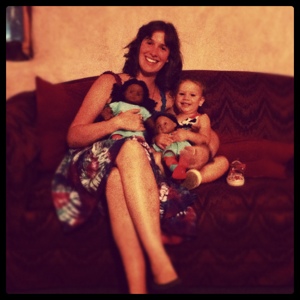
Figured out how to push two dolls in stroller AND pull two dolls in wagon!

After buying a set of Bitty Twins, we headed out to lunch with my brother, his fiancé, and my sister and her husband (who I’d never met before!). Alaina enjoyed eating the gravy off of Daddy’s chicken fried steak. 20120724-224553.jpg

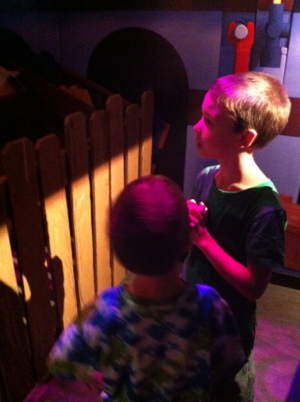
On Monday, we went to the Legoland Discovery Center, which was our only reason for staying over an extra day past conference’s end. I tried really, really hard not to remain preoccupied with the fact that it cost SIXTY-FIVE dollars to go to this place.

20120724-224606.jpg

My annoyance at the cost was mediated by seeing Lann’s hands in these two pictures.

20120731-214258.jpg
20120724-224704.jpg

The Miniville part was cool (so was the “4-D” movie). Alaina developed a fever and conked out in the Ergo most of the time we were there (this is an example of one of the kinds of thing that made the trip trend towards the stressful, rather than pleasant).
20120724-224726.jpg

On the five hour drive home, I spent much of the time nursing feverish Alaina in the car seat like this. My mom reports that antics like this are part of what caused her to eventually have back surgery! Notice my strategically placed iPad so that I can read books and send emails while contorted.

20120724-224741.jpg

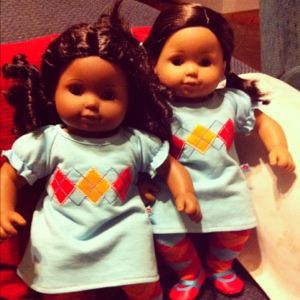
Luckily, we have a fabulous set of Bitty Twins to ease our sorrows.

20120724-225039.jpg

You can pick any combo of Twins you want. Mine has the curly hair, Alaina’s has the straight hair. I like both of them and have trouble letting her play with them. Perhaps they need to live with just me for a little while longer.

20120724-230042.jpg

Can you tell that I’m on a three week break from teaching? I’m possessed with blog post ideas and trying to keep this flurry of posting activity somewhat restrained via post scheduling so I don’t overwhelm my readers!

(It’s over now, so there’s no point in retroactive complaining/stressing about how the school session ended DURING our trip, and so I actually graded final exams in the car on the way to the conference and stayed up until 1:00 on Saturday night entering final grades for my online class so I could then be “off” for the rest of our trip. If anyone wants to compliment me on my skillful managing of my life that enables me to meet all these needs during one trip–my own need for continuing ed and birth peep networking, my kids’ need to go to Legoland, the needs of my 30 students for prompt grading and attention/teaching, my mom’s need to visit her other kids, and my feverish baby’s need for carseat nursing, I’ll accept them. Instead of beating myself up for the parts that didn’t go well and for crabby episodes and bad directions, I think I’ll take a couple of minutes to feel impressed at how I managed to do it!)

Breastfeeding Class Resources

I became certified as a breastfeeding educator in 2004 and accredited as a breastfeeding counselor in 2005, so I’ve been working with breastfeeding mothers for a long time. I lead a monthly support group and offer help/counseling via phone, email, text, Facebook message, Words with Friends messages, you name it. Recently, a nurse contacted me asking for ideas for teaching an early pregnancy breastfeeding class. I think this is a great idea, since mothers’ decisions about breastfeeding are often made before the baby is conceived and if not then, during the first trimester.

These are the initial ideas I suggested:

  • Focus on what the mothers themselves want—what do they need/want to know? What have they heard about breastfeeding? What are their fears? What misconceptions do they need cleared up? I’m very much about peer-to-peer support and allowing space for the women to talk to/connect with each other—the facilitator is then available to clear up misinformation and provide tips.
  • Focus on what mothers can do to prepare for successful breastfeeding—there is evidence that prenatal breast massage/colostrum expression helps with both milk supply AND with mother’s comfort with her own breasts. It also helps her think of herself as a breastfeeding mother BEFORE her baby is actually born!
  • Suggest good books to have on hand and encourage attending a breastfeeding support group (like LLL!) prior to baby’s birth.
  • Promote/discuss/encourage “baby led breastfeeding.” I love sharing with mothers about how smart their babies are and how mother’s chest after birth becomes baby’s new habitat! Check out the resources from Suzanne Colson: http://www.biologicalnurturing.com/
  • Discuss and emphasize all of the other great ways dads and other family members can be involved with baby other than giving a bottle. Dad/grandma can do EVERYTHING ELSE baby needs! That’s cool! Leave the feeding to mom and let dad have the other special and important jobs like baths and burping and tummy time and more.
  • DON’T talk about “myths” and try to dispel them in a myth-fact format, because evidence suggests that this actually helps the myths stick more!
  • Use Diane Wiessinger’s approach to language (http://www.motherchronicle.com/watchyourlanguage) i.e. breastfeeding isn’t a “special bond” it is a NORMAL bond. People want to be normal—special is for celebrities and “other people,” normal is what everyone wants. She also has handouts here: http://normalfed.com/Why.html

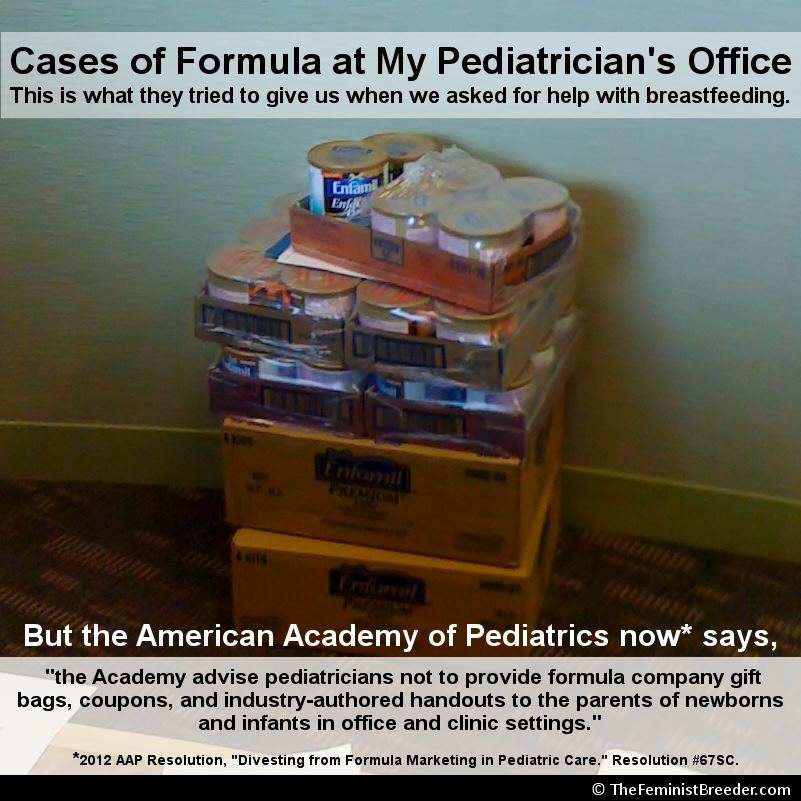
Since her email, a couple of other resources and bits have caught my eye. One is that the AAP has a resolution about the distribution of formula “gift bags” by pediatricians and hospitals. Apparently this came out in 2011, but it only came to my attention when I saw this image on Facebook!

In keeping with the 10 Steps and consistent with the AAP’s resolution, the hospital advocacy project from the Illinois State Breastfeeding Taskforce makes available the following useful documents for mothers to communicate with their hospitals:

The Task Force explains:

We encourage you to make the Breastfeeding Bill of rights and Hospital Experience Letters available to moms in your classes, practices, community events, breastfeeding fairs, “rock & rest” stations, etc.

Encourage moms to fill out the appropriate letter and mail back to the hospital where she delivered her baby.  Or collect the letters and mail them from your agency or task force.  Help moms make their voices heard!

We hope that this will show hospital administrators that lactation consultants, knowledgeable staff and breastfeeding friendly practices are valued by moms and families using their hospital services.

The Missouri Breastfeeding Coalition clued me into this Breastfeeding Plan for Mothers (pdf) from the MO Dept. of Health. The handout may be downloaded and printed as needed and is a, “list of requests that support breastfeeding for the postpartum stay. Similar to a birth plan and based on the 10 Steps for Breastfeeding.”

Also, make sure to check out this awesome resource, the WIC Sharing Gallery—free programs, curricula, brochures, and more from different WIC offices. I found this because I was back at the Illinois Breastfeeding Taskforce’s website downloading their Grandmother’s Tea curriculum for intergenerational support of breastfeeding.

Another great resource is the FREE online Tear-Sheet Toolkit from La Leche League.

And, finally, I already touched on this, but remember there are ample handouts/articles available from the incomparable Diane Wiessinger about birth and breastfeeding.

Building Birth Bridges: Communication

This post is part 5 of my CAPPA re-cap series.

The final day of the CAPPA conference I heard Polly Perez speak about Building Bridges with an emphasis on communication and fear. She described four basic communication and emphasized that communication is a two-way street.

The four styles are:

  • Expressive
  • Sympathetic
  • Direct
  • Systematic

Each style has its strengths and also ways in which it is perceived by others. You should give information in the simplest way to the person you are talking to and adjust your style of communication depending on who you’re talking to, changing communication behavior in order to improve communication. Communication is the lifeblood of all relationships.

She shared this quote:

Luke: I don’t believe it. Yoda: that is why you fail.

And she explained that listening is active, not a passive activity. Listen with empathy, openness, and awareness:“Use language that lets you share your heart openly.”

She also asserted that we must stop letting our practices be fear-based, quoting Connie Pike in saying, “We must give people the opportunity to challenge their fears. Not only will this change each person, it will change the political and medical climate in which they make these choices.”

In communicating within in the medical system, Polly pointed out that a fundamental issue is with the power hierarchy and that we must develop strategies that enhance problem solving, but still retain and support the person in power. (**I’m a little too radical, I guess, for this tip, which is perhaps why I’ve not found a niche working within a medical system and instead work outside of it.) She suggested asking yourself: What does this person you are talking to fear? She also quoted Bethany Hayes “Working in Circle” who said with regard to working in hospital climates, “we found a system that was as sick as the people it was treating.” Changing sick systems is not about subterfuge but bringing light to situations that need to be altered.

Polly then made an observation that I found very powerful and very telling:

We have taken the hearts and minds out of much of our work because we’re frightened of getting too close. But, close is where we need to be.

Yes.

During a different session, but closely related to this topic of communication, I laughed out loud watching this video clip of twin babies communicating with each other. I’m going to use this in future classes.

Controversies in Breastfeeding

20120724-174258.jpg

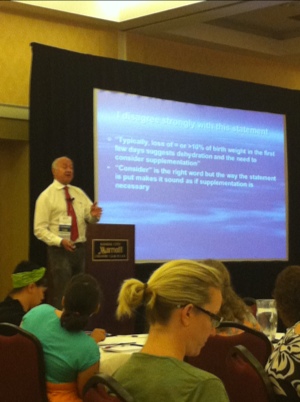
If you get a chance to attend one of his presentations, don’t miss it! In this slide, Dr. Jack explains that he disagrees strongly with the notion that a baby that has lost 10% of its birthweight needs to be supplemented.

Just in time for the start of World Breastfeeding Week, here is part 4 of my CAPPA re-cap series!

This post is a companion to my CAPPA re-cap post about the impact of birth practices on breastfeeding. Dr. Newman’s keynote session about Controversies in Breastfeeding was actually given before his breakout about birth and breastfeeding, but for the chronological value, it made sense to me to put up the birth post first.

As I already shared, in Newman’s perspective we have a huge problem in that many medical care providers do not recognize the critical importance of breastfeeding. Newman also emphasized that there are many people who don’t know squat about breastfeeding and breastmilk and don’t feel like they need to learn anything before they start doing studies and writing papers about it.

Why is hard to study breastmilk?

Because…there is no such thing as “standard” breastmilk. It is a physiological fluid and varies from person to person. We DO NOT have to prove that breastfeeding is better than formula. Those comparison studies are unnecessary.

Some great stuff from Dr. Newman’s presentation about controversies:

  • The exclusively breastfed, well-gaining 5 month old is getting only, at most, 10-15% more milk than the exclusively breastfeeding, well-gaining 1 month old, even though the 5 month old is twice as heavy. Baby continues to gain weight steadily even though it is not “getting enough” compared to its formula fed counterpart. (put that in your pipe and smoke it–yep, he really then said that ;-D)
  • Colostrum has 100,000-5,000,000 leukocytes per ml–that is more than blood. (i.e. colostrum has more white blood cells in it than your actual blood has in it!)
  • Colostrum and formula are the same in the following ways: both are liquid.
  • Breastmilk does not need to supply vitamin D (makes no sense to describe breastmilk as “deficient in” or “lacking” vitamin D).
  • With regard to the high incidence of reflux being diagnosed in babies—his response to why so high is, “because [most] doctors don’t know anything about breastfeeding.”
  • We learn one thing when we hear that the mother has been told to feed her baby X number of minutes per side—>the person telling her this does not understand breastfeeding.
  • There are no such thing as “flat nipples”–women have normal nipples. We live in a bottle feeding culture that makes us assume that if a mother does not have nipples that stick out like a bottle nipple, the nipples are flat (**Molly’s own note–we also live in a culture where 75-90% of women have epidurals during labor which can contribute to edema in the breast and the accompanying appearance of flat nipples).

 And, there should be no controversy about formula feeding vs. breastfeeding. If you actually look at the biochemistry of breastmilk you would know there is no comparison. No controversy. (with a laugh after this he added, “pediatricians are simple folk” ;-D)

In that plainspoken way I found so refreshing, Dr. Jack also pointed out that formula feeding is missing one more thing: breastfeeding. That’s right. Society thinks that bottle feeding is the “same”–it isn’t. Breastfeeding is an intimate relationship. He also pointed out that, “people will lie, lie, lie to sell products.” (see ad to right)

Finally, he explained that this mechanization of breastfeeding (through things like test weighing and nipple shields and timed feedings) will cause more and more mothers to abandon breastfeeding and then she’ll say, ‘we tried everything and it just didn’t work.’ Yes, we did “try everything,” everything to make her not succeed. (And, then she’ll write an article about it complaining about “what’s wrong with breastfeeding.”)

Handouts from Dr. Newman are available here. One I’ve used recently is How to Know a Health Professional is not Supportive of Breastfeeding.

I address other systemic influences on breastfeeding in Breastfeeding as an Ecofeminist Issue

The Impact of Birth on Breastfeeding

Just in time for the start of World Breastfeeding Week, here is part 3 of my CAPPA re-cap series!

…they want you to believe it’s their power, not yours…They stick needles into you so you won’t hear anything, you might as well be a dead pig, your legs are up in metal frames, they bend over you, technicians, mechanics, butchers, students, clumsy or sniggering, practicing on your body, they take your baby out with a fork like a pickle out of a jar.

–Margaret Atwood in her novel Surfacing (opening quote of Dr. Jack’s presentation at the 2012 CAPPA conference)

As I mentioned, my favorite part of the CAPPA conference was hearing Dr. Jack Newman speak about controversies in breastfeeding (see next post) and then about the impact of birth on breastfeeding (breakout session). He was an amazing speaker. Very straightforward and almost blunt as well as funny and fast-paced. I really feel glad to have had the chance to see him in person after years of being familiar with his materials.

The notion of the birth-breastfeeding continuum isn’t new to me, having actually published articles about it previously, however Dr. Newman’s phrasing, descriptions, and reminders was just so perfect that it left me feeling even more enthused about the inextricable link between birth and breastfeeding. It is a biologic continuum that nature does not see distinct events—baby is born and goes to breast, it is part of the same event. Drawing on Diane Wiessinger’s work, Dr. Newman explained

With animal births: following a normal birth, infant feeding just…happens. Following an interventionist birth, the mother rejects the baby and there is no nursing at all.

In some hospitals, separation of mother and baby is routine as a way to “prevent” postpartum mood disorders. Dr. Jack’s own theory was that perhaps human mothers turn this “rejection” against themselves and it shows up as a postpartum mood disorder.

Babies NEED and expect to be with their mothers after birth. It is of critical importance. As I shared via Facebook, Dr. Jack explained this:

Know how much an incubator costs now? $50,000. Why don’t we just give half of that money to the mother and put the baby skin to skin on mother’s chest?

And, this gem:

Our hospital births break every rule in the mammalian list of mother-baby necessities.” –Dr. Newman

He also noted that if baby is put skin-to-skin on mother immediately after birth regardless of original intention, the pair will breastfeed. It is biologically programmed.

Why do hospital births break the rules?

Because, as Dr. Newman explained we have a big, big problem in that HCPs do not recognize the critical importance of breastfeeding. He also repeatedly emphasized (in a very funny way) that there are many people who don’t know squat about breastfeeding and breastmilk and don’t feel like they need to learn anything before they start doing studies and writing papers about it.

Dr. Newman also emphasized the important point that the burden of proof rests upon those who promote an intervention! He was speaking with regard to recommending formula supplementation, but I strongly believe it applies to any birth practice. So simple and yet so profound. One example that he shared that is familiar to birth advocates is that lying down for electronic fetal monitoring is a position of comfort for the care provider, NOT for the mother.

And, he made this excellent point: “All medical interventions, even when necessary, decrease the mother’s sense of control, and increase her sense of her ‘body not being up to the task.” Again, the burden of proof rests on those who promote the intervention, not vice versa.

As I’ve touched on several times before, IV fluids that are commonly administered during labor may increase the baby’s birth weight, leading the baby to be more likely to experience the dreaded 10% weight loss (“totally bogus, by the way”). Also as I’ve noted before, IV fluids lead to significant maternal fluid retention which contributes to edema in the nipples and areolas and then…the dreaded “flat nipples.” The more fluid a mother gets in labor, the more a baby “loses” after birth!

Including the same picture as in my other post, because it is in this picture that Dr. Jack is specifically talking about his next point:

I disagree strongly with this statement:

‘Typically, loss of = or >10% of birth weight in the first few days suggests dehydration and the need to consider supplementation.’

He goes on to note that what is necessary is NOT supplementation but to help the mother and baby breastfeed well. The real question when it comes to newborn weight loss is, “is the mother-baby breastfeeding well?”

Newman also addressed something birth advocates are familiar with, the fact that epidural anesthesia can cause maternal fever. This leads to an infant sepsis workup and antibiotics and usually means separation of mother and baby. Here we again experience the failure of many medical care providers to recognize the importance of breastfeeding as beyond just a feeding method. Breastfeeding protects the baby–this is what most hospitals do not understand.

Of interventions that undermine breastfeeding, Dr. Jack pointed to Demerol (meperidine) as the “worst of the lot,” with newborns experiencing sedation and many of them not sucking at all. He also pointed out that all interventions increase the risk of cesarean section, which leads to increased discomfort for mothers and less willingness to breastfeed and increased likelihood of mother-baby separation.

The importance of skin-to-skin contact

Babies easily find their way to the unwashed nipple. And, given baby’s inborn feeding behaviors and instincts, it seems clear that, “if the baby expresses his or her choice, the baby would choose the breast.” (with regard to breastfeeding as maternal “choice”)

Not putting baby skin to skin with the mother, “increases the risk of hypoglycaemia significantly…Isn’t skin to skin contact a less invasive preventative measure than giving formula?” Newman then points out that most often we see “skin to blankets” which keeps baby from showing they’re ready to feed, doesn’t stimulate milk supply, and leads to engorgement which is not normal.

And, at the end he emphasized that when it comes to birth and breastfeeding, all too often WE MESS IT UP by meddling with the biological processes and rhythms of the mother-baby relationship.

For more about controversies in breastfeeding, check out my next post.

Handouts from Dr. Newman are available here. One I’ve used recently is How to Know a Health Professional is not Supportive of Breastfeeding.

I’ve written about the birth-breastfeeding continuum and about some other systemic influences on breastfeeding in breastfeeding as an ecofeminist issue.