Women’s Retreat Recipe

Quarterly, I get together with some of my friends and we have a women’s retreat. We had our summer retreat this past Sunday and I thought I’d share the outline and our activities as a “retreat recipe” that others may use if they wish to do so. Since my friends do not necessarily share specific religious beliefs, the retreats are spiritual in a somewhat generic “womanspirit” sort of way and you can obviously customize your own retreat to best suit the spiritual beliefs/backgrounds of your own friendship group.

Circle up—we stand in a circle, place our hands on eachother’s backs and hum together three times to raise the energy of the circle.

Invocation to directions. This time we used an invocation by Judith Laura:

We honor the East
Home of air
March wind
Morning’s song
Eagle’s flight
Aurora’s breath
Welcome East

We honor the South
Home of fire
Noon sun
Flame of change
Heat of passion
Pele’s power
Welcome South

We honor the West
Home of water
River’s flow
Font of feelings
World’s womb
Kwan Yin’s love
Welcome West

We honor the North
Home of Earth
Root of life
Shaded mystery
Ground of being
Gaia’s growth
Welcome North.

Light candle/opening quote

“I see the wise woman. And she sees me. She smiles

from shrines in thousands of places. She is buried

in the ground of every country. She flows in every

river and pulses in the oceans. The wise woman’s

robe flows down your back, centering you in the

ever-changing, ever-spiraling mystery.

Everywhere I look, the wise woman looks back.

And she smiles.”

–Susun Weed quoted in Birthing Ourselves Into Being

Check-in–we take turns “passing the rattle” and each woman has about two minutes to share what’s been on her mind.

Since we are close to summer solstice, I then chose to do this solstice prayer of healing from the United Nations as a responsive reading as a group:

A Prayer of Healing
From the United Nations Environmental Sabbath

We join with the earth and with each other.
To celebrate the seas.
To rejoice the sunlight.
To sing the song of the stars.

We join with the earth and with each other.
To recall our destiny.
To renew our spirits.
To reinvigorate our bodies.

We join with the earth and with each other.
To create the human community.
To promote justice and peace.
To remember our children.

We join together as many and diverse expressions of one loving mystery: for the healing of the earth and the renewal of all life. We join with the earth and with each other.
To bring new life to the land.
To restore the waters.
To refresh the air.

We join with the earth and with each other.
To renew the forests.
To care for the plants.
To protect the creatures.

Guided visualization/meditation/relaxation (for this particular retreat, I used a nice full body relaxation from the book Birthing Ourselves into Being. This one isn’t available online that I can find, but you can find others online, like this one for example.)

We followed the relaxation with a muse questions and journaling using one of the questions from Shiloh Sophia’s Museletter:

Your Muse would like to show you something you haven’t been able to see.

She wants to invite you to have a thought you haven’t had yet…isn’t that an enticing thought in and of itself?

A thought that has lingered on the edge of your consciousness for maybe even a few years, or months….tell her…

I want to know what it is I am not seeing.

Then automatic write whatever comes up until you have to put the pen down.

Immediately following this question, it began to rain. Blissful, blessed, healing, glorious rain for which we were in so much need.

Discuss responses/experiences to relaxation/journaling.

Listen to songs/perhaps drum (this time, went outside together and stood in the rain)

Closing circle: Sing Woman Am I (recording of my friends singing it together is here).

Closing quote and extinguish candle

“A circle! No sharp edges, no hierarchy, just a circle of women…We are mothers. We are the portals. The next generation comes through our bodies.” –Annie Lennox

and one of my all-time favorites:

“I believe that these circles of women around us weave invisible nets of love that carry us when we’re weak and sing with us when we’re strong.” –SARK, Succulent Wild Woman

When reading a 1988 back issue of SageWoman magazine, I fell in love with Womanrunes by Shekhinah Mountainwater (originally in her book Ariadne’s Thread, which I then purchased) and so I made copies of the images to share with my friends. We are going to make some sets of runes at our next retreat. (And, after much scouring of the interwebz, I found a pronunciation guide for the runes here).

I also made a handout packet for them of various moon wheels/circular calendars for tracking your cycles, or simply for planning and thinking in circles rather than in lines. In the packets were:

And, then it was time for a craft, so as we snacked and chatted, I showed everyone how to make a small, hardbound pocket journal. You can find instructions for a simple book here, or, to make it even more simple, use this kit from Blick Art Supplies.

It was a delightful afternoon of connection and celebration—my original vision for holding these retreats was to bring some blessingway spirit into our regular lives, rather than only centered on being pregnant and I think that purpose was achieved.

This post is crossposted at Woodspriestess.

I See You: talking to mothers about their breastfeeding concerns…

I’m helping to train two women right now to become breastfeeding counselors. As well as discussing how to help other women with the numerous issues that may be a part of the normal course of breastfeeding, we talk a lot about listening skills. As I’ve been working with them, I found a reminder list that I made 7 years ago when I took on this role myself. The list simply consists of ideas for how to talk to mothers about their breastfeeding questions in a way that promotes continued dialogue, demonstrates respect, and employs good active listening.

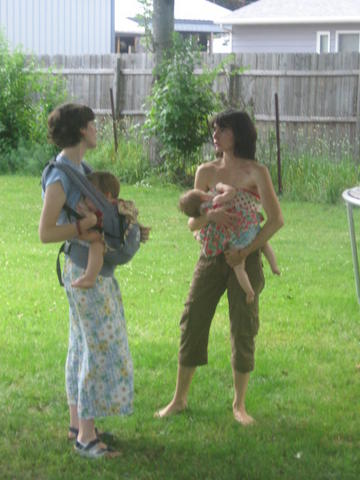
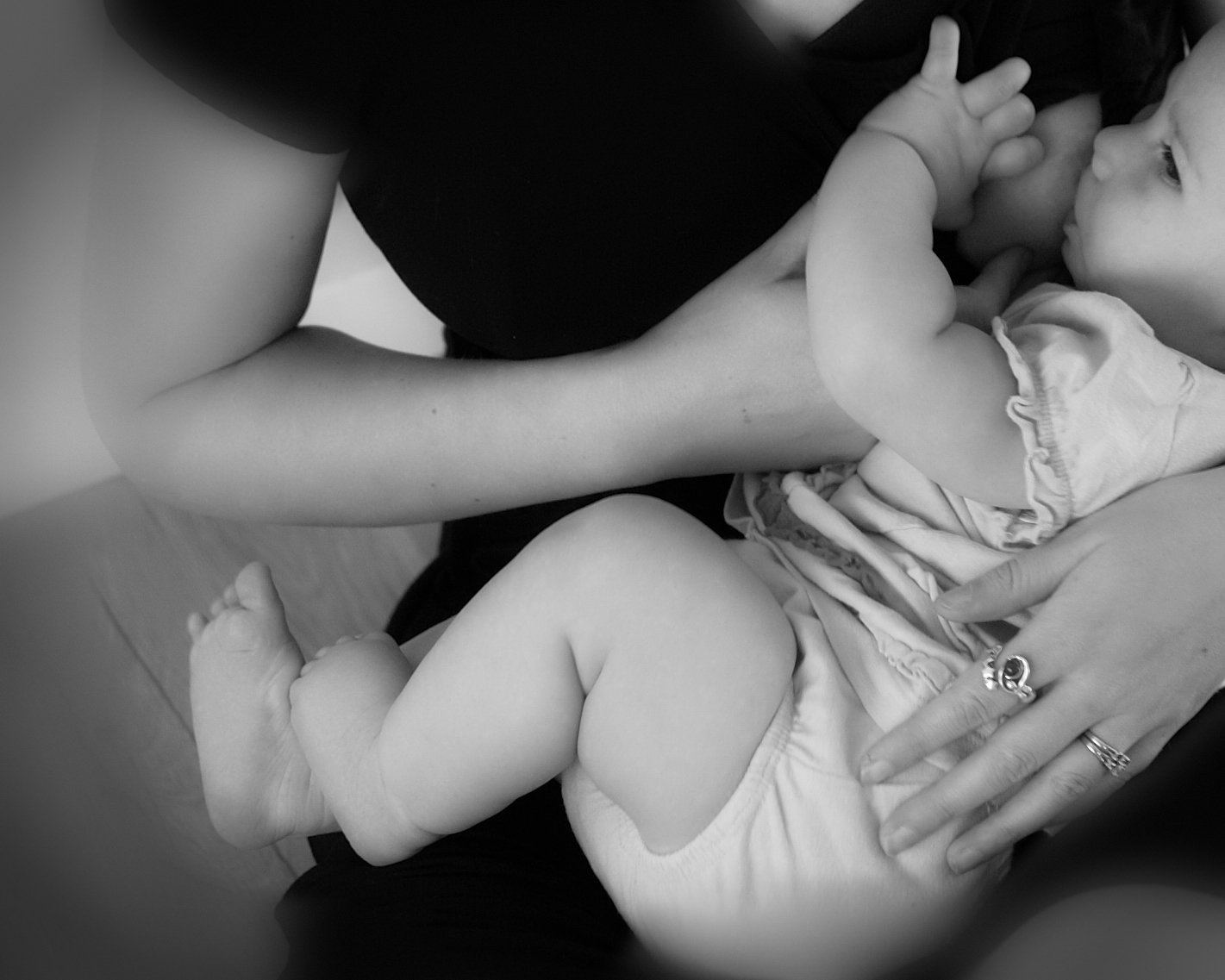
Photo from several years ago of a good friend and I nursing our babies while “seeing” each other.

Talking to mothers about their breastfeeding concerns…

“I hear you saying that….”

“You seem to be telling me that….”

“You seem to be feeling….”

“You sound…”

“How do you…”

“What are you observing that makes you think…”

“Tell me more about…”

“How would you like to see this resolved…”

“Many mothers have found…” **This is my all-time favorite and hands-down most useful. I use it all the time. It is so handy.**

“How would you feel about…”

“For some families it works well to…”

“There are some suggestions I can give you for… that have been helpful for other mothers…”

“It depends….”

“It sounds to me like you are doing a wonderful job as a mother”

“It sounds to me like your baby really responds to you”

“Your baby is so lucky that you want to/did give him the benefit of your milk”

With doctors/others’ opinions:

“How do you feel about those suggestions?”

Some doctors take that approach, but research has shown….” (or, “we’ve noticed…” or, “reliable references indicate…” May also follow-up with, “Would you like me to send you a reference?”). **This is another one of my favorites, it doesn’t smack down the doctor and yet it gently and firmly provides you with a means of sharing alternate—correct—information.

Other good things to remember when listening to mothers:

Breastfeeding is not a by the book procedure—it is an intimate relationship with different dynamics from one nursing couple to the next. Individual mothers and babies respond differently to the same things. There are no hard and fast rules.

Our main message to each mother is how important she is to her baby and how breastfeeding can be a wonderful part of this. We want to help mothers feel good about being a mother, about meeting their babies’ needs in the way that feels best for them, and to trust their own instincts. We wish to leave mothers with a feeling of self-confidence and acceptance.

I See You

I often remind students in my human services classes that all people have a basic need to be both seen and heard. This doesn’t mean agreeing with everything someone else says and does, it means being present and witnessing them as they follow their own paths.

In a newsletter recently, I read an article called “I See You” by Sue Scott, a communication skills instructor. She explains that in South Africa, native peoples greet each other with an expression that literally means, “I see you.” The response is then, “I am here.” She observes, “what a powerful and beautiful gift it is to recognize another individuals in this way: ‘I see you.’ Acknowledgement, recognition, and respect all require focus on the other person…the word respect comes from the Latin word ‘respecere’ meaning ‘to look at again and again…’I see you’…seems to me to be the ultimate in respect.” Sue goes on to explain that when we truly SEE another mother—“when we truly hear her concerns—then we affirm her ability to mother her baby in her own best way.”

A little more than two years ago, I received the precious gift of being seen when a mother that I had previously helped with many breastfeeding questions called to ask me another question. We had become friends over the course of time since she’d had her first baby and I was in the process of my second miscarriage when she called with a question about her own pregnancy. I told her about the miscarriage, but said I felt like I could still talk with her about her question. We ended up then talking for a time about miscarriage and about cesarean birth, because we discover numerous surprising connections between the feelings and experiences of an unexpected outcome to our dreams for our pregnancies. She then said, “You know in that movie Avatar how they say, ‘I see you’?” I said yes, and she said, “I just wanted to let you know that I see you, Molly.” These words were such a gift to me. It was beautiful to hear them and I cried. I felt so seen. It was just what I needed and I hadn’t even known it. I will never forget that simple and yet extremely potent gift of acknowledgement from another woman.

A previous post about Listening Well Enough.

Women’s Power & Self-Authority

“I know myself linked by chains of fires,
to every woman who has kept a hearth.
In the resinous smoke
I smell hut, castle, cave,
mansion and hovel,
See in the shifting flame
my mother and grandmothers
out over the world.”
–Elsa Gidlo

I used the quote above as my winter solstice Facebook posting last year. It reminds me of a quote from Margaret Atwood used in the book Sacred Circles, “Sons branch out, but one woman leads to another.” One of the powerful gifts of feminist spirituality is the sense of intergenerational connectedness to all women of all time. We begin to sense the buried matrilineal links across time and culture. Links that have often been culturally, socially, and religiously broken on purpose as a way to separate and disempower women and to bury women’s wisdom. I believe a potent source of female power lies in the female body and that body wisdom has been suppressed and denied over the course of many years as a means of oppression and control. One of the root issues of patriarchy is who “owns” women’s bodies—is it men, is it the government, is the medical system, or is it the woman herself? (you know my pick).

Body wisdom and sources of power

Considering power, sources of power, and body wisdom, I appreciated reading Barbara Starrett’s essay The Metaphors of Power in the book The Politics of Women’s Spirituality. While she used abortion as her example, I have modified and paraphrased her thoughts to make the idea about birth instead. Starrett originally states, “We can create power centers both within and outside ourselves…Power is where power is perceived. Power resides in the mind. We can give or withhold power through our beliefs, our felt thoughts.” Medical professionals can make decisions about a woman’s body and birth choices effectively only as long as women believe that the professionals have the right to do this. When women reclaim the power to decide for themselves about birth, the doctors proclaim in a vacuum. Their power depends on the transference of our power, through our belief that this is right…Power is where power is perceived. This also means that in any given in-the-world situation, we can intentionally set up our own power centers. If we believe that power resides in those centers, it will. We will act successfully on this belief. Women’s organizations, unions, birth coalitions, etc., will never work unless we regard them, “as the legitimate centers of power…We must grant our own power to ourselves” (p. 191).

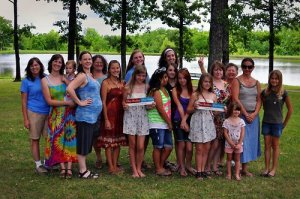
Lucky to have such a great group of friends to gather in the park to take part in the Our Bodies, Our Votes campaign.

While this comes a little too close for comfort to me with the idea that “we create our own reality” (which I cannot fully embrace due to the logical extension into blaming the victim that it creates), I connect deeply with the idea that we must treat women’s organizations and work as legitimate power sources. I think of books/movements like Our Bodies, Ourselves, for example. To me, this is a definitive women’s health resource—by women, for women and separated from the medical establishment that often dehumanizes women. If we continue to believe our “alternative” structures are just that, “alternative,” then the dominant model is still the norm and still accepted, even by us, as “normal.”

Starrett continues her essay by sharing that “It is necessary for some women to risk total reclamation, to risk the direct and intentional use of power, in bold, even outrageous ways. It takes only a minority of women to alter present reality, to create new reality, because our efforts are more completely focused, more total.” (p. 193) This is the risk that the creators of Our Bodies, Ourselves took. It is the risk birth activists and women’s health activists continue to take.

Peggy O’Mara tackles a similar topic in her essay, “Holy Mother,” in her collection of essays The Way Back Home, observing:

We live in a society…that romanticizes and trivializes the feminine…we live in an economy that regards women as cheap labor. In the marketplace, women work for less than men. At home, we do the large majority of the work. I believe that we enslave ourselves.

Is it any wonder, then, that we have not successfully resolved the childcare debate? Child care and national family policy are process issues, and thus sexist issues. Women themselves engage in sexism when they debate the either/or dichotomy of work or home. Too often, we do not realize the devaluation involved in playing by the crumbling rules of a male-dominated society rather than making up our own. The matriarchal process-based model comes from a religious belief system in which the Divine is immanent, within life, within us, ascribing sacredness to the ordinary processes of daily life. Rather than choosing between opposites, let us evolve a culture that values both the product and the process, a culture that synthesizes both the patriarchy and the matriarchy.

…we must put all of our loves–work and family, mothering and career, self and others—on the bargaining table at once, and not assume that because we are women, we must acquiesce to the cultural ideal. To run our personal lives in enslavement to an economic reality that does not serve our needs makes society crazy.

In a brief except from author Libba Bray, she states that for years she “…heard feminist Gloria Steinem described as ‘shrill’ and ‘hostile’ and many other dismissive, denigrating terms. But after reading about her struggles as a human being and as a leader of feminism’s second wave…I got a truer picture…I learned that it’s far too easy for women to be shamed into staying quiet about their lives–their dreams, needs, desires, anger, aspirations—and that the old adage, ‘Well-behaved women seldom make history’ is all too true.”

Consult your health care provider?

In my own life, I am frustrated by the ubiquitous phrase, “Consult your health care provider.” No thanks. I prefer consulting myself, my books, google, my own research, and my friends. Last time I checked, my doctor did not own my body nor did she have divine revelation as to what I need in my life. I am a breastfeeding counselor providing phone and email support to women who have breastfeeding questions. Women frequently receive very poor breastfeeding “advice” from their doctors—to the extent that I honestly think they’d receive better information by polling random strangers at Wal-Mart with their questions (and, yes, I will actually tell women this). One caller once used the phrase, “but, I don’t want to disobey my doctor” and I found this extraordinarily telling as well as depressing. I recognize that doctors have special training and can be life-saving, however, what does that say about mothering in our culture that a woman would not act on behalf of her own baby and herself because of fear of being disobedient to a professional that she has hired? She is a consumer of a service, not the subject of a ruler!

This brings me to a thought by Dr. Michelle Harrison, author of the book A Woman in Residence: “I used to have fantasies…about women in a state of revolution. I saw them getting up out of their beds and refusing the knife, refusing to be tied down, refusing to submit…Women’s health care will not improve until women reject the present system and begin instead to develop less destructive means of creating and maintaining a state of wellness.” Indeed! And, in an essay by Sally Gearhart’s about womanpower, she notes: “…there’s no forcing any other woman into a full trot or a gallop; she will move at her own pace, but at her own pace we can be sure she will move. At this point I always remind myself that the patriarchal use of crash programs is antithetical to organic movement; in a crash program the theory goes that if you can get nine women pregnant you can have a baby in one month; it takes women, I suppose, to understand that it doesn’t work that way.” (p. 202-203)

Reclaiming power

So, how do women reclaim power? I think story holds a key to power reclamation in this context. As I’ve referenced before, Carol Christ describes it thusly, “When one woman puts her experiences into words, another woman who has kept silent, afraid of what others will think, can find validation. And when the second woman says aloud, ‘yes, that was my experience too,’ the first woman loses some of her fear.” As I touch on above, for me it is to see myself and my body as a source of wisdom and to refuse to participate in structures that do not honor my power and personal agency. It involves more often turning to my peers, to other women, for advice and comfort and support, rather than to experts.

Returning to Gearhart, she states: “If I can move out of the patriarchy for my re-sourcement, then I do indeed march to a different drummer; but I have to march with the consciousness in my very bones of the cost in blood and pain and death that is somewhere being paid for my personal growth.” (p. 203)

I’ve written before that I am a systems thinker. Women’s choices about their bodies and about birth are not made in personal isolation, but in a complexly interwoven network of social, political, medical, religious, and cultural systems. As Gearhart notes, “There may be no ‘enemy’ except a system. How do we deal with ‘the enemy’? As seldom as possible but when necessary by opening the way for [their] transformation into not-the-enemy. What weapons do we use? Our healing, our self-protection, our health, our fantasies, our collective care…” (p. 203).

And, in closing I like this reminder:

“Study after study has taught us that there is no tool for development more effective than the empowerment of women. No other policy is as likely to raise economic productivity, or to reduce infant and maternal mortality. No other policy is as sure to improve nutrition and promote health—including the prevention of HIV/AIDS. No other policy is as powerful in increasing the chances of education for the next generation. But whatever the very real benefits of investing in women, the most important fact remains: Women themselves have the right to live in dignity, in freedom from want and from fear.” —Former UN Secretary-General Kofi Annan

This is the whole point—women’s rights aren’t about “taking” rights from anyone else OR about demanding “special treatment,” they are important for a HUMANE WORLD for all people. I think it is hilariously awful that “women’s rights” are considered a political issue and that there is a section about “women’s rights” in the “opposing viewpoints” database for my social policy class. As long as women’s rights are considered a political issue or as something about which an opposing viewpoint can be held, rather than as self-evident, we are in continued, desperate need of revolution.

—-

(note: portions of this post are excerpted from one of my essays for a class I took about Goddess Traditions)

Incorporating Prenatal Yoga into Childbirth Education Classes

Incorporating Prenatal Yoga into Childbirth Education Classes

By Molly Remer, MSW, ICCE, ICPFE

Note: This is a preprint of an article published in the International Journal of Childbirth Education, Volume 27, Number 2 (April 2012)

The essence of yoga can be distilled into four key elements: breath, feeling, listening to the body, and letting go of judgment and expectation (YogaFit, 2010). When considering the essence of yoga, it is easy to see what a natural complement it is to conscious, active preparation for a healthy birth. Most birth educators would agree that paying attention to her breath and to her feelings, listening to her body, and letting go of preconceived expectations of what birth will be like are perhaps the most crucial messages to convey to the pregnant woman and her partner. Additionally, experts widely agree that exercise during pregnancy has beneficial effects for the cardiovascular and musculoskeletal systems and is associated with physical and psychological well-being. There is also some evidence that recreational exercise may reduce the incidence of premature labor and low birthweight babies (Hyatt & Cram, 2003).

Anyone involved with educating adult learners (in any context) is likely to be familiar with the concept that people are most likely to retain information that they have actually practiced (versus reading about, hearing about or seeing demonstrated). I have found that incorporating a few simple yoga poses into each class session is a beautiful way of illustrating and applying many important elements of childbirth preparation. In approximately 10 minutes of movement, important points can be underscored without having to actually say anything or “lecture” to clients. The hope is that as we move together through a carefully chosen series of poses, subtle emotional development and trust in birth occurs—again, in a more effective manner than by the childbirth educator saying during class: “Trust birth!”

One rationale for incorporating yoga into prenatal classes is as follows: First, people often learn and retain information more effectively by actually doing something. Practicing the yoga poses together allows experiential practice of pelvic floor exercises, pelvic rocks, tailor-sitting, leg cramp alleviation, and back pain coping techniques, to name a few, instead of just hearing me talking!

Second, and most important, Yoga in prenatal classes emphasizes that birth happens in the body. As childbirth educators we spend a significant amount of time talking and sharing information, but birth does not only happen in the mind. Birth happens most profoundly in the body. Not only does birth happen in the woman’s body, but supporting and being with a woman in labor is also an intensely physical process, so it is important for partners to try the yoga series.

People today spend much of their time “living in their heads”, and many of us do not feel comfortable with, or at home in, our bodies. Practicing poses in class helps couples out of their heads and into their bodies and begins a process of feeling comfortable with moving and using their bodies in positive ways. This may help them develop the trust and confidence that will contribute to a smooth and peaceful birth process.

Each pose is followed with a birth affirmation such as, “the magic and mystery of birth delight and amaze me” (Miller, 2003). Positive affirmations help plant positive seeds of confidence and trust in the wisdom of women’s bodies and of the beauty of birth. These cognitive adjustments may also send a welcoming message to the woman’s body and baby as they both prepare for birth.

Opening classes with a series of poses is an effective way to “frame” the class. Class can be opened with a brief check-in period asking how people are feeling, about recent prenatal appointments, and any questions can be addressed. A transition from “regular time” into “class time” occurs with a brief series of simple poses. This routine helps people transition from their normal days into feeling ready and excited for birth class information.

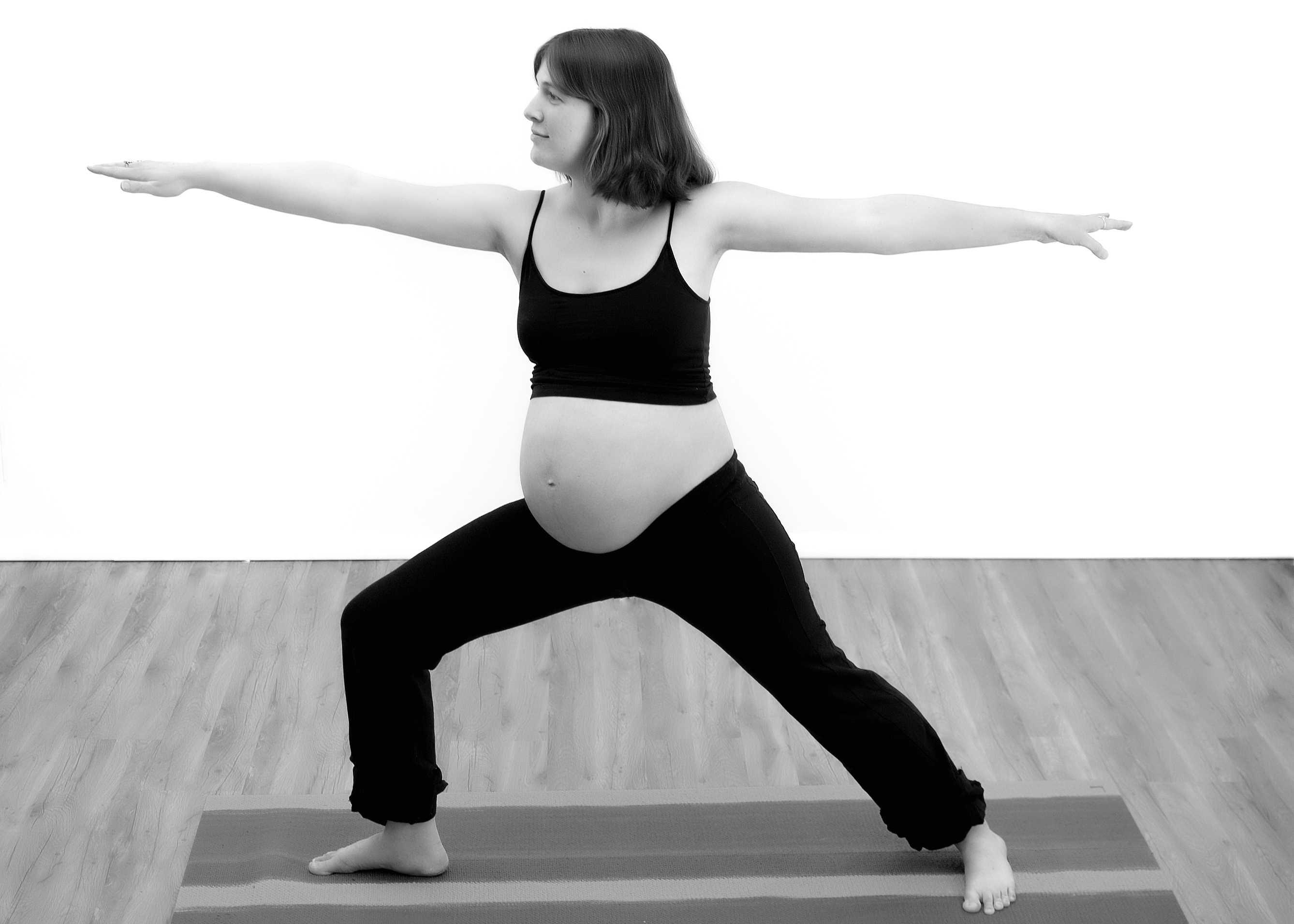
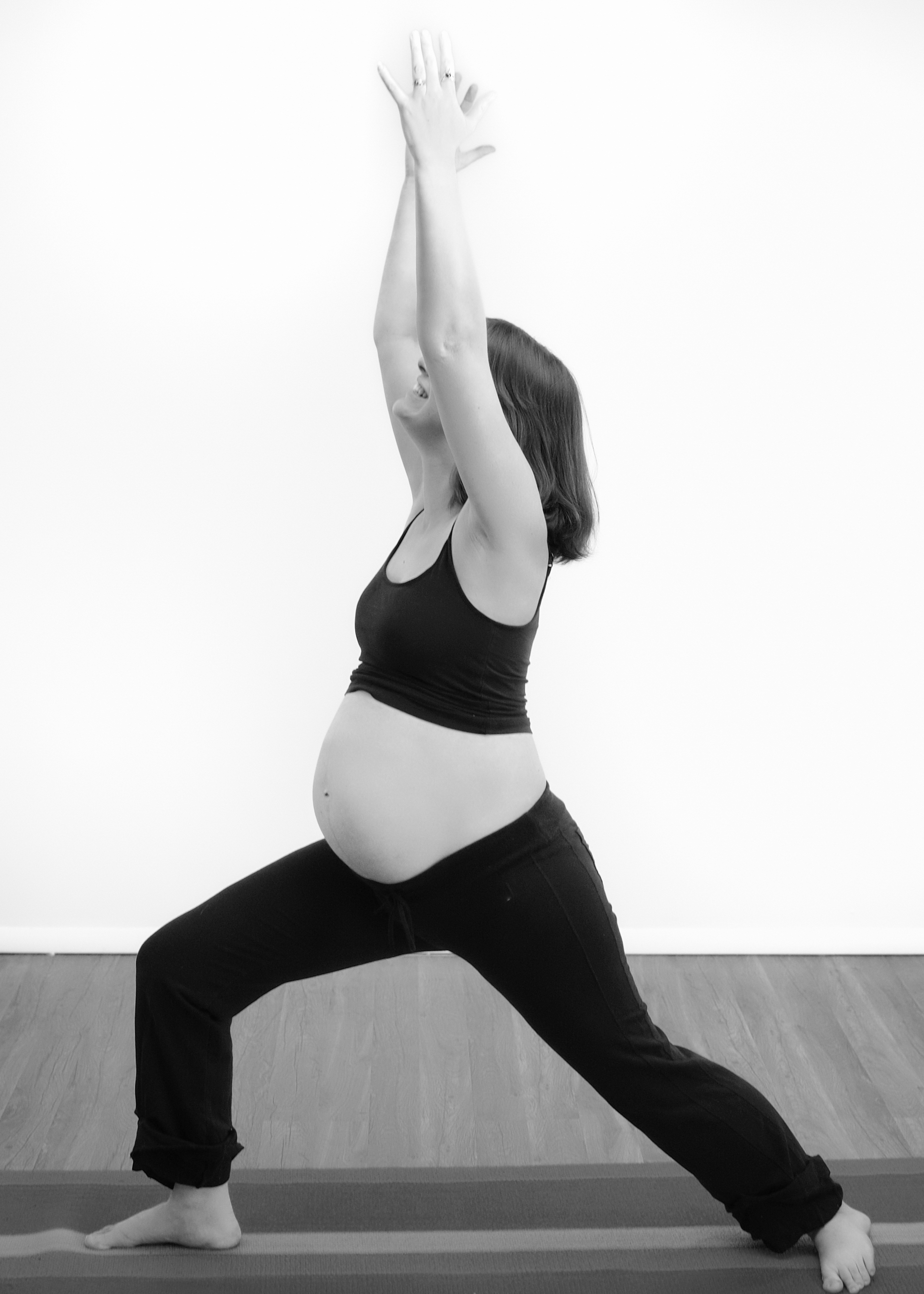
Each pose was chosen because it has specific birth- or pregnancy-related benefits. Begin with healthy sitting—seated crossed legged or tailor-style on the floor with spine straight. Do some neck rolls and shoulder rotations to help release tension. Move into a brief series that includes knee-rocking, leg stretches, Divine Mother Pose, Star Pose, pelvic rock, standing squat, Palm Tree Pose, Half Moon Pose, Triangle Pose and seated Mountain Pose. There is an additional short series of “birthing room yoga” poses described with photographs that is available as a free handout here.

The series is closed with a very brief meditation or visualization exercise. The series of poses and the affirmations are kept the same each week for retention purposes, but the meditation is varied. A quick visualization or relaxation exercise (under two minutes) is often more effective and more readily welcomed by couples than the longer visualization exercises often used in classes (which can seem esoteric to some people). A mindfulness meditation that is effective is:

Inhale and repeat silently: “I exist in the here and now….”

Exhale and repeat silently: “The present moment is all I have to be with…”
Continue inhaling and exhaling as you silently and simply repeat: “Here and now…present moment.”

A favorite resource for easily and smoothly incorporating yoga into classes is The Prenatal Yoga Deck by Olivia Miller, published by Chronicle Books in 2003. The poses listed above were selected from this deck. The deck contains 50 cards, so the educator can easily build a series for use in classes. Each pose card is accompanied by a lovely affirmation. The deck also includes six cards with simple meditations (the meditation above is adapted from one in the deck). The deck format, tidy box for holding the cards and sturdy card for each pose is an ideal format for transport to class as well as serving to provide subtle reminder cards as you lead couples through poses. Each card has a line drawing on the back illustrating the pose, so assessing whether you are doing the pose correctly is easy (sometimes just reading a description of the pose is more complicated than seeing it completed).

Occasionally the childbirth educator may get some eye-rolling or “weird, hippie exercise!” responses from pregnant couples. Regardless of how much or how little they appreciate the practice of yoga in classes, the poses used lay a physical foundation for a positive attitude toward birth and a sense of confidence as a birth-giving woman or supportive partner. Through the simple incorporation of yoga into birth classes, the expectant couple receives an irreplaceable, experiential grounding in the rhythm, focus, release, and conscious awareness so essential to the intensely embodied experience of birthing.

 Molly Remer, MSW, ICCE, ICPFE is a certified birth educator, writer, and activist. She is a professor of Human Services, an LLL Leader, editor of the Friends of Missouri Midwives newsletter, and a doctoral student at Ocean Seminary College. She has two wonderful sons and a toddler daughter and she blogs about birth, motherhood, and women’s issues at Talk Birth (http://talkbirth.me)

Suggested Resources for Birth Educators
The Prenatal Yoga Deck: 50 Poses and Meditations, Olivia H. Miller, ChronicleBooks, (2003)
YogaFit: PreNatal DVD, YogaFit (2009)
Yoga for Your Pregnancy DVD (2004)

All available via Amazon.com

All photos of the author, January 2011, 37 weeks. (c) Karen Orozco, Portraits & Paws Photography

References

Hyatt, G.& Cram, C. (2003). Prenatal & postnatal exercise design. DSW Fitness, Tuscon Arizona (training manual for the ICEA Certified Prenatal Fitness Educator Program)

Miller, O. (2003). The prenatal yoga deck: 50 poses and meditations. Chronicle Books, San Francisco, CA.

Remer, M. (2007). Incorporating prenatal yoga into childbirth educationclasses. Midwifery Today, 4(84), 66.

Talk Birth. (2011). Retrieved from https://talkbirth.me/2010/03/10/birthing-room-yoga-handout/

YogaFit PreNatal/PostpartumSpecialty Program Manual. (2006). YogaFit Training Systems Worldwide, Inc. , www.yogafit.com.

I’m a winner!

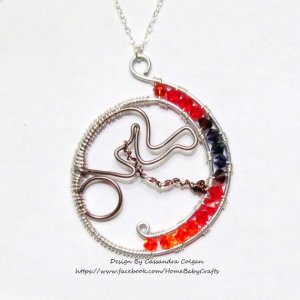
A couple of weeks ago, Kristin from Birthing Beautiful Ideas shared a giveaway of a lovely wire wrapped tree pendant from Home Baby Crafts. I’d never heard of them before, but the pendant was gorgeous so I became a Facebook fan and entered the giveaway, as did several of my own Facebook friends when they saw me clicking that “like” button. I am a fan of a lot of Facebook pages and because of the intricacies and oddities of how FB chooses to show information, I don’t necessarily see all the stuff from all the pages that I want to see. The following week, I got a mysterious FB message from my husband’s aunt just saying, “you won!” I dismissed it as Facebook spam of some kind. Three days later, another mysterious message came, saying only, “did you see that you won?” I got ready to delete that message too, thinking, I’ve got to write to her and tell her that her account is sending me spam messages, but when I went to her page to do so, I noticed that Home Baby Crafts was a liked page we had in common. I thought about that lovely tree pendant…could that be what her Facebook messages were about?! I quickly went to Home Baby Crafts and oh my goodness, the page owner was doing a “final call”—i.e. “Molly Remer is the grand prize winner, does anyone know her? I will re-draw another winner.” Oh my! I leaped to respond and to send my address, etc. (discovering in the process that Cassandra from Home Baby Crafts had indeed messaged me to let me know of my winning nature, but that FB had routed it to the nearly invisible “other” folder that I never look in).

Anyway, yesterday it arrived and it is thoroughly, awesomely gorgeous. I love it!

20120627-113934.jpg

I’m wearing it when I teach tonight!

Cassandra also makes these totally cool baby-in-the-womb pendants too:

I want one!

But, speaking of teaching, look at this person who is modeling her new pendant…does she look 100%?

20120627-113941.jpg

NOOOOOO! I have had a little cold and now I’ve ended up with laryngitis. It didn’t really hit me until yesterday afternoon after having fun visiting my friend at the pool. If she wasn’t so much fun to talk to, I might still have my voice! ;-D I’ve taught with laryngitis before and it was pretty much totally sucky, but I DID IT. It looks like I’m going to be doing so again in about two hours (for a five hour class). I’d SO rather not. It was embarrassing, frustrating, uncomfortable, and just generally awful to do it before and I was totally cool with that being a one time experience.

At least I can rest in the assurance that I’m a winner. And, wear a fabulous new necklace. That helps!

Also, in a fun little twist, I think the necklace looks like it was custom-made to go with the beautiful new logo we have for our local birth network:

Breastfeeding as a Spiritual Practice

Note: This is a preprint of the following article:  Remer, M. (2012). Breastfeeding as a spiritual practice. Restoration Earth: An Interdisciplinary Journal for the Study of Nature & Civilization, 1(2), 39–43. Copyright © The Authors. All rights reserved. For reprint information contact: oceanseminary@verizon.net.

Click here for a typset pdf version of the original article.

The article was constructed from several of my prior blog posts, so if you’re familiar with my blog, a lot of the content here will sound familiar!

Breastfeeding as a Spiritual Practice

By Molly Remer, MSW, ICCE, CCCE

Every single human being was drummed into this world by a woman, having listened to the heart rhythms of their mother.

––Connie Sauer

When I became a mother, many things in my life changed. I was startled and dismayed by the magnitude in which my free time diminished and one by one many of my leisure pursuits and hobbies were discarded. The time for one of my favorite hobbies increased exponentially, however: reading. As a child I was a voracious reader—my mother had to set a limit for me of “only two books a day.” In college and graduate school, reading for fun fell away and I spent six years reading primarily textbooks and journal articles. In the years following, I began to read for pleasure again and when my first baby was born in 2003, I once again became a truly avid reader. Why? Because of breastfeeding. As I nursed my little son, I read and read and read. This became the rhythm of our lives: suck, swallow, read, and consider.

At first I scoured The Womanly Art of Breastfeeding and the Sears’ The Baby Book to try to make sense of my new life and then began to gobble up books about motherhood and women’s experiences of mothering. Reading did actually help me adjust to motherhood. Subtitled “Breastfeeding as a Spiritual Practice,” an article published in the fall 2003 issue of Mothering magazine was immensely meaningful to me. My baby was about two weeks old when the magazine arrived—the first issue I had received after his birth. This article was in it and it was exactly what I needed to read. Breastfeeding can be a meditative and spiritual act––it is actually a “practice” a “discipline” of sorts. The author, Leslie Davis, explains it better:

I realized I’d never before devoted myself to something so entirely. Of course I’ve devoted myself to my husband, to my family, to friends, to my writing, to mothering, and even to God and other spiritual endeavors at various points in my life…I’d completely given myself to this act of nursing in a way that I never had before. Nothing was more important than nursing my son. Nothing was put before it. There was no procrastination as with exercise, no excuses as with trying to stop eating sugar, no laziness as with housecleaning and other chores. Nursing had to be done, and I did it, over and over again, multiple times a day, for more than 800 days in a row. It was the closest thing to a spiritual practice that I’d ever experienced. 

With my first baby, viewing the act of breastfeeding through a spiritual lens like this was a lifeline to me as a vulnerable, sensitive, and bruised postpartum woman trying desperately to adjust my pace as an overachieving “successful” independent person to one spending hours in my nursing chair attached to a tiny mouth. I marvel at the uncountable number of times I spent nursing my first son and then my second son and now my daughter.  The intensity and totality of the breastfeeding relationship is extremely profound—it requires a more complete physical/body investment with someone than you will ever have with anyone else in your life, including sexual relationships. While I don’t like to lump the breastfeeding relationship in the same category with sex, because it feels like I’m saying breastfeeding is sexual, when it isn’t…though, since lactation is definitely part of a woman’s reproductive functions, I guess maybe it is…my basic line of thought was that if you nurse a couple of kids through toddlerhood, odds are high that you will have nursed them many more times than you will end up having sex with a partner in your entire lifetime.

I calculated that so far in my life I’ve put a baby to my breast more than 12,000 times. Even if I only experienced a single moment of mindful awareness or contemplation or transcendence or sacredness during each of those occasions, that is one heck of a potent, dedicated, and holy practice. In the unique symbiosis of the nursing relationship, I recall a quote from the book The Blue Jay’s Dance (1996) by Louise Erdrich about male writers from the nineteenth century and their longing for an experience of oneness and seeking the mystery of an epiphany. She says: “Perhaps we owe some of our most moving literature to men who didn’t understand that they wanted to be women nursing babies.” (p. 148)

I have learned a lot about the fundamental truth of relatedness through my own experiences as a mother. Relationship is our first and deepest urge. The infant’s first instinct is to connect with others. Before an infant can verbalize or mobilize, she reaches out a hand to her mother. I have seen this with my own babies. Mothering is a profoundly physical experience. The mother’s body is the baby’s “habitat” in pregnancy and for many months following birth. Through the mother’s body the baby learns to interpret and to relate to the rest of the world and it is to mother’s body that she returns for safety, nurturance, and peace. Birth and breastfeeding exist on a continuum as well, with mother’s chest becoming baby’s new “home” after having lived in her womb for nine months. These thoroughly embodied experiences of the act of giving life and in creating someone else’s life and relationship to the world are profoundly meaningful.

How many generations of women have pushed out their babies and fed them at the breast without knowing the exact mechanics of reproduction, let alone milk production. There are all kinds of historical myths and “rules” about breastmilk and breastfeeding and even ten years ago we used to think the inner structure of the breast was completely different than what we think it is like now. Guess what? Our breasts still made milk and we still fed our babies, whether or not we knew exactly how the milk was being produced and delivered. Body knowledge, in this case, definitely still trumped scientific knowledge. I love that feeling when I snuggle down to nurse my own baby—my body is producing milk for her regardless of my conscious knowledge of the patterns or processes. And, guess what, humans cannot improve upon it. The body continues to do what the human mind and hand cannot replicate in a lab. And, has done so for millennia. I couldn’t make this milk myself using my brain and hands and yet day in and day out I do make it for her, using the literal blood and breath of my body, approximately 32 ounces of milk every single day for the last seventeen months. That is beautiful.
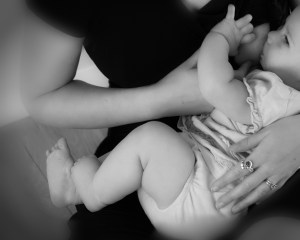
A simple meditation technique to use while breastfeeding is: “breathing in, I am nursing my baby. Breathing out, I am at peace.

Parenting as a Spiritual Practice

The spirituality of daily life with children is not only to be found in the breastfeeding relationship, but is woven into the warp and weft of the daily tasks of parenting with mindfulness, connection, and love. In this simple little verse from Eileen Rosensteel in the 2011 We’Moon Datebook, she describes it thusly:

My prayers are

The food I cook

The children I hug

The art I create

The words I write

I need no religion. (p. 152)

In the book Tying Rocks to Clouds (1996) the author interviews Stephen Levine, the father of three children and in response to a question about whether serious spiritual development is possible when having relationships with others (spouse, children, etc.) he says: “Talk about a fierce teaching. It is easier to sit for three years in a cave than to raise a child from the time he is born to three years old.” (p 160)

In the book, The Tao of Motherhood (2011) (literally the Tao Te Ching for mothers—a translation of the ancient Tao Te Ching by Lao-Tzu, but reworked slightly so that every “chapter” is about mothering and mothering well) a quote from the end of the chapter on selflessness:

“You can sit and meditate while

your baby cries himself to sleep.

Or you can go to him and share

his tears, and find your Self.”

And, then from Peggy O’Mara’s (1993) collection of essays, The Way Back Home, she raises this question: “Why is it that to rise gladly at 4:00 am to meditate and meet one’s God is considered a religious experience, and yet to rise at 4:00 am to serve the needs of one’s helpless child is considered the ultimate in deprivation?” (p. 19) O’Mara continues by explaining,

One can learn sitting meditation by rocking and nursing a little one to sleep; one can learn reclining meditation by staying still to avoid disturbing a little one who has been awake for hours; and one can learn walking meditation by walking and swaying with a little one who would like to be asleep for hours. One must learn to breathe deeply in a relaxed and meditative manner in order to still the mind that doubts one’s strength to go on, that sees every speck of dust on the floor and wants to clean it, and that tempts one to be up and about the busyness of accomplishment… (p. 19)

I do find that I have a tendency to think about my own spiritual practices as something that has to wait until I am alone, until I have “down time,” until I have space alone in my head in which to think and to be still. On the flip side, as I noted earlier, the act of breastfeeding, day in and day out, provides all manner of time for spiritual contemplation and meditative reflection. I often find it difficult to stay centered and grounded in mindfulness of breath and spirit during the swirl of life with little ones. I’ve done a lot of reading about “Zen parenting” type topics and it seems like it would be so simple to integrate mothering with mindfulness. Then, I find myself frazzled and scattered and self-berating, and wonder what the heck happened to my Zen. Then, I read an interesting article about anger and Zen Buddhism that clarified that meditation and Zen practices are not about being serene and unfrazzled, but about being present and able to sit with it all. And, it offered this helpful reminder:

I used to imagine that spiritual work was undertaken alone in a cave somewhere with prayer beads and a leather-bound religious tome. Nowadays, that sounds to me more like a vacation from spiritual work. Group monastic living has taught me that the people in your life don’t get in the way of your spiritual practice; these people are your spiritual practice. (Haubner, 2012, “The Angry Monk”)

I don’t need to wait to be alone in order to be “spiritual” in this life with my babies. This sometimes messy, sometimes chaotic, sometimes serene, sometimes frazzling, often joyful life is it.

Motherhood is an intensely embodied experience. It is profoundly empowering to know that you can build a whole person and sustain their lives with nothing but the materials of your own body—this is my blood, my milk, made flesh.

Molly Remer, MSW, ICCE, CCCE is a certified birth educator, writer, and activist who lives with her husband and children in central Missouri. She is the editor of the Friends of Missouri Midwives newsletter, a breastfeeding counselor, a professor of human services, and doctoral student in women’s spirituality at Ocean Seminary College. She blogs about birth, motherhood, and women’s issues at https://talkbirth.me/

References

Davis, L. (2003). Breathing in: I am nursing my baby. Mothering, Issue 120, September/October 2003 (pages unknown—electronic version available here: http://mothering.com/breastfeeding/breathing-i-am-nursing-my-baby-breastfeeding-spiritual-practice)

Erdrich, L. (1996). The Blue Jay’s Dance. New York, NY: Harper Perennial

Haubner, S. J. (September/October, 2012). The angry monk. Utne. Retrieved from http://www.utne.com/Mind-Body/Angry-Monk-Buddhism-Zen-Spiritual-Practice.aspx?page=5 on March 1, 2012.

Elliott, W. (1996). Tying rocks to clouds. New York: Doubleday.

McClure, V., & Thoele, S. P. (2011). The Tao of motherhood. Novato, CA: New World Library.

O’Mara, P. (1993). The way back home. Santa Fe, NM: Mothering Magazine

Rosensteel, E. (2011). Untitled. In We’Moon datebook (p. 152 ). Wolfcreek, OR: Mother Tongue Ink & We’Moon Company.

—-


Pinterest Day!

Last Friday, my oldest son suggested that we have a “Pinterest Day–all the stuff we do today comes from Pinterest!” So, I said okay and we had an overall delightful day. It was not without some pain (details + photo to follow) and it was shockingly exhausting too. We decided to keep up the trend perhaps on each Friday. It is so easy to pin-it-and-forget-it, or to pin things that you have no intention of ever doing (I joke that I need a separate board titled, “things I like to pretend I’m going to do some day). I also got Instagram on my phone finally and so in this post you will also be treated to random, not very skillful edits of the pictures of our various projects…

The boys were super excited and took some pictures of themselves while waiting for me to get ready:
20120620-133307.jpg

Zander chose first and we made these peanut butter cheerio treats. We used organic chocolate o’s from Big Lots, rather than the called for PB Cheerios. We also used giant, ridiculous marshmallows also from Big Lots rather than the mini mallows called for:

20120620-133249.jpg

They were pretty delicious.

Lann chose to make these homemade “Cheez-Its.”
20120620-133402.jpg

The results were clearly a case for which this meme was created:

I’d put the dough in the fridge between waxed paper and the paper somehow melted/fused into the dough. It was almost impossible to roll out–not to mention took FOREVER to scrape away all of the melted in waxed paper. I guess we added too much water–it went from crumbles to sticky very suddenly. I thought chilling it would solve the issue, but I probably should have just added more flour.

It was too sticky to cut before baking, so I cut them afterward. They were not crunchy, but guess what, they were delicious. We ate them all up and Mark didn’t even get to try one!

20120620-133408.jpg

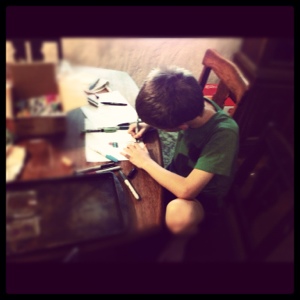
Then, we decided to make homemade shrinky dinks using hard-to-find #6 plastic. We located some minimal amounts from cracker/cookie packages and the boys had fun making their designs while Alaina tried to snag all the permanent marks and rip their lids off:
20120620-133419.jpg

20120620-133429.jpg

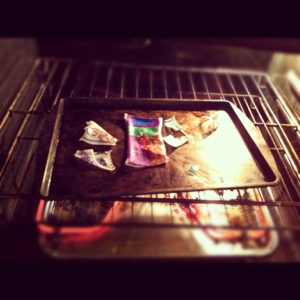
They sort of really worked…

20120620-133706.jpg

20120620-133714.jpg

Then, Pinterest Day devolved into PAINterest day when after getting up from naptime, Alaina accidentally stabbed me full-force in the wide open eye with a corner of one of the shrinky dinks.

It was horrible. I thought I might be permanently damaged. I thought I would probably have to go to the doctor. I thought my eyeball was possibly punctured. It burned, it watered. I couldn’t open it. It felt like it had a chunk of gravel stuck in it. By the next morning though it was down to feeling a little sandy/gritty and by that night it was totally back to normal. What a relief!

Despite my suffering, the fun had to go on and we made these utterly fabulous potatoes to have with dinner:
20120620-133720.jpgThey tasted like good fried potatoes, only they were baked. After the painstaking slicing of the potatoes into thin slices (which Mark then informed me I could have done with the food processor rather than by hand), I sprinkled them with 3TB olive oil, 1TB of italian seasoning, and 1ts of salt. I also sprinkled them with Parmesan cheese and they baked for probably over 40 minutes. Very delicious. We’re having them again tonight. Official Pinterest win!

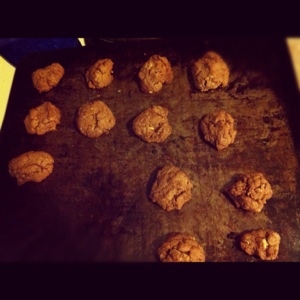
I also need a pinboard titled, “Nutella in ALL THE THINGS!” Couldn’t resist making at least one Nutella recipe–these weird little cookies:

20120620-133727.jpg
Only three ingredients: 1 cup Nutella, 1 c. flour, and one egg. They turned out pretty dry, but quite delicious and we quickly scarfed them all down. We made them again the next day and I used half the flour thinking I was a genius and they were super floppy, greasy, and kind of gross flat cookies then.

We continued with a carb-heavy dinner and made these supposedly delightful 30 minute dinner rolls:

20120620-133813.jpgThey were so-so. Tasted lots more like biscuits or a quick bread even though they used yeast. I make good bread already, so I really shouldn’t have experimented and should have stuck with my existing, delightful recipe that is plenty easy and turns out tastier.

On Father’s Day we continued our pinteresting lives by making homemade Reese’s eggs:

20120620-133913.jpg

I used melted Ghiradelli chocolate chips for the outside. Some milk chocolate, some dark chocolate. In case you can’t tell from the picture, they were totally awesome. Will definitely make again. They were pretty fast too.

So, now, here is it Friday again! And…despite the eye-incident from PAINterest day, we decided to give it another go. An abbreviated version today since the boys went to see the Wizard of Oz at the theater in town with my parents and are there now (and Alaina is napping and this post is taking me WAY longer to write than it should, especially because no one really cares!!!)

But, I surprised the kids this morning with the “cookie dough popsicles I made and froze last night so they’d be ready for Pinterest Day today…

20120622-140733.jpg

I used chocolate almond milk and mini chocolate chips and 1/3 cup of brown sugar and some vanilla. I shouldn’t have used the sugar, because they would have been sweet enough with it! I froze them in ice cube trays with toothpick sticks, so they were mini-popsicles/bite size.

Alaina was pleased with them too:
20120622-140739.jpg

We also took a take two at the homemade Cheez-Its. They turned out different this time. I also did away with the waxed paper and the chilling and the rolling and just dropped them on the sheet with a spoon. Still delicious and still nothing like a cracker!

20120622-140745.jpgPinterest Day was a really fun experience overall and I highly recommend it, because really, what is the point of pinning all that stuff if you just go back the next day and pin more and never actually DO any of it? (or even remember you pinned it!) I think this is our new Friday fun plan! 🙂

The Spirituality of Birth + Book Giveaway: Birth on the Labyrinth Path

I’ve been experiencing a fun trend in the books I’ve been reviewing lately—many new resources are being published with a shared theme of approaching birth from a spiritual perspective. There are resources now available for women from a variety of spiritual backgrounds, all honoring and respecting pregnancy and birth as experiences uniquely connected in an embodied way to the numinous and sacred, in whichever manner we choose to name it. I recently finished a class for my doctoral program and the subject of my final paper was “A Thealogy of Birth,” in which explored the sociopolitical, cultural, religious, and personal relevance of birth from a thealogical (Goddess-oriented) perspective.
  • I just reviewed The Gift of Giving Life which delves into the divine nature of pregnancy and birth from a Christian (specifically LDS/Mormon) perspective.
  • I then pre-reviewed the upcoming book Embodying the Sacred, which is written from a Catholic point of view.
  • And, earlier in the month I finished reading a gorgeous book with a non-specific spiritual perspective: Sacred Pregnancy
  • In the past, I also reviewed the book L’Mazeltov, which is written specifically for Jewish parents-to-be.

All of these resources are amazing and I’m so glad they’re available for pregnant women.

Now, I’m excited to offer a short review and a giveaway of another new book, this one written from a pagan perspective. Published by Pantheos Press, Birth on the Labyrinth Path is written by Sarah Whedon and focuses on “Sacred Embodiment in the Childbearing Year.”

My mini-review from Goodreads is as follows:

I really enjoyed this short book about pregnancy and birth from a pagan perspective. The reflections on the embodied, spiritual nature of pregnancy and birth were wonderful. It is very positive and reinforcing and contains great thoughts like this one: “A body that is curvier than it was before, maybe bearing stretch marks or scars from surgical procedures or tearing, maybe producing milk, is a body that bears the signs of delivering a human being into this world. We may mourn our smooth, skinny, unmarked maiden bodies, but at the same time we can celebrate the beauty of our storied, productive, and strong mama bodies.” Whedon also quotes this lovely passage regarding the connection pagan women might feel to the Divine: “I am the holy mother; . . . She is not so far from me. And perhaps She is not so very distinct from me, either. I am her child, born in Her, living and moving in Her, perhaps at death to be birthed into yet some other new life, still living and having my being in Her. But while on this earth She and I share the act of creation, of being, and Motherhood” (from Niki Whiting, “On Being a Holy Mother” in Whedon, p.)

I also shared some lovely quotes from Birth on the Labyrinth Path in my recent post on Birth Culture.

*********The giveaway is now closed. Ellen was the winner!*********

I’m also pleased to host a giveaway of a Kindle copy of Birth on the Labyrinth Path for one lucky winner!  To enter, just leave a comment sharing one of your own thoughts or favorite resources about the spirituality of pregnancy and birth. The giveaway will run through next Wednesday (6/27).

Book Pre-Review: Embodying the Sacred

Book Pre-Review: Embodying the Sacred

By Peg Conway

Reviewed by Molly Remer, MSW, ICCE, Talk Birth (http://talkbirth.me)

This week I was excited to have the opportunity to review a new book, not yet released. Publication is anticipated within the next couple of months and I will re-post then with the actual cover image and pricing details.

Embodying the Sacred is a beautiful new book with roots in the Catholic faith. It seeks to answer the questions, “how does birth connect with faith? How can we speak of it in religious language that lives up to the intensity of giving birth? How can spirituality be a resource for childbearing? And why are the churches, deeply concerned for the unborn, so silent about normal childbirth?” The book helps pregnant women build their “spiritual birth bag” through cultivating their inner resources and their embodied connection to spirit.

Written clearly and with a lyrical and intimate style, the book contains a variety of reflections, prayers, and activities to help women make a personal connection with their sense of the divine and sacred. Something I found particularly enjoyable about the book was that not only did the author touch on the labyrinth as a metaphor for birth, she includes literal, purposeful labyrinth walks in the suggested activities for expectant mothers.

Embodying the Sacred speaks to the chord of the holy and sacred in all pregnant women, but readers should be aware that it uses language and prayers strongly rooted in the Abrahamic religions and uses predominantly masculine imagery and language for God. Women from a variety of faith backgrounds will find material to connect with in the book, but may find it necessary to substitute or modify the prayers to suit their personal beliefs and practices.

Pregnant women who are intrigued by the idea of building a spiritual birth bag and who are ready to dig deep and to go beyond the scope of traditional pregnancy and birth books will find a rich resource in Embodying the Sacred.

Disclosure: I received a complimentary copy of this book for review purposes.

The Great Birth (of the Universe)

I love it when someone writes with passion, heart, depth, and poetry about natural and scientific phenomena and as such greatly enjoyed an essay by Brian Swimme in the book Reweaving the World: The Emergence of Ecofeminist Philosophy. As an educator and a homeschooling mother (as well as a former homeschooler myself), I also appreciated his telling observation that (formal) education is a major cause of the “lobotomy” of which he writes: “…by the time they are done training us as leaders for our major institutions, we have only a sliver of our original minds still operative. What sliver is left? …the sliver chiseled to perfection for controlling, for distancing, for calculating, and for dominating. The rest has been sacrificed in the surgery of patriarchal initiation” (p. 16).

Since most children spend 12 years minimum steeped in this educational culture, is it any wonder that we find ourselves in our current social and political conditions? This surgery of which Swimme speaks leads to a mechanical conception of the operations, functioning, and majesty of the universe, meant to be analyzed rather than marveled over.

Rather than a Big Bang, the birth of the universe is much more aptly described in terms of a Big Birth: “Not bombs, not explosions, not abhorrence…a birthing moment, the Great Birth. To miss the reality of birth in these scientific facts is to miss everything. It is to sit at the heavily laden table and starve. For here is a great moment in human consciousness. Now for the first time in all of human history we have empirical and theoretical evidence of a reality that has been celebrated by primal people for millennia…the mathematics of this initial, singularity of space/time are not enough. We require song and festival and chanting and ritual and every manner of art so that we can establish an original and felt relationship with the universe…our universe is quite clearly a great swelling birthing event, but why was this hidden from the very discoverers of the primeval birth? The further truth of the universe was closed to them, because central regions of the mind were closed…I am sensitive to the charge that poetry [like this] is just an ‘addendum’–that what are real are the empirical facts, while the rest is commentary. On the contrary, what is true is that this universe is a stupendous birth process, an engendering reality…” (p. 19).

This is the kind of theapoetics that makes me swoon! What would our world, our culture, the way in which we give birth, and the way in which women are treated look like if we grew up with a Great Birth rather than a Big Bang?

Swimme continues: “From a single fireball the galaxies and stars were all woven. Out of a single molten planet the hummingbirds and pterodactyls and gray whales were all woven. What could be more obvious than this all-pervasive fact of cosmic and terrestrial weaving? Our of a single group of microorganisms, the Krebs cycle was woven, the convoluted human brain was woven, the Pali Canon was woven, all part of the radiant tapestry of being. Show us this weaving? Why, it is impossible to point to anything that does not show it, for this creative, interlacing energy envelops us entirely. Our lives in truth are nothing less than a further unfurling of this primordial ordering activity…Women are beings who know from the inside out what it is like to weave the Earth into a new human being” (p. 21, emphasis mine).

So, if the patriarchal initiation of modern education doesn’t do the job, what should we teach our children? “We will teach our children at a young age the central truth of everything: that this universe has been weaving itself into a world of beauty for 15 billion years, that everything has been waiting for their arrival, for they have a crucial if unknown role to play in this great epic of being. We will teach that their destinies and the destinies of the oak trees and all the peoples of Earth are wrapped together. That the same creativity suffusing the universe suffuses all of us, too, and that together we as a community of beings will fashion something as stupendous as the galaxies” (p. 22).

I believe this is ecofeminism in practice.