Pregnancy Update

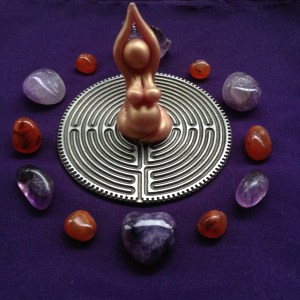
Labyrinth of pregnancy (the path can be followed all the way into the spiral belly!)

I had my 28 week prenatal appointment earlier this week. I value my midwife and enjoy our visits, but I had a nighttime epiphany recently that I had more options to choose from, because I miss the kind of relationship I had with my midwife during my second pregnancy.

At this appointment, I had my blood sugar checked (2 hour post-prandial) and it was 91 (same as it was with my first baby at this point). I also had my hemoglobin checked and it was 11.5 (same as with my first baby—with second baby, it was 12.9 at 26 weeks). I now weigh almost as much as I did full term with number two! (still five pounds to go). Baby wiggles a LOT—sometimes it almost hurts, which I don’t remember from before. She also has hiccups regularly, which are always cute. She also seems to be head-down. When I heard that, I felt really strange—like, “there is a head in there?! And, I’m going to give birth to it?!” I have been much more reluctant to read about birth during this pregnancy—I think because I’ve been concentrating so much on successfully growing this baby to term, I don’t want to plant any subconscious ideas too early about giving birth and send myself into labor early, or something. I used to read a lot of birth stories and I have some great books of birth stories, but I don’t feel like reading them until I’m like 36 weeks—just in case. After this appointment, I started to think birthy thoughts some more—thinking about ideas and plans for when she is born. I also had a birth dream—the placenta came out first and after a while I was like, “wait, but I didn’t have the baby yet!” and then she was born—enormously fat with small eyes and she gave me a big hug.

The same night I realized I wish I had some more midwife choices, I had another realization (not exactly a new one, but a new version of it)  that I still have a big root fear that something wrong with ME is what caused my miscarriages (like a clotting disorder) and that I still do not trust that I can really give birth to a living baby at the end of this pregnancy. I’m worried that my body was responsible for the loss of my other babies. I don’t know how to get rid of this or work with it really—I’m at an impasse and since I truly do not know the cause and I can’t talk myself out of logically/rationally or just “think positive.” It is buried down there—most of the time I feel happy fine, but when I catch sight of the fear again (that night it was because she wasn’t moving as much as she usually does at that time of night), I realize that it is this bone deep fear-based thing that I don’t know how to shake. I do not want to have a fear-based pregnancy or to live a fear-based life, but there it is…

When it isn’t the middle of the night and I have my logic brain back, I feel more certain that my m/c experiences were chance based—Noah perhaps some kind of abnormality and the second perhaps a progesterone deficiency or something else related to getting pregnant again fairly quickly after a significant loss—and thus have no bearing on my current pregnancy, but still.

However, speaking of fears and returning to my plans for this birth, someone recently expressed surprise to my mom that I’m planning to have this baby at home after what happened with Noah. Hmm. This is completely irrational to me, because what happened to Noah had nothing to do with being at home—he died, we found out, I gave birth to him at home. How would that mean that my new baby should be born in the hospital instead? Not to mention that fact that when I did go to the hospital postpartum because of blood loss, rather than being helped by the assumed-fabulous skills and resources at the hospital, I was dismissed in life-threatening condition! (and was instead helped by a midwife at her home.) Having Noah only reinforced for me that the hospital is not somewhere I want to be when I’m giving birth, postpartum, or in need of compassionate attention. Giving birth to him at home reinforced for me that home is where I can most capably, peacefully, respectfully, powerfully, and safely give birth to my babies.

I keep feeling this “call” to retreat—to quit most of my nonessential responsibilities and just hang around at home. I had this fantasy recently of a year-long postpartum retreat where I just take care of my baby and read and write and play with the kids and look at the clouds (or something). Ever since I had Noah last year, I’ve been feeling like turning inward/away and just spending time by myself. I also felt like I needed to take a break from being of service/helping other people and needed to tend my own hearth and take care of myself instead. I rarely actually follow-up on this urge, even when I have a chance to do so. There is always too much “work” to be done or things to “catch up” with or just “one more thing” and before I know it, my window of alone time has passed. This might just be a fantasy notion—if I really wanted to take the time out, wouldn’t I do it?—but I think it is a true call to self-care that I’m not heeding (even now, here I am writing a blog post while my kids are visiting their grandpa—couldn’t I be having a mini-retreat right now?). This is one reason I’m taking a leave from birth classes and LLL right now—I want to be able to focus on my own pregnancy, birth planning, babymoon, and new baby, rather than focusing on those things for other people. I also feel like writing about my own pregnancy and my own birthing thoughts, rather than writing posts or articles designed to help other people—sometimes I get bogged down in feeling like I should be writing helpful and informative posts and the time for personal reflection passes. Maybe this sounds selfish, but I don’t think so. I’ve always had a fear that if I am not “of service” in some capacity I will cease to exist/have any worth/be a real person—I’d like to get over that!

I often tell my college students that we cannot expect more from our clients than we are willing to do ourselves. I also tell them that sometimes we want to do for others what we are unwilling to do for ourselves. This is where I am right now—I have lots of great ideas for things I’d like to do for other women on pregnancy retreats or in birth classes for women who are having their second or third baby rather than their first and want to deepen their understanding of the meaning of pregnancy and birth in their lives. Why don’t I experiement and do all those things for myself? And, then, see about offering those things to other women…I can see it now—“My Year of Self-Care.” (Inside joke to those who know how I disklike “year of” experiment books.) I feel like I rarely do what I actually want to do with my days, instead of doing what I should do, or what makes the most sense. Sometimes it is what is most pressing, but more often it is should-based or internally driven, rather than an actual issue of priorities.

This actually isn’t the post I set out to write today, which was originally intended to be some self-care tips from Renee Trudeau with a short intro from me about my own “call” to rest and renewal. Perhaps it was the post I needed to write though! Perhaps not, because now I feel like I’ve “wasted” my chance to do some of those other things I’d like to do with my time!

Giveaway: Dreamgenii Pregnancy Pillow

This giveaway is now closed, Amee was the winner. FYI, the longer I use this pillow the more I love it, so make sure to go to the Dreamgenii website and check it out!

Recently, I received a Dreamgenii Pregnancy Support Pillow to review. At 29 weeks pregnant, I am just at the right point to benefit from a pillow like this and I was happy to try it out. Unlike the “traditional” body pillow that many women use during pregnancy, the Dreamgenii is much more streamlined and takes up a lot less room in the bed. It has both a leg and “bump” support cushion in front and a back pillow in the back. This also makes it unique—I like feeling like I’m in a little pillow “nest” without having to bunch up and arrange a lot of individual pillows. The bump/leg support is supposed to support you on your left side. I confess that I actually prefer lying with my back to that side (feels cozy and kind of cradled up) and with my belly leaning on the “back support” part.  Another neat thing about this pillow is that it can be used as a breastfeeding support pillow after baby is born!

Luckily for you, you now have a chance to win one of these pillows for yourself! To enter, just leave a comment telling me why you’d like to win the pillow. You can earn bonus entries by sharing the giveaway on your Facebook page or blog (please leave an additional separate comment letting me know you did this so that I know to count you twice).

Giveaway ends Friday, Nov. 12th.

Fathers, Fear, and Birth

“I told my dads that they were their partner’s lover and that their most important role at the birth was one they did everyday without classes, books or practice: Loving the mom. You could literally see the dads relax as this thought sunk in and took root.”

~ Lois Wilson, CPM

My husband supports me during my birthing time with our second baby

I don’t use these exact words, but I share something similar with the dads in my classes—your most important job is just to love her the way you love her, not to try to be anything different or more “special” than you already are…

I recently shared my review of The Father’s Home Birth Handbook by Leah Hazard and also wanted to share this excerpt from an article in Midwifery Today:

~~~~~~~~~~~~~~~~~~~~~~~~~~~~~~~~~~

Helping Men Enjoy the Birth Experience, by Leah Hazard

~~~~~~~~~~~~~~~~~~~~~~~~~~~~~~~~~~

Nearly 70 years ago, Grantly Dick-Read wrote in Childbirth without Fear that laboring women often experience a cycle of: Fear > Tension > Pain. This is a cycle with which many of us are familiar, and we’ve developed a myriad of ways to break the cycle since Dick-Read first published his seminal work in 1942. However, less attention has been focused on the emotional roller-coaster fathers experience throughout pregnancy and birth, and it’s this area that I’d like to explore in greater depth.

Although a man cannot feel the same pain as a laboring woman, I believe that many men experience a similar cycle of emotions in the birthing space to that which Dick-Read described, with a slightly different end product, namely: Fear > Tension > Panic. A man who is not confident in his partner’s birthing abilities, who is poorly informed, and/or who is poorly supported, becomes increasingly tense; and if this tension is not eased, then he spirals into an irreversible state of panic. This panic manifests differently in different men: some men become paralyzed by their fear (the familiar specter of the terrified dad sitting stock-still at the foot of the bed), while others spring into hyperactivity, bringing endless cups of water or becoming obsessively concerned with the temperature of the birth pool.

The root of this panic is fear, and it’s a fear which often begins to grow long before the first contraction is felt. As such, we need to think about ways that we can address and minimize this fear in the days and months preceding birth…

[Please read the rest of this article excerpt in the full online version of E-News: http://www.midwiferytoday.com/enews/enews1221.asp ]

Excerpted from “Beyond Fear, Tension and Panic: Helping Men Enjoy the Birth Experience,” Midwifery Today, Issue 95 Author Leah Hazard is the author of The Father’s Home Birth Handbook. For more information, visit www.homebirthbook.com .

——

I really think the fear-tension-panic cycle makes a great deal of sense and it brought me to this quote:

“Fear is completely intertwined with what we experience as labor pain…And it is the fear in our physicians and nurses as much as the fear within ourselves.” –Suzanne Arms (Immaculate Deception II)

I think sometimes women underestimate the power the attitudes of other people in the birthplace hold over outcome (the nocebo effect, possibly)—while being prepared, confident, fearless, etc. as a birthing woman is excellent and she can sometimes manage to triumph over the fear of the others around her, I more often see the fear of others overriding the preparation and confidence a mother has tried to develop in herself. I think it is important that we actively cultivate coping skills and resources within fathers-to-be as well, so that they are less likely to get into the fear-tension-panic cycle and are better able to be present for the birthing woman (fear-tension-panic within doctors and nurses is a subject for another post!). Here are some other posts I’ve written specifically for fathers:

Ideas for supporting your partner in labor

No Right Way

Resources for Fathers to Be

Birth Affirmations for Fathers

For Labor Support Remember TLC or BLT

Comfort Measures & Labor Support Strategies

Helping yourself while helping your wife or partner in labor

(P.S. Yesterday this was a much more developed post and WordPress erased it accidentally and to my great dismay 😦 )

Book Review: The Father’s Home Birth Handbook

I came to my attention today that I have never posted this book review! (also, as I prepared to “tag” this post, I realized that I don’t have a tag set up for “homebirth.” Can this really be true??!!)

The Father’s Home Birth Handbook

By Leah Hazard
Victoria Park Press, 2008
Softcover, 208 pages
ISBN: 978-0-9560711-0-1
www.homebirthbook.com

Reviewed by Molly Remer, MSW, ICCE

The Father’s Home Birth Handbook is a succinct and easy to read little guide for fathers and adds to the growing library of birth resources specifically geared towards fathers-to-be. The book is written by a woman, but contains ample quotes from fathers which lend a male perspective. It also includes a number of good birth stories interspersed throughout, which were all written by men.

The target audience for the handbook is easily summed up in the prologue: “…I’ve met far more men who have responded to their partners’ home birth wishes with a mixture of shock, cynicism, and fear…Far from being domineering ogres who just want to see wifey tucked ‘safely’ away a hospital, these loving fathers have simply had very little access to accurate, impartial information about the safety and logistics of home births versus hospital births.”

The first chapter addresses “Risk & Responsibility,” because that is one of the very first issues of concern for most people new to the idea of homebirth. It moves on to a chapter called “Think Positive,” followed by “Choosing the Guest List” and then one titled “Pleasure and Pain” This chapter covers comfort measures and what to do while the woman you love is giving birth: “…away from the intravenous drip and ticking clocks, you can support your partner in experiencing labour in all of its awesome, challenging power.”

Chapter five—“Birth: Normal and Extraordinary” covers Labor 101 topics, including what to do with the placenta. This is followed by “Challenges & Complications” which covers some common issues of concern such as premature labor, being overdue, prolonged labor, distressed baby, cord around the neck, tearing, and blood loss. Each of these is followed by a “what can I do to help?” section.

The final chapter—“Now What?”—concludes with a nice segment called “how can I carry the lessons I’ve learned from my homebirth with me into the rest of my life as a father?”

Published in Scotland, the handbook has a UK perspective—it assumes participation in the NHS and a “booked” midwife and homebirth. There is no “how to choose a midwife” type of section (because there is no choice of midwives). For US readers, this leaves a set of issues unaddressed—such as varying legal statuses, etc. UK specific issues also arise based on the possibility of caregivers who are not thrilled about homebirth, but who have to come to the birth since it is a government supported option. It comes across that in Scotland homebirth may seem readily okay on paper, but in reality is more difficult to pull off.

The book does briefly discuss the birth climate in the US and soundly critiques ACOG’s position on homebirth.

The book has an index and a resources section.

The Father’s Home Birth Handbook is a friendly, practical, matter-of-fact, helpful little guide that neatly addresses common questions and concerns many fathers-to-be have about planning a homebirth.

——————

Disclosure: I received a complimentary copy of this book for review purposes.

Associated amusing anecdote: my then three year old noticed me reading this book, looked at the cover and said, “The dad is trying to grab him, but that little baby is floating away!

Prematurity Awareness Month: Mind/Body Medicine in the NICU

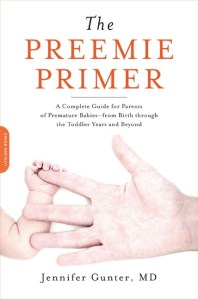
November is Prematurity Awareness Month and I’m pleased to have a guest post from OB/GYN and author, Dr. Jennifer Gunter, about prematurity and “mind-body medicine in the NICU.”

Mind-Body Connection

The mind-body connection is the idea that our thoughts and emotions impact our health. When we are stressed, anxious, or depressed our brain releases different combinations of chemicals and hormones that affect every organ system. Because mom and baby share a physical bond before birth as well as close emotional bond after birth, the mind-body connection is very important both during pregnancy and after delivery.

Studies show depression, stress, and anxiety during pregnancy increase the risk of preeclampsia (high-blood pressure) and premature delivery and can also lead to smaller babies. The American Congress of Obstetricians and Gynecologists recommends routine screening for depression as 14-23% of pregnant women are affected. There are many treatment options and getting help can improve your baby’s health. Remember, if you feel better it will benefit your baby.

It is intuitive that a mother’s emotional health can affect her pregnancy. After all, there is an intimate and prolonged physical connection. But how can this be the case after delivery? Have you ever been in a room with an anxious person or someone who is very depressed and felt your mood change? Our moods are influenced by the emotions of others and this is especially true with a mother and her newborn. When a mom is stressed, her baby is more likely to have abnormal levels of stress hormones. Some of the physical effects of mom’s (and dad’s too) stress on baby include increased colic, disturbed sleep patterns, feeding problems, and developmental concerns.

While reducing stress is important for everyone, premature babies appear to be especially vulnerable to the negative effects. This is because premature babies are not only exposed to physical stress from illness, the physical effects of a premature birth, and the intense medical care in the neonatal intensive care unit (NICU), but because their nervous system is immature they’re less able to mount any kind of protective responses.

Fortunately, this mind-body connection can be harnessed to facilitate wellness, even for a baby in the NICU. Positive thoughts, taming the stress response, and working towards emotional wellbeing promotes the best chemical and hormonal responses, which can positively impact your premature baby’s health.

The first thing is to work on your own emotional health, because up to 40% of mothers with a premature baby develop post partum depression and up to 75% develop post-traumatic stress disorder (PTSD). Make sure you are screened for post partum depression and if you are feeling stressed, anxious or are having flashbacks, ask for help from the social worker, your OB/GYN, or therapist if you already have one.

Don’t neglect your physical health. While you may be deconditioned from bed rest and/or the physical recovery from your delivery, try to get outside two or three times a day for fresh air and as you get stronger, think about some short walks or other physical activity. Make sure you do your best to eat right (it’s hard when your baby is in the hospital, but processed foots and skipping meals will make you feel worse) and get enough sleep. It is better be well rested and in control for 5 hours in the neonatal intensive care unit than be exhausted and nonfunctional for ten hours. Remember, taking care of yourself is taking care of your baby.

Try one or two techniques to reduce stress every day, and then gradually add in others as your mood and emotions dictate.

  • Breath from your diaphragm. When we are stressed we breathe with our chest muscles instead of breathing from the diaphragm (also called belly breathing). Takes some time several times a day to practice deep, cleansing belly breaths for a few minutes. Put your hand on your belly and focus on taking deep, natural breaths—if your belly is moving up and down you are doing it right.
  • Practice pausing. When you find your stress level rising, stop what you’re doing and shift your focus away from what you cannot change, such as oxygen levels and infection, and focus on what you can influence, such as positive interactions with your baby or learning more about her condition.
  • Say affirmations, which are positive statements that when repeated help combat negative thoughts and feelings by reprogramming the unconscious mind. Podcasts and CDs are available. Affirmations can be found in books, on preprinted cards, and even services that will text affirmations to your cell phone. Another option is to buy a pack of 3 x 5 note cards and create your own. Some examples include, “I am strong and courageous,” and “I will share my spirit with my baby.”
  • Journal, because some thoughts are too hard to say out loud, but still need to be released. Write everything down on paper.
  • Keep your hands busy. Celebrate your baby with pictures and mementoes in a baby book. Knitting, crocheting, and sewing are also excellent stress relievers.

To maximize positive interaction and minimize stress on the nervous system it is also very important for a preemie parents to learn their baby’s stress cues.

  • Ask if your baby is stable enough for kangaroo care (holding your baby skin to skin). Your rhythms and warmth are soothing and healing (for both of you!).
  • Make eye contact, smile, and interact with your baby if your baby is ready to accept that kind of stimulation (your baby’s nurse will help you learn to read her cures so you can tell when she is physically receptive). Babies absorb every interaction (it actually helps program the nervous system), because of physical challenges many premature babies have fewer opportunities.
  • Offer a pacifier at regular intervals and any time your baby appears stressed. Sucking a pacifier is comforting for a premature baby and helps the developing nervous system form positive connections.

ABOUT THE AUTHOR:

Jennifer Gunter, MD, is an internationally renowned ob/gyn and leading expert in the field of women’s pain medicine.  She lives in Mill Valley, California. To see videos of Dr. Gunter and her preemie sons, Victor and Oliver, in action visit: www.preemieprimer.com.

From the press release for the book:

12.3 percent of babies are born prematurely every year in United States (March of Dimes), while in many northern European countries that rate is 5 percent — representing an alarming statistic as prematurity is the leading cause of death and disability for newborns. Not only that, but neonatal intensive care unit costs alone for premature babies are $6 billion a year, representing 47 percent of costs for all infant hospitalizations and 27 percent of all pediatric stays in hospital (Pediatrics, Oct 2010).

After rounds of fertilization treatments, Dr. Jennifer Gunter, ob/gyn, became pregnant with triplets. Twenty-two and a half weeks into her pregnancy she suddenly went into labor and delivered her first son, Aidan, who died just three minutes later.  Then something unexpectedhappened-she stopped delivering.  Nearly four weeks later, at week twenty-six, Jennifer delivered her sons, Oliver and Victor-weighing one pound eleven ounces and one pound thirteen ounces, respectively-and became a parent of preemies.

Approximately five hundred thousand babies are born prematurely every year in the United States. In fact, prematurity is the leading cause of death and disability for newborns. In The Preemie Primer: A Complete Guide for Parents of Premature Babies-from Birth through the Toddler Years and Beyond, Dr. Gunter provides a comprehensive resource that covers everything from delivery and hospitalization in the NICU to preemie development and parenting multiples-even discussing specific topics like finding a car seat for your preemie, setting special needs preemies up in school, and understanding insurance plans and medical billing.

Happy Halloween!

Today, I officially enter the third trimester. Yay for us! It feels good to leave the second trimester behind, since that was the last milestone I had reached when pregnant with Noah.

We had a playgroup Halloween party on Thursday and I went as Scully from the X-Files (people seemed disappointed that I didn’t have a pumpkin belly to show, but I was going for “minimal effort,” rather than cuteness 🙂


Luckily, my fabulous photographer friend took a cute belly picture of me at the party anyway:


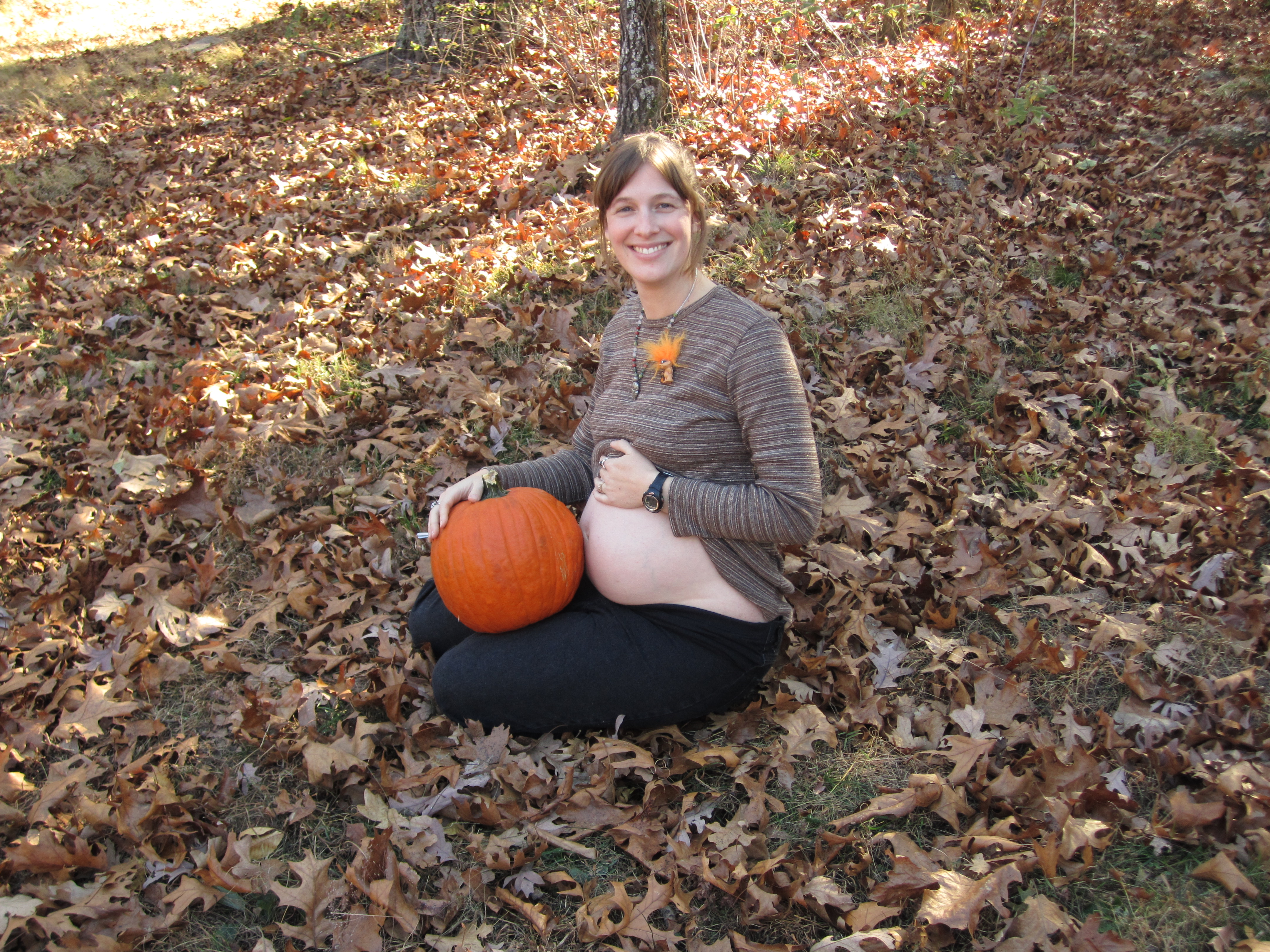
And, today, I shamelessly ripped off my friend Emilia’s idea and had Mark take a pumpkin belly picture of me. This is the first year I’ve been this pregnant on Halloween—I’ve been pregnant on Halloween twice before, but due in May both of those times, not in January.

Centering for Birth

I have a strong commitment to active birth—the use of movements, position changes, and most of all laboring out of bed. As a result, in my classes I tend to emphasize movement-based coping strategies for labor. However, I have also come to realize that coping measures employing relaxation and breath awareness are extremely valuable. These tools cannot be stripped away from the birthing woman. Whatever happens during birth, whatever unforeseen circumstances that arise, or if her need for activity runs smack into the hospital’s need for passivity, the breath—and breath based tools—cannot be taken from her. I do not teach patterned breathing techniques in my classes, but I do teach various breath awareness skills.

Centering is a breath awareness strategy that I’ve adapted for use in birth classes based on the ten second centering process described in the short book Ten Zen Seconds. Using the breath as a “container” for a thought or affirmation is the basis of centering. A meditative technique, the purpose is to “center” and to become mindful of the present moment. The container is a 10 second long breath—a five second in-breath and a five second out-breath—that holds a thought. You think the first half of the phrase on the in breath and the second half on the out breath (Maisel, 2007). Use this technique once or twice to “greet” the contraction and then continue breathing with awareness throughout the remainder of the contraction.

Some suggestions of centering thoughts to use during birthing include:

(I am open) (to birth)

(I am ready) (for my baby)

(I welcome) (my labor)

(I am confident) (and strong)

(Right here) (right now)

(I am equal) (to this challenge)

(I embrace) (this moment)

A pdf handout describing this technique (for use in birth classes), is now available here: Centering.

Another phrase I find useful in daily life, as well as applicable to birth is (I expect) (nothing). While this may initially appear pessimistic, it is a very useful reminder of the idea that most emotional suffering in life is a result of attachment to how something “should” be (i.e. “labor should only be taking 12 hours) (Dyer, 2002).

I frequently remind my birth class participants that coping techniques work best when they are incorporated into daily life rather than “dusted off” for use only during labor. Centering is a skill that is readily incorporated into real life. Indeed, when I first learned the technique, I quickly realized that it was a skill that I will use for the rest of my life. I let my class participants know that I regard this as a life skill, that happens to also be useful for birthing. It is essentially a tiny meditation technique that can be more readily incorporated into one’s daily life (especially a life that includes small children) than traditional, dedicated, more elaborate meditation techniques.

—–

Molly Remer, MSW, CCCE is a certified birth educator, writer, activist, and mother of two young sons. She is an LLL Leader and editor of the Friends of Missouri Midwives newsletter. She blogs about birth at http://talkbirth.me, midwifery at http://cfmidwifery.blogspot.com, and miscarriage at http://tinyfootprintsonmyheart.wordpress.com

References:

Dyer, Wayne. Ten Secrets for Success and Inner Peace, Hay House. March 2002.

Maisel, Eric. Ten Zen Seconds, Sourcebooks, Inc. March 2007.

—-

This article is modified from one that originally appeared in The International Journal of Childbirth Education, July 2009 (page 20)

Celebrate the Woman Pregnant

Celebrate the Woman Pregnant

By Ani Tuzman

A woman pregnant,

I long to be seen

belly protruding,

life invisibly visible

churning inside

I want to be seen

honored, revered,

Exalted

not as my person,

but as the Miracle itself

of life begetting life

of human birth

Celebrate the woman

pregnant

don’t set her aside

nor cast her off as disabled,

or ever less woman;

Revel with her

feeling her firmness

knowing her softness

Carve her rare beauty

in smooth white marble

Look upon her.

Celebrate the woman pregnant

Hers is to know

the creative moment

of Life incarnating

——–

This poem came in the pregnancy newsletter I get from Mothering.com and it reminded me of the “magic” of being pregnant. I love that feeling (I’ve written about it before in the “the pregnant glow“). After this new baby is born, we do not plan to have any more children (though I have said to my husband, “what if she’s just so awesome we want to have one more?”) and I’m trying to take special time to savor and enjoy that magic feeling of being pregnant, since I will likely not experience it again personally. I told a friend recently that I feel like maybe I’m not savoring as much as I “should” be and realized that I think when I think of savoring, I think I’m picturing sitting around for hours rubbing my belly—possibly making multiple belly casts and drawing some fabulous art as well. Oh, and making some sculptures. And, then sitting and rubbing some more—preferably in the sunshine 😉 I have been making a very conscious effort to downscale my commitments to allow for more of this. I’m also taking a leave from teaching birth classes—I feel like I want to focus on my own pregnancy, rather than on other people’s. I feel a real inward-draw and not so much like being “of service” to others (I’ve been feeling this inner call since Noah was born last year, actually, but it has taken a while to actually get to the downscaling part). I also find that teaching college classes “uses up” most of my available teaching energy and I don’t have as much to give to birth classes—I am not expecting this to be a permanent leave, birthwork is too important to me for that, but I want to heed my inward call. I’ll have to stick with “virtual” birth education via this blog for a while!

I’ve had a post pending for a while that I guess will never get posted, about life balance and feeling like I’ve not been living up to a good guiding quote—“the things that matter most should never be at the mercy of the things that matter least.” Instead, the things that had been getting cut from my schedule were things like hanging out with my friends, sitting in the sunshine, writing in my journal, rubbing my belly, snuggling with my husband, reading books to my kids, chatting with my mom—HELLO! Not a good idea. So, I’ve done some cutting, some saying no, and also just some mental readjusting about how I think about things (like my to-do list). I’ve also been doing a “conditions of enoughness” thing that I learned from Jen Louden, wherein you set some conditions of enoughness for the day—not, just keep burning until the day is used up, not, “I can probably do this one more thing” and likewise not a “bare minimum” approach, but what is enough on a given day. Usually, this does not mean accomplishing everything on one’s to-do list, and it leaves some time leftover in the day for self-care—which is the piece I’ve been missing too. While everything is not perfect, obviously, I feel better about my life balance in recent weeks. My main reason for this downshifting is actually in preparation to enjoy my new baby when she gets here—I want to be all “cleared out” to enjoy a nice babymoon as well as to be free to take good care of myself as well as my baby.

The picture above was taken by my friend Karen at the park last week. She has launched a new photography business recently and if you click the picture, it will take you to her Facebook fan page. She is going to do both pregnancy photography and birth photography and I hope to have some more pictures in another month or so 🙂

And, I actually have been doing a lot of drawing during this pregnancy. Here is one I did when I was starting to re-incorporate the pregnant identity into my life again, as well as to feel some of the joy of pregnancy rather than just anxiety:

I’ve done others as well and then after finding out she is a girl, I drew this one:


Birth Blessing

I have two friends who are right at full term (one slightly over) and eagerly awaiting their new little ones. I feel like I should be able to come up with beautiful birth blessings/wishes off the top of my head, but I had trouble coming up with anything profound, so I went looking online and found this lovely poem. I especially like the last eight lines. I wish you beautiful birthings, ladies!

Birth Blessing July 2015 116

by Natalie Evans

Close your eyes and breathe deep

Breathe in peace, breathe out pain

Imagine your feet

Toes curling into dirt

Think of yourself as rooted

Think of your place in the earth

How did you come to be here?

Through generations of women named

A maternal lineage

That brought you to this place

Think of their birth stories

What you know, what you believe to be true

Realize that their births carry deep wisdom

Some may carry the memory of joy and transcendence

Each birth is a powerful experience

Each birth traces down to you.

Just as you pass this knowledge on to your baby

Understand that your birth is your own

It will be different from all others

Like the swirls in your thumb

Your birth will have a unique pattern

Unfolding with each contraction

Rising and falling like a newborn’s chest

This birth belongs to you

This birth is an opening

This birth is the end and a beginning

May this blessing of birth come to you without fear

May this blessing of birth come to you with great understanding

My this blessing of birth make your heart soar

May this blessing of birth bring shouts of delight to your lips

Blessings to you and your birth.

Sign up for my Brigid’s Grove Newsletter for resources, monthly freebies, and art announcements.

Pain with a Purpose?

“The desire to help is so great, even from well-meaning, beautiful midwives, that they use intervention. We want to help. But what’s missing in our culture is that there is pain with a purpose, and that helping is sometimes interfering.” –Augustine Colebrook, CPM (quoted in “Do-it-Yourself Birth” article in Mothering mag)

When I shared this quote on the CfM Facebook page, a reader added: “Dr. Bradley wrote about ‘pain with a purpose’…Problem is, in our society, we don’t value the process of childbirth. Therefore, whatever it is you have to do to get thru it… Hence epidurals & nubain, and on and on. Please know I’m not dismissing your experiences if you went that route. But that phrase alone resonated with me when I was giving birth and helped me. I wish it would do so with more women.”

I’ve written a lot about birth having inherent value in its own right. Process AND “product” (i.e. healthy mom, healthy baby) are both important. A de-emphasis on the birth process and its significance in a woman’s life only serves to disempower, silence, invalidate, and violate women.

That said, I do also value the work of organizations like Hypnobabies that questions the very notion of pain as being an inherent part of birth.

So, what about pain?

I find that couples who come to my classes often have pain and managing pain (or witnessing pain) as their top issue of concern. For this reason, I spend time addressing the subject straight out and yes, I have been known to use the dreaded “pain with a purpose” phrase. Some would say that the word “pain” has no place in birth classes—that it sets women up for just that experience—however, as I noted, my clients come with “pain” on their minds and I find I need to use the p-word and sort of clear the air/get past that hurdle, before we do the rest of our work together. Also, as one of my clients once noted, “it wasn’t you who planted that seed [of pain being possible]. It was planted deeply a long time ago!”

And, what would be the purpose of pain in labor?

It is actually part of a beautiful hormonal symphony of labor—the sensations of labor signal our brains to release more endorphins, more endorphins leads to more oxytocin, and more oxytocin leads to increased intensity, which leads to more endorphins, etc., etc. When the pain to brain feedback loop is interrupted with medications, so too, are the oxytocin and endorphin messages that we need to get our babies born—and more interventions to “augment” labor are then likely to follow. As Preparing For Birth notes: “It is true that naturally occurring labor can feel larger and greater than the woman birthing. This is not so as she creates from within the very hormones that increase the strength, power, and frequency of her work of labor. That is the good news, it is from her, for her, by her.”

But, all these things said, I simply think the word “pain” is woefully inadequate to describe the feelings of labor. I like this description from Stephanie Soderblom better:

“VITA MUTARI – the literal translation from Latin to English is ‘Life Transformation.’ That is the closest thing I could think of the feeling of labor/birth…what you are feeling isn’t pain, it’s life transformation. Is it dramatic? You bet! I think it should be!”

I also love the description from Painless Childbirth:

“When I say painless, please understand, I don’t mean you will not feel anything. What you will feel is a lot of pressure; you will feel the might of creation move through you. Pain, however, is associated with something gone wrong. Childbirth is a lot of hard work, and the sensations that accompany it are very strong, but there is nothing wrong with labor.”

Now that’s what I’m talking about, might of creation moving through you. The word “pain” is way too puny to hold that!

I always explain to my clients that the sensations of labor are more similar to the exertion of intense physical effort more than the pain associated with accident, illness, or injury—both the effort AND the exhilaration are similar to doing good, hard, challenging, limit-testing, but doable work (though even bigger and more important). We need a bigger and broader vocabulary for completely describing the breadth, range, intensity, and beauty of birth experiences! What if we had more choices other than “painful” and “painless” to describe the experiences of birthing our babies? Though I wouldn’t say my births were “painless,” when I describe my own birth experiences, “pain” is simply not the word that rises to the top as the most appropriate descriptor.

“So the question remains. Is childbirth painful? Yes. It can be, along with a thousand amazing sensations for which we have yet to find adequate language. Every Birth is different, and every woman’s experience and telling of her story will be unique.” –Marcie Macari

We end up limited when we use only “pain” based language that fails to embrace the broadness and complexity and enormity of the experience.

Newborn Alaina, January 2011