Archives

Tuesday Tidbits: Pain, Power, and Lasting Memory

Inspired by the Wednesday Wisdom series of posts at Pagan Families and because I’m teaching on Tuesdays this session and thus not able to type substantive posts, I’m planning to start doing a new short weekly post with a few quotes and birthy news items that have caught my eye. I’ve thought several times that I should do themed posts or posts on specific days about specific areas, but somehow I don’t really work like that and instead spend hours on long missives that are perhaps never read through to the end. I don’t really have a posting schedule or weekly plan for posting, it just…happens. I notice from my archives that I seem to regularly post about 16 posts a month. Maybe I do have a largely unconscious schedule that I follow…

So, here’s my tidbits for this week:

“A ‘no’ uttered from the deepest conviction is better and greater than a ‘yes’ merely uttered to please, or what is worse, to avoid trouble.” ~ Mahatma Gandhi

I should perhaps pin this to my head. I feel as if I’m constantly being offered wonderful opportunities (what a problem, eh?!) and must ever be mindful of, “choosing the best and leaving the rest.”

See also: Balanced Living and Saying ‘No’ and The Ongoing Crisis of Abundance.

Switching gears into birth and pain:

“Women experience pain differently; some feel strong overwhelming pain, some may feel a deep discomfort during birth, and still others may feel no pain at all. The experience of pain during childbirth facilitates an unfolding of inner power and resources we never imagined we possessed, similar to enduring the pain of completing a marathon at the finish line.”
–Barbara Nicholson and Lysa Parker, API founders

(Prior musings on pain and birth.)

And into the power of place:

“If we believe that birth is a powerful, sacred event that has personal significance and meaning for the mother, baby and family, then we need to recognize that where it takes place is a sacred and holy site.” –Jenny Hall, “The Sacred Place of Birth” (via Pagan Families)

In other news, the first digital-only issue of the Friends of Missouri Midwives newsletter is finally available online! Yay! I’m so excited. The theme is Birth Art.

On Scoop.it, I shared links to a couple of interesting articles:

Childbirth classes if you AREN’T interested in natural birth

Sex After (a Traumatic) Childbirth – Onislam.net

And, finally, I fell in love with this awesome quote:

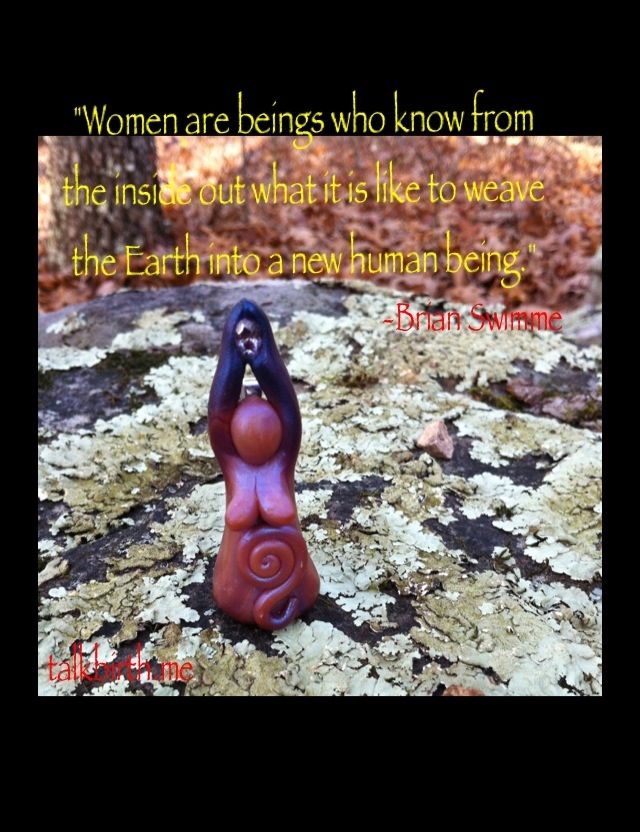
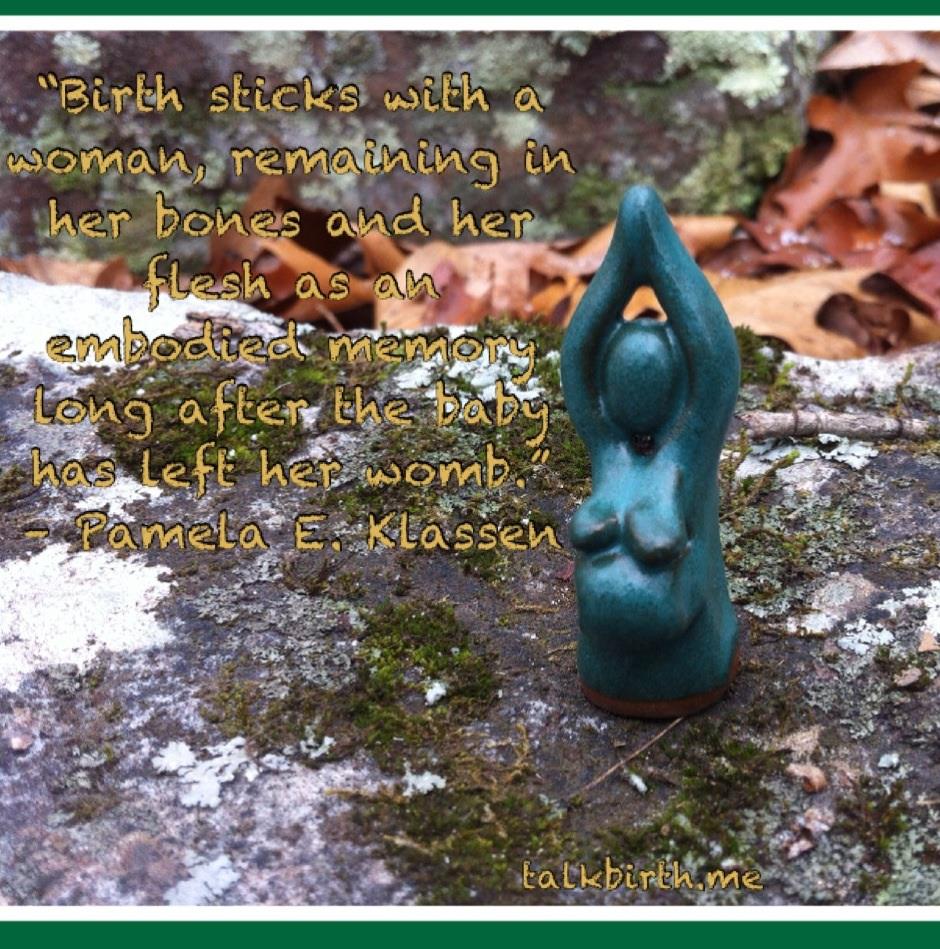
“Birth sticks with a woman, remaining in her bones and her flesh as an embodied memory long after the baby has left her womb.”

– Pamela E. Klassen, in Blessed Events (via Pagan Families)

And, I used some of my new art (more about this soon) to make a little graphic with it too…

398124_10152413274040442_130771351_n

Blog Circle: New Beginnings and Most Significant Events

The January Blog Circle at The Amethyst Network has the theme of New Beginnings. This is perfect for me, since my pregnancy-after-loss “rainbow baby” was born in January. The Amethyst Network was named for the infant sister of one of the founders. Her name was Amethyst. We use “Amethyst babies” as a way to identify and label loss stories on the TAN blog and we are using “Garnet babies” to refer to babies born following loss. Garnet is the January birthstone and several of the founders have January rainbow babies. Several of us also have February miscarriages (amethyst is the birthstone for February). While this obviously isn’t a universal experience, this is how we personally make the connection between our choice to use gemstone names and our own experiences. Here’s the info about this month’s blog circle:

The loss of a baby is the end of something but it is also the beginning of something new. It takes time to find that new, to navigate and find your way in this new world you have been thrust into and to navigate and find your way into this new normal.

The New Year is also an opportunity for New beginnings. Many people set Goals and New Years resolutions to focus on for the year. It may be a time of letting go of the old and focusing on the new.

We have chosen the theme “New Beginnings” for our January Blog circle. The decision was based both on the New Year as well as the new beginning for the Amethyst Network. We have been redoing our website, redefining our mission and creating a space of hope and healing and a place of information for those who in the miscarriage/babyloss community.

We would love to have you participate in our January Blog Circle. The theme is New Beginnings. Was your loss a new beginning for you? Your next baby? How do you feel about the New Year? Are you in a place of letting go? Or embracing?

676

A lot of hopes and dreams rested on this little body!

My first loss was, in fact, a new beginning for me in many ways. That miscarriage-birth changed my life forever. It changed my worldview, it changed how I work with women, it changed my understanding of the world, it prompted a spiritual awakening, it changed the trajectory of my work and my focus, and it broadened and deepened the scope of what I’d like to offer in service to others. It was BIG. It was important. It was hard, it was scary, it was emotionally and physically painful, and it lasted a long, long time. It took the birth of my pregnancy-after-loss baby in January of 2011 to really feel “healed” from the scars of loss and so in this way, she was definitely a new beginning as well. I remember thinking during my pregnancy that there was so much riding on her—a lot for a little baby to shoulder—all of our hope, our fears, our very future of a family felt like it rested in her. And, I remember telling her, shortly before her first birthday—you, you healed me. In our conversations among The Amethyst Network board members, I’ve also shared that I didn’t feel completely healed until she reached her first birthday—until we taken one whole turn of the wheel together with her in my arms. And, in that way, I’m also not sure that we ever completely heal from loss—I know that one of the factors behind our decision not to have more children is a still, small, lurking fear of what if it started all over again? That would suggest that a scar on our lives remains (that isn’t necessarily a bad thing. Our scars are part of the landscape of being–of loving, living, risking, losing, learning, and changing).

Considering this topic also brought me an old question, previously posed in response to a midwife’s blog post, in which I ask the following:  What is the most significant event that shaped your life as a woman? As a mother? Are your answers to the two questions different?

My own answers have in fact been different. And, they have changed. Pre-loss, I described my postpartum journey following my first birth as the most significant event shaping my life as a mother. After the miscarriage-birth of my tiny son, the texture of my response and my definition of my life experiences shifted:

When originally writing this post, I was pregnant with my third son. That pregnancy ended very unexpectedly in November, rather than May, when my baby was born after almost 15 weeks of pregnancy. Interestingly, my experience of miscarriage has supplanted the birth of my other two sons as essentially the most powerful/significant and transformative event of my life. (My sense that his birth has “replaced” the birth of my other children as most significant makes sense to me, because though it is classed as miscarriage, it is still my most recent birth experience—all of their births stand out as special, important, and meaningful days and I will remember each with clarity for the rest of my life, but his birth is the freshest and most recent and came with the additional transformative journey of grief. And thus, when I think of giving birth or when I think back to birth memories or birth feelings, his birth is the first one that comes to mind.) Though I still “vote” for postpartum as the most significant event in my life as a mother, I now “vote” for my birth-miscarriage experience as the most significant event in my life as a woman.

Interestingly, my answer has evolved again since writing the post above and I would now include the entire pregnancy-after-loss journey as the most significant event in my life as a mother. It was hard, people. It was day in and day out and never-ending and so, so delicate. So tinged with hope and fear and so laden with meaning. As a woman, though, I’m not sure that my answer has changed. I need to think about it more deeply, but I think that miscarriage-birth is still it. Just as life divides cleaning between before kids and after kids, there is a dramatic, pivotal before miscarriage and after miscarriage that has shaped my female identity and understanding of myself.

567b

2012 blog year in review

I got an automatically generated report from WordPress this week with my 2012 year in review!

Here’s an excerpt:

About 55,000 tourists visit Liechtenstein every year. This blog was viewed about 180,000 times in 2012. If it were Liechtenstein, it would take about 3 years for that many people to see it. Your blog had more visits than a small country in Europe!

Apparently, I wrote 187 new posts and uploaded 746 pictures!

Click here to see the complete report.

(My family year-in-review update was already published in my Happy Holidays post.)

Here’s my own expanded version of my blog year-in-review…

In 2012, I finished my miscarriage memoir: Footprints on My Heart: A Memoir of Miscarriage & Pregnancy After Loss. I was thankful for My Tribe! I had some thoughts on epidurals, risk, and decision making

and, I changed visions which in part led to offering new birth workshops instead of traditional classes.

My most popular new post was All That Matters is a Healthy Husband (or: why giving birth matters), with my old stand bys, How do I know I’m really in labor? and In-Utero Practice Breathing, still coming in ahead hits-wise, closely followed by the ever-popular Good Foods to Eat in Labor.

A couple of other new posts were also popular:

What If…She’s Stronger than She Knows…

Breastfeeding as an Ecofeminist Issue

Miscarriage and Birth

Some reminders for postpartum mamas & those who love them

Can I really expect to have a great birth? (updated edition)

Becoming an Informed Birth Consumer (updated edition)

Case Study: Low Carb Diets and Breastfeeding Mothers

The Great Birth (of the Universe)

A Bias Toward Breastfeeding?

I wrote a series of posts that I really liked a lot:

The Rest and Be Thankful Stage

Spontaneous Birth Reflex

Birth Pause…

And some other posts I also like:

Blessingways and the role of ritual

Celebrating Pregnancy & Birth Through Art

Talk to Your Baby

Where are the women who know?

Ode to my nursling

I also had an awesome time discovering 300 Things.

And, I wrote a whole series of CAPPA re-cap posts. I also semi-accidentally started a series of posts on a taking it to the body theme, for which I see a lot of ways of continuing.

I reprinted several articles that were published earlier in various magazines:

Talk Less, Learn More: Evolving as an Educator

A Tale of Two Births

Incorporating Prenatal Yoga into Childbirth Education Classes

Breastfeeding as a Spiritual Practice

Breastfeeding as an Ecofeminist Issue

Domestic Violence During Pregnancy

The lifelong impact of breastfeeding support

Small Stone Birth Activism

I hit 300,000 hits (up an additional 46,000 now already) and had a celebration giveaway (for which I still need to draw the winner!) because I also started selling birth jewelry. And, I had my first Blog Break Festival!

What a good year it was 🙂

Happy New Year!

MollyNov 111

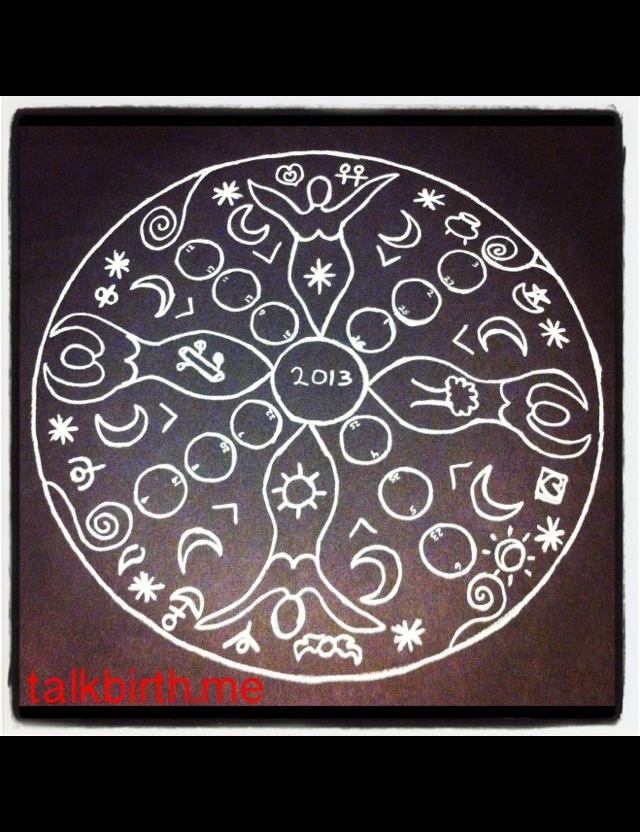
To kick off 2013, I drew a new Full Moon Calamandala!

20121231-011737.jpg

Taking it to the Body, Part 4: Women’s Bodies and Self-Authority

This is a somewhat shortened version of a prior post. I revised it to be a part of my taking it to the bodyDecember 2012 001 series.

I believe a potent source of female power lies in the female body and that body wisdom has been suppressed and denied over the course of many years as a means of oppression and control. One of the root issues of patriarchy is who “owns” women’s bodies—is it men, is it the government, is the medical system, or is it the woman herself? (you know my pick!).

Body wisdom and sources of power

Considering power, sources of power, and body wisdom, I appreciated reading Barbara Starrett’s essay The Metaphors of Power in the book The Politics of Women’s Spirituality. While she uses a different example, I have modified and paraphrased her thoughts to make the idea about birth. Starrett originally states, “We can create power centers both within and outside ourselves…Power is where power is perceived. Power resides in the mind. We can give or withhold power through our beliefs, our felt thoughts.” Medical professionals can make decisions about a woman’s body and birth choices effectively only as long as women believe that the professionals have the right to do this. When women reclaim the power to decide for themselves about birth, the doctors proclaim in a vacuum. Their power depends on the transference of our power, through our belief that this is right…Power is where power is perceived. This also means that in any given in-the-world situation, we can intentionally set up our own power centers. If we believe that power resides in those centers, it will. We will act successfully on this belief. Women’s organizations, unions, birth coalitions, etc., will never work unless we regard them, “as the legitimate centers of power…We must grant our own power to ourselves” (p. 191).

While this comes a little too close for comfort to me with the idea that “we create our own reality” (which I cannot fully embrace due to the logical extension into blaming the victim that it creates), I connect deeply with the idea that we must treat women’s organizations and work as legitimate power sources. I think of books/movements like Our Bodies, Ourselves, for example. To me, this is a definitive women’s health resource—by women, for women and separated from the medical establishment that often dehumanizes women. If we continue to believe our “alternative” structures are just that, “alternative,” then the dominant model is still the norm and still accepted, even by us, as “normal.”

Starrett continues her essay by sharing that “It is necessary for some women to risk total reclamation, to risk the direct and intentional use of power, in bold, even outrageous ways. It takes only a minority of women to alter present reality, to create new reality, because our efforts are more completely focused, more total.” (p. 193) This is the risk that the creators of Our Bodies, Ourselves took. It is the risk birth activists and women’s health activists continue to take.

Consult your health care provider?

In my own life, I am frustrated by the ubiquitous phrase, “Consult your health care provider.” No, thanks. I prefer consulting myself, my books, google, my own research, and my friends. Last time I checked, my doctor did not own my body nor did she have divine revelation as to what I need in my life. I am a breastfeeding counselor providing phone and email support to women who have breastfeeding questions. Women frequently receive very poor breastfeeding “advice” from their doctors—to the extent that I honestly think they’d receive better information by polling random strangers at Wal-Mart with their questions (and, yes, I will actually tell women this). One caller once used the phrase, “but, I don’t want to disobey my doctor” and I found this extraordinarily telling as well as depressing. I recognize that doctors have special training and can be life-saving, however, what does that say about mothering in our culture that a woman would not act on behalf of her own baby and herself because of fear of being disobedient to a professional that she has hired? She is a consumer of a service, not the subject of a ruler!

This brings me to a thought by Dr. Michelle Harrison, author of the book A Woman in Residence:

I used to have fantasies…about women in a state of revolution. I saw them getting up out of their beds and refusing the knife, refusing to be tied down, refusing to submit…Women’s health care will not improve until women reject the present system and begin instead to develop less destructive means of creating and maintaining a state of wellness.”

Indeed! And, in an essay by Sally Gearhart’s about womanpower, she notes: “…there’s no forcing any other woman into a full trot or a gallop; she will move at her own pace, but at her own pace we can be sure she will move. At this point I always remind myself that the patriarchal use of crash programs is antithetical to organic movement; in a crash program the theory goes that if you can get nine women pregnant you can have a baby in one month; it takes women, I suppose, to understand that it doesn’t work that way.” (p. 202-203)

Reclaiming power

So, how do women reclaim power? I think story holds a key to power reclamation in this context. As I’ve referenced before, Carol Christ describes it thusly, “When one woman puts her experiences into words, another woman who has kept silent, afraid of what others will think, can find validation. And when the second woman says aloud, ‘yes, that was my experience too,’ the first woman loses some of her fear.” As I touch on above, for me it is to see myself and my body as a source of wisdom and to refuse to participate in structures that do not honor my power and personal agency. It involves more often turning to my peers, to other women, for advice and comfort and support, rather than to experts.

I’ve written many times before that I am a systems thinker. Women’s choices about their bodies and about birth are not made in personal isolation, but in a complexly interwoven network of social, political, medical, religious, and cultural systems. As Gearhart notes, “There may be no ‘enemy’ except a system. How do we deal with ‘the enemy’? As seldom as possible but when necessary by opening the way for [their] transformation into not-the-enemy. What weapons do we use? Our healing, our self-protection, our health, our fantasies, our collective care…” (p. 203).

20121218-134856.jpg

Talk to Your Baby

I already know that you can learn a lot from chickens about giving birth. This summer, I had another profound birth-mothering experience with one of our chickens after she hatched her first baby. During the last several days of incubation, mothers hens “talk” to their babies a lot through the eggshells and the babies respond. It is part of how they get to know each other and imprint before hatching. Then, after baby hatches, the mother hen continues to talk and cluck to the baby in a reassuring manner—she calls to the babies when separated and she calls a special call when there is something good to eat and she clucks softly and reassuringly at bedtime as she snuggles them all beneath her. There is a specific type of “soothing” noise they make to stressed or lost babies and a specific sort of excited sound they make to let the babies know something good is happening. There are also distressed sound that means, “run to me now, there might be danger!”

537

The baby chick who tried desperately to get to a mama who would talk to it (this mama, interestingly, is the same one I wrote about in the Birth Lessons from a Chicken essay several years prior).

We had three broody chickens at the time, each in their own little separate nest box in the broody coop. One of the hens had hatched a baby already and was in the neighboring box. The inexperienced mama hen hatched her baby and she would not talk to it. The baby freaked out. It flailed, it freaked, it stumbled all around. It dragged its tiny little wet, not-even-able-to-walk body to the very corner of the nest box as far away from the mother as possible. It flung itself into the wall where it could hear the neighboring mother clucking to her baby. The baby peeped more frantically and loudly than I’ve ever heard a chick cry out before, it sounded like it was in grave distress and danger. We moved it back to its mother and she fluffed out her wings around it just like she was supposed to do and I thought all would be all right, but…silence. The mother did not talk. Her baby desperately struggled out from under her, still not able to walk, still wet, and flung itself back into the corner, sinking down under the straw, crying piteously. Silence from the mother.

Talk to your baby, we pleaded. Your baby needs to hear you. Please talk to your baby. Silence. The baby squished down on the wire slats, pressed into the corner of the box, screaming at the top of its chick-lungs. The mother in the next box became distressed as well, calling back to the baby more and more loudly. The chick became more frenzied and flopping. The baby in the next box picked up on the fear and began peeping loudly as well. Still, the new mother sat silently and unresponsive. Talk to your baby. We left her alone, thinking her instincts would kick in, but as time passed and we could hear the chick screaming from all the way across the yard, we went back to interfere. We tried twice more to put it back under her and again the same routine repeated. We became concerned the baby would die if its level of distress continued, particularly with forcing itself down and under the straw and into the wire, so we made the decision to remove it and put it in “foster care” with the other, responsive mother. We thought she might attack it, since it wasn’t her own hatchling and because it was several days behind her own baby, but she snuggled it right up, clucking in reassurance, and it went to sleep, the next morning it was fluffy and quiet and perfectly happy with its new mother. The red hen continued to sit, silent, and unresponsive, and of course I felt horrible for stealing her baby and giving it to someone else after she’d worked so hard to hatch it. Luckily for the mental health of all involved, she successfully hatched one more baby and did take care of it, albeit still quite silently compared to all other mama hens we’ve experienced.

What does this have to do with birth?

Babies are primed to hear their mothers’ voices after birth. They expect to be snuggled into the maternal nest. Mammal babies expect to receive a warm breast and to hear comforting words in their own language. I feel fortunate that my own birth pause was respected after all my children’s births and that each baby felt only my hands and heard my voice for their first minutes of life. I talked to all my babies, soothingly and lovingly, and then brought them to my breast. My midwife and the other people around me did not interfere with these sacred, timeless moments of introduction.

It has been several years now, but I’ve worked with a couple of mothers for breastfeeding help postpartum who were unwilling or unable to talk to their babies, even with direct encouragement to do so. Baby was expecting mother’s voice and mother was unable to give it. Not surprisingly to me, these mothers experienced significant difficulty in getting baby to breast. I believe baby is expecting mother’s voice as a guide to the breast as much as it is expecting the smell of her and the sound of her heartbeat. Baby is not expecting multiple, strange voices from nurses (or even helpful breastfeeding helpers like me!). Baby is not expecting gloved hands. Baby is not expecting bright lights or loud noises. Baby is most definitely not expecting to be “helped” to the breast and “shoved” on as many mothers describe experiencing after their births. In Breastfeeding Answers Made Simplethe author emphasizes that what motherbaby pairs need most to successfully breastfeed is time alone to get to know each other. Mother and baby need to explore each other’s bodies and to listen to each other. She points out that with many people in the room, even well-meaning people, mothers have trouble getting to know their babies and getting babies to breastfeed. She says the most helpful strategy to supporting early breastfeeding is to get out of the way and let mother talk to her baby, smell her baby, touch her baby, meet her baby, and learn about her baby.

536

The non-communicative mother and her second baby, who was okay without much talking.

What are we really imprinting upon many newborns at birth in our culture?

As Sister MorningStar writes in her article The Newborn Imprint in Midwifery Today issue 104, Winter 2012…

If you have had the misfortune, as nearly all of us who can read and write have had, to see a baby born, perhaps pulled out, under bright lights with glaring eyes and loud noises of all sorts, in a setting that smells like nothing human, with a mother shocked and teary and scared; if you have witnessed or performed touch that can only be described as brutal and cruel in any other setting…

Every baby born deserves uninterrupted, undisturbed contact with her mother in the environment the mother has nested by her own instinctual nature to create. Any movement we make to enter that inner and external womb must be acknowledged as disturbing and violating to what nature is protecting. We do not know the long-term effects of such disturbance. We cannot consider too seriously a decision to disturb a newborn by touch, sound, light, smell and taste that is different and beyond what the mother is naturally and instinctually providing. Even facilitating is often unnecessary if the motherbaby are given space and time to explore and relate to one another and the life-altering experience they just survived. They both have been turned inside out, one from the other, and the moment to face that seemingly impossible feat cannot be rushed without compromise. We have no right to compromise either a mother or a baby.

I am deliberately leaving out the issue of life-saving because it has become the license for full-scale abuse to every baby born… [emphasis mine]

If mother has been taken to an operating room to give birth, or if mother is for any reason overwhelmed, exhausted, scared, vulnerable, hurt, and traumatized, she may have great difficulty in talking to her baby. If the room is full of people, baby may have difficult hearing her mother’s voice and feeling her welcoming touch. If baby is greeted by a bright light and masked face instead of her mother’s voice, baby may cry loudly in distress and eventually “shut down” into sleep rather than immediately to breastfeeding.

What can we do?

Beyond the obvious answers in carefully choosing place of birth and birth attendant, we can talk to the babies. If birth has been long, scary, or otherwise difficult, talk to the baby. If baby needs immediate care after birth, try as hard as humanly possible to have that care take place on mother’s chest and in reach of mother’s voice. If baby has to be separated from mother, talk to the baby. Call out to him. If mother can’t call out to the baby, father can talk to the baby. If father is unable, doula or midwife or nurse can talk to the baby. Welcome her to the world, reassure her that she is safe and all will be well. Speak gently and soothingly and kindly, never forgetting that this is a new person’s introduction to the world and to life. Our first and deepest impulse is connection. Before Descartes could articulate his thoughts on philosophy, he reached out his hand for his mother. I have learned a lot about the fundamental truth of relatedness through my own experiences as a mother. Relationship is our first and deepest urge and is vital to survival. The infant’s first instinct is to connect with others. Before an infant can verbalize or mobilize, she reaches out to her mother. Mothering is a profoundly physical experience. The mother’s body is the baby’s “habitat” in pregnancy and for many months following birth. Through the mother’s body, the baby learns to interpret and to relate to the rest of the world and it is to the mother’s body that she returns for safety, nurturance, and peace. Birth and breastfeeding exist on a continuum, with mother’s chest becoming baby’s new “home” after having lived in her body for nine months. These thoroughly embodied experiences of the act of giving life and in creating someone else’s life and relationship to the world are profoundly meaningful experiences and the transition from internal connection to external connection, must be vigorously protected and deeply respected.

“Birth should not be a celebration of separation, but rather a reuniting of mother and baby, who joins her for an external connection.” –Barbara Latterner, in New Lives

“No mammal on this planet separates the newborn from its mother at birth except the human animal. No mammal on this planet denies the breast of the newborn except the human.” –James Prescott (neuropsychologist quoted in The Art of Conscious Parenting)

 “A woman’s confidence and ability to give birth and to care for her baby are enhanced or diminished by every person who gives her care, and by the environment in which she gives birth…Every women should have the opportunity to give birth as she wishes in an environment in which she feels nurtured and secure, and her emotional well-being, privacy, and personal preferences are respected.” –Coalition for Improving Maternity Services (CIMS)”


361

As dear as breathing…

20121126-151448.jpg

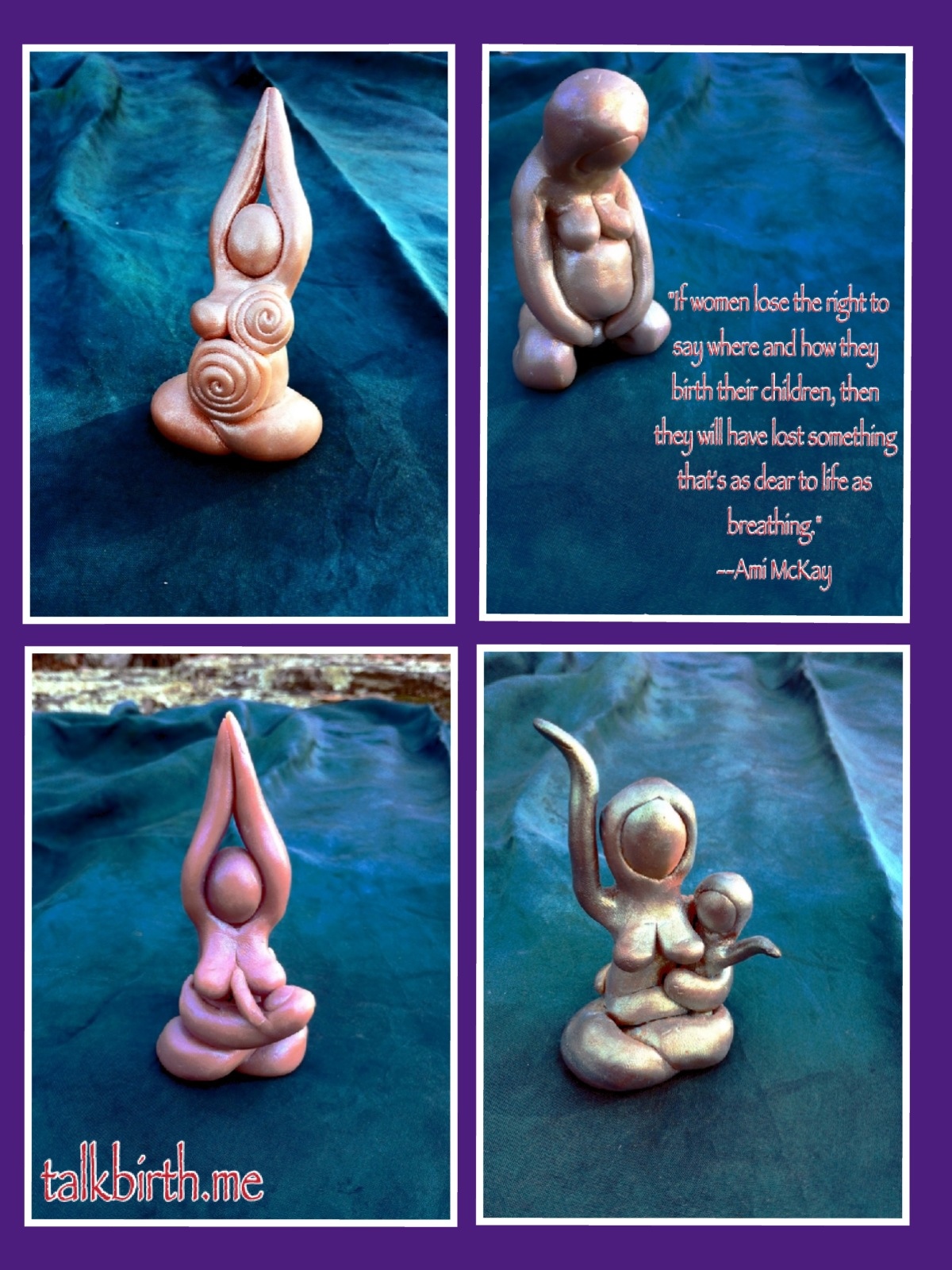
“If women lose the right to say where and how they birth their children, then they will have lost something that is as dear to life as breathing.” –Ami McKay

“Mothers need to know that their care and their choices won’t be compromised by birth politics.” – Jennifer Rosenberg

Birth politics have been on my mind this week as I’ve come across various debates from within the birth profession about the regulation of midwives and the question of licensure, and then also the seemingly ever-present critiques of homebirth from outside the homebirth community. I don’t feel as if I have time lately to fully follow all the issues, but Citizens for Midwifery’s recent response to ACOG’s newest homebirth and maternal rights smackdown contains some important thoughts:

AJOG editorial rejects the ethic that autonomy is a fundamental human right

This article represents a serious attack on home birth and on patient centered care in the United States. The attack is based on poor research and runs roughshod over established rights to bodily integrity…

…not only does the article attack home birth, it also represents an attempt to “export” to the rest of the world a position that the obstetric profession, not mothers, should have the final decision on birth, at a time when that isn’t even legally defensible here in the United States…

…One contradiction stands out as the authors call for “safe, respectful, and compassionate” hospital delivery. No hospital birth can be truly respectful if the birth is happening in the hospital because the physician disrespects the woman’s right to an alternative and has rigged the system to eliminate access to all legal alternatives…

via Citizens for Midwifery

Related thoughts:

Maternal-Fetal Conflict?

The Illusion of Choice

“Woman-to-woman help through the rites of passage that are important in every birth has significance not only for the individuals directly involved, but for the whole community. The task in which the women are engaged is political. It forms the warp and weft of society.” –Sheila Kitzinger

The Of COURSE response…

“As long as women are isolated one from the other, not allowed to offer other women the most personal accounts of their lives, they will not be part of any narratives of their own…women will be staving off destiny and not inviting or inventing or controlling it.” –Carolyn Heilbrun quoted in Sacred Circles

I recently finished taking a class in Ecofeminism, which makes connections between the exploitation and domination of women and the exploitation and domination of the planet. Naturally, as I also did with breastfeeding as an ecofeminist issue, I made many connections between the theme of the class and birth rights for women. The author of the book Ecofeminist Philosophy, Elizabeth Warren explains that when you are part of an unhealthy social system, you are likely to experience predictable, even “normal” consequences of living in that system: “This element of predictability explains the appropriateness of what I call the ‘Of course’ response: ‘Of course, you feel crazy when men say it’s your fault that you were raped, or that you could have prevented it.’ ‘Of course, your life has become unmanageable…'” we live in a culture that expects women to do it all and to always love parenting. If we look at our mainstream culture of birth as an unhealthy social system, I find the same response is appropriate. You really wanted to have a natural birth and then your doctor scared you into having an induction and you ended up with an epidural, of course you feel like you ‘failed.’ You feel healthy and beautiful, but now your doctor tells you that you’ve “failed” the GTT and are now “high risk,” of course, you feel stressed out and…like a high risk “patient.” You tried really hard to labor without medications, but you were “strapped down” with IV’s and continuous monitoring, of course, you felt like a trapped animal and like you had no other choices but medications. Of course, you feel upset and discouraged that your baby is ‘rejecting’ you and your breast after having been supplemented with bottles in the nursery. Of course, you are crying all the time and wondering if you are really cut out to be a mother, when your husband had to return to work after two days off and you are expected to be back at your job in five more weeks. And, so on and so forth.

“The ‘Of Course’ response affirms that those who feel crazy, powerless, alone, confused, or frustrated within unhealthy systems such as patriarchy are experiencing just what one would expect of them.” What the model of medical birth as an unhealthy social system reveals is that “no matter where one starts on the circle…one eventually comes round to one’s starting point. The circle operates as an insulated, closed system that, unchecked and unchallenged, continues uninterrupted…” How does one break free of an unhealthy system? “Getting the right beliefs by rearranging one’s thinking is an important part of the process, but it is not enough.” [emphasis mine. Here, Warren goes on to explore the issue of rape, but I have adjusted her words to be about birth instead] One can have the “right beliefs” about the prevalence of unnecessary cesareans, one’s rights as a childbearing woman, and the institutional nature of birth in our country and still experience an unwanted and unnecessary cesarean section. One can understand connections among faulty belief systems, language that devalues women, women’s bodies, and the birth process, and patriarchal behaviors of control and domination and still witness the catastrophic impact of this domination. “So, even if one must start with oneself and one’s belief system, one cannot end there. Since the problem is systemic, the system itself must be intervened upon and changed—by political, economic, social, and other means.” –Karen Warren in Ecofeminist Philosophy, p. 211. (emphasis mine)

Sometimes I honestly feel like I am one of the few people who really notices or labels the powerful systemic context in which women give birth in America. A lot of pregnancy and birth books and pregnancy and birth bloggers focus on individual responsibility and “education.” If women are always expected to “stand up for themselves” in the birth room and “get educated” so that they, personally, can prevent themselves from having unwanted interventions, of course our rates of unwanted interventions continue to rise.

“Through the act of controlling birth, we disassociate ourselves with its raw power. Disassociation makes it easier to identify with our ‘civilized’ nature, deny our ‘savage’ roots and connection with indigenous cultures. Birth simultaneously encompasses the three events that civilized societies fear–birth, death, and sexuality.” –Holly Richards (In Cultural Messages of Childbirth: The Perpetration of Fear,” ICEA Journal, 1993)

20121112-141422.jpg

Miscarriage and Birth

Last month a fellow birth professional asked a question about whether it was possible to have postpartum depression after miscarriage. My response was as follows:

I think it is crucial to remember that miscarriage is a birth event—sometimes a very, very, very early birth event, but reproductively speaking that is what it is! Since we don’t have a better vocabulary for pregnancy loss in our culture, socioculturally speaking we tend to class it as “something else,” but in most ways it isn’t. A soul (or fertilized egg) touches down in a woman’s womb. Her hormones and all other physiological systems are impacted and feel its presence. The embryo/fetus/baby stays for a time and when it leaves her body, the uterus must contract and the cervix must open and the woman’s body must open to allow its passage. Her body, mind, emotions, and spirit are all affected (to varying degrees). In this way, miscarriage and full-term birth simply exist on a continuum of possible birth outcomes and are all birth events whether the pregnancy lasts five weeks or forty-two weeks.

Miscarriage as a birth event is one of my “pet” subtopics within the wide range of reading about miscarriage and quotes that respect the birth-miscarriage relationship always catch my attention. After the birth-miscarriage of my own third baby three years ago today, I found the following quote in a back issue of Midwifery Today:

“Miscarriages are labor, miscarriages are birth. To consider them less dishonors the woman whose womb has held life, however briefly.” –Kathryn Miller Ridiman

It meant so much to me and I returned to it again and again. I believe I was also responsible for introducing the quote to the internet, because since I first typed it up, I’ve now seen it floating around on many other websites and blog posts. And, in a full circle moment, my own miscarriage-birth story was published in Midwifery Today in 2011. I also latched on to a quote from the book Wild Feminine saying, “though it is not always recognized as such, miscarriage is a birth event.”
20121107-013453.jpgChristine Moulder in the book Miscarriage: Women’s Experiences and Needs quoted another mother: “Although I had a miscarriage technically, I don’t feel this. I went through labour. It was incredibly painful but my husband was with me and it was almost a happy occasion.” I agree, with my own birth experience feeling just as “legitimate” as either of my prior labors or my subsequent birth. I And, actually even more so in that Noah’s birth became possibly the most defining moment of my womanhood. I would also describe it as a spiritual experience or “awakening” of sorts in a way that has profoundly influenced me, shaping my future work with women and my life goals. I return to this experience again and again and continue to draw both strength and insight from it.

Returning to Moulder’s book, later in that section, the author says:

With the exception of women who have a late missed [miscarriage] there will be a baby that has to be born. The baby may or may not have died prior to the miscarriage. As with full-term birth, the waters must break, there will be pains and contractions and the cervix must dilate for the baby to leave the womb. Of course the baby will be smaller, in some cases much smaller, but it is essentially the same process and this comes as a great shock to many women.”

And this is absolutely true, but also not something that is mentioned in very many miscarriage books. This shock of experiencing miscarriage so clearly as a labor and birth rather than as “something else” is what led me to describe my wish for miscarriage doulas on my now-complete miscarriage blog:

On a pregnancy loss message board that I read, a mother posted asking if she was the only one who experience her miscarriage as painful (because no one mentioned it being painful in the stories she had read and she was very shocked by the pain involved). I had a couple of thoughts in response to this question. I also shared my “favorite” miscarriage-birth quote: “Miscarriages are labor, miscarriages are birth. To consider them less dishonors the woman whose womb has held life, however briefly.” (Kathryn Miller Ridiman).

I do think the amount of physical pain probably depends in part on where you are in the pregnancy. Since a lot of women experience very early miscarriages (less than 6 weeks), I think that is perhaps why you don’t hear them talk as much about pain because the baby is still so small. OR, because a lot of women end up having D & C’s and thus do not go through the “natural miscarriage” experience, perhaps that is why pain doesn’t figure heavily into narrative. Or, maybe because there is so much emotional pain involved as well, the physical pain gets overshadowed? That said, my 6-week miscarriage was not physically painful at all (not that it couldn’t be for some women, of course). However, my miscarriage at nearly 15 weeks was indistinguishable from a full-term labor. It was just the same, except with the addition of MASSIVE blood clots following the baby. I value his birth as another birth experience in my life, but at the same time I am SHOCKED that miscarriage is so often overlooked as a birth event that requires tenderness and support (where are the miscarriage doulas and midwives?! While in a way, I feel proud of myself for have an “unassisted” birth-miscarriage, I could have used the care of a knowledgeable, caring woman rather than to just be left on my own trying to gauge how much blood loss is normal, etc.)

So, what about “miscarriage doulas” as an idea? I have seriously thought about becoming one. I am trained as a birth doula, but have no interest in actually working as one, but being a m/c doula does interest me a lot. I feel like adding a section to my business website (I’m a childbirth educator) that says, “having a miscarriage? Call me and I’ll come over and rub your back and bring you things to drink…”

I decided two things shortly after my first miscarriage: one, that I was going to write a book specifically about how to deal (i.e. “what to expect when you’re having a miscarriage”), because I felt very betrayed by having this huge wealth of pregnancy, birth, and midwifery books all around me and NONE of them had the information I was looking; And, two, that if anyone was ever to tell me she was in the process of miscarrying I would go to her right away (unfortunately, it seems like people feel like they have to tough it out alone or don’t want to “bother” anyone and so only tell after the fact). Well, if she wanted me to go, obviously, not against her will. And, that would include going to the hospital with her if she needed a m/c doula there, not just for “home miscarriage.” –Originally posted as Miscarriage Doulas…on June 29, 2010

This interest and post led to the co-founding of the organization The Amethyst Network, originally intended to train the miscarriage doulas I’d longed for during my own experiences. TAN took some time getting off the ground and in the meantime the thoroughly amazing organization Stillbirthday independently arose in vibrant support of women and is now skillfully fulfilling the mission of training loss doulas.

Thankfully, I had already read a long message board thread about, “what exactly do you see with a miscarriage” long before I ever had a miscarriage experience of my own, so I did know to expect mine to be somewhat “like labor” and not to be a “heavy period” (OMG, I wanted to scream when I saw miscarriages described like that in books over, and over, and over again! Though, then when I had my second miscarriage and it WAS, in fact, like the mythical “heavy period,” and so then I understood a little better why that was a prevalent descriptor.)

On Pregnancy and Infant Loss Remembrance Day this October I was out-of-town, but I shared past blog musings on jagged peace, acknowledging that the legacy of miscarriage is profound. I also linked to a friend’s story: Mormon Monkey Mama: A Few Thoughts on Miscarriage and to my own birth-miscarriage story: Noah’s Birth Story (Warning: Miscarriage/Baby Loss).

And, I updated my Facebook status with the following:

Today is Pregnancy and Infant Loss Remembrance Day. Babyloss is part of the spectrum of the childbearing year, and miscarriage is one type of birth experience that a large number of women experience. I appreciate the opportunity to recognize this, rather than to keep a lid on our “negative” stories of grief, loss, and a multitude of complicated emotions. Today I think of my own lost baby N and also my lost babystart. I also think of all the women who do not conceive and birth the rainbow babies they so long for. I also think of a friend whose baby died last month. And, I think about and appreciate my friend/doula from Peaceful Beginnings Doula Services who helped me so much to heal from loss and who has her own babystart to remember today as well.

There are many helpful babyloss organizations and one that was particularly helpful to me was Angel Whispers in Canada. They mailed me a birth certificate for my baby (with an official looking gold seal). It meant a lot to me because it acknowledged that he had lived and was born. It hangs in our hallway and it is amazing to me how meaningful a simple, small act of kindness from strangers can be.

Today we recognize the third anniversary of the birth-miscarriage of our little son Noah. I post not for “sympathy” or condolences, but because memories are important, and because even though he only stayed with us for a couple of months, he shaped our lives and in a very real sense is responsible for the life of Alaina. 20121107-013748.jpgI share because his birth and the long, slow journey of grief was a pivotal, transformative point in my life as a mother/woman and because he helped change my destiny. And, I share because there are SO many loss mamas out there with stories of their own to tell and I hold them all in my heart and wish them all the love, caring, and wisdom that I was lucky enough to receive, both three years ago and ongoing today! ♥

There is a sacredness in tears. They are messengers of overwhelming grief…and unspeakable love.” –Washington Irving

“Remember our heritage is our power; we can know ourselves and our capacities by seeing that other women have been strong.” – Judy Chicago

“Change, when it comes, cracks everything open.” ~Dorothy Allison

“She’s turning her life into something sacred: Each breath a new birth. Each moment, a new chance. She bows her head, gathers her dreams from a pure, deep stream and stretches her arms toward the sky.” –from a journal cover

—-
Related posts:

My memories of this time in 2011: Sand Tray Therapy
From 2010: Pregnancy Update
And memories of the anniversary of the second worst day of my life
And, some past thoughts about Honoring Miscarriage
Eleven Years Ago…

In 2000, while working on my block field placement (internship) in graduate school, I met a woman who would become my best friend and a profoundly influential part of my life. We shared a lot of formative life experiences of early adulthood together and I accompanied her to the hospital for the births of two of her children and she came to the birth center with me when my oldest son was born. While my own mother had all four of her children at home and so homebirth and natural birth were parts of my life history, I didn’t really begin to focus on birth as an issue until I was married and in my early 20’s. At this point, I was most influenced by the newsgroup misc.kids.pregnancy. So, I became both deeply interested in natural birth and also very invested in my friend’s birth plans and her ideas about birth. As her pregnancy progressed, she hired a doula that I came across at a street fair and took birth classes from her at the birth center in which I would later have my first baby.

After Maggie was born, I was more involved in her life than I have ever been involved with a baby that was not related to me and in a way that I’ve never been able to be involved again. Without any children of my own at the time, I was able to be present for my friend in a way in which I now see, few friends are able to be for each other, since most women who connect during their childbearing years are intensely embroiled in the needs of their own children and families. Looking back, I see I was like the best postpartum doula ever, without knowing that is what I was being at the time (and, I was free, and did it for a year! :)) After bringing over dinner every night for the first week, for the following year I then I went over to my friend’s house every morning and took care of the baby while my friend ate her breakfast, took care of herself, and went for a run. Then, we would walk in the neighborhood together for about an hour, talking about our lives, dreams, and plans.

Last year, that magical baby that had such a profound influence on my life and on my birthwork in the world turned TEN! I could hardly believe it. At that time, I asked my friend for permission to post the birth story I had written in my journal the morning after her baby’s birth. My friend granted me permission, but then several days passed and since it wasn’t the baby’s birthday any more, the story sat in my drafts folder for…another year. And, now, that magical, wonderful baby is ELEVEN! Here is her birth story, through my naïve, pre-maternal eyes…

Maggie’s Birth

With my little friend, 2002

Journal Entry, 11/3/01. 12:22 p.m.

Returned home this morning at 7:15 after being at the birth of Kate & Dave’s baby girl, Maggie. I’m very tired, but I wanted to write a little bit anyway. We went to the hospital at 1:30 p.m. on Friday (11/2) after Kate’s water broke. She was still 2 centimeters at 9:00 p.m., so they started pitocin. At 12:00 a.m. the doulas arrived and Kate was 3-4 centimeters dilated. The doulas were absolutely wonderful at soothing and guiding her. At 1:15 a.m. she was 7 centimeters (!) and at a tiny bit after 2:00 a.m. she began pushing. Then, she pushed for almost four hours before Maggie was born at 5:51 a.m. (8lbs 10z).

It was really hard to watch and not be able to do anything for her. I can’t imagine what it would have felt like as her husband—someone that close in. She did a wonderful, wonderful job. No pain medication at all, even with the pitocin. She only asked about pain meds once (before the doulas got there). I felt completely in awe of her strength and power. She was so brave and so strong and so tough. Powerful woman stuff. I couldn’t believe that she pushed for four hours. I do not think I could have done it. The baby was worth it though—boy is she cute and pink and making me want to have one too!

I can’t really describe what this experience meant to me or how powerful it was. It was beautiful and strong. Kate is an amazing woman and I am awed by her bravery. She and Dave are so happy with their precious little bundle. I got to hold her too, when she was less than 30 minutes old and Kate was being stitched up (bad tear). I didn’t feel like much help to Kate, but being present mean a lot to me and I hope the fact that I was there meant something to her too. I’m so encouraged to see that a hospital birth can be pulled off so well.

Life is wonderful. Welcome, baby girl!

Happy Birth-Day to you both today, Maggie and Kate! You hold a deep and special place in my heart. You both changed my life forever.

Invisible Nets

I have several friends and acquaintances preparing for the births of their babies at the end of this month and into November. This weekend, when I found out one of them was in labor, I peeked in at her Facebook page and saw her profile picture, so strong and beautiful and solitary and I remembered with such poignancy that liminal point between pregnant woman and mother of a newborn. The tenderness and triumph of standing up with your new baby for the first time. The marveling at the fact that, I did it. The sweet, fresh, beautiful irreplaceable sensations of your fresh new baby lying upon your chest. The worry of how to do this mothering thing “right.” All of those vibrant and deep first moments and trying to sink into them. The stark sensation of having crossed into completely new territory and having left your old self behind forever. The moments of marveling at your own strength and courage and reveling in your own power. The moments of feeling bitterly lost and confused.

I wrote this on my Facebook page as I thought of her and of the other Oct/Nov mothers about to step across the birth threshold:

Holding in my heart all the special mothers taking their birth journeys tonight–stepping across that pivotal threshold and into the unknown. May they discover they are stronger than they knew, may they marvel at their own courage, may they dig deep, and may they know joy beyond measure.

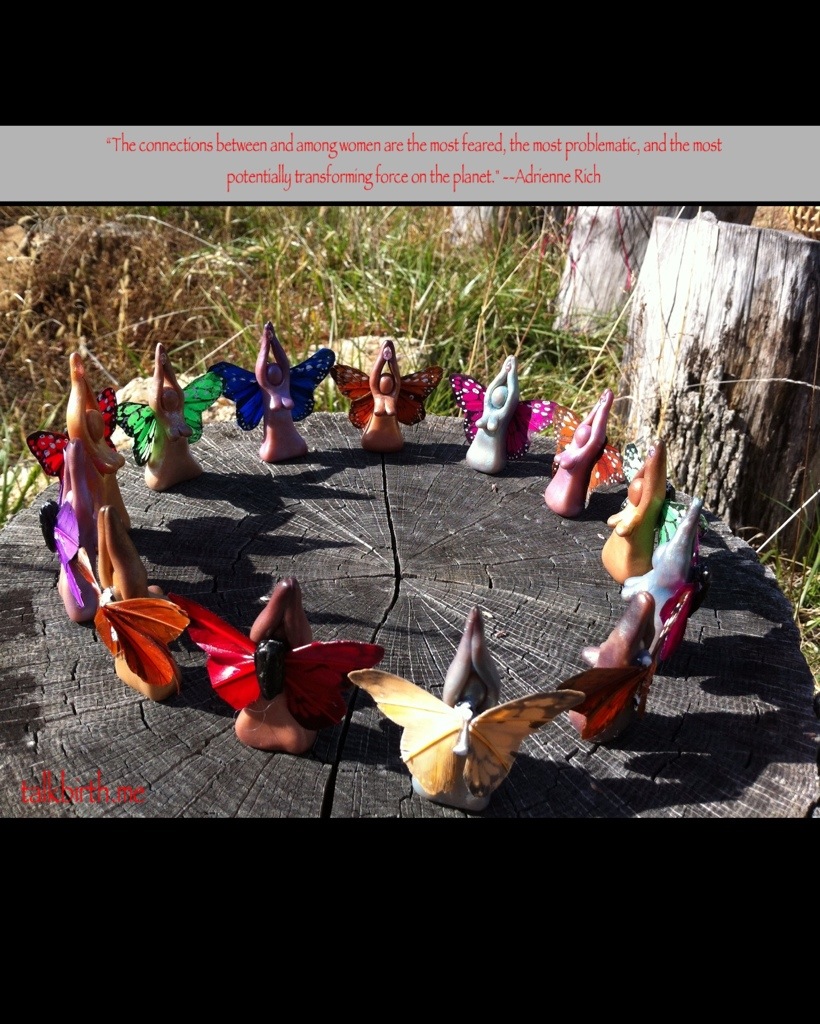
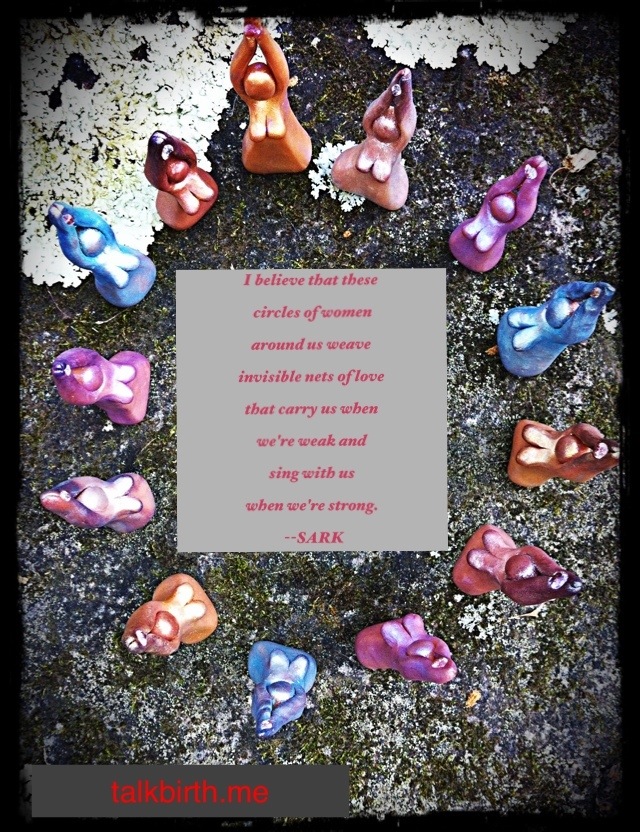
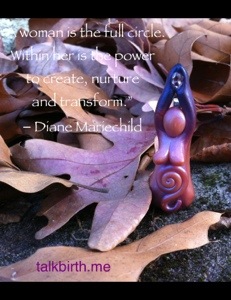
I also finally used one of my favorite quotes for women’s circles and a picture of a set of new sculptures that I made this weekend and turned it into a little shareable image. I’ve wanted to do this for a long time, but had trouble finding anything that would let me edit a picture on my phone to include words. It isn’t perfect, but it is my first attempt!
20121023-152429.jpg
And, I thought of my own past posts…

Thoughts about a birth blessing and more

“…May we see and hear women. May we witness them in the act of living, of birthing, of struggling, of triumphing. In surrender and in self-doubt. In exultation and joy. May we hold that space for her story. May we listen well and wisely.” (Molly Remer)

Thoughts about being a “birth warrior“…

“I was surprised to find myself connect with the birth warrior metaphor in labor. Shortly after my first baby was born, I turned to my dear friend who had been present and said, “I feel like I’ve been in a war…”

Thoughts about those sweet, delicate, precious moments of waiting to inhale

Thoughts of the sweet, sticky, beautiful, and simultaneously soul-crushing and soul-expanding experiences of early postpartum

I hope all of the women I know who are giving birth in the upcoming season discover that, as Sheila Kitzinger said, “Birth isn’t something we suffer, but something we actively do and exult in.” (from promo for One World Birth)

And, that while, “Women are as nervous and unsure of themselves as ever, and they need to learn to trust their bodies. Birthing is much more that eliminating pain. It is one of life’s peak experiences.” (Elisabeth Bing)

Happy Birthing Days, Mamas!

(P.S. This is an experiment with writing a short post! How’d I do?!)