Archives

Updating My Birth Quotes!

(c) K Orozco

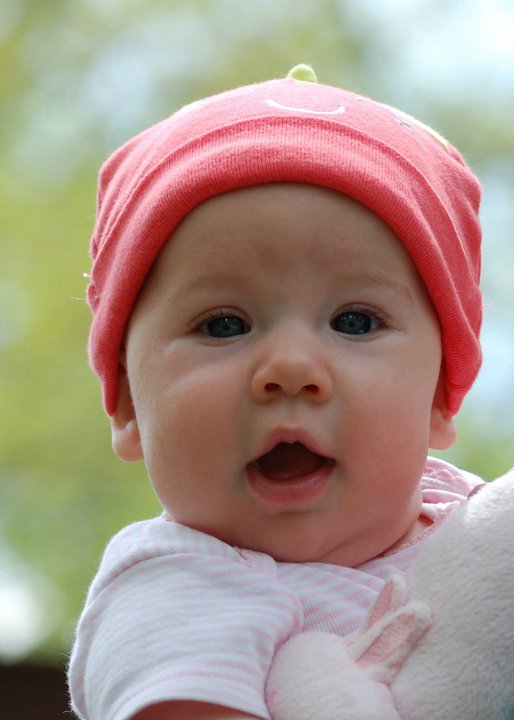
Baby Alaina, 3.5 months, taken at the park by my friend Karen 🙂

“Blessed be all the mothers of mothers.
Blessed be all the daughters of daughters.
Blessed be all the daughters of mothers.
Blessed be all the mothers of daughters.
Now and forever, wherever we are.” –Diann L. Neu

“I have almost given up on the government and the country but I have not given up on birth. I believe rabidly. It is not enough to hold the space for one woman at a time. Peace on earth begins with birth.” –Arielle Greenberg/Rachel Zucker (in Home/Birth: A Poemic)

“In giving birth my attention was pulled inside forcibly by something naturally wild, hot, raw and primitive—something so powerful that my only choice was to surrender.” –Kristin Luce

“Now I see the secret of making the best person: it is to grow in the open air and to eat and sleep with the earth.” ~ Walt Whitman

“A new baby is like the beginning of all things–wonder, hope, a dream of possibilities.” ~ Eda J. Le Shan

“Birth isn’t something we suffer, but something we actively do and exult in.” –Sheila Kitzinger (from promo for new One World Birth film)

“Many women have described their experiences of childbirth as being associated with a spiritual uplifting, the power of which they have never previously been aware … To such a woman childbirth is a monument of joy within her memory. She turns to it in thought to seek again an ecstasy which passed too soon.” ~ Grantly Dick-Read (Childbirth Without Fear)

“Childbirth isn’t something that is done to you, or for you; it is something you do yourself. Women give birth. Doctors, hospitals and nurses don’t.” ~ Lester Dessez Hazell

“Whether she chooses to birth at home, a hospital or a birth center, it is the right–in fact, the responsibility–of every woman to plan her own baby’s birth with the information, honor and freedom to which she is entitled.” –Cynthia Overgard (in Pathways to Family Wellness Magazine)

Life, love, and laughter – what priceless gifts to give our children. — Phylis Campbell Dryden

“A mother’s joy begins when new life is stirring inside… when a tiny heartbeat is heard for the very first time, and a playful kick reminds her that she is never alone.” ~Author Unknown

“Growing, bearing, mothering, or fathering, supporting, and at last letting go…are powerful and mundane creative acts that rapturously suck up whole chunks of life.” –Louise Erdrich

“Perhaps we owe some of our most moving literature to men who didn’t understand that they wanted to be women nursing babies.” –Louise Erdrich

“Labor is about finding your threshold and learning you can go beyond it.” –Rose St. John

“…the labor with which we give birth is simply a rehearsal for something we mothers must do over and over: turn ourselves inside out, and then let go.” –Susan Piver (Joyful Birth)

“The minute my child was born, I was reborn as a feminist. It’s so incredible what women can do…Birthing naturally, as most women do around the globe, is a superhuman act. You leave behind the comforts of being human and plunge back into being an animal…” –Ani DiFranco

“The health of mothers, infants, and children is of critical importance, both as a reflection of the current health status of a large segment of the U.S. population and as a predictor of the health of the next generation.” –Healthy People, 2010

“The miraculous nature inherent in the unfolding of a flower is the very same that moves through a woman as she gives life to the world. We can neither control nor improve upon it, only trust it.” -Robin Sale

“Loving, knowing, and respecting our bodies is a powerful and invincible act of rebellion in this society.” –Inga Muscio

“A new baby’s fresh milk smell causes the mother’s heart to spill over.” -Melanie Lofland Gendron

“…childbirth is much like a marathon…marathon runners know how to breathe, to run, and to complete their race according to their own body signals. Similarly, women know how to breathe, to birth, and to complete the [birth] according to their own body signals. Marathon runners who are true champions are free to stop the fast pace, and even quit the race without loss of integrity.” –Claudia Panuthos

“Birth, like love, is an energy and a process, happening within a relationship. Both unfold with their own timing, with a uniqueness that can never be anticipated, with a power that can never be controlled, but with an exquisite mystery to be appreciated.” –Elizabeth Noble

“…all those tasks and interactions of motherhood, a day full of which might make you feel you’ve ‘gotten nothing done’ because you’ve been in the cycle of care, are the heart and soul of the best brain building possible.” –Lauren Lindsey Porter (Attachment Theory in Everyday Life, in Mothering magazine, 2009)

“The lure of the distant and the difficult is deceptive. The great opportunity is where you are. Do not despise your own place and hour. Every place is under the stars, every place is the center of the world.” –John Burroughs

“Motherhood has a very humanizing effect. Everything gets reduced to essentials.” ~ Meryl Streep (via Midwifery Today)

“It is not ‘ladylike’ to give birth. The strength and power of labor is not demure.” –Rhonda (midwife quoted in Gayle Peterson’s An Easier Childbirth Book)

What we have once enjoyed we can never lose. All that we love deeply becomes a part of us.” —Helen Keller

“The greatest teachers we have are the women we serve.” –Jan Tritten

“…undisturbed (not neglected or abandoned) birth is a powerful initiation into motherhood, not only in a physical and physiological sense, but also in an emotional and spiritual sense.” –Christina Hurst-Prager (in (ICEA) International Childbirth Education Association‘s journal)

“Never hire a midwife who is afraid your birth will go wrong.” –Arielle Greenberg/Rachel Zucker, Home/Birth: A Poemic

“It is dangerous to be right on a subject on which the established authorities are wrong.” –Bumper sticker quoted in the book Home/Birth: A Poemic

“Women today not only possess genetic memory of birth from a thousand generations of women, but they are also assailed from every direction by information and misinformation about birth.” ~ Valerie El Halta

“I see generations of women bearing a flame. It has been hidden, buried deep within, yet they hand it down from generation to generation still burning. It is a gift of fire, transported from a remote and distant world, yet never extinguished.” –Kim Chernin

“Birth is as vast and voluminous, as unfathomable and inevitable as the rising and setting of the sun. And true to the inexorable power and rhythm of their life-giving bodies, women will continue to birth with dignity, grace and courage.” –Mandala Mom

“I pity the folks at ACOG who think they can make protocols, rules and guidelines that will cover all births in all situations. A better goal would be to have clinicians who can think for themselves, distinguish complications from normal birth, relax when things are taking a while, and marvel over the consistently fascinating process of human birth” -Gloria Lemay in Pathways to Family Wellness Magazine

“A pair of substantial mammary glands have the advantage over the two hemispheres of the most learned professor’s brain in the art of compounding a nutritive fluid for infants.” ~Chief Justice Oliver Wendell Holmes (1809-1894)

“The energy that can rise in real connection is the stuff of revolution.” –Carol Lee Flinders

“A woman meets herself in childbirth” –Cynthia Caillagh

“I believe that these circles of women around us weave invisible nets of love that carry us when we’re weak and sing with us when we’re strong.” –SARK, Succulent Wild Woman

“Don’t ask what the world needs. Ask what makes you come alive, and go do it. Because what the world needs is people who have come alive.” –Howard Thurman

“If ever the world sees a time when women shall come together purely and simply for the benefit of humanity it will be a power such as the world has never known.” –Matthew Arnold

“Authority without wisdom is like a heavy ax without an edge: fitter to bruise than polish.” ~ Anne Bradstreet (Feeling frustrated with anti-midwifery legislators in Missouri and then this quote came along from Midwifery Today’s e-news and I thought it was quite fitting)

The midwife teacher’s first concern is to preserve the students fragile unborn thoughts, to see that they are born with their truths intact, that these truths do not turn into acceptable lies” — from the book Women’s Ways of Knowing (shared by a participant in the Birth Workers and Beyond group)

“…we do not have humanized birth in many places today…Why? Because fish can’t see the water they swim in. Birth attendants, be they doctors, midwives or nurses, who have experienced only hospital based…medicalised birth cannot see the profound effect their interventions are having on the birth. [They] have no idea what a birth looks like without all the interventions, a birth which is not dehumanized.” –Marsden Wagner

Childbirth is a rite of passage so intense physically, psychologically, emotionally, spiritually, that most other events in a woman’s life pale next to it. In our modern lives, there are few remaining rituals of initiation, few events that challenge a person’s mettle down to the very core. Childbirth remains a primary initiatory rite for a woman.” –from the book MotherMysteries

“The holistic model holds that birth is a normal, woman-centered process in which mind and body are one and that, in the vast majority of cases, nature is sufficient to create a healthy pregnancy and birth. The midwife is seen as a nurturer.” –Penfield Chester (midwife)

“Birth, like love, is an energy and a process, happening within a relationship. Both unfold with their own timing, with a uniqueness that can never be anticipated, with a power that can never be controlled, but with an exquisite mystery to be appreciated.” –Elizabeth Noble

“If there is ever a part of human anatomy that resembles the image of God it is the uterus.” –Reverend Darren Cushman-Wood

(I hesitated to share this quote because I thought it could be viewed as disrespectful [or even sacrilegious!] by some. But, it caught my eye in an article called Pharaohs and Kentuckians in a 1997 issue of Mothering magazine. Written by a pastor of a Methodist church about homebirth and spirituality 🙂

Modern culture often teaches us to be ‘tight’…trim, taut, & terrific…We understand the need to stay ‘fit’…but we would also like to encourage you to soften yourself, in preparation for mothering & nurturing your baby. Soften your viewpoint, soften your body, surrender to this awe-inspiring event…in this way, you will be preparing yourself not only for labour, but for the days & years afterward…” -The Pink Kit Method For Birthing Better®

“Love is such a powerful force. It’s there for everyone to embrace—that kind of unconditional love for all of humankind. That is the kind of love that impels people to go into the community and try to change conditions for others, to take risks for what they believe in.” —Coretta Scott King

Nurturing is not a genetically feminine attribute. Tears and laughter are not the province of women only. The last time I looked, men had tear ducts. They had arms for holding babies. They cared about their children. And they cried at births…let the shared experience of childbirth reclaim the human soul.” –Ariska Razak (midwife and healer)

“When my kids become wild and unruly, I use a nice, safe playpen. When they’re finished, I climb out.” ~Erma Bombeck (via Moby® Wrap)
Honoring Mothers

Science and Sensibility is having a Mother’s Day event inviting birth professionals to submit stories of how they especially honor mothers in their practices, leading up to Mother’s Day.  The invitation is part of a contest:  a randomly-selected reader who submits a story will be chosen to receive a beautifully hand-made “Beads of Strength” bracelet from Amnesty International.

While I’m not sure will actually work with the vision of the contest, when I think about honoring mothers in my own work, I think about honoring their right to define their own experience and therefore, I submitted this previously written post: Musings on Story, Experience, and Choice.

Mother-honoring birthday gift from my mother this year.

The Spot

“Can I ask you a personal question?” asks the woman on the phone. She is calling to inquire about my birth classes and the subject of homebirth has come up.

“Sure!”

“What about the mess?”

At first I give the standard answer. That birth isn’t so terribly messy, that you can put down towels and chux pads, that the midwife often does the cleanup. I pause a moment. This prospective client and I have an instant connection and excellent rapport. I add, “Actually, I left a huge blood spot on our living room carpet.” I add that the spot came out almost completely with peroxide, but can’t stop myself from also remarking, “I actually feel kind of proud of it—it felt like a symbol to me.” I find myself laughing a little and there is an unmistakable note of triumph in my voice.

“Of what?”

“That I did it. Gave birth in my own home, in my own living room, on my own terms, under my own power, in my own way. In the way that felt best and right and safest to me. On my own. Me. I did it.”

What I did not add—what would have been pushing it just a little too far—is that when we moved the peroxide-cleaned carpet square into our new home a large, round, rusty-red stain was revealed on the concrete floor beneath. And, that I take secret delight in its presence. I am proud that I left my mark on the floor that bore witness to my labor. I delight and actually revel in the reminder of my power that the stain represents. Is this total weirdness? Or freakishness? A type of maternal masochism or even a perversion? No, I decide. It is really not so different from keeping a football trophy from high school or an award for volunteerism in human services from college. Maybe there is a medal for natural childbirth after all—arriving in different surprising guises, one kind a blotchy reddish stain on a concrete floor.

Despite our easy camaraderie, I never hear from that prospective client again.

Those who critique the zealousness of birth activists sometimes accuse us of supporting an insidious “Cult of Natural Childbirth” and assert that we undermine women and their unique and often traumatic experiences by “insisting” that birth be an empowering and triumphant event for women.

Maybe there actually is a Cult of Natural Childbirth and I am an acolyte of Birth cackling with wild glee as I caper around my bloodstained floor….

Nursing my brand new baby boy! (2006)

———

In the original article, I included a post-birth picture from my second son’s birth that showed one completely exposed breast. I must have still been hopped up on the post-birth euphoria when I sent it, because after it was actually published I felt slightly horrified to have my boob in print and didn’t feel like I could show the article to my dad (or, really, to many other people!) If you look closely at the picture I substituted in this blog post, you can see there is blood streaked all over my chest, arms, and hands. It was a very bloody birth!

—————————————————————————————————————–

This is a preprint of The Spot, an essay by Molly Remer, MSW, ICCE, published in Midwifery Today, Issue 86, Summer 2008. Copyright © 2008 Midwifery Today. Midwifery Today’s website is located at: http://www.midwiferytoday.com/

The “Almost Died…” Remark

?

Anyone who has planned a homebirth has probably heard the, “If I’d had my baby at home, I would have died” remark more times than they can count. It seems to be almost a default response to mentions of homebirth. I used to have a pet peeve about this, because I was almost certain that most of time the people saying it had been nowhere close to death! It seemed like an overly dramatic, overreaction to a normal life process, etc., etc. And, also that we’ve been so brainwashed by the media into thinking birth is this life or death emergency that that filter then artificially colors our perceptions of events and dramatically affects our social lexicon of birth. (However, I also have the companion thought that in many countries, birth does remain a life or death experience for women and babies. Maternal and infant mortality are significant issues and are not subjects to be taken lightly. And, mothers and babies in the U.S. do, in fact, die sometimes. It isn’t just a third-world country thing!) Another statement that used to confuse me was when birth writers say things about giving birth bringing you to the, “edge between life and death.” This didn’t match my own to-that-date birth experiences, which had not ever involved feeling like dying.

So, these things said, it has been very, very difficult for me to write about my own feelings of being close to death following the miscarriage-birth of my third son in November 2009. I really, truly felt like I might be going to die after he was born. I have never felt that close before, but I reached that “edge” after him, and I had the visceral experience of the veil between life and death being very, very thin. And, the feeling did not occur in a scary way, but in a resigned, “oh, so this is how it is going to end, too bad I still had so much I want to do with my life!” kind of way. I felt okay with it actually. A type of acceptance that my time was over. Since everything turned out okay in the end, I haven’t had much reason to process that feeling, but it was very, very intense. And, actually it was also life-changing in several areas of my life, including in terms of my spirituality (I semi-joke that my miscarriage-birth was a “religious experience” for me, but truly, in a way it was). However, I can hardly manage to write about it. And, looking back, I remain amazed that it was humanly possible to bleed as much as I did, especially because at that point early in a second trimester pregnancy I didn’t have the whole 50% increase in blood volume that you have by full-term!

I think I don’t talk much about my own “almost died” experience because obviously, in hindsight, I wasn’t almost dying (since I didn’t), I just felt like I was going to. But, this is the key…the fact that I wasn’t truly dying doesn’t mean that I didn’t truly feel as if I was—and, genuinely so, not in just an irrational fear-planted-by-the-media way. This has given me new insight into the “almost died” remark that seems dished out so casually. I used to think it was primarily a risk-based/skewed/brainwashed attitude, rather than an emotional thing, but I have an understanding now that it more often probably represents how she felt (or perceived the situation) and that her feeling really matters. It was real. And, I now hear and honor that feeling (rather than secretly thinking “yeah, right!”), because the feeling was real. And, that means, to her, she really did “almost die.”

I’ve also come to realize that despite the many amazing and wonderful, profound and magical things about birth, the experience of giving birth is very likely to take some kind of toll on a woman—whether her body, mind, or emotions. There is usually some type of “price” to be paid for each and every birth and sometimes the price is very high. This is, I guess, what qualifies, birth as such an intense, initiatory rite for women. It is most definitely a transformative event and transformation does not usually come without some degree of challenge. Sometimes to be triumphed over or overcome, but something that also leaves permanent marks. Sometimes those marks are literal and sometimes they are emotional and sometimes they are truly beautiful, but we all earn some of them, somewhere along the line. And, I also think that by glossing over the marks, the figurative or literal scars birth can leave on us, and talking about only the “sunny side” we can deny or hide the full impact of our journeys.

During Pam England’s presentation about birth stories at the ICAN conference, she said that the place “where you were the most wounded—the place where the meat was chewed off your bones, becomes the seat of your most powerful medicine and the place where you can reach someone where no one else can.

Book Review: Home/Birth: a poemic

Book Review: Home/Birth: a poemic
By Arielle Greenberg and Rachel Zucker
1913 Press, 2011
ISBN 978-0-9779351-7-8
208 pages, softcover, $11

http://www.1913press.org

http://www.facebook.com/pages/HomeBirth-A-Poemic/

Reviewed by Molly Remer, MSW, ICCE, CCCE
https://talkbirth.wordpress.com

Co-authored by a pair of long-time friends, the “poemic” book Home/Birth reads as if you are eavesdropping on a lengthy, juicy, engaging, thought-provoking conversation about homebirth, birth in America, maternity care, and feminism. The book has a lyric, narrative, stream of consciousness format linked together with segments of poetry.

The text does not differentiate between the two speakers/writers, though through the “call and response,” back-and-forth exchange between the two authors, you quickly begin to recognize two distinct voices (as well as other fragments from birth books, bumper stickers, midwives, etc.).

The book was written during Arielle’s second pregnancy, which ends in the stillbirth of her baby boy. Arielle had one prior homebirth and one subsequent homebirth. Rachel had two hospital births and a homebirth prior to the writing of the book.

While the style in which it is written takes some time to get used to, once you tune in to its rhythm, Home/Birth is a unique and fascinating journey. Because it is so distinctive, I find it difficult to describe in writing—you need to make sure to read it for yourself!

Disclosure: I received a complimentary copy of this book for review purposes.

The Birth Art Journey Continues

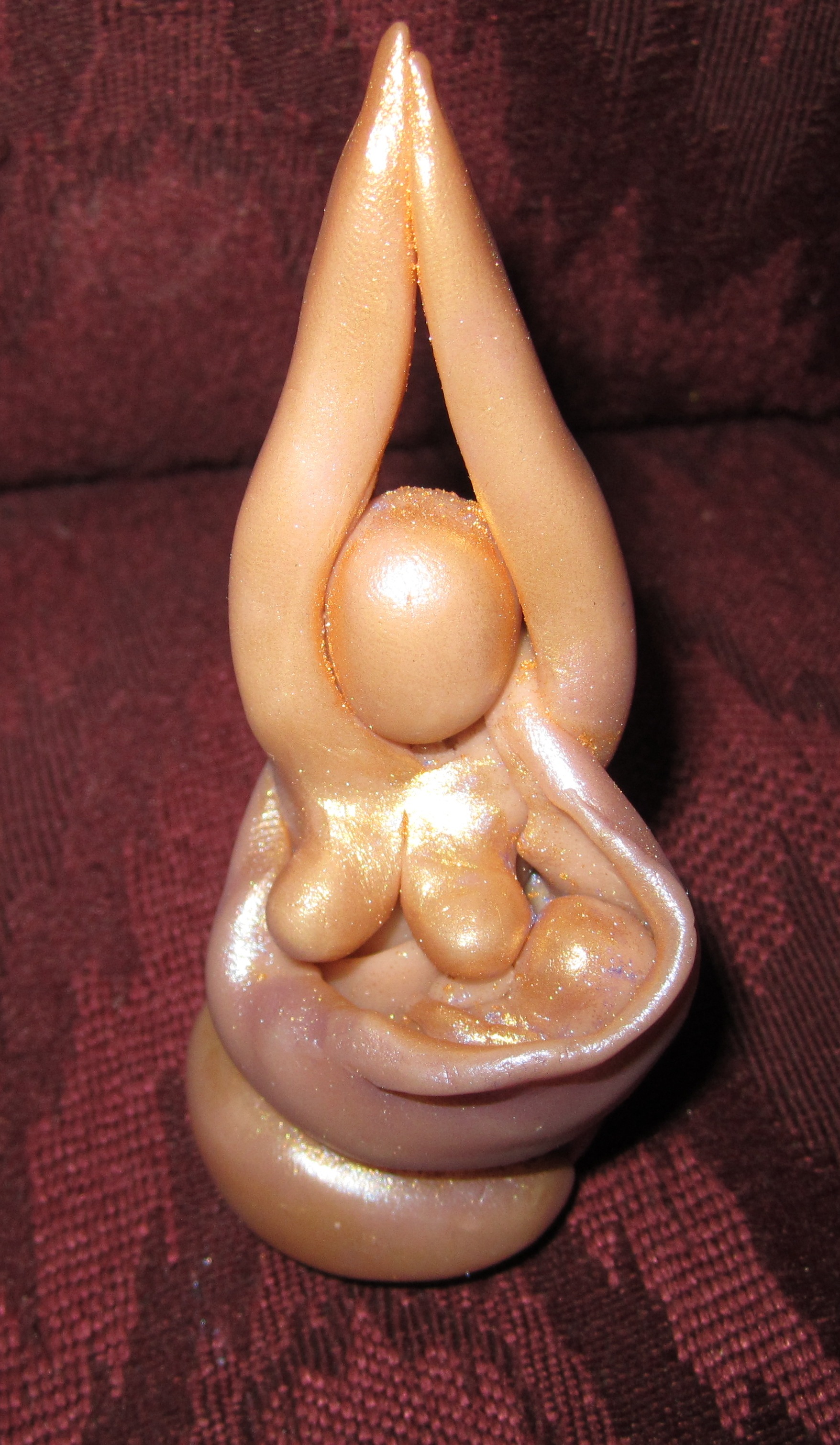
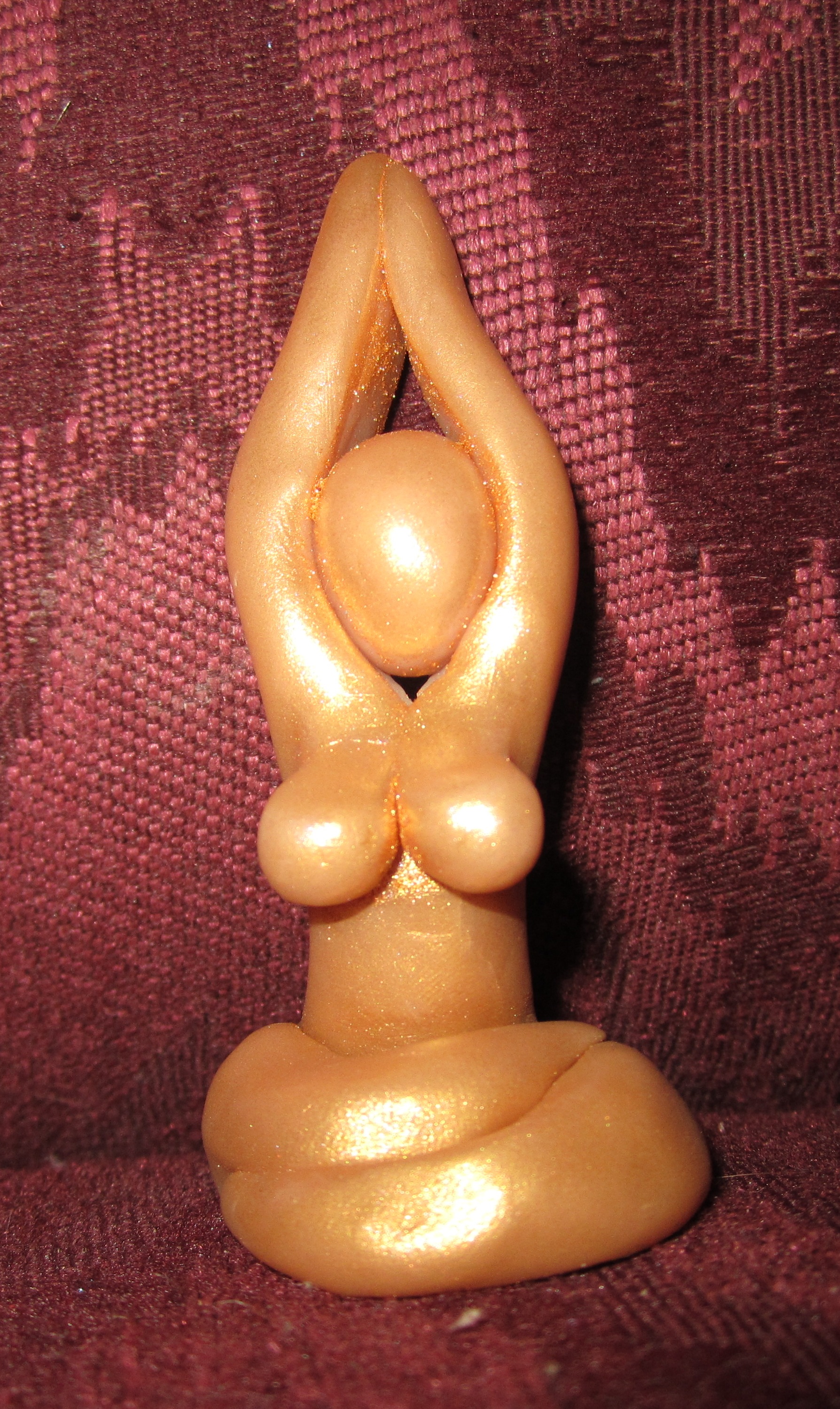
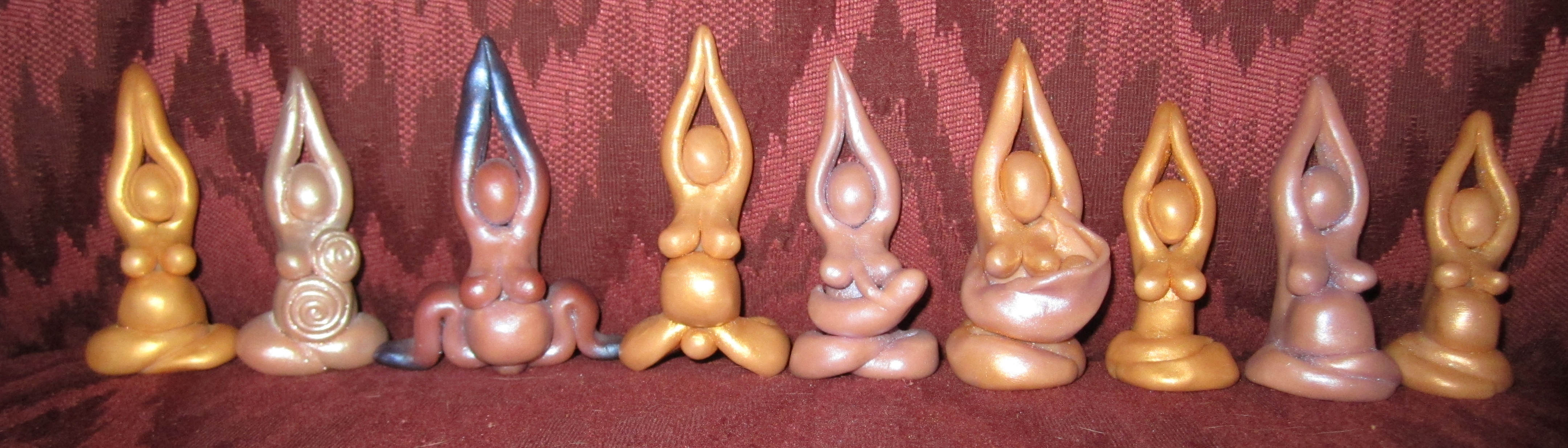
This weekend I made two more additions to my series of birth art sculptures that I began during my last pregnancy.

Since A spends a lot of time in a pouch, I added this slingin’ mama to my collection:

And, just as I initially made a polymer clay birth goddess figure to incorporate the “pregnant woman” identity into my life, I wanted to make a non-pregnant figure (who isn’t holding a baby) to represent my return to the nonpregnant identity:

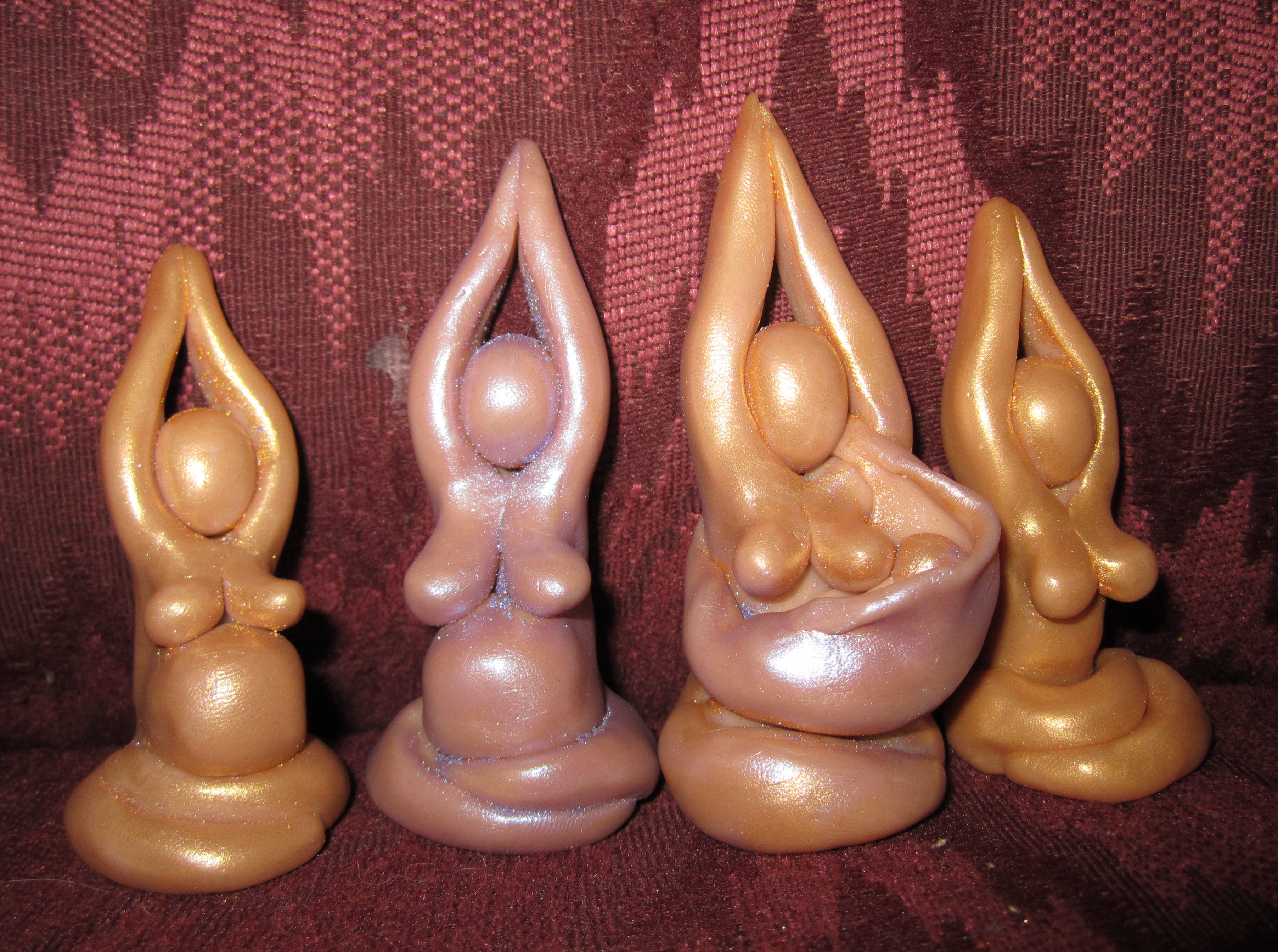
I also made some new pregnant figures for two upcoming mother blessings for friends. In a way, these too are a continuation of my series, since the cycle of life continues in other women after my own “return.” Here are my four new figures all together:

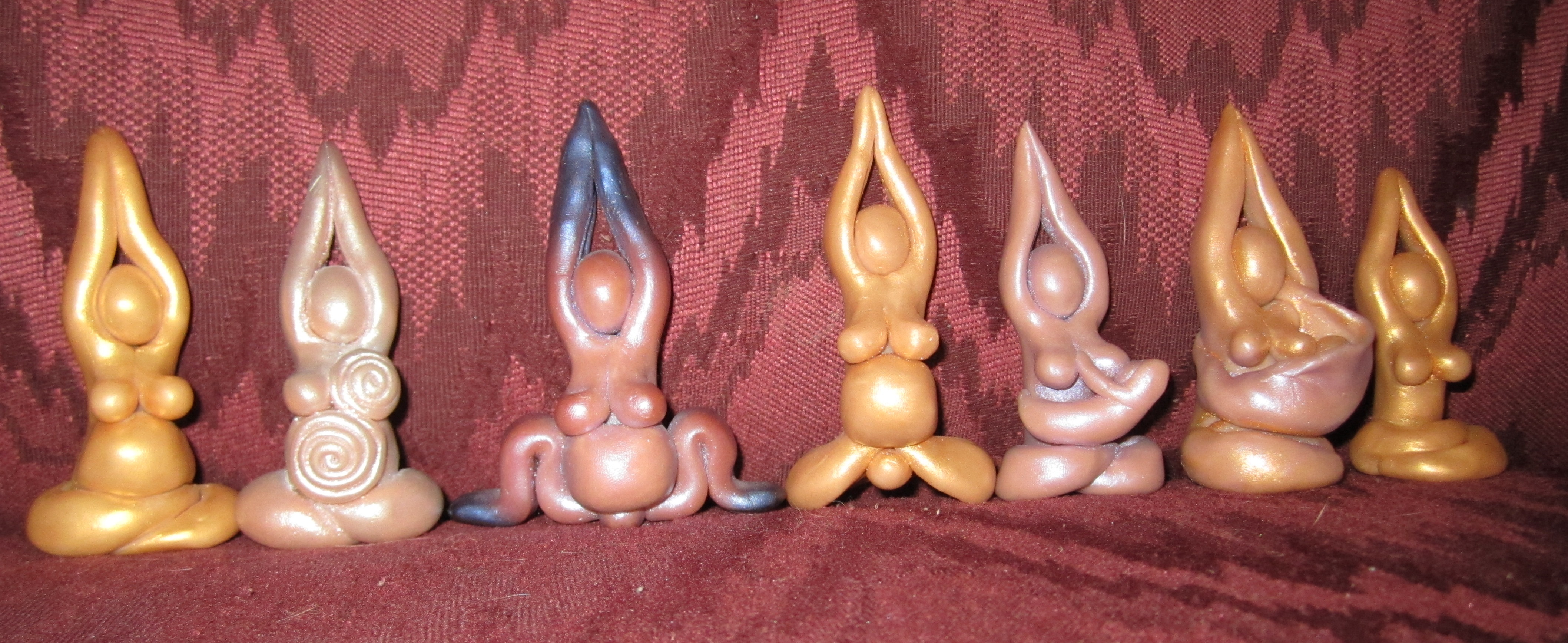
And now, here is my full birth art series from my pregnancy with Alaina, all lined up together representing my journey:

The first figure represents my incorporation of the pregnant identity. The second figure is a representation of my sense of being in the labyrinth of pregnancy. The third figure was created to help me work with my fear/concern about pushing the baby out. She was my most powerful figure and served as a source of strength to me. The fourth figure is an image of my actual experience pushing my baby out (I was kneeling, which is why she is kneeling). The fifth figure is the transition to nursing mama and then the final two figures are those I describe above.

And, finally, here is my series of figures plus my pregnant friends 🙂

Kiva Woman with Womb Labyrinth

Today, a friend told me that she searched google images for “womb labyrinth” and mine were some of the first images to come up. I thought that was kind of fun and decided to post another labyrinth drawing I did a couple of years ago. She was posted on my now defunct birth art blog (need to move some of that content over here!) and I think she deserves a post here as well. Inspired by Birthing from Within, of course, this “kiva woman” (based on the BfW cover image) is contemplating her upcoming birth journey:

Kiva Woman & Womb Labyrinth

She’s approaching her “threshold moment” and getting ready to enter the “laborinth” of birth. Her baby is waiting for her in the center. I have several friends who are preparing to enter their own “laborinths” and I hope their birth paths are filled with beauty, peace, and power…

ICAN Conference Thoughts

This past weekend, I attended the ICAN conference in St. Louis. I was really excited that the conference was in my own back yard (well, two hours from my back yard). I enjoyed seeing lots of people that I know from Friends of Missouri Midwives as well as other friends and contacts from other organizations. And, I got to meet some people in real life (like Jill from the Unnecesarean), who I previously only “knew” online. I also bought myself a pretty awesome new ring from the MANA booth (and a t-shirt and a bumper sticker!).

In addition to these things, highlights of the conference for me were:

  • Hearing Pam England speak and getting to meet her after so many years of being a fan of Birthing from Within. I will write another post soon about her “9 Birth Story Gates” presentation. It was very good.
  • Taking Amy Swagman’s birth art workshop (Amy is the Mandala Journey artist and was someone else that I enjoyed meeting in person after only “knowing” online). I will write about this soon as well.
  • Seeing the amazing breech birth videos shared by Gail Tully of Spinning Babies in her presentation about breech birth.
  • Connecting with another mother during the sand tray art therapy workshop presented by Maria Carella. Though our birth experiences were different, our “processing” of them during the workshop was amazingly similar. More about this later too.

The main reason I wanted to post tonight though was to share my experience in visiting the “Our Voices” room at the conference. This room is a safe, quiet place—a place of silence—in which women can go to to contribute their feelings about their cesareans to the wall displays. They can take their contributions home with them when they leave, or leave them up to be re-installed in the next Our Voices room at the next conference. Every wall in the room, plus the doors and several tables, was covered with women’s words and feelings about their cesarean experiences, subsequent births, VBAC, etc. It is difficult to put into words how potent of an experience visiting this room was. I was not expecting to be moved to tears by it, but I was. It was extraordinary. And, painful. There were other women in the room crying and crying as they composed their additions to the wall, as well as other women walking quietly through and looking and reading. I originally intended to add to the wall—I was told that it was not necessary to have had a cesarean myself in order to add something—but after seeing the room and the women in it, I did not feel “worthy” (so to speak!) of adding to it. It wasn’t my space. It was something I was privileged to witness, but I did not feel it was appropriate to add my own words to these women’s pain and expressive space. I felt like anything I could say would be trite somehow, almost insulting, to the depth of feeling expressed on the walls. Sometimes you really do have to have “been there” in order to fully recognize the experience of another. And, while I can certainly empathize and feel deep compassion, cesarean birth has not been my own personal journey and it just felt like it would be rude almost, to claim enough understanding of it to write on this wall.

This experience also taught me that I am not meant to start an ICAN chapter. I really think our area could use one and I love the work that ICAN does and I had signed up to start a chapter (before coming to my senses and realizing that I am overcommitted to too many projects/organizations right now as it is), but after visiting the Our Voices room, I realized that I am not the appropriate person to lead one. I just can’t really get it even though I can “see” other women and honor their experiences.

I’ve noted before that I feel like my experiences with pregnancy loss opened my heart more fully to the full range of birth loss (which  includes many women’s feelings about their cesareans) and birth/pregnancy trauma. Before loss, I only saw the “pretty” side of birth. Well, not pretty, exactly, but the empowering and triumphant and exciting side. After my birth-miscarriage, my world was opened to the wider world of birth experiences and feelings. I feel like there are—somewhat surprising—parallels between pregnancy loss and  the loss of a vaginal birth women experience with cesarean, but it is also different and the Our Voices room at the conference was a sacred space for those with cesarean experiences. It was both humbling and moving to hear their voices in this way.

There are pictures of the room and the contributions at the ICAN Conference Facebook page.

Handouts for Birth Booths

A frequent topic on email lists for birth professionals is good handouts/resources for booths at maternity or baby fairs. Rather  than making copies of materials or creating my own handouts (reinventing the wheel in a less-professional looking way!),  I am a fan of using glossy, professionally printed, but still very low cost stuff for tables and also a fan of materials that address good maternity care in general. My top faves for having on a booth or as handouts are:

Birth Strength

“Women are strong, strong, terribly strong. We don’t know how strong until we are pushing out our babies. We are too often treated like babies having babies when we should be in training, like acolytes, novices to high priestesshood, like serious applicants for the space program.” –Louise Erdrich, The Blue Jay’s Dance

This is one of my favorite quotes to share at blessingways. The Blue Jay’s Dance is a memoir of the writer’s first year with her third baby (sixth child). She isn’t particularly a birth advocate, the book is a general mothering memoir, but at one point she says the above and I love it. Though, I should note that I think there are all kinds of strengths to be found in birth—not just in pushing out a baby. One can experience “terrible strength” in coping with an unexpected cesarean also. And, of course, womanpower can also be found in other non-birth experiences. When I shared the quote on Facebook, some people commented that they hated it or that it was offensive. I have been surprised by how very personally some of the  birth quotes I post on Facebook are taken. There have been several occasions where I’ve felt so upset about it that I thought maybe I should never post quotes ever again! (now who’s taking something too personally? ;)). Then, I realized a strong personal reaction is normal, because birth is such a strong and personal issue, so now I try to be extra mindful of the subtexts that might be perceived in a quote (regardless of original intent) and clarify that below the quote. I truly think the intent in this one is of the potential to discover our own hidden strength via birth, not to say that birth is the only powerful experience available to women. I know that I draw on my “birth strength” in other important moments in my life. I also realized after the miscarriage-birth of my third son that the strength found in birth is present in women, period. It is woman strength and it rises up during birth, but it is always there.

During a recent women’s retreat we reflected on sources of personal power and how we feel when we are standing in our personal power (this question comes from a fabulous book, A Mother’s Guide to Self-Renewal). When I first considered this question, I was somewhat sad to discover that the only instances of personal power I could come up with from giving birth—it would be nice to have piles of personal power experiences! More reflection revealed that I also feel like I’m standing in my personal power when I teach. Not a sense of “power over,” but in power with. More freshly, I’ve realized that I find personal power in Goddess spirituality/images and ideas of the Divine Feminine. And, I also experience personal power when I am alone. I feel most whole and authentic when I am just by myself. I like quiet space in my own head in which to think and I also enjoy my own company 🙂

“A woman meets herself in childbirth” –Cynthia Caillagh

Each time I gave birth I realized I was a pretty amazing person with inherent worth and value. The woman that I met in birth was very strong and very capable and very focused. And, she is me.

I hope my baby girl grows up standing in her own personal power and having a profound sense of her own worth.

Baby's First Bindi--taken at a recent blessingway for my good friend