Archives

Tuesday Tidbits: Cesarean Courage

“Her courage is written on her body.” –Molly (Talk Birth)
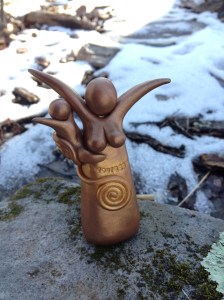
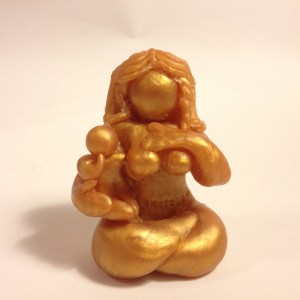
March 2014 009Last year I made several cesarean birth art sculptures by request. It felt like a “risk” of sorts to make them, like I was trying to interpret another woman’s experience artistically, but I did it and they were well-received. I chose to imprint words in the figure’s cesarean scar because I kept thinking about how that mother’s love and hope and courage are all permanently written on her body. Recently, I had a request to make another and so I re-visited my Cesarean Courage idea and made some new figures. She is wearing her baby and her scar with pride and strength. These sculptures are not supposed to send an “at least you have a healthy baby” message, they are communicating that her birth journey with her baby is seen and acknowledged and validated.

“I became a mama goddess, too. I became a wonder of fertility, of softness, of late nights and warm beds; a body capable of unimaginable things. I labored and tore open, too.”

–Amanda King (in Being a C-Section Mama In the Birth Goddess Club)

When I shared the cesarean courage mama picture on Facebook, someone responded: Usually I look at the scar as a forever reminder of my failure. The idea my courage and love is forever written on my body in the marks of a surgeon’s knife is so transforming. I am humbled and amazed and inspired and encouraged by the ways in which birth art “speaks” to other women. It is a powerful experience and I feel so honored to communicate and share in this way. When I stopped teaching birth classes, I worried about no longer being “of service” to birthing women, but through my sculptures, jewelry, and writing, I still am doing this work and I am grateful.

Thinking about it reminded me of this wonderfully powerful photo of a mother-assisted cesarean birth in which the mother (a midwife, IIRC) caught her own baby…

You can read more in the accompanying article.

WHEN a baby is born by caesarean, the hands that lift it from the womb to the world usually belong to an obstetrician. But now, there’s someone else who can help deliver the baby: the mother.

via Delivered safely by caesarean with his mother’s hands – National – theage.com.au.

This picture and article were published several years ago and also covered in a Radical Doula post.

There are lovely photos from an online doula friend at Plenitud of a family-centered cesarean birth as well. And, two more recent posts with family-centered cesarean births here and here.

This week I was also touched to read a mother’s story of homebirth plans turned hospital birth plans turned cesarean birth after the baby developed an atrial flutter and was risked out of homebirth:

This has been a big week, with deep shifts that I’m sure will keep happening as we go through the coming days. March 2014 036Sometime in the next three weeks, I will subdivide into two women — one a mother, and one a fresh newborn infant, each with our own developing story and life path. I will find that I care more deeply about some things than I ever thought possible, and other things that were important markers of my life and identity are no longer significant. I’ll celebrate and I’ll mourn…

via Pregnancy Not-So-Blahs: My Story of Fetal Atrial Flutter | Amanda Aguilar Shank.

I knew I was going to be a mother very soon. I focused on not freaking out, and on enjoying my last moments of being so intertwined with my baby. I sent her telepathic messages of love and reassurance. I knew I wouldn’t be seeing her right after the surgery and that likely she would have to go through some trials before I could be with her again.

The operation itself was not as bad as I expected. One critical piece of my experience was having the accompaniment of a labor and delivery nurse friend, who served as a kind of impromptu doula, helping me to hold my ground when treatments being offered were inappropriate or unnecessary, and to fully embrace with less fear and more trust the life-saving help that hospital staff had to offer…

via From Home Birth to Hospital: My Story of Fetal Atrial Flutter | Amanda Aguilar Shank.
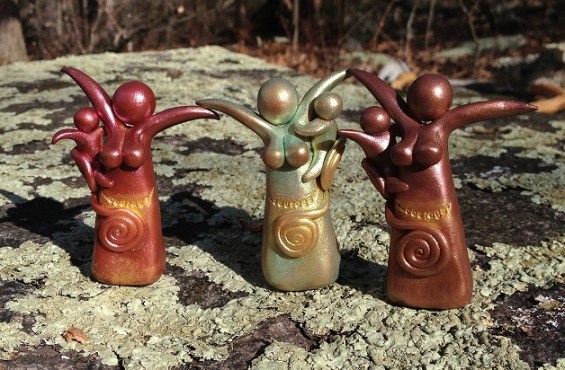
smallMarch 2014 059These mamas have taken powerful birth journeys. They have laid down their bodies for their babies. They hold their experiences, they wear them, their courage, love, and hope, upon their skin. The birth experience is there, loud and clear, and yet new experiences and joys are too. She is whole.
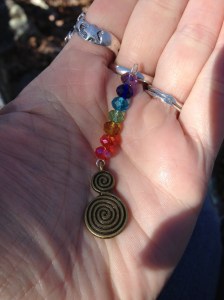
 

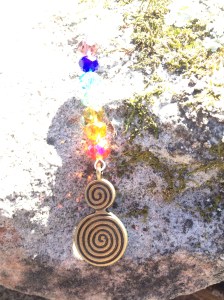
Birth Spiral Chakra Blessing

Birth spiralFebruary 2014 015.
Energy
feel it spin throughout your body.
Beginning in your core,
unfolding, unfolding, spiraling upward into a peak
and release
Every part of you opening
making space
making room
for this new little one.
Calling the child forth into your waiting arms
your waiting family
your waiting heart.
Enlivened
alive
fully engaged and embodied
in the current of labor.
It builds
it pulses
it rolls
it rocks
it peaks
it crests.
These waves of power.
They are you.
You are doing it.
You ARE it.
This is energy, this power, this unfolding might of creation.
It’s you.
Your body
your power
your birth
your baby.

February 2014 003

Let the sparkles of these chakra colors remind you to bring your whole self to your labor. To walk the spiral path, to dive in, to embrace, to unfold, and to become: Mother.

Root (red):

Where baby came into being and now will be welcomed. Source of creation. Gateway for baby and life.

Sacrum (orange):

Where baby has sheltered within a cradle of bone. Pelvic bowl that rocks the child. Make way. February 2014 007

Solar Plexus (yellow):

Where you take deep breaths, carried on the waves, following your rhythm.

Heart (green):

Where your love bursts forth and you discover what it is like to be endless.

Throat (blue):

Where you roar your birth song. Welcome your baby with your voice, your cry of greeting. Your cry of triumph. Your cry of fulfillment.

 Brow (indigo):

Where you let your mind go, where you release, and give, and surrender to the creative, nameless, raw pulsing energy of birth.

Crown (violet):

Where you draw in the wisdom of the ancestors. The power of the Divine Feminine. The ocean of mother love that has gone before you and that surrounds you even now as you work.

Draw it in, draw it up, draw it down. And know, without a doubt, that you can do it. You can walk this path. You can rise to the occasion. You can respond with strength to whatever is asked of you. All the surprises, all the mystery, all the twists and turns and unexpected places. You carry the wisdom within you to let it flow.

February 2014 012

Birth Labyrinth

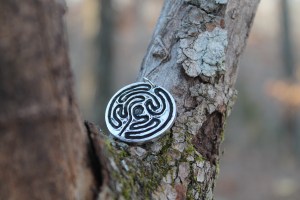
 IMG_0571 The labyrinth is a powerful metaphor for each woman’s unique journey of pregnancy and birth. I first discovered the “LabOrinth” via Birthing from Within and Pam England and I quickly incorporated into my birth education classes, making two homemade posters to discuss in class—one illustrating “clock watching” birth and one illustrating birth as a labyrinth. When I send gifts to long distance pregnant friends, I usually include a drawing of a womb labyrinth and this quick explanation:

The journey through birth is like a labyrinth—it has unexpected twists and turns, but it takes you where you need to go. You can find your way blindfolded if you need to, you can walk, run or crawl, and you’ll get to the center—to your baby—in your own time and in your own way. The postpartum return is also a labyrinth, one that can take some time to integrate into your life, being, and “new normal.”

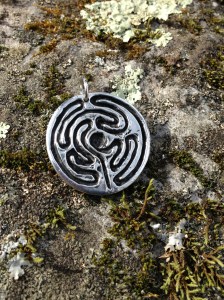
Based on a drawing from my second pregnancy of a womb labyrinth, my husband carefully worked carving a small womb labyrinth design into clay and then making a mold from it and casting the design in pewter. The result is a little uneven and asymmetrical, much like life itself, but I love it! I took the new pendant to the woods with me and this is what I said about it’s meaning…

Womb Labyrinth January 2014 007

Birth journey. Each of us walks our own path. In the center, a baby waits. And, so too, wait deep truths about ourselves. Our own courage, our own  fears, our own strength, our own power. One foot in front of the other. That’s how the journey is made. You set out for the threshhold, unknowing. Maybe a little fearful. Maybe intrigued. Maybe anticipatory. Maybe excited. And you start to walk. One foot in front of the other. Sometimes our journeys drop us to our knees. Sometimes we feel around in the dark, searching for something to hold onto. Sometimes we skip and twirl along the path. Sometimes we run. Sometimes we pause and sit down and wait. Sometimes someone walks with us, holding our hand. Maybe even giving us a little push from behind. But, ultimately, it is our own private journey. When we get to the center, we will discover what it is that we know that no one else does.

As I mention to pregnant women, the return journey of postpartum is a labyrinth as well…

Postpartum Labyrinth

The journey of postpartum is a labyrinth too. Carrying our babies in our arms, past sleepless nights, through endless days. Through worry and tears, through sharp, sweet, timeless moments of a joy so bone deep it knows no words and in a love so endless that it defies description. And, we walk. Sometimes we bounce. Sometimes we sway. Sometimes we sing a little tune. Sometimes we beg. Sometimes we scream. Sometimes we sit down and say we can’t keep going. Sometimes we skip through the sunshine and dance in the moonlight. Sometimes we can’t believe how much fun we are having and how wonderful this is. Sometimes we feel so alone, we think we might break. And, yet, we keep going, and we emerge, blinking at the newness of it all.

This new pendant is one of the designs released for the launch of Brigid’s Grove, my collaborative project with my husband. We’re hosting giveaways on our website throughout the month of February to correspond with our launch and one of these pendants will be offered as a giveaway! We’ve also got an etsy discount code, a free digital Ritual Recipe Kit, and more to check out on the Brigid’s Grove website and Facebook page.

book

Thesis Tidbits: Birth as an Initiation

“We owe it both to our children and to the world, to conceive, birth and welcome our children with as much love and prayerfulness as possible.” –Jackie Singer (Birthrites)

“Childbirth is a rite of passage so intense physically, psychologically, emotionally, spiritually, that most other events in a woman’s life pale next to it. In our modern lives, there are few remaining rituals of initiation, few events that challenge a person’s mettle down to the very core. Childbirth remains a primary initiatory rite for a woman.” –from the book MotherMysteries

via Thesis Tidbits: Birth as a Shamanic Experience | Talk Birth.

I recently finished reading a short book called Return to the Great Mother, which is very specifically focused on giving birth as an initiatory event. It includes a variety of birthing women’s voices and experiences with accessing the energy and wisdom of the “great mother,” be it archetype, an inner resource, or one face of the Sacred. The author, Isa Gucciardi, writes:

Giving birth is one of a series of important initiations a woman may experience in her lifetime. Initiations are intimately tied https://www.sacredstream.org/components/com_virtuemart/shop_image/product/b0e92ae33095ca07867acb0a841a9f05.jpgwith change. They bring the initiate from one state of being into a new state of being. Initiations accomplish this task by putting the initiate through a series of experiences that challenge them in a particular way and bring them into new ways of being and of understanding. The initiate must meet these challenges and overcome any obstacles in order for the initiation to succeed in bringing about these changes.

Today, many people going through initiations and many people managing initiations do not have a clear understanding of the nature of the power and vulnerability that is at the heart of initiation. Initiates must render themselves vulnerable to initiatory processes in order for initiations to become complete, and the power in that vulnerability must be managed carefully and thoughtfully. Most importantly, for an initiation to be successful, that power and vulnerability must be safeguarded and dedicated to the initiate.

The process of meeting an obstacle and overcoming it in order to ultimately gain greater insight and power is described by Joseph Campbell as the “hero’s journey.” The “hero’s journey” is an initiatory experience. Every woman takes this journey when she gives birth and it can be the primary initiation a woman undergoes in the course of her life.

Often a woman encounters herself in an entirely new way during the process of giving birth. She may encounter the effect of traumas long buried, or she may encounter fear long denied. She may also discover power deep within herself that she had never imagined.

When the processes of birth are allowed to take their course, a woman with the proper care has the opportunity to come to terms with whatever may arise. In doing so, she may experience a shift into a new way of being or understanding. Yet, when the birth process is interrupted, or not properly held, the power of the initiation is often lost or distorted… (p. 10)

We know that women do not always have full and free choice when it comes to decisions about their birthing bodies and childbearing years…so, how does this impact the initiatory process? Isa writes:

In modern births, the power of the initiation of birth is often co-opted by doctors, pharmaceutical companies, insurance companies, and hospitals. It is also co-opted by the fear of pain and the influence of friends and family. It is difficult for women to hold onto the power of the initiation of birth under these circumstances. The unfortunate implication here is that the subsequent initiations of women interrupted in this way will be affected by their inability to hold onto the power of their birthing process.

Based on the level of interruption of the birth initiation caused by unnecessary interventions in the birthing process today, it seems reasonable to suggest that many women experience incomplete initiations when giving birth…

(Personally, I would clarify that it is not that women are unable to hold onto the power of the birthing process, but rather that it is often systematically stripped from them.)

Each of my children’s birth experience was an initiatory event for me, but in varying ways. With my first, it was the initiation to motherhood, the mystery and anticipation of giving birth. The crucible moment for me with him was actually my journey through the harrowing landscape of postpartum. With my second son, giving birth rapidly and with great intensity and power, the initiation felt like it was in letting go and hanging on for the ride—letting my mind stop and my body go. With my third birth, which was my first miscarriage, the initiation was in the physically grueling and bloody aftermath of his birth and then the broad, deep, unknown, transformative path of grief and change. I still feel as if this was one of the most powerfully initiatory experiences of my life. (And, I did have an encounter with one face of the great mother.) After Alaina’s birthday this week, I was talking to my husband about my memories of this last birth and telling him that I do not review the details of her birth with the same sense of power or initiation as the births of my other children. It doesn’t hold that same “touchstone” energy for me as the births of my boys—experiences that I continued to draw strength from as I went on into other events in my life. I don’t return to her birth for strength or courage the way I remember returning to the births of each of my sons. And, then I said it was because with her, the pregnancy was the initiation. The long, long, path of pregnancy after loss and all the fear and all the hope and all the strain of feeling the feelings and doing it anyway. Her birth itself was the moment of relief. The end of a trial, rather than the triumph or peak experience of the births of my first two babies. So, while of course I still carry powerful and potent memories of her birth as well, it was the journey of pregnancy that holds the talismans of initiation for me.

In her classic book Shakti Woman, Vicki Noble describes giving birth as a central shamanic experience and perhaps the root of all shamanism:

“I believe I underwent an initiation of the most ancient variety, birth as a shamanic experience, the central act of female shamanism—the quintessential act that offers a woman a completed experience of facing and moving through her fears to the other side. It isn’t that birth is the only way for a woman to experience this initiation—many women climb mountains or face other kinds of physical endurance tests and also come through it reborn into their power. But biologically birth is a doorway, a given for most women on the planet. It is fundamental opportunity to become empowered. Most of us giving birth today do not have the full experience, which is co-opted and distorted beyond recognition, changed from an active process into something that is done to us, as if we don’t know how to do it ourselves. Reclaiming the right to birth in our own instinctual way is a shamanic act of courage that has unfortunately become as remote to us as our ability to fly through the night in the form of an owl or heal the sick with the power of the drum. It wouldn’t hurt if we began to think of our birthing and child rearing as central parts of our shamanic work…” (p. 223).

via Thesis Tidbits: Birth as a Shamanic Experience | Talk Birth.

I just finished a new sculpt for a medium sized version of our classic birth goddess pendant and Mark cast and finished some of them last night. I woke up this morning with a phrase from a past piece of poetry floating through my mind over and over:

Soft belly January 2014 088
no longer bearing children
I am pregnant with myself
ripe with potential,
possibility, power
I incubate my dreams
and give birth to my vision…

I also thought about what I hope to communicate to others through my sculptures and when I took the new pendant down to the woods with me, a little song emerged to go with her:

Birth mama
birth goddess

reaching out
to join the circle of mothers

feeling her way
finding her place
in the web of women

Birth mama January 2014 050
birth goddess

hold strong
hold steady

make way for baby
make way for baby

Body opens
heart opens
hands open to receive

Birth mama
birth goddess

she’s finding her way
she’s finding her way…

Disclosure: I received a complimentary digital copy of the book for review purposes.

Thesis Tidbits: Birth Mystery

“Women’s mysteries, the blood mysteries of the body, are not the same as the physical realities of menstruation, lactation, pregnancy, and menopause; for physiology to become mystery, a mystical affiliation must be made between a woman and the archetypal feminine. A woman must sense, know or imagine herself as Woman, as Goddess, as an embodiment of the feminine principle…Under patriarchy this connection has been suppressed; there are no words or rituals that celebrate the connection between a woman’s physiological initiations and spiritual meaning.”

–Jean Shinoda Bolen

“Birth, like love, is an energy and a process, happening within a relationship. Both unfold with their own timing, with a uniqueness that can never be anticipated, with a power that can never be controlled, but with an exquisite mystery to be appreciated.” –Elizabeth Noble

While the phrase “birth is a mystery” may sound illogical on the surface, since birth is a normal, physiological process experienced every day by thousands of women around the world, at an emotional and experiential level it rings very true. No matter how many children we birth or how much we ​know​ logically about birth, each birth unfolds in its own unique way with its own unique timing and its own unique lessons. Most births require the crossing of a threshold of some kind—possibly emotional, usually physical, often spiritual, perhaps all at once. In my reading of Nané Jordan’s thesis Birthdance, Earthdance as I collect my research and thoughts for my own dissertation, I particularly enjoyed this quote about the mystery of birth:

Birth really invites ​mystery​ into our lives if we can, or want to, receive that. Wound up into that ​mystery​ is personal and societal fear of death, which birth, as female shaman Vicki Noble has stand, stands at the doorway of. So much of medical birth practice is about diverting this ​mystery​ into knowable forms with time-tables, charts, clocks and interventions. Yet birth is older and wiser than our clocks and technological tricks. Every birth unfolds in its own way in its own time. Birth inherently asks a ​mystery​ of us, women in particular. This is a true gift of listening to it’s calling, allowing the ​mystery ​to be present and unfold in our lives as the new being emerges into our arms.

Jordan also lyrically describes her own journey deep into the heart of birth and the spiritual connection she found there:

…I was alone in myself with my baby. It was like the water guided me into a deepening trance of ‘open and give over mumma,’ by holding and relaxing me in her substance. I was a babe held in the womb of some Great Goddess, even as I held a babe in the waters of my own womb. And open I did. Instinctively mt hands were working with each sensation, palms up and open, hands out of the water and raised, like a salutation to the Goddess herself, ‘yes I feel your presence Mother as I am Mother now.” These actions were what came to me in the tub as I did what is known as ‘active labour.’ I would more describe it as a multidimensional dance of the universe, a meditation beyond meditations. I found myself hissssss-ing as each sensation built low down and then up along the sides of my womb. There was no mistaking this ssssssnake-like ssssssound that guided my body into birth, my palms stretching into an ancient salutation of forces greater than myself yet no bigger than myself…

I loved this depiction of ​forces greater than yet no bigger than myself​. I experienced this moment in birth as well. It reminds of a quote from an unknown writer: The power and intensity of your contractions cannot be stronger than you, because it is you. As others have written, ​I met myself in childbirth​ . And, I liked her. I’ve continued to learn from, draw upon, and reflect upon these birth experiences throughout my life to date (my oldest child is now ten).

“Birth is one of the most profound teaching experiences life offers. It touches us in the depths of our souls, the most private recesses of who we are. It requires that we respond with more creative energy, more conviction, more trust, than almost anything else we do. Birth requires an intensity that is rarely demanded by other experiences…And through it, we can learn more about ourselves, our strengths, our weaknesses, our relationship patterns, and our needs than through almost any other experience we will face in our life.” ~Nancy Wainer Cohen (Via: Peaceful Birth Project)

Have you met yourself in childbirth? What did you learn? How have you carried this forward into your own life?


Related past post: Birth Mystery | Talk Birth

Crossposted at Pagan Familes.


Birthrites: Meditation Before a Cesarean

You say you honor choices. May 2015 164

Can you really honor mine?

I will always honor the process which

brought forth flesh of my flesh.

I honor your births too.

Can you ever honor my experience, or will I

forever be a part of your statistics on

the way things shouldn’t be?

via When birth doesn’t go as planned… | Talk Birth

I have sometimes felt at a loss in how to help women cope with their feelings about their cesarean birth experiences. Jackie Singer, the author of Birthrites, writes about her own preparation for a cesarean (after a previous vaginal birth) and includes this “meditation” suggestion (to use at any time—while walking, sitting, preparing for sleep, stuck in traffic):

The practice is simply to nod the head, and say inwardly, ‘Yes.’ Whatever is going on, whether it be delightful, or thoroughly unpleasant, breathe into it and think, ‘OK, this is what is happening now.’ Pay attention to each sense in turn: what can you see? Hear? Smell? Taste? Feel? Notice your thoughts, and remember that they are not you, they are just thoughts. It becomes quite a liberation not to hold on to your judgements about things, but to witness instead how sensations arise and then pass away.

When you find yourself feeling anxious about the coming operation, just remind yourself to nod and say, ‘Yes.’ When you are putting on the ridiculous surgical stockings, think, ‘Yes,’ and allow yourself to smile. When the epidural needle is going in, breathe deeply and think ‘Yes, this pain is like a contraction and will pass.’ When you are numb from the chest down, being lifted onto the trolley and wheeled into the operating theatre, just think, ‘yes, yes, yes.’

Because I had made a birthing necklace in advance of my first baby’s birth…I brought this to the hospital and Cesarean birth goddess pendant, necklace original sculpture (birth art, c-section, doula, midwife, mother)hung it on my wall. Even though I couldn’t see it during the operation, it helped me to remember that this would still be a birth: a challenging and yet joyous event, and one for which the qualities of love, going with the flow, majesty and a sense of humour would be just as important as during a natural labour…

She goes on to describe how she visited with a friend who is a hospital chaplain and they did a little ceremony:

…it was a relief to feel a hand on my belly that spoke of love and wonder and beauty, rather than the functionality of the body. Tess rubbed my forehead and belly with scented oil and laid flowers from her garden on my bump. We shut our eyes and she asked Mother Spirit to surround the baby and me, to keep us safe through the operation, to bring blessings on the hands of the surgeon and the skill of the midwives. This brought me peace in the hours leading up to the operation, and helped me to face it with quiet confidence, feeling protected.

11150546_1614074768804739_5920468981887497904_nThis post is part of a short series of posts from the book Birthrites by Jackie Singer. The first was about ritual and the second about birth as a rite of passage.

Past posts related to cesarean birth:

Cesarean Awareness Month

Cesarean Birth Art Sculptures

Cesarean Trivia

Cesarean Birth in a Culture of Fear Handout

Becoming an Informed Birth Consumer (updated edition)

The Illusion of Choice

ICAN Conference Thoughts

Helping a Woman Give Birth?

Tuesday Tidbits: Cesarean Awareness Month Round-Up

Sign up for my Brigid’s Grove Newsletter for resources, monthly freebies, and art announcements.

Thesis Tidbits: Mary Christmas

Mary Goddess with child Paola Suarez sm

Mary and Child painting by blogging friend Paola Suarez

“…When I say painless, please understand, I don’t mean you will not feel anything. What you will feel is a lot of pressure; you will feel the might of creation move through you…”

– Giuditta Tornetta in Painless Childbirth

I am outsider to Catholicism and other branches of Christianity, but I see Mary as an aspect of the sacred feminine that weaves its way through a variety of religious traditions and practices. As a Unitarian Universalist myself, I believe there are many ways to touch the “chord of the sacred” within each of us and that we can find threads of commonality and expression in most religions. Since it is Christmas today, I wanted to share some intriguing excerpts from several different Mary-themed blog posts that touched me this week and that also relate to my dissertation topic of birth as a spiritual experience…

The first is from a birth blogging friend Kelli, who writes with love and tenderness about what the Christmas story can teach us about giving birth:

Another thing that Mary surely understood was that she was specially chosen to bring this new life into the world through the capabilities of her own body alongside that unconstrained power that placed him there in the first place. For birth is about releasing expectations and trusting that you are supported. It is knowing that just by the way your body was designed and grew this life, you are capable of bringing this life forward. In our modern world, what birth is all about hasn’t changed. It isn’t about dreading pain. It isn’t about wondering if “they” will let you do this or that. It isn’t about enduring it until it is over. It isn’t about being afraid and resigning to hope simply for a healthy baby. The child you carry is destined to impact the world. We may not know how, but we can know it is for certain. As the mother of this child, you matter. Mary is revered as holy by many of varying faiths. If giving birth is not sacred work, then what is? Birth, mamas, is about knowing. How this special and amazing child you carry comes into the world matters a great deal. How this child’s mother is revered before, during, and after the process of birth matters a great deal…

via How Can the Christmas Story Teach Us About Birth? – Confluence Mama.

Then, from a pagan blogger from whom I borrowed my post title today, this post about being pregnant with divine potential:

What could be more magical than conceiving, gestating, and giving birth to the embodiment of Christ consciousness?

What could be more magical than birthing the return of light into a darkened world?

What could be more magical than dissolving shame and restoring the brilliant shine to a woman’s life?

For all its shrillness and glitter, the Christmas season offers us images of Mary, big-bellied, pregnant with the Power of Being, however you might name it.

Allowing ourselves to deepen into those images might well dissolve the shame that so often obscures the light imbuing our bodies. Allowing ourselves to resonate with Mary might well unleash the life-celebrating energy already radiating from our bellies, our body’s core…

via Mary Christmas! Being Pregnant with God – PaganSquare.

And, of course, the breastfeeding activist in me thrilled to read this article about Pope Francis supporting public breastfeeding and this juicy, relevant snippet caught my eye about the image of the nursing mother—Mary—as historically symbolic of God’s love:

The cultural shift was so great that even Catholics soon came to regard the breast as an “inappropriate” image for churches. Instead, the sacrifice of the cross – the suffering Jesus – became the dominant motif of Christianity while the Nativity was sanitized into a Hallmark card.

“Ask anybody in the street what’s the primary Christian symbol and they would say the crucifixion,” said Margaret Miles, author of “A Complex Delight: The Secularization of the Breast, 1350-1750,” a book that traces the disappearance of the image of the breast-feeding Mary after the Renaissance.

“It was the takeover of the crucifixion as the major symbol of God’s love for humanity” that supplanted the breast-feeding icon, she said. And that was a decisive shift from the earliest days of Christianity when “the virgin’s nursing breast, the lactating virgin, was the primary symbol of God’s love for humanity…”

via Pope Francis backs public breastfeeding! And that makes him traditional… | Sacred and Profane.

On a related note, I also recently enjoyed seeing a picture on my Facebook feed of one of my birth goddess sculptures standing on shelf next to a Lego Pope and a lovely nativity set.  🙂

Merry (or Mary!) Christmas to you and may we all celebrate the birth of divine potential as we greet the dawning of a new year.

November 2013 041

Good Birth Books to Gift to Others

I’ve recently had several requests from friends asking about the best birth books to give as gifts to pregnant relatives. After sending my third response, I realized that there’s a blog post in here somewhere!December 2013 010

Here are my current recommendations:

Sacred Pregnancythis book is simply beautiful. My past review is here.

Giving Birth with Confidence—this is the well-known childbirth education organization Lamaze International’s guide to pregnancy and birth and it is one of my favorites. My review of a past edition is here.

The Birth Partnerthis guide by Penny Simkin is a classic for helping fathers or other birth partners serve during labor

The Greatest Pregnancy Everfocused on positive mental attitude during pregnancy and cultivating a mother-baby bond prenatally (caveat: I’ve not actually finished reading this one, so I’m not sure if I have any reservations about it or not. I bought it at the last CAPPA conference)

Birthing from Within—the original birth art resource and a fabulous “out-of-the-box” handbook for preparing for birth. It is not attached to a particular outcome and can help mothers dig deep whether experiencing a home birth or a cesarean. This book is my all-time favorite, but my recommendation comes with a caveat that the short breastfeeding section is terrible.

The Baby Book-a comprehensive, reassuring look at baby’s first year by Dr. and Martha Sears.

For birth stories, I love and adore Simply Give Birth (past mini-review is here). I also like Journey Into Motherhood (available as a free digital copy here) and Adventures in Natural Childbirth.

I used to recommend The Thinking Woman’s Guide to a Better Birth, but is has been replaced by an updated version called Optimal Care in Childbirth and I’ve not yet read that one. My educated guess is that it is still an excellent recommendation! 🙂 I also used to recommend The Birth Book by Dr. Sears. It is still a good suggestion, but it is now an “older” book and so I don’t put it at the top of my list any longer.

Also, make sure you grab a copy of the free Guide to a Healthy Birth from Choices in Childbirth. I love this little booklet so much! It is my top favorite resource for tabling at community events. Another free educational resource that I recommend (particularly for women planning natural births in hospital settings) is Mother’s Advocate. There is a free booklet and a series of videos that explore Lamaze’s Six Healthy Birth Practices (which all mothers deserve as part of evidence-based care during birth, regardless of birth location).

Past book lists and related suggestions:

What To Do When Newly Pregnant and Wanting a Natural Birth…

Suggested Reading

Postpartum Reading List

Book list: Preparing Children for Homebirth

Non-Advice Books for Mothers

2012 Book List (all kinds of stuff, not just birth)

In addition, all the books I’ve reviewed in the past are available on my website from this link, so make sure to browse and see if anything else jumps out at you as a good match.

“Everyone who interacts with a pregnant woman is, in some way, her ‘teacher.’ Telling birth stories, sharing resources, imparting obstetrical information, giving advice or warnings—these are all direct or indirect ways of teaching about birth and parenting. Whether you currently identify yourself as a ‘childbirth teacher,’ or you are a midwife, doctor, doula, yoga teacher, nurse, therapist, breastfeeding counselor, or you are simply a woman or man who cares about the power of the childbearing year, you already hold the power of mentoring within you.”

–Pam England

Talk Books: Cut, Stapled, and Mended

To be honest, I wasn’t sure what to expect from Roanna Rosewood’s memoir, Cut, Stapled, and Mended. After it arrived I actually wondered if I should have agreed to review it, because I have so many things to read, things to think about, and interests that are calling me—do I really need to read a memoir about someone’s cesareans? I’ve already read so many books about birth, do I really want to read another one? Well…the answer was YES, I did need to read it. After I finished the book, I felt almost speechless at how deeply it had touched me. This book was a surprise all the way through, from the opening Orgasmic Amazon Queen sex scene, to a session with a psychic healer who tapped in to Roanna’s past life abdominal wound, to her dogged quest to open herself to her own feminine wisdom, to her birth experiences—all soul-shattering in their own way—this book touched me profoundly. I was shocked to find myself with tears in my eyes at many different points and eventually truly unable to put it down.

Orgasmic Amazon Queen notwithstanding, Roanna comes across as a practical and down-to-earth narrator, who in her quest to understand herself, her body, her inner wisdom, and her birth experiences, makes a decidedly not down-to-earth personal journey through a variety of healing modalities and nontraditional experiences and perspectives. I really loved the balance she struck between the spiritual and metaphysical experiences she describes and the nitty-gritty reality of doing this thing, giving birth. In a perfect example of what I mean, she writes:

You think I would run out of poop but I don’t. It’s endless poop.

My ego, having (literally) had enough of this shit, quits. It gets up and walks right out the door. What is left of me poops in the tub. Looking down, I say, ‘ewwwww.’ I say it as if it wasn’t me who just shat in the tub. I say it as if I just happened to come across poop in my bath one day. ‘Ewwww’ or not, I’m never getting out of the tub ever again. If this tub were full of nothing but shit mud, I would still stay right here (p. 144).

And, just a few pages later, the experience I already quoted in my earlier post:

Only then does the Divine come, taking my body as her own. I am no longer alone. There is no fear…I experience completeness. I find religion. Infinity is tangible. Generations of children, their dreams, passions, defeats and glories—they all pass through me, converging here, between my thighs… (p. 146-147).

via Thesis Tidbits: Cut, Stapled, and Mended | Talk Birth

Despite planning homebirths, Roanna experiences two cesareans and her journey towards VBAC is an arduous one:

Deep inside, I feel the screams of birth echoing off the sides of my skull. Softer and softer they fade, becoming a faint whisper, then disappearing completely.

I open my mouth. ‘Please,’ I whisper-scream-beg-cry, ‘please come back.’

She does not.

I am, once again, mortal. (p. 155)

While I would likely proceed with some degree of caution if reading this memoir as a pregnant first-time mom, there is much to be learned from Roanna’s experiences. Her narrative is rich, deep, compelling, scary, dramatic, poignant, and powerful. I highly recommend it!

Disclosure: I received a complimentary copy of this book for review purposes.

Crossposted at Citizens for Midwifery.

Thesis Tidbits: Cut, Stapled, and Mended

Recently I found myself totally absorbed by Roanna Rosewood’s birth memoir: Cut, Stapled, and Mended. In an unexpected overlap with my thesis project topic, in many ways Rosewood’s book is about a journey to the sacred feminine within herself. This thread of the discovery of the larger forces of what it means to be female that runs throughout the book makes a perfect connection to my thesis topic about birth and spirituality (though, I’ve actually switched my topic again and am returning to using birth as the subject of my dissertation instead). Writing about the blessingway ceremony her mother and some friends had for her, Roanna wonders, “After the initiation of birth, will I feel comfortable in the world of women?” (p. 33).

Later, after her second cesarean, she hears from other people the comment that so many other women experience when they experience disappointment or trauma in birth: at least you have a healthy baby. Roanna writes, “I lift the corners of my mouth in silent submission, ignoring my heart’s protest: Birth is not an accident, to be celebrated when you make it through alive. Birth is a rite of passage. There was something I was supposed to do. I am not strong enough to bring life into this world, not good enough. I am unworthy of procreation. Incomplete. An actor playing the role of a woman” (p. 89).

During the birth of her last child, she feels the might of creation pass through her and feels she is herself inhabited by the Divine: “Only then does the Divine come, taking my body as her own. I am no longer alone. There is no fear…I experience completeness. I find religion. Infinity is tangible. Generations of children, their dreams, passions, defeats and glories—they all pass through me, converging here, between my thighs…” (p. 146-147).

She touches on this theme again as she concludes her beautifully written book:

“I understand why we fear birth and seek to make it a sterile and planned event. But doing so denies us our greatest opportunity: partnership with the divine. It’s not possible to numb oneself to fear, pain, and death without also numbing ourselves to courage, pleasure, and life” (p. 160).

Speaking of my thesis/dissertation, sometimes my mind boggles at how wonderfully the Internet “smallens” the world. Nané Jordan, who I quoted in my original thesis proposal, happened to find my blog post and offered to send me a copy of her own dissertation and thesis on birth/women’s spirituality related themes. The package arrived today from Canada and I am very much looking forward to digging into her work. I’m also sending one of my own pewter goddess pendants back to her and I love to know how we’ve made this connection, through words, from across the miles. 🙂

“This is a pilgrimage into women’s wholeness and holiness in giving birth. A journey into re-weaving human connection to the Earth and to each other through birth.” –Nané Jordan in Birthdance, Earthdance

And, this quote caught my eye via The Girl God on Facebook this evening:

“The only people who should run countries are breastfeeding mothers.” – Tsutomu Yamaguchi; Hiroshima Survivor