Archives

OBs and Normal

I’ve been looking through posts on my old book blog, because I shared lots of birth-related thoughts/quotes there that are now lost in the shuffle and would be more relevant transferred over to this blog. From the book The Mother Knot by Jane Lazarre, written in the 70’s she shares an anecdote about her OB that I think carries a huge ring of truth still today:

My obstetrician had whispered a secret to me on a sunny afternoon. I had come to the office prepared with my written list of questions. Why was I feeling nauseated, I asked, and what was all this pain in my thighs? And he had answered wearily, ‘If you want answers to questions, have a miscarriage, or toxemia, or let something else go wrong with your pregnancy. We don’t know anything about normal births.’ So much for technological know-how. [emphasis mine]

This is a perfect example of the differences in approach to caring for women present in the midwives model of care and the modern obstetrics model of care. Another good example of some differences is in the Snow Baby story I put on the CfM blog on Friday.

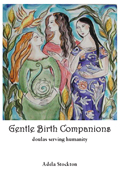
Book Review: Gentle Birth Companions

Book Review: Gentle Birth Companions: doulas serving humanity
By Adela Stockton
McCubbington Press, 2010
ISBN 978-1-907931-00-0
104 pages, paperback, £13.00 (worldwide)
http://www.adelastockton.co.uk

Reviewed by Molly Remer, MSW, ICCE, CCCE
https://talkbirth.wordpress.com

Gentle Birth Companions is the first book “written about the doula movement beyond the US” and as such it was a fascinating read. I hadn’t realized how ethnocentric my own perceptions were about the role and history of doulas and I previously assumed that the “doula movement” was essentially synonymous with the “doula profession in the US.” Not so! Indeed, Stockton discusses the way in which in the US, doula professional organizations strive mainly to be acceptable to the medical community, whereas in the UK the doula operates outside of (or parallel to) the medical system. And, she provides an interesting analysis as to whether doulas should be referred to as “professionals” in the first place (this is also due to a difference in what the word means in the UK compared to the US). She expresses several criticisms of certification or even of specialized training programs, feeling that professionalization builds additional, unnecessary layers of bureaucracy into the maternity care system and that the role of a doula should be the role of a lay woman. She also posits that the role of doula actually represents a return to the role of traditional midwifery—what midwifery was supposed to be and has now become removed from politically, socially, and culturally.

Gentle Birth Companions is divided into three sections. In the first, Grassroots, it explores the origins of the doula, the 21st century doula (including doula preparation and training), the UK “brand” of doula, and the wider doula community (thoughts about a global movement and also about doulas in the developing world as well as the industrialized world). The second section, Guardians of Gentle Birth?, explores the doula’s role both antenatally and postpartum and the return to “traditional midwifery” represented by the role. In the third section, Doula Tales, some UK doulas share birth stories , experiences, and thoughts in their own words.

Gentle Birth Companions is an excellent look at the “politics” of the doula movement and the professionalization and motivations of such, as well as at the role and purpose of the doula in women’s lives.

Disclosure: I received a complimentary copy of this book for review purposes.


Birth Quotes of the Week

Trying a new, manageable plan in which I collect my birth quotes from CfM and Talk Birth on Facebook and share them on a weekly basis, rather than trying to copy and paste months worth into a giant post the way I usually do! As always, I do appreciate a linkback if you re-share 🙂

“Childbirth calls into question our very existence, requiring an expectant couple to confront not only new life but death, pain, fear and, most of all, change.”~ Elizabeth Noble, quoting a new mother (via Midwifery Today e-news)

“I love and respect birth. The body is a temple, it creates its own rites, its own prayers…all we must do is listen. With the labor and birth of my daughter I went so deep down, so far into the underworld that I had to crawl my way out. I did this only by surrendering. I did this by trusting the goddess in my bones. She moved through me and has left her power in me.” ~Lea B., Fairfax, CA via Mama Birth)

This one is so powerful that it gives me chills to read it!

“Birth completely transforms a woman whether she considers her birth ecstatic or traumatic. Let us do everything in our power to help her make it ecstatic…” ~ Jan Tritten

“We women are the fact and flesh of connectedness.” –Grace Pauley & Ynestra King

“Whatever way birth happens, it is your rite of passage into motherhood, and that passage is to be celebrated. Natural childbirth is a passage, cesarean birth is a passage, and birth with an epidural is a passage to be celebrated. That passage cannot be taken away from you. Every mother’s birth experience is valid, and an act of courage.” –Ananda Lowe (The Doula Guide to Birth)

(Shared in honor of a special friend 🙂

“It is not only that we want to bring about an easy labor, without risking injury to the mother or the child; we must go further. We must understand that childbirth is fundamentally a spiritual, as well as a physical, achievement. The birth of a child is the ultimate perfection of human love.” ~Dr. Grantly Dick-Read, 1953

“We can make a woman have contractions, but we don’t always succeed in forcing her body to release the baby and give birth. If we start a labor with chemicals, we may very well have to finish it with a surgeon’s scalpel.” – Gail Hart, Midwife (via Dalai Mama Professional Placenta Escapsulation)

“When you change the way you view birth, the way you birth will change.” ~Marie Mongan, Hypnobirthing

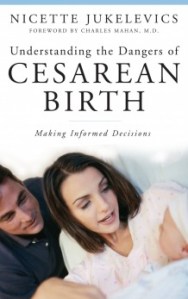
Book Review: Understanding the Dangers of Cesarean Birth

Book Review: Understanding the Dangers of Cesarean Birth: Making Informed Decisions
By Nicette Jukelevics
Praeger Publishers, 2008
ISBN 978-0-275-99906-3
264 pages, hardback, $49.95 (or $40.96 via http://www.icea.org)
http://www.dangersofcesareanbirth.com

Reviewed by Molly Remer, MSW, ICCE, CCCE
https://talkbirth.wordpress.com

Intended to be a comprehensive resource for both consumers and birth professionals, Understanding the Dangers of Cesarean Birth is an in-depth look at the incidence and impact of cesarean birth on mothers, babies, families, and society as well as an overview of prevention strategies. The final section of the book is about “why normal birth matters” and addresses changing the status quo. The Midwives Model of Care is reflected and promoted during the book and doulas also receive strong support.

I have two primary opinions of the book: The first is that I truly believe that Understanding the Dangers of Cesarean Birth should become the “go to” book for current, evidence-based, thorough information about cesarean birth in the U.S. It is a treasure trove of information and any birth professional would be well advised to have a copy on their bookshelf. The second opinion is that the “heavy” subject, extremely in-depth information, academic writing style, and relatively high price, will likely keep this book out of the hands out of its primary intended audience—the consumer. The person who most needs to read this book is the first-time pregnant woman. However, the entire time I was reading it, I kept thinking that there was only a slim likelihood of the average first-time mother being attracted to, or actually picking up this book, to read.

Mothers planning VBACs or seeking to understand their own cesarean birth experiences will probably find Understanding the Dangers of Cesarean Birth to be a valuable resource. Birth activists will find clearly articulated and important information that they will wish to shout to the rooftops and I think that this is how the content in Understanding the Dangers of Cesarean Birth has the best chance of truly reaching the women who need to hear its message.

Disclosure: I received a complimentary copy of this book for review purposes.

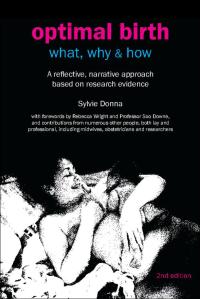
Book Review: Optimal Birth: What, Why & How

Book Review: Optimal Birth: What, Why & How
By Sylvie Donna
Fresh Heart, 2010
ISBN 9781906619138
670 pages, paperback, £24.99
http://www.freshheartpublishing.com

Reviewed by Molly Remer, MSW, ICCE, CCCE
https://talkbirth.wordpress.com

Written in an energetic and confident tone, Optimal Birth is written for midwives and other birth care providers and emphasizes undisturbed, natural birth. Throughout the text, a unique “birthframe” format is used to share birth wisdom in women’s own words. Donna is heavily influenced by the work of Michel Odent (he attended several of her births) and references him frequently. The author writes in a very straightforward manner and has extremely strong opinions as to what constitutes “undisturbed birth,” but these opinions are backed up with ample evidence-based information. The exquisite sensitivity of a birthing woman to her environment is of primary importance in the book and caregivers are strongly urged to take an extremely hands-off approach to care.

A lengthy volume, Optimal Birth is difficult to describe adequately in summary form—it contains extensive sections about physiological birth, birth interventions, the emotional impact of women’s experiences, prenatal care, and postpartum care. It also includes a week-by-week guide to pregnancy. There are a large number of black and white pictures and each section of the book contains a series of insightful questions designed to provoke self-discovery about physiological birth and the appropriate care of birthing women.

Readers unaccustomed to the midwives model of care or to the principles of undisturbed, physiological birth may find the book’s emphasis on non-intervention heavy-handed or one-sided. Considering that many manuals for care providers focus extensively on labor and birth “management,” personally I find the non-disturbance approach advised by Optimal Birth to be inspirational and encouraging as well as appropriate. As the author notes, “the processes of birth are so delicate that many things can disturb a laboring woman and consequently make her labor slower and more dangerous.”

An encouraging and informative companion book containing much of the same information but from a consumer perspective titled Preparing for a Healthy Birth is also available.

Disclosure: I received a complimentary copy of this book for review purposes.

Book Review: Secrets of Confident Childbirth

Book Review: Secrets of Confident Childbirth
By Vanessa Turner, Jackie Fletcher, Janay Alexander
HotHive Books, 2009
ISBN 978-1-906316-34-1
160 pages, paperback, £24.99
http://www.thebirthspecialists.com/book.html

Reviewed by Molly Remer, MSW, ICCE, CCCE
https://talkbirth.wordpress.com

“Your body is a complex work of art that functions perfectly” –The Birth Specialists

In an era when much pregnancy and birth literature seems to written in a “climate of doubt,” books like Secrets of Confident Childbirth offer a welcome and affirming alternate perspective—that of celebration and anticipation.

Accented with many beautiful, artistic photos of pregnant women, babies, and couples, Secrets of Confident Childbirth was written by a team of childbirth educators–“The Birth Specialists”–in the UK.  The book emphasizes mind-body preparation for birth, with a special emphasis on hypnosis for childbirth as well as other methods of using the mind in a positive way to achieve healthy birth outcomes. The book includes information about the benefits of natural childbirth, prenatal bonding with your baby, the powerful impact of words and language on the birth experience, the role of hormones and the impact of fear, visualization, relaxation, pain management, labor positions, massage, and more. It also includes a brief section on birth planning and evidence-based care.

I do have a slight concern that the emphasis on “focus on what you want and you will achieve it” can possibly lead to self-blame or to “blaming the victim” if a woman’s birth does not work out the way she hopes and dreams.  My observation about approaching birth with only “positive thinking” is that it can discount or undervalue the very critical role that the birth environment and the attitudes and fears of the others within that environment can have on the birthing woman’s experience and outcome. That said,  I truly love the confident approach, affirming language, and positive attitude towards pregnancy and birth expressed in Secrets of Confident Childbirth. This book is a tremendous gift to the birth world!

Disclosure: I received a complimentary copy of this book for review purposes.

Prematurity Awareness Month: Mind/Body Medicine in the NICU

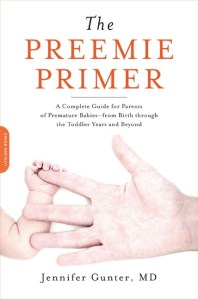
November is Prematurity Awareness Month and I’m pleased to have a guest post from OB/GYN and author, Dr. Jennifer Gunter, about prematurity and “mind-body medicine in the NICU.”

Mind-Body Connection
The mind-body connection is the idea that our thoughts and emotions impact our health. When we are stressed, anxious, or depressed our brain releases different combinations of chemicals and hormones that affect every organ system. Because mom and baby share a physical bond before birth as well as close emotional bond after birth, the mind-body connection is very important both during pregnancy and after delivery.

Studies show depression, stress, and anxiety during pregnancy increase the risk of preeclampsia (high-blood pressure) and premature delivery and can also lead to smaller babies. The American Congress of Obstetricians and Gynecologists recommends routine screening for depression as 14-23% of pregnant women are affected. There are many treatment options and getting help can improve your baby’s health. Remember, if you feel better it will benefit your baby.

It is intuitive that a mother’s emotional health can affect her pregnancy. After all, there is an intimate and prolonged physical connection. But how can this be the case after delivery? Have you ever been in a room with an anxious person or someone who is very depressed and felt your mood change? Our moods are influenced by the emotions of others and this is especially true with a mother and her newborn. When a mom is stressed, her baby is more likely to have abnormal levels of stress hormones. Some of the physical effects of mom’s (and dad’s too) stress on baby include increased colic, disturbed sleep patterns, feeding problems, and developmental concerns.

While reducing stress is important for everyone, premature babies appear to be especially vulnerable to the negative effects. This is because premature babies are not only exposed to physical stress from illness, the physical effects of a premature birth, and the intense medical care in the neonatal intensive care unit (NICU), but because their nervous system is immature they’re less able to mount any kind of protective responses.

Fortunately, this mind-body connection can be harnessed to facilitate wellness, even for a baby in the NICU. Positive thoughts, taming the stress response, and working towards emotional wellbeing promotes the best chemical and hormonal responses, which can positively impact your premature baby’s health.

The first thing is to work on your own emotional health, because up to 40% of mothers with a premature baby develop post partum depression and up to 75% develop post-traumatic stress disorder (PTSD). Make sure you are screened for post partum depression and if you are feeling stressed, anxious or are having flashbacks, ask for help from the social worker, your OB/GYN, or therapist if you already have one.

Don’t neglect your physical health. While you may be deconditioned from bed rest and/or the physical recovery from your delivery, try to get outside two or three times a day for fresh air and as you get stronger, think about some short walks or other physical activity. Make sure you do your best to eat right (it’s hard when your baby is in the hospital, but processed foots and skipping meals will make you feel worse) and get enough sleep. It is better be well rested and in control for 5 hours in the neonatal intensive care unit than be exhausted and nonfunctional for ten hours. Remember, taking care of yourself is taking care of your baby.

Try one or two techniques to reduce stress every day, and then gradually add in others as your mood and emotions dictate.

  • Breath from your diaphragm. When we are stressed we breathe with our chest muscles instead of breathing from the diaphragm (also called belly breathing). Takes some time several times a day to practice deep, cleansing belly breaths for a few minutes. Put your hand on your belly and focus on taking deep, natural breaths—if your belly is moving up and down you are doing it right.
  • Practice pausing. When you find your stress level rising, stop what you’re doing and shift your focus away from what you cannot change, such as oxygen levels and infection, and focus on what you can influence, such as positive interactions with your baby or learning more about her condition.
  • Say affirmations, which are positive statements that when repeated help combat negative thoughts and feelings by reprogramming the unconscious mind. Podcasts and CDs are available. Affirmations can be found in books, on preprinted cards, and even services that will text affirmations to your cell phone. Another option is to buy a pack of 3 x 5 note cards and create your own. Some examples include, “I am strong and courageous,” and “I will share my spirit with my baby.”
  • Journal, because some thoughts are too hard to say out loud, but still need to be released. Write everything down on paper.
  • Keep your hands busy. Celebrate your baby with pictures and mementoes in a baby book. Knitting, crocheting, and sewing are also excellent stress relievers.

To maximize positive interaction and minimize stress on the nervous system it is also very important for a preemie parents to learn their baby’s stress cues.

  • Ask if your baby is stable enough for kangaroo care (holding your baby skin to skin). Your rhythms and warmth are soothing and healing (for both of you!).
  • Make eye contact, smile, and interact with your baby if your baby is ready to accept that kind of stimulation (your baby’s nurse will help you learn to read her cures so you can tell when she is physically receptive). Babies absorb every interaction (it actually helps program the nervous system), because of physical challenges many premature babies have fewer opportunities.
  • Offer a pacifier at regular intervals and any time your baby appears stressed. Sucking a pacifier is comforting for a premature baby and helps the developing nervous system form positive connections.

ABOUT THE AUTHOR:

Jennifer Gunter, MD, is an internationally renowned ob/gyn and leading expert in the field of women’s pain medicine.  She lives in Mill Valley, California. To see videos of Dr. Gunter and her preemie sons, Victor and Oliver, in action visit: www.preemieprimer.com.

From the press release for the book:

12.3 percent of babies are born prematurely every year in United States (March of Dimes), while in many northern European countries that rate is 5 percent — representing an alarming statistic as prematurity is the leading cause of death and disability for newborns. Not only that, but neonatal intensive care unit costs alone for premature babies are $6 billion a year, representing 47 percent of costs for all infant hospitalizations and 27 percent of all pediatric stays in hospital (Pediatrics, Oct 2010).

After rounds of fertilization treatments, Dr. Jennifer Gunter, ob/gyn, became pregnant with triplets. Twenty-two and a half weeks into her pregnancy she suddenly went into labor and delivered her first son, Aidan, who died just three minutes later.  Then something unexpectedhappened-she stopped delivering.  Nearly four weeks later, at week twenty-six, Jennifer delivered her sons, Oliver and Victor-weighing one pound eleven ounces and one pound thirteen ounces, respectively-and became a parent of preemies.

Approximately five hundred thousand babies are born prematurely every year in the United States. In fact, prematurity is the leading cause of death and disability for newborns. In The Preemie Primer: A Complete Guide for Parents of Premature Babies-from Birth through the Toddler Years and Beyond, Dr. Gunter provides a comprehensive resource that covers everything from delivery and hospitalization in the NICU to preemie development and parenting multiples-even discussing specific topics like finding a car seat for your preemie, setting special needs preemies up in school, and understanding insurance plans and medical billing.
Pregnant Women Driving…

“In terms of mortality and injury, we know that driving a car is hundreds of times more dangerous for women and children than giving birth…Though it’s proven to be extremely dangerous and can often be fatal, no one accuses a pregnant woman who drives a car every day of being ‘selfish.’ And, when she arrives at her destination without having a crash, no one tells her how ‘lucky’ she was.” –Jennifer Margulis

I have blogged several times about birth having inherent value in its own right. Process AND “product” (i.e. healthy mom, healthy baby) are both important. A de-emphasis on the birth process only serves to disempower, silence, invalidate, and violate women—to shut down their very real and important reasons for choosing “alternative” birth options (reasons which usually have health of the baby as central anyway). Similarly to the writer above, I also use car/driving analogies when talking about the accusation people make about choosing “the birth experience” over a “healthy baby.” The way I word this same idea is that no one accuses a pregnant woman of placing her desire to get somewhere over her desire for a healthy baby (as women having homebirths are often accused—except in the case of homebirth, unlike with driving, there actually IS NO increased risk of death from staying at home!). I also use the car example in classes when talking about routine IVs—by the logic used to “justify” routine administration of IVs to women in labor, we should all make sure we are hooked up to at least a saline lock every time we drive anywhere!

Book Review: Survivor Moms


Book Review: Survivor Moms: Women’s Stories of Birthing, Mothering and Healing after Sexual Abuse

By Mickey Sperlich & Julia Seng
Motherbaby Press, 2008
ISBN 978-1-89-044641-3
245 pages, softcover
http://www.midwiferytoday.com

Reviewed by Molly Remer, MSW, CCCE

Past sexual abuse is an unfortunately common experience for women. Anyone who works with women of childbearing age should be mindful and informed of the effects of an abuse history on the woman’s experience of pregnancy, birthing, and mothering. Indeed, I consider this awareness to be a fundamental professional responsibility. Enter Survivor Moms, published by Motherbaby Press. This book is an incredibly in-depth look at the experiences and need of survivors of sexual abuse during the childbearing year.

One of the best and most unique features of the book is the “tab” format used for much of the clinical, research-based, or fact-based content in the book. Rather than lengthy chapters reviewing research and analyzing the phenomenon, textboxes containing quick facts and reference material are printed in the margins of many of the pages. The bulk of the narrative information in the main body of the text is then in the voices of mothers themselves, interspersed with commentary by the authors linking concepts, explaining ideas, and clarifying essentials. This is a powerful format that makes information readily and quickly available for reference as well as making the overall book very readable and approachable.

As someone with no personal abuse history who is currently pregnant, I did find the book to be a very emotionally difficult, intense, and almost overwhelming read at times. This is not a criticism in any way—sexual abuse is not a light or cheerful topic and it can be one that many people prefer to avoid. This is all the more reason for birth professionals to make a specific effort to be educated and informed.

Written both for mothers themselves and for the professionals who work with them, Survivor Moms is an essential part of any birth professional’s library. As noted in the book’s introduction, “We need to understand the impact of childhood abuse on birthing and mothering deeply, from hearing women’s stories. We also need to understand it broadly—from looking at the impact on samples and populations, on the body and on the culture.” Survivor Moms offers an accessible way of hearing those critically important stories and developing the necessary understanding to care compassionately for birthing women.


Disclosure: I received a complimentary copy of this book for review purposes.

Honesty in Birth Preparation

Some time ago I came to the disheartening conclusion that what many independent birth educators like myself teach women in birth classes isn’t actually what they can expect, it is what they deserve. And, in our birth culture there can be a dramatic difference between the two. I then wrote an article exploring what many women can expect from a traditional hospital-based “natural” birth—it was published in Pathways magazine and has also made the rounds multiple times as a blog post. So, what then do women deserve? In my mind, they deserve: humane care; respectful, individualized treatment; freedom of movement and choice in a woman-honoring environment; informed consent; the Six Healthy Birth Practices; and the recognition that birth is a significant rite of passage and transformative life event. With this conviction, I therefore refuse to start teaching only what can be expected, because women deserve so very much more than that—but, how to professionally handle the dichotomy in class?

Published in the 80’s, the book Childbirth with Insight by Elizabeth Noble has some thoughts on the subject offer the birth educators of today. In the section addressing the issue of being honest with childbirth education clients about common obstetric practices, she says:

“…instructors in the community cannot afford to discuss obstetric practices in ways that will aggravate local hospitals and obstetricians if they wish to fill their classes. One childbirth educator comments, ‘Imagine if we told couples how it really was…perhaps we’d lose fewer teachers from our group.’ No wonder many of these dedicated and enthusiastic teachers suffer ‘childbirth preparation burnout.’ They are caught in a triple bind. If they describe accurately how birth is managed in some hospitals, couples would become very fearful. If expectant parents anticipate a warm and flexible birth environment and find that such is not the case in the hospital they use, their disappointment is inevitable and bitter. If the instructors advocate childbirth without drugs or anesthesia and these are needed, parents may harbor feelings of guilt and failure.”

The author concludes this segment of the discussion with a very potent and powerful message to birth educators:

“Each instructor must teach what she knows in her bones to be true. A dynamic teacher is constantly changing, becoming more self-aware. At the same time, couples must be warned that almost all hospitals and doctors have expectations based on the mechanical model of birth.” [emphasis mine]

This is such a difficult line to walk—to encourage confidence, trust, and joy in childbearing, while being straightforward about the challenges couples may face when seeking a natural birth experience in a hospital. I always encourage couples to “assume good intent” from hospital staff—they offer medication because they feel like they are helping and also simply because it is the primary “tool” in their medical-model oriented helping toolbox. I also remind them that routines are powerful and if the majority of births occurring at a specific hospital are induced, medicated, heavily intervened with, etc. it can be difficult to buck the trend. Again, not out of some sketchy motive from hospital staff, but simply because of routine or “this is what we always do” or “this is what mothers want from us.”

The very firey, bold, honest, and passionate 1990’s manifesto on VBAC, Open Season even more bluntly addresses the issue of transparency in maternity care and also the effectiveness of childbirth education in this quote:

“If childbirth classes really ‘worked,’ more women would be having babies without interference. More women would be recognizing the complete naturalness of birth and would remain at home, delivering their infants with feelings of confidence and trust. More and more, midwives would be demanded. The names of those hospitals and doctors who treated women and babies with anything less than absolute respect would be public knowledge, and childbirth classes would be the first place these names would be discussed. ‘You’re seeing What’s-His-Face? He’s a pig! In my opinion, of course,’ I tell people who come to my classes. I then proceed to give them the names of people who have used Pig-face. They can always ask Dr. P. for the names of people who have used him and been satisfied with their births, for balance.”

While I’m not personally to the point of taking the “Dr. Pig-face” approach from Open Season, I’ve decided that honesty is the best policy and I’ve started to be very upfront about my challenge with the couples in my classes. Lately, I say, “here’s where I’m wrestling with something. I’m teaching you what you deserve, but it isn’t necessarily what you can expect…” and we proceed to explore choices, talk about communication skills, talk about evidence-based care, making sure the care provider’s words and actions thus far are matching, etc. However, my basic dilemma remains—I am not changing a broken system by teaching individual couples how to navigate it more satisfactorily, I’m actually supporting the broken system (right?!). While one-on-one change efforts have value and are personally rewarding, what I know in my bones to be true is that what we actually need is widespread maternity care reform and systemic change on a global level…

(I originally posted some content from this post on the ICEA blog.)