Archives

Controversies in Breastfeeding

20120724-174258.jpg

If you get a chance to attend one of his presentations, don’t miss it! In this slide, Dr. Jack explains that he disagrees strongly with the notion that a baby that has lost 10% of its birthweight needs to be supplemented.

Just in time for the start of World Breastfeeding Week, here is part 4 of my CAPPA re-cap series!

This post is a companion to my CAPPA re-cap post about the impact of birth practices on breastfeeding. Dr. Newman’s keynote session about Controversies in Breastfeeding was actually given before his breakout about birth and breastfeeding, but for the chronological value, it made sense to me to put up the birth post first.

As I already shared, in Newman’s perspective we have a huge problem in that many medical care providers do not recognize the critical importance of breastfeeding. Newman also emphasized that there are many people who don’t know squat about breastfeeding and breastmilk and don’t feel like they need to learn anything before they start doing studies and writing papers about it.

Why is hard to study breastmilk?

Because…there is no such thing as “standard” breastmilk. It is a physiological fluid and varies from person to person. We DO NOT have to prove that breastfeeding is better than formula. Those comparison studies are unnecessary.

Some great stuff from Dr. Newman’s presentation about controversies:

  • The exclusively breastfed, well-gaining 5 month old is getting only, at most, 10-15% more milk than the exclusively breastfeeding, well-gaining 1 month old, even though the 5 month old is twice as heavy. Baby continues to gain weight steadily even though it is not “getting enough” compared to its formula fed counterpart. (put that in your pipe and smoke it–yep, he really then said that ;-D)
  • Colostrum has 100,000-5,000,000 leukocytes per ml–that is more than blood. (i.e. colostrum has more white blood cells in it than your actual blood has in it!)
  • Colostrum and formula are the same in the following ways: both are liquid.
  • Breastmilk does not need to supply vitamin D (makes no sense to describe breastmilk as “deficient in” or “lacking” vitamin D).
  • With regard to the high incidence of reflux being diagnosed in babies—his response to why so high is, “because [most] doctors don’t know anything about breastfeeding.”
  • We learn one thing when we hear that the mother has been told to feed her baby X number of minutes per side—>the person telling her this does not understand breastfeeding.
  • There are no such thing as “flat nipples”–women have normal nipples. We live in a bottle feeding culture that makes us assume that if a mother does not have nipples that stick out like a bottle nipple, the nipples are flat (**Molly’s own note–we also live in a culture where 75-90% of women have epidurals during labor which can contribute to edema in the breast and the accompanying appearance of flat nipples).

 And, there should be no controversy about formula feeding vs. breastfeeding. If you actually look at the biochemistry of breastmilk you would know there is no comparison. No controversy. (with a laugh after this he added, “pediatricians are simple folk” ;-D)

In that plainspoken way I found so refreshing, Dr. Jack also pointed out that formula feeding is missing one more thing: breastfeeding. That’s right. Society thinks that bottle feeding is the “same”–it isn’t. Breastfeeding is an intimate relationship. He also pointed out that, “people will lie, lie, lie to sell products.” (see ad to right)

Finally, he explained that this mechanization of breastfeeding (through things like test weighing and nipple shields and timed feedings) will cause more and more mothers to abandon breastfeeding and then she’ll say, ‘we tried everything and it just didn’t work.’ Yes, we did “try everything,” everything to make her not succeed. (And, then she’ll write an article about it complaining about “what’s wrong with breastfeeding.”)

Handouts from Dr. Newman are available here. One I’ve used recently is How to Know a Health Professional is not Supportive of Breastfeeding.

I address other systemic influences on breastfeeding in Breastfeeding as an Ecofeminist Issue

The Impact of Birth on Breastfeeding

Just in time for the start of World Breastfeeding Week, here is part 3 of my CAPPA re-cap series!

…they want you to believe it’s their power, not yours…They stick needles into you so you won’t hear anything, you might as well be a dead pig, your legs are up in metal frames, they bend over you, technicians, mechanics, butchers, students, clumsy or sniggering, practicing on your body, they take your baby out with a fork like a pickle out of a jar.

–Margaret Atwood in her novel Surfacing (opening quote of Dr. Jack’s presentation at the 2012 CAPPA conference)

As I mentioned, my favorite part of the CAPPA conference was hearing Dr. Jack Newman speak about controversies in breastfeeding (see next post) and then about the impact of birth on breastfeeding (breakout session). He was an amazing speaker. Very straightforward and almost blunt as well as funny and fast-paced. I really feel glad to have had the chance to see him in person after years of being familiar with his materials.

The notion of the birth-breastfeeding continuum isn’t new to me, having actually published articles about it previously, however Dr. Newman’s phrasing, descriptions, and reminders was just so perfect that it left me feeling even more enthused about the inextricable link between birth and breastfeeding. It is a biologic continuum that nature does not see distinct events—baby is born and goes to breast, it is part of the same event. Drawing on Diane Wiessinger’s work, Dr. Newman explained

With animal births: following a normal birth, infant feeding just…happens. Following an interventionist birth, the mother rejects the baby and there is no nursing at all.

In some hospitals, separation of mother and baby is routine as a way to “prevent” postpartum mood disorders. Dr. Jack’s own theory was that perhaps human mothers turn this “rejection” against themselves and it shows up as a postpartum mood disorder.

Babies NEED and expect to be with their mothers after birth. It is of critical importance. As I shared via Facebook, Dr. Jack explained this:

Know how much an incubator costs now? $50,000. Why don’t we just give half of that money to the mother and put the baby skin to skin on mother’s chest?

And, this gem:

Our hospital births break every rule in the mammalian list of mother-baby necessities.” –Dr. Newman

He also noted that if baby is put skin-to-skin on mother immediately after birth regardless of original intention, the pair will breastfeed. It is biologically programmed.

Why do hospital births break the rules?

Because, as Dr. Newman explained we have a big, big problem in that HCPs do not recognize the critical importance of breastfeeding. He also repeatedly emphasized (in a very funny way) that there are many people who don’t know squat about breastfeeding and breastmilk and don’t feel like they need to learn anything before they start doing studies and writing papers about it.

Dr. Newman also emphasized the important point that the burden of proof rests upon those who promote an intervention! He was speaking with regard to recommending formula supplementation, but I strongly believe it applies to any birth practice. So simple and yet so profound. One example that he shared that is familiar to birth advocates is that lying down for electronic fetal monitoring is a position of comfort for the care provider, NOT for the mother.

And, he made this excellent point: “All medical interventions, even when necessary, decrease the mother’s sense of control, and increase her sense of her ‘body not being up to the task.” Again, the burden of proof rests on those who promote the intervention, not vice versa.

As I’ve touched on several times before, IV fluids that are commonly administered during labor may increase the baby’s birth weight, leading the baby to be more likely to experience the dreaded 10% weight loss (“totally bogus, by the way”). Also as I’ve noted before, IV fluids lead to significant maternal fluid retention which contributes to edema in the nipples and areolas and then…the dreaded “flat nipples.” The more fluid a mother gets in labor, the more a baby “loses” after birth!

Including the same picture as in my other post, because it is in this picture that Dr. Jack is specifically talking about his next point:

I disagree strongly with this statement:

‘Typically, loss of = or >10% of birth weight in the first few days suggests dehydration and the need to consider supplementation.’

He goes on to note that what is necessary is NOT supplementation but to help the mother and baby breastfeed well. The real question when it comes to newborn weight loss is, “is the mother-baby breastfeeding well?”

Newman also addressed something birth advocates are familiar with, the fact that epidural anesthesia can cause maternal fever. This leads to an infant sepsis workup and antibiotics and usually means separation of mother and baby. Here we again experience the failure of many medical care providers to recognize the importance of breastfeeding as beyond just a feeding method. Breastfeeding protects the baby–this is what most hospitals do not understand.

Of interventions that undermine breastfeeding, Dr. Jack pointed to Demerol (meperidine) as the “worst of the lot,” with newborns experiencing sedation and many of them not sucking at all. He also pointed out that all interventions increase the risk of cesarean section, which leads to increased discomfort for mothers and less willingness to breastfeed and increased likelihood of mother-baby separation.

The importance of skin-to-skin contact

Babies easily find their way to the unwashed nipple. And, given baby’s inborn feeding behaviors and instincts, it seems clear that, “if the baby expresses his or her choice, the baby would choose the breast.” (with regard to breastfeeding as maternal “choice”)

Not putting baby skin to skin with the mother, “increases the risk of hypoglycaemia significantly…Isn’t skin to skin contact a less invasive preventative measure than giving formula?” Newman then points out that most often we see “skin to blankets” which keeps baby from showing they’re ready to feed, doesn’t stimulate milk supply, and leads to engorgement which is not normal.

And, at the end he emphasized that when it comes to birth and breastfeeding, all too often WE MESS IT UP by meddling with the biological processes and rhythms of the mother-baby relationship.

For more about controversies in breastfeeding, check out my next post.

Handouts from Dr. Newman are available here. One I’ve used recently is How to Know a Health Professional is not Supportive of Breastfeeding.

I’ve written about the birth-breastfeeding continuum and about some other systemic influences on breastfeeding in breastfeeding as an ecofeminist issue.

Conscious Agreement and Informed Consent

This post is part 2 of my CAPPA Re-Cap series.

During their general sessions at the recent CAPPA conference, Laurel Wilson and Tracy Wilson Peters both advocated a process called “Conscious Agreement” in working with pregnant couples. The basic steps are as follows:

  • Separate yourself from external influences
  • Get quiet and pause
  • Listen in (including mentally checking in with your body and how it feels)
  • Choose and commit

I especially appreciated Tracy’s observations that this process of conscious agreement goes beyond informed consent and, as birth educators, we need to make sure to “marry the two every time,” rather than focusing solely on informed consent. Why? Because there are several things wrong with informed consent as it is practiced today:

  • It fails to address the importance of conscious decision-making
  • Informed consent is made with the mind or intellect (and ignores feeling and intuition)

And…

  • You can “consent” all day long and not feel good about it.

The last point is the crux of the issue to me. When I cover informed consent in my non-birth classes, I always emphasize that the corollary is informed refusal. If “consent” as it is practiced by your hospital means saying yes and there is no option of saying no, it does not qualify as consent! A choice without the option to refuse is NOT a choice at all (see The Illusion of Choice). My students have almost never heard of the notion of “informed refusal” and seem shocked to even consider the possibility! Since I’ve had a special interest in this topic for a long time, I really connected with the idea of conscious agreement, especially when paired, as Tracy suggests, with informed consent information.

Another handy tip offered by Tracy during her presentation was to use HALT before entering into any agreement (or confrontation). Check in to see if you are…

  • H–Hungry
  • A–Angry
  • L–Lonely
  • T–Tired

(Also, consider whether the person you are trying to communicate with is any of these things. This is especially good to remember with children.) And, she shared this little poster:

This little sign may have been made especially for me. I have a terrible problem with getting crabby and snappish and plain old hangry (hungry + angry)—and then having to apologize. You’d think I’d have it figured out by now! (though, I do think nursing exacerbates it)

Epigentics, Breastfeeding + Diet, and Prenatal Stress

This post is part one of my CAPPA Re-Cap series.

CAPPA linchpins Laurel Wilson and Tracy Wilson Peters are co-authors of a new book, The Greatest Pregnancy Ever, that focuses on the depth, intensity, and value of the MotherBaby bond. As I noted, I listened to Laurel talk about Bridging the Nutrition Gap and to Tracy speak about the “accidental parent.” In both, they addressed the biological wisdom that mothers possess and of the deeply interconnected nature of the maternal relationship.

Laurel reminded us that there is a brain in our gut, essentially. This brain literally tells us how we should be feeling our emotions, based on the nutrition that we’re putting into our bodies. She discussed epigenetics–a term meaning literally “above the gene”—explaining that this is the “translator that ‘reads’ the book of instructions from our genome.” The translator tells the body to turn on or off the genes we’ve inherited from our parents. Epigenetics is essentially the environment–those things in our environment that influence our biology. Laurel pointed out enthusiastically that we want to create an excellent “translator” for our children. She also emphasized repeatedly that one important job of the placenta is to “train” the baby for the environment it will be experiencing. This is why prenatal diet matters, it is helping to prepare the baby to thrive in the environment into which it will be born. So, chronic stress leads to a stressful womb environment, which leads to a baby that is biologically primed to be born into a stressful postnatal environment. Mother’s body primes baby’s body for success in that environment. As I listened to her speak and discuss the things we’ve learned from science about genetics and how our bodies function, I kept thinking: science can do a lot, it can do wonderful things. Mother’s body can do even moreAnd, isn’t that just cool?!

So, what’s going on in the maternal habitat?

One important point Laurel made about prenatal diets was that prenatal diets high in hydrogenated oils predispose mamas to postpartum moods disorders. She said this is because hydrogenated oils essentially “leach” EFA’s out of the mother’s system.

She also noted that mice up to three generations are affected with PCOS by BPA and phthalates (in food packaging. Our food is literally making us sick). These influence change the endocrine system and are connected with reduced sociality and community engagement.

Laurel explained too that no artificial sweeteners are considered safe for pregnant women and that stevia too is linked to epigentic damage. She suggested using honey and molasses as sweeteners if needed.

One tip that I found funny, basic, but so true with regard to choosing healthy foods is to make sure to choose to eat foods that will rot!

In Tracy’s talk she passionately affirmed that we have to eliminate chronic stress from pregnant women’s lives because she is laying an emotional and physical foundation for another person’s life. This matters! Babies are feeling before they are thinking and we are designed to live in the environment we are being born into.

Also remember, babies don’t need to be in nurseries–they need to be with their mothers. This MATTERS!

CAPPA Re-Cap

Yesterday I got home from Kansas City where I’d been attending the annual free birth conference hosted by CAPPA. While there I concluded that Desirre Andrews is officially a superhuman live-tweeter. You can catch up with all of her rapid-fire tweets about the conference at CAPPA’s Twitter account.

I also tried my hand at posting a few things that particularly grabbed my attention to my Talk Birth and Citizens for Midwifery Facebook pages which automatically feed into Twitter. I’m not very good at catching short snippets for live-tweets, but some thoughts that I grabbed to highlight are as follows. If they don’t have quotation marks, they aren’t necessarily direct quotes, just “essence” summaries as I tried to take notes and pay attention!

First I attended Laurel Wilson’s talk about Bridging the Nutrition Gap and next, I listened to Tracy Wilson-Peters speak passionately about the “accidental parent.”

Essence tweets from Laurel and Tracy’s talks:

Babies don’t need to be in nurseries–they need to be with their mothers. This MATTERS!

Science can do a lot, can do wonderful things. Mother’s body can do even more…

Prenatal diets high in hydrogenated oils predispose mamas to postpartum moods disorders.

And, then I attended a breakout session from Darla Burns about postpartum rituals and snagged this interesting tidbit:

In Holland, all pregnant women are required to buy a homebirth kit, “just in case.”

The second day, I found myself entranced by the most awesome Dr. Jack Newman. His presentations were the highlight of the conference for me. I loved him! I attended two–his general session on Controversies in Breastfeeding and then his breakout sessions, Impact of Birth Practice on Breastfeeding:

20120724-174258.jpg

If you ever get a chance to see this man, don’t miss it!

We have a big, big problem in that HCPs do not recognize the critical importance of breastfeeding.

There are many people who don’t know squat about breastfeeding and breastmilk and don’t feel like they need to learn anything before they start doing studies and writing papers about it. –Dr. Jack Newman

There is no such thing as “standard” breastmilk. It is a physiological fluid and varies from person to person. We DO NOT have to prove that breastfeeding is better than formula. Those comparison studies are unnecessary.

The burden of proof rests upon those who promote an intervention! –Dr. Newman

With animal births: following a normal birth, infant feeding just…happens. Following an interventionist birth, the mother rejects the baby and there is no nursing at all.

Our hospital births break every rule in the mammalian list of mother-baby necessities.” –Dr. Newman

Lying down for electronic fetal monitoring is a position of comfort for the care provider, NOT for the mother.

Know how much an incubator costs now? $50,000. Why don’t we just give half of that money to the mother and put the baby skin to skin on mother’s chest? –Dr. Newman

Seriously, Dr. Newman’s talks were amazing. Be prepared to hear more about them soon!

The final day I heard Polly Perez speak about Building Bridges with an emphasis on communication and fear:

Luke: I don’t believe it. Yoda: that is why you fail.

“Use language that lets you share your heart openly.” –Polly Perez

Listening is *active*, not a passive activity. Listen with empathy, openness, and awareness.

We have taken the hearts and minds out of much of our work because we’re frightened of getting too close. But, close is where we need to be.

“We must give people the opportunity to challenge their fears. Not only will this change each person, it will change the political and medical climate in which they make these choices.” –Connie Pike, via Polly Perez

Polly shared the first home birth she attended – made her fear of it “melt away like butter in a pan.”

You do not have to be an OB to be knowledgeable about birth. –doctor working with Polly Perez

Follow up from same doc: “if you tell me a baby is going to come out, I’m a gonna believe you!”

Changing sick systems is not about subterfuge but bringing light to situations that need to be altered.

Since micro-blogging is simply not my gift and is unlikely ever to become so, I am also planning longer posts based on several of the conference sessions. They will be (links will be updated as the posts become live):

At the CAPPA conference I also made a large custom order of great gifts from Joy Belle jewelry.

And, I ate tons of sample honey sticks from Glorybee–yummy! (see prior post: Why Honey Sticks During Labor?)

Other treats involved getting to spend some quality visiting time with a Friends of Missouri Midwives friend from St. Louis. We spent a lot of time talking over the FoMM newsletter (of which I am editor) and I feel very enthused about our ideas for its future.

I also got to meet a Facebook friend who started out originally two years ago as a Talk Birth fan on FB (after finding my site via my all-time most viewed post: In-Utero Practice Breathing). We spent some good time together visiting and laughing and it was fun to make the friendship connection with someone who was previously only an internet friend!

Incorporating Prenatal Yoga into Childbirth Education Classes

Incorporating Prenatal Yoga into Childbirth Education Classes

By Molly Remer, MSW, ICCE, ICPFE

Note: This is a preprint of an article published in the International Journal of Childbirth Education, Volume 27, Number 2 (April 2012)

The essence of yoga can be distilled into four key elements: breath, feeling, listening to the body, and letting go of judgment and expectation (YogaFit, 2010). When considering the essence of yoga, it is easy to see what a natural complement it is to conscious, active preparation for a healthy birth. Most birth educators would agree that paying attention to her breath and to her feelings, listening to her body, and letting go of preconceived expectations of what birth will be like are perhaps the most crucial messages to convey to the pregnant woman and her partner. Additionally, experts widely agree that exercise during pregnancy has beneficial effects for the cardiovascular and musculoskeletal systems and is associated with physical and psychological well-being. There is also some evidence that recreational exercise may reduce the incidence of premature labor and low birthweight babies (Hyatt & Cram, 2003).

Anyone involved with educating adult learners (in any context) is likely to be familiar with the concept that people are most likely to retain information that they have actually practiced (versus reading about, hearing about or seeing demonstrated). I have found that incorporating a few simple yoga poses into each class session is a beautiful way of illustrating and applying many important elements of childbirth preparation. In approximately 10 minutes of movement, important points can be underscored without having to actually say anything or “lecture” to clients. The hope is that as we move together through a carefully chosen series of poses, subtle emotional development and trust in birth occurs—again, in a more effective manner than by the childbirth educator saying during class: “Trust birth!”

One rationale for incorporating yoga into prenatal classes is as follows: First, people often learn and retain information more effectively by actually doing something. Practicing the yoga poses together allows experiential practice of pelvic floor exercises, pelvic rocks, tailor-sitting, leg cramp alleviation, and back pain coping techniques, to name a few, instead of just hearing me talking!

Second, and most important, Yoga in prenatal classes emphasizes that birth happens in the body. As childbirth educators we spend a significant amount of time talking and sharing information, but birth does not only happen in the mind. Birth happens most profoundly in the body. Not only does birth happen in the woman’s body, but supporting and being with a woman in labor is also an intensely physical process, so it is important for partners to try the yoga series.

People today spend much of their time “living in their heads”, and many of us do not feel comfortable with, or at home in, our bodies. Practicing poses in class helps couples out of their heads and into their bodies and begins a process of feeling comfortable with moving and using their bodies in positive ways. This may help them develop the trust and confidence that will contribute to a smooth and peaceful birth process.

Each pose is followed with a birth affirmation such as, “the magic and mystery of birth delight and amaze me” (Miller, 2003). Positive affirmations help plant positive seeds of confidence and trust in the wisdom of women’s bodies and of the beauty of birth. These cognitive adjustments may also send a welcoming message to the woman’s body and baby as they both prepare for birth.

Opening classes with a series of poses is an effective way to “frame” the class. Class can be opened with a brief check-in period asking how people are feeling, about recent prenatal appointments, and any questions can be addressed. A transition from “regular time” into “class time” occurs with a brief series of simple poses. This routine helps people transition from their normal days into feeling ready and excited for birth class information.

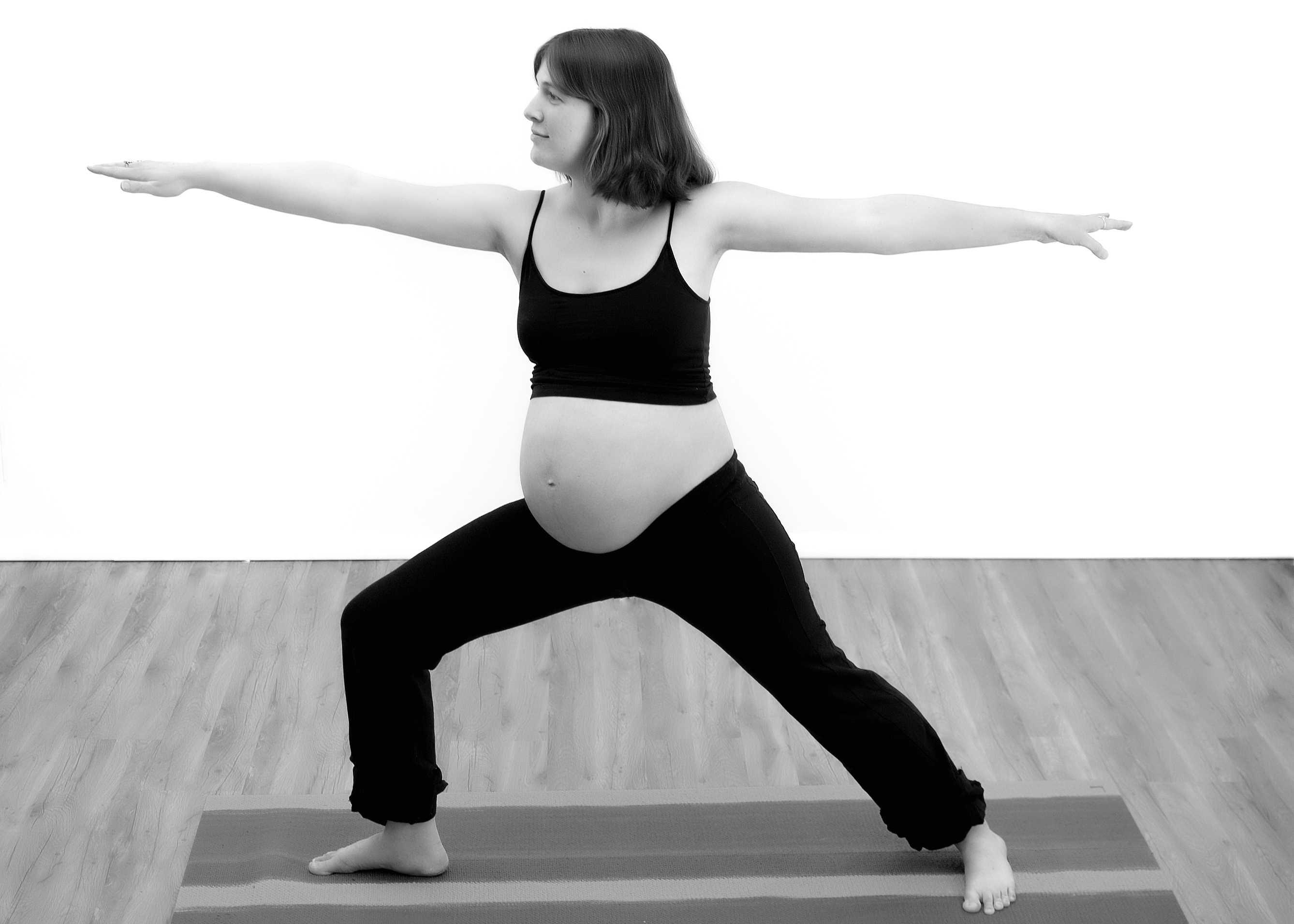
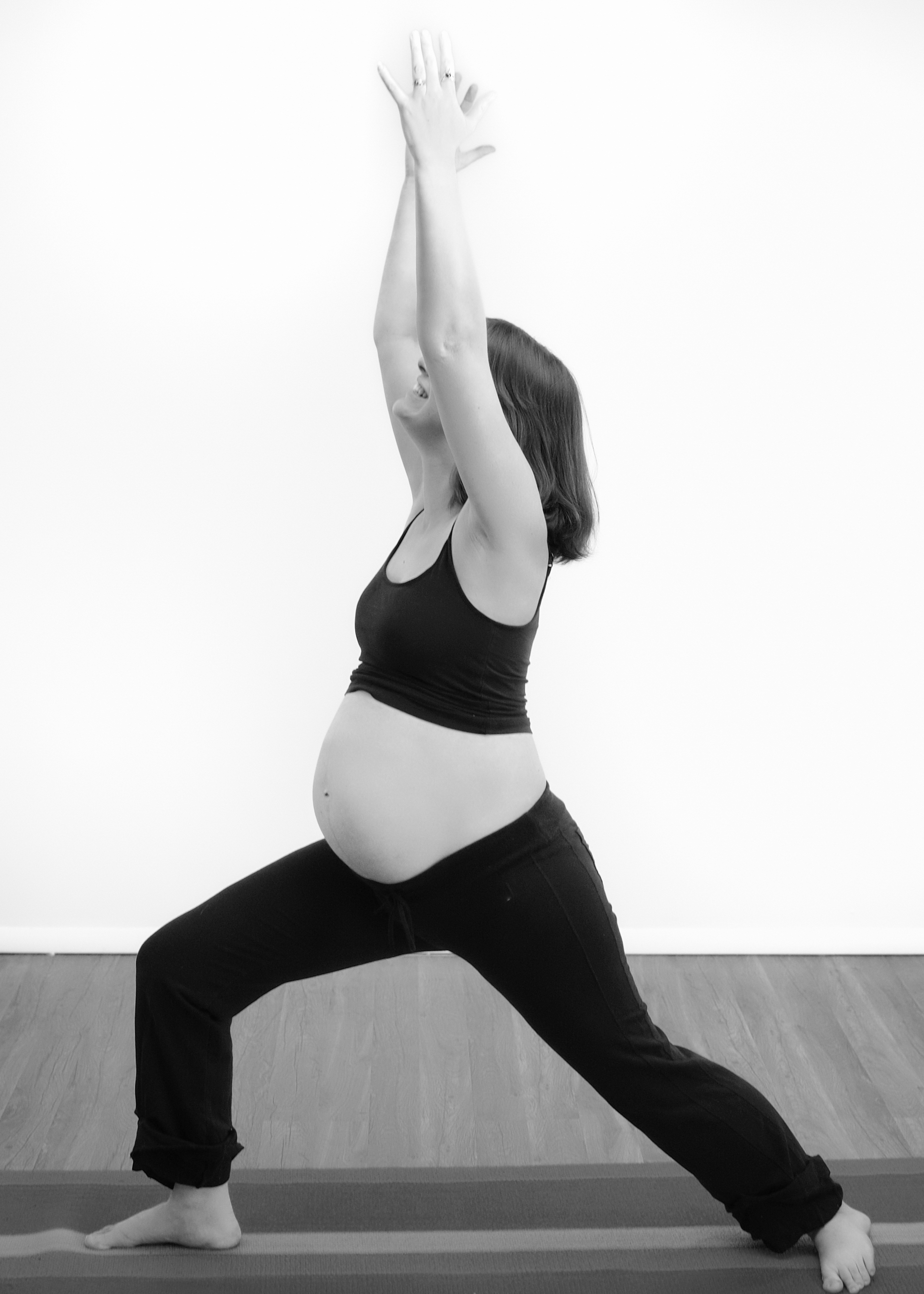
Each pose was chosen because it has specific birth- or pregnancy-related benefits. Begin with healthy sitting—seated crossed legged or tailor-style on the floor with spine straight. Do some neck rolls and shoulder rotations to help release tension. Move into a brief series that includes knee-rocking, leg stretches, Divine Mother Pose, Star Pose, pelvic rock, standing squat, Palm Tree Pose, Half Moon Pose, Triangle Pose and seated Mountain Pose. There is an additional short series of “birthing room yoga” poses described with photographs that is available as a free handout here.

The series is closed with a very brief meditation or visualization exercise. The series of poses and the affirmations are kept the same each week for retention purposes, but the meditation is varied. A quick visualization or relaxation exercise (under two minutes) is often more effective and more readily welcomed by couples than the longer visualization exercises often used in classes (which can seem esoteric to some people). A mindfulness meditation that is effective is:

Inhale and repeat silently: “I exist in the here and now….”

Exhale and repeat silently: “The present moment is all I have to be with…”
Continue inhaling and exhaling as you silently and simply repeat: “Here and now…present moment.”

A favorite resource for easily and smoothly incorporating yoga into classes is The Prenatal Yoga Deck by Olivia Miller, published by Chronicle Books in 2003. The poses listed above were selected from this deck. The deck contains 50 cards, so the educator can easily build a series for use in classes. Each pose card is accompanied by a lovely affirmation. The deck also includes six cards with simple meditations (the meditation above is adapted from one in the deck). The deck format, tidy box for holding the cards and sturdy card for each pose is an ideal format for transport to class as well as serving to provide subtle reminder cards as you lead couples through poses. Each card has a line drawing on the back illustrating the pose, so assessing whether you are doing the pose correctly is easy (sometimes just reading a description of the pose is more complicated than seeing it completed).

Occasionally the childbirth educator may get some eye-rolling or “weird, hippie exercise!” responses from pregnant couples. Regardless of how much or how little they appreciate the practice of yoga in classes, the poses used lay a physical foundation for a positive attitude toward birth and a sense of confidence as a birth-giving woman or supportive partner. Through the simple incorporation of yoga into birth classes, the expectant couple receives an irreplaceable, experiential grounding in the rhythm, focus, release, and conscious awareness so essential to the intensely embodied experience of birthing.

 Molly Remer, MSW, ICCE, ICPFE is a certified birth educator, writer, and activist. She is a professor of Human Services, an LLL Leader, editor of the Friends of Missouri Midwives newsletter, and a doctoral student at Ocean Seminary College. She has two wonderful sons and a toddler daughter and she blogs about birth, motherhood, and women’s issues at Talk Birth (http://talkbirth.me)

Suggested Resources for Birth Educators
The Prenatal Yoga Deck: 50 Poses and Meditations, Olivia H. Miller, ChronicleBooks, (2003)
YogaFit: PreNatal DVD, YogaFit (2009)
Yoga for Your Pregnancy DVD (2004)

All available via Amazon.com

All photos of the author, January 2011, 37 weeks. (c) Karen Orozco, Portraits & Paws Photography

References

Hyatt, G.& Cram, C. (2003). Prenatal & postnatal exercise design. DSW Fitness, Tuscon Arizona (training manual for the ICEA Certified Prenatal Fitness Educator Program)

Miller, O. (2003). The prenatal yoga deck: 50 poses and meditations. Chronicle Books, San Francisco, CA.

Remer, M. (2007). Incorporating prenatal yoga into childbirth educationclasses. Midwifery Today, 4(84), 66.

Talk Birth. (2011). Retrieved from https://talkbirth.me/2010/03/10/birthing-room-yoga-handout/

YogaFit PreNatal/PostpartumSpecialty Program Manual. (2006). YogaFit Training Systems Worldwide, Inc. , www.yogafit.com.

Breastfeeding as an Ecofeminist Issue

Breasts are a scandal because they shatter the border between motherhood and sexuality.

––Iris Marion Young

After Hurricane Katrina, I read a news story about a young mother whose newborn baby died of dehydration during the days in which she had been stranded without access to clean water. Upon admittance to the hospital, the mother was asked if she needed anything and she replied that her breasts were uncomfortable and could she have something to dry up the milk. This story brings tears to my eyes and chills to my body. What does this say about our culture that it is actually possible for mothers to be unaware that they carry the power to completely nourish their own babies with their own bodies? As mammals, all women have the potential to be lactating women until we choose not to be. The genius of formula marketing and advertising is to get women to withhold from their offspring that which they already have and to instead purchase a replacement product of questionable quality. To me this feels like being a given a “choice” between the blood already flowing through your veins and a replacement product that marginally resembles blood.

We are mammals because as a species we nurse our young. This is a fundamental tie between the women of our time and place and the women of all other times and places as well as between the female members of every mammal species that have ever lived. It is our root tie to the planet, to the cycles of life, and to mammal life on earth. It is precisely this connection to the physical, the earthy, the material, the mundane, the body, that breastfeeding challenges men, feminists, and society.

Breastfeeding is a feminist issue and a fundamental women’s issue. And, it is an issue deeply embedded in a sociocultural context. Attitudes towards breastfeeding are intimately entwined with attitudes toward women, women’s bodies, and who has “ownership” of them. Patriarchy chafes at a woman having the audacity to feed her child with her own body, under her own authority, and without the need for any other. Feminism sometimes chafes at the “control” over the woman’s body exerted by the breastfeeding infant.

Part of the root core of patriarchy is a rejection of the female and of women’s bodies as abnormal OR as enticing or sinful or messy, hormonal, complicated, confusing…. Authentic feminism need not be about denying biological differences between women and men, but instead about defining both as profoundly worthy and capable and of never denying an opportunity to anyone for a sex-based reason. Feminism can be about creating a culture that values what is female as well as what is male, not a culture that tries to erase or hide “messy” evidence of femaleness.

However, precisely because of the patriarchal association of the female with the earthy and the physical, feminists have perhaps wanted to distance themselves from breastfeeding. This intensely embodied biologically mandated physical experience so clearly represents a fundamental difference between men and women that it appears to bolster biological reductionism. Yet in so doing feminism then colludes with patriarchy and itself becomes a tool of the patriarchy in the repression and silencing of women and their leaky ever-changing, endlessly cycling bodies: these bodies that change blood into food and bleed without dying and provide safe passage for new souls upon the earth. Sometimes the issue of a woman’s right not to breastfeed is framed as a feminist “choice.” This is a myth, made in the context of a society that places little value on women, children, and caregiving. It is society that needs to change. Not women and not babies.

Systemic and Structural Context

In an essay for the Academy of Breastfeeding Medicine on “What does feminism have to do with breastfeeding?”, Maternal–fetal medicine specialist Dr. Alison Stuebe (2010) points out that for the most part feminist advocacy ignores breastfeeding and that most breastfeeding advocacy sidesteps the complicated contextual issues of women’s lives. Stuebe notes:

…the conventional wisdom is that breastfeeding is a maternal duty that forces women to eschew their career aspirations to fulfill some ideal of motherhood, while feminism is about liberating women from exactly those constraints. Case closed. Or is it?…The result is that women end up fighting among themselves about the choices our society forces us to make — motherhood or career? Breast or bottle? — instead of uniting to address the societal structures that prevent women from realizing their full potential.

Appropriately, Stuebe further notes that:

…breastfeeding is not a ‘choice.’  Breastfeeding is a reproductive right. This is a simple, but remarkably radical, concept. Here’s why: When we frame infant feeding as a choice made by an individual women, we place the entire responsibility for carrying out that choice on the individual woman…Indeed, the ultimate link between breastfeeding and feminism is that in a truly equitable society, women would have the capacity to fulfill to pursue both their productive and reproductive work without penalty.

And, in considering contextual and systemic issues that impact women every day, Stuebe points out that:

These issues transcend breastfeeding. Why, for example, do we pit “stay at home moms” against “working moms,” rather than demand  high-quality, affordable child care, flexible work, and paid maternity leave so that each woman can pursue both market work and caring work, in the proportion she finds most fulfilling? Why do we accept that, if a woman devotes all of her time to caring for her family, she does not earn any social security benefits, whereas if she gets a paying job and sends her children to day care, she and her day care provider earn credits toward financial security in old age? And why do we enact social policies that subsidize child care and require poor mothers to enter the paid work force, rather than support poor mothers to care for their own children?…

Naomi Wolf (2003) also addresses the myth of  “choice” regarding breastfeeding (specifically with regard to lack of support for breastfeeding while working outside the home) in her book Misconceptions: “…it was unconscionable for our culture to insist that women ‘choose’ to leave their suckling babies abruptly at home in order simply to be available for paid work.” (p. 270) Wolf also quotes Robbie Kahn who says, “the job market holds out an all-or-nothing prospect to new mothers: you can give your body and heart and lose much of your status, your money, your equality, and your income; or, you can keep your identity and your income—only if you abandon your baby all day long and try desperately to switch off the most powerful primal drive the human animal can feel.” And, then considering the argument that bottle feeding “liberates” women from the tyranny/restrictiveness of breastfeeding: “The liberation women need is to breastfeed free of social, medical, and employer constraints [emphasis mine]. Instead, they have been presented with the notion that liberation comes with being able to abandon breastfeeding without guilt. This ‘liberation,’ though, is an illusion representing a distorted view of what breastfeeding is, what breastfeeding does, and what both mothers and babies need after birth” (Michels, p. xxx). Often, not breastfeeding is a structural and systemic symptom of a patriarchal society that devalues women and caregiving work and views the masculine body as normative, not a personal choice!

I am a systems thinker and always hold in mind that breastfeeding, like all aspects of women’s lives, occurs in a context, a context that involves a variety of “circles of support” or lack thereof. Women don’t “fail” at breastfeeding because of personal flaws, society fails breastfeeding women and their babies every day through things like minimal maternity leave, no pumping rooms in workplaces, formula advertising and “gifts” in hospitals, formula company sponsorship of research and materials for doctors, the sexualization of breasts and objectification of women’s bodies, and so on and so forth. According to Milk, Money, and Madness (1995), “…infant formula sales comprise up to 50% of the total profits of Abbott Labs, an enormous pharmaceutical concern.” (p. 164) And the US government is the largest buyer of formula, paying for approximately 50% of all formula sold in the nation.

In a brilliant analysis of the politics of breastfeeding in the US, Milk, Money, and Madness (1995), by Dia Michels and Naomi Baumslag, the following salient points are made about why women in the US so often experience breastfeeding problems: “In western society, the baby gets attention while the mother is given lectures [emphasis mine]. Pregnancy is considered an illness; once the ‘illness’ is over, interest in her wanes. Mothers in ‘civilized’ countries often have no or very little help with a new baby. Women tend to be home alone to fend for themselves and the children. They are typically isolated socially and expected to complete their usual chores, including keeping the house clean and doing the cooking and shopping, while being the sole person to care for the infant…” (p. 17)

Michels and Baumslag go on to explain:

According to the US rules and regulations governing the federal worker, the pregnancy and postdelivery period is referred to as “the period of incapacitation.” This reflects the reality of a situation that should be called ‘the period of joy.’ Historically, mothering was a group process shared by the available adults. This provided not only needed relief but also readily available advice and experience. Of the “traditional” and “modern” child-rearing situations, it is the modern isolated western mom who is much more likely to find herself experiencing lactation failure [emphasis mine]. (p. 18)

There is a tendency for modern women to look inward and blame themselves for “failing” at breastfeeding. There is also an unfortunate tendency for other mothers to also blame the mother for “failing”—she was “too lazy” or “just made an excuse,” etc. We live in a bottle-feeding culture; the cards are stacked against breastfeeding from many angles–economically, socially, medically. When I hear women discussing why they couldn’t breastfeed, I don’t hear “excuses,” I hear “broken systems of support” (whether it be the epidural in the hospital that caused fluid retention and the accompanying flat nipples, the employer who won’t provide a pumping location, the husband who doesn’t want to share “his breasts”, or the mother-in-law who thinks breastfeeding is perverted). Of course, there can actually be true “excuses” and “bad reasons” and women theoretically always have the power to choose for themselves rather than be swayed by those around them, but there are a tremendous amount of variables that go into not breastfeeding, besides the quickest answer or what is initially apparent on the surface. As noted previously, breastfeeding occurs in a context and that context is often one that does not reinforce a breastfeeding relationship. In my seven years in breastfeeding support, with well over 800 helping contacts, I’ve more often thought it is a miracle that a mother manages to breastfeed, than I have wondered why she doesn’t.

The ecology of breastfeeding

A breastfeeding baby is the topmost point on the food chain (above other humans who consume other animals, because a breastfeeding baby is consuming a human product) and as such is deeply impacted by the body burden of chemicals stored by the mother. The book Having Faith: An Ecologist’s Journey to Motherhood (2003), Sandra Steingraber closely examines these factors in both an interesting and disturbing read. The body of the mother during pregnancy and breastfeeding is the natural “habitat” of the baby and our larger, very polluted environment has a profound impact on these habitats. Mothers have pesticide residues and dry cleaning chemicals, for example, in their breastmilk. The breastfeeding mother’s body is quite literally the maternal nest and a motherbaby is a single psychobiological organism. At an international breastfeeding conference in 2007, I was fortunate enough to hear Dr. Nils Bergman speak about skin-to-skin contact, breastfeeding, and perinatal neuroscience. The summary version of his findings are that babies need to be with their mothers following birth in order to develop proper neural connections and ensure healthy brain development and proper brain “organization”; mother’s chest is baby’s natural post-birth “habitat” and is of vital developmental and survival significance; and that breastfeeding = brain wiring.

A baby has no concept of the notion of independence. Even though we live in a culture that pushes for independence at young ages, all babies are born hard-wired for connection; for dependence. It is completely biologically appropriate and is the baby’s first and most potent instinct. Mother’s body is baby’s home—the maternal nest. If a baby cries when her mother puts her down, that means she has a smart baby, not a “dependent” or “manipulative” one.

What happens when society and culture pollute the maternal nest? Is that mother and baby’s problem or is it a political and cultural issue that should be of top priority? Unfortunately, many politicians continue to focus on reproductive control of women, rather than on human and planetary health.

Antonelli (1994) explores women’s reproductive rights in this passage in The Politics of Women’s Spirituality:

Human life is valuable and sacred when it is the freely given gift of the Mother—through the human mother. To bear new life is a grave responsibility, requiring a deep commitment—one which no one can force on another. To coerce a woman by force or fear or guilt or law or economic pressure to bear an unwanted child is the height of immorality. It denies her right to exercise her own sacred will and conscience, robs her of her humanity, and dishonors the Goddess manifest in her being. The concern of the anti-abortion forces is not truly with the preservation of life, it is with punishment for sexuality [and devaluation of the female]. If there were genuinely concerned with life, they would be protesting the spraying of our forests and fields with pesticides known to cause birth defects. They would be working to shut down nuclear power plants and dismantle nuclear weapons, to avert the threat of widespread genetic damage which may plague wanted children for generations to come… (p. 420).


If we valued breastfeeding as the birthright of each new member of our species, we would not continue inventing new breastmilk substitutes that encourage mothers to abandon breastfeeding. We would not continue to pollute the earth, water, and sky and in so doing increase the body burden of hazardous chemicals carried by mother and child. We would not treat as normative workplaces that expect and champion mother–baby separation after a few scant weeks of maternity leave. We would not accept broken circles of support as, “just the way things are.” And, we would not settle for a world that continues to sicken its entire population by devaluing, dishonoring, dismissing, and degrading our own biological connection to the natural world. As Charlene Spretnak states in The Womanspirit Sourcebook (1988):

In a broader sense the term patriarchal culture connotes not only injustice toward women but also the accompanying cultural traits: love of hierarchical structure and competition, love of dominance-or-submission modes of relating, alienation from Nature, suppression of empathy or other emotions, and haunting insecurity about all of those matters. The spiritually grounded transformative power of Earth-based wisdom and compassion is our best hope for creating a future worth living. Women have been associated with transformative power from the beginning: we can grow people out of our very flesh, take in food and transform it into milk for the young. Women’s transformative wisdom and energy are absolutely necessary in the contemporary struggle for ecological sanity, secure peace, and social justice. (p. 90)

As Glenys Livingstone stated: “It is not female biology that has betrayed the female…it is the stories and myths we have come to believe about ourselves [emphasis mine].” (p. 78) The stories we have come to believe are many and have complicated roots in both patriarchal social structures and in feminist philosophies that fail to recognize the potent and profound sociocultural legacy represented by the transformation of women’s blood to milk to life

Molly Remer, MSW, ICCE, CCCE is a certified birth educator, writer, and activist who lives with her husband and children in central Missouri. She is the editor of the Friends of Missouri Midwives newsletter, a breastfeeding counselor, a professor of human services, and a doctoral student in women’s spirituality at Ocean Seminary College. She blogs about birth, motherhood, and women’s issues at https://talkbirth.me/.

This is a preprint version of the following article: Remer, M. (2012). Breastfeeding as an ecofeminist issue. Restoration Earth: An Interdisciplinary Journal for the Study of Nature & Civilization, 1(2), 34–39. Copyright © The Authors. All rights
reserved. For reprint information contact: oceanseminary@ verizon.net.

Click here for a typeset pdf version of the original article.

Sign up for the Brigid’s Grove Newsletter for resources, monthly freebies, + art and workshop announcements.

References:

Antonelli, J. (1994). Feminist spirituality: The politics of the psyche. In C. Spretnak (Ed), The politics of women’s spirituality (p. 420) Garden City, NY: Anchor Books.

Baumslag, N., & Michels, D. (1995). Milk, money, and madness: The culture and politics of breastfeeding. Washington, DC, Bergin & Garvey Trade.

Spretnak, C. (1988). The womanspirit sourcebook. New York: Harpercollins.

Steingraber, S. (2003). Having faith: An ecologist’s journey to motherhood. Cambridge, MA: Perseus Books Group.

Stuebe, A. (2010). What does feminism have to do with breastfeeding. Breastfeeding Medicine, http://bfmed.wordpress.com/2010/06/12/what-does-feminism-have-to-do-with-breastfeeding/ Retrieved on March 1, 2012.

Wolf, N. (2003). Misconceptions: Truth, lies, and the unexpected on the journal to motherhood. New York: Anchor Books.

For some more information about breastfeeding as an ecological issue, see this article: Nursing the World Back to Health, http://www.llli.org/nb/nbmayjun95p68.html
Birth Culture

Birth is cultural, the way eating is cultural. We don’t just eat what our bodies need to sustain us. If we only did that, there would be no reason for birthday cake. Birthday cake is part of our food culture. The place you are giving birth in has a local culture as well. It also partakes of our national birth culture. Not everything doctors do regarding birth makes the birth faster or physically easier for you or the baby. Some things are just cultural. For example, most hospitals do not offer enemas to birthing women anymore, yet a few years ago, most women who labored in hospitals were required to have an enema whether they wanted one or not. Enemas are sometimes helpful at birth, but not always…But they used to be part of the birthing culture… –Jan Mallack & Teresa Bailey in (p. 32)

I don’t feel like I have time to construct a big blog post about this subject, but I’ve been having big thoughts lately about birth culture and also how we think about and treat women’s bodies in pregnancy, labor, birth, and postpartum. So, this collection of quotes will have to do for now!

In the short book Birth on the Labyrinth Path by Sarah Whedon, I also marked this passage to share: “In the context of modern medicine, the childbearing year is often treated as a healthcare problem and we are alienated from the natural and holy processes of our reproductive bodies. Let us seek more and more ways to reframe pregnancy as a natural part of the human experience and to honor the holiness of this work that brings a pure and tiny spark of the divine into the messy, beautiful drama of life on Earth. Let us guard mothers, fathers, and babies as they grow families. Let us celebrate our sexy, dangerous, bloody, beautiful ability as people to make and love more people…” (emphasis mine)

Later on, Whedon makes these lovely observations about postpartum bodies:

A body that is curvier than it was before, maybe bearing stretch marks or scars from surgical procedures or tearing, maybe producing milk, is a body that bears the signs of delivering a human being into this world. We may mourn our smooth, skinny, unmarked maiden bodies, but at the same time we can celebrate the beauty of our storied, productive, and strong mama bodies….
—-
You may have seen images of new mothers as mama goddesses, resplendent in their fertility, effortlessly suckling a new babe while woodland creatures graze nearby. This is a lovely scene to aspire to, but my personal experience is that new mama goddesses are more likely to be found pinned to a couch by a ravenous infant, wearing pajamas and a messy ponytail, and surrounded by the remains of hastily grabbed snacks and partially read motherhood memoirs. Those mamas are no less goddesses. In fact, a careful Pagan theology of embodiment will recognize that the true mama goddess must include the range of experience of new motherhood, with all the sleepless nights, messy lochia, and milky-sweet sleeping babes.”

I also came across this quote from Sister MorningStar in the Spring 2011 issue of Midwifery Today: “Every mother has a culture. Every mother is a culture. She is born into an ocean of language, traditions and rituals around how she eats, sleeps, poops, makes love or births a baby.”

And, then from Ani DiFranco’s great introduction to Birth Matters: How What We Don’t Know About Nature, Bodies, and Surgery Can Hurt Us by Ina May Gaskin:
“The pains associated with menstruation and childbirth (even the emotional pain) are the price of having agency with the bloody, pulsing, volcanic divinity of creation, and they lie at the core of feminine wisdom. The literal experience of my body is your body your blood is my blood holds great insight into the way of things. A self-possessed woman in childbirth can be a powerful teacher for all (including herself) on the temporality, humility, and connectedness of life.”
I honestly believe that if modern birth culture rested in perspectives like this, our whole world would change!

Sharing Stories

Mother-to-mother birthtelling is easy at blessingways!

In an excellent article by Rachel Reed in the Autumn 2011 issue of Midwifery Today, Sharing Stories, Reclaiming Birth Knowledge, she makes this important point: “Women not only learn practical information about pregnancy, birth, and motherhood through exchanging stories, but also gain emotional and social support…Through sharing stories, women created a sense of connection to other mothers and to the ‘universal nature of birthing’ …”

Despite the everyday miracle of birth and potent role in women’s lives and self-identity, “women’s birth stories are largely ignored in mainstream childbirth education programs. Instead, the approach consists of an ‘expert’ transmitting standardized information sanctioned by the maternity system. This approach does not adequately meet the needs of mothers, nor reinforce mothers’ expertise and knowledge. Building childbirth education around mother-to-mother story sharing would reinforce mothers as the experts in birth.”

What do you know about birth that other people don’t know?

As I read this article, I thought of several experiences in my own childbearing experiences that varied from “standardized information sanctioned by the maternity system” and that includes the alternative care system of which I was a part. Things that, for me, were not available from those systems around me—books, professionals, or media, but that nevertheless came through and are part of my own stories:

  • Being able to feel my babies practice breathing in the last 8-10 weeks of my pregnancies.
  • “Skipping” transition–no “freaking out” required to have a baby after all.
  • Tearing “up” into the labia/clitoral area instead of the more common or expected perineal tearing
  • Experiencing a spontaneous birth reflex
  • No bloody show/mucus/fluid until shortly before pushing
  • Long “strings” of post-birth mucus. So tough and sinuous that they are almost like membrane.
  • Experiencing a second trimester miscarriage clearly and potently as a birth event.

I’m curious to know what other women have experienced like this. What happened to you that you had never heard about before? What is a part of your story that isn’t a part of birth books? What do you know about birth that other people don’t know? How does your story enhance the collective culture of women?

The role of story in midwifery education

Reed goes on to explore the role of story in midwifery care and the education of midwives, explaining, “It is time for midwives, informed by being ‘with woman’ and experiencing birth in all its complexities, to reclaim their own unique birth knowledge. Sharing birth stories represents a rich source of knowledge and develops the ‘collective culture of women.’ Mothers are already doing this well, and childbirth education should reinforce this mother-to-mother expertise. Midwifery education also needs to embrace the power of storytelling as a means of developing woman-centered knowledge and practice.”

One of the most valuable elements of La Leche League for breastfeeding mothers is the mother-to-mother support and information sharing. This is irreplaceable. We need a means of providing this type of mother-to-mother support for birth as well. Not in swapping horror stories or “enlightening” others, but in authentic connection based on our own unique birth wisdom.

Birthtellers

In another article in the same issue of Midwifery Today KaRa Ananda shares the following gem in her article about Birthtellers: “…the stories women tell to each other privately–shape cultures, beliefs, choices and lives. Women used to learn about birth and motherhood through the stories of their mothers, sisters, grandmothers, midwives and friends. Today, that knowledge is transmitted primary through television, movies, peers and the internet. Now is the time for the Birthtellers to arise and once again share our inspirational birth stories–both within our communities and globally through new media technology.”

One of the midwife-authors that makes my heart sing with her lyrical, magical writing, is Sister MorningStar (author of Power of Women). She shared her daughter’s birth story in the autumn 2011 edition of Midwifery Today and it is just beautiful.

My own article on the value of sharing story also appeared in the same issue of Midwifery Today.

Strong Mothers (& Birth Network Resources)

“Birth is not only about making babies. Birth is about making mothers – strong, competent, capable mothers who trust themselves and know their inner strength.” –Barbara Katz Rothman

This classic quote from Barbara Katz Rothman sums up the potent impact of the birth experience on women’s lives and it seemed like  perfect quote to kick off the website of the Rolla Birth Network that I founded with my birth advocate friends and colleagues. We believe that strong, healthy babies, vibrant families and resourceful communities begin with strong mothers. We chose Strong Mothers, Strong Babies, and Strong Community as our tagline because we believe that when women dig deep into their inner strength, everything else follows. We also chose this as our tagline because it reflects the conviction that women have already got it. They have the inner wisdom and the strength they need. While outside professionals and resources can be tremendously helpful, she’s already got what it takes within her, we may just be a part of helping her to access the strength she already possesses.

We agree with doula and birth educator Heather McCue who said: “The whole point of woman-centered birth is the knowledge that a woman is the birth power source. She may need, and deserve, help, but in essence, she always had, currently has, and will have the power.”

On a related note, Holly Kennedy raises this question in her guest editorial in the spring 2011 issue of The Journal of Perinatal Education:

What “matters” in birth is complex, extremely hard to quantify, and will vary from one person to the next…I found myself contemplating what matted most in my ability to support women in birth so they could emerge from the process as strong, healthy mothers. I believe we have collectively lost our way over time about this outcome—the strong mother. The mother’s experience of childbearing, which will affect her forever, can directly influence her future as a mother. How do we address this as a discipline?

Yes, the strong mother. This is what is about. The strong mother who feels capable and competent in the mothering of her newborn and of her infant as it grows.

Another favorite quote about the strength of women:

“Women are strong, strong, terribly strong. We don’t know how strong until we are pushing out our babies. We are too often treated like babies having babies when we should be in training, like acolytes, novices to high priestesshood, like serious applicants for the space program.”

Louise Erdrich, The Blue Jay’s Dance

It is also important to note that we believe that strength is found in all kinds of birth experiences from the triumphantly empowered to the extraordinarily taxing and even traumatic. (Previous post about Birth Strength and the quote above.)

So, speaking of birth networks. One of the things that I’ve been excited about working on now that I am not actively teaching birth classes is on projects for our local Birth Network. I’ve wanted to do something like this for ages, feeling excited about the potential and momentum created by bringing multiple people together to collaborate on projects that make a difference in our community. We have some great ideas planned and I feel rejuvenated and enthusiastic after every meeting.

Here are some resources on forming a birth network in your own community:

Tools, Tips and Resources for Birth Networks

Birth Network National Resources

Programs from Athens Birth Circle

Some time ago a follower of this page, Nora from Happy Within, posted to let me know that she hosts a virtual birth circle for mothers. She describes it thusly: “the birthcircle is a virtual community which is a sacred women´s circle about conscious pregnancy and birth and its free. You can get details here: http://happywithin.wordpress.com/your-birthcircle/.” You can also keep up with her work on Facebook.