Archives

Sacred Pregnancy Week 4: Honoring, Sealing, & Postpartum Care

“I am the strength of all women who have ever birthed a baby and I am ready to join that tribe.”

–Anni Daulter (Sacred Pregnancy)
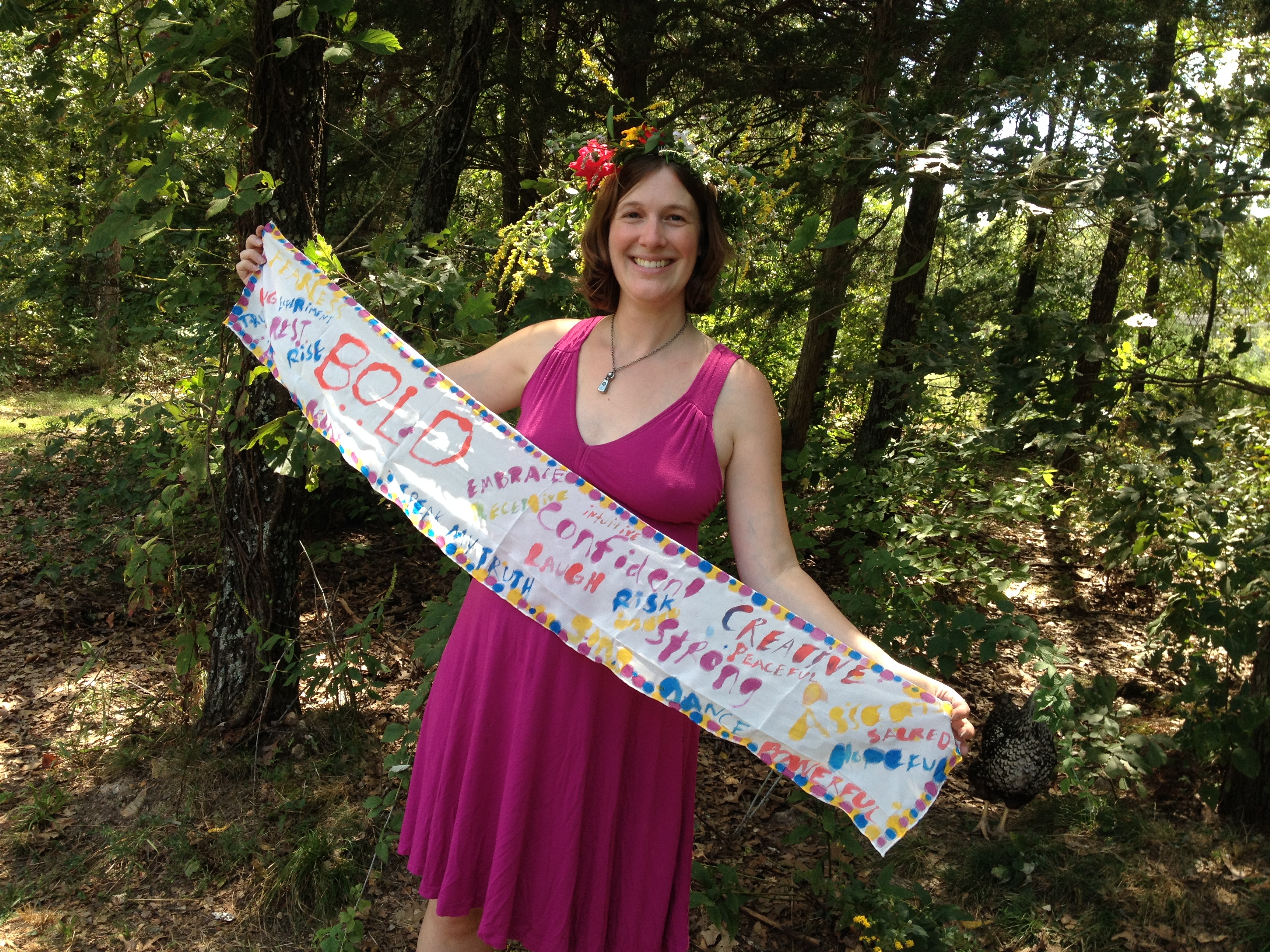
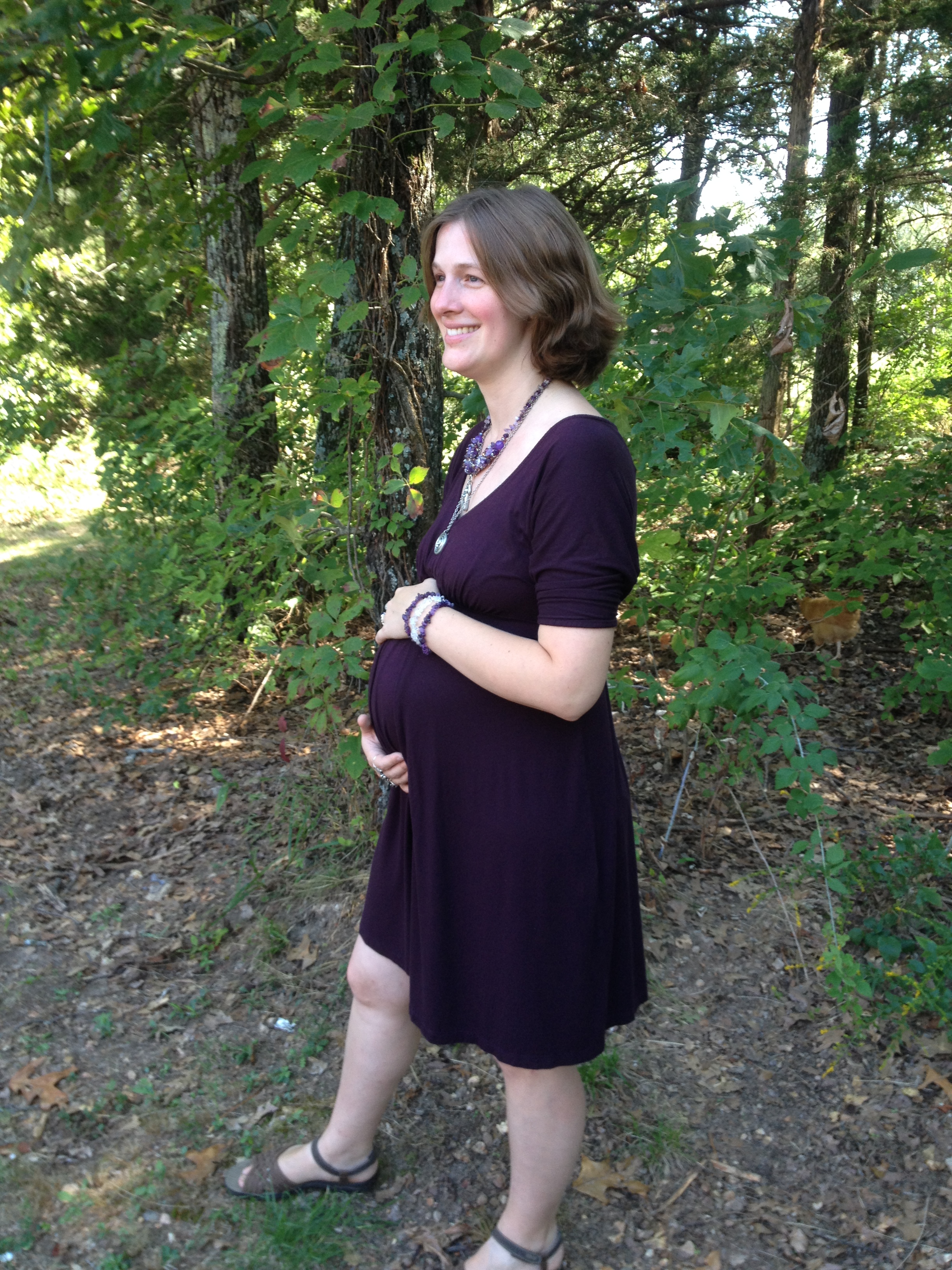
August 2014 055Me to my husband last night: “so, I know I might look like I’m just dancing around with flowers in my hair, but I’m really getting certified.”

<Mark wisely refrains from wide-open joke opportunity>

Yesterday, I finished the last assignments for my Sacred Pregnancy class. While I primarily took this class for personal reasons and am glad I did because I truly think it was the absolute BEST thing I could have done for myself to get ready for Tanner, to spend some time focused on my pregnancy, and to get ready for another mindful birth and postpartum experience. I have also completed all the work needed to be a Certified Sacred Pregnancy Mini-Retreat Instructor. On October 1st, I start the Sacred Postpartum training program—again with a dual purpose of personal enrichment and professional development.

I completed some of the activities out-of-order and finished the silk painting and honoring crown from week 3 in conjunction with the postpartum and “sealing” work of week 4.

I chose to use my drumstick as my stick around which to wrap my silk, since the drum is one way I express myself. Bringing the words painted on the silk into my drumming seemed like a logical companion. My silk power was bold fearlessness! Zander and Alaina also worked on small pieces of silk with me.

I’d delayed making the flower crown I thought because I’d told myself that I’ve already had several flower crowns at different ceremonies and so making another one for “no reason” felt kind of redundant. However, after I finished my second silk painting, I looked behind me and saw some wildflowers and I realized I did want to make a crown and I wanted to be with real flowers and not artificial. I’d been going to do artificial since I have some and thought then I could at least check it off the list. I don’t like fake flowers though, I like real ones. As soon as I realized that there were enough wildflowers scattered around the yard that I could make a real one, I got excited about the idea. My daughter helped me find and cut the flowers and then we put it together. And, then took some picture with my new silk and the crown together.

“The first few months after a baby comes can be a lot like floating in a jar of honey—very sweet and golden, but very sticky too.” –American College of Nurse-Midwives

I love the idea of a post-birth sealing ceremony SO much. This is similar to a mother blessing, but it is held postpartum to help “seal” the birth experience and welcome the baby and the mother into motherhood (or mother of however-many-children-hood). Absolutely wonderful. I also love the song Standing on the Edge from the Sacred Pregnancy CD. I identify with it so much as I prepare for my next birth as well as to welcome a new baby who I wasn’t expecting to have. As I’ve noted often in recent blog posts, I’m working very hard to wrap up a variety of projects so that I can cocoon with my new baby and give him and me the time and space I know we will need after birth. I have gotten better and better at taking care of myself postpartum, in asking for what I need, and getting very, very clear with my support people about what is most important to me.

We actually made the flax pillows for the sealing ceremony at the beginning of the week and then used them on Sunday (Alaina and I made the PPD tincture together the same day as the pillows). My husband tucked me in with the flax pillows and scarf and draped the silk painting across me as well. I lit my pregnancy candles and listened to Standing at the Edge. I spoke aloud the things I celebrate myself for–all the projects and children I have given birth to.

As I was setting up my wrap and pillows, my almost-11-year-old son had said he’d like to do it too. So, after my own sealing experience, each of my kids in turn got sealed in the scarf with the flax pillows. And, then they went and got my husband and we sealed him too! For each, I offered a blessing: “I’m glad you were born. I’m glad you are my son/daughter/husband. I love you. Thank you.” I placed my hands on different parts of their bodies as I spoke and then ended with kiss on the forehead. They all loved it and were very calm and contemplative. I think it was good for all of us and was, in its way, a “sealing” of their births and our relationship.

While I always have had a mother blessing ceremony before the baby’s birth, this time I’m going to make sure to do a postpartum sealing ceremony as well. The birth I actually sealed most consciously was the second trimester birth-death of my third son. On my due date with him, which also happened to be my birthday, I did a ceremony outside by our little labyrinth and the tree where we buried him. I spoke aloud, “I am not pregnant anymore,” and took time to hold and honor the powerful, honorable, birth and release I’d given him.

I’ve written a lot about my own postpartum thoughts, experiences, and feelings and they are grouped under the appropriate category on my blog here.

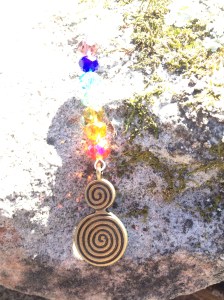
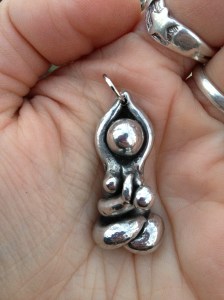
I also want to share a picture of my new mother-of-four goddess pendant! This pendant, too, has been part of my personal emotional preparation to integrate the new baby into my maternal identity. It took a long time for us to get the cast right for this sculpt and I’m so happy to have it to wear now.

August 2014 073

 The Sacred Pregnancy online retreat training experience was a very positive one. Lots of personal benefit as well as professional development! I’m so glad I decided to go for it!
August 2014 070Past posts in this series:

Sacred Pregnancy Week 1, Part 1: Sacred Space

Sacred Pregnancy, Week 1, Part 2: Connecting

Sacred Pregnancy Week 3, Part 1: Fears & Forgiveness

Sacred Pregnancy Week 3, Part 2: Empowerment and Self-Care


Sacred Pregnancy Week 3, Part 1: Fears & Forgiveness

On Friday and Saturday this past week, I took the time for a Sacred Pregnancy weekend. I did many projects from the class and it was a fulfilling, fun time. Reflection, art, and self-care, for the win! These types of projects are exactly why I wanted to take this class during my current pregnancy (I also went ahead and signed up for the Sacred Postpartum training, which begins on October 1st, and is therefore perfect for the month I am due).

The fears exercise for this week of training took me a while to finish. I wrote my list on Monday morning, but didn’t burn them until Friday afternoon. Interestingly, I continued to add to the list during the week, so I guess I wasn’t finished after the initial song portion (Grandmother by Nina Lee on the Sacred Pregnancy CD). I actually found myself waking up each morning over the whole week with the Grandmother song in my head. Anyway, after writing the list I tore it into individual strips. I waited until I had some time alone in the afternoon while my kids were visiting my parents and then I used the little bean pot I use as a burn pot/Kali pot to burn them each after reading them aloud. I had to play the song twice to finish them all! Most of them were connected to the development of my business this year, but some to my pregnancy/birth as well.

Anyway, when I got to my fear of being “too much” the paper flared up hugely and I dropped both it and my phone on the floor! Luckily, I hit the picture button as I was dropping it! (flare picture below) I found this significant and when I then moved into the forgiveness work the theme of being “too much” was actually what my Mother’s Wisdom card related to.

Mother’s Wisdom deck meditation

This was a powerful exercise also. I picked Oshun and got a much different message from my own interpretation of the card than the book interpretation I later read. I listened to the Standing at the Edge song on the CD while I journaled about empowerment immediately following the fear release and before looking at the book. You can see what I got from the card in my journal entries below. The actual card meaning was about balance and harmony in one’s family and life which is actually a timely message for me too, as was my own intuited message from the card.

As I explained in the class work online:

My husband and I have a creative business sculpting and pewter-casting and making jewelry together. We’ve really grown this year and have been pushing ourselves hard on our co-creative endeavors (hoping to wrap up development of some important stuff before our new baby is born in October). Our most recent was the completion of our first joint book project. I did all the writing, which was an 18 month intuitive process, and he did all the illustrations, design, and layout. We couldn’t have done it without each other! It was a perfect collaboration of our strengths and skills. However, we’ve been working and pushing so hard to get it finished and ready that our family had somewhat fallen out of balance and harmony! (So, the work has been in harmony, but the rest of our family needs have been getting kind of pushed aside!)

And, I know it is an overused analogy but working on a big creative project is similar to giving birth. My current pregnancy is very entwined with my current work and I was really interested to see how both my fears and forgiveness exercise work this week related to both my business and my pregnancy as creative processes and birth endeavors…

After this work and after my kids got home, I worked on my forgiveness tree. I didn’t include a picture of the one with the names filled in–just pre-names and post-colors. It was a good exercise too. I listened to Nina and did the card meditation (above) and then started on my tree and worked on it throughout the course of an afternoon. I’ve done most of the exercises for this class with the company of my little daughter (3), who is entranced by this kind of work. This time she did a painting of a goddess-fairy while I was working on the tree. I’ve never used watercolors before this class, so I’m not very good with them, but having fun anyway! Process, not product, after all…

*You did not miss Week 2. I haven’t made any posts about it yet. Just week 1:

Sacred Pregnancy Week 1, Part 1: Sacred Space

Sacred Pregnancy, Week 1, Part 2: Connecting

Wednesday Tidbits: Mother Care

“I watch her face become alight with joy and ecstasy. ‘You’re here, oh look, you’re here! You’re so beautiful! I love you! We did it!’ It hasn’t been easy, but it was worth it…She knows–in a way that can never be taken from her–the story of her own courage and strength.”

–Jodi Green in SageWoman magazine

Photo: "I watch her face become alight with joy and ecstasy. 'You're here, oh look, you're here! You're so beautiful! I love you! We did it!' It hasn't been easy, but it was worth it...She knows--in a way that can never be taken from her--the story of her own courage and strength." </p><br /><br /> <p>--Jodi Green in SageWoman magazine
After talking with my doula last week about my own powerful need for postpartum care, I re-read my own past post about “birth regrets” and was reminded again how the theme of inadequate postpartum care in my own life resurfaces multiples times. I told my doula that I’ve never really been happy with my postpartum care, recovery, and experience until I hired her for my last birth and became very, very, very clear about exactly what I needed from the people around me following birth. This is despite having an extremely helpful mother who cooked and cared for me very well and lovingly after each birth AND an extremely involved, nurturing husband. I still needed MORE. Postpartum is hard! Many hands, helps, and small care-giving tasks are needed.
It is interesting to me to see that this is where my regrets and “things to fix” come from, rather than from the births themselves. It is kind of hard for me to write about clearly because I did get good care every time from my mom and from Mark, but I still needed MORE. And, I don’t think it is necessarily “fair” to them to skip bonding with the baby because they’re so busy helping me crawl to the bathroom, or whatever! I also didn’t take particularly good care of myself–emotionally, mainly–following birth.
Midwives are wonderful and midwife-attended birth is wonderful, but it feels like very often birth is the moment and then they fade away and the mother must pick up the early postpartum pieces herself, when perhaps her vulnerability and need for support and physical care is highest then, definitely more than prenatally and, I would argue, often more intensely than during the birth itself.

(Oh, and by the way, I still joke that what I’ve really needed is a continuous postpartum doula for the last 11 years…when my first son was born).

My birth regrets post is a companion to my “bragging rights” and birth post:

‘…Frankly, I think all mothers get bragging rights on their babies births. Birth is awesome and amazing and power-full. Every mother must face it. Sure, she may face it differently than me, but it IS a labyrinth we all go through. This is the way of life. So, mothers, brag away. Brag about whatever part of your labor and baby’s birth made you feel empowered….find that piece, even if it’s just a tiny moment, and cling to it. Shout it from the rooftops!…’

via Tuesday Tidbits: Bragging Rights | Talk Birth.

Speaking of doula Summer, Rolla area families should take note that she is available for a variety of different birth and postpartum packages as well as birth classes: Summer Birth Services. I’m looking forward to her care again in October when I have my baby!

And, still speaking of Summer, I am so excited to share that she is moving forward with the Womanspace community resource center idea that we have talked over and visioned for so many years.

…I visualize a center. A place where women can come together to learn, to talk, to develop, to grow. A safe place. A nurturing place. A supportive place. Hostess to LLL meetings, book clubs, birth circle, birth info nights, prenatal yoga classes, birth classes, birth art workshops, pregnancy retreats, journaling workshops, craft classes, crafty mamas meetings, a miscarriage support group, postpartum mamas support group, birth counseling/consultation sessions, dancing for birth, prenatal bellydance, drop-in support chats, blessingways, red tent events, meet the doulas night, Mother’s Guide to Self-Renewal groups, women’s spirituality circles, playgroups, baby massage classes, baby/tot yoga, girls’ coming of age classes, an ICAN chapter, Friends of Missouri Midwives meetings.

A gathering place. A woman’s place.

It will have a large, open meeting room, access to a bathroom and another, smaller room that could be an office, consult room, or playroom. We will have counter space to plug in some minimal cooking implements like a microwave. There will be comfy couches, chairs, toys, a lending library of books and films as well as perhaps toys/games/puzzles. There will be big pillows on the floor and beautiful art all over the walls. Other women wishing to have groups/classes for women, could also use the space for their groups/events.Think we can do it? And, if so, what can I not do to make space in my life for it? In a way, my vision is that this will be that classic “room of one’s one” that every woman needs access to. WomanSpace…

via WomanSpace | Talk Birth.

The above is an excerpt from a post I wrote four years ago! It is so exciting to have it going somewhere. Summer posted on her blog today with her expanded and deepened vision of this space: WomanSpace ~ Making the Vision a Reality

Related to celebrating women and mothers, I updated my mother blessing/women’s ritual page this week: Blessingways / Women’s Programs | Talk Birth.

And, returning to the need for mother care, it so important to recognize that women need support following birth regardless of the week of gestation at which she gives birth. Personally, I was knocked off my feet by my need for immediate support following my first miscarriage. I had never once dreamed miscarriage would be such an intense, physically demanding birth experience. I’m glad this information is now reaching others via Stillbirthday…

When a mother is experiencing pregnancy & infant loss, she needs immediate support.

If you’re a bereaved mother on facebook, it is extremely likely you’ve heard the cry of the newest bereaved mother, sharing that she just very recently endured the death and birth of her beloved baby.

What is some practical support she can use? We have three little buttons published in several places throughout the website, for support prior to, during and after birth in any trimester. Here’s a link for support in the earliest days and weeks after birth:

Photo: If you're a bereaved mother on facebook, it is extremely likely you've heard the cry of the newest bereaved mother, sharing that she just very recently endured the death and birth of her beloved baby.</p><br /><br /> <p>What is some practical support she can use?  We have three little buttons published in several places throughout the website, for support prior to, during and after birth in any trimester.</p><br /><br /> <p>Here's a link for support in the earliest days and weeks after birth:</p><br /><br /> <p>http://www.stillbirthday.com/after-the-birth/

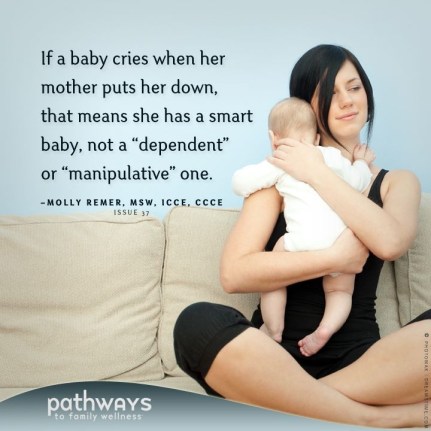
Switching gears somewhat, another one of my quotes from a Pathways magazine article was turned in a Facebook meme and has been shared on Facebook over 3,000 times. I again would have missed it except for two of my friends tagging me in the post!

August 2014 047Remember that in honor of National Breastfeeding Month, we’re offering a 10% off discount code on any of the items in our shop through the end of August: WBW10OFF.

I am 30 weeks pregnant now! I had a bit of an “OMG, can I actually DO this?!” moment last night when the new session of classes began for me. My students asked me how much longer I have left of my pregnancy and my answer was, “about ten weeks.” I have 8 weeks of class…

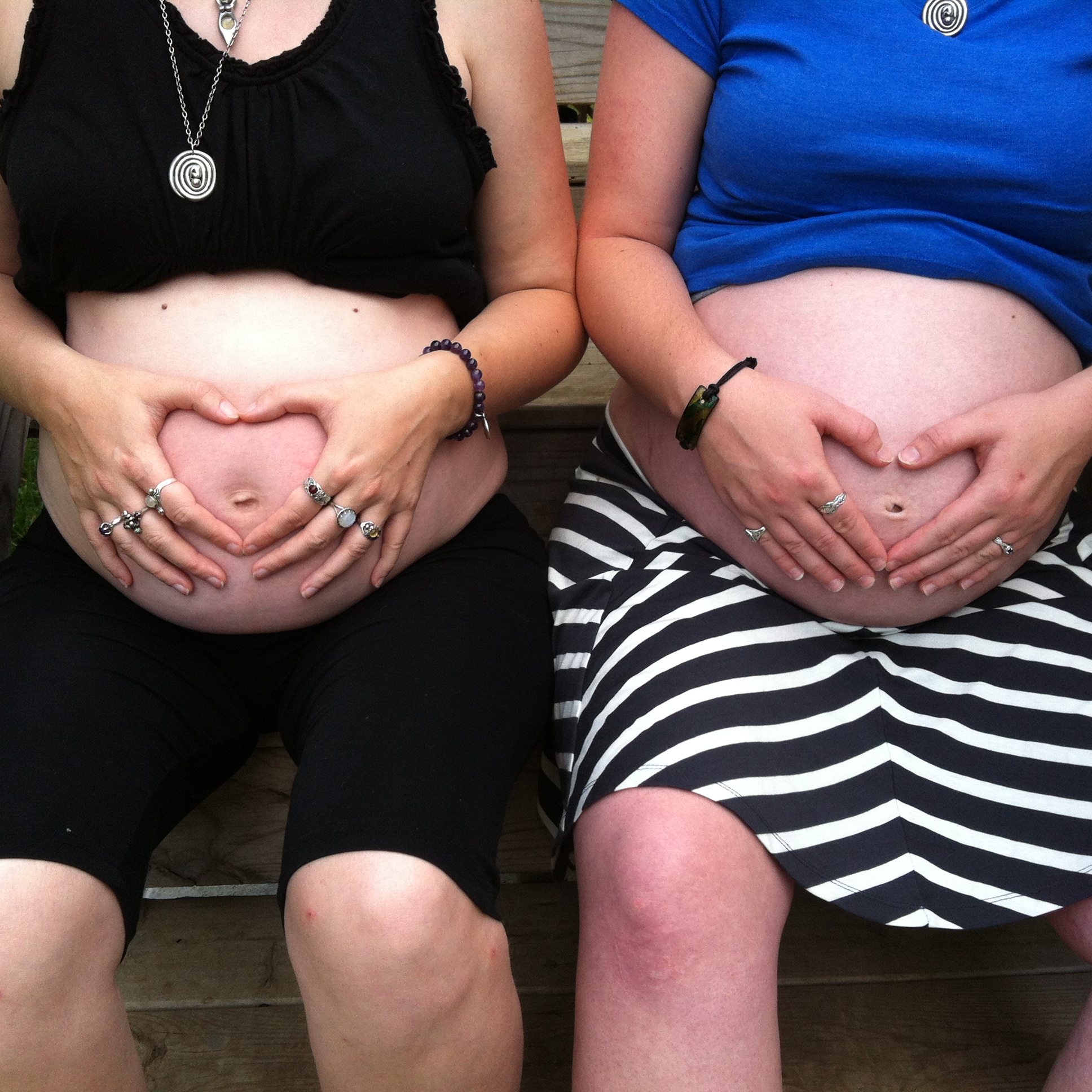
August 2014 046It is a hot time of year to be pregnant and while I feel good and healthy over all, I am noticing some different things compared to past pregnancies. I weigh 165 pounds now, which is pretty big! I have way more round ligament pain than I’ve ever had before, including just randomly while walking or sitting, rather than exclusively related to getting up “wrong” or twisting in a not pregnant-friendly way. I also keep having some mild heartburn. And, getting up from the floor is a much bigger challenge than ever before.

I’ve mentioned several times in recent posts that Mark and I have been working on birthing a big project together and it is finally here!
August 2014 049Our first collaborative book project! I did the writing and he did all the illustrations, layout, and formatting. This has been a project about 18 months in the making, a more significant undertaking and more significant expenditure of energy than I could have guessed when I began.

I like how the experience of the final stages of the book have paralleled my own pregnancy. As I mentioned a couple of posts ago, our co-creative work on our business endeavors this year is really entwined with the progress of gestating and preparing to welcome our new baby.

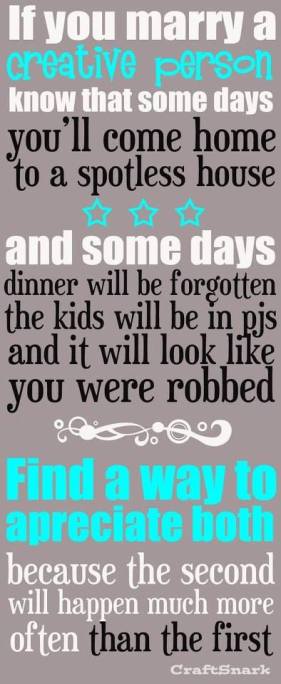
As we’ve worked over the last weeks on the final push to finish the book, I saw this meme on Facebook:1479335_10153562403855714_35111715_nI shared it on our page and noted that when you’re both creative and you’re both home, the effects may be even more dramatic!

Our Embrace Possibility pendant is the design that has perhaps always held the most personal meaning for me, but as we continue to focus in on our shared vision and to embrace new directions, ideas, and projects in the context of our co-created business, she returns to me as very personally meaningful.


“Encoded in her cells,
written on her bones…
The mantle settles around her shoulders.
Sinking into belly, bones, and blood,
until she knows,
without a doubt,
that this is who,
she really is…”

(Embrace Possibility Pewter Goddess Priestess by BrigidsGrove)

And, I shared this on our page recently since it has spoken to me anew in multiple ways this month:

“…These waves of power. February 2014 007
They are you.
You are doing it.
You ARE it.
This is energy, this power, this unfolding might of creation.
It’s you.
Your body
your power
your birth
your baby…”

Birth Spiral Chakra Blessing | Talk Birth.

Tuesday Tidbits: National Breastfeeding Month

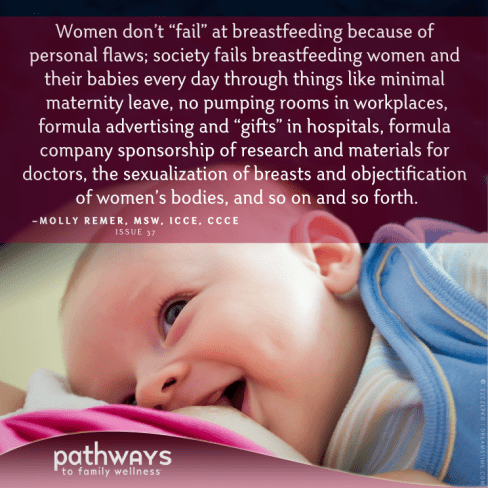
10556374_10152170229481290_105195906968994596_n(1)I was feeling kind of bad during the first week of August about having not gotten around to making any World Breastfeeding Week posts this year (I was still coming down from Mamafest on August 2nd, plus in “second stage” on birthing a really huge project, to be revealed soon!). Anyway, Pathways to Family Wellness Magazine took care of it for me with the image above! The referenced article is on the Pathways site here: Breastfeeding As an Ecofeminist Issue | The Outer Womb and on my own site is here: Breastfeeding as an Ecofeminist Issue | Talk Birth. I noticed it was shared 3,552 times on Facebook, which seems “viral” in terms of breastfeeding memes! (I confess I wish it would have directed back to my own site or page with that number of shares though!) And, no, I didn’t read the comments on it except for a handful, because I am not really interested in any criticism right now. BUT, the one critical comment I did see was about “society” having nothing to do with it is up to women to take care of themselves/assert their “natural rights” which “no one can take away from them,”  and so I have to repeat: breastfeeding is a sociopolitical and sociocultural issue. It does not occur in a vacuum and in the privacy of our own homes, it is intimately and inextricably linked to the health of society as a whole and inevitably impacted by the circles of support, broken or healthy, that surround each and every breastfeeding dyad. Breastfeeding is a systemic issue. Women, families, babies, men, children…we are all embedded in an expanding network of social, political, and cultural systems every, single, day. It is inescapable, for better or for worse.

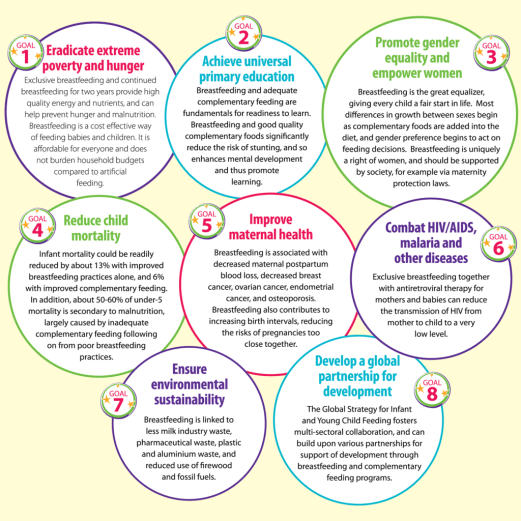
As a related image of the embedded, interdependent nature of reality, including breastfeeding, I really appreciated the graphic in this post by Science and Sensibility.

wbw2014-goals-1024x1024Breastfeeding is a women’s health issue, a reproductive rights issue, and promotes gender equality and empowers women! It both systemic and personal. Neither context can be ignored.

I was very pleased to get an email from Routledge publishing at the beginning of August promoting World Breastfeeding Week and offering a compilation of related free resources through the end of the month. Routledge is a textbook publishing company and I use some of their textbooks in my Human Services classes: World Breastfeeding Week – Routledge.

In addition to breastfeeding-specific textbooks, they also are offering free online access to related interesting textbooks like The Politics of Maternity and Social History of Maternity and Childbirth. This tells me they recognize the birth-breastfeeding continuum!

Live Love Latch logoSince our Mamafest event was coordinated by two LLL Leaders and our other local Leader helped with it as well, it made since to me to register it as an official Live, Love, Latch event. Live, Love, Latch is an initiative launched by La Leche League USA this year in honor of National Breastfeeding Month in August. The point of these events is celebration of breastfeeding and breastfeeding support.

The purpose of the celebration is, of course, to celebrate breastfeeding, but also to highlight support. All in attendance will be counted as participants, with the goal being to break the previous year’s record for breastfeeding supporters attending. Leaders have autonomy to decide on the details of each celebration.

This celebration theme provides an opportunity to educate family, friends, healthcare providers and other community members about how breastfeeding can be supported, and also emphasizes the value of the support network behind every nursing dyad.

via About – Live, Love, Latch!

I will write more about Mamafest in another post this week (I hope!), but if you’re curious, the photo album is available on the Rolla Birth Network Facebook page. We had 84 people sign in on our Live, Love, Latch sign-in form and about 100-120 people in attendance overall. It was really a successful, fun, exciting event.

After sharing these other images and thoughts, I couldn’t resist making another image of my own:

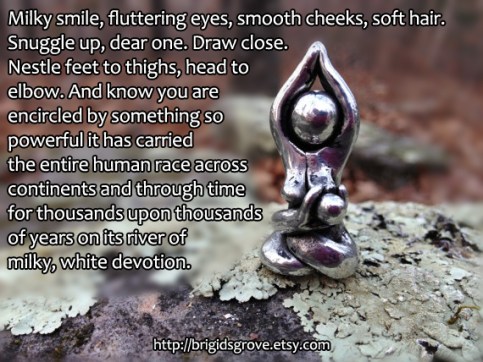
meme1And, we set up a new coupon code at Brigid’s Grove in honor of National Breastfeeding Month! Use WBW10OFF for a 10% discount on any item through the end of the month. 🙂

Tuesday Tidbits: Human Rights and Birth

“It takes force, mighty force, to restrain an instinctual animal in the moment of performing a bodily function, especially birth. Have we successfully used intellectual fear to overpower the instinctual fear of a birthing human, so she will now submit to actions that otherwise would make her bite and kick and run for the hills?”

–Sister Morningstar (in Midwifery Today)

486253_470181139659475_1370955888_nWhen I end my introduction to human services class and then again when I begin my social policy class, I ask my students to consider the above: What would happen if everyone cared? What would happen if our first reaction was compassion? What would happen if we focused on what matters? What would happen if we assumed everyone had inherent worth and value and deserves humane care and compassion?

I have said for a long time that women’s rights in birth represent a human rights issue, so I was very interested to receive word of a Human 10360685_10152979214427627_4161278366266845515_nRights in Childbirth campaign:

Women do not lose their basic human rights once they become pregnant. And yet, across the globe, women’s human rights are compromised and violated around childbirth. Examinations, interventions and procedures that pose risks to both mothers and their babies are routinely performed without informed consent, or through coerced compliance via threats or fear. When women come out of childbirth with post-partum PTSD from disrespect, abuse, or obstetric violence, the goal of a “healthy mother and healthy baby” has not been met.

via Home | Human Rights in Childbirth.

Childbirth IS a women’s rights issue and a reproductive issue:

Childbirth is a women’s rights issue and a reproductive justice issue. The United States maternity system is one of the costliest in the developed world, yet our birth outcomes compare poorly to those of other industrialized nations. Among industrialized countries, we consistently rank last or second to last in perinatal and maternal mortality rates. Moreover, birth is depicted in mainstream media with fear, medical intervention, and crisis…

via Business of Being Born: Classroom Edition | Talk Birth.

But, childbirth is also, quite simply, a human issue:

This is the whole point—women’s rights aren’t about “taking” rights from anyone else OR about demanding “special treatment,” they are important for a HUMANE WORLD for all people. I think it is hilariously awful that “women’s rights” are considered a political issue and that there is a section about “women’s rights” in the “opposing viewpoints” database for my social policy class. As long as women’s rights are considered a political issue or as something about which an opposing viewpoint can be held, rather than as self-evident, we are in continued, desperate need of revolution.

via Women’s Power & Self-Authority | Talk Birth.

Human rights in childbirth include access to the provider of one’s own free choice, so on a related note check out this set of consumer-oriented materials about the midwives model of care offered by collaborative effort of several midwifery organizations and endorsed by several others:

“Normal Healthy Childbirth for Women & Families: What You Need to Know” clearly explains and advocates the benefits of normal, physiologic birth for the average health care consumer. This helpful tool was created from a 2012 consensus statement developed by ACNM, the Midwives Alliance of North America, and the National Association of Certified Professional Midwives.

via OMOT Normal Birth Document Feature Page.

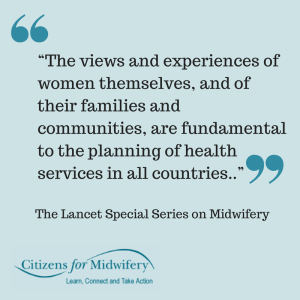
The below quote may seem obvious to birth advocates, but it is revolutionary in terms of health care. When Citizens for Midwifery shared this quote, they noted that, “One the KEY findings of the Lancet Special Series on Midwifery affirms the importance of women and their families participating in planning of health care.” For more from this special series on midwifery, go here: TheLancet.com.

10455322_10152508291549483_5155910343021300458_n(1)

And, in case we get so caught up in theorizing about appropriate care that we forget the lived experiences of the women who need it, read this tough, sobering article about why “going in pushing” does not a VBAC birth plan make:

Karen’s story is not uncommon and nor is the advice she was given about “going in pushing” but when we tell women they can not be cut unless they consent are we telling the truth? Whilst it’s true that legally the hospital can not physically force you into an operating theatre without your consent, they are not afraid to gain consent using underhand methods…

via Go In Pushing – It’s not a VBAC Birth Plan – Whole Woman.

And, of course, some relevant quotes to remember:

“If women lose the right to say where and how they birth their children, then they will have lost something that is as dear to life as breathing.” –Ami McKay

“Mothers need to know that their care and their choices won’t be compromised by birth politics.” – Jennifer Rosenberg

via As dear as breathing… | Talk Birth.

Is there anything that can be done, or are we facing an insurmountable struggle? I think we can remember that our “small stone” birth activism does matter:

While reading the book The Mother Trip by Ariel Gore, I came across this quote from civil rights activist Alice Walker: “It has become a common feeling, I believe, as we have watched our heroes failing over the years, that our own small stone of activism, which might not seem to measure up to the rugged boulders of heroism we have so admired, is a paltry offering toward the building of an edifice of hope. Many who believe this choose to withhold their offerings out of shame. This is the tragedy of our world.” Ariel adds her own thoughts to this: “Remember: as women, as mothers, we cannot not work. Put aside your ideas that your work should be something different or grander than it is. In each area of your life—in work, art, child-rearing, gardening, friendships, politics, love, and spirituality—do what you can do. That’s enough. Your small stone is enough.”

These quotes caused me to reflect on the myriad methods of “small stone” birth activism that can be engaged in as a passionate birth activist mother embroiled in a season of her life in which the needs of her own young family take precedence over “changing the world”…

via Small Stone Birth Activism | Talk Birth.

And, on a fun note, you might enjoy this lovely homebirth treasury on etsy: Home Birth by Kayleigh on Etsy. 🙂

“Thousands of women today have had their babies born under modern humanitarian conditions–they are the first to disclaim any knowledge of the beauties of childbirth…” –Grantly Dick Read, Childbirth without Fear

“I am not free while any woman is unfree, even when her shackles are very different from my own.” –Audre Lorde

“Humanizing birth means understanding that the woman giving birth is a human being, not a machine and not just a container for making babies. Showing women—half of all people—that they are inferior and inadequate by taking away their power to give birth is a tragedy for all society.” –Marsden Wagner

IMG_6046

Tuesday Tidbits: Story Power (again!)

“One of the most important things I have learned about birthing babies is that the process is more of an unfolding marvel than a routine progression of events.” –Tori Kropp

May 2014 031Lots and lots of tidbits on my mind this week! It has been a while since I’ve done a proper Tuesday Tidbits post and it has caught up with me. To avoid making this too loooong, I’ve split it up into a series of loosely connected thematic posts to release over the next couple of days/weeks.

First, a beautifully touching story about a family’s decision to have another child after parenting a child with very serious special needs (for which they have no diagnosis).

“…I, alone, would have to make the decision whether or not to have another baby. If we did, I would be like any pregnant woman–following doctor’s orders, cutting out questionable foods and praying for a healthy baby; everything I had done with Joy. This this time, though, I would have an intimate knowledge of what most moms-to-be only fear in the ‘what-if’ scenarios they play out in their heads. Eric had made his decision. Was I willing to jump into the darkness with him? Would my marriage survive if I didn’t? Would it survive if I did?…”

The Family Bed | Brain, Child Magazine.

Then, some thoughts about birth and pain and sensation:

“You may be able to feel baby pressing on your cervix. You have never felt anything like this. You may be able to feel your pelvis flexing and be acutely aware of where your thighs join your hips. You may be able to feel your uterus flex in a way that feels exactly like a really tough workout. But the bottom line:

You have never felt anything like this…”

Meditation for Birth | Mothering.

While there is a simplistic understanding reflected in this post that doesn’t seem to accurately embrace or even grasp the wide, staggering array of women’s experiences during the childbearing year, I do totally agree with this premise: labor is like nothing you’ve ever felt before (or will since). That is why people use the frustrating term, “birth mystery” to describe it, because it is full, total, complex, complete, and all-encompassing, and you may never, ever be so fully present in your body during the rest of your life. And, it is different every time (though more “familiar” the more babies you have, there are always surprises in birth).

Some past posts from me about birth and pain:

Tuesday Tidbits: Pain, Birth, and Fear

Tuesday Tidbits: Pain, Power, and Lasting Memory

Pain with a Purpose?

Perceptions of Pain

And a gritty, real (and painful) postpartum story from a real-life friend:

My vagina winced. She had been through so much. Held together by medical stitches, she felt so fragile, vulnerable, broken. Like Humpty Dumpty post-fall. (How embarrassing. Could she go lower? She had been so glorious). The king’s horses and men failed to reconstruct Humpty, and I wondered, despite my OB’s expertise, if I too would never be put back together again. Humpty Dumpty was just an egg. Who gives a rip about an egg? My lady parts were much more important…

via Milk, Pain, & Fear | Peace, Love, & Spit Up.

A short, funny story from the news about a student getting trapped in giant vagina, “Gateway to the World” sculpture.

“…Police confirmed that the firefighters turned midwives delivered the student ‘by hand and without the application of tools’…”

US student is rescued from giant vagina sculpture in Germany | World news | The Guardian.

There is a neat article about Mother Blessing ceremonies in Breastfeeding Today magazine (LLLI’s publication).

And, speaking of honoring mothers, my sweet sister-in-law has a blog post up about her belly cast experience following the mother blessing we had for her in June: The Mossy Stone: My Belly Cast.

Returning to difficult stories though, here is one with a  **trigger warning for child loss**. This is a beautiful, touching story about the death of a son and the decision to have a second child.

I know lots of women avoid loss stories while pregnant. I can’t avoid them, even though I think about it and maybe it is mentally better for me not to read them. I have to hold/honor/hear these stories too—they don’t need to be hidden away.

“The pregnancy progressed smoothly, as my first pregnancy had. When I began to show and people began asking me if I was pregnant with my first child, I was determined to remember Ronan in my response, no matter how uncomfortable it made the asker. “No,” I replied. “I had a son and he died.” The conversation often stopped here, the narrative halted. When the questions first began I scrambled to make the awkward exchange a bit easier for the other person. “Sorry to throw that on you,” I’d say, smiling. But now I don’t. My new policy is: asked and answered. Or, as a relative of mine used to say, if you don’t want the answer, don’t ask the question. I don’t elaborate on how or why my first child died when some people go on to ask those questions (and they occasionally do); at that point I tell them that I prefer not to say any more. I don’t want to offer up the details of Ronan’s illness like the pieces of a tragic tale. But I want it to be known—to strangers, to everyone—that he was in the world, that he was fully loved, and that he was my first baby…”

What The Living Do | Brain, Child Magazine.

Why is this? Because stories hold power! I saw this quote this week on The Mother-Daughter Nest:

Telling our stories- while being witnessed with loving attention by others who care- may be the most powerful medicine on earth.

Some of the stories that want to be told are joyful.
Some are sad.
Some are painful and make us feel vulnerable and afraid.
Some are full of hope and inspiration.
Some of our “story doors” take courage to open.
Some we may not be ready to open and that is okay.

But the telling? The telling brings healing, understanding, and connection.

(This is also why Red Tents are powerful)

May 2014 085

The WHO Code: Why Should We Care?

“Knowledge serves no purpose if it is not spread around. As the poor get poorer and the rich get richer, an entrenched ignorance is kept in place through a culture created and maintained by commercial interests.” – Gabrielle Palmer, The Politics of Breastfeeding

The international WHO Code of marketing breastmilk substitutes reached its 33rd anniversary this week. This means that for 33 years the United States has failed to live up to international standards AND for 33 years infant formula corporations have successfully ignored the WHO Code. In addition, they have convinced over half of U.S. hospitals to serve as marketing shills for their products—distributing their marketing materials—-samples, coupons, booklets, and other ads-—in health care settings in a manner that is well-established to undermine women’s breastfeeding success and to have a negative impact on infant health. Quite simply, getting breastfeeding “advice” from a formula company in a form of a cute little booklet with a happy baby on the front is like getting nutrition “advice” from McDonald’s. It is not neutral or benign and it does not have the interests of mom and baby at heart, it is a skillful marketing tactic, nothing else. I have long repeated the Ban the Bags catchphrase: Doctors’ offices and hospitals should market health and nothing else. To be clear, I would consider all medication-sponsored posters, etc. to fall in same category, not just formula. Refusing to honor the WHO Code isn’t actually illegal, however. The US voted against the proposal in the first place—on the original signing of the Code there were 118 votes for the Code, one against (the United States!), and 3 abstentions. Eventually more than 160 countries participated in the WHO Code. When the United States did accept it, they adopted it as guidelines to distribute to large manufacturers. Providers should follow it, but they can actually can do what they want. UNICEF has a state of the code chart that breaks down which country does what with the Code. US is under the no action category along with a small handful of other countries that includes Somalia and Kazakhstan.

This issue is a systemic problem and it goes WAY beyond just the individual mom and her baby!  Breastfeeding or not breastfeeding is actually a political and public health issue in the US, not simply a “personal choice.” Personal choice is the language American people and formula manufacturers love to use and it is a very, very successful manner of appealing the individualist nature of our culture, but in this case it is actually code for, “let huge multibillion dollar corporations exploit women at will and our health care providers will even help them do it!

While the WHO code has no legal teeth in the US (it IS law in some other countries, but it was written in terms that allow national governments to make their own decisions about how/if to enforce or participate in it). It is still VERY important for health care providers and US distributors and marketers to be aware that their actions are out of sync with international guidelines and that they are in violation of international standards.

…breastfeeding, like all aspects of women’s lives, occurs in a context, a context that involves a variety of “circles of support” or lack thereof. Women don’t “fail” at breastfeeding because of personal flaws, society fails breastfeeding women and their babies every day through things like minimal maternity leave, no pumping rooms in workplaces, formula advertising and “gifts” in hospitals, formula company sponsorship of research and materials for doctors, the sexualization of breasts and objectification of women’s bodies, and so on and so forth. According to Milk, Money, and Madness (1995), “…infant formula sales comprise up to 50% of the total profits of Abbott Labs, an enormous pharmaceutical concern.” (p. 164) And the US government is the largest buyer of formula, paying for approximately 50% of all formula sold in the nation…

via Breastfeeding as an Ecofeminist Issue | Talk Birth.

These past posts take a look at the systemic context surrounding breastfeeding women and how it impacts their “personal choices.” January 2014 041

Breastfeeding as an Ecofeminist Issue

Preventing Culturally Induced Lactation Failure

A Bias Toward Breastfeeding?

Tuesday Tidbits: Breastfeeding Research

Wednesday Tidbits: World Breastfeeding Week!

Controversies in Breastfeeding

The Impact of Birth on Breastfeeding


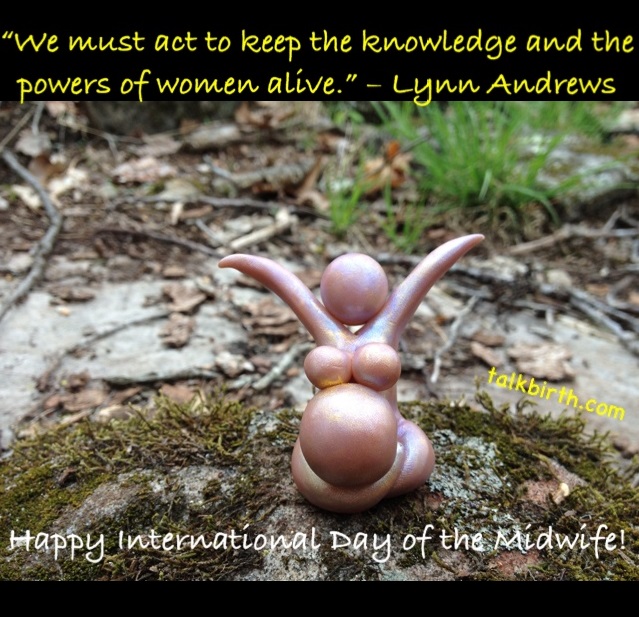
International Day of the Midwife!

cropMay 2014 073

International Day of the Midwife is today and Virtual International Day of the Midwife has a free online conference! The lineup of presentations is really rich. Check it out here

In celebration of this day, we’re offering a 10% off code good for use on any of the items in our etsy shop! Use 2014SPRING10OFF. 🙂

“It’s hard to describe if you’ve never been there, but to watch a woman access her full power as a woman to give birth is awe-inspiring, and I never get tired of being witness to it. It’s an honor to watch that transformation take place.” ~ Julie Bates, CNM

I’ve been blessed with care, love, and attention from midwives for many years. They’re irreplaceable and the model of care cannot be beat.

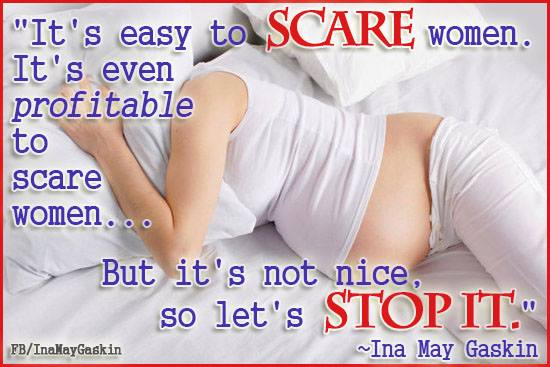
Here is a quote I shared on Facebook yesterday from midwifery legend, Ina May Gaskin:

10150680_850255348324885_8097255052427107934_nAt the end of April, Marsden Wagner passed away. An OB and outspoken birth rights activist as well as author of Born in the USA and participant in many documentary films about maternity care, Wagner was an incredible asset to birthing women and midwifery in the U.S. He will be missed.

“Humanizing birth means understanding that the woman giving birth is a human being, not a machine and not just a container for making babies. Showing women—half of all people—that they are inferior and inadequate by taking away their power to give birth is a tragedy for all society.” –Marsden Wagner, MD

10150734_10152385011414483_5563219813214176884_n


Thesis Tidbits: Feminism, Midwifery, and Motherhood

“Feminism catches fire when it draws upon its inherent spirituality. When it does not, it is just one more form of politics, and politics never fed our deepest hungers.” –Carol Lee Flinders (in The Millionth Circle)

Yesterday, I spent several hours finishing a blog post for Feminism and Religion regarding empowered self-care (it won’t run until next  week). It is a primarily a personal narrative, rather than a political commentary, but as I was writing it, I learned about new legislation introduced in Missouri in an effort to effectively destroy the practice of independent midwifery here. I also have a friend whose family March 2014 082 member just experienced terribly abusive treatment during the immediate postpartum period. I typed feverishly away with an absolutely excruciating headache and a million things on my mind, primarily the very many injustices experienced by women during the childbearing year. I was also left wondering HOW we can truly take care of ourselves when legislators and health care workers actively take dramatic and even cruel steps to prevent us from doing so?

Another friend wrote a comprehensive blog post about this malpractice insurance legislation and the issues involved with it. Midwifery advocacy organizations have already introduced a perfectly appropriate piece of legislation this session and do not need the proposed bogus piece of legislation that offers nothing in the way of protection for Missouri midwifery consumers and instead simply serves to drive midwives out of practice:

…Fortunately, midwives in Missouri do offer a grievance process and adhere to the practice standards set by the certifying agency NARM (North American Registry of Midwives). While there is already a high degree of professional accountability practiced in Missouri, this is because the state professional organization (Missouri Midwives Association) believes it is important and necessary for the professional practice of midwifery and not because the state has directed midwives to do so.

The state of Missouri has continued to be uninterested in working with midwives and home birth families to improve and safeguard the practice of midwifery.

Is there a better option? YES! HB 1363

Instead of HB 2189, we would like to suggest directing legislators to support HB 1363. This is a comprehensive midwifery licensing bill which does provide a mechanism for oversight and responsible, regulated practice. It also addresses the issue of malpractice insurance by requiring midwives to have coverage under the same conditions as physicians. It would also require Medicaid reimbursement for families desiring the care of Certified Professional Midwives and home birth.

via Missouri Legislature Works Against Women, Families and Midwives….AGAIN. | Midwives, Doulas, Home Birth, OH MY!.

I also recently finished a class on ritual theory for my doctoral degree program. The text for the class was To Make and Make Again: Feminist Ritual Thealogy by Charlotte Caron. In it, I was repeatedly reminded that gathering with other women in a circle for ritual and ceremony is deeply important even though it might just look like people having fun or even being frivolous, it is actually a microcosm of the macrocosm—a miniature version of the world we’d like to see and that we want to make possible. Returning to Caron, she explains something similar: “Ritual change is symbolic change, but it can lead to direct action or to ideological change, so it can be an important element in strategizing for change. One way of causing change is to re-form or alter the system. This involves recognizing that we are part of the system and that the system is dependent on feedback from its parts to keep it in balance, which means that we have the capacity to change” (p. 209).

Ritual experience can lead to practical action: spiritual praxis. But, this action does not need to look the same for all women, nor does it always have to involve large structures of society or even sweeping societal change.

“It is important to recognize that not all women will choose to act in the large structures of society. While it is hoped that all women will act toward justice, still electoral politics, lobbying, and revising the economic system may not be the spheres in which some women exert their energy. Ritual actions, raising children to be just and caring people, living in just ways in intimate and community relationships, and modeling different patterns and values are political actions to change patriarchal ideology. The choices of what spheres to devote energy to are important to honor. The constraints of women’s lives—when they are disabled, when they are dealing with past traumas, when they are raising young children, and when they are doing the many other things expected of women in our society—mean that women need to make choices that will allow them to live with integrity and well-being.” (p. 211)

A number of options of action are possible. “What is important are women’s choices to act in concrete ways in every circumstance, to know our neighbors, to raise children to be caring people, to live as if justice exists, to be just in personal relationships, and to live in the community in ways that model the values of justice and well-being for women and all of creation.” (p. 211)

As a mother who works extensively with other mothers, I appreciated Caron’s acknowledgement that raising children is a feminist act with potential to create change as well. “Another strategy for change is through raising children to be just and caring people. A media image portrays feminists as being against motherhood—but in fact, feminists make the best mothers. They raise children aware of themselves and the world, of options and values, of what justice means and how to work toward it, and how to be self-critical and self-respecting” (p. 203-204). Caron also explains that “in a just society, women would be free to make whatever decisions they needed to, for however long they needed to, in relation to political action in the public and the private sphere. All people would participate in the decision-making, and women would be supported in their decisions rather than, as sometimes happens, made to feel guilty for not doing enough or not valued for what they do.”

In connection with women being valued for what they actually do, Caron makes an interesting note about the visions women in her research hold for the future, for the possible:

“Interestingly, none of the visions described by women was based in self-fulfillment, in gaining personal power, or in one’s group having power and the expense of others. Instead, the interviewees talked about the elimination of social, economic, military, and other patriarchal problems, and about living in a world of valued individuals, healthy and diverse relationships, economic and environmental sustainability, equality for all, and shared decision-making and power” (p. 220).

Connected to these themes, one of my classic favorite quotes about women’s spirituality groups is this one:

“…Women’s spirituality groups can become birth centers for social change”

–Anne Rush in The Politics of Women’s Spirituality (p. 384)

March 2014 127

Rise for Justice

1497514_10153552346400442_1148387720_nOkay, so I knew I would enjoy The Vagina Monologues. How could I not, right?! Well, I did not expect to be SO blown away by the power, presence, and passion of my magnificent friends. They were incredible. Seriously incredible. It was an amazing show!  There were many powerful moments–some very funny, some sad, some horrifying. My friend, doula, and colleague did the piece on birth at the end and brought me to tears with her vibrance and passion. There was a moment in the middle where the teenage girl member of the cast read out some statistics on the One Billion women who are raped, abused, or assaulted. Each member of the cast began to rise in turn and as they did, their friends in the audience rose with them, until the whole theater was standing. We rose for justice.

I’ve mentioned several times that I came to birth work with a core foundation in feminism and social justice work, primarily in domestic violence. I remain firmly convinced that the way we treat women in the birthplace reflects an overall cultural attitude towards women in general. I believe that peace on earth begins with birth. I believe that we can change the world with the way we greet new babies and celebrate new mothers and see the deep, never-ending work of parenting our children. I believe in rising for justice and I keep vigil in my heart every day for women around the world.

In a stroke of coincidence that gave me chills, my independent study student who is working on a Breastfeeding and Ecofeminism course submitted her weekly reflections and in it she mentioned Eve Ensler, The Vagina Monologues, and One Billion Rising with no idea that I was going to the show this week. As I read her reflections, the connection between the personal and political was so tangible that I asked her if I could use her assignment as a guest post for my blog. Part of the reason I assigned the book Reweaving the World for this course was because of how it contextualizes the issues facing women so broadly and makes this undeniable connection between exploitation of the planet and exploitation of women’s bodies. While it might sometimes trigger a sense of hopelessness and distress, I think ultimately, the contextualization is empowering. The Vagina Monologues are based on the courage of women telling their stories and sharing their truths. Likewise, I appreciate Alea’s generosity and courage in sharing her reflections with my readers…

November 2013 061

Dancing for Change: A look inside a personal exploration of ecofeminism, sexuality, and social justice.

Guest post by Alea Scarff

I began reading The Politics of Breastfeeding which sparked a series of “hell, yes’s!” It also left me feeling inspired, excited and validated that I’m not the only one with these feelings and notions about women, breastfeeding, and the injustice I witness within this issue. Her kick-ass presentation of the truth among this profound cultural issue left me enlivened and ready for action sentence after sentence.

Then I read several pages of Reweaving the World: The Emergence of Ecofeminism. Yikes. This was heavy. I suddenly found myself caught between two worlds of inherent optimism excited for positive social change, and the deep dark issues of ecology and the longstanding reality of suffering and inequality of women on this planet. I felt my body overcome with anger. A feeling of helplessness ensued. I felt those women in third world countries starving and overheated, overworked and just trying to sustain the lives of their children on top of enduring mental, emotional, physical, and sexual abuse. I felt all the children who suffer because of this. I felt all of the gender imposing rules children in the western world are conditioned by, thus tainting our hearts and souls with limitation and sharp edges surrounding who we are allowed to be in this society. All of the emotionally repressed men; all of the objectified, degraded women who have never known what it feels like to feel good in their bodies.

I began to feel my grandmother’s oppression she suffered from my grandfather in the 60s. The abandonment, the sexual abuse, the use and re-use of her as a resource and service for himself. I felt my mother’s experience of an emotionally abusive relationship, and finally my experience of sexual molestation as a child. Where was all of this coming from? A deep sadness came over me as I desperately tried to figure out my own issues with sexuality and my relationship to the world as I sat amongst strangers in this warm coffee shop. Was I angry about what happened to me? Was I angry at my partner? Past partners? Was I angry at the world? I really couldn’t identify where the anger came from, or where it was directed. I had to stop, refresh, and start over. Maybe this shit is too intense for me. Maybe I need to change my course of study.

No, no. You can’t run away. I realized I had been running from this issue my whole life and it’s finally time to recognize it. I stopped, took some deep breaths, did some yoga asanas to release the sticky tensions of injustice lurking in my joints throughout my body. Ok. Begin again.

So I went back to my childhood, with my deepest memories of the frequent encounters of gender inequality. My mother, to this day, credits me for bringing to light her own femininity and capturing her attention to the inequalities of men and women. Something that went unnoticed until I came along, however she still was not interested in changing the ways of the world to the extent I was. She had her own social change she was working on. It was entrenched in art and consciousness. Luckily, I picked up on this, and found my own desire for changing the world through consciousness. Consciousness through equality for women. How could anyone else NOT be outraged by the fact that 8 out of 10 songs on the radio were sung by men? As a twelve year old, I began writing letters to radio stations. I couldn’t understand how no one seemed to care about this absurd injustice constantly happening on the radio. Something so simple yet so powerful as radio permeated our culture – and no one seemed to notice. There were a plethora of female musicians that I favored at this age. How could I not hear them on the radio? On top of an array of social issues such as this, I always HATED those older men who would make random, confusing, degrading comments to me for others’ and their own amusement. What the hell was up with that?

I began reading an interview with Eve Ensler, the creator of The Vagina Monologues and the global women’s campaign, One Billion Rising. The figures quoted from the UN in this interview left me in a deeper outrage. One billion women on the planet today are beaten or sexually assaulted. I reflected on an article I had read earlier that week, as well about how to talk with your children about their private parts and to help prevent them from being sexually abused. The article stated that one in five girls are sexually molested and one in six boys are. I never identified with the label “sexually molested” nor did I want to admit I was affected by this, but just in the last few years when I looked at the definition, I realized, even my few small inappropriate experiences are considered just that, and they have, in fact, affected me.

I had to take a few days off. This all needed to settle inside and I had to figure out what to do with it. I spent days pondering, how do I continue to explore this crucial subject and maintain a positive outlook? How do I channel this anger into solutions for helping others? How can I continue researching and hold my strength and goddess energy as a female role model, an inspiration for my two little boys, my partner, men and women, and the planet?

This is a tall aspiration I set for myself, I realize. I suppose this is simply what I aspire to be.

I began speaking with my mother about my sexuality from a young age and my exploration of it now. It was both comforting and disheartening to discover my mother had similar inappropriate sexual experiences as a child that I endured, as well as finding she’s still on her journey of understanding this taboo topic herself, female sexuality. Perhaps a running thread in my family of women? Or is this prevalent everywhere? Why is no one talking about it? Even after being so close with my mother, and being able to talk about anything for as long as I can remember, it took some courage to bring up this subject with her. Regardless, I am so glad I did.

I began to read again. I decided I had to begin with an open heart and mind, as I swim right through the obstacles of understanding the depths and spaces of the world of women and the planet. There is a lot to be grateful for, and a lot that needs changing. Positive reflection throughout this journey can only bring more light. Letting go and forgiving my past experiences, and the oppression the women I know and love have endured, I take a step into a new beginning. I can move forward continuing to understand my path of my sexuality growing up, and what this means for me now. I feel I’ve got a long way to go, and I can sense a gap of mystery and unknown feelings sitting somewhere inside. But I’m ready to embrace and heal whatever decides to reveal itself.

I am now in the process of releasing fear and letting go. Letting go of being afraid to speak up and stand up for what’s right; of being viewed as a bitch, uptight, or simply being exposed. We as women need to start somewhere within this realm in order to ignite change. Rather than accepting these old cultural paradigms and letting them continue to thrive within this patriarchal society, it’s time to change this tired, destructive trend. As Ensler quotes in a recent interview with Deccan Aitkenhead for The Guardian, “We have one in three women on the planet being raped or beaten…We’ve all learned to be so well behaved and polite. We should be hysterical.”

Ensler launched One Billion Rising which, on Valentine’s Day in 2013 brought close to one billion women out on the streets to protest against violence towards women. Ensler’s goal is to have one billion gather on February 14th outside buildings that represent justice – police stations, courthouses, and government offices – and dance. That’s it. Where and how they dance is up to them; each is organized at a local level. In this, I found tremendous uplifting relief.

Through this personal revelation, I’ve decided to remain free – and not restrained by anger or resentment of injustice. I simply cannot move forward or flourish from that space. We must find liberation through the endurance, triumph and the celebration of womanhood. Simply. This is the only way to encourage and create change. I must release the tensions that like to creep up and burrow inside my joints and muscles. I no longer will walk around carrying this stuff – I’d rather be dancing than dwelling. This is the only way I will find my way to living up to my goddess vibration of inspiration for social change for my two little boys, my partner, women and men, and the planet collectively.

Next year on Valentine’s Day, I think I will be dancing.

“But when you suddenly understand that violence against women is the methodology that sustains patriarchy, then you suddenly get that we’re in this together. Women across the world are in this together.” –Eve Ensler