Archives

The Gift of Giving Life: Interview with Sheridan Ripley

This interview with Sheridan Ripley is a stop on the Virtual Book Tour for The Gift of Giving Life.

Q1: Many people liken the writing of a book to giving birth to a baby? Did you find this an apt analogy?

YES! We (the co-authors) brought this up a lot. It was like we were gestating together and ideas were growing and growing. The first trimester I actually felt like I missed as I joined the group at the beginning of the 2nd year. It was a 3 year process so the trimester analogy works well.

The 2nd trimester we had plenty of energy and got a lot done and things moved forward quickly. We had that happy, easy 2nd trimester.

That 3rd trimester felt SO SLOW!!! It was the editing, book layout, more editing. Details and more details and felt so long. I know I felt so heavy and weighed down by the process. Luckily we had each other for support and we made a great team.

Finally we were pushing the baby out and while there were little hold ups along the way, it was so exciting. The triumph we felt as we finally held our book in our hands was pretty amazing!

Q2: I’m fascinated by the concept of Heavenly Mother and really enjoyed the sections of The Gift of Giving Life that touched on the relationship with Her. Can you explore more about how LDS women might find strength and connection in this image of the Feminine Divine and how she might aid in giving life?

I believe I am a literal child of a Heavenly Father and knowing that he is a partner with a Heavenly Mother and together they are able to love billions of children, helps me to have faith in my ability to love and raise my boys.

Knowing that our bodies are patterned after their bodies also gives me faith that my body can grow and birth babies! We are mortal and there are instances when medical intervention is needed, but the majority of the time birth is safe. Our bodies are created to create!

As we connect with other women in a supportive loving way we can feel connected to Her because we are each created in Her image. Maybe that is why when women gather around women in childbirth we feel so uplifted, powerful and humbled at the same time.

Some women really feel a need for a connection of a mother figure, especially while pregnant. I have an earthly mom who I am very connected to and she was very helpful during my pregnancy, so I didn’t personally have a desire for a connection with a Feminine Divine at that point.

However there are women who may be missing that mother figure in their life and we all have a deep desire for such a connection. Knowing that there is a Heavenly Mother who stands beside Heavenly Father to help guide us and protect us especially during this time of pregnancy and birth is powerful.

Meditating and pondering on the idea of a Heavenly Mother and how that can help us as we give the gift of life and then raise our children is the best way for me to connect to her. I actually just took time to do this as I hadn’t really thought of this question until you asked it.

That is the great thing about our book and having so many contributors is it will speak to different women, because so many view points are included.

Q3: Do you have any specific tips for women wishing to incorporate more spiritual practices into their pregnancies?

We actually have a newsletter that moms can sign up for where they get a free 20 minute meditation MP3 as well as 5 tips to have a more spiritual pregnancy/birth. I think for each mom it may look different. Prayer and meditation are great places to start, as you will often get inspiration on where to go from there. I also love Mother’s Blessings as a way to have the strength of other women buoy up the pregnant mom. She can benefit from feeling their love and spiritual support

Q4: When women in the birth stories say they asked their husband for a blessing or that their husband gave them a blessing, what does that mean?

A blessing is similar to a prayer. All male members of the Church who are prepared receive the priesthood, which is the authority to act in God’s name. One of the ways they can serve others with the priesthood is by giving blessings by the laying on of hands. They can give blessings of healing or for comfort and guidance. In some cases a wife might ask her husband (or other priesthood holder) for a blessing before or during birth.

I know for me in my first birth, it was so comforting because with my first birth my husband gave me a blessing when I was concerned about the Thing 1’s lack of movement. In the blessing he said he would be born when he was ready. When we discovered that he needed to be born by emergency cesarean immediately even though I was only 34 weeks, I had peace knowing that my husband had just blessed me that “he would be born when he was ready.” I knew everything would be OK.

—-

Thanks for the interesting interview and the review copy of The Gift of Giving Life, Sheridan!

Visit The Gift of Giving Life site to sign up for their newsletter and to receive a free Meditation MP3 as well as tips to help increase spirituality in your pregnancy and birth.

For my readers I have a coupon code for 10% off a copy of The Gift of Giving Life. Click here and after you add the book to your cart use this coupon code. GWFWXR3F This code is good until Father’s Day 2012.

Book Review: Sacred Pregnancy

Sacred Pregnancy
by Anni Daulter, MSW
Paperback: 360 pages
Publisher: North Atlantic Books; 1 edition (May 1, 2012)
ISBN-13: 978-1583944448

http://www.sacredpregnancy.com/

Reviewed by Molly Remer, Talk Birth

Sacred Pregnancy is absolutely gorgeous! Seriously, it is one of the most appealing books I’ve encountered in a long time. The photography is breathtaking, the layout is lovely, and the colors are beautiful. It is a very visually nourishing book to hold and encounter. A combination week-by-week guide to pregnancy and personal journal, Sacred Pregnancy covers a lot of ground from basic pregnancy information and fetal development to making a special birth necklace. There are sections on exercise, nutrition, blessingways, forgiveness, nesting, sisterhood, naming ceremonies, and much, much more.

Two of my favorite points from the book, the first from Ina May’s foreword:

“In discussions in which the sacred nature of pregnancy and birth is brought up, the answer often presumes that anything that would revalue the sanctity of birth would automatically put babies in danger. Nothing could actually be farther from the truth.”

And the second from the author, Anni Daulter:

“Women are born gifted! They can birth babies for heaven’s sake. This is a magical and joyous event and something that, even though the medical community can tell us how it works, is incredible in so many ways. The fact that you can create a human life, carry it in your body, and birth it into existence is just so unbelievably miraculous that there are hardly words for it” (p. 129).

Sacred Pregnancy would make a delicious, nurturing gift for any pregnant woman wishing to dive deep into the experience of her pregnancy and into conscious birth preparation. Just beautiful!

Disclosure: I received a complimentary copy of this book for review purposes.

DVD Review: Expecting More


DVD Review: Expecting More
Prenatal exercise program
Two disc set, 230 minutes
$39.95
Daily Sweat, 2011

http://sarahaley.com/about/expecting-more/

Reviewed by Molly Remer, Talk Birth

Fun, energetic, and challenging, Expecting More is a prenatal exercise program developed and hosted by prenatal fitness expert, Sara Haley. Developed and filmed during her own pregnancy, Sara created Expecting More out of her desire to offer a prenatal fitness experience that is vigorous and more fast-paced than the routines typically offered by prenatal exercise videos.  Offering lots of encouragement to stay “sexy and strong” during pregnancy, the DVD set of two discs includes six different workouts:

Synergy: Create SYNERGY within your body by alternating between Sara’s signature cardio and strength exercises.

Sweat Sport: Discover your inner athlete as you execute sports drills in a cardio session with modifications for all stages of pregnancy.

Sweat Funk: Embrace your sexy pregnant body as you get your FUNK on with hot dance cardio moves.Sweat Strong Down: Sculpt your body DOWN on the floor in a safe and effective way that supports your core and your baby.

Sweat Strong Up: Stand UP and sculpt your body in all the right places to keep you sexy and strong during your pregnancy.

Salutations: Designed to sooth and calm, you’ll breath, stretch, and move with this expression of good will to your baby and your body, your SALUTATION.

The Salutations portion is clearly inspired by both dance and yoga and is based on standing exercises that are less vigorous than the other workouts on the discs, but still very lively and movement oriented. Expecting More is led by a cute, contemporary fitness trainer with a pleasant voice. During some of the workouts, two additional women perform modified versions of the exercises in the background so that it is easy for women with different needs to follow along. I appreciated that the DVD contains lots of reminders about the importance of listening to your body. Expecting More presents exercise as a fun and engaged time to be close to your baby and to pay attention to your body and I feel like this approach contributes to a healthy, active attitude towards giving birth as well.

Disclosure: I received a complimentary copy of this DVD for review purposes.

I am a Midwife Campaign

MANA has a great educational campaign going on right now called I am a Midwife. The campaign involves a series of short videos released once a week about a variety of topics. More than just a general education campaign, each video includes a variety of different women–midwives, mothers, public health activists, maternity care activists, authors—speaking out on important topics in maternity care. Each woman also identifies, “I am a Midwife.” This week’s video is about health disparities in maternity care, which is a very important and too-often ignored topic. It raises the concern that African American women and their babies are more likely to die than their Caucasian counterparts even when other variables are equalized (i.e. same socioeconomic status, same education, etc.) and moves into wider discussions about racism and the treatment of minority group members. It then focuses on the value and role of midwifery care in addressing these concerns.

As MANA states in relationship to this campaign: “For midwives, sharing is daring. We dare to challenge the status quo. We dare to speak up for women’s innate wisdom in pregnancy and birth. We dare to assert that there is a better way for our babies to be born. And we dare to insist that birth belongs to families.

Absolutely! The I am a Midwife public education campaign is extremely powerful. I have to confess that when it originally launched, I didn’t personally make time to watch the videos right away, somehow assuming that they were “generic” videos with a “rah, midwives!” type of message. Don’t make the same mistake I did. These are quality videos with important messages, powerful voices, and essential education and information. You will definitely learn something from watching them!

The videos aren’t only of use to birth professionals, when I teach community organizing at the college level I show videos like this as examples of activism strategies. In fact, for the final exam in that course I show the Crisis in the Crib video about infant mortality and disparities from the Office of Minority Health’s A Healthy Baby Begins With You campaign. This MANA video could be an interesting follow-up addition to the video I already use. As a related side note, during this class I also show footage from The Doula Story, a project by the Georgia Campaign for Adolescent Teen Pregnancy Prevention (whose program director I heard speak at the CAPPA conference in NC in 2010—she was amazing!). So, people do not leave my class without having heard of doulas and midwives and their relationship to community health. Go me and my mad birth activist skills! ;-D

Book Review: Moon Time

Book Review:  Moon Time: a guide to celebrating your menstrual cycle
by Lucy H. Pearce
Paperback, 145 pages, 2012
ISBN13 9781468056716
http://thehappywomb.com/

Reviewed by Molly Remer, Talk Birth

When I wrote my blog post about moontime’s return in April, I was delighted to get a comment from writer and womancraft wisewoman, Lucy Pearce the author of the book Moon Time. Lucy offered to send me a copy of her book and I received it last week and instantly devoured it. Subtitled “a guide to celebrating your menstrual cycle,” Moon Time is written in a friendly, conversational tone and is a quick read with a lot of insight into the texture and tone of our relationships with menstruation.

The book contains information about charting cycles and about the relationship to the phases of the  moon. I especially enjoyed the excellent section on  “Instant PMT [PMS] Busters” and planning time to nurture and nourish yourself during your monthly moon time. The book also includes planning information for Red Tents/Moon Lodges and for menarche rituals and it ends with an absolutely phenomenal list of resources—suggested reading and websites.

Towards the beginning of the book Lucy observes, “We live in a culture which demands that we are ‘turned on’ all the time. Always bright and happy. Always available for intercourse–both sexual and otherwise with people. Psychologist Peter Suedfeld observes that  we are all ‘chronically stimulated, socially and physically and we are probably operating at a stimulation level higher than that for which our species evolved.’ It is up to us to value rest and fallow time. We must demand it for ourselves to ensure our health “(p. 53). She also comments on something I’ve observed in my own life and have previously discussed with my friends:  “I strongly believe that a large amount of the anger and tearfulness we experience pre-menstrually, is our body’s way of expressing the deep truths which we try to stifle” (p. 56)

Since early spring, as I anticipated moontime’s return in my own life, I’ve been reflecting on how I have been such a devoted proponent of taking good care of yourself physically and emotionally during pregnancy, birth, and especially postpartum, so why have I not applied the same care during moontime? Why haven’t I included this monthly experience of being female as an experience worth respecting and as a sacred opportunity to treat my body and my emotions with loving care and self-renewal? Moon Time includes this great reminder with regard to creating retreat space, taking time out for self-care, and creating ritual each month: “Do what you can with what you have, where you are.” You don’t have create something extensive or elaborate or wait for the “perfect time,” but you can still do something with what you have and where you are. (This is a good reminder for many things in life, actually.)

I highly recommend Moon Time as an empowering resource for cycling women! It would also be a great resource for girls who are approaching menarche or for mothers seeking ways to honor their daughters’ entrance into the cycles of a woman’s life.

If you’d like to pick up a copy of Moon Time yourself, Lucy made this offer to my readers: “Would be delighted to offer your readers a discount on the paperback version of MoonTime: a guide to celebrating your menstrual cycle – they just need to enter MBLP20 at the checkout.”

Disclosure: I received a complimentary copy of this book.

Happy Mother’s Day!

Blessed be all mothers.
Blessed be all the mothers of mothers.
Blessed be all the daughters of mothers.
Blessed be all the children of mothers.
Now, and forever.
Amen.
–WATER (Women’s Alliance for Theology, Ethics and Ritual)

Happy Mother’s Day!

I keep feeling like making some big, philosophical, insightful post today and I also keep wanting to share some of the great articles I’ve read lately (my file of things to blog about has reached epic proportions). I also have stacks of draft posts partially written and waiting to be polished and posted. And, then, I realized that this feeling–at least in the moment–was primarily rooted in “should” and that what I really want to do today is to take a break, to rest, to read and to wallow in my stacks of books, and to maybe make some art. So, just a quick update post sharing some pictures from today and from our homeschool field trip to the Botanical Garden in St. Louis (we also had another appointment at the pediatric dentist for Alaina since the filling that I was so happy about last week fell out the following day. This trip was pretty traumatic–she was restrained in the baby wrap thing and it was awful for us both–but it’s over now and so I’m not going to spend any more time thinking about it).

So, Mother’s Day. Mark made me this beautiful new pendant with birthstones included for all the kids:

20120513-150509.jpg

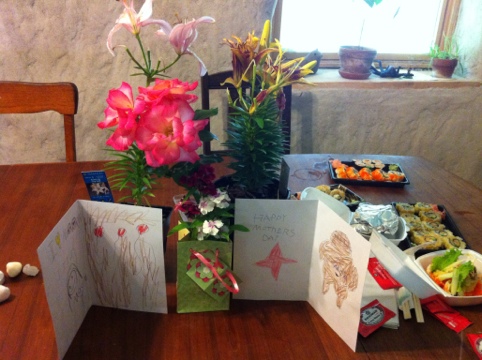
We went to the flower communion at my little UU church and the boys surprised me with new lilies to plant. They also made me great cards–Lann’s has a cool drawing of the Goddess of Willendorf and Zander’s has a sweet note saying, “I love MOOM” ;-D Mark picked up sushi for lunch and we took it home to eat.

20120513-150518.jpg

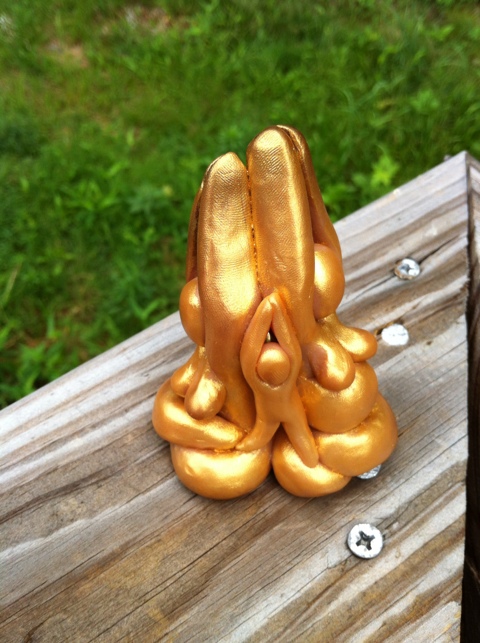
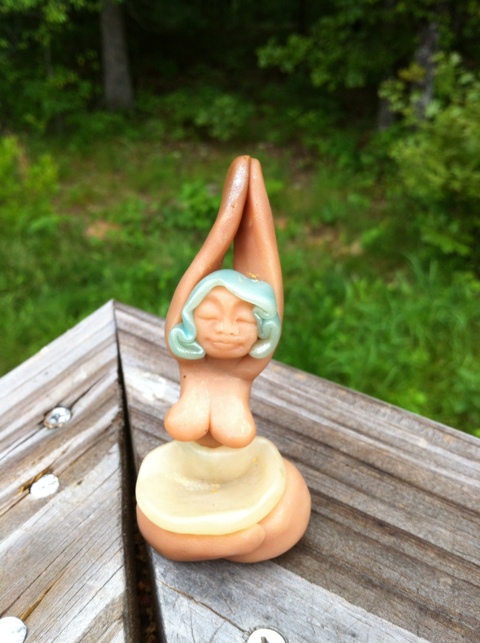
I made a new three generations polymer clay goddess sculpture for my mom to replace the one I’d made for her after Alaina’s birth that got accidentally broken. I actually like this one better than the original. It is only the second three generations sculptures I’ve ever made–she’s special!

20120502-201537.jpg

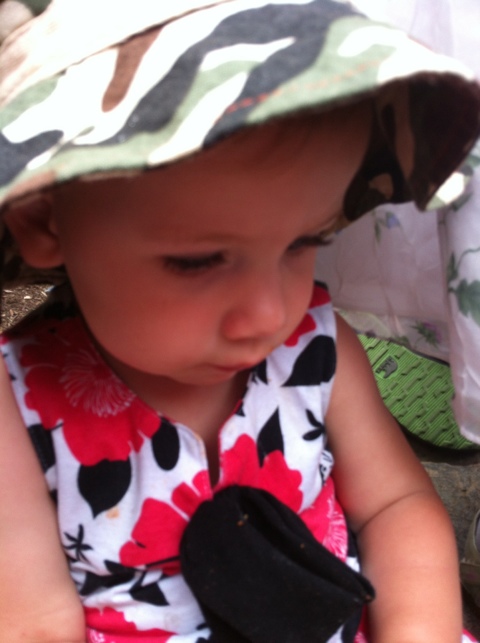
20120513-152736.jpg

The delightful reasons I’m a mother! (picture taken by my aunt during her visit last month–I just love it!)

Now some pictures from our homeschool field trip to the Missouri Botanical Garden:

20120513-152813.jpg

Serious watchage of koi…

20120513-152822.jpg

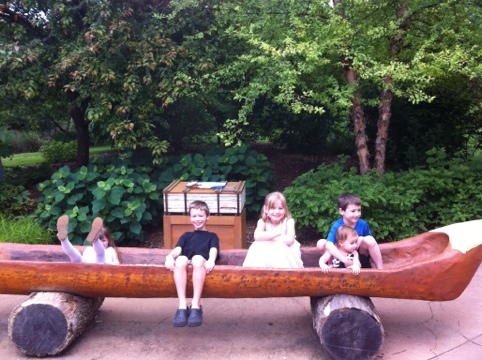
With friends in a model canoe!

20120513-223311.jpg

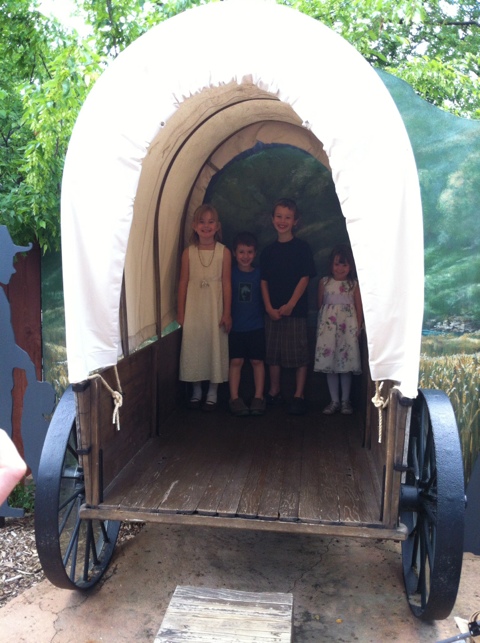
With friends in a model covered wagon!

20120513-152834.jpg

Laina’s big enough to climb all the way up the stairs in the watchtower by the shrubbery maze!

20120513-152944.jpg

Koi feeding was a major hit with all.

20120513-152931.jpg

Different day–trying to show some cute corduroy pants I bought at a yard sale when I was pregnant with Zander. I later gave them to my friend when she had a girl saying that I was probably never going to end up using them since I probably wouldn’t end up ever having a girl. Last week when I visited my friend on my birthday, she gave the pants back to me! How special! So, I had to put them on Alaina even though it is really too hot for them right now.

In other news, it’s a good month for publications! My peer-reviewed journal article about prenatal yoga was published in the International Journal of Childbirth Education this month and my review of The Five Ways We Grieve appeared in the same issue. And, my articles for the journal Restoration Earth about breastfeeding as a feminist issue and parenting as a spiritual practice should be out next week! I’m really proud of both of those articles, because they represent something of a departure from my typical audience as well as a somewhat different twist on some of my usual topics. That said, a lot of the content of both articles have roots in posts I wrote for this blog, so perhaps it isn’t much of a departure after all. In fact, when I posted about these publications on Facebook earlier in the week, I had this realization:

In case anyone is wondering, “how did she have time for articles while grading those 50 papers,” I didn’t. I revised the ICEA articles in December (from an article originally written in 2007 and a review written for my blog in 2010) and I wrote the two for Restoration Earth in March on my break from class (again pieced together from blog posts written over several years). Not that I need to explain myself, but this writing/publishing thing is not a quick process and I think sometimes people think I just magically write articles and have them appear in print that same month. And, these publications prove to me again that my blog is not a waste of time at all–all kinds of article seeds are found there! 🙂 Go, bloggers! You’re producing a genuine body of work!

Since writing the above, I also thought about how many seeds for my dissertation can probably also be found here. Though the bulk of my writing for it is probably still a couple of years away, I’m constantly finding articles and quotes and having thoughts and ideas related to my dissertation subject and I will continue to collect and store them in this way as the ideas deepen, grow, and expand.

*blessing modified slightly from the original.

Polymer Clay Goddess Experiments

A couple of months ago, I attempted to branch out from my usual style of polymer clay goddess figures (see past birth art posts). I’m not particularly satisfied with any of them, but I had this post saved in my drafts to share pictures of them anyway! I have some new translucent sculpey that I’ve been working with without very satisfactory results. It is stickier and meltier than regular sculpey, which makes it a challenge to work with. The figures don’t hold their shapes/poses as well while baking and the clay also folds into itself and sticks very firmly and it is hard to reposition/refigure things after having let it stick accidentally before you’re ready). Anyway, I tried to make this sort of “siren” (double-tailed mermaid) figure first and she’s all right:

20120502-201513.jpg

I also tried a figure using only the translucent sculpey. She turned out looking like she should glow in the dark!

20120502-201525.jpg

I also had a vision of making a sculpture with a small “offering bowl” in which you could place a crystal or something else. She kind of sagged over to one side in the oven though. She is my first figure with a face too!

20120502-201546.jpg

So, I tried again. This one sits on her own (leaning back very far), but I burned her by mistake!

20120502-201554.jpg

So, I tried one more time. This one I used gold pigment on and I don’t really like how she turned out either. Back to the drawing (sculpting) board, I guess. After this third attempt I kind of gave up on my vision and haven’t tried to make any more in this style again.

20120519-202418.jpg

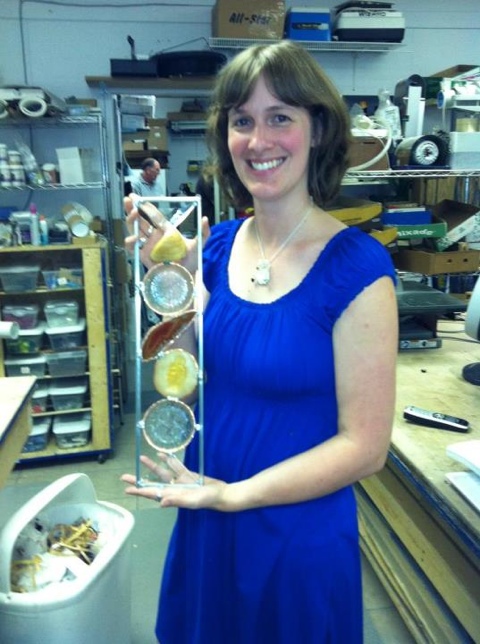
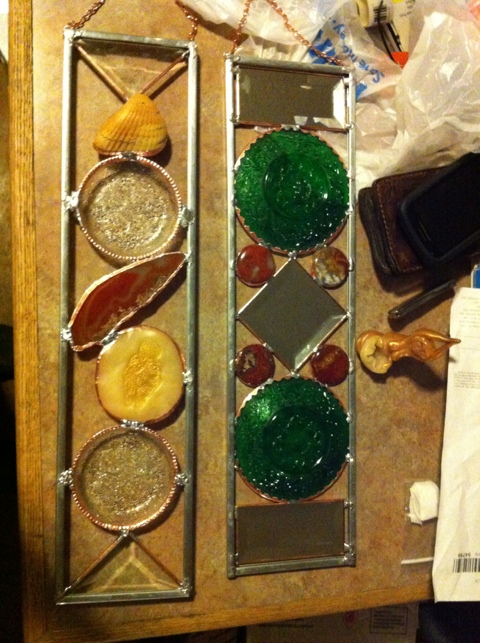
At the same time that I was experimenting with these figures, I also experimented with using a rubber stamp and pigment to make a flat disk of sculpey with the embossed sort of impression of my Goddess of Willendorf stamp on it. I then used that disk when I took a class in making a stained glass panel:

20120519-202432.jpg

My panel is on the left and Mark’s is on the right:

20120519-202441.jpg

Then, this past weekend I became ordained as a priestess (more about this later) and after that ceremony I decided to make another figure to add to my series. I’ve never made a standing figure before and she needs some work. I’m lukewarm about her–she didn’t turn out the way I’d envisioned and I need to experiment some more before I really add her to my series of 3-D journaling sculptures.

Is there really even such a thing as second stage?

Is there a second stage in labor? Who says so? Who thought it up and why? How did they decide what it would be and when it would start? How it would be measured? When it would end? Is there really even such a thing as second stage? If there isn’t, might it not be important for midwives to know that? Is the Earth really flat? Well, it is in some places. Mothers that lie, sit, walk, stand, crawl, glide, stride, squat, climb stairs or hills, dance, sway, cry, throw up, chant or create positions and sounds never heard or seen before are moving their baby from the inside of them to the outside of them. That’s labor. It doesn’t have stages. One thing melts and overlaps another. It starts slowly and gets bigger. It changes a mother’s breathing from light to deep. Her sounds change as her body and baby mould and mimic each other on the journey from inside to outside. By the time the baby is low so is the mother, her breathing and her sounds and her body. –Sister MorningStar in “Midwifing Second Stage” in Midwifery Today, 98, Summer 2011

After having written recently about the rest and be thankful stage and the spontaneous birth reflex and then finally about the
birth pause, the above quote caught my eye in an issue of Midwifery Today from last year (I’m trying to catch up with my stack of magazines/journals). I explain to my birth class clients that birth looks different from the outside than it feels on the inside. Perhaps from the outside we can identify stages and phases of labor. From the inside, we are just doing it and the stages and phases meld into one continuous experiencing.

I love the final comment in this quote especially–we don’t really need tips, tricks, and vaginal checks to tell us where baby is positioned. When mother gets “low” baby likely is too! This reminds me of another article I read in MT recently. (I didn’t save the actual quote, just going from memory.) It was about a traditional midwife who was asked, “aren’t you going to check her?” when a mother felt like pushing. The midwife put the tip of a finger in and the other people laughed at her—“that isn’t checking her!” She said that all you needed to do was feel for the baby’s head—it the finger only goes in a tip, that means baby is close, if it goes in up to the knuckle, baby is pretty close, if you can’t reach the head, baby will be a while. Why would you need to try to reach the cervix or know what it is doing?

I love Sister MorningStar’s writing. It is so beautiful and expressive. Some time ago, I reviewed her book The Power of Women and I highly recommend it.

If birth were a temple

20120408-133552.jpg

If birth were a temple


If birth were a temple
my body is religion, and this small form
twisting out of me,
is
prayer
my cries
reach birth’s vaulted
ceilings,
arching like my back over holy
waters,
crystal clear salt of amniotic
my womb–a blessing bowl
releases
her treasure.

–Nane Ariadne Jordan

I came across this beautiful poem in an anthology of prayers and readings called Talking to Goddess, edited by D’vorah Grenn.

Birth Pause…

What was the moment like immediately following the birth of your baby?

Was the baby placed directly onto your chest by a caregiver? Was she pushed into your own waiting hands and gathered to your body? Was he put first into a warmer and then onto your chest? Did a midwife pass him to you after gently receiving him? Did you glimpse her body as she was held over a blue cloth in the operating room? Did you see her whole body, or just the top of her head as she rested upon you? Did she emerge onto a soft landing where you could gaze at her for a moment, integrating the transition from giving birth to mothering, and then scoop her up into your waiting arms? No matter how it unfolded, I’m sure it was unforgettable.

Waiting to inhale…

I greatly enjoyed reading a beautiful guest editorial in The Journal of Perinatal Education by Mary Esther Malloy, called “Waiting to Inhale: How to Unhurry the Moment of Birth,” in which she explores this precious post-birth moment. This moment when mother meets baby, earthside. Malloy notes that for many women, the moment of meeting is “hurried” by the immediate placement of the baby on mother’s chest. Many women are in a brief, transitional state almost like “birthshock” at this moment—it is the moment before the classic euphoria and “I did it!” hits. Mother often has her eyes closed and needs a second to breathe and re-focus on the world outside her deeply inner focus. Malloy began to observe at births that if baby was allowed to emerge gently onto the softness beneath the mother, the mother is able to take a brief pause to integrate the shift from birthing to mothering and then begins to gently explore baby’s body on her own time, her own terms, before gathering it into her arms and to her breast. This occurs in the space of only moments, but they are unhurried, timeless, liminal moments. She notes: “…just as we are now appreciating what occurs when we respect a baby’s ability to find its mother at birth, what I am seeing [with mothers] is heightening my respect for an understanding of our own abilities as women to find our babies at birth.” She suggests that this natural pause marks a center point of a sequence that transforms woman to mother; that finding our babies ourselves brings us forward into a new state of being physically, emotionally, psychologically, and mentally. Malloy refers to this transition point as a moment to inhale—to “exhale” the experience of giving birth and to “inhale” the sight of the new baby and the beginning of a new phase of life.

Malloy does make sure to mention that the moment of birth is “just fine” and “unforgettable” without this “birth pause” and that mother’s chest is most definitely baby’s intended destination, but that she is starting to acknowledge that having her own babies delivered straight to her chest, “feels a lot like an intervention to me. If intervention feels like too strong a word, at least, it now seems like an interruption to what I might have done if no one told me what to do.” She concludes with some thoughts regarding her own upcoming birth:

Exhale and then inhale. Exhale the magnitude of the experience of birth and then inhale the unfolding moments in which I am receiving this child. Life is not one big inhale, one big gulping in of experience. It is the symmetry of exhale and inhale. Just as we breathe this rhythm through our labors, present to one contraction at a time, we can also breathe through our transition to motherhood, finding that moment between states and passing through as slowly as we need…

Personal experiences with the birth pause

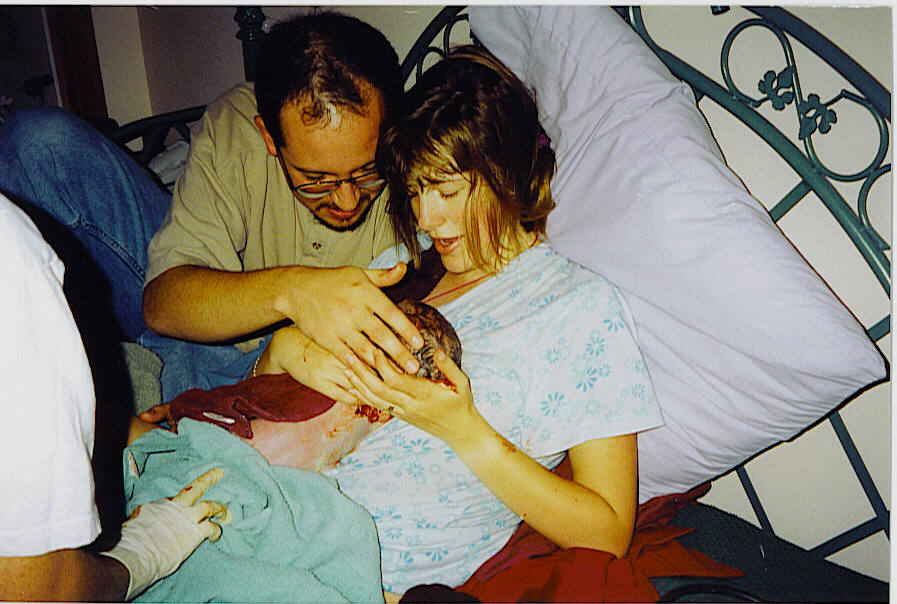
Since I recently wrote about two other  “stages” of the birth process that are not widely acknowledged, the rest and be thankful stage and the spontaneous birth reflex, I knew immediately upon reading this editorial that I wanted to explore the birth pause as well. I am curious to know of others’ experiences with it or reflections upon it. I think back to my own immediate post-birth moments with my babies. My first baby was born and immediately placed onto my chest. I remember feeling disoriented, unreal, and dazed almost. It was sort of surreal. He was crying, I touched his back, and then asked him if he wanted “nursies.” It was very spontaneous and gentle and natural feeling, though taking a step back I see that there was not much time for that inhale moment.

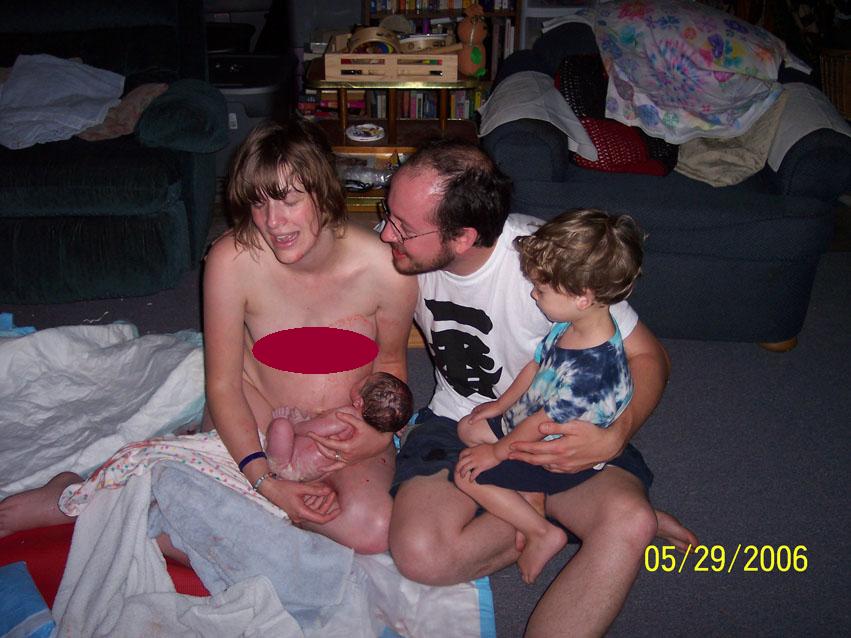
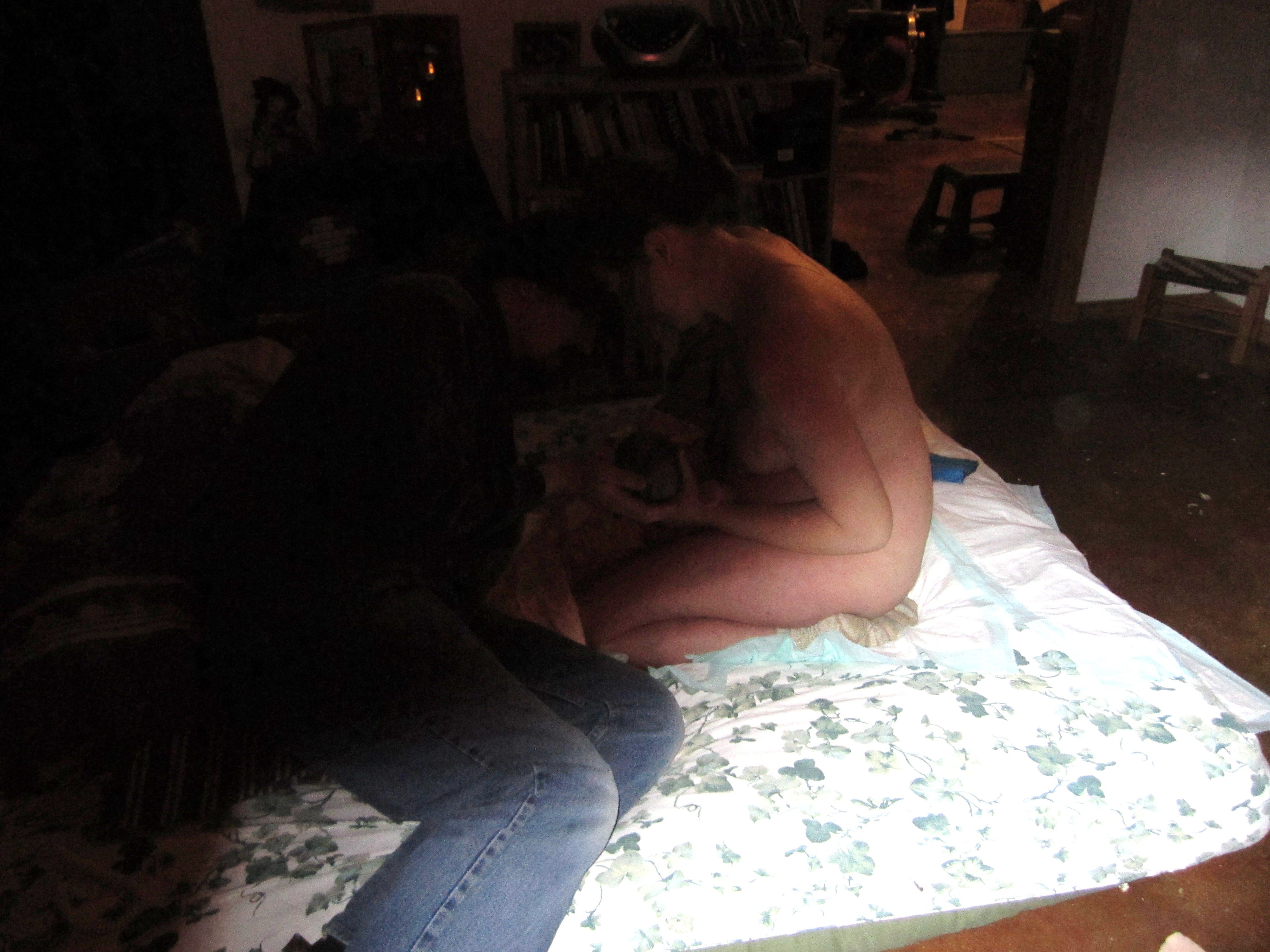
When my second son was born, I was on my hands and knees and the midwife passed him through my legs to me as I turned over. When my daughter was born, I pushed her out into my own hands in a kneeling position. What struck me upon reading the editorial was how after my second son’s birth and after the birth of my daughter, though I was holding them, I did not immediately put them up to my chest. I held them low, against my body, near the tops of my thighs. I think my eyes were closed both times, head tilted back and then tipped forward. Then, I looked down at them, explored them briefly, and then gathered them up in my arms and to my breast. Neither was born onto the surface in front of or behind me, but neither was placed immediately on my chest either. My daughter’s birth was the most undisturbed and instinctual, and I distinctly remember looking down at her as I held her low against my body, and then making the decision to lift her higher and into my arms against my breast. With my son, I felt like his umbilical cord was short and that I actually couldn’t lift him higher without tugging it uncomfortably (it wasn’t actually short though and I’m still unclear what this sensation was exactly).

I immediately thought of post-birth pictures of each baby, in this birth pause time:

Immediately after first baby's birth--straight to chest. Main view is of top of his head. Hands tentatively touch/explore.

Immediately after second son's birth. Notice how he's held low down and kind of only with one hand. My eyes are closed and I'm not looking at him yet. In pictures shortly after, I'm looking at him and smiling and I've moved him up to my breast.
(Didn't feel totally comfortable with full breasts shot on my blog, though feel bad to conform to social expectations of appropriateness!)

Immediately after last baby's birth. I know it is dark/hard to see, but note how I'm holding her kind of low down and actually kind of out/away from me (to look at) rather than against my chest.

I actually feel like I see in all of these pictures that birth pause to exhale the birth and then inhale the baby and the mothering of it.

What about you? What was the moment like following the birth of your baby? Did you take a brief pause, a moment to exhale and then inhale? I’d love to hear about it!