Archives

Birth as a Spiritual Experience (Thesis Project)

Here is your sacrament MR_089
Take. Eat. this is my body
this is real milk, thin, sweet, bluish,
which I give for the life of the world…
Here is your bread of life.
Here is the blood by which you live in me.”
–Robin Morgan (in Life Prayers, p. 148)

“…When I say painless, please understand, I don’t mean you will not feel anything. What you will feel is a lot of pressure; you will feel the might of creation move through you…” – Giuditta Tornetta in Painless Childbirth

“I am the holy mother; . . . She is not so far from me. And perhaps She is not so very distinct from me, either. I am her child, born in Her, living and moving in Her, perhaps at death to be birthed into yet some other new life, still living and having my being in Her. But while on this earth She and I share the act of creation, of being, and Motherhood.”Niki Whiting, “On Being a Holy Mother” in Whedon

“Woman-to-woman help through the rites of passage that are important in every birth has significance not only for the individuals directly involved, but for the whole community. The task in which the women are engaged is political. It forms the warp and weft of society.” –Sheila Kitzinger

In 2011, I started working on my doctoral degree in women’s spirituality/thealogy (Goddess studies). Before I even began my first class, I chose my dissertation subject: birth as a spiritual experience. I’ve been steadily plugging away on my coursework and somehow in the midst of everything else that I am responsible for, I’ve successfully completed 13 of my classes. I already have a (not related) master’s degree and this is why I was admitted straight into the doctoral program, even though I have to complete a lot of M.Div (master’s of divinity) level coursework as prerequisites to the actual doctoral classes. After I finished my most recent class and got my updated transcript, I finally actually noticed how many M.Div classes I’ve completed thus far on my journey and it occurred to me to email to inquire what it would take to finish an M.Div degree first. I had this sudden feeling of what a nice stepping stone or milestone experience it would be to finish something, since I know that I have a minimum of three more years remaining before I complete the D.Min! They wrote back quickly and let me know that with the completion of three courses in matriarchal myth (I’m halfway through the first right now), my almost-completed year-long class in Compassion (I’m in month 11), and The Role of the Priestess course (involving three ten-page papers), all of which are also part of my doctoral program, the only other thing required for successful completion of my M.Div would be a thesis (minimum of 70 pages).

As I’ve been working through my classes, I’ve felt a gradual shift in what I want to focus on for my dissertation, and I already decided to switch to writing about theapoetics and ecopsychology now, rather than strictly about birth. I was planning to mash my previous ideas about birth and a “thealogy of the body” into this new topic somehow, perhaps: theapoetics, ecopsychology, and embodied thealogy. Then, when I got the news about the option of writing a thesis and finishing my M.Div, it became clear to me: my thesis subject is birth as a spiritual experience! This allows me to use the ideas and information I’d already been collecting as dissertation “seeds” as a thesis instead and frees me up to explore and develop my more original ideas about theapoetics for my dissertation! (This is the primary subject of my other blog.) So…why post about this now? Well, one because I’m super excited about all this and just wanted to share and two, because I’d love to hear from readers about their experiences with birth as a spiritual experience! While I don’t have to do the kind of independent research for a thesis that I will be doing for my dissertation and while my focus is unabashedly situated within a feminist context and a thealogical orientation, I would love to be informed by a diverse chorus of voices regarding this topic so that the project becomes an interfaith dialog. Luckily for me I’ve already reviewed a series of relevant titles.

Now, I’d like to hear from you. What are your experiences with the spirituality of birth? Do you consider birth to be a spiritual experience? Did you have any spiritual revelations or encounters during your births or any other events along your reproductive timeline? (miscarriage, menstruation, lactation…) Did you draw upon spiritual coping measures or resources as you labored and gave birth? Did giving birth deepen, expand, or otherwise impact your sense of spirituality or your sense of yourself as a spiritual or religious person? Did any of your reproductive experiences open your understanding of spirituality in a way that you had not previously experienced or reveal beliefs or understandings not previously uncovered?

When I use the word “spiritual,” I mean a range of experiences from a humanistic sensation of being linked to women around the world from all times and spaces while giving birth, to a “generic” sense of feeling the “might of creation” move through you, to a sense of non-specifically-labeled powers of Life and Universe being spun into being through your body, to feeling like a “birth goddess” as you pushed out your baby, to more traditional religious expressions of praying during labor, or drawing upon scripture as a coping measure, or feeling that giving birth brought you closer to the God of your understanding/religion, or, indeed, meeting God/dess or Divinity during labor and birth).  I’m particularly interested in women’s embodied experiences of creation and whether or not your previous religious beliefs or spiritual understandings in life affirmed, acknowledged, or encouraged your body and bodily experience of giving birth as sacred and valuable as well as your own sense of yourself as spiritually connected or supported while giving birth. I would appreciate links to birth stories or articles that you found helpful, books you enjoyed or connected with, and comments relating to your own personal experiences with any of the comments or questions I have raised above. I would love to hear about your thoughts as they relate to:

  • Pregnancy IMG_0225
  • Labor
  • Birthing
  • Lactation
  • Miscarriage
  • Infertility
  • Menstruation
  • Reproductive Rights
  • Birth as a feminist or social justice issue…

 Thank you!

With these things said, I also want to mention that I’m planning to redirect a lot of my writing energy/time into this thesis project rather than to blog posts. I’m trying to come up with a blog posting schedule for myself, but in order to actually do this thing, I must acknowledge that I have to re-prioritize some things and that means writing for my blogs probably needs to slip down a couple of notches in terms of priority of focus.

Oh, and I also hope this thesis project will turn into a book of some kind as well! 🙂

“It is hard to find a female-based concept such as Shakti alive within Western spiritual traditions. Shakti could be viewed as an expression of goddess in the female body at the time of birth. I would say its flow / expression and outcome of love is hindered by unnecessary interventions at birth which divert such energy towards fear- based, masculine forms. The use of masculine, rescue-based healing forms such as cutting (Grahn, 1993) can be necessary and useful, yet such procedures are currently used at the cost of women’s autonomy in the birthing process (see Jordan on C-section, 2007), and define the parameters of what feminist thinker Mary Daly called patriarchal medicine (1978). Modern women are largely lost when it comes to giving birth, turning to medical authority figures to be told what to do. Daly pointed to the dangers of this appropriation for women’s personal and collective autonomy.

Birthing bodies resist, disrupt and threaten standard North American modernist investments in linear time, rationality, order, and objectivity. Birth disrupts the Judeo-Christian male image of God, even as He hides the reality of female creation and creativity. I hold that women giving birth act from a focal point of power within their respective cultures and locations, the power to generate and renew human life itself from within the female body. This power is more absolute in its human reality then any other culturally sanctioned act of replication and material production, or social construction. I speculate that how this female power is expressed, denied, or acknowledged by women and within the society around a birthing woman reflects the degree to which women can and may express themselves at large. As each soul makes the journey through her/his mother, re-centring human consciousness within the female-based reality of human birth causes transformation of patriarchal consciousness as a whole…” –Nane Jordan, Towards an Ontology of Women Giving Birth


Birth on the Labyrinth Path: Anniversary Book Giveaway!

BirthontheLabyrinthPath_300x250-ad_2Last year, while browsing through the Kindle store on Amazon, I made the chance discovery of a delightful little treasure of a book called Birth on the Labyrinth Path. Written by Sarah Whedon, the editor of Pagan Families, the book was very affordable and so I snapped it up and devoured it right away! (I don’t think I had any idea that it had  literally just been published within a few days of my purchase.) The book’s lyrical explorations inspired a brief blog post, through which the author then discovered me. After some time spent enjoying each other’s writing on our respective blogs, she invited me to become a contributor at Pagan Families. While I don’t actually self-identify as Pagan, but instead as something more unwieldy like a Panentheistic Goddess-oriented Unitarian Universalist, I was delighted to begin contributing and find that I have stretched my horizons and come to learn new things about myself through the process of writing for a collaborative project. This week we’re celebrating the anniversary of Sarah’s lovely book with a fun giveaway and a series of thematic posts.

****Giveaway is now closed. Michelle was the winner****

This post is a companion giveaway to the book birthday celebration! You can enter to win your own e-book copy of Birth on the Labyrinth Path. The giveaway will end this Sunday at midnight, so make sure to enter soon 🙂 I’m not fancy enough yet to figure out a Rafflecopter giveaway, so I’m doing this the old-fashioned way. To enter, just leave a comment sharing anything you’d like to share about labyrinths or birth or the two together! 

Also, make sure to check out my long post today at Pagan Families on the subject of life and labyrinths—perhaps better titled, “labyrinths I have known and loved,” or “labyrinths as birth art.” Here’s an excerpt:

It took me a little while, but I eventually discovered that a labyrinth is a perfect metaphor for birth and could be of potent use during birth education, as well as a tool for birth preparation and for processing one’s birth story, feelings about birth, and birth experiences. I was inspired by Pam England’s work with the LabOrinth and began to incorporate the concept into my own birth classes. Most couples seem to connect with it, regardless of their own religious background, though I think on the surface it feels a little too “New Agey” to some of them. Labyrinths are actually ancient (oldest found is 3500 years old!) and have been found in many cultures and places. According to England, they were used by midwives in England 500 years ago as tools for healing. And, centuries ago, mosaic labyrinths inlaid in the floors of churches were walked by pilgrims on their knees (those who could not actually make pilgrimages to the Holy Land in person, would crawl through the labyrinth in the church on their knees as their pilgrimage). I use the crawling example in class to explain that in the “labyrinth” of birth, you can go at your own pace and speed and you can even crawl if you need to! You can also find your own way blindfolded or walking or running or dancing.

via Book birthday party: of life and labyrinths.

On our last vacation day at Pismo Beach, my husband and I drew a labyrinth in the sand together with our toes and then we walked it with our family.

Rites of Passage… Celebrating Real Women’s Wisdom

“Woman-to-woman help through the rites of passage that are important in every birth has significance not only for the individuals directly bellypictureinvolved, but for the whole community. The task in which the women are engaged is political. It forms the warp and weft of society.” –Sheila Kitzinger (Rediscovering Birth)

“I love and respect birth. The body is a temple, it creates its own rites, its own prayers…all we must do is listen. With the labor and birth of my daughter I went so deep down, so far into the underworld that I had to crawl my way out. I did this only by surrendering. I did this by trusting the goddess in my bones. She moved through me and has left her power in me.” ~Lea B., Fairfax, CA via Mama Birth)

Summary of Article: How do today’s women prepare for major life changes such as becoming a mother? Have our once meaningful rites of passage been trivialised, and if so at what cost? Kat Skarbek looks at ways to reclaim what we have lost.

Permission is given to publish this story on the web (thanks to Women’s Mysteries Teacher Circle e-journal).

Without wishing to appear overly dramatic, I think that our society may be in danger of becoming devoid of any important spiritually nourishing rites of passage. Women no longer seem to know how to celebrate important transitions. We have fallen into the horrible habit of treating life-changing events in trite and meaningless ways and as a result, we are cheating ourselves out of the powerful positive effects that these rites of passage can bring us.

For women, menstruation, puberty, marriage, pregnancy & birth, menopause, death – even divorce and separation, all need to be properly acknowledged when passing through these stages of life. Instead we either ignore them completely as in the case of puberty, first menses and divorce, which sends the message that they are both shameful and unworthy of celebration. Or we use the opportunity to get drunk, act like strippers and carry out questionable tasks which would make a sober person question why she would want to get married in the first place – as on your average hen night. At a friend’s baby shower recently I watched with sinking heart as one of the most important events in a woman’s life was celebrated with games involving stealing pegs from other women’s clothing the minute they unconsciously crossed their legs, guessing the baby’s weight and answering questions such as did she have ‘an inney or an outey’ bellybutton? How, I found myself asking, does this in any way prepare a woman to deal with the rigours of labour and birthing and the demands of the first year of motherhood? Why are we so seemingly unaware that our accepted celebrations offer absolutely nothing to women except a bunch of baby clothes? At standard baby showers there is no molly5wisdom shared, no loving support offered and no nourishment given (unless you count cupcakes!).

How did it come to this?

What happened to our once vital and spiritually awakening rites of passage? The easy (and heavily feminist) answer is 500 years or more of patriarchy. Prior to this and from the earliest records of society, it has been apparent that there were very well observed, meaningful and symbolic rituals to mark just about any occasion. Rituals existed for everything from simple agricultural celebrations of the changing seasons and giving thanks for food and supplies, to complex marriage and birthing rituals that eased newlyweds into their new roles and prepared the way for women to birth with dignity and power. Women in particular carried enormous wisdom about the cyclical nature of life and shared nourishing rites of passage, which enabled them to marry in confidence and with awareness, birth without fear and to die with dignity and grace. Once patriarchy became established it began the systematic erasure (or appropriation) of many of these important rites and in particular it diminished the roles and experiences of women so that they went from being important and respected members of their communities, with power over land, name and children to women whose only role was to birth heirs and to be subservient to their men. Even in today’s changing society the roles of ‘wife’ and ‘mother’ are still considered less important than the roles of ‘career woman’ and ‘breadwinner’. We have higher rates of divorce, higher rates of birth intervention and subsequent post-natal depression and more difficult menopauses now than women experienced 50 years ago. I believe that this is directly linked to the fact that we are now expected to just ‘get on with it’ and disappear into these changes without the proper observances being made. I’m not suggesting that women to disappear into mud huts every time they bleed or to give birth in fields as we did in the tribal days, but I do think that we need to pay more attention to our needs at these powerful times of change. Menstruation is not a curse, it’s a promise of our life-giving ability to come. Menopause is not a loss of youth and sex appeal, it’s a vital gateway to the enormous power of our wisdom years. And pregnancy, birth and marriage are life-changing experiences that need to be embraced and celebrated with something more nourishing than ‘Mr December’ and his overstuffed banana hammock.

A graceful acceptance of our changing roles and an awareness of the power that these changes bring, gives us huge personal freedom. Freedom from the current obsession with youth and aging, freedom to explore our new shapes, our new lives and the possibilities they hold. Isn’t that worth exploring?

Reclaiming simple rites of passage

So how can today’s modern goddesses, and in particular mammas-to-be, prepare themselves for life’s many transitions? A good starting point is to create your own rite of passage for whatever transition you may be going through. Pregnant women could change their planned baby shower to a Mother Shower (also known as a Blessingway). Mother Showers celebrate and nurture the mother rather than focusing exclusively on the child and are a growing trend amongst women. They offer pregnant women a chance to honour their pregnancy journey, to enjoy symbolic rituals of preparation for the labour and birthing ahead and indulge in an afternoon of loving, nourishing attention from their closest friends and family. And yes, there are still cupcakes! During one of these afternoons a pregnant woman can expect to be waited on hand and foot – often quite literally. Celebrations often include some kind of pampering for the mamma-to-be such as a foot and hand massage with beautiful, pregnancy-safe essential oils. She might choose to have her belly, hands or feet hennaed as a recognition of her changing status. She might enjoy creating a beautiful ‘labour necklace’ created out of beads gifted by each woman present and blessed with all of their best wishes for a wonderful birth. These necklaces can be used as a powerful focusing tool during the darkest hours of her labour and can become a beautiful heirloom that gets passed on from mother to daughter, or even from woman to woman within her community, with each subsequent pregnancy adding more beads to the necklace.

What you can do

There are a number of meaningful activities that you could include in your celebration. You could even combine elements of a traditional baby shower with elements from a mother shower by adding in any of the following:

  • A Fear Releasing Ceremony. Writing down your fears on a piece of paper and ritually burning them can help you rid your unconscious IMG_0821mind of any impediments to an easy and positive birth.
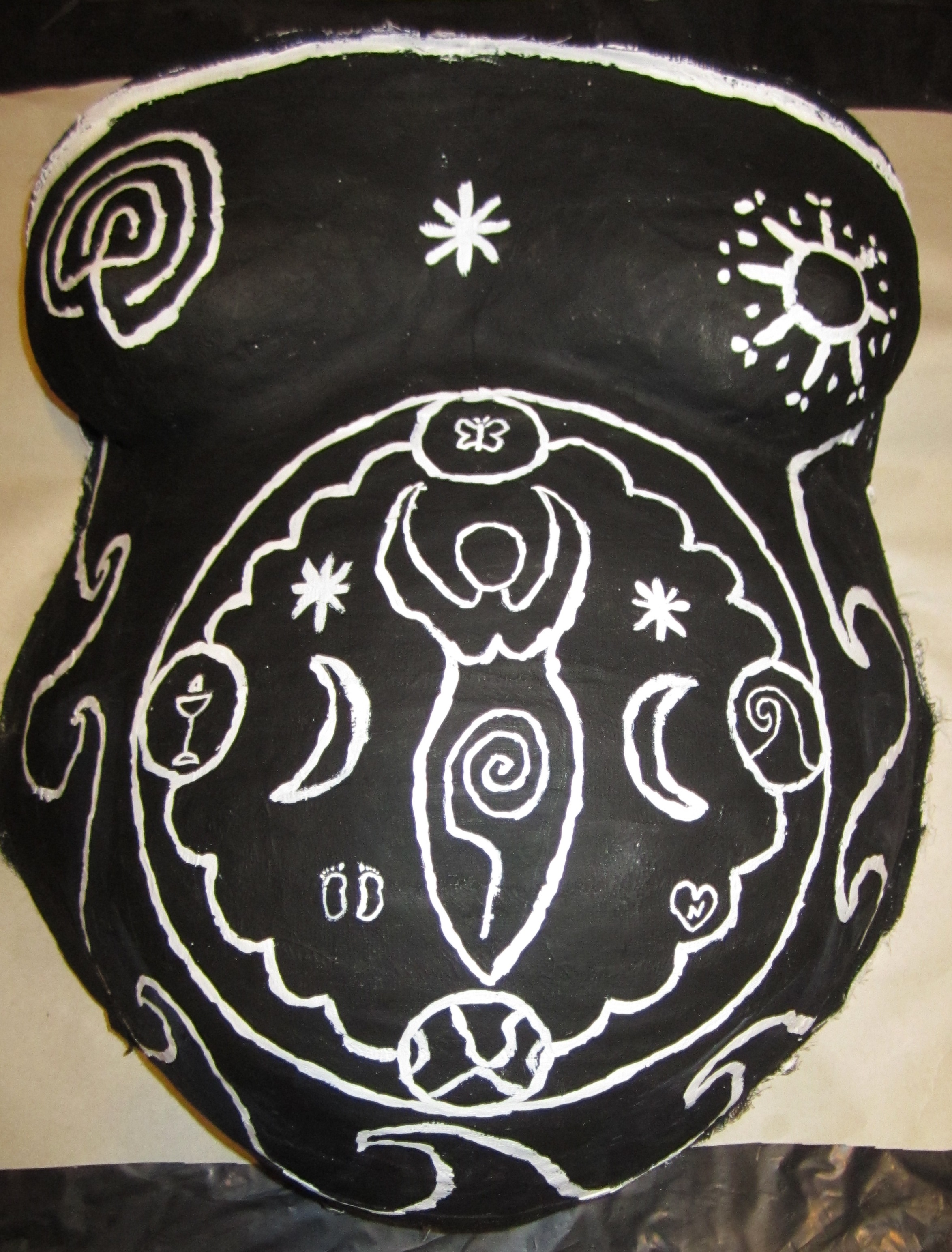
  • Belly Casting. Creating and painting a belly cast (a 3D plaster cast of the beautiful pregnant belly) can be a wonderful meditative tool to connect you more consciously with your body and your baby.
  • Guided Meditation or Visualisations. If there is a group of you, each woman can place a loving hand on the mamma-to-be, while another guides her into a place of deep relaxation where she can communicate with her unborn child or any guides or angels she feels drawn to, in order to receive information or just reassurance.
  • Plant a Tree. Buy a beautiful fruit tree to plant in honour of your newborn. You can tie birth blessings and wishes to its branches until after the baby is born.
  • Give gifts to nurture the mind, body or soul of the mamma-to-be. Most women won’t get the opportunity to enjoy a spot of luxury once the baby is born, so instead of yet more baby clothes why not spoil the mamma with something indulgent such as a pregnancy massage, a hair appointment, a manicure or pedicure or simply some beautiful skin cream to minimise stretchmarks? You can even buy her a gift for after the birth such as a post- natal spa voucher, to give her some ‘me’ time to look forward to when she needs it most.
  • Share Birthing Stories (no horror stories please!). Poetry, singing or chanting can also be a very uplifting way of connecting with your wise inner goddess.
  • Create a Phone-Tree. When labour is established, each woman is called and lights a candle for the birthing mamma to re-create the loving circle of support present on the day and send her thoughts of courage and strength.
  • Provide Nourishing Food and Drink. Each woman present can contribute a meal to be frozen for after the birth.
  • Pledge an Act of Support for after the Birth. Each woman offers one tangible act of support for after the birth when the mother and child are getting to know one another. It can be something simple like providing a home cooked meal, offering to take care of an older child for an afternoon so that the mamma can get some rest, taking the dog for a walk or taking the newborn off her hands so the she can have a recuperative bath.
  • The Baby Moon (or a month of ‘lying in’ with the newborn) is still observed in many cultures and offers a chance for the infant and mother to really bond and get to know one another without the usual worries about cooking, cleaning and taking care of other children. I think it would be very beneficial to women to reclaim this particular tradition.

Finding our way back home.

On the day that a baby is born, so too is a mother. Without properly acknowledging our changing lives in these beautiful and memorable ways, we go into motherhood unprepared for the challenges it may bring. No amount of reading can bring you the kind of self-knowledge needed to be a good mother. No amount of beautiful nursery furniture can enable you to trust in your mothering instincts when you are frightened of making a mistake with your precious little bundle. These things all take time. Reclaiming our rites of passage, no matter in how small a way, can help restore to women something vital for their spiritual and emotional wellbeing. And if you are worried that it might be boring or heavy, you needn’t. Celebrations are just that, a joyous coming together of loved ones to honour something wonderful. Keep that in mind and enjoy the many wonderful ways of celebrating this amazing and challenging time in a woman’s life. Choose the things that work for you, that you will enjoy and that will really give you the space to recognise the momentous changes that are happening and offer you some genuine support and acknowledgement of this special time.

More information about alternative pregnancy celebrations can be found in books such as Mother Rising by Yana Cortlund, Barb Lucke and Donna Miller Watelet (OK) and Blessingways, A Guide to Mother-Centred Baby Showers by Shari Maser (OK).
If published on the web please include the following contact details: Website: www.thedivinefeminine.com.au Email: info@thedivinefeminine.com.au Phone: 0439 636 958

Kat Skarbek
www.thedivinefeminine.com.au
About Kat Skarbek…
Kat Skarbek is a writer, presenter of the Shamballa Spirit Show on 3MDR 97.1FM and the Head Honcho of The Divine Feminine (www.thedivinefeminine.com.au) which specialises in creating unique and spiritually nourishing transitional celebrations and events for women. These include alternative Hen Nights and Mother Showers for pregnant women. She is a proud survivor of the first two years of motherhood and a visit from the PND Fairy.
Phone: 0439 636 958
Email: info@thedivinefeminine.com.au

Previous posts about rites of passage and women’s mysteries:

Rites of Passage Resources for Daughters & Sons

Birth as a Rite of Passage & ‘Digging Deeper’

Blessingways and the role of ritual

Blessingways / Women’s Programs

Red Tent Resources


Motherhood and Embodiment

“Loving, knowing, and respecting our bodies is a powerful and invincible act of rebellion in this society.” –Inga Muscio

As I’ve written before, pregnancy, birth, and breastfeeding are incredibly embodied experiences—motherhood in general feels very much a molly37weeks 016physical commitment. Our relationship with our children begins in the body, it is through the maternal body that a baby learns to interpret and engage with the world, and to the maternal body a breastfeeding toddler returns for connection, sustenance, and renewal.

Why might birth be considered an ecofeminist issue though? Because mother’s body is our first habitat. We all entered the world through the body of a woman and that initial habitat has profound and long-lasting effects on us, whether we recognize them or not. Midwife Arisika Razak explains, “the maternal womb is their first environment. The cultural paradigm of birthing is the first institution that receives our children…Each of these elements—womb, birth culture, and family—has a profound effect upon the new human bring. Each deserves our best thinking and analysis. What would it be like if we envisioned a society in which positive, lifelong nurturing support—from old to young, and young to old—were the dominant theme of human interaction?” (p. 167).

What would it be like if we treated birthing women and their babies like they mattered?

Our first and deepest impulse is connection. Before Descartes could articulate his thoughts on philosophy, he reached out his hand for his mother. I have learned a lot about the fundamental truth of relatedness through my own experiences as a mother. Relationship is our first and deepest urge and is vital to survival. The infant’s first instinct is to connect with others. Before an infant can verbalize or mobilize, she reaches out to her mother. Mothering is a profoundly physical experience. The mother’s body is the baby’s “habitat” in pregnancy and for many months following birth. Through the mother’s body, the baby learns to interpret and to relate to the rest of the world and it is to the mother’s body that she returns for safety, nurturance, and peace. Birth and breastfeeding exist on a continuum, with mother’s chest becoming baby’s new “home” after having lived in her body for nine months. These thoroughly embodied experiences of the act of giving life and in creating someone else’s life and relationship to the world are profoundly meaningful experiences and the transition from internal connection to external connection, must be vigorously protected and deeply respected.

via Talk to Your Baby | Talk Birth and Breastfeeding as a Spiritual Practice

I have a particular interest in embodiment and my dissertation topic is related to a thealogy of embodiment (basically the Goddess and the body) and so my attention was caught by some great sections about birth, bodies, and family in the book The Art of Family:

AS WE MOVE THROUGH BODILY stages together, there are some special stages that are worth thinking of in advance. Pregnancy is one, of course, and babies. Nothing is more inescapably BODY than birth. For the mother, both through her pregnancy and the labor and delivery of the baby. In birth, the body gets to drive the soul for a change and one’s soul is on for the wild ride, whatever happens. What does she deliver, after all, but a body, this little lamblike creature packaged in a now wholly-other body? What does she deliver but a body—and what do she and Daddy count but a body’s toes, a body’s fingers? In these small ways we acknowledge our wholeness, our physical sacredness.

Gina Bria (2011-11-28). The Art of Family : Rituals, Imagination, and Everyday Spirituality (Kindle Locations 1693-1700). iUniverse. Kindle Edition.

(Amazon affiliate link included)

And, I appreciate that Bria then moves into a consideration of how men experience pregnancy and birth…

YES, BIRTH IS THE BODY, and for women it is manifestly given. But one should note that the world over, there is a complementary effort by men to try to counterbalance the impressive power of women who have even the potential of birth, whether it is actualized or not. Men, too, have moments of making special use of their bodies. Men make quests, and perform feats of extraordinary effort, to put their bodies on the line in some attempt to match birth.

…For modern men, pregnancy means two things, not one integral, unfolding experience, as for women. First, they must cope with a partner undergoing tremendous physical change. In essence, they are no longer dealing with the same body. It’s a stressful experience, and many men fear they will never see their old partner again, quite literally. They listen to their wives agonize about weight gain and swollen ankles, and secretly grieve the loss, all the while maintaining a show of faith, for their wives, for themselves, that it will come to a happy ending. And on top of that, they must then forge a new relationship with the party responsible for this, someone they can neither see, nor touch, indeed, can hardly believe exists! Women at least get touched by their in-utero babies, even if it’s a swift kick from the inside. “Hey, it’s Daddy,’’ my husband said rather sheepishly into my belly one night. This seemed to me quite amusing, as if the baby needed an introduction to one half of his own genetic material. Then suddenly it struck me that I had never considered introducing myself to the baby, announcer like over an intercom—“This is your mother speaking’’—because I felt the bodily connection so inexorably. I knew I was well known to the baby, but my husband had no such advantage. He had to make connections in other physical ways, in this case using his voice. Making a family where men touch, speak, and care for children is a vital way to connect them to their own progeny; one way that many cultures, including our own, can often deny men. Perhaps you have been stopped in your tracks, as I have, over the recent spate of advertisements of bare-chested men holding tiny babies. Do advertisers, more than Freud, know what women want? Yes! We want to see our handsome men holding babies, snoozing with them, schmoozing with them in chest-to-chest communion. As Jane Austen asks, “What attaches us to life?’’ Anyone who lays on hands gets attached to life.

These thoughts really struck me in a profound way. During each of my own pregnancies, I remember marveling and feeling impressed, as well as a little sad, that my husband had to somehow forge this bond with a newcomer without the same benefit of the embodied, constant experience of pregnancy—pregnancy from the inside is different than pregnancy from the outside. I shared the author’s amusement in picturing how it would have been to “announce” my own presence to my babies. I’ve tried, but cannot fully imagine the process and psychological task involved with the paternal experience, of in a sense, “suddenly” having a baby to hold and care for and “instantly” love, though I’m sure I have the capacity within me somewhere (and, yes, I know that not all mothers feel an instant love either and may have the same sense of suddenness in their own lives—it was certainly true for me that the inner experience of a womb-dwelling baby was pretty different from the external experience of having a physically visible baby to tote around). As a pregnant woman though, the baby is basically inescapably present and part of me in an interconnected, interwoven, symbiosis of being. There is the transition at birth to an “outer” relationship, but that intense embodied interconnection continues immediately with the breastfeeding relationship. It is somewhat impressive or staggering to me almost, that men have to form their own connection born out of different “stuff” that the biology of gestation and lactation that weaves the motherbaby together.

Bria also addresses the loving of a baby’s body that isn’t going to survive:

WE ARE NEVER MORE CRUSHED than when there is trouble at birth. No sadness holds for us the power of an incomplete body, a broken body. We grieve and turn heart stricken at this time like no other. In moments like these we can only comfort ourselves, with love, that love would allow us to care for this child when many would not be able to do so. We hope to find ourselves the kind of people who could, in such circumstances, make a life for a whole person, with an incomplete body. When our son was born with a leaking heart, an old-fashioned “blue baby,’’ and destined to die without surgical repair, we learned quickly that all we could give him, all he could receive as a newborn, was the small, inconsequential daily care of the body, gentle changing, warm nursings, our breath upon his face. Perhaps, we thought, it would be all he would ever get. In that season of attention, we really learned the significance of loving a body. A body, however small, records every trace of touch; it is never unconscious; unlike the mind, a body is never without sensing, even in sleep. A body will always remember.

I liked the description of a body always remembering. We do carry deep, physical memories of our pregnancies, births, and babies. I find the physicality actually comes back most clearly in dreams for me, when I can again feel with a sharp potency the sensation of a baby’s body slipping swiftly from my own body. I also like reading research that indicates that mother’s body carries fetal cells within her forever. I like thinking that physical evidence of the embodied, relational experience of pregnancy remains written into my very cellular structure (well, and on my bones and skin too, I suppose!). I found this a comfort after my little Noah’s birth, thinking that in a very real way, I would truly always remain a “little bit pregnant” with him and that perhaps some of his unique genetic material lives on in my body.

After birth, we continue to relate to our babies on a very physical, body-oriented level. There is nothing like a baby to bring things back to the body, to use your body and their own in a complete, intensive, totalness.

BABIES’ BODIES AND CHILDREN’S BODIES   LIKE PLAY, LOOKING AT THE body of an infant returns us to childhood. Babies’ bodies are a special form of being human, and they elicit in us essential, elemental emotions. They infect us with longing for the integration, the wholeness, they have. As new parents, we experience again all the helpless and exuberant feelings of children, the unfeigned marveling over everything manifested by a baby, a physical miracle. We cannot contain our awe, expressing it to everyone within earshot. New parents on the street can always be identified by their aura of vulnerability; they’ve shed the social cloth that keeps us all appropriately attired to go about our work. Instead, just like the baby, they are naked to everything good. They blink and look around, bemused, tired, and delighted. You will notice they always smile at you at the crosswalk—it is a secret, initiated smile. They assume you either know what they are smiling about or wish that you did. What is it they know? Their babies made them once again aware of the pleasures of physical delight. To care for an infant is a test of our humanness, a trial by fire and love.

What is good about caring for infants is that they never let us forget how essential the body is. They snuffle, bawl, and demand attendance. “Feed me, change me, hold me,’’ for an eternity of right-nows. And when they sleep, it’s as if they have cast themselves on a thin but safe shelf of floating wholeness, complete integration. They show us what we once were, without guile, delightedly in love with our own body. When infants turn into toddlers, the body is still in front, still demanding, but in a bigger world. Now protection from bodily harm becomes a concern of everyday physical life together. We aren’t as impressed by the bodily transmogrification that takes place in front of us, because we’ve learned to live with it happening every day, day to day. It’s impossible for the same miracle to impress us the same way over and over again. Thus begins the very fading away of the lesson we most need from our children—that there is intense pleasure in the active human body. Right under our noses they play. They play and play and we watch and nod as if this itself isn’t a further miracle. What do infants do when they get control of themselves, but move, explore, experience exhilarated delight in their bodies and what they can do. Their essence is to enjoy themselves as bodies, all over…Through physical life with our children, through care of them and play with them, the hands-on of it, we again acquire our innocent selves, a delight in each other and the world around us. We discover all over the potentialities of the senses. This is the heart of being with young children.

Gina Bria (2011-11-28). The Art of Family : Rituals, Imagination, and Everyday Spirituality (Kindle Locations 1729-1760). iUniverse. Kindle Edition.

As they age, this physical, body-based relationality and experiences may wane, and yet still holds important value:

As our children age we must struggle to keep this alive for ourselves, for them, in one form or another, as the world begins its intrusion into our family lives. This may be as simple as pointing out that a flower is beautiful, that rain smells divine, that a hand held feels warm and comfortingly sweet, that nothing satisfies like cool water. Once children hit the walking stage and beyond, we spend more time explaining compared with the time we spent holding. Yet there are still many miniature ways of communicating with one’s body. Its active use—a nod, a wink, a hug—are all fleeting acts of committing one’s body, however momentarily, to another. Looks, touches, squeezes, physical smiles, a physical vocabulary—aren’t they what children long for? Indeed, isn’t that exactly what we thrill to in a romance—those little signals that you belong to each other—and isn’t that what we end up complaining of missing when our marriages seem stale? It isn’t just for romance that these things work, though it is there that we most seem to notice them. All of family life can capitalize on a richer life with each other’s bodies.

And, bringing it back to birth and the care of birthing bodies, I really liked this image via Facebook:

treatment

Book Review: The Doula Guide to Birth

Book Review: The Doula Guide to Birth

The Doula Guide to Birth: Secrets Every Pregnant Woman Should Know
By Ananda Lowe & Rachel Zimmerman
Bantam Books, 2009
Softcover, 270 pages
ISBN: 978-0-553-38526-7
www.thedoulaguide.com

Reviewed by Talk Birth

The Doula Guide to Birth is written for pregnant women, though the title may suggest that it is for doulas. It also has a chapter and sections specific to birth partners. However, doulas will also find the book to be a friendly, enjoyable read and may pick up some fresh perspectives for their work with birthing women.

The book also includes (short) sections for often-ignored or marginalized segments of the birthing population such as same-sex partners, parents using a surrogate mother, and women planning for adoption.

The first five chapters of The Doula Guide to Birth cover benefits of doulas, the role of fathers/partners and the complementary nature of the doula role to other support people, general overview of labor, childbirth education options and medications, and finding a doula.

The later seven chapters delve deeper into less typical subjects such as doulas and medical providers, when should you really go to the hospital, labor techniques, unexpected interventions, birth plans/birth essays, and what really happens postpartum.

Though not a criticism per se, I did feel like the first half of the book reads very much like an extended “commercial” for doulas. The second half of the book really shines. My favorite chapter was “labor is not about dilation”: “Although there is currently a heavy emphasis on dilation, vaginal exams, and timelines for giving birth, labor is not about dilation. Your body knows how to give birth whether or not you ever have a pelvic exam during labor. Birthing women need encouragement to trust their bodies, and to be the stars of their own labors. Doulas help provide this encouragement. And the confidence a woman discovers in labor can help carry her through the demands of parenting and future challenges in life.” (emphasis mine).

The Doula Guide to Birth is supportive of the midwifery model in philosophy, but only includes very brief mentions of midwives, the assumption being that most births will be in the hospital.

The book has extensive endnotes and an appendix with a birth evaluation form.

Disclaimer: I received a complimentary copy of this book for review purposes.

Review previously published on Citizens for Midwifery

Women of Color Can Push for Better Outcomes: What Every Mother-to-Be Should Know About Birth

Guest post by Tara Owens-ShulerImage

As an African American Lamaze Certified Childbirth Educator, I have observed over my 18 years of teaching that childbirth education class participants are less likely to be women of color. My desire for more women of color to attend childbirth education classes is rooted deeper than just their presence in a classroom – it is rooted in my desire for more women of color to understand the disparities that exist in maternal and birth outcomes.

In a recent Science and Sensibility blog post by Christine Morton on maternal health disparities, she reviewed the work of several well-known public health researchers – Dr. Eugene Declercq, Dr. Mary Barger and Dr. Judith Weiss. Their findings point to the fact that African American women have higher rates of cesarean births at nearly every age group and across every level of education.

In addition, the U.S. Department of Health and Human Services reports that one of every five non-Hispanic,black births are pre-term, African American mothers experience an infant mortality rate twice that of non-Hispanic, white mothers, and breastfeeding rates among African American mothers are 16 percent lower than white mothers.

Given the disparities that exist in maternal and birth outcomes for women of color, I think April as Minority Health Awareness Month is a great opportunity to talk about a few other factors that minority moms or mothers-to-be can control or influence. It’s a hard reality that mothers face real challenges in getting the childbirth care they want and deserve. Even though medical evidence may tell us certain practices are good for mothers and babies, the “system” is not always geared to deliver that care. Health care providers are rushed, spread thin, or incentivized for practices that are not most beneficial to the mother.

Let’s go back to the fact that African American women have higher rates of cesarean births than non-Hispanic,white women. Is it because African American women are sicker and need to have a cesarean birth? Researchers report that this is untrue. They conclude that higher rates of cesarean births among African American women are a result of a shift in obstetric practices to focus more heavily on use of childbirth interventions. And, when we bring in an induction to the equation, there is a correlation between the increased rates of induction to the increased rates of cesarean births!

Research shows that babies pay a steep price for these early births caused by inductions or a failed induction, which led to a cesarean. Babies have greater difficulties breathing, breastfeeding, and maintaining their temperature, which usually means being separated from moms and spending time in the Intensive Care Unit. While an increasing number of hospitals and health care professionals are shying away from unnecessary cesarean birth and induction, it’s one of many care practices that just aren’t supported by good medical evidence.

So how can women of color push for better care?

  • Become an active partner with your care provider. While doctors or midwives have professional knowledge and skills, they may not know everything about your personal background and preferences. Finding a provider who will also act as your partner can help you push for the care that’s best for you and your baby.
  • Ask questions – lots of them! Labor and birth in particular can be unpredictable. That’s why it’s a smart idea to prepare a list of rolling questions throughout your pregnancy to help you determine if the right care is being recommended during labor, birth and after birth.
  • Do your research. Understand your available care options before, during and after labor at the hospital or birth center. If you know that during labor you’d like the ability to walk around, eat and drink – choose a birth facility that will be more aligned with your birth preferences or wishes.
  • Participate in a childbirth education class. Taking a Lamaze class will help you understand maternity care best practices and be better prepared to navigate your labor and birth. A childbirth educator will help you identify the right questions to ask when making decisions about your care.

I encourage all women – particularly African American women – to learn more about getting the right care in pregnancy and childbirth by attending a childbirth education class. Skipping out on childbirth education is a lost opportunity to stack the deck in your favor and become a well-informed consumer of evidence-based practices! As a consumer, it is your right to be a partner in your health care decisions.

Tara Owens Shuler, MEd, LCCE, FACCE is the president of Lamaze International. She has practiced as a childbirth educator since 1995. In 2005, she became the Director of the Duke AHEC Lamaze Childbirth Educator Program. In addition to training individuals to become childbirth educators and preparing expectant women and their partners for a safe and healthy birth experience, Tara provides labor support services. Along with coordinating the Lamaze program in the Duke AHEC office, Tara works with her statewide AHEC partners in developing continuing education programs and/or resources for healthcare providers in North Carolina and assists with the Duke AHEC PATHWAYS Health Careers program for K-12 students. When not working, Tara and her husband enjoy playing with their dog, Gramps, and traveling.

Visit Lamaze International for great resources to help mothers and mothers-to-be learn their options.

DVD Review: Pilates Pregnancy

PILATES PREGNANCY WORKOUTS ($14.99)
Distributed by BayView Entertainment (and available for purchase online at Amazon.com).
www.mauipilates.net

Reviewed by Molly, Talk Birth

While I’ve maintained a yoga practice for over ten years, practiced yoga throughout all of my pregnancies, and I’m Certified Prenatal Fitness Educator (ICEA), I have no experience with Pilates. So, when the opportunity came up to review a prenatal Pilates DVD, I was happy for the opportunity to broaden my horizons! Pilates Pregnancy Workouts is a basic workout DVD that is both easy to follow (even for those unfamiliar with Pilates) and sufficiently challenging. I was surprised by how effectively strengthening the workouts were, while appearing on the surface to be very gentle and simple! While this is a prenatal program, there is no mention of the applicability of the exercises to labor or birth and only a tiny handful of references to the baby.

In addition to the gorgeous ocean setting, a highlight of the Pilates Pregnancy Workouts DVD are the manageable, short segments—you can choose a workout that is 6-10 minutes. We can almost always find time in the day for six minutes! You can also choose to watch the entire exercise series as one continuous practice of about an hour. Also handy is the option of voiceover narration or nature sounds for once you’re familiar with the program.

Some exercises from Pilates Pregnancy Workouts are familiar from yoga practice, but the overall style and form is different and it would be great to include both in one’s prenatal exercise program! This DVD is a worthwhile addition to the prenatal exercise resources of pregnant women as well as doulas, midwives, or childbirth educators.

Book list: Preparing Children for Homebirth

MR_024The theme of our spring issue of the Friends of Missouri Midwives newsletter was Siblings. Happily, I got a lot of great content for this issue without having to write everything myself (sometimes I prepare issues that should be called “The Molly Issue”). Other than the letter from the editor, the only piece I contributed this time around was a short list of homebirth resources for children. If you have other good resources to add, I’ll gladly accept your contributions and update the list accordingly.

Here’s my list:

(Amazon affiliate link included)

  • Runa’s Birth by Uwe Spillmann and Inga Kamieth– my all-time favorite children’s homebirth book. The illustrations in this book are amazing; I love the tiny details like little shells/rocks on the windowsill and phone messages on the bulletin board.
  • Welcome with Love by Jenni Overend and Julie Vivas (also published as Hello Baby). It has nice, softly drawn pictures that glow with excitement and I really enjoy reading it to my kids.
  • Birth Day DVD by Naoli Vinaver—this one is great because the whole family is involved and older brothers join mom in the birth pool.
  • We’re Having a Homebirth by Kelly Mochel. This book is inexpensive, cute, and informative.
  • Being Born: The Doula’s Role by Jewel Hernandez and R. Michael Mithuna–really nice, detailed illustrations. Focus is on doulas and their job and the wide range of settings in which mothers give birth.
  • Mama Midwife: A Birth Adventure by Christa Tyner— this new children’s book about homebirth and midwifery is available to read for free online. It is cute, though kind of trippy. (I would have preferred it to be just people though, rather than a somewhat incongruous collection of animals.) LOVE the “birth song” at the end.
  • My Mommy’s Midwife by Trish Payne CNM—this one has children’s drawings as the illustrations. It isn’t about homebirth, but instead explains the role of the midwife and that she might come to a birth center, a hospital, or a home birth.

Books that I’ve not read, but would like to check out include:

  • Our Water Baby by Amy Maclean and Jan Nesbitt (water birth specific)
  • Mama, Talk About When Max Was Born by Toni Olson (home waterbirth)
  • Mama, Talk About Our New Baby by Toni Olson (companion book to the above about integrating new baby into the home)

MR_034

Multimedia Review: Pregnancy Health Yoga


Multimedia Review: Pregnancy Health Yoga (book/DVD set)
by Tara Lee and Mary Atwood
ISBN: 978-1-84899-081-4
http://www.taraleeyoga.com/shoponline.php

Yoga has played an important role in all of my pregnancies and births. I began practicing yoga daily in 2001 and it was only natural to continue that practice throughout my first pregnancy. I was surprised in realize in hindsight that I’d also used yoga throughout my first labor—spending a lot of time in a modified version of child’s pose and on hands and knees, and also in a supported version of downward facing dog. Later, as a birth educator, I discovered those same poses could be combined in a series of “birthing room yoga” poses. I loved the knowledge that my body had spontaneously used these poses during my own birth experience—it was an affirmation for me that deep birthing wisdom resides in our bodies and will emerge if we have the freedom around us to let it emerge, no books, classes, and “preparation” really necessary, just space, breath, and freedom of movement.

So, naturally I was very excited to receive a copy of the new book and DVD set Pregnancy Health Yoga: Your Essential Guide for Bump, Birth and Beyond. The book is particularly lovely, containing clear, colorful, ample photographs, not only of step-by-step pose instructions, but also close-up photos of flowers. Another special touch is a set of affirmations introducing each section. The affirmations are appropriate for pregnancy, labor, birth, and many can be applied into the rest of life as well (i.e. “Breathing deeply, I let go of tension with each exhalation”). The book and the DVD both do and excellent job connecting yoga to the birth process, something that I do not always find present in prenatal yoga resources (many of which seem to be simply designed as modifications to traditional yoga and completely ignore the connection between prenatal yoga practice and birthing itself). There are ample mentions of the baby and how your yoga practice benefits the baby as well as many integrated connections between the movement of your body and breath in yoga and in the dance of birth.

The included DVD is a restorative, simple, gentle yoga series of about 20 minutes. It includes a closing meditation and the content is basic and easy to follow. It helps pull together the information from the book into actual practice. The lines are clean, the narrator is pleasing, and the pregnant model is comfortable to follow. Many prenatal yoga DVDs include a large amount of modifications based on trimester being demonstrated by multiple models during the practice session, which I find distracting. This DVD is different in that all the poses are appropriate for all trimesters and when a very few modifications or adjustments are offered, they are smoothly incorporated into the flow of the existing pose, rather than being demonstrated by someone else.

My only critique of both the book and DVD is that they feel a bit choppy—the book primarily presents poses alone, rather than as a series of exercises, meaning the reader has to then create their own series of poses to practice from scratch, rather than having a prepared series of poses to practice routinely (there is a step-by-step photo exploration of a sun salutation that is an exception). The DVD helps provide an example series of poses though the manner in which the DVD is filmed contributes to a similar feel (i.e. rather than see the model move from one pose into another, the camera fades out and then back in on her already in the next position, so the sense of continuity between poses is impacted).

Pregnancy Health Yoga: Your Essential Guide for Bump, Birth and Beyond is a beautiful, helpful companion for pregnant women as well as for those who work with them. As well as chapters about breathwork and visualization, creating space, strength and stamina, and relaxation, the book includes a MR_110 useful section about working with common ailments and conditions (including backache, leg cramps, and symphysis pubis dysfunction), exercises specifically for labor and birth, and also section about getting back into shape postpartum.

“Yoga can create space where there was compression, can make open what was closed and can make soft our hard and abrasive edges. The process of pregnancy itself opens and expands our hearts and our capacity to love.” –Pregnancy Health Yoga

Related articles:

Incorporating Prenatal Yoga into Childbirth Education Classes

Moon Salutation Yoga Series for Blessingway or Women’s Gathering

Birthing Room Yoga Handout

Centering for Birth

Birthing Affirmations

How Do Women Really Learn About Birth?

Book Review: Mindful Motherhood

Disclosure: I received a complimentary copy of this product for review purposes.

Introverted Mama

This post is excerpted from one written in response to the current Patheos Book Club exploration of the book Quiet: The Power of Introverts in a World That Can’t Stop Talking. I previously wrote a post for my blog about Quiet and then built on that post for my book club post. The previous post is here and my new additions are below…

I really enjoy being around people and I’m friendly and social, but on the flip side I feel very drained after people contact and need time alone to recharge. I find I am restored by being alone and drained by being with others (even though I like them!), hence I would self-label as an “extroverted-introvert,” “ambivert,” or social introvert. By definition it isn’t that extroverts “like people” and introverts don’t like people, it is a difference between whether they are fueled or drained by people contact. However, I’ve observed that people seem to make an assumption that being introverted means someone is “shy” or “doesn’t like people,” so that’s why I would choose extroverted-introvert for myself. I recently took a week-long retreat from Facebook, email, social media, and reading articles online. I did this primarily to silence the digital noise in my life (see some good explorations of why you, too, may be an introvert in this article: “Noise” Got You Down? Maybe You’re an Introvert).

Once I starting thinking about this book, Quiet, I was amazed at the connections I uncovered with how my introverted personality is expressed during pregnancy, labor, and birth. This was actually the very first time I’ve made the connection between my own birthing preferences and my introvert nature, that finds such renewal in solitude and craves silence.

Labyrinth of pregnancy pre-birth sculpture.

Pregnancy—towards the end of pregnancy I feel an inward call. I start wanting to quit things, to be alone, to “nest,” to create art, to journal, and to sink into myself. Nothing sounds better to me in late pregnancy than sitting in the sunlight with my hands on my belly, breathing, and being alone with my baby and my thoughts.

Labor—during my first pregnancy, the very first thing on my birth plan was “no extraneous noise.” It was really essential to me to labor without beeping, chattering, or questions. This birth room silence, in fact, was SO essential that it was one of my only requests for my second labor—no unnecessary talking. I can talk during labor, I talk a lot in fact, but I don’t want people around me talking. I want silence. My epiphany as I thought about the Quiet book was that this is why. I’m an Introverted Mama. I know many women are very nourished by the presence of supportive and loving family members and friends during their labors. They express wanting to be encircled by support and companionship. For me, I like to cut my birth attendants down to only the very most essential companions (and they’d better be quiet!). And, this leads me to…

Birth—after my first birth, in which I’d had the loving and supportive accompaniment of my husband, my mother, my best friend, my doula, a midwife, and a doctor, one of my most potent longings for my second birth was as few people present as possible. And, indeed, for this second labor I had my husband alone present for the first hour of a train ride of a two-hour labor, my mother and toddler son present for about 30 minutes and my midwife who walked in as my son’s head was crowning. For my last birth, I wanted even fewer companions, spending the bulk of the labor alone with my husband and later calling in my mother. When my daughter was actually born, I was the sole witness to her emergence as she slid forth into my grateful hands in one swift spontaneous birth reflex just as my mother stepped into another room and my husband was moving from behind me around to the front of my body. Shortly after her birth, my doula arrived to provide amazing postpartum care and my midwife came shortly after that to assess blood loss and to help with the placenta. This was the perfect companionship arrangement for an Introverted Mama. My older children were pretty disappointed not to be present, but I need solitude in birth and I heeded that call.

324

Postpartum—I am firmly convinced of the critical importance of planning for a postpartum “nesting” time or babymoon, in which parents can cocoon privately with their new baby in the solitude of their own home. I only now came to realize that perhaps this is Introverted Mama talking! I’ve spoken to other women who say that getting out and seeing people was really important during their own postpartum time. I’ve maintained for ages that this is probably culture talking (“get back to ‘normal,’ prove how capable of a mother you are,” etc.), and not what the tender new motherbaby most needs, but perhaps my preference is largely a function of personality. There is nothing better for me than spending at least four weeks nested at home with my new baby and my immediate family, no long-time visitors, no phone calls, little email, and no travel, visiting, or responsibilities. Ahhhh….babymoon bliss.

Breastfeeding—in the early days, weeks, and months of breastfeeding the symbiosis of the nursing relationship is so complete that the baby becomes a part of me. A newborn does not “disturb my peace” the way toddlers are wont to do. I especially feel this interdependent connection during nighttime nursings, in which the harmony with the baby feels complete and total and a peace like little else.

Toddlerhood and Beyond—Oh dear, now is when “no time to think” starts to wear on Introverted Mama’s nerves and stamina. I’ve met some awesome mothers of large families who comment on how they, “love the chaos” of home with lots of children. “Our house is wild and crazy and full of noise and I love it,” they may be known to say. Thinking of how desperately I crave silence and solitude, sometimes with an almost physical pain and longing, I feel inadequate in comparison to these declarations. Is this too simply a function of personality? Can these chaos-thriving mamas be extroverts who gain energy from interaction with others? I find that my own dear children, my own flesh and blood and bone and sweat and tears, still feel very much like “company” in terms of the drain on my energy that I experience. Whether it is socializing with a group or friends or spending the day with my energetic, loveable, highly talkative children, I crave time alone to recollect myself and to become whole once more. I once commented to my husband that I feel most like a “real person” when I’m alone. That means that the intensiveness and unyielding commitment of parenting can be really, really hard on me emotionally. Maybe it is okay to “own” that need for quiet, even as a mother, rather than to consider it some type of failure or an indication of not being truly cut out for this motherhood gig. (See more in a past, lengthy, navel-gazing post on why I need my “two hours”.)

How do you experience (and honor) introversion in your life as a parent? Sometimes I feel like being an introvert and being a mother are not very compatible, but as I learn to respect my own needs, to speak up for myself, and to heed that call for silence and solitude, I realize it is compatible after all. My children have two introverted parents and will hopefully grow up feeling confident in the knowing that there is profound power in being quiet, in taking time to think deeply, and to respond to the call of solitude if it comes knocking at the door of their hearts.

It is only when we silence the blaring sounds of our daily existence that we can finally hear the whispers of the truth that life reveals to us, as it stands knocking on the doorsteps of our hearts.

~ K.T. Jong (via Kingfish Komment)