Archives

CAPPA Re-Cap

Yesterday I got home from Kansas City where I’d been attending the annual free birth conference hosted by CAPPA. While there I concluded that Desirre Andrews is officially a superhuman live-tweeter. You can catch up with all of her rapid-fire tweets about the conference at CAPPA’s Twitter account.

I also tried my hand at posting a few things that particularly grabbed my attention to my Talk Birth and Citizens for Midwifery Facebook pages which automatically feed into Twitter. I’m not very good at catching short snippets for live-tweets, but some thoughts that I grabbed to highlight are as follows. If they don’t have quotation marks, they aren’t necessarily direct quotes, just “essence” summaries as I tried to take notes and pay attention!

First I attended Laurel Wilson’s talk about Bridging the Nutrition Gap and next, I listened to Tracy Wilson-Peters speak passionately about the “accidental parent.”

Essence tweets from Laurel and Tracy’s talks:

Babies don’t need to be in nurseries–they need to be with their mothers. This MATTERS!

Science can do a lot, can do wonderful things. Mother’s body can do even more…

Prenatal diets high in hydrogenated oils predispose mamas to postpartum moods disorders.

And, then I attended a breakout session from Darla Burns about postpartum rituals and snagged this interesting tidbit:

In Holland, all pregnant women are required to buy a homebirth kit, “just in case.”

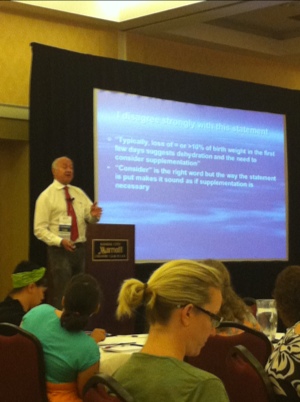
The second day, I found myself entranced by the most awesome Dr. Jack Newman. His presentations were the highlight of the conference for me. I loved him! I attended two–his general session on Controversies in Breastfeeding and then his breakout sessions, Impact of Birth Practice on Breastfeeding:
20120724-174258.jpg

If you ever get a chance to see this man, don’t miss it!

We have a big, big problem in that HCPs do not recognize the critical importance of breastfeeding.

There are many people who don’t know squat about breastfeeding and breastmilk and don’t feel like they need to learn anything before they start doing studies and writing papers about it. –Dr. Jack Newman

There is no such thing as “standard” breastmilk. It is a physiological fluid and varies from person to person. We DO NOT have to prove that breastfeeding is better than formula. Those comparison studies are unnecessary.

The burden of proof rests upon those who promote an intervention! –Dr. Newman

With animal births: following a normal birth, infant feeding just…happens. Following an interventionist birth, the mother rejects the baby and there is no nursing at all.

Our hospital births break every rule in the mammalian list of mother-baby necessities.” –Dr. Newman

Lying down for electronic fetal monitoring is a position of comfort for the care provider, NOT for the mother.

Know how much an incubator costs now? $50,000. Why don’t we just give half of that money to the mother and put the baby skin to skin on mother’s chest? –Dr. Newman

Seriously, Dr. Newman’s talks were amazing. Be prepared to hear more about them soon!

The final day I heard Polly Perez speak about Building Bridges with an emphasis on communication and fear:

Luke: I don’t believe it. Yoda: that is why you fail.

“Use language that lets you share your heart openly.” –Polly Perez

Listening is *active*, not a passive activity. Listen with empathy, openness, and awareness.

We have taken the hearts and minds out of much of our work because we’re frightened of getting too close. But, close is where we need to be.

“We must give people the opportunity to challenge their fears. Not only will this change each person, it will change the political and medical climate in which they make these choices.” –Connie Pike, via Polly Perez

Polly shared the first home birth she attended – made her fear of it “melt away like butter in a pan.”

You do not have to be an OB to be knowledgeable about birth. –doctor working with Polly Perez

Follow up from same doc: “if you tell me a baby is going to come out, I’m a gonna believe you!”

Changing sick systems is not about subterfuge but bringing light to situations that need to be altered.

Since micro-blogging is simply not my gift and is unlikely ever to become so, I am also planning longer posts based on several of the conference sessions. They will be (links will be updated as the posts become live):

At the CAPPA conference I also made a large custom order of great gifts from Joy Belle jewelry.

And, I ate tons of sample honey sticks from Glorybee–yummy! (see prior post: Why Honey Sticks During Labor?)

Other treats involved getting to spend some quality visiting time with a Friends of Missouri Midwives friend from St. Louis. We spent a lot of time talking over the FoMM newsletter (of which I am editor) and I feel very enthused about our ideas for its future.

I also got to meet a Facebook friend who started out originally two years ago as a Talk Birth fan on FB (after finding my site via my all-time most viewed post: In-Utero Practice Breathing). We spent some good time together visiting and laughing and it was fun to make the friendship connection with someone who was previously only an internet friend!

Incorporating Prenatal Yoga into Childbirth Education Classes

Incorporating Prenatal Yoga into Childbirth Education Classes

By Molly Remer, MSW, ICCE, ICPFE

Note: This is a preprint of an article published in the International Journal of Childbirth Education, Volume 27, Number 2 (April 2012)

The essence of yoga can be distilled into four key elements: breath, feeling, listening to the body, and letting go of judgment and expectation (YogaFit, 2010). When considering the essence of yoga, it is easy to see what a natural complement it is to conscious, active preparation for a healthy birth. Most birth educators would agree that paying attention to her breath and to her feelings, listening to her body, and letting go of preconceived expectations of what birth will be like are perhaps the most crucial messages to convey to the pregnant woman and her partner. Additionally, experts widely agree that exercise during pregnancy has beneficial effects for the cardiovascular and musculoskeletal systems and is associated with physical and psychological well-being. There is also some evidence that recreational exercise may reduce the incidence of premature labor and low birthweight babies (Hyatt & Cram, 2003).

Anyone involved with educating adult learners (in any context) is likely to be familiar with the concept that people are most likely to retain information that they have actually practiced (versus reading about, hearing about or seeing demonstrated). I have found that incorporating a few simple yoga poses into each class session is a beautiful way of illustrating and applying many important elements of childbirth preparation. In approximately 10 minutes of movement, important points can be underscored without having to actually say anything or “lecture” to clients. The hope is that as we move together through a carefully chosen series of poses, subtle emotional development and trust in birth occurs—again, in a more effective manner than by the childbirth educator saying during class: “Trust birth!”

One rationale for incorporating yoga into prenatal classes is as follows: First, people often learn and retain information more effectively by actually doing something. Practicing the yoga poses together allows experiential practice of pelvic floor exercises, pelvic rocks, tailor-sitting, leg cramp alleviation, and back pain coping techniques, to name a few, instead of just hearing me talking!

Second, and most important, Yoga in prenatal classes emphasizes that birth happens in the body. As childbirth educators we spend a significant amount of time talking and sharing information, but birth does not only happen in the mind. Birth happens most profoundly in the body. Not only does birth happen in the woman’s body, but supporting and being with a woman in labor is also an intensely physical process, so it is important for partners to try the yoga series.

People today spend much of their time “living in their heads”, and many of us do not feel comfortable with, or at home in, our bodies. Practicing poses in class helps couples out of their heads and into their bodies and begins a process of feeling comfortable with moving and using their bodies in positive ways. This may help them develop the trust and confidence that will contribute to a smooth and peaceful birth process.

Each pose is followed with a birth affirmation such as, “the magic and mystery of birth delight and amaze me” (Miller, 2003). Positive affirmations help plant positive seeds of confidence and trust in the wisdom of women’s bodies and of the beauty of birth. These cognitive adjustments may also send a welcoming message to the woman’s body and baby as they both prepare for birth.

Opening classes with a series of poses is an effective way to “frame” the class. Class can be opened with a brief check-in period asking how people are feeling, about recent prenatal appointments, and any questions can be addressed. A transition from “regular time” into “class time” occurs with a brief series of simple poses. This routine helps people transition from their normal days into feeling ready and excited for birth class information.

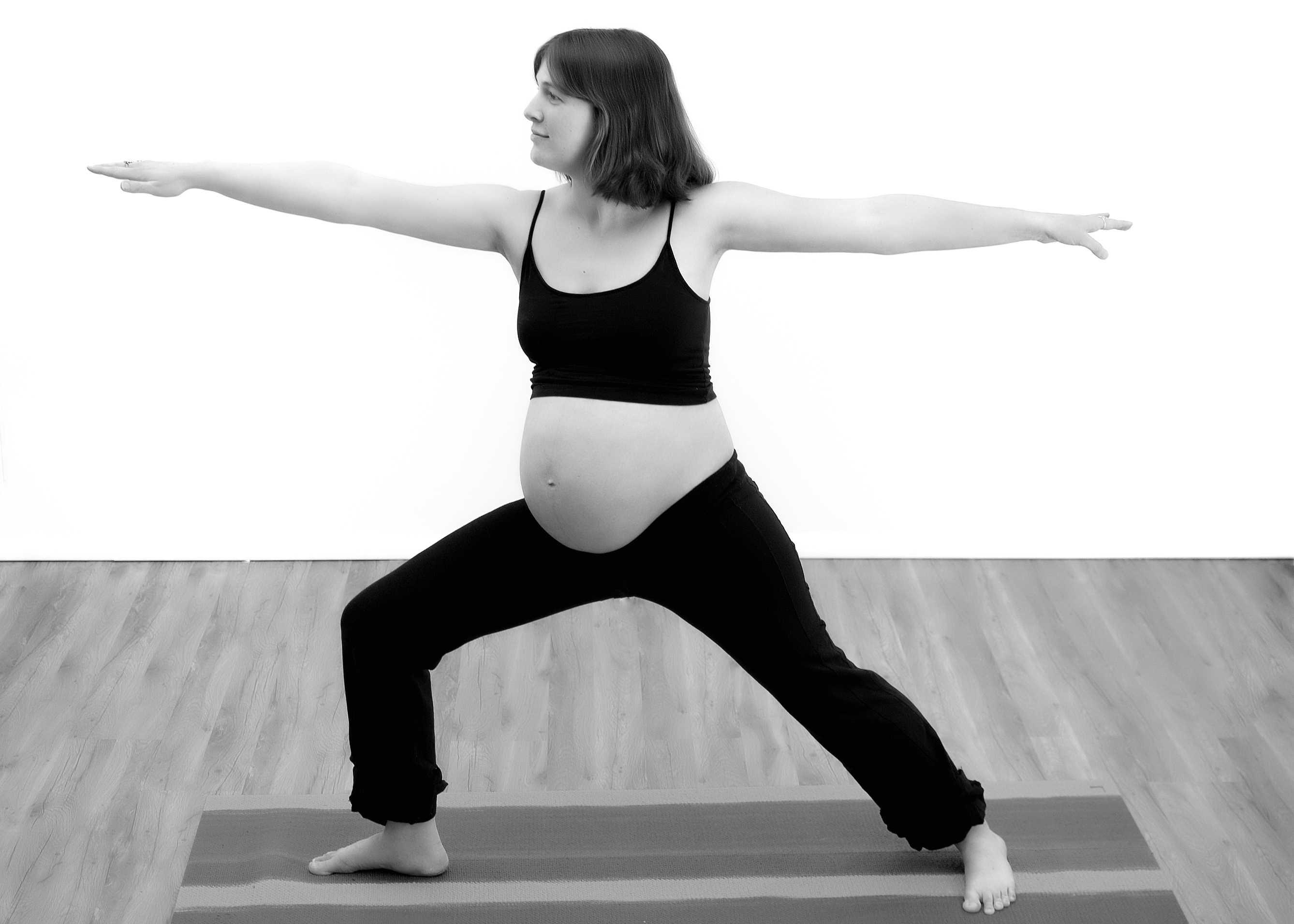
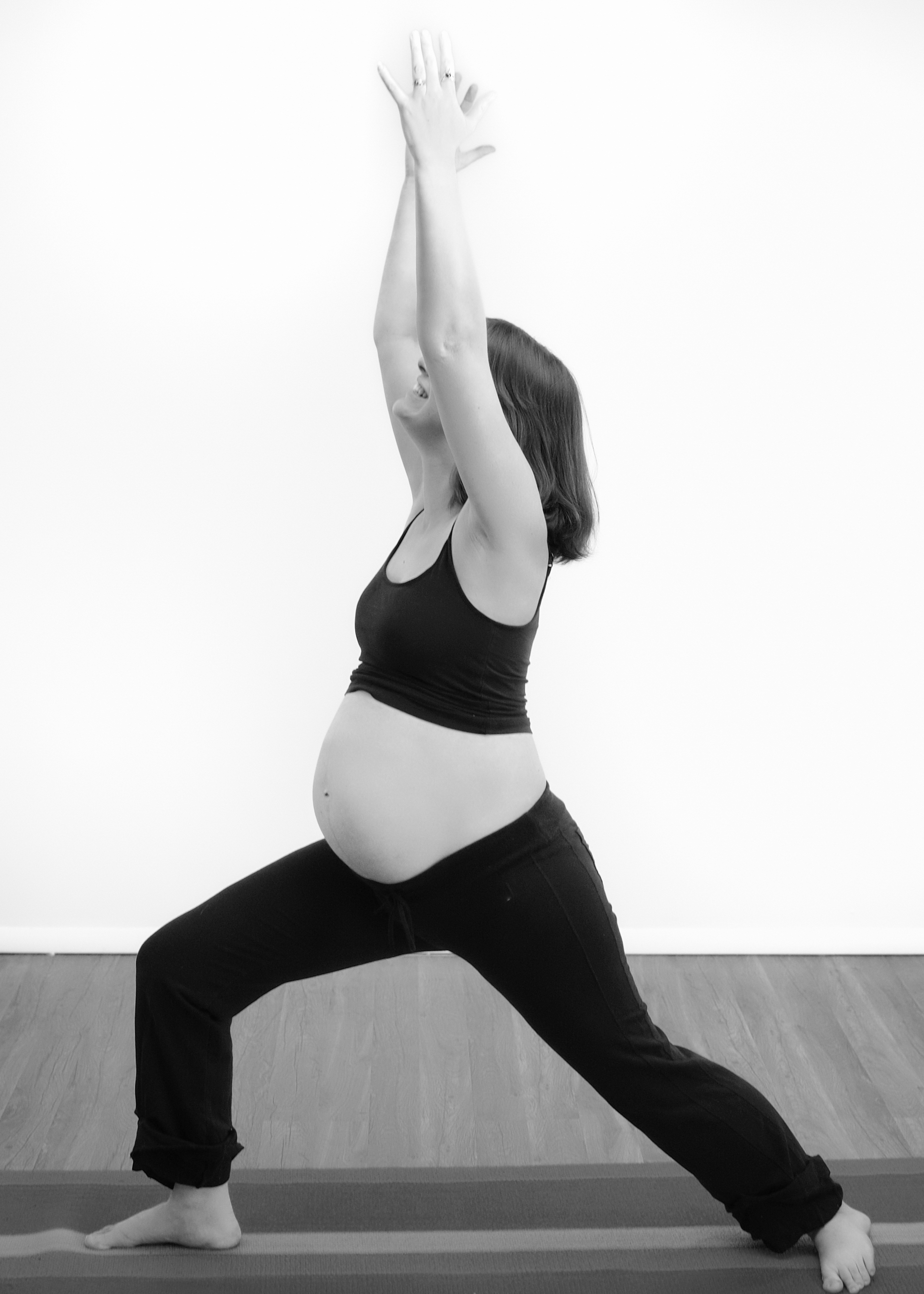
Each pose was chosen because it has specific birth- or pregnancy-related benefits. Begin with healthy sitting—seated crossed legged or tailor-style on the floor with spine straight. Do some neck rolls and shoulder rotations to help release tension. Move into a brief series that includes knee-rocking, leg stretches, Divine Mother Pose, Star Pose, pelvic rock, standing squat, Palm Tree Pose, Half Moon Pose, Triangle Pose and seated Mountain Pose. There is an additional short series of “birthing room yoga” poses described with photographs that is available as a free handout here.

The series is closed with a very brief meditation or visualization exercise. The series of poses and the affirmations are kept the same each week for retention purposes, but the meditation is varied. A quick visualization or relaxation exercise (under two minutes) is often more effective and more readily welcomed by couples than the longer visualization exercises often used in classes (which can seem esoteric to some people). A mindfulness meditation that is effective is:

Inhale and repeat silently: “I exist in the here and now….”

Exhale and repeat silently: “The present moment is all I have to be with…”
Continue inhaling and exhaling as you silently and simply repeat: “Here and now…present moment.”

A favorite resource for easily and smoothly incorporating yoga into classes is The Prenatal Yoga Deck by Olivia Miller, published by Chronicle Books in 2003. The poses listed above were selected from this deck. The deck contains 50 cards, so the educator can easily build a series for use in classes. Each pose card is accompanied by a lovely affirmation. The deck also includes six cards with simple meditations (the meditation above is adapted from one in the deck). The deck format, tidy box for holding the cards and sturdy card for each pose is an ideal format for transport to class as well as serving to provide subtle reminder cards as you lead couples through poses. Each card has a line drawing on the back illustrating the pose, so assessing whether you are doing the pose correctly is easy (sometimes just reading a description of the pose is more complicated than seeing it completed).

Occasionally the childbirth educator may get some eye-rolling or “weird, hippie exercise!” responses from pregnant couples. Regardless of how much or how little they appreciate the practice of yoga in classes, the poses used lay a physical foundation for a positive attitude toward birth and a sense of confidence as a birth-giving woman or supportive partner. Through the simple incorporation of yoga into birth classes, the expectant couple receives an irreplaceable, experiential grounding in the rhythm, focus, release, and conscious awareness so essential to the intensely embodied experience of birthing.

 Molly Remer, MSW, ICCE, ICPFE is a certified birth educator, writer, and activist. She is a professor of Human Services, an LLL Leader, editor of the Friends of Missouri Midwives newsletter, and a doctoral student at Ocean Seminary College. She has two wonderful sons and a toddler daughter and she blogs about birth, motherhood, and women’s issues at Talk Birth (http://talkbirth.me)

Suggested Resources for Birth Educators
The Prenatal Yoga Deck: 50 Poses and Meditations, Olivia H. Miller, ChronicleBooks, (2003)
YogaFit: PreNatal DVD, YogaFit (2009)
Yoga for Your Pregnancy DVD (2004)

All available via Amazon.com

All photos of the author, January 2011, 37 weeks. (c) Karen Orozco, Portraits & Paws Photography

References

Hyatt, G.& Cram, C. (2003). Prenatal & postnatal exercise design. DSW Fitness, Tuscon Arizona (training manual for the ICEA Certified Prenatal Fitness Educator Program)

Miller, O. (2003). The prenatal yoga deck: 50 poses and meditations. Chronicle Books, San Francisco, CA.

Remer, M. (2007). Incorporating prenatal yoga into childbirth educationclasses. Midwifery Today, 4(84), 66.

Talk Birth. (2011). Retrieved from https://talkbirth.me/2010/03/10/birthing-room-yoga-handout/

YogaFit PreNatal/PostpartumSpecialty Program Manual. (2006). YogaFit Training Systems Worldwide, Inc. , www.yogafit.com.

The Spirituality of Birth + Book Giveaway: Birth on the Labyrinth Path

I’ve been experiencing a fun trend in the books I’ve been reviewing lately—many new resources are being published with a shared theme of approaching birth from a spiritual perspective. There are resources now available for women from a variety of spiritual backgrounds, all honoring and respecting pregnancy and birth as experiences uniquely connected in an embodied way to the numinous and sacred, in whichever manner we choose to name it. I recently finished a class for my doctoral program and the subject of my final paper was “A Thealogy of Birth,” in which explored the sociopolitical, cultural, religious, and personal relevance of birth from a thealogical (Goddess-oriented) perspective.
  • I just reviewed The Gift of Giving Life which delves into the divine nature of pregnancy and birth from a Christian (specifically LDS/Mormon) perspective.
  • I then pre-reviewed the upcoming book Embodying the Sacred, which is written from a Catholic point of view.
  • And, earlier in the month I finished reading a gorgeous book with a non-specific spiritual perspective: Sacred Pregnancy
  • In the past, I also reviewed the book L’Mazeltov, which is written specifically for Jewish parents-to-be.

All of these resources are amazing and I’m so glad they’re available for pregnant women.

Now, I’m excited to offer a short review and a giveaway of another new book, this one written from a pagan perspective. Published by Pantheos Press, Birth on the Labyrinth Path is written by Sarah Whedon and focuses on “Sacred Embodiment in the Childbearing Year.”

My mini-review from Goodreads is as follows:

I really enjoyed this short book about pregnancy and birth from a pagan perspective. The reflections on the embodied, spiritual nature of pregnancy and birth were wonderful. It is very positive and reinforcing and contains great thoughts like this one: “A body that is curvier than it was before, maybe bearing stretch marks or scars from surgical procedures or tearing, maybe producing milk, is a body that bears the signs of delivering a human being into this world. We may mourn our smooth, skinny, unmarked maiden bodies, but at the same time we can celebrate the beauty of our storied, productive, and strong mama bodies.” Whedon also quotes this lovely passage regarding the connection pagan women might feel to the Divine: “I am the holy mother; . . . She is not so far from me. And perhaps She is not so very distinct from me, either. I am her child, born in Her, living and moving in Her, perhaps at death to be birthed into yet some other new life, still living and having my being in Her. But while on this earth She and I share the act of creation, of being, and Motherhood” (from Niki Whiting, “On Being a Holy Mother” in Whedon, p.)

I also shared some lovely quotes from Birth on the Labyrinth Path in my recent post on Birth Culture.

*********The giveaway is now closed. Ellen was the winner!*********

I’m also pleased to host a giveaway of a Kindle copy of Birth on the Labyrinth Path for one lucky winner!  To enter, just leave a comment sharing one of your own thoughts or favorite resources about the spirituality of pregnancy and birth. The giveaway will run through next Wednesday (6/27).

Book Pre-Review: Embodying the Sacred

Book Pre-Review: Embodying the Sacred

By Peg Conway

Reviewed by Molly Remer, MSW, ICCE, Talk Birth (http://talkbirth.me)

This week I was excited to have the opportunity to review a new book, not yet released. Publication is anticipated within the next couple of months and I will re-post then with the actual cover image and pricing details.

Embodying the Sacred is a beautiful new book with roots in the Catholic faith. It seeks to answer the questions, “how does birth connect with faith? How can we speak of it in religious language that lives up to the intensity of giving birth? How can spirituality be a resource for childbearing? And why are the churches, deeply concerned for the unborn, so silent about normal childbirth?” The book helps pregnant women build their “spiritual birth bag” through cultivating their inner resources and their embodied connection to spirit.

Written clearly and with a lyrical and intimate style, the book contains a variety of reflections, prayers, and activities to help women make a personal connection with their sense of the divine and sacred. Something I found particularly enjoyable about the book was that not only did the author touch on the labyrinth as a metaphor for birth, she includes literal, purposeful labyrinth walks in the suggested activities for expectant mothers.

Embodying the Sacred speaks to the chord of the holy and sacred in all pregnant women, but readers should be aware that it uses language and prayers strongly rooted in the Abrahamic religions and uses predominantly masculine imagery and language for God. Women from a variety of faith backgrounds will find material to connect with in the book, but may find it necessary to substitute or modify the prayers to suit their personal beliefs and practices.

Pregnant women who are intrigued by the idea of building a spiritual birth bag and who are ready to dig deep and to go beyond the scope of traditional pregnancy and birth books will find a rich resource in Embodying the Sacred.

Disclosure: I received a complimentary copy of this book for review purposes.

Book Review: The Gift of Giving Life

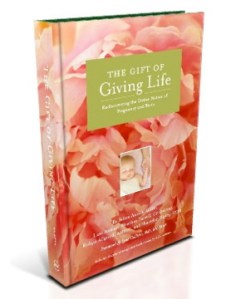
Book Review: The Gift of Giving Life: Rediscovering the Divine Nature of Pregnancy and Birth
Authored by Felice Austin
Authored with Lani Axman, Heather Farrell, Robyn Allgood, Sheridan Ripley
ISBN: 9780615622521
542 pages, softcover
http://thegiftofgivinglife.com/

Reviewed by Molly Remer, Talk Birth

Written for women who wish to delve into the divine nature of pregnancy and birth from a Christian perspective, The Gift of Giving Life is co-authored by several childbirth educators and doulas who are also members of the Latter-Day Saints (LDS) church. The book is rich with the stories and experiences of dozens of LDS women who share their birth stories and reflections. These additional stories are sprinkled throughout the body of the text, making it very easy to read and “digest” in small sections. The stories represent a wide breadth of experiences—I anticipated many of them to gloss over the difficult parts of pregnancy and birth, but they address both the nitty-gritty, challenging aspects and the transcendent. I especially appreciated that women’s experiences with pregnancy loss and baby loss are integrated throughout the book rather than relegated to a specific subsection. A helpful touch is that stories dealing with loss are indicated with an awareness ribbon symbol, so that if a reader does want to avoid these stories, she is readily able to do so.

As a non-LDS woman as well as someone who does not identify as Christian, I did encounter many segments that had little relevance to my own experience of or interpretation of the world. For example, it was startling for me to come across repeated statements that seemed to hold a literal view of “Satan” as a real entity holding some kind of power or control over people. That said, I was impressed with how deeply and solidly integrated the text is with the spiritual teachings of the LDS faith. For women who wish to permeate their pregnancy and birth experiences with an intimate and intricately woven connection to Christian theology and scripture, The Gift of Giving Life is a faith-based treasure.

As I noted in my recent interview with one of The Gift of Giving Life‘s co-authors, I am fascinated by the concept of Heavenly Mother and really enjoyed the sections of the book that touched on the relationship with Her. I also enjoyed the book’s explanation of Eve’s pivotal choice in the Garden, which was very meaningful framing of the event in a way that was completely new to me.

The Gift of Giving Life has much to offer both to pregnant women and to birth professionals. It will likely have most appeal to those with LDS connections and to members of other Christian traditions who are familiar with scripture and wish to apply these messages to the childbearing year.

Disclosure: I received a complimentary copy of this book for review purposes.

A Jagged Peace

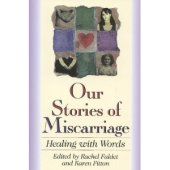
The legacy of miscarriage is profound. Recently, for some reason I felt drawn to read a book that I bought when I was pregnant with Alaina, but didn’t want to read while pregnant. Our Stories of Miscarriage was a very good book and I wish I had read it when my miscarriages were in process rather than now, in retrospect. The book is a collection of personal stories, essays, poems, and reflections about miscarriage and stillbirth (mostly miscarriage). Most of the stories are written by women and there are a handful written by fathers. I marked these things that I found meaningful…

I no longer underestimate the bond between a mother and her baby, no matter how tiny, in her womb (p. 19)

While I know this is not everyone’s experience and that people who are pro-choice often balk at this kind of language, this is true of my own experience. (For the record, I consider myself pro-woman and for me that does mean supporting the full spectrum of reproductive rights, but I have always felt a very uncomfortable and almost impossible to reconcile tension between my own, innate sense that a “fetus” IS a real and valuable baby and my own commitment to upholding the rights of each woman to make the best decisions for her own body).

I also appreciated this quote from a woman writing about talking to a friend who also had a miscarriage (and whether it is okay to talk about your own experiences/share your own story):

I can’t really say I know how you feel. I only know how I felt…

I think this is really nice choice of wording to empathize and share, without dominating another woman’s experience with your own narrative or feelings.

In another story, a mother says:

Now I know what it is like to lose a baby, so when I get pregnant again, I don’t need to know the gender, to have a trauma-free birth, to get the exact birthday, or to worry about making sure I’m relaxed. I just want a baby (p. 113).

I identified with this also, having written repeatedly during my pregnancy with Alaina that my main goal was live baby. While I still think it is perfectly reasonable and indeed should be a given that you have the right to BOTH have a “trauma-free birth” AND a baby (which, I did in fact have), my focus during my post-loss pregnancy experience was more definitely on having that living baby. I have written several times about how miscarriage allowed me to be much more able to understand the women who say, “all that matters is a healthy baby” or, “it doesn’t matter how your baby gets here, what matters is that she gets here.” While I will always maintain that both matter, my empathy for those statements did increase.

Yesterday, a friend of mine who had borrowed my doppler returned it to me. Looking at that box I remembered how often I’d used it during my pregnancy for the “life status update” of the day. I had a lot of cognitive dissonance about excessive ultrasound exposure and yet I was compelled to know if she was still alive. Looking at the box, it all seemed so far away. That fear. That uncertainty. That inner struggle. One of the reasons I published my own miscarriage memoir is because I wanted to be able to share how it all felt right then. That rawness of emotion and spirit, not the experience as filtered through time and new babies and healing of heartache.

The stories of other women reaching out across the page and across the years is a beautiful gift to all the women to follow who find themselves joining the same, unwanted “club” of babyloss mamas. I identified with the closing journal entry of Our Stories of Miscarriage reflecting on, “all the women who comforted me with stories…a sorority of sorrow, these women, and now myself among them, moving past the pain to find a jagged peace in comforting another suffering sister.” (Edgren, p. 184, emphasis mine)

My labyrinth of pregnancy drawing–see if you can find the doppler…

Book Review: Sacred Pregnancy

Sacred Pregnancy
by Anni Daulter, MSW
Paperback: 360 pages
Publisher: North Atlantic Books; 1 edition (May 1, 2012)
ISBN-13: 978-1583944448

http://www.sacredpregnancy.com/

Reviewed by Molly Remer, Talk Birth

Sacred Pregnancy is absolutely gorgeous! Seriously, it is one of the most appealing books I’ve encountered in a long time. The photography is breathtaking, the layout is lovely, and the colors are beautiful. It is a very visually nourishing book to hold and encounter. A combination week-by-week guide to pregnancy and personal journal, Sacred Pregnancy covers a lot of ground from basic pregnancy information and fetal development to making a special birth necklace. There are sections on exercise, nutrition, blessingways, forgiveness, nesting, sisterhood, naming ceremonies, and much, much more.

Two of my favorite points from the book, the first from Ina May’s foreword:

“In discussions in which the sacred nature of pregnancy and birth is brought up, the answer often presumes that anything that would revalue the sanctity of birth would automatically put babies in danger. Nothing could actually be farther from the truth.”

And the second from the author, Anni Daulter:

“Women are born gifted! They can birth babies for heaven’s sake. This is a magical and joyous event and something that, even though the medical community can tell us how it works, is incredible in so many ways. The fact that you can create a human life, carry it in your body, and birth it into existence is just so unbelievably miraculous that there are hardly words for it” (p. 129).

Sacred Pregnancy would make a delicious, nurturing gift for any pregnant woman wishing to dive deep into the experience of her pregnancy and into conscious birth preparation. Just beautiful!

Disclosure: I received a complimentary copy of this book for review purposes.

DVD Review: Expecting More


DVD Review: Expecting More
Prenatal exercise program
Two disc set, 230 minutes
$39.95
Daily Sweat, 2011

http://sarahaley.com/about/expecting-more/

Reviewed by Molly Remer, Talk Birth

Fun, energetic, and challenging, Expecting More is a prenatal exercise program developed and hosted by prenatal fitness expert, Sara Haley. Developed and filmed during her own pregnancy, Sara created Expecting More out of her desire to offer a prenatal fitness experience that is vigorous and more fast-paced than the routines typically offered by prenatal exercise videos.  Offering lots of encouragement to stay “sexy and strong” during pregnancy, the DVD set of two discs includes six different workouts:

Synergy: Create SYNERGY within your body by alternating between Sara’s signature cardio and strength exercises.

Sweat Sport: Discover your inner athlete as you execute sports drills in a cardio session with modifications for all stages of pregnancy.

Sweat Funk: Embrace your sexy pregnant body as you get your FUNK on with hot dance cardio moves.Sweat Strong Down: Sculpt your body DOWN on the floor in a safe and effective way that supports your core and your baby.

Sweat Strong Up: Stand UP and sculpt your body in all the right places to keep you sexy and strong during your pregnancy.

Salutations: Designed to sooth and calm, you’ll breath, stretch, and move with this expression of good will to your baby and your body, your SALUTATION.

The Salutations portion is clearly inspired by both dance and yoga and is based on standing exercises that are less vigorous than the other workouts on the discs, but still very lively and movement oriented. Expecting More is led by a cute, contemporary fitness trainer with a pleasant voice. During some of the workouts, two additional women perform modified versions of the exercises in the background so that it is easy for women with different needs to follow along. I appreciated that the DVD contains lots of reminders about the importance of listening to your body. Expecting More presents exercise as a fun and engaged time to be close to your baby and to pay attention to your body and I feel like this approach contributes to a healthy, active attitude towards giving birth as well.

Disclosure: I received a complimentary copy of this DVD for review purposes.

Virtual Mother Blessing, Part 2

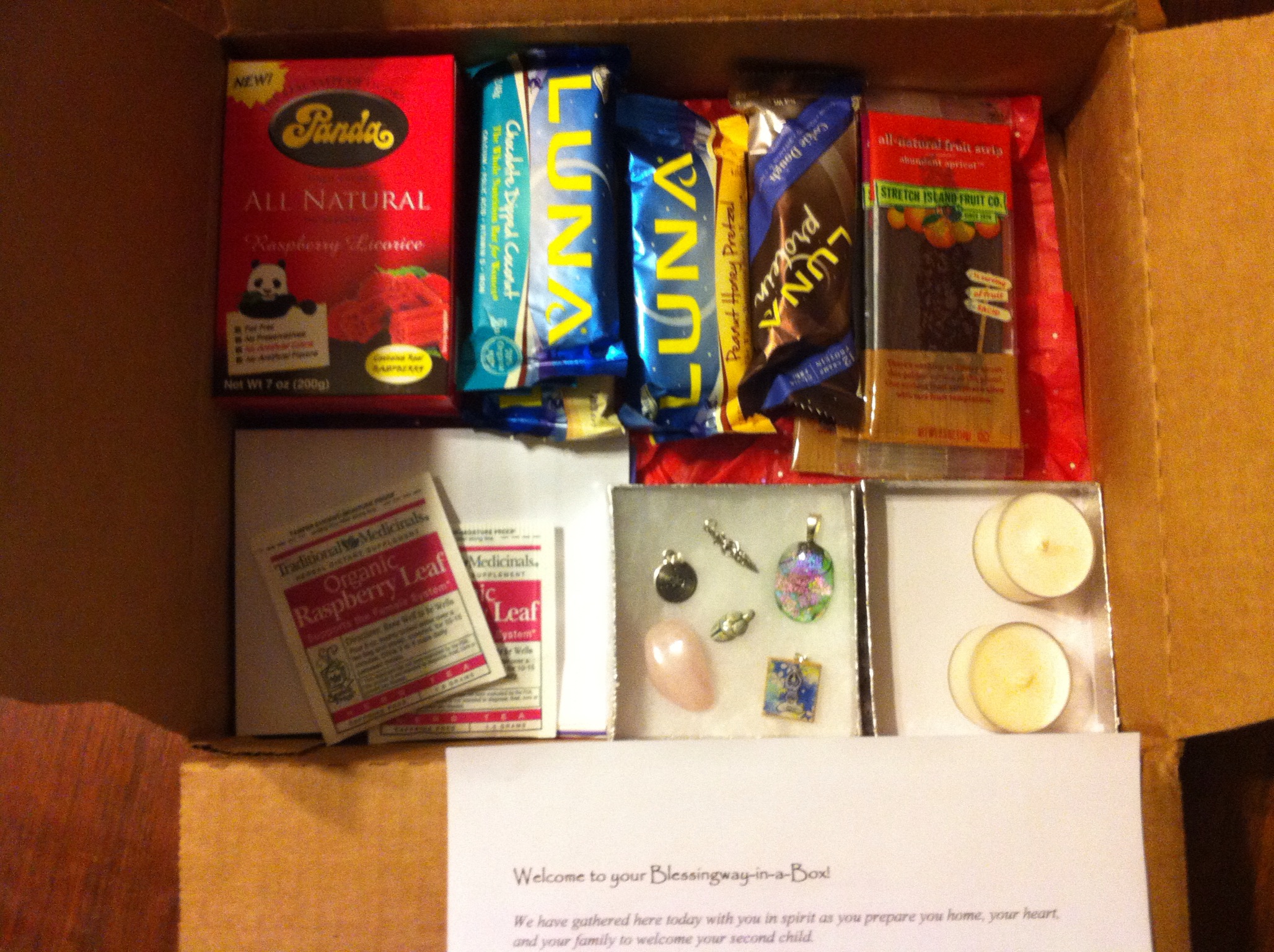
Last week I posted about a virtual mother blessing for Molly Westerman of the blog First the Egg. Tuesday, I emailed her a “blessingway in your inbox” containing the words of birth energy, thoughts, and encouragement emailed by her friends and family as well as a recording of the blessingway chant, “Woman Am I,” that my friends and I sing at all of our ceremonies. This inbox version was also accompanied by some mailed items (a blessingway in a regular box).

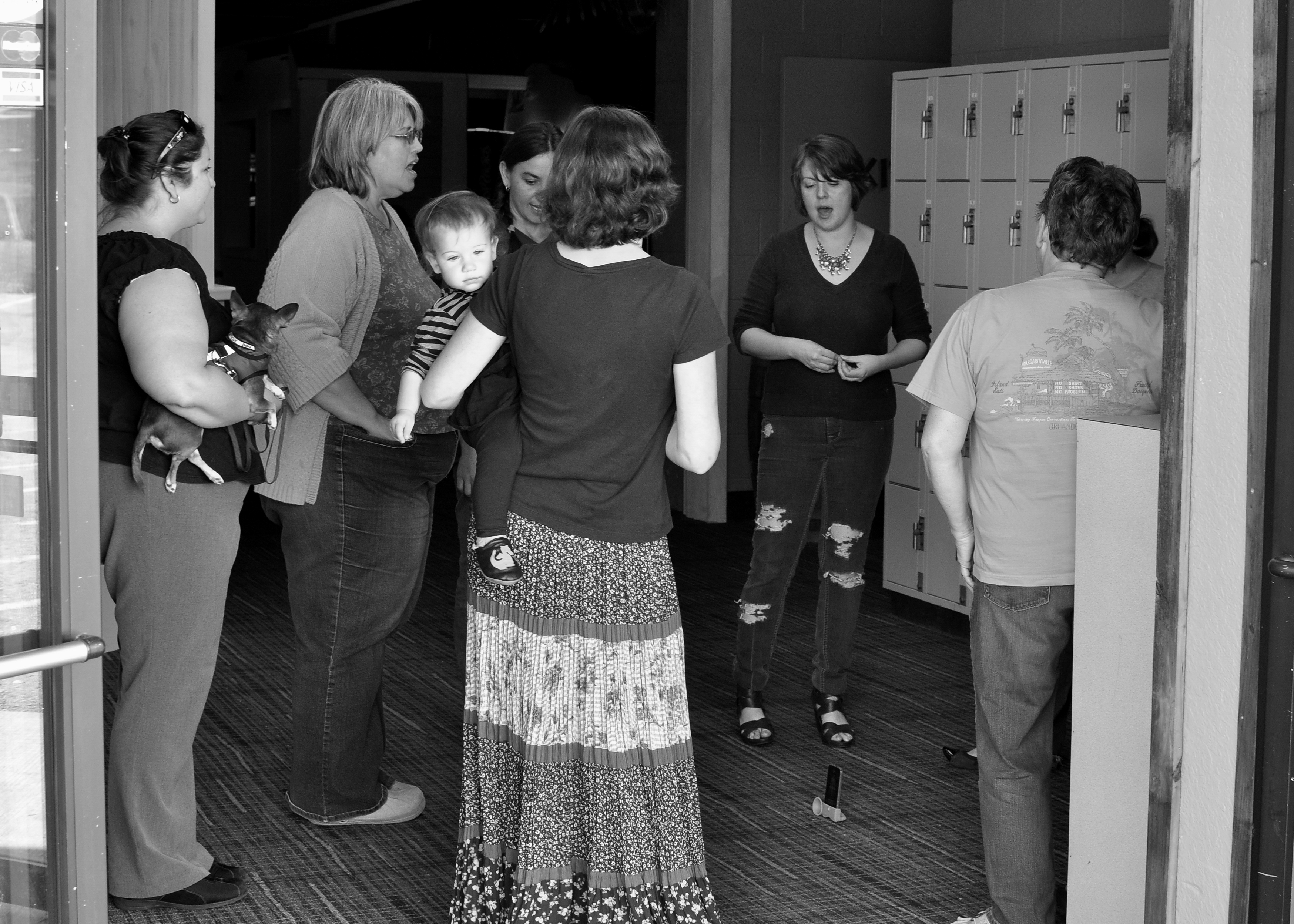
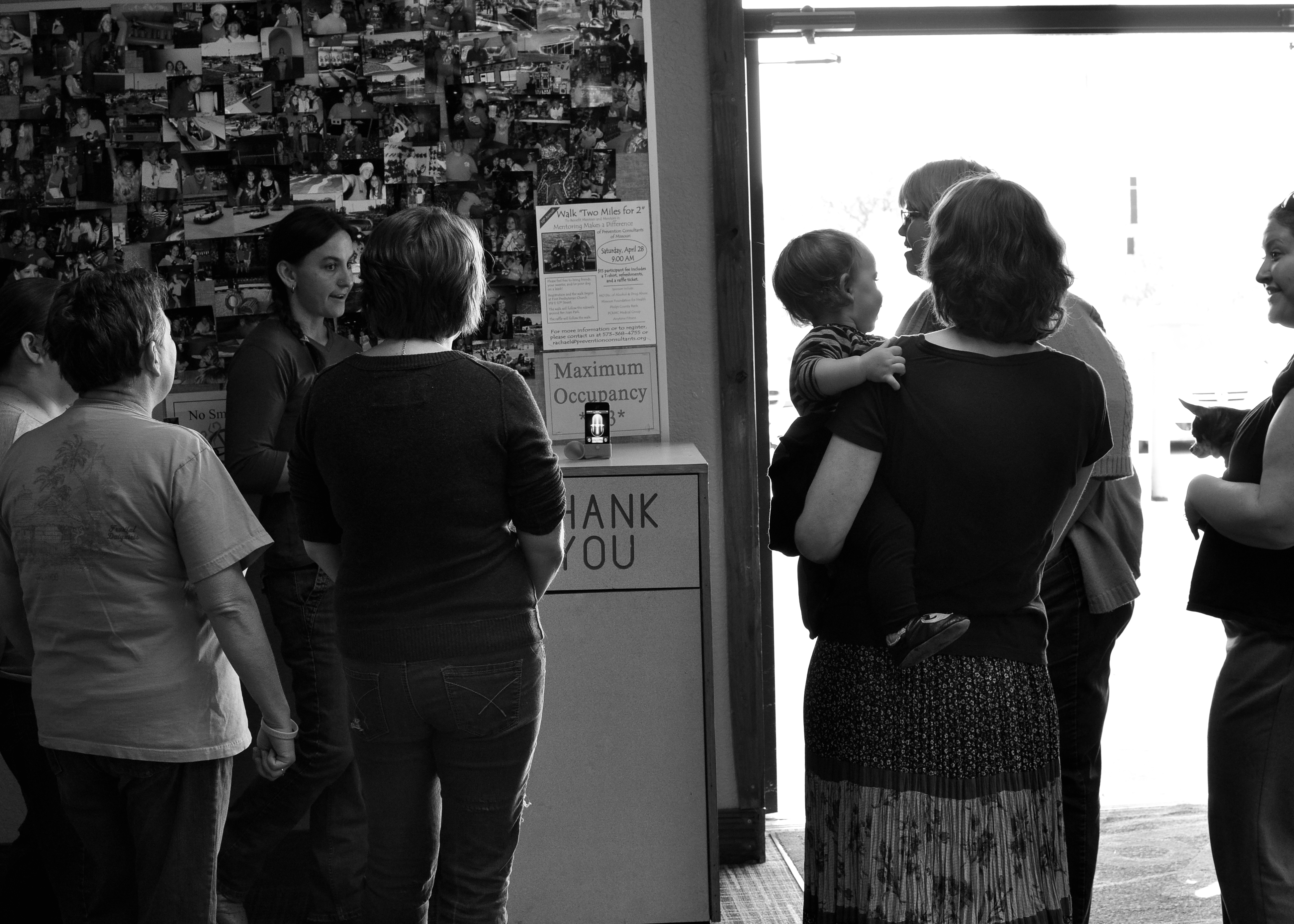
I enlisted the aid of my friends last week at playgroup at the skating rink to sing a rendition of “Woman Am I” using the voice memo feature on my iPhone. I feel really lucky to have a group of friends who will stand in the skating rink lobby with me and sing heartily for a woman they’ve never met. Seriously, not everyone is this lucky. My friends rock! The recording is available via soundcloud here for anyone else’s benefit. 🙂

Take 1. iPhone on floor of skating rink lobby.

Take 2. Phone on top of trash can in skating rink lobby.

Woman am I, Spirit am I, I am the Infinite within my soul...

Blessingway in a box!

Some goodies for a blessing bracelet/necklace.

You can read about the mother blessing from Molly’s perspective in her post here.

A Virtual Mother Blessing for Molly Westerman!

20120410-102111.jpg

I spy...a pregnant woman ready for some honor and celebration!

In 2007, I started blogging for Citizens for Midwifery and one of my favorite blogs was a little gem then called Feminist Childbirth Studies. The blog’s author, Molly Westerman, later became more public with her blogging identity and began writing her current blog, First the Egg, a feminist resource on pregnancy, birth, and parenting. I enjoy her thought-provoking writing, her insight into birth culture and politics, and the glimpses of her family’s life in a nonsexist home. She’s smart, funny, interesting, and she’s also pregnant with her second baby and due any time now! I think every mother deserves a blessingway or mother blessing ceremony and I’m pleased to hostess a virtual blessingway for Molly. There is a tight turnaround since her anticipated birth time is so close, so if you read this and think, “I’d like to do something…” immediately stop thinking and just DO IT!

During my last pregnancy, Molly offered multiple supportive comments in response to my various musings, anxieties and fears as a pregnancy-after-loss mama (even though she didn’t have personal experience with PAL, she did know the right things to say!) Her comments, particularly one about the fact that I was doing this, meant a lot to me. I’ve now followed her current very physically challenging pregnancy with interest and long-distance support/rooting her on as she prepares for the homebirth of her new baby this month. I’m happy to have the chance to offer her a little more encouragement and love through this virtual mother blessing.

Here’s how you can participate:

Email me with your…

  • Words of support, affirmation, encouragement for Molly–either written or recorded (think about what you’d say face-to-face at a ceremony and then, if you have a smartphone, use the handy dandy microphone tool and talk into as if you were speaking directly to Molly in a mother blessing circle. After your voice memo is recorded, choose “share” and send it to me!)
  • Favorite birthy readings/poems/etc. (again could be written or recorded)
  • Birth art (i.e. a picture of something you drew, or you can mail Molly an actual drawing–see below).
  • Beads or charms for a birth bracelet/necklace–if you’d like to do this, email me for Molly’s address and then mail it now, so there is a chance she will receive it before the birth. I figure that all postpartum mamas can use ongoing doses of birth power energy anyway, so even if it gets to her post-birth, that’s cool too!

As I mentioned, there is tight turnaround on this, so on Tuesday of next week, I will gather everything that has been emailed to me and send it to Molly as a “blessingway in your inbox.” 🙂

20120410-102118.jpg

Getting closer and closer to birthing day...

If you are curious to learn more about mother blessings, click here to read other posts I’ve written about them.