Archives

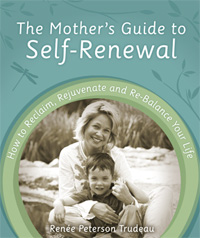
Giveaway! The Mother’s Guide to Self-Renewal

The giveaway is now closed! Elizabeth Baer was the winner. Congratulations!

In 2008, my mother-in-law bought me The Mother’s Guide to Self-Renewal for Christmas. When I got this book, I made a commitment to myself that I was really going to DO the book, instead of just reading it, tossing it aside, and gobbling down the next one on my stack. So, I did. It took me about 4 months or so to work through it in this way, though it is actually laid out in a 12-month format. The subtitle is “How to Reclaim, Rejuvenate, and Re-Balance Your Life,” which is just what I felt like I needed! I found it an inspirational, insight-provoking, and enriching journey. Since this time, I have re-read/re-worked through sections of the book many times, as well as recommended it to many other women as one of my favorite resources for balanced living.
As a funny little side note, when I first started reading the book, I had a lovely little leather bound fancy notebook to do the journaling/reflective exercises in. I discovered I was never doing them—it never felt like the right time. Then, I bought a Pirates of the Caribbean notebook at Wal-Mart featuring a large photo of Orlando Bloom on the cover and lo and behold, I started doing the journaling exercises in it and finished the book right up! I had to laugh at myself—Hark! I have found thee, my muse, and thy name is Orlando Bloom (especially in rakish, unbuttoned-pirate-shirt attire!)

The author of the book, Renée Trudeau, offers several other amazing resources that I regularly enjoy: I participate in a free monthly teleclass based on the book (I love these calls—sometimes I have to work really hard to carve out the life space to attend, but I’ve NEVER regretted making it happen), I subscribe to the e-newsletter, and read her thought-provoking blog. Associated with the teleclass and book, is a nurturing “Live Inside Out” Facebook page.

I’m absolutely delighted to host a giveaway for a copy of the book The Mother’s Guide to Self-Renewal. There are several ways to enter:

1. Leave a comment with your favorite tip for self-renewal.

2. Become new fan of Talk Birth on Facebook (and leave a comment here telling me you did so that I know to count your entry).

3. Become a new fan of Live Inside Out on Facebook (and leave a comment here reporting this).

4. Blog about this giveaway on your blog or post a link to your Facebook page (and let me know about it).

The winner of the giveaway will be drawn next Tuesday at noon via random number generator!

Balanced Living and Saying ‘No’

I fairly regularly experience what I term a “crisis of abundance.” There are SO many great things to do in the world: SO many great causes, so many wonderful organizations, so many beautiful books, and just so many good things to do with my time. I prefer this state to having a crisis of scarcity or lack, but abundance brings its own challenges and saying “no” or “enough” to the requests for my time is one of those. I feel fortunate that I am humming with life purpose (most of the time), but I also have to be mindful that this hum of energy does not lead me to overcommit and to stretch myself too thin.

This past week, I said “no” to two birthwork-related opportunities that were very appealing, but that I know in my heart that I don’t have the time, space, or energy for right now. It was very empowering and actually semi-thrilling to say,”no” and to mean it. I felt smart and that in these situations saying no was taking care of myself (saying no to someone else = saying “yes” to myself” sometimes!). Perhaps not coincidentally, after my “No” experiences, I received an article to share from life-balance expert Renée Trudeau. I really like her “Nine Creative Ways to Say No.” Enjoy!

Four Key Strategies for Balanced Living by Renée Peterson Trudeau, life balance expert/speaker

~Know your top priorities & effectively manage your energy: What in life is most important to you? How good are you at managing your energy? What is draining you? What is fueling you? Are you comfortable saying “no” and not over committing? “Things which matter most should never be at the mercy of things which matter least.” Goethe

~Make your self-renewal a priority: By filling your cup first, you’ll have more to give to clients/family/friends, you’re able to function at your optimum and you’ll be setting an example for healthy, balanced living for those around you. Self-care (on all levels physical/mental/emotional/spiritual) should be part of your every day life. “Self-care is not about self-indulgence, it is about self-preservation.” A. Lorde


~Build a personal support system: What type of and how much professional & personal support do you need to feel emotionally healthy and stress-free? Learn to ask for and receive help. Re-evaluate your support needs every three months; these change based on your current life stage.


~Be more present in all that you do: Stress and overwhelm are often brought on by dwelling on the past or living in the future. By spending more time living in the present and focusing on what is most important in the here and now, the calmer, more effective we become.

Nine Creative Ways to Say “No”

Below you’ll find specific language to support you in saying “no.” Most people find that the more they say “no,” the easier it becomes say “yes” to those things that really matter.

(1) Just No: “Thanks, I’ll have to pass on that.” (Say it, then shut up.)

(2) The Gracious No: “I really appreciate you asking me, but my time is already committed.”

(3) The “I’m Sorry” No: “I wish I could, but it’s just not going to work right now.”

(4) The “It’s Someone Else’s Decision” No: “I promised my coach (therapist, husband, etc.) I wouldn’t take on any more projects right now. I’m working on creating more balance in my life.”

(5) The “My Family is the Reason” No: “Thanks so much for the invite, that’s the day of my son’s soccer game, and I never miss those.”

(6) The “I Know Someone Else” No: “I just don’t have time right now. Let me recommend someone who may be able to help you.”

(7) The “I’m Already Booked” No: “I appreciate you thinking of me, but I’m afraid I’m already booked that day.”

(8) The “Setting Boundaries” No: “Let me tell you what I can do …” Then limit the commitment to what will be comfortable for you.

(9) The “Not No, But Not Yes” No: “Let me think about it, and I’ll get back to you.”

(This list is adapted in part from Work Less, Make More—Stop Working So Hard and Create the Life You Really Want, by Jennifer White.)

Trudeau is a nationally-recognized career/life balance coach, president of Austin-based Career Strategists and the author of The Mother’s Guide to Self-Renewal: How to Reclaim, Rejuvenate and Re-Balance Your Life. Sign up to receive monthly life balance tips, order the book, find out about upcoming retreats/events and  learn more about Trudeau’s coaching groups at www.ReneeTrudeau.com or www.CareerStrategists.net.

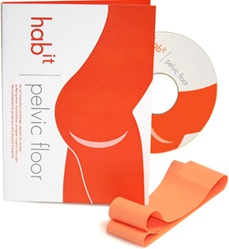
DVD Review: Hab It: Pelvic Floor

DVD Review: Hab It: Pelvic Floor

PT Partners, 2008
DVD, 1 hour 42 minutes, $29.95

www.hab-it.com

Reviewed by Molly Remer, MSW, CCCE

Most women, and certainly all birth professionals, are aware of the importance of the pelvic floor. Less well-known are methods and exercises beyond the basic “Kegel” to strengthen and rehabilitate weakened pelvic floor muscles. Hab It: Pelvic Floor is a physical therapy DVD specifically targeting the pelvic floor. It is designed for women who are experiencing incontinence, prolapse, or pelvic floor pain. It is also a preventative tool for women to avert the development of these distressing issues.

Hab It: Pelvic Floor begins with an anatomy overview and Kegel explanation/instruction and moves into correct postural positioning. The DVD contains four progressive workouts each more than 20 minutes long and also “time efficient” versions of each workout. Each workout is coached by physical therapist Tasha Mulligan while being demonstrated by another woman. All of the information is clearly presented and easy to follow and the instructor is pleasant and earnest. The DVD comes with an exercise band for use during some of the exercises and no other equipment or props are required.

A very thorough and complete resource for any woman of any age, Hab It: Pelvic Floor is a relevant, interesting, and worthwhile addition to the libraries of doulas, childbirth educators, and anyone who cares about women’s health.

Note: The DVD is not designed specifically for use by pregnant women and there are several exercises that are not compatible with pregnancy—it is ideal for pre or post-pregnancy however!

Disclosure: I received a complimentary copy of the DVD for review purposes.

Book Review: Giving Birth with Confidence

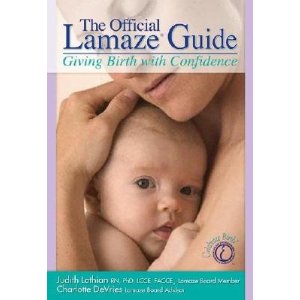
Since I recently wrote a post inspired by a quote from The Official Lamaze Guide: Giving Birth with Confidence, I figured it was high time that I share the review I wrote of the book! The review was originally written in 2007 for CfM News.

The Official Lamaze Guide: Giving Birth with Confidence. By Judith Lothian & Charlotte DeVries. Published in 2005 by Meadowbrook Press (307p), $12.00. ISBN: 088166474X

Reviewed by Molly Remer, MSW, CCCE

Very few pregnancy books deliver the message that we think pregnant women need to hear most: Birth is a normal and natural part of life….We believe deeply that birth is a process you can trust just as millions of women before you have. This belief isn’t sentimental; it’s based on our thorough understanding of the physiologic birth process and research that confirms interfering in that process is harmful unless there is clear evidence that interference provides benefits.

So begins an opening section of the book The Official Lamaze Guide: Giving Birth with Confidence. The degree to which the book accomplishes its simple message can be summarized with a simple review: Excellent! The Lamaze Guide is digestible and reasonable for busy people to manage at less than 300 pages of text and it contains a simple, profound, and elegant message that women in the U.S. desperately need to hear.

The book begins with defining normal birth as “…a normal birth is one that unfolds naturally, free of unnecessary interventions.” It then briefly explains the history of birth and how and why normal birth is not actually the norm in our culture. The authors then clearly address the following areas in one chapter each: early pregnancy; choosing a caregiver and birth site; middle & late pregnancy; preparing for labor and birth; the simple story of birth; keeping birth normal; finding comfort in labor; creating a birth plan and a baby plan; communication and negotiation; greeting your newborn; and early parenting. The authors are clearly very supportive of midwifery and the Midwives Model of Care (though it is not referenced by name) as well as of the benefits of a doula in the birthing room.

The book is framed in the context of Lamaze International’s powerful foundation, the Six Healthy Birth Practices:

The book is also guided by Lamaze’s comprehensive and lovely philosophy of birth:

  • Birth is normal, natural and healthy.
  • The experience of birth profoundly affects women and their families.
  • Women’s inner wisdom guides them through birth.
  • Women’s confidence and ability to give birth is either enhanced or diminished by the care provider and place of birth.
  • Women have the right to give birth free from routine medical interventions.
  • Birth can safely take place in homes, birth centers and hospitals.
  • Childbirth education empowers women to make informed choices in health care, to assume responsibility for their health and to trust their inner wisdom.

After effectively bolstering the confidence of women in birth, The Lamaze Guide concludes with several useful appendices. The first is the excellent tool “Effective Care in Pregnancy & Childbirth: A Synopsis.” Though this information is easily available on the internet (see www.childbirthconnection.org), I find that many parents do not come across it on their own. How powerful to have it included for easy reference of indisputable evidence based practices. The Mother-Friendly Childbirth Initiative is included in another appendix as well as the always excellent text of The Rights of Childbearing Women. I was delighted to see all of these powerful documents in one place—and, in the hands of consumers who need to be aware of them.

This book is a refreshing presence on the shelves of my local bookstore (yes, there is only one retail book shop in my community and The Lamaze Guide is the only “alternative” birth book stocked in the store!). As I read the book, I kept nodding along and wishing it was in the hands of each pregnant woman in my community. Lamaze has a “name recognition” that gives this book the potential to have a wider and broader impact than other alternative birthing books which, though brilliant contributions, may only end up in the hands of “the choir.” The Lamaze Guide is written in such a matter-of-fact and comforting tone that I cannot see it being off putting to the average consumer as having “hippie” language or “extreme” ideas. The blueprint for normal birth that the book lays out is extreme compared to the standard practices at most hospitals, but the way in which the information is presented opens doors of communication, understanding, and exploration as well as providing the evidence basis to back normal birth. I would not hesitate to lend this book out as it will not scare anyone away with “weird” ideas. With the other books in my personal library, I have to carefully consider my audience before choosing which book has the right style and blend of information—not this one! It is good for everyone with its open, simple message. It is a good addition to lending libraries, personal libraries, to give as a gift, or to recommend to others. The Lamaze Guide is straightforward and clearly written with an unabashedly honest and truthful message of what normal birth is and how it can either be supported or undermined.

My only critique of the book is that in contains no real acknowledgment of the several other well known and effective organizations that train and certify birth educators (other than Lamaze International itself). Conspicuously absent from the resources pages are any of these other organizations.

In conclusion, The Lamaze Guide is a source of information that women need to have and a message that women need to hear. I think Giving Birth with Confidence accomplishes its purpose skillfully and has the potential to be a transformative influence. I hope women read it, absorb it, and begin to Celebrate Birth!

Pain Pie Exercise for Birth Classes

I address the issue of pain in several ways during my classes. I have struggled with doing this—by mentioning pain do I plant the seed that their births will be painful? etc. I’ve eventually come to a place where I feel like it is important to mention pain directly and to look at it head-on. Many people have the perception that birth is THE most painful thing ever and essentially the most painful thing anyone could ever imagine. So, I feel like by not talking about pain in class, I would be ignoring the elephant in the room of THE (cultural) pinnacle of pain. While I have no doubt that birth can be very painful for some women, I deeply feel that our current birth culture and manner of treating birthing women makes birth painful for more of them.

A very useful tool in exploring sources of pain is the “Pain Pie” idea from Teaching Pregnancy & Birth: A Childbirth Educator’s Perspective by Marcy White (published by ICEA).  With this tool, you create a red circle with the word pain on it and a separate set of white wedges (pie pieces) each containing a supportive element, such as “movement” or “relaxation techniques.” Each piece of pie covers up a portion of the red “pain”—as elements of the pie are removed, the pain piece gets bigger and bigger (an alternative presentation is to add pieces, so that the pain gets smaller).

I mention that too often women in our society are left feeling as if they “couldn’t do it” or that their bodies failed them, but in reality their coping pieces of the pie were stripped away from them (sometimes forcibly). I also talk about how sources of distress to the mother during labor: lack of emotional support, disrespect, ignoring of needs, repeatedly offering medications when none are desired, and restriction of movement, often have little to nothing to do with pain, but instead to what is happening around her (environment and caregivers).

Distraction, Concentration, Surrender

In my childbirth classes when I cover “labor and birth 101,” I talk about the traditional stages of labor—early labor, active labor, transition, pushing, and third stage (placenta). I also talk about the “emotional signposts” of labor—excitement, seriousness, and self-doubt, as well as about the fear-tension-pain cycle and the excitement-power-progress cycle. Recently, I finished reading the book Painless Childbirth by Giuditta Tornetta and she elegantly described the three phases of first-stage labor in a three-word format that I found extremely accurate and helpful, as well as fresh and interesting. The first phase is distraction—during early labor, it is most helpful to continue to go about your normal life as if nothing is happening. Do not give your contractions any attention until they strongly request your attention! I tell my clients to just do what they would normally be doing—-if they would be sleeping, sleep. If they would be walking the dog, walk the dog. Watering the plants, eating dinner, etc., etc. Just keep up the normal routine until you need to give the birthing energy more attention. Without distraction as a tool, labor can become very long and exhausting—if you think of yourself as in labor from the second you feel anything, you are much more likely to experience a 24 hour labor than if you do not think of yourself as in labor until you are completely absorbed by its sensations.

The second phase is concentration—contactions have now become what Ina May Gaskin would term “an interesting sensation requiring my complete attention.” This phase corresponds to the Bradley Method’s emotional signpost of “seriousness.” I tell my clients that this is when she stops laughing at your jokes and stops even seeming aware that you’re talking. (She IS still aware however, and we will address this in a later post about undisturbed birth, prompted by another new book I am reading called Optimal Birth.)

The third phase is surrender and this corresponds with the transition portion of active labor and the “self-doubt” signpost. I think the concept of surrender during labor is one of the most profound and transformative elements of giving birth. If you can embrace the notion of “surrendering” to birth rather than staying in “control” of it, I think this can revolutionize your perception of what is happening in your body and your life. While hard to express in words, the experience of surrendering to my own body’s power was a transformative experience in my life (particularly since I am a “controlling” sort of person in “real life”—maybe this is why this term and experience holds such meaning to me). With surrender comes “flow”—there is such value and beauty and strength to be found in letting go and just letting it happen; letting “the might of creation come through you.” This was the most profound truth I discovered in each of my birth experiences.

Young Parents Program Prenatal Classes

I am getting ready to teach a series of classes for a local Young Parents program. I have had to rework my class outlines a bit to meet some of the program’s requirements/needs. I decided to upload some of the activities here in case they may help someone else avoid reinventing the wheel by typing up their own similar activities.

Birth BINGO–this is a Bingo card with birth terminology. You can enter the terms into one of a variety of bingo card makers online in order to randomize the cards so that they are not all in the same order (which would then make everyone always win together).

Bingo Definitions–this is the list of definitions that goes with the card above. You can cut them apart and draw terms at random to read aloud. Participants yell out the answer and get to put a candy (Smarties, M & M’s, that sort of thing) onto the appropriate square on their card.

Labor Rehearsal–this is a labor walk-through. It is a little more conventional/conservative than I really like. In most of my classes I like to use the Labor Stations from the Transition to Parenthood site. I print them out as cards, not full pages, and hand them over to the parents to practice. The cards walk them through a whole labor early labor through pushing and it is a god opportunity to review and integrate everything they’ve learned and experimented with in class. I do not include the patterned breathing suggestions because I do not teach patterned breathing techniques. There are LOTS of good games and handouts for classes on this site. I really appreciate it!

Communicating with Baby Prenatally–I was specifically asked to include a component of this in this series of classes. This exercise is modified from one in the Nurturing Parents prenatal curriculum. It isn’t my favorite exercise, but I’m going to try it out. I also have another one from ICEA that I am going to use called Sensory Imaging: The Baby Inside You.

Birthing Room Yoga Handout

In my classes, I teach a short little series of prenatal yoga poses called “Birthing Room Yoga.” I learned the series from the excellent video, Yoga for Your Pregnancy by Yoga Journal and Lamaze. My rationale for including the poses in all my classes is that while academic/intellectual information is useful (and is my personal learning style), birth happens in your body and not your head—-lots of us are uncomfortable with our bodies, so I try to get people to use their bodies a lot during classes. This helps women become comfortable with using their bodies, plus gets them out of their heads-space and into body-space, plus each exercise chosen has pregnancy or birth related benefits. Physical work is important for partners too—-birth is a physical event (both for the person helping and for the partner watching the pregnant woman work during labor).

I didn’t learn this series of poses until after my first two children were born. I was interested to see that I used all of the poses (or variations thereof—I also show a variety of variations during class) during my labor with my first son—even though I didn’t call it “yoga” or consciously “practice” during labor. I think that is a powerful reminder of the wisdom we carry in our bodies—as long as there is space and freedom in which to do so, this “birth yoga” arises spontaneously out of our own inherent wisdom, no training required!

Here is the Birthing Room Yoga handout I give with the pose reminders! The pelvic circles are particularly good and can be done seated on the edge of a hospital bed while having fetal monitoring.

Giveaway! Simple Wishes Hands-Free Pumping Bra

This giveaway is now closed. Summer was the winner! Congratulations!

I’m excited to have a Simple Wishes Hands-Free Pumping Bustier to give away this week! A lot of mothers combine breastfeeding with working (and pumping at work). As one of my friends (a mother of infant twins) phrased  it recently, you have to be a “multi-tasking phenom.” A bra like this would be a helpful addition to the multi-tasker’s skill set 🙂 I wish that all mothers would have the freedom and flexibility at work to be able to sit down and really take a few minutes “time out” to pump for their babies. However, this is not the reality that a lot of mothers experience in the workplace and that is where a “bustier” like Simple Wishes can definitely come in handy! The company was founded by four sisters and has formed a recent partnership with WIC. According to the company’s website:

Using a breast pump is significantly easier with the Bustier, as it allows moms to pump hands-free. Pumping hands-free encourages and supports moms to:

• Promote the use of a breast pump for greater length of time (ideally six to 12 months), by minimizing user frustration.

• Reduce the duration of each pumping session

• Double pump—pump both breasts simultaneously

• Massage breasts, relax, and think of their baby while expressing

I have a light pink Simple Wishes to give away this week (contest ends on Saturday the 20th at noon). One of the cool things about this bra is that the ribcage band is adjustable up to 10 inches, so you can get a “custom” fit. The one I have to give away is a size L up to XXL. I have taken the bustier out of the package to look at, but it is brand new and never worn (though the seal is opened from my having examined it). To enter to win, you have several choices. For the basic entry, just leave a comment (making sure I have some way to contact you from it if you win). For bonus entries, do one (or all) of the following:

Tummy Tub Mini-Review

When my two children were babies, I struggled through many a bath with them in a shallow little white plastic baby tub. It was hard to keep the baby warm in the water and it was also hard on my back to lean over the big bathtub to bathe them. We actually preferred sink baths (which are quite messy). Bathing together in a big tub was not an option because we didn’t have one available.

So, I was delighted to recently discover a new type of tub for infants and to receive one for review purposes—The Tummy Tub has an appearance similar to large bucket with a flared out top. It can hold a nice level of water to keep the baby comfortable, but still safe. The idea is that it duplicates some of the elements of being in the womb for babies, thus making the bathing experience more pleasant for everyone. You can also purchase a separate little stool/stand for the Tummy Tub so that you can sit comfortably with it instead of leaning over and straining your back.

I’m pleased to have this new resource available to show to my clients. During our last week of classes when we cover postpartum, newborn care, and breastfeeding, I bring along a variety of products to demonstrate and let parents see and touch and experiment with hands-on. I bring a variety of baby carriers, plenty of cloth diapers, and now a Tummy Tub as well.