Thesis Tidbits: Birth as a Shamanic Experience

Childbirth is a rite of passage so intense physically, psychologically, emotionally, spiritually, that most other events in a woman’s life pale next to it. In our modern lives, there are few remaining rituals of initiation, few events that challenge a person’s mettle down to the very core. Childbirth remains a primary initiatory rite for a woman.” –from the book MotherMysteries

When I was pregnant with my first baby, I read an article centered on the theme, “Birth as a Shamanic Experience.” I can no longer find August 2013 050the exact article (online or printed), but I distinctly remember my feeling upon reading it: I was entering into a mystery. Giving birth was big. Bigger than anything I’d ever done before and it went beyond the realm of a purely biological process and into something else. Like shamanic experiences, giving birth is often described as involving a sense of connection to the larger forces of the world as well as being in an altered state of consciousness or even a trance state. While shamanic experiences may involve “journeying” to other realms of reality, giving birth requires the most thoroughly embodied rootedness of being that I’ve ever experienced. It, too, is a journey, but it is a journey into one’s own deepest resources and strongest places. The sensation of being in a totally focused, state of trance and on a soul work mission is intense, defining, and pivotal.

Shamanic journeys may be embarked upon for the purpose of soul retrieval and I can’t help but think that this is the purpose of giving birth as well—the birthing woman travels into herself to bring forth the soul of her child.

“Birth is certainly messy and bloody. It is intense, fierce, fiery and loud, but not violent. It is bloody from shamanic transformation. Birth-blood is the primordial ocean of life that has sustained the child in utero; the giving of this blood in birth is the mother’s gift to her child. The flow of blood is the first sign, following the flow of waters, that signals that new life is on the way, just as it is the first sign of a young maiden’s initiation into a new life at her menarche. The blood of transformation is miraculous. In Spanish, the phrase ‘dar a la luz, to give birth, literally means ‘to give to the light’. Giving to the light — mothers giving birth are giving light to new life through blood. The messiness and bloodiness of birth are the gift of the Earth–elemental chaos coming into form.”

via Article: Birthing as Shamanic Experience.

In the aftermath of giving birth, particularly without medication, many women describe a sense of expansive oneness—with other women, with the earth, with the cycles and rhythms of life. People who become shamans, usually do so after events involving challenge and stress in which the shaman must navigate tough obstacles and confront fears. What is a laboring woman, but the original shaman—a “shemama” as Leslene della Madre would say —as she works through her fears and passes through them, emerging with strength.

In her classic book Shakti Woman, Vicki Noble describes giving birth as a central shamanic experience and perhaps the root of all shamanism:

“I believe I underwent an initiation of the most ancient variety, birth as a shamanic experience, the central act of female shamanism—the quintessential act that offers a woman a completed experience of facing and moving through her fears to the other side. It isn’t that birth is the only way for a woman to experience this initiation—many women climb mountains or face other kinds of physical endurance tests and also come through it reborn into their power. But biologically birth is a doorway, a given for most women on the planet. It is fundamental opportunity to become empowered. Most of us giving birth today do not have the full experience, which is co-opted and distorted beyond recognition, changed from an active process into something that is done to us, as if we don’t know how to do it ourselves. Reclaiming the right to birth in our own instinctual way is a shamanic act of courage that has unfortunately become as remote to us as our ability to fly through the night in the form of an owl or heal the sick with the power of the drum. It wouldn’t hurt if we began to think of our birthing and child rearing as central parts of our shamanic work…” (p. 223).

After explaining that the homebirth of her second son was her, “first initiation into the Goddess…even though at that time I didn’t consciously know of Her,” Monica Sjoo writing in an anthology of priestess essays called Voices of the Goddess, explains:

“The Birthing Woman is the original shaman. She brings the ancestral spirit being into this realm while risking her life doing so. No wonder that the most ancient temples were the sacred birth places and that the priestesses of the Mother were also midwives, healers, astrologers and guides to the souls of the dying. Women bridge the borderline realms between life and death and in the past have therefore always been the oracles, sibyls, mediums and wise women…

…the power of original creation thinking is connected to the power of mothering. Motherhood is ritually powerful and of great spiritual and occult competence because bearing, like bleeding, is a transformative magical act. It is the power of ritual magic, the power of thought or mind, that gives rise to biological organisms as well as to social organizations, cultures and transformations of all kinds…” (page unknown).

20130903-200523.jpg

I’m working on my thesis project on the subject of birth as a spiritual experience and this topic is part of it. You can read more about Birth as a Shamanic Experience in the blog post at Feminism and Religion from which this post is excerpted: Birth as a Shamanic Experience by Molly | Feminism and Religion.

Guest Post: Paid Menstrual Leave?

Paid Menstrual Leave – it’s time!  

by DeAnna L’am. Reprinted with permission.

A Russian lawmaker has asked parliament to give women two days paid leave a month when they menstruate… Mikhail Degtyaryov, a member of the nationalist LDPR party, wrote on his website “During that period (of menstruation), most women experience psychological and physiological discomfort. The pain for the fair sex is often so intense that it is necessary to call an ambulance”… Scientists and gynecologists look on difficult menstruation not only as a medical, but also a social problem…” ~ Standard Digital, August 2013

Fascinating! Lets look at how good things are turned on their heads, yet again, to result (unsurprisingly) in women’s dis-empowerment.

Indeed, a paid monthly Menstrual Leave would be an honoring, empowering option for women worldwide. Yet proposing it for all the wrong reasons diminishes us, and our cyclicity, to “a social problem.”

Campaigns have been initiated over the years under the guise of empowering women, which ended up diminishing, dis-empowering, and ultimately killing us! Marketing guru Edward Bernays was hired in 1928 by an American Tobacco Company president to increase sales of Lucky Strike cigarettes. Sigmond Freud’s work was utilized to expand understanding of ‘What Women Want’ and capitalize on it for marketing purposes.

Realizing that women were motivated and empowered by the suffrage movement, Bernays manipulated a real need – into a persuasive sales tactic. He hired women to march in the Easted Sunday parade smoking what he cleverly named their “Torches of Freedom.” Bernays succeeded overnight: he persuaded women to pick up an unhealthy habit, and commit to spending their hard earned money for years, by equating cigarettes with personal freedom and equality to men. Smoking among women exploded into unparalleled heights. Their personal freedom and equality to men continued to suffer…

Similarly, women were encouraged by manipulative campaigns to start giving birth in hospitals after countless generations of home births. Many new hospitals were built as a result of Second World War, to accommodate the staggering number of injured soldiers returning from battle. It took a few years for most hospitals to empty, as wounded soldiers either recovered or died. Faced with many large vacant hospital buildings and idle staff, administrators procured and released ad campaigns, which sinisterly manipulated women to believe that giving birth at home was ‘primitive’ and unsafe, while birthing at the hospital was promoted as safer, ‘modern’, and a highly intelligent choice.

Women bought into these campaigns, and many others like them, all over the world. They started smoking and felt ‘glamorous’. They started giving birth in hospitals and felt ‘modern’. They started using disposable menstrual products and felt ‘progressive’ and ‘in control.’ All along they have also been developing an array of respiratory diseases and dying of lung cancer; They have been cut open in cesarean sections (1 in 4, to accommodate doctor’s convenience); They have reached an all-time-high maternal and infant mortality rates following hospital birth; And they have been contributing to our planetary ecological crisis by damping 12 billion “feminine hygiene” products into landfills every year, in the U.S.A. Alone!

And here we are: In the midst of a pioneering worldwide movement of women reclaiming menstruation as the heightened state of awareness for which it was recognized in all indigenous cultures; In the process of inspiring women to honor their menstrual blood and their body’s needs, by taking time off to rest and renew themselves on the first day of their period — we are faced with a legal initiative which is both revolutionary and reactionary at the same time!

Wouldn’t it be revolutionary for the workplace to grant Paid Menstrual Leave to women? Wouldn’t we feel validated in our need for rejuvenation, honored for our body’s monthly regeneration, and empowered by the cultural acknowledgment of our rhythm?

We certainly would, if it weren’t billed as a response to “a social problem” of the “fair sex” who suffers “psychological and physiological discomfort.” Our menstrual cycle is neither a social problem nor a mere discomfort. Our menstrual flow is profound and life affirming work performed monthly by our bodies. We need to rest and renew in response to it, or we develop symptoms labled “psychological and physiological discomfort” by our culture (and frequently by us, too…)

Cigarettes, hospital births, and disposable menstrual products were sold to us through clever manipulative tactics, yet we never needed them… We DO NEED Paid Menstrual Leave!

We have stopped smoking in drovers. We have been reclaiming home births, and have started using sustainable menstrual products (such as cloth pads, sea sponges, and menstrual cups). It is time to claim for ourselves, and demand from our culture, a monthly PML to replace PMS!

PML (Paid Menstrual Leave) is the deeply deserved rest our body, mind, and spirit need monthly. In its absence, our body screams in PMS pain, and will continue to do so until we listen to its needs and honor them.

This is a call for action! Lets unite in demanding legaly-bound Paid Menstrual Leave — not as a patronizing gesture designed to send us home for being a “social problem.” But rather as the honoring of a deep need, which springs from our depth, to renew our body, our emotions, and our spirit – monthly – while preparing for another cycle in the ever turning wheel of our lives.  


© 2013, DeAnna L’am, Red Moon – Cycles of Women’s Wisdom™

DeAnna L’am, (B.A.) speaker, coach, and trainer, is author of ‘Becoming Peers – Mentoring Girls Into Womanhood’ and ‘A Diva’s guide to Getting Your Period’. She is founder of Red Moon School of Empowerment for Women & Girls™ and of Red Tents In Every Neighborhood – Global Network. Her pioneering work has been transforming women’s & girls’ lives around the world, for over 20 years.

DeAnna helps women & girls love themselves unconditionally! She specializes in helping women make peace with their cycle; Instructs Moms in the art of welcoming girls to empowered womanhood, and trains women to hold RED TENTS in their communities. Visit her at: www.deannalam.com

Disclaimer: I am a Red Moon program affiliate. However, the only affiliate link in this post is the one included here!

MamaFest!

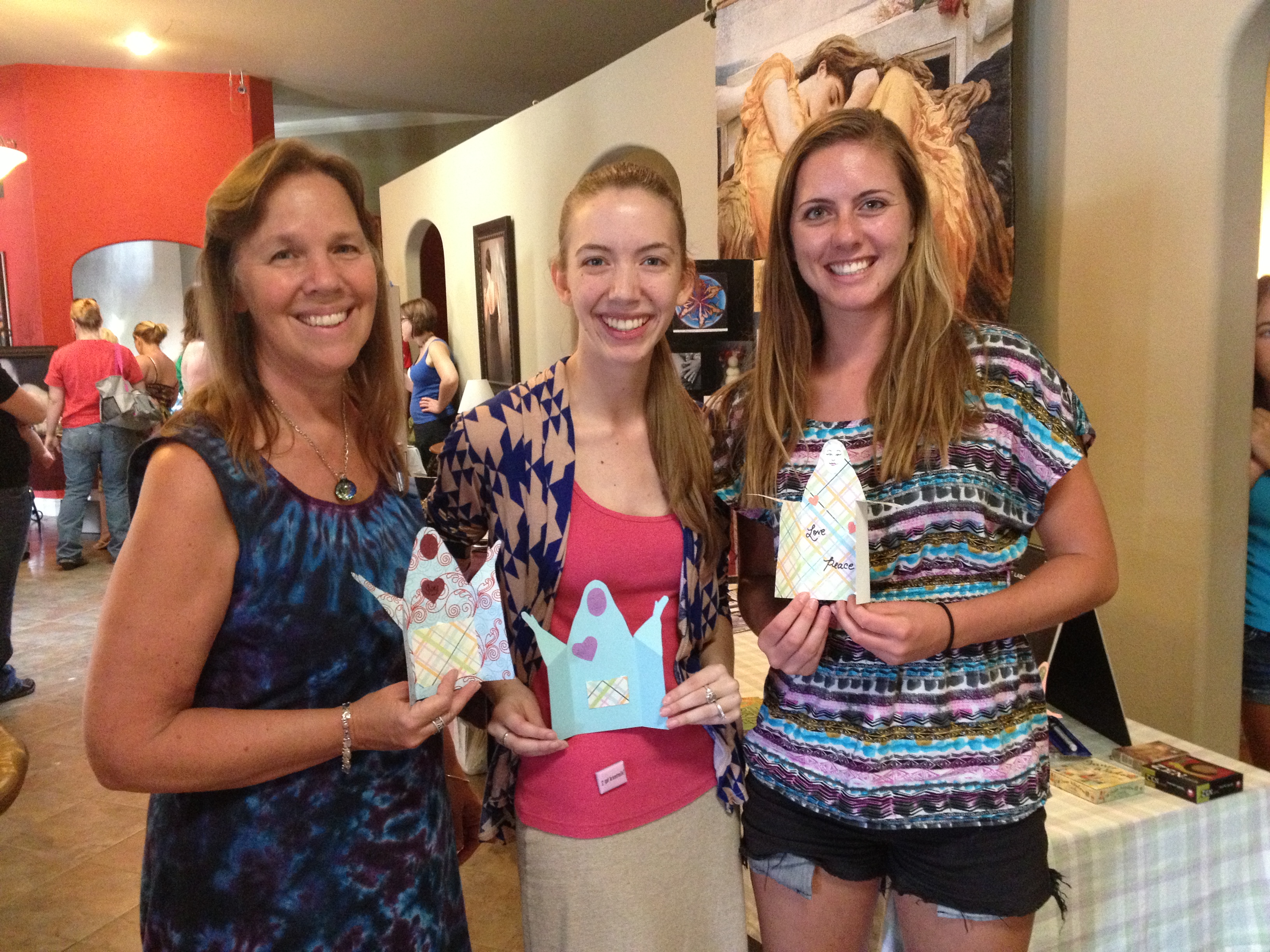
Last summer, my Rolla Birth Network friends and I conceived of a local event to be held celebrating mothers. We made a couple of August 2013 020decisions in planning our event that were really smart: we decided to focus on celebration rather than education (or even activism), we decided not to involve any money (either for the attendees or the hosts [aside from tabling materials/supplies]), and…this is key…we also decided to only do that which was within our own personal resources to provide. It worked! We pulled off a lovely MamaFest event at Tara Day Spa in Rolla. It was well-attended and fun and involved very little expense for anyone. It was work, of course, but it was within our resources/capacities. Community organizations were welcome to have a table at the event for free with the only stipulations being no formula/bottle materials (this event is co-sponsored by La Leche League of Rolla in conjunction with World Breastfeeding Week) and that they had to provide something to do at their table. Our vision was that this event would not involve simply walking around picking up flyers and leaving, but instead would provide an opportunity to hang out with friends, see cool things, learn some stuff, and make some projects. I had a birth art booth that was a delight for me to offer to the women.

This year in August, we hosted our second annual MamaFest event, again with a similar vision. Our resources/time were a little slimmer August 2013 017this year due to peoples’ schedules (particularly my own, leaving my co-founder shouldering most of the organizing effort), new babies, etc. We had fewer exhibits and fewer attendees and slipped more into the boothy-vibe that we hoped to avoid, and learned some things to try next year. I still consider the event a success, especially considering the fairly minimal womanpower with which we had to work. It was an especially good outreach opportunity for LLL and I said at the end that even if I hadn’t been involved at all with the planning of it, I would definitely have considered it a worthwhile event to continue attending with my LLL booth. I was super excited about my simple, but pretty (and free!) offering for the birth art booth this year: mother affirmation/blessing cards. Unfortunately, very few people took me up on my offer and I was a little sad about that, but my LLL booth with its breastfeeding trivia game and got breastmilk ™ pins was pretty popular. We have lots of ideas for next year and the possibility of experimenting with new directions, such as doing away with the booths altogether and having more retreat-like experience stations (i.e. yoga). What we know we want to keep is our commitment to celebrating women and their capacities, because they’re just super awesome and worth celebrating!

Here are some pictures of my booth and some projects from the event:

August 2013 016

Birth art booth!

August 2013 031

Loved this thumbprint necklace project offered at the booth of a local doula/photographer. Alaina appropriated it immediately because, “me like hearts!”

August 2013 028

Babyloss memorial charms offered by the Rainbow Group (local pregnancy/infant loss support)

August 2013 015

Emergency back up project that I scrambled for when I realized people weren’t making my cards–affirmation “stones” (glass pebbles written or drawn on with glass paint markers).

August 2013 013

At least my own loyal family members showed up and made my project! (mom, sister, and visiting cousin)

What I learned from this event again this year was that you do not have to live in a city to be able to offer something like this in your community, all you need is a small handful of women who care and who can use their skills and resources to make it happen! 🙂

Tuesday Tidbits: More Wild Woman

“Within every woman there is a wild and natural creature, a powerful force, filled with good instincts, passionate creativity, and ageless knowing.20130903-200550.jpg Her name is Wild Woman, but she is an endangered species. Though the gifts of the wildish nature come to us at birth, society’s attempt to “civilize” us into rigid roles has plundered this treasure, and muffled the deep, life-giving messages of our own souls. Without Wild Woman, we become over-domesticated, fearful, uncreative, trapped.”

-Clarissa Pinkola Estes (via TheGypsyPriestess)

“The doors to the world of the wild Self are few but precious. If you have a deep scar, that is a door, if you have an old, old story, that is a door. If you love the sky and the water so much you almost cannot bear it, that is a door. If you yearn for a deeper life, a full life, a sane life, that is a door.” 

— Clarissa Pinkola Estés, Ph.D (Women Who Run With the Wolves)

“An Awakening Woman is a spiritual rebellion engaged in a glowing and embodied, nothing-held-back love affair with the great mystery. She moves in the world with fierce compassion, grace and freedom, and is passionate about truth, rest and real love. She is fluent in angelic, diva and in Kali roars. Earth is home and so is infinity.” 20130903-200523.jpg

–Chameli Ardagh, Awakening Women Institute

“We need the tonic of wildness…At the same time that we are earnest to explore and learn all things, we require that all things be mysterious and unexplorable, that land and sea be indefinitely wild, unsurveyed and unfathomed by us because unfathomable. We can never have enough of nature.”

― Henry David Thoreau

And, then some fiery thoughts as well:

“Hold onto your dream, though it may burn you.
It is the Fire of the Initiate.
Hold onto your Vision, though it may shatter your core and
the earth may tremble with the anticipation of your blossoming.
Hold true to your Heart, though you may crack and bleed.
It is a moon blood cleansing, a womb making space
For a tiny spark, to burst
Into even brighter flame.” 20130903-200533.jpg

by Lisa Buell, JourneyDance Facilitator

Come into the fire, come in,
come in, dance in the flames of the festival
of the strongest sun at the mountain top
of the year when the wheel starts down.
Dance through me as I through you.
Here in the heart of fire in the caves
of the ancient body we are aligned.
Our cells are burning
each a little furnace powered by the sun
and the moon pulls the sea of our blood.
This night the sun and moon dance
and you and I dance in the fire of which
we are the logs, the matches and the flames.

Marge Piercy, from “Shadows of the Burning; The Lunar Cycle”

“She walks not away from the fire…but toward it…because not only can she handle the HEAT…she contains it…and her fire wills forth the work that is meant to be in the world…” ~Anni Daulter, Sacred Pregnancy

Prior Wild Woman post.

20130903-200618.jpg

Brought to our knees

“Rigid plans work best if you’re building a skyscraper; with something as mysteriously human as giving birth, it’s best, both literally and figuratively, to keep your knees bent.” –Mark Sloan, MD (Birth Day)

Today I spent a few minutes listening to a lovely webinar by Amy Glenn, the author of Birth, Breath, & Death. The topic was Supporting a Birthing Woman’s Spiritual Practice and I was immediately caught by Amy’s comparison of giving birth to kneeling in prayer. She mentioned that giving birth may drop us to our knees, just as those who pray may pray on their knees. Since I’m currently writing about birth as a spiritual experience, I connected to this implied notion: birth as embodied prayer. And, looking at the webinar photo of a woman kneeling in August 2013 019child’s pose, my own birth-prayers came vividly to mind. In my first labor, I spent a lot of time on my knees, later wishing that I had also given birth on hands and knees rather than being encouraged to birth in a semi-sitting position that I felt contributed to tearing. Later, when I discovered birthing room yoga, I loved realizing that these kneeling postures that I adopted spontaneously and intuitively in my first labor were yoga poses—an inherent body wisdom I carried within me, waiting to arise when called upon. This is part of my first birth story, briefly touching on my time on my knees…

Mark & Mom were wonderfully supportive of me as I labored. I tried various positions and they stacked up pillows for me on the bed so that I could be on my hands and knees on a soft surface (they put the Boppy onto some other pillows to make a “well” for my belly) and then Mom read some of my birth affirmations to me. That worked for a while. I also tried the birth ball for a while and ended up spending a lot of time on my knees on the floor with my head and arms resting on a pillow on the bed…

via My First Birth | Talk Birth.

Kneeling to birth played a prominent role in my second birth experience as well and I have frequently described the rapid birth of my second son as an experience that literally drove me to my knees. When writing about this birth experience, I said:

I was extremely proud of my body and its super-awesomeness 🙂 I felt that my sense of birth trust was physically manifested in my actual birth experience. My body was a powerful and unstoppable force and I had to get out of my own way and let it happen! I felt driven to my hands and knees–like a power was holding me there. After the birth my body felt weak and “run over by a truck”—I felt powerful and like a warrior during the birth…

via Quick Births | Talk Birth.

And, in perhaps my most spiritually meaningful birth experience, the home miscarriage-birth of my third baby also brought me to my knees:

August 2013 041

Brand new sculpture inspired by the thoughts in this post.

When I was still having the “HOW?” questions, other women that I knew who had experienced miscarriage started to come to mind and I knew I could do it too. I told myself that I had to do what I had to do. I said out loud, “let go, let go, let go.” I said I was okay and “my body knows what to do.” The afternoon I found out the baby died, I’d received a package that included a little lavender sachet as a free gift with my order. When my labor began, for some reason I wanted the sachet and held and smelled it throughout the experience. As I chanted to myself, “let go, let go, let go,” I smelled my sachet (later, I read in one of my miscarriage books that in aromatherapy lavender is for letting go). I also told myself, “I can do it, I can do it” and “I’m okay, I’m okay.” I felt like I should get more upright and though it was very difficult to move out of the safety of child’s pose, I got up onto my knees and felt a small pop/gush. I checked and it was my water breaking. The water was clear and a small amount. I was touched that now these gray pants were my water-breaking pants too…

Contractions continued fairly intensely and I continue to talk myself through them while Mark rubbed my back. I coached myself to rise again and after I sat back on my heels, I felt a warm blob leave my body. I put my hand down and said, “something came out. I need to look, but I’m scared.” Then, “I can do it, I can do it,” I coached myself and went into the bathroom to check (it was extremely important to me not to have the baby on the toilet). I saw that it was a very large blood clot. I was a little confused and wondered if we were going to have to “dissect” the clot looking for the baby. Then I had another contraction and, standing with my knees slightly bent, our baby slipped out…

via Noah’s Birth Story (Warning: Miscarriage/Baby Loss) | Talk Birth.

When the time came to gave birth to my rainbow daughter, she brought me to my knees as well and she was the only baby I caught in my own hands while in a kneeling position. Here is a segment from her birth-prayer:

At some point in the bathroom, I said, “I think this is pushing.” I was feeling desperate for my water to break. It felt like it was in the way and holding things up. I reached my hand down and thought I felt squooshy sac-ish feeling, but Mom and Mark looked and could not see anything. And, it still didn’t break. Mom mentioned that I should probably go to my birth nest in order to avoid having the baby on the toilet. My birth nest was a futon stack near the bathroom door. I got down on hands and knees after feeling like I might not make it all the way to the futons. Felt like I wanted to kneel on hard floor before reaching the nest.

…I couldn’t find her heartbeat and started to feel a little panicky about that as well as really uncomfortable and then threw IMG_0422the Doppler to the side saying, “forget it!” because big pushing was coming. I was down on hands and knees and then moved partially up on one hand in order to put my other hand down to feel what was happening. Could feel squishiness and water finally broke (not much, just a small trickle before her head). I could feel her head with my fingers and began to feel familiar sensation of front-burning. I said, “stretchy, stretchy, stretchy, stretchy,” the phone rang, her head pushed and pushed itself down as I continued to support myself with my hand and I moved up onto my knees, with them spread apart so I was almost sitting on my heels and her whole body and a whole bunch of fluid blooshed out into my hands. She was pink and warm and slippery and crying instantly—quite a lot of crying, actually. I said, “you’re alive, you’re alive! I did it! There’s nothing wrong with me!” and I kissed her and cried and laughed and was amazed.

via Alaina’s Complete Birth Story | Talk Birth.

Motherhood, especially my postpartum experience with my first baby also dropped the legs out from under me and I used the same expression echoed above in writing about this postpartum crucible:

I had regularly attended La Leche League (LLL) meetings since halfway through my pregnancy and thought I was prepared for “nursing all the time” and having my life focus around my baby’s needs. However, the actual experience of postpartum slapped me in the face and brought me to my knees…

via Planning for Postpartum | Talk Birth.

I’m not the only mother who finds this an apt description of the process of giving birth, today I found this touching story about memorializing the still birth of a mother’s baby girl:

This blanket isn’t much to look at. It isn’t a work of art. But it holds an entire story within its stitches. It holds the legacy of our precious baby girl who was stillborn, yes, but she was still born. Her name is etched on our hearts, and her short little life was not in vain. In those 37 weeks, she brought us joy and excitement. She brought us laughter. She brought me to my knees (to dry heave, because of being in pain, and to pray…). She brought us together, tighter, as a family. She brought us love. She brought us hope.

via Mind Mumbles: Our Stillbirth Storm.

And, I also read this gorgeous birth story that brings the concepts of prayer and birth kneeling into direct, evocative connection:

August 2013 047

Brand new sculpture inspired by the thoughts in this post.

From this point on, labor was like a long, hard prayer taking place through a dark and cold night. It literally brought me to my knees. At times I knelt, hands clasped in front of me. I had to work hard to surrender, to open myself up to the reality of labor and pain and let it be. It was a challenge. Knowing I needed to surrender to the labor, and to your advent, I made a silent decision to open my hands. I held them open and palm up in between each contraction. I tried to keep them open as long as I could once a contraction started. This was one of the most poignant parts of your birth – this surrender. I had to keep pushing my soul in the direction of you. I needed an openness of spirit as much as of body, for my spirit was caught up in a complicated grief from the months prior. At one point, when a contraction was coming, Kristen said to me, “Camille, you need to let this be big.” How did she know that I was holding back, hesitating? I needed to surrender to the hugeness of the mystery of life and birth and yes, even death. The challenge in your birth, dear Silas, was in the soul places…

…Kristen said simply, “Ok. Just listen to your body.” She trusted my body, which was so freeing. As I pushed, it felt natural. I was part of the pushing, as were you. I knew that the pushing was working, that you were coming down into the world. No one moved closer or moved away. No one tried to move me. I remained in the cleared meadow of a space with the freedom to move as my body wanted to move. There was complete freedom to do just as my midwife asked – to listen, and listen closely. To be. I was on my hands and knees, as close to earth as I could muster in the middle of Queens. And the transition to pushing felt seamless. I was permitted to remain in the deep cavities of my body, which were doing such brave work…

via The Birth Pause: Unhurrying the Moment of Meeting: The Story of Your Birth.

It isn’t only mothers who are brought to their knees by the act of birth, so are birth witnesses:

This is the story of falling in love with a baby before we even met her, the story of witnessing two friends fall deeper in love and the joy of meeting someone you just know you’ll know a lifetime in their very first second of life. This experience brought me to my knees in the end, a wreck of being awake 39.5 hours after witnessing such beauty I thought my heart would explode. I wailed in happiness, and entered a place where the only logical thing to do was roll around in the grass in the sun in full, tearful joy. I forever remain grateful to be a part of this.

It’s beautiful to document beauty, to witness beauty and just downright jump inside beauty…

via a birth story » Sara Parsons Photography.

In fact, we even see birth and knees referenced in the Bible as well:

Now when Rachel saw that she bore Jacob no children, Rachel envied her sister, and said to Jacob, “Give me children, or else I die!” And Jacob’s anger was aroused against Rachel, and he said, “Am I in the place of God, who has withheld from you the fruit of the womb?” So she said, “Here is my maid Bilhah; go in to her, and she will bear a child on my knees, that I also may have children by her.” Then she gave him Bilhah her maid as wife, and Jacob went in to her.

[No need to note how strongly I object to the notion of women being “given” to men. The author of the post referencing this quote then goes on to explain what ‘on my knees’ actually means, which is a little different than what I was thinking…]

…On my knees refers to the custom where the husband impregnated the surrogate while the surrogate reclined on the lap of the wife, and how she might even recline on the wife as she gave birth. The symbolism clearly showed the child was legally the child of the mother, not the surrogate, who was merely in the place of the wife in both conception and birth.

via Genesis 30 – The Children Born to Jacob.

Other birthing women experience the energy of birth as an embodied experience of Shakti. While Shakti can be personified as a Goddess, she is also understood as the great cosmic “fuel” of the universe, the feminine force that drives creation. Women may experience the energy of birth as Shakti moving through, with, and within them. While not specifically about birth, I recently wrote about Shakti in a related sense:

Shakti woman speaks August 2013 043
She says Dance
Write
Create
Share
Speak.

Don’t let me down
I wait within
coiled at the base of your spine
draped around your hips
like a bellydancer’s sash
snaking my way up
through your belly
and your throat
until I burst forth
in radiant power
that shall not be denied.

Do not silence me
do not coil my energy back inside
stuffing it down
where it might wither in darkness
biding its time
becoming something that waits
to strike. August 2013 050

Let me sing
let me flood through your body
in ripples of ecstasy
stretch your hands wide
wear jewels on your fingers
and your heart on your sleeve.

Spin
spin with me now
until we dance shadows into art
hope into being
and pain into power.

7/1/2013
via Woodspriestess: Shakti Woman Speaks

After thinking about this post all day and working on it in snippets at a time, a friend shared this quote with me saying that it reminded her of me. It felt like the perfect closing:

“As women connected to the earth, we are nurturing and we are fierce, we are wicked and we are sublime. The full range is ours. We hold the moon in our bellies and fire in our hearts. We bleed. We give milk. We are the mothers of first words. These words grow. They are our children. They are our stories and our poems.”

–An excerpt from “Undressing the Bear” by Terry Tempest Williams

Tuesday Tidbits: Breastfeeding Research

August 2013 050

Some new (but non-breastfeeding) sculptures this week! 🙂

Before I begin today’s post, I feel like acknowledging that I find it puzzling that we even need to do research on breastfeeding or that it is considered “news” OR that it is something for which the advantages need to be “debunked” OR “proven.” It feels similar to me to seeing journal articles “revealing” that your own blood has special nutrients in it that help your body to function or announcing that having your own blood in your body helps you be healthier and live longer. Or, likewise, if we were to see articles “proving” that it is good for your cells if you drink water or that a special component has been added to a new soda to make it as “close to water as possible.” Some things just don’t really need to be news. And, I’ve observed for over eight years that new, often negative research about breastfeeding often “coincidentally” surfaces right around World Breastfeeding Week, and usually some new campaign also surfaces with a feel-good, but toothless message about “supporting all mothers,” and perhaps some “shocking” reveal article about celebrity breastfeeding will also pop up.

That said, unsurprisingly, some breastfeeding research and general breastfeeding articles have caught my eye recently. The first with regard to weaning and depression:

But the frequency with which women experience depressive episodes when weaning their babies is far less understood. Researchers “The intersection between lactation and mood is important, and it is extremely understudied,” said Dr. Samantha Meltzer-Brody, director of the perinatal psychiatry program at the UNC Center for Women’s Mood Disorders. “There are definitely people who report mood symptoms associated with lactation.”

via Weaning And Depression Linked In Many Women.

The second is one that will actually affect the way I practice when helping breastfeeding women and it is about the relationship that may exist between mothers having trouble breastfeeding and early signs of diabetes.

New research has revealed the hormone insulin plays an important part in the production of breast milk – and mothers who are struggling with feeding may have low levels of insulin.

For a long time, insulin was not thought to play a direct role in regulating the milk-making cells of the human breast.

But scientists now know that the mammary gland in breast becomes sensitive to insulin during lactation.

via Why mothers struggling to breastfeed could be showing early signs of diabetes | Mail Online.

And, not new or surprising or current, but unfortunately of continued relevance is the fact that IV fluids during labor artificially inflate baby’s birthweight:

But when babies lose more than 7% of birth weight during these early days, does this automatically mean they are not getting enough milk? No, according to a recent study.

A greater weight loss may be completely unrelated to breastfeeding and due instead to excess IV fluids mothers receive within the final 2 hours before delivery. According to this study, these excess IV fluids inflate babies’ birth weight in utero and act as a diuretic after birth. Babies whose mothers received more IV fluids before birth urinated more during their first 24 hours and as a result lost more weight. Number of wet diapers during the first 24 hours predicted infant weight loss. This was true whether the babies were born vaginally or by c-section. Another study published earlier this year had similar findings.

This weight loss has nothing whatsoever to do with breastfeeding and milk intake. In fact, the authors suggest that if clinicians want to use weight loss as a gauge of milk intake, they calculate baby’s weight loss not from birth weight, but from their weight at 24 hours. According to their findings, this could neutralize the effect of the mother’s IV fluids on newborn weight loss.

via Breastfeeding Answers Made Simple – Breastfeeding Reporter – Newborn Weight Loss and IV Fluids in Labor.

They way we treat women during birth matters for her breastfeeding relationship and the health of her baby! Birth interventions are not benign.

Also, not benign is the way this article from MSNBC chose to describe some research about breastfeeding women having a lower risk of Alzheimer’s disease (if researchers were more careful to watch their language, ala Diane Wiessinger, and remember that breastfeeding is the biologic norm, the article would actually be titled, “formula feeding increases risk of Alzheimer’s”):

Amazing news for moms who breast-fed: All that hassle was worth it — not just for your baby (who will likely have a higher IQ), but for you as well. A new Cambridge University study suggests that women who breast-feed can cut their risk of Alzheimer’s disease by up to two-thirds and calls the link “highly significant.” Those overly precious attachment parents might have the last laugh yet, as the benefits seemed to increase with longer periods of breast-feeding: Women who breast-fed for a year were found to have about a 20 percent lower risk of developing the disease as someone who had breast-fed for only four months. [Source]

via Breastfeeding cuts Alzheimer’s risk by two-thirds, study says.

Note that this “article” was published during World Breastfeeding Week and inserts little digs about being “overly precious” and a “hassle.” Words matter. They seep into our consciousness and affect our realities and our understandings of ourselves and our babies.

Not coincidentally, we also have to keep “proving” over and over again what many parents often feel in their hearts: that babies need to be with their parents, that they need to be held, and that breastfeeding is good for them.

“Ill-advised practices and beliefs have become commonplace in our culture, such as the use of infant formula, the isolation of infants in their own rooms or the belief that responding too quickly to a fussing baby will ‘spoil’ it,” Narvaez says.

This new research links certain early, nurturing parenting practices — the kind common in foraging hunter-gatherer societies — to specific, healthy emotional outcomes in adulthood, and has many experts rethinking some of our modern, cultural child-rearing “norms.”

“Breast-feeding infants, responsiveness to crying, almost constant touch and having multiple adult caregivers are some of the nurturing ancestral parenting practices that are shown to positively impact the developing brain, which not only shapes personality, but also helps physical health and moral development,” says Narvaez.

Studies show that responding to a baby’s needs (not letting a baby “cry it out”) has been shown to influence the development of conscience; positive touch affects stress reactivity, impulse control and empathy; free play in nature influences social capacities and aggression; and a set of supportive caregivers (beyond the mother alone) predicts IQ and ego resilience as well as empathy.

via Modern parenting may hinder brain development, research shows // News // Research at Notre Dame // University of Notre Dame.

Is anyone else getting tired of these kind of impressive “reveals”? I find it discouraging and frustrating, but maybe I’m just in a bad mood today!

I was less crabby to read this pleasant little story about Selma Blair and her breastfeeding toddler:

Arthur, who just celebrated his second birthday on July 25, seemed to enjoy the tasty snack, smiling and chatting gleefully with his mother and passers-by before the two headed off the train.

Even in more progressive parts of America breastfeeding is still seen as taboo, despite countless studies affirming the list of health benefits for both mothers and their children…

via Selma Blair breastfeeds her son Arthur, 2, during afternoon shopping trip | Mail Online.

And, from the same publication (not always widely renowned as a respectable source!), we see this interesting article about portraits of breastfeeding mothers from the 1800’s along with a little social commentary:

The seemingly normal image of the nursing mother in mid-1800s America poses a stark contrast against the media storm surrounding California mother-of-two Jamie Lynne Grumet last year, who posed on the cover of TIME breastfeeding her three-and-half-year-old son.

via Bizarre pictures reveal the unlikely trend for photographs of breastfeeding mothers in Victorian-era America | Mail Online.

And, interestingly, something else women also feel, but don’t necessarily have “back up” for, is the understanding that it isn’t breastmilk alone that has these effects for women, it is the act of breastfeeding itself, something that is not always differentiated in breastmilk research:

1) Find out what they mean when they say “breastfeeding.” This question by itself can often clear up misperceptions. In many cases, when critics say “breastfeeding,” what they really mean is “breast milk” independent of its delivery method; they do not mean the entire package that is breastfeeding. Breast milk obviously shines when compared to any of its substitutes. But when the independent effects of the milk are teased away from the act of breastfeeding, the differences seem smaller. And that is precisely the point—it’s the milk and the method of delivery that make the difference for both mother and baby.

via Answering the Critics: Breastmilk Separate of Breastfeeding Does Not Produce the Same Results | Kindred Community.

Along these same lines, but from a personal perspective instead, I was pleased, but not particularly surprised to read this mother’s story about breastfeeding her adopted son:

I am surprised by how not different breastfeeding our son feels compared to breastfeeding our older, biological children.

But because he’s adopted, breastfeeding felt even more important. I wanted him to feel that bond — that closeness and skin-to-skin, to help him feel comforted. Not being pregnant, and not knowing what he felt like in the womb beforehand … I wanted that physical connection with him afterward. And it’s just been really easy so far, although I don’t love the supplemental nursing system [laughs]. There have been moments of trying to get him to latch where, I’m just like, ‘Ok! I’m done!’

But I feel so bonded and attached to him, and I think a huge part of that has been the breastfeeding.

via The Breastfeeding Chronicles: Nursing My Adopted Child.

We also see questionable research results that seem to completely overlook the systemic context in which women make their feeding “choices”:

Brown found extraverted, conscientious and emotionally stable mothers were more likely to try breast-feeding. But being agreeable or open to new experiences made no difference, according to the findings published Tuesday (Aug. 6) in the Journal of Advanced Nursing.

Many try, but many quit

More than 80 percent of the women in the study tried to breast-feed, but less than half who tried were still breast-feeding six months later. And women who switched from breast to bottle tended to switch quickly. About 73 percent of the women who stopped breast-feeding did so within two weeks after giving birth.

Women who were conscientious — for example, detailed-oriented and punctual — were likely to start, but also likely to stop breast-feeding.

Mothers who kept breast-feeding during the first six months were more extroverted and less anxious than mothers who always bottle-fed or switched to the bottle. The effect was particularly strong within the first six weeks after birth. [Blossoming Body: 8 Odd Changes That Happen During Pregnancy]

via Mom’s Personality Key to Whether Baby Get the Breast or Bottle | LiveScience.

It is a huge mistake to reduce breastfeeding decisions to a “personal choice,” when it is a public health issue made in the context of a society that treats formula like the norm (as with the breastfeeding reduces risk, rather than formula increases risk research, as referenced above), pays excessive attention to celebrity breastfeeding experiences or public breastfeeding encounters, makes snide remarks under the guise of presenting new, duh-based research, that tolerates disparities in survival rates of black babies, and interferes with the birth process to the extent that we do not even have an accurate starting birth weight to gauge the “success” of breastfeeding by.

August 2013 017

Nursing toddlers at the creek last week. We’re talking about something else, but our faces look like we could be saying: “OMG! Can you *believe* that these things are even issues?!”
Totally.

Thesis Tidbits: Naming and Claiming

As I mentioned recently, I’m working on my thesis project on the subject of birth as a spiritual experience. Today, instead of my usual August 2013 032Tuesday collection of links, I’m sharing some thought-provoking quotes that I collected while writing the prospectus for my thesis. Pictures in this post are from last night’s Day of Hope and Healing ceremony in Rolla.

The first quote really relates to the whole reason I chose this topic in the first place:

“In this culture…a woman can be made to feel foolish for emphasizing the centrality of giving birth to her identity or her personal religiousness, her ‘womanspirit’” (Listening to Our Bodies, Stephanie Demetrakopoulos, p. 18)

While it is the opposite in my own circle of friends, in the dominant culture, whether given “religious” significance or not, I find this is true: women are made to feel foolish for emphasizing the centrality of birth to her womanspirit, to her life, to her feelings about her capacities as a woman and mother. Women are made to feel foolish for struggling with birth trauma OR for feeling “empowered” by birth. After all, it is just one day. But maybe, just maybe, part of this sensation actually originates in sensitivity to the feelings of other women:

Elizabeth Gray in Sacred Dimensions of Women’s Experience explains:

…this is not the entire story of the ambivalence a woman experiences along the way to claiming the sacredness of her own birthing process. There is the reticence she feels about possibly offending other women by seeming to elevate her own birthing experience. How is one woman to claim her own experience of an ‘easy’ birth when she knows other women labor for days in pain and some women die giving birth? How is she to name as sacred her experience of having babies, when, for whatever reason, other women are childless? How is she to claim her own experience of ‘conscious’ home-birth…,when other women may now regret having been unconscious with medications? Or if you had a ‘bad’ experience giving birth, how are you to name that when women around you are happily anticipating a successful culmination to their Lamaze classes? Women’s naming of much in their own birthing experiences is silenced by the sensitivity to other women’s feelings.

But despite these many reasons for reticence, there is a bonding of women who have given birth. It is deep and silent…a silvery shadowed oath between life and death down which all ‘the birthing mothers on the planet’ have moved, those ‘mothers of all times without whom no one walks this planet.’ Women who have given birth reach out to one another…saying to all those mothers whose birthing experiences were different than hers, ‘Don’t feel badly. ‘Rejoice in the incredible, joyous, astounding fact of creation…Every moment a child is born is a holy moment…’

(Elizabeth Dodson Gray, ed. Sacred Dimensions of Women’s Experience, p. 49-50)

Before this quote, Gray shares that the patriarchal association of birth (and women) with “uncleanliness” continues to impact women August 2013 040today:

“Because of this ancient overlay, it is not easy for women to lay claim to our life-giving power. How are we do reclaim that which has been declared fearful, polluting and yet unimportant? How are women to name as sacred the actual physical birth, which comes with no sacred ritual, while lurking around the corner of time are the long-established meta-physical rituals of circumcision and baptism?” (Elizabeth Dodson Gray p. 49)

Women today are also laboring to birth a healthier, more whole planet and means of being. For many women this begins with how they approach pregnancy and childbirth, how they consciously prepare to the welcome their babies into the world.

It is well past time in human history to push aside male dread and boldly claim the sacred woman-centeredness of every human birth…The wonder at new human life cannot be separated from the sacredness of women’s bodies or women’s lives. We will be involved in a profound betrayal of the gift of life itself as long as individual men and male culture ‘freak out’ before women’s power to give birth…If we cannot affirm women and women’s bodies and women’s birthing and women’s choice, we will go on bringing death to the planet and to ourselves. We cannot affirm life without affirming women. [emphasis mine]

(Elizabeth Dodson Gray, ed. Sacred Dimensions of Women’s Experience, p. 50-51)

And, as I’ve touched on before, birth and breastfeeding are the original sacramental experiences:

“Woman’s body is a transmutation system; it has the power to change blood to milk, to change itself into food which in turn becomes the physical and psychic energy of a child. She is creating an incarnate soul, assisting it in growth.” —Stephanie Demetrakopoulos (Listening to Our Bodies, p. 36)

August 2013 052

(this is my prayer flag this morning when I hung it up at home after the event last night)

August 2013 017
Flowers released on the lake at sunset.


Day of Hope and Healing (Plus Amethyst Network Birthday Giveaway)

A Birth Healing Blessing

Blessed sister, beautiful one
with broken wings.
Your journey is a difficult one…
that no mother should have to endure.
Your path is steep, rocky and slippery
and your tender heart is in need of gentle healing.

Breathe deeply and know that you are loved.
You are not alone,
though at times, you will feel like a
desolate island of grief
untouchable
distant.
Close your eyes.
Seek the wisdom of women who have walked this well-worn path before you,
before,
and before,
and before you yourself were born.
These beautiful ones
with eyes like yours
have shared your pain, and
weathered the storms of loss.

You are not alone (breathe in)
You will go on (breathe out)
Your wings will mend (breathe in)
You are loved (breathe out)
~ Mary Burgess (Mending Invisible Wings)

Today is the Day of Hope and Healing, a national remembrance day for families who have experienced miscarriage, stillbirth, infant or child loss. Tonight, one of my friends is having a Day of Hope event for local families. I’m happy to participate and I picked out the poem above to read. I also made a prayer flag as part of the prayer flag project. I included lines from a song that spoke to me deeply during my second miscarriage. I left the mama’s arms unglued so that they can close, open, or wave in the breeze. Unfortunately, the glue I used leaked through, which gives her a “weeping Madonna” quality. I was bugged by it at first and almost didn’t show a picture, but then I decided I actually like it like that!

August 2013 027 August 2013 028

This week is also The Amethyst Network’s third birthday. I helped co-found this organization as a direct result of my own in-the-midst-of-miscarriage-realization about the need for miscarriage doulas in the world, and I’m proud of the resources we’ve collected and the services we offer to women around the country. As TAN posted on our Facebook page:

We hope you’ll join us in celebrating this week by doing random acts of kindness or paying it forward and then coming back here and telling us about what you did. Whether it’s related to your baby’s memory or not, what goes around comes around, and TAN believes in being a force for good in the world. We hope you will join us in celebrating our birthday by giving gifts to those around us.

***Giveaway now closed. Ravenna was the winner!***

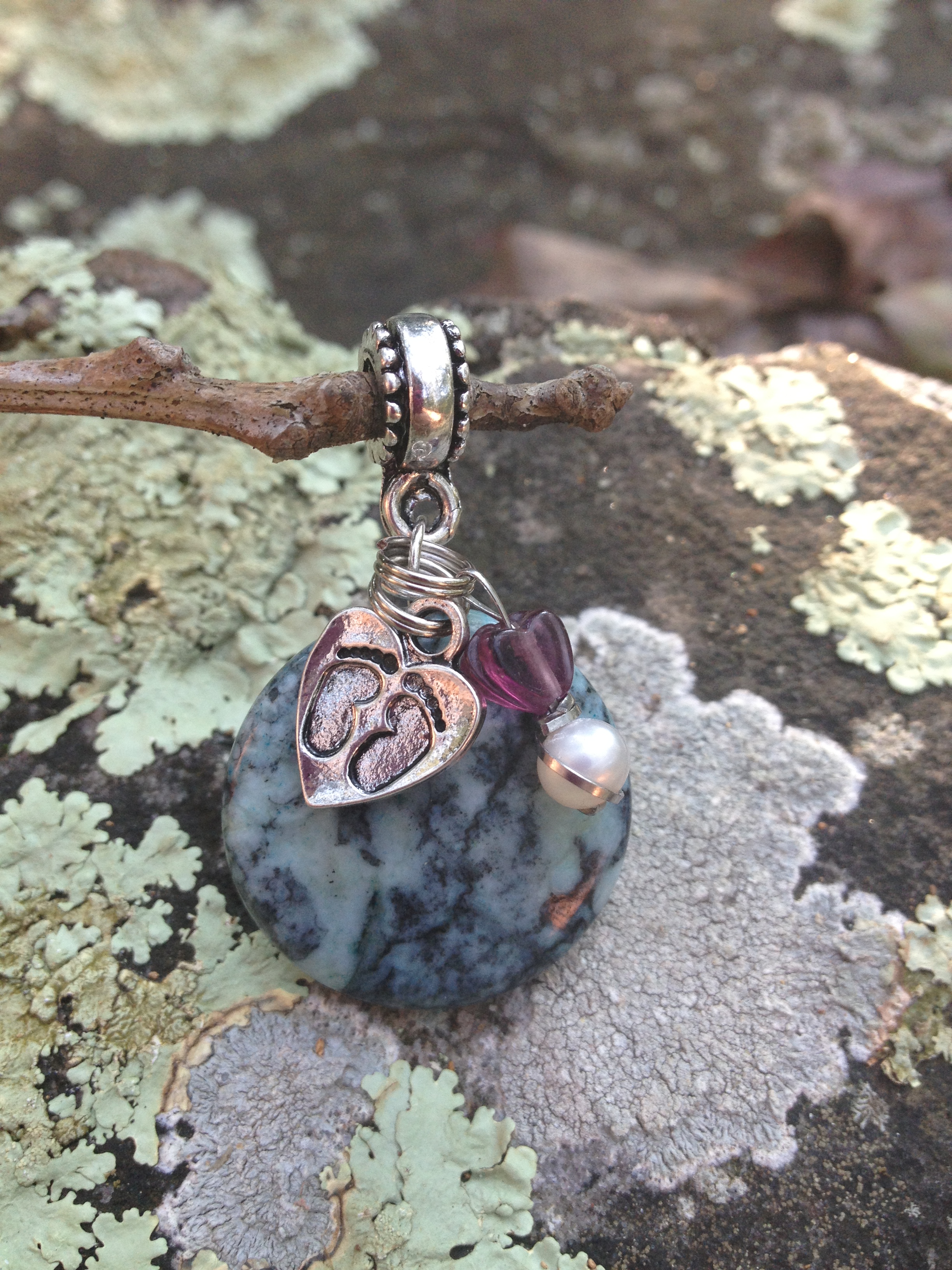
So, I decided to offer a pendant giveaway in honor of TAN’s birthday! (I also reached 500,000 hits last week and I often do a giveaway for things like that, so it is doubly time to do one!) I made this pendant last night specifically for TAN’s birthday. It has a footprints charm like the one that was so meaningful to me, a howlite stone, and also a tiny amethyst heart (and a freshwater pearl). It comes on a simple ribbon, but can easily be taken off and added to your favorite chain instead. You don’t have to do anything fancy to enter, just leave a comment. If you’d like to share The Amethyst Network’s page or website with your Facebook friends or followers, then you can earn a bonus entry! (just make sure to leave another comment telling me you did so)

August 2013 011

(classy twig not included 😉 )

The giveaway will close next Monday night.

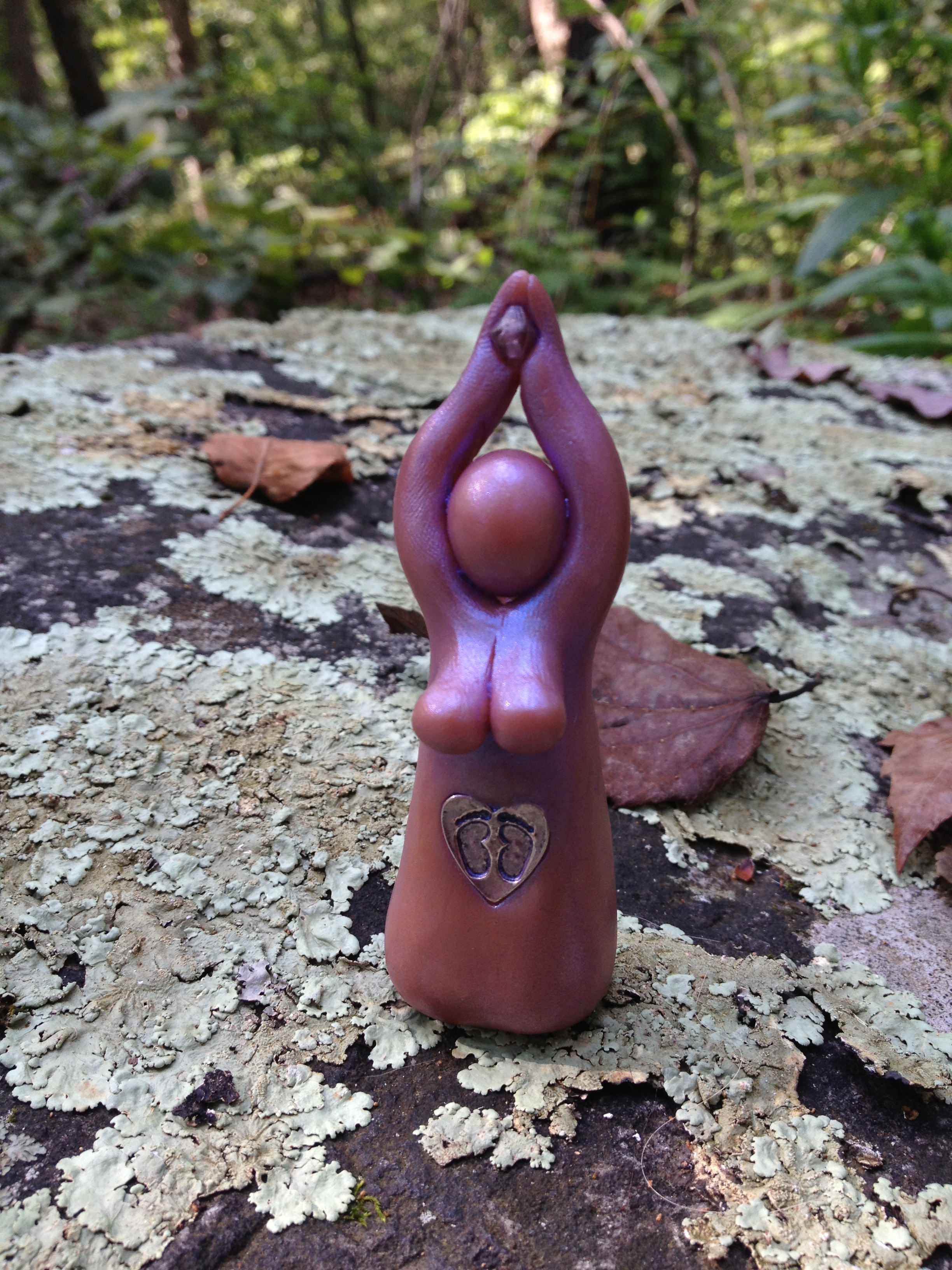
I also made a diverse assortment of birth art goddesses last night and I decided to make a miscarriage mama with a footprints charm too. She is purple and is holding an amethyst crystal, in honor of The Amethyst Network’s birthday too! I haven’t decided what to do with her yet…keep her…sell her…do another giveaway…

August 2013 048Here are the rest of the mamas who came to life in my hands last night:

August 2013 043There are some VBAC mamas, a river mama, a laboring mama, a birthing mama, a moon mama, and a loss mama. I’m working on adding them to my etsy shop along with some more new pendants! 🙂

August 2013 020

Other past posts about miscarriage may be found here.

A Mother’s Nest

“Although pregnancy and birth is a richly intuitive and instinctive process, a woman will prepare her ‘nest’ and birth according to the style of her culture, in the same way that a particular species of bird will build its nest with whatever is available.” –Pam England

I am planning a mother blessing ceremony for a good friend in September. In addition to fun plans like a belly cast and henna, she asked for something a little different than our usual “roster” of blessingway activities, in that she wants her friends to prepare a Mother’s Nest for her. We are going to communally decorate a birthing sheet for her bed and bring supplies for a “birth box” to have available during birth and postpartum (i.e. containing raspberry leaf tea, chlorophyll, postpartum pads, paper for placenta prints, outfit for new baby, towels etc. All the supplies you like to have on hand for a homebirth!). And, each guest will bring items to add to her bedroom, so that the whole room becomes a Mother’s Nest of birth power, strength, and support, basically like one huge birth altar!

While it wasn’t a communal process, I did intentionally create a nest for myself for the birth of my last baby. I put a futon on the floor about two feet from the bathroom and double sheeted it with a waterproof sheet in the middle and some chux pads on top. I wanted a nest that allowed me to “crawl to the bathroom” if needed. This is a request I repeated frequently during my pregnancy and it was really important to me. My mom asked, “why would you be crawling to the bathroom? Someone could help you?” and all I could say is, “I want to be able to crawl to the bathroom if I need to!” After my other births resulted in unfortunate and extensive labial tearing, I really, really disliked trying get up and into a regular bed. This time, I wanted a birth nest on the floor that I could roll off of and drop down onto, rather than trying to swing my legs out or lift them up to get in. As it was, I remained in this nest for the first three days after my daughter’s birth. I never crawled to the bathroom, but I could have if I’d needed to, dang it!

In the photo, the gray plastic tub near the futon is my birth box, all packed with labor and postpartum supplies. The cardboard boxes on the floor nearby contain my neonatal resuscitation equipment (before my daughter’s birth I became certified in Neonatal Resuscitation, because I had a fear of the baby not breathing at birth—rather than be frozen by that fear, I decided to do something about it. We then realized that it wasn’t that smart to have the only person who knows how to resuscitate a baby also being the person giving birth to that baby, so I trained my husband and mom how to use the equipment as well). I kept these supplies with my emergency birth plan underneath separate from my birth box, in order to mentally/visually have space between what was “normal” (the birth box) and what was “just in case.” My doppler is also there and some extra chux pads. You can also see my lovely birth altar with my Woman Am I picture on it, watching over my birth nest.

My baby was born into my waiting hands in this very nest, just as I planned. She breathed and cried immediately.

Moments before her birth. You can see the doppler in front of me, because I suddenly got freaked out about needing to listen to her heartbeat. My husband is wearing a hat because it is January and we heat with wood, but were busy having a baby instead of tending a fire!

Moments before her birth. You can see the doppler in front of me, because I suddenly got freaked out about needing to listen to her heartbeat. My husband is wearing a hat because it is January and we heat with wood, but were busy having a baby instead of tending a fire!

I look forward to helping my friend create her mother’s nest. How about you? Do you have any ideas for a Mother’s Nest? Did you build one for yourself? What would you like friends to contribute to a nest for you?
Modified from this post.

Vacation, Final Phase: Pismo Beach

The last phase of our epic California trip was to relax and enjoy our favorite beach on the Central Coast: Pismo Beach. This is the final post (thank goodness!) in my vacation recap series. The others are as follows:

Vacation, Phase 1: Disneyland and California Adventure

Vacation, Phase 2: Himalaya Tourmaline Mine

Vacation, Phase 3: Legoland

Vacation Phase 4: Mamoorials

Vacation, Phase 5: Moonstone Beach

Vacation, Phase 6: Montana De Oro side trip


Pismo is such a familiar setting to us, that I don’t have a lot of narrative to introduce the pictures.

Pismo picture gallery: if a closer view is needed, just click one and then follow through them in slideshow format.

On my cousin’s 21st birthday we went to a steakhouse sort of place called McClintock’s that no one in the group was particularly familiar with. After sitting down, we were horrified to see the cheapest hamburger was $27. And, this was a “family style” dining sort of place, so we ended up spending $50 (for just our own family!) to grab a few greasy onion rings out of other people’s fingers, basically, and for Mark and I to split a mediocre hamburger. Not. Impressed. Luckily, dinner came with dessert—a measly scoop of ice cream or a “dessert liqueur.” Yes, please. I quaffed that Kahlua. The “atmosphere” did not match the prices. If it had been a normally priced hamburger place, perhaps it would have been normal to see cougar paws on the wall and polaroid pictures of various guests, and a gigantic stuffed bison, and waiters pouring water into glasses held on top of people’s heads, but for $27 hamburgers, I would have expected something a little classier (and tastier)! Maybe it was a feature of where I come from? I’m having an epiphany as I type—to ME, from good old mid-America, stuffed bison and greasy onion rings are normal and should be cheap, to coastal dwellers perhaps they are a wild novelty worthy of upscale prices?!?! I remember once being disappointed to go to a Pismo restaurant proudly featuring none other than, “real Kansas City style barbeque!” What the heck? I want clam chowder!

Anyway, I also composed this delightful beach poem:

McClintock’s
House of onion rings
And diarrhea

The next morning my sister-in-law said they had hoped to sneak out before anyone else and scrawl McClintock’s! in huge letters on the sand to greet us on our beach stroll. They didn’t manage to do it, but imagining it was funny enough on its own!

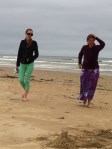
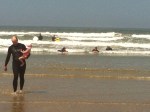
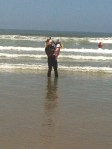
While at Pismo, we also got semi-obsessed with taking silhouette pictures. Some my uncle took with his camera and his more practiced eye. The others we took after he went home and they didn’t turn out quite a clear.

This was quite a trip and a family adventure. It took a lot of stressful planning to pull it off and it also took a lot to keep us going through each phase, but we did it!

We flew out of the small San Luis Obispo airport at 6:00 in the morning. We were right on track getting to our layover in Phoenix and then…after over an hour in the air on the way to St. Louis, the plane began to experience difficulties that made the pilot concerned it was not safe to fly, so we turned around and went back to Phoenix. We could hardly believe it! After we landed, we began to feel lucky, because I overheard some of the flight attendants talking and I think the problems may have been more serious than they’d been letting on. We each got a free lunch voucher and enjoyed a panini and after only a little waiting we got on a new plane and headed to St. Louis, again. We didn’t end up getting home until about 9:00, when we’d expected to be home by 3:00, but we were safe and sound and home. 

It wasn’t until the next morning that we discovered that somewhere between our two trips to Phoenix, the boys had left behind their iPod, the android tablet, and all of our cell phone chargers, headphones, etc. We made a lot of calls and were resigned to being out of luck, when the next afternoon I got a call from Angie, a U. S. Airways baggage department worker in Kansas City who saw my number come up when I Facetime called the ipod trying to locate it. The bag of electronics had been back to Phoenix and then back to St. Louis and then on to Kansas City without the bag being picked up by anyone. So lucky! She FedExed it back to us and the boys had their equipment back in their hands without every fully realizing how lucky they were!

June 2013 002