Archive | January 2016

Tuesday Tidbits: Waterbirth & Healthy Babies

il_570xN.684689686_cg6o“It takes force, mighty force, to restrain an instinctual animal in the moment of performing a bodily function, especially birth. Have we successfully used intellectual fear to overpower the instinctual fear of a birthing human, so she will now submit to actions that otherwise would make her bite and kick and run for the hills?”

–Sister Morningstar (in Midwifery Today)

via Tuesday Tidbits: Human Rights and Birth | Talk Birth

Tanner, our last baby, was my first waterbirth. I didn’t really consider water for my first baby. I did for the second and had a birth pool and supplies on hand, but he was born so quickly we had no time to use it. Alaina was born in the deep winter, so water didn’t appeal to me at all and I never considered having a waterbirth with her. With Tanner’s pregnancy, I was interested in trying things I’d never done before. I’d also read that water helps reduce or prevent tears and I really, really, really wanted to avoid tearing again and I thought it would be my last chance to try water and see if helped. He was born in the water and I did tear. I have no regrets about having opted for water with him, other than wishing I would have been able to get out of the pool a little earlier since he got pretty chilled from it. (In case you missed it: his birth story and birth video.)

So, I was interested to read this article about the safety of waterbirth. The conclusion was that water birth is safe, but that women actually had a higher, not lower, chance of tearing…

The findings revealed babies born in water, as well as their mothers, were no more likely to require a transfer or admission to a hospital. Moreover, the babies born in water did not receive a low Apgar score. This quick test is performed on a baby one minute after birth in order to determine how well the baby tolerated the birth, and five minutes after birth to tell doctors how well the baby is doing outside the womb.

Despite the positive, the researchers did find an 11 percent increase in perineal tearing, or vaginal tears among mothers who gave birth in water…

Source: Pregnancy And Water Birth: Giving Birth In Water Tub Poses No Risk To Mom Or Baby, Says Study

A commonly asked question about waterbirth is whether or not water slows down water (the consensus is that it often can if the woman gets in the birth pool “too soon”):

A woman should be encouraged to use the labor pool whenever she wants. However, if a mother chooses to get into the water in early labor, before her contractions are strong and close together, the water may relax her enough to slow or stop labor altogether. That is why some practitioners limit the use of the pool until labor patterns are established and the cervix is dilated to at least 5 centimeters.

Source: Does Water Slow Down Labor? | Talk Birth

I was 35 when Tanner was born, technically of “advanced maternal age.” Luckily, new research also indicated that us “advanced” types have a higher chance of living to “extreme old age” (maybe that should be “advanced, old age”?)

A Boston University School of Medicine study found that women who can still give birth naturally after age 33 have a higher chance of living to extreme old age than those who had their last child before age 30. But the report, published in the online version of the journal Menopause in April 2014 doesn’t imply that putting off pregnancy will add years to your life. “If you physically delay having children, that’s not going to help with longevity, Paola Sebastiani, a Boston University biostatistics professor and study co-author, told OZY. A woman with a natural ability to have children later in life suggests that her body – including her reproductive system – just happens to age at a slow pace. Some women’s biological clocks simply tick more slowly than most.

Source: Late Kids, Long Life? | Acumen | OZY

And, switching gears slightly, I enjoyed this post about that “a healthy baby is all that matters” refrain, that, while seemingly sensible on the surface, is actually an insidious phrase used to shut down women’s voices and deny their completely legitimate right to humane care in pregnancy and birth:

When a woman gives birth, a healthy baby is absolutely completely and utterly the most important thing. Got that? OK – do not adjust your wig, there’s more… It is not ALL that matters. Two things – just to repeat: a healthy baby is the most important thing, AND it is not all that matters. Women matter too. When we tell women that a healthy baby is all that matters we often silence them. We say, or at least we very strongly imply, that their feelings do not matter, and that even though the birth may have left them feeling hurt, shocked or even violated, they should not complain because their baby is healthy and this is the only important thing.

Source: A healthy baby is not ALL that matters – The Positive Birth Movement

This reminds me of the “birth and apples…” example I’ve used in teaching and activism for a long time:

It is not helpful because the expectation was not to not have a healthy baby–the expectation was to have a vaginal birth. It is comparing apples to oranges since there were two separate individual hopes: one the joy of a baby, the other her experience of bringing that baby into the world. The apple being the healthy baby we all want and usually bear, the orange being what we hope for in our trials and tribulations on the way there…

Source: Birth & Apples | Talk Birth

And, it also makes me remember that your baby’s birth is the beginning of a fresh new, lifelong relationship, one worthy of being treated with dignity and respect and honored as an important rite of passage. I explored a relational analogy in one of my most popular past posts…

You ask when the ceremony can begin and the clerk tells you not until your fiancé’s heart rate has been monitored for twenty minutes—“We need a baseline strip on him, hon. After all, you do want a healthy husband out of all this, don’t you?!” she says. You are asked to change out of your wedding gown and into a blue robe. When you express your dismay, you are reminded that your dress could get messy during the wedding and also, “Why does it really matter what you’re wearing? In the end you’ll have your husband and you’ll be married and that’s really what counts.”

Source: All That Matters is a Healthy Husband (or: why giving birth matters) | Talk Birth

In totally separate news, I have an upcoming free Womanspirit Wisdom mini class. Feel free to join!

collectorcard-2.5inx3.5in-h-front

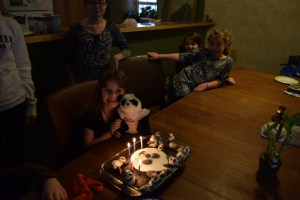
My Rainbow Girl is FIVE! (plus, pandas)

January 2016 036Five years ago today I was snuggling my new baby girl on my futon nest in the living room. It is hard for me to even describe what joy and healing she brought to me. When I look back at pictures of myself from the days following her birth, I see such radiance. While I have exulted in the births of all my children and they all rank as the most transformative, meaning, joyous, and loving occasions of my life, Alaina’s birth was possibly the most truly, bone-deep sensation of relief and happiness that I have ever experienced.

I feel like I have missed out on a lot of the last year with her after having Tanner. We were a tight-knit little unit until he was born, she would fall asleep with her head on my arm every night, we played and read together every day, we cooked together and did laundry together every day, and I often did little fun and special things with her. I felt like we actually had a “balanced” family in the sense of “mom and Alaina” + “dad and the boys.” Tanner’s birth changed a lot and she had the hardest time adjusting to the “displacement” of a new sibling of anyone. My boys have each other. They give each other attention. They are each other’s best friend. They play and talk and learn together. They have each other’s backs. While it is an adjustment to make room for an additional brother, their tight bond and unity is intact and unchanged, basically impervious to the addition of more siblings. Alaina, fifteen months after Tanner’s birth, still gets upset about whether or not she can go to sleep with her head on my arm (if he’s nursing, she can’t, she has to snuggle by my back and gets sad and dejected. If he isn’t nursing, she can and is happy). She spends a lot of time waiting for me to play with her and often seems very attention “starved,” in a way that makes me feel sad, guilty, and irritated all rolled up in one. In the family structure now, there are the brothers, mama and Tanner, and then Alaina, kind of floating around by herself wishing for someone to play with her or read to her or pour milk for her, etc. (Apparently, Mark is also displaced in my family structure sense right now!)

There never seems to be enough time for me to give her everything she needs and wants and even though she is still pretty little herself she often has to wait for Tanner to be helped, or has to put things away because he is destroying them, and so forth. We are finding Tanner to be a super high-need and pretty destructive toddler and in the “need hierarchy,” he ends up “winning” even when she legitimately needs things too. I find myself feeling a real sense of almost grief at the disappearance of the last year of my other kids’ lives. I have long been frustrated by “you’ll miss this when they’re older”-style commentary, but it has become even more poignantly evident to me lately as Lann rapidly catches up with me in height, that the specters of “missing this,” often seems to be raised only with regard to babies and young children. I rock at the baby-momming. I don’t miss anything. They sleep on me, ride along with me, feed from my body, and are a part of me. I cherish them daily—drawing up long breaths of their hair, admiring their little hands and chubby bodies, cradling them to me, but as I do this very thing, make sure I am not missing out on any tenderness of baby-momming, I am actually, in a very real sense, missing out on what it was like to have a four year old girl in the house. The only four year old girl who is ever going to live in my house as my little daughter is now five instead. I am also missing out on what it is like to have twelve and nine year old sons. They are older and while I’m not dwelling fruitlessly in my memories of their baby selves, I am actually missing their current selves. It is passing me by right now, because I have a one year old December 2015 012who simply needs me more, requires more from me, and is quite literally more in my face. I feel like the people who say to “enjoy it now, it passes so quickly,” when they see me with Tanner, are completely missing out on the fact that I have three other kids who are also passing quickly by. Is it only babies and toddlers that we fear missing out on? Not cherishing enough? Forgetting what it is like to have? I feel like comments like that actually devalue older children—like, aren’t they good enough and interesting enough now that I don’t need to pine back for their babyhood?

Luckily, in the last two months, Alaina and Tanner have started playing together. They push doll strollers around, play with pretend food, play a chasing + laughing game, play in boxes together, build with blocks, and she also likes to bundle him up and pushes him around on an office chair. I Lann's Phone 390hope they are soon going to be on the same “team” and be buddies who can count on each other, rather than obstacles in each other’s path.

While I have managed to scrape up a little bit of time to play with her almost every day since he’s   been born, it has often been distracted, hurried, or halfhearted. However, we have started a new thing just this month in that we have specific playtime together every night after dinner. We are having tons of fun and she seems relieved to have some time to count on getting with me, rather than just waiting and hoping I’ll get to her. She seems charged up afterward and is thrilled to get to that part of the day. The irony of having a home-based life in which we spend almost all day in the company of all family members is that focused time together is rare—it is diffuse, scattered around, fragmented, because everything is always happening at once, in the same space. There are no boundaries between our lives, work, relationships, etc. This saturation factor means it both feels like we all spend “too much” time together, while also not Lann's Phone 423quite having enough time for one another.

Interestingly, this morning she slept until 11:00, just has she has been “programmed” to do since birth. She was born at around 11:00 in the morning, actually, rarely went to sleep before midnight through her entire infancy (often being awake and happy until 1:00 a.m.), and usually sleeps until 10 or 11 in the morning, after falling asleep between 11:30-12:00. Due to this night owl bedtime, Alaina and I have also found some time for us at night after everyone else has gone to bed. After I’ve read to all the kids at bedtime and Tanner has fallen asleep nursing, Alaina and I stay up sitting in my bed, Tanner sleeping next to me, and we color in coloring books or make bookmarks or cards, and chat and talk. She likes to choose an oracle card with me and write a Womanrunes symbol on her arm. I mostly just listen to what she has to say and agree and exclaim at the right places and she colors and colors, content in my finally undivided presence.

So, anyway, this five-year-old girl. She’s tall. We checked her height on the door frame compared to brothers and she is the same size or taller than they were at her age. She wears 6-7 size clothes, but is extremely choosy about them. Pants are an issue because they can be loose at all, so she is fond of pairing size 6 shirts with size 4T pants that are faded and high-water. She has definite ideas about what clothing meets her criteria for comfort and stylishness and we almost always just let her choose and decide her own ensembles for the day, unless we are going to town, and even then, I usually say, “sure, too small striped leggings will be great with that dress!” because, truly, it really doesn’t matter as long as she feels good in what she is wearing. After visiting an exhibit about China at the Magic House last year, she fell in love with pandas. She likes wearing black and white clothes and calls December 2015 035herself Panda Girl. My mom adopted a World Wildlife Fund panda for her for Christmas and she carries the stuffed panda the adoption came with around with her everywhere. My aunt got her a great panda hat that she loves to wear (along with a [non-panda] poncho my mom crocheted for her and a handwoven silk scarf that she helped my mom weave. When I feel guilty about not doing all the special things with her I’d like to do every day, I remember that she also has lots of opportunities, including helping to make and glaze real pottery cups and bowls and weave on full-sized looms using silk yarn with her talented grandma, that many little girls her age never have!).

We planned an epic panda birthday party for her yesterday. I labored over homemade marshmallow fondant icing the day before, even using specially ordered non-artificial black food coloring that cost me $12. I ranted extensively as I kneaded and kneaded the fondant the about how I could instead be one of “those people” eating frozen Taquitos and watching TV and what possesses me to always overperform and overdo. I yelled at the kids, had to have Lann come drag Tanner away of me as he hung from my legs crying while I couldn’t pick him up because my hands were covered in black powdered sugar cement). Why do this to myself and to the household atmosphere?! I’ve said before that I’d rather be the mom that does cool and fun stuff with her kids and sometimes yells while doing it than a mom who doesn’t yell, but who doesn’t do cool stuff because she’s afraid she might yell, or maybe because she doesn’t have ideas to share with her kids. (Of course, an awesomer option, would be to be the mom who does cool stuff and also doesn’t yell, but I’m not holding my breath on that one!)

After I constructed the first tiny panda and saw how cute it was and how excited she was about her cake, I felt such a sense of thrill and triumph. I thought that if I hadn’t decided to do it and make it easier on myself, sure, I wouldn’t have yelled, but I also wouldn’t have felt the empowering sense of having done exactly what I imagined doing and I would have taught my daughter to give up on hard things and new things and trying it anyway. And, isn’t that just like her birth, in the end? I could have done it differently and maybe more easily, but nothing compares to sinking down on my knees in my futon nest holding that rainbow baby girl in my own bloody hands. Those pandas too, while less earth-shaking and life-changing, were birthed from my own love and effort into my black-icing hands, and my willingness to do it myself, for the ones I love.

January 2016 030

Happy birthday, dear one!

January 2016 059

Free Mini Course: Womanspirit Wisdom

I’ve developed three new free mini courses to offer this year. The first is ready to roll and begins on February 1!

Here are the details…

Womanspirit Wisdom

IMG_0173This three-week ecourse is designed to offer you a gently nourishing daily “sacred pause.” Beginning February 1, each day for 21 days, take a moment and simply receive. There is nothing to do, just enjoy taking a daily minute to connect with yourself.

Includes:

Top 9 Books of 2015

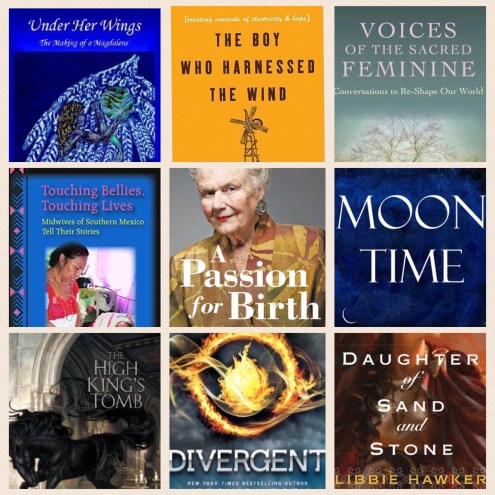
I’m a reader. Books are my first and longest lasting love. I read about 90 books in 2015 (and logged them in Goodreads). It took some deliberation, but I choose my nine favorites from the year and they are…

January 2016 018

(Why top nine? Because they fit into a nifty square grid, that’s why!)

There are three novels, two birthy memoirs, one Moon Time read, two priestess books, and a fascinating memoir of a boy who builds a windmill in Africa.

  • Under Her Wings, the Making of a Magdalene. I read this as part of my dissertation research on contemporary priestessing. Written by the late Nicole Christine, this memoir chronicles the development, evolution, and expression of Christine’s priestess path and her Priestess Process training program for other priestesses. While I initially gave it four stars, I changed my mind later when I realized how often I thought of or referenced this book after finishing it. It seeped into my dream life–I had the most vivid and meaningful dreams I’ve had all year while reading this book–and influenced multiple blog posts as well as a whole section in my dissertation. That deserves five stars!
  • The Boy Who Harnessed the Wind. This was a very random read for me. I saw it on the book club shelf at the library and picked it up on a whim. It fascinated me. I loved it. I was riveted by this memoir of a teenage boy in Africa who survives brutal famine conditions, self-teaches himself physics, and builds a windmill in his tiny village. I stayed up late and finished it in one fell swoop.
  • Voices of the Sacred Feminine. Compiled by the hostess of my all-time favorite podcast of the same name, this book weaves together many rich and diverse voices within feminist spirituality. Most of the book consists of unique essays written by past guests on Karen’s show and the end result is essentially a textbook of feminist spirituality. As I read it, I could easily imagine using this book as the foundation for a class on contemporary goddess spirituality.
  • Touching Bellies, Touching Lives. A totally engrossing memoir of a personal pilgrimage through the legacies and lessons of midwives from Southern Mexico.
  • A Passion for Birth. The amazing autobiography of Sheila Kitzinger, one of the most influential birth activists of the 21st century, I highly recommend this book to anyone with an interest in birth work, birth activism, feminist studies, women’s health, or anthropology.
  • Moon Time. A top favorite on the resource table at our Red Tent Circle, this second edition is an absolute treasure. A powerful, inspirational, and affirming resource for cycling women.
  • The High King’s Tomb. Third in a series of five epic fantasy novels, I thoroughly enjoyed all but the last book in this whole series on Kindle courtesy of the local library.
  • Divergent. The public library has been a keeper of my heart since I was a child. In the last two years, I discovered the profound joy of checking out audiobooks digitally from the local library. I get a chance to “read” books I probably wouldn’t allow myself time for AND, best of all, I get to read while doing something else at the same time. I know multitasking is somewhat out of favor, but it is like a dream come true for me to be able to “read” and grade papers or pack orders or cook dinner. <swoon> Divergent kept me company with its gritty, dystopian, intriguing young adult flavor through most of my pre-holiday grading adventures.
  • Daughter of Sand and Stone. A totally surprise treasure, I “accidentally” read this book after downloading it as my Kindle First choice for November. Historical fiction about Queen Zenobia and her ambitious, audacious challenge to the Roman Empire, I loved this book and found myself thinking of the characters for days after it ended. Very good.

In addition to all the reading, I also wrote two new books! October 2015 079

And, I revised and updated our popular Womanrunes book as well as created a 300+ page workbook to go with it!

Other worthwhile reads from 2015:

What were your favorite books from 2015? I’m taking “applications” for my 100 books of 2016… 😉

Guest Post: Widespread Insurance Coverage of Doula Care Would Reduce Costs, Improve Maternal and Infant Health

Leading Maternity Care Experts Release Issue Brief Encouraging Medicaid and Private Insurers to Cover Doula Care

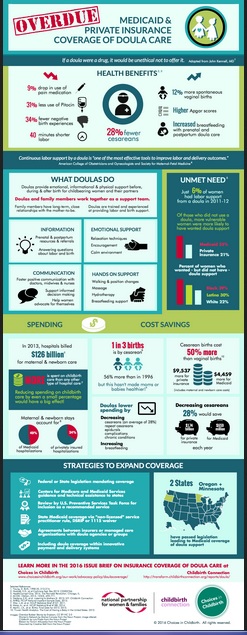
WASHINGTON, D.C. – January 5, 2016 – At this time when most experts agree that not nearly enough women in this country receive high-quality maternity care, federal and state government agencies and health insurers should make doula care an option for more women by covering doula services. An issue brief released today by two leading maternity care advocates makes a powerful infographiccase for the health benefits of doula care for women and babies and the significant cost reductions that would result if more women used doulas – trained professionals who provide non-clinical emotional, physical and informational support before, during and after childbirth. The brief, Overdue: Medicaid and Private Insurance Coverage of Doula Care to Strengthen Maternal and Infant Health, is co-authored by Choices in Childbirth and Childbirth Connection, a program of the National Partnership for Women & Families.

In the brief, the authors summarize research showing that doula care reduces the likelihood of interventions such as cesarean birth and epidural while supporting shorter labor, spontaneous vaginal birth and other benefits to mom and baby. As the use of interventions decreases, so do associated costs, making coverage of doula care a cost-effective strategy for public and private insurers alike. The authors estimate that the reduction in cesarean births from the use of doula care could save Medicaid at least $646 million per year, and private insurers around $1.73 billion annually.

“Widespread coverage of doula care is overdue,” said Michele Giordano, executive director of Choices in Childbirth. “Overwhelming evidence shows that giving women access to doula care improves their health, their infants’ health, and their satisfaction with and experience of care. Women of color and low-income women stand to benefit even more from access to doula care because they are at increased risk for poor maternal and infant outcomes. Now is the time to take concrete steps to ensure that all women can experience the benefits of doula care.”

“Doula care is exactly the kind of value-based, patient-centered care we need to support as we transform our health care system into one that delivers better care and better outcomes at lower cost,” said Debra L. Ness, president of the National Partnership. “By expanding coverage for doula care, decision-makers at all levels and across sectors – federal and state, public and private – have an opportunity to improve maternal and infant health while reducing health care costs.”

The brief provides key recommendations to expand insurance coverage for doula care across the country:

  • Congress should designate birth doula services as a mandated Medicaid benefit for pregnant women based on evidence that doula support is a cost-effective strategy to improve birth outcomes for women and babies and reduce health disparities, with no known harms.
  • The Centers for Medicare & Medicaid Services (CMS) should develop a clear, standardized pathway for establishing reimbursement for doula services, including prenatal and postpartum visits and continuous labor support, in all state Medicaid agencies and Medicaid managed care plans. CMS should provide guidance and technical assistance to states to facilitate this coverage.
  • State Medicaid agencies should take advantage of the recent revision of the Preventive Services Rule, 42 CFR §440.130(c), to amend their state plans to cover doula support. States should also include access to doula support in new and existing Delivery System Reform Incentive Payment (DSRIP) waiver programs.
  • The U.S. Preventive Services Task Force should determine whether continuous labor support by a trained doula falls within the scope of its work and, if so, should determine whether labor support by a trained doula meets its criteria for recommended preventive services.
  • Managed care organizations and other private insurance plans as well as relevant innovative payment and delivery systems with options for enhanced benefits should include support by a trained doula as a covered service.
  • State legislatures should mandate private insurance coverage of doula services.

The issue brief and a new infographic illustrating the importance of coverage for doula care are available at http://Transform.ChildbirthConnection.org/Reports/Doula and www.choicesinchildbirth.org/our-work/advocacy-policy/doulacoverage.

#   #   #   #

About Choices in Childbirth

Choices in Childbirth is a non-profit organization that works to ensure access to maternity care that is safe, healthy, equitable, and empowering. Our mission is to promote evidence-based, mother-friendly childbirth options through public education, advocacy, and innovative policy reform. Learn more at www.ChoicesinChildbirth.org.

About the National Partnership for Women & Families

The National Partnership for Women & Families is a nonprofit, nonpartisan advocacy group dedicated to promoting fairness in the workplace, access to quality health care and policies that help women and men meet the dual demands of work and family. Founded in 1918, Childbirth Connection became a core program of the National Partnership in 2014. Childbirth Connection programs serve as a voice for the needs and interests of childbearing women and families, and work to improve the quality and value of maternity care through consumer engagement and health system transformation. Learn more at http://Transform.ChildbirthConnection.org and www.NationalPartnership.org.