Archives

Cesarean Awareness Month

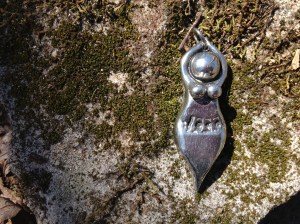
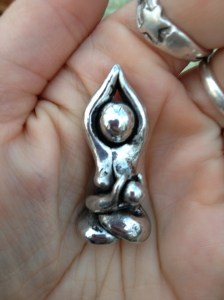
April is Cesarean Awareness Month! In honor of the event, my husband and I co-created a new cesarean birth goddess pendant that is now available in our etsy shop. Based on the “cesarean courage” theme of my past cesarean goddess sculptures, this mama has “love” written on her belly in her cesarean scar.

April 2014 046ICAN is offering a series of interesting webinars for free during April:

In honor of Cesarean Awareness Month, ICAN will be offering FREE access to our educational webinars for all participants throughout the month of April!

Join us from the comfort of your home online!

ICAN is offering the following webinars in multiple viewings throughout the month, just click on the link and time that works for you to register for the presentation.

via Free Webinars During Cesarean Awarness Month – ICAN of Northern Virginia.

Don’t forget to also check out ICAN’s helpful website. Their ICAN Birth brochure is one of my very favorites for classes, workshops, and tabling at ICAN Brochure- "ICAN Birth"events.

Giving Birth with Confidence shared an article indicating that choice of doctor is strongly linked to increased risk of cesarean, pointing out that “…what’s being done in the way of care might indeed be for the welfare of obstetricians who practice defensive medicine, and may not be for the best welfare of the woman in his care. The results of this study are not addressed in the recently released ACOG guidelines to eliminate the overuse of c-section, but it’s helpful to acknowledge the possible affect of malpractice insurance on women’s birth options…” (via Additional Factors that Can Influence the Risk of Cesarean).

Science and Sensibility offered a list of helpful resources for birth professionals to share with clients regarding cesarean awareness and also explained why we have a Cesarean Awareness Month in the first place.

April is Cesarean Awareness Month, an event meant to direct the American public’s attention to the United States’ high cesarean rate. 32.8% of all birthing women gave birth by cesarean in 2012. A cesarean delivery can be a life-saving procedure when used appropriately, but it takes one’s breath away when you consider that one third of all women birthing underwent major abdominal surgery in order to birth their babies…

via Science & Sensibility » Cesarean Awareness Month.

And Lamaze also collaborated to produce this infographic:

https://i0.wp.com/givingbirthwithconfidence.org/files/2013/10/Lamaze_CesaraenInfographic_FINAL-2.jpg

My own past posts related to cesareans are as follows:

Tuesday Tidbits: Cesarean Courage

Birthrites: Meditation Before a Cesarean

Cesarean Awareness Month

Cesarean Birth Art Sculptures

Cesarean Trivia

Cesarean Birth in a Culture of Fear Handout

Becoming an Informed Birth Consumer (updated edition)

The Illusion of Choice

ICAN Conference Thoughts

Helping a Woman Give Birth?

Tuesday Tidbits: Cesarean Awareness Month Round-Up

April 2014 068

Thesis Tidbits: Feminism, Midwifery, and Motherhood

“Feminism catches fire when it draws upon its inherent spirituality. When it does not, it is just one more form of politics, and politics never fed our deepest hungers.” –Carol Lee Flinders (in The Millionth Circle)

Yesterday, I spent several hours finishing a blog post for Feminism and Religion regarding empowered self-care (it won’t run until next  week). It is a primarily a personal narrative, rather than a political commentary, but as I was writing it, I learned about new legislation introduced in Missouri in an effort to effectively destroy the practice of independent midwifery here. I also have a friend whose family March 2014 082 member just experienced terribly abusive treatment during the immediate postpartum period. I typed feverishly away with an absolutely excruciating headache and a million things on my mind, primarily the very many injustices experienced by women during the childbearing year. I was also left wondering HOW we can truly take care of ourselves when legislators and health care workers actively take dramatic and even cruel steps to prevent us from doing so?

Another friend wrote a comprehensive blog post about this malpractice insurance legislation and the issues involved with it. Midwifery advocacy organizations have already introduced a perfectly appropriate piece of legislation this session and do not need the proposed bogus piece of legislation that offers nothing in the way of protection for Missouri midwifery consumers and instead simply serves to drive midwives out of practice:

…Fortunately, midwives in Missouri do offer a grievance process and adhere to the practice standards set by the certifying agency NARM (North American Registry of Midwives). While there is already a high degree of professional accountability practiced in Missouri, this is because the state professional organization (Missouri Midwives Association) believes it is important and necessary for the professional practice of midwifery and not because the state has directed midwives to do so.

The state of Missouri has continued to be uninterested in working with midwives and home birth families to improve and safeguard the practice of midwifery.

Is there a better option? YES! HB 1363

Instead of HB 2189, we would like to suggest directing legislators to support HB 1363. This is a comprehensive midwifery licensing bill which does provide a mechanism for oversight and responsible, regulated practice. It also addresses the issue of malpractice insurance by requiring midwives to have coverage under the same conditions as physicians. It would also require Medicaid reimbursement for families desiring the care of Certified Professional Midwives and home birth.

via Missouri Legislature Works Against Women, Families and Midwives….AGAIN. | Midwives, Doulas, Home Birth, OH MY!.

I also recently finished a class on ritual theory for my doctoral degree program. The text for the class was To Make and Make Again: Feminist Ritual Thealogy by Charlotte Caron. In it, I was repeatedly reminded that gathering with other women in a circle for ritual and ceremony is deeply important even though it might just look like people having fun or even being frivolous, it is actually a microcosm of the macrocosm—a miniature version of the world we’d like to see and that we want to make possible. Returning to Caron, she explains something similar: “Ritual change is symbolic change, but it can lead to direct action or to ideological change, so it can be an important element in strategizing for change. One way of causing change is to re-form or alter the system. This involves recognizing that we are part of the system and that the system is dependent on feedback from its parts to keep it in balance, which means that we have the capacity to change” (p. 209).

Ritual experience can lead to practical action: spiritual praxis. But, this action does not need to look the same for all women, nor does it always have to involve large structures of society or even sweeping societal change.

“It is important to recognize that not all women will choose to act in the large structures of society. While it is hoped that all women will act toward justice, still electoral politics, lobbying, and revising the economic system may not be the spheres in which some women exert their energy. Ritual actions, raising children to be just and caring people, living in just ways in intimate and community relationships, and modeling different patterns and values are political actions to change patriarchal ideology. The choices of what spheres to devote energy to are important to honor. The constraints of women’s lives—when they are disabled, when they are dealing with past traumas, when they are raising young children, and when they are doing the many other things expected of women in our society—mean that women need to make choices that will allow them to live with integrity and well-being.” (p. 211)

A number of options of action are possible. “What is important are women’s choices to act in concrete ways in every circumstance, to know our neighbors, to raise children to be caring people, to live as if justice exists, to be just in personal relationships, and to live in the community in ways that model the values of justice and well-being for women and all of creation.” (p. 211)

As a mother who works extensively with other mothers, I appreciated Caron’s acknowledgement that raising children is a feminist act with potential to create change as well. “Another strategy for change is through raising children to be just and caring people. A media image portrays feminists as being against motherhood—but in fact, feminists make the best mothers. They raise children aware of themselves and the world, of options and values, of what justice means and how to work toward it, and how to be self-critical and self-respecting” (p. 203-204). Caron also explains that “in a just society, women would be free to make whatever decisions they needed to, for however long they needed to, in relation to political action in the public and the private sphere. All people would participate in the decision-making, and women would be supported in their decisions rather than, as sometimes happens, made to feel guilty for not doing enough or not valued for what they do.”

In connection with women being valued for what they actually do, Caron makes an interesting note about the visions women in her research hold for the future, for the possible:

“Interestingly, none of the visions described by women was based in self-fulfillment, in gaining personal power, or in one’s group having power and the expense of others. Instead, the interviewees talked about the elimination of social, economic, military, and other patriarchal problems, and about living in a world of valued individuals, healthy and diverse relationships, economic and environmental sustainability, equality for all, and shared decision-making and power” (p. 220).

Connected to these themes, one of my classic favorite quotes about women’s spirituality groups is this one:

“…Women’s spirituality groups can become birth centers for social change”

–Anne Rush in The Politics of Women’s Spirituality (p. 384)

March 2014 127

The Goddess of Willendorf & Does My Uterus Make Me Look Fat?

“Loving, knowing, and respecting our bodies is a powerful and invincible act of rebellion in this society.”
~ Inga Muscio

IMG_0222

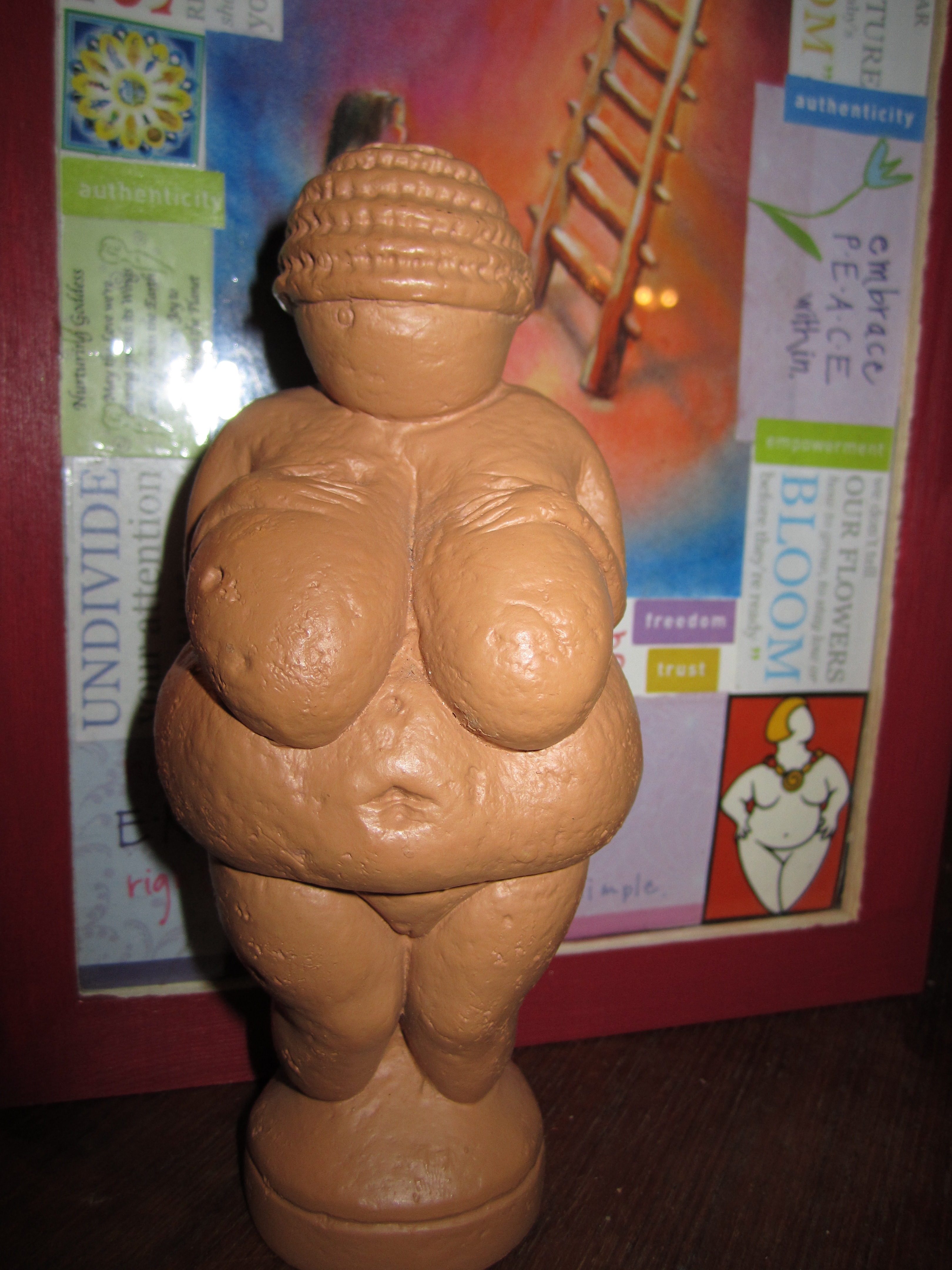
Replica on my birth altar.

I do not remember the first time I ever saw her, but I do know that I have loved the Goddess (Venus) of Willendorf sculpture for many, many years now. I consider her almost a personal “totem.” I do not see her as a literal representation of a particular deity (though when someone uses the phrase, “Great Goddess” or “Great Mother,” she’s the figure I see!), I see her more as honoring the female form. I love that she is so full-figured and not “perfect” or beautiful. I like that she is not pregnant (there is some disagreement about this and many people do describe her as pregnant) and what I like best is that she is complete unto herself. She is a complete form–not just a headless pregnant belly–I just LOVE her. She represents this deep, ancient power to me.

In a past assignment for one of D.Min classes, I wrote:

I have a strong emotional connection to the Paleolithic and Neolithic figures. I do not find that I feel as personally connected to Egyptian and Greek and Roman Goddess imagery, but the ancient figures really speak to something powerful within me. I have a sculpture of the Goddess of Willendorf at a central point on my altar. Sometimes I hold her and wonder and muse about who carved the original. I almost feel a thread that reaches out and continues to connect us to that nearly lost past—all the culture and society and how very much we don’t know about early human history. There is such a solid power to these early figures and to me they speak of the numinous, non-personified, Great Goddess.

I know ancient goddess figures are commonly described as “fertility figures” or as pregnant, but most of the early sculptures do not actually appear pregnant to me, they appear simply full-figured. One of the things I love about the Willendorf Goddess is her air of self-possession. She is complete unto herself. She may be a fertile figure, but she is not clearly pregnant and she does not have a baby in her arms, which indicates that her value was not exclusively in the maternal role. Early goddess figurines are usually portrayed alone, it is only later that we see the addition of the son/baby figure at the mother’s breast or in arms. The earliest figures seem independent of specifically maternal imagery, it is later that we begin to see Goddess defined in relationship to children or as exclusively maternal. I think this reflects a shift that women continue to struggle with today (in Goddess religion as well as personal life) with the mother role see as exhaustive or exclusive. In contemporary society, the only mainstream representation of the Goddess that manages to survive under public recognition is the Madonna and Child and here, not only has Goddess been completely subsumed by her offspring, but she is no longer even recognized as truly divine.

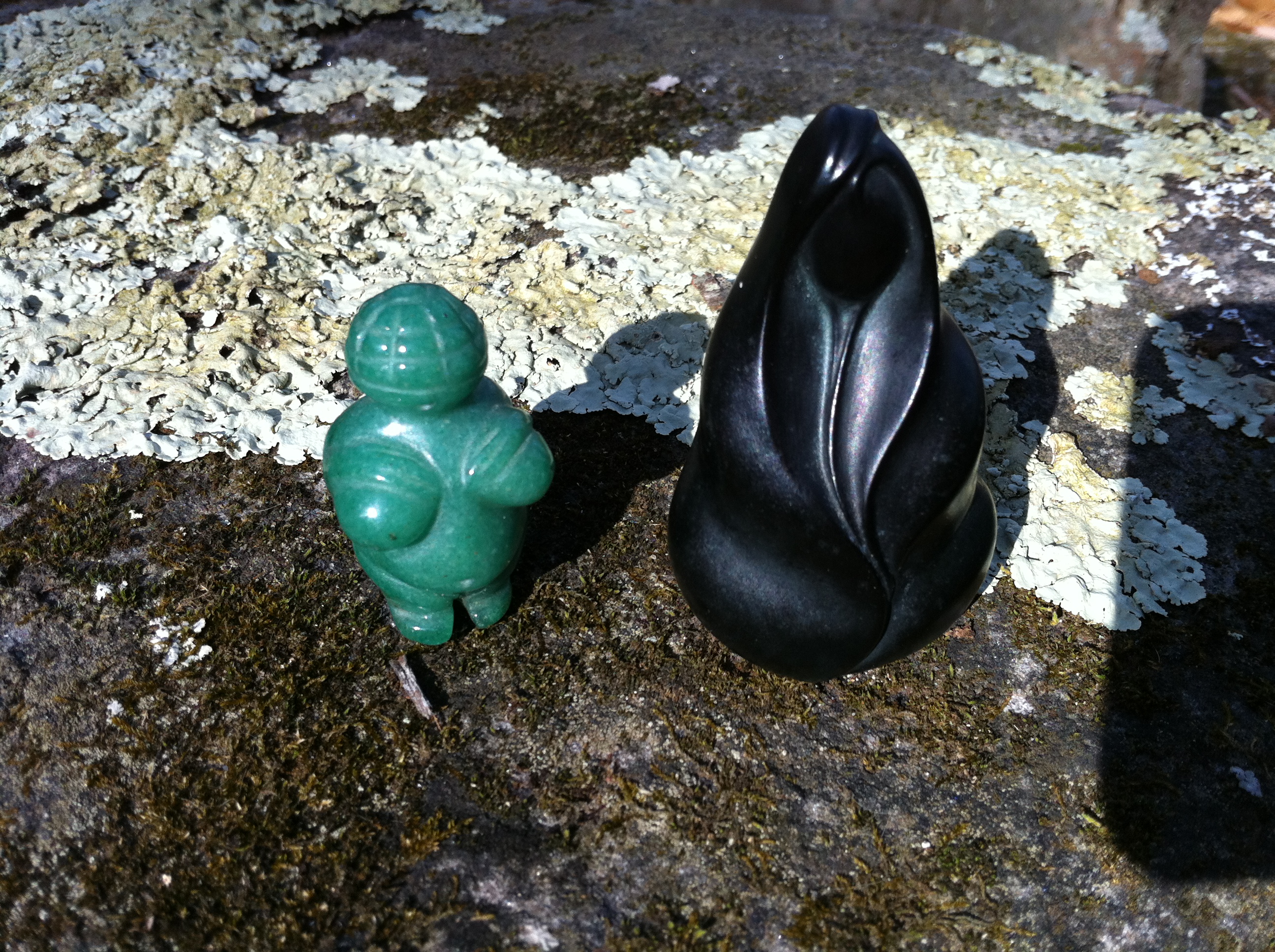
This image has been a potent affirmation for me many times in my life. One Mother’s Day, my then four-year-old son Lann found a IMG_0636little green aventurine Goddess of Willendorf at a local rock shop: “We have GOT to get this for Mom!” he told my husband and they surprised me with it that afternoon. It still makes me get a little teary to look at it, because it was such a beautiful moment of feeling seen by my little child.  When I found out I was pregnant for the third time, my husband surprised me with a beautiful, large Goddess of Willendorf pendant. I was holding onto that pendant during the ultrasound that told us that our third son no longer had a heartbeat and during my labor with my little non-living baby, I wore and held onto the pendant. It went with me to the emergency room and I could feel its solid, reassuring weight against my chest when dressed in just a hospital gown and receiving IV fluids as blood continued to come from me as my body said goodbye to my baby. I buried a goddess of willendorf bead with my baby’s body and put a matching one on his memorial necklace.

100_2269

Bead ready to go in with my baby.

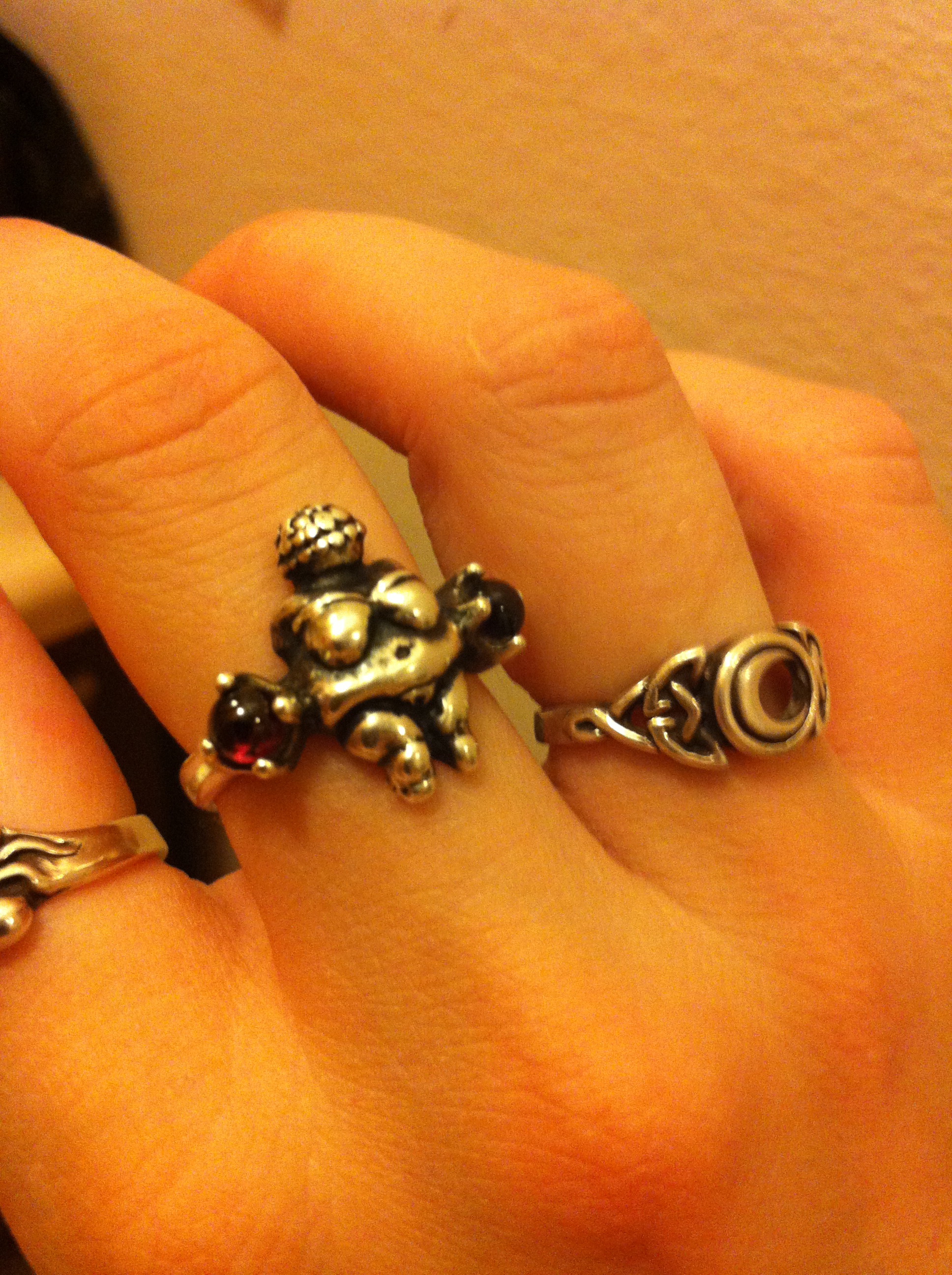
On Mother’s Day the following year, right after finding out I was pregnant with my rainbow baby girl, my husband gave me a beautiful new Goddess of Willendorf ring. I was little scared to wear it, because what if she too, became a sad reminder of a pregnancy lost (I have only worn the pendant again a tiny handful of times since the miscarriage-birth experience, even though I took a lot of comfort in it during that time), but wear it I did up to and through the moment when I caught my sweet little living girl in my own grateful, be-ringed hands.

The website that he bought the ring from went down shortly after and I’d not ever seen another ring like it for sale. However, I signed up to become a retailer for Wellstone Jewelry in 2011. While on the phone making an order, I requested one of their Venus of Lespugue pendants. The woman on the phone told me, “we don’t sell very many of those. She seems to make people uncomfortable. In fact, we used to make a ring too. A venus of willendorf ring, but no one ever wanted her. I think because 1057she is ‘too fat’ and she makes people feel weird.” Oh my goodness, I replied, I think I have one of your rings! I emailed her a picture of my hand and sure enough, though discontinued now, I’d coincidentally gotten one of the last ones ever made. She said they could get the mold out of storage and make some more custom rings just for me. Since I’m a business genius (what? You said they never sold? Sign me up for a dozen!), I immediately said yes and she shipped me several beautiful Goddess of Willendorf rings, which I then sold to several friends. (I still have two left if anyone wants to buy one! I would wear them all if I had enough fingers. My favorite ring ever!)

What does this have to do with my uterus making me look fat? Well, I’ve had the experience of wearing this ring and having another woman, a wonderful, peaceful, healer of a woman, laugh at it, like it was a joke ring. My mom sold a pottery sculpture version of the Willendorf to a man at our craft workshop and he laughed at her too saying, “this is hilarious.” Hilarious? Because she is fat, I guess? Several years ago, I read a post online titled Does My Uterus Make Me Look Fat? and I thought of my beloved Goddess of Willendorf, She of the Ample Uterus. While I can no longer locate the article itself and the post I had linked to in my drafts folder takes me to a re-direct site, I remember the article talking about how even pre-teen girls have a slight swell to their bellies. The author of the post was like, “duh, a flat belly IS NEVER POSSIBLE. THERE IS A UTERUS IN THERE.” When I read it, I thought about the jewelry woman’s comments about women not liking the goddess of willendorf ring because she is too fat. And, I saved a couple of quotes, the first two from the Our Bodies edition of Sage Woman magazine (Spring, 1996):

IMG_0243

Batik Goddess of Willendorf from a friend at my blessingway.

“…so it has been: women’s power has declined as woman’s belly has been violated and shamed…5,000 years of patriarchal culture has degraded belly, body, woman, the sacred feminine, the soul, the feminine sensibility in both women and men, native peoples, and nature–all in a single process of devaluation. Because our belly is the bodily site of feminine sensibility, our patriarchal culture marks the belly as a target of assault, through rape, unnecessary hysterectomies and Cesarians [sic], reproductive technology, legal restrictions on women’s authority in pregnancy and childbirth, and belly-belittling fashions, exercise regimens, and diet schemes…a culture that literally hates women’s guts…” –Lisa Sarasohn, The Goddess Ungirdled

“Our bodies are vessels of the sacred, not the homes of sinful urges. Our bodies create and sustain the sacred. And that sacredness does not equate with any artificial notion of bodily perfection. All of us are fit habitations for the divine, no matter what the diet doctors, fitness gurus, health good fanatics, New Age healers, and the fashion police try to force on us. If we don’t take our bodies into account in our expression of [our religion], then it becomes a mere shadow of itself. When we are fully present in our bodies [women’s religion] becomes a three-dimensional, vibrant, fully fleshed-out expression of the divine…” –DeAnna Alba in How to Flesh Our Your Magick

And, perhaps from the original Does My Uterus Make Me Look Fat article, I had this quote saved as well that addresses the “love your body,” rhetoric so often expressed, including, I suppose, in even the quote I chose to open this post:

“the fact that “love your body” rhetoric shifts the responsibility for body acceptance over to the individual, and away from communities, institutions, and power, is also problematic. individuals who do not love their bodies, who find their bodies difficult to love, are seen as being part of the problem. the underlying assumption is that if we all loved our bodies just as they are, our fat-shaming, beauty-policing culture would be different. if we don’t love our bodies, we are, in effect, perpetuating normative (read: impossible) beauty standards. if we don’t love our individual bodies, we are at fault for collectively continuing the oppressive and misogynistic culture. if you don’t love your body, you’re not trying hard enough to love it. in this framework, your body is still the paramount focus, and one way or another, you’re failing. it’s too close to the usual body-shaming, self-policing crap, albeit with a few quasi-feminist twists, for comfort.”

–saved from this post

March 2014 023
Even though I am a goddess sculptor myself, I have never been able to make my own version of the Goddess of Willendorf that satisfied me. I tried polymer clay, I tried pottery clay, I tried making my husband make one for me. None of them were right. Finally, just this month, my husband said, why don’t you make one, but using your own style? This was an ah ha moment for me and guess what, it worked! I successfully used the same technique and structure I use for all of my sculptures, but with a Willendorf-style-twist and I finally made my own sculpture that I’m really proud of. My husband made a mold and cast her in pewter and I’m wearing her right now. Her uterus might make her look fat, but to me, she is one of the most powerfully affirming images of womanhood I have ever encountered and there is nothing funny about her.

        “Your body is your own. This may seem obvious. But to inhabit your physical self fully, with no apology, is a true act of power.”

–Camille Maurine (Meditation Secrets for Women)

March 2014 022  March 2014 038

International Women’s Day: Body Prayer

I roam
sacred ground
my body is my altar
my temple.

I cast a circle
with my breath
I touch the earth
with my fingers
I answer
to the fire of my spirit.

My blood
pulses in time
with larger rhythms February 2014 040
past, present, future
connected
rooted
breathing.

The reach of my fingers
my ritual
the song of my blood
my blessing
my electric mind
my offering.

Breathing deep
stretching out
opening wide.

My body is my altar
my body is my temple
my living presence on this earth
my prayer.

Thank you.

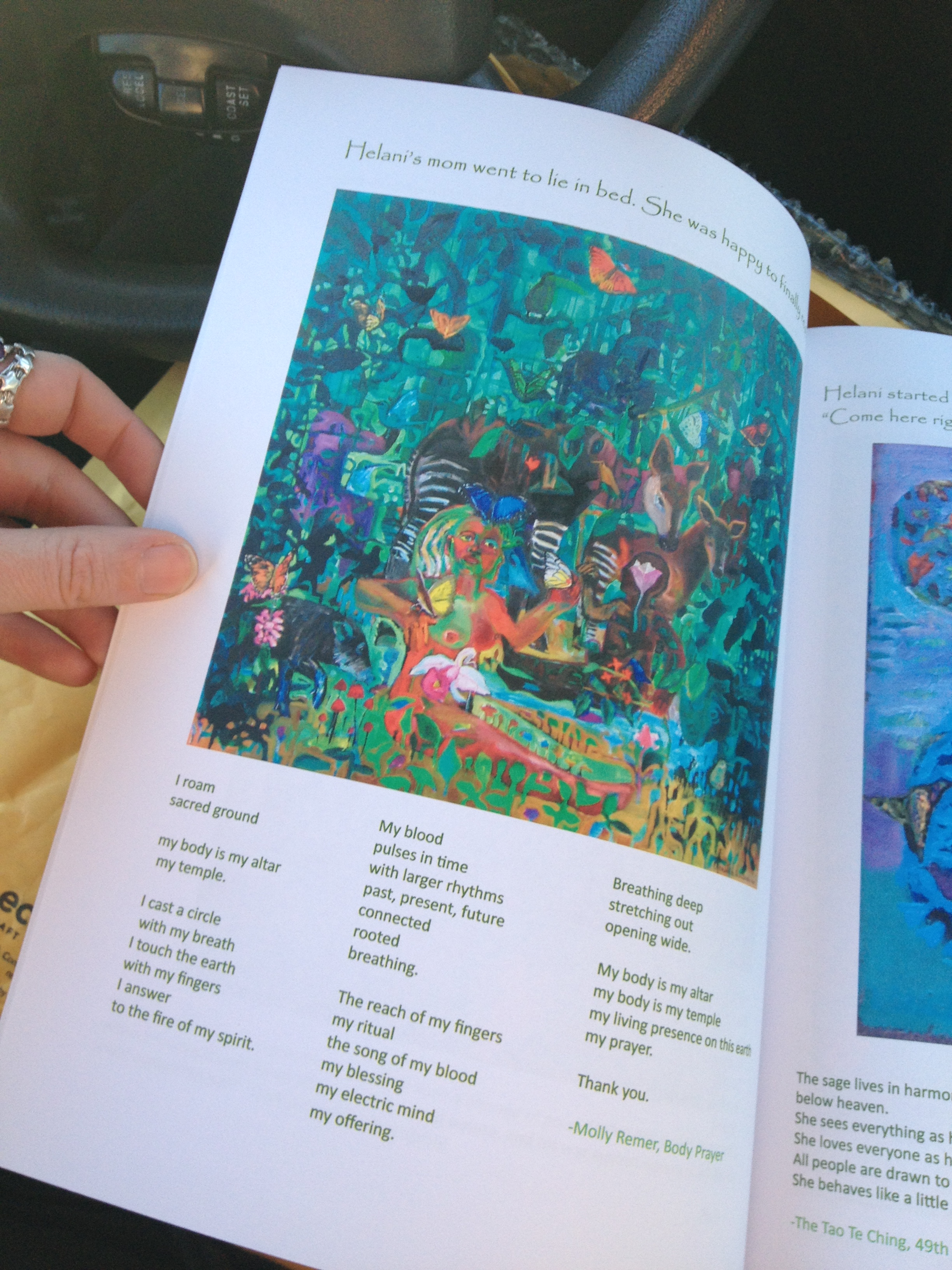
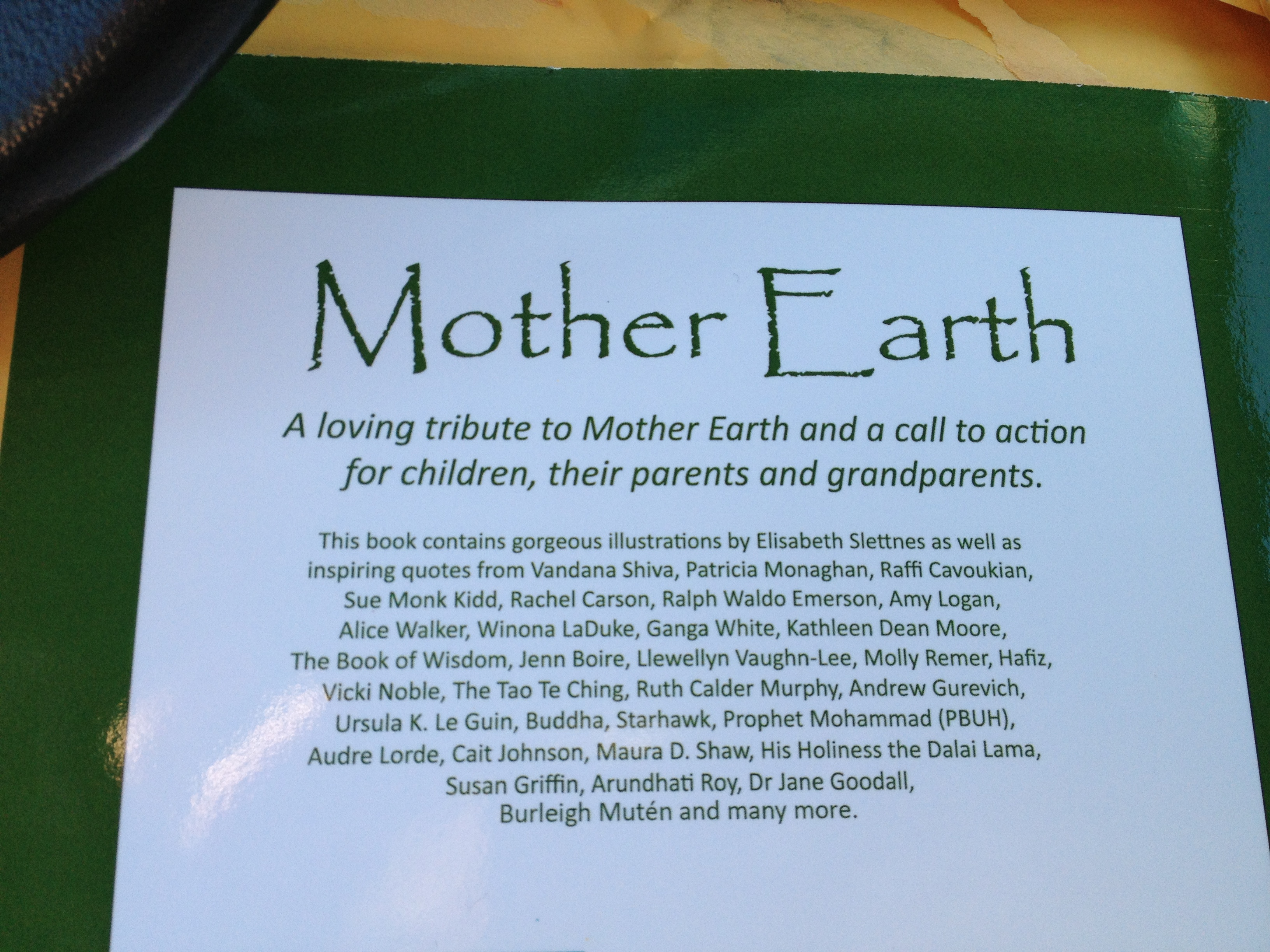
I wrote this poem in the spring of last year and was very pleased when Trista Hendren, author of the children’s book The Girl God, wrote to ask permission to reprint it in her new book: Mother Earth. I received my copy of the book last month and wanted to offer a mini-review of it today, International Women’s Day, because as Trista says, it is “a beautiful tribute to the world’s first ‘woman.’” Mother Earth is theoretically a children’s book, but it offers an important message and call to action to all world citizens. Along the top of the pages is a story, written as a narrative experience between Trista and her daughter Helani, about the (human) mother’s need to rest. The story evolves into a message about the Earth and the care and rest she is crying out for. Each page features a large illustration and below the illustration is a relevant spiritual quote, poem, prayer, or message.

February 2014 038(I got a big kick out of seeing the company I keep on the back cover…Buddha, Hafiz, the Dalai Lama, Starhawk…Molly Remer?!)


I’m still wrapping up the school session as well as preparing for a big event next weekend. I feel taut, overcommitted, crabby, snappy, distracted, and out of time for writing even though I have a pile of ideas for things to write about (always!). Trying to remember that this is normal for me during the week of final paper grading and final exam giving and does not indicate a permanent state of imbalance requiring mass quitting of everything, but that is still how it feels in my (tired) body. It was nice to revisit this poem and take some quiet time to read the whole book.

I wrote a prayer for mothers last year on International Women’s Day:

See your worthIMG_8522
hear your value
sing your body’s power
and potency
dance your dreams
recognize within yourself
that which you do so well
so invisibly
and with such love.

Fill your body with this breath
expand your heart with this message
you are such a good mother.

via International Women’s Day: Prayer for Mothers | Talk Birth.

It is also important to remember the sociopolitical purpose of this day:

International Women’s Day is not about Hallmark. It’s not about chocolate. (Thought I know many women who won’t turn those down.) It’s about politics, institutions, economics, racism….

As is the case with Mother’s Day and many other holidays, today we are presented with a sanitized, deodorized, nationalized, commoditized version of what were initially radical holidays to emphasize social justice.

Initially, International Women’s Day was called International Working Women’s Day. Yes, every woman is a working woman. Yes, there is no task harder perhaps than raising a child, for a father and a mother. But let us remember that the initial impetus of this International Working Women’s Day was to address the institutional, systematic, political, and economic obstacles that women faced in society.

via How we miss the point of International Women’s Day–and how to get it right. | What Would Muhammad Do?.

In years past, I also wrote about the connection to birth as a feminist issue:

“The minute my child was born, I was reborn as a feminist. It’s so incredible what women can do…Birthing naturally, as most women do around the globe, is a superhuman act. You leave behind the comforts of being human and plunge back into being an animal. My friend’s partner said, ‘Birth is like going for a swim in the ocean. Will there be a riptide? A big storm? Or will it just be a beautiful, sunny little dip?’ Its indeterminate length, the mystery of its process, is so much a part of the nature of birth. The regimentation of a hospital birth that wants to make it happen and use their gizmos to maximum effect is counter to birth in general.” –Ani DiFranco interviewed in Mothering magazine, May/June 2008

via International Women’s Day, Birth Activism, and Feminism | Talk Birth.

Happy International Women’s Day! May we all find the space in our day to take a deep breath and honor our bodies, our families, and women around the world who are working, working, working every day to make the world a gentler place to live. (Even if we sometimes get snappy while doing it…)

November 2013 061

Rise for Justice

1497514_10153552346400442_1148387720_nOkay, so I knew I would enjoy The Vagina Monologues. How could I not, right?! Well, I did not expect to be SO blown away by the power, presence, and passion of my magnificent friends. They were incredible. Seriously incredible. It was an amazing show!  There were many powerful moments–some very funny, some sad, some horrifying. My friend, doula, and colleague did the piece on birth at the end and brought me to tears with her vibrance and passion. There was a moment in the middle where the teenage girl member of the cast read out some statistics on the One Billion women who are raped, abused, or assaulted. Each member of the cast began to rise in turn and as they did, their friends in the audience rose with them, until the whole theater was standing. We rose for justice.

I’ve mentioned several times that I came to birth work with a core foundation in feminism and social justice work, primarily in domestic violence. I remain firmly convinced that the way we treat women in the birthplace reflects an overall cultural attitude towards women in general. I believe that peace on earth begins with birth. I believe that we can change the world with the way we greet new babies and celebrate new mothers and see the deep, never-ending work of parenting our children. I believe in rising for justice and I keep vigil in my heart every day for women around the world.

In a stroke of coincidence that gave me chills, my independent study student who is working on a Breastfeeding and Ecofeminism course submitted her weekly reflections and in it she mentioned Eve Ensler, The Vagina Monologues, and One Billion Rising with no idea that I was going to the show this week. As I read her reflections, the connection between the personal and political was so tangible that I asked her if I could use her assignment as a guest post for my blog. Part of the reason I assigned the book Reweaving the World for this course was because of how it contextualizes the issues facing women so broadly and makes this undeniable connection between exploitation of the planet and exploitation of women’s bodies. While it might sometimes trigger a sense of hopelessness and distress, I think ultimately, the contextualization is empowering. The Vagina Monologues are based on the courage of women telling their stories and sharing their truths. Likewise, I appreciate Alea’s generosity and courage in sharing her reflections with my readers…

November 2013 061

Dancing for Change: A look inside a personal exploration of ecofeminism, sexuality, and social justice.

Guest post by Alea Scarff

I began reading The Politics of Breastfeeding which sparked a series of “hell, yes’s!” It also left me feeling inspired, excited and validated that I’m not the only one with these feelings and notions about women, breastfeeding, and the injustice I witness within this issue. Her kick-ass presentation of the truth among this profound cultural issue left me enlivened and ready for action sentence after sentence.

Then I read several pages of Reweaving the World: The Emergence of Ecofeminism. Yikes. This was heavy. I suddenly found myself caught between two worlds of inherent optimism excited for positive social change, and the deep dark issues of ecology and the longstanding reality of suffering and inequality of women on this planet. I felt my body overcome with anger. A feeling of helplessness ensued. I felt those women in third world countries starving and overheated, overworked and just trying to sustain the lives of their children on top of enduring mental, emotional, physical, and sexual abuse. I felt all the children who suffer because of this. I felt all of the gender imposing rules children in the western world are conditioned by, thus tainting our hearts and souls with limitation and sharp edges surrounding who we are allowed to be in this society. All of the emotionally repressed men; all of the objectified, degraded women who have never known what it feels like to feel good in their bodies.

I began to feel my grandmother’s oppression she suffered from my grandfather in the 60s. The abandonment, the sexual abuse, the use and re-use of her as a resource and service for himself. I felt my mother’s experience of an emotionally abusive relationship, and finally my experience of sexual molestation as a child. Where was all of this coming from? A deep sadness came over me as I desperately tried to figure out my own issues with sexuality and my relationship to the world as I sat amongst strangers in this warm coffee shop. Was I angry about what happened to me? Was I angry at my partner? Past partners? Was I angry at the world? I really couldn’t identify where the anger came from, or where it was directed. I had to stop, refresh, and start over. Maybe this shit is too intense for me. Maybe I need to change my course of study.

No, no. You can’t run away. I realized I had been running from this issue my whole life and it’s finally time to recognize it. I stopped, took some deep breaths, did some yoga asanas to release the sticky tensions of injustice lurking in my joints throughout my body. Ok. Begin again.

So I went back to my childhood, with my deepest memories of the frequent encounters of gender inequality. My mother, to this day, credits me for bringing to light her own femininity and capturing her attention to the inequalities of men and women. Something that went unnoticed until I came along, however she still was not interested in changing the ways of the world to the extent I was. She had her own social change she was working on. It was entrenched in art and consciousness. Luckily, I picked up on this, and found my own desire for changing the world through consciousness. Consciousness through equality for women. How could anyone else NOT be outraged by the fact that 8 out of 10 songs on the radio were sung by men? As a twelve year old, I began writing letters to radio stations. I couldn’t understand how no one seemed to care about this absurd injustice constantly happening on the radio. Something so simple yet so powerful as radio permeated our culture – and no one seemed to notice. There were a plethora of female musicians that I favored at this age. How could I not hear them on the radio? On top of an array of social issues such as this, I always HATED those older men who would make random, confusing, degrading comments to me for others’ and their own amusement. What the hell was up with that?

I began reading an interview with Eve Ensler, the creator of The Vagina Monologues and the global women’s campaign, One Billion Rising. The figures quoted from the UN in this interview left me in a deeper outrage. One billion women on the planet today are beaten or sexually assaulted. I reflected on an article I had read earlier that week, as well about how to talk with your children about their private parts and to help prevent them from being sexually abused. The article stated that one in five girls are sexually molested and one in six boys are. I never identified with the label “sexually molested” nor did I want to admit I was affected by this, but just in the last few years when I looked at the definition, I realized, even my few small inappropriate experiences are considered just that, and they have, in fact, affected me.

I had to take a few days off. This all needed to settle inside and I had to figure out what to do with it. I spent days pondering, how do I continue to explore this crucial subject and maintain a positive outlook? How do I channel this anger into solutions for helping others? How can I continue researching and hold my strength and goddess energy as a female role model, an inspiration for my two little boys, my partner, men and women, and the planet?

This is a tall aspiration I set for myself, I realize. I suppose this is simply what I aspire to be.

I began speaking with my mother about my sexuality from a young age and my exploration of it now. It was both comforting and disheartening to discover my mother had similar inappropriate sexual experiences as a child that I endured, as well as finding she’s still on her journey of understanding this taboo topic herself, female sexuality. Perhaps a running thread in my family of women? Or is this prevalent everywhere? Why is no one talking about it? Even after being so close with my mother, and being able to talk about anything for as long as I can remember, it took some courage to bring up this subject with her. Regardless, I am so glad I did.

I began to read again. I decided I had to begin with an open heart and mind, as I swim right through the obstacles of understanding the depths and spaces of the world of women and the planet. There is a lot to be grateful for, and a lot that needs changing. Positive reflection throughout this journey can only bring more light. Letting go and forgiving my past experiences, and the oppression the women I know and love have endured, I take a step into a new beginning. I can move forward continuing to understand my path of my sexuality growing up, and what this means for me now. I feel I’ve got a long way to go, and I can sense a gap of mystery and unknown feelings sitting somewhere inside. But I’m ready to embrace and heal whatever decides to reveal itself.

I am now in the process of releasing fear and letting go. Letting go of being afraid to speak up and stand up for what’s right; of being viewed as a bitch, uptight, or simply being exposed. We as women need to start somewhere within this realm in order to ignite change. Rather than accepting these old cultural paradigms and letting them continue to thrive within this patriarchal society, it’s time to change this tired, destructive trend. As Ensler quotes in a recent interview with Deccan Aitkenhead for The Guardian, “We have one in three women on the planet being raped or beaten…We’ve all learned to be so well behaved and polite. We should be hysterical.”

Ensler launched One Billion Rising which, on Valentine’s Day in 2013 brought close to one billion women out on the streets to protest against violence towards women. Ensler’s goal is to have one billion gather on February 14th outside buildings that represent justice – police stations, courthouses, and government offices – and dance. That’s it. Where and how they dance is up to them; each is organized at a local level. In this, I found tremendous uplifting relief.

Through this personal revelation, I’ve decided to remain free – and not restrained by anger or resentment of injustice. I simply cannot move forward or flourish from that space. We must find liberation through the endurance, triumph and the celebration of womanhood. Simply. This is the only way to encourage and create change. I must release the tensions that like to creep up and burrow inside my joints and muscles. I no longer will walk around carrying this stuff – I’d rather be dancing than dwelling. This is the only way I will find my way to living up to my goddess vibration of inspiration for social change for my two little boys, my partner, women and men, and the planet collectively.

Next year on Valentine’s Day, I think I will be dancing.

“But when you suddenly understand that violence against women is the methodology that sustains patriarchy, then you suddenly get that we’re in this together. Women across the world are in this together.” –Eve Ensler
 

Wednesday Tidbits: Activism!

vdayutvs_webRolla Birth Network is pleased to be one of the co-sponsors of the upcoming production of The Vagina Monlogues, Eve Ensler’s classic feminist empowerment play.

The local production of The Vagina Monologues will benefit the Russell House, a shelter for battered women and their children. The event is specifically planned as part of V-Day:

“V-Day is a global activist movement to end violence against women and girls. V-Day is a catalyst that promotes creative events to increase awareness, raise money, and revitalize the spirit of existing anti-violence organizations. V-Day generates broader attention for the fight to stop violence against women and girls, including rape, battery, incest, female genital mutilation (FGM), and sex slavery.”

Last year we had a candlelight vigil on Valentine’s Day in honor of One Billion Rising. While that was a wonderful project too, this play production is much more ambitious and is very exciting! Here are some more details:

1506285_10201181030470858_1053739884_o

Local cast members (including my very own talented and awesome doula! 🙂 )

Rolla Area Citizens for Women 2014
Presents a Benefit Production of

Eve Ensler’s
THE VAGINA MONOLOGUES

FEBRUARY 21, 2014 at 7:00 PM

Venue:
Cedar Street Playhouse
701 North Cedar Street
Rolla, Missouri 65401

$5.00 Minimum Donation per person CASH ONLY
Benefits The Russell House

I’m really looking forward to going!

Another Missouri-local opportunity specific to birth advocacy and midwifery activism is the annual Friends of Missouri Midwives Cookie Day at the Capitol coming up next week:

1524390_680284898676217_1590110806_oYes, it is true, Barbara Harper will be there! Isn’t that cool?! I heard her speak at the CAPPA conference in 2010 and very much enjoyed her presence and devotion. I hope the weather cooperates so I can see her grace our Capitol building with her poise and information!

“Let us initiate our daughters into the beauty and mystery of being strong and confident women who claim their right to give birth and raise their children with dignity, power, love, and joy.” –Barbara Harper

One of the opportunities that is also going on this month that is not local, but virtual instead, is DeAnna L’am’s Red Tent Summit. It is free to register and participate. I have not yet carved out the space I need to actually tune in, but the lineup of speakers and wealth of topics is amazing!

Also, while all of these particular events are offered with a wonderfully upbeat spirit of intent and energy, I also feel like sharing an activism-related quote that I’ve had saved in my drafts folder for a long time that acknowledges the important role of anger and activism:

I’m not afraid to say it. Hell, isn’t anger kind of a prerequisite for activism work? As a birth worker I get to watch abuse after abuse, injustice after injustice – over and over again. I mean, really, what spurs the need for activism work if not injustice? And injustice stirs up indignant anger.

We have this huge deficit with the word, “anger.” Somehow, whenever it is said, we cling to this connotation that it – the word, the feeling – is inherently BAD. It took me a lot of years to come to the understanding that there are no “bad” or “good” feelings – that emotions just are. They are states of being which reflect either met or unmet needs.

Anger is usually a catalyst emotion…

via I am an Angry Activist.

I’ve self-identified as an activist since at least 1996 (when I first began working at the same battered women’s shelter for which the Vagina Monologues production is benefiting, actually!) I do find that some anger (or sheer disbelief!) at injustice is part of the fuel that drives my present-day activism. In fact, social justice was at the heart of my response several years ago when asked why I became a childbirth educator:

…the question was posed, “why did you become a childbirth educator?” I responded with the following: because I care deeply about women’s issues, social justice and social change and I feel like women’s choices in childbirth are intimately entwined with this. Because I believe peace on earth begins with birth. Because the births of my own sons were the most powerful and transformative events of my life. And, because I believe every woman should have the opportunity to feel and know her own power and to blossom into motherhood with strength, confidence, and joy. ♥

…On a discussion board once, someone asked the question “what’s at the root of your love of birth?” I was still for a moment and let my intuitive, heart-felt, gut level response come to me and it was this:

Women.

Women’s health, women’s issues, women’s empowerment, women’s rights.

Social justice….

via Why, indeed? | Talk Birth.

I’m currently finishing a book about women’s rituals and this paragraph caught my eye last night in relationship to my own experience of birth activism (and other activist work):

“One of the other problems in areas of small population is the relationship between local and regional leadership. Often, people who are competent local leaders are recruited to work regionally or nationally in their organizations. This policy frequently leaves a vacuum at the local level because leadership is not broadly enough based in those communities.”

I’ve seen this happen with myself, noticing that as I became involved with birth activism on a national level, my time for local birth activism was necessarily reduced. (And, then as my interests and commitments broadened beyond birth, the time for birth activism of any kind reduced.) I also see it happening with digital commitments—basically, the more I do for people on a virtual level over the internet, the less I have to give on a face-to-face local level. I’m still sitting with this realization and wondering what to do with it. The organizers of the One Billion Rising event in Denver this year recently contacted me to ask permission to read one of my poems aloud during their event. I was thrilled to say yes, but then I also thought about my local community and how most people here would not be familiar with my poem at all. So, Denver hears it, but my own local area does not. Interesting. I also found out this week that one of my essays about my grandma was translated into French and published in a French magazine. Cool, yes, but again gave me pause…

January 2014 063Related past posts:

Birth Violence

Tuesday Tidbits: Domestic Violence

Domestic Violence During Pregnancy

Guest Post: Abuse of pregnant women in the medical setting

Business of Being Born: Classroom Edition

Tuesday Tidbits: The Role of Doulas…

Community Organizing

Birth Matters!

Taking it to the Body, Part 4: Women’s Bodies and Self-Authority

Tuesday Tidbits: Breastfeeding and Ecofeminism

“Women united in close circles can awaken the wisdom in each other’s hearts.” ~The 13 Indigenous Grandmothers (via The Girl God)

I agreed to serve as a faculty mentor for a Breastfeeding and Ecofeminism independent study class that started yesterday. Since my husband and I also recently finished our Breastfeeding Mama in pewter, I felt inspired to create this little message…

b3wkwFor the class, my student is reading three books and working on several projects (one of which will be a series of blog posts, so watch for those!). We chose these books:

The Politics of Breastfeeding: When Breasts are Bad for Business by Gabrielle Palmer

Milk, Money, and Madness: The Culture and Politics of Breastfeeding by Naomi Baumslag M.D. and Dia Michels

Reweaving the World: The Emergence of Ecofeminism by Irene Diamond

This is going to be so much fun! How lucky I am to get to do stuff like this! This is the course description we worked on together:

This course explores the cultural, social, and political environment surrounding breastfeeding in the United States through the lens of eco-feminism. We will examine global cultural attitudes compared to the United States, scientific research of the benefits of breast milk, marketing and advertising of artificial milk, and the sociocultural context surrounding infant feeding as a public health issue. This course emphasizes critical and varied perspectives on breast and bottle feeding; as well as the ways in which gender, race, and socioeconomic class affect women’s choices in breastfeeding. The birth-breastfeeding continuum will also be explored. We will study the aspects of ecology, spirituality, and feminism as well as many other perspectives supporting this holistic human experience for the well-being of the planet.

I wrote up some nifty course objectives as well:

  1. Contextualize breastfeeding as a public health issue both within the sociocultural environment in the United States and cross-culturally.
  2. Describe why breastfeeding is an ecofeminist issue—make connections between human treatment of the “world body” and the female body.
  3. Articulate the systemic and structural context in which breastfeeding takes place in the US. (Describe the political and economic influences on infant feeding in the US and frame the issue within a broad cultural context extending beyond the concept of personal choice.)
  4. Address the charge of “essentialism” with regard to breastfeeding in the context of feminist theory.

The student found me because of my past article on this subject…

Breastfeeding is a feminist issue and a fundamental women’s issue. And, it is an issue deeply embedded in a sociocultural context. Attitudes towards breastfeeding are intimately entwined with attitudes toward women, women’s bodies, and who has “ownership” of them. Patriarchy chafes at a woman having the audacity to feed her child with her own body, under her own authority, and without the need for any other. Feminism sometimes chafes at the “control” over the woman’s body exerted by the breastfeeding infant.

Part of the root core of patriarchy is a rejection of the female and of women’s bodies as abnormal OR as enticing or sinful or messy, hormonal, complicated, confusing…. Authentic feminism need not be about denying biological differences between women and men, but instead about defining both as profoundly worthy and capable and of never denying an opportunity to anyone for a sex-based reason. Feminism can be about creating a culture that values what is female as well as what is male, not a culture that tries to erase or hide “messy” evidence of femaleness.

However, precisely because of the patriarchal association of the female with the earthy and the physical, feminists have perhaps wanted to distance themselves from breastfeeding. This intensely embodied biologically mandated physical experience so clearly represents a fundamental difference between men and women that it appears to bolster biological reductionism. Yet in so doing feminism then colludes with patriarchy and itself becomes a tool of the patriarchy in the repression and silencing of women and their leaky ever-changing, endlessly cycling bodies: these bodies that change blood into food and bleed without dying and provide safe passage for new souls upon the earth. Sometimes the issue of a woman’s right not to breastfeed is framed as a feminist “choice.” This is a myth, made in the context of a society that places little value on women, children, and caregiving. It is society that needs to change. Not women and not babies.

via Breastfeeding as an Ecofeminist Issue | Talk Birth.

Last week I read a relevant article from Amy Glenn…

For the first time in human history, the female breast is nearly completely separated from its primary mammalian function. Rather than supporting the healthy development of our limbic lives, breasts are pornographically used to market a multitude of products. Why is the breast’s primary lactating function deemed strangely controversial today?

Despite the efforts of breastfeeding advocates, consider that mainstream news publications and talk shows feature mothers who nurse toddlers as cultural oddities…Our own society’s rupture from the wisdom of ancient ways is the true cultural oddity.

I applaud the efforts of public health advocates seeking to reconnect to the ancient wisdom of our female ancestors. Friends and family need to draw a fierce circle of protection and non-interference around the nursing mother-child dyad…

If it were up to breastfeeding advocates, federal legislation mandating paid maternity leave would exist everywhere. For nothing pressures a new mother to give up nursing more than struggling to meet the financial needs of her family. While teaching in Colombia, my employer was obligated legally to give me three months of paid maternity leave. Yet, if I had been working in the US at the time, it would have been up to my employer to determine the status of my maternity leave. The US stands alone as the only developed country without legally mandated paid maternity leave. This directly connects to our woeful breastfeeding rates…

Glenn read Palmer’s Politics book and it changed her perspectives on the systemic influences surrounding breastfeeding women:

In particular, Palmer’s connections between poverty and breastfeeding moved me. Over the last century, the purposefully deceptive marketing ploys of infant-formula makers have left tragedy in their destructive wake. For example, when promoting artificial milk in the developing world, companies dressed their representatives as medical professionals who claimed that their products were better than breast milk. Poverty stricken and largely uneducated mothers were persuaded to spend a large percentage of their household’s monthly income on the artificial milk powder that was considered best. To prolong its use, they often diluted the powder further reducing any nutritional value. In addition, these mothers lived in areas with poor sanitation and unsafe drinking water. Palmer describes how hundreds of thousands of babies died. At times, I had to put the book down as angry tears washed through me.

Choosing to move beyond the painful disconnections of our culture, I do my best to support the breastfeeding mothers I meet. Our world must move beyond separating baby from mother, self from breath, and bodies from hearts.

via In praise of breast milk.

I also read with interest an interview between Jeanette McCulloch of BirthSwell and Paige Hall Smith, a speaker at the 2013 Breastfeeding and Feminism conference, which makes some additional points about the relationship between income and breastfeeding rates:

PHS: The connection between women’s status and breastfeeding leads to a number of interesting ideas. We know from other research that both education and income are positively associated with breastfeeding outcomes. More research on why this is the case would be useful, particularly given that higher income is also associated with women’s employment. We also learn in this study that in those states where women have greater control of reproductive choices, and those where they are more likely to vote, also have higher breastfeeding rates. Since none of these are indicators that are directly implicated in breastfeeding success, we have to conclude that something interesting is going on in the climate of these states that makes a difference for women.

It makes sense that women who have higher status have more ability to manage their own time and resources (such as adjusting break times at work, taking additional maternity leave, determining the flow and location of their work) which may lead to higher breastfeeding rates. They may also have more authority at home and at work, which translates into greater ability to actualize their own decisions. Breastfeeding, like the ability to control one’s fertility, can be seen as a form of reproductive autonomy.

The relationship between women’s status and breastfeeding remained even when we controlled for available state-level breastfeeding support, such as access to IBCLCs, peer support like La Leche League, and baby friendly hospitals. One possible interpretation for this is that the breastfeeding support measures we have in place are ones that provide more assistance to higher status women than they do to lower status women. We need to think critically how our measures are affecting different populations. In general we found that clinical indicators of breastfeeding support had more impact on breastfeeding than did policy measures. This could have been because currently there insufficient “trickle down” from policy to women’s lives.

via Does Breastfeeding Hold Women Back? | Breastfeeding and Feminism International Conference

On a related-to-breastfeeding note, but moving off the topic of breastfeeding and ecofeminism, Mark and I also have a brand new nursing mama pendant that will be unveiled at the launch of our new collaborative business on February 1st! We’ll have a series of product giveaways, a free digital kit, and a new discount coupon as well. I’m so excited!

Other related posts:

The ‘Of Course’ Response

World Breastfeeding Week post roundup

Taking it to the Body


Talk Books: Laughter & Tears: The Emotional Life of New Mothers

Laughter and Tears: The Emotional Life of New MothersBecause books are my first and longest-lasting love, I began my blogging career with a book blog. I eventually gave it up when I felt I no longer had time for it and turned my attention of other blog work. However, I occasionally mine the old blog for content here and I’ve realized that rather than doing traditional reviews, I really, really like doing my somewhat-new “talk books” posts on this blog. I’ve mentioned before that one of my reasons for blogging is simply to store information in one place that I want to remember or come back to later. If I’ve typed up everything I like from a book, I don’t really need to hang onto the book and the “essence” of many books (or at least what I got from them) is all compiled in one place. So, what follows is one of those mined posts (though at the end, I got caught up in the topic and went off into some related thoughts).
Laughter and Tears: The Emotional Life of New Mothers was written in 1997 by Lamaze co-founder Elisabeth Bing. I found myself with a dearth of postpartum resource books after giving birth to my first child and desperately hungered for them. I went on a dogged mission to locate them, finding them somewhat difficult to unearth, and eventually I think I read basically every book ever written on the postpartum period.  I started out enjoying Laughter and Tears, but found it less and less engaging as it went on. I think there is such a great need for books about postpartum out there—ideally, for women to read before their babies are born. I wish I would have had one already on my shelf when my first baby was born, instead of having to discover the niche later. However, part of why the book was not engaging by the time I actually read it was simply because it is geared toward women in the immediate postpartum (and also first time mothers primarily)—when I read it, I was no longer there and so my interest in the book waned fairly quickly. I also found a the heavy emphasis on “reclaiming your body” off-putting—there was even a comment like, “now that your baby is a robust two month old, you can begin to reclaim your body by reducing or eliminating feedings at night.” Excuse me? “Robust” TWO MONTH OLD? That is practically still a fetus as far as I’m concerned!

Several quotes I marked to share:

“Our society is profoundly ambivalent about children. On one hand, we praise family values, but on the other, we emphasize individual liberty and the rights of women to have as many freedoms as men. We encourage mothers to desire to have it all, but do not guarantee maternity leave, health insurance, or day care. We use babies to sell products, from laundry detergent to automobile tires, but we don’t want a mother with a toddler in the seat next to us on an airplane. We question the legality of abortion but threaten to withdraw welfare benefits from disadvantaged children. We celebrate children and praise parents for having them, but we do not provide structures or systems to help nurture them.”

And, one I still find extremely relevant:

“The degree of pleasure you take in your mothering is not the same thing as loving the baby or being an effective parent. Keep in mind there is a distinction between mother love and maternal satisfaction. You may love your baby very much but be dissatisfied with your life circumstances.”

There was also a quote that I find a new relevance in today now that our household structure has changed to both parents being home nearly full-time. I’ve been confronted over and over again in the last several months with how many “keys” to the household and family life that I’ve held over my ten years as the primary parent in the home and that, at some level, there is a power in being the one who knows (even if it just where the mustard is, for example) and that switching over to sharing those household details doesn’t actually come easily for either parent, no matter how we’ve said we wish to share them. I’m also noticing how very, very many details of the somewhat invisible work of parenting are still very much my responsibility—such as planning birthday parties or taking kids to playgroup or making dentist appointments or making sure Christmas presents are purchased and equal—and apparently, I do not know how to let those go or start transferring some of the responsibility without feeling put-upon, annoyed, demanding or like, I’ll just do it myself, since I’m the expert anyway. And, as this quote below references, I also have enjoyed being the primary emotional parent as well and still hold on to that terrain—essentially, what I want to share is the cooking and towel-folding responsibilities, while still getting to be the one run to for security and snuggles.

“Men are challenged by their attempts to be more involved and more nuturant than the ‘traditional’ father. Women are challenged not only by developing an identity in the world outside the home, but also by opening up and truly incorporating men into the intimate life of the family. You may have a concept of what a more involved father should be like, but if you are honest with yourself, is your image truly about sharing the love and nurturance? Or is it actually about wanting your partner to help with domestic chores? Are you really imagining a co-parent, or are you thinking of something more like a regular baby-sitter and handyman?”

Whatever it’s shortcomings, this book again reminded me of how vital postpartum support is for families in our society and reminded me of why I originally wanted to be a postpartum doula and how called I felt to that work. In 2004, I trained with DONA as a postpartum doula and felt 100% certain that I had found where I belonged (indeed, I still get Christmas cards and updates from one of my first postpartum doula clients—I was good at the work and they liked me a lot!). I stopped working as a postpartum doula in 2006 though. My biggest reason for discontinuing postpartum work was because at this point in my life I couldn’t reconcile taking care of someone else’s family while my own needed me so much. There I would be washing my client’s dishes and thinking that I have a huge pile unwashed at my own house (that my husband then did at night when he got home) and/or folding their laundry and thinking of the two full baskets at my own house in my own living room as yet not put away. Also, I recognized that I felt more comfortable with and am temperamentally more suited for educational/”academic” types of support  rather than the “intimate” hands-on support that postpartum or labor support requires. For a time after quitting, I really felt embarrassed about it because I was SO sure it was my “calling” and because I spent so much money on training, books, supplies, certification packet, etc. (Luckily, I totaled it up when I was preparing to quit and I made enough money from my clients to at least more than pay myself back for the training!)

I feel fervently that women/families need postpartum doula support (sometimes desperately) and I felt depressed to realize that I wasn’t the person for the role after all. I didn’t understand at the time, but I quickly figured out why the majority of the women in the postpartum doula training with me were middle-aged. They had the energy to “mother-the-mother” and “nurture the family” at that season in their lives, whereas I am still in a season in which I need to nurture my own family before I have the energy to spare to nurture someone else’s. There were also a handful of women in the training, like me, who had very young children. There were no in-betweeners, like where I am right now. I’ve begun to notice this in birth activism work (and to a lesser, but still noticeable extent, in breastfeeding support work) as well—passionate mothers-of-infants or toddlers and gray-haired sage-women are the ones who come together for the bulk of the birth activist workload in various organizations.

I’m also reminded again, however, of why breastfeeding support holds such a lasting pull for me and that is because postpartum is where it is at, that is where we are so very, very deeply needed as support people. Birth is amazing and exhilarating and women most definitely need us there too, but in the nitty-gritty, day-to-day, unglamorous, nipples and breast infections, teething, crying, dirty-haired, exhausted, wrung-out maternal web of daily being is a very tender and delicate beauty that becomes visible only when we’re willing to spend months and months, or even years, serving as a listening ear, a medication lookup, and someone to trust with both her laughter and her tears.

December 2013 018Additional resource: Non-Advice Books for Mothers

Business of Being Born: Classroom Edition

Childbirth is a women’s rights issue and a reproductive justice issue. The United States maternity system is one of the costliest in the developed world, yet our birth outcomes compare poorly to those of other industrialized nations. Among industrialized countries, we consistently rank last or second to last in perinatal and maternal mortality rates. Moreover, birth is depicted in mainstream media with fear, medical intervention, and crisis…

via The Business of Being Born Classroom Edition.

It took me some time to get around to it, but I’ve finally finished exploring The Business of Being Born: Classroom Edition and its associated toolkit of educational materials! As a long-time childbirth educator and birth activist, of course I was interested in this classroom version of the (new) classic birth advocacy film, but I’m also a college professor and therefore was doubly interested—how might this resource be incorporated into one or more of my human services courses? As the BoBB companion site explains…

Childbirth is an issue most people do not engage with until they have experienced the maternal health system. The Business of Being Born: Classroom Edition reaches out to young adults BEFORE they confront their own birth decisions, both placing the issue on the radar and challenging the prevailing assumptions about birth providers and current obstetrical management trends. The goal is for the next generation of policy makers, practitioners, educators, and parents to approach birth decisions with awareness and confidence. Our strategy is to incorporate this evidence-based presentation into classrooms around the country. We envision empowering the next generation of parents to seek out systemic change and new policies supporting domestic maternity care…

via The Business of Being Born Classroom Edition.

The Classroom Edition of the film runs about 25 minutes and comes packaged with one of my all-time favorite resources for birth classes and tabling events: The Guide to a Healthy Birth from Choices in Childbirth. It also comes with two additional celebrity interviews, the short film Birth by the Numbers, and a instructor’s toolkit with classroom activities tying the themes of the film to major subjects such as Women’s Studies, Public Health, and Sociology.

My only critique of the classroom edition of the film is that the assembled quotes at the beginning of the film are put together in a choppy sort of way that makes it difficult to perceive (for the average viewer), which are the “good” (i.e. accurate) quotes and which are popular types of misinformation. There is also an odd, repetitively distracting, monotonal quality to the music that plays through much of the footage. Excerpted from the full-length film, the classroom edition still includes Ricki Lake’s homebirth in her bathtub, which was one of my top favorite moments of the original film. Content from a historical perspective as well as content involving the shadowing of a homebirth midwife and the personal stories from families choosing midwifery care were greatly reduced from the original version and the classroom edition seems to have more of an emphasis on sociocultural analysis. It is noted that 90% of women in many hospitals experience some type of labor augmentation (usually pitocin) and also that hospitals are businesses, businesses that are not really interested in having women hang around in the labor room.

One of the college courses I teach is American Social Policy. I have always been interested in birth change from a systemic (macro) level as a companion to change on the individual (micro) level, so I especially appreciated watching the Birth by the Numbers presentation included with the classroom edition of BoBB. When speaking about the idea that the increase in cesarean rate reflects maternal choice, public health professor Gene Declercq says, “this blaming of women is farcical. It is not about the mothers, it is about the way we treat care in the United States. Nobody ever wants to admit there is a difficult inherent in the system.” Well, I want to admit it and this is the kind of macrosystem-level change we talk about in my Policy course. At the companion Birth by the Numbers website, you can download a powerpoint presentation and other teaching tools, as well as watch the short film, in which public health professor Gene Declercq debunks popular myths about the causes of the United States cesarean rate increase. The film also looks at disparities in maternity mortality rates and tackles questions of systemic influences on maternal health outcomes.

So, are mothers really asking for cesareans?

slide

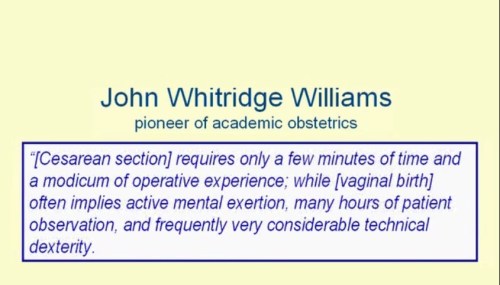
Declercq also draws on writing from the classic obstetrics textbook, Williams Obstetrics, and shares this quote about one of the real reasons that cesarean rates continue to rise:
whycesareanAnd, he makes this important observation:womenhaventchanged
As Nadine Goodman says in The Business of Being Born Classroom Edition, “A woman will always remember how she was made to feel during her birth…if you don’t have the reverence and respect for birth, where do you go from here?”

Prior post about The Business of Being Born: Transformation Through Birth | Talk Birth

Disclosure: I received a complimentary digital package for review purposes.

Pregnancy and Infant Loss Remembrance Day

Pregnancy and Infant Loss Remembrance Day is October 15. At The Amethyst Network, co-founder Jenni has been working on making some new images for the purpose of sharing either in advocacy or support. There you can find different buttons designed for sharing on social media or blogs on both Facebook and Pinterest.

Tonight, I went to a candlelight vigil in Rolla in honor of this Remembrance Day. I took Alaina with me, my little rainbow girl, and we spent some peaceful time at dusk in the park with my friend and her daughter.

Tonight via TAN, I also read an interesting article about miscarriage from a feminist perspective and I very much valued her conclusion:

I’ve come to the conclusion that my understanding of this event as a feminist simply backs up my earlier understanding: that miscarriage is different for every person who experiences it.

via A Feminist’s Miscarriage | Liz Boltz Ranfeld.

Thinking of the 1 in 4 women tonight who share the experience of miscarriage as well as the sisters who support them, in whatever capacity they can.

(A tutorial for how to make star paper lanterns like we used tonight may be found here.)