Childbirth is a powerful rite of passage. One of my favorite resources, The Pink Kit, has some great reflections on this rite of passage and the words we use to describe the powerful, indescribable act of giving birth:
Whatever the culture, when a woman surrenders to the process, accepts the intense sensations, works through each contraction, and digs deep within herself to achieve the end goal–giving birth–she is touched by the Unknown and Unknowable. Many traditional cultures send their young men into initiation rites where they, too, can learn to understand humbleness and achieve the self-control that women learn in childbirth.
All cultures believe that women become better and more generous through the process of giving birth. That is why some cultures use words such as ‘sacrifice,’ ‘suffering’ and ‘labour.’ These terms can seem overwhelming and to be avoided’ however, seen from a different viewpoint, childbirth helps us to become strong, resourceful and determined.
In a modern world, ‘getting through’ labour without numbing or dumbing the process can be a very powerful experience for a woman, and very challenging.
I like the concept of “digging deeper.” This how The Pink Kit explains it:
You might avoid the pain in labour by moving into a position which is comfortable for you (i.e. reduces the sensations), but it slows labour down and then you stay there for hours. Doing that will increase the likelihood of medical intervention because you will become tired, bored, or frightened, and labour doesn’t progress. Instead, consider remaining in positions that keep you open and the labour progressing, while using your skills to manage the sensations. This is ‘digging deeper’.
I have noticed an emphasis in other natural birth preparation books and explanations about finding positions that are “comfortable.” I very much like the concept of finding positions that help you feel “open”—these positions may certainly also comfortable (and that is great!), but if you remain mindful of “staying open,” it may lead you “dig deeper” and find positions that really help move the baby. In my classes, I encourage women to welcome labor “getting bigger” (not more “painful” or “difficult,” but make it “bigger” and be excited by that change!). I think this idea goes hand in hand with digging deeper.
I’ve added a new option to my single night class offerings. I am also available to give this session to small groups (doulas, etc.) The following is the class description:
Use external bony landmarks on your own pelvis to “map” your pelvis and explore the types of birthing positions that work best for your unique body. Pelvic mapping increases your comfort level with your body and your confidence in the space and flexibility available for birth. Figuring out the shape of your pelvic outlet helps you understand how your baby might use the space within to move through. You will explore the positions that help you feel open-—these are not the same for every woman. Knowing your own pelvis helps you use positions most appropriate for your own anatomy.
We will also learn several skills for birthing that work with the anatomy of the bony pelvis to create more space for the baby as well as skills to work with body sensations and internal relaxation. If you are a pregnant woman, these are great skills to bring with you to birth. If you are a doula, these are great skills to have in your doula “toolbox.” If you are a childbirth educator or midwife, these are good skills to show to your clients prior to labor. If there is time, we will also learn a breath awareness strategy for releasing pelvic tension during labor.
When I was in early labor with my first son, I spent quite some time upstairs in our computer room googling, “how to know you’re really in labor” or, “signs of true labor,” or “the difference between false labor and real labor,” or, “how do I know I’m in labor,” or, “how to know I’m in labor.” I would do this between contractions and then when I had a contraction I would think, “Wow! This is definitely it!” Then, it would ease, and I’d start googling again, certain I must just really be experiencing “false labor.” One of my biggest fears was arriving at the birth center and only being two centimeters dilated (or possibly not in labor at all!). So, in honor of my former self, I offer a list of some ways to to gauge whether you are experiencing true labor.
It is true labor if/when:
Your contractions fall into a regular pattern. And, that pattern involves contractions that are lasting longer, feeling stronger, and occurring closer together.
If when you walk around or otherwise increase your activity, the contractions also increase.
And if changing positions and drinking plenty of fluids also do not cause the contractions to ease…
The sensation begins in your lower back and spreads like a band around your belly causing a peak of tightness and discomfort in the front and then fades away again.
You have been feeling some gastrointestinal upset and may be experiencing diarrhea also.
You have pinkish or blood streaked, mucousy discharge.
Your membranes have ruptured (keep in mind that labor only begins in this way for roughly 10% of women. So, if your waters have not released, do not be discouraged thinking that you must not be in “real labor.” Many women do not experience their waters breaking until they are pushing or are starting to feel like pushing).
Truly, I think that the best sign that you are in labor is if you really feel like you are in labor. This is one of those things that doesn’t feel that helpful to a first-time mom—“yes, but how will I know?! What if I’m in labor and don’t know it until the baby is coming out?!” I promise that for the wide majority of you, at a certain point, you will just know that you are in labor and there will be no more questions about whether this is “really it”—that is the best sign, when you stop wondering “is this really it?” My observation is that this point comes along when you enter active labor and enter your “birth brain” instead of your analytical, logical brain.
Is this really it?
If you are still wondering, “is this really it?” my best piece of advice is to ignore it! Pretend like nothing is happening. Go about your normal day and your normal routine. If you would normally be sleeping, sleep. If you would normally be eating, eat. Go for a walk, water the plants, feed the dog, bake something, go to the store, etc. When your contractions need your full attention, they will ask for it 🙂
Symptoms of pre-labor (“false labor”)
Some “symptoms” that what you are experiencing is instead practice labor, pre-labor, or “false labor” (I do not usually use the phrase “false labor” because I think it is dismissive of women’s experiences. All contractions are doing something and so I refer to them as “practice” rather than “false.” Another good phrase to use is “pre-labor” contractions. My midwife with my second baby referred to them as “toning contractions”):
The contractions are irregular (no pattern) and are not increasing in frequency or intensity.
If you change positions or drink two large glasses of juice, water, or tea, the contractions subside.
The contractions center in your lower abdomen and do not involve your back.
The contractions go away if you take a walk, take a shower, or lie down.
This is also a popular question in birth classes. Because labor is a new event for you, it can be hard to know what to expect until it actually happens! There is pdf handout here with some additional signs and information. There is also a helpful handout with a sort of flowchart of signs/symptoms here.
Oh, and by the way, when I did finally go to the birth center, I was 10 centimeters dilated and started pushing about 30 minutes later!
—-
What about induction?!
On a closely related topic, why bother with all this guessing about whether or not you’re in labor? Why not be induced instead? Good questions! There are numerous reasons why you should let labor begin on it’s own—labor that begins on its own is usually safer and healthier for both mother and baby. Also, it is less painful than a labor that is induced with medications such as Pitocin. For more information about letting labor begin on its own, check out Lamaze’s Healthy Birth Practice #1, or this video clip from Mother’s Advocate:
I’ve been debating about whether to share this post or not. I’m concerned that it may come across as unnecessarily negative, pessimistic, or even “combative” or “anti-hospital.” However, I do think it is honest and I’ve decided to share it. There is a fairly “normal” course of events for women having a natural birth in a hospital setting. In order to be truly prepared to give birth in the hospital, it is important to be prepared for “what to expect” there and to know how to deal with hospital procedures. All hospital procedures/routines can be refused, but this requires being informed, being strong, and really paying attention to what is happening. I hope this list of “what to expect” with help you talk with your medical care provider in advance about hospital routines and your own personal choices, as well as help prevent unpleasant surprises upon actually showing up in the birthing room. This list is modified from material found in the book Woman-Centered Pregnancy and Birth. I am not saying that is how your specific hospital operates, but that many American hospitals function in this manner.
Expect to have at least some separation from the person who brought you to the hospital, whether this separation is due to filling out admission paperwork, parking the car, giving a urine sample, being examined in triage, etc.
Expect to remove all your clothing and put on a hospital gown that ties in the back.
Expect to have staff talk over you, not to you, and to have many different people walk into your room whenever they want without your permission and without introducing themselves.
Expect to have your cervix examined by a nurse upon admission and approximately every hour thereafter. Sometimes you may have multiple vaginal exams per hour by more than one person.
Expect to have an IV inserted into your arm, or at minimum a saline lock (sometimes called a Hep lock).
Expect to be denied food and drink (at best, expect clear liquids or ice).
Expect to give a urine sample and perhaps a blood sample.
Expect to have an ID bracelet attached to your arm.
Expect to have to sign a consent form for birth and for application of a fetal monitor that states that your doctor will be responsible for making the decisions about your care (not you).
Expect to have a fetal heart rate monitor attached around your belly—two round discs on straps that will often stay with you continuously until you give birth (or, at best, for 15 minutes out of each hour of your labor).
Expect to have your water manually broken at about 4 centimeters (or at least, strongly suggested that you allow it to be broken). After this point, expect to be encourage to have an electrode screwed into the baby’s scalp to measure the heartbeat and a tube places in your uterus to measure your contractions.
Expect to be offered pain medications repeatedly.
Expect to receive Pitocin at some point during your labor–“to speed things up.”
Expect to be encouraged (or even ordered) to remain in your bed through much of labor, especially pushing.
Expect to either have your legs put in stirrups or held at a 90 degree angle at the hips.
Expect to be told you are not pushing correctly.
Expect to hold your baby on your chest for a few minutes, before it is taken away to be dried, warmed, and checked over.
Expect the baby to have antibiotic eye ointment put into its eyes (without telling you first).
Expect to have your baby suctioned repeatedly.
Expect to be given a shot of Pitocin to make your uterus contract and deliver the placenta.
Expect not to be shown the placenta.
Expect your baby to be given a vitamin K injection.
I think it is important to note that what you can expect is often different than what you deserve and that what you can expect often reduces or eliminates your chances of getting what you deserve. In my classes, I’ve made a conscious decision to present what women deserve in birth and though I also talk about what they can expect and how to work with that, I think sometimes they are left surprised that what they actually experience in the hospital. At minimum, what you deserve are Six Healthy Birth Practices (as articulated by Lamaze):
As an example of what I mean about what you can expect clashing with what you deserve, consider the second healthy birth practice “Walk, Move Around, and Change Positions”—monitoring and IVs directly conflict with the smooth implementation of a practice based on freedom of movement throughout labor.
So, how do you work with or around these routine expectations and your desire for a natural birth?
Discuss in advance the type of nursing care you would like and request that your doctor put any modifications to the normal routines in your chart as “Doctor’s Orders” (if your doctor is unwilling to do so, seek a new medical care provider!)
Labor at home until labor is very well-established.
Go through the above list of “what to expect” and make a decision about how to handle each one on a case by case—you may choose to actively refuse something, you may be okay with accepting certain procedures or routines, and you can develop a coping plan for how specifically to work with any particular issue.
Take independent childbirth classes and learn a variety of techniques and pain coping practices so that your “toolbox” for working with labor is well stocked.
Hire a doula, or bring a knowledgeable, helpful, experienced friend with you. It can help to have a strong advocate with you (this may or may not be a role your husband or partner is willing to take on).
Another tactic is to “never ask permission to do what you want, but to go ahead and do it unless the hospital staff actively stops you.” (An example of this is of getting up and walking around during labor)
“Many people, if they can find no other way to get around a dangerous or unpleasant hospital policy, unobtrusively ignore it”—a good example of this is with regard to eating and drinking during labor. Restricting birthing women to ice chips or clear liquids is not evidence-based care. Bring light foods and drinks and quietly partake as you please.
Leave the hospital early, rather than remaining the full length of stay post-birth. This can minimize separation from baby and other routines you may wish to avoid.
Finally, and most importantly, “birth is not a time in a woman’s life when she should have to FIGHT for anything,” so if you find that you feel you are preparing yourself for “hospital self-defense” I encourage you to explore your options in birth places and care providers, rather than preparing for a “battle” and hoping for the best. If you feel like you are going to have to fight for your rights in birth, STRONGLY consider the implications of birthing in that setting. Also, as The Pink Kit says, “hope is not a plan”—so if you find yourself saying “I hope I can get what I want” it is time to take another, serious look at your plans and choices for your baby’s birth.
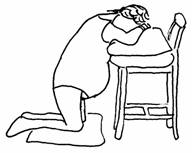
We spend a lot of time in my classes talking about different comfort measures for birth. In fact, one of my most popular classes is my “Labor Support and Comfort Measures” single session class in which we practice all kinds of different skills that may be of use for birthing.
I enjoy Childbirth Connection’s free pdf booklet “Comfort in Labor” and use this as a class resource. Very recently, they added a new section to their website with lots of helpful, line drawing illustrations for Comfort Measures During Labor. The illustrations are the same as in the booklet, but presented on one page without a lot of accompanying text—great for visual learners!
Even if it might feel silly, I encourage people to print out the images and physically practice the techniques illustrated a couple of times—this helps develop a “body memory” so that when you are actually in labor different labor-beneficial positions feel comfortable and familiar. Also, it helps for the birth partner to have a body memory as well to help reinforce healthy positions or suggest fresh ideas.
One of my favorite resources to hand out in birth classes and to give to pregnant friends is Choices in Childbirth‘s booklet “The Guide to a Healthy Birth.” I’m so excited to learn that the second edition of the booklet is now available! (Thanks to Teri at Passion for Birth for the tipoff!) You can download the pdf version directly here. Or, for very minimal shipping, you can order print versions here.
I just ordered 50 copies, so if you’re a real life friend of mine or are taking a class from me, I’d be delighted to give you one of these phenomenal booklets!
Yesterday, I watched a short clip on why people don’t take birth classes. The comment that I found most interesting from the expert interviewed was: “The instructors in a lot of these classes –are a little bit doctrinaire about their point of view. They made an issue out of saying ‘You’re not a real woman if you need drugs. She should go through labor and childbirth on her own with help from your spouse with breathing techniques. They made it a kind of a contest. A lot of mothers today don’t want it — they want to go in and have their baby with a pain free a time as possible.” I find this perspective about “a contest” sad and disheartening and inaccurate. It is also slightly amusing–seriously, I know NO ONE who would say to someone else “you’re not a real woman if you need drugs” least of all a professional person teaching a birth class! I think this might be an example of what someone says being different than what someone else hears: i.e. the instructor says, “all medications have an impact on the baby. Additionally, many women find a very satisfying sense of personal mastery from giving birth without medication.” The person hears, “you’re not a real woman if you need drugs.”
This reminds me of an excellent section I’m re-reading in the book Mother’s Intention: How Belief Shapes Birth about judgment and bias. The author also address how the word “balanced” is misused in childbirth education–as in, “I’m taking a class at the hospital because it will be more balanced.” Balance means “to make two parts equal”–what if the two parts aren’t equal though? What is the value of information that appears balanced, but is not factually accurate? Pointing out inequalities and giving evidence-based information does not make an educator “biased” or judgmental–it makes her honest! (though honesty can be “heard” as judgment when it does not reflect one’s own opinions or experiences). She says, “Every person has a lens. Every opinion is biased, including the ones you hold. The question is, what created the perception leading to a particular bias?…When it comes to childbirth and parenting, when someone dismissed information as ‘biased,’ what it actually means is the information does not fit their already held biases. It is our insecurities that bring up defensiveness in the face of judgment, or perceived judgment, as the case may be…You may never even have a thought in your head that the other person could have or should have done anything differently, but they are seeing your actions through their own lens and making assumptions.” (i.e. if a mother had a homebirth it may be assumed she hates doctors and hospitals). I think this is exactly what was happening in the video clip–because a birth educator shares the benefits of natural birth, the assumption is that she “hates epidurals” and thinks you’re “not a real woman” if you have one!
As far as the “contest” idea goes, I’ve mentioned this before–just because someone runs a marathon, for example, doesn’t make the person who opted out of the marathon bad or “less than” 🙂
The expert in the video clip referenced above also emphasized several times that the time investment in classes is just too much and parents just “don’t want to invest.” So, now perhaps this IS “doctrinaire” or unpleasant of me, but I also find it a little frustrating that people are apparently unwilling to invest the time in preparing for their children’s births–most people watch more than 8 hours of TV a WEEK, but 8 or 10 hours of birth classes total is too much to invest? I hope my classes are exciting and informative and useful to the parents that come to them. I also realize that week after week CAN feel like a lot, which is why I designed my single session classes. I get a lot of interest in the single session classes and I’m glad I came up with them, because I think it allows me to better meet more people’s unique needs! In fact, so far this year, I’ve done only mix-and-match classes (from 1-4 weeks), no full six-week-series’ (perhaps they are a thing of the past?). I find I get clients who are very well-informed and interested and that these classes “hightlight” the things they are most interested in learning about, though they often tell me at the end that they wish they had signed up for more classes!
Two media items caught my eye today that relate to fathers. One was a short clip from “DadLabs: taking back paternity” called “Are birth classes worth it for dads?” The clip debates whether men belong in birth classes–as a birth educator who strives really hard to “reach” men in my birth classes, I was holding my breath on this one! They talk to several fathers, mothers, and one doula. I think the conclusion seemed to be that birthing classes are important and dads can benefit from them, but I’m not totally sure because the two hosts were kind of arguing about it!
The second piece was an article from Greater Good Magazine called The Daddy Brain. The article is about a stay-at-home dad and also addresses biology and child-rearing. A section I liked explains:
“In researching my new book, The Daddy Shift, I read every word I could find in peer-reviewed scholarly journals about caregiving fathers, breadwinning moms, and the science of sexual difference. I also interviewed dozens of parents….Here’s what I discovered: Where once it was thought that the minds and bodies of men were hardly affected by fatherhood, today scientists are discovering that fatherhood changes men down to the cellular level. [emphasis mine] For more than a century, it was assumed that mothers, not fathers, were solely responsible for the care, life chances, and happiness of children. In recent years, however, we have discovered that father involvement is essential to a child’s well being, and that dads provide unique kinds of care and play that mothers often do not.”
From Sheila Kitzinger’s book The Experience of Childbirth:
In a normal, straightforward labour a woman’s attitude of mind, her approach to the task that awaits her, and her preconceptions concerning the nature of the work that her body has to do, are more important than any sort of physical preparation she can make in advance. Whatever athletic exercises she may essay, however controlled her breathing, however complete her muscular relaxation, in the last resort the thing that matters most is essentially the kind of woman she is, and the sort of personality she has [emphasis mine]. That is why preparation for labour cannot rest in purely physical training and in mechanical techniques of control and release alone. Controlled muscular activity can assist her in making of her labour something she creates, rather than something she passively suffers, but her capacity for achieving this physical coordination is dependent upon her mind–upon her fearlessness and sense of security, her intelligence, her joy in the baby’s coming, her courage, her self-confidence, and the understanding she has of herself. The experience she has of childbirth is a function of her whole personality and ideally the preparation should involve increased self-knowledge and a growing towards maturity.
While there is a certain element of “blame the victim” in this quote that I find distasteful (i.e. “she had XYZ intervention, must be her bad personality…”), I recognize something here that speaks to me. I have observed in some of my clients a certain “quality” of personality (or perhaps determination) that makes me feel secure that they will be fine with or without me–they have something that comes from within that will guide them through birth. There are others who are more ambivilant, who say they want to “try” natural birth. Sometimes they blossom into confidence as the classes proceed, sometimes nothing really changes. I do not really take responsibility for any birth outcome, because birth classes are just a piece of a much more multifaceted puzzle of a woman’s experience. However, I feel like you can see that some women just “have it in them” and in others, that “it” has to be nurtured and grown. I’m not sure exactly what this “it” is, which is why Kitzinger’s quote caught my attention.
A parallel is often drawn between giving birth and running a marathon. There was a great article called “The Gift of Leaping” in the most recent issue of the International Journal of Childbirth Education (available to download as a pdf here) that was based on this theme.
In it, the author discusses how in both experiences your mind’s strength can be called upon to surpass your physical strength and she notes, “The pain of accomplishment is so much easier than pain endured.” I loved that!
She goes on to share: “I want that feeling of going beyond what you think is possible for laboring women. If you let go of control and allow the process to unfold, you are so proud of yourself. Then pride morphs into self-confidence and trust. What a perfect combination for parenting. When it comes down to it, you have to do this by yourself, be it labor or running. You might hear other laboring women around you or have the support of crowds in a race, but it’s still up to you. there’s a start and a finish and only you can see it through. Fortitude brings a new self-awareness and strength that feels overwhelming…I know one of my greatest challenges in the vocation of perinatal education is getting women to trust the process and her own capabilities before labor. My practice runs helped prepare me for the marathon, but there is no practice run for labor. Women must rely on their confidence and the legacy of the many women who have birthed before them…”
I share her feelings about her greatest challenge. The whole point of my birth classes is for the participants to develop confidence and trust in their ability to give birth naturally. It is difficult to share what birth is really like–it is a singular experience (each birth is different too, so even if you’ve done it before, there are still surprises ahead!) I also feel like it is irreplaceable to start off the parenting journey with a overwhelming sense of power, pride, and capability–a sense that often comes with the “I did it!” of giving birth!
 Childbirth is a powerful rite of passage. One of my favorite resources, The Pink Kit, has some great reflections on this rite of passage and the words we use to describe the powerful, indescribable act of giving birth:

 Talk Birth