Archives

The Womanly Art of Breastfeeding & Nursing Johnny Depp

I’ve already shared this all over Facebook, but wanted to mention it here too because I’m that excited 🙂 Quite some time ago the authors of the newest edition of the LLL classic, The Womanly Art of Breastfeeding, contacted me to see if they might include a partial version of my essay “Nursing Johnny Depp” (previously published in Literary Mama) in the book. Of course I said YES! The Womanly Art has been published since 1958 (that is more than 50 years) and it thrilled my little heart to be a tiny, tiny piece of that world-changing history. I have six copies of the WAB (different editions—including two of the old blue-covered editions) and so what a bonus to have another copy, but this time with my own voice within it. The book was released on July 13 and my copies have arrived in the mail. The excerpt of my essay was actually used as the introduction to the “Nursing Toddlers” chapter of the book and I feel proud to be part of it. (I was also humbled to see my name in the acknowledgments section, since, seriously, I really did hardly anything.)

I first read the WAB when I was pregnant with my first baby in 2003. This newest edition is updated with a very contemporary feel and an engaging style. One of the things I like about it is that it is so practical and a lot of the suggestions are very simple (yet, not necessarily obvious). It is written in the mother-to-mother support format that is the hallmark of LLL and the very core of the organization. I like that the book includes personal experiences from a variety of mothers as well as all kinds of suggestions based on what, “some mothers have found.” Those are the kind of suggestions a new breastfeeding mother needs—not advice or directions or orders or “prescriptions,” but information about what other mothers have found helpful—she can then take what works for her and her baby and leave the rest. Love it!

Book Review: Breastfeeding Facts for Fathers

Book Review: Breastfeeding Facts for Fathers
Platypus Media, 2009
ISBN 978-1-930775-49-7
40 pages, softcover, $7.95 (perfect bound); $5.95 (saddle-stitched)

www.platypusmedia.com

Reviewed by Molly Remer, MSW, CCCE

Since partner support of a breastfeeding mother is one of the most important factors in breastfeeding success, the short book Breastfeeding Facts for Fathers is a valuable book indeed. Written in a clear, straightforward format, brief one-page sections address topics like, “why you want your baby breastfed,” “is formula really so bad,” “a happier, healthier mom,” “sex and the breastfeeding woman,” and “when breastfeeding is not advised.” There is also a brief segment about safe co-sleeping. These sections are followed by a brief FAQ addressing topics such as how often mom should breastfeed, how to know baby is getting enough milk, how long to breastfeed, nipple piercing, breast implants, alcohol, and breastfeeding in public.

As a quote in the book states, “Having a father is critical to the healthy development of a child. Being a father is critical to the healthy development of a man.” Providing breastfeeding information specific to fathers, Breastfeeding Facts for Fathers supports this healthy development of father, mother, and baby.

A Spanish edition, a low-literacy (abridged) version, an ebook edition, and a hospital edition (co-sleeping information omitted) of Breastfeeding Facts for Fathers are all available at various affordable prices from Platypus Media.

Disclosure: I received a complimentary copy of this book for review purposes.

A Weaning Ritual

The suggestion is often made to have a “weaning party” when a toddler is ready to be weaned. Recently I have been reading the book Seven Times the Sun and she mentions a lovely, simple  little weaning ritual that she did with one of her daughters (18 months). I wanted to share it, because I think a lot of people think about doing something to commemorate weaning, but that it can be hard to find ideas of what exactly to do. Both of my weaning experiences occurred during subsequent pregnancies and I was never quite sure when that “last nursing” would be. Both kids (during the different experiences—I never ended up tandem nursing) gradually cut down on their nursings per day until they were only nursing once a day. I was eager to leave this final nursing behind, because I am someone who finds nursing during pregnancy to be very unpleasant. However, I didn’t want to miss the “last time” and spent weeks remembering to cherish each nursing and fix its every detail in my mind so I would remember it if it turned out to truly be the last—I wanted the last to be emblazoned in my memory. I did successfully manage to note the last nursing for each of them in my journal (and fix some of the details in memory—though not as detailed as I had hoped, because there were so many potentially last nursings!), but we did not have any other sort of weaning party or commemoration.

Okay, on to the ritual idea:

The child is invited to nurse for the final time. Then, offer the child a small round object (like a pebble) and say, “From the time you were a tiny seed inside me, you were fed from my body.” Next, give the child a small baby doll or figure and say, “When you were born into this world as a baby, you were fed from my breasts.” And finally, give the child a silver cup (engraved with their name) and say, “Now I give you this cup, so you may feed yourself.” Then sing a song or blessing and close. The author of the book said their ritual took about 7 minutes, but was a profound memory for the family. I thought it was a delightful idea.

The Birth-Breastfeeding Continuum


Birth professionals have long been aware that there is a connection between birth and breastfeeding, but in recent years experts are making this link more explicit and the inextricable nature of the two experiences is becoming clearer. Birth and breastfeeding exist on a continuum. They are not discreet events. As speaker and author Dia Michels says, “we need a new word—birthandbreastfeeding.” Human women are mammals and the same things that disrupt bonding and breastfeeding for other mammals also apply to women. Darkness, quiet, no disruptions/interruptions, safe, upright, mobile, easy access to food and drink as they choose….these things support healthy births for female mammals! In brief, a normal, healthy, undisturbed birth leads naturally into a normal, healthy, undisturbed breastfeeding relationship. Disturbed birth contributes to disrupted breastfeeding.

New mothers, and those who help them, are often left wondering, “Where did breastfeeding go wrong?” All too often the answer is, “during labor and birth.” Interventions during the birthing process are an often overlooked answer to the mystery of how breastfeeding becomes derailed. An example is a mother who has an epidural, which leads to excess fluid retention in her breasts (a common side effect of the IV “bolus” of fluid administered in preparation for an epidural). After birth, the baby can’t latch well to the flattened nipple of the overfull breast, leading to frustration for both mother and baby. This frustration can quickly cascade into formula supplementation and before she knows it, the mother is left saying, “something was wrong with my nipples and the baby just couldn’t breastfeed. I tried really hard, but it just didn’t work out.” Nothing is truly wrong with her nipples or with her baby, breastfeeding got off track before her baby was even born!

Problems with breastfeeding often start before baby is born. According to Linda Smith, BSN, FACCE, IBCLC, co-author of the book Impact of Birthing Experiences on Breastfeeding (2004), birth practices that impact breastfeeding include:

  • Mechanical forces of labor (positioning of baby, positioning of mother, etc.)
  • Chemicals (drugs) used in labor
  • Injuries to mother or baby
  • Treatment of mother during labor
  • Treatment of mother after birth
  • Separation from mother after birth
  • Procedures that alter behavior

Linda Smith also notes that a mother’s confidence and trust in her body’s ability to give birth is related to her confidence in her body’s ability to breastfeeding. There are several birth related risk factors for breastfeeding problems (please note that not all babies with risk factors will actually have problems):

  • Induction of labor
  • Epidural and/or narcotic medications
  • Cesarean
  • Instrumental delivery (forceps or vacuum)
  • Post birth suctioning of baby’s airway

Additional procedures that affect baby’s ability to breastfeed if they are done before baby’s first breastfeeding include:

  • Separation of mother and baby for any reason.
  • Weighing and measuring
  • Vitamin K injection
  • Metabolic tests
  • Circumcision
  • Infant hypothermia

According to the Academy of Breastfeeding Medicine (www.bfmed.org), “unmedicated, spontaneous, vaginal birth with immediate skin-to-skin contact leads to the highest likelihood of baby-led breastfeeding initiation.” Immediate skin-to-skin contact restores the biologic continuum begun during conception.

When I was in graduate school, one of my professors used the following analogy to make a point and I now use it with my own students:

There is a river running through town. Daily, emergency workers are called upon to rescue people from the river who have fallen in and are floating downstream drowning. Day after day they pull the gasping people back to land until one of the workers suddenly realizes, “maybe we should go see what is happening upstream and try to stop these people from falling in to begin with?”

My professor then encouraged us to always remember to go “upstream” when working in the helping professions rather than only addressing the immediately presenting problem. Childbirth professionals are in an “upstream” position when it comes to protecting the birth-breastfeeding continuum!

—-

For more about the value of keeping mothers and babies together following birth, check on Healthy Birth Practice Six: Keep Mother and Baby Together – It’s Best for Mother, Baby, and Breastfeeding from Lamaze.

—-

References:

If my mom were a platypus: what we can learn by studying mammal lactation, presentation by Dia L. Michels, La Leche League of Missouri Conference, November 2007.

Impact of Birthing Practices on Breastfeeding: Protecting the Mother and Baby Continuum. Mary Kroeger and Linda J. Smith, Jones and Bartlett Publishers, Inc.; 1 edition (February 2004). ISBN-13 978-0763724818.

Mother-Baby Togetherness, presentation by Dr. Nils Bergman, La Leche League International Conference, July 2007.

The Power of Touch, presentation by Diane Wiessinger, La Leche League of Missouri Conference, November 2007.

Winning at Birth, presentation by Linda J. Smith, La Leche League International Conference, July 2007.

——

This article is adapted from “Celebrating World Breastfeeding Week and the Birth-Breastfeeding Continuum” by Molly Remer, MSW, ICCE, published in the International Journal of Childbirth Education, June 2008.

Book Review: Pregnant on Prozac

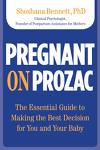
Book Review: Pregnant on Prozac: The Essential Guide to Making the Best Decision for You & Your Baby

By Shoshanna Bennett, Ph.D.
GPP Life, 2009
ISBN 978-0-7627-4940-9

248 pages, softcover, $16.95
http://www.clearsky-inc.com

Reviewed by Molly Remer, MSW, CCCE

Written by a clinical psychologist and mother of two, Pregnant on Prozac is a comprehensive look at the benefits and risks of antidepressant use during pregnancy or postpartum. The focus on depression during pregnancy is what makes this book stand out—this is a subject that has received very little attention and it is important for doula and childbirth educators to learn more about the issues involved.

The book includes sections on “natural and emerging treatments” including homeopathy and acupuncture as well as a section on nutrition, though the overall emphasis is on pharmacological treatment methods.

The information presented is very comprehensive, though I was disturbed by the suggestion not to read the package inserts coming with medications, but to trust your doctor to know “what is safest for you and your baby.” This is not the type of informed decision-making I promote in my work with pregnant and new mothers!

Pregnant on Prozac briefly addresses midwives and doulas in a section about “helping professionals who may be of use to you.”

I have three significant critiques of the book. During one section the author waxes eloquent about the non-specific benefits of an unnamed “exercise system” and then later an unnamed “nutritional system.” She glowingly recommends these unidentified systems and refers readers to her website for more information about the nutritional system and to another website for the exercise system. I suddenly felt like I was reading a commercial and the tone called into question for me the validity and reliability of the entire rest of the book.

My third critique is that the segment addressing medication use while breastfeeding is woefully incomplete, falling back on the trite platitude “a calm, happy mother is more important to a child’s healthy development than breast milk.” Though I do not quibble with the truth of this statement in an “ultimate” sense, my concern is that it summarily dismisses the fact that many women can take medication AND breastfeed—it is not an either or situation! The very brief section on breastfeeding also included the questionable and disappointing statement, “you can even get better eye contact with your baby with a bottle in its mouth instead of being squished face-first into your breast.”

Each of these sections is small, but my concerns about them are large. Despite these critiques however, I would still recommend Pregnant on Prozac to birth professionals and parents seeking information about treatment options for depression during pregnancy with the caution not to rely on it as your only resource and certainly not to count on it for advice on exercise, nutrition, or breastfeeding.

Disclosure: I received a complimentary copy of this book for review purposes.

How to Meditate with a Baby…

How to meditate with a baby…

Lie down in a comfortable place.
Latch baby on.
Feel your bodies relax and become
Suffused with peace.
Rest your nose in his hair.
Inhale.

By Molly Remer
1/10/08

Previously published in New Beginnings and in Compleat Mother. I decided that I need to remember to post some of the things that I’ve written and had published various places. This poem popped into my head one afternoon when I was nursing Z to sleep during an illness—he’d been wanting to nurse A LOT and I had spent a lot of time doing so during a several day time period.

Giveaway! Simple Wishes Hands-Free Pumping Bra

This giveaway is now closed. Summer was the winner! Congratulations!

I’m excited to have a Simple Wishes Hands-Free Pumping Bustier to give away this week! A lot of mothers combine breastfeeding with working (and pumping at work). As one of my friends (a mother of infant twins) phrased  it recently, you have to be a “multi-tasking phenom.” A bra like this would be a helpful addition to the multi-tasker’s skill set 🙂 I wish that all mothers would have the freedom and flexibility at work to be able to sit down and really take a few minutes “time out” to pump for their babies. However, this is not the reality that a lot of mothers experience in the workplace and that is where a “bustier” like Simple Wishes can definitely come in handy! The company was founded by four sisters and has formed a recent partnership with WIC. According to the company’s website:

Using a breast pump is significantly easier with the Bustier, as it allows moms to pump hands-free. Pumping hands-free encourages and supports moms to:

• Promote the use of a breast pump for greater length of time (ideally six to 12 months), by minimizing user frustration.

• Reduce the duration of each pumping session

• Double pump—pump both breasts simultaneously

• Massage breasts, relax, and think of their baby while expressing

I have a light pink Simple Wishes to give away this week (contest ends on Saturday the 20th at noon). One of the cool things about this bra is that the ribcage band is adjustable up to 10 inches, so you can get a “custom” fit. The one I have to give away is a size L up to XXL. I have taken the bustier out of the package to look at, but it is brand new and never worn (though the seal is opened from my having examined it). To enter to win, you have several choices. For the basic entry, just leave a comment (making sure I have some way to contact you from it if you win). For bonus entries, do one (or all) of the following:

  • Leave an additional comment sharing your favorite tip for pumping at work
  • Become a (first time) fan of Simple Wishes on Facebook
  • Become a  (first time) fan of Talk Birth on Facebook
  • Blog about this giveaway (and tell me you did so)

Recent Publications

This has been quite a month for me for publications!

My short article Centering for Birth was published in the International Journal of Childbirth Education (page 20)

My book review of Fathers at Birth was published in The CAPPA Quarterly (page 14).

My film review of Birth as We Know It was in The CAPPA Quarterly (page 15).

And, my piece of creative nonfiction Nursing Johnny Depp was published in Literary Mama.

I’m excited about all of these! 🙂

Breastfeeding with Comfort & Joy Book

One of my fellow birth bloggers, the fabulous Kathy of Woman-to-Woman CBE is celebrating her 100,000 hits with a giveaway. She is giving away a copy of the new book Breastfeeding with Comfort & Joy, which looks like a real treasure. I hope I get a chance to read it someday soon. Kathy also has a review of the book on her site.

Speaking of fun blog giveaways, the Hypnobabies blog is also having a giveaway (I’m late posting about it though–it ends tomorrow, so hurry up!). Their giveaway is for a Hypnosis for an Easy Pregnancy CD. I know several Hypnobabies educators online and they have such a wonderfully positive and affirming perspective about birth. It is really exciting and refreshing.

World Breastfeeding Week T-Shirts

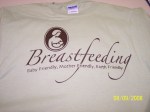
We have a number of t-shirts left from our World Breastfeeding Week event in Rolla on August 9. The shirts are a light sage green with dark brown printing. The printing says Breastfeeding: Baby Friendly, Mother Friendly, Earth Friendly. The back of the shirt has the logos of our three generous t-shirt sponsors: Town & Country Bank, Il Bacio Day Spa, and St. James Veterinary Clinic. The shirts are $10 each with a range in sizes of small all the way to 2XL. If you would like to buy one, please email me. ($3 shipping if you live outside of the area.)Â